



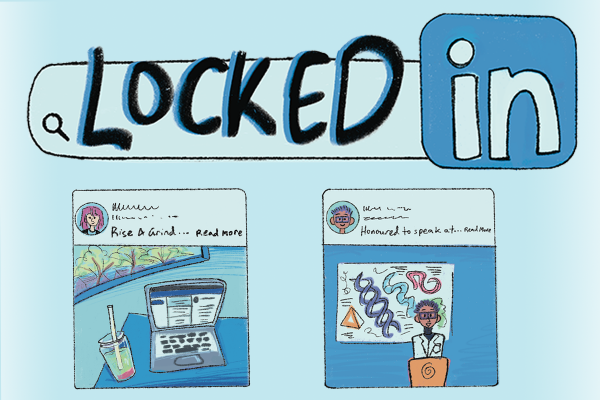

As students enter university, many (hopefully) age out of Snapchat, and are introduced to a new beast: LinkedIn. If you thought sending streaks was as bleak as it gets, the corporate world has blessed us by making its very own social media platform. The thought of scrolling through the achievements of a balding 40-year-old accountant might make you laugh (or cry), but the job market is fucked – and we’re all expected to play along.
At some point between first year and graduation, everyone collectively decides it’s time to become “professional”. Commerce students suddenly start talking about networking. That one guy who somehow landed an internship after first year becomes the authority on ‘building your professional persona’. Your lecturers remind you to keep your LinkedIn profile up to date, and before you know it, you’re seriously considering whether changing your profile picture will make you more employable.
People in the industry love to tell you that jobs aren't about what you know anymore, but rather about who you know. Unless you’re lucky enough to be born a nepo baby, you gotta make waves in the corporate world somehow. Turns out the best place to do that is a website where everyone pretends accepting an internship is the defining moment of their life. It might all feel deeply embarrassing, but if everyone else is doing it, you may as well lean in.
This may not help you snag a grad role the same way as family connections or a 9.0 GPA would, but desperate times call for desperate measures. When life gives you lemons, make LinkedIn posts.
Step 1. Polish Up The Profile 💅
If you’ve somehow managed to avoid making a LinkedIn profile until this point: congratulations! Unfortunately, you have around 30 seconds until a prospective Deloitte intern corners you in the Business School foyer and tells you it’s “literally your living CV – super essential”.
Your first job is to find a profile picture. This means trawling through your camera roll until you discover the one photo where you’re not clutching a beer bottle, wearing sunglasses indoors, or sporting pupils the size of coins. Then it's time to fill in your experience, which is where LinkedIn really comes into its own. You delivered flyers? Sounds like you were a Logistical Media Distributor. Bagged groceries at Woolies? That’s a customer-facing role involving spatial packaging solutions in the grocery industry. Worked behind a bar? Congratulations, you’ve got experience operating in a fast-paced, stakeholder oriented environment.
If you’re feeling extra fancy, chuck in a few skills. Opened Excel a couple years back in a tutorial? That’s database management and quantitative analysis. Sent a couple of emails during your summer job? Professional written communication. Managed to get through a group project without crying or venting to your flatmates? Successful collaborative leadership. Don’t sell yourself short. As a LinkedIn influencer, your goal is to make everyone your age feel insecure at their own lack of achievements, accolades, and vocabulary. You’ve got this!
Step 2 - Connect, connect, connect! 🤝
Forget everything Instagram taught you. On LinkedIn, sending requests to complete strangers isn't awkward – it's expected. Invite everyone to connect. Lecturers, graduates, tutors, flatties, people you met once at a careers expo and anyone remotely connected to the industry you think you might end up working in. The more connections you have, the more people will see your posts.
The strange thing is that nobody questions it. In any other context, it would be so fucking bizarre to walk up to someone you’ve never spoken to and ask if they’d like to stay professionally connected forever. On LinkedIn, they’ll probably accept within a few hours and never think about it again. Before long, you’ll have hundreds of connections – most of whom you wouldn’t recognise if they sat next to you in St Daves. And, as soon as you get to 500 connections, it just says 500+. 501 connections is the sweet spot #networking.
As an added bonus, LinkedIn is excellent for a cheeky social media stalk. Your lecture crush you’ve never spoken to? You can find out exactly where they’ve worked, what they studied, and every skill they’ve ever claimed to have mastered. Curious what your ex has been up to? They’ll happily announce every career milestone in chronological order. Just make sure your profile viewing is set to private first. There’s nothing quite like accidentally appearing in your ex’s mum’s notifications because you got a little too curious.
Step 3 - Become A Hypeman 🔥
Once you’ve got more connections than you do actual friends, it’s time to begin making a name for yourself. In the wanky world of business, this is known as “curating a personal brand”. When your mates post, comment the corniest shit you can imagine. There’s something beautiful about the community that is fostered when you congratulate your flatmate’s internship offer mere days after watching them K-hole on a couch.
Exclamation marks are essential for every comment. You better lock in and proudly show future employers your lust for life! A singular “congratulations” or “ka pai” isn’t going to cut it: chuck in a few extra words to show how proud you are of them. “It’s been great to see all your hard work pay off” is a solid start – you’ll have comment reactions flooding in at any second.
Step 4 - Post Your Smallest Wins 👏
Once you’ve settled into your groove, it’s time to take that scary step and post. A true LinkedIn influencer doesn’t do a once-a-semester recap – post everything. Joining a club exec, winning an award, getting a new job or a promotion are all things that are worthy of a post. A good rule of thumb is that if your mum would dedicate a post to it on Facebook, chances are you should be posting too.
Always include a couple photos, as they take up more room on the feed – people will be forced to look at it longer as they scroll past. AI-generated images are tacky, but the same can’t be said for captions. Chug a few litres of water and lean into that ChatGPT style in the name of professionalism – just check out pretty much any other influence for inspiration. Every sentence should end with an emoji. Em-dashes should be standard, and make sure you follow that classic “It’s not x–it’s y!” sentence structure.
Step 5 - Become A Thought Leader 🧠
Eventually, you’ll run out of things to announce. This is where those measly casual LinkedIn users are separated from the Big-Dog-Alpha-Thought Leaders. You know which one you want to be.
This is where you stop talking about yourself and start posting motivational observations that sound profound without actually saying anything. Leadership isn't about leading. Success isn't a destination. Growth happens outside your comfort zone. Nobody really knows what these posts mean – but that's not the point! They’re vague enough that nobody can disagree with them, but broad enough that people see themselves within your words – kinda like our horoscopes. And let’s be honest: these are the posts collecting hundreds of likes.
The funniest part is watching people who spent years mocking their great aunt for posting inspirational Facebook quotes slowly become the exact same people. University has a remarkable ability to convince otherwise normal people that they are more than equipped to be sharing life lessons after three weeks in a graduate programme. Maybe that's just what happens when your entire professional identity revolves around convincing strangers you’re employable.
Step 6 - Profit 🤑
If you follow these steps, you’ll soon have hundreds of likes, dozens of congratulatory comments, and, if the stars align, maybe even a graduate interview. Your mates will absolutely take the piss. Screenshots of your “thrilled to announce” post will end up in the group chat, and it’ll definitely be a conversation topic over a bottle of wine. But that's just part of the deal.
The strange thing about LinkedIn is that almost everyone agrees it’s cringe, yet everyone does it anyway. Nobody genuinely enjoys writing essays about accepting a summer internship or pretending a two-hour online course changed their perspective on leadership. But because everybody else is perfecting this faux-professionalism, you eventually start doing it too. Somewhere between first year and graduation, you find yourself debating whether “honoured” sounds better than “thrilled”, and wondering if you should post about joining a committee.
At the end of the day, LinkedIn is just shitposting in its most neoliberal form. The memes have been replaced with humble-brags, the comment sections filled with forced enthusiasm instead of arguments, and everyone on there is pretending they aren’t just trying to get a job to cover their next rent payment. It might be the least authentic place on the Internet, but if pretending to have a growth mindset gets you employed in this economy, then whatever. Fake it til you make it.
