




CW: Mentions of suicide
The male loneliness epidemic. As a man with many many women friends, I’ve heard plenty of discussion about it. “The male loneliness epidemic isn't real, y'know," my colleague told me one day. "Guys suck anyways, they deserve to be alone." In another instance, a good friend was shitting on men, all jolly with me in the car. I snapped at her, but I wasn't sure why — it was obviously a joke. She was doubly confused, because when she said "fuck all men," she earnestly hadn’t meant me.
I think the issue with framing male loneliness as an epidemic is that epidemics require a cure — and so, a doctor. The inference often made in this framing is that men are owed a cure from someone. We assume that someone is a woman, and the cure is their attention. In the great Internet world, male loneliness is always made about romance. It goes on and on: Reddit threads filled with wanton incels, podcasters preaching a return to "traditional" gender roles in relationships. "Oh, the agonising torture, women won't date me!”. But no joy lies down that path — I think it’s a load of drivel. However, I have come to appreciate that there seems to be increasing demand for it. The conversation is being spun into webs by fucks like Andrew Tate.
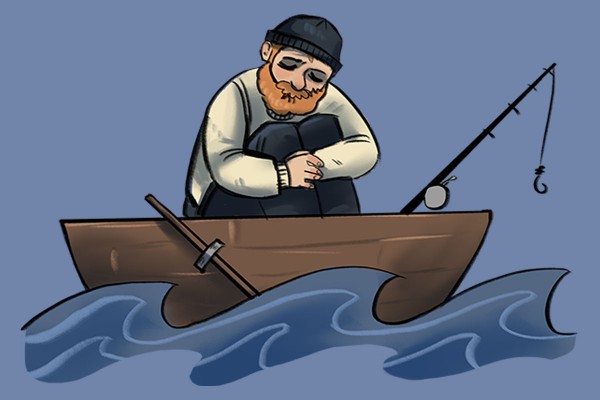
Call me naive, but when I think of male loneliness, I think of the suicide rate. Men are more than twice as likely to kill themselves as women in Aotearoa. For every 26 women who took their own lives in the 2024/25 financial year, 79 men did. In that time, per 100,000 people, there was a 10.4% gap between the male and female suicide rates. Look to your left, look to your right. There is undeniably a social problem.
I’ve come to realise that I came from a culture that made hateful rhetoric and battles of the sexes feel alien to me. My wider family is from Norfolk in the UK, from traditionally fishing-centric villages. Historically, the men were responsible for the vital voyage to sea, so they never kept a dime. Instead, they forked it all over to the wife, who allowed them a small drinking allowance. Anything more risked drowning with the husband. The women looked after all of the things their men held dear: the house, the money, the community, the children. It took strength to provide that cohesion. My ancestors respected each other, and slogged together. I think this is why I was surprised when so many women heard male loneliness, they saw red. I get it, upon reflection. But no, this isn't your fault, and isn't yours to fix. But nevertheless, this epidemic spreads.
I have my diagnosis, and my remedies, but only because I carry years of being a man (whole life, in fact), observing how Aotearoa responds to men's mental health. I’ve come to the conclusion that men are just socialised differently. Many Kiwis attend single sex schools, not raised alongside their opposite sex and are deprived of the valuable social lessons co-ed schools teach. I think many men scoff at the idea of a male loneliness epidemic too, which isn't on: we talk about men's mental health as easily as we dismiss guys sobbing their guts out. The echoes of early settler and post-war culture — chopping down trees and never talking about your feelings — can be heard loud and clear. Just work, work and work, and the awkward emotions will stay at bay.
I'm not above or beyond the social lessons men are taught. Casual affectionate touch between male friends still feels a little weird, and remains infrequent. With the tools we have, we try to be there for the bro's. But one day, a mate might tell you they tried to take their own life. He would have made 79 into 80. He will be bawling his eyes out, in pain, and you won't know how to comfort him. Maybe like me, you’ll say nothing. And there is nothing more regretful than that. I just sat there, on my thumbs, mute and useless.
People in this place are vulnerable, and it can be hard to know how to respond. I think some people might picture an aisle dividing traditional gender roles, and feel scared that reaching across that aisle would make you any less feminine or masculine. Sure, stereotypes are stereotypes for a reason — men are often expected to be stoic and bold, provider and protector, while women are emotionally available and nurturers. But anyone who tells you that "femininity" is making society, or you weak, is lying. Being emotionally open and available is essential in learning how to take care of one another as men, and we should strive towards it. It takes strength, as does nurturing and protecting. This lesson alleviates loneliness. Reach across the aisle and within you. We'd be fools not to see that necessity as we wage war for men's mental health. Blokes are deserving of a shoulder to cry on, and a friend to take them seriously.
I’m, admittedly, not a particularly blokey guy, but I think being comfortable with that helps me embrace masculinity on my own terms. I look up to positive male role models in my life, such as my dear old Dad. I remember him walking with great purpose to find someone who had abused someone, and have a “chat”. Indeed, I've learnt that masculinity strongly features that red-hot desire to strangle those who abuse women in word and deed. Because of the positive masculine influences in my life, male friends who did vile things were dropped like a rock.
On the flip side, I lean into my female friendships a lot. I still remember a sleepover (the only time men really talk about their feelings) and a friend said I was "one of the girls." That was not entirely accurate, but not offensive either. I saw them able to do things I struggled with, I asked for remedies, and the women in my life over the years have had an incredibly healthy impact on me. I became unafraid of reaching across the aisle with loneliness survival tactics. I borrow catching social coffees with mates from my sister, for example. My mother always reminds me to ask my friends the important questions. My masculinity includes social lessons from the women who have taught me, one of many guiding lights. One cannot live without the other.
But I'm not "one of the girls." They have a special bond that leaves you outside of the inner circle, as would surely be the case for a girl on an otherwise all-boys sports team. I am a man, and comfortable with that. Ying needs yang, but ying is not yang. Sure, I don't know what I'd do without those lessons — I don't actually know what the average lad’s-lad, the target of this piece, does to stave off the lonely abyss. Drink, guaffaw, and chill out, probably. Plus I'm not one-in-a-million, and yet the epidemic rages through our community. But here's the clumsy confession from me – I think blokes are jealous of the bond women have with each other. We don't even have kiki's, whatever those are. Men aren't women. We can't have that exactly because we have different journeys. Learning from each other makes us better men, but we need more in the self-treatment of this epidemic.
There exists a dichotomy where society was built around championing masculinity, and male roles are expected to be providers and leaders. But at the same time, there are clearly wide-spread feelings of loneliness and isolation that many men do not feel like they can voice.
So, how do men attack the issue of loneliness from this side of the aisle? It's our community, and our lives. Let's get chopping wood, but find time to talk in between. Join a tramping club, a hockey team, or a theatre project. Find that downtime between practice, and get to know people. See them, hear them, even if it feels silly or boring. You’ll become familiar with who they are, and they’ll be more comfortable around you. Compete – arrive to practice early, put your all into your team; elbow the opposition on the pitch, and laugh and talk about it with them afterwards. Those who sweat together are forced to feel for each other, and crucially care. You won't be able to be vulnerable overnight, but the people will be there, looking out for you. Because, through that community, and those shared bonds, it won't feel so hard to say you're feeling a bit rough.
Grab a mate for a coffee yarn, people. Don't be strangers. We will march on into that sickly sweet sunset. Together.
