



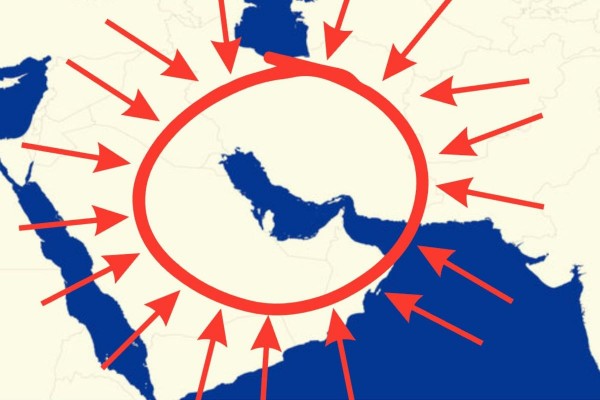

With TikTok explainers flying around and group chats spiralling, Critic Te Ārohi went straight to Professor Robert Patman to make sense of the escalating situation in the Strait of Hormuz. Patman, a Professor in the University of Otago’s Politics Department, specialises in international relations, global security, and US foreign policy. We asked him to explain the crisis in plain terms and what it actually means for students here in Aotearoa.
If you had to explain the ongoing situation with the Strait of Hormuz to a student who has been living under a rock, what would you say?
Patman says the Strait of Hormuz is “the world’s most important energy waterway.” Lying within Iranian and Omanian waters, the Strait has effectively been turned into a tool of conflict as of late. Following what he describes as “illegal attacks by the US and Israel on Iran”, Iran has responded by restricting access to commercial shipping through the Strait. In turn, the US has imposed its own blockade targeting vessels heading to Iranian ports. The result has been a rapid escalation with crucial global consequences, including skyrocketing prices of fuel and essential goods such as fertiliser.
That ripple effect is already being felt by tauira. “As someone with a diesel car, let’s just say that I have been walking a lot more,” one student, Sasha*, told Critic. She followed up with that she hopes the “Government does something about road user charges… It’s actually unfair now.”
Is this a new crisis, or part of a long-standing pattern of geopolitical tension in the region?
“Both,” says Patman. Tensions between the US and Iran aren’t new. He points to earlier flashpoints in 2011–2012, when Iran threatened to block the waterway over sanctions, and again in 2025 during a brief war involving the US, Israel, and Iran. But this time is different. According to Patman, before February 2026, commercial shipping through the strait was operating normally. The current situation represents a major escalation and “a significant break with the past.”
New Zealand feels far removed from this, but are there less obvious ways this could affect us beyond petrol prices?
The short answer is yes, and not in a good way. Patman says New Zealand is likely to face supply chain disruptions, rising costs, and mounting inflation. But beyond economics, he flags something more structural: the weakening of the international “rules-based order” that countries like New Zealand depend on. He also raises concerns about the Government’s response, suggesting New Zealand’s relative silence on the actions that triggered the crisis “raises awkward questions” about whether Aotearoa is doing enough to protect its national interests.
Many students are already forming their own views on the ever-changing situation. As Lucy* bluntly said to Critic: “We cannot be depending on America right now […] We need to be very loud in our objections.” Others, like fourth-year student Mia*, are finding silver linings: “The only good thing about this is people are finally looking to be more sustainable. I’m actually kind of happy about that.”
For now, the Strait of Hormuz might feel geographically distant, but as Patman makes clear, its impact is anything but. Whether it’s your weekly petrol bill or the price of groceries creeping up, this is one global crisis that’s hitting close to home.
*Names changed
