




Te Oraka, a gem in the centre of campus, is full of student-run businesses and second-hand goods. Lesser known is that it also houses a selection of rescued e-waste. Critic Te Ārohi dusted themselves off one dreary day, and went to explore.
Tucked in behind the second-hand clothes (nothing over $20), and free coffee, is the e-waste department: the backbone of Te Oraka’s second-hand tech sales. Head honcho of the scheme, Gareth Taylor, was as giddy as a schoolboy as he talked with us about his work.
Tech is brought to the department for e-recycling (stuff that is unfit for further University use) or e-reuse (stuff that can be put back into the University system). This can be anything from a laptop returned after a three-year contract, to other IT devices at the end of their lives.
The department also works backwards, distributing reusable tech around departments and therefore reducing the budgetary and environmental costs of buying more. In short, Gareth’s e-waste team are the traffic wardens of university tech, keeping everything in motion.
They dealt with 4,042 devices in 2025, and in doing so saved the Uni an estimated $40,200. That's 20,100 subway cookies. In that period, they boasted a 49% reuse rate and 51% recycling rate for 2025. The latter was cycled into not only Te Oraka but also to schools such as Kaikorai Valley College, and recycle groups such as Cargill Enterprises and Com2Tech. Cargill Enterprises employs over sixty people with some level of a disability, and Com2Tech furnishes lower socio-economic households across the deep South with tech.
Their E-recycling has gone international too — to Tonga and Samoa! This work holds a special place in Gareth's heart, and their team’s guiding pillars of sustainability and equity mean they send only their best devices to these Pacific nations. Dispatching replacements has an emissions impact, and the best devices will take longer to break, meaning their distribution remains as sustainable as possible.
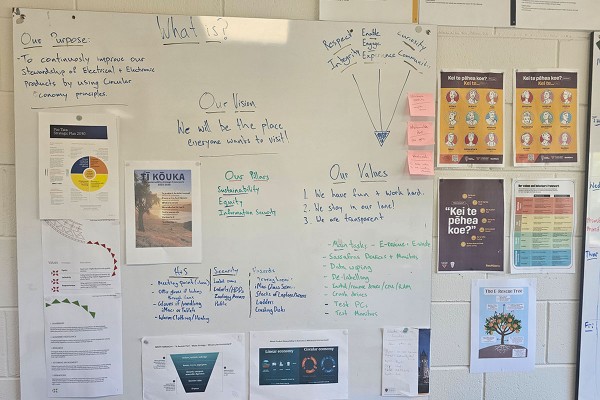
All in all, the man behind the curtain described his work as a “tough and amazing challenge.” Gareth isn’t satisfied yet though – he wants the department to be “the place everyone wants to be”, and has big plans for the future. While the department is not currently equipped to handle 20,000 students donating their own e-waste, Gareth is still keen to keep the e-waste conversation going with tauira. He hopes to engage with more students and “inform their further study relating to sustainability [while staying] focused on our purpose." Every person interested in the sustainability of tech counts: "One degree of deviation at the start of a race means not a great deal, but years down the track you can't even see your original target."
For all of you who want to check out this superstar department, or potentially get involved, Te Oraka can be found at 109 St. David Street. Meanwhile, up a tall tower, and down the corridor with a sign saying “classes other way!!”, Gareth and his team are working away.
Inquiries can be sent to E-rescue@otago.ac.nz
