




Widely considered one of the greatest shows on earth, the FIFA World Cup captivates the hearts of billions, promoting a sense of belonging, purpose, and, for many, an escape from daily life. This year, the crazed and colourful month of celebration culminated in a Argentina-Spain final enveloped by an ocean of 80,000 passionate voices wreathed in blue-white and red. This tournament has transcended all others to become an integrated cultural phenomenon. Even if you were just clocked in to the Haaland x Bellingham phenom, you made up the 70% of the world’s population this year’s FIFA World Cup was estimated to have captured.
‘The World’s Game’ plays a vital role in unifying cultures, breaking down social barriers and bringing people together from different walks of life. Football truly is for all – the sport presents an even social footing for all, offering hope or brief escape to those actively facing poverty, discrimination and hardship. It’s an inexpensive game to enjoy casually, games are often closely-contested, and there is no singular body type which is able to achieve success. Essentially, there’s a place for everyone. The sport has long been admired for its inclusivity, both in terms of viewership and participation.
And yet, the cheapest ticket for this year's final of the FIFA World Cup was $2000 USD. Ticket costs are directed by FIFA, and thanks to their dynamic pricing model, the most expensive tickets reached $30,000 USD.
Following this final in July, football was firmly swept into the rear view mirror. We resumed our daily lives, again faced with cost of living pressures, international political conflicts and horrific natural disasters. Against these prominent global issues, critical discussion of the World Cup appears both insignificant and unnecessary. But the point remains that FIFA, an organisation officially registered as a non-profit, still graciously accepted $15 billion USD in revenue for the concluded tournament cycle (a 54% increase on the 2022 World Cup in Qatar).
Many want to ignore this discussion completely – why ruin a spectacle which creates such joy, excitement and unrestrained displays of human emotion? While it may be a tournament that many claim to bring out the best of humanity, it remains increasingly worthwhile to take a closer look, and just as relevant for us Otago students tucked down in the corner of the world.
From Switzerland to The World: Football’s Extensive Reach
FIFA presents themselves as promoting social values of equality, respect, inclusion and education: an organisation helping to build momentum toward positive social change. This is achieved through developing football across its 211 member nations, with the aim of transcending borders and political differences.
FIFA’s ‘Football for Schools’ programme is a key illustration, implemented to help young people develop important lifelong skills through football-related drills and games. The initiative is particularly active in nations spreading across Africa and Southeast Asia, and this philosophy benefits the organisation to an immense degree. It once offered an ethereal shield protecting from scrutiny, which has since been battered and dismantled following a decade of high-profile cases of corruption and controversy.
In 2010, it was revealed that powerful officials accepted cash bribes to secure votes for South Africa’s bid to host the World Cup, which proved successful. Former president Sepp Blatter was banned by FIFA’s Ethics Committee for a mysterious $2M payment made to Vice-President Michael Platini in 2011. Both got the boot out the door, replaced by the incumbent President Gianni Infantino. The former sports lawyer has attracted plenty of controversy all on his own.
FIFA itself is a world-shifting commercial force. They actively collect enormous profit margins through corporate sponsorship and attractive media rights. Television companies bend over backwards in desperation for the capacity to portray the drama and tension of the tournament through their own profitable lens. Hospitality packages and ticket prices also play a vital part, alongside the obvious abundance of advertising revenue.
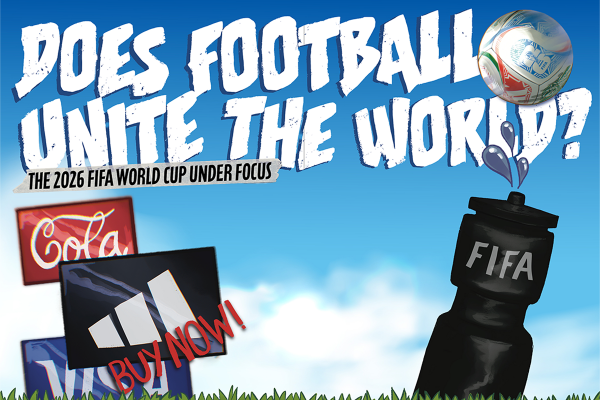
FIFA has a plethora of high-profile sponsors who contribute significantly toward the success of the organisation and successive World Cups. Although specific figures remain confidential, Tier One partners including Adidas, Coca-Cola, Qatar Airways, and VISA are believed to furnish FIFA with a grant total of around $200M USD per four year cycle. In return for their investment, they receive a premium level of brand exposure, including exclusive visibility across a variety of FIFA events. This also includes intellectual property agreements, allowing companies to openly promote and associate themselves with the image and festivities of the World Cup.
Across the 2023-2026 cycle, FIFA projected a $3.2B USD revenue from corporate marketing partnerships alone. The recently concluded tournament (co-hosted by the United States, Mexico and Canada) is believed to have engaged around 70% of the world’s population. This is a developing figure, produced by independent media-auditing companies looking at cumulative audience metrics, and includes anyone who engaged with the tournament in any capacity. This involves simple online interactions through social media, such as watching a highlights package in between (or during) lectures. Finalised data is expected to be released in the coming months. Official reports predict a new record, dwarfing the 2.9 billion television viewers of Qatar 2022, and exceeding the previous tournament’s global engagement audience of 5 billion (around 60% of the world’s population).
As demonstrated by all of this, FIFA undeniably holds a significant degree of influence. This often flies under the radar due to the perceived authenticity and purity of the world’s game. Sociologist Jay Coakley’s Great Sport Myth presents a similar perspective: sport is inherently positive, and that intrinsic hopefulness is transferred to those who engage with it. Conveniently, critical analysis becomes unnecessary. But here's the interesting part. With FIFA being such a commercial force, where does all the money go, and is this the aim of the game? It’s worth wondering whether FIFA is genuinely invested in prioritising football for all, or whether they content with keeping their fans as deer in headlights – captivated in constant awe at the tournament’s bright colours, wide smiles and extravagant celebrations.
Many argue FIFA’s objectives and programmes look good on paper, while leaving impoverished children to kick their balls of rags while heavy pockets continue to be filled. In the wake of recent changes to the World Cup’s structural and economic framework, the growing questions around commercialisation and controversy have become more and more blatantly apparent to even the most casual fan.
Outlined below are the eyebrow-raising changes to be aware of, and a discussion of the increased commodification, commercialisation and politicisation heavily influenced by the United States. What is Critic Te Ārohi here for if not to let me nerd out and unpack the perceived benefits and costs of this year’s changes to The World’s Game.
The Changes
Number Of Teams
In 2026, the number of teams competing at the tournament was expanded from 32 to 48. This was a significant adjustment, with the 32-nation format being accepted as the norm since 1998. Notably, this also increased the total number of matches from 64 to 104. The chage coincided with the introduction of a ‘Round of 32’ knockout round before the traditional Round of 16. So, for Spain to emerge as eventual champions, they needed to win five knockout matches.
This change in format had been pushed by FIFA President Infantino in 2016, with many believing this was his attempt to guarantee a successful presidential election as expanding the nations involved would likely secure more votes for his continued leadership. This granted more qualification spots for respective federations. For example, the number of spots open for European countries (UEFA), grew from 13 to 16. Africa (CAF) also received an increase to 9 automatic slots, with South America (CONMEBOL) and North/Central America (CONCACAF) both being given 6 qualification spots.
Being able to introduce more countries into the World Cup spotlight is an alluring carrot to dangle. The impressive windfall offers a much-needed financial boost for respective nations, especially those with struggling economies with little money to put aside for football. Countries were automatically awarded $10M USD for participating in this year’s tournament, with an extra $2.5M for preparation. Additional bonuses existed to reward teams for making it through respective knockout rounds, incentivising successful performances. Players also received a share of these profits, the amount of which varied from nation to nation.
The bottom line is that the expansion provided an estimated 50% increase in tournament revenue for FIFA, jumping from $7.6B (Qatar 2022) to over $14B. According to FIFA’s own reports, roughly 94% of that revenue goes back into supporting football, while the remainder goes toward governance and administrative costs.
This change certainly gave countries such as New Zealand an easier route to qualify for the tournament. Traditionally, the winner of our Oceania federation (OFC) would play the fourth place team from North/Central America’s (CONCACAF) qualification group, and we’d usually lose these matches. However, the new expansion removed the need for this playoff and gave the Oceania Federation winner a direct entry to the World Cup. This allowed the All Whites to compete on the global stage against Belgium, Egypt and Iran. This produced similar opportunities and historic first appearances for Cape Verde, Jordan, Uzbekistan and even Curacao, which boasts a population of only 155,000. For other nations, the extra qualification spot or two were less of a safe haven, with qualification remaining competitive and tightly contested.
An improved opportunity for smaller nations to compete at the tournament is revered for aiding nation-building to an enormous audience. Further financial incentives from FIFA contribute towards long-term growth of football, and wider social development within these respective smaller nations.
However, some argue the expansion of teams dilutes the quality of the competition and its prestige. With almost double the total games, visual fatigue begins to set in. Speaking as someone who spent the semester break parked up on their parent’s couch, there were definitely a few matches between ‘small’ teams which didn’t feel particularly exciting. But if it were my country playing, I’d have a different opinion. The 39 days flooded all social media, and was definitely bordering on oversaturation. This may detract from the spectacle of the World Cup, which not long ago was reserved for the strongest nations.
Hydration Breaks
“Hydration breaks” flooded every headline this FIFA World Cup. This controversial rule change introduced two compulsory three minute breaks per half of every match, including those inside temperature controlled stadiums. This effectively divided games into quarters.
FIFA claimed this alteration was made to prioritise player welfare amidst sweltering temperatures. The intense heat threatened to exceed the recommended temperature threshold for safe physical activity of 28 degrees, after which the human body struggles to thermoregulate. Exercising during extreme conditions can result in severe heat exhaustion, as the sweat on your body is unable to evaporate.
However, professional footballers of this calibre are accustomed to playing in high temperatures and environments in which we’d be struggling to get off the couch. Consequently, many claimed the introduction of hydration breaks changed the fundamental structure of these games to an unacceptable degree.
Conveniently, these breaks also offered fresh advertisement opportunities, and games began to resemble the NBA with so many compulsory stoppages in play. FIFA denied that the change was intended to produce higher revenue, citing broadcast contracts that were signed well in advance. Regardless of intentions, more breaks meant more advertising, and FIFA remained more than happy to reap the rewards of increased commercial presence and revenue.
Dynamic Ticket Pricing
FIFA also added ‘dynamic pricing’ to their ticketing structure, meaning that ticket prices fluctuated in response to changing levels of demand. Where demand was once mediated by the marketplace, with this change stability of prices went straight out the window and ticket prices skyrocketed. Prices often surged to over ten times the equivalent of Qatar 2022, and average tickets for a group stage game moved from around $250 USD (Qatar 2022) toward $500 (2026). FIFA was accused of price gouging and making the World Cup increasingly inaccessible for the everyday passionate fan.
It’s pretty apparent that FIFA may be (literally) squeezing supporters for all that they’re worth. For example, official resale platforms were launched to provide security and stability for fans wishing to pass on their tickets, but FIFA took a 30% commission from these resales, leading to accusations of maximising tickets as financial instruments to produce premiums on top of existing ticket revenue. Adding on the extra costs – flights, accommodation, and transport – attendance of the tournament is more of a lifelong pipe dream rather than a realistic option for most fans. The World’s Game could only live up to its name with the support of fans from around the world, but FIFA didn’t seem intent on keeping the prices manageable.
FIFABowl? The Final’s Shiny Halftime Show
The Superbowl’s famous half-time show was essentially transferred across to this year's World Cup final. This inaugural half-time show starred Madonna, Shakira, BTS and Justin Bieber, and although the musical performance only lasted 11 minutes, the total half-time break stretched to 27 minutes to accommodate the set up and disassembly of the stages. This breached FIFA’s codified laws that a halftime period should not exceed 15 minutes in duration (IFAB Law 7.2). But who cares, I guess.
For the most important match of the last four years, this adjustment must have been quite a noticeable difference for the players. Elite footballers have heavily regulated half-time routines, ensuring their bodies and muscles remain actively warm during these inactive periods. Doubling the half-time break required changes in these routines which likely put unnecessary additional stress on the players and increased their risk of injury. At the expense of the players, the extended halftime break conveniently provided even more broadcasting slots for additional advertising exposure to the mammoth international audience waiting to see who would be crowned the winner of the 2026 World Cup.
Controversies On Controversies: Further Consequences From Prioritising Profit
During USA’s Round of 32 match against Bosnia and Herzegovina, US player Folarin Balogun was shown a red card and sent off for stepping on an opposition’s ankle. Because a ban accompanied the card, this meant the States would be without their star player for their next match. Donald Trump personally called up President Infantino to reverse the decision, which Trump felt was wrong. The upshot was that Balogun’s suspension was delayed for a year following Article 27 of FIFA’s Disciplinary Code, which basically says FIFA can suspend the implementation of a disciplinary sanction. The USA’s upcoming opponent Belgium attempted to lodge a formal complaint, but FIFA basically told them to get fucked.
The outcome led to some pretty vocal outrage, like why the decision about Balogun was influenced by politicians rather than the sporting officials. Infantino conveyed that he had an open conversation with Trump, explaining to him that the decision-making process was both independent and autonomous. But the wider public weren't really convinced. Interestingly, Belgium smoked the US 4-1 anyway, with the players openly taking the piss out of Trump during their goal celebrations. Following the final, Trump also refused to leave the stage after presenting the trophy to Spain, maximising his visibility and the leveraging of a close association with Infantino and the World Cup. Trump has also affirmed the US Government would support Infantino becoming the next United Nations Secretary-General, with elections later this year.
Trump’s level of influence has raised significant concern across the world, especially since FIFA previously aligned themselves with Trump’s administration when awarding him their inaugural Peace Prize in 2025. IMHO, Trump’s increased influence threatens FIFA’s ethos and the purity and identity of the tournament – as a non-profit non-governmental organisation, FIFA ought to be immune from any influence, including political.
Another controversy surrounding this year's World Cup was Iran’s participation. The team were subjected to strict travel mandates due to global political tension, and this undoubtedly tainted their World Cup journey. Their training camp was relocated from Arizona to Tijuana (Mexico) to prevent security concerns. They were also forced to enter the United States the day before (or often hours) before a match, which denied them fair preparation and negatively impacted their recovery routines. Key logistical staff were also denied entry into the country.
Putting aside the political and moral questions of whether Iran should indeed have been participating at all, Infantino noted it was at his direction that they were permitted, and yet they were heavily disadvantaged. Once the decision was made to allow Iran to participate, FIFA had all the power to ensure that they were placed on an equal footing with other competing nations as their ethos proclaims, and yet fell short in upholding football’s fair standing and equality in practice. The selection of Saudi Arabia to host the 2034 World Cup further echoes these previous concerns surrounding FIFA, sportswashing and human rights regimes. For an organisation with so much influence and so many fans, it is actions like this that make it clear football is not being utilised as a global equaliser as well as it could be.
The Economic Argument: Growth, Re-Distribution, and Reach
FIFA’s changes to the World Cup directly correlate to the increased tournament earnings. This outcome satisfies a financial definition of ‘success’, satisfying FIFA’s leadership and commercial partners. President Infantino concluded that “this FIFA World Cup in particular has opened a lot of doors, a lot of opportunities, a lot of possibilities,” adding that “we will continue to work together to unleash the commercial potential that we have to make football even better, bigger and even more global all over the world.”
There is no doubt that the achievement of both financial and developmental objectives aren’t mutually exclusive. In an increasingly modern global environment, football must continue to adapt and establish itself across new markets and terrains, otherwise risking fading away into obscurity. So, adaptability should be appreciated.
One example of FIFA’s community outreach being strengthened through heightened revenue is ‘FIFA Forward’, their flagship development programme. FIFA Forward directs funding towards important infrastructure, and strengthens coaching and grassroots programmes. It offers focused, detailed educational support for member nations. It’s countries such as Aotearoa New Zealand that receive a direct share of this funding, and it trickles down into our coaching programmes, local tournaments, and tangible improvements within our communities. NZ Football received $12.5B USD for their participation in this year’s World Cup, a huge boost for football in Aotearoa.
Another country hugely impacted by FIFA funding is Cape Verde, who were rewarded for their historic run to the Round of 32 this year with $23M USD in prize money. Poverty has been a prolific issue for Cape Verde for years. Amidst recent improvements, FIFA has given Cape Verdeans and countless others across the globe something to smile about. Cape Verde’s Josemar Diaz (Vozinha), 40-year-old standout goalkeeper for the team, kept the focus on the achievement of his country, and the pride and satisfaction felt when the team were able to play against such high-calibre opposition. “We earned our qualification and managed to fulfil a dream, not just for me and the national team, but for the entire Cape Verdean nation,” he explained. Regardless of the game’s results, playing at the tournament is a massive achievement worth celebrating, and if not for FIFA's expansion to 48 teams, we wouldn’t be able to observe and enjoy the compassion and beauty within the adversity of these uphill struggles of smaller countries against far larger wealthier nations. FIFA has made this possible. This is what football is all about. It’s swimming against the current and persevering with love through the pressures and labours which life may send our way.
Sporting mega events also contribute to local and national economies. Consumer spending increases massively within cities in the host country, hugely benefiting their GDP. This year consumer spending in US cities increased over 6% compared to the previous year, pumped up by the millions of fans gathered to attend matches. Over 185,000 opportunities for full time employment were created, and bars, restaurants and hotels received a large spike in revenue across the celebrations.
FIFA didn’t take long to grab headlines once again when President Infantino announced plans to create a subsidiary named ‘FIFA Forward Enterprise,’ handling commercial rights for major tournaments. This would sell a 20% stake to external investors to unlock extra funding for associations and fast-track football development. FIFA Forward was set to receive a boosted $20M USD for nations, a massive increase from the current $8M put aside for the upcoming 2027-2030 World Cup cycle. Infantino has since backed down due to significant opposition to treating the World Cup as a product for private investment.
However, Infantino is also exploring the opportunity to expand the tournament to a massive 64 teams, a change potentially implemented as early as 2030. It’s understood that FIFA members were not informed of these plans until they were announced, highlighting a lack of transparency around FIFA’s governance. This would mean larger costs, greater influence and stronger financial performance.
Does Football Continue To Unite The World?
In recent years, controversy has been woven through the fabric of FIFA’s operational framework, despite their attempts to redirect focus toward their extensive contribution throughout each member nation. Unfortunately, two things can be true, and while FIFA has absolutely made incredible contributions to countless countries globally, the decision-makers at FIFA’s apex remain dependent on the consumption of football as a commodity. From their mountain of riches, FIFA aren’t struggling to make ends meet.
Despite all this, football undoubtedly remains an enduring force for change. It provides a chance to bring us closer together and promotes community and a sense of belonging that is truly unique to the sport. Football’s global reach and footprint is incredibly pervasive. It is increasingly debatable how much responsibility FIFA can take for all the positive effects and characteristics of a sport which captivated the world long before they asserted governance and commercial power. Football would still exist if FIFA shut up shop.
“Football is for the fans” is a saying which endures the passing of time. It exists from, for and through everyone who caught a glimpse of a tackle, throw-in or goal. It’s for those who took time out of their day to experience the emotion, flair and World Cup magic. Resulting from a deep faith in the power of humanity, I believe that football will continue to be for the fans, and if the fans were to abandon FIFA to their devices, the lights in Zurich may flicker out after all. However, as part of the global stands of fans that sustain the game, I want FIFA to remember that it’s us that make their tournaments so globally significant, and consider whether they’re doing enough to support and uplift those people who give them power. FIFA needs to address how their flagship tournaments can become more accessible, realistic and achievable for an everyday football fan. It’s a set of scales which FIFA have carelessly let fall out of balance.
The world deserves a break from the negativity we face in the media. Thankfully, the magnetism of the World Cup is likely here to stay. There is an enduring sense of belonging and community which expands to all who become invested in the celebration. When nations exit the tournament, fans pick up new favourite countries to support, resulting in a display of diversity and camaraderie, with nobody wanting this rollercoaster to come to an end. This year Norwegian fans gathered in large numbers rowing and chanting in uniform, gaining significant media coverage. Japan’s supporters stayed behind long after the final whistle to clean the stadium of rubbish, out of a cultural respect for shared spaces. Scotland’s ‘Tartan Army,’ made the pilgrimage across the North Atlantic, kilts at hand and produced an unreal effort to drink all the beer in Boston. By all reports, they got pretty close. Stories of this kind are abundant in nature.
The tournament consistently offers fantastic displays of lighthearted fun, existing independent of political persuasion or commercial influence. It’s the beautiful displays of humanity in the World Cup that gives it its vibrant capacity to bring people closer. It remains an unrivalled celebration, a party to which the whole world receives an invite. If you're still unconvinced, take a look at the people dancing in the stands with smiles on their faces, and you’ll start to see what the beautiful game has always been about.
