



When you’re a kid, someone inevitably asks what three things you’d take if you were stranded on a remote island. I never expected to find out, so the question stayed purely hypothetical. Until it wasn’t. Now, the remote island had a name: Rapa Nui, also known as Easter Island. But the one thing I’d need most was something I’d never expected to pack at all: tōku reo Māori.
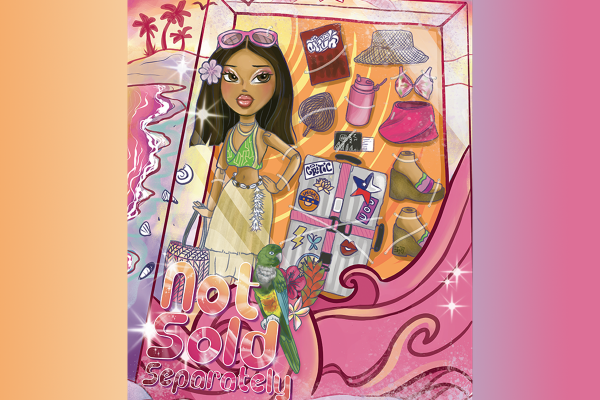
Thousands of kilometres from home, I discovered how much of it I’d brought with me. Te reo Māori, it seems, comes as part of the original package – not sold separately. And it turns out that I wasn’t so stranded at all.
Inside The Box
I knew I was taking my language with me long before I quite knew what I was taking it into. The rest of the contents were less certain.
Just this past June, I was one of eight University of Otago students selected to travel to Rapa Nui through the Prime Minister's Scholarship for Latin America. The scholarship brought together tauira from across all disciplines at the University, and I was suddenly catapulted from knowing Rapa Nui through photos to standing inside the picture. The itinerary was simple: three weeks in Rapa Nui, followed by a week in Santiago, Chile.
Known to much of the world for its remarkable moai, Rapa Nui is one of the most remote inhabited islands in the world, sitting far out in the eastern reaches of Te Moana Nui-ā-Kiwa – the Pacific Ocean. On paper, it was about as far from home as I could get. In practice, I was about to discover that distance is a funny thing.
For three weeks on the island, I lived with a local host whānau, where I became close with my host mum, Laura Tarita Alarcón Rapu. Very quickly, though, she simply became Mama Tarita. I spent my days moving through her world: winding along volcanic roads, visiting whānau, sitting beside the moana, preparing kai and appearing wherever there was mahi to be done. Little by little, the unfamiliar became intimate. It was a vivid introduction to a life that, only weeks earlier, I had known only from the other side of the ocean.
One day, her whānau hosted an umu at Hanga Piko Marae for a community celebration where I spent the day as a rikawera and kaiāwhina, helping to prepare kai for more than 600 people. The scale of it was dizzying: Kai being prepared, people moving, hands working, and several languages folding into one another. And yet, somewhere in the middle of all that movement came the strangest feeling of déjà vu. It was like being back in the wharekai at home.
That feeling kept turning up. Culture was not something I was standing back to observe, but something I was moving through. It permeated everything – the way people gathered, the stories being told, the carvings and clothing, art and writing. And the longer I spent with Tarita’s whānau, the more I began to recognise myself in their technicolour.
Maybe the ocean had something to do with it. Polynesians had been crossing Te Moana Nui long before the nations we recognise today existed. Perhaps, then, I shouldn’t have been surprised when I started finding that connection in places I could hear.
Contents May Vary
For a speaker of te reo Māori, te re’o Rapa Nui sounds familiar and strange at once – close enough to keep up with, but slippery enough to resist easy understanding. With te re‘o Rapa Nui, I found myself listening differently. I would catch a word here, recognise a sound there, and use the context around me to piece together what was being said. It was part listening and part instinct. Slowly, I started collecting kupu.
Each recognition arrived like a tiny spark. Haka, for example, immediately reminded me of whaka. Horo, meaning fast, sounded like horo. Tino meant body. Mahute recalled aute, while taoraha, whale, sounded remarkably close to tohorā. Other words became familiar simply because I heard them over and over again: taporo for lemon, miti for salt, kotikoti for cutting or chopping, mōrī for light. Sometimes I even heard echoes of the mita of Kāi Tahu. Their to’oku and to’ona sounded much like Kāi Tahu’s tōhoku and tōhona. As a Kāi Tahu descendant living and studying in Te Waipounamu, hearing those echoes on the other side of Te Moana Nui was electric. For a moment, the vast distance between us seemed to collapse.
Then there were the conversations that seemed to contain half the Pacific. Spanish was deeply embedded in everyday life, alongside te re’o Rapa Nui and, for some, English as a third or fourth language. There were moments when a single conversation became almost kaleidoscopic: Spanish, English, te re‘o Rapa Nui and te reo Māori folding in and out of one another. Where someone would speak Spanish, another person would respond in te re’o Rapa Nui, I might recognise something through te reo Māori, and together we would somehow find our way to understanding one another. No single language carried us all the way; together they did. I had arrived thinking of te reo Māori as something that belonged to home. Instead, it had become part of my carry-on: something I could reach for when I needed to navigate somewhere thousands of kilometres away.
It made the question of whether te reo Māori is ‘useful’ feel different. We often hear the argument in Aotearoa that te reo Māori “won’t get you anywhere,” and that English is the language you need if you want to travel, work internationally and engage with the wider world. But Rapa Nui offered an almost perfect antithesis to that argument. Te reo Māori had travelled across the moana with me, giving me reference points for another Indigenous language and a way to recognise connections I might otherwise have missed.
Those connections were not only linguistic, though. Like te reo Māori, te re‘o Rapa Nui has had to survive the pressures of colonisation and the dominance of another language. María Virginia Haoa of the Rapa Nui Language Academy has described how, when formal education was introduced on the island in 1934, te re‘o Rapa Nui was excluded from schooling, and children were taught in Spanish rather than their native tongue. UNESCO records a dramatic decline in te re‘o Rapa Nui, particularly amongst younger generations, with a 2016 sociolinguistic survey finding that only 10 per cent of Rapa Nui school-aged youth spoke the Indigenous language, compared with 76 per cent in 1976. More than several decades later, the effects of that displacement remain visible in the intergenerational transmission of the language.
Suddenly, the questions I was hearing on the island felt visceral in their familiarity: how do we keep our language alive? How do we create spaces where people feel safe speaking it? And how do we ensure that revitalisation does not create new divisions between those who speak fluently and those still finding their way around? I knew those questions because I had grown up inside them.
Generations before me were punished for speaking te reo Māori; its transmission to their tamariki was disrupted. Like so many whānau Māori, that interruption meant my own parents were not raised with the language that belonged to them. Their response was to reach back for it: returning to their hapū, learning from elders, studying at university, and working to recover what colonisation had tried to sever. When they eventually had tamariki of their own, they made a deliberate decision that we would be raised in te reo Māori – an irrepressible act of reclamation. And so, my first language was te reo Māori.
I had grown up learning that a language survives not only when it is spoken, but when it is lived.
Handle With Care
That understanding came into focus in the simplest of places: a local Catholic primary school, where the children were practising kai kai – with pieces of string looped between their hands, they created different shapes and patterns, each accompanied by a story. Watching those little worlds appear between their hands, I was reminded of the many ways te reo Māori lives beyond ordinary conversation. It lives in waiata and mōteatea, kapa haka and karakia, mahi toi and whaikōrero, as well as the everyday practices handed down through generations.
From there, I began to recognise the same principle throughout my time in Rapa Nui. Indigenous cultural arts are not simply ways of expressing a language; they can be the waka that carry it. Over the weeks that followed, I saw that waka everywhere: in carvings and traditional arts, in the making of cultural attire, in books and the translation of ancient manuscripts, and in both traditional and contemporary music. Language was not sitting still. It was dynamic, moving through hands, voices, pages, and generations. I saw it in the work of the Rapa Nui Language Academy, and in the many people who dedicate their lives to ensuring te re‘o Rapa Nui continues to be spoken by generations still to come.
Every generation leaves its fingerprints on what it inherits. It’s no different with culture. Polynesians ventured across Te Moana Nui to both Aotearoa and Rapa Nui, carrying shared knowledge, traditions and language with them. But once they reached these vastly different landscapes, those shared foundations began to take on lives of their own. The inheritance was shared; the expressions became wonderfully and inevitably different – shaped, stretched, and coloured by the worlds that received them.
Over hundreds of years, the forest, mountains and colder seasons of Aotearoa influenced one expression of Polynesian culture, while Rapa Nui’s volcanic landscape and extraordinary isolation shaped another. The traditions travelled, but they grew roots in different soil, becoming layered with the places and people that carried them.
Language is kinetic, too. It refuses to sit still, gathering new words, new expressions and new contexts as the people who speak it move through the world. For te reo Māori to live, it needs places to live beyond the classroom – in homes, on marae, and in everyday conversations. And in Rapa Nui, I began to see language and culture moving together.
María Virginia Haoa, co-founder of the Rapa Nui Language Academy, describes te re’o Rapa Nui as inseparable from the ways people think, feel, and understand their world. When a language is endangered, she argues, the loss reaches well beyond its vocabulary; the cultural foundations carried through that language are placed at risk too. That made the revitalisation efforts I was seeing around me feel bigger than language lessons. They were about keeping the world and the words intact enough for the next generation to inherit. Language transmission keeps moving once the lesson ends – nothing can survive sealed inside a box. Now, the challenge is making sure there are always waka for them to travel in.
Interestingly, it’s a philosophy that is also reflected in contemporary Rapa Nui language education. Teaching material produced by Chile's Ministry of Education emphasises learning te re‘o Rapa Nui through practice, culturally significant places, intergenerational relationships and encounters with knowledgeable members of the community. Maybe that’s why participating in everyday life in Rapa Nui affected me so deeply. I was seeing the relationships that anchor a language: people, places, stories, practices and ultimately, children. Those relationships felt remarkably familiar. Our languages have survived because people have carried them.
While the similarities between te reo Māori and te re’o Rapa Nui were beautiful to discover, there was another connection between our stories that was harder to ignore: the languages we are still fighting to keep alive exist alongside dominant languages that can so easily crowd them out. Among the revitalisation initiatives supported in Rapa Nui is Hōnga'a Re'o, inspired by the Kōhaka Reo movement in Aotearoa and centred on strengthening te re‘o among preschool-aged children. In this mahi, I saw two Indigenous peoples, across opposite reaches of Te Moana Nui, recognising the same urgent truth: language has to live close enough to childhood that speaking it can become ordinary again.
A language, after all, doesn’t come with an instruction manual. Its survival depends on what people do with it.
Beyond The Box
The further I travelled from home, the more magnetic its pull became.
I had always understood the ocean as distance. On the island, I began to see it as a pathway: one that Polynesian peoples had travelled for generations, carrying language with them. Two flights away from Aotearoa, te reo Māori unlocked another Indigenous language for me. Words I had carried from across Te Moana Nui became keys, turning in locks I never knew were there.
Still, there will always be someone who asks where speaking Māori will “get you.” The better question is what it can open. English was not the language that connected me to the world this time. With te reo Māori in my back pocket, I found the experience of a lifetime thousands of kilometres from home, and somehow closer to it than ever.
As a kid, I thought being stranded on a remote island meant choosing three things to take with me. I never imagined that te reo Māori would be one of them, because I didn’t have to pack it. It met me there, crossing the ocean before I did.
Turns out, te reo Māori really is for every adventure – and, as the box promised, not sold separately.
