


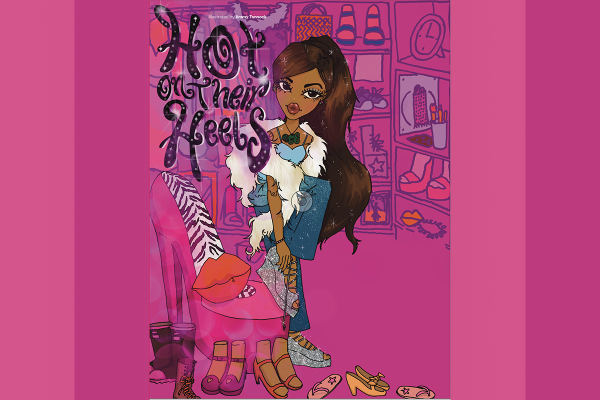

Like a pair of hand-me-down shoes, te reo Māori is an inheritance. Well-worn, repaired when it needed mending and kept with its next wearer in mind. The leather may be scuffed and softened by another person’s feet, but when you put them on, they fit. Each generation leaves its mark on what is passed on – hot on the heels of whoever steps forward next.
Imagine, then, that these shoes could take us further back. We step into them and find ourselves transported to Aotearoa before the words ‘New Zealand’ had crossed the ocean or existed on any map. The whenua is familiar through whakapapa, yet strange in almost every other way. Somewhere across it is an ancestor, recognisable despite centuries between past and present. The distance shrinks, and there is an instinct to speak, to introduce ourselves and say something that might bridge all those generations. But before the words come, hesitation arrives: would the words be understood?
The language passed down over generations has not remained untouched. It has been adapted, protected and reshaped as each wearer found a way to carry it forward – always in fashion despite season or generation. But if the past could speak directly to the present, what would be understood, what would sound strange, and what might be mistaken for something entirely new?
Manufactured in Aotearoa
The surprise is that the conversation would probably not sound foreign at all. Much of it would be pretty recognisable: familiar words, similar structures, and familiar ways of putting an idea together. Rather, the uncertainty would sit in the finer details: the words that no longer mean quite what they once did, an expression that has slipped from everyday conversation, or the turn of a phrase that sounds formal now but was once completely ordinary. This is part of what falls under the umbrella of te reo tawhito, and even that term comes with its own label. Depending on who is speaking, it might mean the Māori language spoken before the great urban drift, or further back, before Europeans arrived on these shores, and before that too.
To work out what might actually be waiting on the other side of that linguistic distance, I spoke to Dr Anaha Hiini, a te reo Māori expert from Te Arawa. For him, the question begins with the word tawhito itself. “What’s tawhito? How tawhito are we going?” Rather than placing a hard date on the past, he thinks about linguistic distance through whakapapa. For example, a person might speak comfortably with a great-great-grandparent, who in turn could speak with the person before them. Each neighbouring generation would understand the one beside it. But leap across the entire chain and the resemblance becomes harder to follow. “I think if I went back 200 years to my ancestor Te Ohu, I would struggle to understand him,” Anaha says.
Yet difficulty does not mean disappearance. Historical accounts from the nineteenth century preserve a language passed down by kaumātua born in the 1700s, while older forms of the Māori language remain untouched in other forms. “We still speak tawhito,” Anaha explains, “especially in karanga and whaikōrero. That reo tawhito was everyday to them [as it] was the only language they knew how to speak. We only speak it in oratory or when calling on our visitors.”
Some of the language we now reserve for the marae may once have been ordinary conversation. That shift in where language lives is one small clue to a much larger story: understanding the Māori language of the past requires more than knowing which words have survived – it also requires stepping into the world that gave colour to those words.
Made To Measure
Long before English entered the picture, the Māori language already sounded different from one place to another. The people who settled across Aotearoa did not leave their language untouched as they adapted to new landscapes and built lives around them. Over time, iwi developed distinct mita, with differences in pronunciation, vocabulary, expressions and the stories attached to particular places – a language anchored in character.
For Tātai Henare, of Ngāti Hine and Te Whakatōhea, that character is inseparable from the environment. “When I think Māori, I think taiao,” he says. “One has to remember that all those little nuances around te reo Māori are based on the environment that their ancestors were brought up in.” The hills, waterways, forests, birds and coastlines of a particular place were not simply things to describe, but formed the architecture of how people understood and expressed the world around them. That relationship can be heard aloud in mōteatea – a traditional-style lament or sung poetry. Tātai describes a traditional composition method in which the shape of the whenua is reflected in the music: where the melody rises with the peaks, and dips where it mirrors the valleys. The relationship between place and language becomes especially clear when the same idea is expressed through different traditions; the words may belong to the same language, but the references, stories, and associations have been shaped by entirely different surroundings.
Dr Anaha Hiini sees the same principle in the language of his own tūpuna. The world they knew, he says, was “the land and the sky”, “the trees and the birds” and “the waters and the fish”. That world flowed into the way people expressed and spoke about courage, memory, grief and love. Before a battle in which his own people were heavily outnumbered, his tupuna Te Roro-o-te-Rangi said: “Ruia taitea, kia tū ko taikākā, ko ahau anake.” The whakataukī evokes a tree that is stripped of its softer outer wood until only the hard heartwood remains: those without the courage to stand should leave; only the strongest should remain. “I believe because of the environment that he knew, that was the only way he knew how to talk,” Anaha says. “Whakataukī of today, from hundreds of years ago, was an everyday language back then.” What sounds poetic and ceremonial to us may once have been everyday communication.
Shoes Off At The Door, Please
Even 200 years ago, there was never one national version of te reo Māori waiting to be streamlined. For generations, te reo Māori was learned through te reo o te kāinga: the language of home. Tamariki listened, mimicked and absorbed the environment around them. The language of the kāinga was not always the language of the marae, ngahere, moana or formal whaikōrero. Tātai describes those registers as clothes made for different occasions. “I liken it to a pōwhiri process and the food that precedes it. One is formal, and one is informal. So, ōkawa would be used in formal settings, such as pōwhiri. Ōpaki is used in general conversation.” In other words, knowing how to speak was also knowing where, when and with whom you were speaking.
That relationship becomes harder to maintain when the first encounter with te reo Māori happens outside the kāinga. Today, many people learn through school, wānanga, university or language apps rather than those traditional settings. While these pathways are essential to revitalisation, formal learning can create the expectation that there is one correct way to approach and speak the language. And once one version becomes the default, everything else can start looking like the wrong size. But just like how it’s rude to tread through the whare with your shoes on, it’s just as rude to stomp the character out of te reo Māori. Leave it at the door, please.
Standardised te reo Māori can operate like fast fashion: easy to produce, easy to distribute and designed to fit as many people as possible. The problem isn’t the pattern itself; it’s forgetting that it was ever only a pattern. When reach and convenience become the priority, the finer details can get lost: dialects, street knowledge and idioms that tell us where language came from and who carried it there. Like clothing stripped of its makers and environmental origins, the language may remain recognisable while becoming disconnected from the people and land that gave it shape.
So, if standard te reo Māori, in all its glory, is off-the-rack, then te reo o te kāinga is tailor-made. It carries the measurements of a particular place and its history. While a standard pattern can help a learner follow the seam, the trouble starts when we mistake standard sizing for the only correct fit. Maurice Taia, of Te Whakatōhea, knows exactly what can get lost in the alteration. He contrasts te reo Māori learned through whānau and iwi with the standardised language of the classroom. Standardisation can make teaching more accessible, but it can also iron out the tribal differences that tell us where a speaker comes from. Maurice learned that lesson sharply after returning to Te Whakatōhea from university, where most of his kaiako had been from Tūhoe. During oratory, he used kokona instead of kokonga, only for Koro Teriaki Amoamo to correct him: “We do not say kokona. We say kokonga.”
That correction might look small on the page. It isn’t. One sound can carry the expression of an entire whakapapa. Dialect is not an accent pinned onto the language as a finishing touch; it carries the sound of whenua and generations of tribal memory. When learners are told their whānau pronunciation is wrong simply because it differs from classroom language, revitalisation risks becoming another kind of erasure. If standardisation gives us a common wardrobe, mita tells us whose clothes we are wearing.
That is why the answer is not to reject standardised language, but to know what it is – a shared foundation, not a replacement for what came before it. “Hold on to what you learned at the start,” Maurice urges learners. “Keep that as your tūāpapa (foundation) for your reo. Be aware of the] mita of other iwi. Maintain your own.”
Same Sole, Different Step
The same distance between the ordinary and the unfamiliar appears when looking beyond our own shores. Five centuries of separation did not make Māori and people of Ra’iātea strangers to one another, but it did give them entirely different worlds to describe. When Tupaia, the Ra‘iātea-born navigator, travelled aboard the Endeavour in 1769, he could converse with Māori despite the centuries-long separation between Māori and the Pacific. Joseph Banks recorded that their languages were similar enough for the two to “tolerably well understand” one another. Yet the Aotearoa in front of Tupaia was unlike anything he had known in Ra’iātea: fortified pā, vast kūmara gardens, and unprecedented forms of whakairo and tā moko particular to this whenua. Tupaia may have recognised the linguistic fabric Māori and Mā‘ohi inherited from common ancestors, but after centuries apart, that fabric had been repurposed.
That difference became tangible when I travelled to Ra‘iātea with my kapa haka team, Waerenga Te Kaha, in August 2025. At home, rehearsals happen on patches of grass, concrete, or a wooden platform; in Ra‘iātea, our stage took the form of soft white sand. And the heat? Let’s just say our performance clothes went through menopause that week. The local Mā’ohi performers sang at a far higher pitch, with a brighter, more nasal quality, while our kapa is accustomed to drawing breath deeply into the stomach and using that air to project with power. In the heat and humidity, even breathing normally became harder, and the way we were accustomed to producing sound no longer came as naturally. The environment had changed the performance before any conscious decision to change it had been made.
It offers a small glimpse of what centuries can do. Our performance sounded different almost immediately because the air itself demanded something different from our voices; five hundred years in another climate, landscape and way of life can only leave a deeper imprint. Tātai knows that inheritance intimately, describing it as te reo tuku iho, passed through an unbroken line of speakers. As a descendant of that line, he challenges the idea that language change began only after colonisation. Te reo Māori has always moved with its people; what changed was the scale and source of that movement, and whether Māori controlled it.
Travelling to Ra’iātea made that continuity tangible. Despite centuries of separation and changes to both languages, enough remained recognisable to make the connection feel immediate. For Tātai, this reflects the wider continuity of te reo Māori across Polynesia. “There are similar threads throughout our connections [in Polynesia],” he says. “So yes, I would be able to understand my ancestors.” That understanding feels reassuring – until the question is turned around. “The bigger question is, would they understand me? Especially given that my worldview and context has changed so much.”
Until now, the question has travelled backwards: could the language of the past still be understood today? But if we put the shoe on the other foot, what would happen if the person from the past had to make sense of the world – and the language – waiting on the other side?
Wear It Well
The answer is probably both more reassuring and more uncomfortable than expected. An ancestor dropped into 2026 might recognise far more of the Māori language than we realise. The words, stories and relationships would offer varying points of entry, but the context around them could be almost unrecognisable.
Korowai are a great example of this change. Today, the word korowai is often used as a blanket term for any Māori cloak, but that isn’t necessarily correct. A korowai is a specific type of garment, adorned with twisted flax fibre. What you might recognise at graduation ceremonies today as a vibrantly-coloured feather cape is not a korowai, but a kahu huruhuru. Knowing the word korowai without knowing the garment it describes is like knowing the word “shoe” but calling every pair of footwear a Reebok. The distinction matters. And just as te reo Māori has changed, so have the things it describes, and the world they belong to now. If we walked that ancestor through the world we live in, there may be things they recognise, but perhaps not as their own. The kahu huruhuru might look familiar, but its production tells another story: work that once took several months of painstaking handwork can now be finished in a matter of days. The same goes for the language. We can inherit the words without inheriting the world that coloured them with meaning.
Te Matatini also offers a runway of these tensions. The same ancestor who may or may not recognise the modern-day Māori language would most likely recognise the haka, waiata, weaponry, humour and collective force, but wonder at the meticulous grading system, Western melodies, plastic poi, matching stencil moko kanohi and machine-sewn kākahu. What now feels unmistakably Māori is the contemporary theatre aspect of it all: inherited forms tailored to the silhouette of this generation. That does not make them less Māori, though. If anything, it tells us something important about how culture survives. A garment cannot be worn forever in the same way. The danger is not change itself. It is assuming that everything Māori must look old – tawhito – to be authentic. Not everything labelled Māori carries a Māori worldview, just as not everything advertised as vintage is actually authentic. The question is not whether things have changed, but who has the right to change it.
Artificial intelligence raises that question sharply. Feed enough taonga into a system, and it may reproduce the surface pattern of te reo Māori without inheriting its whakapapa. It can be dressed in Māori words while its thinking has been cut from a completely different cloth. Maurice Taia, of Te Whakatōhea, warns against this directly: “Stop putting our taonga into AI. That’s the only thing they can’t take from us, [is] our knowledge.” Anaha reduces the warning to two words: “Kia tūpato.” Be careful.
In Good Condition
The thing with inheritances is that they aren’t always fair. They can skip over people, fall entirely into the hands of one person, or become lost before they ever reach the next generation. But if there’s a will, there’s a way, and this hand-me-down’s in pretty good nick.
Te reo Māori has made it this far because, like a pair of hand-me-down shoes, someone kept wearing it. It’s well-worn, has been repaired when it needed mending and kept with its next wearers in mind. Sure, the leather is scuffed. Maybe the soles have been softened by another person’s feet. But when you put them on, they’re a perfect fit. Each generation has left something behind: a handful of expressions, a twang, a new way of making the old words fit the world in front of them. A set of footsteps that keep walking forward, and a path for you to follow heel to toe.
So if the past could speak directly to the present, perhaps they wouldn’t ask us to keep things pristine. Wear them. Scuff them. Make them yours. Then, pass them down. Because if the shoes fits, step on in and wear it well – and leave it ready for the next wearer.
Kia Kaha te Reo Māori.
