



TW: Brief mentions of suicide and mental health difficulties
For many Kiwis, sports are a cornerstone of our cultural and national identity. Whether it's cheering on the Black Caps on TV, jumping out of your seat in the Zoo when the Highlanders cross the try line or playing with your local footy team, Aotearoa is a sports mad country – especially for games with a bit of a rough and tumble. With a ‘she’ll be right’ mentality and strong sense of perseverance, it’s no surprise that rugby is our national sport, and a major part of our identity. Football is pretty alright too.
What is talked about less is how that rough and tumble in sport affects players. Take Billy Guyton, for example. Billy played 52 times for the Tasman Mako, represented the Māori All Blacks and played for three Super Rugby franchises. In 2018, Billy announced his retirement from rugby at only 28. He told the Nelson Weekly that he’d been suffering from concussion symptoms, and struggling with bipolar disorder that he’d navigated throughout his career. The decision came as a result of him finding it hard to play with his then two-year-old daughter – but many things on the day to day were hard for Billy. "Watching TV would bring on headaches, doing too many tasks, loud noises, some days I would need noise-cancelling headphones,” Billy told the Nelson Weekly. “Or I would feel nauseous and have blurry or double vision. It was not very fun."
On the 15th of May, 2023, Billy passed away at age 33. Family and medical staff believe he passed away by a suspected suicide. His family decided to donate his brain to the University of Auckland, which is home to the Neurological Foundation Human Brain Bank. Upon examination, Billy was diagnosed post-mortem with chronic traumatic encephalopathy (CTE) – a brain disease caused by repeated head injuries. CTE is degenerative, meaning it gets worse over time, often characterised by a triad of cognitive decline, depression and failing anger management. Post-mortem diagnosis is the only way to confirm CTE, as it requires evidence of that degeneration, through examining a protein called tau, detaching from your brain and clumping into tangles that interfere with the brain's normal function. Billy was the first player based in Aotearoa to be diagnosed with the disease – but he would not be the last.
Māori All-Black Shane Christie passed away at age 39, who retired from rugby in 2017 for similar reasons as Billy. It was also suspected that Shane passed away by suicide. Inferring that he had CTE from his symptoms and lifestyle, Christie spent the final years of his life advocating passionately about the condition. Upon his death, former All Black Carl Hayman (also suspected CTE) expressed his frustration about what he felt was a lack of active response from governing sporting bodies, such as New Zealand Rugby (NZR). NZR is the governing body of Aotearoa’s national sport. Approximately ninety staff and a governance board organises all the rules and regulations that keeps rugby ticking along, from community games, all the way up to the All Blacks.
“Shane wanted people to understand that he was sick, not depressed,” Carl told the Spinoff in an interview in April of this year. “Until [New Zealand Rugby] accepts there is a problem, cases will always be put down to issues around mental health, alcohol and lifestyle.”
In a media release earlier in the year, NZR acknowledged the association between repeated head impacts and CTE. "We are working with researchers to strengthen the understanding of CTE, recognising that further research to look at the brains of individuals who have not played contact sports is needed, before a definitive link can be established,” the statement reads. “While research into the long-term impacts of head injury is ongoing, our focus remains on the support we provide to our rugby community now.” NZR described that they take a “precautionary” approach, focusing on education, sanctions and initiatives such as brain health services. “Support for players who do experience post-concussive symptoms, mental health issues, or cognitive difficulties is a priority, regardless of any pathology that may or may not be identified later.”
When approached by Critic Te Ārohi, NZR were quick to acknowledge their “powerful” influence over public attitudes toward injury. “When fans and young players see their favourite rugby players removed from the field for head injury assessments or ruled out of matches following concussion, it reinforces the message that taking symptoms seriously is not a sign of weakness,” they explained.
As of a couple of weeks ago, the 2026-2027 Brain Health & Concussion Plan was published by NZR, alongside the Rugby Players Association and the NZ Rugby Foundation. In a statement to Critic, NZR described the plan as “setting out the initiatives we are undertaking across five focus areas”: education and training, injury prevention, injury management, research and monitoring and policies, laws and regulations. The Plan will be actioned in partnership with others over the next year.
Despite NZR’s acknowledgement of their role in shaping how concussions are perceived within the sporting industry today, it’s an attitude that’s taken some time to stick with the game. Head injuries have had a pretty hard time gaining real acknowledgement as something serious and potentially irreversible, thanks to a sporting culture that’s been shaped by national attitudes over time.
A Compounding and Complacent Concussion Culture
A concussion is generally a “mild traumatic brain injury caused by a bump, blow or jolt to the head.” 35,000 New Zealanders suffer from a concussion on an annual basis, with approximately 33% of them remaining unreported. In 2023, ACC accepted upwards of 10,600 sports-related concussion claims, which cost the nation $64 million. In 2020, the English Football Association has introduced strict rules restricting children aged 11 and under from heading footballs during training. This emerged following a study at the University of Glasgow which found that footballers are 3.5 times more likely to suffer from neurodegenerative disease. The US have also banned children under 10 from heading balls since 2015. In comparison, NZ Football have adopted a looser guidelines-oriented approach, encouraging coaches to “limit” heading in junior and youth football practice environments, with no explicit rules in place. Given all of this, there does seem to be a major issue. You’ve only got one brain, so what’s with the apparent concussion complacency?
The term ‘concussion’ has generated a polarising response throughout history, depending on who you ask. Early reports into the prevalence of concussion-related illness and death were met with extensive opposition. Doctor Bennet Omalu discovered CTE by studying the brain of retired United States National Football League (NFL) player Mike Webster in 2002. Omaulu recognised that tangles of tau proteins, which are sustained from repeated brain injuries, form clumps and tangles around blood vessels. These eventually form into plaques in the brain – similar to the brain plaques observed in Alzheimer's or Parkinson's Disease. The degeneration led to a decline in mood, behaviour and executive function, eventually leading to Mike’s suicide at age 50. Researchers had documented similar conditions in boxers since the 1930s, commonly referring to the poorly understood condition as being ‘punch drunk’. Seeing this in a 50-year-old man was highly unusual, and raised enough of a red flag that he published his findings in the Neurosurgery journal in 2005.
Funnily enough, the NFL weren’t too happy to be told that their sport was causing CTE. They fought against Omalu’s findings, attempting to protect their financial interests and the image of their sport. The NFL’s aptly named Mild Traumatic Brain Injury Committee denied the legitimacy of his research, labelling it “a failure”, and insisting he retract his paper immediately. He did not.
An increased number of former players’ deaths worked toward supporting the connection between severe CTE and participation in contact sport in the following years. Sporting organisations eventually responded to the mounting pressure, carefully crafting responses which preserve their precious commercial image and capacity for profit. In 2013, the NFL settled a class-action lawsuit after being sued by roughly four thousand former players, for exposing them to a substantial unprotected risk of developing severe debilitative CTE. Further settlements soon ensued, creating large amounts of publicity on the severity of the condition. It wasn’t until 2016 that the NFL publicly admitted to a link between the head injuries and CTE.
Despite Omalu’s refusal to retract his work, the NFL’s denial set a precedent. CTE’s initial introduction led further sporting bodies to be cautious in acknowledging the connection between head knocks sustained in sports rough and tumble and CTE. However, largely due to not being able to sue for personal injury through the ACC, there haven't been any major lawsuits to create sudden discourse or headlines about CTE or concussion related injuries in Aotearoa. Instead, Shane Christie and Billy Guyton provided a watershed moment for CTE in New Zealand. This idea of shrugging off risk because it is ‘the way the game should be played’, has now had real reason to sit up and notice that Aotearoa has been part of an international failure to appreciate the real risk of brain injury arising from concussions.
As a consequence, a more scientific and evidence-based approach has been employed. New Zealand-based research (from Universities such as Otago), have formed the basis for official guidelines promulgated by the likes of the ACC and used by sporting organisations like NZR. Concussion management has become a robust part of regulatory conversations, in contrast to America’s high-profile foray into conversations about CTE.
This somewhat cautious approach to engaging with concussion related injury has been compounded in a New Zealand culture of ‘she’ll be right’ sport-lovers that’s historically awarded determination and perseverance. Sidelining a player for a bump on the head might be perceived as bubblewrapping them, instead of protecting their life expectancy. Who wants to sit out on their love of the game for a slight jolt to the old noggin? That’s especially true when thousands of young people dream to be celebrity-status level All Blacks or Black Ferns, creating a culture of constant practice and improvement. The fear of not making a rep team or similar upcoming trial has been enough for plenty of Kiwis to train through and stigmatise the severity of their injuries.
Devastatingly, the death of Billy Guyton had already occurred before Aotearoa had national and consistent concussion guidelines, which were launched in 2024 by the ACC. Nowadays, the magnitude of concussion and brain injury coverage has heightened throughout the media, sports fields and households, sparking more intense discussion about the risks faced by taking part in the sports we love. To some though, concussion is a taboo topic, and safeguards still represent an overly-cautious approach in a field where risk is inevitable.
Therefore, changing the culture in sports is not something that can happen instantaneously, and must be changed from all levels of sport. Professional sports players can be role models for sports from the community level and up – what the best of best does will set the precedent for those below. It’s intergenerational.
Candor, Caution and Clinical Commitment
Today, one word is always thrown around, almost synonymously, with concussion guidelines – risk. Sports, one of the largest sources of concussions for young people, is inherently risky. But that doesn’t mean ‘bubble-wrapping’ players, as some people may perceive. “Managing risk does not mean eliminating injury,” an NZR spokesperson told Critic. “It means making sure that all reasonable steps are taken to reduce how often injuries occur, and how severe they are”.
Helen Littleworth is the Principal Physio at Physio Performance, a physiotherapy clinic in Dunedin. She’s been the physiotherapist for the White Ferns, High Performance Sports New Zealand, Athletics New Zealand and various Olympic teams. She’s also been a team member of the Black Ferns, and captain on eight occasions, as well as a member of the New Zealand Women’s Hockey Team. She knows her shit.
From her extensive experience, she also knows a fair bit about how concussions have been perceived and managed through the last 10-15 years in the sporting industry. “I think it’s definitely changed,” she said. “I think New Zealand Rugby has led the way a little bit with the sporting aspect, especially in Dunedin.”
An NZR spokesperson told Critic that destigmatising concussion by fostering open discussion at “all levels of the game” reinforces a culture where “safety, honesty, and wellbeing” are prioritised. This supports a safer rugby environment, and empowers young players and students to recognise symptoms early, report them with confidence, and seek appropriate care. “Regardless of the sport, both the regulatory body and professional athletes have an important role in educating their communities about safe and responsible practices,” they told Critic. “Rugby is no different.”
For NZR, that culture of being educated and candid looks like ensuring players, coaches, and whānau are “informed, supported, and equipped” to play their part in promoting player safety and reducing the risk of concussion. Education, rules and regulations (such as tackle height laws), sanctions and initiatives like Head Injury Assessments, mandatory recovery periods, and brain health services for players are all “important parts of the system”. Additionally, the NZR has made use of flashing mouth guards – they flash red when a player has a high impact head knock. It’s all part of a system that cultivates a sports industry where “safety, honesty, and wellbeing is the norm”. Professional teams have access to trained doctors and independent medical assessments, and must get clearance by an “Independent Concussion Consultant under the Head Impact Assessment (HIA) Protocol.” Both current and retired players are able visit a brain health screening service, which was established in April of last year. Players go through a set of independently developed online questions and tests with a neuropsychologist, the results of which can be then discussed with a player's GP. The screening service is free of charge, and basically an advanced neurological screening tool, but also a general health checkup.
In Helen’s eyes, that more “structured” approach has been effective in ensuring headknocks receive proper management at a professional level. “Without a doubt,” she says. “Probably over about the last five or seven years, it’s really ramped up. But prior to that, when I was playing international level, the same emphasis definitely wasn’t placed on head knocks as it is now. It’s very structured [now], especially in rugby. You know what to do.”
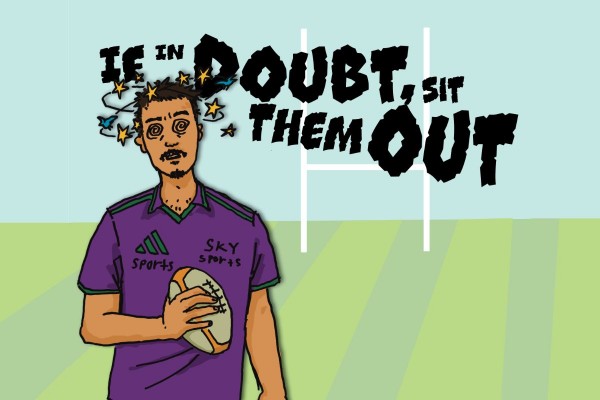
Sport NZ is the Government agency responsible for sports and recreation governance in Aotearoa. Like NZR, they have worked towards strengthening their concussion response. Head Injury Assessment (HIA) protocols were first introduced in 2012, and improved in 2021. This involved three separate interventional assessments for during matches, post match and 36-48 hours later. Increased public awareness has led to further landmark changes in how our sporting organisations approach and navigate their concussion policies. Players must be completely symptom free for at least 14 days post-injury before following a careful, gradual return to play programme. Medical clearance is required, and a positive active duty has been imposed on players and coaches alike across all levels of sport. Overall, an ‘if in doubt, sit them out’ approach has been advocated, moulding our concussion culture.
Helen can attest to that positive cultural shift. In games such as rugby league, which attract massive followership, fans get to watch players go off for a HIA following a headknock – many of who will be the next generation of players. “Well, a young kid’s going to see that and go, ‘oh, okay, so if I get a headknock, I’ve got to go off’, you know?”, Helen explained. “I think it’s helping people understand that if they do get a headknock, they’ll probably need to come off. It doesn’t matter how tough you are.”
Additionally, NZR explained to Critic the enormous amount of data that is collected to improve understanding of concussion recovery. Describing themselves as at the “forefront” of concussion and player welfare initiatives globally, NZR collects and updates concussion histories annually for all contracted players. That historical record includes prior incidents, recovery durations, impact thresholds, and relevant psychological conditions which is used to tailor individual return-to-play plans.
Basically: it’s safe to say that there’s a lot that NZR does to manage the risk of concussion related injury, especially at the professional level. However, as Helen touches on, that culture shift will also need to be back in the community game. That ensures our next generation of players take care of the only head that they’ve got.
Concussion Conversations in the Community
NZR has a Medical and Science Advisory Panel, which oversees science-backed research proposals and projects in the sport. Moving away from a ‘one size fits all’ concussion recovery model has been a mammoth effort in rugby over the last few years. “[R]isk level varies across all levels of the game,” an NZR spokesperson told Critic. Risk is highest at the professional level due to the game being more physical, but there are still injuries at the community level. As such, effective approaches to fostering concussion conversation are essential.
In 2024, both NZR and NZ Football had agreed to stricter community guidelines. These changes helped ensure that lower-level community games were equipped with concussion prevention measures – not just the elite players. NZR promotes concussion awareness and management at the community level through compulsory yearly “RugbySmart education” for coaches and referees. According to the NZR website, RugbySmart has meant catastrophic injuries (spinal or life-altering injuries, or death) have reduced from an average of nine per year, to two per year. All coaches above the U14 level must attend a RugbySmart session before competition games begin each season. The programme explains signs of injuries, ways to prevent them and how to support this framework in a team environment. This is bolstered by the “Blue Card initiative” which supports referees to remove players with suspected concussion and initiates a formal medical clearance process.
Referees also receive annual training in concussion recognition and management. Community games use a Concussion Reporting Form to log incidents, provide immediate guidance, and ensure consistent follow-up with players. Additionally, the ACC’s 2024 National Concussion Guidelines have provided more guidance for the community. After a concussion, there’s a mandatory 21-day stand-down period and medical clearance required before returning to play. The protocol is thorough, but not riddled in bureaucracy, to keep players safe and back on their feet without long term issues.
Helen feels that these guidelines have given more clarity to sportspeople that don’t necessarily have access to physiotherapists or medical help ready on the sidelines, as well as parents of younger players. “Clarity is a good word,” she says. “For coaches from school, or coaches that are parents [...] They’ve got that resource now with the ACC, and that’s the protocol.”
That awareness, clarity and attention to how concussions are regarded in community games is essential. As youth make up a large proportion of community, social and semi-professional leagues, it is imperative that concussion mitigation strategies are implemented across all levels of sport. Even though concussion is a medical issue, it’s the community members who can spot early signs before things get worse. It’s players and coaches who keep an eye out on the field, not necessarily medical professionals. The current students and young people in rugby scrums on a Saturday are Aotearoa’s future coaches, professional players and parents to the next generation of athletes.
Overall, there seems to have been a trickle down effect. Headknocks are taken seriously at the professional level, so they’re taken seriously at the community level. “It’s helping people understand that if they get a headknock, they’ll probably need to come off,” Helen reckons. “And if in doubt, you just keep them off for a young person at a community level, because that’s what would happen at a top level.”
Someone who can attest to this community-level protocol is former Otago University Football Club player, Ben Price. Ben was concussed last year whilst playing, but reckoned he spotted the symptoms fast, describing his treatment as a “smooth process”, which was “largely due to seeing a doctor as soon as possible”. Ben was then put on a plan by his physio to return to play as quickly as possible. “I felt extremely out of it, like an extremely bad hangover,” he described. He had a stiff neck for a while, feeling “pretty dopey” for several weeks: forgetful, nauseous and quick to tire.
Ben hasn’t noticed any lingering symptoms, attributing this to taking the concussion seriously throughout the process. “After spending a few days resting, I was gradually able to increase my activity. This involved mindful walking, and once headaches had subsided, I was able to start slow runs. I was allowed back into training, and seven weeks later, I was cleared to return to play.”
Helen also noted that community athletes in Dunedin are now able to visit Axis Sports Medicine, which opened a few weeks ago. Axis provides acute concussion care and specialist treatment for more complex cases. “It’ll be game changing for those sports that haven’t been able to access the rugby concussion clinic, I think.”
Gisela Sole, a Professor from the School of Physiotherapy, told Critic that over the last ten to fifteen years there has been a “far greater awareness” now to what extent concussions can influence the return to play and education for younger community players. Gisela’s research over the years has investigated topics such as concussion management in community-level rugby, and the development of a concussion framework for secondary schools. A big emphasis of Gisela’s research is returning to physical activity and learning in the healthiest manner possible.
Symptoms of a concussion are no longer limited to headaches or light sensitivity and are more broadly linked to causing difficulties with emotional regulation. These can include being “anxious, not sleeping well, and also unpredictable in their emotions. Maybe anger attacks, where previously a person may have been very levelled in their emotional responses,” she explained. According to Gisela, students, adolescents and young people are more at risk of longer term emotional problems sustained from a concussion. Because many young people tend to bounce back and get on their feet quickly, they may feel okay to keep playing, which creates additional risk. Soldiering on through a head knock increases the risk of repetitive low level “subconcussive hits”, which tend to increase damage over a lifetime. This all reinforces the importance of an early community education about concussions, ensuring our future players are smart in their play.
What Should I Do If I Get A Concussion?
The most important rule when it comes to a suspected concussion is to assume it is one until a medical professional has cleared you. For students, Gisela points toward Student Health, who she described as “fantastic” and “very aware of concussions”. Seeing a doctor means you can get checked and rule out anything more serious. A doctor can also generate an ACC number for your concussion, which can help subsidise or fund subsequent healthcare appointments required for your recovery.
Physiotherapists are also a great option for post-concussion care. While they cannot formally diagnose a concussion, they may be able to refer you to a GP if they believe one has been acquired. Physiotherapists holistically look at the entire person in treatment, and can help with vestibular (balance) issues, and rehabilitate symptoms related to neck sprains some people experience post-concussion.
The first two days after concussion involve rest – but not total bed rest. “It means being at home, going for walks, being in the garden, doing the normal activities in the house,” Gisela recommends. Other top tips include limiting screen time and trying to stay as calm as possible. When it comes to exercise, a gentle run or a walk will be fine, “as long as it doesn't exacerbate symptoms,” Gisela assures. Another key consideration for tauira is to stay well clear of alcohol for at least one week after a concussion. “Alcohol and [the] brain do not work together,” Gisela explained. Devastating news for some students.
Only 10% of concussions actually involve losing consciousness. Symptoms such as headaches and vomiting should be watched with a keen eye. Gisela said that increased confusion, repeated vomiting, unusual behaviour that’s just “totally out of the ordinary for that person”, weakness in the arms or legs, double vision or blurred vision and also increasing neck pain with maybe tingling numbness in the fingers should be taken very seriously. A trip to A&E is the best thing to do.
A benchmark recovery time for a young person with a minor concussion may be around ten days. An older person may take longer to recover with the same severity of concussion. However, Gisela told Critic that trying to figure out an exact timeframe is fruitless: “it’s very much very unpredictable”. Adolescents in general and older folks tend to take longer to bounce back, as well as young women, who may take up to three weeks or “even a month to recover totally”. These time frames may be lengthy, but they reduce the likelihood of second-impact syndrome (basically when you get another headknock while still concussed), and persistent long-term symptoms that can cause lasting damage.
When it’s time to return to learning, everyone will have different needs. Some ākonga may need sunglasses to minimise bright lights, avoid screen time or do half days. Quiet spaces for study and minimising stress are also extra important – especially if you have assignments or exams to prepare for.
The best thing you can do in this situation is to contact Disability Information & Services (DIS). Gisela said that “[DIS] is also there for short-term conditions [..] so that they can help them with preparation and during exam time”. DIS can find the right solutions for your needs – whether it be extra time in exams, breaks or a quieter room. Everyone in the University community wants you to do your best, but if you’re concerned your knocked-up head may affect that, the best thing you can do is reach out.
Going through it? Free help is available, 24/7.
- Gumboot Friday provides free counselling for under-25s, with no doctor’s referral required. Young people can book directly and access support quickly via gumbootfriday.org.nz
- Text 1737 for free mental wellbeing support
- Student Health and OUSA Student Support can both provide in-person care as well
