
Carys Goodwin
Politics Editor
Articles by Carys Goodwin
89 articles found. Displaying page 7 of 8.
-
News
Issue 8 13/04/2014
Critic tackles election year | Issue 8
As the candidate lists come rolling in from across the spectrum, the possible Government newbies are already vying for the attention of voters across the board. With that in mind, this week’s Critic looks at five candidates to watch out for as the campaign rush begins. Hailing from a variety of party backgrounds, they represent the potential future of our parliament. While not all of them are in the media spotlight just yet, I suspect that they’ll have their time in the strong New Zealand sun soon. Kelly Ellis – Labour If selected, Kelly Ellis will boast an impressive title – the second ever transgender politician in the New Zealand Parliament. She will be running for the Whangarei electorate, which is traditionally reasonably conservative and very blue; a brave move, perhaps. She is a lawyer and wants to focus on issues of poverty and inequality, especially in the Whangarei area. More than this, however, is the potential her selection holds for transgender rights across the country. A strong advocate for helping those in prison who face sexual and physical abuse for their choices, Kelly is strong-willed and passionate about her cause. She has also set up TransAdvocates, an organisation dedicated to advancing trans rights. As a country, we legalised gay marriage; Kelly presents us with the opportunity to go beyond that and examine where we stand on transgender issues. Marama Davidson – Green A self-professed champion of social justice, Marama has thrown herself headfirst into the media spotlight since running for the Ikaroa-Rāwhiti by-election and being selected in the preliminary Green Party list. She adds to the Māori pool of candidates, with her heritage an important part of what she stands for. Her dedication to social issues is extremely impressive, having worked for ten years at the Human Rights Commission and being a founding member of Te Wharepora Hou Māori Women’s Collective – all the while being a mother to six children. Marama’s potential can thus far be encapsulated in how she is already very prepared to take a stand on difficult issues. This has so far included attitudes to sex (appearing on TV3’s Re-Think) and abortion legislation (in an article for the NZ Herald). Even though we are a largely progressive country, our abortion laws sit at the “archaic” end of the spectrum, specifying that there must be a danger to physical or mental health in order to qualify. Here is a candidate who proudly shares her own experiences and opinions – watch out for them. David Seymour – ACT David Seymour is running for the Epsom electorate. For those of you who either a) closely follow the activities of Auckland’s “elite” as though it were an extremely dull episode of Gossip Girl (even Epsom’s Wikipedia page describes it as “exclusive” and “affluent”), or b) take an interest in electoral politics, you’ll know Epsom is a bit of an anomaly. For those who don’t – it’s an ACT seat and has been since Rodney Hide snapped it from National’s hands in 2005. It makes sense, therefore, to put an ex-Auckland Grammar boy up for the job. Seymour previously ran for Auckland Central in 2011, and has worked as a ministerial advisor to John Banks (the ex-mayor of Auckland who currently holds Epsom’s crown). David Seymour is surprisingly youthful, and is definitely part of the rejuvenation the ACT Party needs to get anywhere near the five per cent threshold. Much critique of the party image tends to toe the “rich old white men” line; the presence of David Seymour and new ACT leader Jamie Whyte seem to be part of a conscious effort to demonstrate publically that ACT can be in the best interests of young professionals as well. It will be interesting, however, to see if Epsom will offer Seymour the throne, and his campaign will be one to follow. Dr Shane Reti – National Shane is one of those National candidates who hasn’t walked straight out of Candidates College with a Maggie Thatcher book under his arm and a Simon Lusk selfie. Rather, he has a medical degree from Auckland University and was awarded a scholarship to study at Deaconess Medical Centre, an affiliate school of Harvard. Unfortunately for Kelly Ellis, he is also running for the Whangarei electorate. This is perhaps the most attention Whangarei has received in years that hasn’t involved some outrageous youth activity, racism, or a lawsuit. With years of medical work under his belt, with a focus on dermatology, Shane has the potential to work with the National Party in improving and refining New Zealand’s healthcare system. As Health Minister Tony Ryall is retiring, Shane is prime to step up within the health portfolio sphere. He boasts a strong record of community involvement, having been appointed as director of the Northland Health Board three times. In the economic sphere, he worked previously for New Zealand Trade and Enterprise, in a role that worked on development and planning. He has lived all over the world, a portfolio that could possibly help to turn Whangarei into the next “international city.” Good luck with that. Tamati Coffey – Labour Of all the candidates, Tamati is likely the one you’ve seen or heard of before. A former television superstar, Tamati has appeared on shows such as What Now, Breakfast (as a weatherman, no less), Dancing With the Stars (he won), New Zealand’s Got Talent, and Seven Sharp. Known for his big smile and easy-going manner, I’m hopeful his warmth will exude from Parliament TV. He’ll be standing in the Rotorua electorate, and I do wonder if his candidacy is yet another attempt at making the Rotovegas nickname stick. The seat is currently held by National, so Tamati has a lot of work to do if he wants to steal it for the red team. He has said he wishes to focus on engaging non-voters, and he places a lot of emphasis on community, kids, and gay rights. His Twitter bio says he is “keen on saving NZ from the nats,” an admirable and worthy cause – in this writer’s opinion, anyway. If Women’s Weekly had a “candidate of the year,” I’d wager it would be him; he certainly appeals to the celebrity watchers in the Rotorua electorate.
-
News
Issue 7 06/04/2014
Politweets | Issue 07
That's the banter we love from Judith. Kim Dotcom, John Dotcodotnz, now gareth.org.nz. Still unsure if this is a fake account or not, but it's funny either way. The hunt for the perfect #cheeserolls continues. This is a fake one. No idea why anyone would choose Asenati to imitate though. Amazing logic
-
News
 Issue 7 06/04/2014
Greatest Hits / Greatest Shits | Issue 07
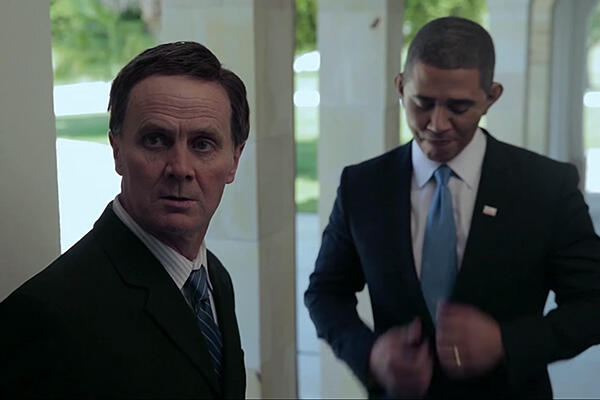
Greatest HitsIn the spirit of iD Fashion Week, this year’s Greatest Hit goes to David Clark, who featured on local Dunedin TV for his very own modelling experience. Strutting his stuff in a beautifully made red blazer by Tamsin Cooper, David looked well at home on the catwalk. Considering fashion crimes amongst politicians are addressed with almost as much ferocity as real crimes, it comes as a relief to see one of the parliamentary lot looking sharp. Hit up the Dunedin TV website to catch the man in action. “A model MP” indeed. Greatest Shitst’s not every day you get to welcome a new party to the political stage, and it’s certainly not every day that they debut with a homemade movie. Unfortunately for the Internet Party, their choice of homemade movie was, in all honesty, a bit frightening. It featured actors pretending to be John Key and Obama, with the plot being that they just had to steal the Internet Party’s manifesto. Of course, once Obama read it, he loved it! While it was nicely shot and the actors at least sounded like their intended figures, the entire project was outrageously cringe-worthy. A personal favourite moment was when John referred to himself as “John Dotcodotnz.” Weird.
-
News
Issue 7 06/04/2014
Critic tackles election year| Issue 7
In the last week and a half, Otago has been graced with the presence of two MPs – Judith Collins and Gareth Hughes. While I didn’t attend Judith’s cocktail soirée (the $30 entry fee was out of my poor student price range and it was all the way at Luna Bar), I did have a chat to Todd Dickens, chair of the Southern Region Young Nats, about his experience with the Justice Minister. Gareth’s event was a (free) talk about “disruptive technology,” and I was able to get my Zoe Barnes on and talk to him in person. #JuCoJudith Collins, affectionately known as JuCo by her Young Nat contingent, is an MP who continually touts the importance of “hard work” in getting yourself up in the world. She has recently been the subject of a fair amount of spotlight, as the New Zealand representative at the UN Universal Periodic Review (on human rights), the main MP involved with the family law reforms, and, of course, the subject of the Oravida scandal that left some calling for her resignation. Todd Dickens, however, thinks very highly of her … 1. If you could summarise your evening in a paragraph or two, what would you say? Describe Judith for us? Bloody sensational. Judith is a superb woman, and although she is well known for her style and persona, it will always take you back a wee bit in person. For someone who is so bold, she holds a striking sincerity that does get conveyed across the camera very well. She spoke on her portfolios and on life in Parliament itself, giving an analysis of her fellow MPs that goes a tad further than the famous 140 characters will allow. Fascinating stuff for us Pols Majors. She was also asked a bit on her younger life. She completed her Masters while practicing law in her 20s, and, at the same time, owned a restaurant. She would be up at 6am everyday to bake cheesecake to be served, and would often cover shifts if need be. Because “that’s what you do when you’re young and want to get ahead ...” She doesn’t align to ideologies so much, but is a woman of firm principles. I admire her work ethic immensely. 2. Did Judith have anything to say about student policy? She focused on her own portfolios, which was what we had requested; her general words to the Young Nats were mainly that of praise. Thanks for the work we do in both policy and campaigning for the Party, it is obvious the amount of effort many Young Nats put in – and it is great when that is recognised. 3. Recently Judith has been in the news for the Oravida scandal. Did she have any wise words about the affair? She cares very deeply about the export market that is NZ dairy. 4. Unfortunately, Judith has blocked me from Twitter, meaning my banter fix is seriously restricted. Are there any gold quotes you can remember from the night? She mentioned being able to remain contrite for a week, but there is work that needs to be done. If as many people were so determined, my God, we’d have a productive wee state. gareth.org.nzGareth’s talk focused on three “disruptive technologies,” or technologies that have the potential to completely shift paradigms within their respective fields. The first, solar, is something the Greens have advocated for years, and comes with its own recent policy package; the second, the internet economy, was accompanied by the revelation that Gareth has been working on an Internet Bill of Rights (to be released by the time this is published). He’ll be crowd-sourcing response. The third, 3D printing, was approached to the extent that he argues New Zealand should be investing in the technological apparatus before the market becomes saturated and to keep us ahead of the curve. It’s also really cool to look it. 1. The IPCC report came out yesterday, heralding a wide variety of responses – what do you think is the most critical thing NZ must do at this stage? Well we’ve got to reduce our emissions. We’re on a track to increased emissions in New Zealand. We’ve got the highest per person rates in the world; we’ve got a Government that’s gutted the carbon prices, pouring tens of millions of dollars down oil wells, and borrowing billions for motorways. We actually need to act, reduce our carbon, and I believe that’s where the business opportunities for the country lie as well. 2. The US and China aren’t doing enough, and NZ only accounts for 0.2 per cent of emissions. So why should we act? Well we should act because we’re a much smaller percentage of the world’s population. So actually we’re using an unfair share of the earth’s atmosphere to put out pollution. Now, also, everyone only pays a small amount of tax. Anyone could also use that argument, “I only pay a small amount of tax, why should I bother, so maybe I’ll stop.” We don’t allow that in the tax sphere, and when it comes to this global challenge, which seriously risks our civilisation, we’ve all got to take on our fair share; and if China and America aren’t going to act, New Zealand needs to act as an exemplar. If even New Zealand won’t act, it’s going to be very hard for the rest of the world to act, too. 3. Being a student and being sustainable is often seen as “too expensive.” How do the Greens propose to reconcile this disconnect? Well, I think we can help students save money and be more environmental. For example, our solar scheme, where tenants can approach their landlord to make it easy to get solar panels. We’ve subsidised insulation in the past; we’d like to see more energy efficiency advice given to people. Because, actually, there’re a tonne of ways you can save money by using less carbon or having less of an environmental footprint. It’s about giving people the advice. 4. The IPCC report also said we may have to sacrifice some native species if we don’t act, and Tim Groser said climate change should be left to “natural processes” – so which three native endangered species would you save? I’d try and save all of them, of course, but the species I love are the Rockhopper Penguins, which we know are impacted by climate change; they’re some of the funkiest penguins with the most attitude out there. Obviously our iconic world’s smallest Maui’s dolphin, which are sadly also going extinct from fishing impacts, and then the tuatara, because this guy has been on the planet for literally hundreds of millions of years; older than the dinosaurs. It would be a tragedy to see him go extinct, on our watch, because of our actions. 5. Reject, (re)elect, realign: Nick Smith, Ruth Dyson, Andrew Williams. Well, I would reject Nick Smith … re-elect Ruth Dyson, realign Andrew Williams. [Where? Where’d you realign him to?] Where? Well, I’d like to see NZ First support more environmental initiatives, I understand they’re voting against our Members’ Bill to clean up the Black Drain; the Tarawera River. It’s disappointing not to have their support on this Bill.
-
News
Issue 6 30/03/2014
Politweets | Issue 06
#cheeserolls The Internet Party might have to watch its back; the Hogwarts Party could steal a considerable chunk of the ‘nerd’ voter base Banter Novelty Hekia Parata account has really enjoyed this week’s scandal The more you know, I guess. Judith Collins frequently types like she’s on MSN. ROTFL.
-
News
Issue 6 30/03/2014
Greatest Hits / Greatest Shits | Issue 06
Greatest HitsThis week has seen the rise of #nomakeupselfies across the world. Raising $3 million for cancer research, the trend has occupied Facebook, the media, and, surprisingly, Parliament. I followed Louise Upston’s no-makeup Twitter trail, with Metiria Turei and Holly Walker offering selfies of support, and ended up at Seven Sharp to find Anne Tolley, Jacinda Ardern, Jo Goodhew, Louisa Wall, Mojo Mathers, and Jacqui Dean also revealing all on camera. While there has been a considerable amount of criticism over the “point” of a no-makeup selfie, you can’t deny that it has been incredibly effective. Greatest ShitsOver the weekend, a bunch of us young political nerds got together for a good old BYO. Most of us already know each other from classes or Clubs Day, so drinking and debating is not exactly a new experience. It was intended to be a peaceable affair, as chances are we’re going to be seeing a lot of each other in the coming months; and really, who doesn’t love the chance to have a Saturday night BYO and a stint on the Alibi dance floor. I was told, however, that a member of a certain red party told other members not to attend (don’t worry, they still did) – because I’d write terrible things about fraternising with the enemy and the like. Well, I had no intention of writing about our lovely BYO. That would be shooting myself in the foot, as I was there. Upon hearing this, however, I thought to myself, “what is Critic if not facetious.” Therefore, this week’s Greatest Shit goes to the unending menial bureaucracy of political parties and their tendency to be far too uptight for their own good. Apparently, that extends beyond the Beehive and right into our very own sacred BYO joints. Very notable mention: Hekia Parata’s continued incompetence and the poor handling of the Kohanga Reo Trust scandal. A considerable amount of news time has been dedicated to questioning whether it’s a cover up or a fuck up, and once the truth is revealed (it hasn’t at the time of writing), I’m sure it has the potential to take the Greatest Shit headlining act.
-
News
Issue 6 30/03/2014
Critic tackles election year | Issue 6
When it comes to election year, the Otago politics department likes to get involved. We’re only really relevant once every three years, so it’s fairly exciting to get the chance to appeal to more than eager freshers in POLS102. That’s why this week is dedicated to an Otago initiative called Vote Chat. Hosted by lecturer Bryce Edwards, it’s a web show that features a different guest each week and aims to discuss issues that might affect the election. The first event took place on 21 March, and featured Max Rashbrooke. Meet MaxIf you’ve ever wanted to know something about inequality, Max is your guy. He has written two books on the subject, and I’d estimate that the word “inequality” was said approximately three times a minute throughout the interview. He also boasts an impressive CV, having worked as a freelance journalist in the UK for five years and had his name printed alongside articles in the Guardian, NZ Herald, the Listener, and more. As Max disclosed during the interview, he is working contractually for Green Party research (a job that does not mean he is a member of the Greens). He therefore preferred not to expand too explicitly on what he considers the best party policies for targeting inequality and the party he’s most likely to vote for. A Bit of AnalysisAs the interview is available for everyone to view on YouTube, I’ll refrain from a general rehash and instead delve straight into a distinct problem that the discussion ran into – the dangerous conflation of inequality and poverty. A significant part of the interview focused on the links between those concepts and social mobility, as well as possible policies that affect them; often using them almost interchangeably. I haven’t read Max’s books, so it’s entirely possible an explanation features there, but it didn’t come up in the interview. For those unfamiliar with the wonderful world of political rhetoric, social mobility refers to the ability of someone in the lower income sphere to move to the upper; inequality, in this case, means the disparity of incomes between the rich and the poor; and being in poverty means not having enough money for basic necessities. In terms of quantifying the problems raised by assuming inequality and poverty are similar – or the same – they can largely be divided into theoretical differences and practical differences. The last thing I want to do is put you all to sleep with some philosophical exploration of societal duty, so I’ll keep the first category short and sweet. Put simply, poverty tends to be seen as objectively bad. No one actually likes seeing children starving to death. Conversely, a person’s position on inequality is often very dependent on their political leanings, and inequality itself is not inherently bad to all positions on the spectrum. Whether it’s painted as an incentive for achievement, an unfortunate outcome from necessary neoliberal reform, or a barrier to fairness, it’s important to understand that inequality is not the same thing as poverty. It’s merely a description of the way wealth is distributed heavily at the top and sparsely at the bottom (which is where the argument that inequality causes poverty emerges). If you assume they’re equivalents, you lose valuable discussion about causation and correlation between the two variables. The way this false parallel manifests in policy analysis very much stems from the aforementioned idea that poverty is objectively bad and inequality is subjectively bad (although if someone can convince me why poverty might be a subjective standpoint, I’ll give you an in-print round of applause next issue.) When deciding how a social policy might be designed, it’s often implicit that it can either be dedicated to equality of opportunity or equality of outcome. While this is obviously a simplification, and the phrases have been hotly debated, if you treat them more like a scale than mutually exclusive concepts then they do well to describe how policies from various parties might be targeted to address poverty and inequality. Equality of opportunity can be associated with eradicating poverty, giving each person the necessary standing ground to succeed. In New Zealand, this paradigm is inherent. Equality of outcome, however, would refer to also ensuring policies exist to minimise inequality amongst social spheres. As the latter builds upon the former, it becomes increasingly easy to see how conflating poverty and inequality can mean parties on the right are seen as “not caring about poverty,” whereas parties on the left are critiqued for being “delusional” about how society can work. Teasing them out into separate entities means teasing out the differences between party policy names and what actually might be the aim of particular initiatives. Leading up to the election, it’s important to think about what you really want from the party in power. If you want to rid NZ of its crippling child poverty but actually quite like the cutthroat capitalist status quo, perhaps investigate more carefully into what National says about our nation’s kids; if you despise child poverty, value a society with less inequality, and don’t mind the possibility of higher taxes, head for Labour and the Greens. While Max’s arguments are interesting and compelling, be careful of taking some of what he says for granted – it could too easily lead to immediate dismissal or immediate acceptance. Child poverty is fast becoming an election buzz phrase, and since poverty is objectively bad, not properly digesting what each party promises on that front could have objectively bad results. Critic asks some questionsAfter the interview, I got the chance to approach Max myself and nervously thrust my iPhone under his nose ... Previously in your writing you’ve questioned the value of tertiary education in terms of upward social mobility (like in your writings about the UK and such); and I was wondering what sort of policies and initiatives you would advocate to help university to be beneficial across the board and not just for those already at the top of the scale? Well, that’s a really good question. Um, I think one of the problems is that with fees being so high, there’s a very strong disincentive for lower income students to go to university. Particularly, and there’s a lot of evidence about this, there’s a real disincentive for people who come from cultures that have a strong aversion to debt. So I think we need to look at that. We need to look at ways to, you know, encourage more low-income students to get to university. I would also say, I mean, I know you’re a university paper, but actually probably one of the biggest problems is improving outcomes for kids who aren’t going to go to university. Because so much of the schooling system pushes you to do that. But, actually, a lot of people would be better off doing really high quality skills training, trade training, rather than going to university. It’s now what you do; it’s now what everyone thinks you have to do. And, actually, for people who want to do it there should be no barriers, but if it’s not what you need, you shouldn’t be there. Does any particular party worsen or improve the impact of tertiary education on “job market inequality,” so to speak? When you were talking about opportunities, and opportunities when you’re coming out of university, are there any particular parties who would help students when they’re coming out of university? That’s an interesting question. My impression is that most people think that once you come out of university, you’re an adult and you’re pretty much on your own, right? So, I mean, probably the real difference would be about how your student loan is treated. And at the moment there’s a consensus on that – that student loans are interest free – so I think the only real impact there would be if any of the major parties decided to break with that consensus. But I don’t see any signs of that happening.
-
News
Issue 5 23/03/2014
Politweets | Issue 05
Tau Henare goes wild with this hashtag. Clare looks towards a new dairy product for the next parliamentary drama. Green MPs target Key's memory loss. Probably not the best use of your time, Jacinda. Yes, because those two parties agree on so many other fronts. If you value terrible jokes, vote #InternetParty.
-
News
 Issue 5 23/03/2014
Statistics
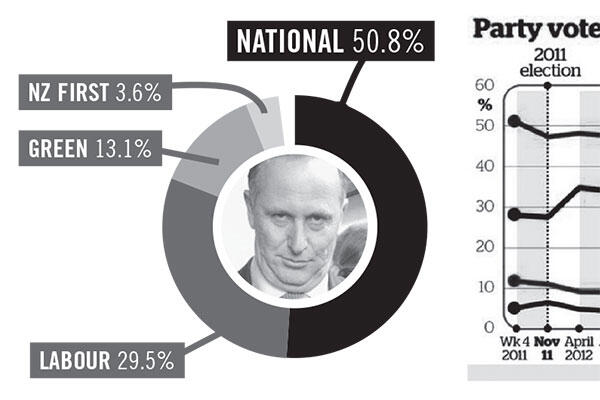
Early last week, a new Herald DigiPoll was released, placing National at 50.8 per cent, Labour at 29.5 per cent, Greens at 13.1 per cent, and NZFirst at 3.6 per cent. Such polls should definitely be taken with a grain of salt, but should this translate to an election platform (disclaimer: I take no responsibility if you go iPredict crazy based on one misc. poll), National would be able to govern without a coalition. Cunliffe is confident that this won’t happen, however, arguing that National’s “crony capitalism” will lower support. Greens were pretty stoked to be pushing for the 15 per cent, and Critic wonders what will become of the Winston First Party.
-
News
Issue 5 23/03/2014
Greatest Hits / Greatest Shits | Issue 05
Greatest HitsOn Wednesday morning a new set of changes to the electoral law was passed. While there is considerable criticism about a number of aspects, there is a particular redeeming feature that will finally catapult our elections into modernity: now you can enrol to vote online. For those of us who prefer to use the Internet to snail mail, this is great. Unfortunately, you can’t quite vote online yet, so you still have to leave your computer on 20 September. Greatest ShitsAnadarko has failed once again. Despite the Government’s insistence that deep sea oil drilling is a good idea, the Texan company has been unable to hunt out fossil fuels in Otago and is set to say goodbye to NZ waters. This comes as much frustration to the pro-oil lobby, while anti-oil protesters are able to happily say, “I told you so.” When asked about the failure, the chief executive of the Petroleum Exploration and Production Association of New Zealand said, “the oil is where the oil is and the only way to find it is to drill for it.” Thanks for that pearl of wisdom, David.
-
News
Issue 5 23/03/2014
Critic tackles election year | Issue 5
Last week, Critic’s most beloved Tertiary Education Minister opened up the university council chat once more. National has been no stranger to the evolving relationship between student participation and our university overlords, and the Education Amendment Bill (number two) is no exception. We first covered this story in Issue One, and given that public submissions are now open until 30 April, this week is dedicated to understanding more thoroughly what the Bill has the potential to change. The ChangesFor those of you who don’t frequent the Parliament website (home of Parliament TV screenings and handy-dandy MP lists), you should know there exists a Bills Digests feature, which explains quite extensively the background and provisions to different bills. As it aims to be largely objective, this is a good place to extract a neutral summary of the Education Amendment Bill (number two). There are four main changes that are outlined. Of these, the most explicit change is that university and wānanga councils will be decreased in size, from 12-20 members to 8-12; a second change is that this numbers game will include three or four appointed ministers, meaning roughly a third of the councils will be hand picked by the Government. They must have “governance capability.” It also includes the provision that at least one member must be Māori. The rest of the members should have relevant knowledge or skills (Critic has to ask: who were you appointing who didn’t have relevant knowledge or skills to necessitate that qualifying statement?) and should accurately reflect New Zealand’s general demographic composition. Third – and this is especially important for students – is the removal of the provision that council members must include student representatives. Essentially, this means there do not need to be any students on the university councils to legitimise them; they can operate exclusive of actual student membership. Finally, the Bill will “clarify the duties and accountabilities of individual council members.” Which, if you have a hunt through the actual text, can be boiled down to “don’t be a dick or you’ll be booted.” The Good NewsThe point of making such changes is to streamline our council system. By reducing the amount of bureaucratic nonsense ascribed to university councils, Joyce argues that new university councils will be flexible. This freedom of choice will boost our international standings, create competitive and effective councils, and will further enhance Māori student participation. In recognition of the lack of student membership, Joyce points to long track records of student involvement, and doubts that this will change significantly upon the Bill making it into law. When the initial announcement of the Bill was made, Joyce succinctly described the benefits by commenting, “New Zealand universities would benefit from smaller, more flexible councils which support them to perform at a high level and to be nimbler, more adaptable, and better organised than big overseas universities. The proposed governance changes will, alongside measures proposed in the new Tertiary Education Strategy, assist in preparing universities for the challenges of the next 20-30 years.” The aim, therefore, is fluidity and elasticity of council membership. The Bad NewsIf you read Issue Three, you will remember David Clark’s snappy one-liner telling us that Joyce is taking away the student voice. That is the essence of the main criticism surrounding the changes. Without compulsory student representation, it would be very easy to do away with students on councils at all. In reflecting institutions that comprise of, well, students, this is a dangerous potential oversight. More than that, however, is what it means the councils will actually look like. In particular, the new provisions mean a third of every university council will be government-appointed, increasing dramatically the role Parliament has in influencing our universities. Having councils independent of government is an important notion, as endangering that separation endangers academic freedom and the like. It’s impossible to banish the images of Umbridge’s Hogwarts takeover in the fifth Harry Potter book (the educational decrees, the firing of beloved teachers, the banning of clubs without express permission to form, etc.) With that terrifying image in mind, it’s not hard to explain the staunch opposition this bill has got from student associations. Indeed, ignoring their protests would be an uncomfortable indication of things to come – if the changes are opposed but ignored, surely this will be indicative of a future where students are routinely ignored on other issues, too. Even in a fundamental democratic sense, this bill has issues. Representative democracy is intended to be just that – representative. Removing this clause in council composition does little to defeat the argument that National is “attacking democracy.” David Clendon argues, “Staff, student and community representatives are vital to these councils making sound decisions, as they represent the exact groups that universities and wānanga exist for.” Without members who understand the hums and ticks of university life, it’s easy to see that decisions could be full of oversight and detrimental to the exact people the council is supposed to aid. So?Get that hollering student voice on paper and submit something to the Government. Whether it’s a crudely drawn ASCII picture of Steven Joyce naked or a truly heartfelt letter of love towards Hekia Parata, get it out there. You can do so on the Parliament website, which also includes a helpful how-to guide if you’re unsure how submissions work.
-
News
Issue 4 16/03/2014
Politweets | Issue 04
3 News reporter asks the real questions – where’s John Key’s cat? Cunliffe appears to be doing National’s job for them. Burn. Critic wonders what 1996 RWC Henare is referring to. That would be insider trading. Kevin could put the money into the anti-defamation campaign. Clare lashes out #llama.


