
Carys Goodwin
Politics Editor
Articles by Carys Goodwin
89 articles found. Displaying page 3 of 8.
-
News
Issue 21 31/08/2014
Politweets | Issue 21
Winston are you okay, are you okay, are you okay, Winston? Poetic. Tragic. Ouch. That’s the real Asenati, too.
-
News
 Issue 21 31/08/2014
Critic tackles election year | Issue 21
DISCLOSURE: Carys is a Green Party hack who is hardcore hacking it up for the election. But don’t worry – she has a few National Party friends who don’t hesitate to send in angsty letters to the editor when she strays too far into shill territory. In David Cunliffe’s ideal government there would be Labour, the Greens, and New Zealand First, with Labour the “strong lead.” There’s no chance Russel Norman would get the finance portfolio, and Cunliffe is “ruling out having Internet-MANA in the government,” probably to the distaste of the Internet Party’s growing following. The potential next Prime Minister of New Zealand has a clear vision of what he’d like the country to look like, even if the Labour Party has, in the past, appeared to be crumbling around him. In the lead up to the election, Cunliffe has rarely been painted as the staunch leader; whether part of a Dirty Politics smear campaign or a conscious effort from the Labour Party campaign team that Labour should be, well, a team, the result is a serious contrast between the presidentialised representation of John Key and the group of Positive Thinkers. This makes for an interesting point of analysis. We’ve all been plugged full of John Key media, from the #TeamKey hashtag, to the entirely John-focussed opening night broadcast. The National propaganda factory presents us with a man we can trust – someone who’s one of us; someone we can have a beer with. We’re not voting for National, we’re voting for John. Labour haven’t made the switch towards Americanised style presidential campaigning. A focus on community and improvement has led to a campaign with many faces, and their endearing DIY lens flare broadcast effort pulls together many members of the MP team. When comparing it to the National campaign, there’s a greater sense of diversity, but there’s a lesser sense of a Real Personality running for Prime Minister. Despite following New Zealand politics so closely this year that I’m now convinced I have no other skills and interests, I’m still not entirely sure who David Cunliffe actually is. Part of it, no doubt, is that the media have not been kind. Stuff and the New Zealand Herald have been quick to point out the moment Labour makes a wrong move, painting them as the party of gaffes and mistakes. They’ve been represented as dishevelled and not ready to lead – much to the distaste of their members. As a result, or perhaps the cause of the less-than-favourable treatment, Labour has consistently polled poorly. It also means we’ve not been treated to a proper look at David Cunliffe as a person. The closest we came was during John Campbell’s “at home with the politicians,” but Cunliffe’s extremely impressive wife easily eclipsed his performance. There aren’t puff pieces about Cunliffe as there have been about Key, and in the wake of the Dirty Politics scandal, most of Labour’s positive media attention has come from their policy announcements. Given that these have been relatively well received by members of the public who’re left of centre, it’s another inexplicable piece of Labour’s 20-something per cent puzzle. Then there was my personal favourite article, a piece by Deborah Hill Cone, titled, “Cunliffe’s problem is that he just isn’t sexy,” as though Cunliffe’s sex appeal has some bearing on his ability to run a political party. Cone’s article inadvertently reminded me of a quote from an Ian McEwan short story, Butterflies, in which the narrator comments, “my chin and my neck are the same thing and it breeds distrust.” The irony of the description is in the ending, which reveals the narrator to have killed someone, thereby absolving his lack of distinct chin and neck of being the reason for the distrust. As is McEwan’s custom, the use of a thoroughly disturbing mental image to prove a relatively simple point is effective; I find the idea that one shouldn’t trust someone because they’re “not attractive enough” is more disturbing to me than McEwan’s narrator. I don’t think it is fair Cunliffe is frequently judged as not having a friendly enough face. As far as I’m aware, he hasn’t killed anyone, and he has certainly proven himself to be relatively trustworthy. So where does the aversion stem from? With this in mind, I set off on an intrepid journey to meet the man when he visited campus the other week. He was in Dunedin for a whirlwind of meetings that included a meet and greet, a policy announcement, and a tech start-up visit. When I arrived at the meet and greet, he was swamped with students, left, right, and centre. Red clad #TeamCunliffe members formed a cluster just nearby, led by Dunedin North MP David Clark, whose job was to make sure each intrigued member of the student public was given an adequate amount of time with the man. It was busy, and I realised very quickly I wasn’t going to get the long, in depth sit-down I’d hoped for. Instead, I got two and a half minutes and a selfie. Cunliffe handled himself well, effortlessly moving from person to person and seeming utterly unphased by the swarm of eager onlookers, and made at least three jokes while I spoke to him. It’s hard making a full evaluation of someone in just a few minutes, but my first thought was: “He’s nice. He’s nice and he knows what he wants.” I asked him first about his tertiary education policy, which was released the Monday before his visit, and was covered by Critic (much to Salient’s distress, as they mistakenly thought they’d got the exclusive). There was nothing overwhelmingly surprising in the package: re-instatement of postgrad allowances, re-establishment of proper representation on university councils, and “increased funding for courses where New Zealand can create wealth.” When I asked what that meant, Cunliffe rattled off “science, maths, economics,” a mildly disappointing clarification for the Bachelor of Arts (Hons) in Politics student I am, but he clarified he meant “a stronger alignment between the needs of the employment market and the courses that are taught.” I didn’t manage to get too much out of him about changes that weren’t mentioned in the package – when I asked if he’d reinstate the early repayment bonus, he said he’ll “come back to me on that,” and when I asked if he had any changes in mind for living costs and allowances, he said “that’s a matter for the review.” Cunliffe certainly has his “no way I’m going to tell you” responses down pat. For the record, he also thinks Judith Collins should resign. While I wasn’t able to get coffee with Cunliffe and chat about our hopes and dreams, I did get a sense of what he was like; he has a confidence and a competence that I find reassuring, and was straight-forward about his intentions for, what he hopes, is the next Labour-led government. The next stop on Cunliffe’s Dunedin journey was the Hunter Centre, where he was all set to deliver a policy package aimed at Dunedin. Labour supporters flooded the main area, much to the surprise of the unsuspecting students who were studying at some of the tables, and it didn’t take very long at all for the space to fill up. Cunliffe was a celebrity, and I have no doubt there were people in that audience who only decided to vote for him having seen him speak in person. The actual announcement was the most Labour thing I’ve ever heard. He spoke of positivity, of how New Zealand ought to be “the fairest, most decent society in the world,” and of the “rock-star economy” (which reminded me of a quote from Richard Leckinger, who commented at an arts debate something along the lines of “the rock-star economy is going to be found auto-asphyxiated in a hotel room with white milk-powder around its mouth”). He spoke of everyone getting a “fair go” so often I wondered if he was being paid by Fair Go to do so, and noted he’d save Invermay, much to David Clark’s joy. Most importantly, I think, is he announced a massive, multi billion-dollar upgrade of the Dunedin Hospital. I left before the speech finished; I’m positive (ha) I missed nothing too much of note, and I completed my main task of the day – meeting and talking to David Cunliffe. Despite the tiresome media condemnation and reporting of relatively unimportant mistakes, I liked him. He was clear and straightforward, a quality that’s extremely welcome in the wake of Nicky Hager’s revelations about the secret underbelly of the Beehive, and was willing to answer the questions I threw at him in quick succession. With the election now less than a month away, I look forward to seeing Cunliffe and Key go head-to-head in the leaders debates, and I look forward to seeing how Stuff and the Herald go about reporting them. In case the coverage is less than favourable (inevitable), you heard it here first: David Cunliffe is cool.
-
News
Issue 20 18/08/2014
Greatest hits / Greatest shits | Issue 20
Greatest HitWithout a doubt, Greatest Hit this week goes to Nicky Hager, who has created what can only be described as a “shitstorm” in response to the publication of his new book. Prior to its release, the hilarious Twitter speculation alone was enough to warrant it this prized award; but Dirty Politics, released Wednesday 13 August, one-upped its anticipation by being entirely full of juicy scandals about some of our most beloved politicians and political commentators. Whale Oil was thoroughly unimpressed. Greatest ShitWinston always says that imitation is the sincerest form of flattery, but it’s hard to be stoked when AUSA hits Yahoo NZ with a story they copied from Critic. Essentially, using our supreme and complex analysis, they too figured out how much it would cost certain politicians if they went to university today. They even presented some of them with certificates. Unfortunately, they managed to get Steven Joyce’s cost wrong, undercharging him by about $2000. Presumably, this is because they fatally forgot to include miscellaneous Massey fees in their costing.
-
News
Issue 20 18/08/2014
Politweets | Issue 20
Nice. Probably. I don't know but we definitely should. Poor Col.
-
News
 Issue 20 18/08/2014
Critic Tackles Election Year | Issue 20
Since I’ve already featured an article in which I followed Clare Curran around for an afternoon, I figured it was only fair to take a look at two of the other people vying for the spot: Hamish Walker of the National Party and Shane Gallagher of the Greens. Initially, I was hoping to host a debate between the two of them, but Hamish is a very busy man and ended up being unable to make it. My dreams of a verbal swordfight were shattered. He emailed me answers instead. I still spoke to Shane, however, and gave him the opportunity to respond to some of the things Hamish said. In case you’re thinking “BIAS,” one way or the other (inevitable), think of it like this: Hamish got the day to mull over his responses and present them in a written format (and the last question was only asked of him); Shane got the last word and was able to hear some of Hamish’s responses. If Hamish wants to respond to anything Shane has said, he is invited to write a letter to Critic. For ease of reading, they’re presented as follows: Shane’s answer to question, Hamish’s answer to question, Shane’s response to Hamish. What are some initiatives you have to improve employment for people in Dunedin South? Shane: Well, we have a range of issues, ‘cause we try to approach everything holistically, so the headline things are: the $1b research and development fund, which is looking at industries that are green and sustainable; one of the key areas that Dunedin could be looking at there is biofuel, so biofuel development. We have a lot of woody fuel, with the city forests. I know that Celsius, which is a New Zealand biofuel company that’s now gone overseas because it wasn’t able to get the venture capital, wanted to base one of its processing plants here in Dunedin, but wasn’t able to raise the funding. […] We’ve also got IT design, the Green Investment Bank, which we’re proposing, so people come up with innovative ideas of their own, then get loans from that. Hamish: I would love to see more opportunities for people (and high school students in particular) to try work experience across a number of different businesses and industries in Dunedin South. […] We also need to make it easier for students to get work once they graduate. I would like to see more students placed into internships during study where more “real world” experience is gained and gives students that experience. […] After six years of a National Government, we now have more youth engaged in education, training or apprenticeships now, than ever before. […] Ministry of Employment, Innovation and Business estimate the 90-day trial introduced a couple of years ago has resulted in an extra 13,000 jobs, mainly to people who wouldn’t have been given that opportunity under old employment law. Shane’s Response: Well the 90-day trial hasn’t improved any jobs, it hasn’t given anyone extra jobs; it just means employers are more likely to sack you. It doesn’t actually create jobs, this is some sort of fallacy that you have some sort of change in the way you can employ someone and suddenly this magically creates jobs. Jobs are created by stimulus in the economy, activity in the economy, and so the idea that you can magically create jobs by changing the working conditions is not tenable; it makes no sense. And unless there’re actual jobs there, in the economy, how can you transition to them from education? Again, it’s just not joining the dots, there’s no sense to that, there’s no continuity. [In-study internships] might be an okay idea, but [since 1988] […] people’s wages have remained flat while productivity has massively increased, and that money’s gone somewhere, and we know where, it’s gone to the very top, because that’s what’s driven inequality in New Zealand. So the thing that drives economies is you need to start getting money into people’s pockets so that they can spend, so you want to increase the wages, so you need to increase minimum wage and get them working on a living wage, cause people shouldn’t have to subsist on a wage they simply cannot live on in order to boost the profits of a company. […] What about businesses? What do you plan to do to help them? Hamish: I would like to see more interaction between businesses in Dunedin. Networking between different businesses through local business associations/groups/employers association allows them to work together on common problems and that can only be a good thing. Moreover, I would also like to see these groups working with students more. The transition between university and work would be smoother, not only for the student, but more so for the employer if they have more say on what they want from students upon graduation. Shane’s Response: I mean, [networking between businesses] is one of those catchphrases that actually means nothing, and one of the things they could have done, for instance, was ensure that Hillside Workshops actually were able to build trains. Because when you take jobs away and hand them off to China or hand them off to Spain or wherever, you’re taking away jobs and you’re taking away money within the economy. So Hillside Workshops did a lot of subcontracting to engineering companies throughout the whole of South Dunedin, and South Dunedin is a major engineering hub, and it has always been one of those hidden secrets; those open secrets that no one really knows about. But Hillside Workshops was a really major engineering hub, and now that has been taken away, you’ve torn out the heart of the engineering sector in Dunedin. It’s still there but it’s struggling. Another issue for Dunedin South is poverty, as many of the population hubs in the electorate are dense and poor. What do you plan to do to help people who’re struggling? Shane: Again, we’ve got a lot of policies, which line up together or come together as jigsaw pieces, so again we want to raise the minimum wage, we want to get people being paid the living wage, we want to reduce costs by reducing people’s power bills, we want to extend the insulation scheme. […] And by also introducing our NZ Power idea we can actually reduce people’s power bills by $300 a year. […] If people are healthier and happier and have a bit more money in their pockets that stimulates your society and your economy. We also have the Carbon Tax: we’re going to give people a tax cut, and it’s a $2000 tax-free allowance that will basically mean you get an extra $300 a year. It doesn’t sound like a huge amount, but again, with the savings from your reduced power bills and increased spending power from being able to have a decent wage through a minimum wage job, these things all add up. Hamish: I will work with a number of different agencies to get a good stock take of what the main problems are out there. I will then lobby for the needs of the people of Dunedin South. […] I will be talking to different groups, for example church groups, community groups, and other organisations to see where we can help each other out. The Student Army is one example of the benefits the community can achieve when it comes together. I have also visited community hubs in Dunedin South where people struggling to put food on the table meet regularly for play groups and soup kitchens. These hubs are doing great things for the community and families involved. Shane’s Response: Again, he’s denying the fact that these are systemic problems created by his government. I mean, they’ve created the situation in Dunedin where we have poor jobs; we’ve lost 44,000 jobs in the manufacturing industry alone. And Price Waterhouse Coopers has estimated that if we went down the green sector route, the green industrial route, that that could be worth $22b a year to us as an economy. […] The balance between local government and national government in Dunedin is complex, and often leaves initiatives and people falling through the cracks. How would you increase the efficacy and efficiency of the relationship between local and national government? Shane: Well, we need to actually start talking to local government on a real level. One of the interesting conversations I had with Mayor Cull was that when they met with the Minister for Local Government that they were uniquely unimpressed by his dismissive and aggressive attitude, that he was basically telling them how to do their jobs. And what we really want to do is partner with local government, ‘cause local government can have a lot of initiatives, and they come up with the local solutions. […] Hamish: It’s important to have a good working relationship with the mayor and councillors and be fully briefed on what’s happening in the district. I need to be fully aware of the local council and what they are doing and what their aspirations are for Dunedin South. Shane’s Response: Again, look at the track record of what National’s done. We had Environment Canterbury turn around and say ‘we don’t like what you’re doing’; then the National Government simply abolished democracy in Canterbury because they didn’t like what ECAN were telling them. […] There’s not an environment in which local government and national government have trust in each other because any local government body now always has to second-guess themselves about if it is going to upset the National government. Let’s again look at the record, because the record is pretty poor on this matter. With regards to providing facilities for the community, who should do what is often difficult to ascertain. What do you believe your role would and should be in this context? Hamish: I will work tirelessly and dedicate myself 100 per cent to the people of Dunedin South. The people will identify the facilities they need and I will lobby forcefully on their behalf. While we are on the topic of community facilities, I would love to see a facility in Dunedin South where youth have somewhere to hang out during the weekends (especially in the evenings), which will keep a number of them out of trouble.
-
News
Issue 19 10/08/2014
Greatest Hits / Greatest Shits | Issue 19
Greatest Hit On Wednesday last week, Clare Curran participated in an AMA on Reddit, an activity that involves answering anything that the New Zealand Internet deems worthy enough to ask her. While it wasn’t full of cheese rolls banter, Clare gets points for responding to “can you please tell Jacinda Ardern she is so hot” with just “ok” and even more for fulfilling her ICT portfolio by doing something internet-y. Greatest Shit I hate to give Greatest Shit to the same person two weeks in a row, but there really is no avoiding it. Last Monday, Asenati Lole-Taylor decided to cancel her appearance on Vote Chat, which was scheduled for Friday of the same week. She left researchers with useless research, the show without a candidate, and me feeling significantly annoyed. How shit of you, Asenati. Thankfully, they managed to fill the spot with Shane Gallagher of the Green Party.
-
News
Issue 19 10/08/2014
Politweets | Issue 19
Ok. Things are looking up. Henare's Helpers Cleaning Service? Dairy me. Classic election move. Oh well.
-
News
 Issue 19 10/08/2014
Critic tackles election year | Issue 19
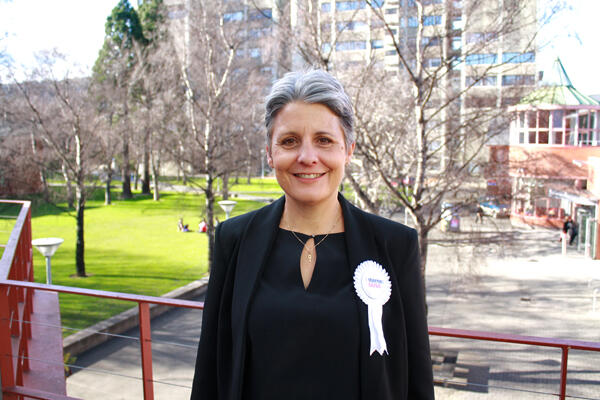
Laila is, without a doubt, a politician. She has deftly navigated herself across the political scene for years now, and her latest adventure as leader of the Internet Party is no exception. Even with a head cold, she was able to redefine and tear apart every question I asked her. It’s intensely interesting to watch a new, slightly dishevelled party be taken under the wing of someone so known in the political sphere; meeting her made me realise if anyone is able to give the Internet Party some clout, it’s her. I’ve got a few things I want to talk to you about. The first thing is that your tertiary policy announcement has yet to come, but I was just wondering, what are some tech projects the Internet Party wants to bring to universities? [...] The focus of our tertiary policy is on funding. So we are promoting free tertiary education, and our policy is centred on full funding of fees and a universal student allowance, and tackling the existing debt burden on people who’ve graduated. So our full tertiary education policy is going to be under development beyond the election. It’s not an area that we’ve put at the top of our list beyond the fees/student costs issue for detailed policy development pre-election. Yeah, obviously I haven’t seen it ‘cause it’s under construction, I was just wondering if there was, sort of, a technological edge. Or is that a different policy altogether? We’ll be releasing our innovation policy in the next few weeks; that will be another blockbuster of ours. It’s one of our top six platform issues, and it will certainly refer to the education system. But it’s primarily built around how we propose to make New Zealand an incubator for start-ups, and to push for the globalisation of start-ups from a much earlier stage than we currently have. So what we understand is the whole lifecycle of the tech process, and that is what we’ll be focusing our innovation policy around. Just regarding universal student allowance, interest-free loans, fee-free, etc.; that’s quite a common policy across a lot of parties. No it’s not. On the left it is. No other parties are committed to a priority of tertiary education. The Greens have a tertiary fee-free working towards policy as well. They may have it as a working towards policy, they haven’t got it as a priority ... I mean, that wasn’t new to me, but when I’m on platforms with the Greens and the tertiary institutions, that isn’t the message that they’re giving. I mean, I’m not having a go at the Greens here, but the fact is, that we are the only party that treats tertiary education as a priority, and we don’t just do it when we’re standing on university campuses. So students are a priority for the Internet Party? Absolutely. I mean, that’s why I’m the leader of the Internet Party. The one policy that closed the deal for me was free tertiary education. I have been fighting for free tertiary education since 1990, when Labour introduced the first student fees, I think it’s an outrage that my generation, who got a free tertiary education, have put these barriers in front of subsequent generations, and for me this is a bottom line of a leadership of the Internet Party, and it’s what closed the deal for me in coming into the leadership. It’s very serious ... students should not accept the line that we can’t afford it as a country. We afforded it as a country when we had a whole lot less money than we’ve got now. We are richer now than we were when we provided free tertiary education, so it is completely affordable; we’re paying for it, we’re just paying for it the wrong way. Cause, yeah, it’s transforming from a right to a privilege, which is problematic. Totally problematic, yeah. For me, the social contract depends on people experiencing the power of community as they’re growing up and developing and becoming adults. What better way to create a sense of community, social engagement, than to provide people with maximum education opportunities? And for people to understand, as I did, that we had opportunities because we lived in a democratic society. So free tertiary education is a very powerful society-building tool, and of course it’s also a very powerful economic tool, and we’ve seen time and time again countries that introduce free tertiary education overtaking us within ten years on the technology and innovation stakes. It’s a precondition to a tech economy. You’ve traditionally been a champion of women’s rights, which is fantastic, and I was looking at one of your policy incubator discussions about your intent to decriminalise abortion. Some of the negative comments were pretty horrifying. Obviously there is a lot of positive response, but I was wondering how you feel about the reaction? I didn’t see too many horrifying comments. First of all, the overwhelming reaction of our members was support. Mmm, like 75 per cent. And I think every party has people who feel strongly opposed to a woman’s right to choose. I didn’t think that those people generally put that in a hostile or negative way. There were some, but that’s their right. I don’t think you should overplay that. I think what’s great is the size of the majority in favour and I think the pretty respectable way people who either wanted to block it or oppose it went about putting their views forward on the poll. So no, I didn’t react negatively to that at all. That’s democracy. No other party is prepared to have these discussions in public. The very fact that you’ve seen our debate shows how different we are and how we’re not scared of debate. I mean, I’ve spent a lifetime in parties that try to close down every sensitive political debate. And I’m proud of the fact that we do it in the open. Within the context of the last few weeks, we’ve had big discussion about whether or not there’s a rape culture in New Zealand. So do you believe there’s a rape culture in New Zealand? I wouldn’t express it that way, I don’t think that divisive language helps to protect women from violence, and it’s not empowering language, and it’s not positive language. So it’s not the language I would use to describe gender relationships. That doesn’t mean that there isn’t rape, that there isn’t sexual violence, and there isn’t gender inequality – of course there is – but I would prefer to define New Zealand’s culture in far more empowering terms than that. Don’t like the language. What sort of terms? I think we have unbelievable power as women in this country, and we face many obstacles to using our power for good. And so the culture of New Zealand is a culture of innovation; first in the world for women to win the vote. One of the last in the world to deliver paid parental leave, so we’ve had some great highs, and we’ve taken a long time to catch up with the reality that was generated by women entering the paid workforce in large numbers. We have tough, strong women in this country, and we need to be in an environment where our equality is valued by everybody and we’ve dealt with issues like domestic violence, like pay issues. I understand the reason people use really provocative language, but it’s not something I did in the 1980s and it’s not something I’m going to do now. Why did you leave the Green Party? Well, the reason I resigned from the Green Party was because I became the leader of the Internet Party. There was a bit of a crossover, wasn’t there? Wasn’t there a period where you were still on the Greens campaign team? No, no, no. No. God, no. I resigned from the Greens campaign team well before I decided to accept the leadership of the Internet Party. So there was a significant gap? Weeks, yeah. This all happened very quickly. With things like the environmental policy, some of it’s not too dissimilar to the Green Party, so I’m wondering what’s better, or what do you think you could bring to the environmentally conscious people of our country? I don’t think it’s a question of “better and worse.” I mean, I think it’s great that we’re having a competition for the best environment policy, by the way. So do I! What better competition to have. There are some things in our policy that are unique. For instance, our commitment on renewables by 2025 for electricity is the strongest plan for that, and our focus on things like e-waste is unique within our policy. There are also those that we’ve referenced directly to the Greens, for instance, we totally support their proposal to dump the Emissions Trading Scheme and replace it with a carbon tax. We don’t agree with the way they want to use the funds from the carbon tax. So there are some differences, but there’s an awful lot of common ground, and our policy was created by three hundred of our members actively engaging in the process as well as a lot of expert input from outside the party.
-
News
 Issue 19 10/08/2014
Gareth Hughes, beer pong, and how to target students
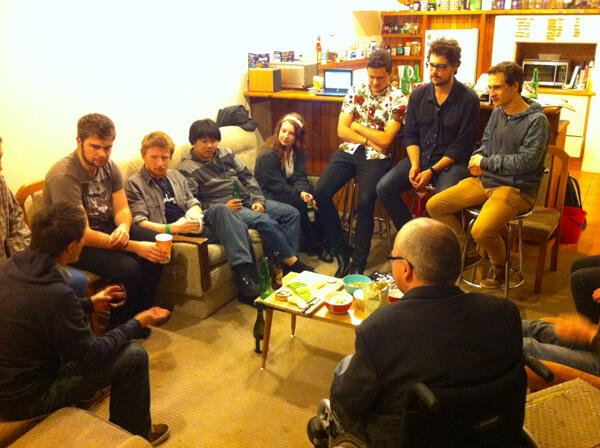
On Friday 1 August, Green Party MP Gareth Hughes made his way down to Dunedin to have what was the inaugural “Flat Warming,” a youth campaign strategy designed to bring policies to the students, not confine them to stuffy lecture theatres and awkward South Dunedin forums. The idea is to break the tension between “politics” and “youth,” which is one that Critic has touched on in the past two issues; the conclusion is that being a student, and being a youth, is very different today than it was in the past. This has been the source of much criticism in the media, stereotyping students as a single block of lazy, binge-drinking wildebeests, which far from acknowledges the fact that it is the job of politicians and political parties to thoroughly demonstrate their capacity to understand their constituents. I don’t even have to reach far to be able to demonstrate how this stereotype manifests. How did the ODT respond to Gareth Hughes’ visit? By slamming Gareth with a piece titled “Greens face binge drinking” and beginning with “the Green Party is under fire for supporting binge drinking after challenging Dunedin supporters to beat MP Gareth Hughes at a game of ‘beer pong.’” Not only is this factually incorrect (the ODT were the only ones who cared enough to write an article about it, so I don’t know where “under fire” came from), but it fundamentally misunderstands student culture and what Gareth was trying to accomplish. Students drink – that much is obvious – but we’re also capable of drinking responsibly and without getting out of control. That was the point of the event, to have a couple of glasses of wine that don’t cost eight dollars each and literally just chat. And, anyway, as 3 News reporter Dave Goosselink so astutely pointed out to me over Twitter, the better you are at beer pong, the less you drink. Gareth Hughes argued “many young people get turned off by the personality politics and focus on trivialities, so wanted to have a real discussion and get the low-down on the Green’s positions this election.” That summarises the event well, which had a warm enough environment that people didn’t feel on edge at having a politician in the room. They asked a lot of questions. Youth strategy around an end-of-semester election time provides a consistently interesting dynamic for analysing how well policies are being received, and the intensity is palpable. Gareth Hughes’ Flat Warmings are part of a wider youth strategy. Rather than being attached to an electorate, he’s attached to us. “We are putting a big focus on it and it is the first time an MP has been asked to lead on this rather than stand in a geographic seat. We still have active campus branches and the Young Greens national network that have played a big role in previous elections but this time we are investing more resources, a data-driven campaign and more focus on personal conversations like door knocking and flat-warming parties.” The flat warming “was a very effective way to communicate with students. Rather than speaking in an impersonal space ... it was a chance to speak about the issues and the election in a fun and informal way over a drink.” Funnily enough, we did actually play beer pong. Heading over to the Red Team brings us another plethora of strategies. I spoke to Georgina O’Reilly, Vice President of Young Labour, about what Labour is doing. Similar to the Greens, Labour’s youth campaign operates mainly under the Young Labour moniker, a youth-to-youth initiative that hopefully will stop any cringey, middle-aged attempts to get down with the youngsters. Interestingly, Georgina was quick to point out that students aren’t the only youths out there. There’s a big push for employment and support for trades, and Georgina explained that we need to think outside the campus mindset. If we turn to schools, it’s “a biggie” that Civics is taught throughout the education cycle. I also sent a few questions out to Katy Hendrikse of the National Party. Upon hearing about this, however, Dunedin South candidate Hamish Walker answered them himself. Katy also noted “he is excited to get a drink with you and chat about local journalism and get ‘your perspective on how to engage youth into voting.’” As for his strategy, that involves “having a bit of fun along the way.” “Government should be representative of the population and it is crucial that the youth perspective be represented. Being young myself (29) helps as I’m still connected with what’s happening with young people.” Walker has thus far been true to his intent, having participated in the recent Facebook trend, the “ice challenge.” While the ODT refused to report on Walker running into Saint Clair in a kilt, the awareness he raised by doing so shows how important it is in the student sphere to be consistent. Stunts are stunts, and they get people paying attention. Walker donated money to the Otago Hospice, made it a huge social media fanfare (attracting 30,000 views), and invited Clare Curran to participate. It apparently led to him being called “a good role model for Scottish independence.” The result was a donation from the name-caller to a Scottish hospice. The way that the relationship between students and politics will evolve closer to the election is dependent on a number of things, not least of which, the way candidates and parties plan to engage. It’s important that these strategies aren’t trivialised and condemned in local media. The three parties I spoke to are aware that students are adults. Adults who’re being told they’re the wrong kind, adults who’re making the most of this period in adulthood where we don’t have to slave over a job, and adults who’ll probably tell you to fuck off if we’re not treated as such.
-
News
 Issue 18 03/08/2014
What would it cost them now?
In an article by Spook Magazine, Ellena Savage figured out exactly how much an education would cost for Australian Cabinet Ministers should their degrees have been undertaken today. It was written amongst the discourse about how Tony Abbott intends to deregulate university fees, a frightening act of Americanisation that thankfully hasn’t yet made it across the ditch. As our generation has grown up, we’ve had the luxury of watching tertiary education transform from being a right to a privilege, and we’ve seen it become progressively more expensive. Thankfully, our loans are still interest-free, and the government has explicitly promised they’d stay that way. But the way the government interacts with education is changing, and even though these changes seem incremental at the moment, when you add them all up the contrast is stark. Critic decided to perform the same analysis on few of our own politics’ nearest and dearest - or, more specifically, those who’ve had something to do with education. So, how much would their degrees cost today? Steven Joyce Could we begin anywhere else? The loveable (see: insufferable) loaf that is the authority on tertiary education for the National Party, Steven Joyce has consistently made it just that little bit harder for us for a while now. So much so, that in 2012 he got the title of “Cunt of the Year” for Critic’s yearly roundup. Joyce went to Massey, where he began attempting to be a vet. It didn’t quite work out, so he ended up with a degree in zoology. Critic wonders if he’s ever used it. Prior to 1989, university in New Zealand didn’t have any tuition fees. That’s right – it was totally and utterly free to skip your shitty marketing lecture and fail POLS101. Students also received a living allowance, making it outrageously affordable to live the life of a student for a few years. In 1989, the Education Act changed this, introducing fees. Old mate Steven went to Massey before this increase, meaning when he went to university he paid pretty much nothing, and was free to distribute his dulcet tones to the radio-listening Palmerston North public (he later continued to do this in New Plymouth). Now, his degree would cost a grand total of $19,954.50. This estimate has been calculated through adding three years of BSc fees to the various miscellaneous Massey admin costs. If we make a couple of outrageous assumptions about Joyce’s personal life and include a living costs loan (x3 years, not including summer school) and course-related costs loans (x3 years for obvious non-course-related usage), then his total loan comes to $43,013.94 or the equivalent of around 42 toupees. Maryan Street If we head over to the red team, we find Maryan Street as Labour’s Spokesperson for Tertiary Education. Maryan Street has been thoroughly involved in social policy-type work since graduating, working in housing, unions, and ACC. Her Labour profile lists her as an academic, quite the status given how much it costs to become one these days. She was also the President of the Labour Party for a couple of years in the 1990s. According to Labour’s website, Maryan has a BA(Hons) in English from Vic and a Masters in Philosophy from Auckland. Juicy. The English degree leaves us with approximately $23,488 in fees and admin costs, while a Masters in Auckland costs roughly $8,117. Add that to five years of living costs and course-related costs? It adds up to a shocking $70,037.40. Shit. That equates to 1,167 blazers from Glassons. David Clendon David Clendon is the Green MP with the tertiary education portfolio, even though we hear more from Holly Walker and Gareth Hughes on the youth policy front. David is a born-and-raised North Islander, with a penchant for community initiatives and a serious dedication to that province all the way up North that has all those seagulls. Like Maryan, David has a couple of degrees. He has a BA in Education and Politics, and a Masters in Human Resources. The Greens website doesn’t specify where David went to university, so I’ve made the executive decision to base his course costs on those provided by the Auckland University website. His BA equates to $19,569, while his Masters perhaps would cost $7,397. Added to the loan costs that have lovingly been distributed? A total of $57,711.92, or 1,924 pairs of gumboots from Number One Shoes. New Zealand First The New Zealand First spokesperson for tertiary education, Tracey Martin, doesn’t have a university degree (according to the New Zealand First website). While there’s nothing wrong with that, it makes this article less fun. So we’ve gone for Barbara Stewart, another New Zealand First MP, who is “inextricably bound to the Waikato area.” Much of her CV involves personnel management, business, and other company-related terms. She has also been heavily involved in education, having taught at both the primary and the secondary level. Barbara has a Bachelor of Education and a Diploma of Teaching from Waikato University. When that is all added together with student loans in the same slightly dodgy manner as with our other participants, that reaches a total of $55,683.92. What is that the equivalent of? 1,856 people getting a return bus ride from Auckland to Hamilton on election day. ACT The ACT website doesn’t reveal who is the spokesperson for tertiary education, so I texted my new best friend David Seymour to enquire. He said they don’t officially have one, but to use him instead. David holds a Bachelor of Arts and a Bachelor of Engineering, both from Auckland, and attended for five years between 2001 and 2006. When he attended, “it was about $640 for BE and $480 for Arts,” according to his text anecdote. Now, however, all that fancy education adds up to $42,321.25; add on the imaginary living costs and you get a terrifying $80,753.65, or enough to buy thirteen super high-quality video cameras for his next YouTube extravaganza. Maori Party The Maori Party’s website annoys me as there’s no “search” function, and I had to go trawling through all three of the candidate profiles to hunt out exactly who takes care of tertiary education. Tariana Turia is the tertiary education spokesperson, but her biography doesn’t say whether or not she holds a degree, so I went to Te Ururoa Flavell. He deals with Maori education, so it sort of fits. Holding a Bachelor of Arts in Maori Studies and Anthropology from Auckland and a Master of Arts in Maori from Waikato means his fees would also be pretty up there. It’s those pesky postgrad degrees. All of that and a loan equates to roughly $64,714.72, or 593 Baby-G watches from Fishpond, so he can turn up to his interviews on time. Conservatives The Conservative Party’s website isn’t particularly conducive to figuring out exactly what candidate stands for what. I guess they all just stand for something. By default, I went to Colin Craig to figure out exactly what he’d be paying for if he attended university now. For regular readers of Critic’s politics section, you’ll know he was interviewed early this year; and you’ll know that aside from his outrageously ridiculous views, he’s actually a pretty nice guy (please don’t sue me for defamation, Colin). A Christian from Howick, the majority of Colin’s education took place in Auckland. He has a double degree in Arts and Commerce, and has done “post-graduate study at Massey University,” according to his Wikipedia page. Given how unspecific that was, and given how well Colin has done in the business sphere, I went with commerce. Overall? $64,831.42. That’s enough to buy 150 photo shoots comprising six images. Photoshop included. Internet Party The spokesperson for tertiary education within the Internet Party is Miriam Pierard. As she is not a known figure in NZ politics and doesn’t have a Wikipedia page, hunting out her tertiary qualifications involved finding her LinkedIn profile – something I normally prefer not to do, as the website notifies the owner of the profile each time someone views it, and it makes me look a bit like a stalker. An Aucklander through and through, Miriam once attended Epsom Girls Grammar and taught at St Cuthbert’s. She also attended university in Auckland, having obtained a BA in history and politics and a Graduate Diploma in teaching. She also has a language course degree from somewhere in Colombia, but we won’t go into that. Adding up all that education gives us $46,214.92, or 51 years of Slingshot Internet. Overall? Just for fun, I’ve gone and added up all those fees. For just eight people to attend university, a tool that helped them achieve their wildest dreams (assuming NZ politics is the pinnacle of dreams), something that would have cost most of them absolutely nothing, now would cost $482,961.89. Which is, incidentally, still not enough to buy a house in Auckland. But that’s another issue.
-
News
Issue 18 03/08/2014
Greatest hits / Greatest shits | Issue 18
Greatest HitAnother week brings us another hilarious parody website. This one is making fun of Colin Craig; by going to colincraig.co.nz you’re treated to a number of fake press releases, like: “Perhaps choosing the Conservative Party as a name was a bad choice, as we are constantly mistaken to be the Conservation Party,” said Conservative Party leader Colin Craig, while lying coyly in a field of grass. And if you hang around long enough, a giant picture of his face slides onto the screen. According to 3 News, Colin is “tremendously flattered” at being the subject of a parody site, but has, of course, threatened defamation. Greatest ShitNew Zealand First is lucky to have a number of strange MPs, and Asenati Lole-Taylor is decidedly one of them. When asked a few questions by the press, Asenati pulled the classic “my phone is ringing” to try and field off some of the reporters. One of them asked her to “stop pretending.” In retaliation, Asenati thrust her phone to his ear, in order to prove the legitimacy of her phone call. There was no one there.
-
News
Issue 18 03/08/2014
Politweets | Issue 18
Reporter Laura McQuillan provides evidence for the Greatest Shit. National MP inadvertently used the Greens’ hashtag #LoveNZ. More than once. Awkward. As you do. Thanks, fake Gerry.


