
Carys Goodwin
Politics Editor
Articles by Carys Goodwin
89 articles found. Displaying page 5 of 8.
-
News
Issue 14 06/07/2014
Greatest Hits / Greatest Shits | Issue 14
Greatest HitOur dearly beloved long-lived politician John “Banksie” Banks has resigned after a bit of a hiccup with the law. The Auckland readers of Critic will know him best, as he ruled the city with an iron fist for two separate terms (2001-2004; 2007-2010); Epsom residents will know him even better, as he was their electorate MP. In a recent legal scandal, Banks was found guilty of filing a false electoral return regarding donations from none other than Kim Dotcom. While he has not been convicted (and won’t be until later in the year), the pressure to resign came from all sides. Why is this deserving of Greatest Hit? Well, his actions were certainly shit worthy – but given his resignation, he’s free to return to his radio show Breakfast with Banksie. Gosh, I can’t wait. Greatest ShitThere is essentially one thing you have to do to form an OUSA club – get ten members to join. Unfortunately for the proposed Internet Party on Campus, in a meeting during the last week of May they only managed to get five. This led to the Dunedin “Internet Party Meet-up Captain” sending around an awkward message to those who clicked “attending” on the Facebook event, asking them to come along next time. Unfortunately for the Captain, a number of young politicians from other parties “attended” only to get the updates, not because they truly believe in the power of torrenting. I do wonder if the Internet Party’s inability to reach the OUSA member minimum is a mystical piece of foreshadowing?
-
News
 Issue 14 06/07/2014
Critic tackles election year | Issue 14
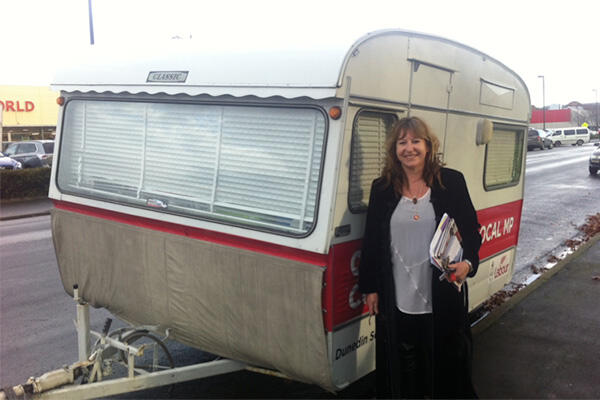
If you regularly read this page, you’ll know I have a bit of a fascination with Clare Curran. The Dunedin South MP/Twitter Warrior provides me with great Politweets fodder, and has tried a few times to make #cheeserolls trend. In fact, my encounter with her came down to a Twitter conversation. Not one to back down from a challenge, I agreed to visit her in the #realworld. After Clare was to appear on Vote Chat, I was to accompany her to a clinic in Mosgiel. An afternoon with the MP I’d featured twice as a Greatest Shit and too many times to count in Politweets? Fantastic. I was very excited. Friday was a horrible day weather-wise: cold and pouring with rain. I got thoroughly damp on the way to Vote Chat, but was keen to see what Clare would pull out on stage nonetheless. Her morning was more interesting than mine: she’d abseiled down Forsyth Barr Stadium for charity as part of “Toss the Boss.” The interview between Bryce and Clare predictably began with an in-depth discussion about cheese rolls, and Clare declared that Dunedin ought to have a giant cheese roll statue to welcome guests. I won’t go into too many details about the rest of the chat (it’s available on YouTube), but I will note that when a Twitter question of mine was asked during the show, Clare rolled her eyes rather dramatically at the mention of my name. Clearly she takes my status as a Critic writer very, very seriously. When the interview finished, it was time to head to Mosgiel. Clare and I hopped in her car (which has her face on it, of course) and drove south. As we were driving past the University, she asked me, quite flatly, how I managed to be friends with National Party people. It’s all in the name of banter, I suppose. As we veered off from Pak’n’Save, she gave me a brief history of South Dunedin. Due to the rising water table and the high population density, it suffers from severe dampness and cold. She certainly knows the area, and I could tell she was truly annoyed about the lack of action to support the community. Most notably, the area lacks a community facility, like a library, that would bridge the ‘digital divide’ and allow more voters to become engaged in local issues. Mosgiel, the area we were heading to, is separate from much of South Dunedin; its microclimate makes it a few degrees warmer than most parts, and it is comparatively well serviced. The conversation moved to the lack of police, until it was halted when Clare stopped to point out a mobility scooter. Given that this was Mosgiel, there were quite a few mobility scooters about. She pointed out every single one. She wasn’t kidding when she said she wanted one on Twitter a few issues ago. We arrived at her caravan to find people already waiting. She’d explained to me on the way over that Mosgiel residents can’t always get into town, and that visiting them was one of the only ways they’d get their issues dealt with. I was expecting a lot of banter and some good fun; I was wrong (although the first person pointed out that Michael Woodhouse’s advert might not abide by electoral law, which I enjoyed). The reality is that the caravan was cold and the people were struggling to deal with the bureaucratic mess that is WINZ. There’s a serious lack of funding for the institutions that people rely on to get by, and as a result mistakes are made. These sorts of mistakes often mean people go hungry. In the bubble that is North Dunedin, it’s easy to wear the cold and the shit dinners as a mark of pride; as something to prove you’re a student and you’re tough, so that one day you’ll look back on it with nostalgia. But for some people, the cold and the shit dinners are as good as it gets. Clare, in her little caravan, is trying to help them. We were there for a couple of hours, getting progressively colder, until we decided it was time for a cheese roll. In the car on the way back, the chat picked up; I asked her about her fellow MPs and got a couple of gold quotes. Peter Dunne, according to Clare, “fancies himself as quite the hipster … if it would keep him in Parliament he’d sell his grandmother.” She believes that Dunne or Maurice Williamson were the only two MPs who could have jumped to the Internet Party, and firmly denied to me that it was her who was switching. I never really believed that anyway, as I’ve been told that it was a group of Young Nats who decided to promulgate that rumour. Cheese rolls were next on the agenda (how could it be anything else), so we headed to a pub opposite the Labour office to indulge. I joked that it could be considered treating to pay for my cheese roll and flat white, and Clare just gave me a sly look. She ordered a large sauv. Once we sat down, I asked her a bit more about other MPs. In answer to “who’s your least favourite,” she responded first with “John Key,” then paused and elaborated with “Chris Finlayson,” because he’s “nasty.” She also commented that “some of the National Party backbenchers are a bit suss.” The conversation shifted slightly to what goes on that we can’t see on Parliament TV, and she noted that there’s a lot that doesn’t go on camera. “Jami-Lee Ross’ homophobic comments to Dennis O’Rourke,” which Clare was disgusted by, are an example of this, and we wouldn’t know it, but Maggie Barry has a “foul mouth.” Clare has only been asked to withdraw a comment once, and that was when she said the Government has no courage. She said it was part of an allusion to The Wizard of Oz, insinuating the Government has no courage, heart, nor a brain. There were a few chuckles at that one. It was at that stage a few extra Labourites slipped into the bar, bringing our little chat to its conclusion. I enjoyed spending an afternoon with Clare, if only to finally meet the woman behind the Twitter account. Despite her nonchalant attitude and hilarious tweeting habits, she genuinely wants to help her electorate. This is a quality that is extremely desirable in an MP. If you want to have your own chat, I’m sure there’s a clinic you can attend. Watch out for the Labour caravan and come with a cheese roll or two.
-
News
Issue 13 25/05/2014
Politweets | Issue 13
Snap. Clever. That is an incredible mental image. It’s ok to be bald, Tau. We all have our guilty pleasures.
-
News
Issue 13 25/05/2014
Greatest Hits / Greatest Shits | Issue 13
Greatest HitsThe Greatest Hit this week goes to a brand new political party attempting to grace New Zealand with its presence: the Civilian Party. Based on the satirical news site, the Civilian Party stands for a variety of ludicrous and hilarious things. Some of their policies include “defend the traditional institution of marriage as the union between one man and one volumetric flask,” and “replace New Zealand’s national anthem with the theme song from the 1996 film Space Jam, by Quad City DJs. A Maori version of Space Jam shall be composed to be sung alongside the English version,” and “reform the Justice system so that every citizen is required to prove why they shouldn’t be in prison.” For some, this is reminiscent of the Bill and Ben Party; for others, this is a sober reminder that no one party can truly represent our interests – but for most, this is a fucking good laugh. Greatest ShitsRather amazingly, I’ve been given the opportunity to present the Greatest Shit award to actual shit. Last week, as John Banks made his way to the courtroom (regarding anonymous donations), an elderly protester threw a bucket of manure at him. The look on Banksy’s face was one of pure shock, and the protester didn’t hesitate to let loose on his criticisms. It’s an amusing video if you get the chance to have a look.
-
News
Issue 13 25/05/2014
Critic tackles election year | Issue 13
On 15 May, the annual New Zealand Budget was released. For many people the word “budget” elicits an eye roll and a groan, bringing forth images of Excel spreadsheets and a motherly voice explaining exactly why you can’t buy that hideous sofa from the Sallies. In some respects, that’s exactly what this budget is, except the motherly voice is Bill English’s and the hideous sofa is the education system. A plethora of articles and diagrams have been used to explain the positives and negatives of the Budget; this week’s Critic aims to bring them all into one easy place, whether you think the Budget’s an abysmal attempt at running the country, a clever piece of electioneering, or the best thing since Hyde Street. SurplusAn important aspect of the Budget announcement was the “return to surplus” predicted for the 2014-2015 year. What this means, essentially, is that more money will come in than will be put out, a goal the current government has had since its rise to power. Spending, therefore, is tightly monitored and accounted for in terms of money spent and money earned. Terms thrown around on the Treasury’s summary are “expenditure restraint” and “reprioritisation and revenue raising initiatives,” if that gives a rough idea of what this government’s strategy has been. The above graph visualises how this surplus will look in the coming years, and the amount of contrast between 2012/13-2014/15 is stark. A note to remember, however, is that the economic crisis in 2008 shattered Bill English’s dreams of surpluses for some time, and damaged the entire economic metric of the country. And we mustn’t forget Christchurch, which is still very much a target of National’s spending (and rightly so). So don’t take these figures out of context. Where the money goes and where it comes fromThe National government has been quick to point out that two thirds of its Budget expenditure goes towards social security and welfare, health, and education. The graph below shows the distribution of “core Crown expenses” for the coming year. This next graph shows where the money comes from – mainly taxes. Taxes tend to get people riled up, as I’m sure is already evident given the existence of the New Zealand Tax Payers Union and that one middle-aged Southland man everyone has heard utter “my taxes are paying for this.” This is not the place to discuss tax policies, types of taxes, and how they work, but the matching graphs do well to help visualise the way our taxes are distributed. Key ChangesThe focus of this Budget has largely been on children and families, an important focus given the noise surrounding income inequality and the child poverty that continues to plague our nation. With this in mind, the government has introduced two main measures on this front: paid parental leave will be increased from 14 to 18 weeks over the next two years; and doctors visits will be free for children under 13. Both of these are good initiatives, and extremely helpful for those young families who are struggling to keep their heads above the water; in terms of child poverty, free doctor’s visits will help reduce the myriad of preventable diseases plaguing our youngest and poorest. For those of you with cars, the Budget is trying to make life easier for you by reducing ACC levies, with a notable (possible) cut being $130 for private vehicles, and if you have a car and live in Auckland, you’ll be happy to know the NZ Transport Agency is being loaned (interest free, just like our student loans) $375 million for Auckland transport. Old favourite Paula Bennett also has a new beneficiary package ready to go, targeting those beneficiaries who cannot get work and helping them get work. CriticismsThe main criticisms of this Budget are that a) it could do more, and b) it could do more for more people. It is not a massively inflammatory budget, and even the most leftist among you can’t deny that free healthcare for the under 13s is good; but that is one good thing, not an entire budget of good things for struggling people. Much of the criticism surrounds a lack of real child poverty alleviation beyond the doctor’s visits (housing, for example, is a nebulous issue that needs attention). These are surface-level solutions, and more must be done to address such pressing issues. David Cunliffe dubbed the Budget the “fudge-it Budget” (looking very proud of himself for the rhyme), arguing that the surplus is only there because of the asset sales. In an interview with One News, Cunliffe succinctly explains that it’s “a wafer-thin surplus that is concocted by holding back ACC levies, cutting back the re-build of Christchurch, and dreaming up an interest-free [loan] to Auckland instead of really investing in its transport.” Winston called it “complacent and disappointing,” while Russel Norman argued “the budget won’t help everyday New Zealanders struggling with rising power bills, rising house prices and increasing interest rates.” Whether or not you support the Budget will probably depend on where you sit on the spectrum, and for an election year, what has been revealed is hardly surprising. For those swing voters who are now leaning towards National, don’t forget their mistakes and the people they’ve left behind; for those swing voters who are now leaning towards Labour, don’t forget their inconsistent leadership and struggle to regain legitimacy; for those swing voters who are now leaning towards the Greens, don’t forget about the pixies at the bottom of the garden. Just as the government has to balance the books, we have to balance the good and the bad. Regardless of what you think of the Budget, however, there is one irrefutable good that can cause us all a sigh of relief: we’re not Australia, and our Budget is not even remotely as abysmal as theirs.
-
Culture
 Issue 12 18/05/2014
Interview: Michael Woodhouse - National Party MP
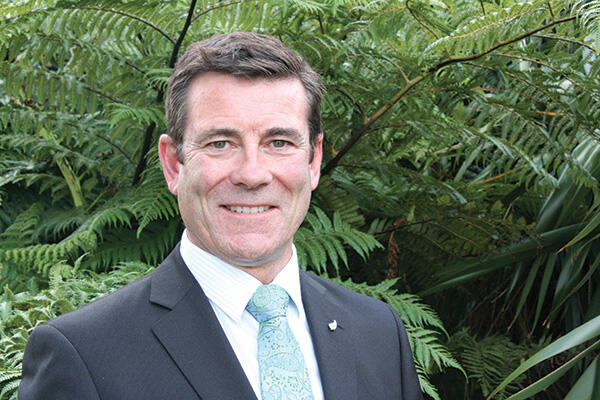
Michael Woodhouse is a National Party list MP based in Dunedin. He takes care of both Dunedin North and South, and is the Minister of Immigration, Veterans’ Affairs, and Land Information. He is also Assistant Minister of Transport. Why should students vote for you? What do you want to do for us? Didn’t I answer that? Well, just cut and paste that answer out of the previous [issue in which I was interviewed for Critic]. No, look, I think students by and large tend to be very focused on the here and now. And that’s really important and it’s important to me that they have the best education they could possibly get. And I think they do. At the University of Otago we have one of the finest institutions in the country, we certainly have one of the best health science faculties in the world, and the Government wants to make sure that’s the case, and I work bloody hard up in Wellington to make sure that’s the case. So is there anything specifically you want to do to extend that down here, specifically to Otago and specifically for Otago students? Well in terms of the University, it’s important that we grow … so my role is to make sure Dunedin is in the mind’s eye and it maintains its status. One of the things it can do, I think, is grow its programmes, so domestically, Dunedin and Otago are seen as the first choice for intending students, and it markets well across the country, but also to international students. Increasingly education and research is international … I sense there’s a reluctance here at the University to get too big in terms of international students, and that is true, I think there is a point over which the mix becomes problematic, may potentially undermine the special character that is Otago, but as Minister of Immigration, I work very closely with Steven Joyce to make sure that our international and our export education is growing, and I want to make sure at a micro level that Otago is part of that. So in a nutshell, what’s the best thing you’ve done for Dunedin so far? Like a policy or just one quick … Look, in terms of Dunedin work, I’ve gone in to bat for a whole pile of things. But actually I think the work that I do in the Dunedin office for individual constituents is the thing that I’ll sit in my rocking chair and be the most fond about. And as a list MP, frankly it’s a pejorative term, even amongst my colleagues, we are considered lesser beings … Yeah, there’s nothing better than being able to pick up the phone and go “Mrs Brown, we got a win for you on ACC.” Well not immigration now, actually, I can’t deal with immigration, sadly, but you know, whether it’s a mental health issue or a housing issue, or … they’re good ones to get. And I also think, and I’m not going to shy away from the other issue, we’ve gone through five years of really, really tough economic times. And yep, Clark will tell you that they had successive surpluses and all that sort of stuff … well, they didn’t, ‘cause 2008 was a dog’s breakfast, and the structural spending increases that were bedded in between ‘05 and ‘08 led to projections by treasurers of ten years of deficits. And we had to fix that really quickly. So being back to surplus in year five is, I think, a bloody good result. Particularly when you super-impose Christchurch, Canterbury earthquakes on that. So what’s my goal and role in supporting Dunedin? It’s to make sure that we don’t go backwards. Just to move away from Dunedin a bit, do you agree with your Australian counterpart’s policy on asylum seekers? Well, let’s put this in its broadest context. From a regional perspective, New Zealand plays its part in ensuring that irregular arrivals, and we’re talking about maritime arrivals, boat people, are disincentivised, discouraged, and then managed. So we’re talking about three dimensions here, and New Zealand doesn’t have, yet, an issue. We haven’t had a known maritime arrival … I can’t judge Australia’s response, because I’ve never been a Minister of Immigration where thousands and thousands of boat people are arriving on shores every month, and I think we need to contextualise that. New Zealand has a good response plan, we’ve been exercising Operation Barrier for four years, three years, we finesse it every time we do it, and I’m satisfied to the degree that we can, we are ready if it happens. We have a naval, a medical, a biosecurity, a customs, a police, and a judicial response, ready to go when we need it, and I will lead that. I will be the person. But I’m not going to sit here and judge Australia for what they do and don’t do, it would not be appropriate of me to comment on that. Why wouldn’t it be appropriate if it were a question of human rights? I think it’s because I don’t understand that context. The geopolitical situation in the North of Australia between Australia and Indonesia and Papua New Guinea is a very difficult one. What I would say, in a more general sense, is that everybody has the right to be treated fairly, consistently, quickly, and consistent with refugee conventions. And as far as I can tell, while there’s been a lot of noise around that particular thing with Christmas Island and Nauru, I’ve seen no clear evidence that there are human rights abuses in those places that is being perpetrated by the Australian Government. Surely it is the Australian responsibility if they are the ones that put the people in the situation in the first place should human rights abuses be carried out. Surely Australia has some responsibility to deal with that? What I would say is that anybody who has a person who is detained and detentioned has a valid response under UN convention on refugees … [they] do have a responsibility firstly to provide security to its own people, secondly to provide basic physiological and safety needs for the people detained. That’s nourishment, shelter, general protection … but some of the things that have been going on, particularly the destruction of places in Nauru, make that problematic. And of course it wasn’t the Australian government that burnt down the detention centre. No. I’m asking if you think they should have some responsibility since it was their policy that- Well the question isn’t if they should have some responsibility, it’s whether they are discharging that responsibility and that becomes a value judgement where the Australian government and Amnesty International will never see eye to eye. So it’s not for me to inject myself in that debate. Okay. Do you have any particular opinion about the recent book that came out that was marketed to possible asylum seekers? It was a comic essentially, made by the Australian government, and the underlying quote was something like “you will never come to Australia, you will never live in Australia.” It was like a comic book and it was handed out essentially saying “never, never again.” No I didn’t see it, what I do know is the previous Labour government had a very active, as part of their disruption plan, they did have quite an interesting media propaganda strategy, which did involve, from time to time, full page ads in daily papers in Sri Lanka, Indonesia, hopping off points, basically. To simply say “do not come. The smugglers are telling you lies about what will happen when they get there.” And I think that’s necessary. So I can’t comment on the comic book, but to give you an example of that, we were aware through a four corners programme last year, of two well-known Indonesian people smugglers in Malaysia who were recorded as saying “when you arrive in NZ you will get residence after 35 days, you will be supported, you will get this, that, the next thing.” And it was nonsense. And we do need to, because they are seducing vulnerable people, to pass over money and then to put their lives at risk in sometimes very dangerous waters, and they will do that, because they’re selling the reward. A reward that is non-existent. And I think it’s incumbent on us to make sure that is told to anybody, desperate though they are, and I completely understand, you know, some people’s desire to take that risk. But if they take that risk because of lies told to them, look honestly, if there is a hell, the hottest spots will be reserved for these people smugglers. They are heinous criminals. And I think we need to – we sit in judgement from a long way away, on a situation that we do not understand and I hope we don’t have to for a very long time. But it would be naive to think that this could never happen in New Zealand. Can you tell me – what was your reason for your vote against marriage equality? Oh, quite simply this. I don’t care pretty much who does what with whom and where. And I’ll state that again. A lot of people think this is some kind of fund[amental]y religious belief I have. Well, there’s nothing further from the truth. And I’m very much a live and let live kind of guy. Probably far more socially liberal than people give me credit for. But that live and let live involves the ability of other people to hold a different view and not to have others’ views forced on them … Now, that said, there were a few aspects of civil union legislation, which I’m quite relaxed about, that actually didn’t give same sex couples the same rights, and that could’ve been fixed, and I would have supported a civil union law that was for everyone, and then leave marriage for whoever wants to call it a marriage. And here’s the problem, right? Through that whole debate, it was really explaining things losing that stuff, when it’s really a hot button socially liberal issue; to try and explain that to anyone is to bore them to tears, so it was way easier to say “oh, he’s a fundy.” ‘Cause that’s how it was represented by many groups, and I had a lot of social media stuff saying “please explain your reason for voting against this bill.” how the hell do you put that in a tweet? Cool. One final question, and it’s just a fun one. You travel a lot, what’s your favourite place? Rome. If I was to say (it’s out of a long list, by the way), but if I was to go and plant myself in one place for a few weeks and just explore, it would be Rome. It’s ancient. I like old. I like old architecture. I’d go to Rome with a friend of mine who’s a classical studies graduate from Otago. That would be my Utopia and some nice Italian wine and good food and my family. That would be my ideal holiday.
-
News
Issue 12 18/05/2014
Greatest Hits / Greatest Shits | Issue 12
Greatest HitsOver the past few weeks, Campbell Live has been running an “at home with the leaders” segment, where John Campbell goes to party leaders’ houses and eats the dinner they cook. While it might be a strange twist on Come Dine With Me, it’s a good way to see what the leaders are like as people. Last Monday, the lucky chef was David Cunliffe of the Labour Party. The Greatest Hit doesn’t go to him, however; it goes to his very impressive wife. Karen Price keeps bees, is an environmental lawyer, and a pilot. Although David’s the one who wants to run the country, it’s fairly clear she runs the show. Greatest ShitsThe title of Greatest Shit this week goes to none other than the Prime Minister himself, for a minor scandal known affectionately as “Sausagegate.” At the recent National Party Conference in Queenstown, John Key decided to host a sausage sizzle, giving them away to curious locals. What he didn’t realise, however, was that two girls were also hosting a sausage sizzle nearby, attempting to fundraise for a trip. Given their proximity to the free sausages, they struggled to make many sales. Thankfully, once John realised, he donated a few dollars to their cause.
-
News
Issue 12 18/05/2014
Politweets | Issue 12
Clare tells @g_townnz what parliamentary office training comprises. I look forward to the whole musical. Banks also watches Campbell Live. Whatever “floats your boat.” Considering I have my own selfie with him, I’m disappointed. What?
-
News
Issue 12 18/05/2014
Critic tackles election year | Issue 12
For many of you, this will be your first election; and if you’re into politics enough to be reading this, that’s very exciting. Over the past couple of months, I’ve been picking brains and studying policy in an effort to present a few of the people who you’ll have the opportunity to vote for. This week, I’m going to dial it back and focus on what you’ll actually do on 20 September – vote. To do that, here’s a handy-dandy infographic on MMP, and a few things to help you mentally prepare yourself for that special Saturday. Hopefully you’ll be able to find your way to the polling booth without much difficulty. Enrol to vote If you’ve just turned 18, you probably will have received your voting papers in the mail. And hopefully, you will have filled them out. If you haven’t, however, it’s very easy to hop online to the elections website and get it all sorted. Youth disengagement is one of the biggest issues in politics, so by making sure you’re registered to vote you’ll be set to have your say on election day. Pick an electorate For those of you who aren’t Dunedin locals, you get a bit of a choice as to which electorate you can vote in. This is a fairly important consideration, as different electorates have different things at stake. If, for example, you’re from Auckland and your home address is in Epsom, you may have an interest in voting for National so ACT doesn’t get the seat; conversely, if you hate everything about Epsom, you may want to vote in Dunedin North. Election day is during the semester, so have a think about where you’d like your electorate vote to go. Get to know your MP It’s surprisingly easy to have a chat with your local MPs, who often lurk around campus or nearby it, just waiting for young whippersnappers to ask them about their latest activity. Our local MP is David Clark, and he’ll be up for re-election. Also vying for the Dunedin North spot will be Metiria Turei of the Greens, and Michael Woodhouse of the National Party (I interviewed him before he appeared on Vote Chat; his interview is on page 42). If they’re not available in person, then they’ll definitely be reachable by email or Twitter, so there are no excuses for not getting to know at least one of them. Decide who to vote for This sounds a bit stupid, but it’s obviously the most important thing you need to decide. Stray away from your parents’ preferences, investigate which party looks best for you, and don’t feel obliged to vote for the electorate MP who belongs to your party. MMP means the composition of parliament is extremely diverse, and every vote counts. If there’s a particular issue you feel really strong about, investigate how the different parties feel. You may be surprised, and it may change the way you look at the election.
-
News
 Issue 11 14/05/2014
Colin Craig | Full Interview
Just while we’re on record, the first thing I wanted to talk about is your defamation experience, and I just want to be guaranteed that you’re not going to sue us for defamation. No, that’s fine. That’ll be a no. Not going to sue us? Correct. Great, okay, I’ll say whatever I want then. As long as it’s true it’s wonderful. Well it’s all on record, so, you know. Okay, so, you said on the way over here that you’re kind of down in Dunedin to gauge what sort of policies you’re looking for, what your demographic kind of wants to be up to speed on. Here is the university, we have a lot of students, and I’ve scoured through your website, and I can’t really find much on tertiary education. So I was wondering if you could just lay out for me where you sit on student loans and allowances in the tertiary sphere? The reason we haven’t put our policy out on it is we’re still fine-tuning a couple of the points. We will have a tertiary policy for the election. We’ve made some public comments already, so a couple of the key things we’ve said: first of all we’ve said that a system that sees the student get indebted, the government get indebted, and the university get indebted, clearly isn’t sustainable in the long term, and that’s the system that we currently have. Um, and there are a couple of reasons for that. One of the reasons that I see as a problem is we’ve taken a very broad approach to universities now, whereby we fund bottoms on seats, and we say, look, this is all about getting the maximum number of people through university. I think we have to challenge that thinking and ask whether or not we should be looking at universities as institutions that still hold a primary educational high standard; I’m not going to call it elite, because I don’t think it is elite, but it’s about universities being the very apex of education, or whether it’s about educating the majority. Because what’s changed in New Zealand, and what changed the funding and the economics of it all, was that universities basically doubled in size. Took in a lot more students. Now the upside of that is more people get to go to university, the downside is that it becomes much harder to afford. So I think the current system we have isn’t sustainable, I think that we have to look at the alternatives to that. The ideal is that people shouldn’t be indebted through education; I don’t think that’s a good long-term strategy for us. But the solutions around that aren’t always easy ones. So one of them is we find more funding. If we find more funding where does it come from? Another one is we make it tougher and harder for people to get into university. So you propose higher standards? Yeah, a higher standard is likely to be one of the things we end up with. And that’s not to say other people couldn’t work hard, ultimately pay their way through university, but if we’re going to fully fund people, which is the ideal for people at the top of the education capability-wise, we’re going to have to find a way to make it pay. I think one of the other things we’re very big on and we’re doing a lot of work on is how we bring technology into play. Because the systems that we have and the concept of university that we have where everybody hops into a car to a central location… It’s not the most cost effective model. And if you look internationally, you can do an MBA, and you do it by remote learning, these things have high standards, high status, certainly in the business world MBAs are greatly regarded, and yet most of it is done by distance learning. So I think we’re still asking about the absolute best way forward, but we think that the current model has to be reassessed. I don’t think funding bottoms on seats is ultimately the answer, but also create a competition between universities, you know, if we can attract more students here, and that’s not necessarily constructive. So would you be talking about more funding would you be therefore pro-private universities, looking at those? Or are you looking strictly on a government basis? No I’m looking strictly at what our government funds. What’s taxpayer funded. I have no problem with private learning institutions, but I don’t think that’s the answer for making it more affordable for people. Generally private institutions don’t make it more affordable. Yeah. So what about in terms of loans and allowances? Cause that’s always a hotbed of discussion here. Yeah, we don’t think we’ll be changing a lot in terms of the allowances side of things, but I think the problem we’ve got is that the current system basically gets everyone indebted. So, you know, it’s hard enough to leave university and get a job, then to afford a house, get on with live when you’re also carrying a debt. And short-term, yeah short-term I can see we’ve got a funding problem, what are we going to do, let’s just get people indebted, but it’s not long-term, I believe, the right solution for us as a country. So our goal, ultimately, is to find a way to make higher education fully funded, at least for some. And one of the routes this might work quite well, is to instead of making it a straight after school experience, to bring education much closer to work, so that it’s more of a continuing education, it’s more of a process of I get a job and as part of that job, and as part of professional development, the education is a little more integrated to life experience. Instead of being a standalone, remote, unattached kind of a thing, which it is now for a lot of people who leave university and can’t get a job. Yeah. So you’d promote, perhaps, subsidies for students who have jobs while they’re trying to learn and that sort of thing? Yeah, that’s right, and working with employers and saying, look hey, if you upgrade your people, now they’re in a field, I mean a classic discussion is around nursing, you put people through nursing degrees, and they realise they don’t actually like nursing when they actually get out and do it. Far better would be to actually introduce people to the practice of nursing, get them practically underway, and then say, okay now let’s get your bachelor’s degree around nursing. So like an internship-degree hybrid? Yeah, bringing the actual vocation closer to the degree itself. And this works very well overseas, I see no reason why it wouldn’t work well in New Zealand. And that may not go for everything, but certainly I think it makes the education more relevant, but also gives a reason to give funding. Cause now the person’s working for a firm, that firm’s got an interest in educating people, and that’s a way of bringing more funding to a situation as well. The thing is though, how are you supposed to get a job if you’re not qualified? Like it’s well and good to say you can put a student in a job after they’ve finished high school, get into a job, then get the education that they need to keep continuing that job, how do you get that job in the first place? Well I think the thing is, you know, a university degree doesn’t guarantee you a job. The current situation we have is there is not a big difference in New Zealand, and I think this is an important issue, between having a university education and not. Now, in fact, we’re the lowest differential in the OECD for wages paid between tertiary qualified and not. The difference is 18%. On average, tertiary qualified people earn 18% more than non-tertiary qualified people. Now that is by far the lowest in the OECD. Most countries hit around 30%, some do more than that. And I think what it shows is that we’ve begun to put a lot of people through university, we haven’t thought well about what actually that means in terms of jobs and vocations at the other end. And a lot of people go to university almost by default. What do I do next? Oh, go to university. And I know it’s not true of everyone, some people are very clear on what they’re doing, they know what they’re studying, but I think for a lot of others it’s the next step in school. And I think to make that more successful for people, we want to actually more of an idea, if we can, of what they will do well and what they might want a job in, and connecting people to that vocation earlier, rather than just saying ‘here, do your degree, and then start looking for a job’, which can be pretty hard. So I suppose it’s just when you’re going to start working. And tying that to practical experience. Overseas this works well, particularly in Europe, there’s a number of countries that do it particularly well where they tie that. And of course the funding then comes from the company organisations very often, cause they’ve got staff, and they realise that person’s committed to us, let’s up-skill them. And it gives you another way of getting money into the situation. Cause education costs, and part of the problem of what we have now is how do we fund it. So that’s a way I see of opening the doors to more people. Okay, cool. So just to change track a bit, today a youth-led organisation called Generation Zero, which is an environmental organisation, I don’t know if you’ve heard of them, have just released a policy report that says that they’re calling for clean energy. In the past you’ve been quoted on a few things regarding climate change, and I was just wondering if you stand by your argument that it’s not human-caused, that it’s not human influenced. Oh no I’ve always said human activity does influence climate, but it’s a minor influence. Not the major influence. The major influence, in my view, and far away the biggest influence on us is our sun. I mean, it’s the biggest influence on our climate, seasons, climate change and effect, because we’re slightly a different distance away from the sun. So I think human influence is there, but I don’t rate it as the only factor, I think it’s something that we could spend a lot of time talking about, but I find the most productive thing is to say let’s tidy up and let’s clean up our environment. Things like pollution, we can make a real difference with, at very little cost, and so therefore I would always start at that end of the scale and say ‘why don’t we get toxins out of our environment, why don’t we put research into what we can do with pest control, or weed control, in a much safer, more environmentally way than we currently do. To me those represent much better outcomes for the dollar that we spend. What’s your motivation for that then? Like are you thinking you like the clean environment, or is it… why do you want to do that? Look I think as a country we are a very young country in terms of age and settlement. We do have the potential to have, I think, one of the cleanest, greenest, best environments in the world, and to maintain it at an almost pristine level. But that will take a certain amount of commitment and an emissions trading scheme is doing nothing to achieve that. Whereas if we instead set up and said, let’s clean up all our rivers and make it our goal, I think we’d get a lot further and we’d achieve something that’s quite real in terms of outcomes. And I would much prefer to spend time and energy on environmental issues where we deliver an absolute result that can make a difference in people’s lives than to talk about an emissions trading scheme which is very remote, isn’t changing anyone’s behaviour actually. And I think until we get countries like America and China on board we’re dreaming if we think we can change the climate. Ah, that’s one of the things that the report actually touches on. You know, it’s a moral responsibility, but then I suppose that goes hand-in-hand with if you believe that humans are causing it the most then it makes sense to believe that humans should clean it up the most. What about renewable energy? I mean you talked about the sun, you know, if it’s causing climate change, then it can also cause the energy… I mean, look, the sun’s a wonderful source of energy and I think looking at renewable sources of energy makes a lot of sense, and for us as a nation, most of our energy is hydro, which is a renewable source, and it’s seasonal, and that’s one of the problems. I’m not a huge fan of wind generation because it’s not economic, but I think some of the things we can do, basic things we can do, that make a lot of sense, are what if we took all of the water heaters in all of our houses in this country and changed them to heat transfer systems, which saves about three quarters of the energy in terms of heating homes. Now that’s a huge difference. And it’s economically viable to do that. I think we need to be a little bit more innovative in how we do our energy. But as I say, I don’t think the economics support windmills, but I think solar, I think water, these are elements that we have a lot of in New Zealand. Wind? It’s difficult because you have such a bit environmental effect by putting in a lot of wind turbines. So if you could name a party in government that you’d closely align yourself with on the environmental standards, cause some of what you’re saying is, you know… There are some areas here where we could definitely work with the Greens, for example, we couldn’t work with them on other areas but when it comes to cleaning up New Zealand’s rivers? Absolutely in the same space. And I think that’s one of the attractions of MMP for me, is that you don’t have to agree with everyone on everything, but if you can find something you do agree on, you can make progress. And I like that idea. So, I can get it in words, on recording, you would support cleaning up our climate, you would support renewable energy, so long as it’s economically viable. That’s right. Let’s go for the most economic sources. Cool. So just to move onto a couple of other issues, I suppose you’ve seen the news today, about you know, the Big Gay Rainbow in Pakuranga ceasing to exist, I was just wondering what you would think about going for the Pakuranga seat? There’ve been talks with a bit of a deal with National… Look, first of all, my understanding is Maurice Williamson is doing the typical resign as a minister, but stay on as an MP. And we’ve seen this with Peter Dunne, when he refused to disclose his information, to a governmental enquiry after the leaked information at the top level. And look what happened to him? He’s back as a minister all over again. I think his track record is someone who resigns as a minister can get back in the good books fairly quickly. I don’t know whether he will or not. It’s not terminal to resign as a minister, it’s very temporary by the look of it, you can be forgiven quite quickly. Having said that, I did grow up in Pakuranga, I played for Pakuranga cricket club, my father taught at Pakuranga College, so there are a lot of ties to that community, we did very well in the vote there last time, and we have a good support base there, so never rule anything out. Hmm interesting. Yeah I went to St Kent’s, so I know the area. Yeah, you know the area very well. So just with the legal highs, all that drama going on in the government, it’s brought up the conversation around legalising cannabis, and often it’s considered less dangerous than legal highs, I mean you kind of look at the facts for yourself. So do you think cannabis should be legal? No I don’t, but I don’t think we should make legal highs legal either. So I sit in that very, I guess, conservative anti-drug space. Why? I do think though that we have this strange situation of double standards. And by that I would say here we are, the government, and I know they’ve pulled back from it, but nonetheless, they sort of committed towards, let’s legalise these substances, yet on the other hand they’ll go after somebody who’s smoking, and have all sorts of plans about what to do to them. I mean we charge an enormous amount of tax on cigarettes. But we don’t treat alcohol consistently with that. We don’t make someone buying a beer, or an RTD, we don’t have the same approach, we say you know what, this is using up 70% of our accident and emergency resources, so you’re going to pay a bit more for it. I would like to see some sort of consistency here, where we go, here’s the standards that we have, here’s the way that we will approach it. My concern around legalising any sort of mind-altering substances is there are long-term effects. We can already see long-term effects from other substance abuse. Alcohol, for example, very long-term effects on families, children, on the young, you know, you’ve got pregnant mums who drink too much, and actually these are very major effects on our society, they harm individuals, homes, and communities. So I sit in that fairly restrictive space that says I don’t believe we should go down the track of saying that these things are mainstream, that they should have legal standing in our country. And that’s because of effects, because they go broader than just the individual? They do. And it’s not a case of individual freedom alone, individual freedom must surely be balanced against the cost to a community. Cool. You said a couple of years ago that kids sent to school without lunch should go without in the past, and regarding the talk recently with different policies and how our child poverty problem is going, do you stand by that? Do you still say…? I don’t remember saying that, I know that we’ve said it’s the responsibility of parents, and we should be making the parents step up, and I certainly stand by that. And I think there are some good examples of it where if you ask and expect parents to do more they will, but if you give them a free pass, if you say ‘you know what, we’re going to provide lunch at school’, I believe many parents will make the choice not to supply lunch to their child. Because that’s the easy option now. We’ve given you a way out of your responsibilities and people will take those ways out. So I think what we have to be doing is we have to say we expect every child to have a lunch at school, and we expect every parent to provide it. And there’s no one in this country who is not receiving or able to receive support from this country to make it happen. People still live below the poverty line, though, and there’s no way to guarantee that any parent will be a good parent. You can introduce all these consequences, but there will always be people who slip through the cracks, so I’m just wondering how you can say ‘no, we won’t support children getting lunch in schools cause everyone will do it and that’s a bad thing’. We want every child to have a lunch in school, but that process surely has to go back to the parent, and say to the parent ‘your child didn’t have a lunch today, we had to feed your child, and so you now have less money in your dole or in your benefit, or if you’re not able to supply, then clearly you haven’t taken advantage of the support we can give.’ Because the support in this country is generous. You think it’s comprehensive enough? I think there are some faults and some problems with it, but in terms of internationally, we have very generous support in terms of welfare. So you think if people are living below the poverty line, and people don’t have the resources to feed their children, then it’s their fault for not taking the benefits? Well if they’re not taking advantage of the benefits that are there then they may well struggle to get by. I accept that, I don’t think the minimum wage in NZ is enough to get by, and we know that because most people on the minimum wage have to get subsidised by the government, particularly if they have children, and so I think there are some issues around general affordability, and I don’t think that the right answer is to actually build some enormous welfare state. But at the moment we do provide support and additional support and emergency relief support to anyone who can’t feed their children. So I do think there’s a problem if someone’s in a situation where they can’t fund it and can’t afford it, then yeah, something’s gone wrong in terms of how they’re accessing what’s available to them in terms of support. But you’d support having a system to check up on, and say, slap on the wrist, say ‘no no no, need to be feeding your children’. I actually think we should be doing that. It is a legal responsibility of parents to supply the needs of their children, and if they fail to do that then I actually think we should be holding them to account. We don’t do that very well, we have a society that has child abuse at a phenomenal level, is increasing, and I actually think we’ve been really slack about looking after the youngest and most vulnerable in our society. And I actually think going to parents and saying ‘you know what? This is your child and you haven’t fed them or you haven’t clothed them, and we expect more of you to play your role, is actually the right thing to do.’ Might sound a bit, you know, tough, because it wouldn’t always be easy, but if we don’t set that standard, we won’t get – now not every parent would rise to that, but many would, if they were challenged to. I’m someone who does believe in setting expectations and getting people to live up to that. Now, traditionally, most people would’ve been chased up by their mum, or whatever, there was a social structure there that provided that support. I think we have to acknowledge it’s not always there now. Our view of social welfare’s very different to what we have now, we actually think that social welfare workers shouldn’t sit behind desks, we think they should actually be out there, with people in their homes, one day every fortnight or something like that. And many people don’t have skills. I mean I could give many examples of this, but there are people in our society who don’t know how to clean a house. Who don’t know how to cook a meal, really. Or maybe they don’t have the motivation to because there’s no one helping them do it. So you’d prefer programmes that support in-home help like that. Yeah, we believe Plunket and Karitane nurses makes a lot of sense instead of being hospital-centric or expecting people to always come to you. Because that’s not going to happen. It might in some cases, but there are a lot of people who start falling through the cracks. And I don’t think it’s an accident that Maori health outcomes started declining the moment we pulled out the Karitane nurses. See I think Karitane nurses didn’t just look after kids, I think they brought into the home a standard that says ‘hey you know what, we could place, you could do this, this is the way to run a household.’ And that rubs off, that mentoring, that sort of assistance is really valuable. We’re sort of starting to run out of time here, so I’m just going to move onto a few, you know, Critic-student-media questions. Oh, go for it. What’s your favourite conspiracy? Ahhh. The moon landing? No, no, see I don’t- this is the thing, I don’t answer conspiracy questions because I don’t know them very well. But I think, and I wouldn’t have a clue about it, but I think the whole JFK thing has a lot of mystery attached to it. If I was going to get deeply into thinking about a conspiracy… [Colin’s Press Advisor] Which you’re not. Which I’m not. I mean everybody talks about it, I have no idea what the conspiracy is, but I’m sure it would be exciting. Okay, JFK. Not the moon landing. Nah. Nah. That’s not fun. I don’t think so. One last question. This one you have to answer. Oh, okay, compulsory answer question. Go for it. Shoot, shag, marry: Jacinda Ardern, Judith Collins, Metiria Turei. And that’s a question?! That is a question. Okay… I’m trying to look for some similarity between them but all I’m finding is a whole lot of differences. Um… okay, don’t know Jacinda Ardern, but she and I have a few disagreements. Definitely not marry. Judith Collins? Errr don’t know. Metiria Turei? Time for celibacy. Have you got that down there as an option? Monkhood or whatever they call it. You can only shoot one! You’ve got to marry one and shag the other. What was the order you gave them to me in? Jacinda Ardern, Judith Collins, Metiria Turei. No particular order. Look, that’s such a tough question. I should consult my wife on this one. However, I will go with the following order: I’ll shoot Judith Collins cause I think she’s tough enough to take it, um, shag, well, aw gee, nobody, cause I’m married and it’s not an option for me. Um, marry, again, it’d be problematic, but let’s say my wife died, and I had to re-marry. Who’ve I got left? Jacinda Ardern and Metiria Turei. But if your wife died, you’d have to shag one too then, cause you’re out of the whole marriage thing. Yeah no I don’t know if I want to go there. Um, I’ve shot Judith Collins cause I think she can take it, Metiria’s the one with the nice jackets, eh? Yeah. Fashion, yeah, good. Marry. By default, that’s not looking good is it? But I’ll leave it at that. Can I get it in your words? Yeah, definitely time to consider other options. There you go, that’s my answer. Fantastic, thank you for answering that.
-
News
Issue 11 11/05/2014
Greatest Hits / Greatest Shits | Issue 11
Greatest ShitsI thought, for sure, that Maurice Williamson would be this week’s Greatest Shit, with his controversial phone call to Police over a friend’s domestic abuse charges leading to his resignation. That was until Judith Collins demanded the limelight back again, however, by making distasteful allegations about TVNZ reporter Katie Bradford. Possibly the worst part is that she made an effort to name and shame Katie; after she told her story, Collins asked the reporter she was speaking to, “don’t you want to know who it is?” Judith is on thin ice these days, and is taking a break from Twitter to gain some mental clarity. Greatest HitsThrough the active efforts and protests of John Banks, Trevor Mallard, and Mojo Mathers, John Key declared that there would be a ban on animal testing for legal highs. This is a fantastic example of the Government listening to its people, as over forty thousand people signed Trevor’s animal testing petition prior to Key’s announcement. Long live the puppies!
-
News
Issue 11 11/05/2014
Politweets | Issue 11
Lovely poetry from Winston. Oh? Seems Clare likes mobility scooters so much she's expressed interest across multiple social media platforms. The picture is of a random dirt hill.


