
Greatest Hits / Greatest Shits | Issue 11

from Issue 11 ()
from Issue 11 ()

The 120th annual Capping Show, A Capping Carol: The Night Before Hyde Street, kicked off last Wednesday and once again delivered a unique and entertaining show. Capping Show director, Baz Macdonald, said the show had so far gone “really, really well.” The first two opening nights were attended by two very different audiences, according to Macdonald. Opening night saw the majority of tickets given away to Hyde Street residents, while the second night saw tickets given to friends and family of the cast. Macdonald said “on the second night, [the audience] picked up on the more intellectual jokes.” The main storyline of the show concerns a young Scrooge who is missing out on the fun of the Hyde Street keg party because he is too dedicated to his studies. The majority of the main sketch is occasionally awkward but as the cast said themselves, “What’s the point in having a main story line in the Capping Show? Everyone knows the videos are the best bit.” The show received countless laughs from the audience with the cast ridiculing several well-known brands, including a Dove parody that ingeniously interpreted their real beauty advertisements as a racist slur meaning “real beauty is white.” Other live and recorded sketches included mockeries of Kim Dotcom, Malaysia Airlines and a violent skit involving the Teletubbies. The Capping Show did not offend to its usual standard, despite attempts to offend men, women, children, Campus Watch, the Proctor, several celebrities, the blind, the paralysed and, of course, Unicol. Either the jokes were played a little too safely or Critic is difficult to offend. Both are plausible. The usual live band did not feature in this year’s show, however, OUSA Communications Coordinator and resident MC of the Capping Show Alasdair Johnston, did a fabulous job of keeping the audience entertained during the break. He even managed to insult the Indians of the audience, which the show had missed out. “We have a stall outside run by the Indians. No stereotypes, please; it’s not a dairy, although it does sell lollies, chips and cans of drinks.” The Selwyn Ballet perform at the Capping Show every year and Critic believes this year was one of their best yet, with original moves and skirts far too short for these talented ballerinas. The Sextet and Sexytet groups gave their usual renditions of popular tunes replaced with explicit lyrics. Critic would have to give the girls the winning trophy for their performances, which included some epic beatboxing and covered difficult flatmates, threesomes, Tinder and bisexuality. “Time for me to explore, that’s what uni is for, doesn’t make me a whore,” sang the sexytet. The Capping Show starts at 7.30pm at the College of Education Auditorium every night this week until 17 May 2014. Tickets are $14 each (plus a booking fee) for students from dashtickets.co.nz.
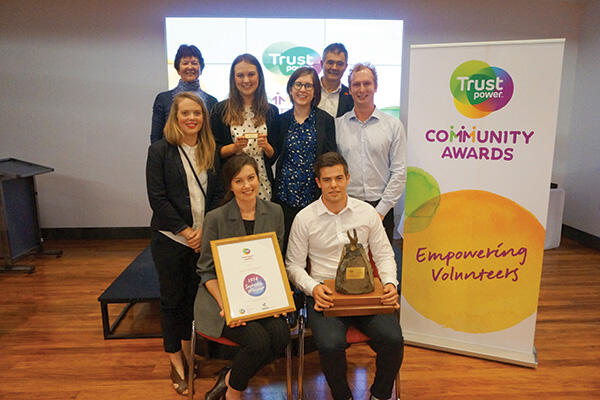
Student-run charitable organisation Ignite Consultants has taken out this year’s Supreme Award at the TrustPower Dunedin Community Awards, ahead of a number of competitive entries in Dunedin’s not-for-profit sector. The honour will also see Ignite Consultants represent Dunedin at the National TrustPower Community Awards in March 2015. The Awards acknowledge volunteer groups in the community, and were presented by Mayor Dave Cull and the TrustPower leadership team at Toitu Otago Settlers Museum on 5 May. According to TrustPower Community Relations Representative Emily Beaton, Ignite’s contribution to the community was “stand out,” and the group has provided some “really tangible results with ChatBus and FoodShare, their previous clients, both being awarded category placings in the awards.” Each semester, Ignite recruits students who will then work in teams on an eight-week project for a not-for-profit organisation in the community. Ignite Operations Manager Alice Marsh said Ignite Consultants “create an important connection between students at the University and the community itself.” She added, “[Ignite] does this by using the skills of passionate and talented young students to build strategic partnerships with struggling not-for-profit organisations through business consulting.” Marsh said the win is “incredibly important” to the group and has “validated the work Ignite does in the Dunedin community.” The Supreme Winner, along with all other category winners and runners-up, are judged on a set of criteria, according to Beaton. “This allows for judges to differentiate between organisations that have achieved results through external funding and those who have invested considerable effort.” She added that the criteria are based on volunteer input, use of resources, initiative and creativity, effectiveness of activities and the impact that it has. “Ignite have done extremely well in all of these areas by building on the resources that are readily available and using them to benefit both parties involved, in this case, the students and the voluntary sector.” Marsh said the group were looking forward to the National Awards, which would be an opportunity for Ignite “to showcase the wonderful social minded contingent of university students.” Beaton said Ignite would be up against 23 other groups at the National TrustPower Awards that will take place at the end of March 2015 in Wellington. While the competition would be tense, she couldn’t wait to see what Ignite “bring to the event.”

An emergency Executive meeting was called at 4pm last Thursday to finalise details and questions for the upcoming OUSA referendum, which resulted in the entire process being moved back, highlighting the unorganised nature of its planning. The meeting began with Ruby addressing the Executive, saying that she wanted to push back the date of the referendum to enable the Executive to include a number of “topical” questions to be voted on. The Executive had previously decided on a date for the referendum several weeks ago, thus allowing ample time to publicise and prepare questions for the event. Since then, the only notification to students regarding the referendum was in the Notices section of Critic Issue 10. The OUSA Constitution requires that the referendum be held in the first semester, and typically includes general agenda items such as receiving and accepting the annual report and the audited annual financial statements of OUSA, as well as appointing the auditors and honorary solicitor for the next financial year. The Executive agreed amongst themselves to change the date of the referendum, with Henri saying, “if there’s stuff that’s a bit political, that does seem like a solid reason” to move the date. Ryan said that the change was “a bit unorthodox.” Following a general agreement from everyone on the Executive to change the date of the referendum, Ruby turned to Ryan and asked, “Do you agree, Ryan? This is your job.” To which he replied with an overly positive “yes.” As stated in the Constitution, 10 days must be allowed following the closure of question submission, in order for both student and executive referendum questions to be passed by a mediator and worded appropriately. Submissions will now close at 4pm on 13 May, and the questions will then be decided on at an Executive meeting that same evening, after which the 10-day moderation period will commence. Vaguely, the themes the Executive are considering submitting concern: universal student allowances; marijuana; oil drilling; a student bar; GST-free food; a glass-free North Dunedin; and students’ stance in regard to alcohol. The emergency meeting concluded with the Executive rescinding the motion for the referendum to be held between 20 and 22 May, as originally decided. A new motion was then passed for the referendum to open at 9am on 27 May and close at 4pm on 29 May.

The Sexy Summer Jobs internship programme has created almost 100 full and part time positions in Dunedin businesses since beginning in 2008, and according to DCC Business Developer Advisor Chanel O’Brien, that number is expected to rise to 120 jobs by June. Established in 2008 by the University, Otago Polytechnic and members of the ICT industry, the internship is “about supporting Dunedin businesses by getting quality students to meet business needs.” O’Brien said, “the aim is to retain talent and skills in the city, to increase the flow of top quality students into local businesses to build capability, and grow export-ready businesses.” The internship was specially created as an answer to issues surrounding job vacancies in the Dunedin ICT Business Cluster, a cluster that aims to support the growth of ICT businesses in Dunedin. “[In 2005] 18 companies in the cluster had 109 job vacancies and struggled to fill the vacancies. This resulted in considerable strain on existing staff, many of whom were often required to work in areas not specified to their field.” The success of the programme is evident with one in three interns normally offered either a full, part time or contract position. O’Brien said “internships help students understand what attitudes, habits and communication skills they should adopt if they want to be successful in any given work environment.” The programme now includes businesses from Biotech/Health Technologies, Creative, ICT, F&B, Niche Manufacturing and other sectors. In terms of growth for the internship programme, O’Brien said Sexy Summer Jobs has now attracted funding through the DCC Annual Plan to enable 40 interns to be placed each summer season, and an application to fund a further eight interns was recently submitted to the DCC. O’Brian also said, “ideally the growth should come from the business community where the programme is dominated by the ‘demand’ created from businesses for student talent. Business ‘need’ is the key driver.” Graduate Employer Liaison Robyn Bridges, at the University’s Career Development Centre, said the internships “give students relevant experience and knowledge, which is so important in the competitive graduate employment market. Internship experience gives them self-confidence, and the opportunity to apply their learning to the real world of work.” Students can find out more about the programme and have the opportunity to meet businesses face to face at a speed dating-type event in September, or by visiting sexysummerjobs.com.
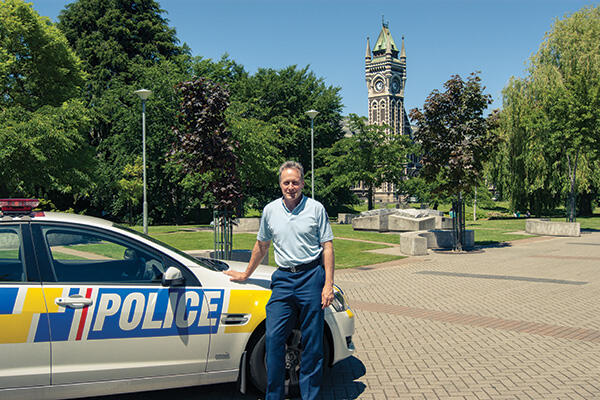
Despite Critic’s prying attempts to unveil the usual ridiculous student antics, the Proctor had little to share and reasoned that “everybody’s got their heads down and their bums up with exams coming up.” However, the Proctor said he was sad to see that Campus Cop Max Holt is leaving his post to become Deputy Head at Toroa College. “He is a real worker, he is great. I hope they replace him with somebody of an equal calibre, and soon.” Graduating from Otago with a Bachelor of Commerce, Holt has been a fully sworn police officer since 1991 and started his role as Campus Cop at the beginning of April 2006. Otago is one of only two educational facilities in New Zealand to have their own police officer, with the other being Massey University in Palmerston North. Based in North Dunedin, Holt not only works closely with the Proctor and Campus Watch, but also has a variety of other responsibilities. These include offering advice on safety and security, as well as taking complaints including thefts and lost property. As with the New Zealand Police at large, Holt said his role is largely focused on prevention and, as a result, the North Dunedin area has experienced a dramatic decrease in crime in the past three years. Holt was particularly proud of the joint efforts of Police and Campus Watch in targeting the reduction of burglaries in the North Dunedin area. While Holt acknowledged the vast majority of students are well behaved, he said it was disappointing to see that Dunedin’s reputation is tainted “by small groups of largely male flats” who don’t seem to get the point. “There are plenty of students around who are at the library studying on a Friday and Saturday night.” However, he said that over his time as Campus Cop he has noticed a change in students. “I really think the Canterbury earthquakes changed the student psych [in regards to] their responsibility to each other.” He added that initiatives like the Volunteer Student Army encouraged this and helped to create a better sense of awareness and support among students and the wider community. “I hope students can see how significant their part is for the community. Students have changed, and I think students are now more responsible for achieving academically.” Holt said that he was looking forward to his new role at Toroa, and while his history as an officer on campus would be helpful in some situations, he was looking forward to a new experience and the new challenges that the role will bring.

Dunedin is quickly becoming a concrete canvas for internationally renowned street artists. Globe-trotting English street artist Phlegm is one of the latest to embrace Dunedin streets as a canvas for his unique brand of “visually stunning, playful and transformative” art, according to DCC Community Arts Advisor Cara Paterson. Phlegm’s two works, in Vogel Street and Moray Place, are inspired by magical imagery. The Moray Place mural features an amorphous bird-insect figure, while the recently completed Vogel Street work features a large monster-fish swallowing a number of small boats. Speaking to the ODT, Phlegm said, “It’s great here for street art. You’ve got so many big industrial old buildings here. I grew up painting on buildings like this in Sheffield.” Friend and fellow street artist ROA, the Belgian artist responsible for the large monochromatic tuatara on Bath Street, inspired Phlegm’s Dunedin visit. Paterson says, “I think both [Phlegm and ROA] bring their own creative skill set … and we are lucky to have had them in Dunedin. I watched ROA’s artwork being created and witnessed a huge number of people captivated by the process and skill of painting in that scale. I think the artworks add interest and an energy that is inspiring and questioning.” Paterson shared the sentiment of many by embracing a street art movement in Dunedin as a way to inspire local artists to bring their work into a more publically visible arena. “We have an opportunity, I think, in our urban environment to celebrate the magic spaces we have in the city, the buildings and surfaces that people look at everyday can be transformed and re-imagined.” While some have voiced concerns about the potential harm to Dunedin’s heritage buildings, the DCC’s Heritage Planner does not believe the street art will cause any damage. “We need to make sure the location is right and it won’t cause damage or other unnecessary problems/conflicts. [However,] if the works are attracting people to an area to see them, involving people in their city, and improving the way the city looks, then I see this as positive.” As for a return visit to our city, Phlegm said to the ODT, “I’d love to come back to Dunedin. A couple of other buildings have caught my eye.”
Accommodation for postgraduate students is set to increase after the University purchased a property neighbouring Abbey College in order to increase the College’s capacity. 55 Duke Street backs on to the College and was purchased by the University for $550,000 to be used as housing for College Head Dr Charles Tustin. Founded in 2008, Abbey College is home to 75 postgraduate students, but the Duke Street property will see additional rooms added to the College. Renovation plans include installing eight new student bedrooms within the College once Dr Tustin moves into his new residence, with the rooms likely to be completed by the end of the year. The expansion of Abbey College comes in the wake of various other construction projects on Dunedin’s halls of residence. One of the most notable was the opening of the new Te Rangi Hiroa College, which boasts 127 new rooms complete with ensuite bathrooms. The building was formerly known as Living Space Hotel and Apartments and was purchased by the University in 2013, opening as a residential hall at the start of this year. Other recent University renovations include an additional floor built onto Selwyn College’s Castle Street-facing building, 80 new bedrooms built at Knox and Salmond, and the renovation of new common areas and terraces at Toroa. In total, the University has added more than 200 new rooms for students in the last two years. Director of Accommodation Services James Lindsay believes the construction on the halls is vital if the University wants to continue to attract students both nationwide and internationally. “Otago is known throughout the country for its outstanding campus experience for students. The colleges are integral to this.” Lindsay hopes the addition of 55 Duke Street to University property is one that will benefit students directly. “The [investment] is testament to our commitment to providing students with quality accommodation and services.” The property purchase will join the University’s non-rateable assets in Dunedin, worth $632.27 million: 3.1 per cent of the city’s total, according to figures available from last year as published in the ODT. Chief Operating Officer John Patrick indicated to the ODT the cost of the alterations is still unknown, as planning and design are yet to be completed. Abbey College, New Zealand’s first purpose-built residence for postgraduate students, houses people from 27 different countries, with these international students making up 70 per cent of its total residents.
The University of Otago has been selected to host one of six national Centres of Research Excellence (CoRE) and will co-host a second CoRE with the University of Auckland, following a Government announcement. Both the Dodd-Walls Centre for Photonic and Quantum Technologies (Otago) and Brain Research New Zealand - Rangahau Roro Aotearoa (Otago and Auckland) were selected to join the ranks of the country’s top research facilities. Established in 2001, The CoRE fund provides operating expenditure of nearly $210 million over six years, starting next year and continuing until 2020. It aims to encourage the development of excellent tertiary education-based research. Vice-Chancellor Professor Harlene Hayne said that the new CoREs were a “clear indication” of Otago’s excellent research standing. “Otago has many research strengths in a diverse range of fields and this strength has been underscored by the CoRE announcement,” Professor Hayne says. She said it was “particularly exciting” to see that the University had been given key leadership roles in two very different areas - photonics and quantum science and brain health. “Both of these CoREs will bring us into closer working relationships with other New Zealand universities and research institutes, and the sharing of ideas and energy across the sector will be of great benefit to the country.” Associate Professor David Hutchinson, a theoretical physicist from the Department of Physics, will direct the Dodd-Walls Centre for Photonic and Quantum Technologies. “The Centre’s research centers around photonics, the manipulation of light at the most fundamental, quantum level, and the control and manipulation of matter at the atomic scale, through the use of light,” Associate Professor Hutchinson says. He said the research has “potential real-world applications” and will generate fundamental knowledge about the composure and behavior of the physical universe. Professor Cliff Abraham will co-direct Brain Research New Zealand – Rangahau Roro Aotearoa – alongside Distinguished Professor Richard Faull of Auckland University. The national partnership said their vision was to provide a “truly national, collaborative response” to the issue of ensuring people age well with a healthy brain, especially when direct costs of these disorders are estimated to be over $1 billion per year, and rising by over five per cent per year. “The mission of Brain Research New Zealand is for our scientists, clinicians and the community to work together to unlock the secrets of the ageing brain so that we can develop new therapies and better clinical and community care to enhance lifelong brain health,” say Professors Abraham and Faull.

The Dunedin Fringe Festival is set to lose two key organisers but the change will bring “new blood and new ideas,” according to departing Director Paul Smith. Smith has been part of the Festival since its creation in 2000 but has resigned, effective from July 2014. Chairman of the Dunedin Fringe Arts Trust Warren Taylor also announced he would be leaving in October, after eight years in the role. Starting as a publicist for the festival, Smith has been the only one to remain of the orignal Festival core since its creation in 2000. He said his decision to leave was based on “my own desire to have a career change,” and even after fourteen years in the role, he still describes it as “fabulous, but full-on and stressful.” The Dunedin Fringe Festival was started in 2000 by the Higher Trust, in partnership with the Otago Festival of the Arts. The Trust involved people who believed the model of typical arts festivals did not cater for those working “outside the mainstream.” According to Smith, typical art festivals have more resources. “They bring in performers from overseas, charge big ticket prices and hire big venues.” Dunedin Fringe provides support and promotion for the performers and is a non-profit organisation. It showcases “emerging artists, not celebs,” says Smith. The Festival has seen some major changes since 2000, including “divorcing ourselves” from the Otago Festival of the Arts in 2008 and the change from a biannual to an annual event, says Smith. The Trust also changed the time of year the festival was run, aligning the dates with the Adelaide, Wellington and Auckland Fringe Festivals. “This creates huge potential for Dunedin to be recognised on an international scale as part of the travelling fringe festival goers.” Smith will assist the Board of Trustees in finding a new director in June and is “keeping options open” with regards to his next position, but said he is “keen to remain in the arts and culture.” He hopes the Fringe Festival maintains its model of open access, inclusivity and support for the local Dunedin arts community. “That’s why it was set up in the first place.”

This week, let’s go to the corrupt and over-budget Olympics desk, where we know that all self-respecting Otago students are self-taught experts in the art of procrastination (I, for one, consider myself a master). Small-scale procrastination is somewhat acceptable, like neglecting that 10 per cent, 1500-word essay in favour of catching up on Breaking Bad ... bitch. However, when you have the task of delivering the world’s biggest sporting event two years after the world’s second-biggest sporting event, then procrastination and delays become much more serious. I am, of course, talking about Brazil, who are the lucky hosts of the first Olympics to be held in South America and the upcoming FIFA World Cup. But are they so lucky? Plenty of angry Brazilians don’t think so. While sports are hugely popular in Brazil, not everybody is in favour of the huge amount of money being invested into new stadiums and infrastructure for the games when there are huge problems with poverty and a lack of funding for education and healthcare. The Brazilian people have been told that the country will prosper because of the economic benefits that these events bring and that eventually everyone should benefit. However, some people have not bought that line. “... [P]eople have the illusion that they will profit from the World Cup events, but the truth is that they will be brutally suppressed,” said Roberto Morales of the Socialism and Liberty Party, who have been very vocal in their opposition to the huge public spending on these events. In February of this year, thousands of armed troops were sent to Rio’s slums to round up criminals and regain control of turf from the powerful criminal underworld of the city. We saw similar things in the lead-up to the 2008 Beijing games, where thousands of poor and powerless citizens were forcibly relocated by authorities to make way for games facilities and then unfairly compensated or just ignored. Speaking recently from an Olympic Committee meeting in Sydney about the state of play in Brazil at the moment, IOC Vice President John Coates called out their progress ahead of the 2016 Rio games as “the worst” he had ever seen, stating “they are critically behind schedule,” citing the complex political relationship between various authorities as a major factor in the delays. The World Cup is only a few weeks away, so let’s continue with the teams in Group G. GermanyUEFA – Union of European Football Associations Population: 80 million Currency: Euro Capital: Berlin Language: German Nickname: Die Mannschaft!! – The Team FIFA World Ranking: 2nd Qualified: Undefeated in Euro Group C Fun Fact: Only once failed to get out of their group ... back in 1938. History: Have finished in the top three in their last three World Cups and their last two European Championships. Key Players Eenie meenie miney moe … Their entire squad is made up of big-name players from the world’s best clubs, though German clubs Dortmund and Bayern Munich do supply the majority of the squad. Prediction: Should easily top this group and I think they can go all the way to the final. PortugalUEFA – Union of European Football Associations Population: 11 million Currency: Euro Capital: Lisbon Language: Portugese Nickname: Os Navegadores – The Navigators FIFA World Ranking: 3rd Qualified: Beat Sweden in last chance play-off Fun Fact: Held in 1995, the SkyDome Cup was a three-team tourney against Denmark and Canada. Portugal won and this remains their only tournament “win” at senior level. History: Often criticised for under-performing on the World Cup stage, with a third place in 1966 their best result. Key Players: Record goal-scorer Cristiano Ronaldo is the captain of this one-man team. Prediction: On paper they should go through, but Ghana and USA won’t just roll over. GhanaCAF - Confederation of African Football Population: 24 million Currency: Cedi Capital: Accra Language: English Nickname: Black Stars FIFA World Ranking: 38th Qualified: Beat Egypt 7 - 3 in play-off. Fun Fact: Were denied a historic place in the 2010 semi-finals owing to Luis Suarez’s handball in their quarter-final against Uruguay. History: Good record in the African Cup and this is the Black Stars’ third appearance. African teams are always well supported by neutral fans. Key Players: The experienced duo of Asamoah Gyan and Sulley Muntari have played in big matches for big clubs. Prediction: Could really spring a surprise on the more fancied teams. United StatesCONCACAF - Confederation of North, Central American and Caribbean Association Football Population: 318 million Currency: US Dollar Capital: Washington D.C. Language: ’Murican Nickname: The Stars and Stripes FIFA World Ranking: 13th Qualified: Winner of CONCACAF group Fun Fact: Top-scoring cry-baby Landon Donovan could also become their most capped player if they reach the final. History: USA have not failed to qualify since 1990 and had their best finish with a quarter-final against Germany in 2002. Key Players: Head coach Jürgen Klinsmann, who was a World Cup winner with Germany, has been key to the team’s recent run of good results in qualifying. Prediction: The “too-tough-to-call” game against Ghana will be crucial if they are to advance.

Otago welcomed an unlikely guest the week before last: Colin Craig, leader of the Conservative Party. His visit was a flurry of interviews, including a much-anticipated appearance on Vote Chat, and I was lucky enough to spend a bit of time with the thoroughly intriguing man. Social conservatism doesn’t tend to be the name of the game for students in Otago, and Craig has often appeared in the media for ridiculous statements; for that, I wasn’t entirely sure what to expect. As it turns out, he’s actually extremely personable, was very interested in the general mechanics of Critic, and willing to answer whatever I threw at him – including a “shoot, shag, marry.” We chatted for nearly half an hour, so this page features the best bits of the interview. The rest can be found at critic.co.nz/colin. While we’re on record ... I want to be guaranteed that you’re not going to sue us for defamation. No, that’s fine. That’ll be a no. This is a university, we have a lot of students, and I’ve scoured through your website, and I can’t really find much on tertiary education. So I was wondering if you could just lay out for me where you sit on student loans and allowances in the tertiary sphere? The reason we haven’t put our policy out on it is we’re still fine-tuning a couple of the points. We will have a tertiary policy for the election. We’ve made some public comments already, so a couple of the key things we’ve said: first of all, we’ve said that a system that sees the student get indebted, the government get indebted, and the university get indebted, clearly isn’t sustainable in the long term, and that’s the system that we currently have. And there are a couple of reasons for that. One of the reasons that I see as a problem is we’ve taken a very broad approach to universities now, whereby we fund bottoms on seats, and we say this is all about getting the maximum number of people through. Yeah. So what about in terms of loans and allowances? ‘Cause that’s always a hotbed of discussion here. Yeah, we don’t think we’ll be changing a lot in terms of the allowances side of things, but I think the problem we’ve got is that the current system basically gets everyone indebted … So our goal, ultimately, is to find a way to make higher education fully funded, at least for some. And one of the routes this might work quite well is to, instead of making it a straight-after-school experience, bring education much closer to work, so that it’s more of a continuing education, it’s more of a process of … get[ting] a job and as part of that job, and as part of professional development, the education is a little more integrated to life experience. Yeah. So you’d promote, perhaps, subsidies for students who have jobs while they’re trying to learn and that sort of thing? Yeah, that’s right, and working with employers and saying, look hey, if you upgrade your people, now they’re in a field – I mean a classic discussion is around nursing, you put people through nursing degrees, and they realise they don’t actually like nursing when they actually get out and do it. Far better would be to actually introduce people to the practice, get them practically underway, and then say, okay, now let’s get your bachelor’s degree around nursing. The thing is, though, how are you supposed to get a job if you’re not qualified? Well I think the thing is, you know, a university degree doesn’t guarantee you a job. The current situation we have is there is not a big difference in New Zealand, and I think this is an important issue, between having a university education and not. Today a youth-led organisation called Generation Zero have just released a policy report that says that they’re calling for clean energy. In the past you’ve been quoted on a few things regarding climate change, and I was just wondering if you stand by your argument that it’s not human-caused? Oh no, I’ve always said human activity does influence climate, but it’s a minor influence. Not the major influence. The major influence, in my view, and far away the biggest influence on us, is our sun. I mean, it’s the biggest influence on our climate, seasons, climate change and effect, because we’re a slightly different distance away from the sun. But I find the most productive thing is to say, let’s tidy up and let’s clean up our environment … And I would much prefer to spend time and energy on environmental issues where we deliver an absolute result that can make a difference in people’s lives than to talk about an emissions trading scheme, which is very remote – [it] isn’t changing anyone’s behaviour, actually. And I think until we get countries like America and China on board we’re dreaming if we think we can change the climate. What about renewable energy? I mean, you talked about the sun, you know, if it’s causing climate change, then it can also cause the energy … I mean, look, the sun’s a wonderful source of energy and I think looking at renewable sources of energy makes a lot of sense, and for us as a nation, most of our energy is hydro, which is a renewable source, and it’s seasonal, and that’s one of the problems. I’m not a huge fan of wind generation because it’s not economic, but I think some of the things we can do, basic things we can do, that make a lot of sense, are what if we took all of the water heaters in all of our houses in this country and changed them to heat transfer systems, which saves about three quarters of the energy in terms of heating homes. Now that’s a huge difference. And it’s economically viable. So if you could name a party in government that you’d closely align yourself with on the environmental standards? There are some areas here where we could definitely work with the Greens, for example, we couldn’t work with them on other areas, but when it comes to cleaning up New Zealand’s rivers? Absolutely in the same space. You said a couple of years ago that kids sent to school without lunch should go without, and regarding the talk recently with different policies and how our child poverty problem is going, do you stand by that? I don’t remember saying that, I know that we’ve said it’s the responsibility of parents, and we should be making the parents step up, and I certainly stand by that. And I think there are some good examples of it where if you ask and expect parents to do more, they will, but if you give them a free pass, if you say ‘”you know what, we’re going to provide lunch at school,” I believe many parents will make the choice not to supply lunch to their child. People still live below the poverty line, though, and there’s no way to guarantee that any parent will be a good parent. You can introduce all these consequences, but there will always be people who slip through the cracks, so I’m just wondering how you can say “no, we won’t support children getting lunch in schools ‘cause everyone will do it and that’s a bad thing.” We want every child to have a lunch in school, but that process surely has to go back to the parent, and say to the parent “your child didn’t have a lunch today, we had to feed your child, and so you now have less money in your dole or in your benefit, or if you’re not able to supply, then clearly you haven’t taken advantage of the support we can give,” because the support in this country is generous. So you think if people don’t have the resources to feed their children then it’s their fault for not taking the benefits? Well if they’re not taking advantage of the benefits that are there, then they may well struggle to get by. I accept that, I don’t think the minimum wage in NZ is enough to get by on, and we know that because most people on the minimum wage have to get subsidised by the government, particularly if they have children, and so I think there are some issues around general affordability, and I don’t think that the right answer is to actually build some enormous welfare state. We’re sort of starting to run out of time here, so I’m just going to move onto a few, you know, Critic-student-media questions. What’s your favourite conspiracy? The moon landing? No, no, see I don’t … this is the thing, I don’t answer conspiracy questions because I don’t know them very well. But I think, and I wouldn’t have a clue about it, but I think the whole JFK thing has a lot of mystery attached to it. I mean, everybody talks about it, I have no idea what the conspiracy is, but I’m sure it would be exciting. One last question. This one you have to answer. Shoot, shag, marry: Jacinda Ardern, Judith Collins, Metiria Turei. And that’s a question?! Okay … I’m trying to look for some similarity between them but all I’m finding is a whole lot of differences. Um … okay, don’t know Jacinda Ardern, but she and I have a few disagreements. Definitely not marry. Judith Collins? Errr, don’t know. Metiria Turei? Time for celibacy. Have you got that down there as an option? Monkhood or whatever they call it. You can only shoot one! You’ve got to marry one and shag the other. Look, that’s such a tough question. I should consult my wife on this one. However, I will go with the following order: I’ll shoot Judith Collins ‘cause I think she’s tough enough to take it; um, shag, well, aw gee, nobody, ‘cause I’m married and it’s not an option for me; and, um, marry, again, it’d be problematic, but let’s say my wife died, and I had to re-marry. Who’ve I got left? Jacinda Ardern and Metiria Turei. But if your wife died, you’d have to shag one too, ‘cause you’re out of the whole marriage thing. Yeah, no, I don’t know if I want to go there. Um, I’ve shot Judith Collins ‘cause I think she can take it. Metiria’s the one with the nice jackets, eh? Yeah. Fashion, yeah, good. Marry. By default, that’s not looking good, is it? But I’ll leave it at that.
Lovely poetry from Winston. Oh? Seems Clare likes mobility scooters so much she's expressed interest across multiple social media platforms. The picture is of a random dirt hill.
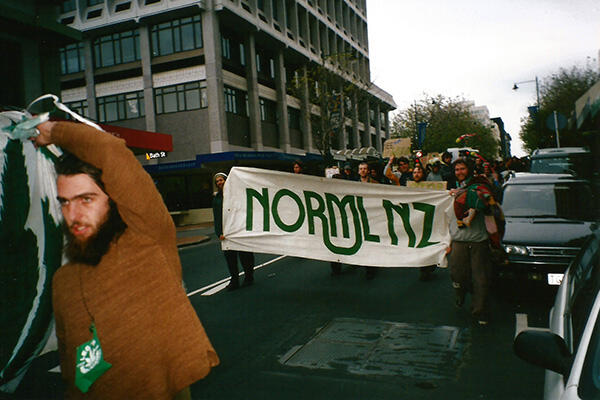
The University has seen proponents of the cannabis law reformation traverse its campus for years, but none as lasting as the Otago University branch of the National Organisation for the Reform of Marijuana Laws, otherwise known as NORML. Otago students have been gathering as early as the 1970s in support of the legalisation of cannabis – a time when now-Invercargill mayor Tim Shadbolt spoke on campus in favour of cannabis legalisation and when future-professor Sally Caswell investigated the effects of cannabis intoxication on volunteers from Otago NORML. Critic spoke with current leader of Otago NORML, Abe Gray, who has been involved with the group for the past 10 years after humbly beginning as an observer and participant in the 420 protests. Gray is also the deputy leader of the Aotearoa Legalise Cannabis Party (ALCP), and co-founded New Zealand’s first cannabis museum with leader of the ALCP Julian Crawford. Gray had many tales to tell of the highs and lows the group has faced over the years. In Gray’s view, the reason the groups have always, and will always, exist is based on the idea that political parties are not listening to the views of the people. Frustration has been boiling for years over the fact that “decades of evidence show that drug prohibition isn’t working.” In order to get this message across, the Otago NORML group protest at 4:20pm each Monday, Wednesday, and Friday on the lawn of the Student Union. The protests aim to use people power and civil disobedience to get their message across. Gray calls it “a reverse hunger strike, because we all know that’s not going to happen after a session.” What is now a weekly occurrence began as nothing more than a yearly gathering in the Octagon for the internationally recognised “J-Day.” In 2003, around 50 members of NORML attended J-Day and hot-boxed the Dunedin Police Station in protest; marijuana seeds were also planted in gardens at the front of the building. The following year the same act was repeated, however, this time there were 100 participants. In 2004, in a spur of the moment act, Danny, a member of the group at the time, placed posters around the University advertising that on a Friday the group would be protesting at St David’s. Tactically set underneath the University’s only camera at the time, the protest was seen as a success by NORML members and the 420 gatherings became a weekly event on campus. 2006 saw OUSA pass motions at a Student General Meeting “… that OUSA declares the University campus a ‘Prohibition Free Zone’ where prohibition of cannabis shall not apply,” and “that OUSA condones the public smoking of cannabis on University grounds as a protest against cannabis prohibition.” Friday remained the only day of protest for the following three years until 2007 when the newly introduced Campus Watch attempted to have the group shut down entirely. A confrontation between Gray and a member of Campus Watch was published in Critic and later made the front page of the Otago Daily Times. On 27 July that year, current affairs program Close Up caught hold of the story, attended a Friday protest, and interviewed students who also were members of NORML. Both Campus Watch and the University refused to comment on the confrontation and, in retaliation, NORML announced that 420 protests would be held on a Wednesday also. 2008 was a particularly contentious year for NORML, beginning with the first annual Cannabis Awareness week from 25 April to 3 May. As part of the week’s events, the group hosted a rather heated round table discussion on “Alcohol and Cannabis: Is Prohibition Rational?” Held in a University lecture theatre, the discussion was based on “the relative evidence of harms from alcohol and cannabis use, whether or not current policies are working to reduce harm, and the place of harm minimisation in government policy toward alcohol and other drugs.” Speakers included NZ Drug Foundation Director Ross Bell, WellTrust founder & former National/United MP Pauline Gardiner, President of NORML NZ Chris Fowler, Green Party MP Nandor Tanczos, Otago Criminal Law Professor Kevin Dawkins and Progressive MP & Associate Minister of Health at the time Jim Anderton. A month after the debate, controversy arose after a University student was arrested for smoking cannabis on campus. In retaliation around 500 students marched from the OUSA office to the Proctor’s Office in what is still the largest protest to occur on University grounds. After the protest had finished, a breakaway group of “hardout 420s” also hot-boxed the Proctor’s office. The following week, a smaller protest gathered at the front of the Clock Tower Building. The only counter-protest involved three members of a University Christian group. In July the same year at the annual Market Day, three members of NORML were arrested and taken into custody by Dunedin Police. Officers approached the group with a request to search Gray after “a complaint from the members of the public.” It was later discovered that two mufti Police officers had seen the group smoking marijuana earlier that day, and Gray was later seen putting a pipe into his pocket. After a minor disagreement, Police attempted to constrain him resulting in massive uproar from fellow group members. Footage of the arrests was posted on NORML’s YouTube channel and show one member, identified by the ODT as an 18-year-old student, being taken into custody after sitting down in protest in front of the Police car. Another 24-year-old student was also arrested after attempting to free Gray from officers. The fact that mufti officers had been in the vicinity of weekly 420 protests caused great friction between local Police and NORML. In what was known as the Narkiology campaign, posters titled “Narkiology 101” and “How to spot a nark in your class” were uploaded to the NORML website and hard copies were also placed around campus. Images and identification numbers of the police were involved in the campaign, which made headlines all over the nation. Beer company Tui responded by publishing a “Yeah Right” billboard that read, “I’m taking Narkiology 101.” The group remained out of the limelight until the latter part of 2013 when Vice Chancellor Professor Harlene Hayne announced the future implementation of a smoking ban on all University property. Gray told Critic earlier this year that the University sounded “like they were bluffing,” and that they are “basically intimidating everyone into believing they can enforce the ban.” The group claimed that if the ban was to be enforced, protests would still take place and alternative methods, such as vaporisers, would be used. In retaliation a third day, Monday, was added to the weekly protests. True to their word, the ban was implemented at the start of 2014 with NORML responding by using vaporisers at their protests. However, the year has been eventful with on going scepticism by NORML regarding the legality of the ban, as well as a recent confrontation with Campus Watch and Police in their enforcement of the ban. September 2013 saw the grand opening of the Cannabis Museum, which is fitted with a window display of two manikins smoking “spots.” Situated at 66 David Street, the museum has a research library of over 100 books, as well as archive material on 420 dating back to the 1970s. Already the museum has seen a variety of visitors, from local University students and NORML members to individuals from all parts of the world. Critic spoke to two Spanish tourists, Amaia and Oirer, who decided to visit Dunedin purely for the local cannabis culture. During their stay the pair planned to “meet people and protest for legalisation,” also attending the 420 protest the following Wednesday. The museum is currently funded entirely through the donations of students, visitors and various members of the public, many of whom wish to remain anonymous. Recent merchandise has also become part of the fundraising efforts, the most popular being tee shirts featuring modified versions of the University’s crest. The tee shirts are complete with Marijuana leaves, the Zig-Zag logo and the slogan “Cannabis Maximus.” They are sold as one of the many methods to simply “keep the lights on.” This year will also see Gray and Crawford stand in their first election for the Aotearoa Legalise Cannabis Party on 20 September. The party, formed in 1996, pushes for the legalisation of marijuana for medicinal, recreational and industrial use in New Zealand. In their own words, “a single policy that touches on every issue.” In the previous election, under different leadership, the party received only half a per cent in nationwide votes. This year, the two aim to make “at least a whole per cent, maybe even five per cent,” in numbers. Later this year Gray is visiting Denver, USA, where he hopes to organise marijuana tours in the near future. With the first recreational marijuana store officially being opened on 1 January this year, Denver has recently legalised marijuana for both medicinal and recreational use. Gray plans to create package deals for those who want to experience the marijuana culture in the region, “much like deals they offer on cruise ships and stuff.” Tours are also planned for Dunedin itself; landmarks are said to include famous smoke spots and the Scarfies house, with visitors being dropped at a 420 protest upon the tour’s completion.

Just while we’re on record, the first thing I wanted to talk about is your defamation experience, and I just want to be guaranteed that you’re not going to sue us for defamation. No, that’s fine. That’ll be a no. Not going to sue us? Correct. Great, okay, I’ll say whatever I want then. As long as it’s true it’s wonderful. Well it’s all on record, so, you know. Okay, so, you said on the way over here that you’re kind of down in Dunedin to gauge what sort of policies you’re looking for, what your demographic kind of wants to be up to speed on. Here is the university, we have a lot of students, and I’ve scoured through your website, and I can’t really find much on tertiary education. So I was wondering if you could just lay out for me where you sit on student loans and allowances in the tertiary sphere? The reason we haven’t put our policy out on it is we’re still fine-tuning a couple of the points. We will have a tertiary policy for the election. We’ve made some public comments already, so a couple of the key things we’ve said: first of all we’ve said that a system that sees the student get indebted, the government get indebted, and the university get indebted, clearly isn’t sustainable in the long term, and that’s the system that we currently have. Um, and there are a couple of reasons for that. One of the reasons that I see as a problem is we’ve taken a very broad approach to universities now, whereby we fund bottoms on seats, and we say, look, this is all about getting the maximum number of people through university. I think we have to challenge that thinking and ask whether or not we should be looking at universities as institutions that still hold a primary educational high standard; I’m not going to call it elite, because I don’t think it is elite, but it’s about universities being the very apex of education, or whether it’s about educating the majority. Because what’s changed in New Zealand, and what changed the funding and the economics of it all, was that universities basically doubled in size. Took in a lot more students. Now the upside of that is more people get to go to university, the downside is that it becomes much harder to afford. So I think the current system we have isn’t sustainable, I think that we have to look at the alternatives to that. The ideal is that people shouldn’t be indebted through education; I don’t think that’s a good long-term strategy for us. But the solutions around that aren’t always easy ones. So one of them is we find more funding. If we find more funding where does it come from? Another one is we make it tougher and harder for people to get into university. So you propose higher standards? Yeah, a higher standard is likely to be one of the things we end up with. And that’s not to say other people couldn’t work hard, ultimately pay their way through university, but if we’re going to fully fund people, which is the ideal for people at the top of the education capability-wise, we’re going to have to find a way to make it pay. I think one of the other things we’re very big on and we’re doing a lot of work on is how we bring technology into play. Because the systems that we have and the concept of university that we have where everybody hops into a car to a central location… It’s not the most cost effective model. And if you look internationally, you can do an MBA, and you do it by remote learning, these things have high standards, high status, certainly in the business world MBAs are greatly regarded, and yet most of it is done by distance learning. So I think we’re still asking about the absolute best way forward, but we think that the current model has to be reassessed. I don’t think funding bottoms on seats is ultimately the answer, but also create a competition between universities, you know, if we can attract more students here, and that’s not necessarily constructive. So would you be talking about more funding would you be therefore pro-private universities, looking at those? Or are you looking strictly on a government basis? No I’m looking strictly at what our government funds. What’s taxpayer funded. I have no problem with private learning institutions, but I don’t think that’s the answer for making it more affordable for people. Generally private institutions don’t make it more affordable. Yeah. So what about in terms of loans and allowances? Cause that’s always a hotbed of discussion here. Yeah, we don’t think we’ll be changing a lot in terms of the allowances side of things, but I think the problem we’ve got is that the current system basically gets everyone indebted. So, you know, it’s hard enough to leave university and get a job, then to afford a house, get on with live when you’re also carrying a debt. And short-term, yeah short-term I can see we’ve got a funding problem, what are we going to do, let’s just get people indebted, but it’s not long-term, I believe, the right solution for us as a country. So our goal, ultimately, is to find a way to make higher education fully funded, at least for some. And one of the routes this might work quite well, is to instead of making it a straight after school experience, to bring education much closer to work, so that it’s more of a continuing education, it’s more of a process of I get a job and as part of that job, and as part of professional development, the education is a little more integrated to life experience. Instead of being a standalone, remote, unattached kind of a thing, which it is now for a lot of people who leave university and can’t get a job. Yeah. So you’d promote, perhaps, subsidies for students who have jobs while they’re trying to learn and that sort of thing? Yeah, that’s right, and working with employers and saying, look hey, if you upgrade your people, now they’re in a field, I mean a classic discussion is around nursing, you put people through nursing degrees, and they realise they don’t actually like nursing when they actually get out and do it. Far better would be to actually introduce people to the practice of nursing, get them practically underway, and then say, okay now let’s get your bachelor’s degree around nursing. So like an internship-degree hybrid? Yeah, bringing the actual vocation closer to the degree itself. And this works very well overseas, I see no reason why it wouldn’t work well in New Zealand. And that may not go for everything, but certainly I think it makes the education more relevant, but also gives a reason to give funding. Cause now the person’s working for a firm, that firm’s got an interest in educating people, and that’s a way of bringing more funding to a situation as well. The thing is though, how are you supposed to get a job if you’re not qualified? Like it’s well and good to say you can put a student in a job after they’ve finished high school, get into a job, then get the education that they need to keep continuing that job, how do you get that job in the first place? Well I think the thing is, you know, a university degree doesn’t guarantee you a job. The current situation we have is there is not a big difference in New Zealand, and I think this is an important issue, between having a university education and not. Now, in fact, we’re the lowest differential in the OECD for wages paid between tertiary qualified and not. The difference is 18%. On average, tertiary qualified people earn 18% more than non-tertiary qualified people. Now that is by far the lowest in the OECD. Most countries hit around 30%, some do more than that. And I think what it shows is that we’ve begun to put a lot of people through university, we haven’t thought well about what actually that means in terms of jobs and vocations at the other end. And a lot of people go to university almost by default. What do I do next? Oh, go to university. And I know it’s not true of everyone, some people are very clear on what they’re doing, they know what they’re studying, but I think for a lot of others it’s the next step in school. And I think to make that more successful for people, we want to actually more of an idea, if we can, of what they will do well and what they might want a job in, and connecting people to that vocation earlier, rather than just saying ‘here, do your degree, and then start looking for a job’, which can be pretty hard. So I suppose it’s just when you’re going to start working. And tying that to practical experience. Overseas this works well, particularly in Europe, there’s a number of countries that do it particularly well where they tie that. And of course the funding then comes from the company organisations very often, cause they’ve got staff, and they realise that person’s committed to us, let’s up-skill them. And it gives you another way of getting money into the situation. Cause education costs, and part of the problem of what we have now is how do we fund it. So that’s a way I see of opening the doors to more people. Okay, cool. So just to change track a bit, today a youth-led organisation called Generation Zero, which is an environmental organisation, I don’t know if you’ve heard of them, have just released a policy report that says that they’re calling for clean energy. In the past you’ve been quoted on a few things regarding climate change, and I was just wondering if you stand by your argument that it’s not human-caused, that it’s not human influenced. Oh no I’ve always said human activity does influence climate, but it’s a minor influence. Not the major influence. The major influence, in my view, and far away the biggest influence on us is our sun. I mean, it’s the biggest influence on our climate, seasons, climate change and effect, because we’re slightly a different distance away from the sun. So I think human influence is there, but I don’t rate it as the only factor, I think it’s something that we could spend a lot of time talking about, but I find the most productive thing is to say let’s tidy up and let’s clean up our environment. Things like pollution, we can make a real difference with, at very little cost, and so therefore I would always start at that end of the scale and say ‘why don’t we get toxins out of our environment, why don’t we put research into what we can do with pest control, or weed control, in a much safer, more environmentally way than we currently do. To me those represent much better outcomes for the dollar that we spend. What’s your motivation for that then? Like are you thinking you like the clean environment, or is it… why do you want to do that? Look I think as a country we are a very young country in terms of age and settlement. We do have the potential to have, I think, one of the cleanest, greenest, best environments in the world, and to maintain it at an almost pristine level. But that will take a certain amount of commitment and an emissions trading scheme is doing nothing to achieve that. Whereas if we instead set up and said, let’s clean up all our rivers and make it our goal, I think we’d get a lot further and we’d achieve something that’s quite real in terms of outcomes. And I would much prefer to spend time and energy on environmental issues where we deliver an absolute result that can make a difference in people’s lives than to talk about an emissions trading scheme which is very remote, isn’t changing anyone’s behaviour actually. And I think until we get countries like America and China on board we’re dreaming if we think we can change the climate. Ah, that’s one of the things that the report actually touches on. You know, it’s a moral responsibility, but then I suppose that goes hand-in-hand with if you believe that humans are causing it the most then it makes sense to believe that humans should clean it up the most. What about renewable energy? I mean you talked about the sun, you know, if it’s causing climate change, then it can also cause the energy… I mean, look, the sun’s a wonderful source of energy and I think looking at renewable sources of energy makes a lot of sense, and for us as a nation, most of our energy is hydro, which is a renewable source, and it’s seasonal, and that’s one of the problems. I’m not a huge fan of wind generation because it’s not economic, but I think some of the things we can do, basic things we can do, that make a lot of sense, are what if we took all of the water heaters in all of our houses in this country and changed them to heat transfer systems, which saves about three quarters of the energy in terms of heating homes. Now that’s a huge difference. And it’s economically viable to do that. I think we need to be a little bit more innovative in how we do our energy. But as I say, I don’t think the economics support windmills, but I think solar, I think water, these are elements that we have a lot of in New Zealand. Wind? It’s difficult because you have such a bit environmental effect by putting in a lot of wind turbines. So if you could name a party in government that you’d closely align yourself with on the environmental standards, cause some of what you’re saying is, you know… There are some areas here where we could definitely work with the Greens, for example, we couldn’t work with them on other areas but when it comes to cleaning up New Zealand’s rivers? Absolutely in the same space. And I think that’s one of the attractions of MMP for me, is that you don’t have to agree with everyone on everything, but if you can find something you do agree on, you can make progress. And I like that idea. So, I can get it in words, on recording, you would support cleaning up our climate, you would support renewable energy, so long as it’s economically viable. That’s right. Let’s go for the most economic sources. Cool. So just to move onto a couple of other issues, I suppose you’ve seen the news today, about you know, the Big Gay Rainbow in Pakuranga ceasing to exist, I was just wondering what you would think about going for the Pakuranga seat? There’ve been talks with a bit of a deal with National… Look, first of all, my understanding is Maurice Williamson is doing the typical resign as a minister, but stay on as an MP. And we’ve seen this with Peter Dunne, when he refused to disclose his information, to a governmental enquiry after the leaked information at the top level. And look what happened to him? He’s back as a minister all over again. I think his track record is someone who resigns as a minister can get back in the good books fairly quickly. I don’t know whether he will or not. It’s not terminal to resign as a minister, it’s very temporary by the look of it, you can be forgiven quite quickly. Having said that, I did grow up in Pakuranga, I played for Pakuranga cricket club, my father taught at Pakuranga College, so there are a lot of ties to that community, we did very well in the vote there last time, and we have a good support base there, so never rule anything out. Hmm interesting. Yeah I went to St Kent’s, so I know the area. Yeah, you know the area very well. So just with the legal highs, all that drama going on in the government, it’s brought up the conversation around legalising cannabis, and often it’s considered less dangerous than legal highs, I mean you kind of look at the facts for yourself. So do you think cannabis should be legal? No I don’t, but I don’t think we should make legal highs legal either. So I sit in that very, I guess, conservative anti-drug space. Why? I do think though that we have this strange situation of double standards. And by that I would say here we are, the government, and I know they’ve pulled back from it, but nonetheless, they sort of committed towards, let’s legalise these substances, yet on the other hand they’ll go after somebody who’s smoking, and have all sorts of plans about what to do to them. I mean we charge an enormous amount of tax on cigarettes. But we don’t treat alcohol consistently with that. We don’t make someone buying a beer, or an RTD, we don’t have the same approach, we say you know what, this is using up 70% of our accident and emergency resources, so you’re going to pay a bit more for it. I would like to see some sort of consistency here, where we go, here’s the standards that we have, here’s the way that we will approach it. My concern around legalising any sort of mind-altering substances is there are long-term effects. We can already see long-term effects from other substance abuse. Alcohol, for example, very long-term effects on families, children, on the young, you know, you’ve got pregnant mums who drink too much, and actually these are very major effects on our society, they harm individuals, homes, and communities. So I sit in that fairly restrictive space that says I don’t believe we should go down the track of saying that these things are mainstream, that they should have legal standing in our country. And that’s because of effects, because they go broader than just the individual? They do. And it’s not a case of individual freedom alone, individual freedom must surely be balanced against the cost to a community. Cool. You said a couple of years ago that kids sent to school without lunch should go without in the past, and regarding the talk recently with different policies and how our child poverty problem is going, do you stand by that? Do you still say…? I don’t remember saying that, I know that we’ve said it’s the responsibility of parents, and we should be making the parents step up, and I certainly stand by that. And I think there are some good examples of it where if you ask and expect parents to do more they will, but if you give them a free pass, if you say ‘you know what, we’re going to provide lunch at school’, I believe many parents will make the choice not to supply lunch to their child. Because that’s the easy option now. We’ve given you a way out of your responsibilities and people will take those ways out. So I think what we have to be doing is we have to say we expect every child to have a lunch at school, and we expect every parent to provide it. And there’s no one in this country who is not receiving or able to receive support from this country to make it happen. People still live below the poverty line, though, and there’s no way to guarantee that any parent will be a good parent. You can introduce all these consequences, but there will always be people who slip through the cracks, so I’m just wondering how you can say ‘no, we won’t support children getting lunch in schools cause everyone will do it and that’s a bad thing’. We want every child to have a lunch in school, but that process surely has to go back to the parent, and say to the parent ‘your child didn’t have a lunch today, we had to feed your child, and so you now have less money in your dole or in your benefit, or if you’re not able to supply, then clearly you haven’t taken advantage of the support we can give.’ Because the support in this country is generous. You think it’s comprehensive enough? I think there are some faults and some problems with it, but in terms of internationally, we have very generous support in terms of welfare. So you think if people are living below the poverty line, and people don’t have the resources to feed their children, then it’s their fault for not taking the benefits? Well if they’re not taking advantage of the benefits that are there then they may well struggle to get by. I accept that, I don’t think the minimum wage in NZ is enough to get by, and we know that because most people on the minimum wage have to get subsidised by the government, particularly if they have children, and so I think there are some issues around general affordability, and I don’t think that the right answer is to actually build some enormous welfare state. But at the moment we do provide support and additional support and emergency relief support to anyone who can’t feed their children. So I do think there’s a problem if someone’s in a situation where they can’t fund it and can’t afford it, then yeah, something’s gone wrong in terms of how they’re accessing what’s available to them in terms of support. But you’d support having a system to check up on, and say, slap on the wrist, say ‘no no no, need to be feeding your children’. I actually think we should be doing that. It is a legal responsibility of parents to supply the needs of their children, and if they fail to do that then I actually think we should be holding them to account. We don’t do that very well, we have a society that has child abuse at a phenomenal level, is increasing, and I actually think we’ve been really slack about looking after the youngest and most vulnerable in our society. And I actually think going to parents and saying ‘you know what? This is your child and you haven’t fed them or you haven’t clothed them, and we expect more of you to play your role, is actually the right thing to do.’ Might sound a bit, you know, tough, because it wouldn’t always be easy, but if we don’t set that standard, we won’t get – now not every parent would rise to that, but many would, if they were challenged to. I’m someone who does believe in setting expectations and getting people to live up to that. Now, traditionally, most people would’ve been chased up by their mum, or whatever, there was a social structure there that provided that support. I think we have to acknowledge it’s not always there now. Our view of social welfare’s very different to what we have now, we actually think that social welfare workers shouldn’t sit behind desks, we think they should actually be out there, with people in their homes, one day every fortnight or something like that. And many people don’t have skills. I mean I could give many examples of this, but there are people in our society who don’t know how to clean a house. Who don’t know how to cook a meal, really. Or maybe they don’t have the motivation to because there’s no one helping them do it. So you’d prefer programmes that support in-home help like that. Yeah, we believe Plunket and Karitane nurses makes a lot of sense instead of being hospital-centric or expecting people to always come to you. Because that’s not going to happen. It might in some cases, but there are a lot of people who start falling through the cracks. And I don’t think it’s an accident that Maori health outcomes started declining the moment we pulled out the Karitane nurses. See I think Karitane nurses didn’t just look after kids, I think they brought into the home a standard that says ‘hey you know what, we could place, you could do this, this is the way to run a household.’ And that rubs off, that mentoring, that sort of assistance is really valuable. We’re sort of starting to run out of time here, so I’m just going to move onto a few, you know, Critic-student-media questions. Oh, go for it. What’s your favourite conspiracy? Ahhh. The moon landing? No, no, see I don’t- this is the thing, I don’t answer conspiracy questions because I don’t know them very well. But I think, and I wouldn’t have a clue about it, but I think the whole JFK thing has a lot of mystery attached to it. If I was going to get deeply into thinking about a conspiracy… [Colin’s Press Advisor] Which you’re not. Which I’m not. I mean everybody talks about it, I have no idea what the conspiracy is, but I’m sure it would be exciting. Okay, JFK. Not the moon landing. Nah. Nah. That’s not fun. I don’t think so. One last question. This one you have to answer. Oh, okay, compulsory answer question. Go for it. Shoot, shag, marry: Jacinda Ardern, Judith Collins, Metiria Turei. And that’s a question?! That is a question. Okay… I’m trying to look for some similarity between them but all I’m finding is a whole lot of differences. Um… okay, don’t know Jacinda Ardern, but she and I have a few disagreements. Definitely not marry. Judith Collins? Errr don’t know. Metiria Turei? Time for celibacy. Have you got that down there as an option? Monkhood or whatever they call it. You can only shoot one! You’ve got to marry one and shag the other. What was the order you gave them to me in? Jacinda Ardern, Judith Collins, Metiria Turei. No particular order. Look, that’s such a tough question. I should consult my wife on this one. However, I will go with the following order: I’ll shoot Judith Collins cause I think she’s tough enough to take it, um, shag, well, aw gee, nobody, cause I’m married and it’s not an option for me. Um, marry, again, it’d be problematic, but let’s say my wife died, and I had to re-marry. Who’ve I got left? Jacinda Ardern and Metiria Turei. But if your wife died, you’d have to shag one too then, cause you’re out of the whole marriage thing. Yeah no I don’t know if I want to go there. Um, I’ve shot Judith Collins cause I think she can take it, Metiria’s the one with the nice jackets, eh? Yeah. Fashion, yeah, good. Marry. By default, that’s not looking good is it? But I’ll leave it at that. Can I get it in your words? Yeah, definitely time to consider other options. There you go, that’s my answer. Fantastic, thank you for answering that.


