
-
Columns

Editorial | Issue 11
Last Tuesday and Wednesday, the Critic office was tuned in to Parliament’s question time with the hope of watching Judith Collins’ head roll over the Oravida scandal, her habitual dishonesty, and her generally awful demeanour. As at the time of writing, it was both disappointing and surprising to find that this hadn’t yet happened. We thought we were good judges of what would be important viewing, especially considering that the last time we bothered watching Parliament TV with such a keen interest and certainty of change was to experience Maurice Williamson’s famous “big gay rainbow” speech and the subsequent triumph of the Marriage Amendment Bill. It wasn’t just us, either; we spent the whole time chatting online to family members and friends who were also watching, most of whom would not have been doing so out of habit. The country, left and right, was for a rare moment more-or-less united in an impassioned dislike of one political figure. This has been reflected in the polls, with a Labour-Greens alliance coming in at 45.5 per cent, ahead of National’s 42.5 per cent for the first time in, like, forever. But on reflection there may be a reason that Collins is still standing. The left certainly shouldn’t breathe easy yet; as terrible as National looks over this debacle, the general way in which the Opposition went about attacking them reflected too much on the fact that their only political tactic seems to be using buzz-phrases and vitriol (with a few exceptions, granted). This came across so blatantly in the debates that the implied significance of the poll is, simply put, quite surprising. The issues being debated – not only about Collins but also of Maurice Williamson – are very real and important ones. However, the stench left after the debates was not of corruption or a lack of confidence in the Government, rather it was that of the Labour Party going into a feeding frenzy over what they were clearly treating as, perhaps, their last chance to pull National down the ladder. They’re not even attempting to look good themselves anymore, and it’s sad. You can’t help but feel kind of embarrassed for them. Do we really want that to be the attitude towards running the country? On the flipside, however, it’s certainly worth noting that Grant Robertson looked like a true leader. Unlike almost everyone else, he backed up his statements and criticisms with documents, a strong turn of phrase, and a general air of preparedness, confidence and competence. Labour certainly fucked up that decision. But while the Opposition’s MPs are, as a general rule, just fucking useless, what’s up with so many of National’s MPs being genuinely awful? Paula Bennett, Gerry Brownlee, Steven Joyce, Judith Collins … You’ll find that most National supporters you talk to seem to agree that these are amongst the most unlikeable characters in our country. To say that we are confronted with a lose-lose situation seems like an understatement after last week. At least, whether rightly or wrongly, John Key and Bill English seem personable and switched on, and when they fight fire with fire, their fire is hotter. The Opposition should stop playing National’s game and actually use their brains. Speaking of political circle-jerks, here we give you yet another gratuitous image of me with a party leader. I struggle with Colin Craig’s politics, but as Political Editor Carys Goodwin reveals in her interview on page 12, it’s fair to say that he’s finally learned to give off the charisma that’s required from politicians. Zane Pocock Critic Editor
-
News
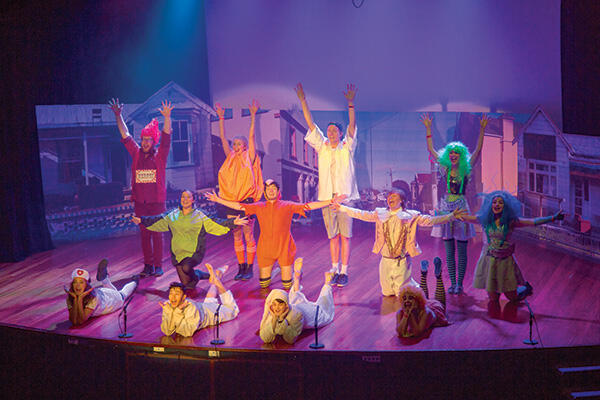
120th Capping Show makes people laugh, fails to offend
The 120th annual Capping Show, A Capping Carol: The Night Before Hyde Street, kicked off last Wednesday and once again delivered a unique and entertaining show. Capping Show director, Baz Macdonald, said the show had so far gone “really, really well.” The first two opening nights were attended by two very different audiences, according to Macdonald. Opening night saw the majority of tickets given away to Hyde Street residents, while the second night saw tickets given to friends and family of the cast. Macdonald said “on the second night, [the audience] picked up on the more intellectual jokes.” The main storyline of the show concerns a young Scrooge who is missing out on the fun of the Hyde Street keg party because he is too dedicated to his studies. The majority of the main sketch is occasionally awkward but as the cast said themselves, “What’s the point in having a main story line in the Capping Show? Everyone knows the videos are the best bit.” The show received countless laughs from the audience with the cast ridiculing several well-known brands, including a Dove parody that ingeniously interpreted their real beauty advertisements as a racist slur meaning “real beauty is white.” Other live and recorded sketches included mockeries of Kim Dotcom, Malaysia Airlines and a violent skit involving the Teletubbies. The Capping Show did not offend to its usual standard, despite attempts to offend men, women, children, Campus Watch, the Proctor, several celebrities, the blind, the paralysed and, of course, Unicol. Either the jokes were played a little too safely or Critic is difficult to offend. Both are plausible. The usual live band did not feature in this year’s show, however, OUSA Communications Coordinator and resident MC of the Capping Show Alasdair Johnston, did a fabulous job of keeping the audience entertained during the break. He even managed to insult the Indians of the audience, which the show had missed out. “We have a stall outside run by the Indians. No stereotypes, please; it’s not a dairy, although it does sell lollies, chips and cans of drinks.” The Selwyn Ballet perform at the Capping Show every year and Critic believes this year was one of their best yet, with original moves and skirts far too short for these talented ballerinas. The Sextet and Sexytet groups gave their usual renditions of popular tunes replaced with explicit lyrics. Critic would have to give the girls the winning trophy for their performances, which included some epic beatboxing and covered difficult flatmates, threesomes, Tinder and bisexuality. “Time for me to explore, that’s what uni is for, doesn’t make me a whore,” sang the sexytet. The Capping Show starts at 7.30pm at the College of Education Auditorium every night this week until 17 May 2014. Tickets are $14 each (plus a booking fee) for students from dashtickets.co.nz.
-
News
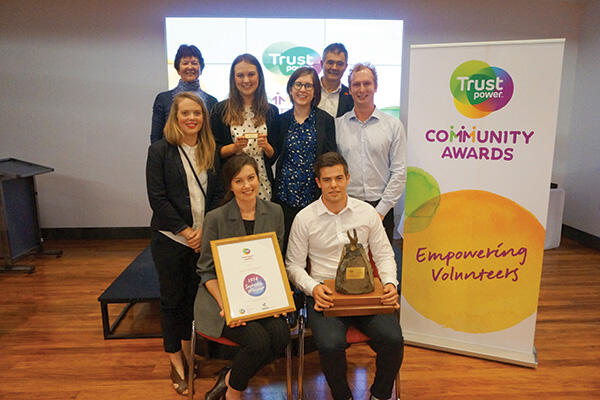
Charitable organisation ignites community contribution
Student-run charitable organisation Ignite Consultants has taken out this year’s Supreme Award at the TrustPower Dunedin Community Awards, ahead of a number of competitive entries in Dunedin’s not-for-profit sector. The honour will also see Ignite Consultants represent Dunedin at the National TrustPower Community Awards in March 2015. The Awards acknowledge volunteer groups in the community, and were presented by Mayor Dave Cull and the TrustPower leadership team at Toitu Otago Settlers Museum on 5 May. According to TrustPower Community Relations Representative Emily Beaton, Ignite’s contribution to the community was “stand out,” and the group has provided some “really tangible results with ChatBus and FoodShare, their previous clients, both being awarded category placings in the awards.” Each semester, Ignite recruits students who will then work in teams on an eight-week project for a not-for-profit organisation in the community. Ignite Operations Manager Alice Marsh said Ignite Consultants “create an important connection between students at the University and the community itself.” She added, “[Ignite] does this by using the skills of passionate and talented young students to build strategic partnerships with struggling not-for-profit organisations through business consulting.” Marsh said the win is “incredibly important” to the group and has “validated the work Ignite does in the Dunedin community.” The Supreme Winner, along with all other category winners and runners-up, are judged on a set of criteria, according to Beaton. “This allows for judges to differentiate between organisations that have achieved results through external funding and those who have invested considerable effort.” She added that the criteria are based on volunteer input, use of resources, initiative and creativity, effectiveness of activities and the impact that it has. “Ignite have done extremely well in all of these areas by building on the resources that are readily available and using them to benefit both parties involved, in this case, the students and the voluntary sector.” Marsh said the group were looking forward to the National Awards, which would be an opportunity for Ignite “to showcase the wonderful social minded contingent of university students.” Beaton said Ignite would be up against 23 other groups at the National TrustPower Awards that will take place at the end of March 2015 in Wellington. While the competition would be tense, she couldn’t wait to see what Ignite “bring to the event.”
-
News

Emergency Execrable | Issue 11
An emergency Executive meeting was called at 4pm last Thursday to finalise details and questions for the upcoming OUSA referendum, which resulted in the entire process being moved back, highlighting the unorganised nature of its planning. The meeting began with Ruby addressing the Executive, saying that she wanted to push back the date of the referendum to enable the Executive to include a number of “topical” questions to be voted on. The Executive had previously decided on a date for the referendum several weeks ago, thus allowing ample time to publicise and prepare questions for the event. Since then, the only notification to students regarding the referendum was in the Notices section of Critic Issue 10. The OUSA Constitution requires that the referendum be held in the first semester, and typically includes general agenda items such as receiving and accepting the annual report and the audited annual financial statements of OUSA, as well as appointing the auditors and honorary solicitor for the next financial year. The Executive agreed amongst themselves to change the date of the referendum, with Henri saying, “if there’s stuff that’s a bit political, that does seem like a solid reason” to move the date. Ryan said that the change was “a bit unorthodox.” Following a general agreement from everyone on the Executive to change the date of the referendum, Ruby turned to Ryan and asked, “Do you agree, Ryan? This is your job.” To which he replied with an overly positive “yes.” As stated in the Constitution, 10 days must be allowed following the closure of question submission, in order for both student and executive referendum questions to be passed by a mediator and worded appropriately. Submissions will now close at 4pm on 13 May, and the questions will then be decided on at an Executive meeting that same evening, after which the 10-day moderation period will commence. Vaguely, the themes the Executive are considering submitting concern: universal student allowances; marijuana; oil drilling; a student bar; GST-free food; a glass-free North Dunedin; and students’ stance in regard to alcohol. The emergency meeting concluded with the Executive rescinding the motion for the referendum to be held between 20 and 22 May, as originally decided. A new motion was then passed for the referendum to open at 9am on 27 May and close at 4pm on 29 May.
-
News

Summertime internship offers jobs and sex
The Sexy Summer Jobs internship programme has created almost 100 full and part time positions in Dunedin businesses since beginning in 2008, and according to DCC Business Developer Advisor Chanel O’Brien, that number is expected to rise to 120 jobs by June. Established in 2008 by the University, Otago Polytechnic and members of the ICT industry, the internship is “about supporting Dunedin businesses by getting quality students to meet business needs.” O’Brien said, “the aim is to retain talent and skills in the city, to increase the flow of top quality students into local businesses to build capability, and grow export-ready businesses.” The internship was specially created as an answer to issues surrounding job vacancies in the Dunedin ICT Business Cluster, a cluster that aims to support the growth of ICT businesses in Dunedin. “[In 2005] 18 companies in the cluster had 109 job vacancies and struggled to fill the vacancies. This resulted in considerable strain on existing staff, many of whom were often required to work in areas not specified to their field.” The success of the programme is evident with one in three interns normally offered either a full, part time or contract position. O’Brien said “internships help students understand what attitudes, habits and communication skills they should adopt if they want to be successful in any given work environment.” The programme now includes businesses from Biotech/Health Technologies, Creative, ICT, F&B, Niche Manufacturing and other sectors. In terms of growth for the internship programme, O’Brien said Sexy Summer Jobs has now attracted funding through the DCC Annual Plan to enable 40 interns to be placed each summer season, and an application to fund a further eight interns was recently submitted to the DCC. O’Brian also said, “ideally the growth should come from the business community where the programme is dominated by the ‘demand’ created from businesses for student talent. Business ‘need’ is the key driver.” Graduate Employer Liaison Robyn Bridges, at the University’s Career Development Centre, said the internships “give students relevant experience and knowledge, which is so important in the competitive graduate employment market. Internship experience gives them self-confidence, and the opportunity to apply their learning to the real world of work.” Students can find out more about the programme and have the opportunity to meet businesses face to face at a speed dating-type event in September, or by visiting sexysummerjobs.com.
-
News
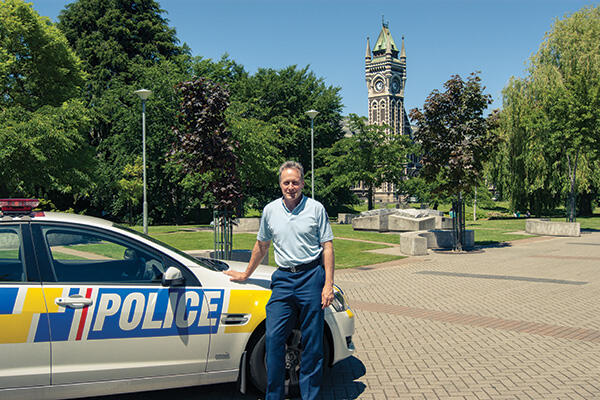
Proctology - The extreme campus cop makeover
Despite Critic’s prying attempts to unveil the usual ridiculous student antics, the Proctor had little to share and reasoned that “everybody’s got their heads down and their bums up with exams coming up.” However, the Proctor said he was sad to see that Campus Cop Max Holt is leaving his post to become Deputy Head at Toroa College. “He is a real worker, he is great. I hope they replace him with somebody of an equal calibre, and soon.” Graduating from Otago with a Bachelor of Commerce, Holt has been a fully sworn police officer since 1991 and started his role as Campus Cop at the beginning of April 2006. Otago is one of only two educational facilities in New Zealand to have their own police officer, with the other being Massey University in Palmerston North. Based in North Dunedin, Holt not only works closely with the Proctor and Campus Watch, but also has a variety of other responsibilities. These include offering advice on safety and security, as well as taking complaints including thefts and lost property. As with the New Zealand Police at large, Holt said his role is largely focused on prevention and, as a result, the North Dunedin area has experienced a dramatic decrease in crime in the past three years. Holt was particularly proud of the joint efforts of Police and Campus Watch in targeting the reduction of burglaries in the North Dunedin area. While Holt acknowledged the vast majority of students are well behaved, he said it was disappointing to see that Dunedin’s reputation is tainted “by small groups of largely male flats” who don’t seem to get the point. “There are plenty of students around who are at the library studying on a Friday and Saturday night.” However, he said that over his time as Campus Cop he has noticed a change in students. “I really think the Canterbury earthquakes changed the student psych [in regards to] their responsibility to each other.” He added that initiatives like the Volunteer Student Army encouraged this and helped to create a better sense of awareness and support among students and the wider community. “I hope students can see how significant their part is for the community. Students have changed, and I think students are now more responsible for achieving academically.” Holt said that he was looking forward to his new role at Toroa, and while his history as an officer on campus would be helpful in some situations, he was looking forward to a new experience and the new challenges that the role will bring.
-
Columns

Defending the kingdom | Issue 11
Most readers will agree that sexism and racism are bad things, and that there are no tangible differences within the human species. But how would you react if I told you that there are no tangible differences between humans and the entire animal kingdom? I think most readers would consider this outrageous. However, history can be telling. Advocates against speciesism argue that our treatment of non-human animals is no different to how powerful human groups treated other humans throughout history. If during US slavery I walked into a plantation and exclaimed that human races are equal or, prior to suffrage, I treated woman as equals, I would have been met with contempt and outrage. While I understand that the concept of animals as equals is radical to many, I would like to offer this article as food for thought (no pun intended). “Speciesism,” widely defined, is the unequal treatment of an individual purely due to their species. More specifically, the Oxford Dictionary defines it as “the assumption of human superiority leading to the exploitation of animals.” This assumption is well rooted in our psyche. In the fourth century BCE, Aristotle spoke of how non-human animals exist for human use, and to an extent this view remains pervasive today. This impression is based on the idea that intelligence is the ultimate mark of a living being’s worth. Monkeys are smart so eating them is abominable, yet sheep are stupid so killing roughly 25 million a year in NZ is okay. This is clearly anthropocentric because, while humans developed intelligence, other animals developed different traits to cope with their environment. The cheetah developed speed, the turtle its shell and the dog its sense of smell. The only test that awards intelligence as the best trait is human made, and is thus biased. Advocates for an end to speciesism do not hope for a world where human and pig can go to a bar together and share a beer. What they strive for is that the automatic assumption that non-human animal interests are below those of humans should end. Because all animals are cognisant and able to feel pain, they inherently have interests of their own that deserve to be respected. These are likely to be distinct from humans, because a cow has no use for a right to vote. However, rights that encompass all the animal kingdom could include freedom of movement, freedom of natural behaviour, and freedom from pain and suffering. Currently, these basic freedoms are infringed upon by humans without a second thought. Trivial human interests, such as entertainment, are placed above fundamental animal interests, such as freedom of movement – as found in zoos and circuses. The only explanation that could be given for this is that “the animals aren’t human, so this treatment is fine.” This is clear speciesism. Speciesism is a complex and heavily debated issue, but I hope this provides you with an introduction to this oft-forgotten rights issue. In contrast to those affected by racism and sexism, non-human animals are unable to advance their own cause. Changing human perception of non-human animals must happen from the inside over time.
-
News

Dunedin streets sprayed with phlegm
Dunedin is quickly becoming a concrete canvas for internationally renowned street artists. Globe-trotting English street artist Phlegm is one of the latest to embrace Dunedin streets as a canvas for his unique brand of “visually stunning, playful and transformative” art, according to DCC Community Arts Advisor Cara Paterson. Phlegm’s two works, in Vogel Street and Moray Place, are inspired by magical imagery. The Moray Place mural features an amorphous bird-insect figure, while the recently completed Vogel Street work features a large monster-fish swallowing a number of small boats. Speaking to the ODT, Phlegm said, “It’s great here for street art. You’ve got so many big industrial old buildings here. I grew up painting on buildings like this in Sheffield.” Friend and fellow street artist ROA, the Belgian artist responsible for the large monochromatic tuatara on Bath Street, inspired Phlegm’s Dunedin visit. Paterson says, “I think both [Phlegm and ROA] bring their own creative skill set … and we are lucky to have had them in Dunedin. I watched ROA’s artwork being created and witnessed a huge number of people captivated by the process and skill of painting in that scale. I think the artworks add interest and an energy that is inspiring and questioning.” Paterson shared the sentiment of many by embracing a street art movement in Dunedin as a way to inspire local artists to bring their work into a more publically visible arena. “We have an opportunity, I think, in our urban environment to celebrate the magic spaces we have in the city, the buildings and surfaces that people look at everyday can be transformed and re-imagined.” While some have voiced concerns about the potential harm to Dunedin’s heritage buildings, the DCC’s Heritage Planner does not believe the street art will cause any damage. “We need to make sure the location is right and it won’t cause damage or other unnecessary problems/conflicts. [However,] if the works are attracting people to an area to see them, involving people in their city, and improving the way the city looks, then I see this as positive.” As for a return visit to our city, Phlegm said to the ODT, “I’d love to come back to Dunedin. A couple of other buildings have caught my eye.”
-
Columns
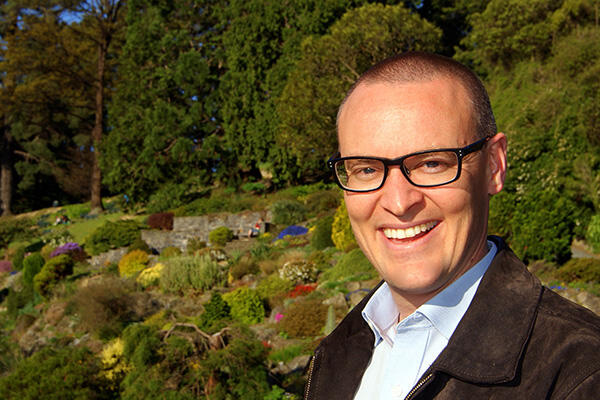
David Clark | Issue 11
Over the course of the last five years, New Zealanders have had more exposure to New Zealand Sign Language (NZSL) than in any other time in recent memory. During the aftermath of the Christchurch earthquakes, interpreter Jeremy Borland became a staple of the daily press conferences. He stood beside our government leaders, dignitaries and experts and communicated news of the day’s events to New Zealand’s deaf community. The outrage sparked by a “fake” sign language interpreter at Nelson Mandela’s memorial service points to the growing profile and importance of sign language on the World stage. Despite these spikes of recognition, only a small number of kiwis would know that 12–18 May is New Zealand Sign Language Week. Fewer still would know how to sign their name or a basic phrase. This is in spite of the language sharing equal status with English and Te Reo Maori as an official language of New Zealand. I think we can do better to bolster efforts to teach our official languages. Many kids, for example, don’t have opportunity to learn to sign at all during their schooling years. I was lucky enough to have representatives from Deaf Aotearoa visit my office last month to teach me some basic signs. I now know how to sign my name. Unfortunately, the National Government slashed funding for Adult and Community Education (ACE) in their first budget. This has had a very real effect. The opportunity to learn the language has been limited. Community education classes are vital – especially for NZSL, where they operated as the main way to learn the language. One study estimates that for every dollar that is invested in ACE classes, there is a 50-dollar return. Community education is also important for people wanting to re-skill, and for community cohesion.
-
News
Abbey College expansion accommodates more post-grads
Accommodation for postgraduate students is set to increase after the University purchased a property neighbouring Abbey College in order to increase the College’s capacity. 55 Duke Street backs on to the College and was purchased by the University for $550,000 to be used as housing for College Head Dr Charles Tustin. Founded in 2008, Abbey College is home to 75 postgraduate students, but the Duke Street property will see additional rooms added to the College. Renovation plans include installing eight new student bedrooms within the College once Dr Tustin moves into his new residence, with the rooms likely to be completed by the end of the year. The expansion of Abbey College comes in the wake of various other construction projects on Dunedin’s halls of residence. One of the most notable was the opening of the new Te Rangi Hiroa College, which boasts 127 new rooms complete with ensuite bathrooms. The building was formerly known as Living Space Hotel and Apartments and was purchased by the University in 2013, opening as a residential hall at the start of this year. Other recent University renovations include an additional floor built onto Selwyn College’s Castle Street-facing building, 80 new bedrooms built at Knox and Salmond, and the renovation of new common areas and terraces at Toroa. In total, the University has added more than 200 new rooms for students in the last two years. Director of Accommodation Services James Lindsay believes the construction on the halls is vital if the University wants to continue to attract students both nationwide and internationally. “Otago is known throughout the country for its outstanding campus experience for students. The colleges are integral to this.” Lindsay hopes the addition of 55 Duke Street to University property is one that will benefit students directly. “The [investment] is testament to our commitment to providing students with quality accommodation and services.” The property purchase will join the University’s non-rateable assets in Dunedin, worth $632.27 million: 3.1 per cent of the city’s total, according to figures available from last year as published in the ODT. Chief Operating Officer John Patrick indicated to the ODT the cost of the alterations is still unknown, as planning and design are yet to be completed. Abbey College, New Zealand’s first purpose-built residence for postgraduate students, houses people from 27 different countries, with these international students making up 70 per cent of its total residents.
-
News
University hosts one and a half CoREs
The University of Otago has been selected to host one of six national Centres of Research Excellence (CoRE) and will co-host a second CoRE with the University of Auckland, following a Government announcement. Both the Dodd-Walls Centre for Photonic and Quantum Technologies (Otago) and Brain Research New Zealand - Rangahau Roro Aotearoa (Otago and Auckland) were selected to join the ranks of the country’s top research facilities. Established in 2001, The CoRE fund provides operating expenditure of nearly $210 million over six years, starting next year and continuing until 2020. It aims to encourage the development of excellent tertiary education-based research. Vice-Chancellor Professor Harlene Hayne said that the new CoREs were a “clear indication” of Otago’s excellent research standing. “Otago has many research strengths in a diverse range of fields and this strength has been underscored by the CoRE announcement,” Professor Hayne says. She said it was “particularly exciting” to see that the University had been given key leadership roles in two very different areas - photonics and quantum science and brain health. “Both of these CoREs will bring us into closer working relationships with other New Zealand universities and research institutes, and the sharing of ideas and energy across the sector will be of great benefit to the country.” Associate Professor David Hutchinson, a theoretical physicist from the Department of Physics, will direct the Dodd-Walls Centre for Photonic and Quantum Technologies. “The Centre’s research centers around photonics, the manipulation of light at the most fundamental, quantum level, and the control and manipulation of matter at the atomic scale, through the use of light,” Associate Professor Hutchinson says. He said the research has “potential real-world applications” and will generate fundamental knowledge about the composure and behavior of the physical universe. Professor Cliff Abraham will co-direct Brain Research New Zealand – Rangahau Roro Aotearoa – alongside Distinguished Professor Richard Faull of Auckland University. The national partnership said their vision was to provide a “truly national, collaborative response” to the issue of ensuring people age well with a healthy brain, especially when direct costs of these disorders are estimated to be over $1 billion per year, and rising by over five per cent per year. “The mission of Brain Research New Zealand is for our scientists, clinicians and the community to work together to unlock the secrets of the ageing brain so that we can develop new therapies and better clinical and community care to enhance lifelong brain health,” say Professors Abraham and Faull.
-
News

Fringe Festival farewells a few fronting figures
The Dunedin Fringe Festival is set to lose two key organisers but the change will bring “new blood and new ideas,” according to departing Director Paul Smith. Smith has been part of the Festival since its creation in 2000 but has resigned, effective from July 2014. Chairman of the Dunedin Fringe Arts Trust Warren Taylor also announced he would be leaving in October, after eight years in the role. Starting as a publicist for the festival, Smith has been the only one to remain of the orignal Festival core since its creation in 2000. He said his decision to leave was based on “my own desire to have a career change,” and even after fourteen years in the role, he still describes it as “fabulous, but full-on and stressful.” The Dunedin Fringe Festival was started in 2000 by the Higher Trust, in partnership with the Otago Festival of the Arts. The Trust involved people who believed the model of typical arts festivals did not cater for those working “outside the mainstream.” According to Smith, typical art festivals have more resources. “They bring in performers from overseas, charge big ticket prices and hire big venues.” Dunedin Fringe provides support and promotion for the performers and is a non-profit organisation. It showcases “emerging artists, not celebs,” says Smith. The Festival has seen some major changes since 2000, including “divorcing ourselves” from the Otago Festival of the Arts in 2008 and the change from a biannual to an annual event, says Smith. The Trust also changed the time of year the festival was run, aligning the dates with the Adelaide, Wellington and Auckland Fringe Festivals. “This creates huge potential for Dunedin to be recognised on an international scale as part of the travelling fringe festival goers.” Smith will assist the Board of Trustees in finding a new director in June and is “keeping options open” with regards to his next position, but said he is “keen to remain in the arts and culture.” He hopes the Fringe Festival maintains its model of open access, inclusivity and support for the local Dunedin arts community. “That’s why it was set up in the first place.”
-
News

Olympic hosts Brazil and stoned students have more in common than you thought
This week, let’s go to the corrupt and over-budget Olympics desk, where we know that all self-respecting Otago students are self-taught experts in the art of procrastination (I, for one, consider myself a master). Small-scale procrastination is somewhat acceptable, like neglecting that 10 per cent, 1500-word essay in favour of catching up on Breaking Bad ... bitch. However, when you have the task of delivering the world’s biggest sporting event two years after the world’s second-biggest sporting event, then procrastination and delays become much more serious. I am, of course, talking about Brazil, who are the lucky hosts of the first Olympics to be held in South America and the upcoming FIFA World Cup. But are they so lucky? Plenty of angry Brazilians don’t think so. While sports are hugely popular in Brazil, not everybody is in favour of the huge amount of money being invested into new stadiums and infrastructure for the games when there are huge problems with poverty and a lack of funding for education and healthcare. The Brazilian people have been told that the country will prosper because of the economic benefits that these events bring and that eventually everyone should benefit. However, some people have not bought that line. “... [P]eople have the illusion that they will profit from the World Cup events, but the truth is that they will be brutally suppressed,” said Roberto Morales of the Socialism and Liberty Party, who have been very vocal in their opposition to the huge public spending on these events. In February of this year, thousands of armed troops were sent to Rio’s slums to round up criminals and regain control of turf from the powerful criminal underworld of the city. We saw similar things in the lead-up to the 2008 Beijing games, where thousands of poor and powerless citizens were forcibly relocated by authorities to make way for games facilities and then unfairly compensated or just ignored. Speaking recently from an Olympic Committee meeting in Sydney about the state of play in Brazil at the moment, IOC Vice President John Coates called out their progress ahead of the 2016 Rio games as “the worst” he had ever seen, stating “they are critically behind schedule,” citing the complex political relationship between various authorities as a major factor in the delays. The World Cup is only a few weeks away, so let’s continue with the teams in Group G. GermanyUEFA – Union of European Football Associations Population: 80 million Currency: Euro Capital: Berlin Language: German Nickname: Die Mannschaft!! – The Team FIFA World Ranking: 2nd Qualified: Undefeated in Euro Group C Fun Fact: Only once failed to get out of their group ... back in 1938. History: Have finished in the top three in their last three World Cups and their last two European Championships. Key Players Eenie meenie miney moe … Their entire squad is made up of big-name players from the world’s best clubs, though German clubs Dortmund and Bayern Munich do supply the majority of the squad. Prediction: Should easily top this group and I think they can go all the way to the final. PortugalUEFA – Union of European Football Associations Population: 11 million Currency: Euro Capital: Lisbon Language: Portugese Nickname: Os Navegadores – The Navigators FIFA World Ranking: 3rd Qualified: Beat Sweden in last chance play-off Fun Fact: Held in 1995, the SkyDome Cup was a three-team tourney against Denmark and Canada. Portugal won and this remains their only tournament “win” at senior level. History: Often criticised for under-performing on the World Cup stage, with a third place in 1966 their best result. Key Players: Record goal-scorer Cristiano Ronaldo is the captain of this one-man team. Prediction: On paper they should go through, but Ghana and USA won’t just roll over. GhanaCAF - Confederation of African Football Population: 24 million Currency: Cedi Capital: Accra Language: English Nickname: Black Stars FIFA World Ranking: 38th Qualified: Beat Egypt 7 - 3 in play-off. Fun Fact: Were denied a historic place in the 2010 semi-finals owing to Luis Suarez’s handball in their quarter-final against Uruguay. History: Good record in the African Cup and this is the Black Stars’ third appearance. African teams are always well supported by neutral fans. Key Players: The experienced duo of Asamoah Gyan and Sulley Muntari have played in big matches for big clubs. Prediction: Could really spring a surprise on the more fancied teams. United StatesCONCACAF - Confederation of North, Central American and Caribbean Association Football Population: 318 million Currency: US Dollar Capital: Washington D.C. Language: ’Murican Nickname: The Stars and Stripes FIFA World Ranking: 13th Qualified: Winner of CONCACAF group Fun Fact: Top-scoring cry-baby Landon Donovan could also become their most capped player if they reach the final. History: USA have not failed to qualify since 1990 and had their best finish with a quarter-final against Germany in 2002. Key Players: Head coach Jürgen Klinsmann, who was a World Cup winner with Germany, has been key to the team’s recent run of good results in qualifying. Prediction: The “too-tough-to-call” game against Ghana will be crucial if they are to advance.
-
News

Critic tackles election year | Issue 11
Otago welcomed an unlikely guest the week before last: Colin Craig, leader of the Conservative Party. His visit was a flurry of interviews, including a much-anticipated appearance on Vote Chat, and I was lucky enough to spend a bit of time with the thoroughly intriguing man. Social conservatism doesn’t tend to be the name of the game for students in Otago, and Craig has often appeared in the media for ridiculous statements; for that, I wasn’t entirely sure what to expect. As it turns out, he’s actually extremely personable, was very interested in the general mechanics of Critic, and willing to answer whatever I threw at him – including a “shoot, shag, marry.” We chatted for nearly half an hour, so this page features the best bits of the interview. The rest can be found at critic.co.nz/colin. While we’re on record ... I want to be guaranteed that you’re not going to sue us for defamation. No, that’s fine. That’ll be a no. This is a university, we have a lot of students, and I’ve scoured through your website, and I can’t really find much on tertiary education. So I was wondering if you could just lay out for me where you sit on student loans and allowances in the tertiary sphere? The reason we haven’t put our policy out on it is we’re still fine-tuning a couple of the points. We will have a tertiary policy for the election. We’ve made some public comments already, so a couple of the key things we’ve said: first of all, we’ve said that a system that sees the student get indebted, the government get indebted, and the university get indebted, clearly isn’t sustainable in the long term, and that’s the system that we currently have. And there are a couple of reasons for that. One of the reasons that I see as a problem is we’ve taken a very broad approach to universities now, whereby we fund bottoms on seats, and we say this is all about getting the maximum number of people through. Yeah. So what about in terms of loans and allowances? ‘Cause that’s always a hotbed of discussion here. Yeah, we don’t think we’ll be changing a lot in terms of the allowances side of things, but I think the problem we’ve got is that the current system basically gets everyone indebted … So our goal, ultimately, is to find a way to make higher education fully funded, at least for some. And one of the routes this might work quite well is to, instead of making it a straight-after-school experience, bring education much closer to work, so that it’s more of a continuing education, it’s more of a process of … get[ting] a job and as part of that job, and as part of professional development, the education is a little more integrated to life experience. Yeah. So you’d promote, perhaps, subsidies for students who have jobs while they’re trying to learn and that sort of thing? Yeah, that’s right, and working with employers and saying, look hey, if you upgrade your people, now they’re in a field – I mean a classic discussion is around nursing, you put people through nursing degrees, and they realise they don’t actually like nursing when they actually get out and do it. Far better would be to actually introduce people to the practice, get them practically underway, and then say, okay, now let’s get your bachelor’s degree around nursing. The thing is, though, how are you supposed to get a job if you’re not qualified? Well I think the thing is, you know, a university degree doesn’t guarantee you a job. The current situation we have is there is not a big difference in New Zealand, and I think this is an important issue, between having a university education and not. Today a youth-led organisation called Generation Zero have just released a policy report that says that they’re calling for clean energy. In the past you’ve been quoted on a few things regarding climate change, and I was just wondering if you stand by your argument that it’s not human-caused? Oh no, I’ve always said human activity does influence climate, but it’s a minor influence. Not the major influence. The major influence, in my view, and far away the biggest influence on us, is our sun. I mean, it’s the biggest influence on our climate, seasons, climate change and effect, because we’re a slightly different distance away from the sun. But I find the most productive thing is to say, let’s tidy up and let’s clean up our environment … And I would much prefer to spend time and energy on environmental issues where we deliver an absolute result that can make a difference in people’s lives than to talk about an emissions trading scheme, which is very remote – [it] isn’t changing anyone’s behaviour, actually. And I think until we get countries like America and China on board we’re dreaming if we think we can change the climate. What about renewable energy? I mean, you talked about the sun, you know, if it’s causing climate change, then it can also cause the energy … I mean, look, the sun’s a wonderful source of energy and I think looking at renewable sources of energy makes a lot of sense, and for us as a nation, most of our energy is hydro, which is a renewable source, and it’s seasonal, and that’s one of the problems. I’m not a huge fan of wind generation because it’s not economic, but I think some of the things we can do, basic things we can do, that make a lot of sense, are what if we took all of the water heaters in all of our houses in this country and changed them to heat transfer systems, which saves about three quarters of the energy in terms of heating homes. Now that’s a huge difference. And it’s economically viable. So if you could name a party in government that you’d closely align yourself with on the environmental standards? There are some areas here where we could definitely work with the Greens, for example, we couldn’t work with them on other areas, but when it comes to cleaning up New Zealand’s rivers? Absolutely in the same space. You said a couple of years ago that kids sent to school without lunch should go without, and regarding the talk recently with different policies and how our child poverty problem is going, do you stand by that? I don’t remember saying that, I know that we’ve said it’s the responsibility of parents, and we should be making the parents step up, and I certainly stand by that. And I think there are some good examples of it where if you ask and expect parents to do more, they will, but if you give them a free pass, if you say ‘”you know what, we’re going to provide lunch at school,” I believe many parents will make the choice not to supply lunch to their child. People still live below the poverty line, though, and there’s no way to guarantee that any parent will be a good parent. You can introduce all these consequences, but there will always be people who slip through the cracks, so I’m just wondering how you can say “no, we won’t support children getting lunch in schools ‘cause everyone will do it and that’s a bad thing.” We want every child to have a lunch in school, but that process surely has to go back to the parent, and say to the parent “your child didn’t have a lunch today, we had to feed your child, and so you now have less money in your dole or in your benefit, or if you’re not able to supply, then clearly you haven’t taken advantage of the support we can give,” because the support in this country is generous. So you think if people don’t have the resources to feed their children then it’s their fault for not taking the benefits? Well if they’re not taking advantage of the benefits that are there, then they may well struggle to get by. I accept that, I don’t think the minimum wage in NZ is enough to get by on, and we know that because most people on the minimum wage have to get subsidised by the government, particularly if they have children, and so I think there are some issues around general affordability, and I don’t think that the right answer is to actually build some enormous welfare state. We’re sort of starting to run out of time here, so I’m just going to move onto a few, you know, Critic-student-media questions. What’s your favourite conspiracy? The moon landing? No, no, see I don’t … this is the thing, I don’t answer conspiracy questions because I don’t know them very well. But I think, and I wouldn’t have a clue about it, but I think the whole JFK thing has a lot of mystery attached to it. I mean, everybody talks about it, I have no idea what the conspiracy is, but I’m sure it would be exciting. One last question. This one you have to answer. Shoot, shag, marry: Jacinda Ardern, Judith Collins, Metiria Turei. And that’s a question?! Okay … I’m trying to look for some similarity between them but all I’m finding is a whole lot of differences. Um … okay, don’t know Jacinda Ardern, but she and I have a few disagreements. Definitely not marry. Judith Collins? Errr, don’t know. Metiria Turei? Time for celibacy. Have you got that down there as an option? Monkhood or whatever they call it. You can only shoot one! You’ve got to marry one and shag the other. Look, that’s such a tough question. I should consult my wife on this one. However, I will go with the following order: I’ll shoot Judith Collins ‘cause I think she’s tough enough to take it; um, shag, well, aw gee, nobody, ‘cause I’m married and it’s not an option for me; and, um, marry, again, it’d be problematic, but let’s say my wife died, and I had to re-marry. Who’ve I got left? Jacinda Ardern and Metiria Turei. But if your wife died, you’d have to shag one too, ‘cause you’re out of the whole marriage thing. Yeah, no, I don’t know if I want to go there. Um, I’ve shot Judith Collins ‘cause I think she can take it. Metiria’s the one with the nice jackets, eh? Yeah. Fashion, yeah, good. Marry. By default, that’s not looking good, is it? But I’ll leave it at that.
-
News
Politweets | Issue 11
Lovely poetry from Winston. Oh? Seems Clare likes mobility scooters so much she's expressed interest across multiple social media platforms. The picture is of a random dirt hill.
-
News
Greatest Hits / Greatest Shits | Issue 11
Greatest ShitsI thought, for sure, that Maurice Williamson would be this week’s Greatest Shit, with his controversial phone call to Police over a friend’s domestic abuse charges leading to his resignation. That was until Judith Collins demanded the limelight back again, however, by making distasteful allegations about TVNZ reporter Katie Bradford. Possibly the worst part is that she made an effort to name and shame Katie; after she told her story, Collins asked the reporter she was speaking to, “don’t you want to know who it is?” Judith is on thin ice these days, and is taking a break from Twitter to gain some mental clarity. Greatest HitsThrough the active efforts and protests of John Banks, Trevor Mallard, and Mojo Mathers, John Key declared that there would be a ban on animal testing for legal highs. This is a fantastic example of the Government listening to its people, as over forty thousand people signed Trevor’s animal testing petition prior to Key’s announcement. Long live the puppies!
-
Columns

ODT Watch | Issue 11
Great parenting advice from the ODT! Now that smacking has been banned, parents are in need of a new way to punish their bratty children. This seems proportional to talking back or refusing to eat your greens. Steel has been metaling in matters that don’t concern him, which has lead to copper’s distress. It may have been sunny but it was raining bullets on the opening weekend of duck shooting! Although, we think the ducks are a little less concerned with rain or shine and more so with their impending death. Exhibit A of ducks having a great weekend: dead and being dragged by their necks. Exhibit B: plucked clean and used for a child’s enjoyment. The ODT appears to have seriously odd ideas regarding duck shooting Not sure how they squeezed a supermarket in, but at least now you’ll never go hungry while on trial!
-
Columns

Hi Dr. Nick | Issue 11
Hi everybody, On a recent evening shift I put one of the whopping 16-gauge needles into a young girl’s measly little vein so we could top her up with a bag or two of fluid. Not the sort of medical miracle that earns a stuff.co.nz fluff piece, but still the biggest needle I’d ever successfully slotted into somebody (all innuendo aside). When I saw a friend of mine the next morning, I mentioned how stoked I was to have managed it and his response involved a simulated wank and the classic Kiwi, “rate yourself why don’t ya?” We have a real problem with success and talent in New Zealand. The tall poppy syndrome endemic to our nation may not be medical, but it directly feeds into health. We cut people down to size, we discourage people from saying, “I’m good at something,” we use malicious phrases like “rate yourself,” “wank on” and “hashtag brag” in a way that slowly chips away at each other’s self-esteem. The same standard doesn’t apply to complimenting someone else. Telling somebody they’re good at sport, or they’re intelligent, or they’re remarkably good looking isn’t met with a mimed wank and a cutting remark, it’s met with a “thanks” and a warm fuzzy feeling for the remarkably good-looking, intelligent athlete. So we’ve engineered a society where we’re programmed to keep quiet about our own successes and loudly proclaim other people’s. You don’t need to be a psychologist to recognise that might screw your head up a bit. The World Health Organisation loves writing definitions, almost to the point of fetishism. They have paragraphs of text defining any obscure medical term you can think of. Their definition of health would cripple the printing budget of Critic if I were to Ctrl+V it here, but it basically boils down to the fact that good health is more than not being sick. You don’t have to be riddled with disease to be living unhealthily. “Mental Health,” however, is generally thought of as mood disorders, thought disorders, anxiety, eating disorders, and substance abuse. We’ve defined mental health around the mental diseases we can be riddled with rather than looking at wellbeing and how we can keep mentally healthy. One of the big issues we need to tackle is prioritising looking after ourselves. We have a culture that sets us up to “fail” mentally: we stigmatise things, belittle them, teach people to hide them away, and shun those who don’t fall in line and do the same. The levels of stress and poor coping throughout University are phenomenal, yet how many people use the huge number of services on offer to help with this? A 600-word column isn’t going to change society, no matter how many dick jokes are thrown in to maintain audience appeal. There is one simple change I’d ask you to make personally, however: put yourself first. In airline safety you’re told to put your own oxygen mask on before helping others, and the same principle applies here. You’ll never be mentally “healthy” if you don’t actually prioritise mental health and wellbeing. Take time from a busy schedule for yourself, say “no” to commitments that will drain you, recognise that you have good qualities, do activities that you find enjoyable, put your own oxygen mask on because it’s fucking hard to breathe without it. Look after yourselves. It’s not narcissistic to value yourself, or prioritise your need for wellbeing. Society already tries to chip away at your resilience, there’s no need to hand it a pickaxe.
-
Columns

Queer Eye | Issue 11
So, you have been reading this column for a while now and one morning you wake up and think, “sh*t, I think Sir Lloyd is talking about me, I think I am [insert appropriate label here].” By now you are probably experiencing a full-on existential crisis, having an anxiety attack and Snapchatting your panicked duck face to everyone you know! Chill out, take a breath and start thinking things through. Often dude-bros ask me, “Eh, Lloyd mate, when did ya figure out that you like D gobbling?” To which I usually reply, “Well, my dear sir, it was probably about the same time that you came to the conclusion that the V is your genitalia of choice.” For me it was this simple: I hit puberty and started thinking that some of the guys at school were kinda cute and started thinking that I might like to try a little hanky panky with them. My story is fairly common, but it is not the same for everyone. Some people don’t figure out their identity for many years, either because they were unaware of the possibility of being a certain way or were actively trying to suppress certain desires. Others experience a certain fluidity in identity and therefore can often find it difficult to take on a label. In some cases people experience a dichotomous switch in their identity, e.g. change from feeling and identifying as straight to gay in a very short space of time. So how do you know if you are queer or not? It is near impossible to explain in a short number of words, but there are people out there who can help you think it through. In regards to sexuality they might ask you questions like, “the last time you saw an attractive man/ woman, how did that make you feel?” “The last time you were intimate with someone, what was their gender and how was it for you?” “The last time you looked at explicit material (porn), which gender turned you on the most?” If you want to explore this more, chat to the lovely people at Student Health, the talented Queer Support Coordinator at OUSA (q.support@ousa.org.nz) or you can email your old pal Sir Lloyd.
-
Columns
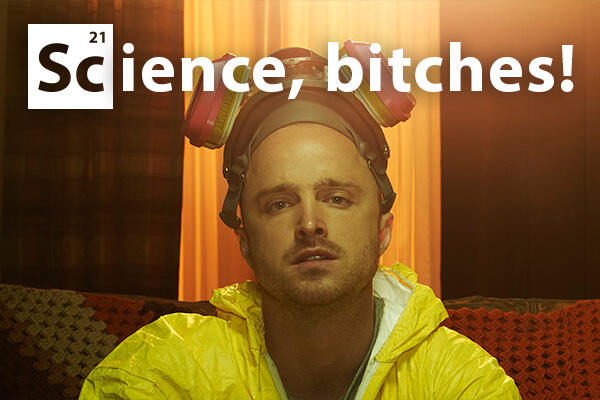
Science, Bitches | Issue 11
I was having tea with my grandma when she looked up and exclaimed, “Oh, the wallpaper’s changed again! It’s covered in spaniels now. I think I prefer this to the flowers.” The strange thing is her home has had the same unpatterned, cream-coloured walls for the last 20-odd years. Now, she’s completely sane and not exactly the sort to drop a tab on a casual Sunday afternoon, but every so often she has to confirm that there is, in fact, no large boulder sitting on her coffee table, and no grass growing on her TV. The thing is, my grandma is going blind. And somewhat ironically, as her eyes faded, she started seeing things. So what’s going on? There’s a pretty big chunk of your brain dedicated to sight. From the moment you were born, it’s been processing information from the outside world, and turning it into pictures. If you start to lose your eyesight after decades of training up those neurons, they’re going to be a little confused. Stop providing them with external stimulus, and they’ll just start making shit up; in other words, going blind can give you hallucinations. This should come as no surprise, really; our brain makes stuff up all the time. Take a look around you. Your eyes are pretty good, or maybe they need a little help with glasses, but they at least provide you with a complete image of the room, right? Well, not quite. The human eye is a bit weird. The light sensitive part of your eye that allows us to see, the retina, has a dirty big hole in it; your blindspot. But it’s not like we notice a hole in our vision, and that’s because your brain makes an educated guess about what’s there based on the surrounding image, and fills in the gap. Don’t believe me? It’s easy to see for yourself, there are plenty of blind spot tests on the Internet! Try one out. It’s bizarre. So our eyes are a bit shit, but our brain makes up for it. And it works pretty well, most of the time. If there’s only a small hole in our vision, it’s easy to guess what should be there. If you’re missing a piece or two of a jigsaw puzzle, it’s still obvious what the picture is meant to be. But what if the hole gets bigger? What if there’s more than one? Your brain works frantically to fill in the gaps, but with fewer clues about what is actually there. So sometimes it just puts random pictures in. And that’s how an entirely sane and sober person can see spaniels covering the walls, while drinking tea with her granddaughter on a Sunday afternoon! But your imagination doesn’t stop there; deaf people often report “hearing” music. It’s the same thing: your brain isn’t getting messages from your ears, so it just tries to guess what’s there. Inevitably it will be wrong, so once again sensory deprivation leads to hallucinations. Sound like a fun time? You can get a similar experience with the Ganzfield effect. All you need is a ping-pong ball, over-ear headphones, and a radio. Sit or lie down in a quiet and evenly lit room, tape half ping-pong balls over your eyes, and play white noise (static) through your headphones. You’ll look hilarious, but if you’re patient you should start to have some complex visual and aural hallucinations! In the ‘70s, some thought this might be evidence of ESP or telepathy, but now we know it’s just your bored brain getting creative. That’s science, bitches!
-
News
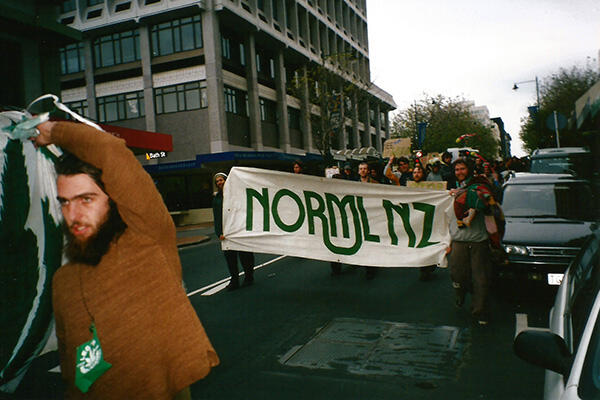
The history of Otago NORML
The University has seen proponents of the cannabis law reformation traverse its campus for years, but none as lasting as the Otago University branch of the National Organisation for the Reform of Marijuana Laws, otherwise known as NORML. Otago students have been gathering as early as the 1970s in support of the legalisation of cannabis – a time when now-Invercargill mayor Tim Shadbolt spoke on campus in favour of cannabis legalisation and when future-professor Sally Caswell investigated the effects of cannabis intoxication on volunteers from Otago NORML. Critic spoke with current leader of Otago NORML, Abe Gray, who has been involved with the group for the past 10 years after humbly beginning as an observer and participant in the 420 protests. Gray is also the deputy leader of the Aotearoa Legalise Cannabis Party (ALCP), and co-founded New Zealand’s first cannabis museum with leader of the ALCP Julian Crawford. Gray had many tales to tell of the highs and lows the group has faced over the years. In Gray’s view, the reason the groups have always, and will always, exist is based on the idea that political parties are not listening to the views of the people. Frustration has been boiling for years over the fact that “decades of evidence show that drug prohibition isn’t working.” In order to get this message across, the Otago NORML group protest at 4:20pm each Monday, Wednesday, and Friday on the lawn of the Student Union. The protests aim to use people power and civil disobedience to get their message across. Gray calls it “a reverse hunger strike, because we all know that’s not going to happen after a session.” What is now a weekly occurrence began as nothing more than a yearly gathering in the Octagon for the internationally recognised “J-Day.” In 2003, around 50 members of NORML attended J-Day and hot-boxed the Dunedin Police Station in protest; marijuana seeds were also planted in gardens at the front of the building. The following year the same act was repeated, however, this time there were 100 participants. In 2004, in a spur of the moment act, Danny, a member of the group at the time, placed posters around the University advertising that on a Friday the group would be protesting at St David’s. Tactically set underneath the University’s only camera at the time, the protest was seen as a success by NORML members and the 420 gatherings became a weekly event on campus. 2006 saw OUSA pass motions at a Student General Meeting “… that OUSA declares the University campus a ‘Prohibition Free Zone’ where prohibition of cannabis shall not apply,” and “that OUSA condones the public smoking of cannabis on University grounds as a protest against cannabis prohibition.” Friday remained the only day of protest for the following three years until 2007 when the newly introduced Campus Watch attempted to have the group shut down entirely. A confrontation between Gray and a member of Campus Watch was published in Critic and later made the front page of the Otago Daily Times. On 27 July that year, current affairs program Close Up caught hold of the story, attended a Friday protest, and interviewed students who also were members of NORML. Both Campus Watch and the University refused to comment on the confrontation and, in retaliation, NORML announced that 420 protests would be held on a Wednesday also. 2008 was a particularly contentious year for NORML, beginning with the first annual Cannabis Awareness week from 25 April to 3 May. As part of the week’s events, the group hosted a rather heated round table discussion on “Alcohol and Cannabis: Is Prohibition Rational?” Held in a University lecture theatre, the discussion was based on “the relative evidence of harms from alcohol and cannabis use, whether or not current policies are working to reduce harm, and the place of harm minimisation in government policy toward alcohol and other drugs.” Speakers included NZ Drug Foundation Director Ross Bell, WellTrust founder & former National/United MP Pauline Gardiner, President of NORML NZ Chris Fowler, Green Party MP Nandor Tanczos, Otago Criminal Law Professor Kevin Dawkins and Progressive MP & Associate Minister of Health at the time Jim Anderton. A month after the debate, controversy arose after a University student was arrested for smoking cannabis on campus. In retaliation around 500 students marched from the OUSA office to the Proctor’s Office in what is still the largest protest to occur on University grounds. After the protest had finished, a breakaway group of “hardout 420s” also hot-boxed the Proctor’s office. The following week, a smaller protest gathered at the front of the Clock Tower Building. The only counter-protest involved three members of a University Christian group. In July the same year at the annual Market Day, three members of NORML were arrested and taken into custody by Dunedin Police. Officers approached the group with a request to search Gray after “a complaint from the members of the public.” It was later discovered that two mufti Police officers had seen the group smoking marijuana earlier that day, and Gray was later seen putting a pipe into his pocket. After a minor disagreement, Police attempted to constrain him resulting in massive uproar from fellow group members. Footage of the arrests was posted on NORML’s YouTube channel and show one member, identified by the ODT as an 18-year-old student, being taken into custody after sitting down in protest in front of the Police car. Another 24-year-old student was also arrested after attempting to free Gray from officers. The fact that mufti officers had been in the vicinity of weekly 420 protests caused great friction between local Police and NORML. In what was known as the Narkiology campaign, posters titled “Narkiology 101” and “How to spot a nark in your class” were uploaded to the NORML website and hard copies were also placed around campus. Images and identification numbers of the police were involved in the campaign, which made headlines all over the nation. Beer company Tui responded by publishing a “Yeah Right” billboard that read, “I’m taking Narkiology 101.” The group remained out of the limelight until the latter part of 2013 when Vice Chancellor Professor Harlene Hayne announced the future implementation of a smoking ban on all University property. Gray told Critic earlier this year that the University sounded “like they were bluffing,” and that they are “basically intimidating everyone into believing they can enforce the ban.” The group claimed that if the ban was to be enforced, protests would still take place and alternative methods, such as vaporisers, would be used. In retaliation a third day, Monday, was added to the weekly protests. True to their word, the ban was implemented at the start of 2014 with NORML responding by using vaporisers at their protests. However, the year has been eventful with on going scepticism by NORML regarding the legality of the ban, as well as a recent confrontation with Campus Watch and Police in their enforcement of the ban. September 2013 saw the grand opening of the Cannabis Museum, which is fitted with a window display of two manikins smoking “spots.” Situated at 66 David Street, the museum has a research library of over 100 books, as well as archive material on 420 dating back to the 1970s. Already the museum has seen a variety of visitors, from local University students and NORML members to individuals from all parts of the world. Critic spoke to two Spanish tourists, Amaia and Oirer, who decided to visit Dunedin purely for the local cannabis culture. During their stay the pair planned to “meet people and protest for legalisation,” also attending the 420 protest the following Wednesday. The museum is currently funded entirely through the donations of students, visitors and various members of the public, many of whom wish to remain anonymous. Recent merchandise has also become part of the fundraising efforts, the most popular being tee shirts featuring modified versions of the University’s crest. The tee shirts are complete with Marijuana leaves, the Zig-Zag logo and the slogan “Cannabis Maximus.” They are sold as one of the many methods to simply “keep the lights on.” This year will also see Gray and Crawford stand in their first election for the Aotearoa Legalise Cannabis Party on 20 September. The party, formed in 1996, pushes for the legalisation of marijuana for medicinal, recreational and industrial use in New Zealand. In their own words, “a single policy that touches on every issue.” In the previous election, under different leadership, the party received only half a per cent in nationwide votes. This year, the two aim to make “at least a whole per cent, maybe even five per cent,” in numbers. Later this year Gray is visiting Denver, USA, where he hopes to organise marijuana tours in the near future. With the first recreational marijuana store officially being opened on 1 January this year, Denver has recently legalised marijuana for both medicinal and recreational use. Gray plans to create package deals for those who want to experience the marijuana culture in the region, “much like deals they offer on cruise ships and stuff.” Tours are also planned for Dunedin itself; landmarks are said to include famous smoke spots and the Scarfies house, with visitors being dropped at a 420 protest upon the tour’s completion.
-
Features

Where art thou, muse?
Dunedin musician and Critic music editor Adrian Ng explores the phenomenon of the artist’s muse, from greek and roman mythology to the early musical influences of his childhood. Having released two records around the start of the year, I was unfortunate enough to be the only individual available for press-related purposes. As a result there was a two-to-three week span where responding to an interview became part of my daily routine. It even earned a spot amongst other staple pastimes, such as walking to my studio, playing online Scrabble and pretending to be productive. The first thing I realised from doing this fascinating yet self-indulgent activity was just how much I started to loath the act of describing my own music. Don’t get me wrong, I absolutely love music and I enjoy saying things like, “I love Black Sabbath,” or, “that’s a really good song, man.” But when faced with questions like, “How would you describe your sound?” or “How has the Dunedin Sound influenced how you sound?” The responses that eventually sprung forth from my mind were so full of bullshit, it’s plainly embarrassing looking back at them now. The interesting thing was realising how little I actually thought about those elements when writing a piece of music. Especially because my process mainly involved sitting on my bed, strumming my guitar, and mumbling like a fool until I thought I heard something useful. But as dull as my writing process was, something must have moved me enough to want to express myself, right? Which brings me to the second thing I realised. “What is it that inspired you?” This was the only question I got asked in every interview. Not in those exact words, and not quite as direct, but in some shape or form it was always implied. Having conducted a few interviews myself this year, this was a question I also included every time I had the privilege of interviewing a musician or a songwriter. Why? Well, it’s obvious, right? Knowing the source of inspiration for an artist can add an entirely new dimension to the music. There’s nothing quite like that feeling of creative impulse, and to be transported to that environment, those experiences, those emotions. To get any sort of insight into the headspace of an artist while they’re in the midst of creating can be simply fascinating. Every now and then we hear about artists who you could argue reached points of transcendence during certain periods of their lives. Those individuals became seemingly untouchable within the boundaries of their craft and created some of their greatest work as if under a divine trance. These artists were often described as being under the spell of a “muse.” The idea of a muse originated from early Greek and Roman mythology. The “Nine Muses” were goddesses of inspiration who, in their divinity, were the embodiment of knowledge and the arts. In fact, the word mousa in Greek translates directly to mean “art” or “poetry.” Though there are several varying accounts, the most common version of the story insists that the muses were the nine daughters of Zeus (the father of the gods) and Mnemosyne (the embodiment of memory). These goddesses had a duty to inspire artists, usually musicians and poets, and also to promote the sciences and the arts. Their main function was to give wise counsel, sooth or calm broken hearts with music or poetry, and to enlighten the path for troubled heroes. Today a “muse” is seen as a person who is the source of inspiration for an artist, or plainly any source of inspiration. However, in poetry and song, they are celebrated beings and an almost mystical source of artistic power. “Where art thou, Muse, that thou forget’st so long. To speak of that which gives thee all thy might?” Writes William Shakespeare in “Sonnet 100.” In my own experience, and thinking about my creative process, I have to say this worshipping of the muse is still a foreign concept to me. I’m not saying I haven’t been truly inspired by certain people I’ve met in my life, or special experiences and places I’ve been. The muse is something that is definitely present and a way of channelling inspiration; but is it a little overblown, perhaps? The way I see it, we’re all human beings with the capacity to feel things and be moved by the world around us. We’re feeling things all the time, all of us. Sometimes they’re subtle moments of beauty and sometimes they’re waves of intense emotion. Being inspired by the world around us is all part of the human experience. Bringing it back to mythology, where the muse is seen as a goddess who bestows divine inspiration onto the artist, that sounds wonderful and all, but in reality we have to understand that a muse is not capable of transforming a person into an artist. Instead it’s up to the artist to transform a person or certain aspects of his or her life into a muse. Unless, of course, the muse you encounter is really some sort of supernatural being. Anyone can be inspired, but sadly not everyone has developed the kind of creative ability to filter that inspiration into a unique form of artistic expression. As much as we like to romanticise it, inspiration is just one part of the equation. Leonard Cohen or Bob Dylan, or whoever could’ve been brimming out of their ears with inspiration, still needed to pick up a pen or a guitar and get to work. They still needed a certain amount of skill in order to transform all that inspiration into song and lyric. We could talk about Etta James, who was a pool player’s abandoned daughter. She was beaten by her foster father, referred to as “Sarge,” and was forced to sing against her will. Her trauma was so deep that she was at first reluctant to sing again. However, it was only through music that she finally felt a sense of self worth and belonging. Even though every note that left her mouth sounded as if a giant saw was dragged across her heart, it was that quality which made her voice so special, so fractured, and true. It was what made her music weigh a little more than your average tune about heartbreak. In this case, we could argue that Etta James’ muse was her own shattered life or crippled upbringing. It was a force beaten into her existence by a mix of bad luck and tragic circumstance. She was blessed with an incredible voice, but it was everything that bubbled beneath her wailing instrument that helped her transcend the label of being just another talented vocalist. What we also have to understand, though, is that there are thousands, probably millions, of individuals that have come from a similar situation as Etta James. All inspired by a similar kind of muse, which is horrible and life changing, but that doesn’t lead to great art. Horrible experiences don’t create transcendent artists out of all of those who have them. I believe in the muse but, more importantly, I believe in putting in the work and I believe in the individuality of the artist. The psychiatrist Carl Jung believed that the muse was, in fact, an unconscious part of the artists themselves, or, more specifically, their anima or animus – which is basically our hidden feminine or masculine personality. According to Jung’s theory, the function of the muse was not to just inspire but to unlock the artist’s masculine or feminine side. They were physical beings that acted as a canvas, fulfilling an artist’s inner projections of femininity or masculinity. Which isn’t quite as romantic, I know. For example, if we asked Jung it wouldn’t have been Suzanne Verdal that Leonard Cohen visualised in his mind and wrote about in the song “Suzanne.” It wasn’t her feeding him tea and oranges by the river, instead it was his anima projected onto another living being. It was his inner vision of femininity melding with the physical “Suzanne” to form someone else altogether, the muse “Suzanne” who existed in the world of the song; an angelic being, “half crazy,” and a bohemian sorceress of the mind. To some extent, Jung’s idea of the muse may be accurate. But I believe the connection felt between artist and muse is sometimes more than just a celebration of an artist’s hidden ego. Being a muse could also mean being inspiring in a different way. Like through encouragement, friendship or love. In the autobiography of poet and songwriter Patti Smith, Just Kids, she describes her relationship with Robert Maplethorpe, a photographer she met in New York. The two shared their lives and worked together as an artistic tandem; as two individuals who inspired each other – though not always directly, but through their relationship and support for one another. “I imagined myself as Frida to Diego, both muse and maker. I dreamed of meeting an artist to love and support and work with side by side.” Unlike Jung, I also feel a muse should not necessarily be limited to just human relationships. It could be a book, a tree, the sea, or another song. It could be a place – the Hotel Chelsea in New York, for example. A historic building that was inhabited by a plethora of well-known artists, poets and writers, including the likes of Allen Ginsberg, Bob Dylan, Edith Piaf, Stanley Kubrick and Henry Chopin. It was an affordable accommodation option that was the initial draw for many struggling artists. “It seemed a wonderfully out-of-the-way place, nearly a slum, where nobody would be likely to be looking for me,” described Arthur Miller in his short piece, “The Chelsea Affect.” “Here’s Room 506, it’s enough to make you sick” and “Here’s Room 115, filled with S & M queens,” Nico sings in the title track to her 1967 album Chelsea Girls. The track is written by none other than the Velvet Underground’s Lou Reed and based off the movie of the same name. Directed by Andy Warhol, the movie starred many of Warhol’s superstars such as Ondine, Brigid Berlin and Nico. Many of them were actual residents of the hotel and played themselves. But, at the same time, they depicted the strange happenings and life within the Chelsea in a less autobiographical way. The Hotel Chelsea feels to me like the perfect example of how a building could somehow act as an inanimate muse; not only a central point for creative individuals, but with its own unique character, atmosphere and colourful history. It’s an aggregator of the past, and this instilled within its inhabitants a certain tendency to express themselves. “I remember you well in the Chelsea Hotel. You were famous, your heart was a legend” Leonard Cohen sings in “Chelsea Hotel #2.” The song recalls the songwriter’s experiences with Janis Joplin while they were both residents in the building. But more than that, it’s a love song to the Chelsea. The culture, the inhabitants, the lifestyle, all captured beautifully in three minutes of music. “I remember you well in the Chelsea Hotel, that’s all, I don’t think of you that often.” I believe a muse may be a person, a relationship, it may be a place, it may be a memory, an experience. But it’s not the same for everyone. So, what inspires you? Where do you go about finding inspiration? Where does one even start? If there’s anything I’ve realised, it’s that finding inspiration is not the important part. It’s slowly building up the skills to know how to use that inspiration. The thing about inspiration is people sit around waiting for it to find them, but what people forget to do is work at it. There are no shortcuts. I started learning how to play the guitar when I was about fifteen-to-sixteen years old. Apart from the usual group of foreign students I sat with at school, I was hanging out with a group of older kids at that point and they were into stuff like Backstreet Boys and Westlife and, as a result, those were the first songs I learnt how to play. But we should probably never dwell on that. I didn’t come from a musical background whatsoever; I was pretty much just into basketball and computer games. So music was still an entire universe waiting to be discovered. The melodies and how it all fitted together just amazed me. I was obsessed, and so I searched and searched for more, consuming as much as I could. Yes! Thank you, Internet. When I started taking guitar lessons for a short period, I was introduced to a wide range of artists I’d never heard of. I would basically use up all my tuition time asking about what new music I should check out next. What I accomplished from doing this was that I found an overall appreciation for music and I developed a personal taste. I got an idea of what I loved and what I would like to create. I’ve spent years and years trying to reach that point, but failing over and over again. One thing I’ve come to realise is that inspiration is a mere formality and something that isn’t necessary to start your creative journey. That being said, I do feel you have to be impatient enough to chase inspiration down sometimes, or at least fake inspiration ‘til the real thing arrives.
-
Features

The golden games
Arcade games have been around for a while now. With their near-certain demise playing out since the 1980s, Josie Adams explores Dunedin’s final bastions of vintage electronic entertainment. In 1770, Europe and America were spellbound by a machine. It was called the The Turk, and it was an automaton, a self-operating machine. It carried around on its chest a chessboard, and would play lords and ladies around the globe. It tended to win. It was the most advanced technology around; and it was a fake. For nearly 84 years, The Turk had won against intelligent humans – Napoleon Bonaparte, Benjamin Franklin – all of whom never guessed there was a chess master sitting under the table and operating the mechanical man. The Turk wasn’t real; but the human interest in it was. Playing a machine started out as a novelty and a curiosity. In the 1920s, you could slip a penny into a wooden box in any number of amusement parks, and an automaton would tell you your fortune; later, pinball and jukeboxes, though not humanoid at all, let the player interact with the machine. In 1936, Seeburg Ray-O-Lite used light-sensing vacuums in a machine to let you shoot a duck. The 20th century saw quick innovation and advances in virtually every field, and arcade games weren’t left out. The games we see today aren’t made of wood and plastic ducks, and aren’t found next to a ferris wheel. In the 1960s we saw a short, intense transition period occur. The games became a blend of mechanical and electronic: they used rear image projection, light sensors, and sound effects. In 1966, Sega’s Periscope hit the markets. It had a new and improved version of the light-gun shooting technology Seeburg Ray-O-Lite used, and it simulated shooting down ships from a submarine. It was followed by the racing game Grand Prix in 1969, an ancestor of the much-loved racing games we play today. It wasn’t until the 1970s that electronic fully took over, and the famous and much-loved brand Atari hit the scene with Pong, ushering in a tide of electronic games. A few electro-mechanical games went the distance through the 1970s: Killer Shark, F-1, and Jet Rocket all got featured in blockbuster films of the time. In 1978, though, the final blow was struck: Space Invaders descended upon arcades from video game heaven, and a new age of indoor fun was let loose on coin-rich adolescents everywhere. It was the golden age of arcades: they were everywhere – even in restaurants! – and the games they played still ring fond and familiar even in the ears of people our age: Pac-Man; Galaxians; Battlezone; Galaga. All through the 1980s, this golden age roared along the top of rapidly progressing graphics and computer systems; the home computer was poised to take over. The golden age began to fail around the late 1980s, when home consoles became widely available and affordable. In 1981, the U.S. arcade game industry had been worth $8 billion; 10 years later, it was worth $2.1 billion. Although the games fought it out, home video games and modern computer games have grown to overshadow the arcade industry. The early 1990s saw one final, mad arcade frenzy in the release of fighting games: Streetfighter, Mortal Kombat, Tekken. Most of the people reading this will be “nineties kids,” and remember playing Tekken on their PlayStations, if not in the shadowy recesses of big-city cinemas. Remnants of the golden age of arcades can still be found in the dark corners of shopping centres, cinemas, and long-standing takeaway shops. These games are loved and cared for and still enthusiastically played. Alongside them are those members of the New Arcade Posse: games that have such complex interactive features they could never be satisfactorily played at home. Games like Dance Dance Revolution and Time Crisis are still a worthwhile investment for hot spots like Megazone and Time Out, which are found all over New Zealand. Are these places shrines to a golden age long past, dedicated modern arcades, or simply a ragtag collection of random games designed to eke out an extra few dollars from a moviegoer? I’ve created a guide to the major arcade spots in Dunedin, so you can check them out for yourself. Although the “best game” can be subjective, the limited variety in our city makes a short “best of” list pretty easy. Laserforce/MegazoneIt’s been renamed, but the games are still the same. This is the biggest collection of arcade games in town: you’ve got DrumMania, air hockey, basketball, a couple of racing games – basically every kind of arcade game, except those sweet multigame tables of yore (on which you could play Pacman, Space Invaders, Pong, etc.). Although it doesn’t have any games that are well celebrated in their genres, and is seriously lacking in fighting games, you can easily spend plenty of time and money checking it all out. The best game here is Silent Scope. It only has one gun, but you can take turns if you’ve got lots of friends (and if you don’t, hey! More turns for you!) If you play in “mission mode,” Silent Scope is exactly the same as most other shooters: bad guys pop up, and you shoot as many as possible. It’s nothing new, and since the only thing that separates it from the crowd is that you have a scope, I would highly advise just playing Terminator instead (not available at Megazone). No, to truly understand the excellence of Silent Scope, one must select “battle mode.” The aim is to shoot the bad guy before he shoots you. It sounds simple, but your constantly moving vantage point and the variety of scenery he hides in makes it complex. Because you’d have to be pretty damn good to win every single time, it’s very satisfying when you do. Oh, and don’t worry about being a great shot: In this game, apparently even a shot to the hand is lethal. Silent Scope does not have the constant stimulation and gratification of gratuitous violence of shooters like Alien and Terminator, but then again, you don’t have to deal with the brightly-coloured flashing and repetitive yelling that seem to be staples of over-branded games. One thing that Silent Scope will give you over any other shooter is this: time for your money. Even the most average player can get up to ten minutes’ play from two dollars. There is one other game at Megazone that I’m going to recommend, and I ask you not to judge me until you’ve played it. When you first see Rapid River it will probably have up to four seven-year-old children on it, and you will probably think it is lame. You might think it’s the game they put there to entertain kids whose parents and babysitters just want a peaceful game of mini-golf. You would be wrong: mini-golf is never peaceful, and Rapid River’s proper operation requires the strength of two grown teenagers. It’s a paddleboat game: you and a friend squeeze into the boat and row it along the river. The catch: the boat paddles are connected so you have to work in sync, and the river’s current is nearly always against you. You don’t know true embarrassment until you’re sandwiched between two other adults in a shaking yellow half-boat, being yelled at to turn left, or “paddle harder,” and failing to reach the finish line. The kids waiting for their turn will think you are weak. Rest easy, because you don’t know true satisfaction until, arms aching, you watch someone else make all the same mistakes. There are several river maps to choose from in Rapid River: jungle, volcano, and another kind of jungle. There are paths within each map you can choose to take, which allows you plenty of in-world exploration, or at least some switching-up of the pretty digital scenery. Don’t worry; the chair shaking is probably a feature of the game and not a mechanical flaw. Take a friend or two with you to play, look out for the giant yellow platform, and prepare to forgo arms day at the gym. ModaksModaks is an uber-hip cafe with unpredictable, but usually annoyingly early, closing times. They make up for this with the best fries in town, a special diet-friendly menu, and Streetfighter. Up the back of the cafe, next to the bathrooms, there are two Streetfighter games. Streetfighter is an absolute classic in the fighting game genre, and was part of the wave that kept the golden age of the arcade from dissipating irreversibly quickly. You should play at least once, even if it’s just because it’s got historical worth. It’s easy to dismiss it as hipster – in Dunedin you’re most likely to find it at Modaks or Radio One – but it does provide some seriously sweet bang (and kapow, and hi-ya) for your buck. Can you play Tekken? Then you can play Streetfighter. Don’t know how to play Tekken? You can still play Streetfighter. Random button-mashing will always work, because Streetfighter’s combos aren’t always complicated and it’s easy to accidentally make one. That being said, actually knowing the combinations would be a better approach. It’s fun all around either way: every character in this game seems to have been an acrobat at some point, and as always with fighting games, using a special move is a thrill and a half. You can play the computer or another human, so it’s enjoyable no matter what your social situation. Because there are two of them at Modaks, impromptu tournaments don’t have to involve waiting eons for rounds to finish; and if they do, there are some A+ milkshakes for sale 10 metres away. Dunedin International AirportMost of you have probably found the airport arcade accidentally by now. It’s with the upstairs gates, just above Gate Nine and opposite the bookshop. It has a couple of the claw machines that children in movies get stuck in. But aside from that, the games aren’t half-bad … Ok, half of them are bad. But then there’s Terminator: the arcade game. When Arnie said, “I’ll be back,” he wasn’t messing around. Years after the movies, and in spite of the cancellation of The Sarah Connor Chronicles, Terminator is going strong as one of the most alluring arcade games around. It’s one or two-player, loud, brightly coloured, and has one simple mission: destroy all machines. You roam around with your gun-slinging buddies pointing and shooting at the exciting variety of machines in their dystopian spread of environments. All shooters seem to have the baddies flash red when they’re close to you, so it’s easy to prioritise shooting. Terminator is different because you have to reload, which sometimes makes this difficult. Yeah, it’s not stunningly different from the other big names in this genre, but it’s very pretty, and you can pretend to be Sarah Connor. Something transfixingly hideous on the face of arcade is a game present at the airport: Buckhunter. This game is not topping any lists, except maybe bad things to put in the Meridian food court (where it can also be found). Buckhunter is astoundingly awful. The aim of the game is to kill animals. This isn’t within some plot-based need for sustenance; it’s just for fun. Straight off the bat, it’s not going to be a favourite. The pointless violence continues in an assault against decent sensibilities, which takes the form of the Buckhunter girls. The majority of arcade games leave objectification of the female body to their console and computer-based brothers, but even then it’s not as overt as it is in Buckhunter: they are real human females, clad in scant clothes you definitely wouldn’t take on a real safari, and smiling like they’ve had their souls sucked out. Your points are determined by where you shoot the animal, how many you shoot, and whether or not you shot something you weren’t supposed to, like a less delicious deer. It doesn’t change much except for the occasional lion popping up, which makes one sad rather than titillated. Arcade games have big screens and are seen by plenty of people, especially when they’re in airports and food courts, so they’re possibly the best way of getting attention by using annoying sexualisation. I’d say this was an indicator that Buckhunter are good at marketing, except that they aren’t even using the girls to advertise anything except the game you are already playing, you depraved soul, you. South Dunedin Burger KingSouth Dunedin Burger King is now the home of Time Out. Once a bastion of everything arcadian, Time Out has been slowly dying off. Nowhere is this more apparent than at this particular Burger King, where three games huddle together pretending not to hear the weeping of Time Out’s other branches. It has that basketball game; never a favourite. It’s a two-player game, where you throw a miniature basketball into a miniature hoop, and try to get more goals than the other player before your time is up. Despite being miniature, it does require athleticism, which goes down well in neither modern arcades nor Burger King. They also have the non-game where you press the button to make the light stop and maybe get a prize, and a claw machine, where you will not get a prize. 10 per cent of the time you’ll get a tatty, obsolete pop culture reference in soft-toy form or a tiny, Oliver-worthy “fun-sized” bounty bar, but these are not prizes; they’re reminders of better times, and the money you could have instead spent on a tray-full of hash bites. Hell’s Pizza North DunedinFinally, although it isn’t really an arcade - there’s only one game – the Studentville Hell’s Pizza is worth checking out. Not only do they have delicious sides, they also have an absolutely pristine Young Frankenstein pinball machine. You need skill to be really good at pinball, but you can be super average and still get a lot of time out of your one coin. It’s the ideal time-spender (not waster, never time-waster) while you wait for your pizza. What a reward! If you’re ever considering an arcade tour of Dunedin, I would suggest starting with breakfast at Modaks, intense exercise at Megazone, and picking up dinner at Hell’s. It’s a guaranteed happy end to your day, no matter what desolate state you’ve judged modern arcades to be in.
-
Features

From anonymity to local
As more people feel the need to slow down and connect with the world around them, organic and local food choices have become increasingly important. Loulou Callister-Baker sat down with an organic farmer to work out how her lifestyle could influence the Dunedin student community’s food choices. “on 10 April I was sentenced to nine months’ home detention for destroying the old Lost Resort lodge on Kaikoura Island. A fair but expensive price to pay for stopping a fishing competition that should not have proceeded,” begins the letter to the editor (titled “From Will”) in the 643rd issue of The Barrier Bulletin. Great Barrier Island, a half-hour plane flight from Auckland, is undoubtedly a place filled with quirks. But among all the eccentricities are handfuls of inspiring stories about people who have set up lives and businesses despite the myriad of obstacles that living on an island presents. Caity Endt, standing amongst a cluster of potted plants and enthusiastic gardeners, offers her hand to me after I introduce myself. Her husband, Gerald Endt, stands at a picnic bench on the veranda behind her. Caity – about to answer my first question – suddenly looks over her shoulder and, noticing the small line of people clutching various plants or baskets of fruits, excuses herself to briefly aid Gerald with transactions. She then returns, with a smile, and we sit at the end of the cluttered picnic bench to discuss the organic garden called “Okiwi Passion” that she and her husband run on Great Barrier Island. In July this year, Caity and Gerald will have been living on Great Barrier Island for seven years but Gerald’s family have had land out on the island since the early ‘80s. Before making the significant decision to move out and establish a life on an island, Caity spent her time in different cities throughout New Zealand, teaching gardening at a Rudolf Steiner School in Wellington and in Titirangi. However, when the couple heard that Gerald’s parents were subdividing their land on Great Barrier, the two kicked into action and bought the main block with the vision of creating and sustaining their own organic market garden. And, to this day, apart from missing family and the easy access to resources of community education, Caity doesn’t really miss the city, which she describes as a “very anonymous place” with an “abundance of consumer pressure around you at all times.” Caity and Gerald’s land is situated on the edge of the Whangapoua estuary. When they first moved there it already had several benefits, including bamboo shelter belts, incredible soil and a banana plantation. However, maintaining and adding to the land was physically trying, and daily the couple must continue their chores, with anything requiring electricity dependant on solar energy and generators as there is no central power system on the island. “On top of all this,” Caity adds, “Gerald, who has kidney disease and is a dialysis patient, has to dialyse for five hours every two days. His machine is set up in our bedroom. Altogether, with the time it takes to set up the machine and clean up afterwards, it takes six and a half to seven hours … but he really makes use of the time then by doing Internet work, answering emails, ordering supplies, balancing accounts.” In this respect, Caity is thankful for the helping hands of “wwoofers” to lighten their workload. When I realised she wasn’t talking about dogs, I asked her to explain. In New Zealand, a WWOOFer is part of WWOOF (which either stands for Worldwide Opportunities on Organic Farms or Willing Workers on Organic Farms). While the practice is worldwide, there is no central organisation or base. The New Zealand branch, which began in the 1970s, aims to promote “awareness of ecological farming practices by providing volunteers with the opportunity to live and learn on organic properties.” Different organic farms set up profiles on the WWOOF website and look through volunteer applications, accepting those who seem appropriate. Volunteers, from around the world, then arrive at the farm – and with the promise of food and lodgings – work for usually six hours a day with two days off (although these terms vary from farm to farm). Sometimes volunteers will stay for several weeks; others will stay for years. While the work could seem physically strenuous, farms part of WWOOF are located throughout the world – in India, Korea, Ireland, Spain – and provide an interesting way to travel while simultaneously supporting the organic movement. For Caity and Gerald in summer, harvesting begins at six in the morning before breakfast while it’s still cool. Caity breaks down the day, “Wwoofers harvest zucchini, cucumber, tomatoes, and strawberries, Gerald does the capsicums and aubergines, bananas and cherimoya, and I harvest the lettuce and mesclun for the cafes. We have breakfast around eight, then start the bread for baking at 11 am. Next, wwoofers put veggies away in chiller boxes with reusable ice packs (we don’t have a walk-in chiller due to power requirements), water the nurseries, take care of weeding or clipping up tomato plants, chip bamboo or mulch rows of veggies, irrigate or lay out irrigation. We usually break off at 11 because it’s too hot outside to work. We then do inside tasks such as accounts. Gerald maintains all the machinery, he may make some deionised water for sale for solar power batteries, the laundry gets washed while there’s plenty of solar power and then we have a good lunch with our homemade bread and preserves, free range eggs plus fresh goodies from the garden. Later in the afternoon woofers take care of the chickens, collect the eggs and we do any planting then so the seedlings will have the night to settle in. In the evening we cook a good meal for ourselves and the four wooofers. Usually the wwoofers help out with prep, and do the dishes after dinner. Gerald and I plan each day the night before, and plan out the week each Sunday so that everything flows …” On Wednesday, the island’s mail bus picks up Okiwi Passion vegetable boxes, “up to 24” at a time, and distribute them to the bus stops located around the island for those who have ordered them. Invoices are included in the packages, with a business model that relies on trust. Wednesdays are also the barge days for Port Fitzroy, so they may have to go over to collect freight in the afternoon. Then, at a weekly Saturday “farmers’” market, Okiwi Passion sells most of their garden’s produce to locals and visitors. “We are usually up at the crack of dawn packing our ute to the hilt to fit everything in!” Great Barrier’s subtropical climate allows for a range of interesting plants, including three varieties of bananas, Tahitian raspberries, eight varieties of a “very smooth avocado-like fruit” called casimiroa (or white sapote), several varieties of cherimoya, and Butea palm (also known as jelly palm). Among their produce is an interesting selection of South American fruits and palm trees, which Gerald’s parents brought over to the island in the ‘70s and ‘80s when there were less regulations on these things (in fact Gerald’s parent worked with the Department of Scientific and Industrial Research in developing some of these crops, such as the tamarillo and feijoa). Whenever they have a surplus of vegetables or fruit at the end of a busy period, an innovative New Zealand organisation counters this issue. Ooooby, which is short for “out of our own back yards,” both supports gardeners like Caity and Gerald and gives them another access point to the organic market – a better option in a world where large scale industrial food companies continuously force small scale farms of artisan foods out of the market and thereby create fractures in the community. Ooooby, as one founder states, “began as an idea in response to the overwhelming evidence that our modern industrial food systems are causing more damage than they are worth.” The Ooooby business model is social - it’s “like an online farmers’ market” or an “online local food buyers’ club.” This idea of “social business,” first defined by Nobel Peace Prize Laureate Professor Muhammad Yunus, still seeks to generate profit in order to expand but the model also centres around the ethical concept of a “non-loss, non-dividend company” who aims to address a social objective within “today’s highly regulated marketplace.” Ooooby sources local food, packages it, and then supplies it to an ordering customer’s door. Beginning with the aim to make local food as affordable and efficient as that produced by large-scale food industries, Ooooby reinvests all profits made into “developing local food production, whilst ensuring that all participants in the supply chain are rewarded fairly for their contribution.” While approximately 80 per cent of costs can go into the supply chain alone for international suppliers, Ooooby avoids this, with the ultimate aim to pay their farmers 50 per cent of the total retail value for the supply and delivery of produce to the “Ooooby hub.” While Ooooby is still almost solely based in Auckland (with a growing base in Sydney), there exist similar (or increasingly similar) options in Dunedin. The obvious start is the Otago Farmers Market held every Saturday at the railway station. The stalls at this market (which opens at 8am and closes at 12:30pm) offer a range of local and organic food options. Another alternative, although not necessarily viable for student budgets, is the Taste Nature organic food store on 131 High Street. Taste Nature, which began in founder Jim O’Gorman’s garage in 1992, is part of the local organic food network, which means that it sources “fresh produce and products from as close to home as possible.” In this way the store complements the local organic producers who sell at the Farmers’ Market. However, with the Dunedin student market directly in mind, the new start-up MeatMail may be the most viable option for students. MeatMail, set up by two past University of Otago students, is “on a mission to shorten the distance between farm gate and your plate.” Using a “subscription model delivery service,” MeatMail relies on the power of group buying to purchase produce direct from the farm on a recurring basis and deliver it straight to the door (in their adorable MeatMail vans). While their goal of serving “90 per cent of New Zealand’s main urban areas by the end of 2014” might seem overly ambitious, it is local. Their fruit and vegetable boxes are hand selected, packed and delivered by independent local growers and greengrocer partners across the country, although the contents of these boxes vary depending on what is in season. Their beef and lamb come from Silver Fern Farms, chicken from Ingham, and products like their sausages and bacon are made “fresh” at their butchery. Local food deliveries aren’t the only way to incorporate business with a harmonious attitude to food and land. Food co-ops, if you have the time, are another way to achieve “connection.” Simply put, a food co-op is a food distribution outlet typically organised as a consumer cooperative, which means that, while appearing similar to a normal grocery, decisions involving the production and distribution of its food are made by its members.” In New Zealand, most general co-ops are producer co-ops, with approximately half the full members of the New Zealand Cooperatives Association being agriculturally based – Fonterra Cooperative Group is a prime example of this. There remain few consumer cooperatives in New Zealand, with most being simple “buying clubs.” Despite this, with both a social and environmental conscience, food co-ops can be rewarding and can display a higher degree of social responsibility than their corporate analogues as profits from the co-op can be returned to the community through educational initiatives and member-approved community developments. Many co-ops will specialise in organic and locally grown foods, and, because members pay in to the cooperative to maintain it, products are often sold at a discount. Out on the island, Caity and Gerald are part of their own organic co-op, which they set up last July and now have ten active members with more people wanting to join. “The purpose” of their co-op, Caity tells me, “is to enable members to have access to organic dry goods at a reasonable cost. We buy all our goods at wholesale cost, and then they are palletised before being sent on the barge to Great Barrier, which greatly reduces the freight costs. We currently order everything from Ceres to keep things simple. The co-op has to place a minimum monthly order of $500 in order to have an account. Members of the co-op share out responsibilities and tasks, such as general communication with members, organising the online spreadsheet ordering system we have (through Google+), contacting members for out of stock items or making up shortfalls, placing the monthly order with Ceres, collecting the consignment from the barge and delivering to our shed, then splitting the orders for each member. Then each member is billed and they pay directly into the co-op account, which then is direct debited to pay the Visa bill. We had a few teething problems but it is pretty smooth now. It now means that some families are using the co-op as their main food spend each month and our online supermarket shops are drastically reduced.” In a Dunedin context, Caity believes this method would be “a great way to keep living costs down for students, but you have to be realistic about the time commitment involved, make sure your members are reliable and will pay on time and resist the temptation to buy luxuries just because you get them at such a reduced cost.” But, when it comes down to it, maintaining your own small garden can be the most satisfying process. “The best thing to grow if you have limited space is greens like lettuce, pak choi, mizuna (red and green) and herbs,” Caity advises me. “These greens are so much better really fresh, they’re also so good for you and don’t take that much space. Next on my list would be to grow beetroot or even carrots. If you don’t have a garden you can grow them in pots or containers you have recycled – just make sure they have drainage holes in the bottom. Put the pots on terraces or porches in the sunniest spot you have; at a pinch, a window sill will do. Your city council probably has some sort of free composting education going on or there may be local workshops. Go to one of those to learn how and set up a worm farm – they will gobble up most of your food waste and you can use the castings they produce to enrich your potting soil, which means you can grow beautiful greens and at the same time reduce costs buying rubbish bags and keep food waste out of the landfill.” When I asked Caity what underlines her drive to teach gardening and maintain a lifestyle on an island, she commented that the “basis of civilisation is our soil” with her goal being to “expand the repertoire of what people eat” in order to “connect people with what they eat.” In this way, Caity’s philosophy is very much in line with the worldwide Slow Movement, which blossomed in 1986 after Carlo Petrini protested the opening of a McDonald’s in Piazza di Spagna, Rome. The Movement, which focuses on restoring the lost connection between many aspects of human life and the natural world and rhythms around us, is (ironically) gaining more momentum as increasing numbers of people identify their own discomforts with the fast paced modern lifestyle. Caity is about to further elaborate on her life philosophies when a fleet of local gardeners approach her with a range of very specific questions. Not wanting to disturb her further, in what would be a prime business time at the island Saturday market, I thank her for sitting down to talk. Already inspired by Caity and Gerald, it was a few days later – when I went with my mum to pick up our vegetable box from the bus stop – that I truly appreciated their lifestyle and realised that maybe I too need to start making a deliberate effort to slow down.
-
Columns

Love is Blind | Issue 11
Critic’s infamous blind date column brings you weekly shutdowns, hilariously mismatched pairs, and the occasional hookup. Each week, we lure two singletons to Di Lusso, ply them with food and alcohol, then wait for their reports to arrive in our inbox. If this sounds like you, email critic@critic.co.nz. But be warned – if you dine on the free food and dash without sending us a writeup, a Critic writer will write one under your name. And that won’t end well for you. ShaneWhen I got the call that I was to be on the Critic blind date, I won’t lie, I was a little excited. So, naturally, I calmed my nerves in the finest of Dutch traditions: with six beers. I arrived a bit before her and nervously waited to see who would show up. Once she showed up we introduced ourselves, sat down and started to look at the impressive drinks and food lists. I decided this would be a good time to try being smooth and asked the bartender to make two of whatever drinks he felt like making. This came back to bite me when he arrived with a coffee based cocktail, for me, and a fruit based cocktail, for her. I don’t drink coffee any more so I promptly lost all my hard earned “smooth points,” by shamefully asking if she would trade. In my defense, she didn’t seem to mind and I made up for it by buying her a few drinks later on. We ordered a massive platter of food (far too much for only the two of us) and started to get to know one another. The chat flowed really well – no awkward silences or weird questions – for the next two-and-a-bit hours, at which point the DJ started to play a bit loud for conversation. So I suggested we go cash in my free drinks at Alibi, which was much louder, so we finished our drinks quickly and promptly left to start the journey north. Unfortunately for the readers I have no juicy gossip to share; we parted ways near the Cook and went home, where I finished my pre-date beers and passed out on the couch in a state of drunken bliss. The following day, my friends asked what she looked like/ if she was hot, so we had a wee stalk, using very few key words, and actually found her. Unfortunately, I forgot that when you view a profile on LinkedIn the person gets a notification … Definitely didn’t help my chances. Oh well, I don’t think it was going anywhere anyway. MirandaGetting a text saying “do it,” followed by a call at 2pm on Thursday, was the start to my first blind dating experience. I followed precedent and had a few beverages to calm the nerves. I arrived at Di Lusso on time with high hopes that I was going to find my one true love … I was quickly brought back down to reality when I realised this guy was a whole new level of metro sexual, wearing one of those typical black cardigans from Glassons. We started off with the stereotypical conversation: major; travel; hobbies; etc. The massive platter and cocktails arrived. He ended up not liking his espresso cocktail, so I switched with him so he had the pink cocktail. Conversation was fine and I was pleasantly surprised when I asked him three fun facts about himself and they were actually quite interesting. However, I think he was trying too hard to impress, saying “f**k” about every 10th-20th word, either that or he just had an extremely limited vocabulary. Following this, he couldn’t wait to bring up his medical marijuana card that he “got from the States” (which he did not have for medical purposes). Later on, when he found out I wasn’t into drugs, he quickly reassured me that the card was just a joke. Conversation was always constant and never awkward, however, throughout the night he got more and more into his double-finger guns every time I said something he liked. Double-finger guns, according to Urban Dictionary, are a way for creepy people with porn moustaches to say hello, or so I understand. Minus the moustache, that sounds about right. We continued on to Alibi for another drink, where it was reaffirmed that there were no sparks between the two of us: when we stood up, it was funny finding out that, for a “six-foot-two” guy, he was shorter than me, a six-foot girl. When we parted ways, I made sure to stay a metre apart so that he wouldn’t try and hug me. Thanks Di Lusso and Critic for the free feed!
-
Culture

The Cubic Structural Evolution Project
Dunedin Public Art Gallery Exhibited until 3 august 2014 Everything is so much better when you can touch it. I’m really enjoying the participatory installations that have been at the Dunedin Public Art Gallery recently. Playing with Seung Yul Oh’s “Oddooki” (those performance sculptures that rocked, chimed and looked like Angry Birds) was the highlight of my DPAG month in March, and this month it’s Olafur Eliasson’s The Cubic Structural Evolution Project. Olafur Eliasson was born in Copenhagen, Denmark in 1967 where he studied at the Danish Academy of Art from 1989 to 1995. For many projects Eliasson works collaboratively with specialists in various fields. Among them are the architects Thorsteinn and Sebastian Behmann (both of whom are frequent collaborators), author Svend Age Madsen (The Blind Pavilion), landscape architect Gunther Vogt (The Mediated Motion), architecture theorist Cedric Price, and architect Kjetil Thorsen (Serpentine Gallery Pavilion, 2007). Eliasson has also engaged internationally in a number of projects in public space, including: the intervention Green river, carried out in various cities between 1998 and 2001; the aforementioned Serpentine Gallery Pavilion with Thorsen, a temporary pavilion that was in London in 2007; and New York City Waterfalls in 2008, which was, indeed, in NYC and involved making honest-to-god waterfalls in different locations city-wide. He also was commissioned for a Louis Vuitton window campaign entitled, “Eye See You,” in 2006, which was a light installation displayed for a short duration in the windows of the 350 Louis Vuitton stores worldwide. He even has a profile on the “Friends of the Haus” section of their website. He’s well established. In 1995 Olafur established Studio Olafur Eliasson in Berlin, which is a laboratory for spatial research. Today Studio Olafur Eliasson employs a team of architects, engineers, craftsmen, and assistants who work together to conceptualise, test, engineer, and construct installations, sculptures, large-scale projects, and commissions, including The Cubic Structural Evolution Project. The Cubic Structural Evolution Project consists of 150,000 white Lego pieces on a table, with which the public is meant to create a miniature cityscape. In the same way that ideas from the audience transform the plastic Lego bricks into “art,” the exhibition itself becomes about the people who actually construct it. Sometimes a person would begin with nothing and, on other occasions, with a partly constructed piece of architecture left by the last participant. From a pile of white plastic mess emerged everything from pixelated looking models of famous architectural monuments (the Eiffel tower was, of course, constructed about five times) to modern skyscrapers, and other weird/futurist looking imaginings. As a whole it presents a complex illustration of how people perceive the urban material of the city. As much as I wanted to leave some monumental mark on the table, I left most of the constructing to the influx of children – who, surprisingly, seemed to be more architecturally advanced than myself. Building, creating, pushing, moving and tearing down, then reconstructing, the pieces of Lego, their elaborate towers were way cooler than my six-piece contribution! However, as the installation highlights, building a stable society is only possible with the involvement and co-operation of each individual. It’s a great piece of work and an interesting concept – and it’s all done without any colour. It is well worth going to.
-
Culture
Zine of the week | Issue 11
Pamphlet published by See Sharp Press First published in Australia by Libertarian Socialist Organisation, 1979 Spray-paint did not cripple the World Trade Organisation in Seattle. The 11 September terrorist attacks did not bring down the United States. The bombing of Greenpeace’s ship, Rainbow Warrior, by the French Government, however, did enable better nuclear-testing in the Pacific. The Urewera raids by the New Zealand Police did, somewhat, lessen indigenous groups organising radically in Aotearoa. And yet I have wondered whether if someone were to burn a mansion, it would lead to society becoming more justly distributed. Perhaps if I were to mix a banker’s drink with cyanide, a new monetary system would emerge? Perhaps if I were to develop a crypto-virus that destroyed every piece of private data gathered by a nation state, I would free the digital world? No! The total collapse of this society would provide no guarantee about what replaced it. Unless a majority of people had the ideas and organisation sufficient for the creation of an alternative society, we would see the old world reassert itself because it is what people would be used to, what they believed in, what existed unchallenged in their own lives. To those contemplating political violence, I say, first look to yourself: is destructiveness an expression of fear or love? There are political traditions and political possibilities you have yet to examine. To the society that produces the conditions of poverty, passivity, selfishness, shallowness and destructiveness, in which the response of political violence can grow, we say, take warning. These conditions must be overthrown. If you have no will for human association, I tell you that you are ensuring the worst possible outcome. Zines of the week are chosen by volunteers at Blackstar Books, Dunedin’s own anarchist-inspired community library and social space since 2003, located on Moray Place near the Octagon. Come by sometime – details and directions are available at cargocollective.com/zinefest
-
Culture

American Skin
In 1998, Don De Grazia released his critically acclaimed debut novel American Skin. It is described as an American classic and a powerful coming of age novel. The thesis-turned- popular-book process was like a recipe. All De Grazia had was a dash of luck, a cup of talent and 75 dollars to make this delicious book (I’m a bibliophile, I can’t help it). After receiving several rejections, Don De Grazia spent his last seventy-five dollars to make one more submission and the recipe finally paid off. If I’m being completely honest, I had no idea this book existed until a few months ago. It’s also something I wouldn’t normally pick off the shelf, either. The title screams American Nationalism and the cover features an illustration of a skinhead. In my opinion, skinheads are an acquired taste and a taste that has yet to evolve for myself, but I was pleasantly surprised. American Skin threw me into a world of bomber jackets, Dr Martens and bald gang members sticking it to the man, but I also became enthralled in a story that is so much more than that. It’s not everyday that you find yourself in a multi-racial skinhead group. Then again, it’s not everyday that you find a gang of multi-racial skinheads. However, in American Skin, this is exactly the case. Set in the late 1980s, 17-year-old Alex Verdi’s life is turned upside down when he discovers the police going through his school locker. Alex then finds out that his parents have been arrested for selling marijuana, his sister has been taken into state care and the police want him for questioning. Unable to return to his family’s farmhouse in Illinois, Alex flees to Chicago where he encounters the local club scene, the skinheads that inhabit this area and the issues that come with the skinhead lifestyle. Taken under the wing of Tim Penn, the leader of the anti-Nazi skinhead group, Alex Verdi becomes immersed in his new “radical” lifestyle. He shaves his head, falls in love with a skinhead girl named Marie and begins fighting a white supremacist group called the “Swazis.” As everyone is well aware, a town night in Dunedin is nothing without a fist pump, sometimes to the gut and sometimes in the air. The same can be said for Alex as one brawl results in major consequences for himself and Tim. The two of them are forced to join the army and, once discharged, Alex decides to leave his skinhead life for something better while Tim becomes a drug dealer. Alex travels to Evanston, in the hopes of going to university, but his plan goes awry. Although things don’t work out as expected, Alex’s journey uncovers some family secrets and personal revelations are made. American Skin is a first-person fictional memoir. Alex often seems to be reliving his past experiences with Tim Penn and his gang of skinheads rather than reflecting upon it. Despite this, though, there’s an obvious maturity that Alex seems to have gained when he is able to distance himself from the memories. De Grazia’s straightforward writing style and the quick pace of this novel made me feel as though I was embarking on this journey with him. Sure, if I was him I probably would have gone down to the police station and turned myself in but, hey, that’s why no one has written a novel about me. The different life that Alex Verdi leads is why this book is interesting. As the reader, you’re put in experiences and moments that are uncharacteristic of you, but that’s what makes American Skin a great story and worth the read.
-
Culture
The Observer - The new essentials for guys
While the best-before date on food packaging may be a mere guideline, the best-before date on clothing is as mandatory as the Crimes Act 1961. Unfortunately, men are notorious for overestimating the length of time that they may wear a single item of clothing with pride. We at the Observer advise all Dunedin lads to engage in a ceremonious pre-Winter wardrobe bonfire so as to make room for the following “new essentials” that each and every man should have. The Peacoat It is time to rid yourself of that rain jacket that your mother gave you as a parting gift circa first year. Not only do these feel like tarpaulin, but they provide no warmth whatsoever. The Peacoat is the gentleman’s coat, perfect with good jeans and a scarf. Our favourite is the Huffer peacoat in navy. The Drop Crotch Your grandmother may ask what you’re hiding in there, and they may have become synonymous with the term “poo-catcher,” but the reality is that the drop crotch dominates. You may struggle with adjustment issues when walking, and investing in non-chafing underwear is a must, but when you pull them off you will undoubtedly look slicker than Harvey Specter. We advise you peruse the Commoners range. The “Lifestyle” Sneaker It has been argued that wearing “sneans” should have been included in the list of crimes against public welfare. However, like the number of health science students between first and second semester, things change. The lifestyle sneaker is making a comeback bigger than Bill Clinton post-Monica Lewinsky. Leading examples include New Balance 574s and Nike Roshes. Together they are likely to spark the next debate of the century, alongside baked beans or spaghetti and Mac or PC.
-
Culture
Street Style
Kate (Marketing and Communications) - Bassike striped top, dress from Australia, Stylestalker cardigan, Karen Walker bag. Campbell (Commerce) - ASOS shoes, Thingthing trackpants, RPM t-shirt, Longlost hoodie, Stark Bros Ltd. beanie.
-
Culture
Half a Yellow Sun
Rating: A I do not know what war means. I say this with as much education on the subject as the average person. I understand it in theory, but emotionally – the reality of being prepared to flee for my life at a moment’s notice, an air raid bomb about to go off next to me, losing my friends, neighbours, the strangers who live on my street – that is as far from my comprehension as East is from West. How lucky I am. This film is incredible. There is no attempt by the director to shock me into understanding what the grotesque brutalities of war look like, which from my experience only results in an eventual desensitisation as you gape at the limb dangling by a sinew from some poor soldier’s socket. Instead, Half A Yellow Sun opens the looking glass into the lives of people, relatable people, living through the 1960s civil war that ravaged Nigeria. The characters are privileged, educated and wealthy. Their lives are “western”: they have English accents, drive English cars and wear mod clothes. The first half of the film is about their stories, their romances and betrayals, families and careers. The plot follows the romance of Ollana, played by Thandie Newton (The Pursuit of Happyness) and Odenigbo (Chiwetel Ejiofor, Twelve Years a Slave), Ollanna’s twin sister Kainene, and her lover Richard. Only once you have come to understand these characters as complete people are you really able to feel the gravity of the situations that they face in the horror of war. I have never seen a film achieve this so well. To say that this film affected me would not do it justice. Half A Yellow Sun not only addresses the seriousness of human relationships but also puts into proper perspective love, trust and family, with war, horror and atrocity. “There are some things that are so unforgivable that they make other things easily forgivable.”
-
Culture

The Amazing Spider-Man 2
Rating: B+ After Toby McGuire successfully managed to flush the Spider-man franchise down the toilet in 2008, I was grateful to see the character successfully rebooted in 2012 with The Amazing Spider-man. Thankfully, director Mark Webb has continued to grow the Spider-man character and franchise with his sequel, though it is worrisome to see some of the same missteps that led to the previous trilogy’s demise creeping in. The most obvious of these is the convolution of the script. Like Spider-man 3, The Amazing Spider-man 2 has too many villains within one film. Each of these new characters has to be introduced and then given enough screen time to explain their journey to becoming a villain. But with so many in one film there is not the time to develop these narrative arcs enough. Consequently, you can never truly invest yourself in any of their stories. Thankfully, despite this convolution, Webb managed some degree of success in tying all of these new villains’ stories together. But, still, it’s concerning to see the franchise making the same mistakes as their predecessors. Despite the underdevelopment of the new characters, the success of this instalment comes from the continued development of Andrew Garfield’s Peter Parker and Emma Stone’s Gwen Stacey. Both of these actors gave performances of a quality that hasn’t been seen in superhero films since Nolan’s Batman trilogy. The real strength of their performances comes from their electric chemistry. The palpability of their emotion for one another in this movie once and for all puts to bed the idea that actors with real-world relationships cannot recreate those emotions on screen. This, coupled with Webb’s experience with romance films, made every dialogue scene equally as engaging as the action. In general, the action was excellently executed. Some of these scenes even played on my mind for days afterwards, due to their flawless execution and impact on the film. Despite a few areas of weakness, The Amazing Spider-man 2 is a superhero film that offers a level of performance and chemistry normally absent from this genre.
-
Culture

The Other Woman
Rating: A- Cheating, lies, and a whole lot of mischief goes down in this highly-anticipated chick flick of the year. The Other Woman tells the story of Carly (Cameron Diaz), a high-rolling lawyer in NYC who thinks she’s found the man of her dreams in smooth-operator Mark (Nikolaj Coster-Waldau). However, in a strange turn of events, Carly is plunged into a situation she has no control over. It turns out Mark is a complete scumbag. He has a wife, Kate (Leslie Mann), and a whole bunch of “other women” on the side. When Carly, Kate and another “other woman” Amber (Kate Upton) decide to team up to bring Mark’s life to utter ruin, the audience is dragged along on a journey of destruction, recovery, but, most importantly (as always), friendship. This film is hilarious, full stop. It has the right amount of laughs whilst still emphasising the serious mantra that cheaters never win. While seemingly labelled as a Cameron Diaz comedy, I believe the real star of the film was Leslie Mann. Her ability to play a woman so distraught over her cheating husband, so desperate for friendship, and so set on revenge, was intriguing. Also, her ability to “cry on the inside” was certainly something the audience was able to laugh on the outside about. However, have the feeling you’ve seen this movie before? Well, you’ve probably watched John Tucker Must Die (2006), a comedy about a gaggle of girls getting back at another scumbag of a guy. Essentially, this new film shows the same themes all over again but with more “mature” women. Minus points for unoriginality. Another downfall – Nicki Minaj?! Her character seemed more of a gimmick than anything, and while I admire her sass, it just didn’t seem to fit in with the flow of the film. Yet despite some flaws, this movie truly is fabulous. The journey of “the lawyer, the wife, and the boobs” will certainly plaster a smile all over your face.
-
Culture
Divergent
Rating: B+ I have to admit, my expectations were not soaring for Divergent, as all the pre-release chatter seemed to indicate it was some kind of poor man’s Hunger Games but with way more leather jackets. Although this is partly true (so many cows died in the making of this film), I have to say I was pleasantly surprised with this sci-fi-meets-revolution-meets-tween-make-out film. Divergent is based on the book of the same name by Veronica Roth. The story paints a picture of post-apocalyptic Chicago that, in order to keep the peace, has divided its residents into five factions according to their strengths – honesty, intelligence, bravery, selflessness and peacefulness (Where’s creative? Who’s designing all the cute post-punk leather jackets?). Disaster strikes when the our leading lady, Beatrice (Shailene Woodly), fails the test that determines what faction one should belong to, meaning she does not fit a category but is –wait for it – DIVERGENT! As well as being hunted for her non-conformity, it’s suddenly in her hands to save her society from fascism. Naturally. This is not the kind of filmic game I usually hunt but I couldn’t help myself: I was enthralled. Even though I knew they were not going to kill or maim our protagonist with a sequel already in the works, I was worried for her safety, genuinely had no idea what would happen next and even shed a tear, for God’s sake. And without giving too much away, it was refreshing to see character types who aren’t usually seen wielding a gun, doing just that. Sure, it felt a lot like The Hunger Games, but it borrowed all the best stuff – the social commentary, and the badass female protagonist and “little guy” taking down the system. Unfortunately, it also inherited The Hunger Games’ desire to have the leading lady (at every available interval) pashing a guy who could easily moonlight as an underwear model. I for one eagerly wait for the day when films about young women “finding themselves” exclude her getting laid. Until then, we have Divergent. Which, all things considered, is pretty damn watchable.
-
Culture

Baked Rice Pudding
Winter is coming! Therefore, so too is pudding season! The smell of rice pudding baking in the oven reminds me of my childhood, but also of my first year at Carrington. I swear the abundance of rice pudding there was fully responsible for my fresher five. I spent the Easter weekend helping my nana move into a smaller apartment within her retirement village. She no longer has a kitchen, which, as sad as it is, we all know is for the best. The contents of her kitchen got packed into boxes and transported away. I was lucky enough to inherit this beauty of a casserole dish. Now, I am not going to sugar-coat this. Nana was never a good cook. By some miracle my own mum is one hell of a foodie. She definitely didn’t get it via the maternal line, that’s for sure. Nana was the roast-meat-and-three-veg kind of woman. She boiled her greens until they were grey. Nana does, however, have two redeeming features tucked into her culinary belt: shortbread and baked rice pudding. I am so pleased to be able to make this for you in her old ugly pot. Not that she ever made pudding in this particular pot, but you get the idea. I remember when we all used to descend upon Matamata to visit her and the roast beef and grey veggies were followed by a delicious steaming dish of rice pudding. Dad and I used to, and still continue, to fight over the skin that forms over the top. This stodgy, sweet delight is a winter warmer for sure. Baked rice pudding couldn’t be easier. Put all the ingredients in an oven-proof dish. Stir. Bake. Stir every half an hour. Dollop jam over the top. Consume. Boom town. Yes, I dollop mine with jam. IngredientsServes 4-6 5 tablespoons short grain rice (a calrose will suffice also) 3 tablespoons white sugar 3 cups milk (I used 2 cups trim 1 cup full fat) ¼ teaspoon vanilla bean seeds (or a splash of essence) ½ teaspoon cinnamon ½ teaspoon nutmeg 1 tablespoon butter Method Preheat the oven to 150 degrees on bake. Take a small oven-proof casserole dish (of at least six-cup capacity) and place all the ingredients in and give it a stir. Pop the dish in the middle of the oven and bake for two hours, stirring every half hour until the milk has been absorbed and the rice has cooked. Remove from the oven and leave to sit for fifteen minutes to thicken up a little more. Serve hot or cold with jam, slivered almonds or whatever your heart desires. Enjoy!
-
Culture

Goat Simulator
Rating: B There are a ridiculous number of simulation games. Some of them you would have heard of and played, such as The Sims, and maybe even games such as Roller-coaster Tycoon or Zoo Tycoon. For the more hardcore simulation fans there are even games such as Microsoft Flight Simulator, which is so realistic that, essentially, all you do is slightly pull a joystick back for twenty minutes and then push it forward for another twenty. Now, these games are generally not blockbusters, with the notable exception of The Sims, but for some reason these games do absurdly well commercially, despite generally being critically panned. What’s even more absurd is that it’s not just these notable titles that do well, but really weird, obscure games like Euro Truck Simulator do too. Most developers just ignore this niche sub-section of gaming. However, the truly ingenious ones … parody the shit out of it. This, in a nutshell, is the charm of Coffee Stain Studios, a studio only previously known for making the Sanctum games. Now, however, they are recognised as the hilariously demented minds behind Goat Simulator, a game that is exactly as it sounds … a simulation of a goat. Now, before you write this game off, keep in mind that this is one badass goat! The studio describes Goat Simulator “like an old school skating game, except instead of being a skater, you’re a goat, and instead of doing tricks, you wreck stuff.” The game first emerged as a joke prototype when the team participated in a one-month Game Jam. After posting videos of the prototype to YouTube the team was inundated with requests to play the build. And hence they decided to finish development and release it. Now let me say it felt overwhelmingly absurd to apply a grade to this game considering what it is. However, this is a review and as such I have to determine to what degree of success the game executes its intended function. In Goat Simulator’s case, that function is to provide gamers with an absurd experience in which you play around with the physics of the game, while also exploring the map and discovering the secrets and adventures that it holds. In this regard the game is only mildly successful. However, as a parody of gaming itself and all of the ideas we take so seriously, Goat Simulator is a hilarious and inspired game that is worth playing just to say that you have. You start Goat Simulator, as you would expect, as a goat in a goat pen. However, after a few moments of experimentation you will discover that you have a few special abilities. First off, you can head-butt things, generally reducing them to rubble or firing them absurd distances. Secondly, you have the ability to lick things. This causes your tongue to stick to the object you licked and drag behind you. These two abilities give you license to cause an unprecedented amount of mayhem in the town around you. Every object you destroy or interact with gives you a score and multipliers, which, even though chasing scores isn’t my idea of fun, I can see being very addictive to some players. My pleasure in this game came from the exploration aspect. The world is populated with objects and events to find and explore. For example, climb the goat house to go inside and enter a castle’s throne room, filled with goats bowing to you. Sit in the throne and you become King of the Goats who can, with the press of a button, make goats fall from the skies around you. These kinds of events augment your goat, giving you fun extra abilities such as this, or changing the way you interact with the world. There are also several objects that you can equip and use, such as a jetpack that, exactly as you would imagine, allows you to fly around. In many ways this game is incredibly unpolished. However, spend a couple of minutes with it and it quickly becomes apparent that this is intentional. Physics bugs and glitches are one of the game’s greatest pleasures, which allow you to manipulate the world around you and perform outrageous, hilarious feats. One of my best moments with the game was head-butting a gas station, and the subsequent explosion blowing me so far that I left that map and landed among the background settings. When you are playing the game you can look in the distance and see buildings in the distance – buildings that are no more than set dressing and yet there I was wandering among them … as a goat. This is not the best game in the world, but it wasn’t intended to be. It’s an absurd game that is a blast to explore and a hilarious experience to share with friends. But its greatest function is just to remind you that games are supposed to be fun, and shouldn’t always be taken so seriously.
-
Culture

Artist Profile: Sherpa
Auckland powerpop group Sherpa hit ReFuel on 30 May. With their new album Blues and Oranges set to be released soon, Adrian Ng caught up with frontman Earl Ho. You released your previous album, Lesser Flamingo, in 2012. What have you guys been up to in between then and preparing for this new album? We’ve all been trying to find the balance between working full time and doing something creative. Staying up late making music and going to work really tired, basically. Once we had the material we went into pre production and carved out the song stones into little stone sculptures. Some time was spent in doubt and frustration chasing the tail of perfection but it got much easier when we stopped chasing. The music video for “Love Film” makes quite a few references to the French New Wave. Can you tell us about the song and the production of this video? We’re all big fans of Godard but in terms of the video all credit goes to the director Marc Swadel. He came up with the idea; he was going to Paris to live at that point so we were very lucky to work with him. In terms of the song, it’s an ode to the activity of filming and capturing beautiful moments. I wrote it in university and it sums up what I was studying, really. I was doing a conjoint degree of music and arts. In music the assignments were to write songs, and in the film papers I had to watch and study movies, and funnily enough and serendipitously Godard’s Breathless was one of the films we were studying. The other main ingredient was that there was and still is a girl to which that song is dedicated. Your video for “Quittime” also references another artistic movement, this time citing surrealist art. It’s a beautiful song and video. What steered you into making those decisions visually? I think you’ve chosen the right word in “steered” because that is all we did once again. We looked through a few treatments for the video and a lot of them were really great but just lacking the type of correlation we wanted between the song and imagery. Then I remembered a production company, which turned out to be Ready Steady Studio, from a couple months back for a different video they pitched on. I remembered that they used the film The Holy Mountain, by Alejandro Jodorowsky, as a reference. If anyone reading this has seen the film, you would know that this film is totally out of this world and one of the most visually and conceptually stunning films ever made. Once we reached out to these guys we were immediately on the same page and they filled in all the gaps and they came up with the concept very quickly. Once again we owe all the credit to the director Misma Andrews and producer Jacob Perkins and the rest of their crew, who made all the visual decisions. I just had to get into a bathtub with some fish and walk around the desert. Blues and Oranges is a very visually striking title for an album. I like it. Choosing album titles can be frustrating. Did the name come easy? Thanks for liking the title! The title came a while back, way before we started to record, in a conversation with my girlfriend. At that point we knew her and I knew it was a phrase that carried some weight just because of the multiple meanings it could hold. She actually then subconsciously painted our album cover, again before we even had an album, which was a portrait of a face with the main colours being blue and orange. This painting, which I bought, had been hanging in my room looking right at me and one day everything fell into place and we superimposed a rotting orange behind the face and there it was, the cover for our album, as well as the album title. In what seems like a period of frustration, umming and ahhing over what to call our album and choosing the album cover, turns out it had already been written and done. So the name came very easily. What can we expect from the upcoming album? Is it a shift in direction or more of an evolution in sound? I would agree with it being an evolution of the sound, for sure. To me it doesn’t seem like too much of a departure in a way that there are similar themes and they could almost be parts one and two of some kind of trilogy. Right off the bat one thing that is different was just more consideration with the lyrics. In Lesser Flamingo, most of the lyrics were first drafts. That is not to say that this is not a valid way of writing lyrics, because the first time may be just what you need, but this time around there was a lot more thought. Sonically we have definitely put more emphasis on synthesisers and we got obsessed with the sound of the 808 drum machine on our drummer’s SPD drum pads, so expect a lot more low-end. Besides those factors we are using the exact same instruments. So in that way it’s like the debut album is a Charmander turning into a Charmeleon. It shares the same DNA but looks a little different, a little big bigger, had a few more experiences, and logically it would make sense that it would be better, too. Is songwriting quite a collaborative process? Has this changed over the years or has the process remained pretty much the same? Up until this album I had been the main songwriter, whereby I would bring the songs in and we would arrange the songs together, but this time around Ben Jack (the other guitarist) really blossomed as a fantastic songwriter and it is his songs that open and close the album, and we collaborated on a couple, too. There was one moment during the writing process where Ben sent me a demo of a song he wrote called “Sunrise” and it was really awesome and blew my mind. With that came a bit of shock as it brought in my competitive side, which I think was exactly what I needed. So straight after, whilst still inspired by Ben, I wrote a song called “Die Jung.” I demoed it quickly that day and sent it to Ben and in that moment he penned the song “BZZY,” which he then sent to me and I began to add the melody and lyrics. It was a pretty magical day and I would love for more of these moments to happen for sure. Your live sets are renowned for being energetic and fun. I’ve been to one of your shows so I know that to be true. Is it hard to maintain such a high energy while playing, especially when you’re touring? Or is it just a rush as soon as you get on stage? I would say yes, it is definitely hard to exert a lot of energy in your physical gestures as well as having to play an instrument and sing. But like anything, with practice, it gets easier. The adrenalin of playing live is hands-down the best drug ever and in my experience even if I’m feeling like absolute shit before the show, when we start playing, the adrenalin has never failed to come. Any fond memories of playing in Dunedin? Yeah, recently we came down and played the Chick’s Hotel with Clap Clap Riot and after their set we got up on stage with them and did a very rowdy cover of Twist and Shout by The Beatles/The Isley Brothers, which was pretty warmly appreciated. Then soon after, thanks to the wonderful Jon Bakos, we did a late night radio show at Radio One, albeit a little intoxicated. Which was hilarious to us but maybe not so much to whoever was listening.
-
Culture
New this week / Singles in review
Ought - Habit “Habit” is the lead single by Montreal-based band Ought, from their debut album More Than Any Other Day. A mixture of art-punk, ‘90s looseness and classic emo tendencies. Singer Tim Beeler sounds like Ian Curtis singing a Pavement song. In a good way. Alex G - Hollow “Hollow” is the first single from upcoming album DSU, soon to be released by the wonderfully eclectic Orchid Tapes. Falsetto vocals, mixed with beautiful crunchy guitars and coated with reverb. A promising introduction by underground pop connoisseur Alex G. Monster Rally - Sunflower Monster Rally is Ted Feighan, a producer and artist based in Los Angeles. “Sunflower” is a new track from an EP of the same name. A collage of beautiful tropical sounds and chilled out beats, delivered in a beautiful layer of antiquity. Baths - Fade White The second single from Will Wiesenfield, aka Baths, from his upcoming EP Ocean Death. “Fade White” comes in noticably more stripped back and melodic, compared to the more visceral lead single “Ocean Death.” Wiesenfield’s vocals are clean and clear, sounding pristine over almost angelic instrumentation. A nice and mellow offering from the Los Angeles producer. Shamir - I Know It's a Good Thing Las Vegas lo-fi, soul pop musician Shamir returns with another infectious track. Built over a simple stomp beat and a propulsive bass-organ, “I Know It’s a Good Thing” has all the subtle hooks and dynamics that feature in a good pop song.
-
Culture

Download of the Week: Opposite Sex - Opposite Sex (NZ)
Based in Dunedin, Opposite Sex combine noise-pop and no-wave elements by blending percussive bass playing, furious drumming and menacing guitar work. This self-titled debut was recorded when the band first moved down from Gisbourne, and features the noodly guitar playing of “Fergus.” 13 tracks long, and all well written, it’s a bargain at $9. You can download Opposite Sex from oppositesex.bandcamp.com
-
Culture

Interview: Wendy Syfret - Editorial Coordinator at Vice
Can you describe what your current role as Editorial Assistant at VICE involves, in both its local context and globally? I was actually bumped up to Editorial Coordinator last year so my job involves a few facets. I manage the website, monitor traffic, commission and edit pieces, write them myself, and generally oversee the day-to-day editorial things. Our Editor is also our creative director and is a pretty busy dude, so often he’ll give the direction and I’ll work out how to put it in place – how to cover certain topics better, grow contributors, or cover an event. How did you come to working at VICE – in other words, can you describe your own background? When I finished university I freelanced and travelled for a while, and then I came to VICE as a 22-year-old for a three-month internship. I think timing-wise I was lucky because it was at a point where a lot of things were changing and roles were growing. My biggest piece of advice for interns is to take on as much work as you can physically handle; don’t say no to anything. Firstly, people like you, but my whole goal was to make sure that when I finished up, people would be used to my help and wouldn’t want to go back to things without me. Saying that, I did take off travelling for six months when my time was up. I got an email in Mexico asking me to come help them out when I was home and the rest was history. Oh, another piece of advice: if you have an office that’s big on lunches – always go if invited. I love the interns that come to lunch. Could you describe any unique or bizarre experiences (or content) that you’ve come across? What opportunities have come out of working for publications like VICE? It has given me access to people and stories I would have struggled to get otherwise, be it interviewing scientists, cult members, or photographers I look up to. A lot of the stuff I end up writing about is unique. When I was in university I probably wouldn’t have guessed I’d have written so many stories about aliens and weird animal news. What other projects are you currently involved with? I run a site called Good Good Girl (www.goodgoodgirl.com) that’s all-female curated content. I try to see it as a 21st Century feminist meeting place. P.S. we’re always looking for new contributors! How do you separate your own ethical values with some of the more questionable (or ethically ambiguous) content that you come across? I don’t. A lot of people assume VICE is a loose moral environment but it’s not. The magazine is very liberal, but so am I. Most of the stuff we cover about drug laws, or police brutality, etc. reflects my own opinions. I’d never write or publish something I don’t believe is ethical. I constantly get pitches that would get a lot of attention but I feel are sexist or offensive in some way and I always pass. I don’t care if something gets a million clicks; if I think the message is damaging, I don’t want it. Although to be clear, that doesn’t mean I won’t run different opinions to mine – I don’t care whom you vote for, but I care if you’re mean-spirited or vile. As an insider, do you have a position on the print media versus digital debate? I think the digital revolution is the most exciting thing since the printing press; it democratised the media and meant that young people can write for any publication they like and stand next to their peers without having to move overseas or make other sacrifices. It pains me that print is declining but it will never die. All writers still get a huge rush from being published in a print publication. Sometimes I also think that the competition means people need to be better and more innovative to survive, which is always a plus. What do you see yourself (ideally) doing in ten years? Why this? Oh man, ideally my site would finally be making money to pay my rent and contributors. But perhaps editing and managing my own small team somewhere. Could you list three cool things for visitors to do in Melbourne? Check out the Heide Gallery and see if someone can give you a little bit of history about the site and Sunday Reed, one of my personal heroes. There is too much food to mention, but I’m lazy and live in Northcote so I’d say get a pizza at Pizza Meine Liebe and duck next door for a drink at Joe’s Shoe Store – best pizza and bar in town if you ask me. Working at i-D (I coordinate that as part of VICE) it’s probably not surprising that I’m pretty clothes obsessed, and Alice Euphemia stocks all my friends’ and my own favourites so check them out. Oh, and if you have any money left, Monk House also rules.
-
News

Colin Craig | Full Interview
Just while we’re on record, the first thing I wanted to talk about is your defamation experience, and I just want to be guaranteed that you’re not going to sue us for defamation. No, that’s fine. That’ll be a no. Not going to sue us? Correct. Great, okay, I’ll say whatever I want then. As long as it’s true it’s wonderful. Well it’s all on record, so, you know. Okay, so, you said on the way over here that you’re kind of down in Dunedin to gauge what sort of policies you’re looking for, what your demographic kind of wants to be up to speed on. Here is the university, we have a lot of students, and I’ve scoured through your website, and I can’t really find much on tertiary education. So I was wondering if you could just lay out for me where you sit on student loans and allowances in the tertiary sphere? The reason we haven’t put our policy out on it is we’re still fine-tuning a couple of the points. We will have a tertiary policy for the election. We’ve made some public comments already, so a couple of the key things we’ve said: first of all we’ve said that a system that sees the student get indebted, the government get indebted, and the university get indebted, clearly isn’t sustainable in the long term, and that’s the system that we currently have. Um, and there are a couple of reasons for that. One of the reasons that I see as a problem is we’ve taken a very broad approach to universities now, whereby we fund bottoms on seats, and we say, look, this is all about getting the maximum number of people through university. I think we have to challenge that thinking and ask whether or not we should be looking at universities as institutions that still hold a primary educational high standard; I’m not going to call it elite, because I don’t think it is elite, but it’s about universities being the very apex of education, or whether it’s about educating the majority. Because what’s changed in New Zealand, and what changed the funding and the economics of it all, was that universities basically doubled in size. Took in a lot more students. Now the upside of that is more people get to go to university, the downside is that it becomes much harder to afford. So I think the current system we have isn’t sustainable, I think that we have to look at the alternatives to that. The ideal is that people shouldn’t be indebted through education; I don’t think that’s a good long-term strategy for us. But the solutions around that aren’t always easy ones. So one of them is we find more funding. If we find more funding where does it come from? Another one is we make it tougher and harder for people to get into university. So you propose higher standards? Yeah, a higher standard is likely to be one of the things we end up with. And that’s not to say other people couldn’t work hard, ultimately pay their way through university, but if we’re going to fully fund people, which is the ideal for people at the top of the education capability-wise, we’re going to have to find a way to make it pay. I think one of the other things we’re very big on and we’re doing a lot of work on is how we bring technology into play. Because the systems that we have and the concept of university that we have where everybody hops into a car to a central location… It’s not the most cost effective model. And if you look internationally, you can do an MBA, and you do it by remote learning, these things have high standards, high status, certainly in the business world MBAs are greatly regarded, and yet most of it is done by distance learning. So I think we’re still asking about the absolute best way forward, but we think that the current model has to be reassessed. I don’t think funding bottoms on seats is ultimately the answer, but also create a competition between universities, you know, if we can attract more students here, and that’s not necessarily constructive. So would you be talking about more funding would you be therefore pro-private universities, looking at those? Or are you looking strictly on a government basis? No I’m looking strictly at what our government funds. What’s taxpayer funded. I have no problem with private learning institutions, but I don’t think that’s the answer for making it more affordable for people. Generally private institutions don’t make it more affordable. Yeah. So what about in terms of loans and allowances? Cause that’s always a hotbed of discussion here. Yeah, we don’t think we’ll be changing a lot in terms of the allowances side of things, but I think the problem we’ve got is that the current system basically gets everyone indebted. So, you know, it’s hard enough to leave university and get a job, then to afford a house, get on with live when you’re also carrying a debt. And short-term, yeah short-term I can see we’ve got a funding problem, what are we going to do, let’s just get people indebted, but it’s not long-term, I believe, the right solution for us as a country. So our goal, ultimately, is to find a way to make higher education fully funded, at least for some. And one of the routes this might work quite well, is to instead of making it a straight after school experience, to bring education much closer to work, so that it’s more of a continuing education, it’s more of a process of I get a job and as part of that job, and as part of professional development, the education is a little more integrated to life experience. Instead of being a standalone, remote, unattached kind of a thing, which it is now for a lot of people who leave university and can’t get a job. Yeah. So you’d promote, perhaps, subsidies for students who have jobs while they’re trying to learn and that sort of thing? Yeah, that’s right, and working with employers and saying, look hey, if you upgrade your people, now they’re in a field, I mean a classic discussion is around nursing, you put people through nursing degrees, and they realise they don’t actually like nursing when they actually get out and do it. Far better would be to actually introduce people to the practice of nursing, get them practically underway, and then say, okay now let’s get your bachelor’s degree around nursing. So like an internship-degree hybrid? Yeah, bringing the actual vocation closer to the degree itself. And this works very well overseas, I see no reason why it wouldn’t work well in New Zealand. And that may not go for everything, but certainly I think it makes the education more relevant, but also gives a reason to give funding. Cause now the person’s working for a firm, that firm’s got an interest in educating people, and that’s a way of bringing more funding to a situation as well. The thing is though, how are you supposed to get a job if you’re not qualified? Like it’s well and good to say you can put a student in a job after they’ve finished high school, get into a job, then get the education that they need to keep continuing that job, how do you get that job in the first place? Well I think the thing is, you know, a university degree doesn’t guarantee you a job. The current situation we have is there is not a big difference in New Zealand, and I think this is an important issue, between having a university education and not. Now, in fact, we’re the lowest differential in the OECD for wages paid between tertiary qualified and not. The difference is 18%. On average, tertiary qualified people earn 18% more than non-tertiary qualified people. Now that is by far the lowest in the OECD. Most countries hit around 30%, some do more than that. And I think what it shows is that we’ve begun to put a lot of people through university, we haven’t thought well about what actually that means in terms of jobs and vocations at the other end. And a lot of people go to university almost by default. What do I do next? Oh, go to university. And I know it’s not true of everyone, some people are very clear on what they’re doing, they know what they’re studying, but I think for a lot of others it’s the next step in school. And I think to make that more successful for people, we want to actually more of an idea, if we can, of what they will do well and what they might want a job in, and connecting people to that vocation earlier, rather than just saying ‘here, do your degree, and then start looking for a job’, which can be pretty hard. So I suppose it’s just when you’re going to start working. And tying that to practical experience. Overseas this works well, particularly in Europe, there’s a number of countries that do it particularly well where they tie that. And of course the funding then comes from the company organisations very often, cause they’ve got staff, and they realise that person’s committed to us, let’s up-skill them. And it gives you another way of getting money into the situation. Cause education costs, and part of the problem of what we have now is how do we fund it. So that’s a way I see of opening the doors to more people. Okay, cool. So just to change track a bit, today a youth-led organisation called Generation Zero, which is an environmental organisation, I don’t know if you’ve heard of them, have just released a policy report that says that they’re calling for clean energy. In the past you’ve been quoted on a few things regarding climate change, and I was just wondering if you stand by your argument that it’s not human-caused, that it’s not human influenced. Oh no I’ve always said human activity does influence climate, but it’s a minor influence. Not the major influence. The major influence, in my view, and far away the biggest influence on us is our sun. I mean, it’s the biggest influence on our climate, seasons, climate change and effect, because we’re slightly a different distance away from the sun. So I think human influence is there, but I don’t rate it as the only factor, I think it’s something that we could spend a lot of time talking about, but I find the most productive thing is to say let’s tidy up and let’s clean up our environment. Things like pollution, we can make a real difference with, at very little cost, and so therefore I would always start at that end of the scale and say ‘why don’t we get toxins out of our environment, why don’t we put research into what we can do with pest control, or weed control, in a much safer, more environmentally way than we currently do. To me those represent much better outcomes for the dollar that we spend. What’s your motivation for that then? Like are you thinking you like the clean environment, or is it… why do you want to do that? Look I think as a country we are a very young country in terms of age and settlement. We do have the potential to have, I think, one of the cleanest, greenest, best environments in the world, and to maintain it at an almost pristine level. But that will take a certain amount of commitment and an emissions trading scheme is doing nothing to achieve that. Whereas if we instead set up and said, let’s clean up all our rivers and make it our goal, I think we’d get a lot further and we’d achieve something that’s quite real in terms of outcomes. And I would much prefer to spend time and energy on environmental issues where we deliver an absolute result that can make a difference in people’s lives than to talk about an emissions trading scheme which is very remote, isn’t changing anyone’s behaviour actually. And I think until we get countries like America and China on board we’re dreaming if we think we can change the climate. Ah, that’s one of the things that the report actually touches on. You know, it’s a moral responsibility, but then I suppose that goes hand-in-hand with if you believe that humans are causing it the most then it makes sense to believe that humans should clean it up the most. What about renewable energy? I mean you talked about the sun, you know, if it’s causing climate change, then it can also cause the energy… I mean, look, the sun’s a wonderful source of energy and I think looking at renewable sources of energy makes a lot of sense, and for us as a nation, most of our energy is hydro, which is a renewable source, and it’s seasonal, and that’s one of the problems. I’m not a huge fan of wind generation because it’s not economic, but I think some of the things we can do, basic things we can do, that make a lot of sense, are what if we took all of the water heaters in all of our houses in this country and changed them to heat transfer systems, which saves about three quarters of the energy in terms of heating homes. Now that’s a huge difference. And it’s economically viable to do that. I think we need to be a little bit more innovative in how we do our energy. But as I say, I don’t think the economics support windmills, but I think solar, I think water, these are elements that we have a lot of in New Zealand. Wind? It’s difficult because you have such a bit environmental effect by putting in a lot of wind turbines. So if you could name a party in government that you’d closely align yourself with on the environmental standards, cause some of what you’re saying is, you know… There are some areas here where we could definitely work with the Greens, for example, we couldn’t work with them on other areas but when it comes to cleaning up New Zealand’s rivers? Absolutely in the same space. And I think that’s one of the attractions of MMP for me, is that you don’t have to agree with everyone on everything, but if you can find something you do agree on, you can make progress. And I like that idea. So, I can get it in words, on recording, you would support cleaning up our climate, you would support renewable energy, so long as it’s economically viable. That’s right. Let’s go for the most economic sources. Cool. So just to move onto a couple of other issues, I suppose you’ve seen the news today, about you know, the Big Gay Rainbow in Pakuranga ceasing to exist, I was just wondering what you would think about going for the Pakuranga seat? There’ve been talks with a bit of a deal with National… Look, first of all, my understanding is Maurice Williamson is doing the typical resign as a minister, but stay on as an MP. And we’ve seen this with Peter Dunne, when he refused to disclose his information, to a governmental enquiry after the leaked information at the top level. And look what happened to him? He’s back as a minister all over again. I think his track record is someone who resigns as a minister can get back in the good books fairly quickly. I don’t know whether he will or not. It’s not terminal to resign as a minister, it’s very temporary by the look of it, you can be forgiven quite quickly. Having said that, I did grow up in Pakuranga, I played for Pakuranga cricket club, my father taught at Pakuranga College, so there are a lot of ties to that community, we did very well in the vote there last time, and we have a good support base there, so never rule anything out. Hmm interesting. Yeah I went to St Kent’s, so I know the area. Yeah, you know the area very well. So just with the legal highs, all that drama going on in the government, it’s brought up the conversation around legalising cannabis, and often it’s considered less dangerous than legal highs, I mean you kind of look at the facts for yourself. So do you think cannabis should be legal? No I don’t, but I don’t think we should make legal highs legal either. So I sit in that very, I guess, conservative anti-drug space. Why? I do think though that we have this strange situation of double standards. And by that I would say here we are, the government, and I know they’ve pulled back from it, but nonetheless, they sort of committed towards, let’s legalise these substances, yet on the other hand they’ll go after somebody who’s smoking, and have all sorts of plans about what to do to them. I mean we charge an enormous amount of tax on cigarettes. But we don’t treat alcohol consistently with that. We don’t make someone buying a beer, or an RTD, we don’t have the same approach, we say you know what, this is using up 70% of our accident and emergency resources, so you’re going to pay a bit more for it. I would like to see some sort of consistency here, where we go, here’s the standards that we have, here’s the way that we will approach it. My concern around legalising any sort of mind-altering substances is there are long-term effects. We can already see long-term effects from other substance abuse. Alcohol, for example, very long-term effects on families, children, on the young, you know, you’ve got pregnant mums who drink too much, and actually these are very major effects on our society, they harm individuals, homes, and communities. So I sit in that fairly restrictive space that says I don’t believe we should go down the track of saying that these things are mainstream, that they should have legal standing in our country. And that’s because of effects, because they go broader than just the individual? They do. And it’s not a case of individual freedom alone, individual freedom must surely be balanced against the cost to a community. Cool. You said a couple of years ago that kids sent to school without lunch should go without in the past, and regarding the talk recently with different policies and how our child poverty problem is going, do you stand by that? Do you still say…? I don’t remember saying that, I know that we’ve said it’s the responsibility of parents, and we should be making the parents step up, and I certainly stand by that. And I think there are some good examples of it where if you ask and expect parents to do more they will, but if you give them a free pass, if you say ‘you know what, we’re going to provide lunch at school’, I believe many parents will make the choice not to supply lunch to their child. Because that’s the easy option now. We’ve given you a way out of your responsibilities and people will take those ways out. So I think what we have to be doing is we have to say we expect every child to have a lunch at school, and we expect every parent to provide it. And there’s no one in this country who is not receiving or able to receive support from this country to make it happen. People still live below the poverty line, though, and there’s no way to guarantee that any parent will be a good parent. You can introduce all these consequences, but there will always be people who slip through the cracks, so I’m just wondering how you can say ‘no, we won’t support children getting lunch in schools cause everyone will do it and that’s a bad thing’. We want every child to have a lunch in school, but that process surely has to go back to the parent, and say to the parent ‘your child didn’t have a lunch today, we had to feed your child, and so you now have less money in your dole or in your benefit, or if you’re not able to supply, then clearly you haven’t taken advantage of the support we can give.’ Because the support in this country is generous. You think it’s comprehensive enough? I think there are some faults and some problems with it, but in terms of internationally, we have very generous support in terms of welfare. So you think if people are living below the poverty line, and people don’t have the resources to feed their children, then it’s their fault for not taking the benefits? Well if they’re not taking advantage of the benefits that are there then they may well struggle to get by. I accept that, I don’t think the minimum wage in NZ is enough to get by, and we know that because most people on the minimum wage have to get subsidised by the government, particularly if they have children, and so I think there are some issues around general affordability, and I don’t think that the right answer is to actually build some enormous welfare state. But at the moment we do provide support and additional support and emergency relief support to anyone who can’t feed their children. So I do think there’s a problem if someone’s in a situation where they can’t fund it and can’t afford it, then yeah, something’s gone wrong in terms of how they’re accessing what’s available to them in terms of support. But you’d support having a system to check up on, and say, slap on the wrist, say ‘no no no, need to be feeding your children’. I actually think we should be doing that. It is a legal responsibility of parents to supply the needs of their children, and if they fail to do that then I actually think we should be holding them to account. We don’t do that very well, we have a society that has child abuse at a phenomenal level, is increasing, and I actually think we’ve been really slack about looking after the youngest and most vulnerable in our society. And I actually think going to parents and saying ‘you know what? This is your child and you haven’t fed them or you haven’t clothed them, and we expect more of you to play your role, is actually the right thing to do.’ Might sound a bit, you know, tough, because it wouldn’t always be easy, but if we don’t set that standard, we won’t get – now not every parent would rise to that, but many would, if they were challenged to. I’m someone who does believe in setting expectations and getting people to live up to that. Now, traditionally, most people would’ve been chased up by their mum, or whatever, there was a social structure there that provided that support. I think we have to acknowledge it’s not always there now. Our view of social welfare’s very different to what we have now, we actually think that social welfare workers shouldn’t sit behind desks, we think they should actually be out there, with people in their homes, one day every fortnight or something like that. And many people don’t have skills. I mean I could give many examples of this, but there are people in our society who don’t know how to clean a house. Who don’t know how to cook a meal, really. Or maybe they don’t have the motivation to because there’s no one helping them do it. So you’d prefer programmes that support in-home help like that. Yeah, we believe Plunket and Karitane nurses makes a lot of sense instead of being hospital-centric or expecting people to always come to you. Because that’s not going to happen. It might in some cases, but there are a lot of people who start falling through the cracks. And I don’t think it’s an accident that Maori health outcomes started declining the moment we pulled out the Karitane nurses. See I think Karitane nurses didn’t just look after kids, I think they brought into the home a standard that says ‘hey you know what, we could place, you could do this, this is the way to run a household.’ And that rubs off, that mentoring, that sort of assistance is really valuable. We’re sort of starting to run out of time here, so I’m just going to move onto a few, you know, Critic-student-media questions. Oh, go for it. What’s your favourite conspiracy? Ahhh. The moon landing? No, no, see I don’t- this is the thing, I don’t answer conspiracy questions because I don’t know them very well. But I think, and I wouldn’t have a clue about it, but I think the whole JFK thing has a lot of mystery attached to it. If I was going to get deeply into thinking about a conspiracy… [Colin’s Press Advisor] Which you’re not. Which I’m not. I mean everybody talks about it, I have no idea what the conspiracy is, but I’m sure it would be exciting. Okay, JFK. Not the moon landing. Nah. Nah. That’s not fun. I don’t think so. One last question. This one you have to answer. Oh, okay, compulsory answer question. Go for it. Shoot, shag, marry: Jacinda Ardern, Judith Collins, Metiria Turei. And that’s a question?! That is a question. Okay… I’m trying to look for some similarity between them but all I’m finding is a whole lot of differences. Um… okay, don’t know Jacinda Ardern, but she and I have a few disagreements. Definitely not marry. Judith Collins? Errr don’t know. Metiria Turei? Time for celibacy. Have you got that down there as an option? Monkhood or whatever they call it. You can only shoot one! You’ve got to marry one and shag the other. What was the order you gave them to me in? Jacinda Ardern, Judith Collins, Metiria Turei. No particular order. Look, that’s such a tough question. I should consult my wife on this one. However, I will go with the following order: I’ll shoot Judith Collins cause I think she’s tough enough to take it, um, shag, well, aw gee, nobody, cause I’m married and it’s not an option for me. Um, marry, again, it’d be problematic, but let’s say my wife died, and I had to re-marry. Who’ve I got left? Jacinda Ardern and Metiria Turei. But if your wife died, you’d have to shag one too then, cause you’re out of the whole marriage thing. Yeah no I don’t know if I want to go there. Um, I’ve shot Judith Collins cause I think she can take it, Metiria’s the one with the nice jackets, eh? Yeah. Fashion, yeah, good. Marry. By default, that’s not looking good is it? But I’ll leave it at that. Can I get it in your words? Yeah, definitely time to consider other options. There you go, that’s my answer. Fantastic, thank you for answering that.


