

Kate (Marketing and Communications) - Bassike striped top, dress from Australia, Stylestalker cardigan, Karen Walker bag.

Campbell (Commerce) - ASOS shoes, Thingthing trackpants, RPM t-shirt, Longlost hoodie, Stark Bros Ltd. beanie.

from Issue 11 ()
By Emma & Liam

Dunedin Public Art Gallery Exhibited until 3 august 2014 Everything is so much better when you can touch it. I’m really enjoying the participatory installations that have been at the Dunedin Public Art Gallery recently. Playing with Seung Yul Oh’s “Oddooki” (those performance sculptures that rocked, chimed and looked like Angry Birds) was the highlight of my DPAG month in March, and this month it’s Olafur Eliasson’s The Cubic Structural Evolution Project. Olafur Eliasson was born in Copenhagen, Denmark in 1967 where he studied at the Danish Academy of Art from 1989 to 1995. For many projects Eliasson works collaboratively with specialists in various fields. Among them are the architects Thorsteinn and Sebastian Behmann (both of whom are frequent collaborators), author Svend Age Madsen (The Blind Pavilion), landscape architect Gunther Vogt (The Mediated Motion), architecture theorist Cedric Price, and architect Kjetil Thorsen (Serpentine Gallery Pavilion, 2007). Eliasson has also engaged internationally in a number of projects in public space, including: the intervention Green river, carried out in various cities between 1998 and 2001; the aforementioned Serpentine Gallery Pavilion with Thorsen, a temporary pavilion that was in London in 2007; and New York City Waterfalls in 2008, which was, indeed, in NYC and involved making honest-to-god waterfalls in different locations city-wide. He also was commissioned for a Louis Vuitton window campaign entitled, “Eye See You,” in 2006, which was a light installation displayed for a short duration in the windows of the 350 Louis Vuitton stores worldwide. He even has a profile on the “Friends of the Haus” section of their website. He’s well established. In 1995 Olafur established Studio Olafur Eliasson in Berlin, which is a laboratory for spatial research. Today Studio Olafur Eliasson employs a team of architects, engineers, craftsmen, and assistants who work together to conceptualise, test, engineer, and construct installations, sculptures, large-scale projects, and commissions, including The Cubic Structural Evolution Project. The Cubic Structural Evolution Project consists of 150,000 white Lego pieces on a table, with which the public is meant to create a miniature cityscape. In the same way that ideas from the audience transform the plastic Lego bricks into “art,” the exhibition itself becomes about the people who actually construct it. Sometimes a person would begin with nothing and, on other occasions, with a partly constructed piece of architecture left by the last participant. From a pile of white plastic mess emerged everything from pixelated looking models of famous architectural monuments (the Eiffel tower was, of course, constructed about five times) to modern skyscrapers, and other weird/futurist looking imaginings. As a whole it presents a complex illustration of how people perceive the urban material of the city. As much as I wanted to leave some monumental mark on the table, I left most of the constructing to the influx of children – who, surprisingly, seemed to be more architecturally advanced than myself. Building, creating, pushing, moving and tearing down, then reconstructing, the pieces of Lego, their elaborate towers were way cooler than my six-piece contribution! However, as the installation highlights, building a stable society is only possible with the involvement and co-operation of each individual. It’s a great piece of work and an interesting concept – and it’s all done without any colour. It is well worth going to.

Pamphlet published by See Sharp Press First published in Australia by Libertarian Socialist Organisation, 1979 Spray-paint did not cripple the World Trade Organisation in Seattle. The 11 September terrorist attacks did not bring down the United States. The bombing of Greenpeace’s ship, Rainbow Warrior, by the French Government, however, did enable better nuclear-testing in the Pacific. The Urewera raids by the New Zealand Police did, somewhat, lessen indigenous groups organising radically in Aotearoa. And yet I have wondered whether if someone were to burn a mansion, it would lead to society becoming more justly distributed. Perhaps if I were to mix a banker’s drink with cyanide, a new monetary system would emerge? Perhaps if I were to develop a crypto-virus that destroyed every piece of private data gathered by a nation state, I would free the digital world? No! The total collapse of this society would provide no guarantee about what replaced it. Unless a majority of people had the ideas and organisation sufficient for the creation of an alternative society, we would see the old world reassert itself because it is what people would be used to, what they believed in, what existed unchallenged in their own lives. To those contemplating political violence, I say, first look to yourself: is destructiveness an expression of fear or love? There are political traditions and political possibilities you have yet to examine. To the society that produces the conditions of poverty, passivity, selfishness, shallowness and destructiveness, in which the response of political violence can grow, we say, take warning. These conditions must be overthrown. If you have no will for human association, I tell you that you are ensuring the worst possible outcome. Zines of the week are chosen by volunteers at Blackstar Books, Dunedin’s own anarchist-inspired community library and social space since 2003, located on Moray Place near the Octagon. Come by sometime – details and directions are available at cargocollective.com/zinefest
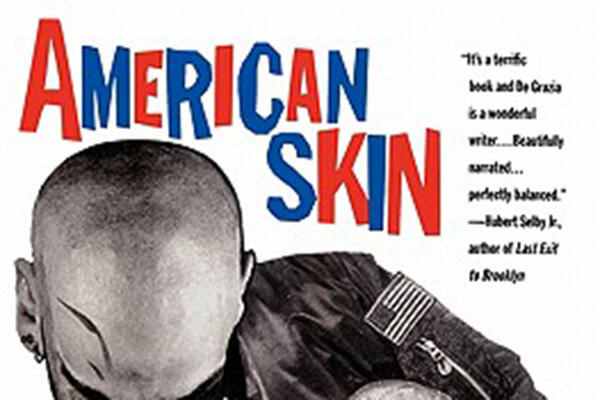
In 1998, Don De Grazia released his critically acclaimed debut novel American Skin. It is described as an American classic and a powerful coming of age novel. The thesis-turned- popular-book process was like a recipe. All De Grazia had was a dash of luck, a cup of talent and 75 dollars to make this delicious book (I’m a bibliophile, I can’t help it). After receiving several rejections, Don De Grazia spent his last seventy-five dollars to make one more submission and the recipe finally paid off. If I’m being completely honest, I had no idea this book existed until a few months ago. It’s also something I wouldn’t normally pick off the shelf, either. The title screams American Nationalism and the cover features an illustration of a skinhead. In my opinion, skinheads are an acquired taste and a taste that has yet to evolve for myself, but I was pleasantly surprised. American Skin threw me into a world of bomber jackets, Dr Martens and bald gang members sticking it to the man, but I also became enthralled in a story that is so much more than that. It’s not everyday that you find yourself in a multi-racial skinhead group. Then again, it’s not everyday that you find a gang of multi-racial skinheads. However, in American Skin, this is exactly the case. Set in the late 1980s, 17-year-old Alex Verdi’s life is turned upside down when he discovers the police going through his school locker. Alex then finds out that his parents have been arrested for selling marijuana, his sister has been taken into state care and the police want him for questioning. Unable to return to his family’s farmhouse in Illinois, Alex flees to Chicago where he encounters the local club scene, the skinheads that inhabit this area and the issues that come with the skinhead lifestyle. Taken under the wing of Tim Penn, the leader of the anti-Nazi skinhead group, Alex Verdi becomes immersed in his new “radical” lifestyle. He shaves his head, falls in love with a skinhead girl named Marie and begins fighting a white supremacist group called the “Swazis.” As everyone is well aware, a town night in Dunedin is nothing without a fist pump, sometimes to the gut and sometimes in the air. The same can be said for Alex as one brawl results in major consequences for himself and Tim. The two of them are forced to join the army and, once discharged, Alex decides to leave his skinhead life for something better while Tim becomes a drug dealer. Alex travels to Evanston, in the hopes of going to university, but his plan goes awry. Although things don’t work out as expected, Alex’s journey uncovers some family secrets and personal revelations are made. American Skin is a first-person fictional memoir. Alex often seems to be reliving his past experiences with Tim Penn and his gang of skinheads rather than reflecting upon it. Despite this, though, there’s an obvious maturity that Alex seems to have gained when he is able to distance himself from the memories. De Grazia’s straightforward writing style and the quick pace of this novel made me feel as though I was embarking on this journey with him. Sure, if I was him I probably would have gone down to the police station and turned myself in but, hey, that’s why no one has written a novel about me. The different life that Alex Verdi leads is why this book is interesting. As the reader, you’re put in experiences and moments that are uncharacteristic of you, but that’s what makes American Skin a great story and worth the read.
While the best-before date on food packaging may be a mere guideline, the best-before date on clothing is as mandatory as the Crimes Act 1961. Unfortunately, men are notorious for overestimating the length of time that they may wear a single item of clothing with pride. We at the Observer advise all Dunedin lads to engage in a ceremonious pre-Winter wardrobe bonfire so as to make room for the following “new essentials” that each and every man should have. The Peacoat It is time to rid yourself of that rain jacket that your mother gave you as a parting gift circa first year. Not only do these feel like tarpaulin, but they provide no warmth whatsoever. The Peacoat is the gentleman’s coat, perfect with good jeans and a scarf. Our favourite is the Huffer peacoat in navy. The Drop Crotch Your grandmother may ask what you’re hiding in there, and they may have become synonymous with the term “poo-catcher,” but the reality is that the drop crotch dominates. You may struggle with adjustment issues when walking, and investing in non-chafing underwear is a must, but when you pull them off you will undoubtedly look slicker than Harvey Specter. We advise you peruse the Commoners range. The “Lifestyle” Sneaker It has been argued that wearing “sneans” should have been included in the list of crimes against public welfare. However, like the number of health science students between first and second semester, things change. The lifestyle sneaker is making a comeback bigger than Bill Clinton post-Monica Lewinsky. Leading examples include New Balance 574s and Nike Roshes. Together they are likely to spark the next debate of the century, alongside baked beans or spaghetti and Mac or PC.
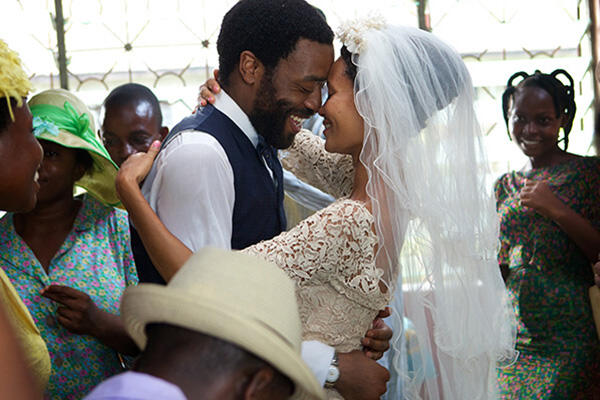
Rating: A I do not know what war means. I say this with as much education on the subject as the average person. I understand it in theory, but emotionally – the reality of being prepared to flee for my life at a moment’s notice, an air raid bomb about to go off next to me, losing my friends, neighbours, the strangers who live on my street – that is as far from my comprehension as East is from West. How lucky I am. This film is incredible. There is no attempt by the director to shock me into understanding what the grotesque brutalities of war look like, which from my experience only results in an eventual desensitisation as you gape at the limb dangling by a sinew from some poor soldier’s socket. Instead, Half A Yellow Sun opens the looking glass into the lives of people, relatable people, living through the 1960s civil war that ravaged Nigeria. The characters are privileged, educated and wealthy. Their lives are “western”: they have English accents, drive English cars and wear mod clothes. The first half of the film is about their stories, their romances and betrayals, families and careers. The plot follows the romance of Ollana, played by Thandie Newton (The Pursuit of Happyness) and Odenigbo (Chiwetel Ejiofor, Twelve Years a Slave), Ollanna’s twin sister Kainene, and her lover Richard. Only once you have come to understand these characters as complete people are you really able to feel the gravity of the situations that they face in the horror of war. I have never seen a film achieve this so well. To say that this film affected me would not do it justice. Half A Yellow Sun not only addresses the seriousness of human relationships but also puts into proper perspective love, trust and family, with war, horror and atrocity. “There are some things that are so unforgivable that they make other things easily forgivable.”
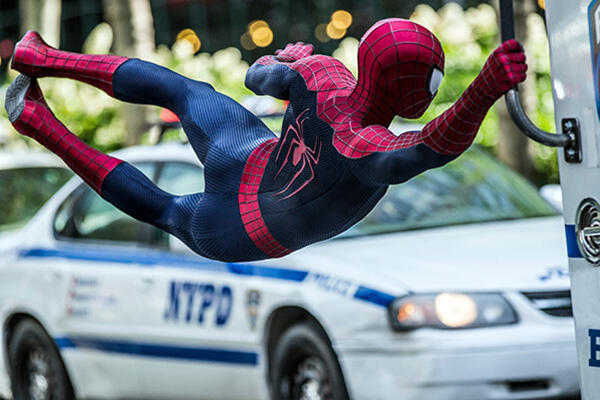
Rating: B+ After Toby McGuire successfully managed to flush the Spider-man franchise down the toilet in 2008, I was grateful to see the character successfully rebooted in 2012 with The Amazing Spider-man. Thankfully, director Mark Webb has continued to grow the Spider-man character and franchise with his sequel, though it is worrisome to see some of the same missteps that led to the previous trilogy’s demise creeping in. The most obvious of these is the convolution of the script. Like Spider-man 3, The Amazing Spider-man 2 has too many villains within one film. Each of these new characters has to be introduced and then given enough screen time to explain their journey to becoming a villain. But with so many in one film there is not the time to develop these narrative arcs enough. Consequently, you can never truly invest yourself in any of their stories. Thankfully, despite this convolution, Webb managed some degree of success in tying all of these new villains’ stories together. But, still, it’s concerning to see the franchise making the same mistakes as their predecessors. Despite the underdevelopment of the new characters, the success of this instalment comes from the continued development of Andrew Garfield’s Peter Parker and Emma Stone’s Gwen Stacey. Both of these actors gave performances of a quality that hasn’t been seen in superhero films since Nolan’s Batman trilogy. The real strength of their performances comes from their electric chemistry. The palpability of their emotion for one another in this movie once and for all puts to bed the idea that actors with real-world relationships cannot recreate those emotions on screen. This, coupled with Webb’s experience with romance films, made every dialogue scene equally as engaging as the action. In general, the action was excellently executed. Some of these scenes even played on my mind for days afterwards, due to their flawless execution and impact on the film. Despite a few areas of weakness, The Amazing Spider-man 2 is a superhero film that offers a level of performance and chemistry normally absent from this genre.

Rating: A- Cheating, lies, and a whole lot of mischief goes down in this highly-anticipated chick flick of the year. The Other Woman tells the story of Carly (Cameron Diaz), a high-rolling lawyer in NYC who thinks she’s found the man of her dreams in smooth-operator Mark (Nikolaj Coster-Waldau). However, in a strange turn of events, Carly is plunged into a situation she has no control over. It turns out Mark is a complete scumbag. He has a wife, Kate (Leslie Mann), and a whole bunch of “other women” on the side. When Carly, Kate and another “other woman” Amber (Kate Upton) decide to team up to bring Mark’s life to utter ruin, the audience is dragged along on a journey of destruction, recovery, but, most importantly (as always), friendship. This film is hilarious, full stop. It has the right amount of laughs whilst still emphasising the serious mantra that cheaters never win. While seemingly labelled as a Cameron Diaz comedy, I believe the real star of the film was Leslie Mann. Her ability to play a woman so distraught over her cheating husband, so desperate for friendship, and so set on revenge, was intriguing. Also, her ability to “cry on the inside” was certainly something the audience was able to laugh on the outside about. However, have the feeling you’ve seen this movie before? Well, you’ve probably watched John Tucker Must Die (2006), a comedy about a gaggle of girls getting back at another scumbag of a guy. Essentially, this new film shows the same themes all over again but with more “mature” women. Minus points for unoriginality. Another downfall – Nicki Minaj?! Her character seemed more of a gimmick than anything, and while I admire her sass, it just didn’t seem to fit in with the flow of the film. Yet despite some flaws, this movie truly is fabulous. The journey of “the lawyer, the wife, and the boobs” will certainly plaster a smile all over your face.
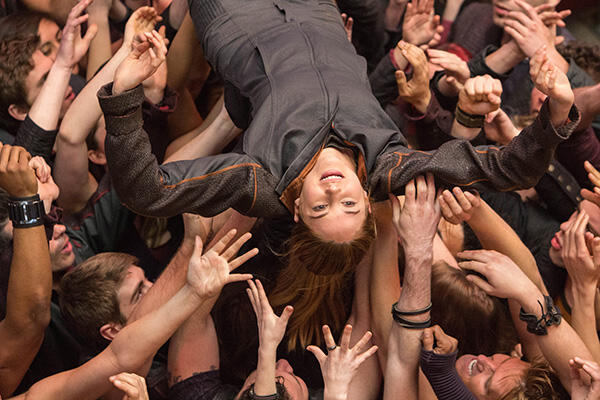
Rating: B+ I have to admit, my expectations were not soaring for Divergent, as all the pre-release chatter seemed to indicate it was some kind of poor man’s Hunger Games but with way more leather jackets. Although this is partly true (so many cows died in the making of this film), I have to say I was pleasantly surprised with this sci-fi-meets-revolution-meets-tween-make-out film. Divergent is based on the book of the same name by Veronica Roth. The story paints a picture of post-apocalyptic Chicago that, in order to keep the peace, has divided its residents into five factions according to their strengths – honesty, intelligence, bravery, selflessness and peacefulness (Where’s creative? Who’s designing all the cute post-punk leather jackets?). Disaster strikes when the our leading lady, Beatrice (Shailene Woodly), fails the test that determines what faction one should belong to, meaning she does not fit a category but is –wait for it – DIVERGENT! As well as being hunted for her non-conformity, it’s suddenly in her hands to save her society from fascism. Naturally. This is not the kind of filmic game I usually hunt but I couldn’t help myself: I was enthralled. Even though I knew they were not going to kill or maim our protagonist with a sequel already in the works, I was worried for her safety, genuinely had no idea what would happen next and even shed a tear, for God’s sake. And without giving too much away, it was refreshing to see character types who aren’t usually seen wielding a gun, doing just that. Sure, it felt a lot like The Hunger Games, but it borrowed all the best stuff – the social commentary, and the badass female protagonist and “little guy” taking down the system. Unfortunately, it also inherited The Hunger Games’ desire to have the leading lady (at every available interval) pashing a guy who could easily moonlight as an underwear model. I for one eagerly wait for the day when films about young women “finding themselves” exclude her getting laid. Until then, we have Divergent. Which, all things considered, is pretty damn watchable.

Winter is coming! Therefore, so too is pudding season! The smell of rice pudding baking in the oven reminds me of my childhood, but also of my first year at Carrington. I swear the abundance of rice pudding there was fully responsible for my fresher five. I spent the Easter weekend helping my nana move into a smaller apartment within her retirement village. She no longer has a kitchen, which, as sad as it is, we all know is for the best. The contents of her kitchen got packed into boxes and transported away. I was lucky enough to inherit this beauty of a casserole dish. Now, I am not going to sugar-coat this. Nana was never a good cook. By some miracle my own mum is one hell of a foodie. She definitely didn’t get it via the maternal line, that’s for sure. Nana was the roast-meat-and-three-veg kind of woman. She boiled her greens until they were grey. Nana does, however, have two redeeming features tucked into her culinary belt: shortbread and baked rice pudding. I am so pleased to be able to make this for you in her old ugly pot. Not that she ever made pudding in this particular pot, but you get the idea. I remember when we all used to descend upon Matamata to visit her and the roast beef and grey veggies were followed by a delicious steaming dish of rice pudding. Dad and I used to, and still continue, to fight over the skin that forms over the top. This stodgy, sweet delight is a winter warmer for sure. Baked rice pudding couldn’t be easier. Put all the ingredients in an oven-proof dish. Stir. Bake. Stir every half an hour. Dollop jam over the top. Consume. Boom town. Yes, I dollop mine with jam. IngredientsServes 4-6 5 tablespoons short grain rice (a calrose will suffice also) 3 tablespoons white sugar 3 cups milk (I used 2 cups trim 1 cup full fat) ¼ teaspoon vanilla bean seeds (or a splash of essence) ½ teaspoon cinnamon ½ teaspoon nutmeg 1 tablespoon butter Method Preheat the oven to 150 degrees on bake. Take a small oven-proof casserole dish (of at least six-cup capacity) and place all the ingredients in and give it a stir. Pop the dish in the middle of the oven and bake for two hours, stirring every half hour until the milk has been absorbed and the rice has cooked. Remove from the oven and leave to sit for fifteen minutes to thicken up a little more. Serve hot or cold with jam, slivered almonds or whatever your heart desires. Enjoy!

Rating: B There are a ridiculous number of simulation games. Some of them you would have heard of and played, such as The Sims, and maybe even games such as Roller-coaster Tycoon or Zoo Tycoon. For the more hardcore simulation fans there are even games such as Microsoft Flight Simulator, which is so realistic that, essentially, all you do is slightly pull a joystick back for twenty minutes and then push it forward for another twenty. Now, these games are generally not blockbusters, with the notable exception of The Sims, but for some reason these games do absurdly well commercially, despite generally being critically panned. What’s even more absurd is that it’s not just these notable titles that do well, but really weird, obscure games like Euro Truck Simulator do too. Most developers just ignore this niche sub-section of gaming. However, the truly ingenious ones … parody the shit out of it. This, in a nutshell, is the charm of Coffee Stain Studios, a studio only previously known for making the Sanctum games. Now, however, they are recognised as the hilariously demented minds behind Goat Simulator, a game that is exactly as it sounds … a simulation of a goat. Now, before you write this game off, keep in mind that this is one badass goat! The studio describes Goat Simulator “like an old school skating game, except instead of being a skater, you’re a goat, and instead of doing tricks, you wreck stuff.” The game first emerged as a joke prototype when the team participated in a one-month Game Jam. After posting videos of the prototype to YouTube the team was inundated with requests to play the build. And hence they decided to finish development and release it. Now let me say it felt overwhelmingly absurd to apply a grade to this game considering what it is. However, this is a review and as such I have to determine to what degree of success the game executes its intended function. In Goat Simulator’s case, that function is to provide gamers with an absurd experience in which you play around with the physics of the game, while also exploring the map and discovering the secrets and adventures that it holds. In this regard the game is only mildly successful. However, as a parody of gaming itself and all of the ideas we take so seriously, Goat Simulator is a hilarious and inspired game that is worth playing just to say that you have. You start Goat Simulator, as you would expect, as a goat in a goat pen. However, after a few moments of experimentation you will discover that you have a few special abilities. First off, you can head-butt things, generally reducing them to rubble or firing them absurd distances. Secondly, you have the ability to lick things. This causes your tongue to stick to the object you licked and drag behind you. These two abilities give you license to cause an unprecedented amount of mayhem in the town around you. Every object you destroy or interact with gives you a score and multipliers, which, even though chasing scores isn’t my idea of fun, I can see being very addictive to some players. My pleasure in this game came from the exploration aspect. The world is populated with objects and events to find and explore. For example, climb the goat house to go inside and enter a castle’s throne room, filled with goats bowing to you. Sit in the throne and you become King of the Goats who can, with the press of a button, make goats fall from the skies around you. These kinds of events augment your goat, giving you fun extra abilities such as this, or changing the way you interact with the world. There are also several objects that you can equip and use, such as a jetpack that, exactly as you would imagine, allows you to fly around. In many ways this game is incredibly unpolished. However, spend a couple of minutes with it and it quickly becomes apparent that this is intentional. Physics bugs and glitches are one of the game’s greatest pleasures, which allow you to manipulate the world around you and perform outrageous, hilarious feats. One of my best moments with the game was head-butting a gas station, and the subsequent explosion blowing me so far that I left that map and landed among the background settings. When you are playing the game you can look in the distance and see buildings in the distance – buildings that are no more than set dressing and yet there I was wandering among them … as a goat. This is not the best game in the world, but it wasn’t intended to be. It’s an absurd game that is a blast to explore and a hilarious experience to share with friends. But its greatest function is just to remind you that games are supposed to be fun, and shouldn’t always be taken so seriously.
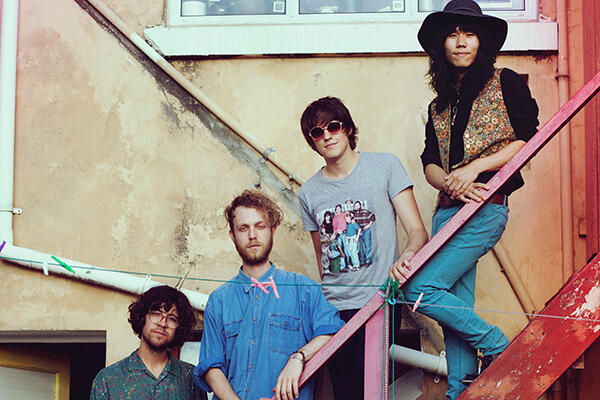
Auckland powerpop group Sherpa hit ReFuel on 30 May. With their new album Blues and Oranges set to be released soon, Adrian Ng caught up with frontman Earl Ho. You released your previous album, Lesser Flamingo, in 2012. What have you guys been up to in between then and preparing for this new album? We’ve all been trying to find the balance between working full time and doing something creative. Staying up late making music and going to work really tired, basically. Once we had the material we went into pre production and carved out the song stones into little stone sculptures. Some time was spent in doubt and frustration chasing the tail of perfection but it got much easier when we stopped chasing. The music video for “Love Film” makes quite a few references to the French New Wave. Can you tell us about the song and the production of this video? We’re all big fans of Godard but in terms of the video all credit goes to the director Marc Swadel. He came up with the idea; he was going to Paris to live at that point so we were very lucky to work with him. In terms of the song, it’s an ode to the activity of filming and capturing beautiful moments. I wrote it in university and it sums up what I was studying, really. I was doing a conjoint degree of music and arts. In music the assignments were to write songs, and in the film papers I had to watch and study movies, and funnily enough and serendipitously Godard’s Breathless was one of the films we were studying. The other main ingredient was that there was and still is a girl to which that song is dedicated. Your video for “Quittime” also references another artistic movement, this time citing surrealist art. It’s a beautiful song and video. What steered you into making those decisions visually? I think you’ve chosen the right word in “steered” because that is all we did once again. We looked through a few treatments for the video and a lot of them were really great but just lacking the type of correlation we wanted between the song and imagery. Then I remembered a production company, which turned out to be Ready Steady Studio, from a couple months back for a different video they pitched on. I remembered that they used the film The Holy Mountain, by Alejandro Jodorowsky, as a reference. If anyone reading this has seen the film, you would know that this film is totally out of this world and one of the most visually and conceptually stunning films ever made. Once we reached out to these guys we were immediately on the same page and they filled in all the gaps and they came up with the concept very quickly. Once again we owe all the credit to the director Misma Andrews and producer Jacob Perkins and the rest of their crew, who made all the visual decisions. I just had to get into a bathtub with some fish and walk around the desert. Blues and Oranges is a very visually striking title for an album. I like it. Choosing album titles can be frustrating. Did the name come easy? Thanks for liking the title! The title came a while back, way before we started to record, in a conversation with my girlfriend. At that point we knew her and I knew it was a phrase that carried some weight just because of the multiple meanings it could hold. She actually then subconsciously painted our album cover, again before we even had an album, which was a portrait of a face with the main colours being blue and orange. This painting, which I bought, had been hanging in my room looking right at me and one day everything fell into place and we superimposed a rotting orange behind the face and there it was, the cover for our album, as well as the album title. In what seems like a period of frustration, umming and ahhing over what to call our album and choosing the album cover, turns out it had already been written and done. So the name came very easily. What can we expect from the upcoming album? Is it a shift in direction or more of an evolution in sound? I would agree with it being an evolution of the sound, for sure. To me it doesn’t seem like too much of a departure in a way that there are similar themes and they could almost be parts one and two of some kind of trilogy. Right off the bat one thing that is different was just more consideration with the lyrics. In Lesser Flamingo, most of the lyrics were first drafts. That is not to say that this is not a valid way of writing lyrics, because the first time may be just what you need, but this time around there was a lot more thought. Sonically we have definitely put more emphasis on synthesisers and we got obsessed with the sound of the 808 drum machine on our drummer’s SPD drum pads, so expect a lot more low-end. Besides those factors we are using the exact same instruments. So in that way it’s like the debut album is a Charmander turning into a Charmeleon. It shares the same DNA but looks a little different, a little big bigger, had a few more experiences, and logically it would make sense that it would be better, too. Is songwriting quite a collaborative process? Has this changed over the years or has the process remained pretty much the same? Up until this album I had been the main songwriter, whereby I would bring the songs in and we would arrange the songs together, but this time around Ben Jack (the other guitarist) really blossomed as a fantastic songwriter and it is his songs that open and close the album, and we collaborated on a couple, too. There was one moment during the writing process where Ben sent me a demo of a song he wrote called “Sunrise” and it was really awesome and blew my mind. With that came a bit of shock as it brought in my competitive side, which I think was exactly what I needed. So straight after, whilst still inspired by Ben, I wrote a song called “Die Jung.” I demoed it quickly that day and sent it to Ben and in that moment he penned the song “BZZY,” which he then sent to me and I began to add the melody and lyrics. It was a pretty magical day and I would love for more of these moments to happen for sure. Your live sets are renowned for being energetic and fun. I’ve been to one of your shows so I know that to be true. Is it hard to maintain such a high energy while playing, especially when you’re touring? Or is it just a rush as soon as you get on stage? I would say yes, it is definitely hard to exert a lot of energy in your physical gestures as well as having to play an instrument and sing. But like anything, with practice, it gets easier. The adrenalin of playing live is hands-down the best drug ever and in my experience even if I’m feeling like absolute shit before the show, when we start playing, the adrenalin has never failed to come. Any fond memories of playing in Dunedin? Yeah, recently we came down and played the Chick’s Hotel with Clap Clap Riot and after their set we got up on stage with them and did a very rowdy cover of Twist and Shout by The Beatles/The Isley Brothers, which was pretty warmly appreciated. Then soon after, thanks to the wonderful Jon Bakos, we did a late night radio show at Radio One, albeit a little intoxicated. Which was hilarious to us but maybe not so much to whoever was listening.
Ought - Habit “Habit” is the lead single by Montreal-based band Ought, from their debut album More Than Any Other Day. A mixture of art-punk, ‘90s looseness and classic emo tendencies. Singer Tim Beeler sounds like Ian Curtis singing a Pavement song. In a good way. Alex G - Hollow “Hollow” is the first single from upcoming album DSU, soon to be released by the wonderfully eclectic Orchid Tapes. Falsetto vocals, mixed with beautiful crunchy guitars and coated with reverb. A promising introduction by underground pop connoisseur Alex G. Monster Rally - Sunflower Monster Rally is Ted Feighan, a producer and artist based in Los Angeles. “Sunflower” is a new track from an EP of the same name. A collage of beautiful tropical sounds and chilled out beats, delivered in a beautiful layer of antiquity. Baths - Fade White The second single from Will Wiesenfield, aka Baths, from his upcoming EP Ocean Death. “Fade White” comes in noticably more stripped back and melodic, compared to the more visceral lead single “Ocean Death.” Wiesenfield’s vocals are clean and clear, sounding pristine over almost angelic instrumentation. A nice and mellow offering from the Los Angeles producer. Shamir - I Know It's a Good Thing Las Vegas lo-fi, soul pop musician Shamir returns with another infectious track. Built over a simple stomp beat and a propulsive bass-organ, “I Know It’s a Good Thing” has all the subtle hooks and dynamics that feature in a good pop song.

Based in Dunedin, Opposite Sex combine noise-pop and no-wave elements by blending percussive bass playing, furious drumming and menacing guitar work. This self-titled debut was recorded when the band first moved down from Gisbourne, and features the noodly guitar playing of “Fergus.” 13 tracks long, and all well written, it’s a bargain at $9. You can download Opposite Sex from oppositesex.bandcamp.com

Can you describe what your current role as Editorial Assistant at VICE involves, in both its local context and globally? I was actually bumped up to Editorial Coordinator last year so my job involves a few facets. I manage the website, monitor traffic, commission and edit pieces, write them myself, and generally oversee the day-to-day editorial things. Our Editor is also our creative director and is a pretty busy dude, so often he’ll give the direction and I’ll work out how to put it in place – how to cover certain topics better, grow contributors, or cover an event. How did you come to working at VICE – in other words, can you describe your own background? When I finished university I freelanced and travelled for a while, and then I came to VICE as a 22-year-old for a three-month internship. I think timing-wise I was lucky because it was at a point where a lot of things were changing and roles were growing. My biggest piece of advice for interns is to take on as much work as you can physically handle; don’t say no to anything. Firstly, people like you, but my whole goal was to make sure that when I finished up, people would be used to my help and wouldn’t want to go back to things without me. Saying that, I did take off travelling for six months when my time was up. I got an email in Mexico asking me to come help them out when I was home and the rest was history. Oh, another piece of advice: if you have an office that’s big on lunches – always go if invited. I love the interns that come to lunch. Could you describe any unique or bizarre experiences (or content) that you’ve come across? What opportunities have come out of working for publications like VICE? It has given me access to people and stories I would have struggled to get otherwise, be it interviewing scientists, cult members, or photographers I look up to. A lot of the stuff I end up writing about is unique. When I was in university I probably wouldn’t have guessed I’d have written so many stories about aliens and weird animal news. What other projects are you currently involved with? I run a site called Good Good Girl (www.goodgoodgirl.com) that’s all-female curated content. I try to see it as a 21st Century feminist meeting place. P.S. we’re always looking for new contributors! How do you separate your own ethical values with some of the more questionable (or ethically ambiguous) content that you come across? I don’t. A lot of people assume VICE is a loose moral environment but it’s not. The magazine is very liberal, but so am I. Most of the stuff we cover about drug laws, or police brutality, etc. reflects my own opinions. I’d never write or publish something I don’t believe is ethical. I constantly get pitches that would get a lot of attention but I feel are sexist or offensive in some way and I always pass. I don’t care if something gets a million clicks; if I think the message is damaging, I don’t want it. Although to be clear, that doesn’t mean I won’t run different opinions to mine – I don’t care whom you vote for, but I care if you’re mean-spirited or vile. As an insider, do you have a position on the print media versus digital debate? I think the digital revolution is the most exciting thing since the printing press; it democratised the media and meant that young people can write for any publication they like and stand next to their peers without having to move overseas or make other sacrifices. It pains me that print is declining but it will never die. All writers still get a huge rush from being published in a print publication. Sometimes I also think that the competition means people need to be better and more innovative to survive, which is always a plus. What do you see yourself (ideally) doing in ten years? Why this? Oh man, ideally my site would finally be making money to pay my rent and contributors. But perhaps editing and managing my own small team somewhere. Could you list three cool things for visitors to do in Melbourne? Check out the Heide Gallery and see if someone can give you a little bit of history about the site and Sunday Reed, one of my personal heroes. There is too much food to mention, but I’m lazy and live in Northcote so I’d say get a pizza at Pizza Meine Liebe and duck next door for a drink at Joe’s Shoe Store – best pizza and bar in town if you ask me. Working at i-D (I coordinate that as part of VICE) it’s probably not surprising that I’m pretty clothes obsessed, and Alice Euphemia stocks all my friends’ and my own favourites so check them out. Oh, and if you have any money left, Monk House also rules.


