Carys Goodwin
Politics Editor
Articles by Carys Goodwin
89 articles found. Displaying page 1 of 8.
-
Features
 Issue 17 24/07/2016
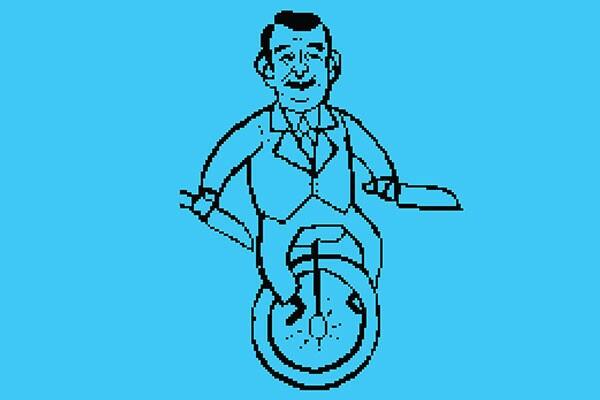
Ted Cruz is the Zodiac Killer
The year was 2016. The month, February. And against all rhyme or reason, a poll released by Public Policy Polling confirmed the worst: 38 percent of Floridians genuinely believed Ted Cruz could be the Zodiac Killer-a serial killer who operated in northern California in the late ’60s and early ’70s.
-
Features
 Issue 14 29/05/2016
Personal Statement
When I picture graduate school selection panels, I picture the iconic scene in every genre of movie from Billy Elliot to The Shawshank Redemption – a large, old hall or room; a long desk, with a row of glasses-wearing middle aged examiners sitting behind it; and a single chair, placed comically far away from the desk, destined for the applicant.
-
News
 Issue 27 12/10/2014
Critic tackles election year one more time
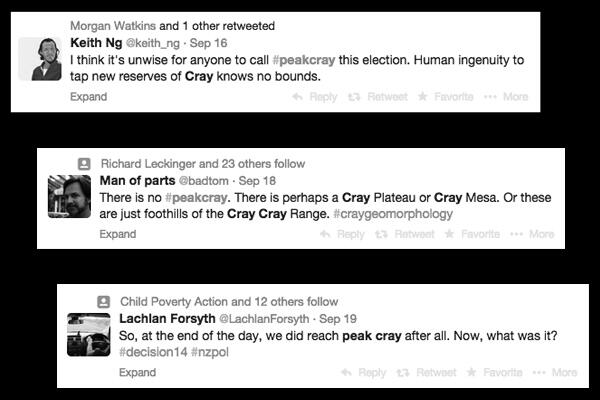
This is it. The final Critic of the year. A year of the most tumultuous election activity we could have asked for; a year of the weirdest gaffs; and a year of the most frustratingly normal results. It got so strange that Twitter began to wonder when we’d hit “peak cray,” and a simple search of the term shows that the hunt for peak cray tapped into the philosophical side of punditry. So, when did we hit peak cray? Watching the election evolve as it did means it’s difficult to make a judgement – the three months of hardcore campaigning were full of ridiculous news articles and even more ridiculous politicians. To give the peak cray award would be to assume a single event is more cray than another, when the true crayness, I think, is the sum of the cray parts. Let’s borrow a metaphor from the right wing, and consider peak cray a three-headed hydra. The body would be Dirty Politics. Whether you vehemently deny it or consider it an example of the abhorrent behaviour we’re expected to tolerate, it formed the basis for much of the cray to come. The raid on Nicky Hager’s house last week, a disgusting affront to his journalistic rights, shows the National Party is still trying to slay the Peak Cray Beast forever. The arms would be Kim Dotcom and the Moment of Truth. Each were designed to call attention to the corruption within our government, but each squeezed the New Zealand populace just that little bit too hard; and despite the arms digging their nails into Te Tai Tokerau, Kelvin Davis broke their grip. The first head would be Judith Collins. It is not in every country that a Justice Minister resigns right before an election for gross misconduct, but we were lucky enough to watch that event transpire. Slightly rabid and wildly childish, Collins was decapitated early enough that she didn’t cost her party poll points. She was the scapegoat for all of National’s dirty dealings. The second head would be the Labour Party. Despite a positive campaign and a collection of policies that would benefit many who ignored them, Labour just couldn’t seem to dissociate itself from the notion that it was in disarray. An ear on Labour’s head would be TarnBabe67, the fake Twitter account Cunliffe’s wife used to insult those who didn’t support him. The third head would be Eminem, whose appearance on the National Party opening broadcast spurred a bizarre legal case against the government. On Eminem’s head, the nose would be John Oliver, who made fun of Steven Joyce for considering the breach of copyright “pretty legal.” The legs have to go to the bloggers. On the right is, without a doubt, Whale Oil. An off-putting combination of self-righteousness and total cuntery, Whale Oil bears the brunt of the Dirty Politics body. He’s still going, however, and I think there are a few people out there who consider him important. I’m not one of them. The left leg, I’m sorry to say, is Martyn “Bomber” Bradbury. It would be easy to give it to David Farrar, but Bradbury has consistently undermined many people on the left who he was thought to represent. His volatility, in combination with his twitchy “block-them-from-the-website-for-disagreeing-with-me” toe, means he is in danger of ruining the Daily Blog. Finally, there is the tail. This has to be the result of the election – a new country called the Autonomous Republic of North Otepoti, “a collective of households and flats which have declared independence from New Zealand.” Okay. I’m sure I’ve missed a few spots and scars here and there (and I’m sure Colin Craig is a spike along Peak Cray’s back at the very least), but there it is. The Peak Cray Beast, who ravaged our newsfeeds for months, only to keel over and die at the foot of Winston Peters’ election night party. The Peak Cray Beast, whose misunderstood beasty-ness, in the end, undermined all he set out to do. The Peak Cray Beast, who only wanted to be the Princess, but ended up being the Frog. Rest in peace, Peak Cray Beast. Please get your shit together for next time should you choose to regenerate Doctor Who-style.
-
News
Issue 26 05/10/2014
Greatest hits / Greatest shits | Issue 26
Greatest HitThis week we’re going international for the Greatest Hit: to Hong Kong. After a change to Hong Kong elections that would mean only “China-approved” candidates would be able to be elected, students began an intense protest for democracy, storming Hong Kong’s Civic Square. Sometimes it’s good to step back and realise we’re lucky to be democratic, when so many places still have to fight for that right. Greatest ShitGood old Karen Price. The environmental lawyer married to David Cunliffe has previously graced our pages in a Greatest Hit. This time, unfortunately, her story is not quite so great. Last weekend, a Twitter account (TarnBabe67) emerged, attacking users who did not support Cunliffe. Apparently it was Karen Price behind it.
-
News
 Issue 26 05/10/2014
Critic just isn't going to stop tackling election year
At the time of writing, Labour is in turmoil. Once again, they are undergoing a leader selection process that is bitter and catty. The accusations of being “beltway politicians” are coming thick and fast and the spectre of election failure isn’t going away. Even New Zealand’s mainstream media sunk to a new low, with the Herald releasing a Buzzfeed-style article called “13 bizarre things David Cunliffe has said in the past 24 hours.” That, in itself, was bizarre. There are two main contenders for the leadership currently: Grant Robertson and David Cunliffe. Let’s take a closer look. David Cunliffe: Unfortunately for Labour, Cunliffe led their party to the most catastrophic loss they’ve had in almost their entire history, managing to capture the attention of only a quarter of voting New Zealand. But Cunliffe doesn’t think his time has come to an end, and aims to finally lead Labour into power in 2017. He has the support of unions, or something. Most interestingly, the Young Nats have re-ignited their campaign in support of Cunliffe for Labour Leader; take that how you will. Grant Robertson: Last leadership race, Robertson lost to Cunliffe. This time around, however, he considers himself ready. Based in Wellington, Robertson has the support of many of the younger members of the Labour caucus, and he has proclaimed that he “could’ve toppled John Key.” For some, this confidence is off putting; for others, it’s just a case of the ABCs – Anyone But Cunliffe. John Campbell: There is, however, one other potential candidate. Considering the mainstream media has decided to report on Facebook likes, I’ve decided to hedge my bets on an up-and-coming Facebook page: John Campbell for Labour Leader. Confident on camera, charming and willing to ask the tough questions, Campbell is a perfect candidate to lead this splintered party to victory in 2017. Although Labour’s last run-in with a TV star turned out less than successful (sorry, Tamati Coffey), Critic believes this time will be different. Only Campbell can combine true care for the disadvantaged with a winning smile. Only Campbell can be loved enough to appear on our TV screens every weeknight at 7pm. Only Campbell can rejuvenate Labour. A statement on the Facebook page notes, “some have been asking if John has already thrown in his name for leadership. We have it on no authority at all beyond our own hopes and dreams that he is considering it, but is simply awaiting your support.” Please, for the love of Labour, someone start an Avaaz petition.
-
News
Issue 25 28/09/2014
Politweets | Issue 25
Don’t we all. Whoops. Unfortunate. Breaking news.
-
News
Issue 25 28/09/2014
Greatest hits / Greatest shits | Issue 25
Greatest Hit Without a doubt, Greatest Hit this week goes to John Oliver. Oliver is an American comedian who hosts Last Week Tonight, a show that essentially points out all the ludicrous things that have happened around the world. Last week, New Zealand featured! There’s nothing like a bit of international attention to put it all into perspective; Oliver had an enjoyable time mocking Steven Joyce’s flaccid defence of the Nats in Eminem’s lawsuit. “Pretty legal,” noted Oliver, is the same as “pretty dead.” Greatest Shit Kelvin Davis gets this one. Although a number of Labour supporters would’ve been happy he locked out Hone Harawira in Te Tai Tokerau, I personally think it was both damaging and ridiculous. The Nats actively encouraged their membership to vote for Davis, and in combination with Davis’ intense and public dislike of Kim Dotcom, it was enough to give Davis the seat. As a result, Internet-MANA got no seats. I, personally, would’ve liked to see Laila Harre and Winston Peters go head to head.
-
News
 Issue 25 28/09/2014
Critic (still) tackles election year
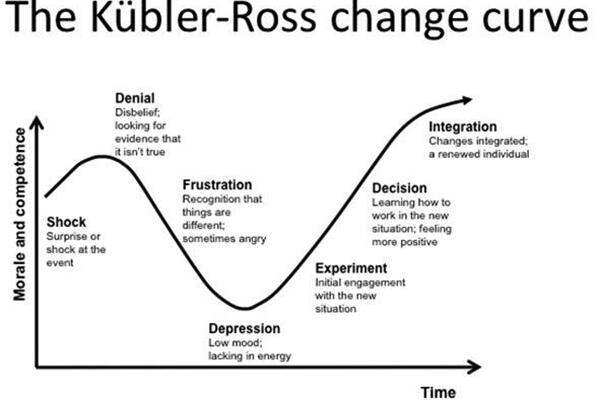
After the initial shock of Election Day, where, for all intents and purposes, nothing changed, have come the autopsies. For the left, whose momentum towards the end came from the revelations about the inner workings of the National Party as much as it did from their own parties’ merits, the result is frustrating. Nandor Tanczos, past Green MP, linked the graph above. While I never got so far in the denial stage to sign the petition for a recount of the results, it was frustrating to see so many people ignore the lies and what is going to happen to our environment in light of a third National government. Moreover, I just couldn’t see how it happened, when support seemed so strong. The question, for many, was “what went wrong?” Thus, the post mortems have come thick and fast, a blend of statistical polling booth analysis and emotional reflections; and an abnormally long Labour caucus on Tuesday that left a pack of journalists outside with only Twitter to comfort them. In reading through the wide variety of interpretations, one thing became abundantly clear: I live in an echo chamber. Beyond the hive of Young Nats, the majority of people I associate with are lefties; much of the political engagement I feed off inevitably comes to the conclusion that if people “understand” or have “empathy,” they’ll vote left. It’s only in the wake of the election that I’ve come to realise how dangerous this is. To be fair, I still believe that my party is the most empathetic and has the most comprehensive policies, but that’s what being in a party is about – this is not a critique of policy or marketing; this is a critique of myself, and others like me, who see progressive politics as inevitable purely because they’re progressive. Being on the right side of history is a thrilling prospect; it brings with it a relentless idealism that assumes our time will come, that people will realise this and jump on board. Well, they haven’t jumped; they’ve stayed on the shore. I took to Twitter to crowd source answers about why the National Party gained a much higher proportion of the Otago vote (37 per cent at the University polling booths, exclusive of the extortionate number of special votes, which haven’t been counted yet) than I anticipated; especially given the plethora of resources that indicated the left is better for students, women, the climate, you name it. Interestingly, this attracted David Farrar, who, unlike a certain member of the Young Nats, hasn’t blocked me on Twitter after my Nicky Hager article. The discussion generated two distinct factors, both of which I found useful and had suspected previously. First, the simplicity of the National messaging and the streamlined nature of the right-wing campaign in combination with a right-leaning media meant the YNs were easy to absorb for non-political students. If you sit on the right, the imagery is pure and clear: blue. The intensity of the right wing focus on voting for National was all consuming and probably effective. The second factor is the plethora of voting information that saturated the political sphere for months before the election. There was guide after guide, group after group, all providing reasons why voting for the left is better; but very little of that energy was dedicated to encouraging people to do as such. In its breadth, this information probably became white noise and off-putting to those who just didn’t care. While the raucous celebration of progressivity got louder and louder for those of us involved, a number of students fell through the cracks and we didn’t notice. One of the YNs responding to my Twitter question noted, “it indicates that student politics is not representative of students, and majority of student voices are passive.” All of the ruthlessly nonpartisan campaigns and analysis groups appealed not to the non-voter, but to each other. Thus, the young and left echo chamber was born. It also points to a wider issue in the way the left assumes informed voters will vote left. Much of the energy of lefties was spent, this campaign, on education; the assumption being that if the facts are hung out in full view, people will come to the “correct” conclusion. As we’ve seen from this election, this just isn’t the case. Providing analysis is, of course, an incredibly important activity. Educating students and wider New Zealand should undoubtedly be the focus of some election groups, as no one should ever enter the polling booth uninformed. Where it becomes problematic is where you add party lines. The conservative youth didn’t campaign on educating students, their message was clear and simple: vote National. To be honest, it has only been the progressive student groups who have focused on educating their peers; thus drawing energy and manpower away from political groups who would’ve undoubtedly benefitted from their help. George Lakoff, an American professor of cognitive science, has long since criticised the progressives for framing and campaigning poorly. He argues that in order for the left to get back on track, what must happen is “the abandonment of argument by evidence in favour of argument by moral cause; the unswerving and unembarrassed articulation of what those morals are.” According to Lakoff’s analysis, if the New Zealand left are to draw in the students and the apathetic, we can’t rely on the evidence-based resources that we did this campaign; and rather than pointing to a column on a graph that says Internet-MANA is strongly for students on the assumption that someone will absorb it, there needs to be the ruthlessly on-message intensity of the Young Nats’ campaign, however cultish it can seem from the outside. Lakoff further notes, “political ground is gained not when you successfully inhabit the middle ground, but when you successfully impose your framing as the 'common-sense' position.” If nothing else, this might help to explain why New Zealand First’s “It’s just common sense” resonated with enough of the population to gain nine per cent of the vote. In all honesty, it’s a catch-22. The job of educating students politically is one of the most important there is; but if it’s mainly initiated by people who’re members of Labour or the Greens, that leaves said parties with a substantial amount of their youth membership unwilling to express their party lines. If politics is as simple as popularity, it’s necessary that these parties seem popular. Perhaps, after all our effort, it comes down to this: people don’t want to be told how to make up their minds; they want to be told who to vote for.
-
News
Issue 25 28/09/2014
Proctology | Issue 25
All the Halls of Residence are now on alcohol ban, in preparation for the exam period. The Proctor notes, “This doesn’t mean their residents will stop drinking [but] it does seem to mean they will buy vast quantities of alcohol and sit in gardens and parks and drink it there.” The Proctor does not seem to agree with this policy though, saying that this ends up with students “peeing and breaking shrubs” at the local parks and gardens. He suggests, “It’s perhaps a good idea to forget about the alcohol and study and sit the exams.” The Blue Penguin Society has been cleaning up debris in the Leith River. “Young girls and old men” have been cleaning out the river, which contains mostly rubbish from a lot of flats on Leith Street Central. Campus Watch has visited all the flats and asked them to be considerate because they are “strangling penguins and things with your plastic bags.” A group of lads walking along Castle Street decided to place motor scooters on top of cars. The young women who owned the scooters jumped on their scooters and “raced after them and gave [the hooligans] a good description of their intelligence and hereditary.” They then passed on the delinquents’ names to Campus Watch. The Proctor says that they are now saving their money to pay a $150 fine and there will be compensation and apologies to be made. The Proctor advised students not to go behind the bar, steal a bottle of spirits, and then run on the dance floor and down the bottle. A student “got leapt upon by a large angry man.” The large angry man was security. The student was called upon to the Proctor and will be fined. The Proctor recently advertised for a new Campus Watch patroller for the academic year and, after receiving 93 applications, said he was “interested by the number of people who want to work with us, or just people wanting a job.” Campus Watch is also getting a new control room. It will be a “state of the art” centre, completed within the next couple of weeks. The Proctor does, however, assure students “it won’t be up to the standards of an emergency response centre.” Critic advises students, in the case of an emergency, to dial 5000. Unless it really is an emergency, in which case 111 will do.
-
News
 Issue 25 28/09/2014
Gecko geeks and preserving the peninsula
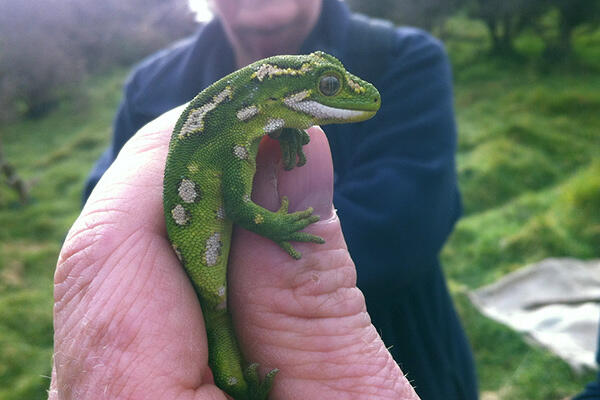
The Jewelled Gecko is one of Otago’s treasures. The lively green reptile is so rare and valuable that the location of its conservation sites cannot be disclosed for fear of eager poachers. Carey Knox, a herpetologist for EcoGecko Consultants, says the markings along their backs are like fingerprints, making each gecko unique. Knox works with the Department of Conservation (DOC) and Save the Otago Peninsula (STOP) researching the geckos and revitalising the natural landscape. There are over 100 species of lizard in New Zealand; 85 per cent are threatened or endangered. The jewelled gecko found in Otago and Canterbury varies in colour and pattern, but along the peninsula they are found in shades of lucid green and patterned with yellow, brown or white patches or stripes. With a price tag in the thousands on the European black market, the preservation team are hesitant to welcome newcomers to the area. Lala Frazer of STOP is hopeful that a recent change to the Convention on International Trade in Endangered Species of Wild Fauna and Flora (CITES) will repel prospective poachers. Raising native green gecko species from Appendix III to II allows poachers to be eligible for prosecution even once they have left New Zealand. Further, a Members Bill introduced by National MP Jacqui Dean in 2013 entitled the Conservation (Natural Heritage Protection) Bill has increased penalties designed to protect wildlife. Knox’s group Gecko Ecology and Conservation Otago (GECO) has become a way for enthusiastic science students to get up-close and personal with the peninsula. Frazer could barely contain her pride at having a group of enthusiastic youths continuing STOP’s work. The struggle for Knox, STOP, and the peninsula is funding. While donors sponsor many of New Zealand’s native bird species, most lizard species live under the radar. Conservation efforts are at the mercy of DOC’s tightening budget, an issue that Green Party MP Eugenie Sage speaks out against. “[DOC] is investing more in community partnerships, but for these to work, there needs to be more technical support. Funding cuts are stretching the resources,” she says. Until the funding can be increased, Knox’s next gecko mission is in the Catlins, where he has the chance to scope out the nationally endangered Southern Forest Gecko. Due to the species being hard to spot, Knox is testing new methods of detection, including an innovative foam cover attached to trees, and hopes to discover new populations. The world of lizard research and conservation is remarkably underground given the number of native species New Zealand has at its disposal. Despite the potential stumbling blocks, there will continue to be a team of dedicated gecko enthusiasts committed to the little-known world of the Jewelled Gecko. They welcome fellow lizard lovers – if you can find them, that is.
-
News
Issue 24 21/09/2014
Politweets | Issue 24
Whoops. 23.5. Might be a good idea, John. Yes. Haha.
-
News
 Issue 24 21/09/2014
Greatest hits / Greatest shits | Issue 24
Greatest HitThis one’s really easy this week. By the time you read this, the election will be over, and I’ll be able to return to a relatively peaceful life. Thank the fucking Lord. Greatest ShitI really don’t think I could give it to anything other than the National Party for being sued by Eminem over their use of a loop that sounds suspiciously like “Lose Yourself.”