Carys Goodwin
Politics Editor
Articles by Carys Goodwin
89 articles found. Displaying page 2 of 8.
-
News
 Issue 24 21/09/2014
Critic tackles election year | Issue 24
Disclaimer: This was written before the election The country is in disarray after a shocking turn of events leaves New Zealand with a government poised to make dramatic changes that were almost unheard of during the election campaign. When New Zealand took to the polls on Saturday night, fear of change won out; the National Party polled so high that they lapped themselves and landed on 102 per cent. The Electoral Commission, unable to deal with the challenge this presented, stripped National of the 100 per cent and distributed it across a number of political parties according to the extent to which their policies align with National. This left National with 2 per cent of the party vote; only their electorate seats remained. The Conservative Party received the majority of the results, as the Electoral Commission mistook their slogan of “Stand for Something” to mean “Stand for Anything” and offered them 45 per cent. Prime Minister Colin Craig was thrilled, and instantly looked towards the election landscape for a coalition partner. ACT was the second largest recipient of National’s overhang, but after David Seymour went into a loop upon losing Epsom to Paul Goldsmith and could only say “hi” at random intervals, Jamie Whyte commented, “ACT is all about personal responsibility. Really, we should only be responsible for ourselves. Philosophically, it wouldn’t be responsible of me to accept taxed percentage points.” Without Seymour, ACT has disintegrated. As the majority of the remaining parties were left in awe and unwilling to engage with Colin, the Conservative Party panicked. Not realising the Civilian Party were satirical, he offered them a coalition deal that would leave the majority of the Civilian Party’s small policy framework set to be implemented. The first of these reforms began on Sunday night, when Deputy Prime Minister Ben Uffindell announced the removal of Hamilton from New Zealand. “Hamilton is simply a waste. They use too much energy, they’re full of scary people, and I’d feel much better if Auckland could just expand more instead,” argued Uffindell, to a crowd of perplexed elderly, who were redirected from Winston Peters’ election night party to an empty field for the announcement. Hamilton’s struggles to create a central government were abated when a rogue Green Party member saw it as an opportunity to create a fully sustainable, 100 per cent renewable energy city. In the past few days, at least 40 wind turbines have been erected, forming a wall around Hamilton’s borders that mean any person who gets too close is simply blown away. The Labour Party watched the majority of the developments from afar, having been allocated 24 per cent of the National Party excess. David Cunliffe refused to enter into a coalition with Craig, and decided to remain in the Beehive until the Electoral Commission “saw some sense” about “exactly what they’ve done.” Russel Norman and Metiria Turei supported Cunliffe’s stand against “Conservative tyranny,” and initiated a Facebook campaign around “Occupy Beehive.” When asked what part Facebook could play in a potential revolution, Norman commented, “Well, look, everybody knows the Green Party is about a smarter, greener economy. We’re uniquely innovative, and, really, Facebook likes give us physical strength.” As the developments have unfolded, Critic got in touch with Winston Peters, whose usual anti-Chinese ranting has been re-targeted towards new Hamiltonians. Resenting the way the Hamiltonians have “stolen” the land, Peters has embarked on a journey to “talk some sense” into the people. His aim, apparently, is to get them to “give some of the land back” as, “otherwise, foreign buyers will snap it up.” Critic is unable to comment on the truthfulness of his allegations. Ex-Prime Minister John Key was unavailable for comment, as he had been put to use constructing referenda packages for Craig’s first referendum, on the use of corporeal punishment in schools. Craig noted that Key “wanted to work for New Zealand. Now, he’s working for New Zealand. It’s not some big conspiracy, he just really likes work.” Critic considered the look on Key’s face to say otherwise. General Election Results, distributed randomly after National’s percentage points were redistributed to the top right of the page. Turning to Dunedin, once again the election resulted in a large surprise. In an activity suspiciously close to treating, the Aotearoa Legalise Cannabis Party hosted a citywide 420 Election Day event. Participants would smoke cannabis for a short period of time, then be ushered towards the polling booths, inevitably giving their vote to the party they most felt akin to at the time. Abe Gray won the candidacy for Dunedin North in a landslide, and has been commended for his efforts in getting the youth to vote by the Pro-Vice Chancellor. David Clark retreated to Invermay and Michael Woodhouse has, presumably, been engulfed by the sheer number of Michael Woodhouse jackets his team had worn throughout the campaign. Immediately after Gray’s victory, while the central government was still struggling to comprehend how to distribute the election results, Gray declared cannabis to finally be legal. His speech gathered much support, although very little could be seen through the haze of smoke that settled at eye level. When Critic asked Gray what about his life would change, he said “not much. Weed might be a little cheaper, but to be honest I’ve been acting like it was legal for years. I’m just happy more people will stop drinking and start smoking.” Indeed, Gray’s assertions about a reduction in heavy drinking across campus have proven to be correct; over the weekend, Critic noticed a severe increase in numbers of students simply stargazing, as opposed to the usual raucous behaviour. Dunedin South has been left in a void, as a shocking 80 per cent of the population decided to tick “no confidence” on their ballots; the remaining 20 per cent went to Pak n’ Save Wine Week. As a result, Clare Curran held a public meeting and announced, “If you don’t want any of us, why don’t you just join Dunedin North?” Given Prime Minister Craig’s encouragement of referenda, one was had on the spot. As 72 per cent considered this a “good idea,” Dunedin South has been amalgamated into Dunedin North – a move Gray thinks will make them “the Colorado of New Zealand.”
-
News
 Issue 23 14/09/2014
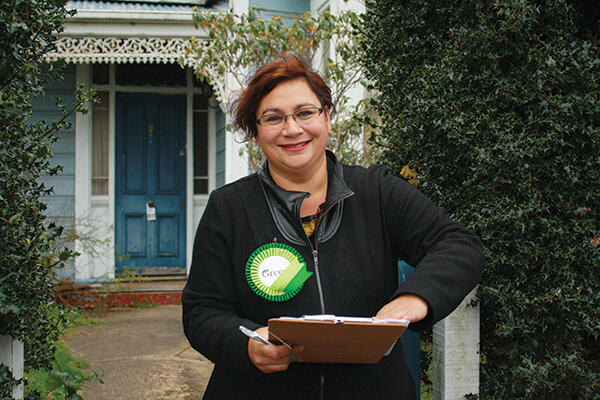
Interview: Metiria Turei
Metiria Turei is a co-leader of the Green Party, and focuses on the social policy side of Green politics. She also doubles as a candidate for Dunedin North, meaning she spends much of her campaign time frolicking between Auckland, Wellington, and her modest “castle” out in the wops. Yesterday, you announced your workers plan, and part of that was to raise the minimum wage to $18 p/h by 2017. The argument on the right is always that this will increase unemployment and a whole host of changes that will be bad for the economy. How would you respond to that? Well, they’re wrong and all the evidence shows that you do not lose jobs as a result of increasing the minimum wage; but the theory that National proposes is that there is significant job loss because businesses are paying more. The evidence, if you look at a recent July 2014 report published in the US, is that in the 13 states where they had an increase in minimum wage, they found economic development improved. They had better local economies, businesses had reduced cost because there was reduced turnover, higher productivity; so actually the evidence says it is better for the economy to have improved wages. The theory, the neoliberal theory, is that it’s bad. But I would take the evidence over the theory any day. What about the argument that companies will hire less people because they’re paying more? The evidence that we do have in New Zealand on youth rates, for example, when youth rates were abolished, was that fewer 16 and 17 year olds were employed, but they replaced them with 18 to 19 year olds. There was no job loss overall in the economy, it’s just that there was a shift in the choices that employers were making, because younger people weren’t cheaper. What you then have to do is make sure you’ve got good policy for young people employed or in training. But that doesn’t prove that jobs are lost, in the economy overall, it’s just not true. What about the bits within your package that ensure workers’ rights essentially? Not only would we increase the minimum wage to $15 an hour by Christmas, and then $1 an hour per year increases until it’s $18 an hour in 2017, we would have a minimum of four weeks redundancy in the law, and encourage employees and employers to negotiate for better than that in their employment agreements. But the minimum four weeks is critical for families who are at the worst time in their lives. […] We’ll also make sure there’s union representation, workers representation on WorkSafe, which is the health and safety organisation, and it’s critical at the moment. […] And then the other part of it is providing access to workplace for unions making sure there’s stronger bargaining opportunities and regulations in the law, and making sure that there’s an obligation still to complete collective bargaining when it happens. So would you say that now the Greens are the “unions party?” I think we’ve got great support from the unions, and at yesterday’s launch we had Helen Kelly from the NZCTU, Service and Food Workers Union, NZEI, PBTA. Our policy, I think, is better than Labour’s in that we provide more certainty. So Labour gets minimum wage to $16.25 an hour, but then they don’t provide any further certainty beyond that. And I think the Greens are really clear: workers do best when they have strong unions; the economy does best when workers are doing better, so we need to make sure that workers have what they need to be the best possible employees, businesses have got certainty about their costs and they can project them out to the future. Another recent policy package is regarding housing and the Warrant of Fitness. A lot of students are exploited by landlords down here because it’s almost a mark of pride to have a really shit flat; it’s kind of like a rite of passage living in the Dunedin student ghetto. What are the plans you have to help renters increase their security with landlords? We’re the only party that has put out a renter’s package. Everybody is concerned, rightly, about home ownership, but there are a million people living in rental accommodation; there are 400,000 children living in rental accommodation, and it is becoming the new norm. We will improve renter’s security by requiring a Warrant of Fitness for all rental properties that will become mandatory in 2017, and it’s not just insulation; it’s hot and cold running water, it’s a working toilet, a stove. These are things that are not actually required in the law at the moment. There’s better regulation on the quality of the toaster than there is on the quality of your home. That’s just not okay. But we also want to give tenants the first right of refusal; so if they’re on a fixed-term lease they’ll be the ones who choose whether or not they’ll stay. And restrict rent increases to only once every 12 months, and to have, in law, the calculation by which rents can be increased. So they’ll both be in the law – we’ll work with the industry on what that looks like – but in each of the tenancy agreements so that tenants can be assured of what increases they can expect over time, and landlords aren’t able to engage in price gauging, which is what we’ve seen in both Auckland and Christchurch. Yeah, I mean in Dunedin you see the same flats be exactly the same and $5 more expensive (per person) every year and nothing has changed. That’s right, that’s right, and there needs to be a justification for those rent increases, not just demand, because as long as demand is driving up rent increases, you’re going to have people paying more and more of their income in rent. When you’re paying over 30 per cent of your income in rent, then housing is technically unaffordable, and we need to improve that; it doesn’t have to be that way. The DCC has just proposed a whole host of changes, including a 3am bar close, a 1am start to the one-way door policy, a prohibition on shot sales after midnight, and the clearance of outdoor seating as early as 11pm. Do you think this is a step forwards or a step backwards? I think restricting access to alcohol is probably a good thing. Our view around alcohol is that there has been too much focus on the purchase and not enough on restricting the industry itself. And that includes not just the alcohol industry, but also bars and clubs and pubs as well. […] I don’t know that it has to only be in Dunedin, we would have to take a look at if it’s going to happen here or look at how to extend [restrictions] to other areas, so yeah, I think it’s good for the council to be thinking about how to control public access to alcohol where it can. But at the same time, the council also needs to be restricting where it allows its outlets to set up. We still have council giving approval to new alcohol outlets and so they need to be consistent in their policy. An argument is that restricting bar access will a) push up alcohol prices in bars because they don’t sell as much and b) it’ll push drinking into flats where it can be more excessive. It’s also arguably safer for some to be drinking at home or in other people’s homes. I mean, it is not an easy calculation to make. Any set of regulations you put around managing alcohol access is going to have flow-on effects. Until you do it you won’t necessarily know what they all are, so you’ve got to be reasonably nimble around what policy is working to make sure you achieve your goals; and if it’s not, then change it when it’s necessary. I’m not concerned about the pricing; there’s a proliferation of alcohol outlets, it is already extremely cheap. […] The cost of it doesn’t worry me, it’s just making sure that any regulatory changes do work to achieve an identifiable outcome and if they don’t, being honest about that and shifting to some other process. What ministerial positions do the Greens want? We will be negotiating a comprehensive coalition agreement with Labour, and it will include a number of ministerial posts, we expect, as well as associate minister posts. We don’t know what they will be yet, and we won’t know until we’re in the negotiations. We’ve said our priorities are economy, water, beaches, and child poverty alleviation. There’s a range of ministerial posts across each of those three priorities that we could have. We want to see progress on the whole of the election package, and we need to assess when we’re sitting with Labour about what options are on the table and how they best progress our priorities. It’s impossible to say at this stage exactly what that will look like. What is the one policy you won’t let Labour have that you’ve seen from their policy package? One of the ones that we have a completely different view on is deep sea oil drilling. We’ve said that we will simply prohibit deep sea oil drilling, there is none currently occurring in New Zealand waters, so let’s stop it now while we can. They have said that they are open to deep sea oil drilling; that’s a clear area of difference. But we have lots of areas of common concern as well, so we will have to work those through. We won’t know until we’re sitting at the table with them how the negotiations will go, and the only way we can be assured of getting the best possible outcome for the Greens, and our policy, is to make sure we’re the strongest possible. Which is why we’re campaigning for a strong party vote. So we are as big a part of a new government as possible.
-
News
Issue 23 14/09/2014
Politweets | Issue 23
Aw. Letters are due 5pm Thursday, email critic@critic.co.nz Chur. Fake Asenati is confident.
-
News
Issue 23 14/09/2014
Greatest hits / Greatest shits | Issue 23
Greatest HitA chance meeting that could have gone horribly wrong but didn’t: Max Key and Mona Dotcom. The Prime Minister’s son and Kim DC’s ex-wife met at a nightclub in Auckland and instantly became friends. Like a strange Beehive Romeo and Juliet, they danced the night away (as friends) and transcended the political boundaries that confine their respective affiliates to party lines. Big thumbs up for generally saying “fuck it” and having a good time. Greatest ShitThis week’s Greatest Shit is a no brainer. It goes to Gordon Dickson, Labour’s Selwyn candidate, who has proven that even democratic candidate selection has its limits. First, he hounded journalist Lloyd Burr in order to say, “ask the Prime Minister if he has faith in Anne Tolley, Minister of Police. Thank you.” Then, when Burr didn’t wander up to John Key and ask him a context-less question about a Minister, he sent Burr a whopper of an email, addressing it “Dear Lazy.” My personal favourite (verbatim) quote is as follows: “Perhaps you are lazy? To help you rediscover your previously perceived role in our society i.e. the ‘fourth estate’ I attach a copy of my formalised request already in the possession of the Prime Minister and the National Board of Directors as well.” He ended it with, “Have a nice weekend and grow a pair.” Charming.
-
News
 Issue 23 14/09/2014
Critic tackles election year | Issue 23
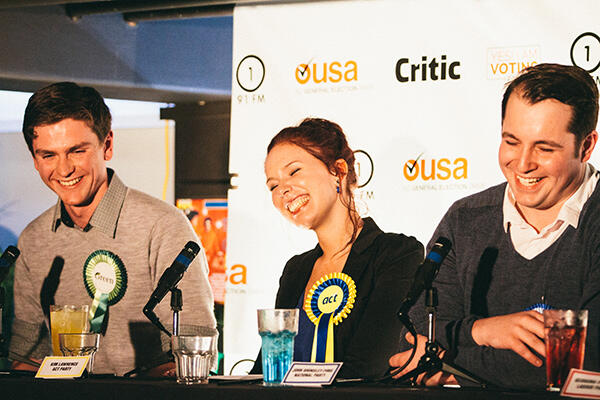
On Monday 8 September, Critic hosted its own version of Back Benches with Wallace Chapman. Last week’s politics section was dedicated to introducing the participants, who were young politicians from across the spectrum; this week looks at the most hilarious quips and quotes offered by Wallace, John (National), Georgina (Labour), Patrick (Greens), Kim (ACT), and Jordan (Internet). The evening covered five main topics: the proposed DCC alcohol changes; the living wage; tertiary education; social media; and Dirty Politics. It was accompanied by themed cocktails, of which my personal favourite is “the ALCP,” which was BYO. Politicians of all walks crowded onto the sofas at the front, and the heckling reached outstanding highs. Wallace: “Good to see MPs here like Metiria Turei, Clare Curran … who else is there? Colin Craig? No? Good.” Wallace: “Can we hear Patrick?” Crowd member: “Unfortunately.” Wallace: “Why is Colin Craig so great?” Jonathan Daley of the Conservatives: “If the policy doesn’t stand for anything, there’s integrity.” Wallace to Kim: “You’re drinking the Three Strikes, is that right? How is it?” Kim: “It’s tough.” Wallace to Jordan: “Describe Kim Dotcom in three words.” Jordan: “Larger than life.” Wallace: “Tweet the fuck out of that.” Metiria Turei: “We should control the [alcohol] industry and stop trying to control young people.” Wallace: “So let’s start with the ACT Party, Kim Lawrence, who want to raise the minimum wage to $30 an hour, don’t you?” Kim: “Yes.” Kim: “I started working at $5.70 an hour when I was 15. I was quite happy with that.” Wallace: “Okay, Patrick, how do you respond to Kim?” Patrick: “Well I’m not sure she had to live on that wage she was earning.” Patrick: “We think there isn’t such clear evidence to suggest that jobs do get lost when minimum wages get introduced. The US treasury launched an investigation and couldn’t come up with any conclusive evidence …” John: “So where Patrick’s right in saying that in the US the links aren’t as clear, but the US also has a much lower minimum wage to average income than we do. Where it’s a little bit more clear is where you raise the minimum wage, say, in couple of years’ time to $18, you do put a restraint on employment. And, sure, it’s not one of those things that’s clear cut, and you go, you’re going to put $18 and bam there’s unemployment, but it is something you have to start carefully balancing in saying well, at some point, employers will not be able to pay that wage.” Wallace to an elderly audience member: “What are you hearing tonight from the young people?” Elderly audience member: “From some of them, a lot of rubbish.” Kim, interrupting John and Georgina: “Why don’t we just legislate wealth?” John to Georgina: “If you’re not willing to go up to $18.40, what’s the difference between $16 and $18.40?” Audience member: “$2.40” Wallace: “Let’s just go right into the audience here. What do you think? What do you think about the minimum wage? Are you a millionaire?” Audience member: “I’m not a millionaire, thanks for saying I look like one though. Ladies, I’m just over here, I’m single.” Wallace: “Let’s go to John then, you’re in government. What do you say to that?” John: “I’m not in government.” Wallace: “Not you! Shit bro, you know what I mean.” Clare Curran calling from the sidelines: “What about aroha? What about aroha?” Wallace to Jonathan Daley: “Describe yourself in three words.” Jonathan Daley: “Businessman growing upwards.” Kim: “ACT would like to put interest back on student loans.” Wallace: “Interest back! How much?” Kim: “Presumably at a market rate. Perhaps like in Australia; index to CPI. ACT believes that students are the future highest earners in the country, and that as they’re the ones who personally are going to immediately benefit from the university education, they ought to bear the costs and make informed decisions when deciding to undertake it.” Wallace: “Okay, alright. There’s a clap, let’s go over here. Do you have a student loan?” Audience member: “I do, and I don’t necessarily agree with Kim, but I was just being supportive.” Jordan: “I don’t blame National for not understanding why education is important when you have a system that doesn’t give you a proper education.” Wallace: “What do you study?” Audience member: “Maths and philosophy.” Wallace: “Maths and philosophy. Who’s your favourite philosopher? Jamie Whyte, yes, exactly, same here. No I’m just joking. Do you like Jamie Whyte?” Audience member: “No.” Wallace: “But he’s a philosopher extraordinaire.” Audience member: “I don’t agree with his positions on anything that I’ve heard him on, basically.” Wallace: “At quarter past five, four Wednesdays ago, a book came out … and fuck it exploded. Boom.” Wallace: “If you take away Team Key, what have you got? Judith Coll– no, she’s gone.” Wallace: “Hands up someone who really does not fucking like John Key, who hates him. Go, you. John Key hater coming up. What’s your name?” Audience member: “Bill.” Wallace: “Why do you just not like John Key?” Bill: “’Cause he’s a sleazy, corporate dog.” John: “Wallace, I’m actually really interested. ‘Cause I actually quite want to know, and I know there’re Internet MANA guys in front of me who keep scoffing; I’d really like to know why John Key is so popular? Is half the country deluded, or is there another reason?” Wallace: “What’s your name again?” Audience member: “Sabrina.” Wallace: “Come up here, Sabrina. All right, okay. What do you think of John Key?” Sabrina: “My friend says that he has dead eyes.” Wallace on Dirty Politics: “Who’s read it? Surprisingly few, about 18-20 people.” Audience member: “Yeah, we have too many other readings.” Wallace: “Which beverage company left Dunedin recently?” Jordan: “Speight’s?” Kim: “Emerson’s?” Wallace: “Speight’s, Emerson’s, no. Bell Tea. Jesus, people.”
-
Columns
 Issue 23 14/09/2014
Guest Editorial | Issue 23
I wonder what I’ll do after the election. Have time to think, I’d imagine, or perhaps I’ll finally get around to watching The Wire. No doubt by the time the next election has rolled around, the stress-induced mania will have faded into an aching nostalgia, and I’ll be left wishing for the first door knock of the season. It hasn’t been easy balancing a dissertation, Critic, and an election campaign, but I like to think that if I were to have my own biopic, it would end with a low-angled, crossed-arms shot and the words “she survived” flung across the screen in all-caps. Part of the difficulty was, without a doubt, the accusations of bias being an epilogue to everything I’ve written. On balance, I’m not surprised. Student media has traditionally been left leaning, if only for the intense focus it has on student issues. As you’ll see in Critic’s election analysis (page 20), this generally makes for encouragement towards parties that offer a broad support base. I have never pretended not to sit to the left and, to be fair, I genuinely believe it would be impossible for anyone to present a year’s worth of election coverage without their opinion somehow seeping through. If you really want to kick up a fuss then let’s be realistic: the right has the mainstream media (hello, New Zealand Herald); let the left have Critic. There are a number of issues to consider in understanding the way I’ve covered the election, however, and I’ve found that largely my reaction to various people depends on entirely how they are at the time. As it happens, I’ve strived to talk to people from as many parties as I could find; seven party leaders and one should-be party leader makes for, I think, a diverse spread. Incidentally, it’s mostly parties on the left that I’ve regrettably not been able to squeeze in. But the accusations have gone further and deeper than a letter to the editor or two, and I’ve never been comfortable with the level of personal insult that I’ve received throughout the year. Although those at fault have sometimes apologised, I don’t think it’s ever okay to make wildly inappropriate comments via Facebook or in person simply because you know someone. Moreover, it’s hard to have a framework favourable towards National when National politicians refuse to talk to Critic. Steven Joyce, whose job it is to ensure our welfare, has acted like we simply don’t exist; he’s treated OUSA the same. Student media’s job is to be critical, and I don’t think the answer to being called out is to ignore our opinion as though it’s nothing more than children shouting into the dark. Labour springs to mind as the party who most cared that we met their politicians. A phone call here, an email there, and I was instantly aware of when an MP or candidate was in town. I didn’t manage to speak to all of them, but I commend them immensely on their respect for how seriously I’ve taken this task. Even beyond Joyce, National as a whole was abnormally silent. I remember finding out that John Key, Bill English, and Maurice Williamson were all in Dunedin on the same weekend, and I had no idea. Just being able to follow them around for half a day would have made for a profile that, I think, most students would appreciate for the simple fact of being able to know who these people might be. I think this is indicative of a broader issue; the idea that silence is enough to get students to follow you blindly to the polling booth. This is dangerous, because it indicates these parties don’t value the input of a core demographic in society. I’ve seen real passion for student welfare all across the board, from Colin Craig, who hung out in the Critic office for half an hour to chat, to Laila Harre, who spoke with such intensity at the importance of education I temporarily fell mute. I wish I’d seen this from Joyce, or any prominent National ministers. In the end, I won’t tell you who I think you should vote for, because I think it undermines the extent of the coverage I’ve attempted to present to you throughout the year. There are issues left, right and centre to consider, and the way you balance them will no doubt frame the way you enter the voting booth. My entire goal this year has been to bring these issues, and how they’ll affect you, to light. As my coverage draws to a close, all that’s left is to add a final note of opinion. The depravity of the election landscape this year is not an endpoint, and the links between negativity and apathy make it all the more important to understand the puppet show that the Beehive conducts. Your lives – every aspect of them – have the capacity to be affected by this election. Until accountability and transparency are issues screamed so loud no one can hear over them, nothing will change; it’s your opportunity and your responsibility to add to the discourse. Really, the cover says it all. Just fucking vote. Carys out. Carys Goodwin Critic Politics Editor
-
News
Issue 22 07/09/2014
Politweets | Issue 22
Um, lol. Tau has been sassy this week. I don’t know, John in Clarendon Hills, Illinois.
-
News
Issue 22 07/09/2014
Greatest hits/ Greatest shits | Issue 22
Greatest hitsStuff gets Shit, but they also get Hit for releasing a segment featuring up-close-and-personal portraits of what they call “political bloodstock.” Dark, gritty, and sly, these photographs come far closer to visually depicting the intensity of the election campaign than the majority of awkward headline shots so far. Coupled with a series of tongue-in-cheek captions describing the party leaders as racehorses, it makes a nice change from some of Stuff’s other overly sensationalist efforts. http://www.stuff.co.nz/interactives/political-bloodstock/ Greatest shitsIt isn’t exactly a secret that Stuff’s reporting leaves something to be desired. But they really one-upped themselves with the archaic debate footage on Tuesday night. With out-of-sync audio, the look of a VHS from the 90s, and microphone levels that turned John’s mildest retorts into shrieks and David’s greatest yells into whispers, it was, overall, an utter shambles on the technical front.
-
NewsIssue 22 07/09/2014
Critic's guide to Young Back Benches
John Brinsley-Pirie | Young Nat / Dunedin South Campaign TeamFavourite policy in a sentence: The most valuable stance this Government has for me is their resistance to using tax increases to solve problems. Sometimes tax is an answer, but I appreciate that this government looks to others in the first instance. Favourite MP: I wouldn’t be a good Southern member if I didn’t say Michael Woodhouse. He is a passionate Dunedinite and puts in a huge effort to get the views of the people he interacts with into Parliament. Why your party is good for students in a sentence: What the National party has always stood for is the removal of barriers to gaining meaningful work; National’s stewardship of the economy is making it easier for students to gain stable employment when we graduate. Pick a quote, any quote: “By ‘[this is my] content for this week’ I mean my deadline is tomorrow so if you have five minutes tonight [to fill out this profile] when you're not lovingly staring at your [newly won debating] trophy I would be a v happy bunny.” – Carys Goodwin. Georgina O’Reilly | Vice-President of Young LabourFavourite policy in a sentence: Decisive action is needed to address the 285,000 Kiwi kids living in poverty, Labour’s Best Start policy puts children at the heart of our policy framework by offering families a $60 weekly payment for the first year of their child’s life, extending paid parental leave to 26 weeks and extending free ECE to 25 hours. Favourite MP: Clare Curran (I get paid to say that), but in all seriousness she is the hardest-working, quirkiest MP, and an excellent mentor. Why your party is good for students in a sentence: Labour recognises the need for increased student support; we will restore postgrad student allowances, keep student loans interest free, repeal VSM, ensure student representation on university councils, and undertake a comprehensive review into broadening the eligibility of allowances. Pick a quote, any quote: “An activist is someone who cannot help but fight for something. That person is not usually motivated by a need for power or money or fame, but in fact is driven slightly mad by some injustice, some cruelty, some unfairness, so much so that he or she is compelled by some internal moral engine to act to make it better.” –Eve Ensler. Patrick Dawson | Campus Greens/Campaign Volunteer Favourite policy in a sentence: The Carbon Tax plan, because it finally gets NZ doing its bit to combat climate change, while simultaneously delivering a tax cut to the poorest households. Favourite MP: Metiria Turei. Her background is incredible, and you can tell how much she’s learned from it when she speaks about our need for solid social services and a decent education system. She’s also just generally nice to have a chat to. Why your party is good for students in a sentence: The Green Party will make fees and public transport more affordable for students, and work towards a future where we won’t have to suffer from environmental degradation. Pick a quote, any quote: “I had resorted to Googling 'Dragon Ball Z quotes' but was disappointed by the results.” – Patrick Dawson. Kimberly Lawrence | ACT on Campus Otago PresidentFavourite policy in a sentence: Allowing all school boards to vote to become charter schools. Favourite MP: (Soon to be Epsom MP) David Seymour Why your party is good for students in a sentence: ACT focuses on a strong economy and students’ ability to prosper in the long term, rather than bribing them in the short term. Pick a quote, any quote: “Only those who attempt the absurd can achieve the impossible!” Jordan Alexander Wright | Internet Party on Campus Club PresidentFavourite policy in a sentence: Free Tertiary Education, because it is vital for an understanding of complex technologies and systems so that they can be utilised proficiently. Favourite MP: Jacinda Ardern from Labour; because I like her views of a New Zealand that owns its future, and its assets, that are smart and grow the economy by investing in research and development and clean technology. Why your party is good for students in a sentence: Internet Party is the only party promoting a return to truly free tertiary education and wiping student loans that already exist. Pick a quote, any quote: “I am driven by two main philosophies: know more today about the world than I knew yesterday; and lessen the suffering of others. You’d be surprised how far that gets you.” Neil deGrasse Tyson Your HostHosting Young Back Benches is Wallace Chapman. Wallace is an ex-Otago student with a prominent career in broadcasting. He currently works at Radio New Zealand, hosting the Sunday morning show, and has bFM and Otago’s Radio 1 under his belt. Wallace has recently adventured into the film world, making an appearance in NZ film Housebound. The LowdownBack Benches is one of the most well known political TV shows in New Zealand. Conceived around the Backbencher pub in Wellington, the show is dedicated to allowing politicians an out-of-the-house chance to debate controversy. Once upon a time, Back Benches was shown on TVNZ 7. Now that the station has been shut down, the show screens on Prime. Two hosts man the Back Benches post, the first being Wallace Chapman, who will host our version, and the second is Damien Christie, a freelance journalist who used to work with Wallace at bFM. Getting people fired up is the name of the Back Benches game. With politicians from all over the political spectrum, the debates traverse a variety of topics and opinions. It’s even in the way they name topics; mildly inflammatory titles such as “Asian Invasion” and “Yup – we’re still really fat” exemplify the way Back Benches tries to pit politicians against each other. At the start of the year, Wallace challenged John Key and David Cunliffe to appear on the show, saying it’d be the biggest TV event of the year. We think our event will be bigger, even if neither Cunliffe nor Key are able to attend. Facts - The first ever episode featured Louisa Wall, Maurice Williamson, Jacqui Dean, and Hone Harawira in 2008. - In 2012, the Backbencher fell victim to a fire, leaving it unusable for the last episodes of the season. - Wallace considers Michael Cullen the most memorable politician they’ve had on the show. - Earlier this year, Young Nats President Sean Topham won “July’s best quote” with “I hotboxed the Camry. Yeah, it wasn’t so bad.” - Wallace’s middle name is Leslie.
-
News
 Issue 22 07/09/2014
Interview: David Clark
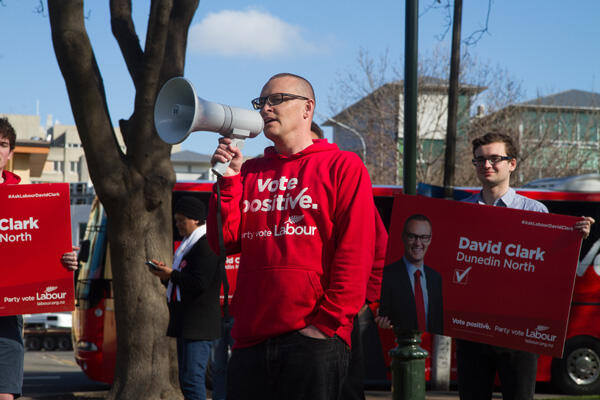
David Clark is probably one of the more familiar political faces around campus. He has an office right nearby, he’s our elected representative, and he’s vying to continue in his position. With experience in a number of student-related areas, including being Warden of Selwyn and taking a turn at Labour’s Associate Spokesperson for Tertiary Education, he’s pretty up to speed on what’s going on in the university sector. Since you’ve been our MP now for three years, could you tell me a couple of things you’ve achieved for students that they might not know about? Yes. I guess the first and obvious is things that my office do for students – dealing with problems with Studylink, making sure they get the money that they ought to have, dealing with 18+ cards (there are a hell of a lot of 18+ cards that go through my office every week), immigration issues, certification, some of that basic stuff. […] Can you get an 18+ card from your office? You can get it signed, yeah. Oh you can get it signed, right. There’s a Justice of the Peace in my office, so probably, proportionately, the hugest amount of stuff that happens is constituent work. […] I was the Associate Tertiary Spokesperson for a while as well, and I pushed for a full review of student support, which has become our policy. That would be the other thing that I would want to claim. And that comes out of my experience as Warden of Selwyn previously, and watching, over time, the affordability relative to the cost of living dropping for student accommodation and studying on campus. I believe that it is imperative that every person who has the talent should feel they are able to afford to go and study. What about some things in the house? In the house things I’ve done that are not necessarily quite so clear for students. Drawing attention (derivatively now) to the 0800 poison line closure that’s threatened, which is based out of Otago University; drawing attention to the Invermay issue, and being really clear that that’s going to be saved. Again, a lot of Otago graduates going into there, so that’s actually about the jobs that follow for university students. Also, pushing for a clear announcement, which has just come through over the past week, that Labour will commit to rebuilding Dunedin Hospital. Alongside the rumours of it being downgraded, [this] makes it clear that Labour’s committed to it being a teaching hospital in line with Otago University. Without that teaching hospital Dunedin’s future would be compromised, so those things I would consider the biggest gain in terms of parliamentary stuff. Other stuff students might not know about and, again, it gets less and less directly relevant to students, but the Mondayising Bill […] means that students will have two more holidays every seven years that they can celebrate! What else … Pushing Peter Dunne fairly briskly a couple of years ago to change his rhetoric from legitimate tax avoidance to tackling multinationals who avoid tax – I’m really proud of the public prodding I did to change the direction of government rhetoric … because for future New Zealand employment prospects it is imperative that we have companies in New Zealand that succeed. At the moment, our tax system is stacked against New Zealand companies, because responsible New Zealand corporates do pay tax and a lot of overseas corporates don’t. […] David Cunliffe said to me the other day that whether or not Labour were changing anything about the current living costs/allowance scheme is a “matter for the review,” but what changes would you personally want and would push for? I would want to see funding for student support increase. If one looks at data, and I’ve had this done by the parliamentary library, over time the real value of student support has dropped consistently […] the last 25-odd years. I would push for the real value of that funding to be increased. There’s a clear division between National governments and Labour-led governments on student support; the last Labour government put through nine budgets and there were nine increases in student support of one kind or another; the National government has had six budgets – the first five cut student support in one way or another, and the last one lowered the threshold in real terms for repayment of student loans, so basically there are pro-students and there are anti-students and the path is incredibly clear. Again, National introduced student loans, Labour introduced interest-free student loans. National introduced administration charges on top of those student loans when it couldn’t get away with re-introducing interest. Labour introduced fees – well high fees. Well, I think the picture is pretty clear which side is about making education accessible and which side isn’t. There are some fairly blunt and clear trends there. How do you feel about the early repayment bonus [that National cut]? Cause that was pretty popular, or at least amongst the, like, four people I spoke to. […] Well that’s an incentive, I think the evidence was that it didn’t actually encourage people to repay faster, the evidence that I’ve looked at anyway. It made people feel better about it, because it meant they didn’t have to pay as much, but it tended to be people that already had that money and could afford it that took the bonus. […] Generally, over time, we want to make education more affordable across the board; we’ve got measures to extend to early childhood education, free early childhood education; we’ve got measures in this election to make school donations no longer necessary for low-decile schools, and boy are the lower decile schools happy to hear that, I can tell you, the principals want to give you a hug when you walk into the schools, because a lot of those schools are really struggling. We’re a party that believes in access to education, that that’s where the opportunities lie for exploring your talents and making the most of your opportunities. There have been a whole host of changes made to tertiary education since Steven Joyce took over; what do you think have been the worst of these changes? Some of the stupid ones. One of them is the 7 EFTS policy, which has meant that people who’ve done a previous degree and then studied medicine have got a good way through their degree (and the government has spent a possible couple-hundred-thousand on them; we as taxpayers have invested a couple-hundred-thousand in them) […] now they can’t finish their studies. That is obscene, it’s stupid, and I’ve had constituents come to me facing really dire situations. They’ve got dependent kids; they may have a previous qualification and they’re thinking about going back to doing what they did before, despite being on the cusp of becoming doctors because they just need to feed their families. And that is just stupid, and that policy was announced on a day when Steven Joyce was looking for a distraction, because National was facing some bad publicity. When he was questioned about it in the select committee, shortly thereafter, it was clear he didn’t understand the implications of the policy. But they’ve refused to budge. […] Other stupid things they’ve done include trying to change the government’s arrangements for universities, taking out the student voice and the staff voice. […] I think that if Steven Joyce wants to make some cuts to governance he should start with his own cabinet. If he thinks that 20 is an ineffective number for making sensible decisions, that’s where he should start, not with the universities. […] What about after education? One of the big issues for students is that they graduate, and they have heaps of debt, and there aren’t too many mechanisms in place to help them gain jobs in education areas that may not be the most “jobby” of those. We want to shift to a higher value economy; we think that New Zealand’s advantage should be more in the waitlist sector. We continue to turn out some of the best high school students in the world, despite being low down on the OECD rankings in terms of wealth these days. We turn out smart people whose wages are relatively low in world terms. And we have good universities. We ought to be at a comparative advantage, really, in world economy terms, and part of that shift is making sure that wages are decent so that employers are not focused on getting wealthy off the back of cheap labour and engaged in a race to the bottom in terms of productive outputs. That involves simple things like minimum wage rises [that are] sustainable over time […] They’ve done that in Australia and you’ve seen a shift to a higher value economy there. The other things involve R&D tax credits, so you’ve actually got research and development incentivised, and making sure that we are properly funding universities and tertiary institutions. We’ve said we’ll retain the real value of that and that’s one of the significant announcements welcomed by Harlene Hayne; Labour’s commitment to maintaining the real funding has been welcomed by the New Zealand-Vice Chancellors’ Committee They don’t like to be too political, but I think the fact that they’ve come out in support of that policy says that universities are hurting, and knowing that there’s a commitment to funding the institutions properly is a real mark in Labour’s favour. One last question. So we have this game called the Hunger Games, where I’m going to give you three people. You choose one of these people to be on your team, and the other two get to form a team against you, and obviously as in the Hunger Games, one team can win. These people are: Steven Joyce, Tracey Martin, and Hone Harawira. Ah ha. And what, can you explain to me, being a bit ignorant, what kinds of games they’re going to play? Oh have you not seen the Hunger Games? I’ve not I’m afraid. […] Well, I mean, basically you’re going to be shoved in an imaginary arena, which we’ll say is a forest, and you choose one person who’s on your team. The other two people, somewhere, out there, also want to win this game. So you’ve got to consider things like survival instincts, ability to hunt… it’s quite intricate when you start thinking about it. I actually think Hone Harawira’s got a survival instinct that’s pretty strong. So instinctively I’m drawn to being in a team with him. I don’t think I would trust Steven Joyce, so that shapes that response, and I do admire Tracey Martin, I think she’s a person of conscience, so it’s a line call, but I’ll probably go with Hone.
-
News
 Issue 21 31/08/2014
Interview: Kevin Hague - Green MP
Kevin Hague is a current Green MP, and looks after their health and sport policy. In the interest of providing something of note to the P.E. students that isn’t on the sport pages, I asked him about what policies he advocates for in the complex network of elite sport and school activities. I also asked him about health and mental health policy. We have a big P.E. department down here, and it was explained to me that the National Government’s initiative Kiwisport is one of the main changes they’ve made to sport policy in the last six years. Would the Greens keep Kiwisport? I’d want to talk to P.E. teachers about how the programme is working in practice. When National introduced it, I was pretty strongly critical, because the programmes that they ditched to free up the funding to do Kiwisport were programmes that were more broadly based, and focused on getting larger numbers of kids physically active more generally than sport. The Green Party says sport is great for those kids who are suited for it and like it, but a pure focus on sport stops physical activity for a whole bunch of other kids for whom sport is not their thing. Walking might be, or biking noncompetitively. Or yoga. We used to have a whole bunch of programmes that were designed for making everyone active; money got pulled out of those and got put into Kiwisport, which no doubt was good for some kids, but probably bad for a whole lot of others. Now it may be that in some schools that they’ve been able to apply the money more generally to be able to still achieve the goals of the old programmes, and if that is possible within constraints, I would rather adjust than overturn. So, if it’s possible to just adjust Kiwisport to ensure that all schools are doing that general participation thing, that’s what we would do. Would you change the nature of the split funding so that there are more resources given to sports clubs and schools? I’m not sure, to be honest; and I think probably school-based programmes are hugely important. So we want to make sure that they are adequately resourced. There’s a project that’s called Project Energise, which started in the Waikato actually, and has been extended a little bit. That’s actually shown really good results, and that’s about physical activity every day for primary school kids and actually preschool as well, so early childhood education. I want programmes like that in every school. When it comes to the funding of sports clubs, I guess the big issue is that the actual need is currently hard to determine because they’re getting so much revenue from the gambling industry, from pokies trusts and things, which we want to axe. We don’t want sport being funded by gambling, so what we will need to do is quantify how much money that is, and how much money the sports clubs need, because it’s unfair on the sports clubs to simply pull that money out. It’s likely that more money will need to go into sport, probably through something like the health sponsorship council, which started a transitional fund when tobacco sponsorship was banned. Health sponsorship council got set up to provide sponsorship funding for sport and other things that tobacco had been sponsoring. So that you didn’t make everyone go cold turkey- Hahaha, great pun. Oh, I’m sorry, I didn’t mean it … Cause otherwise a whole lot of other things would fall over. So what we want to do is make sure that sports clubs actually have the appropriate level of funding and sports trusts as well, which is the other level. Do you support the sport-through-investment scheme whereby teams and athletes that have the potential to do well and to win are the ones who get the funding? No. I guess there are different reasons why the state is interested in sport. And I would argue the main reason is that physical activity results in healthier people who actually would have better outcomes in every aspect of their lives because of physical activity. So that’s primarily why you do it, and ultimately (although it’s hard to directly link up the consequences to the action), you’ve got reduced health spending as a result of that, because people don’t get as sick. Now that’s not primarily about elite sport; so you probably do elite sport, I guess there’s an argument around elite sport that says if New Zealanders are doing really well on the international stage, that will reverberate. So the fact that the All Blacks are a really good rugby team probably inspires a whole lot of people to actually get involved in physical activity. One of my sports is cycling, so I see Anton Cooper winning the gold medal at the Commonwealth Games for mountain biking and he’s … 18, 19, and that will probably inspire other kids and young people to actually take up biking. So there is a role for government funding of elite sport associated that. But otherwise it’s just kind of national identity and feel good and potentially a bit of marketing; that would be the argument for funding America’s Cup, for example; it’s basically entirely about marketing New Zealand. So you’d have to do the equation then not on the physical activity it promotes, but whether it returns money to our economy. If it doesn’t, then no. You would support dishing a bit of funding to teams and initiatives that don’t have major sponsors? Yes. One of the main arguments you hear tossed around about privatising healthcare is that higher profits drive innovation in the health sector. How would you encourage this innovation without privatisation? In my experience, I’ve seen the best innovation come from necessity actually, which is an example of a totally reverse argument, which says if you’re short of money, then you innovate. Not that I’m suggesting that as an approach, but in my experience I think where I see the most creative thinking is where people are secure but motivated around quality improvement. For example, Counties Manukau DHB has got a partnership with a National Institute of Health from the US (and I think there’s now a UK partner as well), and it’s like an international healthcare quality improvement collective, and they’re doing really interesting things. I was on the quality improvement committee – well, I was the West Coast DHB Chief Executive before I became a politician – and again what I found was that people really wanted to find ways of improving quality. There’s no sense of “everything is as good as it can be;” people are genuinely excited about quality improvement cycles. What they get turned off by is where you do a pilot but there’s never any money for it to actually get rolled out, and it never goes anywhere. There’s 15 different pilots happening around the country, and there’s no commitment to making the system learn from the best of those things. Those are the things that turn people off. When I look at private healthcare, I don’t see a lot of innovation. Well, innovation perhaps in cost control, but I think there are some counter examples. Kaiser Permanente in the United States actually has pioneered quality improvement and patient flow kind of stuff, but I look at the private sector in New Zealand, and I do not see that as a significant source of innovation in our environment. It’s clearly not generally true that profit motivation drives innovation at all, and as I say, some of the best innovation has occurred in really resource-constrained environments. Do you support making dental care cheaper? Yup, but that gets to the boundary between public and private, of course … What we’ve got now is a situation where healthcare costs have grown, and bridging the gap across the things that are privately funded becomes increasingly unaffordable. All anyone can do is nibble around the edges, which is why our primary care policy extends to 18; it’s not primary care for everyone, because we know that that’s an unaffordable cost at this point. On dental, we’ve already got free dental to the age of 18; our policy this time around will extend that to students, beneficiaries, and superannuitants. Most DHBs have some schemes for low-income adults as well, but it tends to be urgent care, so it’s not really a comprehensive service at all. What sort of initiatives do you support to strengthen how we deal with mental health in New Zealand? Well, again, the first thing is more resourcing. And it gets back to the question of “what’s the overall resourcing for the healthcare sector?” So if you under-resource, then heaps of things don’t have the money to actually play the role that they should. Mental health is a classic. Always described in the past as a ‘Cinderella service’ – constantly overlooked and in the corner. We had the blueprint and the mental health commission. So the blueprint basically set out, “here is the amount of each mental health service you need in each area.” And in the mental health commission, so there was dedicated funding each DHB got for that; the mental health commission saw money going into it. All DHBs except West Coast DHB, in fact, just saying, failed to meet their blueprint volumes … Now the mental health commission has been disbanded, and it’s not available to ensure that DHBs put the money where it’s supposed to go, so things are drifting backwards. What we would do is, first of all, ensure, as with every health service, prevention in the first place, so addressing those environmental determinants like marginalisation, poverty, racism, and discrimination. [The] next level is self-care, so actually providing resources for person in the lounge to actually say, “I’m struggling with feeling depressed, stressed, overwhelmed, super anxious, where can I turn.” Helplines and services that people can go to directly. Ensuring that primary care actually has a full range of brief interventions that GPs or practice nurses can themselves do directly; a bit of that’s happening and good referral pathways into other mental health services both specialist in-patient acute services and community based services … Pretty much the only bit of that whole spectrum that’s properly funded now is, and even that you’d argue probably not, is in-patient acute. Every other thing is underfunded and underdeveloped. All of those bits need attention and, in particular, the thing I’d say is the biggest problem is that the residential support services, so people who’ve got significant mental illness, right now or episodic, who need some level of support but who are not in fact acutely ill will end up staying in acute units because there isn’t some other service to discharge them to, which then in turn means that your acute unit with people who actually don’t need that level of service, which means if you’ve got someone who’s acutely ill in the community, there isn’t a bed to refer them to in the acute unit. So you’ve got a total mismatch of need and service. So improving the capacity of community based services actually changes that. DISCLOSURE: Carys is a Green Party hack who is hardcore hacking it up for the election. But don’t worry – she has a few National Party friends who don’t hesitate to send in angsty letters to the editor when she strays too far into shill territory.
-
News
Issue 21 31/08/2014
Greatest hits / Greatest shits | Issue 21
Greatest HitThere are a few contenders this week, what with the UBS apparently giving out airline sick bags to anyone who bought a copy of Dirty Politics and the hilarious election broadcasts screening, but Greatest Hit has to go to one of the underdogs of the election: the Civilian Party. They recently selected their deputy leader, Golden Mayan Sweet Pineapple Product of the Philippines, commenting that if it is elected, it “will be the first pineapple MP in our nation’s history. Indeed, it is the first pineapple candidate in our nation’s history. That it has taken us until 2014 to get to this point is a shameful reflection of our past.” What a forward-thinking selection from the Civilian Party. Greatest ShitThis week the Greatest Shit is a bit of a double whammy. It starts with Pam Corkery, who went off her nut at the Internet-MANA campaign launch. After journalists tried to hassle Kim Dotcom into an interview following a questionable “hacking” comment, Pam called a journalist a “puffed up little shit” and asked “when will you glove puppets of Cameron Slater just piss off?” The second piece of this Shit, however, goes to the media reporting of the I-M campaign launch in the first place. Until Pam went wild, they seemed to have no intention of reporting on the policy releases, instead choosing to screen John Key wandering around holding a piece of paper, or something. Policy is probably more important.