



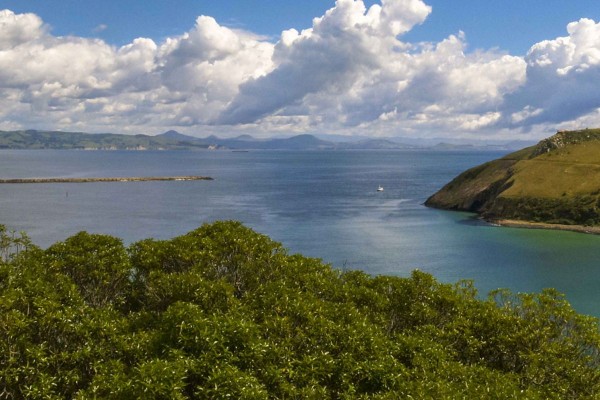

The Otago Peninsula was declared possum free in March, making it one of the first inhabited landscape-scale areas in Aotearoa to successfully eliminate the pest. Critic Te Ārohi reached out to Chris Arnison, Community Coordinator and Operations Director of the Otago Peninsula Biodiversity Group, to tell us the story.
The Otago Peninsula Biodiversity Group (OPBG) was first started in 2008 by locals sick of the possum problem. It began as a completely volunteer-based organisation with almost no funding, but now, after eighteen years, the community’s vision is finally a reality. The Department of Conservation’s Acting Conservation Director for the Southern South Island, Gabe Davies, emphasised that “[Y]ears of dedicated effort, hard mahi, and use of innovative approaches to predator control have led to this milestone.”
When the operation began, volunteers were focused on setting trap lines and checking them regularly to keep them set and baited. The volunteers were also rigorous in keeping watch for signs of possums, whether these be a physical sighting, or just droppings, sounds, or scratch marks on trees. Under the watchful eyes of these volunteers, the peninsula wasn’t an easy place for possums – but it was a safer one for our native wildlife. One ecology student recognised this, adding that, “it’s so cool to see conservation initiatives get such amazing results in a way that's really going to help our native populations rebuild and flourish.”
Becoming a delivery partner for Predator Free Dunedin (PFD) and receiving more funding under Predator Free 2050 was a crucial turning point for the group, allowing them to employ staff, while also maintaining their volunteer base. Joining forces with fellow PFD delivery partners Halo Project and City Sanctuary, they began to use more advanced technology in the field, including self-resetting traps, motion activated trail cameras, and thermal drones to get right into the hard-to-reach nooks and crannies of the peninsula. PFD project leader, Rhys Millar, added that “By sharing tools, people and knowledge, we strengthened each other's efforts and, building upon the monumental effort of the OPBG, got the job over the line.”
Towards the end of the operation, one of the project’s most valuable team members was the Halo project’s dog Scout. This little guy was trained to sniff out possum shit, and any areas he detected it in could be more heavily targeted. The final year of the project was focused on hunting down the last few remaining possums, which they had narrowed down to certain points of the peninsula.
Another student Critic spoke to was thoroughly impressed by the efforts, adding, “Wow… I didn’t think it was possible to actually get rid of those sneaky buggers.” While a long and complicated process, the OPBG have demonstrated that it can be done, and Chris emphasised that the achievement “would not have been possible without the dedication of our volunteers, the generosity of local landowners, and the commitment of our conservation partners who worked alongside us to deliver this amazing outcome.”
The possums are gone, but the group is far from finished. As Gabe put it, “it's vital to recognise that this is only the beginning […] Continued commitment is essential to ensure that nature and native species can thrive and we all have a role to play.” A new plan targeting multiple high-profile species in areas of high biodiversity is being rolled out. Ferrets, stoats, weasels, rats, hedgehogs, and feral cats are the targets. Chris noted that feline trapping activities will take place far away from residential areas using non-lethal traps, and the cats will always be scanned for microchips before any lethal action is taken.
According to Gabe, “A possum-free Otago Peninsula stands as an incredible testament to what can be accomplished when a community comes together for conservation.” From our majestic native birds, to our breathtaking landscapes, to even the humble crate day, Aotearoa is full of wonder, and ridding the Peninsula of possums is just one step closer.
Anyone keen on getting involved can contact Chris at operations@opbg.nz. And if you see a possum, or signs of a possum, on the peninsula, make sure to report it: https://www.reportapossum.nz/.
