
Fox Meyer
2022-2023 Editor
Articles by Fox Meyer
270 articles found. Displaying page 3 of 23.
-
Culture
 Issue 16 24/07/2023
Chlöe Swarbrick: On Harm Reduction, Landlords, and (still) being the Youngest in Parliament
Whether you love her or hate her, over the past few years, it’s been hard to ignore Chlöe Swarbrick. The 29-year-old Green Party Member and Auckland Central MP was elected to office at 23, making her the youngest politician to enter parliament since Marilyn Waring in 1975. In 2023 she’s still the youngest sitting MP, something she sees “as an indictment on the House of Representatives.” Chlöe has been a vocal advocate for drug reform and pushing for harm reduction, which was the focal point of the 2020 Cannabis Legalisation Bill and the more recent Alcohol Harm Minimisation Bill. The latter would have banned alcohol sponsorship and advertising from sports in attempts to deal with our binge-drinking problem. Her approach to drug and alcohol policy has garnered both criticism and confusion from people, so she set the record straight. “The spectrum of regulation for substances is, at one end of the extreme, criminal prohibition. And at the other end you have a complete legal free market without regulations or restrictions,” she explained. “You then have an economic environment that is conducive to those entities operating in such a way that they exploit vulnerable communities to make a quick buck.” Chlöe said that the way to pull back from these extremes is what people would consider ‘liberalisation’, but freely accessible weed isn’t actually what she’s all about; instead, she's about sensible regulation of cannabis - and alcohol, too. “I was arguing for regulation where none exists at the moment. What frustrated me, particularly from the National Party, was pointing to how we have failed to regulate alcohol.” So she proposed her Alcohol Harm Minimisation Bill, which National didn’t support. “Turns out they don’t want to do that.” The bill didn’t make it past the first reading, failing 85 votes to 29. However, there was one small victory, with the government deciding to adopt part one of the proposed bill: local councils will have more power to control alcohol sales, trading hours, and locations in their borders. And it’s small victories like this one that Chlöe reminded us we need to celebrate. In a world where young people feel burnt out and stagnant, remembering that “we actually got something done” is the only way to keep moving forward. “I have been hustling hard over the last few years to try and support as many younger and different people in politics to get involved,” she said. Chlöe didn’t intend on being a politician, nor does she think of it as being a ‘career’. “My approach to politics has never been as a career. I actually just want to get stuff done. I am more than happy to blow up my job if I think it would contribute to something actually happening.” On the topic of getting shit done and the current state of affairs, Chlöe finds the lack of action from our current government frustrating, especially after the pandemic. “What’s really gutting about that collective experience is that all of us actually saw firsthand that the government is capable of things that we’ve been told our entire lifetimes were economically or politically impossible,” she said. “Whether it's flexible working arrangements for people with disabilities or single parents, or direct payments to people who need it or rent freezes, they all happened overnight and that demonstrates that all of those things were always a matter of political willpower.” Chlöe went on to explain that the pandemic was like a portal to an alternate reality, a brief glimpse into what could be. “We seem to have lost that cultural awareness of what is possible within our politics.” Personally, her politics are “unashamedly quite radical[ly] left wing… but I also believe that if I’m not making a difference for the communities I represent, then I need to go home.” And finally, the question on everyone's mind: What does Chlöe make of the financial shitshow the tertiary sector is facing? A few weeks back, Prime Minister Chris Hipkins told us the government wouldn’t bail out the university due to wanting to maintain Otago’s ‘financial autonomy.’ Chlöe reckoned that was “a really cool thing for a former student president to say.” Not only did she believe that the government ought to support universities financially, she believes that the government's role is to recognise that tertiary education is a public good: “It’s not just about economic and productive outputs… It’s also for upholding democracy.” She said that the 1984 neoliberal reforms coupled with the 2011 implementation of Voluntary Student Membership have undermined the tertiary sector, disempowering students – and we’re still seeing that play out today. While for most young people it may seem like the world is ending, Chlöe reiterated that voting and political action is important, and that change is possible. “Students need to realise they are not a small voting block. There are 400,000 students and 120,000 landlords,” she said, which really puts things into perspective. “But look at how much disproportionate political power is wielded by those with capital.” In a politically polarised world, Chlöe has some interesting takes on things. Some may see her as a raging commie, while others may think she isn’t radical enough. In a political arena of burgeoning populism and cults of personality, strong characters like Chlöe can net the hearts and minds of voters by personality and relatability alone. “Depending on what side of the fence you’re on,” she said, “populism may be positive or negative. [But] I think it’s far more important to look at the ideas and the evidence that are underpinning our values.” She said that populism has become more popular since the 1984 reforms and that the individualistic cultural norms they championed “are associated with the mental health crisis and feelings of loneliness and isolation, which undermine our collective capacity to generate political change.”
-
Columns
 Issue 16 24/07/2023
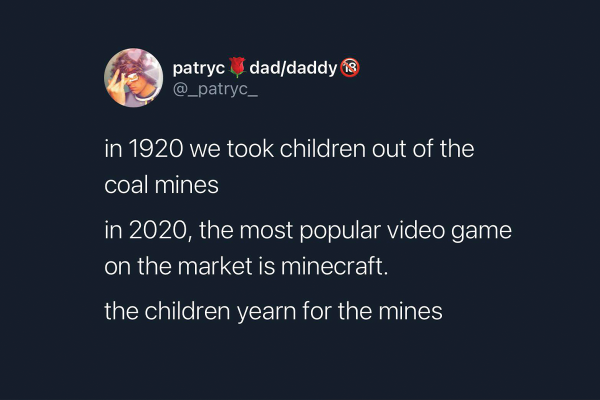
Editorial: Bring Back Child Labour
It’s the meme that started it all. And while we all laughed about it, we were too shy to admit that they were kinda right. That’s why, heading into election season, I am once again challenging any of the major parties to announce their plan to bring back child labour. Hear me out. Firstly, this would immediately solve any labour shortages we have in the country. Overnight. Sorted. Give the kids all the delicate jobs that require dextrous little hands, and let the adults work the more artisan jobs like flying aeroplanes or making silly little magazines. Second, kids need to start learning early that if you can’t adapt your body and mind to the 9-5 grind, you might as well die. School is already a noble effort to conform them to the mentality of deadlines, workdays and cookie-cutter corporate policy, but we can do better. Skip the middleman and just give them a real job. They all say they don’t want to be in school anyway, so we should honour that wish and let them have a go at it. The sooner they conform, the easier it is for all of us. Plus, no more worrying about daycare. Also, your household income rates are about to skyrocket, so you can kiss that recession goodbye. Immoral labour? Never heard of her. In fact, I can’t hear much of anything over the constant din of societal progress. Rome wasn’t built in a day, but you can bet that child labour laid a few bricks. How are we meant to improve as a society if we’re too woke to put literal children back in literal goldmines? Letting children take the “undesirable” jobs would also go a long way in improving racism in this country. Currently, our only scapegoats for labour shortages are those filthy immigrants, the ones who come here and take all the jobs we didn’t want to do anyway. If we just put children in those jobs, we can’t have immigration! With that pesky back door closed once and for all, we can get back to what really matters: keeping our country clean. Because it’s OUR country, after all, and we need to preserve it. You know, for the children. Finally, as I’ve said a million times and will say once again, we have to trust the market. If it’s suggesting that child labour needs to come back, we are in absolutely no position to question it. Especially once we scrap all of the ease-of-access policies set up to help guide those minors (miners?) into “liberal” arts university programmes, where - God forbid - their brains might grow. No. What we need, and what the market is clearly telling us to acquire, is a veritable army of stupid, brainwashed, nimble little labourers who are without any means of standing up for themselves (because even if they did, they’d only come up to, what, like 3’4”?). I say we listen to our collective gut, nay, to the wisdom of the infallible market, and put children back in the mines. Put children back in the factories, in the fields, in the full range of jobs for which they so loudly clamour. Who are we to stop them? Who are we to question the will of the all-consuming market? This nation must be one of the children, by the children and for the children, and to achieve that most noble of standards, we simply must let the children return to the mines. If any major party should be brave enough to consider this agenda, they would certainly have my vote. If I could vote, which I can’t, because I’m not a citizen. Just know that it would be a really cool thing for you to do.
-
Culture
 Issue 16 24/07/2023
Fresh Stress Relief
It’s that time of year again - it’s ten degrees colder than when you first began to complain about the winter chill, your fingers continue to grow stiff on your laptop keyboard, it’s difficult to get out of bed in the morning, and the motivation you thought would return after the semester break just hasn’t come. You’ve now been dumped with a new semester worth of assignments and, to top if all off, it’s flat-hunting season. Crusty third-, fourth-, and fifth-years (what are you still doing here if above) are a little more used to this by now. Second-years are braving your first tense “do we turn the heat pump on” season, but at least you don’t have to battle it out for flats on Castle and Leith this year. As for freshers, we thought you could use a hand coming up with some stress remedies. There used to be a pack of dogs (for cuddles) that were brought around the halls, but I don’t think they do that anymore. Maybe they do. I don’t know, we didn’t research this piece at all. Bubble wrap Without doing any Googling at all I’m gonna guess that renting a bunch of real dogs to come cuddle for an hour is gonna cost somewhere around $250. I have no idea if that’s accurate but it feels right. Heck, it might be free. But for $250, you could buy ten 300mm x 30m rolls of bubble wrap, enough to completely carpet the floors of most res hall lounges. Or you could roll yourself up like a stressed little burrito. Either way it’ll be good for something. Alternatively, the colleges could start just saving all the bubble wrap that comes with new purchases and not have to pay a cent. Reduce, reuse, recycle. Dogs (but they’re just drama students dressed as dogs) Same concept as having actual dogs visit the halls, but with an added thrill. Someone from Auckland Uni tweeted that this happened there during their undergrad; posters were put up advertising a “puppy petting session” but it was really just drama students wearing dog collars. So this one isn’t even remotely outside the realm of possibility. While this might be more stress-inducing than stress-relieving for all parties involved, it would certainly serve as a distraction and maybe even an awakening for budding young furries (I’m not judging). Bouncy castle Hiring a bouncy castle in Dunedin costs between $185 and $520. If we’re going with the $250 ball park figure for what colleges are willing to spend on their overwhelmed cohorts of freshers, then a modest “Paw Patrol” bouncy castle of $200 is a bargain. Knox once hired what appears to be a mid-range bouncy castle at around $350 that doubled as an obstacle course and I can vouch for its stress-relieving qualities. One of the best days in my time there, but that’s not saying much I guess. And exercise is apparently good for you, so there’s that too. Hire a stripper I mean, you could. I don’t think very many students would actively enjoy this (at least not the ones you want to make happy) but it would undoubtedly make people forget about their stress for a while, even if that was just because they were too preoccupied with wondering how this idea ever got green-lit in the first place. Maybe the stripper could teach pole classes or something, I dunno, that’s an active way to move your body. No matter what happens, it would definitely be a distraction. Rage room Instead of bringing in puppies that you have to pet and treat nicely, bring in inanimate stuff that you can break and treat meanly. Or, even better, take someone’s totaled car and park it out front, then give students five free swings with a bat to see what they can do. Safety glasses are a must, of course. You could even start charging for extra swings to make a profit on this method, and use the profit to fund another method on this list, making it the most economically-viable option of the lot. Lift alcohol rules for a weekend Listen, healthy coping methods are great if they work for you. I’m all for a hot girl walk and meditation session. But sometimes you just need to be able to drink an ungodly concoction of hard liquor to the point of forgetting the conversation you had with your friend ten minutes ago, let alone the stress of being an adult. The frankly oppressive rules of residential halls don’t seem to recognise this. Freshers are new to being adults - it’s hard. Lifting the alcohol rules for a week at halls is the least they can do in terms of pastoral care of residents, and it’s also very cost-effective (free). Healthy? No. Stress-relieving? Temporarily.
-
Features
 Issue 16 24/07/2023
Matariki, Mātauranga Māori, and Modern Science
In the early years of learning maths and chemistry, posters fill the classroom walls. They’re plastered with motivational slogans like “Music: proof the brain enjoys counting”, “Chemistry is everything”, and “Maths: the secret language of the universe”. There is an implicit message that the tables and figures before you are everything, everywhere. Somehow they bind the world together, and for some reason you’ll be using the quadratic formula for the rest of your life. Indigenous knowledge is sometimes framed to be at odds with these sorts of classrooms; pandered images spring to mind of noble savages charting stars without writing almanacks, managing farms without computing figures. But between indigenous knowledge and Western science is a considerable nexus: the notion that all things, everywhere, are connected. Western science has a history of domination and exploitation, and while words like “algebra” may be direct evidence of their non-Western conception (from the Arabic “al-jabr”), Western science has a clear Western bias. But its dominance is waning. Gone are the days of unconsenting experimentation, of treating island nations like laboratories (or worse, bomb sites). Gone are the licences to pilfer native wildlife and spread disease. Barriers remain, but in recent years there has been a growing recognition of the importance of indigenous wisdom and an understanding of the fundamental similarities it has to modern science. As Dr. Nancy Longnecker of the Science Communication Department puts it: they are simply “two different ways of knowing.” Modern Western science may revolve around the tenet of interconnectedness, but Western values have historically centred on extraction and individualism, especially when it comes to the natural world. With the welcoming of indigenous knowledge, Western science may be able to benefit from the wealth of data that indigenous communities have been gathering for generations. Take Matariki, for example: the same star cluster has cemented itself as a central node of culture for dozens of indigenous communities. Over generations, they mapped and tracked the passing of the sisters, or the hens, or the maids - whatever they called them, their significance remained. The stars coincided with important agricultural dates, and served as a sort of calendar: a repeated exercise that consistently provided similar results. A lot like the scientific method. The same is true for indigenous botany, on our shores and beyond. Plants that may have baffled a Western explorer were intimately familiar to locals, often with descriptive names that matched the personality, purpose or prestige associated with it, and accompanied by stories passed down through generations of experimentation. Someone always had to be the first person to eat a new plant, after all. That’s experimentation at its finest. Through direct observation and experimentation, indigenous communities have developed a rich understanding of the local environment and are able to identify patterns and changes that may not be otherwise apparent. Sometimes, these patterns were scary or powerful, leading Western explorers to cite the presence of witchcraft rather than genuine chemistry. This would often lead to the rapid suppression of native experimentation or expression. A particularly fascinating example comes from the shores of Haiti, with the botanical and zoological roots of zombies: native scientists, experimenting with the extraction of naturally-occuring biochemicals, deduced a recipe for a powerful neurotoxin. They mixed tetrodotoxin (from pufferfish) and other compounds into a fine powder, which could be blown in the face of a target. The victim would then fall into a deep but temporary coma, one so convincing that on at least one occasion a man was pronounced dead by Western scientists and buried. He was later dug up by the witchdoctor and put to work in the fields, kept in a stupor by a constant diet of a second experimentally-derived drug, this time from jimsonweed, a plant with sedative properties. These small armies of the “living dead” became known as zombies, and their presence was so frightening to Western scientists that we still live in fear of that name. There’s a whole horror movie genre in their honour. Native experimentation has absolutely led to the scientific discovery of new technologies. Though indigenous knowledge certainly compliments Western discovery, there are prevalent challenges to incorporating it into modern science. One of the largest obstacles is the lack of communication and collaboration between indigenous communities and scientists. Oftentimes, language differences and cultural barriers make it difficult for Western scientists to understand and fully appreciate indigenous knowledge. Similarly, a history of exploitation has led to mistrust and scepticism on the part of many native communities worldwide. This issue works hand-in-hand with the lack of recognition of mātauranga Māori (ancestral knowledge) within academic institutions which is often dismissed entirely as unscientific or even anecdotal and is not given the same validation as Western scientific knowledge. In 2021, seven academics at the University of Auckland penned a letter to The Listener in which they railed against the validation of mātauranga Māori. They claimed that it “falls far short of what can be defined as science,” and while “it may help... it is not science." The Vice Chancellor of the Uni rebuked their argument, but the impact had already been made. Internationally, the letter was circulated amongst debaters on both sides of the argument. Despite claims of racism and neo-colonialism, and despite disapproval from the Royal Society of New Zealand, the authors stalwartly defended their claims. Native knowledge and Western science are not diametrically opposed. Often, highlighting the similarities between the two can be a helpful way to bridge the cultural gap. Te Wharau Walker (Ngāti Tūrangitukua, Ngāti Hikairo, Ngāti Te Takinga), one of the science engagement coordinators at Tūhura Otago Museum, emphasises the importance of recognising the mana of ancestral knowledge and applying it within modern settings - a feat that encapsulates Te Wharau’s first outreach project: Āwhinatia Te Wero. “Āwhinatia Te Wero pairs traditional methods of science with modern technology, focusing particularly on tī kouka (cabbage tree) and harakeke (flax) as the backbone of the project,” Te Wharau shares. “The project was presented as an opportunity to encourage rangatahi to pursue STEM subjects. But the way it was initially proposed was as a kaupapa Māori project, utilising pūrākau (ancient stories) and acknowledging the whakapapa of things within the taiao (environment). Essentially, further contextualising it within a Māori worldview - things that Māori kids are more likely to be familiar with.” Botany, perhaps unsurprisingly, is one of the sciences most visibly connected to indigenous wisdom. As of writing, Robin Wall Kimmerer’s (Potawatomi) Braiding Sweetgrass is celebrating its 169th week on the New York Times bestseller list. Plants are an integral part of life for every community on the planet, and the people who know certain plants best are usually the people who have known them the longest. But generational expertise is not always reflected in professional demographics. Less than two per cent of Aotearoa’s scientific workforce consists of Māori workers. Similarly, secondary education data is showing that both rangatahi Māori and Pasifika are more likely to be “streamed out” of science education early on in their schooling, as Te Ao Māori News reported last year. But perhaps the absence of Māori within the sciences may be due to the lack of applied learning, especially coming from different cultural backgrounds that perceive the natural world in a different way to Western belief. Te Wharau, a former “kura kid” turned “mainstream”, brought firsthand knowledge of a Māori upbringing and the benefits of such, as well as the challenges of navigating the Western world to the project. “I’ve always had a natural curiosity for things. Had I been exposed to experiences such as ‘Tūhura Tuarangi’ and ‘Āwhinatia Te Wero’, which would have supplemented that curiosity, I’d certainly have pursued science communication as a career. I mean, just seeing a Māori science communicator as a child would have filled all the gaps for me - I’d have known ‘this is something I can do’.” And so, those missed experiences inspired the mission to bring sciences to rangatahi Māori. “A great focus of this project, for me, was to visit kura kaupapa Māori who otherwise miss out on these experiences,” says Te Wharau. “Coming from a kura background and a small town, I know first-hand how science wasn’t presented to us in a way we could interact with.” Te Wharau maintains that the presentation of science and its content must cater to more than one viewpoint. “When kids have that sense of belonging, they are often more inclined to interact with what's around them. In this case, with kura kids, we need to be exposing them to STEM subjects - the world of kura kaupapa Māori prepares you for a different life, not necessarily for university.” In places like Canada and Australia, where indigenous communities have also been subject to the dark history of colonial violence, education has even been used as a tool of oppression, an instrument in the vicious process of assimilating natives into ‘civilisation’. According to researcher Lateisha Ugwuegbula, “The Western education system values only one kind of knowledge” and not only offers a curriculum that is culturally irrelevant and Euro-centric, but also a lack of support and a lack of positive representation. While life on the road and juggling other projects can get hectic, Te Wharau finds balance in “taking things slowly and prioritising time at home.” But home has a different feel to it this year. With the rising and passing of Matariki, and its allocated theme ‘Matariki Kāinga Hokia’, Matariki calls you home: people across the motu are encouraged to return to their roots and reconnect with whānau “wherever and whoever that might be.” For Te Wharau, the lead-up to Matariki, while a busy one, has been momentous. Te Wharau recently returned from presenting the ‘Tūhura Tuarangi - Aotearoa in Space’ science exhibition, visiting cities such as Auckland and Hamilton and smaller, more remote areas such as Niue or Tūrangi - Te Wharau’s hometown. “Growing up in Tūrangi, science wasn’t something we engaged with, and when we did, there wasn’t much to hold on to - there’s an underlying importance in reaching these smaller towns, and that’s to maintain a presence. For example, we left a telescope for the kids in Niue when we were there.” Matariki, in today’s day and age, is representative of embracing change, remembering the past, and looking forward to the future - which is essentially what constitutes mātauranga Māori. Te Wharau says that his recent project largely discussed the innovations of tūpuna Māori, many of which are observed through their migration from warmer to cooler climates. “It is evident to us now that they were, in fact, extremely knowledgeable. They studied various types of harakeke and allocated them for several purposes: some for whāriki (woven mats), others for ropes. They were so observant that most things were pursued with intention. We trace our genealogy to the land, so it makes sense that they knew exactly what they were adapting to. They weren’t just having a tutu.” Precolonial Māori society relied heavily on context and intentional action; upon reaching a certain age, children were taken by tohunga to visit different parts of the environment in order to see which they best connected with. The overarching objective of this process was adhered to through the belief that every child has an intrinsic connection to the natural world that required nurturing. Tasks included diving into bodies of icy water or gathering worms from the māra. Children who willingly jumped were called to the water, and taught the knowledge relevant to caring for aquatic ecosystems and sustainable fishing practices; others who gravitated to the earth were trained to become agriculturalists and cultivators, managing seasonal crops and memorising complex calendars. This process, often referred to as ‘taupuhi’, was instrumental in ensuring that children’s natural gifts were recognised and that they were guaranteed a place within their communities. Today, however, Māori drop-out rates are soaring. After all, how is taupuhi meant to fit the mould of an NCEA-achiever? In postcolonial New Zealand, where much ancestral knowledge has been lost (if not outlawed altogether), the first goal of acknowledging mātauranga Māori is to preserve it. The second would be to normalise it - bring it to the same level of recognition as any other science. However, this has been severely contested by some academics in recent years, like The Listener Seven. But even this goal preserves a duality: elevating mātauranga Māori to the level of Western science still implies that the two are opposing systems, not capable of mixing together. To achieve full symbiosis, the tenets of interconnectedness in modern science and mātauranga Māori must be recognised as one and the same. And this starts with bringing up more Māori scientists into a world where they can really see themselves belonging. For many Māori, this is crucial. According to Te Wharau, the content of Āwhinatia Te Wero builds upon young Māori kids’ preexisting understanding of the world, introducing them to science on a level they can understand. “Instead of a typical science outreach programme, with a white man in a lab coat presenting an unfamiliar topic to unsuspecting kids, we’re meeting them halfway,” he says. This method of applicable learning is especially relevant, as it touches upon a traditional way of assigning roles to young Māori, and meeting them where their strengths lie. Te Wharau says that “the idea of university qualifications is starting to change, especially after Covid,” citing the success of figures like Sonny Ngatai and Te Aorere Pēwhairangi, who weren’t equipped with a tertiary qualification but were backed by a wealth of ancestral knowledge. “You don’t necessarily need [university] if you know who you are - many people pursue higher education for validation or to impress others. But organisations aren’t only looking for qualifications, they’re looking for real people and real experiences.” But the synthesis of science and indigenous knowledge is not a gentle collision. While mātauranga Māori has been disregarded by academics over recent years, Te Wharau shared his own wavering concerns within his role. “[Collaborators for the project] probably thought, ‘Uh oh, that sounds like a Te Arawa name!’” But despite such worries, collaborators fervently agreed to join the development of Āwhinatia Te Wero. “We met collaborators, not to discuss our project, but to absorb their expertise. Carl Russell, a mahinga kai specialist, taught us how to harvest the different food sources of this region, things like extracting the sugars and starch from plants and how to work an umu tī.” The bridges are being built. “We’re already seeing new changes with the upcoming curriculum - but already, we’re seeing backlash to it,” says Te Wharau. “Arguments such as ‘mātauranga Māori isn’t science’ come from a place of misunderstanding - they are two different philosophies, two different worlds, and are therefore incomparable.” And parts of this feel undeniably true, with one championing the process of collecting, naming, sorting and filing, and the other centred on holisticism and stewardship. But they are undeniably similar in their most basic assumption: that the natural world is interconnected, and that through observation and experimentation, we can achieve our most admirable goal: to live in harmony within it.
-
Columns
 Issue 15 18/07/2023
Editorial: Dude, Where’s my Castle Host?
I’ve heard talk that Castle hasn't had an open host since O-Week. What’s up with that? Ya scared? If you live on Castle, you have a communal responsibility to throw open hosts beyond the bare minimum dates of O- and Re-O-Weeks. That’s what Castle is known for, and it’s why you moved there. You can’t choose to move to a new location because of all the promises it offers and then pull up the ladder behind you; that’s like moving to Wanaka to be close to the mountains and then being upset when other people move there after you because “it’s getting too crowded”. The older students (is third-year old?) recognise what’s going on here and, honestly, it’s pretty cringe. The entire point of Castle is to live communally and play host to the heart of Dunedin culture, and if you close it off it’ll become a gated and elitist community rife with incest and infighting. Nobody wants that. Even worse, it means that people won’t want to move there next year because they won’t have the communal party memories associated with it, so you’d be responsible for killing the reputation of Dunedin’s most notorious street. Not to be dramatic or anything. “But wait!” you say, “The reason we’re making it exclusive is because strangers keep trashing our flats!” Ah, yes. There are two problems with this: firstly, that’s not new. Literally everyone before you dealt with that and you knew what they were signing up for. You can’t get mad at the rollercoaster operator because your tummy got upset, right? It’s a rollercoaster. Second, this problem is valid, but it doesn’t mean that the answer is closing off your parties. The responsibility to not be a dick falls on all of our shoulders and, instead of closing off the party, maybe we need to eliminate the behaviour. I recommend the public shaming of people who steal or break things, it really brings the neighbourhood together. Besides, the awkwardness of calling out that behaviour is worth preserving the culture. Now, I’m all about having safer parties, but that’s a different discussion. We all know what goes on at Castle and it’s not going to change any time soon. The only difference is: if you’re not letting other people into the hosts, they won’t have any reason to want to take over the flats, and then the culture begins to die. Who wants to go to a host on Castle if the hosts themselves are exclusive? That’s bad vibes. Don’t be bad vibes. If you’re gonna live on Castle, live on Castle. No half measures. You knew what you were signing up for, and if I see another private Courtyard Ball I’ll cry. You’ve gotta use it or lose it. If you don’t honour the Castle culture, it will honestly just move somewhere else. You won’t be cool anymore. I’m sure Leith is chomping at the bit for a chance to take the title of most notorious party street… you just gonna roll over and let them take it?
-
News
 Issue 15 18/07/2023
Horseplay in Uni Council Meeting!
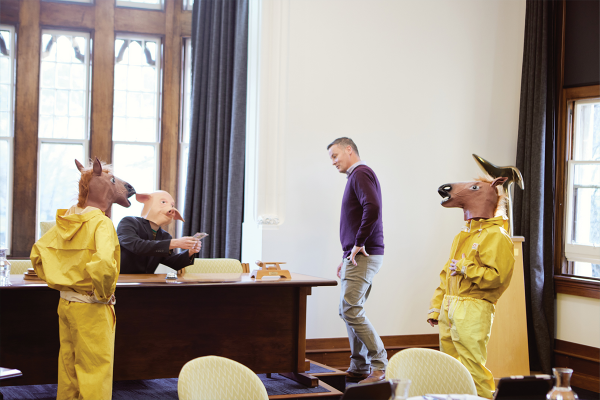
At a packed Uni Council meeting last week, Otago confirmed that it would be going ahead with the million-dollar rebrand. Student protesters - dressed as pigs and horses - refused to leave the chamber after the announcement, protesting staff cuts. It was truly a dog and pony show, but in the end, everyone left peacefully after some words with the Proctor. The meeting covered two significant topics, which we’ll break down here: the design and implementation of a new name and tohu (symbol), and the ongoing debate over cuts and spending. The overlap between the two has been confined mostly to Facebook debates, with people questioning why the Uni is spending more than a million dollars on a project at the apparent expense of staff positions. In the consultation findings, one staff member commented: “On the one hand, there’s never a good time to do this, and the design is very nice, on the other hand, it’s hard to be excited for a redesign when your job is in doubt.” The new name and symbol were a hot debate online, but feedback from people who actually took time to submit to the proposal painted a different picture: out of around 9,000 responses, two thirds were supportive. Some called it tokenism: “The fact that this survey was sent to me only in English shows it is tokenism and woke by a bunch of white privileged people.” Other comments in the consultation findings seemed to think the changes couldn’t come fast enough to incorporate Māori so that it would not be “lost in the Eurocentric foundations of this organization.” While many respondents worried it was merely a “box-ticking exercise”, Chancellor Stephen Higgs said, “I assure you we have listened, and you have been heard.” Thanks, Stephen, for validating me. From next year, the new name will take effect and the new tohu will be seen around campus. The coat of arms will remain (though it’s getting a polish) and will be more visible on the alumni-facing documents and in ceremonial circumstances. The debate about staff cuts was then briefly touched on, with Council noting that they plan to meet with various MP’s and OUSA to hopefully tease out some more emergency funding, or at least lay the groundwork for changes after the election. These meetings will take place with individual MP’s, not as a group. The TEU will also be present. Stephen opened the meeting with the statement that their negotiations with the government have been “successful in a small way”, which is how we’re feeling about the first semester, too. At this point the meeting finished its public segment. When the Council was cleared for a private session, the students along the back row donned their livestock getup and refused to move, flashing wads of printed cash and asking about the democratic process. A third-year amongst the ranks said, “We tried to put on a performance and we got escorted out of the meeting,” making this the first time livestock has ever been trespassed from the Clocktower. The whole ordeal was rather civil, with the Proctor noting, as he escorted them out, that reasonable protest was an important part of the student experience, and that removing them was just due diligence. We did not ask if he had prior experience trespassing pigs or horses. For context, chaos in this room is nothing new. Some years ago, in the late ‘90s, Otago proposed cuts to some languages departments and proposed raising fees. Students occupied the Clocktower, broke down doors, and ultimately forced a counselor to try to escape the meeting room by sneaking out a window. Better luck next time.
-
Columns
 Issue 14 09/07/2023
Editorial: The Uni Budget Collapse if it were a Deck
Let's say you live in a flat with an awesome, party-ready deck. It costs a bit to maintain, but that’s okay because it’s the right thing to do. People love coming over to party on the deck and it’s totally safe because your landlord pays the maintenance bill. It’s their house, so of course they do. But a few years ago, your landlord decided to change how that bill was paid. Instead of them paying 100% of the bill, they’ll now only pay a certain amount based on the number of friends that visit the deck. Their logic is that if nobody is using the deck, they shouldn’t have to pay to maintain it. Seems reasonable enough, right? Then Covid hit. You couldn’t host parties, people stopped coming over, and you were the only one on the deck. And your landlord, abiding by their own rules, stopped paying to maintain the deck since no one was using it. You’re now stuck with paying a massive maintenance bill for someone else’s house or risk losing the entire deck. What do you do? Well, you have to start selling your assets to pay the bill. Gone are your DJ decks, which helped pay for some support beams. Gone are your massive speakers, which helped pay for screws and joinery. Gone are your party lights, which helped pay for a contractor. You had to sell almost all of your gear to foot the bill and now that the deck is finally stable again, none of your mates want to come over. Since you don’t have decks, speakers, or lights, which was the entire reason they were coming in the first place. This is what’s happening with the cuts to universities. The government in the ‘80s said that they’d fund universities based on enrollments and, while universities thought enrollments were gonna keep rising, Covid mucked it up. The government said, “Sorry, that’s on you and your poor forecasting!” and the universities had to start selling assets and scrapping courses to save costs. But now that all those cool professors and niche papers are gone, will people still want to come to the party? Finally, after outcry from partygoers, your landlord said, “Okay, okay, fine. I’ll pay for some of the renovations.” And they paid for half the deck, so now they’re off the hook. Right? Wrong. Because this whole funding system was their idea! When they paid to maintain the deck on their house that they own, everything was fine. People came to the party, you didn’t have to worry about costs, and you had time to focus on what really mattered: vibes and music. But once they shifted that bill onto your shoulders, you didn’t have time to focus on the good stuff. You had to keep focusing on numbers of attendees and competing with neighbouring parties and proving that you deserved funding, and all the while the deck got heavier and heavier. And then, suddenly but inevitably, the deck collapsed. And somehow it’s your fault. Tell your landlord: pay for your own damn deck.
-
News
 Issue 14 09/07/2023
Okay, Now That Landlord Website is Really Shut Down
A website detailing how many properties your landlord owns has been shut down following discourse with the Deputy Privacy Commissioner. The founders of the website believe this decision was “influenced by landlords and property developers”. A press release from the founders sunset_flowers has revealed that their website ‘What does my landlord own?’ (WDMLO) has been shuttered over concerns of privacy breaches, with the DC (Deputy Commissioner) saying that all New Zealanders, regardless of age, wealth or any other status have a right to privacy, indicating that the listing of all properties owned by a given individual somehow violated that right. Website founders said that while the shutdown wasn’t explicitly ordered by the DC, the changes they would’ve had to make in order to satisfy the Office of the Privacy Commissioner [OPC] would effectively neuter the site. A spokesperson for the Office said that “under the Privacy Act, agencies that collect and hold personal information have a duty to protect it and respect it to avoid causing harm to people.” The creators claim that the “multiple inaccurate statements and frivolous claims” made by the DC in their “subjective interpretation of the Privacy Act” raise “serious questions about the values of the Deputy Commissioner and the Office of the Privacy Commissioner as a whole.” In a press release, the website creators mentioned that the OPC cited complaints from individuals as a reason for their investigation of the site. The founders have received a few complaints themselves, “disproportionately (>90%) from landlords.” So, assuming that the same people are complaining to both them and the OPC, “the ‘members of the public’ [the OPC] claim to be acting in the interest of” are almost entirely landlords, who the founders don’t exactly believe represent the public. They also suggested that the OPC’s request for extensive personal information on the website's founders was itself an ironic violation of their privacy. The purpose of the website was to hold accountable the people who benefit from the “hundreds of thousands of people in Aotearoa [who] live in cold, damp, mouldy, and otherwise unhealthy rentals” while the price of rentals continue to climb. In the opinion of sunset_flowers, this is a goal that the Deputy Commissioner is showing an “obvious contempt” for in. The website, upon first release, received such immense attention that the server crashed: 75,000 searches in the first 48 hours. It used publicly-accessible data to list all properties associated with a given name, but the system wasn’t perfect, sometimes combining multiple individuals with the same name or assuming one owner owned an entire block rather than a single building. Now that it’s being shut down by the founders rather, they worry that landlords will be able to continue hiding their hoarded wealth from the public. But, to keep their mission alive, “we’ve made the software behind WDMLO open source in the hope that others will setup similar search tools.” Jade, a third-year, agreed with the message behind the site: “It's not fair being kept in the dark, and leaves a very unequal power dynamic between landlords and tenants.” But for now, the founders pushed users towards Terranet, “a website which provides a similar service to WDMLO”. Terranet hasn’t been shut down, which the founders said could be due to the fact that it’s “marketed at property owners, not at tenants… This too raises questions about whose interests the DPC is acting in.” The OPC cannot “confirm or comment on complaints about a particular agency”, and the website is being taken down by the owners in lieu of making requisite changes: changes they believe would be antithetical to the site’s purpose.
-
News
 Issue 13 29/05/2023
“Scandalous”: $355 Million for Tertiary Sector Reappropriated
Otago Uni Associate Professor Brian Roper claims that $355 million budgeted towards tertiary education is going unspent. This is enough money to bail out Otago, Vic, Canterbury, and Massey universities almost three times over. Each. And it was literally in the 2022 budget. Seriously, these documents are public and if you just keyword search the pdfs for “tertiary education” you can find these numbers. Page 151.
-
Columns
 Issue 13 29/05/2023
Editorial: Vic Uni’s Student Mag SCANDAL
Victoria University Wellington has joined Otago University in announcing substantial job cuts in the wake of financial strain. Because of course they did, they’re always trying to copy us.
-
Columns
 Issue 12 21/05/2023
Editorial: Music to My Ears
As it’s music month, I can’t think of any better time to introduce this gem from the past: ACT MP David Seymour’s first appearance on the decks as a DJ, from back in his days as a student at Auckland Uni.
-
News
 Issue 12 21/05/2023
Coup Leader Steps Down
Reid, OUSA’s Clubs and Socs Representative, is stepping down from his role. He told Critic Te Ārohi that he would be returning to his home in the USA before next semester to take up another job offer, but we think it’s probably something shadier than that.


