Fox Meyer
2022-2023 Editor
Articles by Fox Meyer
270 articles found. Displaying page 2 of 23.
-
Culture
 Issue 23 18/09/2023
Cluckergirl
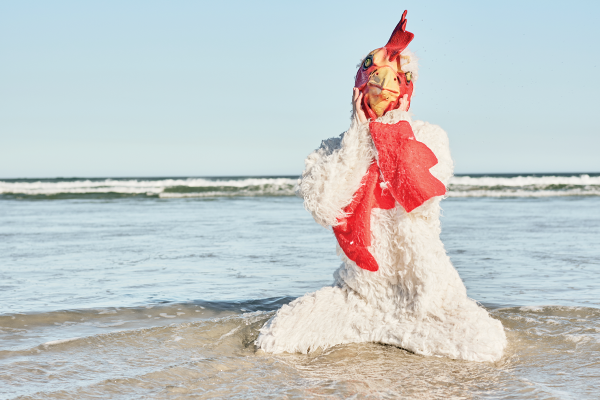
“This is for everyone who’s ever been told they couldn’t make it, everyone who’s been told they’re ‘too old’, ‘too bold’, ‘too much at risk of transmitting avian flu’... They tried to keep me down, but you can’t stop this chook!” The Chicken was giving us every angle in their first return to modelling in over two years. “It had been a really rough time,” they clucked. “I actually had to hang up the giblets for a while. I just got too wrapped up in the whole scene and needed to take a step back. I felt like I needed to just go out and cross that road, you know? Couldn’t tell you why, though.” If you don’t know The Chicken, you’re missing out. The ever-loved mascot of the Zoo has been slinging t-shirts and cheering on the Highlanders for years, always a fan favourite. Their sudden departure had many students concerned, and when we tried to reach out we just got a standard response from the chook’s manager: “Sorry, but The Chicken isn’t available for publicity tours at the moment.” But everything changed when we got a DM from the avian acrobat themself. Turns out, the brief hiatus was just what the doctor ordered: “I’m feeling so refreshed, my plumage is looking silky as ever, and just look at my legs!” But can we expect a potential return to the field in our future? “I dunno, it’s definitely something I’m thinking about,” said The Chicken. “I mean, my brain is literally the size of a pea, so it does take me a while to make complex decisions. But I do miss it… the roar of the crowd, the bright lights, the celebrity status. Nobody does I like Otago. It does get addictive!” In recent years, as we’ve reported, attendance in the Zoo hasn’t been as strong post-VID. The bird was devastated to hear this, but suggested that “maybe all you need is someone to come back and get the crowd whipped up… I wonder who could do that!” The Chicken said that their potential return was “inspired by so many other avian role models” redefining what it means to be a cluckergirl. “Like, it’s not all about image these days, you don’t just have to have the wrinkliest giblets, you don't have to have the loudest caw, you just have to be a good role model! It’s great, it’s so inspiring.” They pointed to the Bluebird Penguin and the Duolingo owl as personal inspirations. “Chip is just such a legend in this space, has always been sticking up for the little chicks, it’s so good to see them on prime time… and Duo! Man, I’ve got some stories about Duo,” they laughed. “Never been afraid to ruffle some feathers, that one.” It hasn’t always been smooth sailing for bird mascots, said the chook. “I mean, just look at what happened to the poor Twitter bird: literally X’d out by the boss. I mean that’s just so heartbreaking to see.” While they consider coming back to the field, The Chicken is just spending time focusing on themselves. “I’ve gotten really into self-improvement, you know? Stuff like making sure my beak is clean, going for walks, that sort of thing. I actually wanted to get into charity work, building houses for the vulnerable, y’know? But they told me I couldn’t because I was a chicken, or something, and I thought that was just outrageous.” “They say you’re too old, too this, too that. I say ‘whatever’. I say spread your wings and fly.” Will the bombastic bird make a return to the Zoo? Time will tell.
-
Features
 Issue 22 11/09/2023
BIONICLE: The Craziest Use of Te Reo You’ve Never Heard of
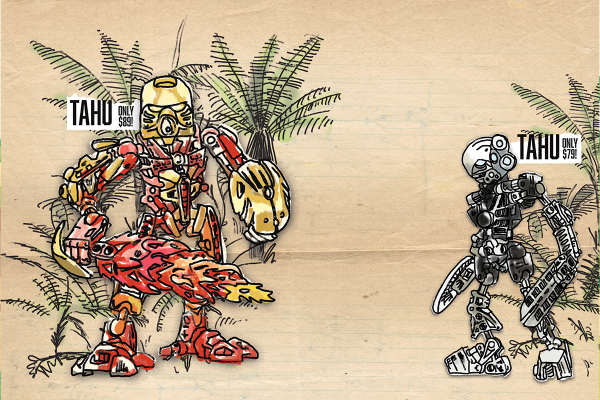
Once upon a time, the great being Mata Nui wandered the endless cosmos. But his evil brother, Makuta, plotted to destroy him. Makuta summoned hoards of monsters, but could not take the Great Spirit’s life. Instead, Makuta cast Mata Nui into an eternal slumber. His body came crashing down from the heavens into the sea, forming our pristine world. The first people were villagers called the Tohunga, performers of the Great Haka, children of Rangi and Papu, and they lived in peace with their environment. But trouble is stirring in Mata Nui. Prophecy has foretold the coming of a new Toa, and the forces of Makuta will stop at nothing to control him. Sound familiar? That’s probably because most of those names and words come directly from te reo Māori. But this isn’t a traditional pūrākau (legend). This is the plot of Bionicle, a line of toys made by the LEGO Group. I wanted to write a piece about appropriation of Polynesian culture by a Danish toy company, but this quickly spiralled out of control. Turns out, Bionicle isn’t just a toy brand with a loose veneer of Polynesian culture; it has a ten-year history spanning an astonishing 2,000 pages of lore — plus video games, comic books and movies. This lore is so dense and incomprehensible that we had to get one of our volunteers to watch a nine-hour-long video on the backstory, coupled with an 83-page treatise on their language and a bona fide academic paper from the University of Copenhagen to boot. 2001 saw the release of Lord of the Rings, a movie based on a book based on one man’s obsession with creating a language. It also saw the release of Bionicle, a toy line based on one man’s severe illness and flavoured by Polynesian culture, and also centred on a language. I am not exaggerating when I say these two fandoms have comparable troves of background lore, which is why we are explicitly sticking to the 2001-2003 period of Bionicle, from the first release of toys, to the first movie. Simply put, the basic idea of Bionicle (read: Biological-Chronicle) is that a big robot crashes down because the cells in his body are fighting for control. He goes to sleep in the ocean and the parts of his body above water become islands (sound familiar?). Unbeknownst to the inhabitants, their entire existence is within a larger being, where they must fight off “infections” in the form of the Makuta to save the host body. The canisters the toys come in are even shaped like pill capsules. That’s the “Biological” half. To build the “Chronicle” half, creators of Bionicle tapped into genuine island culture for “inspiration”. Here is one of many, many examples: most of the Tohunga (villagers of the Matoran species) are on Mata Nui (the main island). They live in six different wahi (biomes), and if they are given the chance to take up a Kanohi mask, they can unlock their elemental powers and become a legendary Toa warrior. Once a Toa feels their duty has been fulfilled, they can transform back into a villager, except this time they’re a wise elder. Every single one of those terms is a direct translation from te reo, except ‘Matoran’. In 2001, LEGO had just bought the rights to Harry Potter and Star Wars, and while their toys were a hit, their finances were in the shit. Bionicle was there to save the day. Propped up by rich Polynesian history and language, the product line was the only profitable LEGO product for several years, single-handedly keeping the entire company above water. Part of this success was the toys themselves (fuckin’ ripped), but part of it was also due to the vast world imagined by the product line’s designers. This lore was clearly inspired by te ao Māori and other Pacific islands like Fiji and Hawai’i. All this backstory had already been set up when LEGO started releasing the toys and online game, and while Western audiences might’ve thought of it as “cool, exotic nonsense”, a lot of the terms started to seem very familiar to people in Polynesia. Yet again, an overseas indigenous population made it into the mainstream, but only in the role of “alien”, because that’s exactly what they are to their Western designers: alien. Let’s look at the original line of toys: We’ll start with the lowly villagers, which were originally called Tohunga. There was Onewa, the grey one from the mountains (whose name literally just means “grey”). Matau, the green one from the forest who was maybe meant to be from the ocean because his name means “fish hook”. Did someone accidentally swap the two? Who knows. And how could we forget Whenua, the one that drills through the earth? Pronounced, of course, “wen-ua”. Which I guess is fine if you’re from Taranaki (it was later changed to ‘Onua’). Remember: the Tohunga are tiny, 40-ish piece play sets. If you wanted a bigger toy, you had to purchase a whole different playset: the Toa. Also known as the Toa Mata (literally “mask warriors”) and later Toa Nuvu, these elemental heroes gained their power by adopting various masks. These came with new names, giving us Tahu (the fire Toa), Pohatu (the stone Toa) or Kopaka (the ice Toa). Each name is literally just their elemental theme in te reo. Other names came from other Polynesian languages, like the Hawaiian “Lewa” giving its name to the air Toa. Oh, and spoiler alert: if you knew te reo, you’d realise that island of Mata Nui (“Great Face”) was secretly the protruding mask of the sunken deity all along. Plot twist! And it goes beyond names and places. The Matoran language - which is a fully-fledged thing of its own - has a sentence and grammar structure extremely similar to te reo, with a limited vocabulary made up of a hodgepodge of words from the Polynesian Triangle. And since people are so incredibly invested in Bionicle lore, a whole generation of kids in the early 2000’s ended up accidentally learning rudimentary te reo in the process of playing with these toys. No joke! The 10-part documentary series that I tried to watch (different than the one our volunteer watched) was hosted by a bespectacled geek with about a bajillion Bionicles on the shelf behind him, and at one point he interrupts the video to describe the naming conventions of the various Toa, explaining how the descriptive terms come after the nouns, all in perfect te reo. This man literally taught himself te reo without realising it. Not every word was ripped from te reo; many just sort of “sound like” they’re Māori. LEGO also seemed to favour the same sounds over and over, undoubtedly confusing parents everywhere when they couldn’t remember if their kid wanted a new Brutaka or Piraka. Or was it a Berocca? But if you look past the early years of Bionicle, you’ll notice that a lot of these Pacific terms seem to die off, replaced with names that just sort of “sound like” they’re from here, or names inspired by Greek, Latin or other European sources. And there's a good reason for this; after the 2001 release of the ads, local iwi caught word that some Danish toy company was making products using their language, and they had a problem with that. It’s at this point that a lawyer sent a strongly-worded letter to LEGO, basically saying, “Hey can you please not use our culture for this, also don’t you dare trademark any of these words.” And his challenge worked. LEGO apologised and said they’d change some names in the future, most importantly “Tohunga”, which translates to something much more influential than just “villager”. This was worked into the storyline by having the various Tohunga realise they’re one people and suddenly deciding to change their species name to “Matoran” - though this event was pretty quickly dropped from the story and pushed under the rug. The elder villagers were renamed “Turaga”, a clear nod to Tohunga. But this wasn’t the only thing pushed under the rug: the online game had a few lines of dialogue that needed to be changed. For instance, mentions of “Rangi and Papu” were removed, and Jala, the Captain of the Guard, became “Jaller”. He also no longer describes his participation in “the Great Haka dance” because… yeah. LEGO, fearing a “bitter conflict” with Māori groups over their only viable product line, agreed to demands made by the iwi. The iwi, in turn, agreed that LEGO probably didn’t mean any harm by using Polynesian culture. Roma Hippolite (of the Ngāti Koata Trust) said at the time, “We have been impressed by the willingness of Lego to recognise a hurt was inadvertently made and show that in their actions.” LEGO sent a representative to meet with these groups in person, promising that future sets would avoid appropriation, and that an internal code of conduct would be built to avoid this mistake elsewhere. The next year, 2002, Aotearoa formalised Toi Iho Māori: the recognised trademark of te ao Māori – though, like the characters in Bionicle, it has changed shape over the years. To make this even crazier, the lawyer that represented these groups would, years later, take on a much more high-profile case of misrepresented islanders. His name is Maui Solomon, and he is the guy that fought for formal representation of Moriori. Maui (Moriori, Kāi Tahu) has somehow been woven into this bizarre story, and despite what the Bionicle legends would say, he’s probably the real hero here. Sorry, Mata Nui. Following the challenge, Bionicle made some retroactive corrections and changed their ethos moving forward. But the impact had already been made. An entire language and culture had been formed around these cultures, and a dedicated fan base sprung up to chronicle the lore - a fan base that is incredibly active online. Many of them are very aware of the influences of te ao Māori, but many casual fans never had a clue. And that was basically that: a bunch of white kids accidentally learned te reo, Maui Solomon got brought into the fray, and LEGO survived financial ruin by hitching a ride on Polynesian culture. Now, we’re being treated to ads for an upcoming Bionicle game. Fans are veritably manic over this news, looking forward to a return to Mata Nui early next year. Perhaps we can look forward to a new generation of accidental te reo enthusiasts - though this time someone might want to tell them that the language is more than just flavour for a children’s toy. LEGO is not the only group to tap Polynesian lore for “inspiration”. How often do we see te ao Māori cast as the “alien” culture, rather than human? Looking at you, Avatar. Each word appropriated a shadow over Polynesian culture. Each kupu not alien, just indigenous. Each set sold separately. DICTIONARY SECTION BELOW - 1 PAGE A (Brief) Dictionary of Bionicle’s Polynesian Words Yet again, somebody with a lot of time on their hands has come to the rescue. Chuckschwa on Reddit has compiled an extensive list of Matoran words and their Polynesian roots, some of which have been included here: Characters Toa - elemental heroes/protectors Toa (Māori) - warrior, courage, champion, bravery, expert Tohunga - villagers Tohunga (Māori) - revered village expert Tahu - Toa of Fire Tahu (Māori) - to burn, ignite, set on fire Pohatu - Toa of Stone Pōhatu (Māori) - stone Kopaka - Toa of Ice Kōpaka (Māori) - ice Lewa - Toa of Air Lewa (Hawaiian) - sky, air, atmosphere; to float, swing Gali - Toa of Water Gali (Kamilaroi/Gamilaraay) - water, rain Galu (Samoan) - wave Onua - Toa of Earth Honua (Hawaiian) - earth, land, world Fonua (Tongan) - the whole earth Vakama - Turaga of Fire Vakama (Fijian) - burn Nokama - Turaga of Water Waka ama (Moari) - outrigger canoe Noka, Nokata (Fijian) - to tie up, make fast, a boat from going adrift Noke (Fijian) - woven basket for collecting seafood Nuju - Turaga of Ice Nuju (Rotuman) - river bank; beak; mouth; to recite by memory/heart; spokesman Nuju (Sudanese) - to lead, tend Onewa - Turaga of Stone Onewa (noun, Māori) - granite/basalt, short weapon made of stone Whenua - Turaga of Earth Whenua (Māori) - ground, land Matau - Turaga of Air Mātau (Māori) - to know, be certain of (noun) knowledge, understanding; fish hook Mata'u (Rotuman) - carefulness, caution; to watch Matau (Tahitian) - fear, dread; accustomed or used to a thing; fish hook Makuta - evil spirit, Master of Shadow Mākutu (Māori) - witchcraft, sorcery, spell or incantation — Masks Kanohi - masks of power Kanohi (Māori) - face, countenance Pakari - mask of Strength Pakari (Māori) - to be strong, sturdy, mature Hau - mask of Shielding Hau (Māori) - vitality; breath, air Kaukau - mask of Water Breathing Kaukau (Māori) - to swim, bathe Miru - mask of Levitation Miru (Māori) - alveolus (part of your lungs) Mirumiru (Māori) - a bubble Kakama - mask of Speed Kakama (Māori) - be quick, alert, nimble Akaku - mask of X-ray Vision Akakū (Hawaiian) - vision, trance Huna - mask of Concealment Huna (Māori) - to conceal, hide Huna (Hawaiian) - secret Rau - mask of Translation Lau (Tongen) - to talk, to converse, familiar discourse Parau (Tahitian) - to speak, converse; the shell of the pearl oyster Komau - mask of Mind Control Mau (Māori) - to seize, to take hold of Koma (Māori) - axe head made of stone Mahiki - mask of Illusion Hiki (Māori) - to lift up, carry Mahiki (Māori) - to jump, leap, hop, vibrate Note: this mask was worn by the air Toraga, Matau, which might explain the words used. Matatu - mask of Telekinesis Matatū (Māori) - to be watchful, to keep awake Ruru - mask of Night Vision Ruru (Māori) - owl Aki - mask of Valor Āki (Māori) - to encourage, challenge, incite; to beat, pound, throw down Rua - mask of Wisdom Rua (Māori) - hole, chasm, abyss (where heavenly bodies disappear before returning again) Vahi - mask of Time Vahi (Pascuan) - to pass (of the beginning of a season) Vahi (Rotuman) - to be completed; to be past/gone by (events, time) — Places and Nature: Mata Nui - island home; Great Spirit Mata (Māori) - face, eye, surface Nui (Māori) - to be large, many, great Koro - village Koro (Fijian) - village Mangaia - great volcano Maunga (Māori) - mountain Daikau - carnivorous jungle plant Dai (Fijian) - trap Kau (Fijian) - plant Hikaki - large fire lizard Hika (Māori) - to rub violently (to kindle a fire) Kahu - great hawk Kāhu (Māori) - hawk Tarakava - giant water lizard Tarakuero (Pascuan) - a fish Tarakona (Māori) - dragon Vatuka - stone monster Vatu (Fijian) - stone Ka (Fijian) - thing Amaja - story circle A'maja (Rotuman) - to develop a story/theme Ignalu - lava surfing sport Ignis (Latin) - fire Nalu (Hawaiian) - wave Suva - Toa shrine Suva (Fijian) - mound or pile of stones used to mark a place; Capital of Fiji
-
News
 Issue 22 11/09/2023
An Inconvenient Tooth
Labour has announced a plan to provide free dental care by - in part - training more dentists, but students in the country’s only dental school are asking: who’s going to teach them?
-
Columns
 Issue 21 03/09/2023
Editorial: Two problems with big-time philanthropy.
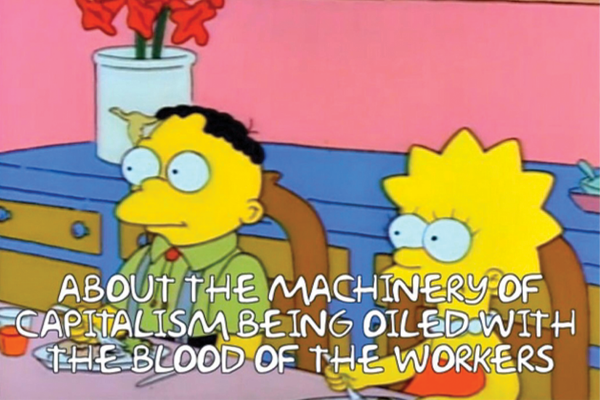
It’s politics week, so I want to talk about donations. Specifically “big-time philanthropy”, which is not when Auntie Lorraine makes out a $2,500 cheque to the children’s hospital. I mean more like when Peter Thiel donated $1 million to the Christchurch earthquake recovery fund and then was quietly granted citizenship by John Key’s government (after spending just 12 days in the country). You’re gonna be hearing a lot about which party is raising the most money, and there are two points I want you to keep in mind when you think about what actually motivates people to give away their money. The first problem is well-documented: donations can be tax deductible, which is great - in theory. In practice, it means that the few of us with massive stockpiles can effectively opt out of the public works scheme and choose where they want their tax dollars to go. Not a fan of light rail, but your local government is? Easy! Instead of paying the taxes that would be used to fund light rail, you can donate a large sum to a charity focused on giving rides to elderly folks (if that exists). This is a complete subversion of the democratic process and, when you think about it, it’s pretty evil. After all, every time someone makes this sort of donation, they get to bathe in the warm waters of public approval. But this is doubly sinister because when you consider where that money is actually coming from, who is the real philanthropist? These billionaires are only able to exist because they’ve taken advantage of an exploitative system, one that transforms a person’s waking hours into capital and then squeezes the literal life out of them in an effort to extract as much capital as possible. “Time is money,” they say, so the inverse is also true: money is time. So when you’ve hoarded inordinate amounts of money, what you’ve really done is hoarded the minutes, hours and days of countless cogs in your human machine. The donations made by these billionaires are funded, as Homer Simpson put it, by the blood of the working class. It’s not their money it’s not their time; it’s ours. The real philanthropist is the one working their life away for less than they need to survive. That’s selflessness. Remember all that talk about “essential workers”, before we promptly shooed them back into poverty? They’re the philanthropists, literally donating their lives to keep us all afloat. Since this economic system has been engineered to encourage wage-hoarding, these people will essentially be donating their time (er, money) to whoever's above them in the chain. Trickle-down economics in reverse - it’s more like economic vampirism. Finally, all of this time and money ends up filling the pockets of the top dog, who can then use the fruits of others’ labour to make big-time donations to whatever cause they please, subverting their taxation requirements and improving their reputation. They are free to influence policy and opinion almost entirely at the cost of the people they claim to be helping. Neither of these ideas are mine originally. I’ve heard the first idea from several sources, but the second is from Barbara Ehrenreich’s Nickel and Dimed from way back in 2001. It’s only gotten worse since then. Have a think about this next time you see which parties collect the most donations - right now National is well in front. ACT and National combined were making $8.50 for every $1 donated to Labour and the Greens. Only certain people in today’s world can actually afford to make donations. What might attract such a large portion of them to one party?
-
Features
 Issue 20 20/08/2023
This Barbie is getting Deported!
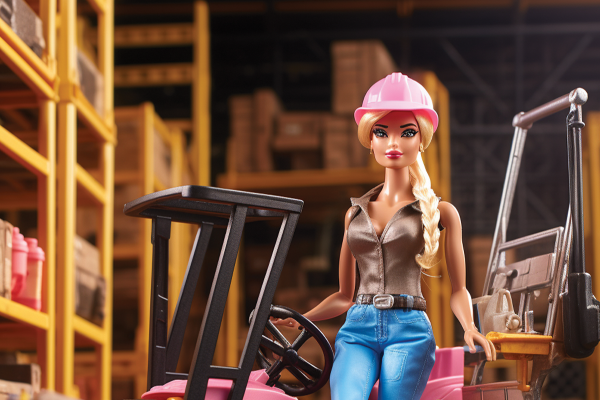
I counted 323 individual Barbie dolls, including multiples in the same box and excluding all Kens because, well, they're just Kens. Of these 323, 209 were either unemployed or just on vacation, and were therefore refused residency by Immigration New Zealand. That includes all of the myriad Beach Barbies, Holiday Surprise Barbies and Bubble Fairy Barbie. Unfortunately, this also barred Troll Barbie and - my favourite - Alfred Hitchcock’s The Birds Barbie. Can’t bring in invasive species, sis. The jobless masses also included a range of Dolls of the World Barbies, including Kenyan, Peruvian and Czechoslovakian Barbie. They may have some valuable trades to lend to our community, but they didn’t list them on their applications, so I’m afraid we cannot grant them entry. Also their passports haven’t been updated since before the fall of the USSR, which makes things complicated. Only 51 Barbies had a shot at residency based on the Green List and their associated Australian and New Zealand Standard Classification of Occupation (ANZSCO) job IDs. Some of them were still a tossup but immediately there were some shockers: Legally Blonde 2 Barbie may have passed the Bar and may have valuable legal experience in Washington, D.C., but at no point on the Green list do we call for any sort of legal professional. Sorry, babes! Unless she happens to have two years’ worth of drainlaying experience (ANZSCO# 334113), Legally Blonde 2 Barbie is NOT welcome. Actually, while we’re at it, most of the girlboss Barbies (CEO Barbie, etc) will have to hope for some sort of auditing experience as that’s pretty much the only attainable financial position on the list. Obviously most of the Barbies seemed to work as some sort of singer/actress/athlete, which means they’d probably apply via the Talent (Arts, Culture, Sports) Resident Visa. This means they’d need to be prominent in their field with at least two years of experience, prove that their presence would “enhance New Zealand’s achievement” in the area, have the support of a reputable New Zealand organisation and never have received any form of welfare or benefit. Ironically, anyone who’s ever been on hold with WINZ for a benefit is very aware of the fact that NZ has had about four and half musicians, ever. This means that Elton John Barbie and Elvis Barbie can probably squeeze in. Maya Angelou Barbie can make a strong case, too. And while we’re making exceptions, let’s not forget 2000 Olympic Fan Barbie, because she’s clearly an Australian citizen and therefore can come as she pleases, but also she's Australian. Tokyo 2020 Sport Climbing Barbie also appears to be wearing Aussie colours, meaning she might sneak past the border, too. Oh, and so will Royal Family Barbie, even though she doesn’t have a real job. The rest had to hope their job is on the Green List of New Zealand’s most pressing labour shortages. Most notably, this included crowd favourite Harley Davidson Barbie - so long as she can prove work experience as a Motorcycle Mechanic (ANZSCO #321213). Fingers crossed on that one. Not because she’s a woman, but because she’s a flammable plastic doll without opposable thumbs. Five Astronaut Barbies applied, but only four could possibly be accepted. The loser here was Space Camp Barbie as she is clearly still a child and has no valuable work experience to contribute to our society. The other four astronauts (including Mars Explorer and Space Discovery Barbie) will still not be able to apply as just “astronaut”. It’s just not on the list, plus if we bag Elton John then we’ve already sussed enough Rocket Men. But they probably have experience as a mechanical or electrical engineer (ANZSCO#’s 233512 and 233311), which is more than enough. Just bring that passion back down to earth. This is a good time to talk about the celebrity girlboss Barbies, of which there were six: Maya Angelou, Katherine Johnson, Helen Keller, Rosa Parks, Eleanor Roosevelt and Jane Goodall. Maya will have to apply via talent, as we’ve said. Rosa Parks was a seamstress, which isn’t on the list, so she isn't getting in. Civil rights be damned - activism doesn’t help the economy, sweetheart, no matter what the Barbie Movie is trying to tell you. Helen Keller is disabled, so she can pretty much give up immediately. Eleanor Roosevelt did many things but never really had an actual job, and formal experience is necessary for residency, so tough luck. Try the rich person visa instead: the Active Investor Plus Visa, in which you “invest” $15m over four years. That leaves just Jane and Katherine. Jane can’t use any of her actual career to get by because we don’t have any native mammals and we hate tertiary education, but she might be able to get in as an Environmental Research Scientist (ANZSCO #234313). That, or we can let her observe Castle for a while and see if she publishes another book. Not that we want authors, either. If you don’t know Katherine, she was one of the ladies behind Hidden Figures, the team that sent NASA to the moon. But we don’t want mathematicians, so she’ll have to swallow her pride and apply based on her prior experience as an Early Childhood (Preprimary School) Teacher (ANZSCO# 241111). That’s gotta hurt. Maybe she could swing Developer Programmer (#261312), but she’s probably not up-to-date on her coding. Speaking of swallowing their pride, three superhero Barbies attempted to gain residency: Supergirl, Batgirl and Wonder Woman. All three would have to apply via their alter-egos, obviously. This would be toughest for Supergirl, as she’s technically an alien, both legally and literally: Kara Zor-El from Krypton. But, assuming she can fake some medical records, Kara could apply as Linda Lee Danvers, a grad student with experience in acting and camera operating. Both of these skills are useless according to Immigration, and she can’t apply as a Post-Doctoral Fellow (#242111) as she doesn’t have a PhD and that didn’t make the Green List anyway. But even if she wasn’t foiled by the crack team at Immigration, she would’ve had to declare that her definitely-human application was truthful, and I don’t think Supergirl can lie, so. Batgirl applies as Barbara Gordon, daughter of the Gotham City Chief of Police, and probably relies on her “superb hacker” status to apply via some sort of IT pathway. Maybe Software Engineer (ANZSCO# 261313)? She’s a talented gal so she’s probably got this one on lock. Wonder Woman might be able to make it through as Diana Prince, though her age might put the immigration officers on edge. She has quite the resume, including stints as an army nurse, intelligence officer, businesswoman, astronaut and UN staff member. But healthcare is the safest bet so let’s just call her a GP (#253111) and be done with it - we don’t need any more damn astronauts. The agriculturists were a paltry bunch. Peaches ‘n Cream Barbie (not the adult toy store) doesn’t have any real arborist experience (ANZSCO #362212) and is largely just a pick-me country girl, so her soft hands fail the test. Also, we’re sponsored by their competitor. Australian, Western, Got Milk? and Western Stompin’ Barbies all could get in as Dairy Cattle Farmers (#121313) and live a nice life married to a mid-Canterburian Ken. Kev, I guess. They can’t apply as Beef Cattle Farmers, though, apparently we don’t want those. Pilgrim and Pioneer Barbies might have a shot as Market Gardeners (Crop Production/Agronomist Managers, #121221), but neither of them are likely to have a formal record of employment, and that job is not technically on the Green List. Native American Barbie is in the same boat. Tragically, Beekeeper Barbie’s job (Apiarist, ANZSCO# 121311) only appears on the skills shortage list, not the Green List, meaning her pathway to residence will be harder than she initially thought. Heartbreaking. And that’s it for the agriculture sector, I’m afraid. The scientists were also pressed for luck. Besides the aforementioned girlboss Barbies, headlining the bunch was Dana Scully X-Files Barbie. And while “Paranormal Researcher” isn’t on the list, her degree in physics and experience as a medical doctor may qualify her as a Medical Physicist (#234914) or at least a GP (same as Wonder Woman). Four National Geographic Barbies entered. Only Polar Researcher Barbie and Jungle Explorer Barbie have a shot as Environmental Research Scientists (#234313), but it’s not looking likely. Nat Geo Photographer and Nat Geo Camera Crew Barbies didn’t have anything useful to offer us and probably come with some baggage. Finally, Palaeontologist Barbie would have to try for University Lecturer (#242111) in the Otago-specific skills shortage section, but Otago University just cut their palaeontology position, so she’d be deported upon entry. Finally, we have the healthcare Barbies. This lot was very fortunate, as New Zealand is seeking pretty much anyone who can use a plaster. The bespoke St. Johns Barbies are already citizens, so that’s easy. Nurse Barbie is seen in an ambulance, meaning she can apply as an Ambulance Paramedic, (ANZSCO #411112). Dentist Barbie has about five options to choose from, which means Tooth Fairy Barbie is also probably in luck. The newer Nurse Barbie is seen on her box pushing an old person, giving us hope that she can apply as an Aged Care Nurse (#254412). All three Doctor Barbies ought to be able to get in; one is seen holding a child, passing as a Paediatrician (#253321), and the other two surely have experience as Medical Radiation Therapists (#251212), Surgeons (#253511), Radiologists (#253917) Physiotherapists (#252511) or OB-GYNs (#253913) - but to date, I haven’t seen Gynecologist Barbie (I immediately lost her inside me). Maybe next year, speculum included! The two Pet Doctor Barbies are also safe, as Veterinarians (#234711). Civil War Nurse Barbie also probably has a shot at Surgeon, but her heavy PTSD may make her an unattractive candidate. For what it’s worth, Civil War Nurse Barbie was not the only doll with combat experience. There was also U.S. Air Force Barbie and her sisters in the American Army and Navy, all of whom may be barred for their participation in war crimes. Tough to say. Mechanical engineers are in high demand, after all, and what’s a little civilian casualty in the name of a stronger economy? One thing’s for sure: I didn't see a Geneva Convention Barbie. At the end of the day, far more Barbies were denied than were accepted. So if Mattel wants to start setting more realistic career aspirations for the Kiwi-hopefuls, I have some recommendations for New Zealand Green List Barbies that haven’t hit the shelves yet: Halal Slaughterer Barbie (#831212) would be an undeniable hit, as would Urologist Barbie (#253518), Psychotherapist Barbie (#272311) and Plumber Barbie (#334111). Family and Marriage Counsellor Barbie or Drug and Alcohol Counsellor Barbie (#272112/3) would also be a slay. Forklift Operator Barbie (#271216) goes without saying and, while I hate to admit it, Internal/External Auditor Barbie (#221213/4)would have a very warm welcome to New Zealand. But God forbid we make a Journalist Barbie, those ones are absolutely useless. But wait! All of these Barbies are just... Barbie. She’s done it all. She doesn’t need to apply simply as Civil War Nurse Barbie or Harley Davidson Barbie, because she can fix a chain drive AND apply a tourniquet to a screaming soldier. She is truly a queen of all trades, and should have no problem whatsoever passing Immigration - here’s hoping they just don’t look at her age.
-
Columns
 Issue 20 20/08/2023
Editorial: Otago is About to Solve the Climate Crisis
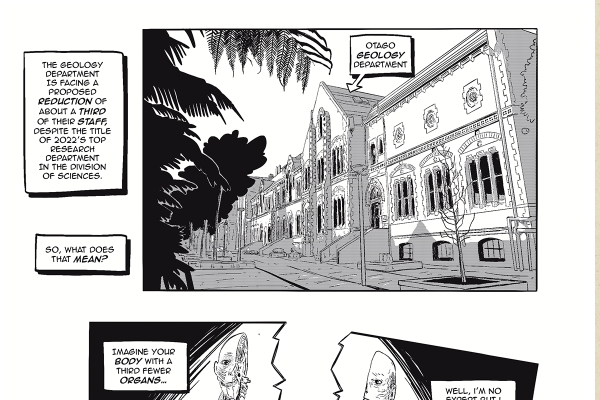
Great news! We’re set to lose about $900,000/year in the Geology Department, crippling our ability to research natural hazards and climate change. But what we aren’t realising is that this is actually a genius move from the top levels of government to solve the climate crisis overnight. We’ve got all sorts of national climate and hazard problems to worry about and, if that weren’t enough, we’re expecting to be hit with the largest-ever recorded earthquake when the Alpine Fault goes. Lots to worry about, which also means lots of expensive maintenance. Central government knows this, and while they aren’t busy taking $2 billion from totally-unproblematic Blackrock, they’re in charge of supporting our universities. They could, if they wanted, use some of that $2 billion to bail out our entire tertiary sector in the name of climate security. But here’s their genius play: If they let all of our climate and hazard research departments fail, nobody will be collecting climate data. And then the problem disappears! It’s so simple, really, when you think about it. Answering an alarm bell can be an extremely costly and downright annoying exercise. So instead of paying consultants millions to figure out what the best response would be, we can save heaps of cash by just getting rid of the bell! They say “numbers don’t lie”, so all we need to do is get rid of the numbers. Simples. This definitely won’t end up costing more in the long run. Letting geology and science communication collapse is the first step towards a more sustainable future. At least, it’s the first step towards a future where people just shut up about climate change for once. Even if that blabber was worth listening to, what’s the point? Everything is already so irrevocably screwed that training new scientists can’t have any value at all, right? Like why are we even studying earthquakes if we can’t say exactly when they’re going to strike? Save some money by putting your fingers in your ears. Ignorance truly is bliss. What you don’t know can’t hurt you, so we’re making sure we don’t know much about anything. Ergo, we are indestructible. The millions it would take to prop up our floundering departments (which are only floundering because of the system we imposed upon them, nice) has got to be a higher price tag than the consequences of crippling our hazard and climate researchers. It’s not like deplatforming your earth scientists could possibly lead to millions more in damages when we get blindsided by a disaster that one of them was studying. But I guess that doesn’t matter since Blackrock just gave us $2 billion dollars to become carbon neutral. Who needs home-grown experts when you can just tap that sweet, sweet American oil-military-investment income? I say: keep our heads in the sand! It’s a lot more peaceful that way.
-
News
 Issue 20 20/08/2023
Seagull Gang Ram-Raids Night ‘n Day
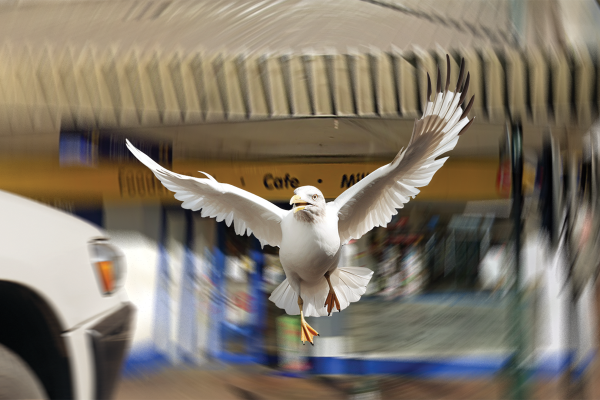
Thursday evening, August 10th. A gang of ten young ruffians swarmed into the Octagon Night ‘n Day, harassing staff and customers while refusing to leave. The offenders – all in matching outfits – refused to communicate in english. Maybe because they were seagulls. This is no joking matter. As ram-raids continue to dominate the national news cycle, we needed to consult an expert. Immediately, we reached out to Chris Luxon for advice, hoping to learn something from his Party’s tough-on-crime stance. We told him that “ten individuals… entered a Night ‘n Day in town and caused ruckus by intimidating staff and patrons. It's unclear if they actually stole any items.” Not one to shy away from pressing issues, we almost immediately got a response from Mark Mitchell, National Party spokesperson for Police. He told us that, “While we do not know the details of this [incident]... it does demonstrate that there is a real sense of ‘no consequences’ among young people, something that has been fuelled by Labour’s soft approach to crime.” To get to the root of the issue, Critic Te Ārohi spoke with Night ‘n Day staff member Alina*, who witnessed the events firsthand. After co-worker Rodger* had to spend his mid-shift break dealing with the pack of unruly youths, one managed to evade capture by hiding on top of the fridge overnight. The next morning, to rub salt in the wound, the gang came knocking once again. In broad daylight! Something absolutely must be done. Nina and Amelia, two students after a post-town feed, were trapped in the store while the chaos ensued. “There’s a difference between one or two birds in the library and six or seven big fuck-off seagulls in Night ‘n Day,” said Nina. Though she was pretty unfazed about it all (“I just wanted my wedges”), Amelia was not, saying, “The ratio of birds [to humans] indoors was ridiculous, a line had definitely been crossed.” Still, she said, “We were on a mission to get wedges, nothing was going to stop us.” The scare tactics employed by the birds were effective, but it’s unclear if they actually made off with any stolen merchandise - the details from the girls were admittedly hazy. If they had, perhaps a better headline would’ve been “Fantastic Beasts and Where to Fine Them”, but we’ll let that one sit for now. In the meantime, the lack of actual damage has encouraged conspiracy theorists to wonder if the whole ordeal was actually an elaborate marketing ploy orchestrated by Night ‘n Day itself. Alina doubted this, and mused that maybe the reason the birds didn’t steal anything was because the food is “pretty shit, really.” But no matter the explanation, Mark Mitchell was insistent that, “Intimidation is frightening and all business owners and staff should feel safe in their own environment.” Thank you, Mark. We can all sleep at night with the promise that “National intends to ensure that young people know that actions have consequences.” Assuming, of course, that extends to birds. Until the election, we expect Dunedin’s seagulls to continue spitting in the face of the law. The gulls could not be reached for comment. *Names changed.
-
Columns
 Issue 19 13/08/2023
EDITORIAL: Rock Bottom
Hey, you, you’ve got thirty seconds. Sign this petition. It’s not pointless, we did this sort of thing when marine science was under the axe, and it worked. Do it, because it’s only open until Wednesday. Do it, because if Otago is willing to cannibalise its own founding discipline, it’s willing to eat yours, too. Below is a plea from Chelle - she was features editor here at Critic a while ago. Now she studies volcanoes. This is the department of dinosaurs, meteors, climate change, earthquakes, Antarctica, mining, geothermal energy: all the cool stuff, all of which is vital for our changing world. They say enrollments are down, but that’s not entirely true. Globally, enrollments of petroleum industry geologists are down. But plenty of people want to study the consequences of that industry’s behaviour, and somebody needs to clean up the mess. Don’t let our Geology Department be undermined. Heck, I’ll shout you some pints if you help out. Kia ora, No doubt you will by now be aware that the University is proposing to cut staff in the Geology Department by around 30%. This is an absolute nightmare scenario, regardless of how many reassurances we are given about these changes not affecting our education or the quality of the Otago Geology degree. In the Geology Department, we care deeply about our people, our whānau. The level of contact between staff and students is unlike no other. We camp with them in the field in all conditions, we hike glaciers with them, we helicopter into inaccessible terrain with them, we tent in Antarctica with them, we camp out in the Arizona desert with them. On Friday afternoons we chat over beers at Emerson’s or Eureka, an urban echo of the shared beer at the end of a long day in the field. Our staff know us well, and us them. We house-sit for them, we look after their dogs, we rally around each other in times of grief. They support us, they care about us, and they are genuinely excited about our research, whether they are our supervisor/lecturer or not. We are a family. Our treasured staff have increasingly borne the additional strain of a number of staff vacancies in recent years, and it has been devastating to watch their workloads and stress levels rise. Despite this, they have continued to enthusiastically nurture our education and research, and these proposed cuts effectively kick them when they are already down. New Zealand’s unique geological situation means that maintaining our world-class geology department is vital, and staffing cuts to this department will unequivocally kneecap the Otago geology education in many ways - not to mention the risk of losing overseas interest. Geology already attracts so many of the Clocktower’s prized international students. I am begging everyone to support us in our mission to have these proposed cuts overturned. One way you can help right now is to sign our petition ASAP, BY WEDNESDAY 16 AUGUST, or follow the QR code. There is also a template for an email of support that you can send to Richard Barker, the Pro-Vice-Chancellor of Sciences, which would aid us immensely. Please help us keep the magic alive. Chelle Fitzgerald PhD Student (Volcanology) Geology Department
-
Columns
 Issue 18 07/08/2023
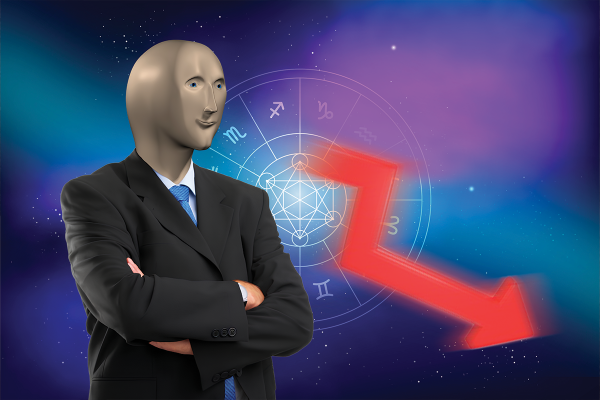
Editorial: Finance is just Astrology for Capitalists
Last time we talked about bad timing: why announcing a million-dollar rebrand during massive staff cuts is a bad idea, even if the rebrand itself is a good call. This time we’re gonna be talking about maths. Unlike the decision to rebrand, the decision to set a budget is rooted firmly in calculations. These economic balance sheets and extensive formulas are meant to be the reason we pay our executives so highly, and why economic contractors charge such a premium. It’s sort of like paying a fortune teller or a psychic; you need to pay top dollar to have someone come in who can understand the hidden meaning of the universe, or who can parse through tables and tables of data to present the best financial course forward. It’s financial divination. But if you’re paying top dollar, they’d better be correct. And here’s where we come to the second mistake that I’ve got a problem with. The current $60 million hole is due, in large part, to dramatically lower-than-expected domestic enrolments and bad financial divination. Last year, someone in our arcane circle of economists worked out a forecast of 4% student growth, an extra few hundred. This was meant to come from a 50% growth in international students and a 1.8% increase in domestics. And while we crushed the international number (it ended up being 57%), the domestic enrollment rate absolutely tanked to -0.9%. We thought it would go up nearly 2% but it didn’t even get off the starting line - we ended up losing students. New internationals aren’t enough to prop up the uni so, with a 4.9% total decrease in real enrolments, we’re left with a whopping 6.7% difference from the forecast. 6.7%! Despite the millions of dollars we spend on financial management, despite the massive salaries paid to top-level executives, and despite priding ourselves on our commerce department (which isn’t seeing very many cuts), we’ve somehow fucked it up. The only two explanations are that this massive shortfall was intentionally induced to encourage government funding and to consolidate courses (which would be crazy) or that the people at the very top of the pyramid were completely off the mark (which is also crazy, right?). I just want you to think of it this way: if this scenario was on your commerce exam and you got your forecast off by 6.7%, they would probably fail you. 4% student growth is an egregiously high estimate to make in the middle of a recession, especially considering the fact that every academic on campus probably could have told them that domestic students were dropping their courses. It’s like if all your crewmates saw a storm on the horizon and instead of battening down the hatches, the Clocktower went full sail. It was an unbelievably bold call that has absolutely failed to meet reality. And now, the same people that signed off on that 4% estimate are the ones who are choosing where to cut savings. Their target is the very product that they’re advertising to students. Will that encourage domestic enrolments to rise? I dunno, what does the multi-million dollar crystal ball say? Because honestly, at this point, they might as well be forecasting off our horoscopes. They’re about as grounded in reality as that 4% forecast. But at least when our horoscopes are wrong we don’t fire our staff.
-
Features
 Issue 18 07/08/2023
Fashion Forecast: Historical Trends To Bring Back
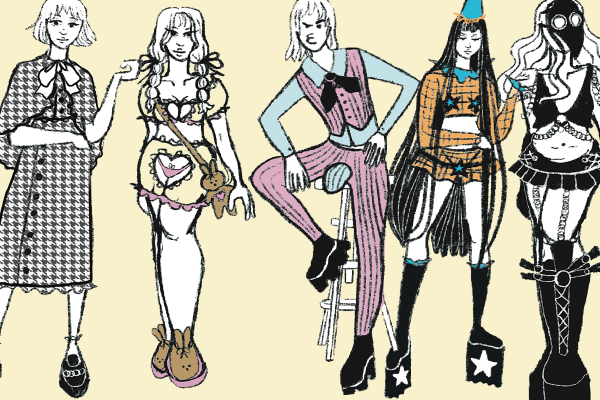
Fashion has always been cyclical. Typically, the overarching trends of each decade are a direct contrast to that decade or decades prior. Think of the boxy, baggy, top-heavy silhouettes of the ‘80s sandwiched between the more fitted and A-line shapes of the ‘70s and ‘90s. In womens’ fashion, waistlines of garments are raised and lowered, hemlines are short one second then maxi skirts are in the next, and this is nothing new. In the Victorian era, the 1860s emphasised soft, voluminous silhouettes and wide crinoline skirts that could barely fit through doors, while in the 1870s skirts became slim and fitted, with bustles padding out the rear (badonkadonk). It’s kinda like how having hips was deeply shameful in the 2000s, but the 2010s and ‘20s came with people injecting chicken stock cubes into their asses (look it up). So you really never know what’s next. However, nostalgia is a hot commodity and the reciprocal fashion cycle is getting shorter. Styles that look “dated” one minute are cool and vintage the next. The ‘80s frothed the retro ‘50s aesthetic, and the 2010s saw a huge revival of ‘70s bohemian and ‘80s oversized casual. Now, the ‘90s and early naughties are back, with the Y2K aesthetic overriding our devices much like its namesake. With the rise of fast fashion, the nostalgia cycle is getting shorter and shorter – new looks are dropped on Shein one week and become an outdated meme the next. It seems like we’ve pillaged past eras for all their fashion, and we’re running out. So, where to next? Using this grossly simplified model, the team at Critic Te Ārohi is at least 32% sure that we can predict styles of eras past that will make a comeback. We’re running out of vintage to bring back, so why not throw it all the way back and draw from heinous historical trends and recent vintage underdogs to bring you the only forecast you’ll ever need. Codpieces Before mens’ clothing had zippers and flies, fashion was kinda confused about what to do with dongs. Enter the codpiece: a phallic, pouch-shaped insert on the front of pants that one would simply pile their nards into. Prominent in the 14-1600s, and even making a comeback in suit-of-armour form in the 1700s, codpieces had many applications. Not only did they eliminate the “which side of my pants do my dick go?” problem, they also functioned as a pocket - the perfect size for a little snack. In an era of body positivity, it’s time for codpieces to rear their heads (sorry) once again – when else do men get to feel sexy? Imagine feeling like That Bitch whipping your ID out of your prominent dickholster. It’s the natural progression of the fanny pack. Pocket hoops Pocket hoops became popular in the later 18th century, and were an alternative to panniers (like crinolines) that gave you light and practical skirt volume at the hips only. And yes, they did also have pockets. Look, the internet has already made us all feel bad about not having perfectly-rounded hips, so why not say fuck it: square hips. Wear pocket hoops to the club and you have guaranteed social distance of like a foot, and yes, you can store shit in them. Carry your things in style while preventing dickheads from dancing too close to you! These are intensely practical and could totally make a comeback in this utilitarian time. Imagine Carhart-braded pocket hoops. Capes Fashion has always thrived on impracticality as a status symbol. Wearing cumbersome and ridiculous clothing separated one from the working class, because how are you meant to do hard labour in that shit? Enter capes: flamboyant, inconvenient, and the enemy of jet engines – all perfect markers for an up-and-coming high fashion trend. Plus, if they get caught on something they choke you out a bit, which is very appealing to our generation, apparently. Despite the pro-cape propaganda produced by Marvel, capes are so unwieldy that they essentially turn one into a limbless mannequin. All this to say that if we convince the elites to wear capes then maybe the revolution will have a chance. Pussy out Women’s underwear as we know it was only invented in the early 20th century – prior to that, everyone was kinda just pussy out. Seriously, imagine having to hike your knickers down to take a shit while wearing layers of historical dress. It just didn’t happen. Even bloomers of the late 19th century were open at the crotch seam, essentially consisting of two separate legs – in fact, that’s partly why we still refer to it as a “pair” of underwear today. The simultaneous and timely occurrence of maxi skirts being in fashion (the longest popular skirt length we’ve seen in decades) and most underwear now being made out of polyester (which is terrible for your vulva) means that it’s fairly realistic that we’ll ditch panties altogether, or at least on occasion. We’re already getting sick of bras, and since the most popular underwear style is “invisible” briefs they could become completely invisible soon. Plague masks The pandemic was the best thing to happen to mask fashion since the Black Death, so it’s not a stretch to think we could be seeing more of those raven’s-beak looking items make a comeback. After the first pandemic we’re all a little burnt out, but when round two hits I think we’re gonna be ready to have fun with it. Might as well! We’ll see the development of ever-more intricate plague masks as people try to one-up each other in the only way they know how. Instead of filling the beaks with sage and herbs to ward off evil miasmas and spirits, we’re gonna start stocking them with quartz crystals (and still probably some sage too) to ward off the bad vibes. Some things never change. Chopines Chopines are kinda like high heels but, instead of having a high heel, it’s sorta like standing on an hourglass-type shape. They’re like very weird mini-stilts. Anyway, their purpose was to allow the wearer to wade through the literal rivers of shit flowing through cities of the time, but this could become once again a necessity as rising sea levels start to fuck with our underground sewage disposal lines. When it all starts bubbling up to the surface you’re gonna need some sort of platform shoe to get around, and these might come back in style. Bonus points if they’re made of wood so you don’t lose them if they float away. Wax cones Probably the weirdest of the lot, wax cones were a trend in ancient Egypt to deal with body odour. You’d just wear a lump of scented wax on your head and it would melt throughout the day and mask your odour. As people start freaking out about microplastics (yummy) in everything, including deodorant, natural remedies are moving more and more into the mainstream. And you know what’s better than spreading literal carcinogens onto your lymph nodes? A cute little dollop of wax. You can even incorporate it into your hairstyle - perfect for the renaissance of the beehive hairdo.
-
News
 Issue 17 31/07/2023
Otago Targets Geology Department with 30% Staff Cuts
Otago University was founded on geology and medicine, and has recently targeted both with considerable budget cuts. According to documents seen by Critic Te Ārohi, the Geology Department is facing a proposed reduction of about a third of their staff, despite boasting the title of 2022’s top research department in the Division of Sciences per the Performance-Based Research Fund. Full-time equivalent (FTE) positions are set to drop from 14.1 to 10.85, and technical/professional staff are set to drop from 9.35 to 5.7 FTE. Health Science, often seen as the favourite child, is not safe either, with 36 staff already accepting voluntary redundancy: 3% of the department. Geology’s cuts represent 30%. The Commerce Department, on the other hand, seems to be shouldering the lightest weight of the lot. Perhaps ironic given the commercial storm facing the University. So far, the University has lost 107 staff to this round of voluntary redundancies. According to a report from the Clocktower, these include 14 from the sciences, 10 from humanities, 22 from operations, and 17 from other administrative roles. Only eight have come from Commerce. Dr. Mike Palin, a Geology staff member taking voluntary redundancy, was both exasperated and furious. He said that “we knew something was wrong” all the way back in September last year, when second- and third-year students started leaving their degrees mid-semester – and not just in geology. “We’ve never seen that before,” he said. Mike speculated that the Clocktower noticed this, too, so he was perplexed as to why they would forecast a 4% increase in enrolments with that in mind. Now, to shore up the $60 million deficit created by that forecast, the Clocktower is targeting academic staff in Geology and beyond. Science Communication, for example, is set to be almost entirely dismantled. This is not the first time staff have been culled to save on overhead costs. In 2021, then-Vice Chancellor Harlene Hayne implemented the Support Services Review (SSR), which sought to cut support staff from individual departments and create a centralised support team that could shift around campus. The five divisions it created include Ask Otago and Client Services. The move was tipped to save the University $15 million a year. But it did not go entirely according to plan. Far more staff had to be hired following the SSR than initially expected: an OIA (Official Information Act) that we received in 2021 showed 170 staff were ultimately hired to replace the “trimming” of 160 positions. Many of the people let go were long-term departmental support members, and they took a wealth of institutional knowledge with them. The new, entry-level support pool was unable to completely fill the gaps. Client Services, for example, expected to see staff numbers trimmed from between 340–380 FTE to just 284. As of Denzel Chung’s reporting in 2021, this total had actually grown to 373: 31% higher than budgeted. The Clocktower conceded this week that in one or two instances, staff members may have been brought back on fixed-term or casual appointments to help support their previous position. What was meant to save millions of dollars in operating expenses actually ended up increasing the number of staff on payroll. Now, even though student enrolments are still a net positive, the University is faced with the need for even further savings, with staff cuts again at the forefront. This time, academic staff are in the firing line. But it wasn’t all due to the SSR. Acting Vice-Chancellor Helen Nicholson cited a wide variety of building projects as the biggest recent expenses. These included Te Rangihīroa College (funded up to this point without debt), the Eccles Building, and the new Dental School. Moreover, though, earthquake strengthening of several buildings across multiple campuses seemed to be the biggest culprit. No properties have yet been sold. Aside from cutting staff and selling assets, the University is aiming to increase student enrolments by a staggering 20% with a focus on internationals. The Geology Department, ironically, had carried a 15-20% international student population until the pandemic, putting it well ahead of the 15% international cap for the overall university. The Geology Department was given three weeks to submit a counter proposal to the Clocktower. Mike said that the Head of Department, Dr. Andrew Gorman, has been “terminally optimistic”, and has been “a hero” for the department. He’s working “really, really hard” to design a proposal that would save all positions that haven’t already accepted voluntary redundancy.
-
Columns
 Issue 17 31/07/2023
Editorial: Begin the Warpath
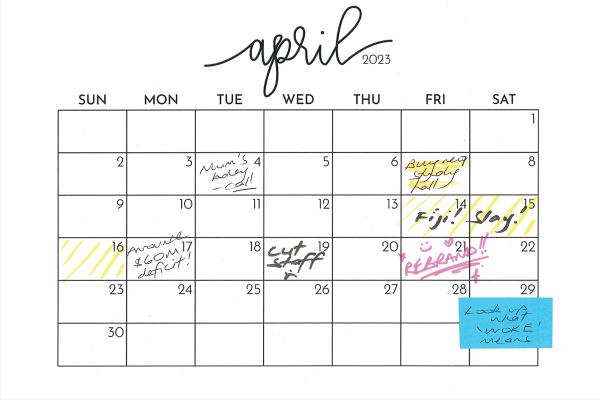
I often write these columns with second-years in mind, because that’s usually who reads this magazine. And so I tend to write silly little editorials with fun facts and stories in them because life is already pretty stressful and depressing and the last thing a second-year wants is another reason to feel existentially anxious. But with only ten issues of Critic left in my time here, I think it’s time to begin the editorial warpath. I want to outline, over the next few weeks, a series of decisions made by the Clocktower that I find to be genuinely bad. I want to explain why I think they were bad, and I want you to understand what these decisions mean for your future - because otherwise they’re just another sequence of decisions made by faraway bureaucrats in an already-gloomy world. Basically I want you to understand that despite the suits and stigma of a boardroom, the leadership of this university is a fundamentally human enterprise, and is fraught with fundamentally human mistakes. The first thing I’d like to address is the rebrand, because that’s a hot topic. And before I say anything else, I want to make it very clear that I support the idea at the heart of the rebrand: working with mana whenua to “emphasise… the transmission of knowledge between generations.” I’m on board with it. I like the logo, I like the whole thing. But I think the announcement was a terrible decision. The uproar caused by this announcement was going to happen regardless of timing. The racist and bigoted were always going to be racist and bigoted, but the University wasn’t always going to be in a period of financial deficit. In fact, this is literally the worst it’s been since WWII. The decision to go ahead with this multi-million dollar enterprise could have waited - it already took several years to get this far. Effectively, what the Clocktower has done has been to arm the otherwise-baseless critics with a genuinely solid piece of ammunition: financial critique. Even if the price tag of the rebrand is dwarfed by the total deficit, their “spending money on image rather than staff” argument does hold water. Even if that amount of water is pitiful by comparison. And now that new tohu - the whole new image that they spent so many years working on - all of it will be associated with controversy about misspending and culling of staff. Timing is everything for a brand launch. Considering how precious the Clocktower is over their marketing department, you’d think they’d know better. The decision to rebrand was probably a good one and surveyed responses showed that. The decision to announce it amidst the worst financial storm in the University’s history, I would argue, is undeniably a bad one. It is one bad decision in a long pattern of bad decisions that has culminated in the mass culling of institutional expertise: the very product that executives are hoping will lure an extra 20% of students to campus. From where? And who’s gonna teach them? I want to reiterate that not ALL of this is the Clocktower’s fault. The funding system they are dependent on is inherently flawed, and ultimately, right now, what we need is a government bailout. But the route that led us to this eventual trainwreck was defined by a series of wrong turns; a pattern of mistakes that has landed us all in a position where nobody wins, abiding by a set of rules that nobody particularly agrees with. And while we can't turn back the clock, we can be very loud about what we want to happen next.