More Culture from Issue 23
-
The Breatha’s Guide to Understanding the Rugby World Cup
What is the Rugby World Cup? The Rugby World Cup (RWC) is a quadrennial meeting between the best countries in the world, i.e., the ones that play rugby. The coolest donnies, the blokes you’d happily invite over for your red card. 20 countries in total, each with mixed degrees of decency at rugby. Rugby has only had a world championship for 36 years, with the 2023 RWC being the 10th. Who is the Rugby World Cup? Ship came into harbour, carrying… the 20 teams of this year’s RWC. Let’s break it down. The Big Four are great, and have thus earned nicknames (very cool). They are Team New Zealand AKA the ‘All Blacks’, Team Australia is called the ‘Wallabies’, South Africa are the ‘Springboks’ and Argentina are ‘Los Pumas’. Notice how we refuse to name ourselves after a wild animal that shits and pisses? We’re better than that, and we know it. Next up are the Try-hards: Ireland, Fiji, Japan, and England. Lots of potential, keep up the good work lads. Next group is France and France is shit. Sorry exchange students, suce ces noix. The remaining eleven countries are Italy, Uruguay, Wales, Tonga, Chile, Romania, Portugal, Samoa, Scotland, Georgia and Namibia. They’re certainly countries, and we’ll leave it at that. And if that wasn't clear, here's every past RWC compared to the relevant Fast and Furious Movie, because that will help! Rugby World Cup Fast and Furious Movie 1987 Half Host and Winner: NZ A classic! The Fast and the Furious (2001) A classic! 1991 Hosts: UK+Ireland+France, Winner: Australia More exotic muscle than the first. 2 Fast 2 Furious (2003) More exotic muscle cars than the first. 1995 Host and Winner: South Africa Best one out of the three! Tokyo Drift (2006) Best one out of the three! 1999 Host: Wales, Winner: Aussie Wildly boring. Fast & Furious (2009) Wildly boring! 2003 Host: Aussie, Winner: England Very cool and very based. The ‘Boks were forced to attend their training camp at gunpoint. This is when audiences knew the team would remain insane forever. (The ‘Boks came 5th, fast). Fast Five (2011) Very cool and very based! La Familia are forced to steal a safe, and audiences knew the franchise would remain insane forever. 2007 Host: France, Winner: S. Africa Completely bullshit! The French threw the ball forward (stupid) and kicked NZ out of the tournament (bullshit). Fast & Furious 6 (2013) Completely bullshit! The main villain flips cars over (stupid) and Letty is alive? (Bullshit) 2011 Host and Winner: New Zealand! Now we’re cooking with gas! Heaps of mana! This is what we came to see! Furious 7 (2015) Now we’re cooking with Nitrous Oxide! Heaps of money at the box office! This is what we came to see! 2015 Host: England, Winner: New Zealand Absolute scenes! An underdog Japan destroyed a titan South Africa! What an upset! The Fate of the Furious (2017) Absolute scenes! An underdog Dodge Charger destroys a titan Nuclear Submarine! What an upset! 2019 Host: Japan, Winner: S. Africa So good, and yet so ludicrous. Not playing Ben Smith against England, what the fuck? F9 (2021) So good, and yet so ludicrous. They took a car to space and crashed it into a satellite, what the fuck? 2023 Host: France I don’t know how this one ends! Jason Momoa attended the first game Fast X (2023) I don’t know how this one ends! (It’s a two parter) Jason Momoa attended the film Your gameplan: Before the Game Pregame chat is arguably the most important time to spin yarns and likely to be the easiest form of engagement as you don’t need to learn the rules. Obviously you’re going to back the AB’s publicly, but it is curiously acceptable to shit on key players and tactics. In this sense, an all-encompassing pessimism should define your manner as you calmly chat about how shit our coach Ian Foster (AKA Fozzie) is. A few details to note is that the All Blacks have won three World Cups, and if we don’t win this one, we risk letting the South Africans get to four. To this degree, there are three teams you can openly despise with complete safety: South Africa, Australia, and France for good measure (never forget the Rainbow Warrior). Yarns to spit: “Fozzie out”, “Simply put, Dupont is unmatched”, “McKenzie needs a spot somewhere, Fozzie’s fucking useless.” During This is where it gets tricky but as a rule of thumb, silence is golden. If you’ve done enough pre-game chat, your mates will simply think they’ve caught you deep in intricate thought processes when they glance at you staring idly at the TV screen. Also, no one likes the person who will commentate the whole game for ya, no one gives an ass about your half-baked rugby theories when it’s try time. Still, there are a few things you can do: throw something at the TV when they start kicking the ball too often, and complain that “the game’s gone soft” whenever there is a penalty given for literally any reason. Yarns to spit: “Go Beaudie!” - when anyone that looks like Beauden Barrett gets the ball. “That’s a coach killer” - whenever someone drops the ball. “The kick is only ever as good as the chase” - whenever we kick the ball straight to the opposition. “HEAVE” - at scrum time. “He’s over that!” - whenever a random penalty is given after a tackle this is usually the reason. Trivia: Why is the trophy called the “Webb Ellis Cup”? In 1823, William Webb Ellis was a student at Rugby School in Rugby, Warwickshire, playing a game of football when the ball landed in his hands. Incredible. Webb Ellis then looked up, saw a literal Victorian English teenager, thought, “I could actually run it straight and piss bowl this prick over”, and folded that loser – and thus “rugby” was born. The next 199 years would define nations, unite countries, build legends and destroy my God-damned TAB. Who’s your new favourite player? Ethan De Groot - Highlander and Southlander, he is a quintessential Southern prop who will give a ‘stags’ sign on the rare occasion that he scores. It’s him or Aaron Smith, really. What does “Up the Wahs” mean? Although we hear about the All Blacks all the fucking time, New Zealand actually has other sporting teams to be proud of <3 This includes the Warriors, the team we send over to Australia to compete against those spineless cucks. They have had a fucking fantastic season; to celebrate we say, “Up the Wahs!” I think I get it, who do I root for? New Zealand! The All Blacks! We have won this shit three times! We can easily do it again! Don’t listen to the haters saying, “We lost a game or two,” or, “Our team isn’t what it used to be.” Who cares?! We are Kiwis, and we are built different! Let’s get this fucking bread! What if we lose? Oh shit, I didn’t think of that… Well, the NZ dollar will plummet, so invest in foreign assets. If we don’t win, then both Fiji and Ireland are Critic Te Ārohi’s next favourite teams. Both countries have that dawg in them, and can just as likely lift the trophy this year. The 2023 Rugby World Cup will last from early September to late October. The fan favourites are Ireland and France, due to the former's incredible skill and high win-rate, and France are hosting so they have immunity to their local cuisine. Up the Wah’s and Up The All Blacks!
-
Winston Peters: In His Reputation Era
Winston Peters is the stuff of legend in the New Zealand Government. He’s the only diplomat that’s ever been invited to North Korea. He’s also the longest-serving MP, entering Parliament in 1979 - before the rise of neoliberalism or the inception of the internet - during a time of massive political upheaval on the world stage. The Kingmaker. Now, as the often-controversial MP makes a renewed bid for prominence, questions of political upheaval are again circulating across the globe. Winston joined us early in the morning (by our standards) and sat comfortably in the office. He was quick with banter and quick with his answers - sometimes rattling off a response word-for-word from a past interview. When his answers weren’t the old faithful option, though, they were still quick and genuinely-Winston. Love him or hate him, he speaks his mind in the way that some more populist figures only claim to. We began by talking about the media at large, who he said were operating “in la la land” at times. Winston argued that, even 30 years ago, he believed that we were starting to lose the tenets of investigative journalism “because we failed to give them the space and the money to do their job properly.” Will he commit to funding better journalism pathways? Where is the line between government-funded and government-puppet media? We didn’t get time to ask because we quickly moved on to neoliberalism. The fourth Labour Government in 1984 came into power and promptly “threw their manifesto in the rubbish bin and pulled out the secret agenda called ‘Rogernomics and neoliberalism’.” Pushing for universities to be self-sufficient financially is something that Winston saw as evidence of the failed “neoliberal experiment”. He said that this may have worked overseas, with the Australian GDP rising “35, maybe 36 per cent, real terms” greater than New Zealand. “It's all the proof I need that what they were talking about was rubbish then. And it's rubbish now.” The conversation shifted to immigration, and Winston made it clear that he was not anti-immigrant. “I'm proud to say my party's view is that if you arrived here yesterday, legally, you've got… the same rights as a New Zealander. No different than if somebody's ancestry goes back 800, 900 years. That's our policy. That's our standard.” Even Māori, he said, were immigrants. “We did not start here. We started in Hawaii or, in our case, in the Cook Islands. So we're all immigrants in that context.” His immigration strategy is to “bring people here who we need, not who need us.” According to Winston, “every Asian political leader agrees… that's why I can't be accused of being anti-immigrant. You find one Asian leader [that] doesn't agree with me.” And he still hasn’t forgotten the Peter Thiel controversy: citizenship granted secretly to an American billionaire by John Key’s Government. “What has he done for this country?” asked Winston. “Nothing.” Winston couldn’t believe people had stopped talking about this “ridiculous” situation. “You're the only person who's ever asked that question recently, which shows you how dementedly corrupt the media are.” Finally, in the closing minutes, the conversation steered towards the hottest topic of the day: crackpots. Politically radical, actively disruptive members of the public who feel unrepresented by any major party. You know the ones. Winston had courted controversy by walking through the Parliament protests, then gained favour of Freedom NZ protesters. But recently, those same protesters disrupted his campaign event in Nelson. He would go on to say that this was confusing. But before all that, he was talking to us in our office. Winston said that the media, because they “had the stupidity to believe in the podium of truth,” wound up deciding to “gaslight” and “denigrate” the vaccine sceptics. Winston said his grandparents were struck down “like lightning” in the Spanish Flu, citing a death rate of 9:1. So he was “alarmed” when he saw Covid spreading, and said that he was double vaxxed. But he insisted that “fundamentally, people did die from taking this vaccine. That's no doubt. It is medically proven. It's irrefutable.” He said that there were always a few crackpots and he couldn’t speak for everyone, but that “there is a fundamental thing in medicine called ‘informed consent’. And no one can be signing up an informed consent document [if] they haven't been informed. And that was my belief.” And then finally, in the closing seconds, we got to the topic of students: “I just wanna leave you one thought,” he proclaimed. “We're gonna build an economy that students can graduate in and be proud of, stay in this country and get paid properly for.” It’s Reputation time for Winston. Look what you made him do.
-
Winning Streak
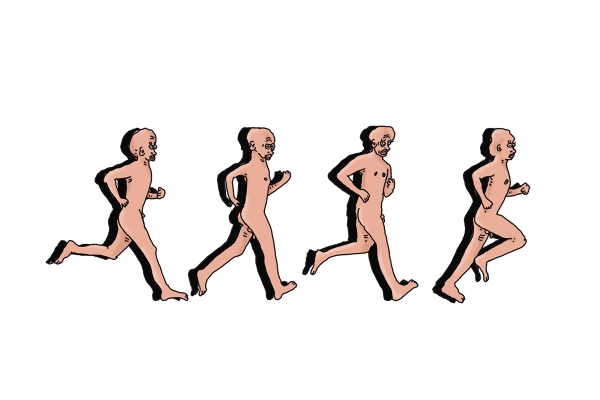
Saturday, August 26th. A cool breeze whistled through Forsyth Barr Stadium, carrying the jeers of Otago and Southland fans. It was a day few could predict, but all would remember; it was the day of the streaker. The streaker who lived. Long before this fateful day, nine young men set out to do the impossible. Video footage shows them huddling, plotting, and then hopping the barrier. Surely there would be strength in numbers - but not today. The nine pitch invaders were immediately seized upon by security, and only a paltry few made it more than ten metres onto the field. The audience heaved a collective sigh, mourning what could only be the end of streaking culture. After all, if none of the nine succeeded, how could a lone wolf ever hope to make through? And then, like a phoenix from the ashes, came August 26th. A single man hopped the barrier, dodged security, and cleared no less than three fences before hurtling down an exit corridor to freedom. He had done the impossible: he had streaked and lived to tell the tale. He had captivated the hearts and minds of the Zoo. And we simply had to know more. Who was this mystery man? What were his secrets? And most importantly: would he strike again? We didn’t know where to start and quickly found ourselves hitting dead end after dead end, slamming headlong into obstacles as if they were P4G security guards. At a point of despair, the case grew cold. That is, until we managed to make contact with Jerry*: a member of the very security team that our mystery man eluded. Meeting in an abandoned alleyway under the cover of darkness, Jerry whispered details only ever mentioned in the tombs of the Forsyth Barr. A secret ally of the streaking community, he said, “I can see the appeal, it gets your name out there.” Having signalled his commitment to the cult of streaking, Jerry gave Critic Te Ārohi the inside scoop on recent security measures: “The team gets briefed on strategy before matches… and you have to be qualified to be in a position where you could tackle someone.” And it sounds like the tacklers are quite keen. Jerry told us that “you’re going to get tackled by someone who wants to take you down… the vibe at briefings is if you get them, do whatever you can.” In his mind, with all the risks weighed up, “At the end of the day it is quite a brave thing.” Things began to get serious as Jerry began to divulge his tips for the successful attempt: “You need to move with the security and then streak when the game’s stopped for something like a penalty decision.” He began glancing from left to right, as if to check if someone was listening. At his most skittish, Critic Te Ārohi asked the biggest question, point blank: “Who is the streaker that managed to evade security that fateful stag day?” Jerry’s eyes grew wide. Somewhere, the wind whistled with extra mysteriousness. Whispering, he muttered two words under his breath: “UniCol….breatha…” And then he fled into the darkness. We had a lead. Taking to the streets, Critic Te Ārohi met up with three UniCol beezies who offered insider info on the identity of this mystery man. They were willing to give us what we needed: a name. The name. Thursday, September 7th. We had a name, we knew his game, and now all we needed now was to reel him in – hook, line and streaker. After a back and forth on Facebook, we agreed to meet in a dark corner of Ubar on pint night before realising that was way too stupid and public, so we opted to meet in the safe enclosure of the Critic Te Ārohi office. Jacked up on adrenaline and fear that the streaker would bolt (with no one capable of catching him), we prepared to sit down with the mythic figure to ask for his why. And then, as if by magic, there he was. Shaking with relief and a sense of awe, we shook hands with the man who made Forsyth Barr his playground during the most successful Otago streak of all time. His name was James* – or whatever you’d like it to be, because obviously we’re not telling you. “[It] all started at the Highlanders vs Hurricanes,” said James. He was in the stands, considering making his run. The peer pressure was mounting, the jeers were coming, but the field wasn’t looking likely. It was a day that ended in despair. James sighed, “I let a lot of people down.” Not one to be beaten by a moment, James and a committed group of mates began planning the “logistics” of a streak which was to go down in the history books. But no amount of planning could prepare him for the isolation of being on the field, where he mused that it was “like going into the unknown.” And failure was simply not an option. We asked him if he had considered the consequences, and with truly legendary spirit he replied: “In that moment, it didn’t matter. Because I knew I was going to be the first person to get out, uncaught.” James waited to strike, saw his moment, and the rest is history. Summarising his story, James told us, “I think the message you can take away from my story is that you can get away unscathed. There’s no better feeling, to be honest, [than] when you’re on that field and hear the roar of the crowd. It’s outrageous.” And with that he was gone, streaking off into the distance, never to be seen again. Our hunt was over, yet a curious sense of dissatisfaction settled over Critic Te Ārohi’s team of leading journalists. Hearing James’ brave story made us realise that his kind was a dying breed. Over the years, streaking has stumbled in its old age, increasingly finding itself persecuted as an example of moral injustice by both citizens and bureaucrats. Then, streaking’s darkest day finally came. On the 9th of July, just after James’ incredible feat, the nation’s darling (and greatest enemy) Sam Cane kicked an Argentinian streaker to the ground, effectively cementing the low status of the once beloved art. Arguably only George Crump did it better in 1804, when he managed to wrangle his streaking exploits into a successful political career as a US congressman. If his story is anything to go by, James could be destined for a place in parliament by the end of the election cycle. Catch him if you can. *Names changed.
-
RED-S
Imagine you’re an athlete, spending your days in the shell of a constant migraine, feeling immediately tired upon waking with a full day of training and classes ahead of you. This was Tom’s reality for almost a year as he grappled with RED-S, also known as Relative Energy Deficiency in Sport. RED-S is an underrecognized but brutal condition which is a result of the body not receiving enough calories and nutrients to meet its energy expenditure. Now studying at Otago and no longer playing sports, Tom has had time to reflect on the impact the condition has had on his mental and physical health.