
Fox Meyer
2022-2023 Editor
Articles by Fox Meyer
270 articles found. Displaying page 1 of 23.
-
Culture
 Issue 0 17/02/2025
Long Live the King: Critic Te Ārohi's Beer Pong Rules
According to over 150 Critic readers, these are the definitive King’s Cup rules for Otago students:
-
Features
 Issue 0 19/02/2024
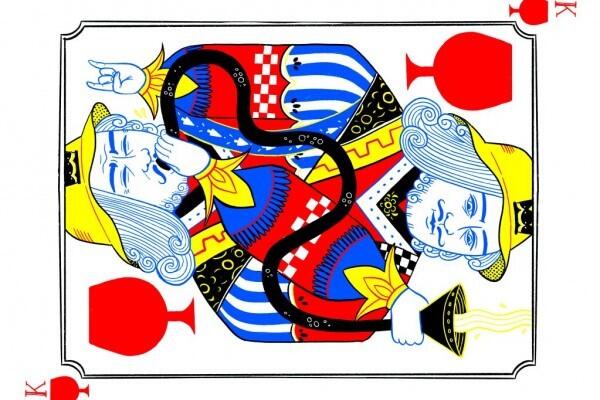
Long Live the King
According to over 150 Critic readers, these are the definitive King’s Cup rules for Otago students:
-
Culture
 Issue 0 19/02/2024
Nut Up or Shut Up: Why Halls Should Go Vegetarian
The way halls work right now, with opt-in veggies but obligate meats, is completely backwards.
-
Columns
 Issue 26 08/10/2023
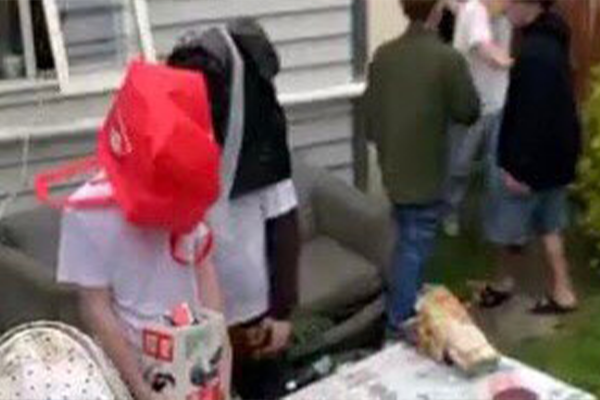
Editorial: Is this a Dunedin Initiation or a CIA Blacksite Torture Method?
Flat initiations are 20 years old at best. You know what else is 20 years old? Enhanced interrogation techniques designed by CIA crackpots in the wake of 9/11. They like to go out, abduct suspected terrorists and then torture them for weeks in secret locations on foreign soil. The tactics used (the whole programme, really) were kept secret until leaks in the mid ‘10s, and once out in the open, shit hit the fan - quick. And as we’ve covered this year’s intense initiation season, I’ve realised that the tactics used to “get together for a good bit of fun” are literally the exact same as those used to torture “the worst of humanity”. Let’s see if you can tell them apart. Which of these happened in a Dunedin initiation, and which happened in a CIA Blacksite? Which happened in both?
-
Columns
 Issue 26 08/10/2023
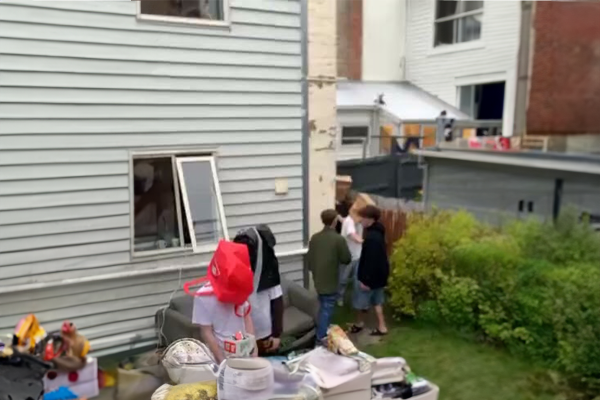
Editorial: Is this a Dunedin Initiation or a CIA Blacksite Torture Method?
Flat initiations are 20 years old at best. You know what else is 20 years old? Enhanced interrogation techniques designed by CIA crackpots in the wake of 9/11. They like to go out, abduct suspected terrorists and then torture them for weeks in secret locations on foreign soil. The tactics used (the whole programme, really) were kept secret until leaks in the mid ‘10s, and once out in the open, shit hit the fan - quick. And as we’ve covered this year’s intense initiation season, I’ve realised that the tactics used to “get together for a good bit of fun” are literally the exact same as those used to torture “the worst of humanity”. Let’s see if you can tell them apart. Which of these happened in a Dunedin initiation, and which happened in a CIA Blacksite? Which happened in both? Subjects were… Shaved Waterboarded Deprived of sleep for up to a week Forced to stand naked against a wall Had a bag secured on their head and then beaten Crammed into coffin-sized boxes Crammed into coffin-sized boxes filled with a gas Subjected to “rectal rehydration” Forced to consume vomit Forced to consume faeces Used for sexual gain Urinated on Killed Bonus round! Does this come from news coverage of Blacksites or initiations? A bunch of videos of [event] are deleted after the group gets in trouble with [authority]. They delete the videos ahead of investigation, because the penalty for that “is nothing compared to what it would be if the [videos were posted]... out of context they would make us look terrible.” [One of the abusers] said it was “tough to watch in places.” “The [subject] was found unresponsive, on his stomach with bubbles frothing from his mouth.” And here are some recent highlights: one girl was forced to drink a slurry of vodka and shellfish juice. She’s allergic to shellfish, so she brought her epi-pen and immediately used it. Last year, a boy was blinded when a frozen egg was thrown in his eye. Another girl refused to do a cigarette race, so she was pinned down and had her eyebrows shaved. She’d lost a family member to lung cancer. Another group of girls was made to chain smoke inside wheelie bins, which then (surprise!) filled with carbon monoxide and one of them passed out. To help her out, her mates knocked her bin around with her inside. I saw videos of boys getting straight-up beaten by mates who’ll be passing them a beer ten minutes later. I saw videos of people being forced to drink 20 standards in 20 minutes, then vomiting into each other’s mouths. But here’s the thing: they all “want” to do this. It’s voluntary. Adults in the safety of their own homes. But I just have a really hard time believing that this “want” is genuine. I believe that if you’ve gone through it, you want to do it to someone else. I believe that you want to have a strong group of friends. I believe that you want approval and want to show off. But I don’t believe that you want to be doing this - because if you did, you wouldn’t have a problem with the fact that I’ve got you on video committing a violent crime. This is not student culture. It’s 20 years old, tops. And it’ll either stop when - like with the CIA - you kill someone and the world watches, or when you all decide to reel your fucking heads in and find a better way to do group bonding. You can bitch and moan about me covering your initiations, but when someone dies, that’s gonna be a pretty cringe take to look back on. I’m sick of this bullshit. I’m sick of the bad name you’re giving Dunedin, and I’m sick of seeing year after year of genuinely good people do the most depraved shit you’ve ever seen. There is no way someone in that initiation can say “no” - I know, I’ve been there. And you act like it’s so unfair that the media is focusing on you, that you’re gonna pay the consequences for a “tradition” that nobody else got in trouble for. Tough shit. You chose to engage in literal torture, and you’re either gonna own up to that or you’re gonna go home. Hopefully not in a box. ANSWERS: Both, 2. Both, 3. CIA, 4. Both, 5. Both, 6. Both, 7. Dunedin, 8. Both, 9. Dunedin, 10. Dunedin, 11. Dunedin, 12. Both, 13. CIA (for now). Bonus round: 1. CIA, 2. CIA, 3. CIA.
-
Features
 Issue 26 08/10/2023
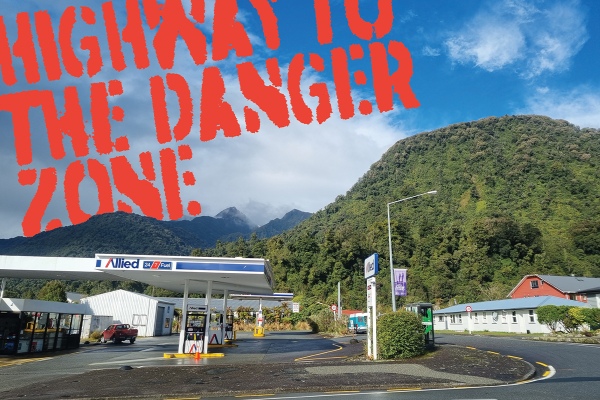
Highway to the Danger Zone
Thrill seekers are everywhere in Franz, to the point where bartenders used to “free-pour shots into open mouths like Cancun”, according to some guy I met in a spa pool. And to take care of those tourists, many students work in Franz over summers where they’ll invariably end up at Glacier Motors, the township’s only petrol station. This station directly straddles the Alpine Fault. True, it’s hard to take a walk in New Zealand without stepping on a fault, but this one is especially easy to find; stretching 600-kilometres along the Southern Alps, it’s the longest straight line on the surface of the planet. It’s visible from space. And of the thousands of faults in our country, only the Alpine Fault ruptures with its signature blend of regularity and intensity. Sudden, violent movement. Eight metres of horizontal displacement. One and a half metres vertical. A magnitude 8 event every 300 years - or less. There’s an extensive and detailed record, and the last rupture occurred in 1717. Tick tock. Glacier Motors’ two 50,000-litre petroleum tanks are right in the firing line. The metal filling valve caps in the forecourt are less than a single stride from the subtle rise made by the Fault in the pavement. To make things worse, the fault’s rise means the station is at the top of a small hill, so if the tanks were breached, any spillage would run downhill throughout the main street. And if the spill were to ignite, according to a local fireman, there would be “no way” to put it out. The town’s volunteer fire station (essentially a church and two garages) are on the other side of the fault from the rest of town. The station is on the main road through town, unmissable as you head either direction on State Highway 6. To passersby, the only scary thing about it is the price of petrol. Of course, nobody can say exactly what will happen here; the fuel might not ignite at all. But when I last spoke to Otago’s own Caroline Orchiston, the foremost expert on Alpine Fault community resilience, I gave her a list of locations to be at during an Alpine Fault rupture, including a Wellington office, a Christchurch highway, in the Westland bush or in a Dunedin flat, asking her to rank them by where she’d like to be. Filling up at the Franz Josef petrol station ranked second worst, losing only to a boat in the middle of Milford Sound. That’s because when the Alpine Fault goes, landslides can trigger great, sloshing waves in the fiord. Franz Josef is defined by natural hazards, so much so that it’s a stop on the University of Otago’s fourth-year Geology field trip. In my year, we paused outside of town to examine the oversteepened hillside behind it. Our lecturer pointed out how there was enough material on the calving face to bury the entire town and everyone in it, if it were to fail. He pointed out how LiDAR imagery shows what are basically geologic stretch marks on the top, evidence of creeping failure. He pointed out how (although it’s survived the last several ruptures) an earthquake could loosen the whole face with no warning. But we’re risk-takers, too. After we joked about how we’d better not all jump at once, we headed into town to fill up at the petrol station and then sleep directly under the hill. Because what are the odds, right? The odds of a major quake caused by an Alpine Fault rupture are 75% in the next 50 years. 100% eventually. Dr Tom Robinson, from the University of Canterbury, recently told Stuff that the rupture will be “the largest earthquake in recorded history.” The odds of when and where are pretty clear, but that’s where any semblance of certainty ends. Predicting what this earthquake will do to the landscape, especially in the case of Franz Josef, gets murky. For example, there’s a chance landslides could dam the Waiho River and unleash a catastrophic flood. The odds are low, but still uncomfortably possible. The odds of slope failure are even lower, but even more catastrophic if they were realised. When the Alpine Fault ruptures, which it will, we’ll be hearing lots of stories. Many of them will be about hope: about strangers helping strangers, about fast response times and a nationwide effort to build back better. Some of those stories, undoubtedly, will be about tragedy. But at least one of these stories will be particularly perplexing. It’ll be the story asking why the hell 100,000 litres of petroleum was sitting on our most notorious fault line. The people in Franz Josef aren’t stupid. Except maybe for the guy in the spa pool who also told me that Jacinda was causing earthquakes. But besides him, Franz Josef probably boasts some of the highest Alpine Fault literacy in the country. Caches of post-quake survival supplies are buried across town. Multi-story buildings are rarer than clean boots. Franz has more helicopter pilots than police officers and a population that can take care of themselves and their neighbours. After all, who would you rather be stuck with: a tenth-floor bureaucrat who has never seen a deer or a Franz Josefite who could skin one with her eyes closed? Back in 2021 when I talked to Wayne Costello, the operations manager for the Department of Conservation (DOC) in South Westland, he made it very clear just how ready the town is. He outlined all the preparation, all the community training, all the backup supplies, all the years of anticipation waiting for “the big one”. He’s right, the town is far more aware of what’s coming than anywhere else I’ve ever been. And he made a point that I’ve heard several times in my interviews on this subject: that the best things in life come with some risk, and all we can do is prepare. I can’t argue with that. You're more likely to get in an accident on your way to this petrol station than you are to be there during an earthquake. But then again, when you get in that car, you take measures to ensure that if the worst did happen, you’d be in the best scenario possible. You buckle your seatbelt. You don’t look at your phone. You watch out for others on the road. You move the 100,000 litres of petroleum off the imminent earthquake risk. The last time I visited Franz Josef, I arrived in the pouring rain. About half an hour out of town, as I limped along the winding road, I passed a local speeding the other way. He was going about twice as fast as me, lights off, wipers down, seemingly blind to the lashing rain. Don’t look up. You’d think the resource consent for the proposed petrol station would have been a good start, but you’d be wrong. The 1994 document does not mention the Alpine Fault at all, or earthquakes in general. The first six points of discussion are mostly concerned with aesthetics and disturbing the peace; only at point eight does it get close to mentioning risk. It reads: “It is not anticipated that there will be anything unsuitable about the proposal site.” And this isn’t the only petrol station on a fault line; Wellington has at least two (albeit atop reclaimed land, which could be a protective factor). But in the risk-dominated Franz Josef, it’s the only hazard that didn’t need to be there. Every single resident I’ve talked to has not exactly been stoked about the situation. They told me that if money wasn’t an issue, the station would be moved. But they weren’t the ones who paid to build it, so they didn’t want to be the ones who had to pay to move it. When I last spoke to the manager of the station, Ryan, in 2021, he had only recently taken over operation of the Glacier Motors site following a change in ownership. And the community already has a long list of other woes: the flood-prone Waiho River is an expensive enemy and tourism is under threat thanks to the shrinking glacier. Publicising the issue too much could scare away visitors. So, pun intended, whose fault is this? More importantly: who foots the bill? Is it up to the station’s new owners? Or the Council who signed off in ‘94? Or the government in Wellington? It’s genuinely not clear. But what is clear is that, one way or another, one day that petrol station will be moving. It’s just a question of moving it on our terms, or on the Fault’s. Formal, finite action was proposed in the years following the Christchurch earthquake sequence. When attention shifted back to the Alpine Fault line which, unlike Darfield’s, was explicitly and long-ago mapped, with a regular recurrence interval and ample historical data, a group of scientists got together to propose a Fault Avoidance Zone (FAZ) for Franz Josef. The 200-metre-wide strip followed the surface trace of the fault through town and encompassed 30 properties, including the petrol station, a motel, a DOC lot, and the police building. If adopted, no new buildings could be built in the Zone and existing buildings would be incentivised to start moving away. Dr. Virginia Toy, one of the scientists behind the FAZ, says this has happened before. In the ‘60s, planners encouraged movement away from the troublesome Waiho River, down towards where you can now find the pub and the Top 10 Holiday Park. Most of the main area resisted, but it was a win nonetheless. “They did eventually help the motel and holiday park on the other side of the river move through financial support,” Virginia explains. In the interest of preserving not just human lives but a nationally-significant tourism asset, “that’s what is needed elsewhere in Franz: central government needs to support the changes.” The proposed FAZ caused an immediate uproar. Landowners, who were facing the direct financial consequences of the Zone, felt they had been left out of the discussion. Many felt they literally could not afford to worry about the fault, and when the FAZ was eventually adopted in 2015, the impact was indeed significant. Property records for 1 Condon Street, home of the Glacier Motors station, show that the value of the land dropped from $950,000 in 2015 to just $475,000 the following year. It still hasn’t recovered, sitting at $710,000. Banding together in the name of their financial futures, a group of residents pulled what local Cushla Jones called their “only trump card” and threatened to take the Westland District Council to Environmental Court. The Council, split on opinion and low on resources, conceded. After six years of debate but within less than a year of activation, the FAZ was repealed. Local Helen Lash said she could “see the stress of this etched in people's faces… it’s taken a hell of a toll.” Dianne Ferguson, who owns the Alpine Glacier Motel, told reporters at the time, "We're pleased with the result. We feel this is the point where we should have started from—talking with each other —instead of taking six years and expensive legal action to get here.” Councillor Gray Eatwell was “gutted” by the decision. He said that “it's not a matter of the people. It's a matter of what's right. If we don't acknowledge one of the world's best-known faults, I don't think it would make us very professional at all.” He didn’t last much longer on the Council. His fellow Councillor Durham Havill disagreed, saying that preparing for every risk eventually becomes untenable: “You can’t plan for everything.” He reckoned that “there are fault lines all around the country. When it eventuates is bad luck… We could have a tsunami, we just don't know.” But we do know. We know this fault line better than nearly any other on the planet. The Council’s planning and environment manager Jim Ebenhoh raised the question of post-disaster funding priorities, and how much Wellington would shell out for a community who had explicitly voted against safety measures. Either way, the conversation was soon overshadowed by something spreading overseas. As New Zealand’s borders closed to tourists, economic strife had arrived in a different form. For decades, Franz Josef has been Tourism New Zealand’s literal poster child. It’s front-page on the websites, it’s in all the ads. The tourist dollar, in turn, has offered ample incentive to settle in the township at the toe of one of the country’s most accessible glaciers, even today when that glacier has retreated so far up its navel valley you need a helicopter to get to it. And that visitor spending pumps money into the government’s coffers too. When Covid hit, that income dried up. The 2021 Development West Coast Covid Impact Survey tallied some bleak numbers: 16 businesses closed, 23% of people gone, volunteer emergency services gutted. Without further assistance, the survey said, 84 percent of jobs would be lost, 67 percent of businesses would close, and at least 31 percent of people would leave the community “in the next six months”. Though one survey respondent was hopeful, saying in true West Coast style, “We’ll start a generator, kill an animal if anyone is getting low on food, helicopter companies will pick up supplies at their own cost, we’ll check in on the neighbours and we’ll still be here in a couple of weeks.” Despite Covid, despite a recession, despite an utterly bizarre High Court fraud case involving their septic system and an Auckland cake baker, the town has persevered, and the tourists have returned. Business is better, the petrol is flowing again. Someone recently rated the station four out of five stars on Google: “It’s got petrol!” (The station also, incredibly and delightfully, still stocks Kodak film). And so a new plan, Te Tai o Poutini, has been proposed for increasing the resilience of the entire West Coast. Submissions are open now, but 1 Condon Street is still listed as a settlement zone. Simon Bastion, CEO of the Westland District Council, said that “there has been no formal request for the petrol station to relocate,” but that the new plan is “revisiting the zoning within Franz Josef alongside the natural hazards.” Perhaps tellingly, one of the last times a zone was listed as high risk, it didn’t end well. Virginia tells me that a few years ago, signs were put up outside a hotel on the edge of town warning of sudden flood risk. Under the cover of darkness someone apparently took an axe to the signs, disposing of the pieces in the very river it warned of. When I try to talk about Glacier Motors on the coast, people baulk. They don’t want “more doom and gloom”, and they don’t think their fault line is unique in a country full of them. A lot of them are more interested in asking me if the station’s pies are any good (“they’ve got a solid mince and cheese,” according to someone who passed through in July). I’ve been told, more than a few times, that we have bigger problems to worry about. And that’s true. But bigger problems require big solutions. We can’t move the Nelson Hospital or the Clyde Dam, both of which straddle faults. We can’t move all of Auckland off its volcanos or the entire city and port of Wellington away from earthquake danger. On a global scale, we won’t solve climate change overnight, either. It’s too late for that. Speaking of sitting on a fuse. But the reason I think this particular risk is so fascinating and so worth talking about is that it’s not like Wellington, or global warming, or pandemics. There’s a single, simple, relatively-cheap solution: move the petrol station. Or, at the very least, put the tanks above ground. And don’t make the locals pay for it. It would involve interrupting service to the only station in the area, yes. Costs would surely exceed estimates, yes. It would be a major pain in the ass, yes. But it would also be one small thing to prove we can be forward-thinking, that we care about the impact today will have on tomorrow. In the face of so many insurmountable crises, it would be nice to have a win.
-
News
 Issue 26 08/10/2023
Initiations “Back With a Vengeance” after Covid Hiatus
Last week, we reported on a flat initiation involving a live eel. Since then, the ODT and NZ Herald have picked up the story, police have been informed, and an investigation by the Uni (who knew about the incident prior to publication) is underway. A minority of students defend the initiation in the name of “good fun”, while the majority have never, and will never, engage in one. There is mounting concern among many, chiefly the Proctor, over the escalating severity of initiations. Critic spoke to the Proctor, who explained that over his seven years in the role, initiations have evolved. But they’re not actually tradition: “Students say it's been around for 50, maybe 100 years. It’s not, it’s maybe 15 years old.” Despite this, students involved ardently defend the activities - though they’re not quick to put their names, faces or addresses on record. Wonder why. One of them commented to Critic that they think “the Proctor’s been really harsh about it all.” In response, the Proctor said, “I’d rather be seen by students as trying to ruin their fun than sit back and wait for someone to die.” The Proctor said initiations had subsided a bit with Covid, but this year they’ve been “back with a vengeance… What seems to happen is that year on year the events are added to, so if one year the host flat did A, B and C, year two it’s A, B, C, D and E and then we get to a point where it’s really dangerous and really feral and we’re harming people.” Or, in some cases, animals. But, even considering the chugging of vomit, the beatings, the hospital trips and stomach pumps, “At the end of the day everyone is enjoying themselves,” said one student. The Proctor also gave us a copy of a letter penned to flats who plan on hosting initiations. In it, he points out the section of the Student Code of Conduct relating to initiations that reads: “Organising or participating in any initiation event or ceremony that jeopardises your fellow students’ wellbeing, personal, physical or emotional safety, or encourages breaking the law” are among behaviours that “put you in serious risk of facing exclusion from the University for a semester or more”. This is part of a “proactive approach” initiative that was sparked after 2017 when a vomit-filled Debacle initiation made national headlines and saw the nine hosts expelled from the Uni. It resulted in what Critic reported on at the time as a “crackdown” on initiations by the Uni. The Proctor told us that this was opposed to “sitting at the bottom of the cliff and waiting for them to crash - let’s get to the top of the cliff and put some barriers up.” “So we go and have a conversation about the expectations, we provide them with a copy of the Student Code of Conduct, and then this year we followed up with an email to the flat.” The email contains the foreboding statement that “there is genuine concern that one of these events will result in serious harm or death.” “If we have a really bad event and a student dies - has an anaphylactic shock to something that they’re forced to eat, or dies of alcohol poisoning or whatever - who's gonna be investigated? The host flat [will be], and that'll be for a manslaughter charge,” said the Proctor. “And I don't want that. I don't want the death, and I don't want the flat investigated.” He has heard more rumours than evidence, and he said that this year especially, the stories are starting to take a toll. But “I will sleep quite well at night knowing that I'm doing this work. And I'll make no apologies for it. It's not a tradition. I don't think it reflects our students at all.” And as media coverage creates scrutiny, many initiations have moved indoors or into backyards, away from public view. There is still a group of onlookers present, who are generally encouraged to bring shit to throw at the first-years. Last year, an egg cost one student the better part of his eye. “It worries me that that’s how we can treat our own,” said the Proctor. “Our first-year students are less than a year’s difference in age, and yet it gives the second-year students permission to bully, intimidate, humiliate, degrade.” Another major concern is the power imbalance between the second and first-years meaning that even if they wanted to, they couldn’t say no to being subjected to these events that entail “humiliation, nudity, bodily fluids, bullying, intimidation or harassment” because of the immense pressure coming from the second-years and their fellow initiates. “And then you add a hundred people in the crowd who are encouraging and love the debauchery and the salacious nature of it. And sometimes that can be a catalyst for the hosts losing control of it and things spiral quickly out of control.” It’s like our very own fucked up version of Lord of the Flies. Besides the initiation we know involved cruelty to a live eel (that carries a maximum sentence of five years prison and hefty fine, mind you) there have also been rumours going around that some initiates may have been or will be asked to bring live ducks. And considering recent events, it’s not outside the realm of possibility. “Absolutely no good could ever come of this,” said the Proctor. “I don’t think it reflects who we are.”
-
Columns
 Issue 25 01/10/2023
An open letter to anyone that just got initiated:
To the first years that just got initiated, I’m glad you’re all alive. I know it wasn’t the “worst thing ever”, and I bet you’ve got a weird feeling in the pit of your stomach that what you just did really wasn’t all that glorious. I know that it ended in celebration, I know that it’s an important bonding moment, and I know that you’re all mates. I get it. I’ve gone through it myself. Next year, it’s going to be your turn. You’re gonna get to show the boys above you that you’re just as serious as they are, that you’re just as wild and just as tough. The weight of all this tradition falls on your shoulders, and you are not going to be the one to fuck it up. Except - it’s not actually tradition. It hasn’t actually been around that long. It’s just that everyone sort of assumes that’s true, and it isn’t, and you’re the ones who are going to get in trouble for it. Every year, they get more intense in an attempt to outdo the years prior. Every year, someone goes too far. And while there’s “nooo wayyyy” it could be your flat that finally does it, I say this with absolute certainty: with all the booze involved, it’s just a matter of time before somebody dies. You know this is fucked up. Every single one of you is a good person, even if you don’t want to admit it, and I know you were afraid when the initiation began. I know I was. I wasn’t initiated here; I was initiated into a fraternity in the States which was - incredibly - far tamer and far safer than the ones here. The frat knew it couldn’t afford to get in trouble, with initiated freshmen dying of alcohol poisoning around the country every year. So our initiation was strictly dry, and a week long. We were one of “the good ones”. Instead of forcing us to binge drink, they just forced us to stay awake for the entire week. I think I slept a total of eleven hours. Another pledge was so sleep-deprived that he fell down a stairwell and was hospitalised. They’d have us complete all manner of impossible tasks and then berate us for failing, because we were delirious. We had to memorise 60 pages of names. They’d gotten rid of the vomit-chugging the year before, but I think I was still waterboarded at one point (though I can’t remember if that was for the frat or just “for fun” at another party). Oh, and they’d have us pledge that we’d sooner go to prison than fess up to the hazing. It was awful, but it was “tradition”. And I wanted that sweet, sweet approval. When I look back on that time, I cringe. I’m not mad at the older boys, because I know they didn’t really want to hurt anyone. It was all an act, and I’m mostly just embarrassed that I let myself get suckered into taking it all so seriously. It’s incredibly cringe, to be honest, and I’m willing to bet you’re going to look back on your initiations the same way. There’s a reason you don’t want anyone seeing those videos, right? Right. It’s too late to undo what you’ve done, or what’s been done to you. But it’s not too late to cut it out before you subject another year to the same rituals. There is nothing embarrassing about calling out how incredibly dangerous and gross these initiations have become, and if what you’re chasing is maturity and true masculinity, then man up and call this out for what it is. Stand up for yourself and your friends. I dare you to do something that you’ll be proud of. I wish I had. Before I left the States, I’d signed up to be in charge of hazing the next cohort. I think I wanted the job because I really wanted to be in a position of power, maybe one where I could get some catharsis by doing unto others what had been done unto me, etc, etc. But I didn’t. On a whim, I moved here instead. I wasn’t mature enough to recognise why I was leaving the States; I only knew that there was something repulsive about my university experience that I couldn’t name. Only in the last few years, seeing initiations in Dunedin far outweigh what I saw in the States, have I really been able to reconcile with the fact that what pushed me away was an intense feeling of shame about what I let myself be subjected to, and how fervently I defended every moment of it despite knowing it was incredibly fucked up. For the record, I’m okay - but only because I was able to make peace with that, and only because there was no alcohol involved. I shudder to think what I would’ve done. Point being: if you’ve just tortured yourself in the name of group bonding and tradition, to become part of a niche group and to gain some well-earned clout, you have two options. You can either lean into this and convince yourself that it was worth it, that it was all in good fun and that it’s tradition. Or, like me, you can begin to resent every moment of what you’ve just done, spoiling the very friendships that made this worth it in the first place. Neither option is good. The only good option here is to make sure that the buck stops right here, with you, because Dunedin’s initiations are a ticking time bomb. If we don’t get a handle on this, we are going to lose a student. And when that happens, you’re gonna have a lot more to worry about than vomit and shame. -Fox
-
Columns
 Issue 25 01/10/2023
Editorial: The Dictator
There is no student body. It doesn’t exist. There is no cohesive group of students. Everyone has retreated so far into individualism, into digital and physical isolation, that an overall sense of community has been lost. This is why you are lonely. This is why you feel powerless. You are chasing something that you cannot even picture, because it ceased to exist before you even stepped foot on campus. “Individualism” is bullshit. It champions the ideals of self-sufficiency and stoicism but, when you think about it, true independence is misery. It’s the deepest pits of loneliness, peddled as the route to success in a market-based world where you must sell yourself at every turn. It will drive you insane. Quietly. And this is why, now that a university degree is just a product to be bought and paid for, you have no real reason to be here. You certainly don’t have a reason to care about uni politics, and even less reason to care about student government, because you are an individual. And this is why “divide and conquer” works so well: if you can reduce an organised community to a mere group of individuals who happen to be in the same place, they lose all power. They cease to function as a unit, and they cede power to other individuals who know that with the bare minimum effort, they can take up the responsibility relinquished by the masses. Voter and nominee turnout for student politics is at an all-time low, to the point where this year nobody even wanted to run for OUSA president. Keegan Wells decided to throw her name in the hat pretty much the day of, figuring that she was better than literally nothing. And she won. A race that has in the past been the source of genuine screaming matches has now been reduced to a five-minute yarn on stage in front of a dozen people and an easy coast to presidency. Nobody cares, because it doesn’t affect them. Them personally. “Why should I care?” Me, personally. This is what happens when people grow apathetic to democracy: you get people in positions of power who will take advantage of you and milk that position for all its worth. You get charlatans, crooks and all their ilk, people who will rely on your disinterest to pursue their own interests, people who will use your student fee dollars to pay for their pet projects. You get Keegan. You get what you bloody well deserve. Fortunately for you, Keegan is not what you deserve. You deserve so much worse. She’s crook, to be sure, but she is not a crook. She actually does care about you, the student body, and she’s pretty well-prepared to lead the charge. You could have ended up with anyone in this role. You could have ended up with Evil Keegan, the one on the cover, the one interviewed in this issue. Think about it: Keegan could have been someone who actually gave so few fucks about the role that she blew the whole budget on pimping out the ski club, and you still wouldn’t have had a choice. Guess you dodged a bullet on that one. In the meantime, if you’ve ever wanted to be a power-hungry student government dictator, there has literally never been a better opportunity. Do with that what you will.
-
Columns
 Issue 24 24/09/2023
Editorial: No Fucks Left
There’s only so much you can write about sex week before you run out of content. Like an editorial refractory period. After enough time at Critic you really start to scrape the bottom of the barrel for the salacious and the scintillating. And I’m fresh out. Which is a good thing, because I’m getting old anyway and I don't have much more to give this mag. This horse has run enough races and, to be honest, I’m looking forward to the day when my trainers take me out back and put me out of my misery. Three issues left. At the end of the year, a massive amount of Critic staff are going to be rotating out, including me and almost all of the senior leadership. A few have completely checked out already, which I’ll be assured of when none of them even read this column. But no matter! We have a saving grace: you. Probably. If you want to. Jobs will open here towards the end of the year. I’m not sure what the next Editor will do in terms of structure, but I know that this magazine will need the young creative juices that can only be squeezed out of the brains of Otago's most twisted, manic and curious students. So if that sounds like you, come pop by the office. We’ll crack your head open like an 1800’s sperm whale and soak up the precious juices inside. Mmm, content. Anyway, something about sex week that you should know: we put out a survey asking what you wanted and we got a very divided set of answers. Half of the respondents said “Tits! More boobs!” that sort of thing. The other half said the exact opposite, saying they didn’t want juvenile content and the trivialisation of sex. So I’m not sure what to do with that, but it confirms a pattern we’ve encountered about sex content: someone will always, always be upset. You went too far; you didn't go far enough. You filled the mag with smut; you didn’t show a single boob. No matter what we print it’ll cause someone to send an angry email, and more than anything else, that’s something I’m looking forward to never having to deal with again. Bottom line is: if you think the mag’s shit, do something about it. It’s your magazine. Don’t complain if you’re not willing to make it better. And hey, the same goes for sex! Funny that.
-
Columns
 Issue 23 18/09/2023
Editorial: The Beer Pong Survey Three Years in the Making
We’ve finally done it. It’s taken literal years, but we finally have a somewhat-comprehensive survey of Dunedin’s beer pong rules. You’d think this would be relatively easy, but you would be oh-so-wrong. This counts as a sport, right? Three years ago, I wrote a piece about Dunedin’s King’s Cup rules. We sent out a survey, got a few hundred responses and crunched the data, and that was that. Simples. “On to beer pong,” I thought, before stumbling across what ended up being an excellent example of a problem that plagues bona fide scientists: surveying a quantitative vs qualitative dataset. It has kept me up at night ever since. In King’s Cup, you only have 13 different cards, so there’s a maximum of 13 different rules to survey. You might have some extreme variation within those rules, but the confines are clear and convenient. 13 cards per suit, four suits per deck. Done and dusted. Beer pong has infinite rules, as anyone who’s ever had a mid-game argument will know. When can you rearrange? Can you bounce the ball? What happens if you do bounce the ball? Can you catch it? What’s a valid trick shot? The questions are endless - so how do you even begin to build a survey to get the answers? And once you have those answers, how do you know you didn’t miss anything? Since games and data are the only two things near and dear to my heart, this piece proved impossible to write. For years, I barred everyone in the office from even attempting to take over the project, telling them, “You have no idea what you’re getting into. It’s dangerous. It’s maddening. You cannot do it, for your own safety.” And finally, I conceded. I learned to let go. I relinquished my editorial child into the open arms of our news editor. Much like your parents, I watched my baby go on into someone else’s supervision, with little control on how the student masses at Otago would treat it. I hoped, I prayed, and I crossed my fingers. And I’m proud of how it’s grown. Nina had fresh eyes, and was able to design a survey that was “long as fuck” according to some dude I met at a party. “Long as fuck”, of course, translates in the science community to “of appropriate rigour and scope”, so this was a compliment, really. And while I know that the qualitative nature of the question makes it fundamentally impossible to answer with a quantitative survey, I hope that we’ve at least hit it close enough. If not, there’s always redemption.
-
Culture
 Issue 23 18/09/2023
Winston Peters: In His Reputation Era
Winston Peters is the stuff of legend in the New Zealand Government. He’s the only diplomat that’s ever been invited to North Korea. He’s also the longest-serving MP, entering Parliament in 1979 - before the rise of neoliberalism or the inception of the internet - during a time of massive political upheaval on the world stage. The Kingmaker. Now, as the often-controversial MP makes a renewed bid for prominence, questions of political upheaval are again circulating across the globe. Winston joined us early in the morning (by our standards) and sat comfortably in the office. He was quick with banter and quick with his answers - sometimes rattling off a response word-for-word from a past interview. When his answers weren’t the old faithful option, though, they were still quick and genuinely-Winston. Love him or hate him, he speaks his mind in the way that some more populist figures only claim to. We began by talking about the media at large, who he said were operating “in la la land” at times. Winston argued that, even 30 years ago, he believed that we were starting to lose the tenets of investigative journalism “because we failed to give them the space and the money to do their job properly.” Will he commit to funding better journalism pathways? Where is the line between government-funded and government-puppet media? We didn’t get time to ask because we quickly moved on to neoliberalism. The fourth Labour Government in 1984 came into power and promptly “threw their manifesto in the rubbish bin and pulled out the secret agenda called ‘Rogernomics and neoliberalism’.” Pushing for universities to be self-sufficient financially is something that Winston saw as evidence of the failed “neoliberal experiment”. He said that this may have worked overseas, with the Australian GDP rising “35, maybe 36 per cent, real terms” greater than New Zealand. “It's all the proof I need that what they were talking about was rubbish then. And it's rubbish now.” The conversation shifted to immigration, and Winston made it clear that he was not anti-immigrant. “I'm proud to say my party's view is that if you arrived here yesterday, legally, you've got… the same rights as a New Zealander. No different than if somebody's ancestry goes back 800, 900 years. That's our policy. That's our standard.” Even Māori, he said, were immigrants. “We did not start here. We started in Hawaii or, in our case, in the Cook Islands. So we're all immigrants in that context.” His immigration strategy is to “bring people here who we need, not who need us.” According to Winston, “every Asian political leader agrees… that's why I can't be accused of being anti-immigrant. You find one Asian leader [that] doesn't agree with me.” And he still hasn’t forgotten the Peter Thiel controversy: citizenship granted secretly to an American billionaire by John Key’s Government. “What has he done for this country?” asked Winston. “Nothing.” Winston couldn’t believe people had stopped talking about this “ridiculous” situation. “You're the only person who's ever asked that question recently, which shows you how dementedly corrupt the media are.” Finally, in the closing minutes, the conversation steered towards the hottest topic of the day: crackpots. Politically radical, actively disruptive members of the public who feel unrepresented by any major party. You know the ones. Winston had courted controversy by walking through the Parliament protests, then gained favour of Freedom NZ protesters. But recently, those same protesters disrupted his campaign event in Nelson. He would go on to say that this was confusing. But before all that, he was talking to us in our office. Winston said that the media, because they “had the stupidity to believe in the podium of truth,” wound up deciding to “gaslight” and “denigrate” the vaccine sceptics. Winston said his grandparents were struck down “like lightning” in the Spanish Flu, citing a death rate of 9:1. So he was “alarmed” when he saw Covid spreading, and said that he was double vaxxed. But he insisted that “fundamentally, people did die from taking this vaccine. That's no doubt. It is medically proven. It's irrefutable.” He said that there were always a few crackpots and he couldn’t speak for everyone, but that “there is a fundamental thing in medicine called ‘informed consent’. And no one can be signing up an informed consent document [if] they haven't been informed. And that was my belief.” And then finally, in the closing seconds, we got to the topic of students: “I just wanna leave you one thought,” he proclaimed. “We're gonna build an economy that students can graduate in and be proud of, stay in this country and get paid properly for.” It’s Reputation time for Winston. Look what you made him do.


