Landlords
10 articles found. Displaying page 1 of 1.
-
News
 Issue 7 14/04/2024
Landlord Leases Queen St Parking for $35 a Week
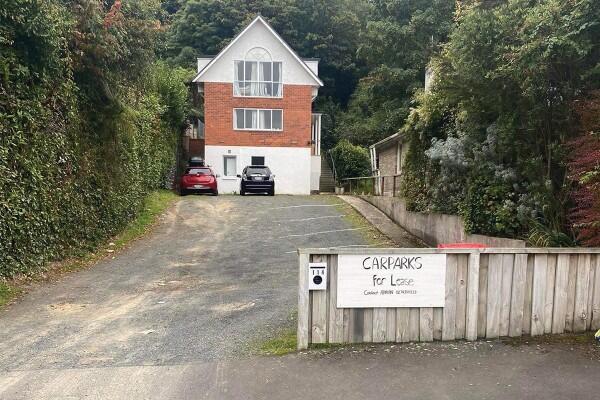
A landlord has been leasing out car parks to a Queen St population battling to find a park. Eight to ten car parks have been made available for lease by the landlord after he realised his tenants only “had about three cars.” What’s shocked students is the price, with one student, Abby, telling Critic Te Ārohi that she had been quoted a price of $35 per week to keep her vehicle in the park – that’s $4 more than a Les Mills membership.
-
News
 Issue 22 11/09/2023
Privacy Commissioner Slams Landlord Website
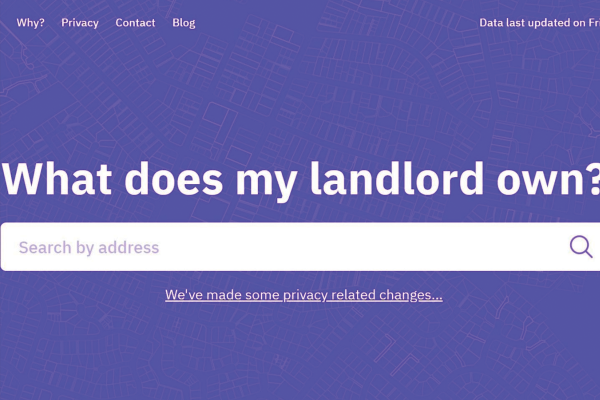
The Office of the Privacy Commissioner (OPC) has released a media release explaining why the website What Does My Landlord Own? (WDMLO) was found in breach of the Privacy Act. The Privacy Commissioner decided to publicly comment on the website as it apparently “provides a cautionary example in an increasingly data-driven world”. Critic Te Ārohi covered WDMLO back in Issue 3. Essentially, the website compiled publicly accessible data from LINZ to allow users to search any address in Aotearoa and find out who owns it and the associated properties that person owns. The issue that the Privacy Commissioner raised was that when data was manipulated it produced a “common name inaccuracy” in which people with the same name were wrongly identified as owning properties that they do not own. This was found to be in breach of Information Privacy Principle 8 which requires agencies to take "steps that are, in the circumstances, reasonable to ensure that the information is accurate, up to date, complete, relevant, and not misleading." Sunset_flowers, the creators of WDMLO, told Critic Te Ārohi that “the common name inaccuracy is unavoidable” due to the fact that the government records ownership information by full name alone. Further, sunset_flowers claimed that it mitigated the issue by “reframing results from ‘Owned by this person’ to ‘Owned under this name’” and added a description of the limitation on their website. However, the Privacy Commissioner found that these changes were inadequate. Sunset_flowers further alleged that the Privacy Commissioner is turning a blind eye to the website Terranet, which operates much like WDMLO, but is marketed towards landlords and property managers and is not free. Indeed, Terranet allows anyone to search for properties by owner name, essentially allowing you to look up the address of any homeowner. WDMLO, however, only allowed you to search the other way around (from address to owner), and had filters in place to hide the details of owner-occupiers. “The Commissioner hasn't even acknowledged the existence of Terranet raising serious questions about their values and interests,” said Kat, a spokesperson for sunet_flowers. Critic Te Ārohi reached out to the Privacy Commissioner to simply ask if they acknowledge that Terranet exists. This was their response: “Under the Privacy Act, agencies that collect and hold personal information have a duty to protect it and respect it to avoid causing harm to people.” Sunset_flowers says that this indicates the Privacy Commissioner’s “blatant double standard” where they “publicly name and shame WDMLO” all while not acknowledging Terranet. Sunset_flowers told Critic Te Ārohi that “we believe this is because WDMLO aims to empower renters, and challenge the very notion of land ownership, both of which fly against the colonial framework the Office of the Privacy Commissioner exists within. There's no doubt that the Commissioner's decision to shut down WDMLO has won them some gold stars among their government colleagues in Wellington.” Sunset_flowers have made the software for WDMLO open source. Do with that information what you will.
-
News
 Issue 21 03/09/2023
“Tenant Blacklist” Database Allegedly Breaches Privacy Act
The renter’s advocacy union Renters United has alleged that Illion Tenancy’s new feature may be in breach of the Privacy Act. The new feature notifies landlords when a tenant has had a background check. Illion Tenancy, formerly known as TINZ and cheekily referred to by some as the “tenant blacklist”, is marketed towards landlords and property managers. The database has profiles of every registered tenant, including personal information and past recorded actions such as Tenancy Tribunal orders. Renters United’s complaint centres on the idea that information acquired from a background check may be held for far longer than you might reasonably expect and used for purposes other than the reason it was collected for in the first place. The news comes in the wake of a similar database being found in breach of the Privacy Act. What Does My Landlord Own? (WDMLO) allowed users to access a merged dataset of publicly-available information to see which properties are listed under their landlord’s name. Following complaints, the Privacy Commissioner found the website in breach of the Act and it was promptly shut down. Critic reported on this in July, issue 14. Third-year Finn said that he thought it would be “incredibly unfair if the same doesn't happen to Illion Tenancy.” Meanwhile, third-year Jamie said that we should get a database for landlords; “if there's no equivalent for tenants then that’s one hell of a double standard.” You can use the Office of the Privacy Commissioner's AboutMe tool to formally request Illion to reveal what information they have on you. Critic Te Ārohi tested it and can confirm that it’s easy; simply put in your details and the Privacy Commission will email Illion on your behalf. You’ll get your response in a day or so. The personal information held on you would typically include details like your address, date of birth, contact details, or driver’s licence numbers. Renters United advises that in a request you should ask them if anyone has access to, or could access, your personal information, and ask why and for how long they intend to hold it. Illion Tenancy is undergoing an annual review by the Privacy Commission to assess compliance with the Credit Reporting Privacy Rules, so the Privacy Commissioner was unable to comment at this time.
-
Culture
 Issue 15 18/07/2023
How to Take Your Landlord to Court
Dunedin’s rental rates are rising faster than any other university town in the country, but the quality of the homes is not exactly a sterling standard. Since people come and go every year, it can be easy for a property owner to neglect a home for years on end, always promising to do work for the next year’s tenants, and then rinsing and repeating the process. We sat in on a few Tenancy Tribunal cases to see what happens when students stand up to the status quo. The Tenancy Tribunal is located on the first floor of the District and High Court on Lower Stuart Street, which is not a scary building, we promise. As far as going to court goes, it’s pretty casual and accessible. It only costs a crisp $20 to file for the Tribunal, and after filling out some paperwork you’re well on your way to sweet, sweet justice. Anyone can just rock up to a random Tribunal hearing and see what’s up. If that sounds like a boring waste of time, you’d be right. But in the name of journalism, we took one for the team and went to court at 10am on a Wednesday morning. Critic sat through two Tribunal hearings as a fly on the wall, each lasting an hour. The first ended in mediation and the second was, according to the magistrate, “very confusing”. You’re telling us. Despite being pretty dry, Critic Te Ārohi learnt some useful tips for anyone wanting to take their landlord and/or property manager into a small room with bright fluorescent lights and lay out how much of an asshole they’ve been in a court of law. The most important thing to remember is not to interrupt the magistrate; they’re the one making the decision at the end of the day, so it’s probably not a great idea to piss them off. Also, don’t interrupt your landlord and/or property manager, no matter how much of a dick they are; both parties have an allotted time to speak before giving the other party time to ask questions and for the right of replies at the magistrate’s discretion. One student told Critic Te Ārohi, “We got told to shut up a couple of times actually because we got too passionate about it.” But then, so did their property manager. Another important thing to remember is to bring printed copies of the evidence you want to submit (things like the signed tenancy agreement, email receipts or bank statements). It’s useful to bring three copies, one for yourself, one for the other party, and one for the magistrate. Be specific and concise; the hearing only lasts an hour and the magistrate likely has a tonne of other hearings back-to-back to get through. So get your facts straight and make sure you have a clear timeline of events complete with specific dates things happened or were said. Finally, don’t expect to get a result on the day; it typically takes a couple weeks for the magistrate to reach a decision and email the outcome. Critic Te Ārohi sat down with a couple students to go deeper and understand what happens behind the scenes of the Tenancy Tribunal process. Zion and his flat of six took their property manager from KITT Property Management (KITT) to the tribunal over around 20 serious issues with their flat in North East Valley last year. Things were off to a not so great start when Zion found rubbish along with a car left from the original tenants on the day he moved in. But that was only the beginning; the stove only had one working hob, the dishwasher was broken, the washing machine was broken, the dryer was broken and there was a patch of mould one metre squared in the middle of the hallway. Also, KITT is based in Christchurch (an immediate red flag). In summary, it was a “shit flat”. After around three months, Zion issued KITT with a 14-day notice. “They're like, ‘Oh maybe we should actually do something about this,’” said Zion. So they went ahead and fixed the gutters and a couple other minor issues. Zion then submitted another 14-day notice, prioritising exactly what needed done to have a habitable flat. After three weeks of “nothing” (Critic Te Ārohi is no expert, but that sounds like over 14 days), Zion threatened to take them to Tenancy Tribunal. So KITT did what any reasonable property management company would do: they went ahead and painted the front of the house (and got a little on the tenants’ cars for good measure). This was the “final straw” for Zion. Three months later, after doing the paperwork and paying $26 from the flat account, Zion and his flatties made it to the Tribunal. “We went to court as a flat, all dressed up,” said Zion. After laying out all the cold hard facts, “we won,” said Zion. KITT Property Management was ordered to pay $2,500 in damages and fix the broken appliances. Split 6 ways, it worked out to be $400 each in “prize money”. But Zion told Critic Te Ārohi: “Honestly, I would have paid $400 at the start to have all the stuff fixed and not have to deal with that… it's awesome but I just wanted a dishwasher working at that point.” Collectively, Zion and his girlfriend put in around 60 hours of admin - not a great hourly rate. He said that the Tribunal process “took a lot of hours, making it almost more stress than what it's worth but it’s the only legal way to get them back.” Ultimately, “don’t get into bed with something that fucks you over,” said Zion. Liam thought their flat on Harrow Street would be demolished the day after he moved out. The flat was not compliant with the healthy homes standards at all; the heat pump was in the hallway, not a main living space, and did “fuck all”, the gutters were broken, the windows were drafty and filled with condensation, there were mushrooms growing in the hot water closet, and there was mould throughout the whole flat. The “cumulative effect of all of this made it a really bad place to live,” said Liam. “Of the five of us living there, three developed IBS which is known to have environmental triggers. But luckily for the landlords, if they have consent for the property to be demolished within 12 months, it is exempt from the healthy homes standards. So legally, they’re technically fine.” But, plot twist: Liam noticed the flat remained standing and the landlords had advertised the flat again - for this year. Liam is prepared to take the fight to the Tenancy Tribunal and is confident of their chances. “The law is quite clear,” they said, “it really depends on those nitty-gritty details.” The property manager has already gotten two adjournments, the latest being given the day before the hearing. While this has dragged the process out, it has also given Liam more time to prepare. The property manager also asked Liam to go to private mediation to “discuss what has actually transpired and the legality of it,” indicating they want to settle outside of court. This all indicates that “they’re scared,” said Liam. To top it off, Critic Te Ārohi sat down with Janet, current head of the Disputes Tribunal and referee for 15 years on the Tenancy Tribunal. Janet described the Tenancy Tribunal as the “front door to civil justice”. The Residential Tenancies Act requires the property to be “reasonably clean and tidy” and “reasonably maintained”. Again, we’re no expert, but it seems unlikely that many flats in North D fall within this description. Janet went as far as to say that “Castle St could be cleaned up for $20”. You heard it here first folks; if you’re flatting on Castle (or anywhere really) and have a scummy landlord that you think is taking advantage of you, take them to Tenancy Tribunal. The worst that can happen is you lose $20 which, split between all your flatties, isn’t much. Zion agreed: “If you hold people accountable they’ll stop taking advantage of you.” Critic Te Ārohi collated someful helpful tips and tricks for students who find themselves in similar situations to Zion and Liam. Take a look at the Residential Tenancy Act and take note of the specific relevant section numbers and specifically how your landlord or property manager has breached it. Reach out to OUSA student support services. Keep everything in emails; if it’s a phone call or in-person conversation with your landlord, get it in writing. You could say: “My flatmate asked what we talked about and I forgot so can you please email me a summary?” Take photos of everything. Better yet, do a full walk around video of the flat. It costs around $20 to apply online for Tenancy Tribunal (and you get it back if you win). Despite the law offering numerous cushy protections for private property interests (cringe), you, as a tenant, actually have some rights. The only problem is that reading legal documents is a massive ceebs. Thankfully, Critic Te Ārohi has got your back, so here’s your one-stop-shop for renting red flags and tenancy rights; you just have to enforce them. What’s more, it only costs a crisp $20 to file for Tenancy Tribunal (and you get it back if you win). Renters United is a national advocacy organisation that campaigns for better renters rights in Aotearoa. They were the ones behind ‘The Peoples Review of Renting’, a report which helped lead the way for the healthy homes standards. The group is entirely run by renters. Jordie, president of Renters United, told Critic Te Ārohi, “Our previous president bought a house and that automatically kicked him out of the organisation.” The current renting situation is pretty cooked. Jordie told Critic Te Ārohi that the biggest issue is “paying for something and not getting anything in return.” Instead, what you do get is mostly negative; “it makes you sick, it is probably in a location that doesn't work for you,” and to top it all off “it's more than a third of your income,” said Jordie. Murdock said that the rent of his last flat in Ōtepoti has gone up “400%” in 20 years. As good as $4 lunch is, wages certainly haven’t gone up that much. As a result, “students are going to be renting into their thirties,” said Murdock, unless of course you’re privileged enough to have intergenerational wealth.
-
News
 Issue 10 07/05/2023
Landlords are (Once Again) Pressuring Students to Sign Early
It’s that time of year again: students are feeling the pressure to decide whether to re-sign or leave their current flats for 2024. If you’re on a fixed-term lease, you don’t actually need to do this until 28 days before departure. Critic Te Ārohi spoke to a couple students who’ve been pressured by their landlords to make the call, with tactics ranging from whiny nagging to downright aggressive.
-
Features
 Issue 25 02/10/2021
Housing is Hell: Are we ever going to get to own houses?
“Don’t wait, just go,” is Bernard Hickey’s advice to students who want the security of owning their own home. Bernard is an economist. He is perhaps even more pessimistic about the prospects of home ownership for young generations than the doomers themselves. If you don’t want to be a serf to a landlord class forever, either jump across the ditch or start looking for a partner whose family already has a property portfolio, he reckons. The high price of housing is the end of the egalitarian dream, according to Bernard. “Half of the kids growing up now are growing up in rental accommodation. Half of the nation is being sentenced to live in cold, mouldy, incredibly expensive houses. That means more trips to hospital with chest infections, having mental health problems, not being productive. That's an awful situation. It's not success.”
-
News
 Issue 15 18/07/2021
Landlord Fails to Make Tenants Pay for Lockdown Freezer Leak
A North Dunedin landlord discovered damage to a flat during last year’s lockdown and unsuccessfully took the tenants to the Tenancy Tribunal for $1800.
-
News
 Issue 1 02/03/2021
Student Union Turns Landlord
Otago University Student’s Association (OUSA) is converting the space above University Book Shop, on Great King Street, into six separate apartments.
-
News
 Issue 24 24/09/2017
Survey Shows 74% of Landlords Would Increase Rent if Labour Win Election
Results of a survey released by the New Zealand Property Investors Federation (NZPIF) showed that as many as 74 percent of the 800 landlords surveyed would increase rents if Labour wins the election and implements its housing policies.
-
News
Issue 4 19/03/2017
Dunedin Landords face Tenancy Tribunal over Illegal Letting of Rooms
The Tenancy Tribunal has ruled several North Dunedin landlords have been requiring tenants to sign illegal fixed term contracts before granting them residence in studio rooms or boarding houses. The practice is believed to be widespread in Dunedin, and according to a Critic investigation, may be being used by landlords who have already had Tribunal rulings against them. Particularly vulnerable to these contracts are international students who are usually unwilling to complain or students who otherwise do not know their rights.


