
Hugh Askerud
News Editor 2024
Articles by Hugh Askerud
118 articles found. Displaying page 8 of 10.
-
News
 Issue 19 13/08/2023
OUSA Petitions For Universal Study Wage
OUSA and VUWSA have put forward a petition to the Prime Minister and Minister for Finance and Education for a universal study wage for all tertiary students of $385/week. The petition is part of a wider “No More Excuses!” campaign that the New Zealand Union of Students’ Associations (NZUSA) dropped on July 27. The campaign outlined three central areas of concern: giving Te Tiriti increased status in the Education and Training Act, giving student associations a voice in education policy, and implementing a study wage. The study wage proposes an unconditional $385 a week, envisioned as a solution to increased student debt and dire living conditions. The payment would be annually recalculated to meet the cost of living, all the while abolishing the student loan and allowance system which currently finances most students' studies. Speaking to the importance of the study wage, OUSA’s president Quintin Jane told Critic Te Ārohi how they planned to “reignite the conversation” about student well-being in Otago. Crucially, Quintin noted the importance of the “wage” tag to the ensuing debate, stating that it “recognises the effort that goes into study which is usually equivalent to that which could be spent working.” Hence why all your tradie buddies seem to be buying houses while your student loan puts you further in debt. “At the moment, there are two choices for people coming out of high school,” said Quintin. “You either work and earn money, or study and gain debt.” Quintin argued that a universal study wage would “get rid of this question,” allowing more choice and increased enrolments in the currently stilted tertiary sector. Importantly, the study wage would replace the role which the student loan currently fulfills, a solution which Quintin pointed out is proving damning. He argued that “the solution should not be increasing how much you can borrow.” The choice to study has more recently been an unappealing one according to Quintin, who said stories he hears are “almost always related to how hard it is to get by.” Specifically, Quintin outlined that, “Rent is getting really expensive… the value for money is also terrible.” He must have been a victim of Chocmaggedon.
-
News
 Issue 19 13/08/2023
Chocmaggedon!
A block of Cadbury’s chocolate has risen to $4.99 retail price in Countdown and New World supermarkets, leaving students stunned as they announce the onslaught of Chocmaggedon. Though the Commerce Commission’s investigation ostensibly had some impact on freezing prices at the three major supermarkets, food prices have increased by 12.1% across the board in the last year according to a NZ Herald report. Unfortunately for families across the nation, the cost of living has continued to bite, increasing the struggle that has become synonymous with living in New Zealand. And for many students working at supeys, the chocolate crisis is making them question their loyalty. Critic Te Ārohi spoke with a number of students grappling with this mental conundrum. Though most chose to troop on in spite of their moral hang-ups, some have gone even as far as to stop work in protest of what has been regarded as a “tragic” rise in chocolate prices nation-wide. Tom*, a full-time employee of New World Gardens who has been forced to carry on work despite his outrage, told Critic Te Ārohi, “Everyone should be able to buy a block of chocolate, it’s a fundamental right.” His particular concern was that customers were coming in to “support Whittaker’s” but couldn’t due to the excessive price. While a block of Whittaker’s Creamy Milk chocolate retails for $6.55 at both Countdown and New World supermarkets in Dunedin, this price is even higher in the New World branch located in Wellington central, where the price of a block currently sits at $7.09. Tapping into the outrage of the customers he speaks to daily, Tom said that “Customers want to boycott the supermarkets but just don’t have any other option.” He said the prices were both “ripping off the workers and ripping off the customers.” That’s exactly what Blair* thought, another employee at the New World Gardens. He has had enough with the prices and has begun calling in sick for every shift. Speaking frankly, Blair said, “Do you want to know the exact reason I haven’t been at work? It starts and ends with the chocolate prices.” Blair’s* rage has also seen him take to drinking on Saturday nights as a coping mechanism for the sea of emotions which stew within. He did admit to Critic Te Ārohi that his main shift, the one he’s been calling out sick for, was on a Sunday morning – but we’re sure that’s unrelated to the issue at hand. Another frequently sick member of the New World Garden’s staff, Cormac* said that the issue was getting to be “a bit of a robbery to be fair.” Unlike Blair, Cormac claimed his sickness was honest, citing extreme sugar deprivation as the root cause. Fortunately, he did seem to have a solution for people suffering from similar symptoms. Cormac posited, “People are going to start eating nuts, just wait.” Nuts or not, it seems clear as day that the students of the university are tired of the drastic increases in chocolate prices. Alongside them stands a nation likely less worried about chocolate in regard to the grand scheme of things, but still revolted nonetheless. Students are worried we are racing towards a breaking point, and not the good kind where it's an even split, the bad kind where you break off too little accidentally and look stingy in front of your mates. *Names changed.
-
News
 Issue 17 31/07/2023
Heartbreak for the Otago Nuggets in Semi-Final
Dreams were crushed in Auckland on Saturday, July 22, when the embattled Otago Nuggets found themselves at the tail end of a 114-103 loss to the Canterbury Rams. Critic Te Ārohi can’t believe it either. A team that started the season with seven straight wins in the Sals National Basketball League have found themselves kicked to the curb in the semi-finals of the esteemed competition. “Who are the Nuggets,” we hear you asking. Nothing much, they’re just Otago’s pre-eminent basketball side, boasting an impressive roster of both international talent and esteemed scarfies to boot. If that’s not enough reason to gaf, the main sponsor to the Nuggets is Night ‘n Day, a business which many students will likely have a key share in. So strap in for a whirlwind tale of joy, tragedy, and hope as Critic Te Ārohi extraneously details the Otago Nuggets’ path to both demise and glory this season. Coming off a championship-winning season in 2022, expectations were high for an Otago Nuggets line-up once again coached by the charismatic Brent Matehaere. The team looked much the same but for the curious inclusion of commerce student Robbie Coman in the starting line up. Finding his knack as a forward, Coman came to be a regular feature in the team after playing with a tenacity only found in the streets of studentville. The ODT stated earlier in the year that Coman could be a “cult hero in the making,” a statement adequately reflecting how the nuggety student has found his way into fans' hearts this season. With Coman at the helm, along with Aussie import Michael Harris and hometown hero Sam Timmins, the Nuggets quickly rocketed into pole position, securing a series of spectacular wins that would serve to shock the nation. Going for their eighth consecutive win, the Nuggets would come up short against the Auckland Tuatara. With self confidence shattered and injuries rife, the team managed to win only 1 of their next 5 outings as things appeared to be taking a turn for the worse. Yet cometh the hour, cometh the man, with that man being the legendary New Zealand player Tai Webster. With Webster installing life back into the squad, the Nuggets managed to beat two of their fiercest rivals, the Canterbury Rams and the Franklin Bulls, in games which would come to define who would go into the playoffs as second seed. Then all fell quiet. The Otago Nuggets had secured an automatic spot in the semi-finals of the competition alongside the Auckland Tuataras. In time they would duke it out with the highest ranked victor of the quarterfinals: the Canterbury Rams. Team talks were had, prayers were softly spoken, and the two titans tipped off in what would prove to be a game infused with agony. The Nuggets started well with a 33-23 lead in the first quarter. Webster managed to grab 14 of these 33 initial points, proving he had the basketball chops to best his older brother, the fiery Corey Webster, who had made himself at home in the Rams roster. To consolidate the lead, coach Matehaere looked to bring on Coman before being told the larger-than-life character had inadvertently been left off the team sheet! A harrowing look of sorrow glossed Coman’s face as he sat down, unable to enter the game despite his obvious willingness. “Seems like an inside job to me,” said one Timaru-based fan. Coman’s exclusion proved to be the first in a series of officiating decisions that left fans publicly questioning the calls made by umpires. One perturbed ODT commenter wrote in frustration, “Our umpires need retrained, terrible calls all night.” Others labelled the controversial figures “armchair refs,” clearly upset by the deference to a Canterbury Rams side which would go on to beat the Auckland Tuatara 93-82 in the grand final. Another year like that and the team could soon boast a reputation akin to the Crusaders amongst begrudging Dunedinites. Score aside, the public outpour after Saturday evenings loss depicts how important the Otago Nuggets have become in the lives of many. Sam Timmins said it best when pouring out his heart to cameras after the tragic loss: “It means something.” For this reason, the team walked away all smiles on Saturday. The Otago Nuggets have come to occupy a key space in the cultural lexicon of Dunedin society, capturing both hearts and minds on their way to a game which will forever be remembered in the halls of history.
-
News
 Issue 17 31/07/2023
Student to Get the Dogs Out for Dunedin Half-Marathon
In the upcoming Dunedin half-marathon on September 10, third-year Geography student Christian plans on running barefoot in the name of mental health awareness. Most of us will barely leave the house to put the bins out without chucking on a pair of slippers (there’s glass around these parts, to be fair) let alone getting the dogs out for a whopping 21km. Critic Te Ārohi caught up with the madman for a yarn about this feat that will undoubtedly leave both spectators and his mum stunned at his mental and physical fortitude. Chris said that the idea “just came to me” after he began considering his own mental struggles from years prior. And as a subbie at Carrington, Chris had become accustomed to seeing the consequences of poor mental health within the students he talked to on a daily basis. Eventually he decided he wanted to do “more to create change,” targeting the marathon as a way to raise money and “get people talking” about the pertinent issue. As you’d imagine, training barefoot in North D hasn’t exactly been a walk in the park. Unless that park was actually a dump. And made of broken glass. “Glass [is] the number one issue during the run,” admitted a downtrodden Chris. He took aim at the plight of ‘bottling’ on Castle St, stating that he would rather run the entire marathon barefoot than run 1km through the student heartland. “It’s pretty fucked,” he said. “You just know they wouldn’t be throwing bottles if they weren’t drunk and surrounded by all their mates.” Though Chris’ main goal for the run is to raise money, it’s also been an opportunity for him to tap into a movement which he admits a heavy affection for: ‘grounding’. It’s based on the belief that bare feet activity is better for you physiologically that began in response to muscle problems coinciding with the advent of technological advance in cushioned soles. Chris told Critic that grounding acted as a really effective anti-stress mechanism, stating there were a number of mental benefits you could “pick up from the Earth’s energy.” Though he admitted to this sounding “a bit hippie-ish”, he vouched for the movement's validity and potential benefits for the future, and he invited everyone to support his run. If you would like to donate in support of Chris’ plight, search him up on Move for mental health or follow this link: https://movefor.mentalhealth.org.nz/christian-griffin
-
Culture
 Issue 17 31/07/2023
The Search for Conehenge
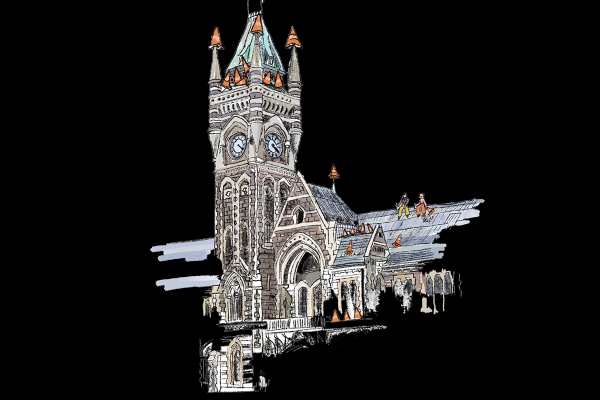
Ahhh, the simple art of cone theft. Over the years many have loaded a number of descriptions onto this noble craft: thrilling, devious, psychotic even, but pointless? Many have dared to make this bold assertion, calling cone theft ludicrous for the fact that the art has no purpose. And…to some degree these cone bashers do have a point. Sure, the absolute rush of committing the crime is something to be dreamed of. You think jovially of how sick you look carrying a trophy which proudly signals your delinquency. There’s a point in that, undoubtedly. But then what? What to do with your trophy? If you’re an arts and crafts fiend, you will make a bong or a nice hat, but how many of us are arts and crafts fiends, really? No, the cone is doomed to sit idly in your flat or hall before finding itself once more back on the street, reversing all the good done by the original act of stealing it in the first place. There must be another way. The humble folk of Queenstown certainly thought so. And thus Conehenge was born, a structure giving stolen cones purpose beyond the initial act of theft. Originally called the ‘Wakatipu Vessel’, the structure is a sculpture composed of a statuesque waka structure on top of two three-metre plinths. Seemingly frustrated by the Council’s bureaucracy and the amount of cones in the city, residents re-appropriated the statue for their own needs, throwing collected cones in the waka to pile into a grand mass. The culture of Conehenge took off and it is now a weekly ritual for the Council to retrieve the cones, only for them to be thrown back into the waka again the next week. What simple joy that structure must provide to cone thieves throughout Queenstown. Dunners’ cone culture is undoubtedly superior to the measly Queenstown efforts, yet students have struggled to come up with an ingenious tactic to give the art of cone thievery a kick in the backside. Here in the Otago University community we love to give back, which is exactly why our very own Conehenge is necessary. So without further ado, here is a shortlist of a few spots Critic Te Ārohi suggests may act as suitable Conehenges for future generations to come. Finding these spots was no joke for our team of fine investigative journalists: one must find a spot not too hard to reach, but also visible enough to make the venture satisfying or else the joy of the venture would be lost. One potential spot could be The Cone - the flat with the orange beast as its namesake. Already a cone sits atop the roof, unreachable by residents or pesky landlords. The cone is perfectly placed, a beacon of cone culture on the streets of Leith. Yet there’s a catch: on this cone-shaped roof, there is only enough space for one cone. Any additions would simply slide off. Sure, you could try to create a stack - or there’s the option of throwing cones through the flat window - but some would suggest that may destroy the peaceful and innocent ethos which is fundamental to cone theft culture. For these very reasons, the top of the clocktower can also be excluded as a potential candidate, although Critic Te Ārohi does admit that would be pretty legendary if anyone fancies a go at it. We may even reward you with a free Red Bull, as a treat. The next potential location for project Conehenge is the fountain that sits at the end of the Botanical Gardens. Custom built with its very own moat, getting cones to the top of this behemoth would be a challenge for even the burliest of shot-putters. Yet the challenge would make sticking a cone up there all the more satisfying. Plus, there’s the chance you may get a bit of a splash for your efforts, a marker of how absolutely naughty you have been. You know it, your flatties know it, and the world knows it; you’re not someone to be messed with when you walk out of the Botans soaking wet, firm in the knowledge that you have won glory in the field of battle. Yet therein lies the problem. We as students do enough to make the humble Botans staff upset (looking at you, Knox), so why not give them a break on this one eh? Leave the fountain in its majesty for ducks and overly excited children to frolic in. This takes us to our final stop. There is only one place Conehenge could really be. A place we love as much as we hate, a place we fear as much as we crave: the top floor of Central Library. Simple as it may seem at first glance, hiding a cone on the top floor of Central Library actually presents a significant challenge given the fact that library staff are constantly on alert. Those beady-eyed library assistants will keep you honest – there’s no hiding a metre-high cone from their watchful eyes. Oh, but think of the reward! Once you hit the top floor, library assistants are no more. The cone you have successfully snuck in will sit untampered with until the apocalypse. How satisfying it would be to watch this hidden horde grow, as staff and students pass by, blissfully unaware of the total conage. Plus, the library is only heavily guarded in the day. Sneak in any time past 9pm and you’ll have it much easier. If this doesn’t sound like you, Critic Te Ārohi also recommends placing them on the random skinny statues in the centre of campus. The cone’s life should not end in the desolation of the flat. We must be better. Only in finding Conehenge is a future for the art of cone thievery ready and waiting. Critic Te Ārohi has supplied a few examples of possible Conehenge sites but, when it comes down to it, it is the people who must decide. One small action is enough to change a cone’s life.
-
Features
 Issue 16 24/07/2023
Functional Zero
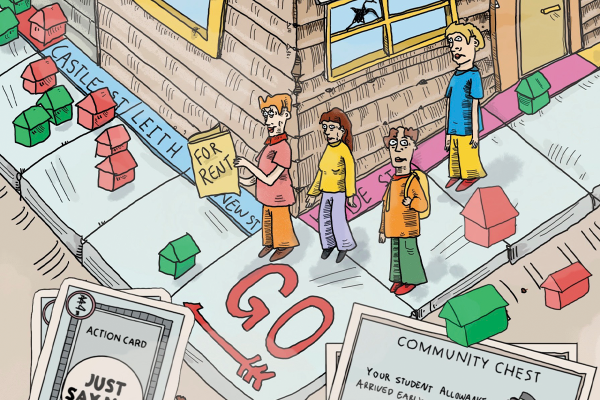
Homelessness in Dunedin has once again reared its ugly head, finding a footing as many are pressed into uncomfortable situations by the climbing cost of living. It’s not only a local issue - the housing crisis has been steadily increasing nationwide, with the Human Rights Commission estimating last year that around 100,000 Kiwis were facing homelessness. A scary prospect for Dunedinites on the precipice of housing insecurity. This isn’t a new problem. A lack of properties available for rent in 2017 saw the Government step in with a social housing boost, funding 22 additional emergency housing locations in the city over a period of three years. Then increasing rent prices coupled with decreasing property standards (picture your typical breatha flat on Castle) led to the Healthy Homes Standards becoming law in 2019. The standards aimed to “improve the quality of rental properties,” as ex-mayor Aaron Hawkins told Critic Te Ārohi. Hawkins did, however, suggest that the standards were fundamentally flawed in the way they left it up to the tenant to enforce which “hasn't worked”, though they did alleviate some of the housing qualms which arose out of the 2016/17 crisis. Sandy Gorman, the clinical nurse leader of the Servants Health Care Centre (a service offering free healthcare for those struggling), told Critic that those standards may have paradoxically made the problem worse in the long-run. Landlords have been seen to use home improvements in line with government housing standards as an excuse to “price many low-income people out of a place to live.” To this end, she suggested that some of her patients' rental pricings had increased by 20-30% over the course of only a few short years. In the meantime, “there has not been a benefit increase to match this,” meaning that “choices about eating or heating have to be made.” Attesting to this, Gorman noted that “it is not uncommon for our patients to arrive at appointments having not eaten that day because they have no food or haven’t eaten for a couple of days.” According to Dunedin Night Shelter manager David McKenzie, an organisation that provides emergency shelter for those in need, since Dunedin’s “[homeless] numbers don't feature well with the likes of Auckland and Rotorua… we have repeatedly missed out on government funding.” Not only has the DCC continually failed to gain an emergency housing grant from the government while cities such as Christchurch have, government funding initiatives that directly target homelessness have also often overlooked Dunedin. “[The city is] suffering from a historic lack of social housing over the past 30 years,” said McKenzie, forcing local institutions to “make do and cover up.” McKenzie and Gorman seem to reveal a harsh truth. Decisions made on a national scale have had detrimental impacts to a Dunedin social housing market, floundering under the weight of increased rent prices and a lack of developmental opportunities for emergency and social housing within the city. Without the necessary government intervention, the DCC has needed to get creative in its approach, collaborating with smaller action-based community groups like the Dunedin Night Shelter. The Dunedin Night Shelter, the DCC, and other institutions have been working together to reach ‘functional zero’ homelessness in Dunedin. It’s something McKenzie is “really excited about.” ‘Functional zero’ homelessness is when more individuals are leaving homelessness than there are individuals becoming homeless. To do this, the DCC said that they were focusing on “look[ing] after our most vulnerable” by creating “a joined-up approach that reduces homelessness in our city”. Still, the DCC admitted that the new approach was in its “early days,” saying that there would be “more information to share when we present our update later this year.” Commenting on the DCC’s actions prior to this, Hawkins said it came down to “working with Kainga Ora, private developers and community housing providers to increase the social housing stock.” Kainga Ora recently bought 27 homes within Dunedin to be converted into public housing whilst simultaneously consolidating plans to further benefit communities within the city. And the recent announcement of thirty low-income apartments in the massive Lund building on the waterfront marks a significant investment in the housing crisis which has steadily heightened both locally and nationwide. Hawkins himself is heavily involved in the housing issue as chairperson of the Cosy Homes Trust, an Otago initiative founded in 2013 which seeks to “transform lives through healthier housing.” Working with other community groups, the Cosy Homes Trust manages to provide 10-20% insulation and heating subsidies, all the while engaging in education and the development of community groups which target the same goal. Musing on the work of the trust, Hawkins stated that the group’s effectiveness was based on being “better connected” and thus “offer[ing] a more effective, citywide response.” The ring of support for homelessness in Dunedin extends beyond dealing directly with housing, as well. Involved in this multi-faceted approach to the issue are groups such as the Presbyterian Support Otago Family Works programme, which aids in financial management. The Salvation Army also works quietly for the benefit of the city, providing food and clothing to the residents most affected by the harsh bite of cozzie livs. So, despite the lack of substantial government support, local initiatives are finding a way to make a difference with the little resources they have. By pooling together both resources and ideas, the aim of ‘functional zero’ homelessness lies well within the city’s reach. Going but not gone… the plans for the future of housing in Dunedin optimistically suggest that a solution to the city’s homelessness crisis is near. When all of these groups are accounted for, it becomes apparent that the Dunedin Night Shelter are not alone in their pledge to reach ‘functional zero’ homelessness within the city. Herein lies a solution. When working in unison, these groups wield an immensity of power which is able to be channelled into the eradication of homelessness within the city. But, as McKenzie summed in his talk of a solution, “It takes a bit more collaboration to get where we need to be.” Though hope exists, the obstacles that will need to be surmounted are no joke. While each group works collectively, the DCC remains the lynchpin of success, meaning much weight still lies in the city’s current Housing Plan and the updates which are scheduled to arrive in September. Additionally, the issues of climate change and the current recession only serve to stretch the applicability of this potential solution. But hope remains. As McKenzie emphatically assured: “We are having an impact.”
-
News
 Issue 16 24/07/2023
Re-O-Roundup
What a lady, what a night. A sentiment I’m sure many found themselves uttering as they progressed further and further into the maddeningly obscene antics of the Re-O Week scene on Castle. Yes, Re-O Week came to live up to the hype we all expected, providing all sorts of thrills and spills for breathas of all varieties to look fondly back on. Though the antics were largely second-year-centric, the series of OUSA events littered throughout the evenings provided enough fun for all students basking in the musk of the struggling musicians who likely hadn’t showered for days. Reflecting on this momentous occasion, Critic Te Ārohi has compiled a summary of the events that transpired all in the name of breathadom. Starting strong, students were witness to a Blue Waffle party which garnered the attention of hundreds on a cold Monday eve. Of significance was the fact that the host abruptly changed the theme only a day before it started, choosing to opt with ‘Blue Out’ as opposed to ‘Boogie’. Maybe they were worried too many would show dressed as boogers, who knows? But one thing is certain: timing was on the side of the host, which segued nicely into a free 2000’s party hosted at U-bar. Police presence was also noticeable, with multiple vehicles posted outside the street party wedged neatly in between Castle and the one way. Tuesday’s ‘Snow party’, hosted by Honeypot, had the benefit of allowing for warm clothing, a fact students would later praise for having greatly heightened the experience of the night. Reports were also rife of supposedly “punishing freshers” from a variety of biased second-year sources. Widely hailed as a success, one student told Critic Te Ārohi, “I don’t even remember going, I was so drunk.” While that may seem to defeat the point, it also serves as a badge of honour for some. Wednesday was ‘Cops and Robbers’, a theme that requires participants to make both bold outfit choices and suggestions about whether they’re a top or a bottom. Unfortunately, the event was tarred with the misfortune of rain and wind which drastically impacted attendance at the Leith St event. Numbers were as low as 20-40 people at 8pm before gradually picking up as the night wore on and the alcohol blankets came into play. Discussions about the ethics of the theme were few and far between. The slightly ambiguous ‘Mardi Gras’ party was hosted by Complex on Thursday, an interesting theme that brought many flamboyant personalities out of hiding. The infamous DJ Mosey was allegedly playing to a packed crowd which frothed in the sheer atmosphere of the place. Mosey’s presence was complemented by effective lighting and a layout fundamentally built for large scale street parties such as the one displayed on Thursday. Courtyard, oddly, hosted a ‘Halloween’ themed party on Friday, despite the fact that the day itself is still many a month down the line. Still, the theme seemed to coincide nicely with ‘Mardi Gras’ as many reported that they used the same costume to attend both events. Then came Saturday night, the illustrious evening whose only requirement was for attendees to to get ‘Black Out’ in the den of Thirsty. The Christchurch-based DnB trio SUUNE inspired the antics to unwind into utter chaos as the night wore on. Police presence usurped that of Monday evening, yet the Red Frogs appeared to do the most for those students well and truly horsed, serving up pancakes to anyone who fancied them just 50 metres away from the host itself. Yet the week did not end there! Every dusty student found themselves rudely awoken at 7am Sunday morning to the sounds of the Castle hosting a school reunion (that’s earlier than I used to wake up for school). Perhaps seeking redemption, the event wore on throughout the day, keeping the mood light while the clean up ensued for everyone else. Commenting on the week as a whole, one student, Anashai, told Critic Te Ārohi, “By that sixth night I was pretty zoned out - it got harder as the week went on.” Another hardened patriot, Eli, added, “It was a mission of a week, everyone was battling but they were battling hard.” Despite the regular comments that the hosts were “dry” and the fact that you could probably get away with wearing a Batman costume at every one of them, studentville stood to attention as Re-O came and went last week. We at Critic hope you drank enough over the course of the week to forget the alarmingly pertinent fact that you now have to actually do Uni work. Godspeed.
-
News
 Issue 16 24/07/2023
Castle Roof Blaze Quelled by Campus Watch
Tragedy struck at Doll’s House on the Tuesday of Re-O Week when the roof of the infamous flat was set on fire, having been shot with a series of fireworks. Police were quickly on the scene as the event transpired. It proved to be Campus Watch, however, who eventually stamped the fire out after considerable damage was done to the guttering and the iconic opening of the Doll’s House. To find out how it happened, Critic Te Ārohi had a chat with groups there who walked us through the details of the event’s random occurrence. Like many good stories of love and betrayal, it started with a group of closely affiliated boys. Let's call them the Sharks*. Having consumed a hefty amount of alcohol and finding themselves stranded at Doll’s House, the Sharks were bored and looking for something to do. That’s when they happened upon a stash of what one resident, Alex, called “proper mega fireworks” that had been sitting dormant in Stables since the start of the year. Not ones for wasting an opportunity, the boys made their way over to Doll’s House armed with an assortment of pyrotechnic weaponry. Before lighting the fireworks, the group decided it would be a good idea to get even closer to the house, only realising the folly of their efforts after it was too late. Speaking with candour, one resident of Doll’s House, Liv, told Critic, “This kind of thing has happened before.” She described how the boys, showing their expertise, “lit them using the oven” before coming outside to “throw it at the roof, pretty much.” Putting it down to being a “boy thing,” a supposed natural urge that one feels when you “want to blow something up,” the girls were pretty understanding of the Sharks’ actions. It seemed that the boys made up for the event by showing their love in other ways. Specifically, one member ended up coming back the next day with his tape measurer, trying to fix the mistake with nothing but his bare hands. You can’t really be mad at that kind of debonair. Even the cops on the scene “didn’t really care,” according to another resident, Mayson. “They just talked a bit about rent prices and said, ‘Okay, sweet’ after it was all sorted.” The fire was only quelled after a member of Campus Watch (who happened to be an ex-firefighter) saw his moment and climbed up on the roof to engage in battle with the roaring flames. Though he was denounced by Doll’s House as being on an “ego-trip”, his work was nonetheless applauded by both residents and the police who were happy to celebrate the work of the spirited individual. Someone putting out a fire and being made the villain was “classic Castle”, said one. Happy at the end of the day, the Doll’s House girls still managed to froth jovially as the week wore on, unbothered by their roof predicament. One of the Sharks agreed to pay the girls back and everyone left smiling, still buzzed at the obvious joy the event inspired. Critic Te Ārohi supposes that the landlord wasn’t quite so happy, but we’re sure he had a quiet chuckle at some point after. *Name changed
-
News
 Issue 15 18/07/2023
Year 13s Invade Castle Street, Seeking Thrills
Never before have there been so many students claiming to be first year health sci students on Castle St. Why would anyone make such an absurd claim, you ask? It’s likely because they’re not even students. Recently, there has been a significant upturn in the amount of Dunedin highschool students daring to venture out into the wild streets of studentville, emboldened by the anonymity that large street parties provide. Though this phenomenon has a history dating back decades, the process has accelerated recently with more younglings smoking cones, drinking copiously, and even clubbing in Catacombs (seen at one bold formal afterparty). On Saturday June 24, Columba College, a sporting and academic behemoth nestled in Māori hill, hosted their senior formal for Year 12 and 13 students. Notably, the formal afterparty was hosted at an entirely booked out Catacombs where students frothed to the infamous thudding of DnB. Besides the fact that booking out a nightclub is undoubtedly an absolute gun venture, the act perhaps mirrors the efforts of highschool kids getting increasingly involved in student culture. While Critic Te Ārohi has heard rumours of a similar formal afterparty occurring at Suburbia in weeks to come, the primary offender at this stage is the afterparty at Catacombs. But where does this obsession with student culture spawn from? Sure, it does well to draw in the out-of-towners who only see the highlights, but the fact that even locals are being bamboozled makes for an interesting sight. One Year 12 student, Alex*, told Critic Te Ārohi that the primary reason for increased interest was that “student culture is so public in Dunedin.” Still, she did admit that “there’s a certain type” that takes the plunge into the depths of Castle, having never gone in herself. While many would suspect the “certain type” to be the Logan park larakkin located conveniently at the gates of studentville, Fletcher, a second-year student who ventured into Castle as a Year 13, told us that is was mainly those who were “trying to look cool” (AKA posers). Scorning his own youthful folly, Fletcher stated that the experience was “pretty shit, really, as we mainly just hung out together.” Going one step further, Fletcher told Critic Te Ārohi, “If I saw a Year 13 out and about, I would drop them,” justifying his bold claim with the assertion that, “their time will come.” Ben, a student who performed the same crime as Fletcher, shone some light on the benefits of the excursion when he told Critic Te Ārohi that “you had to sell a lie” to get away with it. Ben admitted, “We all knew we didn’t belong and it was kinda fun sneaking around telling people your course that you’d made up.” Based on this testimony, the murky motivations of the intrepid Year 13’s venturing onto Castle became apparent. The “certain type” that Alex* refers to is the dare-devil, inspired by the glitz and the glam of student life, risking a beating or potential embarrassment to get a taste of the thrill that comes with identity fraud. When you frame it like this, the recent spike in the number of Year 13’s wandering Castle Street makes sense. Keep an eye on the streets of studentville for updates on the trajectory of this worrying trend. *Name changed.
-
Culture
 Issue 13 29/05/2023
South Otago Pubs Ranked by How Scared I Am to be In Them
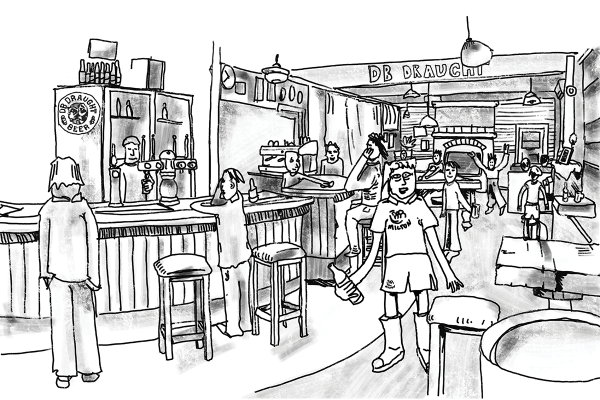
Last month I cut my hair short. No longer was I the long-haired lad who sat reading Proust in the summer sun. Instead, I endeavoured to become the beer-guzzling, duck-shooting, rugby-loving, Southern man which my rugged short hair prescribed me to be. Yet how is it possible to make such a rapid transition in the throngs of studentville? I can’t be a deluded soft boy one minute and full on country boy in the next. Something had to happen; a trial by fire perhaps? There was only one obvious answer to my conundrum. I had to conquer the Southland pubs that scared me most, in a quest that would hopefully shape me into the ‘Southern Man’ I so desired to become. Thus, the decision was made. I would journey south to search for the scariest pub while asking myself the scariest question of all: what makes a man?
-
News
 Issue 13 29/05/2023
SILENCED! Castle Boys Speak Out
Love it or hate it (most likely the latter) the sound of 40cc motorcycles on Leith Street has become a fundamental aspect of second-year culture.
-
News
 Issue 12 21/05/2023
Ding-Dong-Ditchers Invade Castle Street
Knock-knock. Who’s there? No, it’s not your Uber Eats or your sneaky link: it’s two old men who have engaged in the slightly pathetic art of ding-dong-ditching your flat!


