Student to Get the Dogs Out for Dunedin Half-Marathon
CW: This story contains descriptions of sexual harassment
Otago University was founded on geology and medicine, and has recently targeted both with considerable budget cuts. According to documents seen by Critic Te Ārohi, the Geology Department is facing a proposed reduction of about a third of their staff, despite boasting the title of 2022’s top research department in the Division of Sciences per the Performance-Based Research Fund. Full-time equivalent (FTE) positions are set to drop from 14.1 to 10.85, and technical/professional staff are set to drop from 9.35 to 5.7 FTE. Health Science, often seen as the favourite child, is not safe either, with 36 staff already accepting voluntary redundancy: 3% of the department. Geology’s cuts represent 30%. The Commerce Department, on the other hand, seems to be shouldering the lightest weight of the lot. Perhaps ironic given the commercial storm facing the University. So far, the University has lost 107 staff to this round of voluntary redundancies. According to a report from the Clocktower, these include 14 from the sciences, 10 from humanities, 22 from operations, and 17 from other administrative roles. Only eight have come from Commerce. Dr. Mike Palin, a Geology staff member taking voluntary redundancy, was both exasperated and furious. He said that “we knew something was wrong” all the way back in September last year, when second- and third-year students started leaving their degrees mid-semester – and not just in geology. “We’ve never seen that before,” he said. Mike speculated that the Clocktower noticed this, too, so he was perplexed as to why they would forecast a 4% increase in enrolments with that in mind. Now, to shore up the $60 million deficit created by that forecast, the Clocktower is targeting academic staff in Geology and beyond. Science Communication, for example, is set to be almost entirely dismantled. This is not the first time staff have been culled to save on overhead costs. In 2021, then-Vice Chancellor Harlene Hayne implemented the Support Services Review (SSR), which sought to cut support staff from individual departments and create a centralised support team that could shift around campus. The five divisions it created include Ask Otago and Client Services. The move was tipped to save the University $15 million a year. But it did not go entirely according to plan. Far more staff had to be hired following the SSR than initially expected: an OIA (Official Information Act) that we received in 2021 showed 170 staff were ultimately hired to replace the “trimming” of 160 positions. Many of the people let go were long-term departmental support members, and they took a wealth of institutional knowledge with them. The new, entry-level support pool was unable to completely fill the gaps. Client Services, for example, expected to see staff numbers trimmed from between 340–380 FTE to just 284. As of Denzel Chung’s reporting in 2021, this total had actually grown to 373: 31% higher than budgeted. The Clocktower conceded this week that in one or two instances, staff members may have been brought back on fixed-term or casual appointments to help support their previous position. What was meant to save millions of dollars in operating expenses actually ended up increasing the number of staff on payroll. Now, even though student enrolments are still a net positive, the University is faced with the need for even further savings, with staff cuts again at the forefront. This time, academic staff are in the firing line. But it wasn’t all due to the SSR. Acting Vice-Chancellor Helen Nicholson cited a wide variety of building projects as the biggest recent expenses. These included Te Rangihīroa College (funded up to this point without debt), the Eccles Building, and the new Dental School. Moreover, though, earthquake strengthening of several buildings across multiple campuses seemed to be the biggest culprit. No properties have yet been sold. Aside from cutting staff and selling assets, the University is aiming to increase student enrolments by a staggering 20% with a focus on internationals. The Geology Department, ironically, had carried a 15-20% international student population until the pandemic, putting it well ahead of the 15% international cap for the overall university. The Geology Department was given three weeks to submit a counter proposal to the Clocktower. Mike said that the Head of Department, Dr. Andrew Gorman, has been “terminally optimistic”, and has been “a hero” for the department. He’s working “really, really hard” to design a proposal that would save all positions that haven’t already accepted voluntary redundancy.
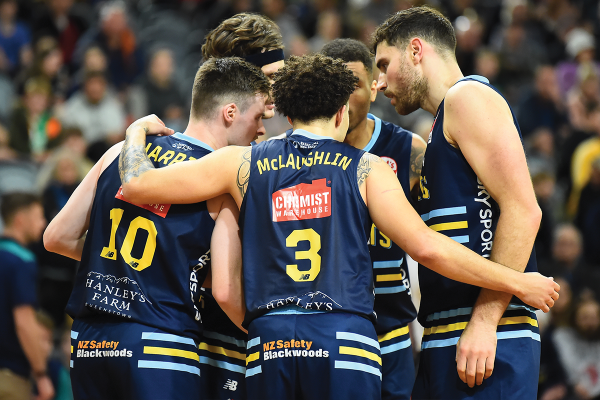
Dreams were crushed in Auckland on Saturday, July 22, when the embattled Otago Nuggets found themselves at the tail end of a 114-103 loss to the Canterbury Rams. Critic Te Ārohi can’t believe it either. A team that started the season with seven straight wins in the Sals National Basketball League have found themselves kicked to the curb in the semi-finals of the esteemed competition. “Who are the Nuggets,” we hear you asking. Nothing much, they’re just Otago’s pre-eminent basketball side, boasting an impressive roster of both international talent and esteemed scarfies to boot. If that’s not enough reason to gaf, the main sponsor to the Nuggets is Night ‘n Day, a business which many students will likely have a key share in. So strap in for a whirlwind tale of joy, tragedy, and hope as Critic Te Ārohi extraneously details the Otago Nuggets’ path to both demise and glory this season. Coming off a championship-winning season in 2022, expectations were high for an Otago Nuggets line-up once again coached by the charismatic Brent Matehaere. The team looked much the same but for the curious inclusion of commerce student Robbie Coman in the starting line up. Finding his knack as a forward, Coman came to be a regular feature in the team after playing with a tenacity only found in the streets of studentville. The ODT stated earlier in the year that Coman could be a “cult hero in the making,” a statement adequately reflecting how the nuggety student has found his way into fans' hearts this season. With Coman at the helm, along with Aussie import Michael Harris and hometown hero Sam Timmins, the Nuggets quickly rocketed into pole position, securing a series of spectacular wins that would serve to shock the nation. Going for their eighth consecutive win, the Nuggets would come up short against the Auckland Tuatara. With self confidence shattered and injuries rife, the team managed to win only 1 of their next 5 outings as things appeared to be taking a turn for the worse. Yet cometh the hour, cometh the man, with that man being the legendary New Zealand player Tai Webster. With Webster installing life back into the squad, the Nuggets managed to beat two of their fiercest rivals, the Canterbury Rams and the Franklin Bulls, in games which would come to define who would go into the playoffs as second seed. Then all fell quiet. The Otago Nuggets had secured an automatic spot in the semi-finals of the competition alongside the Auckland Tuataras. In time they would duke it out with the highest ranked victor of the quarterfinals: the Canterbury Rams. Team talks were had, prayers were softly spoken, and the two titans tipped off in what would prove to be a game infused with agony. The Nuggets started well with a 33-23 lead in the first quarter. Webster managed to grab 14 of these 33 initial points, proving he had the basketball chops to best his older brother, the fiery Corey Webster, who had made himself at home in the Rams roster. To consolidate the lead, coach Matehaere looked to bring on Coman before being told the larger-than-life character had inadvertently been left off the team sheet! A harrowing look of sorrow glossed Coman’s face as he sat down, unable to enter the game despite his obvious willingness. “Seems like an inside job to me,” said one Timaru-based fan. Coman’s exclusion proved to be the first in a series of officiating decisions that left fans publicly questioning the calls made by umpires. One perturbed ODT commenter wrote in frustration, “Our umpires need retrained, terrible calls all night.” Others labelled the controversial figures “armchair refs,” clearly upset by the deference to a Canterbury Rams side which would go on to beat the Auckland Tuatara 93-82 in the grand final. Another year like that and the team could soon boast a reputation akin to the Crusaders amongst begrudging Dunedinites. Score aside, the public outpour after Saturday evenings loss depicts how important the Otago Nuggets have become in the lives of many. Sam Timmins said it best when pouring out his heart to cameras after the tragic loss: “It means something.” For this reason, the team walked away all smiles on Saturday. The Otago Nuggets have come to occupy a key space in the cultural lexicon of Dunedin society, capturing both hearts and minds on their way to a game which will forever be remembered in the halls of history.