
Hugh Askerud
News Editor 2024
Articles by Hugh Askerud
118 articles found. Displaying page 7 of 10.
-
Culture
 Issue 26 08/10/2023
Opinion: The person you need is Nanny McPhee
Kicking someone out of your flat is a shitty experience, particularly when it’s a byproduct of your own shitty behaviour. Though it’s usually justified, the experience nonetheless leaves scars on the flat. Conversations are left in flux; a uniting, common enemy is lost; rent must be covered. Who’s gonna cop the passive aggressive flack from everyone at flat meetings? Where will the drama go that everyone so desperately craves? Most importantly, what random will you take on as your new flatmate? A flurry of questions, yet scant solutions. It seems that, in the face of all these problems, there’s really only one thing you can hope for. That thing being none other than the immortal governess herself: Nanny McPhee. Like, literally who the hell wouldn’t want Nanny McPhee in their flat? Although I guess the whole point is you don’t want her, but hell, you need her with that room of yours. I’m sorry it’s come to this, and so is she. But it’s the only way forward. But why Nanny McPhee, really? To answer this question, I will first look at the practicalities of the issue and then look at the purpose. The most obvious practical benefit from her presence is that she pays rent. During that murky in-between period when you’re looking for a new flatmate, the room’s just sitting there, begging to be let. Nanny McPhee also only takes Sundays off which is great for you, as you’ll probably be taking most of that day for worship anyway. Also, beneath the various warts and other unusual skin tags, Nanny McPhee is actually global superstar actor Emma Thompson! Imagine the clout you could garner pulling up to pint night with Emma Thompson in tow, warts and all. The pint night line would be something to scoff at as you glide into U-Bar, ready to receive your obligatory free pints and offer waltzing lessons. As mentioned, the ultimate purpose of having Nanny McPhee stay at your flat would be to help heal the flat drama that emptied her room in the first place. So now comes the tough bit: she will grill you. A pure emotional assault that will leave you all in tears. Nanny McPhee is also too moral to gaslight you, so instead she uses her supernatural powers to literally force you into obeying her will. One bang of her stick and you’ll find yourself in the car, driving to pick up your flatmate from work without any desire to do so. I won’t lie (because she won’t let me), the first two weeks aren’t going to be pretty. She catches you with a bong in hand? You’ll be doing push-ups until your knuckles are bleeding and you’re pleading to go back to Auckland. But hey, she’s a military-trained nanny, so push-ups are part of the package. But at the end of the day, catharsis will be found in the struggle. With Nanny McPhee mediating discussions you will have the opportunity to reconnect, finding out what you mean to each other as friends and flatmates, and maybe more. Through the tears there will be laughs and through the intense discussion there will be a chance to start again as a completely new flat. To be Nanny McFree. Plus, think of all the great personal benefits to her staying! You’ll go to bed early and will always use your please and thank you’s, the quintessential elements to success in the corporate world (there’s a reason she’s a government nanny). I’ve said it once and I’ll say it again: the person you need is Nanny McPhee, a potential light in the dark for flats looking to navigate their intense drama and ongoing flat issues. To this end, I plead: if Nanny McPhee comes knocking on your flat door one weary day, let her use your spare room. It’s worth subjecting yourself to complete loss of bodily control and constant fear of her wrath for the peace she ultimately brings. Make it last, because as Nanny McPhee herself said, “When you want me but no longer need me, I must go. It’s rather sad, really, but there it is.”
-
Culture
 Issue 25 01/10/2023
Local Candidates Debate: A Summary
With all major parties (bar ACT, surprisingly enough) wanting a slice of the student voting pie, OUSA in conjunction with POLSA hosted a high-octane debate in the union hall at 1pm last Wednesday. The result was largely underwhelming, as candidates showed the utmost respect for one another in attempts to save face for their parties. Boo, get the claws out next time. Still, there were a few golden moments in the one-and-a-half hours of unceasing yarns, moments which Critic Te Ārohi will feed back to you in a cryptic fashion leaving you more confused than you were before the article started. The dogs in the fight were Labour’s Rachel Brooking, Green’s Francisco Hernandez, the independent Jim O’Malley, National’s James Christmas, NZ First’s Keegan Langeveld, and TOP’s Ben Peters. One curious omission from the debate was National’s Dunedin candidate Michael Woodhouse, who has been a bit AWOL since he removed himself from the party list earlier this year. Also sorely missed was New Conservative’s Paul Deacon, who at a OUDSA (debating club) debate the Friday prior got the whole squad laughing when he bluntly announced climate change was an ideological ploy designed by the government. Good chat bro. Keeping the candidates honest was OUSA President Quintin Jane alongside POLSA’s (politics club) Lily Stock, who were tasked with the all-important job of heartily tapping the bell when the candidates spent too much time speaking. Quintin also intervened when a member of the crowd asked candidates, “What is a woman?” stopping Peters from speaking in efforts to preserve the sanctity of all members of the crowd. Slay Quintin. Aside from this question, the crowd mostly sought to ascertain policies on wealth and climate, bluntly voicing the rage of an indentured student community. James Christmas also blushed when asked to fess up about the whereabouts of his Dunedin paramore. In general questioning, each party was given plenty of breathing room to speak about policy on tax, climate, and housing. The person with the most breathing room was independent Jim O’Malley, who was free to wax lyrically about the evils of neoliberalism without having to stick to party policy. Ben Peters also shared a similar advantage, taking the time to inform the audience that “Dunedin is a flat city, other than the hills themselves.” The people who got the least speaking room were representatives of the Electoral Commission and Generation Vote who sat idly beside the main stage, pleading silently to audiences that they should probably enrol at some point. As such, the audience generally took to the minor parties, though the Greens got the greatest hoots of support. It’s hard to say who won. Was the real winner at the end of the day then perhaps debating itself? Probably not. See below to have your take on the matter. On the matter of housing, Labour’s Rachel Brooking said “we plan to build 27,000 for 2027.” Ah, isn’t it great that dreams are free? Greens’ Fran Hernandez said that “we side with renters” and that the party “supports a landlord register.” Independent O’Malley said that “housing is a right” and that us nomadic students are “living a transient life.” James Christmas, whose name would suggest ample knowledge about the intricacies of indoor heating, took a page out of the National Party handbook and said that “it’s a supply issue.” We did not ask him anything about chimneys, or if it would be possible to stave off the winter cold by supplying students with their annual coal allowances in July, rather than the Northern Hemisphere-centric December, when coal is pretty useless. To finish the housing part off, Peters touted the benefits of a land value tax. Then, the topic on everybody’s mind: taxes. Labour has ruled out a capital gains and wealth tax, so everyone is wondering how the fuck we’re meant to be funding public services. Brooking contended that there is “bipartisan support in our tax system,” while Hernandez fired back by saying that we need to “redistribute wealth so we can properly fund the services we need to.” O’Malley echoed a similar sentiment, saying that “wealth is accumulating at the top of our society, and we need to bring it back.” Christmas didn’t offer up much apart from “Muldoon was basically a socialist,” which is… certainly a take. Langeveld mentioned “the books are in bad shape”, and Peters refined his earlier statement, saying that he’s all about “a tax on land, specifically.” Now, for the most highly anticipated and existential question of our generation: climate change. Brooking started off by saying that “the ocean is a wonderful place,” and she’s so real for that. She also mentioned the importance of “fishing controls and marine reserves.” Hernandez wasted no time to spark anxiety, saying “we’re living in a climate emergency” and that we “needed to save 30 percent of our ocean for reserves by 2030.” O’Malley kept it simple, saying “get us some help,” with Christmas saying we needed to “rapidly increase the production of renewable energy” which is ironic coming from a party who wants to repeal the ban on offshore oil and gas exploration. Langeveld mentioned something about “farm-level reporting emissions.” Peters said we needed to “increase public transport and city density” and that it was important to “cap total emissions.” And that was about that.
-
News
 Issue 24 24/09/2023
Accidental Studentville Ram Raid
How does a flat 30 metres shy of the road find a car in its living room? In perhaps the most bat-shit crazy twist of the year, at around 7pm on Friday the 15th (may as well have been the 13th) the girls at Salt Shaker found themselves staring down the eye of an old beat-up grey wagon that had plunged through their living room wall. The commotion instantly saw a crowd of 50+ flock to the scene of the crime where the girls stood laughing at the random intrusion on their red card plans. Curious onlookers could be seen poking their noses over fences on Cumberland St in wonderment at what could warrant three cop cars and a fire truck. By the following Tuesday when we paid the flat a visit, the gaping hole in the wall had been filled. The girls told us that at 6:30pm on the night of the incident, they were (thankfully) upstairs getting ready for a red card. Then they heard it. “We just see this car in the wall, like… I had no idea what it was, so it was quite strange to be honest.” The freakiest part? They’d been sitting on the couch against said wall just five minutes prior. Instantly the group reacted, calling the police and the landlord. One resident, Sophie, said that she told her landlord, “Oh I don’t really know what to say, you should probably come down. There’s a car in the living room.” Even though the group had caught their landlord in the middle of having a glass of wine with his wife (bless), he didn’t seem to be bothered by the whole thing, simply repeating the phrase, “I’m the lucky owner,” to the delight of the group of onlookers who had amassed. While the crowd gathered outside the humble flat, likely drawn by a Castle23 post which raised a few eyebrows (“Can’t park there, mate”), was sizable, the culprit was nowhere to be seen. One resident, Maddy, told us, “I saw him sitting there for like 30 seconds after it happened, then he sprinted into his flat. I’m pretty sure he was just hiding in his room until the police came and wanted to talk to him.” The offender has been landed with a $15k invoice for their new wall, who was referred to only as ‘Little Niks’. Little nik on the side of the house, that’s for sure. Maddy told Critic Te Ārohi, “When I first saw it, I thought, ‘God, it must be someone with some real hate towards our flat.’” Though Little Niks had had few interactions with the flat before that point, the girls also thought that if there was any hate in the neighbourhood it would likely be targeted at the raucous Debacle boys. But Little Niks has suggested that the accelerator was simply faulty and got stuck. Yet redemption came for Little Niks when, in an attempt to make amends, he gifted the girls of Salt Shaker a box of favourites and a letter which reads as follows: To neighbour, I deeply apologise for crashing into your house. I hope you don’t take a-fence. I hope we can meet on better terms. Hope everything is okay. With love, - little niks from next door The repentant offender managed to sell his car to the wreckers for $900, so he only has $14,100 to go. At 9pm they also caught him in the act of smoking a durrie and munching pasta while wistfully staring at the carnage he had created, job well done. The girls at the Salt Shaker may have lost their wall, but in doing this they’ve gained so much more. Maddy admitted to blowing up on TikTok as a result of the event, and a bond between the flat and Little Niks may have been permanently established. Critic can’t wait to attend the wedding in a year or two.
-
Culture
 Issue 23 18/09/2023
RED-S
Imagine you’re an athlete, spending your days in the shell of a constant migraine, feeling immediately tired upon waking with a full day of training and classes ahead of you. This was Tom’s reality for almost a year as he grappled with RED-S, also known as Relative Energy Deficiency in Sport. RED-S is an underrecognized but brutal condition which is a result of the body not receiving enough calories and nutrients to meet its energy expenditure. Now studying at Otago and no longer playing sports, Tom has had time to reflect on the impact the condition has had on his mental and physical health.
-
Culture
 Issue 23 18/09/2023
Winning Streak
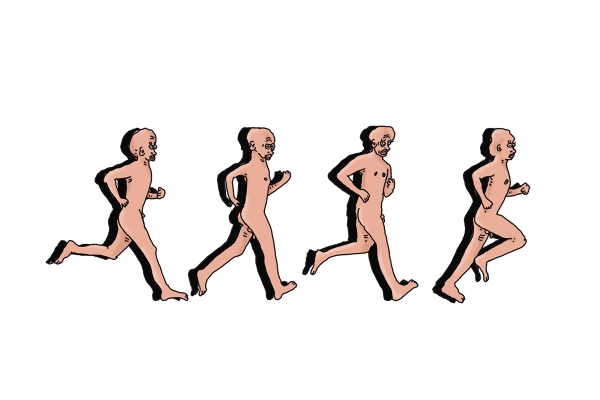
Saturday, August 26th. A cool breeze whistled through Forsyth Barr Stadium, carrying the jeers of Otago and Southland fans. It was a day few could predict, but all would remember; it was the day of the streaker. The streaker who lived. Long before this fateful day, nine young men set out to do the impossible. Video footage shows them huddling, plotting, and then hopping the barrier. Surely there would be strength in numbers - but not today. The nine pitch invaders were immediately seized upon by security, and only a paltry few made it more than ten metres onto the field. The audience heaved a collective sigh, mourning what could only be the end of streaking culture. After all, if none of the nine succeeded, how could a lone wolf ever hope to make through? And then, like a phoenix from the ashes, came August 26th. A single man hopped the barrier, dodged security, and cleared no less than three fences before hurtling down an exit corridor to freedom. He had done the impossible: he had streaked and lived to tell the tale. He had captivated the hearts and minds of the Zoo. And we simply had to know more. Who was this mystery man? What were his secrets? And most importantly: would he strike again? We didn’t know where to start and quickly found ourselves hitting dead end after dead end, slamming headlong into obstacles as if they were P4G security guards. At a point of despair, the case grew cold. That is, until we managed to make contact with Jerry*: a member of the very security team that our mystery man eluded. Meeting in an abandoned alleyway under the cover of darkness, Jerry whispered details only ever mentioned in the tombs of the Forsyth Barr. A secret ally of the streaking community, he said, “I can see the appeal, it gets your name out there.” Having signalled his commitment to the cult of streaking, Jerry gave Critic Te Ārohi the inside scoop on recent security measures: “The team gets briefed on strategy before matches… and you have to be qualified to be in a position where you could tackle someone.” And it sounds like the tacklers are quite keen. Jerry told us that “you’re going to get tackled by someone who wants to take you down… the vibe at briefings is if you get them, do whatever you can.” In his mind, with all the risks weighed up, “At the end of the day it is quite a brave thing.” Things began to get serious as Jerry began to divulge his tips for the successful attempt: “You need to move with the security and then streak when the game’s stopped for something like a penalty decision.” He began glancing from left to right, as if to check if someone was listening. At his most skittish, Critic Te Ārohi asked the biggest question, point blank: “Who is the streaker that managed to evade security that fateful stag day?” Jerry’s eyes grew wide. Somewhere, the wind whistled with extra mysteriousness. Whispering, he muttered two words under his breath: “UniCol….breatha…” And then he fled into the darkness. We had a lead. Taking to the streets, Critic Te Ārohi met up with three UniCol beezies who offered insider info on the identity of this mystery man. They were willing to give us what we needed: a name. The name. Thursday, September 7th. We had a name, we knew his game, and now all we needed now was to reel him in – hook, line and streaker. After a back and forth on Facebook, we agreed to meet in a dark corner of Ubar on pint night before realising that was way too stupid and public, so we opted to meet in the safe enclosure of the Critic Te Ārohi office. Jacked up on adrenaline and fear that the streaker would bolt (with no one capable of catching him), we prepared to sit down with the mythic figure to ask for his why. And then, as if by magic, there he was. Shaking with relief and a sense of awe, we shook hands with the man who made Forsyth Barr his playground during the most successful Otago streak of all time. His name was James* – or whatever you’d like it to be, because obviously we’re not telling you. “[It] all started at the Highlanders vs Hurricanes,” said James. He was in the stands, considering making his run. The peer pressure was mounting, the jeers were coming, but the field wasn’t looking likely. It was a day that ended in despair. James sighed, “I let a lot of people down.” Not one to be beaten by a moment, James and a committed group of mates began planning the “logistics” of a streak which was to go down in the history books. But no amount of planning could prepare him for the isolation of being on the field, where he mused that it was “like going into the unknown.” And failure was simply not an option. We asked him if he had considered the consequences, and with truly legendary spirit he replied: “In that moment, it didn’t matter. Because I knew I was going to be the first person to get out, uncaught.” James waited to strike, saw his moment, and the rest is history. Summarising his story, James told us, “I think the message you can take away from my story is that you can get away unscathed. There’s no better feeling, to be honest, [than] when you’re on that field and hear the roar of the crowd. It’s outrageous.” And with that he was gone, streaking off into the distance, never to be seen again. Our hunt was over, yet a curious sense of dissatisfaction settled over Critic Te Ārohi’s team of leading journalists. Hearing James’ brave story made us realise that his kind was a dying breed. Over the years, streaking has stumbled in its old age, increasingly finding itself persecuted as an example of moral injustice by both citizens and bureaucrats. Then, streaking’s darkest day finally came. On the 9th of July, just after James’ incredible feat, the nation’s darling (and greatest enemy) Sam Cane kicked an Argentinian streaker to the ground, effectively cementing the low status of the once beloved art. Arguably only George Crump did it better in 1804, when he managed to wrangle his streaking exploits into a successful political career as a US congressman. If his story is anything to go by, James could be destined for a place in parliament by the end of the election cycle. Catch him if you can. *Names changed.
-
Culture
 Issue 23 18/09/2023
The Breatha’s Guide to Understanding the Rugby World Cup
What is the Rugby World Cup? The Rugby World Cup (RWC) is a quadrennial meeting between the best countries in the world, i.e., the ones that play rugby. The coolest donnies, the blokes you’d happily invite over for your red card. 20 countries in total, each with mixed degrees of decency at rugby. Rugby has only had a world championship for 36 years, with the 2023 RWC being the 10th. Who is the Rugby World Cup? Ship came into harbour, carrying… the 20 teams of this year’s RWC. Let’s break it down. The Big Four are great, and have thus earned nicknames (very cool). They are Team New Zealand AKA the ‘All Blacks’, Team Australia is called the ‘Wallabies’, South Africa are the ‘Springboks’ and Argentina are ‘Los Pumas’. Notice how we refuse to name ourselves after a wild animal that shits and pisses? We’re better than that, and we know it. Next up are the Try-hards: Ireland, Fiji, Japan, and England. Lots of potential, keep up the good work lads. Next group is France and France is shit. Sorry exchange students, suce ces noix. The remaining eleven countries are Italy, Uruguay, Wales, Tonga, Chile, Romania, Portugal, Samoa, Scotland, Georgia and Namibia. They’re certainly countries, and we’ll leave it at that. And if that wasn't clear, here's every past RWC compared to the relevant Fast and Furious Movie, because that will help! Rugby World Cup Fast and Furious Movie 1987 Half Host and Winner: NZ A classic! The Fast and the Furious (2001) A classic! 1991 Hosts: UK+Ireland+France, Winner: Australia More exotic muscle than the first. 2 Fast 2 Furious (2003) More exotic muscle cars than the first. 1995 Host and Winner: South Africa Best one out of the three! Tokyo Drift (2006) Best one out of the three! 1999 Host: Wales, Winner: Aussie Wildly boring. Fast & Furious (2009) Wildly boring! 2003 Host: Aussie, Winner: England Very cool and very based. The ‘Boks were forced to attend their training camp at gunpoint. This is when audiences knew the team would remain insane forever. (The ‘Boks came 5th, fast). Fast Five (2011) Very cool and very based! La Familia are forced to steal a safe, and audiences knew the franchise would remain insane forever. 2007 Host: France, Winner: S. Africa Completely bullshit! The French threw the ball forward (stupid) and kicked NZ out of the tournament (bullshit). Fast & Furious 6 (2013) Completely bullshit! The main villain flips cars over (stupid) and Letty is alive? (Bullshit) 2011 Host and Winner: New Zealand! Now we’re cooking with gas! Heaps of mana! This is what we came to see! Furious 7 (2015) Now we’re cooking with Nitrous Oxide! Heaps of money at the box office! This is what we came to see! 2015 Host: England, Winner: New Zealand Absolute scenes! An underdog Japan destroyed a titan South Africa! What an upset! The Fate of the Furious (2017) Absolute scenes! An underdog Dodge Charger destroys a titan Nuclear Submarine! What an upset! 2019 Host: Japan, Winner: S. Africa So good, and yet so ludicrous. Not playing Ben Smith against England, what the fuck? F9 (2021) So good, and yet so ludicrous. They took a car to space and crashed it into a satellite, what the fuck? 2023 Host: France I don’t know how this one ends! Jason Momoa attended the first game Fast X (2023) I don’t know how this one ends! (It’s a two parter) Jason Momoa attended the film Your gameplan: Before the Game Pregame chat is arguably the most important time to spin yarns and likely to be the easiest form of engagement as you don’t need to learn the rules. Obviously you’re going to back the AB’s publicly, but it is curiously acceptable to shit on key players and tactics. In this sense, an all-encompassing pessimism should define your manner as you calmly chat about how shit our coach Ian Foster (AKA Fozzie) is. A few details to note is that the All Blacks have won three World Cups, and if we don’t win this one, we risk letting the South Africans get to four. To this degree, there are three teams you can openly despise with complete safety: South Africa, Australia, and France for good measure (never forget the Rainbow Warrior). Yarns to spit: “Fozzie out”, “Simply put, Dupont is unmatched”, “McKenzie needs a spot somewhere, Fozzie’s fucking useless.” During This is where it gets tricky but as a rule of thumb, silence is golden. If you’ve done enough pre-game chat, your mates will simply think they’ve caught you deep in intricate thought processes when they glance at you staring idly at the TV screen. Also, no one likes the person who will commentate the whole game for ya, no one gives an ass about your half-baked rugby theories when it’s try time. Still, there are a few things you can do: throw something at the TV when they start kicking the ball too often, and complain that “the game’s gone soft” whenever there is a penalty given for literally any reason. Yarns to spit: “Go Beaudie!” - when anyone that looks like Beauden Barrett gets the ball. “That’s a coach killer” - whenever someone drops the ball. “The kick is only ever as good as the chase” - whenever we kick the ball straight to the opposition. “HEAVE” - at scrum time. “He’s over that!” - whenever a random penalty is given after a tackle this is usually the reason. Trivia: Why is the trophy called the “Webb Ellis Cup”? In 1823, William Webb Ellis was a student at Rugby School in Rugby, Warwickshire, playing a game of football when the ball landed in his hands. Incredible. Webb Ellis then looked up, saw a literal Victorian English teenager, thought, “I could actually run it straight and piss bowl this prick over”, and folded that loser – and thus “rugby” was born. The next 199 years would define nations, unite countries, build legends and destroy my God-damned TAB. Who’s your new favourite player? Ethan De Groot - Highlander and Southlander, he is a quintessential Southern prop who will give a ‘stags’ sign on the rare occasion that he scores. It’s him or Aaron Smith, really. What does “Up the Wahs” mean? Although we hear about the All Blacks all the fucking time, New Zealand actually has other sporting teams to be proud of <3 This includes the Warriors, the team we send over to Australia to compete against those spineless cucks. They have had a fucking fantastic season; to celebrate we say, “Up the Wahs!” I think I get it, who do I root for? New Zealand! The All Blacks! We have won this shit three times! We can easily do it again! Don’t listen to the haters saying, “We lost a game or two,” or, “Our team isn’t what it used to be.” Who cares?! We are Kiwis, and we are built different! Let’s get this fucking bread! What if we lose? Oh shit, I didn’t think of that… Well, the NZ dollar will plummet, so invest in foreign assets. If we don’t win, then both Fiji and Ireland are Critic Te Ārohi’s next favourite teams. Both countries have that dawg in them, and can just as likely lift the trophy this year. The 2023 Rugby World Cup will last from early September to late October. The fan favourites are Ireland and France, due to the former's incredible skill and high win-rate, and France are hosting so they have immunity to their local cuisine. Up the Wah’s and Up The All Blacks!
-
News
 Issue 22 11/09/2023
Is the New Statue Backwards?
Flogging a dead horse to some degree, Critic Te Ārohi asked the University for any word on why the infamous white box still hasn’t been lifted outside St Dave’s. A bit like a kid in the backseat of a car repeatedly asking their parents “Are we there yet?” Once again, we were stonewalled, only being told they “are expecting to be able to unveil the pou whenua before the end of the year.” In the absence of any real knowledge of the subject, students of the Otago University have had enough, finding themselves lost in a hole of conspiracy theories and bottomless rage in reaction to the continued delays. Critic Te Ārohi reached out to the disgruntled many, uncovering some curious theories that can only come from the boredom of looking at a white box day in and day out. Speaking bluntly, one student Griffin said, “Who gives a fuck?” asking that the University simply remove the white box so students could live free of internal torment. Another student, Esther, repeated Griffin's sentiments, stating, “I didn’t know it was there as a box, that’s not going to change when you take the lid off.” But what’s stopping this process? The University said, “It will be revealed to the public once the remaining work and the appropriate tikanga Māori measures have been completed.” This answer is consistent with reports issued to the ODT and Critic Te Ārohi months ago, so what gives? One student, Briar*, got to thinking on the issue, stating, “It’s all a conspiracy… my theory is that the University is using the statue as a base for a network of underground tunnels.” Her second theory - one we understand is shared by many - was that “they’ve got it the wrong way around and haven’t figured out how to turn it back yet.” That would be embarrassing. Suspiciously, the University ignored our question asking if there was any truth to these rumours. Asked about the likelihood of a conspiracy, Lily told Critic Te Arohi, “Yeah it’s possible.” Still she argued, “Would it really make a difference which way you face it, no one’s going to notice once it’s out.” To this degree, she mused that it was perhaps the University’s delay which would make people notice. With a prophetic tone, Griffin took a different stance, stating, “This way or that way, it’s still watching over the people and keeping them safe.” Possibly alluding to the pou whenua’s existence as an omnipotent entity entrapped in the casing of a white cube, Griffin’s comments further emphasised the great need for it to be unleashed from its cage. Though the University is “expecting to be able to unveil the pou whenua before the end of the year,” the student cries of “get it over with already” are mounting. Until it is eventually unveiled, the conspiracy lives on. A trapped deity or a statue simply turned backwards: we’ll leave that for you to agonise over. *Name changed.
-
News
 Issue 21 03/09/2023
New Religion Club Goes Rogue
Wednesday, August 23 seemed an ordinary day in OUSA Clubs and Socs. Until the lights went out, mysterious figures emerged from the shadows, and a variety of sacrificial snacks were put on display. Yes, you’ve guessed correctly: the Society of Religious Studies Enthusiasts (SORSE) sat down for their first meeting - a viewing party of Greta Gerwig’s Lady Bird. Probably not the first choice of your high school RST teacher, but they had reasons. With a successful movie night and a whopping 24 Facebook group members under the belt, SORSE has begun to establish itself as a confident member of OUSA’s panoply (it’s a word) of clubs and societies. That is, until Critic Te Ārohi got a whiff of scandal: rather than getting “stuck behind the legality,” said the group’s co-founder Hannah, SORSE decided to go AWOL and start their society outside the watchful gaze of OUSA. Naturally, this leads to the question: will we have a quasi-church vs state brawl on our hands? In response to murmurs, Hannah came out publicly, telling members, “There’s still a lot of room and time for what SORSE becomes to be discussed or decided.” Additionally, SORSE and the Religious Studies Department is expressly guided by an acceptance of all beliefs, choosing to focus on the analytical study of religion as a sociological phenomena. To this degree, SORSE’s cultish behaviour appears even more bizarre. To reckon with the justice of this issue, we got in contact with Keegan Wells, OUSA’s Postgraduate Rep and “proud graduate of a Religious Studies minor.” Despite this affiliation to the department, Keegan was shocked upon hearing the news of the religious studies students gone rogue. Controversially, she stated, “I think whenever these small departments hang out with each other outside their already small classes, it’s just a big circle jerk really.” Keegan went on to say that she simply could not “condone being affiliated to OUSA,” questioning if “the religious studies kids are too afraid,” to reach out. Taking the side of the students, Keegan mused that the group's independence was “a perfect metaphor for not accepting a pansophical overlord just as they do every day in their studies.” Proving the Religious Studies grindset does not stop. Furthering her critique, Keegan argued that isolation “reinforces the astigmatism around religious studies that everyone is religious when the opposite is true.” Keegan’s solution for this stigma and fear fostered within the group was simple, “They need to bow down to their OUSA overlords.” Hannah did admit to Critic Te Ārohi that there were plans to “chip away at the OUSA affiliation stuff on the side,” so maybe we will see SORSE bow down to their masters after all. Though the foundational meeting only garnered an audience of five or six, the sheer amount of snacks on offer showed that SORSE means business in future, having already secured backing from the University’s Religious Studies Department to go ahead with brewing plans. The group plans to open itself up to more religious studies themed movies, quiz nights, and even panels from students and lecturers on specific topics close to the hearts of many. Check SORSE out on Facebook. If you’re interested they may let you in (especially if you can write a constitution).
-
News
 Issue 21 03/09/2023
Uni Whales Win Hockey Championship
The University Whales performed the impossible on Saturday, August 19, winning the premier men's hockey competition in a stunning shootout victory. Blub-blub. After an initially slow start to the season, the team has been called the “most unlikely of champions”. Before two shootout wins in the quarter and semifinals in the weekends leading up to the match, the team had only won six of their fifteen games in the regular season, losing nine to finish fourth out of the six teams in the league. “Basically, we went from not having beaten any of the top three teams outright in the regular season to winning the entire championship,” said Gabe, one of the team players. Remarkably, the same pattern occurred just two years ago for The Bombers, a B-level Dunedin ice hockey team, who lost nearly every game in the first half of their season, won every game in the second half, and then swept the finals. Something about hockey and comebacks in Dunedin, it would seem. So how was it done? A masterclass in hockey, or simply great goalkeeping? Critic Te Ārohi sat down with team player/coach Josh Wypych to find out. The experience was “pretty unreal,” said Josh, who also told Critic that “during the season we hadn’t been there at all, half our games had been blowouts.” The Whales lost 5-1 to both Taieri and Kings United, two teams they would eventually beat in their stellar run. Sure, they had “glimpses”, but “these didn’t come away.” In the end, Josh reckoned, “We can either shit the bed or flip the switch when we go down… in the finals we really pulled together.” Down 3-1 in the final game with only 8 minutes to go, this switch certainly flipped. The team scored two crucial penalty corners to equalize with only a minute and a half to go. After a “frantic minute left of play,” Josh said he was pretty confident in the abilities of their goalkeeper, Hugh, to get the job done. “Obviously you always think you can win it, but it wasn’t until we won our first shootout against Albany” - a team boasting NHC Otago keeper Felix McIntosh - “that I felt pretty confident we could go all the way.” To this degree, Josh was spot on, as the Whales came home to take the title in a best-of-three shootout against a talented Taieri side boasting three New Zealand Under 21 players. The Whales weren’t without their fair share of national stars, though, bringing one cap Black Stick Benji Culhane back into the mix as the regular season ended. Josh’s sly smile as he talked about this was hard to ignore as he deemed the impact of the young fullback as “pretty unreal, to be honest.” Black Stick ring-ins or spectacular shootout form; whatever way you put it, the stars seemingly aligned for the Whales three spectacular weekends in a row (with Critic being assured the post-match celebrations were similarly as spectacular). Coming from nowhere to win the entire competition, the Whales team of 2023 has firmly rooted themselves in the history books of Dunedin hockey, leaving the older clubs grumbling in their wake. Though the team is set to lose six or seven players next year, Josh is still confident that the team will have enough in the tank to make it three titles in four years. And that’s the kind of confidence which wins shootouts, hopefully for many years to come.
-
Features
 Issue 21 03/09/2023
Sub-Culture: The political leanings of our suburbs
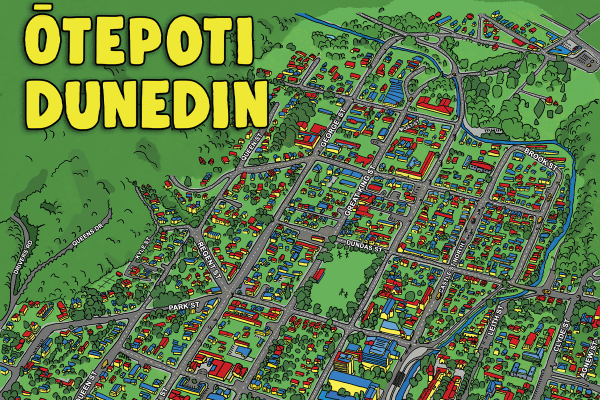
Dunedin’s suburbs are teeming with culture – and we don’t just mean microbially. Unfortunately, most students don’t venture out of their bubble of safety until graduation comes, aside from an occasional hoon to St Clair or a mish out to a dealer. From the absurd rent prices to the constant doof-doofing that plagues innocent ears, there isn’t a whole lot to love in this black mould infested segment of town. We all know and agree that studentville is fundamentally shit, but we never seem to leave it and explore Dunedin. No wonder we’re so miserable. It’s like asking someone to piss on you and then complaining that you got wet. Get up, towel off, and go do something about it. Take a (discounted!) bus ride somewhere new and get out there, with the help of Critic Te Ārohi’s guide to Dunedin’s suburbs and their political inclinations based on the science of “just trust me, bro”. Our vibe check may not mean much, but it means a shitload more than a Twitter blue check. Yeah, we’re pretty quirky. This is for those people who have hit their “fuck North D” phase. Soon enough, you could be in a “fuck Roslyn” phase. It’s impossible to talk about any university students without saying “Marxism”, so: studentville? Marxism-influenced. The system is fucked, after all. The average student doesn’t meander much further left than that, because no one really knows what anarchism is and communism means dressing the same and wearing silly hats, and who wants to do that? For now, it’s just raging against the system like your parents against the machine. Which system, exactly? “The.” It makes you look cool, but it might get old very quickly once you find yourself wallowing in the pit of your own inaction and anxiety. A wee way down the track you hit Port Chalmers, the biggest haven of greenies in any major New Zealand city. It could even have more well-established green coverage than our remaining primary forests. If you’re looking to be a humble art hermit like Hotere, Port Chalmers is a must-visit. You can live on a diet of purely fish and cannabis, all the while preaching about a capital gains tax and the complete greenification of the state. Kinda like Gollum, but suuuper vibey. Taking a peek at the other side of the harbour you have Macandrew Bay, a suburb still firmly rooted on the left of the political spectrum but in a slightly different fashion. Like, if you asked a Macandrew local about leftism, they’d say all the woke social media words and add a “but…”. Living here, you’d become accustomed to seeing the grisly sights of the Nissan Leaf, open-toed shoes and sourdough bread. With almost as many holes in their bread and sandals as in their politics, though well-intentioned, Mac Bay is of the wealthy middle class despite its leftist persuasions. If you want to save the planet one keep cup at a time, here’s your place. Just, like, know your place. Further down the peninsula lies Tomahawk, the most divisive political landscape in the country. Possibly more divisive than its namesake, even, which can literally split heads. It’s a bit of a mystery though, because dominating this scene are the jovial anarchists of the Smaills Beach Society. Planting days, bonfires, and collective cleanups are all on the cards in this DIY bunch, lovingly fashioned for all to enjoy. Estranged from Marxist melancholy whilst still being firmly rooted on the left, Critic Te Ārohi recommends. Making our way past St Kilda (doesn’t vote) we reach St Clair, the home of yoga mums who don’t mind what happens as long as they can continue sipping on their iced coffees from The Esplanade. In summary: extremely centrist, swaying to whichever party keeps things exactly as they are. They like their coffee strong and brown, but they like their men weak and… well, don’t ask that, actually. Yes, it’s paradise – but at what cost? Move here if you’re a regular Beam Me Up Bagels girlie. Then there is the infamous middle bloc, encompassing Caversham, Corstorphine, and the mighty South D. Sure, we cheated and grouped multiple suburbs together, but we’re all united as proletariats anyway. In this area lies the working class: the true blue of Dunedin society, making the wheels of the city run seamlessly towards glory. Or away from Gore, whatever’s easiest. Ideology is far from the minds of these noble folks. Grant Robertson was also born here and that man is a pure GC. Live here if you back yourself in a game of pool, fiend a pub crawl, and love shitting on company time. We crawl over the motorway and reach Mosgiel, where true blue retirees who have voted National all their lives live. Yeah… probably don’t live here, purely for the fact that there’s about three under-40-year-olds in the entire suburb. You’d be cougar bait, which sounds great until you realise they’re all called Margaret or Terry and always smell like damp towels. Nonetheless they’re a good sort in Mosgiel, barring the fact that they’ll chew your ear off about Three Waters and all sorts of bizarre theories that they’ve been cooking up on the golf course – which is also the most contact they’ve ever had with a green. Moving along, we have Roslyn and Māori Hill. Very rich and very right, leaning heavily into the National/ACT paradox. They might not remember who the National candidate is, but they think he’s a very decent man, thank you. It’s a nice life up in the Hollywood hills and the residents wield a lot of influence within the city. Whenever it starts to rain but stops after a few seconds, that’s actually the Māori Hill residents spitting on us from above. Rumour has it that a secret business roundtable exists within this suburb, lurking in the dark only to strike when a DCC decision becomes business-orientated. Live here at your own peril! Or at least duck into Kaikorai for some bowling, ‘cos it’s actually full of normal people. Almost at the end of the suburb loop, we reach George Street: the area of indecision where idealism finds its shallow grave. Potentially an inevitable for forlorn young students, here is where the gradual growth to conservatism occurs. Something something “road works with MY tax dollar?!” Fooled by the glitz and glam of the city, students become drawn to the dollar like moths to the roof of Doll’s House in Re-O. This is the realm of the soft right, fools who chase success without concern for their withering morality which lies slowly dying in the festering rivers of the Leith. You do not want to be here. A place where you realise your values are transient and can be bought at the drop of a dollar, George Street is a demanding but likely place for you to be living. And then we return, back into the defeationist but socially comfortable Marxist thought that originally drove you away. Yes, there’s a lot to discover out there in the suburbs of Dunedin.
-
News
 Issue 20 20/08/2023
Seagull Gang Ram-Raids Night ‘n Day
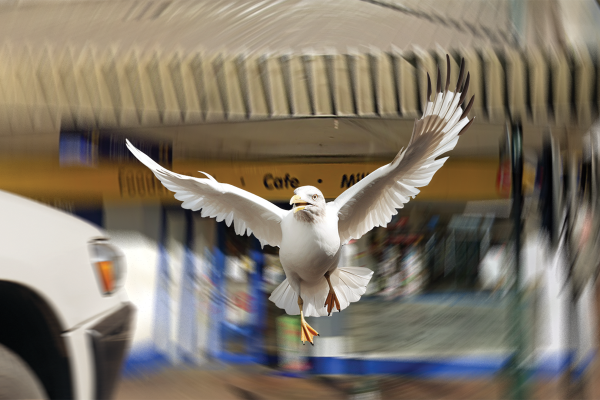
Thursday evening, August 10th. A gang of ten young ruffians swarmed into the Octagon Night ‘n Day, harassing staff and customers while refusing to leave. The offenders – all in matching outfits – refused to communicate in english. Maybe because they were seagulls. This is no joking matter. As ram-raids continue to dominate the national news cycle, we needed to consult an expert. Immediately, we reached out to Chris Luxon for advice, hoping to learn something from his Party’s tough-on-crime stance. We told him that “ten individuals… entered a Night ‘n Day in town and caused ruckus by intimidating staff and patrons. It's unclear if they actually stole any items.” Not one to shy away from pressing issues, we almost immediately got a response from Mark Mitchell, National Party spokesperson for Police. He told us that, “While we do not know the details of this [incident]... it does demonstrate that there is a real sense of ‘no consequences’ among young people, something that has been fuelled by Labour’s soft approach to crime.” To get to the root of the issue, Critic Te Ārohi spoke with Night ‘n Day staff member Alina*, who witnessed the events firsthand. After co-worker Rodger* had to spend his mid-shift break dealing with the pack of unruly youths, one managed to evade capture by hiding on top of the fridge overnight. The next morning, to rub salt in the wound, the gang came knocking once again. In broad daylight! Something absolutely must be done. Nina and Amelia, two students after a post-town feed, were trapped in the store while the chaos ensued. “There’s a difference between one or two birds in the library and six or seven big fuck-off seagulls in Night ‘n Day,” said Nina. Though she was pretty unfazed about it all (“I just wanted my wedges”), Amelia was not, saying, “The ratio of birds [to humans] indoors was ridiculous, a line had definitely been crossed.” Still, she said, “We were on a mission to get wedges, nothing was going to stop us.” The scare tactics employed by the birds were effective, but it’s unclear if they actually made off with any stolen merchandise - the details from the girls were admittedly hazy. If they had, perhaps a better headline would’ve been “Fantastic Beasts and Where to Fine Them”, but we’ll let that one sit for now. In the meantime, the lack of actual damage has encouraged conspiracy theorists to wonder if the whole ordeal was actually an elaborate marketing ploy orchestrated by Night ‘n Day itself. Alina doubted this, and mused that maybe the reason the birds didn’t steal anything was because the food is “pretty shit, really.” But no matter the explanation, Mark Mitchell was insistent that, “Intimidation is frightening and all business owners and staff should feel safe in their own environment.” Thank you, Mark. We can all sleep at night with the promise that “National intends to ensure that young people know that actions have consequences.” Assuming, of course, that extends to birds. Until the election, we expect Dunedin’s seagulls to continue spitting in the face of the law. The gulls could not be reached for comment. *Names changed.
-
Features
 Issue 20 20/08/2023
Storming the Castle
For the first time ever, it seems that the infamous open street hosts that gave Castle its legend, its lure, its life, have become a thing of the past. Word on the street (or in this case, not on the street) is: Castle is dead. While the second-years of 1990 sang Queen as they rolled and torched a car, and the second-years of the 2000s ignited riots at the Undie 500, the second-years of 2023 have only had the bare minimum of Flo-Week, O-Week and Re-O Week to lose their dignity to. This year, Castle Street has devolved further than ever into a “gated elitist community” populated by “Auckland fucks” who regard those outside their inner circle as “shit on the bottom of their rich Adidas sambas” — at least, according to some of this year’s disgruntled UoO confessions. Yet Castle remains the coveted heart of Otago’s student experience, an experience that is becoming increasingly out of reach for a student population who believe they’re entitled to it. If Castle Street is considered dead, however, not all of its residents seem to know it. The prospect of a quiet Castle elicits an “oh my god!” from the Beehive flat who, gathered in their living room, collectively refute the idea that their street has lost its shine. Though they acknowledge it’s been “slowly fading out over the years,” the girls say they (as Castle residents) have “had a lot of fun” and doubt the street will ever see its reign end: “It’s never gonna be dead,” says Gina*, “because the legacy will always live on.” But to many outside the Castle gates, this year's residents appear to be exploiting this legacy, standing on the shoulders of breathas past without paying their own dues. “Castle is just shit, isn’t it?” says Robbie from Corner Store on Leith Street. “It seems like they want the status of living there without any of the responsibility of upholding the culture.” Robbie, who reckons that Leith Street has usurped Castle in spirit, says the street’s “reputation and aura” is the only thing keeping it afloat. “For other people coming into Dunedin, you think it's going to be the craziest time of your life and you’ll wake up in a ditch or something. It’s just not like that [anymore].” Castle Street is no longer the menace that generations of second-years (and courageous freshers) have known and loved, and the statistics seem to prove it. Police rushed to Castle Street 51 times in 2021 after receiving complaints from the local community, even with several lockdowns that year. In 2022, Police were only called out to the infamous street 24 times. Nearly three quarters of the way through 2023’s student season, Police have only received 13 callouts. So what’s changed? Nobody knows for sure, but a few theories have arisen. The common assumption is that external threats to the street have forced its party culture to become more insular, like a turtle bringing the disco ball inside its shell. The most obvious factor is COVID-19. Quintin Jane, OUSA’s man behind the wheel, tells Critic Te Ārohi that the pandemic was a “circuit breaker,” suggesting it forced students to “reshape what Dunedin partying looks like.” One student, Leroy* speculates that “the fact that it's so easy to record someone and get them incriminated” stops Castle from partying like they used to. Only a few years ago the Proctor came into possession of videos and photos that resulted in 17 students receiving disciplinary action, nine of whom were expelled. And while the videos depicted what was undeniably a hazing ritual, the point was clear: your digital footprint can cost your degree. And then there’s the looming landlords who, rumour has it, are putting up legal barriers to party culture. Alex from the Corner Store reports that “some people in their [lease] contracts aren’t allowed to have parties.” Doll’s House serves as a case in point, having had to reject the honour of hosting during Re-O Week due to a stipulation in their rental agreement. With rumours swirling about one infamous flat’s upcoming tenancy court hearing, some students believe that the street hasn’t truly quieted down, and that the only thing that has changed is who is allowed to show up. The frenzy and ferality of Castle is still alive, according to Alex, who says that “The parties have been good [this year]. It’s just a matter of whether you’ve been invited to them.” We've found a number of non-Castlers claiming that, for whatever reason, a deep-rooted elitism has sprung up in recent years. When students were asked where they thought this elitism has come from many were stumped for an answer – though a number of UoO confessions have seemed to pin it on high school and regional ties which residents haven’t shaken off upon entering into uni. “There’s been a lot of closed-invite hosts where not everyone can rock up and drink,” Alex claims. “It’s just been more cliquey.” Jeffrey* agrees cliquiness was the issue, saying the tendency to have quiet house parties with only specific people invited has “turned the street into a graveyard.” -- Castle Street is paradise for party animals and landlords know it, making rental competition steep amongst budding breathas. Considering some leases are required to be signed as early as April, it makes sense that first-year students on the cusp of Castle glory would be likely to flat with long-established friends from high school rather than new Dunedin mates. That being said, the pandemic also cost Castle about two years of solid social outreach, leaving the market open for pre-existing groups of friends to come in and snatch up the few available properties. This pattern has apparently lent itself to a majority population of Auckland and Christchurch private-schoolers, who limit their invites to those familiar to them. But there's a good reason for this, argue the Courtyard girls. They laugh off the idea that they face external pressures, gesturing to the Sunday morning state of their flat, but admit “there’s an invite barrier, it didn’t used to be like that.” The girls claim the exclusive culture of Castle Street is something they inherited rather than created. “We’ve got a host coming up in October, Courtchella,” they explain. Courtchella used to be an open host, but “actually a few years ago it turned into a closed invite thing.” Before their time. Although pandemic restrictions, (the trigger for closed-invite hosts), have passed, the girls say reopening Courtchella to North Dunedin’s masses is probably not on the table. “It's hard because we pay for everything. It costs like five grand. We’ve already had to do that in O-Week.” During their O-Week host, someone climbed the flat’s roof and ripped open their water tank, leaving the girls without water for a week. Though they anticipated Castle Street would be “a fun experience,” when all the glitz is set aside, “the reality is kind of admin,” one resident explains. “Having to organise it all, [our] flats get destroyed,” only for the girls to receive “backlash for not inviting everyone,” another adds bewilderedly. -- It was February 2020 when Kiley left Hamilton, New York to do an exchange programme at Otago: just a week before New Zealand registered its first coronavirus case. Much like North Dunedin, Hamilton is dominated by the student life of Colgate University, a small liberal arts college. But Dunedin, Kiley says, is different. On that Saint Paddy’s, Castle was at its pre-Covid Zenith. Kiley said her brief time on Castle Street was “overwhelming” and unlike anything else she had experienced before, and much more accepting than the scene back home. So when the pandemic forced her to return home early, she vowed to come back to the city that made such an impression. Now, she says, the vibe has changed, and it reminds her a bit more of the Greek-life scene back home. “Everywhere you have a student body, you’re gonna have a unique party culture. But Dunedin is a different kind of intensity. I’d say it was similar to a frat scene, but [Castle Street] is that on steroids. The sheer number of people and open invite nature is very different from Greek life.” Back home, Kiley says, fraternities and sororities dominate the party culture of college campuses across America. Parallels can be made between the Greek system and Castle Street, with both touting named flats with particular reputations, drinking cultures, initiations, and the lowly status of freshers who show up and get turned away from parties (“It's only sophomores that rush. As freshmen we’d cruise around trying to get into these frats, but once they found out we had no affinity [to them], they’d tell us to get lost.”) However, in Kiley’s memory of Castle Street, that’s where the similarities ended. “When I came to Dunedin, it was so refreshing to see everyone partying together. [Back home] I didn’t engage in the Greek system by choice, but also by exclusion. There are huge parties in America, but most people aren’t invited.” The Greek system has a complicated legacy of elitism and classism, one Kiley attributes to the high cost of entry as well as the rushing process. “The people that I knew that rushed had a really stressful time. You go into all these different houses and they evaluate you. There’s certain things you have to wear, talk about, disclose academic records and give them all your social media. They sit in a room with a projector and discuss whether you’re a fit for their community. It’s very political, it's very intense, it's very homogenous. You start to see these houses churning out groups of the same people.” Although Kiley and her flatmates lived on the corner of Greek Row (Colgate’s equivalent of Castle Street), the parties she regularly saw just doors down were only for those affiliated with Greek life. Everyone else, Kiley claims, was forced to develop their own party culture. “There are mini pockets, but you’re really just partying with your friends. It becomes super insular.” In spite of the mockery that’s thrown at frats and sororities, Kiley acknowledges there’s no doubt who rules the roost when it comes to partying. “They’re on this pedestal. Part of this is that they’ve put themselves there, and a part of it is that the rest of campus has just accepted it.” But Otago’s Frat Row was different, and it actually changed Kiley’s experience all the way back in New York. In Dunedin, she ended up flatting in the same complex as Tommy, a frat star at Theta Chi — one of Colgate’s top fraternities — who also happened to be doing an exchange at Otago. Although they lived in the same tiny college town (Colgate’s 3,160 students to Otago’s 21,000), because they lived in such different social stratospheres, the two had never interacted until they met on the other side of the globe. As it turned out, the two discovered they had a lot in common. “He was actually a super nice guy. Maybe [frat bros] aren’t fully aware of the social problems their system perpetuates, or maybe they just accept it because it's the way it’s always been. But when you take these guys out of their turf, they're actually great people.” They became friends, but when Colgate threatened to pull their students’ credits if they didn’t return, Kiley and Tommy were forced back to America and Kiley made peace with the end of their short-lived friendship. “I was sure I wouldn’t speak to him again. He’d go back to his group and I’d go back to mine.” But when they got back to campus “he hit me up,” Kiley explains, “and now we’re best friends.” When Kiley’s band needed a drummer, Tommy put her in touch with Spiegs, the drummer of the Theta Chi band which had broken up months earlier. “The first day Spiegs showed up to jam, he had this huge bandage on his hand because he'd just fallen into a trash can fire [the night before]. We loved him.” And thus, the fraternity began attending their gigs. After Kiley and Tommy’s experience at Otago, an “amazing healing period” ensued within Greek life at Colgate. “Our two groups were forced to look each other in the eyes, we had this reckoning. It ended up being this nutty and awesome thing that went down senior year.” “I think part of what really allowed me and Tommy to become such good friends,” Kiley reflects, “is that we were equals [in Dunedin], and we wouldn’t have been at Colgate.” Kiley, now 25, recently graduated from Colgate University. Her memories of Dunedin were so fond that she decided to come back to Otago to complete her Masters in Philosophy and complete an experience that was interrupted by Covid. But it wasn’t quite like she remembered. “It's just so much more deserted. You don’t see packs of students congregating in the party streets like they used to.” And while she admits she’s aged out of the party culture, the evidence seems clear enough. Kiley worries that the new wristband entry system for ball hosts and gatekeeping events like Courtchella could see Castle Street devolve into a quasi-Greek life dystopia. “It creates this division amongst students. There’s this temptation to stop looking at each other as human beings that can be friends no matter the circumstance when you section yourself off to those familiar to you. There’s this message [that] if you’re not affiliated, you don’t belong. It becomes very insular and perpetuates this culture of elitism and homogeneity.” But whatever the solution is, it definitely isn’t to “demonise these dudes and girls” who just host for themselves. “It's not the most evil thing to just want to party with your friends. It's awesome because everyone knows each other, there's a sense of affinity and safeness. You can control how people interact in your space. Casting these guys in such a negative light isn’t the answer. Sometimes the pressure to host gets put on the shoulders of people that have the most social capital and physical space to do it, but maybe the onus shouldn’t have to be just on these guys and girls.” Still, although she can sympathise with some of their concerns, Kiley says she “doesn’t understand” why today’s residents choose to live on the street and complain knowing its reputation. “If you decide to live [there], you're committing to living in squalor. Sticky floors, loud nights, and morning clean-ups every weekend. That’s the sacrifice.” The solution, Kiley suggests, is to figure out how studentville can balance the needs of the residents with the need to collectively pretend to enjoy DnB, even if it means moving the culture: “Maybe historically Castle Street was that scene, but maybe now there needs to be a new one?” -- Castle Street’s performance this year has brought a lot of attention, but for all the wrong reasons by studentville’s standards. While the street has long been labelled a “war zone” where “chaos reigned” by past ODT articles, many see the antics that prompted the Proctor visits, bond losses, and dusty next day clean-ups of former residents as a necessary sacrifice to bring students together. Time will tell whether their decline has been for better, or for worse. But to any freshers fiending for their turn to wake up in a ditch on the Castle Street of yesteryear, the second years of 2023 have some advice: never meet your idols. Still, hope remains. “There’s still definitely room for improvement,” Alex asserts. “We’ve still got the rest of the year.” Student President Quintin is also hopeful that student culture will see a resurgence, though not in the way Alex anticipates, telling Critic Te Ārohi, “There’s still parties and noise, it’s just different.” He claimed this difference marked an “exciting opportunity” for a more “diverse” student experience to emerge, one that can now focus on “every niche of the student life.” “How the partying looks is always going to change. Now it’s up to us to diversify the way we do things,” says Quintin. Building on his hope, Alex suggests that “Castle Street and Leith Street will hit the ground running. There will be some great nights ahead.” *Names changed.


