
-
Features
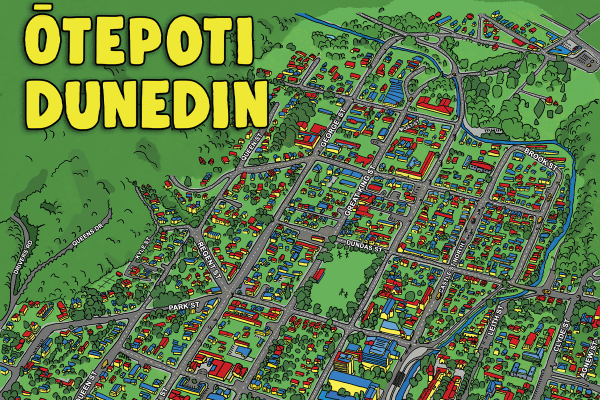
Sub-Culture: The political leanings of our suburbs
Dunedin’s suburbs are teeming with culture – and we don’t just mean microbially. Unfortunately, most students don’t venture out of their bubble of safety until graduation comes, aside from an occasional hoon to St Clair or a mish out to a dealer. From the absurd rent prices to the constant doof-doofing that plagues innocent ears, there isn’t a whole lot to love in this black mould infested segment of town. We all know and agree that studentville is fundamentally shit, but we never seem to leave it and explore Dunedin. No wonder we’re so miserable. It’s like asking someone to piss on you and then complaining that you got wet. Get up, towel off, and go do something about it. Take a (discounted!) bus ride somewhere new and get out there, with the help of Critic Te Ārohi’s guide to Dunedin’s suburbs and their political inclinations based on the science of “just trust me, bro”. Our vibe check may not mean much, but it means a shitload more than a Twitter blue check. Yeah, we’re pretty quirky. This is for those people who have hit their “fuck North D” phase. Soon enough, you could be in a “fuck Roslyn” phase. It’s impossible to talk about any university students without saying “Marxism”, so: studentville? Marxism-influenced. The system is fucked, after all. The average student doesn’t meander much further left than that, because no one really knows what anarchism is and communism means dressing the same and wearing silly hats, and who wants to do that? For now, it’s just raging against the system like your parents against the machine. Which system, exactly? “The.” It makes you look cool, but it might get old very quickly once you find yourself wallowing in the pit of your own inaction and anxiety. A wee way down the track you hit Port Chalmers, the biggest haven of greenies in any major New Zealand city. It could even have more well-established green coverage than our remaining primary forests. If you’re looking to be a humble art hermit like Hotere, Port Chalmers is a must-visit. You can live on a diet of purely fish and cannabis, all the while preaching about a capital gains tax and the complete greenification of the state. Kinda like Gollum, but suuuper vibey. Taking a peek at the other side of the harbour you have Macandrew Bay, a suburb still firmly rooted on the left of the political spectrum but in a slightly different fashion. Like, if you asked a Macandrew local about leftism, they’d say all the woke social media words and add a “but…”. Living here, you’d become accustomed to seeing the grisly sights of the Nissan Leaf, open-toed shoes and sourdough bread. With almost as many holes in their bread and sandals as in their politics, though well-intentioned, Mac Bay is of the wealthy middle class despite its leftist persuasions. If you want to save the planet one keep cup at a time, here’s your place. Just, like, know your place. Further down the peninsula lies Tomahawk, the most divisive political landscape in the country. Possibly more divisive than its namesake, even, which can literally split heads. It’s a bit of a mystery though, because dominating this scene are the jovial anarchists of the Smaills Beach Society. Planting days, bonfires, and collective cleanups are all on the cards in this DIY bunch, lovingly fashioned for all to enjoy. Estranged from Marxist melancholy whilst still being firmly rooted on the left, Critic Te Ārohi recommends. Making our way past St Kilda (doesn’t vote) we reach St Clair, the home of yoga mums who don’t mind what happens as long as they can continue sipping on their iced coffees from The Esplanade. In summary: extremely centrist, swaying to whichever party keeps things exactly as they are. They like their coffee strong and brown, but they like their men weak and… well, don’t ask that, actually. Yes, it’s paradise – but at what cost? Move here if you’re a regular Beam Me Up Bagels girlie. Then there is the infamous middle bloc, encompassing Caversham, Corstorphine, and the mighty South D. Sure, we cheated and grouped multiple suburbs together, but we’re all united as proletariats anyway. In this area lies the working class: the true blue of Dunedin society, making the wheels of the city run seamlessly towards glory. Or away from Gore, whatever’s easiest. Ideology is far from the minds of these noble folks. Grant Robertson was also born here and that man is a pure GC. Live here if you back yourself in a game of pool, fiend a pub crawl, and love shitting on company time. We crawl over the motorway and reach Mosgiel, where true blue retirees who have voted National all their lives live. Yeah… probably don’t live here, purely for the fact that there’s about three under-40-year-olds in the entire suburb. You’d be cougar bait, which sounds great until you realise they’re all called Margaret or Terry and always smell like damp towels. Nonetheless they’re a good sort in Mosgiel, barring the fact that they’ll chew your ear off about Three Waters and all sorts of bizarre theories that they’ve been cooking up on the golf course – which is also the most contact they’ve ever had with a green. Moving along, we have Roslyn and Māori Hill. Very rich and very right, leaning heavily into the National/ACT paradox. They might not remember who the National candidate is, but they think he’s a very decent man, thank you. It’s a nice life up in the Hollywood hills and the residents wield a lot of influence within the city. Whenever it starts to rain but stops after a few seconds, that’s actually the Māori Hill residents spitting on us from above. Rumour has it that a secret business roundtable exists within this suburb, lurking in the dark only to strike when a DCC decision becomes business-orientated. Live here at your own peril! Or at least duck into Kaikorai for some bowling, ‘cos it’s actually full of normal people. Almost at the end of the suburb loop, we reach George Street: the area of indecision where idealism finds its shallow grave. Potentially an inevitable for forlorn young students, here is where the gradual growth to conservatism occurs. Something something “road works with MY tax dollar?!” Fooled by the glitz and glam of the city, students become drawn to the dollar like moths to the roof of Doll’s House in Re-O. This is the realm of the soft right, fools who chase success without concern for their withering morality which lies slowly dying in the festering rivers of the Leith. You do not want to be here. A place where you realise your values are transient and can be bought at the drop of a dollar, George Street is a demanding but likely place for you to be living. And then we return, back into the defeationist but socially comfortable Marxist thought that originally drove you away. Yes, there’s a lot to discover out there in the suburbs of Dunedin.
-
Columns

Local Produce | Imperfect Creatures
Just last week, Dunedin-based fashion brand Imperfect Creatures, designed by Ethan Cruise, was shown on the New Zealand Fashion Week runway. Critic Te Ārohi caught up with Ethan about his latest collection ‘MOTION’ and what else we can expect from Imperfect Creatures. The first item available by Imperfect Creatures was a tote bag. It was designed collaboratively between Ethan and Molly Willis (our talented designer). Ethan reached out to Molly after she posted an illustration on her socials. This face went on to be the logo for Imperfect Creatures and the focal design point of the tote bag. “We both lost our minds a bit,” Ethan said of the reception. Their initial run of twelve bags sold out in 24 minutes. “We put so much work into those tote bags. Every detail that we thought of, we included.” This was back in 2021. At the time, Ethan was halfway through his bachelor of fashion design at Otago Polytechnic. In its initial stages, Ethan had envisioned calling the brand ‘Imperfections.’ It referenced the styles of clothing coming out of brands from the US and Europe, “a really messy raw style” that were inspiring his own sense of style. Unable to access such clothes, due to price or inability to ship to NZ (“most of the time it was both,” Ethan admitted), he emulated their design choices into clothing he made for himself, like leaving exposed seams and choosing fraying over hemlines. The evolution of Ethan’s designs has revolved around how to retain this style while ensuring the quality and long-lastingness of the garment. “The more that I keep designing, the more I refine it.” When we chatted last month, Ethan’s first capsule collection was yet to drop. Titled ‘MOTION,’ the release dropped for pre-order two Fridays ago and features eight pieces including jeans, a singlet a trucker hat, necklaces, a ring and a handbag. It’s the first of three planned drops, with Ethan aiming for three months between each drop. The ethos of quality over quantity is continued in Ethan releasing in capsule collections. Items, such as the jeans and jewellery, are made-to-order, ensuring that there’s no deadstock leftover. Other pieces are made in limited quantities. Each capsule has “a name that will embody my thoughts or my emotions, or whatever I was feeling when I was making this body of work.” Since completing his studies, Ethan’s focus has been on making Imperfect Creatures his full-time gig. The transition period between wrapping up at Polytech and being able to release his first drop has been difficult. “[I’ve been] pretty hard on myself… but I’m really excited to be at the point of getting close to that.” Ethan described being based in Dunedin and sharing a studio with other motivated creatives and mates, as special. “I’m really fortunate for the people that I’m surrounded by.” Aware of the pressure creatives feel that in order to make it, they need to establish themselves in bigger cities or overseas, he’s found Dunedin to not only be apt but has the potential to be a nurturing and unique creative centre. “It's completely dependent on what you make it, and who you keep around you. I'm really excited to be able to do something for Dunedin, and obviously for myself. I really want to put a mark on Dunedin before I leave.” The ‘MOTION’ collection is out now. You can shop it at imperfectcreatures.net/shop. You can also keep up with Ethan upcoming drops on socials (@imperfect___creatures).
-
Columns

Moaningful Confessions: Shore girl, shore ting
This happened not long after I left high school, when I made particularly questionable fashion choices. It was after midnight and I was on my way to a Tinder hookup’s house, so I’d put on a little black dress and done my makeup, too. I couldn’t find any shoes to go with it though, and I couldn’t be fucked walking in heels, so I ended up just walking there barefoot. Like, it doesn’t matter if I’m getting naked anyway, right? Luckily, this guy’s place was only a few blocks away, which admittedly is at least part of the reason I swiped right. We’d been talking for ages, and neither of us were looking for anything serious. He was cute, funny, and best of all: convenient. Still, I really liked his personality and wanted to make a good impression. I was going for “sexy but casual” but, to be honest, I looked like I’d just gotten kicked out of a club. Dude invited me inside, where I was welcomed by multiple red flags. First of all, there was a wall of Marvel Pop Vinyl figurines. Secondly, a giant Christmas tree that literally had flashing red lights. It was autumn. And I fucking hate Christmas. Okay, so this dude really likes Marvel and Christmas, which are two of my least favourite things, but I wasn’t wearing shoes, so I felt like I couldn’t judge. Christmas dude (I’ll just call him Chris) was somewhat confused by my lack of footwear, but by the time I stripped off it was no longer an issue. It took a while to get things off the ground. We lay around talking for a while, which was nice, and quickly figured out that though we were both freaky af, we were kinda opposites for the most part. Like, he’d try to dirty talk or something, and I’d just go “Bruh?”. We agreed that we’d just fool around. Things were starting to feel really good, and next thing I know we’re going at it with my legs in the air. In the heat of the moment he went in to choke me. I batted his hand away, and I think he went to stroke my leg, confused. But in the midst of the passion he… he put my entire god dang foot in his mouth. Like, he just started passionately sucking on my toes like his life depended on it. So I’m lying there, with my toes in the back of this dude’s mouth, watching the autumn Christmas lights blink, thinking about how it’s not a great feeling, but not a bad one. Kinda like a footbath, but only one. Or like wearing a wet sock. And also you have a naked man grunting on top of you. Really, really enthusiastically for some reason. And then we had this shared moment, where it dawned on us: I walked there. Barefoot. This man was licking the entire North Shore off of my feet. Do I say something? What are you meant to say when someone’s trying to devour you from the feet up, like an empath eating a gingerbread man? How fucking brave is this man? What in the fuck is he tasting? It was then that it started to tickle, but I ignored it ‘cos I was just about to finish despite it all. I almost had an aneurysm when I nutted from trying to choke back the giggles, partly from the tickling and partly from watching this guy unhinging his jaw around my ankle. For a brief moment I think I was wearing him like a sneaker. Afterwards, he said it was something he’d always wanted to try but that he really didn’t think it through, alluding to the state of my horrendous feet. By then, it was much too late. I cleaned up and decided to go back in for round two, but not before saying something along the lines of: “I’d wash my feet but you already did that for me.” Probably made himself immune to every disease in the process. Anyway, he’s married now.
-
News

Uni Whales Win Hockey Championship
The University Whales performed the impossible on Saturday, August 19, winning the premier men's hockey competition in a stunning shootout victory. Blub-blub. After an initially slow start to the season, the team has been called the “most unlikely of champions”. Before two shootout wins in the quarter and semifinals in the weekends leading up to the match, the team had only won six of their fifteen games in the regular season, losing nine to finish fourth out of the six teams in the league. “Basically, we went from not having beaten any of the top three teams outright in the regular season to winning the entire championship,” said Gabe, one of the team players. Remarkably, the same pattern occurred just two years ago for The Bombers, a B-level Dunedin ice hockey team, who lost nearly every game in the first half of their season, won every game in the second half, and then swept the finals. Something about hockey and comebacks in Dunedin, it would seem. So how was it done? A masterclass in hockey, or simply great goalkeeping? Critic Te Ārohi sat down with team player/coach Josh Wypych to find out. The experience was “pretty unreal,” said Josh, who also told Critic that “during the season we hadn’t been there at all, half our games had been blowouts.” The Whales lost 5-1 to both Taieri and Kings United, two teams they would eventually beat in their stellar run. Sure, they had “glimpses”, but “these didn’t come away.” In the end, Josh reckoned, “We can either shit the bed or flip the switch when we go down… in the finals we really pulled together.” Down 3-1 in the final game with only 8 minutes to go, this switch certainly flipped. The team scored two crucial penalty corners to equalize with only a minute and a half to go. After a “frantic minute left of play,” Josh said he was pretty confident in the abilities of their goalkeeper, Hugh, to get the job done. “Obviously you always think you can win it, but it wasn’t until we won our first shootout against Albany” - a team boasting NHC Otago keeper Felix McIntosh - “that I felt pretty confident we could go all the way.” To this degree, Josh was spot on, as the Whales came home to take the title in a best-of-three shootout against a talented Taieri side boasting three New Zealand Under 21 players. The Whales weren’t without their fair share of national stars, though, bringing one cap Black Stick Benji Culhane back into the mix as the regular season ended. Josh’s sly smile as he talked about this was hard to ignore as he deemed the impact of the young fullback as “pretty unreal, to be honest.” Black Stick ring-ins or spectacular shootout form; whatever way you put it, the stars seemingly aligned for the Whales three spectacular weekends in a row (with Critic being assured the post-match celebrations were similarly as spectacular). Coming from nowhere to win the entire competition, the Whales team of 2023 has firmly rooted themselves in the history books of Dunedin hockey, leaving the older clubs grumbling in their wake. Though the team is set to lose six or seven players next year, Josh is still confident that the team will have enough in the tank to make it three titles in four years. And that’s the kind of confidence which wins shootouts, hopefully for many years to come.
-
Columns

BOOZE: KGB’s
If the KGB are vodka and lemon, the CIA must be a shot of fireball delivered via lead into the back of your brain. KGBs are at the forefront of RTD supremacy. They are neck and neck with Billy Mav’s, each vying for the title of “favourite alcoholic beverage of the unwashed masses”. KGB drinkers and Mav drinkers are bitter enemies, with each tribe occupying different ends of the “fat idiot” spectrum. And as an unwashed fat idiot of the bourbon variety, it’s no surprise I think KGBs suck so bad. These things don’t taste like battery acid, but battery acid was definitely used at some point in their production. I’m pretty sure the lemons came from a tree fertilised with AA batteries. They taste like they share the production floor with Ajax surface cleaner, where the factory manager has a pretty blasé stance when it comes to cross-contamination. These give me a headache by the fourth can. Your mouth feels entirely coated in some kind of primer. If you’ve ever sprayed deodorant in your mouth, it feels a bit like that, especially on your teeth. With a name like KGB, don’t act surprised when you’re secretly poisoned. The people that drink these cans are waging a war of attrition against their liver. Spongebob looks like that because of jaundice brought about by abusing KGBs in his early twenties. At least Cruisers have the courtesy of being bright in colour, like a tracer round that runs through your body so you can assess the damage based on how vibrantly coloured your excrement is. KGBs flow through unnoticed, masked by an air of lemony acid, only for you to wake up in the morning feeling absolutely devastated. There’s no sector of your biology that the vodka hasn’t been able to vandalise. No party is complete without a 6’4’’, 120kg guy hogging the beer pong table and making all of the cups taste like his KGBs. Go be humongous somewhere else you communist, I’m trying to make all of the cups taste like bourbon. It’s always funny when people complain about the taste of someone else’s alcohol in beer pong cups, as if the cups haven’t been sitting in a colony of black mould after going months unwashed. You’ve always had to be some kind of stupid to drink a coffin of Billy Mavs, but now with a coffin going for $52 (Liquorland Leith Street), you have to be downright ignorant. If you see a breatha running around with a coffin, just know they spent over $50 to make it seem like they’re a hooligan. I must forfeit, and give KGBs the nod. Tasting notes: Like someone dropped their vape in a vat of icebreaker. Chugability: 6/10. “Bleugh” - some guy trying to chug a KGB. Hangover depression level: 10/10. My head and throat feel like they slept inside of an active microwave. Overall: 3/10. They’re still better than Tui Vodka, Lime & Soda.
-
Culture
Pussy, Power and the Patriarchy
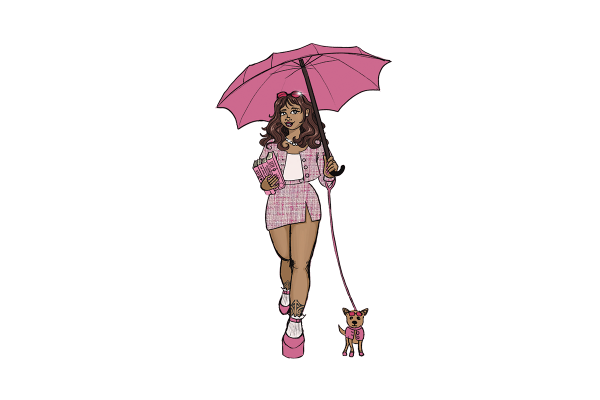
Being a boss bitch comes with an asterisk. Even that term, boss bitch, still carries the word “bitch” in it, as if women can’t be in charge without being insufferable. But despite all the resistance, many have forced their way to the top. Like a modern Elle Woods, pushing on in style, her pink umbrella elegantly propped between her shoulders and an endless tirade of bullshit from above. These wāhine may be taking back their seat at the table, but they’ve had to do it wearing Elle’s pantsuit the whole time, forced to walk and talk in a Pākehā world. Many are itching to get the kaitaka back out of the closet. In small towns like Pātea, politics starts at the kitchen table. The candidate for Te Tai Hauāuru electorate in this year’s election and co-leader of Te Pāti Māori, Debbie Ngarewa-Packer (Ngāti Ruanui, Ngāruahine, Ngā Rauru), said that while growing up with her whānau “we didn’t even call it ‘politics’... it was about advocating for others.” Pātea is a town that’s “been on every side of the counter,” said Debbie. It’s had some serious highs and lows; following the closure of the town’s meatworks, many whānau were driven out of town en masse in search of work. Those that stayed behind got to witness the rise of ‘Poi E’. And Pātea is where Debbie Ngarewa-Packer calls home, in all its richness: a place that, before colonial rule, placed a lot more responsibility on the shoulders of wāhine Māori. Such is the way things were for a long, long time. Before Debbie was co-leader of Te Pāti Māori, before she was even born, her tūpuna wahine were running the table. The role of mana wāhine was central to society’s function - something that didn’t mix with the politics of British colonists. And this is something we’ve seen play out over and over again overseas; the Haudenosaunee relied on councils of grandmothers, Malagasy society had women at the top, the Lil’wat and Squamish Nations had elements of matriarchy with an established welfare state… the list goes on. When colonial powers came ashore, the imported patriarchal system struggled to mix with what was already in place, and often tried to strip wāhine of their mana, disrupting the entire fabric of society. Patriarchy assumed that women were subservient to men; “chattels”, as Debbie put it. Colonisers even pointed to haka, with its row of wāhine behind tāne, as evidence of gendered separation, illustrating their ignorance. “Sadly, it’s a part of their colonised state, to see women as chattels that they can diminish and deprecate… like an asset. Just look at how the Royal Family traded and brought in women for the purpose of making babies; that’s all they saw them for. But for us wāhine [Māori], we are revered for our ability to create life,” said Debbie. “I am an equal, if not more than, and our tāne know it.” Colonialism also introduced a system of individuality, another value that disrupted te ao Māori. But community spirit remained, passed down at the dinner table in towns like Pātea. “Coming from a very collective community, where not everyone got across the line together, or even at all, I was raised to be as fast as my slowest person,” Debbie explained. All of her life experiences combined to produce something much more than an individual. “People feel the need to box you,” she said, “but how do you label a wahine from Pātea who was a teen mum, adult learner, got her masters in Tasmania, did Stanford, who started her own business at 23, and was a CEO?” You can’t. When British influence shook up Māori society, things got messy. For a long time. And now things are changing again, and once more, they’re messy. The rise of wāhine to reclaim their mana has been met with all sorts of objection, with some even pointing to moko kauae as a political tool to acquire votes. “People make grand claims that our wāhine get their moko kauae for “brownie points” [pun intended] as though they haven’t been forced to believe that it’ll put them out of work,” said Māhina*, a younger student that looks up to wāhine like Debbie. But even with role models in place, many young Māori still can feel like imposters in their own land. Imposter syndrome is common enough amongst young people, but Debbie reckoned that even this was a consequence of colonial rule. Not that she suffers from it herself: “We don’t suffer from imposter syndrome because we simply don’t live the way they do. My aunties still tell me what needs to be said or if I’ve dressed wrong - my dad still rings me and says whether I had a good interview or a bad one. We don’t live lives that allow us to be an imposter.” Māhina said that, “When we have wāhine like Debbie Ngarewa-Packer and Nanaia Mahuta in such influential positions, mau moko and all, it sets the tone for our next generation of rangatahi who will see that as their norm.” And with the rise of moko kanohi nationwide, particularly on the faces of the younger generation, Māori continually refuse to choose their mahi over their moko, especially in the halls of government. “Every day when I go to work, I put on my Pākehā voice and speak their language. If I have to do all that, they should be fine with my moko kauae. Wearing my culture is not unprofessional… businesses repackage and sell our culture all the time. It’s only ‘professional’ when they can make a profit out of it.” Pushing back against colonial influence has been a long time coming, but Māhina reckoned it first started really taking hold in the ‘80s with the start of the reo revival. “Tāngata whenua have been escalating ever since. Along with the return of our reo, so too has our sense of self-worth… almost as if they’re synonymous with one another,” said Māhina. And this broader push to return to the old ways has been championed, largely, by wāhine. Two of five political parties are co-lead by wāhine Māori, and we finally have a wahine Māori Governor-General. “This page of Māori history has women written all over it,” said Māhina. Debbie concurred: “Wāhine Māori don’t have that battle anymore - we know our value. We make wakapapa. Listen to the names of our wenua and you’ll hear that they’re predominantly wāhine. We don’t have to sit there and fight for street names because we’re everywhere. That is my default setting.” Debbie spoke of her own experiences with pushing back against the systems as a Māori woman in a Pākehā environment. “I say absolutely not. They don’t value ANY woman. Show me in any English story where colonisers treated their women with the same regard that indigenous people do,” she said. “I feel sorry for women that say, ‘But you’re still one of us.’ Yeah, I am… but I’ve never been a chattel. I know my context as a wahine.” And today, things are changing. In Aotearoa, only so recently colonised, wāhine have retained significant mana in the face of colonial pressure. “As a wahine Māori, I get to karanga and I get to tell our kaikōrero what to say. I am more privileged in most positions of leadership-ā-wahine.” Still, things aren’t perfect. “There are still many ‘firsts’ yet to be filled,” said Māhina, “but I have no doubt about it. It’s just a matter of introducing our tamariki to spaces we too are unfamiliar with: reaffirming self-worth, and validating their experiences. Just because you’re the only brown kid in a room of Pākehā doesn’t mean you shouldn’t be there. If anything, it means you should be.” This is a time of change, after all. Conference rooms have become Zoom squares, war rears its head overseas, and new fires burn in old forests. Once more, the waters have been muddied. Time will tell how things settle, but one thing’s for sure: this time, it’s wāhine Māori stirring the pot. “We have a lot of work to do,” said Māhina. “But let’s also take a minute to admire what our wāhine have done before we do.”
-
Columns
Editorial: Two problems with big-time philanthropy.
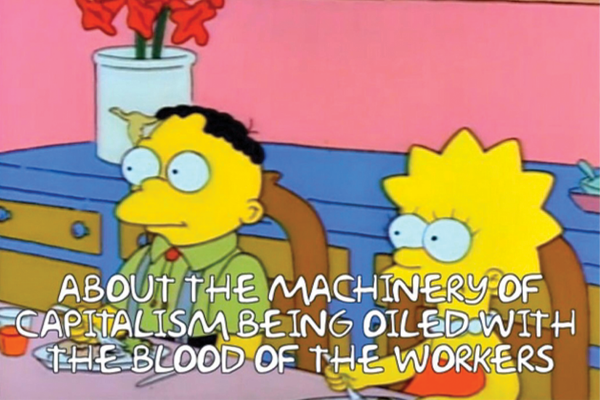
It’s politics week, so I want to talk about donations. Specifically “big-time philanthropy”, which is not when Auntie Lorraine makes out a $2,500 cheque to the children’s hospital. I mean more like when Peter Thiel donated $1 million to the Christchurch earthquake recovery fund and then was quietly granted citizenship by John Key’s government (after spending just 12 days in the country). You’re gonna be hearing a lot about which party is raising the most money, and there are two points I want you to keep in mind when you think about what actually motivates people to give away their money. The first problem is well-documented: donations can be tax deductible, which is great - in theory. In practice, it means that the few of us with massive stockpiles can effectively opt out of the public works scheme and choose where they want their tax dollars to go. Not a fan of light rail, but your local government is? Easy! Instead of paying the taxes that would be used to fund light rail, you can donate a large sum to a charity focused on giving rides to elderly folks (if that exists). This is a complete subversion of the democratic process and, when you think about it, it’s pretty evil. After all, every time someone makes this sort of donation, they get to bathe in the warm waters of public approval. But this is doubly sinister because when you consider where that money is actually coming from, who is the real philanthropist? These billionaires are only able to exist because they’ve taken advantage of an exploitative system, one that transforms a person’s waking hours into capital and then squeezes the literal life out of them in an effort to extract as much capital as possible. “Time is money,” they say, so the inverse is also true: money is time. So when you’ve hoarded inordinate amounts of money, what you’ve really done is hoarded the minutes, hours and days of countless cogs in your human machine. The donations made by these billionaires are funded, as Homer Simpson put it, by the blood of the working class. It’s not their money it’s not their time; it’s ours. The real philanthropist is the one working their life away for less than they need to survive. That’s selflessness. Remember all that talk about “essential workers”, before we promptly shooed them back into poverty? They’re the philanthropists, literally donating their lives to keep us all afloat. Since this economic system has been engineered to encourage wage-hoarding, these people will essentially be donating their time (er, money) to whoever's above them in the chain. Trickle-down economics in reverse - it’s more like economic vampirism. Finally, all of this time and money ends up filling the pockets of the top dog, who can then use the fruits of others’ labour to make big-time donations to whatever cause they please, subverting their taxation requirements and improving their reputation. They are free to influence policy and opinion almost entirely at the cost of the people they claim to be helping. Neither of these ideas are mine originally. I’ve heard the first idea from several sources, but the second is from Barbara Ehrenreich’s Nickel and Dimed from way back in 2001. It’s only gotten worse since then. Have a think about this next time you see which parties collect the most donations - right now National is well in front. ACT and National combined were making $8.50 for every $1 donated to Labour and the Greens. Only certain people in today’s world can actually afford to make donations. What might attract such a large portion of them to one party?
-
Columns
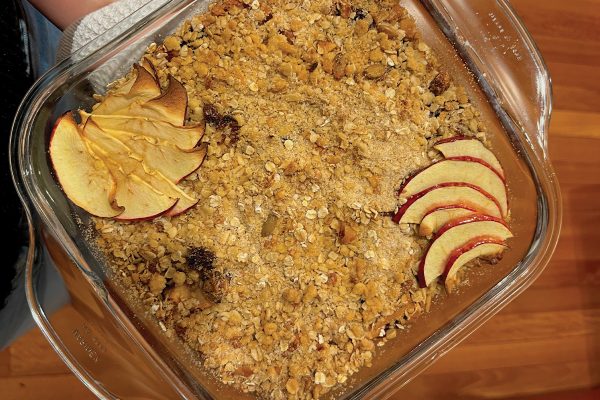
Chargrilss: Winter Apple Crumble
Everybody knows an apple crumble is the absolute queen of desserts. She’s cheap, delicious and easy as piss to make. Here’s a very simple recipe in case you couldn’t figure it out on your own. Filling Ingredients 5 apples, peeled, de-cored and cut up into small chunks 1 Tbsp brown sugar 1/4 cup water Crumble Ingredients 1/3 cup plain flour 1/3 cup caster sugar 1/3 cup Uncle Toby’s Traditional Rolled Oats 60g butter, chopped Directions Preheat the oven to 180 degrees, fan bake. Combine apples, sugar and water in a small saucepan over low-medium heat. Cook the apples, stirring for three minutes or until the apple is slightly softened. To make the crumble, combine the flour, sugar, oats and butter in a bowl. Use your fingertips to rub the butter into the flour mixture until the mixture resembles breadcrumbs. Put the apples into the bottom of a medium-sized oven-safe dish. Sprinkle the crumble over top. Bake for 25 minutes or until golden. Serve with ice cream!
-
News

“Tenant Blacklist” Database Allegedly Breaches Privacy Act
The renter’s advocacy union Renters United has alleged that Illion Tenancy’s new feature may be in breach of the Privacy Act. The new feature notifies landlords when a tenant has had a background check. Illion Tenancy, formerly known as TINZ and cheekily referred to by some as the “tenant blacklist”, is marketed towards landlords and property managers. The database has profiles of every registered tenant, including personal information and past recorded actions such as Tenancy Tribunal orders. Renters United’s complaint centres on the idea that information acquired from a background check may be held for far longer than you might reasonably expect and used for purposes other than the reason it was collected for in the first place. The news comes in the wake of a similar database being found in breach of the Privacy Act. What Does My Landlord Own? (WDMLO) allowed users to access a merged dataset of publicly-available information to see which properties are listed under their landlord’s name. Following complaints, the Privacy Commissioner found the website in breach of the Act and it was promptly shut down. Critic reported on this in July, issue 14. Third-year Finn said that he thought it would be “incredibly unfair if the same doesn't happen to Illion Tenancy.” Meanwhile, third-year Jamie said that we should get a database for landlords; “if there's no equivalent for tenants then that’s one hell of a double standard.” You can use the Office of the Privacy Commissioner's AboutMe tool to formally request Illion to reveal what information they have on you. Critic Te Ārohi tested it and can confirm that it’s easy; simply put in your details and the Privacy Commission will email Illion on your behalf. You’ll get your response in a day or so. The personal information held on you would typically include details like your address, date of birth, contact details, or driver’s licence numbers. Renters United advises that in a request you should ask them if anyone has access to, or could access, your personal information, and ask why and for how long they intend to hold it. Illion Tenancy is undergoing an annual review by the Privacy Commission to assess compliance with the Credit Reporting Privacy Rules, so the Privacy Commissioner was unable to comment at this time.
-
Culture
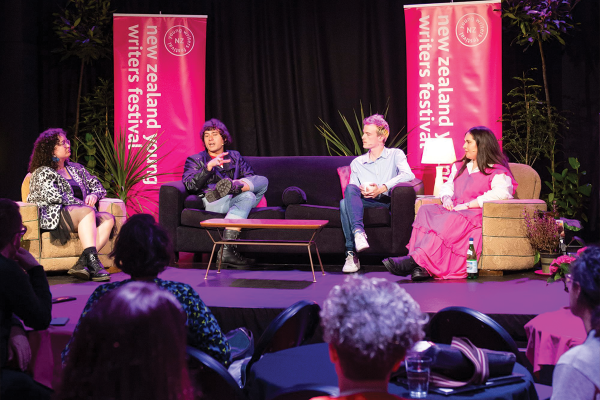
Literary Legends: A Peek Inside 2023’s New Zealand Young Writers Festival
From the 21st to the 24th of September, Ōtepoti is lucky enough to be hosting the New Zealand Young Writers Festival. Produced by Dunedin Fringe Festival, the event is a free, four-day celebration of our creative community across all literary forms: poetry, fiction, zines, journalism, podcasts, and everything in between. Across the four days are a series of panels and workshops open to anyone aged 15-35 to attend, writer or not. Critic Te Ārohi was sat down with guest curator Jennifer Cheuk and Ōtepoti natives Jamiema Lorimer and Olivia Wright, who are both panelists in the festival. Jennifer Cheuk, the festival’s guest curator, is a Hong Kong-Chinese writer, editor and artist who is the Founder and Editor in Chief at Rat World Magazine, based in Tāmaki Makaurau. Jennifer has been a writer her entire life, so much so that as a child she wrote a book called ‘The Dragon Who Lost His Parents’. “I was really cute and funny, and I always talked about wanting to be a writer, so it makes sense I ended up here,” she says. After pursuing a degree in English Literature and Linguistics, Jennifer’s love for writing and creativity continued to expand, but she struggled with the nature of the modern writing landscape. “I started focusing on who was left out, and what stories were left out,” she explains. Her passion for writing and desire to create an inclusive environment for historically marginalized communities led to her founding Rat World Magazine, which is entirely focused on highlighting the underground. “I wanted a space for people who might not have contacts in those worlds, and I was like, ‘Why don’t we just make something for ourselves?’” As guest curator for the festival, Jennifer has been responsible for putting together eclectic panels and creating workshops which highlight the emerging talent in Aotearoa’s literary spaces. Her panels, which include Prescriptions and Prose: Where Medicine and Creativity Meet and Stick It To The Man: The Power of Street Postering, are innovative, and focus on how writing and literary craft can be found in spaces we may not assume. “I’m really interested in writing from spaces that people don’t expect there to be writing from, because people have such a certain way of thinking about creativity,” Jennifer explains. “People think they can’t be a writer if you’re a doctor because they can’t go together, but I wanted to show that you can be a writer and be creative no matter your background. It really is for everyone.” Jennifer notes that this attitude can often stem from people thinking that they can’t have both a creative mind and a logical mind; that instead they have to exist independently. “There are so many things that connect together to make you a writer, and I think people feel like they’re taking away their creativity from their daily practice. You can just be an artist, but you can be even more passionate if you connect those two things together.” Writers fest panelist Olivia Wright is perhaps a perfect example of the magic that can happen when logic and creativity meet. Being part of the panel on Prescriptions and Prose: Where Medicine and Creativity Meet, Olivia is both a keen writer and former English Literature major turned medical student. “I always had an artsy background, I was into writing at school, but I felt like the instability of the creative disciplines made me anxious,” she says, reflecting on how she came to terms with picking her current path. Olivia says that while medicine provided her a sense of comfort and stability (perhaps the first and only time you’ll hear that from a med student) she was surprised how much the creative world crossed over into medicine. “We do lots of tutorial based learning, and it’s all about patient care. We reflect on our practice and we have to journal how we feel and the experiences we have which is creative non-fiction,” she says. Olivia shares that it can be difficult treading both the creative and the scientific world, as people can have a tendency to stick to one or the other. “I hate telling people I’m a medical student because I lose all this other stuff I’ve got going on, but really, we’re a collection of all these different ideas and hobbies,” she says. Olivia says that as a medical student, she’s found embracing writing and her creative side has helped her improve her skills, and could see the benefits it has to doctor-patient relationships. “You can get sequestered into your science or arts corner, but I really champion the jack of all trades, master of none approach,” she says. The panel Stick It To The Man: The Power of Street Postering features Ōtepoti writer, Jamiema Lorimer, who is also Critic’s very own Local Produce columnist. Initially coming from a musical background, Jamiema first became interested in writing while studying her Bachelor of Music. “That was where I started to see writing as something I wanted to pursue, and I saw the scope of how exciting it can be outside of academia when it wasn’t about writing dissertations or essays,” she says. Wanting to pursue this new creative outlet, Jamiema started looking into different media platforms and discovered the world of street postering, which she published a story on in Rat World earlier this year. Through printing in Rat World and keeping in touch with Jennifer, Jamiema explains that her ideas kept expanding, and she felt an urge to promote the postering world as a form of expression. Jamiema says that the city of Ōtepoti has helped inspire her creativity. “Being here for a long time, I’ve been engaged with many different communities, working life, and different music scenes. I'm around a lot of artistic people, and with all the small circles, everything seems to overlap,” she says. Jamiema also mentions that Ōtepoti is the perfect place for emerging creatives to share their work. Being creative is hard, and sharing your art with others can definitely be intimidating. “I was in a position when I was younger where I’d see events like young writers festival and I didn’t feel like it was relevant to me, but there is such an amazing array of writers and creators and these events make you realize how close they are to you and are so important in the development of young writers,” she says. For those who may feel on the fence about attending this year's festival because they don’t consider themselves ‘writers’, or those who are totally out of the loop on why events like this are important, the panelists have some words of wisdom to share. “These events are perfect for those who want to be writers. They’re there to be attended, they’re open, and everyone you meet is a professional writer in a sense,” says Jamiema. “You’re going to be surrounded by people from different skill levels and experiences, but being in a community like this re-legitimates the kinds of writing that are going on.” For Jennifer, she says that writing is an integral part to every facet of study, and that events like this help foster that much needed sense of community we all seem to be after in this day and age. “You need to write to be a good doctor or architect, you need to write to be a better STEM practitioner, and when you look at our literacy rates, we really need to focus on language, writing and creativity, and this community is so important for that.”
-
News
New Religion Club Goes Rogue
Wednesday, August 23 seemed an ordinary day in OUSA Clubs and Socs. Until the lights went out, mysterious figures emerged from the shadows, and a variety of sacrificial snacks were put on display. Yes, you’ve guessed correctly: the Society of Religious Studies Enthusiasts (SORSE) sat down for their first meeting - a viewing party of Greta Gerwig’s Lady Bird. Probably not the first choice of your high school RST teacher, but they had reasons. With a successful movie night and a whopping 24 Facebook group members under the belt, SORSE has begun to establish itself as a confident member of OUSA’s panoply (it’s a word) of clubs and societies. That is, until Critic Te Ārohi got a whiff of scandal: rather than getting “stuck behind the legality,” said the group’s co-founder Hannah, SORSE decided to go AWOL and start their society outside the watchful gaze of OUSA. Naturally, this leads to the question: will we have a quasi-church vs state brawl on our hands? In response to murmurs, Hannah came out publicly, telling members, “There’s still a lot of room and time for what SORSE becomes to be discussed or decided.” Additionally, SORSE and the Religious Studies Department is expressly guided by an acceptance of all beliefs, choosing to focus on the analytical study of religion as a sociological phenomena. To this degree, SORSE’s cultish behaviour appears even more bizarre. To reckon with the justice of this issue, we got in contact with Keegan Wells, OUSA’s Postgraduate Rep and “proud graduate of a Religious Studies minor.” Despite this affiliation to the department, Keegan was shocked upon hearing the news of the religious studies students gone rogue. Controversially, she stated, “I think whenever these small departments hang out with each other outside their already small classes, it’s just a big circle jerk really.” Keegan went on to say that she simply could not “condone being affiliated to OUSA,” questioning if “the religious studies kids are too afraid,” to reach out. Taking the side of the students, Keegan mused that the group's independence was “a perfect metaphor for not accepting a pansophical overlord just as they do every day in their studies.” Proving the Religious Studies grindset does not stop. Furthering her critique, Keegan argued that isolation “reinforces the astigmatism around religious studies that everyone is religious when the opposite is true.” Keegan’s solution for this stigma and fear fostered within the group was simple, “They need to bow down to their OUSA overlords.” Hannah did admit to Critic Te Ārohi that there were plans to “chip away at the OUSA affiliation stuff on the side,” so maybe we will see SORSE bow down to their masters after all. Though the foundational meeting only garnered an audience of five or six, the sheer amount of snacks on offer showed that SORSE means business in future, having already secured backing from the University’s Religious Studies Department to go ahead with brewing plans. The group plans to open itself up to more religious studies themed movies, quiz nights, and even panels from students and lecturers on specific topics close to the hearts of many. Check SORSE out on Facebook. If you’re interested they may let you in (especially if you can write a constitution).
-
Columns

Takeaways: Week 21
Something to… Watch Bionicle: Mask of Light (2003) Ahead of our Te Wiki o Te Reo Māori issue, you might want to give this movie a go. Don’t ask why, you’ll see. Whole thing’s on YouTube. It’s equal parts Power Rangers, LEGO and Lord of the Rings and if you don’t like even one of those things, don’t bother watching this. But if you haven’t seen it, and you do know what I’m talking about, it’s time to head back to Mata Nui. A new game drops early next year and next issue will have quite an extensive piece on Bionicle lore, so brush up on the Matoran journey before we get into it! Read SYSCA’s new newsletter ‘Culture Vulture’ Not to be confused with their existing podcast series ‘Culture Vulture’, Shit You Should Care About has debuted a new newsletter under the same name. The newsletter covers all things “pop culture, the internet, how we fuck with these things & how they fuck us right back”. So far, they’ve covered things like being a teenage girl in your 20s, how guys are “tay-baiting” on TikTok by pretending to be swifties for female attention, and the new era of ‘fandominance’ where celebs are getting shit thrown at them onstage more often and having their private lives swarmed both online and in-person. Listen to Rita Ora calling Taika Waititi “half a Sāmoan man” I saw this on The Spinoff last week and was immediately floored. It’s an utterly bizarre moment, not unlike Judith Collins’ “tālofa” from last election year. Something about the polls really brings out the iconic Sāmoan quotes, huh? Mad Chapman has a great writeup on The Spinoff with a video alongside it. It’s genuinely one of the strangest things I’ve heard in ages because, if you didn’t know, Rita and Taika are married. And, as pointed out in the piece, the phrasing itself is incredibly weird. What does “half a Sāmoan man” even mean? Which half? Her favourite? What is going on here? Go to Beam Me Up bagels You know the drill. You’ve probably already been, but who cares? It’s time to go back. You know you want to. Either location works, but bonus points for going to the one in the NEV and then taking a leisurely stroll through the botans. Pro tip: if you go with a friend and you both can’t decide which bagel you want, get two different bagels and just swap halves. That way you get the best of both worlds. Bonus bonus points if you also get them to make the sandwiches with the top half of one bagel and the bottom half of another flavour, so you both end up with all the possible combinations of bagel. I’m sure this won’t be frustrating for them at all. Support San Francisco's road cone activists Recently, the activist group Safe Street Rebel has been targeting self-driving cars that they feel are gumming up the city and are representative of an overall power imbalance between residents and corporate interests. They’ll wait until a self-driving car comes to a stop, then quickly run up to the car and place a traffic cone on its hood. This freaks out the car’s safety procedures, causing it to set off alarms and freeze until someone is dispatched to fix the problem. Recent news coverage has put them in the sights of law enforcement. Show our comrades that their efforts are not in vain, and put a road cone on someone’s bonnet to show your solidarity. Cancel People who say they’d prefer to find a nazi uniform over a gimp suit in their grandfather’s attic – yes, we’re talking to you What the fuck, frankly. Someone recently asked me this question and I was gobsmacked to learn that there are actually some people in the world who would prefer to find a LITERAL NAZI UNIFORM in their grandfather’s attic than a gimp suit. Their argument against the gimp suit is apparently that they “don’t want to think about my granddad that way” - and, what, you’d be fine with your relative having been actively involved in attempted genocide? Are you joking? Grow up. Cancelled.
-
News

Won’t Someone Think of the Children?
Throughout the election cycle, politicians get asked a lot of questions - in the debating chamber, on the tiles outside Parliament, on the TVNZ debate stage, in the RNZ studio, on the side of the road. The sum of these questions can paint a picture of the values and concerns of at least some portion of the population, and of what political leaders plan to do with that information. Subsequently, what gets asked in town hall settings, by the party faithful, and how leaders respond can provide some uniquely focused insight.


