
-
News

Greenie Grandma Found Guilty
Local greenie grandma Rosemary Penwarden was found guilty of forgery by a recent Dunedin High Court trial. Rosemary sent a fake letter in 2019 to attendees of an oil conference in Queenstown telling them it had been postponed due to the climate crisis. Though the letter was meant to be satirical, she now faces up to ten years for forgery. Apparently the law doesn’t understand sarcasm. Rosemary is considered something of a legend in the Ōtepoti climate scene, especially for budding young climate activists like Zak and Jett, describing her as a “household name”. As a grandmother, she was quoted by her close friend Bruce Mahalski saying that she wouldn’t think of anything more useful to do than “try to save a liveable future.” Zak met Rosemary while he was involved with School Strike 4 Climate. “She’s been around fighting this fight for generations,” said Zak, “She’s totally an inspiration.” Jett was in complete agreement, calling Rosemary a “role model as to what fostering a relationship with Papatūānuku looks like.” Likewise, she appears to draw inspiration from students like Zak, having told Bruce that, “despite all of the doom and gloom of the scientific projections I do feel some sense of optimism for the future and that’s mainly because of all the amazing young people I work with in the climate movement.” Zak described his reaction to the verdict as being like a “call to arms… I just want to do more to just show how absurd this is, especially in the context of being in the climate crisis. What she did of course was to raise awareness and attention, and now she’s being treated like a common criminal and that’s kind of insane.” “Honestly I think it was pretty poor from the Court,” said Jett. “The letter was clearly sarcastic. The ruling shows that we value corporate interests over climate interests and the right to expression of speech.” He added that young activists might be likely to be scared off of humorous protest based on her situation and turn towards more disruptive methods. “That’s a poor outcome for all involved.” Rosemary was unable to comment on her situation until her sentencing on September 8 where she hopes to be discharged without conviction.
-
News

Science Communication Department Fears the Axe
Disclaimer: The author of this article is a postgraduate science communication student. Unless you’ve been living under a rock for the past couple months, you’ll be well aware of the financial shitshow ($60 million deficit) that has forced Otago Uni to make some serious money-saving decisions. The Uni is hoping to make $12.8 million in savings through staff redundancies, and news of what courses are on the chopping block have slowly been leaking through the cracks. At the end of last semester, on June 7, students in the Department of Science Communication were sent an email from the department head informing them that the department would be among those crippled by the impending cuts. The undergraduate Minor and Master’s programs would “likely” be cut, with the mere two remaining full-time staff being left to run a distance-only post grad certificate and diploma. Sci Com courses are notoriously small, and the camera gear and field trips can’t be cheap to run, potentially making the department an attractive target for a university trying to save a few bucks. The original email to students reflected this, but cited the small size of the department and their relatively slow growth rate as some of the many reasons they’ve been targeted. None of the details of the email were able to be confirmed by the University, who told us it was “sent prematurely”. Needless to say, students and recent graduates of the programme were gutted by news that signalled “the end of an era” of a course that is unique not only nationwide, but around the globe. “Otago’s department is the envy of an entire discipline,” said recent science communication graduate Asia. “No other science communication degree is like ours, which teaches everything from filmmaking to journalism to animation.” The sentiment was echoed by international students Brady and Stephanie who both waited years to come here through the pandemic. “There was something about the program here at the University of Otago that was so unique and impactful that I was happy to wait two, three, four, even five years if I needed to just because of the professors and the program that is offered here,” said Brady. Asia was baffled at the rationale behind the proposal to gut the department, not only because of its worldwide status, but because “we need [science communication] more than ever… A life without science communication looks like this: no museums, no films, no podcasts, no National Geographic, no communication about the worldwide pandemic outbreak for which Aotearoa is famous.” To put it bluntly, she said, “The University of Otago might as well round up Daddy Bloomfield, David Attenborough, Suzy Cato, and shoot them in the head.” Pro-Vice-Chancellor (Sciences) Richard Barker reassured students that all students currently enrolled will be able to complete their degrees. But the quality of those degrees is up for debate as the email to students indicated that there would be a “shortfall in supervision” for Masters students given the reduction in staffing. Brady said that he had “doubts about that if they’re cutting the whole department and we only have two advisors for 30-40 students.” Students hoping to upgrade from a diploma to a Masters like Steph, who had been working on her application all semester, were also told that the pathway may no longer be open to them if the proposed changes were to go ahead. “I literally sent off my Masters application one minute before that email was sent. And if I knew that they weren’t even looking to accept anybody I wouldn't have wasted all of that time.” When asked if she thought the Uni recognised the value of the program, Steph simply responded: “I don’t think that people are seeing value the right way if they can’t see the kind of people that are coming out of this program and the impact that they’re having in the world.” Pro-Vice-Chancellor Richard Barker responded that the Division of Science and the Uni believe that “the communication of science is a vital component in today’s world and the University intends to continue offering an academic programme in this subject.” What this programme will look like, however, remains uncertain. Brady, Steph and their classmates sent out a press release to media outlets along with a video calling for the Uni to include them in the conversation about cuts made. “It feels like we’re talking to a wall at this point,” said Steph. The Uni told Critic Te Ārohi that it is a “high priority” that they communicate with staff and students to keep them updated on any proposed changes, expecting “to be able to share details with students and staff later this month for their feedback.” We will continue to cover the story of this department and others at the University of Otago as the funding saga unfolds
-
News

Okay, Now That Landlord Website is Really Shut Down
A website detailing how many properties your landlord owns has been shut down following discourse with the Deputy Privacy Commissioner. The founders of the website believe this decision was “influenced by landlords and property developers”. A press release from the founders sunset_flowers has revealed that their website ‘What does my landlord own?’ (WDMLO) has been shuttered over concerns of privacy breaches, with the DC (Deputy Commissioner) saying that all New Zealanders, regardless of age, wealth or any other status have a right to privacy, indicating that the listing of all properties owned by a given individual somehow violated that right. Website founders said that while the shutdown wasn’t explicitly ordered by the DC, the changes they would’ve had to make in order to satisfy the Office of the Privacy Commissioner [OPC] would effectively neuter the site. A spokesperson for the Office said that “under the Privacy Act, agencies that collect and hold personal information have a duty to protect it and respect it to avoid causing harm to people.” The creators claim that the “multiple inaccurate statements and frivolous claims” made by the DC in their “subjective interpretation of the Privacy Act” raise “serious questions about the values of the Deputy Commissioner and the Office of the Privacy Commissioner as a whole.” In a press release, the website creators mentioned that the OPC cited complaints from individuals as a reason for their investigation of the site. The founders have received a few complaints themselves, “disproportionately (>90%) from landlords.” So, assuming that the same people are complaining to both them and the OPC, “the ‘members of the public’ [the OPC] claim to be acting in the interest of” are almost entirely landlords, who the founders don’t exactly believe represent the public. They also suggested that the OPC’s request for extensive personal information on the website's founders was itself an ironic violation of their privacy. The purpose of the website was to hold accountable the people who benefit from the “hundreds of thousands of people in Aotearoa [who] live in cold, damp, mouldy, and otherwise unhealthy rentals” while the price of rentals continue to climb. In the opinion of sunset_flowers, this is a goal that the Deputy Commissioner is showing an “obvious contempt” for in. The website, upon first release, received such immense attention that the server crashed: 75,000 searches in the first 48 hours. It used publicly-accessible data to list all properties associated with a given name, but the system wasn’t perfect, sometimes combining multiple individuals with the same name or assuming one owner owned an entire block rather than a single building. Now that it’s being shut down by the founders rather, they worry that landlords will be able to continue hiding their hoarded wealth from the public. But, to keep their mission alive, “we’ve made the software behind WDMLO open source in the hope that others will setup similar search tools.” Jade, a third-year, agreed with the message behind the site: “It's not fair being kept in the dark, and leaves a very unequal power dynamic between landlords and tenants.” But for now, the founders pushed users towards Terranet, “a website which provides a similar service to WDMLO”. Terranet hasn’t been shut down, which the founders said could be due to the fact that it’s “marketed at property owners, not at tenants… This too raises questions about whose interests the DPC is acting in.” The OPC cannot “confirm or comment on complaints about a particular agency”, and the website is being taken down by the owners in lieu of making requisite changes: changes they believe would be antithetical to the site’s purpose.
-
Columns

Booze Review: Your Uncle's Homebrew
New Zealand’s unhealthy relationship with alcohol is built on the solid foundations of your uncle’s homebrew. Whether the uncle in question is yours or a mate’s, the product is the same. You’ve likely had a shot of their 80% alc/vol moonshine which was invariably brewed in their garage next to a couple of pot plants. You were probably around 13, it was your first tangle with alcohol, and you don’t remember much other than your friends egging you on to shove a drumstick up your ass. I can’t be the only one, right? Your uncle is the way he is due to unregulated alcohol consumption. He’s always seemed a little off, and that’s because of homebrew-inflicted brain damage. There is no greater testament to distilling prowess than allowing your product to irreversibly ravage your physical being. Self-inflicted brain damage (“wet brain”) is the coolest form of brain damage because you got it from having too much fun. Without the clinical know-how to test alcohol content, the global syndicate of uncles have categorised homebrew by how drunk they get off of the stuff, labelling it with an X, XX, or XXX, a system designed to reflect the number of exes you’re liable to text that night. There is a Freemason allegiance of uncles that propagate such homebrews around the world. Their only wish is to be invited back to Christmas dinner. The distinct taste of homebrew is very difficult to pinpoint because after having a shot your thoughts aren’t on taste, but surviving the momentary panic. Drinking homebrew is very close to being waterboarded, having your innards set on fire, or stubbing a toe. Sharing shots with friends at a party is the acceptable way to consume homebrew, however I suspect your uncle has been sitting in front of the TV drinking pints of it by himself for years. Very rarely does homebrew fall into a specific category of spirit. If it’s clear, it’s “vodka”, and if it’s brown, it’s “whiskey”. Generally, when you come to university your uncle will give you a 1.75L Jim Beam bottle full of homebrew as a parting gift. “Thanks uncle, can I take this in my carry on?” you ask, and he nods a nod of experience. “You can take anything on a plane if it’s in your stomach,” he says with a wink. Tasting notes: The vinegar of the unwashed pickle jar that it’s bottled in. Chugability: 10/10. Burns going down, burns coming up. Hangover depression level: 10/10. You won’t even remember drinking the stuff. Overall: 7/10. Worth experiencing just to humour your uncle but it may cost you your eyesight. Plus it doubles as petrol in a pinch.
-
Columns

Editorial: The Uni Budget Collapse if it were a Deck
Let's say you live in a flat with an awesome, party-ready deck. It costs a bit to maintain, but that’s okay because it’s the right thing to do. People love coming over to party on the deck and it’s totally safe because your landlord pays the maintenance bill. It’s their house, so of course they do. But a few years ago, your landlord decided to change how that bill was paid. Instead of them paying 100% of the bill, they’ll now only pay a certain amount based on the number of friends that visit the deck. Their logic is that if nobody is using the deck, they shouldn’t have to pay to maintain it. Seems reasonable enough, right? Then Covid hit. You couldn’t host parties, people stopped coming over, and you were the only one on the deck. And your landlord, abiding by their own rules, stopped paying to maintain the deck since no one was using it. You’re now stuck with paying a massive maintenance bill for someone else’s house or risk losing the entire deck. What do you do? Well, you have to start selling your assets to pay the bill. Gone are your DJ decks, which helped pay for some support beams. Gone are your massive speakers, which helped pay for screws and joinery. Gone are your party lights, which helped pay for a contractor. You had to sell almost all of your gear to foot the bill and now that the deck is finally stable again, none of your mates want to come over. Since you don’t have decks, speakers, or lights, which was the entire reason they were coming in the first place. This is what’s happening with the cuts to universities. The government in the ‘80s said that they’d fund universities based on enrollments and, while universities thought enrollments were gonna keep rising, Covid mucked it up. The government said, “Sorry, that’s on you and your poor forecasting!” and the universities had to start selling assets and scrapping courses to save costs. But now that all those cool professors and niche papers are gone, will people still want to come to the party? Finally, after outcry from partygoers, your landlord said, “Okay, okay, fine. I’ll pay for some of the renovations.” And they paid for half the deck, so now they’re off the hook. Right? Wrong. Because this whole funding system was their idea! When they paid to maintain the deck on their house that they own, everything was fine. People came to the party, you didn’t have to worry about costs, and you had time to focus on what really mattered: vibes and music. But once they shifted that bill onto your shoulders, you didn’t have time to focus on the good stuff. You had to keep focusing on numbers of attendees and competing with neighbouring parties and proving that you deserved funding, and all the while the deck got heavier and heavier. And then, suddenly but inevitably, the deck collapsed. And somehow it’s your fault. Tell your landlord: pay for your own damn deck.
-
Features
Critic Te Ārohi Census 2023
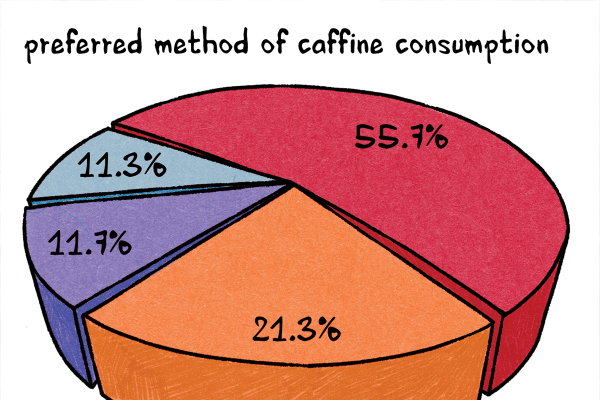
Last month we challenged you to fill out our 2023 Census. 242 brave students took the plunge, five more than in 2022. We made you endure more than fifty questions that you may or may not have spent too much time thinking about when you should have been studying for your exam the next day, and you gave us plenty of answers covering the five broad categories of: Health & Drugs, Academics, Sex & Relationships, Flatting & Money, and Politics. In the end, we collected far too much data to be able to present to you today, but here are some of the more interesting or informative things we found. Health & Drugs Let’s say, hypothetically, you’re reading this issue of Te Ārohi on the piss. Maybe you’re in the line for pint night, who am I to judge? Now let’s say, hypothetically, you are wondering if your drinking habits are similar to your peers or not. Well, luckily for you, that’s the first question we’re going to answer for you today: 52.1% of respondents said they drink alcohol at least once a week, and only 15.3% drink at least twice a week. It is possible the percentage is higher than that but they were too busy getting on the piss to fill out some stupid survey, making this sample a bit unrepresentative of the wider student body, but who’s to say? 6.2% of respondents to this question said they did not drink alcohol at all. Woof! was the most popular bar listed by a long shot (see Bar Bracket), followed by The Bog and Carousel. Shout-out to the person that just put the address of a flat on Heriot Row as their favourite bar in Dunedin. And what about vaping? 30.6% of respondents said they vape, which is slightly lower than the 2022 statistic of 34.7%. Interestingly, 21.5% of respondents said they smoke, which is almost double the 2022 statistic of 12.3%. In response to the question “If you vape, how often are you using a disposable vape rather than a refillable vape?” on a scale from one to ten, most people indicated they used either only refillable vapes (1) or only disposable vapes (10). However, the mean response was a 5.9, suggesting that disposable vapes are the dominant type of vape by a small margin. That will likely not be the case for long, as the government changes rules to limit disposables from August this year. Of the respondents who started off vaping, 52% now also smoke cigarettes to some degree. Similarly, of the respondents who currently smoke cigarettes, 62% started off vaping. By far the most popular vape flavour this year was menthol/mint, arguably the plainest flavour possible but also the only flavour you can buy at dairies now. Grape and peach ice were the next most popular flavours. In overall drug use, the percentage of respondents who had tried cannabis (76.6%), nangs (29.7%), and ketamine (18.4%) in their lifetimes was slightly up on the 2022 figures, whilst monthly alcohol (89.7%) and cannabis (23.9%) use was down compared to 2022. Overall, drug use figures appeared pretty consistent across the years. Our last drug in question is caffeine and, as we can see in this chart, coffee is the dominant force for caffeine consumption for students. I did have to remove some more specific individual responses for this pie chart, and placed responses that said Coca-Cola in the “energy drinks” category (listen cokeheads: I get it, it’s not the same. I’m a coke stan myself, but there were only three of you and this just makes it easier I’m sorry). On an unrelated health note, have you got your flu vaccine this year? 38.8% of students said they had, 28.1% said they hadn’t, and 33.1% said they hadn’t but were planning on it. Let’s hope that 33.1% have gotten their jabs in the weeks since. Academics Most students who completed the census were third-years, followed by second-years, then fourth-years. Someone please tell the freshers to do the census next year. Four papers came out as contenders for the most-liked paper: CELS191, HUBS191, PHIL105, and ECOL313. CELS191 and HUBS191 are unsurprising as they are two of the highest volume papers which gives them a bit of an unfair advantage in this question, but the same can also probably be said for PHIL105, a philosophy paper in “Critical Thinking”. It’s a mandatory paper for any philosophy degree, but it’s also a common extra paper for people in science, commerce, or other arts degrees. ECOL313 is a lot more niche, but is also the paper where ecology nerds like myself get to spend a week in the Catlins looking at whatever they want in the forest, so it makes sense that it is a favourite for a few people. The next most popular papers were PSYC317, GEND102, and EAOS111, with EAOS111 seeing the single largest percentage increase in enrollments from 2022. Students were also asked how prepared they felt for Uni when they started. The average perceived preparedness was 5.8/10, with males having a slightly higher perceived preparedness (6.0) than females and gender diverse students (5.7 and 5.6 respectively). Was there any difference based on what students did in high school? To put it simply: yes. To put it slightly less simply: maybe? 89.9% of respondents did NCEA, and for this graph I excluded various other international high school graduates because the sample size was far too small (usually just one person). I initially wrote this question because I was curious, based on personal experience, if the International Baccalaureate (IB) led students to feel more prepared for Uni than NCEA. The data suggests it does, but there are a lot of caveats. While I personally did IB overseas, in Aotearoa IB is usually reserved for preppy and expensive private schools. Income and class are well-known predictors of academic preparedness so this is almost certainly a confounding factor in this analysis. So who can say for sure which curriculum prepares you better for uni? It’s also possible that NCEA prepares you more for other stuff, like life in general. All we can say is that if you meet someone who says they did IB, they are statistically more likely to be a nerd. We also asked students how much they trusted OUSA and the Uni. OUSA had an average of 6.76/10, while the Uni had an average of 4.70/10. Were these two levels of trust related to each other in any way? Yes. Tests showed a moderate positive correlation with very strong statistical significance, and we can see in the chart that as trust in one institution increases so does trust in the other. Basically, even though students trust OUSA significantly more than they trust the Uni, some people are just more trusting than others. This chart is a bit hard to analyse, especially after government funding for Unis was announced two days after the census closed. Regardless, it shows a pretty stark level of concern and uncertainty for many students and departments that will likely not go away anytime soon. Sex & Relationships Just like in previous years, it seems that students massively overestimate the amount of sex their peers are having. Either that, or the only people having lots of sex at uni are too busy knocking boots to fill out the census. When asked about sexual content, 26.2% of people said they do not watch, read, listen to, or look at pornographic or sexual content of any kind, which frankly seems like a lie. One person in their response asked, “Do nudes on Snapchat count?” and I’m not answering that. The most popular celebrity crush listed was Margot Robbie, followed by Zendaya, Henry Cavill, and Julien Baker. There were so many wide-ranging submissions, proving there’s someone out there for everyone. Someone even said Thomas the Tank Engine, and I’ll refrain from making a joke about being a metrosexual. Another person said “Adam DiMarco &/or literally any woman”, which is certainly a range. Flatting and Money In contrast to celebrity crushes and porn, this section highlighted some stark figures about struggles students are facing. 77.2% of respondents said they were not eligible for any student allowance, so how are they surviving financially? 72.6% had a student loan, 62.2% had money saved up from before university, 56.4% worked part time, and 49.4% received some form of financial support from parents. Only 26.6% have lived in their flat for more than one year, and many students reported going without certain things at some point in the year because of the cost. 73.1% had skipped social gatherings or events of some kind, 57.9% had gone without fruit or veggies, 38% had foregone heating, and 19.9% had skipped a meal entirely. 66.8% of students said they had a full driver’s licence, which was almost exactly the same as the percentage of students who said they got around Dunedin via car (66.9%), although not necessarily the same people. Almost everyone said they walked places, 38.9% also said they got around by bus, and 15.9% said they used a bike. There was one reported instance of “drunken teleportation”, but more data is needed to confirm this, and one (former) rollerblader who has “hung up the blades”. Godspeed. Politics As expected, the voting intentions of respondents was quite a bit different to polls of the entire country, but the dominance of Green party voters in the chart is quite remarkable. The chart excludes undecided/unsure voters (5.5%) and people who said Other/I will not vote (2.5%). We also looked at where voters in 2020 had turned to for 2023. The chart shows that more than half of Labour 2020 voters are planning to vote differently in 2023, mostly switching to the Green Party but also to National, ACT, and Te Pāti Māori. New voters who were too young to vote in 2020 are also mostly voting Green, but a fair few are planning on voting for National, Labour, and TOP too. TOP was the only party to achieve 100% retention, but their total numbers are still the lowest of the lot. Not a single National voter plans to vote Green. The chart excludes one person who voted for legalise cannabis party, who now intends to vote for Labour, and one person who voted for Te Pāti Māori in 2020 and is now undecided. The data is obviously not reflective of the whole country, only students who filled out the census, but it does highlight some interesting trends ahead of the election this year. The issues and policies influencing voting intentions line up with this data too. The top mention was tax and equality and in particular “the Greens tax policy”, “wealth taxes”, “capital gains taxes”, and “universal basic income”. It’s worth mentioning the census was released within a few weeks of the Greens tax policy being announced and so will have been on people’s minds anyways, but it certainly seems to have struck a chord with many respondents. It also seems there hasn’t really been any other big galvanising policies announced from any other party since. Tertiary support was the other big policy or issue mentioned in responses. As mentioned, two days after the census closed the government announced extra tertiary funding, so it may not be the top priority for as many people today, although many advocates and union leaders who were out protesting see it as a bandaid rather than a solution with more action needed. Rent controls or rental WOFs got the third most mentions. Supporting farmers, breaking up the supermarket duopoly, free dental care, and cheaper GP visits all got a few mentions each too. One person mentioned “military camp for young offenders” as a policy they liked, although the same policy also got more than a dozen mentions in the following question about policies participants disliked. One person said, “Declare war on Australia”, while another said, “Murder Peter Thiel and the rest of the billionaires and use his money to feed all the starving children in NZ to show Jacinda how to really do it.” I wait with baited breath to see which bold political party campaigns on these policies in the election. You’ve apparently got at least one voter. We also cross-referenced gender data onto voting intentions. 64.1% of all participants were female, which was not far off actual uni stats for all students: 60.8% female. 6.1% of participants were gender diverse (non-binary, genderqueer, ‘other’, etc), which is much higher than the 0.3% in the University’s official stats, although being gender diverse (and telling us you are gender diverse) is a much simpler process than being recognised as gender diverse in the eyes of the Uni. Greens had the closest female support to that 64.1% figure (70.8%), and Labour, Te Pati Māori had slightly higher ratio of females, while TOP, National, and ACT had much lower female support. We also looked at voting intentions based on study level and age to see if the idea that you get more conservative as you get older holds any truth within this group of students. As you can see, there isn’t much of a trend in the year-level data, besides liking TOP more as you age, which isn’t exactly conservative. The average age for the combined ‘right wing’ vote (National / ACT) was 20.18, and the average age for the combined ‘left wing’ vote (Labour/Greens/TPM) was 21.25. We also looked at whether drinking habits had any connection to politics, because why not? (For clarity and more robust analysis “I don’t drink” was merged with “Less than once a month”, “Once a month” was merged with “A few times a month”, and “Daily” was merged into “More than twice a week”). The group of students who drank “a few times a month” were the most unsure about their voting intentions. Weekly drinkers had the highest proportion of Labour and TOP voters. The groups of respondents who drank “a few times a month” or “less than once a month” had a higher proportion of Green voters than the two groups of heavier drinkers, and overall it appeared that students that drank less were more likely to vote for a left-wing party than students who drank more often. Unrelated: heavy drinking can lead to brain damage. We also looked at whether preferred caffeine type had any connection to politics, because why not? It doesn’t seem to in any obvious way, although coffee drinkers are the biggest Greens supporters and people who don’t drink any caffeine are the biggest Labour supporters. Conclusion We received so many thorough responses to the census, and every single one was helpful in compiling all of this interesting data. The most common responses to people’s favourite spots in Dunedin were the Botans, various bars and cafes, and St. Kilda/Clair beaches. Reading through people’s favourite spots in Dunedin was really heartening though, and so to round us out for another great year of the Critic Te Ārohi Census, here are some highlights: “Bouldering gym near octy. Also Seacliff asylum near the freaky ghost hatch”, “Cemetery (NOT TO DRINK, just by myself for the vibes)”, “walkway towards port chalmers”, “This one dead tree in opoho park”, “Quarantine Island/Kamau Taurua”, “Past the octagon round all the old buildings at night”, “The meadow above Ross creek”, “Bethunes Gully Walk on a sunny day”, “Brockville at 7:30am on a foggy morning from cockerell street and above (you’re above the cloud like so it’s like looking out of a plane window)”, “Harrington point gun turrets”, and “the suburbia toilets, really gives you that Dunedin vibe everyone talks about”. And of course the many, many people who said “Ur mums house”. She doesn’t actually live in Dunedin though, so checkmate liberals.
-
News

A Response from Tim Fowler, Chief Executive of the Tertiary Education Commission
I read Zak Rudin’s Critic Te Ārohi article with interest (‘MINOR CONFUSION! Announcement elicits fears’). As the person who apparently said several things quoted, I want to set the record straight, as a number of comments have been misinterpreted, conflated and confused in the telling. I also need to address claims in an earlier article about syphoning off of sector funding. I was part of a question-and-answer session at the TEU conference on Budget day. The Government had just announced a number of investments in the sector and the Minister was there to talk about them. I mentioned I had been to Otago recently and had had discussions with the VC and Chancellor about its situation, and I was confident they were taking the steps necessary to address the university’s financial issues. At no time did I say we were talking to Otago about “funding universities via student debt” or raising fees. Universities are independent by law. We can’t and don’t tell them how to manage themselves, and it’s an important principle to maintain. What I did tell the conference is that the tuition subsidy increase of 5% would make a material difference ($521 million over four years) and that the Ministry of Education would soon be consulting on the Annual Maximum Fee Movement for 2024. These two facts have been conflated and misinterpreted. The basic maths is that universities could never be funded by increasing “student debt”. Domestic student fees only cover about 19% of university costs and fee increases are capped. Critic also published “$355 Million for Tertiary Sector Reappropriated” which made a number of incorrect claims as a result of confusing funding, fees free and student loans. The key point is, an additional $521 million in this year’s Budget is going to tertiary organisations to support teaching by increasing the amount of funding for each equivalent full-time student. Funding for future years is only an estimate because, as Otago has seen this year, the student numbers you expect are not always what you end up with, and the Government is not going to pay for students who aren’t there. As to whose side am I on? I’m on the side of a vibrant and sustainable university sector that has the interests of learners at its centre. I get that there is a lot of uncertainty in universities – for students and for staff. It’s something a lot of people across the country have faced in the last three years. Universities are a vital part of our society and economy and we all have an interest in them being highly successful and, of course, financially sustainable. An important part of our role is understanding what they are doing and communicating that to the rest of government, because the Government has billions invested in them and huge expectations in terms of the contribution they will make to our future. I also want to assure you that the TEC takes the learner voice very seriously. We regularly meet with student representatives, at local and national level, to hear their perspectives and build them into our plans and policies. If Critic or OUSA has questions about what we’ve said, recent announcements, or how the tertiary funding system works, the TEC is always willing to answer them. Ngā mihi nui, Tim Fowler And a Response to this Response… Kia ora team, I offer a brief response to Tim Fowler's recent correction piece. I appreciate that perhaps this has been a miscommunication rather than deliberate obfuscation. While Mr Fowler’s intent may have been to present two distinct points, the hundred or so tertiary sector delegates and student representatives in the room interpreted the comments offered differently to Mr Fowler’s apparent intent. Nonetheless, we are pleased to hear that there have been no closed-door discussions about increasing student fees as a funding mechanism, and agree that this would be a nonsensical approach. Regarding the assertion that “the Government is not going to pay for students who aren’t there,” hopefully we can come to an agreement that slashing public institutions and damaging quality research output due to a lower-than-expected student cohort is equally nonsensical as a funding model. Ngā mihi, Brandon Johnstone Payroll Administrator, HR Services Human Resources Division University of Otago | Te Whare Wānanga o Otāgo
-
Columns

Moaningful Confessions: Long as Fuck, And Also Gross
It was 2018, I was recovering from my first heartbreak/trying to figure out how to stop fucking my ex every single time we felt like it, so naturally I downloaded Tinder - surely some fresh dique to be found there. I organised a date with this guy called Matt (was going to change his name but never mind lol there are so many Matts this isn’t a lead). He was going to come around to my flat at 8 for wine and I think we both knew a root as well. The date started going downhill before it even started, because I accidentally got hecticly pissed at 6pm with my girlfriends on the beach. We were just chilling, chatting, sipping away at Pals rtds and (as per) I got ridiculously fucked ridiculously fast, very much by accident. We were all cracking up as I hung out of the window on the drive home but as we neared my flat my drunk ass remembered I had a stranger coming over to meet me for the first time ever in under an hour. To make things worse, I smoked a an entire spliff thinking it was a ciggy back at the flat. Properly cooked at this point. Time was ticking, I was tripping, then the homie Matt pulled up perfectly on time. He was clean, 5 years older than me, wearing sandals, and (what I reckon he regrets now) brought two bottles of above $20 wine. I was spinning. Hectic. Anyway, that’s all the build up to the actual part of the story where shit gets ridic. Cringing writing this. The date was crack up because I just walked (stumbled) him around my neighbourhood chatting his ear off, wildly confident for someone who should have been very embarrassed, trying to sober up through some bipedal locomotion. We smashed the two bottles of wine on our set up of a mattress on my lawn under the stars and then started hooking up. He had really big lips. I remember, it was crazy. I’m stalling. Once things started getting hot and heavy and hands were suggesting going places, I had a horrifying realisation: I was on my waiwhero (red-water; period). Don’t remember how I thought I was going to curb this pre getting on the piss and inviting this guy around, but apparently I thought it would just sort itself out. I had a mooncup in and remembered a friend telling me the week before that she had been doing it with her boyfriend with her moon cup up there. We very drunkenly had pretty okay sex under the stars on the lawn outside my flat and all was well while it was dark - however, we woke up and it looked like a mattress from a medieval birthing scene in one of those horrible movies where everyone is grotty as fuck the whole time. There’s so much to this yarn, but essentially - he was a legend about it, I (still drunk) thought I’d just say, “Wow whoops! Got my waiwhero unexpectedly last night, sorry!” and he wouldn’t know that I had accidentally invited him around for what I should have been straight up was going to be period sex. He left with my blood on his shirts (so gross to see I am sorry) and here is the punchline: Why in the fuck would I have a precautionary moon cup inside of me if I “hadn’t known that I was going to get my period”? Fucking legend of a dude not making feel like a total wanker. But it's Aotearoa, so of course I found out post-coitus that he is a great childhood friend of some mates of mine. Just hoping I’m the only one telling this story, would HATE to hear his rendition. Moral of the story: 99/100 times, lying makes you look like way more of a fool than if you’d just told the bloody truth ;-)
-
Columns
Local Produce: 3D Printed Nipples
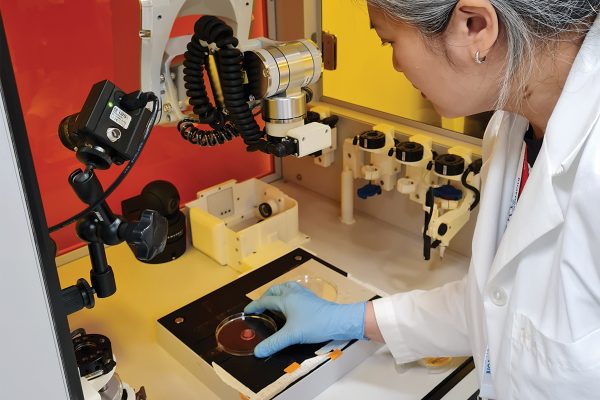
Research Associate Professor Jaydee Cabral is an Otago researcher and lecturer who is taking 3D printing to a whole new level. Her lab is going to be printing nipples. Yes: printing nipples with a 3D printer. Of all things to 3D print, why nipples? Jaydee has a good reason. She is going to be working on making customizable nipple implants for breast cancer patients. The printed nipples are being designed for those who’ve had mastectomies and are getting breast reconstruction. “There is nothing clinically available for mastectomy patients in terms of nipple reconstruction,” says Jaydee. There is only one option (it’s called ‘skin flap suturing’) and it “only creates a semblance of a nipple.” It is not a great option. “There are high rates of infection, multidirectional scarring, and it is often repeated multiple times,” says Jaydee. 3D bioprinting customised nipples is a huge step forwards in providing a safe and reliable option for these patients. Bioprinting is the same as 3D printing but, rather than plastic, the ‘ink’ is a mixture of biomaterials (biologically compatible materials) and living cells. The idea behind 3D bioprinting is that the printed construct is not just an implant, it is a piece of living tissue infused with the patient’s own cells which allows it to be accepted into and become part of the body. Jaydee’s work is a project that goes beyond Aotearoa; she has just received a grant worth $80k to collaborate with the University of Maryland’s (USA) Professor John Fisher who has been leading research surrounding the design and printing of the 3D printed nipples so far. The Fisher lab has developed the process of printing these nipples and customising them. They scan the nipple and get the digital blueprint for the printing from that scan, meaning they can make a replica of the patient’s original nipple. “To link the South Island, New Zealand, with an international leader in bioengineering and access to the latest in cutting-edge next generation healthcare technologies is incredibly exciting,” Jaydee says. Her main focus will be incorporating blood vessels into the 3D printed nipples so they can survive in the body, a process called ‘vascularisation’. The vascularisation process is key, as the remaining hurdle for this project is to keep the cells in the printed nipple alive. In a natural nipple, there are thousands of tiny blood vessels providing the cells with the nutrients and oxygen they need to survive. But in 3D bioprinted nipples, this is pretty hard to do. This is where Jaydee comes in, as vascularising 3D bioprinted tissue is her area of expertise. It is an incredible project which Jaydee could hardly contain her enthusiasm for, especially the opportunity to play with the BioAssemblyBot, a robot that bioprints, transports, and completes experiments on living tissues. Jaydee is currently looking for a Masters student to join her in developing these vascularised nipples: “Any student with a STEM background would suit!” The lucky student would be trained up and get the chance to travel to the University of Maryland to do some work in the Centre of Complex Tissues, the home of the BioAssemblyBot. Jaydee promised that “if you enter this dynamic field, you will never be bored!” It also helps that there is a high demand for bioengineers. Free the 3D-bioprinted nip! If this sounds like a bit of you, get in touch with Jaydee at jaydee.cabral@otago.ac.nz. You can also learn more about Jaydee’s research here:
-
Columns

Chargrills: RE-O RECTIFIER: Beef Edition
And we're back with a simple DINNAAAAAA. We're talking beef and vegetables, or you can use fake meat or tofu to keep it vegan. All with some sachet sauce. Tuck into this for a Re-O rectifier that won’t break the bank. Ingredients Drizzle of oil (fun fact: cold pressed extra virgin olive oil is the healthiest) One onion (red or white, we don't discriminate), diced 500-600g rump steak or other protein, chopped into bite sized pieces A packet of frozen veggies, defrosted or pre-boiled for 5 mins Teriyaki stir fry sauce sachet, $2ish Packet of vermicelli noodles, cooked Egg (optional) Coriander (optional garnish) Steps 1. Bring a large pot of water to boil. When it's boiling, add the noodles and cook, then strain the water out and set aside. 2. Cook the diced onion on medium heat in an oiled pan for 3-4 minutes. Stir to avoid burning the onion. You know how to do this. 3. Add the rump steak/protein and cook for a couple of minutes until the sides are browned. Add the veggies and egg and cook for 3-4 minutes, stirring so that the egg scrambles. If you’re not eating egg you can skip this part. Obviously. 4. Add in the noodles and the sauce. Stir through and serve. This should serve 5 easily and 6 slightly less easily. Get that in ya gob. Can swap beef for chicken or chickpeas or whatever else. Be creative. Mi Goreng noodles would slap too. Make sure you use the flavorings if you do.
-
Columns

Horoscopes: Week 14
Aquarius Jan 20 - Feb 18 Take a trip to Veggie Boys this week. Grocery prices are fucked, and you will probably need some nutrients after re-o. Leeks are good this time of year.


