A Response from Tim Fowler, Chief Executive of the Tertiary Education Commission
Local greenie grandma Rosemary Penwarden was found guilty of forgery by a recent Dunedin High Court trial. Rosemary sent a fake letter in 2019 to attendees of an oil conference in Queenstown telling them it had been postponed due to the climate crisis. Though the letter was meant to be satirical, she now faces up to ten years for forgery. Apparently the law doesn’t understand sarcasm. Rosemary is considered something of a legend in the Ōtepoti climate scene, especially for budding young climate activists like Zak and Jett, describing her as a “household name”. As a grandmother, she was quoted by her close friend Bruce Mahalski saying that she wouldn’t think of anything more useful to do than “try to save a liveable future.” Zak met Rosemary while he was involved with School Strike 4 Climate. “She’s been around fighting this fight for generations,” said Zak, “She’s totally an inspiration.” Jett was in complete agreement, calling Rosemary a “role model as to what fostering a relationship with Papatūānuku looks like.” Likewise, she appears to draw inspiration from students like Zak, having told Bruce that, “despite all of the doom and gloom of the scientific projections I do feel some sense of optimism for the future and that’s mainly because of all the amazing young people I work with in the climate movement.” Zak described his reaction to the verdict as being like a “call to arms… I just want to do more to just show how absurd this is, especially in the context of being in the climate crisis. What she did of course was to raise awareness and attention, and now she’s being treated like a common criminal and that’s kind of insane.” “Honestly I think it was pretty poor from the Court,” said Jett. “The letter was clearly sarcastic. The ruling shows that we value corporate interests over climate interests and the right to expression of speech.” He added that young activists might be likely to be scared off of humorous protest based on her situation and turn towards more disruptive methods. “That’s a poor outcome for all involved.” Rosemary was unable to comment on her situation until her sentencing on September 8 where she hopes to be discharged without conviction.
Disclaimer: The author of this article is a postgraduate science communication student. Unless you’ve been living under a rock for the past couple months, you’ll be well aware of the financial shitshow ($60 million deficit) that has forced Otago Uni to make some serious money-saving decisions. The Uni is hoping to make $12.8 million in savings through staff redundancies, and news of what courses are on the chopping block have slowly been leaking through the cracks. At the end of last semester, on June 7, students in the Department of Science Communication were sent an email from the department head informing them that the department would be among those crippled by the impending cuts. The undergraduate Minor and Master’s programs would “likely” be cut, with the mere two remaining full-time staff being left to run a distance-only post grad certificate and diploma. Sci Com courses are notoriously small, and the camera gear and field trips can’t be cheap to run, potentially making the department an attractive target for a university trying to save a few bucks. The original email to students reflected this, but cited the small size of the department and their relatively slow growth rate as some of the many reasons they’ve been targeted. None of the details of the email were able to be confirmed by the University, who told us it was “sent prematurely”. Needless to say, students and recent graduates of the programme were gutted by news that signalled “the end of an era” of a course that is unique not only nationwide, but around the globe. “Otago’s department is the envy of an entire discipline,” said recent science communication graduate Asia. “No other science communication degree is like ours, which teaches everything from filmmaking to journalism to animation.” The sentiment was echoed by international students Brady and Stephanie who both waited years to come here through the pandemic. “There was something about the program here at the University of Otago that was so unique and impactful that I was happy to wait two, three, four, even five years if I needed to just because of the professors and the program that is offered here,” said Brady. Asia was baffled at the rationale behind the proposal to gut the department, not only because of its worldwide status, but because “we need [science communication] more than ever… A life without science communication looks like this: no museums, no films, no podcasts, no National Geographic, no communication about the worldwide pandemic outbreak for which Aotearoa is famous.” To put it bluntly, she said, “The University of Otago might as well round up Daddy Bloomfield, David Attenborough, Suzy Cato, and shoot them in the head.” Pro-Vice-Chancellor (Sciences) Richard Barker reassured students that all students currently enrolled will be able to complete their degrees. But the quality of those degrees is up for debate as the email to students indicated that there would be a “shortfall in supervision” for Masters students given the reduction in staffing. Brady said that he had “doubts about that if they’re cutting the whole department and we only have two advisors for 30-40 students.” Students hoping to upgrade from a diploma to a Masters like Steph, who had been working on her application all semester, were also told that the pathway may no longer be open to them if the proposed changes were to go ahead. “I literally sent off my Masters application one minute before that email was sent. And if I knew that they weren’t even looking to accept anybody I wouldn't have wasted all of that time.” When asked if she thought the Uni recognised the value of the program, Steph simply responded: “I don’t think that people are seeing value the right way if they can’t see the kind of people that are coming out of this program and the impact that they’re having in the world.” Pro-Vice-Chancellor Richard Barker responded that the Division of Science and the Uni believe that “the communication of science is a vital component in today’s world and the University intends to continue offering an academic programme in this subject.” What this programme will look like, however, remains uncertain. Brady, Steph and their classmates sent out a press release to media outlets along with a video calling for the Uni to include them in the conversation about cuts made. “It feels like we’re talking to a wall at this point,” said Steph. The Uni told Critic Te Ārohi that it is a “high priority” that they communicate with staff and students to keep them updated on any proposed changes, expecting “to be able to share details with students and staff later this month for their feedback.” We will continue to cover the story of this department and others at the University of Otago as the funding saga unfolds
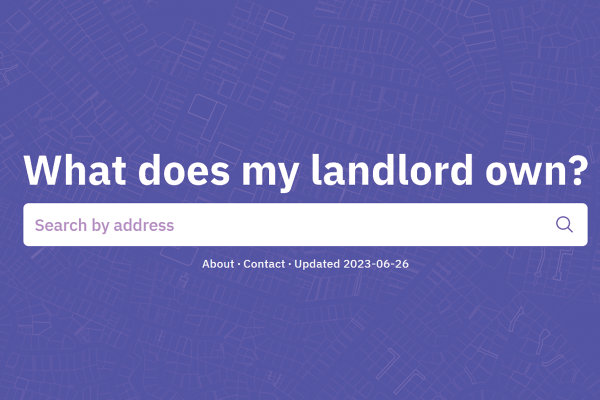
A website detailing how many properties your landlord owns has been shut down following discourse with the Deputy Privacy Commissioner. The founders of the website believe this decision was “influenced by landlords and property developers”. A press release from the founders sunset_flowers has revealed that their website ‘What does my landlord own?’ (WDMLO) has been shuttered over concerns of privacy breaches, with the DC (Deputy Commissioner) saying that all New Zealanders, regardless of age, wealth or any other status have a right to privacy, indicating that the listing of all properties owned by a given individual somehow violated that right. Website founders said that while the shutdown wasn’t explicitly ordered by the DC, the changes they would’ve had to make in order to satisfy the Office of the Privacy Commissioner [OPC] would effectively neuter the site. A spokesperson for the Office said that “under the Privacy Act, agencies that collect and hold personal information have a duty to protect it and respect it to avoid causing harm to people.” The creators claim that the “multiple inaccurate statements and frivolous claims” made by the DC in their “subjective interpretation of the Privacy Act” raise “serious questions about the values of the Deputy Commissioner and the Office of the Privacy Commissioner as a whole.” In a press release, the website creators mentioned that the OPC cited complaints from individuals as a reason for their investigation of the site. The founders have received a few complaints themselves, “disproportionately (>90%) from landlords.” So, assuming that the same people are complaining to both them and the OPC, “the ‘members of the public’ [the OPC] claim to be acting in the interest of” are almost entirely landlords, who the founders don’t exactly believe represent the public. They also suggested that the OPC’s request for extensive personal information on the website's founders was itself an ironic violation of their privacy. The purpose of the website was to hold accountable the people who benefit from the “hundreds of thousands of people in Aotearoa [who] live in cold, damp, mouldy, and otherwise unhealthy rentals” while the price of rentals continue to climb. In the opinion of sunset_flowers, this is a goal that the Deputy Commissioner is showing an “obvious contempt” for in. The website, upon first release, received such immense attention that the server crashed: 75,000 searches in the first 48 hours. It used publicly-accessible data to list all properties associated with a given name, but the system wasn’t perfect, sometimes combining multiple individuals with the same name or assuming one owner owned an entire block rather than a single building. Now that it’s being shut down by the founders rather, they worry that landlords will be able to continue hiding their hoarded wealth from the public. But, to keep their mission alive, “we’ve made the software behind WDMLO open source in the hope that others will setup similar search tools.” Jade, a third-year, agreed with the message behind the site: “It's not fair being kept in the dark, and leaves a very unequal power dynamic between landlords and tenants.” But for now, the founders pushed users towards Terranet, “a website which provides a similar service to WDMLO”. Terranet hasn’t been shut down, which the founders said could be due to the fact that it’s “marketed at property owners, not at tenants… This too raises questions about whose interests the DPC is acting in.” The OPC cannot “confirm or comment on complaints about a particular agency”, and the website is being taken down by the owners in lieu of making requisite changes: changes they believe would be antithetical to the site’s purpose.