
-
Columns

Editorial | Issue 7
This week’s issue was uncomfortable to work on. Aside from Easter causing us to have three days to put Critic together, the feature articles were on topics I really am in no position to make judgment on. But I will anyway. Firstly, the feature on relationships via social media: I really don’t like social media in pretty much any form. For anyone I actually want to talk to, a real conversation will always win. And romances: well, I’m not so great in that field either. It would probably do me good to get the Tinder chat going because so far anyone I’ve thought of approaching generally turns out to be taken or has just made a baby. True story: just last week, my big crush dreams were crushed as I ordered my regular coffee from Mr McSteamy (because he steams the milk for my coffee — I thought of this outside of Grey’s Anatomy references!). Mrs McSteamy walked in with Baby McSteamy, neither of whom I was aware of. I congratulated him on his recent creation but #brokenheart. Another feature is on the expiration of the copyright of Mein Kampf. This is difficult to write about when our generation, in cutesy Dunedin, just has no clue as to exactly what the victims of the Third Reich endured. We are so damn lucky here that any judgments about publishing a book that was part of causing so much pain really are hard to make. But from where I’m standing, the idea of publishing a heavily annotated version of the book (there will be approximately 4,000 annotations in the new edition) serves to educate all people, not just Germans, about their history. People can see what crap the people who were so desperate at the time bought into, and how someone so evil managed to sell the idea of Nazism. It might be painful to a lot of people to be reminded of that history, as is a common argument against republishing it, but doesn’t the world need a little reminding of history right now? Finally, there’s a feature on harassment and abuse in the world of online gaming. When I first heard the pitch for this feature, my immediate thoughts were “dear God, can they not just turn off their computer? Seriously, just play a different game.” And I know why I thought that: because I was ignorant about exactly how abusive the online community can get, particularly in games. It’s not the online space I use. It’s not relevant to me. I don’t even game online. But if we only acknowledge the issues that matter to our own lives then, well, we’re doing a shit job of learning from our history. It’s easy enough to say “what else do you expect from the internet?” But harrassment online isn’t something people should be expected to just walk away from. The internet is now where we socialise, where we work, and even where we start relationships. Of course it’s relevant to all of us. Josie Cochrane Critic Editor
-
News

Staff and Students Praise Upgrade Plans
University staff and students have voiced their support for large-scale developments scheduled to begin on campus early this month, saying any disruption will be worth it in the long run. Landscaping redevelopments from the northern end of the Richardson building to the intersection of Castle and Dundas Streets are expected to continue until January next year, while work on a new Dental School and the refurbishment of the Science 1 building is scheduled to begin late 2015 and be completed by February 2018. The landscaping work, estimated to cost $7.8 million, is aimed at improving access to sunny, sheltered areas on campus, providing more outdoor seating and recreational areas, and making parts of the campus more visually appealing and bike-friendly. In total, about 15,000 square metres of paving will be replaced or re-laid during the development. University Childcare Association Director Kay Lloyd-Jones said while there is a degree of anxiousness about the disturbance that will be created, the view among staff is generally positive. “Our experience has been very good with the Property Services when they were building our complex a year ago,” said Lloyd-Jones. “I think the main thing it will improve is the speed of traffic in Castle Street North. At the moment, people just think of it as a street and drive too quickly down it — once the road is all one level with the footpath, people will see it as a part of the campus for pedestrians also and this will improve the safety for our parents and children.” Mathematics student, Matt Barnes, is also in favour of the changes, saying designated seating areas will make a difference to the atmosphere of the campus. “There aren’t enough places to sit outside of libraries at the university at the moment — whether it’s inside or outside. I think it’s an awesome idea.” Environmental management graduate and avid cyclist, Leigh McKenzie, said it’s great to see decision-makers looking out for students, and even specific groups such as cyclists. “By addressing Castle Street, the wider university area will benefit, particularly those in North East Valley and North Dunedin,” she said. Work on the new Dental School, due to begin in November, involves removing the west wing of the existing Walsh building and the remainder of the Barmingham building behind it to make way for a new 8000-square-metre clinical building, as well as an 1800-square-metre atrium and social space. Professor Warwick Duncan says the changes cannot come soon enough. “I’m trying to think of anything else on campus that’s more run down than the Dental School, and I can’t think of anything at the moment,” he said. “The faculty has been working toward this for a long time. We’ll put up with a fair bit of disturbance in the knowledge we’re finally going to get a new building.” Duncan said he recently visited a museum of the company that provides the faculty’s dental chairs and was surprised to learn that chairs in the dental school were older any of the museum’s memorabilia. The Science building refurbishment is due to begin in September and involves re-cladding, new windows, a new roof and a new exterior design intended to play down the “concrete box” appearance. Professor Lyall Hanton, Head of Department for Chemistry, is extremely enthusiastic about the upgrade. Hanton said “it is wonderful that the university is investing in this new teaching and research space in Chemistry … This redevelopment of all our teaching lab space is even more extensive than we initially had hoped for. Originally, new first-year teaching space with a staggered renovation of senior teaching labs was what we were hoping for but now all our teaching space is to be redeveloped in one single project.” The projects are part of a $200 million redevelopment agreed to by the University of Otago Council.
-
News

Execrable | Issue 7
T he meeting began by welcoming the new Postgraduate Officer, Chris Jackson, and International Officer Toa Sailusi. It was announced that Campaigns Officer Alice Sowry and Education Officer Greer Mahoney have resigned. The second by-election for 2015 is set to be announced in the near future. The executive discussed Hyde Street 2015, and all members thought it was run very smoothly. Possible changes for next year included the idea of only allowing alcohol from kegs. Martin said there are dangerous “cultural behaviours and activities” surrounding kegs, and OUSA CEO Debbie Downs also said this would cause “difficulties with licensing” the event. Admin Vice-President Isaac Yu pushed the idea of a bidding system for Hyde Street tickets. The majority of the executive were against the idea, and Martin pointed out that the budget would be more “unpredictable”. These issues will be discussed and decided on in future. President Paul Hunt has been meeting with the Policy Committee to discuss the “general exec structure”. The committee agreed by-elections have been “occurring frequently”, and decided to add another full-time member to the team. The changes will be “cost-neutral”, so the structure of the executive will be adjusted for 2016. The rest of the meeting was taken up by the executive’s quarterly reports. In the reports the executive members are asked to describe what they have done in the first quarter of their role, as well as how many hours on average they have completed. Each member presents their report to their fellow executive members, who decide whether the executive member should be paid their full honorarium. Admin Vice President Isaac Yu said his role is going “very well”. He said “a couple of times” he has been under his twenty hours, but meets the hours most weeks. Feedback from the executive was generally positive. Welfare Officer Payal Ramritu did suggest Yu have “goals other than E sports”. Yu was granted his full honorarium. Finance Officer Nina Harrap says she took “a while to get up to speed” in her role. She said she has been averaging about 15 hours per week in her 20-hour position. The executive noted that she had not been meeting her hours and discussed how she shall be paid. It was decided that Harrap would be paid 90 per cent of her honorarium. Colleges Officer TaoTao Li said she started the year by establishing contacts with the heads of colleges. Li said she is “confident” she has met her ten hours. Ramritu noted that Li is “hard to get a relationship with” and Hunt pointed out that this should not affect her pay. Li was granted her full honorarium. Campaigns Officer Alice Sowry said she does not expect the full honorarium as she “averaged about seven hours a week”. Sowry said she just “hasn’t had the time to prioritise OUSA”. Sowry was given 90 per cent of her honorarium. Former Postgraduate Officer Claire Mitchell said “in terms of hours per week”, she “averaged seven to ten”. Mitchell said she did not have time to complete her full hours, “hence why I had to leave”, so she asked to be paid 70 per cent of her hours. The executive agreed on 90 per cent. Welfare Officer Payal Ramritu believed she had completed all of her hours. Yu said she has “volunteered more than any of [the executive]” and should be paid the full amount. Ramritu will be paid her full honorarium, as well as being back paid for the period between January and 5 February when she was not in Dunedin but still worked. Recreation Officer Johnny Martin said he has been “pretty busy” and has been working “around about 15” hours each week. Martin was not in Dunedin in January or February, so has only been present for one of the three months in the quarterly period. However, the executive agreed he had done as much work as he could while away. He will be paid 90 per cent of his honorarium. President Paul Hunt announced where his hours were spent, and Secretary Donna Jones believes he works 75–80 hours per week. The executive agreed his work has been great, though the general view was that he needs to take more time off. Yu said Hunt should “delegate” work more, as the hours he is working are “unsustainable”. Hunt will be paid his full honorarium.
-
News
First-Year Enrolments Down 2.9 Per Cent
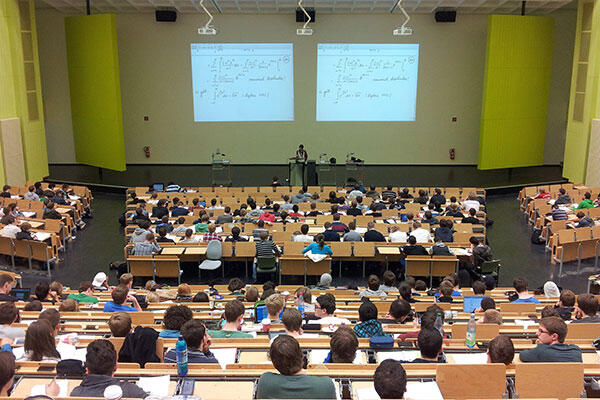
Enrolments for full-time students to the University of Otago have dropped for 2015. Figures show that total enrolments for this year are 469 fewer students, or 2.9 per cent lower, than the 2014 figure of 18,570. Domestic first-year enrolments are down 9.2 per cent from the same period in 2014; this follows three years of first-year domestic growth of 3 per cent or more. The University of Otago Vice Chancellor Harlene Hayne said the university attributes the domestic drop to a smaller school-leaving cohort combined with the current strong economy. “There are wider contextual factors that need to be considered,” said Hayne, “and some strong opportunities arise from the situation.” “One key contextual factor is how Otago’s domestic enrolment situation differs, or does not differ, from that at other New Zealand universities. This is not something we yet know, but I do not expect that 2015 will have been an easy year for domestic student recruitment generally.” “The other factor is that while our domestic first-year intake is smaller than in recent years, the calibre of that cohort — as measured by its level of attainment at NCEA Level 3 — is much higher on average. This is in part due to Otago holding firm on the new and more stringent University Entrance (UE) standard that came into force this year. Along with the increasing postgraduate cohort, this has significant implications for the positioning of Otago as a university that is unequivocally focused on the quality as opposed to the quantity of students it enrols.” OUSA President Paul Hunt said that while the drop was “completely expected”, the decline does have negative effects for the university. “[The decrease in enrolments] means the university has fewer fees that it has collected from students, so it does put more strain on resources and there will be a more frugal allocation of resources across the university in the short term. Whether that remains the case in the long term is yet to be seen.” The number of first-year enrolments for international students is up 36.6 per cent in 2015. This follows a small decline in 2014. However, international full-fee enrolments are 5 per cent lower than this time last year. Hunt said in terms of attracting international students, “the focus is very much on face-to-face interaction.” Postgraduate enrolments have increased by 3.4 per cent from 2014. There are now 2,728 postgraduates at the university.
-
News

Southern DHB Performs Their First EVAR
A Balclutha man, Harold Masters, has become the first person to receive an Emergency Endovascular Abdominal Aortic Aneurysm Repair (EVAR) by surgeons from the Southern District Health Board. The procedure involves surgery into the aorta — the largest artery in the human body, which runs from the heart to the groin where it splits off into the common iliac artery (right leg) and the external iliac artery (left leg) — to relieve an aneurysm. An aneurysm is a widening of a blood vessel due to blood gathering in that area. While they are easily treatable, aneurysms are regarded as highly dangerous and can cause death when found in certain locations. The traditional method of aortic aneurysm repair, colloquially named “open repair”, was first performed in the 1950s. According to a journal article published by the Department of Surgery and Cancer at Imperial College London, the open repair method is a major surgery. It has a lengthy recovery period of around two to three months, and a mortality rate of between four and ten per cent. Dr Gabriel Lau, an interventional radiologist who helped lead the operating team alongside Jo Krysa, said EVAR surgery has advantages compared to the traditional method of open repair. Lau said the procedure is “less invasive and involves less blood loss for the patient”. The surgery can be performed under a local anaesthetic and requires two small incisions in the groin to expose the femoral arteries. These are downstream of the abdominal aorta. This method has a lower operating mortality, and patients stay in the high-dependency unit as opposed to the intensive-care unit after the procedure. The recovery period for the patient is also significantly shorter. Lau said Masters was on local anaesthetic because he had “quite a large aneurysm”. While using a local anaesthetic is generally rare for such a surgery, Lau said “if you put [the patient] under general anaesthetic with a muscle relaxant in the abdominal area, [the aneurysm] could rupture”. He said the team were “conversing with [Masters] throughout” the surgery, and as they were closing up the groin wounds, he rang his wife on his phone. Lau said this is “not as uncommon as you may think”.
-
News

New Zealand Crime Declining
The New Zealand Police have released their annual crime statistics for 2014. The report documents the number of crimes recorded in that year; crimes are counted as resolved when police apprehend the offender and decide how to take action. The Police National Intelligence Application (NIA) gathers the statistics, released in April each year. The report shows that nationally 350,389 crimes were recorded last year. This is a drop from 360,411 in 2013 and 376,013 in 2012. Minister of Police Michael Woodhouse said the result is “pleasing”. “We are continuing to send the strong message that crime won’t be tolerated and the 4.2 per cent drop in the overall crime rate is the result of more frontline officers on our streets, deployed more strategically, in areas and at times when police know there’s a greater risk of crime,” said Woodhouse. Though crime numbers have decreased overall, the resolution rate dropped from 47 per cent in 2012 to 41.5 per cent last year. The report shows the number of recorded sexual assaults has not increased from 2013, but is a 10 per cent increase from 2012. There were 3738 recorded sexual assaults last year. “While sexual violence is historically under-reported, it remains a significant concern with an increase in recorded offences by 3.5 per cent,” said Woodhouse. “I encourage victims of sexual assault to continue to come forward and report this crime.” Dunedin comes under the Southern Police District, which had the second-lowest number of recorded crimes of the 12 police districts nationwide. The district is made up of Otago Coastal (Dunedin), Otago Lakes Central (Otago Rural) and Southland. Overall, recorded crime in the district decreased by 4.3 per cent in 2014 to 19,447. Aside from a spike in 2003, the region has seen an overall decrease in recorded crimes. In 1996, there were 34,577 recorded offences. Acting District Commander Inspector Steve McGregor said the drop is “a testament to the continuous hard work” by staff and their partnerships within the community. Resolution rates in the region have decreased in the past three years. The rate in 2012 was 55.7 per cent; in 2014 it was 50.6 per cent. McGregor said although police are still analysing the crime statistics, “early indication shows a number of offence classes are responsible for the decrease in the number of resolution rates”. “While the resolution rate for Southern has dropped since 2012, it has maintained a similar rate to last year and still remains significantly higher than the national average,” said McGregor. Of all crimes, sexual assaults showed the greatest peak in 2014. There were 307 reported cases, a stark contrast to the 158 in 2012. The number of recorded cases of sexual assault has fluctuated since 1996, but 2014 had the highest number ever recorded. McGregor said that “in the past, victims of sexual assault have been reluctant to report this crime due to a number of factors”. “Police are confident that the increase in reported case of sexual assaults and related offences show the increased numbers of the public who have the trust and confidence in us to report this crime, and the excellent support available to victims. Police treat such incidents as a high priority and we continue to encourage victims of such crimes to report them and receive the support they need,” he said. Per 10,000 people, the Eastern Police District, made up of the Hawkes Bay and Tairawhiti regions, had the highest rate of recorded crime with 1085.3 recorded cases. The Auckland Police District was second with 935.2 recorded cases, and the Northland Police District was third with 913.4 recorded crimes. The police district that had the least crimes recorded was Waitemata, made up of Rodney, North Shore and Waitakere, with only 566.5 recorded cases per 10,000 people. Under the Southern District Police region, Southland had the greatest number of crimes recorded, with 665 crimes recorded per 10,000 of the population. Otago Coastal (Dunedin) came in second with 617 per 10,000 of the population, and Otago Lakes had the least with a total of 2,916 cases, or 586.5 per 10,000. Nationwide Figures 119,323 theft related offences. 21.7% resolved. 53,265 cases of unlawful entry with intent, burglary, breaking and entering. 12.1% resolved. 40,358 cases of property damage and environmental pollution. 28.3% resolved. 39,944 acts intended to cause injury. 72.4% resolved. 26,751 public order offences. 79.6% resolved. 16,085 illicit drugs offences. 90.9% resolved. 16,085 offences against justice procedures, government security and government operations. 88.4% resolved. 15,024 cases of abduction, harassment and other related offences against a person. 56.5% resolved. 9,037 cases of fraud, deception and related offences. 49.6% resolved. 5,791 cases of prohibited and regulated weapons and explosives offences. 89.3% resolved. 4,056 sexual assaults and related offences. 47.6% resolved. 2,140 cases of robbery, extortion and related offences. 40.2% resolved. 737 dangerous or negligent acts endangering persons. 58.9% resolved. 66 homicide related offences. 87.9% resolved. Southern District Figures 119,323 theft related offences. 21.7% resolved. 4,830 theft related offences, 29.3% resolved. 3,195 cases of property damage and environmental pollution, 28.4% resolved. 2,633 acts intended to cause injury, 80.1% resolved. 2,444 cases of unlawful entry, 15.5% resolved. 2,119 public order offences, 84.6% resolved. 1,098 cases of abduction, harassment and other related offences against a person, 71% resolved. 822 illicit drugs offences, 88.9% resolved. 795 offences against justice procedures, government security and government operations, 91.2% resolved. 572 cases of fraud, deception and related offences. 61.7% resolved. 373 cases of prohibited and regulated weapons and explosives offences 85% resolved. 355 sexual assaults and related offences. 56.9% resolved. 46 cases of robbery, extortion and related offences. 54.3% resolved.
-
News

The Port of Auckland Fiasco
The expansions to the Port of Auckland have ushered in a new tide of political controversy for Auckland City Mayor, Len Brown. The council owned company, Ports of Auckland, plan to extend the Bledisloe Wharf further into the Waitamata Harbour, effectively allowing for easier access and docking for larger ships. The extension is expected to encourage more shipping activity in the port. The proposal, however, has received a mass of public outcry. A number of Aucklanders have publicly criticised the wharf extension with opposition rallies attracting hundreds. Many Auckland residents view the proposal as a step in the wrong direction, citing their opposition to reclamation for port purposes. The extensions would require the reclamation of around 3 hectares of seabed. Frequent boat users have also highlighted potential adverse effects such as damage to the quality of the harbour. Mayor, Len Brown, has come under pressure to review or reverse the decision to approve the council consent given last December. When questioned as to his knowledge of the proposal, Brown said he was only informed on February, three months after the consent was confirmed. However, the Mayor has defended the position of the council saying that there was no obligation to inform the public or himself. Furthermore, Brown hopes Ports of Auckland will now be persuaded to postpone the extensions in order to continue discussions concerning the outcome of the port. The controversy surrounding the wharf extension has received national attention. Following his victory in the Northland by-election, New Zealand First Leader Winston Peters is proposing to submit a bill to undo the port extension. Peters claimed he is doing so in the hope of encouraging development of the port of Whanagarei in Northland. The ongoing debate has also added to increasing speculation surrounding the upcoming Auckland mayoral race set to take place next year. Many high profile politicians have rumoured their interest, this includes Labour MP and former Labour Leader, Phil Goff as well as former National Minister Maurice Williamson. Goff has been speculated as a potential front runner for the position. Current Mayor, Len Brown, has yet to respond to questions as to whether he will run for re-election in 2016, however many commentators claim he has lost support.
-
News

In My Opinion: Henry’s word | Issue 7
It’s not often such a strong mandate gets turned on its head so quickly. Only five months ago National won Northland with an overwhelming 9000-vote majority. Then two weeks ago, it managed to lose the seat to Winston Peters. The outcome was the result of two mistakes. The first was the party’s reaction to Winston Peters. Peters is a loudmouth shock jockey with one message, listen to me. That message hasn’t changed in 30 years. And it didn’t change in Northland. The only part that did change was defining his audience. The mistake National made was doing exactly what Peters wanted; it listened. National saw the early polls and decided it needed to do something drastic. Its first reaction was getting National heavy hitters, John Key and Steven Joyce, on the front lines of the campaign. This decision completely distorted the message of National candidate, Mark Osborne. What should have been a local grassroots campaign was turned into a referendum on the government’s performance. Osborne found himself talking about government fiscal policy when he should have been selling himself as a local passionate Northlander. Osborne had an advantage over Peters at the outset. Simply being a Northlander meant he could be relatable and sympathetic to voters’ concerns. He unquestionably has a stake in the region. However, the conversation moved away from what was happening in Northland and started being about what was happening in Wellington. A place where Peters has 30+ years’ experience and Osborne none. Not only that, Osborne was tied at the hip to a government that he had no part in. He was attempting to defend government policy that he likely had no knowledge of. The second mistake was the attempt to bribe the electorate. A $69 million infrastructure upgrade to convert nine one-lane bridges into two-lane bridges wasn’t a bad proposal. It undoubtedly appealed to Northlanders. The bridges were aimed at highlighting the government’s ability to legislate, something the competition were unable to offer with any assurance. The problem was that it was a reactive offer. And it proved that Peters could influence government policy. National was unable to distance itself from the “bridge bribe” branding. Six months earlier, National had promised nothing for Northland, save the Puhio to Wellsford motorway extension. Regardless, it was clear that National wasn’t planning to build any bridges in its third term. That is, unless it was anticipating a by-election, which raises another issue in and of itself. The bottom line for voters was that before Peters’ campaign there was nothing in the way of change from the National government. No investment. No vision. No care. Then suddenly a $69 million infrastructure upgrade was announced. And voters had to seriously consider how it came about. It certainly wasn’t National Party generosity.
-
News

NBA Playoffs just around the Corner
While the NZ Breakers recently won their fourth ANBL championship in five years, the NBA post-season is just about to kick off next weekend after the monotony of the regular season concluded this week. For the casual viewer, the NBA can appear rather confusing so I will do my best to explain it (with some help from NBA.com). The National Basketball Association consists of 30 teams split into the East and West conferences, which are then further divided into three divisions. (East = Central, Atlantic and South-East. West = Pacific, North-West and South-West.) Each team plays 82 games and faces the four other teams in their own division four times (16 games).They play six of the teams from the other two divisions in their conference four times (24 games) and the remaining four teams three times (12 games). They also play all 15 teams in the other conference both home and away (30 games). After the regular season, the top eight sides from the two conferences battle through three best-of-seven knockout rounds until one team from each conference makes it to the NBA finals, which is another best-of-seven series to decide the champion. You got that? Me neither... This year has seen some serious questions raised about the fairness of the qualifying system as three teams from the Eastern conference (the Celtics, Nets and Bucks) are likely to come into the playoffs with a losing record over the regular season. Seems strange to reward teams that spend the majority of their season losing. The system is likely to change from the top eight sides from the East and West conferences qualifying for the post-season to the top 16 teams qualifying, regardless of their conference or division. This year the Golden State Warriors come in as top seeds from the Western conference and the Atlanta Hawks are the top seeds from the East, which affords them home-court advantage in the playoffs. Should they meet in the finals, Golden State would retain the advantage due to their superior record in the regular season. This season has seen some real changes in fortune for some of the heavyweights and perennial underdogs of basketball. Defending champions, the San Antonio Spurs, have been solid but unspectacular and are no doubt keeping some gas in the tank for the long playoff series. The big kiwi from Rotorua, Steven Adams, and his Oklahoma City Thunder, haven’t had the best season after the relative success of the previous few years. They haven’t quite booked their playoffs spot as I write this, but it would be a surprise for them to miss out even with their poor recent form taken into account. Kobe Bryant and the LA Lakers, who dominated the 2000s, have had another awful season, finishing bottom of the Pacific division again, which means that the Clippers are officially the best team in Los Angeles. Down in Miami and the Heat have cooled off since LeBron James headed back to Cleveland where he has got the Cavs back into the playoffs for the first time since 2010 (before he left for the Heat), making four straight finals appearances and two championship wins. It would be a great story if he could return to the team he left in such controversy that people burnt their shirts bearing his name and lead them back to the finals. I fear that this would only inflate his already big ego to Kanye West-type levels. At this point I am not confident enough to predict who will make it to the NBA Finals so...may the best team win. Whatever happens, we will bring you an update of the first knockout rounds in a few weeks’ time. Highlanders vs. Blues – Round 10 Preview A must-win game for both teams but for different reasons. While the Blues’ season is effectively over already, they will be desperate to get some more points on the board, for pride’s sake if nothing else. John Kirwan knows his head will remain on the chopping block if he doesn’t turn things around soon, and some of the players may be seeing their World Cup dreams disappearing due to their poor performances. Promising youngsters Charles Piutau and Francis Saili have both read the writing on the wall and signed up to play in Ireland at the end of the season. If a few more key players jump ship, then the Blues could lurch from a panic to a full-blown crisis and a dreaded “rebuilding phase”. For the Highlanders, it is an opportunity to cement their place in the top six. With the Crusaders playing the Chiefs and the Hurricanes taking on the defending champion Waratahs this round, now is a good time for the Highla nders to kick on towards the finals, especially with a difficult three-game tour of South Africa and Australia coming up. Another motivating factor for the Landers will be not wanting to be the first team to lose to the Blues!
-
Features

Digital Love Affairs
Call me old-fashioned, but becoming “Facebook Official” (FO) has never really appealed to me. I dated a guy who was adamant he would never stay with a girl who wouldn’t make the relationship FO. Let’s just say, whatever spark we had fizzled out very quickly. I just don’t understand how people enjoy broadcasting their relationship to the rest of the world, but, hey, each to their own. With the new-age arrival and steady infiltration of social media, it’s likely I am one of the few in my generation who still believes in a real Disney love affair. My inner child has a beautifully romanticised idea of what relationships should be, and that is that they transcend the falsities of social media. Unfortunately, the sad truth is that my dream of being a live-action Cinderella is slowly fading into the mist of the past, only to be replaced by my generation’s new reality: desperately publicised relationships and dodgy booty calls. Cue the arrival of social media sites/apps such as Facebook, Tinder and Grindr, which have been changing the face of romance since 1997 (the year that sparked the production of Six Degrees, the first recognised social media site). Facebook, as the majority of us know, is all-encompassing. It slips its coded tendrils into our computers and holds us captive, without a care for the reality continuing on without us, just beyond the screen. It is a social media platform that allows us to keep up with the lives of friends (many of whom we don’t really care about) while sharing with those same “friends” a constant stream of the goings-on of our own lives. It has made stalking crushes far easier, and only slightly more acceptable. These social media forums encourage us to reach out not only to our friends, but also to those whom we are afraid to confront in reality. The idea of rejection doesn’t seem quite so bad once face-to-face interaction has been removed from the equation. In recent years, new apps have been created in order to make dating even easier. Tinder users swipe right to like or left on an app to pass another person’s profile. Grindr is pretty similar in its construction, except for the fact that it is a site for gay, bi and curious men. These apps embrace a whole new level of speed dating, where everything is taken purely at face value. The real communicating (if you can call it that) happens only after potential profiles have passed inspection. Even then, the seemingly sole purpose of these apps is to create the cheesiest, sleaziest pick-up lines and hope that somehow they get you some bedtime action. So there you have it: Facebook is a breeding ground for supposedly PG communication, whereas Tinder and Grindr promote something a little more MA16+. There can be no doubt that the arrival of these social media platforms has changed the way in which we view relationships. No longer are dating, phone calling, letter writing, or even face-to-face conversations a common thing. Okay, wait — let me rephrase that. While the aforementioned romantic acts may still be in circulation, social media has certainly had a hand in their gradual decline from the dating system. The slow development of emotional relationships are being replaced by sexual ones, and from where I’m sitting it looks like romance in my generation is dying. Dr Rosemary Overell, cultural studies researcher and lecturer at the University of Otago, is interested in how social media works as a platform for creating relationships and believes that the increased use of such sites has made social lives much more flippant. She explains how the broadcasting of one’s relationship by making it FO is a cry for social approval and that this desperation for said approval is formalised and intensified through social media platforms such as Facebook. It is a classic case of overcompensating, where users are “attention seeking and want validation from other people that they are worthy.” Overell says that she herself has experienced the psychological issues associated with the publicised breakdown of relationships on social media. Following the slandering she received, she decided to remove herself from Facebook entirely — a decision she now sees as liberating. Demonstrating a restraint that many of us lack, she deleted the app from her phone and has since discovered that it had been a colossal time-waster. Once swayed into downloading Tinder (but adamant that she never actually used it), Overell says she is reluctant to persue a new relationship via the internet. However, she acknowledges that today it is increasingly common for people to use dating sites such as Tinder and Grindr, and that this way of dating is becoming much more acceptable. In the early 2000s personal advertisements were seen as creepy and sad, but now, through social media, they are no longer something to be ashamed of. Dating is supposedly made easier for millions of people all over the world through the use of Tinder, which compiles information from Facebook to link together compatible singles. It is heavily based on the notion that looks come first and encourages users to judge others by their appearance, ensuring that superficiality becomes acceptable. It is a common belief amongst many female users that the site is brimming with “creepy” guys only on the lookout for sex. Arguably, some women have the same idea. Sally, interviewed by Anna Moore of the Guardian, was a monogamist before her days with Tinder. Through the site, she says she “discovered what it could be to have sex then walk away without a backward glance. That was liberating.” Grindr is very similar to Tinder in its composition, whereby curious, bi and gay men use the site to connect with others in their region. Grindr is also focused largely on appearances, and users can even choose the category from which to find the most attractive profiles (e.g. Bear, Twink, Jock, etc.). It uses GPS technology for users to easily find their closest potential hook-up. Although the app is advertised as a social platform for dating and making friends, it is more commonly used for casual sex. According to Dr Dan Siegel of the UCLA School of Medicine, social media lacks seven important communicative exchanges (eye contact, facial expression, tone of voice, posture, gestures, timing and intensity) that are necessary to have a genuine conversation with someone. He is concerned that if we continue on this path of linear communication, we will develop a new generation who think and act only on a surface level. While Siegel is quick to dispel the idea that this is either right or wrong, he is profoundly aware that if social media does replace face-to-face interaction, our society will have a serious issue on its hands. As Jay Baer (social media and content strategist and speaker) so eloquently puts it, “social media forces upon us a feeling of intimacy and closeness that doesn’t actually exist.” Of course, there are positives surrounding social media and dating. Hell, without it, I’d surely still be that little girl whose only interaction with boys was to yell at them because flirting (or even just having a conversation) seemed far too terrifying. There must be something to come out of it as in the last 10 years, a third of new marriages (at least in the US) started out with some form of online dating. Tinder seems to be something of a recluse, where those in need of a pick-me-up go for a little self-esteem boost on those days when everything is just utter misery. Jamie Blynn, writer for Her Campus website, says that “the app is a complete and total ego booster with people liking you based almost entirely on your pictures.” It is also a space where bonding occurs, with friends working together to come up with the most beautifully cringe-worthy pick-up lines. It facilitates the blossoming of new friendships with those kids at high school that you never really talked to. Blynn writes, “surprisingly enough, there’s nothing awkward about it! It’s mostly just hilarious.” It is very much a place to overcome that niggly “dry spell” (obviously) and, in very rare yet wondrous cases, it spawns new relationships (but only after the one/two/three-night stand). Grindr also has its pros. While some will argue it only encourages casual sex, it surely started out with the best intentions. It allows men to interact with other interested males in an arena free from judgment and bullying. It provides a sense of community for said males to express themselves and experiment with their sexuality. As with Tinder, it can create new friendships and, on occasion, lead to devoted relationships. As Facebook is focused more on friendly relationships, it is the tamest of the three. Its ability to connect people from all over the world is an asset that its users certainly take advantage of. Remember that kid in high school who you never actually talked to but somehow ended up befriending on Facebook? She’s in Thailand now, working with kids in under-funded schools and getting white-girl wasted on her days off. The guy you hooked up with in Australia over New Years? He’s still surfing. After eavesdropping on that cute guy’s conversation from your law class and surreptitiously discovering his name, finding out every detail of his life is now only a mouse click away. You can find out whether he is single (and start planning all the different ways you can “accidentally” bump into him) or whether he already has a significant other. Stalking other people, for whatever reasons you may have, is equally simple and requires little effort on your part. Facebook connects us not only with those we already know, but also with those who we don’t know and, especially, with those whom we want to know. So is social media good or bad? Will it be the death of romance or will it help us conquer new frontiers of dating? Before social media, stumbling across Prince Charming in the midst of a deserted forest (or at least at the library) may have actually been a possibility. Today, however, we have the ability to actively search for love online, and so fate like this has become an overrated ideology of the past. As much as I want my Disney-style happily ever after, I think that I am fresh out of fate. I must have slept in when God was handing it out, like how New Zealand slept in when He was giving out diamonds and oil, and we were left with Pineapple Lumps. Life without a raucous love affair does look pretty bleak, and the way I’m going, the love life isn’t going anywhere right now. Perhaps it is time I joined the rest of my generation in the online dating game and downloaded Tinder. But I think I’ll use it as a stepping-stone to having a real conversation, instead of just a replacement to all relationships. Maybe I’ll get a date out of it after all. Maybe he’ll bring me Pineapple Lumps. Mmm Pineapple Lumps. #loveatfirstbite
-
Features

The Copyright of Mein Kampf
Perhaps the most infamous book of all time, Hitler’s autobiographical Mein Kampf has always been controversial, but has now probably reached its peak. 70 years after the death of its author, in accordance with German law, the copyright will be running out at the end of this year. Mein Kampf’s copyright lies with the government of Bavaria, which has withheld publishing rights within Germany and has tried to get international publishing houses to stop publishing the book. However, with the copyright reaching its end, it will now have no say in who is able to publish Mein Kampf. For the first time since the end of World War Two, the book will be made available again in Germany. This has made it a topic for recent debate; should it be allowed to be published once again in Germany, or should it be made illegal by law? Authorities are obviously worried about any negative effects new editions could have on those who have never before laid eyes on the book. There are concerns too that reprinting Mein Kampf could inflame rising anti-Semitic feelings in Europe. Many also argue that repression of Mein Kampf infringes rights to freedom of speech. Mein Kampf (My Struggle) was dictated and later published by Hitler while he was incarcerated for political crimes in 1923. This was after his failed attempt at a Nazi coup, a Putsch, in Munich. At this point in his life, Hitler was spending most of his time finding others who, like himself, were angry at the new Weimar Republic, the government set up by the Allies after the Treaty of Versailles in Paris, 1919. The Allies had placed strict rules and regulations on all aspects of German life, getting rid of the Kaiser and setting up a democratic government, taking away large chunks of Germany’s empire and restricting its navy, air-force and army to virtually nothing. Inflation had wrecked the economy so badly that people would have needed a wheelbarrow full of money to buy a loaf of bread, and the amount needed would have doubled by the end of the day. A lot of people shared Hitler’s views that they had been unfairly punished. Hitler himself took action and laid his plans out in Mein Kampf. The first half of the book is autobiographical, focusing on his early life through to his time in art school in Vienna and his time served in the German army in World War One. The second part, however, details his ideals and plans for making Germany great again. This mostly involved plans for expansion, to find “lebensraum” or living space for the “master” Aryan race, and finding someone to blame for the failure of the German people. The blame was given, as you will know, to the Jewish. Hitler states “the personification of the devil as the symbol of all evil assumes the living shape of the Jew.” He believed that Jews had weakened Germany, that the only way to make her strong again was to destroy the weak to make room for the pure and worthy, and that their destruction was far more humane than their protection. A lot of the ideas published in Mein Kampf certainly came into being. Germany expanded aggressively in the mid-1930s, creating more lebensraum for her people and eventually leading to World War Two as Germany broke the agreements of the Treaty of Versailles. Anti-Semitism became very strong as the Jewish were scapegoated, leading to the Holocaust. Six million Jewish people from countries across Europe were shipped off to concentration camps to work themselves to death, or to be killed in gas chambers. After Hitler committed suicide in 1945 — effectively ending the war for Germany — his estate and all his possessions were transferred to the government of the state of Bavaria. This included the rights and copyright to Mein Kampf. An effective ban was placed on future publication of the book in Germany. This was done simply by withholding the copyright. Bavaria does not have global copyright, so the book can be printed overseas. There is no legal ban; it simply has not been published. Copies still exist from pre-1945, as the Third Reich government gave a copy to every married Aryan couple and every soldier fighting for Germany. These are not heavily regulated in most cases; it is legal to own, buy or trade pre-1945 copies, as long as it is not done in such a way as to promote hatred and war, which is generally illegal. Mein Kampf has not banned elsewhere (except in Russia, where it was banned in 2010), though it is generally difficult to come by, as most mainstream book chains do not stock it. The Bavarian government has been forced to reach out to online book stores, including Amazon and Barnes & Nobles, to get them to stop shipping copies of Mein Kampf to Germany, which they have obliged with. They cannot control what individuals in other countries do with the book, and there are some countries in which it thrives. In India it has been, Sohin Lakhani, owner of Mumbi-based Embassy books, explained to The Telegraph that he reprints Mein Kampf every quarter and dismisses any moral issues with the publishing of it. “Students are increasingly coming in asking for it and we’re happy to sell it to them,” he told The Telegraph. “They see it as a kind of success story where one man can have a vision, work out a plan on how to implement it and then successfully complete it”. It is also currently reaching high levels of popularity in Turkey, where anti-USA and anti-Semitic feelings are particularly strong, mostly due to the situation in the Middle East. So, if it is already used in different ways — for self-help, for historical research, for nationalist political purposes — why would it matter if it is republished in Germany? Many are worried about the effects republication would have on the large European Jewish community. The Institute for Contemporary History in Munich has been planning to bring out a new edition that it has been working on for the last few years, which will be over double the original page count with historical comments and annotations. The Bavarian government had originally backed this project with €500,000 in funding. But it later withdrew its support after backlash from relatives of Holocaust survivors who did not want such a reminder in print again. However, opinion is divided within the Jewish community in Germany. The Central Jewish Council in Germany originally opposed the idea, but has come round in support of a new academic edition. Stefan Kramer, the General Secretary of the council, said that “it is very important that young people should see the critical version when they click Mein Kampf on the web.” There are opposing views: Head of the Jewish community in Munich, Charlotte Knobloch, said her view hardened after hearing from outraged Holocaust survivors. “This book is most evil; it is the worst anti-Semitic pamphlet and a guidebook for the Holocaust,” she said. “It is a Pandora’s box that, once opened again, cannot be closed.” Freedom of speech when it comes to books is tricky. Books have been banned for numerous reasons in many situations, and many organisations fight against book banning. Author Neil Gaiman supports the Comic Book Legal Defence Fund, which gives legal aid to those whose comic books have been banned. He recently wrote an essay entitled “In defence of Icky Speech” in which he explains why we sometimes need to defend things we disagree with, to be able to justifiably defend the things we like. “You ask, what makes it worth defending? and the only answer I can give is this: Freedom to write, freedom to read, freedom to own material that you believe is worth defending means you’re going to have to stand up for stuff you don’t believe is worth defending, even stuff you find actively distasteful, because laws are big blunt instruments that do not differentiate between what you like and what you don’t, because prosecutors are humans and bear grudges and fight for re-election, because one person’s obscenity is another person’s art. Because if you don’t stand up for the stuff you don’t like, when they come for the stuff you do like, you’ve already lost.” Freedom of speech means freedom of all speech, whether you like what they have to say or not, and repressing this on any level means that when it comes to repressing something much more liberal, you have no grounds to stand on. Of course defending comic books deemed offensive and a book considered to be one of the world’s most dangerous are in different categories, but the principle is similar. Freedom of speech doesn’t make room for picking and choosing what to defend. Mein Kampf held sway over a significant period of history, and changed the world drastically, and this book gives people a glimpse into the mind of the dictator who started it all. Holding copyright as a method of censorship is almost saying that people cannot be trusted with this book, as it is too dangerous. Many books can be dangerous in the wrong hands, and we still have free access to the manifestos and works of other conspicuous world leaders and dictators. If Mein Kampf is published with annotations, the original text will still be there, unaltered. Any historical annotations, comments and context would be interesting and useful, particularly as Mein Kampf is the only piece of Hitler’s work that has not been published with annotations previously, as all his speeches have been. Ultimately the decision will rest in the hands of the Bavarian government. Mein Kampf outlined Hitler’s plans for removing the Jewish population, along with a lot of a lot of other incoherent nonsense. Yes, the republication is a horrible reminder of the Holocaust, which killed millions in the most vile and inhumane ways, but maybe a reminder isn’t such a bad thing. It is easy to see why there is such debate and confusion over the end of its copyright though. Yet if published in the right way, this book does not have to be a danger. In any format, it should be seen as a tool for education, for showing how one man with all the wrong ideas was able to captivate a nation so completely, to ensure that this horror does not again occur in human history. We all have a right to consume information as we please. German people should have the right to be trusted with their own history, in its complete form. If they do this, are they not themselves creating a horrific irony? One of Hitler’s ideas was the fact that knowledge was too dangerous for the common people, and therefore all unapproved books had to be banned and burned.
-
Features
Virtual Harrassment
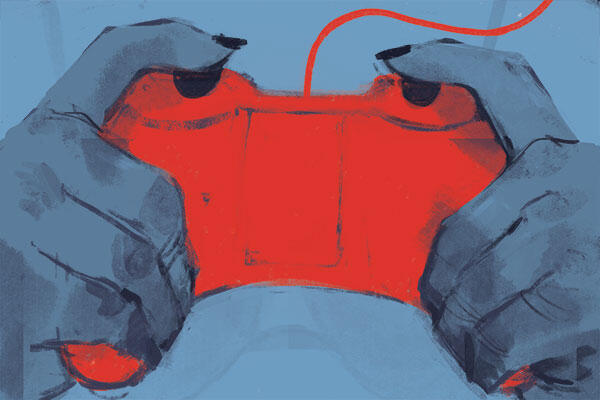
Online environments are becoming more and more volatile. Should people be held accountable for their online actions or do real-world rules not apply to them? The world where it is socially acceptable to make jokes about abuse in prison or “asking for it” if you’re wearing a short skirt is changing. That is, as long as you avoid the world of online gaming, where rape jokes and threats are just a part and parcel of the environment. The idea of rape culture addresses how we collectively think about sexual violence. Everyday Feminism, a popular feminist website, explains it as “the way in which sexual assault, rape, and general violence are ignored, trivialised, normalised, or made into jokes.” Marshall University also has a page dedicated to explaining rape culture, stating: “Rape culture is perpetuated through the use of misogynistic language … [and] the glamorisation of sexual violence.” People on the internet are often openly racist, homophobic and sexist without considering the repercussions. According to a study by the Pew Research Centre, 73 per cent of surveyed internet users said they had witnessed someone being harassed online, while 40 per cent reported being targeted themselves. Some online gamers believe the best reaction to online abuse is to just ignore it. Others, such as gamer Rachel, think that the best strategy to combat this abuse is to “show them who’s boss” by playing well. Hardly a progressive way to fix the issue. Rachel initially said she hadn’t experienced verbal abuse in terms of threats or sexual violence. However, the following day she re-contacted Critic to report that while playing Counter-Strike online she “started talking, reporting where the enemy was, and [her] team-mate said ‘is that a fucking girl? Shut your c*** mouth or I’m going to rape you.’” Cheyanne, another online gamer, explained that even though she normally attempts to hide her identity online, she has been asked her bra size on more than a few occasions. Yngwie also reported this kind of incident. He said in a recent game of League of Legends, two members of the opposing team mentioned they were girls. Almost immediately, “a member of [his] team started to spam messages at the enemy team, repeatedly asking to know the cup sizes of the women.” Anita Sarkeesian is famous (or infamous) for her feminist videos Tropes vs Women in Video Games. Initially she made a kickstarter video to raise funds, and received a massive backlash for trying to make the series. In a 2012 TED talk she reported that “all [of her] social media sites were flooded with threats of rape, violence, sexual assault, death”. In spite of the abuse, she raised “25 times what I initially asked for”, and her YouTube channel Feminist Frequency “went from a part-time side project to a full-time endeavour”. This success, however, is somewhat negated by the continued harassment. Three years on, Sarkeesian discussed the ongoing online harassment she has received. She said “we live in a society where online harassment is tolerated, accepted, and excused” and she is “angry that [she is] expected to accept online harassment as the price of being a woman with an opinion”. People have threatened her life and the lives of others due to her discussion around games. Yes, games. One person found out where she lived, so she had to leave her home. The issue is not disagreeing with her — that’s what critical thinking and discussion are for. However, taking that dislike of her arguments and threatening to “shove it up her c***” perpetuates this “rape culture” that society is accused of. While no one has been prosecuted yet, because of the nature of the threats against Sarkeesian, she now reports her abuse directly to the FBI. She has expressed frustration with how normal it has become to her, stating: “A death threat comes through my social media and it’s just become a routine: screencap, forward to FBI, block, move on.” There is a history in online environments, and particularly in gaming, of “virtual rape”. Melissa Sander defined “virtual rape” in her Master’s thesis, Questions about Accountability and Illegality of Virtual Rape, as “the non-consensual simulated sexual violation of a victim avatar, a visual or textual representation of the user, by an aggressor avatar via online interaction”. Julian Dibbell’s 1993 article, “A Rape in Cyber Space”, is the first document to describe an incident of this nature. The virtual world of LambdaMOO is an online multi-player computer game. People could create and programme their own characters: Insert Mr Bungle. He used a “voodoo doll” subprogram that allowed him to make other characters appear to be doing violent and sexual things. Mr Bungle forced one character to consume their pubic hair and another to sexually assault themselves with a kitchen utensil. He also forced one particular character to repeatedly have sex with him. Nothing like this had happened in LambdaMOO before, and the actions were purely a result of Mr Bungle hacking the system. The actions were deemed “virtual rape”, and a meeting was held in the online community to decide how to punish him. Despite the genuine distress the incident caused, no one was willing to punish the person behind Mr Bungle, nor could they decide a suitable punishment for the character. A master-programmer decided to terminate Mr Bungle’s account. The creator also implemented a voting system for any future issues, as well as creating an action to kick someone disruptive from the server. This particular case sparked discussion around developing online law, and Dibbell ended up teaching cyberlaw at Stanford University. But virtual abuse certainly didn’t end in 1993. Now, with more and more online games, it is happening more frequently. Better yet, it’s being treated as normal behaviour, as if it’s to be expected. Looking through some of the tweets directed at Sarkeesian, the same comments keep coming up; “everyone is threatened in games thats what we do [sic]”, “It’s a normal. It’s part of gaming” and “death threats and rape threats are in the culture of gaming … Have you ever played an Online game? Get used to it...” Dr Lesley Procter of the Sociology, Gender and Social Work department of the University of Otago studies an online social world called Second Life, which is like a combination of social media and The Sims. She stated that in Second Life it would be impossible to be ‘raped’ as “a lot of the simulated gestures and movements are all scripted” so in order to escape “all you would have to do is stand up or quit”. Procter thinks that hacking a game in order to violate a character would count as a form of “identity and intellectual property ‘rape’, as opposed to simulated physical rape”. She said we need to be “careful about how we apply the word ‘rape’”. She said that if we consider those things as rape, then are we somehow discounting the real-life experience and questioned whether it is “downgrading the [real-life] trauma”. Procter described how a student in one of her classes got quite annoyed after another character simply bumped into her. Procter said this was a good example of how “our sense of personal space crosses over the screen. In that sense, even having someone sit beside you uninvited and sexually harass you would have an impact. There’s a technological term called ‘presence’, which virtual reality programmes are very good at generating, which is the sense that you’re really in an environment.” It’s this “presence” that makes people have such a strong reaction to any online harassment. There is a disconnect between the internet and real life. In her article, “Cyber-Rape: How virtual is it?” Debra Michals said that the “internet permits … free and unquestioned expression in easily accessible public spaces”. People will say and do things online they would never do in reality. She explains that “Clearly, ‘virtual rape’ is not the same as the rape a woman experiences in the physical world” but states that the experience can still be upsetting. Procter also said that on the internet, “your identity is pretty much hidden, you’re safe. You can do whatever and say whatever. It’s not only in virtual worlds — just look at Facebook and flaming and all that kind of stuff; it’s the lack of face-to-face accountability.” Richard MacKinnon is another who addresses this disconnect, stating that “irresponsibility or freedom from responsibility is easily identifiable in virtual reality society”. He goes on to explain: “The relative rarity of virtual women in a predominantly male cybersociety has led to the documentation of great numbers of instances of sexual harassment.” MacKinnon wrote this in 1997, so the number of women in online environments has obviously grown exponentially since then, but his point still stands. The internet is seemingly still a male-dominated space where women are often the subjects of abuse for joining in. Associate Professor Colin Gavaghan of the University of Otago’s Faculty of Law said, “making overt threats is a criminal offence punishable by up to seven years imprisonment”. If the threat is less overt, it could still be considered criminal harassment “if it causes the person to fear for their safety”. This could lead to two years imprisonment. However, there is a “mens rea” requirement which means that the harassed “must have intended the communication to cause such fear, or else known it was likely to do so.” Another action to take would be to seek a restraining order, but this requires a pattern of behaviour with at least two or more incidents. However, Gavaghan added, “both of these options are likely to be difficult to use” because it requires the person’s identity and for them to be in New Zealand. A record of the behaviour is required, so something said over a microphone would be hard to prove. In terms of sexual and abusive comments, it is even less clear: “if they’d have the potential to cause someone to fear for their safety, they could be covered” or “if the content is such as to qualify as ‘indecent’, it may be caught by s124 of the Crimes Act, which deals with distribution of indecent matter”. Recently the Harmful Digital Communications Bill has successfully had its second reading before parliament. This bill introduces a new offense of “causing harm by posting digital communication”. Gavaghan said that “this would only require that the communication was sent with the intent to cause harm, and that [it] actually did cause harm”. The bill will also start up an agency which will mediate in these cases. So there are things you can do, but these rely on qualifications: “if the behaviour is serious, if you can identify the person in question, and if they happen to live in New Zealand.” Gavaghan suggested that the most practical solution is to “report them to the content host; presumably most online games have terms and conditions and can delete accounts of those who breach them”. Procter also mentioned the terms and conditions of the game, stating that “There are mechanisms, within Second Life at least, where you could take a complaint” in the face of any online harassment. The offending character would then be deleted. Playing a game like Grand Theft Auto gives the player the freedom to kill people, to beat people up, to steal — what’s more, this kind of behaviour is encouraged by the mechanics of the game. So what’s the difference between that kind of violent behaviour and this concept of “virtual rape”? When someone purchases a game knowing it’s violent, they go into it prepared and consenting to the nature of the game. The acceptance of the violence relies on it being either a game which involves killing non-player characters (NPCs) or it’s an even playing field, where everyone can kill everyone. The player is entering into a fight with someone knowing they have the opportunity to kill or be killed. “Virtual rape”, on the other hand, implies a role of power. This isn’t based around consent, and it isn’t a level playing field. A player is actively hacking a game (in the way Mr Bungle did) so that humiliation can occur. When the player targeted bought the game, they consented to the content of the game they bought, not the possibility that someone would hack the game and abuse their own character in a manner that is personal and disturbing. Sarkeesian received “pornographic images made in [her] likeness who were being ‘raped’ by video game characters” repeatedly. It is not purely the images that are disturbing to her, but the notion that someone has taken the time to make them about her. Yes, there is the option to not play. But the female gaming industry is growing and this does nothing more than make the online gaming sphere more undesirable for female gamers. When Pacman was the most realistic character you could play, this wasn’t an issue. But in a world where we are on the verge of virtual reality, surely it’s about time we look at the influence the virtual world could be having on our real world?
-
Culture
The Hal Salive Science Fiction and Fantasy Collection Aliens, Androids & Unicorns
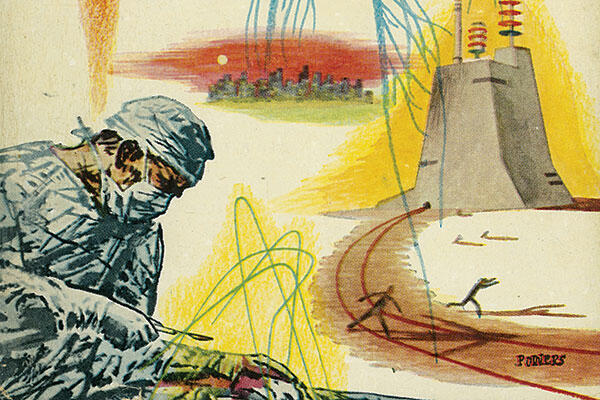
On the first poster that catches my eye as I enter the room, a blonde woman disinterestedly adjusts the strange, alien-gun weapon she is holding. The red swimsuit that adorns her toned body looks like a beast has clawed at it; it doesn’t cover much — in fact, it almost looks like a red tiger stripe painted on her skin (perhaps she is a rather lustily drawn alien). Behind her, a terrifying beast, not of this planet, moves through the dark towards its prey. This blown up, reproduced cover for the science fiction book, The Lion’s Game by James H. Schmitz, is one of twelve displayed on the wall by the entrance to the de Beer Gallery — an often overlooked space on the first floor of Central Library that hosts interesting and informative exhibitions from the University’s Special Collections. Diagonal to The Lion’s Game, is another book cover, which depicts a woman in an impossibly small golden bikini warrior outfit, boldly posed as she wields her sword in front of a horse. This time, the book is The Golden Sword written by Janet E. Morris, part of a series that challenged the fantasy and science fiction community with its powerful female protagonist, pansexual characters and questions about sexuality and abuse of power. These interesting, bizarre posters are only a small sample of Harold Terrence Salive’s (1939 –2012) extensive science fiction and fantasy collection. Salive’s avid following of science fiction and fantasy began in his teens and continued fervently throughout his life. In between collecting, Salive graduated with a PhD in experimental psychology from the University of Michigan and he and his family moved to Auckland to lecture. This collection, officially titled the Hal Salive Science Fiction and Fantasy Collection, was donated to the university’s Special Collections in 2013 by his second wife, Rachel Salive. Moving away from the posters and the (slightly gimmicky, but what did you expect) Star Trek transporting platform on the floor, the viewer enters a delightfully displayed world (or several worlds) of fantasy, fiction, erotica, action and humour. Aliens, Androids & Unicorns provides insight into, and excitement for, Salive’s passion. The exhibition features books, correspondence to and from Salive, manuscripts and more, all carefully curated in display cabinets arranged throughout the space as well as in layers of drawers beneath the cabinets. Included in the show are works by some of the world’s most famous and popular science fiction authors, like Samuel Delany Alfred van Vogt, and fantasy authors, Poul Anderson and C.J. Cherryh (after whom asteroid 77185 Cherryh was named due to her work). Each display has small paragraphs of either relevant stories about the object or snippets of Harold Salive’s life and character, making the show feel both more accessible for the non-expert viewer and personal. In one display, for example, the information outlines Salive’s avid interest in science fiction: Salive regarded his reading of science fiction as one of the most important activities of his life. Accordingly to family reports, when courting his second wife and visiting her parents, he would stress the importance of science fiction by pointedly sitting “reading” right in front of them so they knew from the outset who they were getting as a son-in-law. Aliens, Androids & Unicorns is unlike exhibitions one would find at galleries like the Dunedin Public Art Gallery — there is no original “art” on display and no single artist has created work for this show. However, the material on display along with the wonderful snippets that paint a narrative of a passionate collector is entertaining, enlightening, a little bit perverted and very, very quirky.
-
Culture

Roasted Tomato and Red Onion Spaghetti
Vine-ripened tomatoes are in full swing at the moment. Finding them at my local veggie shop for $1.99/kilo got me inappropriately excited as I thought of making my own pasta sauce. This is for those of you who are finding store-bought pasta sauces or the homemade ones made out of budget tins of tomatoes a little dull and non-boat floating. I was able to multitask by roasting my tomatoes just as the cricket started. By the time this dish was done, I was able to soak up my tears with carbs smothered in delicious garlicky sauce. There is no hard and fast recipe for this dish. Add as much salt, chili, paprika and garlic as you like. Start with a little and taste as you go until you find just the right amount for you. Try adding a couple of red capsicum halves to your roasting pan as well if you feel like mixing things up a bit. Ingredients Serves 4 12 fresh whole tomatoes 1 red onion, sliced into big wedges 2 bulbs of garlic ¼ cup olive oil 5 sprigs of thyme 2 teaspoons salt 1 teaspoon paprika ½ teaspoon ground chili Black pepper 400g spaghetti Feta to serve Parmesan to serve Method Preheat your oven to 180 degrees on bake. Line a deep baking dish up the sides with baking paper (you want to catch all the juices). Take your garlic bulbs and slice off the bulb stem, just before you get to the main part of the bulb. Place your tomatoes in the dish along with the red onion, garlic bulbs and sprigs of thyme. Drizzle over the olive oil so that everything has been touched by it. Give it all a good salt and pepper then roast in the oven for an hour to a hour and a half or until the onion edges have blackened slightly and the tomatoes have shrunk. Squeeze the roasted garlic pulp out of the skin and onto the tomatoes. Place all the roasted ingredients and the roasting juices into your food processor (or you can take your hand whizz stick to it) and blend until a chunky pulp results. Place the pulp into a saucepan on a medium heat to thicken slightly along with the chili, paprika and a little more salt and pepper to taste. Once thick, as a pasta sauce should be, serve on top of al dente spaghetti and garnish with crumbled feta and parmesan cheese.
-
Culture

Daft Punk: Human After All
Daft Punk’s third studio record, Human After All, recently celebrated its 10th birthday. After being praised as innovators in the dance-music world for the now-legendary albums Homework and Discovery, the French duo were met with mixed reviews for Human After All; the Guardian even went so far as to call it “a joyless collection of average ideas stretched desperately thin.” And, sure, the album’s detractors have a point. Compared to Daft Punk’s previous standard of layered, meticulous dance music, Human After All is surprisingly coarse and simplistic. The album was reported to have been made in just six weeks, and its utter lack of three-dimensionality seems to confirm that. Within thirty seconds of each track, you will have heard everything it has to offer. The ugly production quality means you won’t have much of an incentive to stick around after that long either. But when it comes to the ideas themselves on Human After All, the Guardian doesn’t have it right. Even if the album sounds like a rough draft rather than a finished product, Human After All contains some of Daft Punk’s strongest hooks and samples. There is an assaultive nature to Human After All that makes far more sense in the context of the Daft Punk live show. The most exhilarating moments of their superb live album Alive 2007 are when the duo drop songs like “Robot Rock” or Human After All’s title track into the mix. On the studio record, those songs bordered on obnoxious; when spliced into a live set they work wonders, providing the biggest “fuck yeah” moments of the night. The throwback to old-school maximalism on Daft Punk’s fourth studio album, Random Access Memories, suggested a rebirth of biblical proportions. With Random Access Memories’ nostalgic blend of funk and disco, not to mention song titles like “Give Life back to Music”, Daft Punk quickly established Human After All as a dark period in their career they’d rather you forget. But it is difficult to pretend Human After All never happened. This album had a cultural impact. It was only after its release that DJs began delivering dance music with the same heavy-metal intensity that Human After All did. Without Human After All, there would have been no Knife Party, no Skrillex. Of course, a universe without those musicians might actually be very appealing to you. But despite any misgivings I, you or Daft Punk may have about it, Human After All represents a turning point in electronic dance music.
-
Culture

Kendrick Lamar: To Pimp a Butterfly
In the last twelve months, African-American identity has been debated particularly fiercely. Coinciding with the horrors of Ferguson, we have seen a distinct whitewashing of what was previously considered “black” music. More so than ever, African-American experience needs to be culturally documented but black music styles have been dominated by figures like Iggy Azalea and Macklemore. Almost out of necessity, African-American music icon D’Angelo returned in December with his first album in fourteen years, Black Messiah. A tour-de-force of soul, funk and R&B, Black Messiah was as much a political statement as it was a celebration of black culture. In bringing those styles of music back to their roots, D’Angelo all but reclaimed them. Kendrick Lamar’s third studio album, To Pimp a Butterfly, is the perfect companion piece to Black Messiah, and a sensational album in its own right. Whereas Kendrick’s last album good kid, m.A.A.d city was punchy and direct, To Pimp a Butterfly is lush and expansive. At 78 minutes long and featuring an ensemble cast, To Pimp a Butterfly has a distinctly cinematic feel to it. Many of the guests are black-music royalty of yesteryear and today, including Parliament’s George Clinton, jazztronica extraordinaire Flying Lotus, and pop superstar Pharrell Williams. True to the butterfly referenced in its title, To Pimp a Butterfly is an album in constant metamorphosis. Anthemic rap songs segue into sections of spoken word, which segue again into jazzy interludes. What holds these sprawling elements together is Kendrick’s rap persona, which is just as enthralling as it was on good kid. Though the album is best listened to as a whole, highlights can’t help but emerge with repeated listens. The furious “The Blacker the Berry” slaps the listener in the face with its discussion of racism, even as Jamaican dancehall artist Assassin delivers delectable hooks. Just as exceptional is the strutting “King Kunta”, which squeezes references to James Brown, Michael Jackson and “Rapper’s Delight” into its four sublime minutes. I am hard-pressed to name a recent album as enjoyable or as socially relevant as To Pimp a Butterfly. Regardless of your music taste or the colour of your skin, To Pimp a Butterfly’s politically-charged lyrics and sumptuous sound palette are sure to win you over.
-
Culture
The SpongeBob Movie: Sponge out of Water
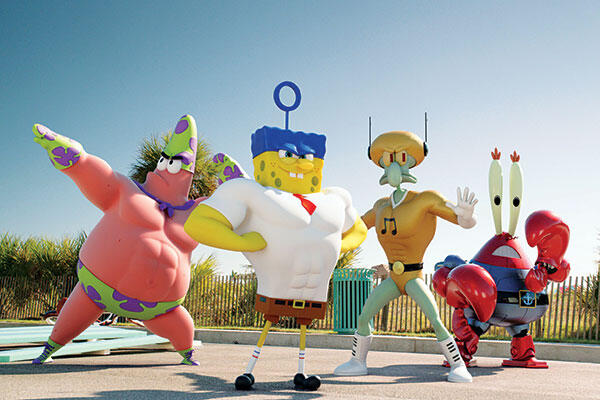
Rating: 1/5 Filled with terrible puns, The SpongeBob Movie: Sponge out of Water is a complete disaster that falls incredibly short of the beloved children’s cartoon that we all cherish and adore. Furthermore, with strange live-action and animation effects, I had to wonder if the director was high throughout the entire production of the film. A pirate called Burger-Beard (Antonio Banderas) makes it his mission to find the last page of a magical storybook in which he can rewrite the fate of Bikini Bottom — SpongeBob Squarepants’ (Tom Kenny) hometown. Not only does Burger-Beard succeed in wreaking havoc on the townspeople of Bikini Bottom, he also steals the Krabby Patty Secret Formula, intending to make the best burgers in town from his food-truck/ship. Leaving Bikini Bottom without Krabby Patties turns the townsfolk into a bunch of crazed butchers who blame Plankton (Mr. Lawrence) and SpongeBob for the disappearance of their beloved burgers. Being hated by everyone really shines a new light on SpongeBob’s relationship with Plankton. Together, they concoct a plan to save their town from devastation. With the aid of Patrick Star (Bill Fagerbakke), Squidward Tentacles (Rodger Bumpass), Sandy Cheeks (Carolyn Lawrence) and Mr. Krabs (Clancy Brown), SpongeBob makes his debut into our dimension and ultimately restores Bikini Bottom to its former glory — one full of Krabby Patties. Without Antonio Banderas I would have fallen asleep within ten minutes of the film starting. But even with him, it was still a serious struggle to keep my eyes open. Also, if they wanted to make Burger-Beard a child-friendly version of Captain Jack Sparrow, they should have just cast Johnny Depp. Banderas, I am utterly disappointed. You can do so much better.
-
Culture

Infinitely Polar Bear
Rating: 4/5 On the spectrum of action-packed thrillers, Infinitely Polar Bear doesn’t even register, but it is in no way unremarkable. On the contrary, Infinitely Polar Bear fills a certain void that no amount of green-eyed anger ever could. Set in 1978, the film takes place at the back end of the counterculture movement. Cameron (Mark Ruffalo) is a psychedelic bohemian still riding the highs of Woodstock, struggling with the inhibitions of domesticity and post-psychedelia. His hardships become obvious when we discover Cameron failed to fulfil his family’s expectations of graduating from Harvard University and leading a life on the fringes of American aristocracy. Cameron is also a manic-depressive mess of a father who tries to win back his wife by attempting to take full responsibility for their two young, spirited daughters — but they don’t make the overwhelming task any easier. Cameron’s personal storyline, however, is not something that the audience should be distracted by. This film is first and foremost, a feel-good film driven by the mantra: “We may not have it all together but together we have it all.” Cameron and Maggie’s (Zoe Saldana) two children, Amelia (Imogene Wolodarsky) and Faith (Ashley Aufderheide), have trouble seeing the silver lining within a life of poverty. With a black mother and a white father, they are cast into a world of social isolation, where making friends becomes difficult. However, who better to help resolve these issues of social mistreatment than their manic-depressive, post-psychedelic, bohemian father? It is the film’s scenes of heartfelt fatherhood that both carry the mood of Infinitely Polar Bear and provide more than a few solitary moments of comic relief. I have a few misgivings about Mark Ruffalo’s reliance on his cigarette to mark Cameron’s bohemianism instead of actually acting the part, but Maya Forbes’ directing picks up the slack. Her Super 8 camera captures the film’s warmth and projects a feeling of youthful nostalgia.
-
Culture

Heathers
Cult 80s coming-of-age films often deal with detention, skipping school, finally getting Jake Ryan to notice you and making your own clothes. However, Heathers breaks this mould with a plotline that is darker and deadlier than any John Hughes film. While Mean Girls is often hailed as the quintessential teen film, the Plastics have nothing on the scrunchie-wearing, colour-coordinated, croquet-playing girls that make up the most feared and loved clique of Westerberg High School: the Heathers (and Veronica Sawyer — kind of). Heathers focuses primarily on Veronica (Winona Ryder), a girl new to the Heathers; even with her newfound popularity, Veronica is unhappy with her new status and the tyranny of Heather Chandler (Kim Walker). She soon meets Jason “J.D.” Dean (Christian Slater), a guy who has no qualms about pulling a gun on other students, and they later do the deed after a late-night game of croquet. Veronica finds herself fast becoming the Bonnie to J.D.’s Clyde after they “accidentally” begin murdering people. Thanks to Veronica’s talent for forging people’s handwriting and J.D.’s crazy ideas, the couple are able to cover up these deaths as suicides. As the protagonist puts it herself (while wearing a monocle and writing with a fury that no exercise-book-owning B.A. student could ever compete with): “Dear Diary, my teen angst bullshit now has a body count.” After realising that J.D. is indeed a psychopath, she breaks up with him and does her best to make amends for her past actions. Heathers is a teen film, but it’s also not. Rather than fulfilling the typical tropes of high school films, Michael Lehmann breaks them apart in a way that is both comedic and sinister. With useless adults who only care about pâté, a protagonist who is awful but doesn’t think she’s super awful (which makes her even more awful), toxic relationships that involve murder, and date rape that is blatantly ignored, Heathers delves into deeper issues; the ability to explore what most coming-of-age films dismiss makes Heathers an 80s staple film.
-
Culture

Theatre review: The War Play
Rating: 4/5 In 2005, Private Jack Braithwaite and five other soldiers were pardoned and awarded medals for their service by Prime Minister Helen Clark under the Pardon for the Soldiers of the Great War Act 2000. The War Play focuses on the relatives of writer, Philip Braithwaite, and the scandal surrounding his family, which had been kept a secret since World War I. Played by Ben Van Lier, Philip goes on a journey to find out more about his great-uncle Jack (Jonathan Martin), who was executed while deployed in France for going AWOL. The reasons for his execution brought great shame to his family. In 1915, Jack followed his brother Eric (Alexander Walker) to war. Upon seeing his brother shot down, Jack deserted his battalion several times before he was eventually taken to a military prison in France, which is where the events that led to his execution occurred. His death was so disgraceful that it even led to the death of his father, former mayor of Dunedin. Based on real events, The War Play is an excellent four-man production. Although half of the cast play multiple characters, it always clear which character is being represented in each scene. It is wonderfully acted and the cast brings the story to life with emotion and comedy that had the whole crowd laughing and, at times, in suspense-induced silence. The change of scene from Jack’s exploits in 1915 to Philip’s writing journey and his interactions with his father change the atmosphere nicely, balancing out the seriousness and comedy without either one being too overpowering. The opening night of The War Play had full sway over my emotions. I would highly recommend this play for any local history buffs or anyone who appreciates a good war story.
-
Culture

The Grand Hotel
Scott Kenemore’s novel, The Grand Hotel, is narrated by a desk clerk who makes it clear to the reader that he has a sinister ulterior motive when he volunteers to show a group of tourists around the mysterious hotel he works for. The first guest he takes the tourists to see is a desiccated dead body, although the desk clerk assures the tourists that this dead body still pays its bills and eats the food left in its room. He takes the unnerved tourists to visit guest after guest — each is a permanent resident in the hotel, and each has a story to tell. These stories range from plausible tales of despicable human behaviour to disturbing tales of demons and time travel. Soon the desk clerk begins a game in which he questions the youngest of the tour group, a red-haired girl of twelve, about some detail of the story they just heard. As she gets the answers right, the desk clerk grows steadily more excited. It becomes more and more apparent the tourists won’t be allowed to leave. Now, that is a lot of horror tropes right there. But I didn’t find The Grand Hotel horrifying. I’m not actually sure Kenemore is trying to make the reader afraid. For one thing, the narrator is enjoying himself way too much. He’s given the tour so many times he knows just how to manipulate people into doing what he wants; he’s putting on a big performance and loving every second of it: “I slump my shoulders wearily, looking crestfallen and disappointed in them. (I must bite my tongue to avoid smiling. In truth, I am nearly trembling with pleasure. Sometimes I actually do tremble, but the group mistakes this for shudders of despondence, which works out just fine.)” Another strike against any sort of fear factor is that the tourists aren’t differentiated from one another in meaningful ways. None of them have names, few of them have characteristics, and the red-haired girl is clearly the only one who matters. They’re in a creepy situation but there are no personalities to be concerned about or attach to. You don’t keep reading this book because you’re worried, you keep reading because you want to know what the desk clerk’s deal is, and because the whole thing is fun. The stories the guests tell are entertaining, the questions the clerk asks the red-haired girl are interesting, and the answers she gives are often surprising. A few of the book’s details, however, don’t make sense after the big reveal. For example, the desk clerk wonders why the red-haired girl doesn’t seem to have a chaperone, and points out that no one in the tour group looks like her. I don’t think it spoils the ending to say that, in light of the ultimate reveal, this isn’t something he should have been wondering about. The Grand Hotel uses a lot of the hallmarks of creepy and still ends up being an all-round positive experience.
-
Culture
InFamous: First Light
Rating: 2/5 InFamous: First Light is presented in an odd format. A tie-in to the larger title, InFamous: Second Son, and available for download and use without the player having to own the primary title, it’s not quite its own game yet it’s more than just a piece of downloadable content (DLC). This is a release style that seems to be slowly building traction, and it makes sense on a number of levels. Players can dip their toes into the game’s universe and mechanics without having to shell out for a larger game’s price tag, and the developer can use the tie-in as a playable advertisement. However, for this model — or even standard DLC — to work effectively, the new content needs to bring something fresh to either draw players back to their world or introduce newcomers to it. Unfortunately, here InFamous: First Light falls flat on its face. The main draw of this title is to delve deeper into the past of “conduit” Abigail “Fetch” Walker, one of the protagonist’s super-powered allies in InFamous: Second Son. As it turns out, before we met Fetch — broken, paranoid and unstable — in Second Son, she was a hell of a lot less interesting. Half of Fetch’s cinematic screen time is spent blithering on or throwing a hissy fit over how incredible her brother is and how she’ll freak out if he isn’t around to cuddle her. Sure, she’s a recovering drug addict who loves her brother, but it’s pretty sad to see such a live wire reduced to a whinging mess. This dependency on her brother is a blatant ploy to invoke the player’s emotions when their life is in danger at a later point, but it’s a little too obvious and obnoxious to inspire these feelings naturally. Luckily, the actual gameplay is still good fun. Fetch’s neon powers (sprinting in light form, firing off lasers and whatnot) feel great to control; zipping around the city never feels like a chore, and her powerset has more depth than any set from Second Son. For those who do own Second Son, that game’s Delsin and all his powers are usable in First Light’s arena battles, which is an extremely cool touch. Those who have played previous instalments in the InFamous franchise will notice that the combat and control system in First Light/Second Son is similar, but improved upon in most places. If you have not played any previous instalments, have no fear: the plot threads from those games have been more or less abandoned, with new stories built from the ground up. You may feel a little disoriented if you’re jumping straight into First Light, but it weaves its own story without leaning too much on the wider context of the factions and politics that exist in that world. In Second Son itself, however, you’re good to go: the story will teach you everything you need to know. If First Light pops up for free (as it did for Playstation Plus subscribers) or on the cheap somewhere, it’s worth grabbing to experience zippy combat with beautiful visuals, but keep in mind that this title is essentially a very watered-down version of a much greater game that has more diverse powers, a better story and infinitely more interesting characters.
-
Culture

Horoscope | Issue 7
Do you struggle with making basic life decisions? Worried about never bumping into your campus soulmate, or whether to eat two-minute noodles for every dinner this week? Fear not, chums, for I, Madame McMystery, have gazed deep into the cosmos to reveal the secrets the planetary alignments hold in store for you! (Disclaimer: Madame McMystery is not responsible for any physical or emotional damage caused by the interpretation of her predictions and subsequent actions influenced by them). Aries From examining your star chart, it looks like you enjoyed a brief but passionate love affair over the Easter break. While I’m sure the 52 hours you spent together were magical, don’t let this stop you from entering into new relationships, as I don’t see you reuniting until next New Year’s Eve. Taurus The first day it rains this week is a good day to stay inside. Given the precarious position of your finance stars, the rain could wash away any good fortune you have coming your way this week; best to play it safe. Also hit up a Pisces if they owe you money, I hear they’re paying back old debts this week. Gemini Time to throw in the towel with all this university business and take up the career path you’ve always wanted — exotic massage. Don’t let the reactions of your family hold you back, you’ve got to follow your heart. Cancer Cats are your worst enemy this week. Avoid these furry balls of seething hatred at all costs. Especially the ones with white mitten paws — they will be your undoing. Leo The position of Pluto warns of impending doom in relation to your academic life. Have you remembered to turn in your assignments? Did you check them through plagiarism software? I don’t know what you’ll do, but I see an angry lecturer in your life. Virgo You’re a sensitive soul and you know what you want out of life. Belly rubs. Even though you’re a wee bit shy, I suggest recruiting a few of your nearest and dearest to give your stomach a good pat down every night. This will help with indigestion and will open you up emotionally. Libra Following your heart has always led you into trouble, so this week you should just point your right hand out and follow that instead. It may not sound practical, but it should keep you out of trouble for a bit. Scorpio This half of the semester is where you’re going to turn it all around. No more skipping classes and sleeping till 2pm, you are a studying machine — the likes of which Otago has never seen before (outside of St Margaret’s). Sagittarius Ftrom the position of Sirius and Jupiter, I see money coming your way this week. This is a good time to enter all the sweepstakes and competitions you can get your grubby little hands on. Avoid the lotto and scratchies though. Those are the tools of the devil. Capricorn This is not what I meant when I told you that you would start drinking again. What was that last Saturday night? You need a cool-off period of 2–3 weeks, buddy. No more twerking for you. Aquarius Blanket forts are the bee’s knees, and yours will be the fort to rule them all. People will come from lands afar to marvel at your cozy fortress and enjoy a good game of Monopoly. It’s also a hell of a pick-up line, so I don’t see you being lonely in the immediate future. Pisces There is an expense hanging over your head that you have been putting off paying for quite some time now. Pay it, watch the money in your bank account dwindle into nothing, and breathe. All will be well.
-
Columns

Skeptic Schism | Issue 7
The most controversial Facebook post I’ve ever written was one that said: “I can’t believe how many of my friends who would never judge someone based on their race, gender or sexuality are happy to make massive, sweeping, shameless assumptions about people based on the month they are born in.” This post was followed by a tirade of comments that accused me of not understanding the nuances of astrology and the skill behind drawing up star-charts, and emphasising my arrogance for criticising something I didn’t understand. Astrology is a fucking pre-Copernican system. It comes from a time when we thought that the Earth was the centre of the solar system. Copernicus risked torture and execution for his theory that the Earth goes round the Sun. Show him some respect and ditch the astrology. I have had to fill in my star sign on a job application form. I have had a virtual stranger tell me that my boyfriend and I were compatible because we had complementary star signs. (We had been together for three years.) I’ve had a pregnant woman tell me she was hoping her baby would be born a week after its due date so that it would be a Pisces instead of an Aquarius. I think we should look at people who believe in star signs in a similar way to how we look at other bigots. I’ve been told that, being a Taurus, I am almost certainly gluttonous, stubborn and unimaginative. If you don’t think this is offensive, try replacing “Taurean” with “Korean”. “Being Korean, you are almost certainly gluttonous, stubborn and unimaginative.” How does that sound? The answer is it sounds unmistakably, unforgivably, disgustingly racist. And also eye-suckingly crazy. If you judge a person by their star-sign, you are signist. If you say someone is “balanced, for a Gemini”, you are signist. If you say, “I’ve been out with three Aquarians and they were all nuts”, you are signist. But, astrologers would argue, your sun sign is only part of it. True astrologers recognise that you need a map of the solar system to determine the character of a person. Even then the person’s fate is not set, as they can recognise their character and work to change it. That sounds like being a human. Why can’t we just get to know people, learn from our mistakes and try to be better? What do we need astrology for? And why do people keep asking each other what their fucking star sign is?
-
Columns

Crush on Campus | Issue 7
Each week Critic wants to hear from you if you’re struggling to approach the man or woman of your dreams. Does she always sit on that front row seat and give the lecturer far more attention than you’re comfortable with? Does he stroll past your window each morning and your only attempts at getting his attention have been taking a little longer to put clothes on? Flick your stories to crush@critic.co.nz I’ve always liked elfish looking men. I’m not sure — it may be their elegance, their likeness to certain oddly attractive cartoon characters that I secretly fell in love with as a child, or just that these types of men seem like a naturally made rebellion against constructed ideas of what men “should” look like. For a long time, you weren’t one of these men. But there was still something about you. I first noticed you on campus about a year ago, and I think that’s when you noticed me too. Or did you? I swear we locked eyes and there was a feeling of recognition, of mutual eye-crush establishment. I liked your eyes and your style, but I didn’t like your friends. They were so unashamedly “Law” types, they weren’t you — you seemed more like a lone wolf who charmed any pack he came across but never stayed put. After a period of absence, you drifted from my mind. But one day, as I was gloomily staring out my window, something caught my eye: a flash of golden locks. Your cheekbones, so defined, sliced the air as you ran by — their edge matched my sharp eyes. Where were you going? What were you running from? I held my arms wide but you ran past, determined in your salty running gear. Again, I didn’t see you for a while after this. But the other day, at the supermarket, there you were — at the New World with a new look. I couldn’t believe how you had evolved. In your long green coat with your piercing eyes and tousled blonde hair flowing around your face, you had somehow become my elf. This enduring eye-crush has changed. Now I lie waiting for you in my op-shop velvet dress (please ignore its vague smell of someone else’s grandma). You’ve cast your spell; come undo the mess (me) you’ve created.
-
Columns

David Clark | Issue 7
M any of you will have attended ANZAC services around the country. Attending the ANZAC commemoration at Queens Gardens each year rates among the most moving of the regular duties I perform as the local electorate MP. It’s an early start, but the traffic build-up pre-5am tells me I’m not alone. Literally thousands of people crowd around the cenotaph, threatening to spill onto the one-way system. Our country’s loss of men and women in their prime — just a few generations ago — is not forgotten. From a much smaller University of Otago, 552 students or former students fought in World War One. Many of the reserve soldiers who will front for the commemoration this year also study on campus. In 2015 we mark the centenary of our most famous battle at Gallipoli. On 25 April 1915, Kiwi troops began landing at what is now known as ANZAC cove. By the end of the first day, 100 troops had been killed. It was the beginning of a disastrous campaign that led to the death of a fifth of all New Zealanders who landed there. Memorials across New Zealand bear witness to the bravery of the 2779 men who died in the failed attempt to wrest the Gallipoli Peninsula once and for all from the hands of its Turkish defenders. There is no glamour in war: just grit and death. Decades on from conflict, the temptation to sugarcoat the experience — atop the freedoms retained — remains. But ask anyone who has served abroad: many are proud of their service, but the word glamorous won’t roll off their tongues. The wretchedness of war and its impact on Dunedin are captured in the exhibition at Toitu commemorating 100 years since the ANZAC landing at Gallipoli. It’s worth a visit. If the ANZAC dawn service isn’t for you, there’s a public service at the Anderson’s Bay cemetery a little later in the morning; then Montecillo Veteran’s Home hosts another. There are other commemorations on 25 April — not least among them, the OUSA service on campus. Hauntingly, the names of students who gave their lives in the two world wars echo the names of students studying today.
-
Columns
A Broad View | Issue 7
A Broad View is written by different international students each week who wish to share their impressions of their time here or unique experiences. Email critic@critic.co.nz if you are an international student wanting to tell your tale. I’ve never had much appreciation for the American accent, but that’s probably because I never thought to call it such. When you hear something spoken one way every day, you start to take its idiosyncrasies for granted. In other words, you simply don’t notice them. “Aye, mate, wanna head to Macca’s?” This is how my Kiwihost greeted me on our third afternoon together. “Hey, what?” “Macca’s. Me ’n the boys are goin’ for pies, ’aven’t ya ’eva had one? They’re good on ya.” Only “mate” had nothing to do with chess; “pies” weren’t the ones my Mom makes for Thanksgiving; and “Macca’s” (is that spelling even correct?) is just a Kiwi abbreviation for McDonald’s. The following week there was the pasta/pastor debate … “Do you say pasta or pahster?” my Kiwihost asked. “Like the guy in church? Yeah, I say pastor.” “No, we don’t eat pahster in church.” “Well obviously not, you can’t eat the pastor …” I was beginning to think that Kiwis were a seriously deluded group. It was only after the intervention of a third flatmate (or is it roommate?) that it became clear: he wasn’t talking about church and I wasn’t talking about spaghetti. Although I never considered my American accent, I now recognise that it’s been there all along. Pasta, as I pronounce it; pahster, as the Kiwis pronounce it; and pastor. Will we ever be able to communicate fluidly? Who knows? But, in a way, that’s what’s special: the similarities and differences. The idea that language, dialects and accents are all a part of humanity, all a part of us, and at the end of the day all we really want is the ability to understand one another. That, and McDonald’s.
-
Columns
Science, Bitches | Issue 7
Menopause: we know it as a thing to be dreaded — a word to be uttered, not spoken. It brings our mothers’ and grandmothers’ hot flushes and mood swings, and is probably the reason your mum gave you a little too much grief about breaking curfew or having a messy room. Women don’t typically look forward to it, but menopause is actually a rare phenomenon, and could provide a great deal of value in post-reproductive life. Humans are one of only three species to experience menopause; the two others are short-finned pilot whales and killer whales. All other species, from ants to elephants, are able to give birth until they die. Both humans and these two types of whales spend a considerable amount of time in post-reproductive life — humans live, on average, up to 30 years after menopause, and female killer whales have a hefty 50 years of post-reproductive life. Evolutionary scientists have found this concept a bit puzzling. Why do our bodies retire the ability to have children? Shouldn’t the nature of our biology have us breeding steadily, so as to further our species? One popular notion is the “grandmother hypothesis”, which states that children become more successful adults with the care of both their mother and grandmother; therefore, a woman’s later years are most effectively spent raising grandchildren. To help solve the mysteries of the post-reproductive female, Lauren Brent and her team from the Centre for Research in Animal Behaviour at the University of Exeter in the UK have been observing patterns of elderly killer whales off the western coast of the United States. Their findings show that post-reproductive females (the oldest of whom is 103 years old; males only live to be about 50) have a wealth of ecological knowledge, accumulated with age, which they pass down to the kin of the pod. Brent and her team observed that menopausal female whales led the pod to locate and hunt salmon more often than males. Salmon make up 97% of a killer whale’s diet. They are unpredictable, with migration patterns that depend on the seasons, the year and the tides. An orca which has lived long enough to watch the patterns for almost a century is more helpful in locating dinner than any other member of the pod. The purpose of post-reproductive female orcas stretches beyond raising kin; it improves the survival rate of the entire pod. Female orcas are valued for their ecological knowledge and leadership. They are trusted and valued by other members of the pod. Brent’s research suggests that the idea of a post-reproductive woman “losing” the ability to have a child might not actually be a loss — it might, in fact, be the time when her life is most valuable.
-
Columns
From the Back of the Class | Issue 7
From a very narrow nineteenth-century British perspective, Edward Gibbon Wakefield might be described as the father of New Zealand, though a strange father he was. The driving force in his life was a hunger for wealth and influence. Wakefield took his first step towards this by eloping at the age of 20 with a wealthy heiress, 16-year-old Eliza Pattle. The two were married in Scotland in 1816 because you could marry 16 year olds in Scotland without their guardian’s consent. The marriage brought him a tidy $2000 a year and a promotion. After Eliza’s untimely death, Wakefield tried it all again. He lured a 15-year-old schoolgirl away with a false message that her mother was dying. He subsequently abducted and married her, in Scotland again. Although Wakefield immediately fled the country, he was caught and sentenced to three years in prison. While in prison, he took the time to catch up on some reading, brushing up on the classical economists, the Utilitarians and the social questions of the times. From this he developed his theory of systematic colonisation. By 1830, Britain was suffering the ills of rapid development and expansion: rural industry had been undermined by industrialisation, and the cities were heaving with the poor and hungry. The focal point of Wakefield’s idea was the “sufficient price” at which the Crown or a private entity would sell colonial “waste land”. If the price was sufficient, it would attract semi-wealthy migrants who would then employ waged labourers. In turn, these labourers could then one day rise to be landowners too, which was a key part of the “New Zealand myth”. Thus Wakefield set up the New Zealand Company in 1837 in defiance of the Colonial Office, which thought colonisation would be contrary to the interests of Māori. The New Zealand Company attracted migrants by propagandist land agents and by pamphlets that advertised NZ as a balmy Britain of the south where the soft rolling hills of Wellington need only be tickled for plants to grow and where it only rained at night (seriously, they said that). Needless to say, when the first impoverished and seasick migrants set eyes on the forest-covered swampy shores of Petone they were understandably pissed. Wakefield was one of the 18,000 settlers who came from Britain between 1840 and 1852, and about 14,000 were brought in by the New Zealand Company — it shaped patterns of immigration for 100 years to come.
-
Columns

Whole lotta love | Issue 7
The thing about being part of a massive bureaucratic institution with its own jungle of rules, policies and procedures is that we sometimes accept what the institution decides about us without question, because it’s bigger than us. Maybe you’ve been the recipient of one of those ominous letters summoning you to the proctor’s office, delivered to your residence by Campus Watch. Of course you’re not given any idea what on earth you’re being summoned for. But it ain’t looking good, and you’ve got to stew for an entire day because your summons is for the next morning. You rock up to the proctor’s office, get told you’ve done “x”. What happened for you appears at odds with what CW has reported to the proctor. Regardless, you are severely reprimanded and slapped with a fine of varying proportions depending on what “x” you are guilty of. Yes, guilty. This is no regular justice procedure. A regular procedure goes (in part) something along the lines of: You are alleged to have done “x”. You have the right to talk to a lawyer. This is the evidence we have to suggest you did “x”. Here’s a copy of that evidence for you and your lawyer. What do you have to say for yourself? What evidence can you present to dissuade us? After meeting with the proctor, most students slink back into the sunlight that seems to hold no warmth anymore as they contemplate new depths of poverty and imminent starvation. But, despite this insular carriage of justice, you have some rights. You can take a support person when you see the proctor. You can appeal the proctor’s decision. You may not be told either of these are options, but they are. You have seven days to appeal the proctor’s decision to the provost. Of course, you might have gone through the proctorial system and feel you got what you deserved. Fair enough. But if you’ve been chewed up, spat out and you think it’s not OK, you’ve got rights, baby! Use ’em! As always, OUSA Student Support Centre at 5 Ethel B is here to help, so drop on in. Hopefully your university years will be blissfully free of bumps but, if not, we can help negotiate the bureaucratic behemoth that does, in fact, provide you with some rights!
-
Columns

Love Is Blind | Issue 7
Critic’s infamous blind date column brings you weekly shutdowns, hilariously mismatched pairs, and the occasional hookup. Each week, we lure two singletons to Di Lusso, ply them with food and alcohol, then wait for their reports to arrive in our inbox. If this sounds like you, email critic@critic.co.nz. But be warned – if you dine on the free food and dash without sending us a writeup, a Critic writer will write one under your name. And that won’t end well for you. Nick Nick is a third year Hyde resident. And he stood her up. This is what happens when we send a boy to do a man’s job. First of all my apologies, to the lovely young lass I did not meet and dine with. It is you who have I let down the most. You took a risk in going to Di Lusso on that fateful night, I however did not have the same level of courage. I hope you enjoyed the tab put on by the Critic, for you deserved it more than I. If by chance we ever cross paths I will try to make up for it with my sub-par chat. I would also like to extend my apologies to those involved in organising the blind date. I understand you did a lot of work for no reward and I have let you down. I am disappointed in myself for letting my standards slip and bringing into question your reputation and credibility. For this I am truly remorseful. And lastly to you, the reader. I would like to apologise for wasting the last two minutes of your life reading an apology from a man, nay a boy, who did not take the opportunity many others can only dream of. Peace out. Bella Tinder wasn’t working out well for her. Apparently the Blind Date wasn’t the way to go either. Good luck with your cats. I t’s my third year at uni and I decided it was time to jump the gun and find love. Tinder wasn’t working out very well and I knew I only had one other option; the Critic blind date. Thursday came along and my nerves grew with every minute that drew me closer to 7:30pm … Who was the mystery man and will he be my prince charming? After downing a bottle of $7.99 Pinot Noir I ventured out to Di Lusso, only to find my friends sitting at a table ready to scope out my man. He wasn’t there yet so I ordered a drink on the bar tab and waited. For an hour. I shared the bar tab with my friends and had the most amazing meat platter. I think the staff took pity on me, drowning my sorrows with a number of special shots – so thank you for treating me like a princess! After a couple of hours I was completely trolleyed and realised my date wasn’t going to come, so I started my journey home. On the way, four Carrington freshers who I had never met decided to take me in to town and make me party with them. It escalated very quickly and I found myself getting extremely high behind some building. As a third year I learnt what it was like to be young again, so a shout out to the four of you for turning my night around and showing me a good time! So my date didn’t show up but I woke up safe and sound in my bed the next morning, not remembering how I got there. My flat mates weren’t too impressed because drunk me decided to try and cook eggs when I got home and the kitchen was covered in raw goo… A good night but no love in sight: I guess I will have to wait for my Prince Charming to sweep me off my feet another day.
-
News

News in Briefs | Issue 7
World Watch Moscow, Russia A Russian toy shop has launched an advertising campaign based on a KGB interrogation. The advert shows a brother and sister interrogating their parents in a darkened room. The boy paces the room with a wooden hammer before telling his parents: “You have left us no choice. We’ll have to up the pressure.” China Dancing in public squares is a popular activity in China, especially among older women. However, the government is set to regulate these dancing geriatrics as they disturb others with loud music. Any groups wishing to gather in public squares to dance will now be limited to 12 government-approved routines. Istanbul, Turkey An 84-year-old woman is due to graduate from university 64 years after first enrolling. Fatma Mihriban Aktari was admitted to a course in fine arts at Istanbul’s Mimar Sinan University in 1951 but was forced to drop out when full-time attendance was made compulsory, as she was working to support her widowed mother. Iceland A large rock, that some claim to be an “elf-church” has had to be moved in Iceland to make way for a new road. Work was stopped on the road in 2013 when campaigners said it would disturb the culturally important “elf habitat”. Saudi Arabia 165,000 couples have decided not to get married in the last year in Saudi Arabia after receiving test results showing they are “genetically incompatible”. The tests are mandatory for couples intending to marry, with the aim of reducing the risk of parents passing on illnesses or genetic conditions to their children. New Plymouth, New Zealand Classical music has been used to get rid of “riff-raff” from the front steps of New Plymouth’s library. In the past, concerns over anti-social behaviour have been raised by the library and its users, and have even forced a 24-hour liquor ban in the CBD. However, the sounds of classical music over specially installed speakers appear to have driven away the undesirables. Pyongyang, North Korea French-trained chefs are cooking for the privileged classes in North Korea, with baguettes supposedly being a favourite, as much of the population outside the capital struggles to feed itself. The chefs were sent to France last year as part of a drive for North Korea to become a world-class food country. Louisiana, United States A Louisiana man has been placed in custody after shooting his 18-year-old son in the buttocks during a fight over orange juice. Eldridge Dukes faces charges of attempted manslaughter and illegal use of a weapon after the father and son argued about the lack of orange juice at their home. St Helens, United Kingdom British police are hunting for thieves who broke into an apartment and stole 38 royal python snakes. The snakes grow to an average length of 1.2–1.5 metres and make great pets as they have good temperaments and are easy to tame.
-
Columns

ODT Watch | Issue 7
As an avid Easter fan, it breaks my heart that at the Great Easter Bunny Hunt, 8000 little bunnies saw the white light and went to bunny heaven, full of carrots and Easter eggs.


