

Rating: 4/5
In 2005, Private Jack Braithwaite and five other soldiers were pardoned and awarded medals for their service by Prime Minister Helen Clark under the Pardon for the Soldiers of the Great War Act 2000. The War Play focuses on the relatives of writer, Philip Braithwaite, and the scandal surrounding his family, which had been kept a secret since World War I.
Played by Ben Van Lier, Philip goes on a journey to find out more about his great-uncle Jack (Jonathan Martin), who was executed while deployed in France for going AWOL. The reasons for his execution brought great shame to his family. In 1915, Jack followed his brother Eric (Alexander Walker) to war. Upon seeing his brother shot down, Jack deserted his battalion several times before he was eventually taken to a military prison in France, which is where the events that led to his execution occurred.
His death was so disgraceful that it even led to the death of his father, former mayor of Dunedin. Based on real events, The War Play is an excellent four-man production. Although half of the cast play multiple characters, it always clear which character is being represented in each scene. It is wonderfully acted and the cast brings the story to life with emotion and comedy that had the whole crowd laughing and, at times, in suspense-induced silence. The change of scene from Jack’s exploits in 1915 to Philip’s writing journey and his interactions with his father change the atmosphere nicely, balancing out the seriousness and comedy without either one being too overpowering.
The opening night of The War Play had full sway over my emotions. I would highly recommend this play for any local history buffs or anyone who appreciates a good war story.

Culture
More Culture from Issue 7
-

The Hal Salive Science Fiction and Fantasy Collection Aliens, Androids & Unicorns
On the first poster that catches my eye as I enter the room, a blonde woman disinterestedly adjusts the strange, alien-gun weapon she is holding. The red swimsuit that adorns her toned body looks like a beast has clawed at it; it doesn’t cover much — in fact, it almost looks like a red tiger stripe painted on her skin (perhaps she is a rather lustily drawn alien). Behind her, a terrifying beast, not of this planet, moves through the dark towards its prey. This blown up, reproduced cover for the science fiction book, The Lion’s Game by James H. Schmitz, is one of twelve displayed on the wall by the entrance to the de Beer Gallery — an often overlooked space on the first floor of Central Library that hosts interesting and informative exhibitions from the University’s Special Collections. Diagonal to The Lion’s Game, is another book cover, which depicts a woman in an impossibly small golden bikini warrior outfit, boldly posed as she wields her sword in front of a horse. This time, the book is The Golden Sword written by Janet E. Morris, part of a series that challenged the fantasy and science fiction community with its powerful female protagonist, pansexual characters and questions about sexuality and abuse of power. These interesting, bizarre posters are only a small sample of Harold Terrence Salive’s (1939 –2012) extensive science fiction and fantasy collection. Salive’s avid following of science fiction and fantasy began in his teens and continued fervently throughout his life. In between collecting, Salive graduated with a PhD in experimental psychology from the University of Michigan and he and his family moved to Auckland to lecture. This collection, officially titled the Hal Salive Science Fiction and Fantasy Collection, was donated to the university’s Special Collections in 2013 by his second wife, Rachel Salive. Moving away from the posters and the (slightly gimmicky, but what did you expect) Star Trek transporting platform on the floor, the viewer enters a delightfully displayed world (or several worlds) of fantasy, fiction, erotica, action and humour. Aliens, Androids & Unicorns provides insight into, and excitement for, Salive’s passion. The exhibition features books, correspondence to and from Salive, manuscripts and more, all carefully curated in display cabinets arranged throughout the space as well as in layers of drawers beneath the cabinets. Included in the show are works by some of the world’s most famous and popular science fiction authors, like Samuel Delany Alfred van Vogt, and fantasy authors, Poul Anderson and C.J. Cherryh (after whom asteroid 77185 Cherryh was named due to her work). Each display has small paragraphs of either relevant stories about the object or snippets of Harold Salive’s life and character, making the show feel both more accessible for the non-expert viewer and personal. In one display, for example, the information outlines Salive’s avid interest in science fiction: Salive regarded his reading of science fiction as one of the most important activities of his life. Accordingly to family reports, when courting his second wife and visiting her parents, he would stress the importance of science fiction by pointedly sitting “reading” right in front of them so they knew from the outset who they were getting as a son-in-law. Aliens, Androids & Unicorns is unlike exhibitions one would find at galleries like the Dunedin Public Art Gallery — there is no original “art” on display and no single artist has created work for this show. However, the material on display along with the wonderful snippets that paint a narrative of a passionate collector is entertaining, enlightening, a little bit perverted and very, very quirky.
-

Roasted Tomato and Red Onion Spaghetti
Vine-ripened tomatoes are in full swing at the moment. Finding them at my local veggie shop for $1.99/kilo got me inappropriately excited as I thought of making my own pasta sauce. This is for those of you who are finding store-bought pasta sauces or the homemade ones made out of budget tins of tomatoes a little dull and non-boat floating. I was able to multitask by roasting my tomatoes just as the cricket started. By the time this dish was done, I was able to soak up my tears with carbs smothered in delicious garlicky sauce. There is no hard and fast recipe for this dish. Add as much salt, chili, paprika and garlic as you like. Start with a little and taste as you go until you find just the right amount for you. Try adding a couple of red capsicum halves to your roasting pan as well if you feel like mixing things up a bit. Ingredients Serves 4 12 fresh whole tomatoes 1 red onion, sliced into big wedges 2 bulbs of garlic ¼ cup olive oil 5 sprigs of thyme 2 teaspoons salt 1 teaspoon paprika ½ teaspoon ground chili Black pepper 400g spaghetti Feta to serve Parmesan to serve Method Preheat your oven to 180 degrees on bake. Line a deep baking dish up the sides with baking paper (you want to catch all the juices). Take your garlic bulbs and slice off the bulb stem, just before you get to the main part of the bulb. Place your tomatoes in the dish along with the red onion, garlic bulbs and sprigs of thyme. Drizzle over the olive oil so that everything has been touched by it. Give it all a good salt and pepper then roast in the oven for an hour to a hour and a half or until the onion edges have blackened slightly and the tomatoes have shrunk. Squeeze the roasted garlic pulp out of the skin and onto the tomatoes. Place all the roasted ingredients and the roasting juices into your food processor (or you can take your hand whizz stick to it) and blend until a chunky pulp results. Place the pulp into a saucepan on a medium heat to thicken slightly along with the chili, paprika and a little more salt and pepper to taste. Once thick, as a pasta sauce should be, serve on top of al dente spaghetti and garnish with crumbled feta and parmesan cheese.
-

Daft Punk: Human After All
Daft Punk’s third studio record, Human After All, recently celebrated its 10th birthday. After being praised as innovators in the dance-music world for the now-legendary albums Homework and Discovery, the French duo were met with mixed reviews for Human After All; the Guardian even went so far as to call it “a joyless collection of average ideas stretched desperately thin.” And, sure, the album’s detractors have a point. Compared to Daft Punk’s previous standard of layered, meticulous dance music, Human After All is surprisingly coarse and simplistic. The album was reported to have been made in just six weeks, and its utter lack of three-dimensionality seems to confirm that. Within thirty seconds of each track, you will have heard everything it has to offer. The ugly production quality means you won’t have much of an incentive to stick around after that long either. But when it comes to the ideas themselves on Human After All, the Guardian doesn’t have it right. Even if the album sounds like a rough draft rather than a finished product, Human After All contains some of Daft Punk’s strongest hooks and samples. There is an assaultive nature to Human After All that makes far more sense in the context of the Daft Punk live show. The most exhilarating moments of their superb live album Alive 2007 are when the duo drop songs like “Robot Rock” or Human After All’s title track into the mix. On the studio record, those songs bordered on obnoxious; when spliced into a live set they work wonders, providing the biggest “fuck yeah” moments of the night. The throwback to old-school maximalism on Daft Punk’s fourth studio album, Random Access Memories, suggested a rebirth of biblical proportions. With Random Access Memories’ nostalgic blend of funk and disco, not to mention song titles like “Give Life back to Music”, Daft Punk quickly established Human After All as a dark period in their career they’d rather you forget. But it is difficult to pretend Human After All never happened. This album had a cultural impact. It was only after its release that DJs began delivering dance music with the same heavy-metal intensity that Human After All did. Without Human After All, there would have been no Knife Party, no Skrillex. Of course, a universe without those musicians might actually be very appealing to you. But despite any misgivings I, you or Daft Punk may have about it, Human After All represents a turning point in electronic dance music.
-

Kendrick Lamar: To Pimp a Butterfly
In the last twelve months, African-American identity has been debated particularly fiercely. Coinciding with the horrors of Ferguson, we have seen a distinct whitewashing of what was previously considered “black” music. More so than ever, African-American experience needs to be culturally documented but black music styles have been dominated by figures like Iggy Azalea and Macklemore. Almost out of necessity, African-American music icon D’Angelo returned in December with his first album in fourteen years, Black Messiah. A tour-de-force of soul, funk and R&B, Black Messiah was as much a political statement as it was a celebration of black culture. In bringing those styles of music back to their roots, D’Angelo all but reclaimed them. Kendrick Lamar’s third studio album, To Pimp a Butterfly, is the perfect companion piece to Black Messiah, and a sensational album in its own right. Whereas Kendrick’s last album good kid, m.A.A.d city was punchy and direct, To Pimp a Butterfly is lush and expansive. At 78 minutes long and featuring an ensemble cast, To Pimp a Butterfly has a distinctly cinematic feel to it. Many of the guests are black-music royalty of yesteryear and today, including Parliament’s George Clinton, jazztronica extraordinaire Flying Lotus, and pop superstar Pharrell Williams. True to the butterfly referenced in its title, To Pimp a Butterfly is an album in constant metamorphosis. Anthemic rap songs segue into sections of spoken word, which segue again into jazzy interludes. What holds these sprawling elements together is Kendrick’s rap persona, which is just as enthralling as it was on good kid. Though the album is best listened to as a whole, highlights can’t help but emerge with repeated listens. The furious “The Blacker the Berry” slaps the listener in the face with its discussion of racism, even as Jamaican dancehall artist Assassin delivers delectable hooks. Just as exceptional is the strutting “King Kunta”, which squeezes references to James Brown, Michael Jackson and “Rapper’s Delight” into its four sublime minutes. I am hard-pressed to name a recent album as enjoyable or as socially relevant as To Pimp a Butterfly. Regardless of your music taste or the colour of your skin, To Pimp a Butterfly’s politically-charged lyrics and sumptuous sound palette are sure to win you over.
-
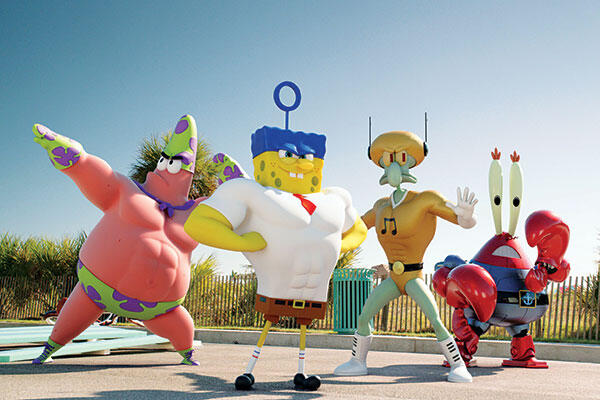
The SpongeBob Movie: Sponge out of Water
Rating: 1/5 Filled with terrible puns, The SpongeBob Movie: Sponge out of Water is a complete disaster that falls incredibly short of the beloved children’s cartoon that we all cherish and adore. Furthermore, with strange live-action and animation effects, I had to wonder if the director was high throughout the entire production of the film. A pirate called Burger-Beard (Antonio Banderas) makes it his mission to find the last page of a magical storybook in which he can rewrite the fate of Bikini Bottom — SpongeBob Squarepants’ (Tom Kenny) hometown. Not only does Burger-Beard succeed in wreaking havoc on the townspeople of Bikini Bottom, he also steals the Krabby Patty Secret Formula, intending to make the best burgers in town from his food-truck/ship. Leaving Bikini Bottom without Krabby Patties turns the townsfolk into a bunch of crazed butchers who blame Plankton (Mr. Lawrence) and SpongeBob for the disappearance of their beloved burgers. Being hated by everyone really shines a new light on SpongeBob’s relationship with Plankton. Together, they concoct a plan to save their town from devastation. With the aid of Patrick Star (Bill Fagerbakke), Squidward Tentacles (Rodger Bumpass), Sandy Cheeks (Carolyn Lawrence) and Mr. Krabs (Clancy Brown), SpongeBob makes his debut into our dimension and ultimately restores Bikini Bottom to its former glory — one full of Krabby Patties. Without Antonio Banderas I would have fallen asleep within ten minutes of the film starting. But even with him, it was still a serious struggle to keep my eyes open. Also, if they wanted to make Burger-Beard a child-friendly version of Captain Jack Sparrow, they should have just cast Johnny Depp. Banderas, I am utterly disappointed. You can do so much better.
-
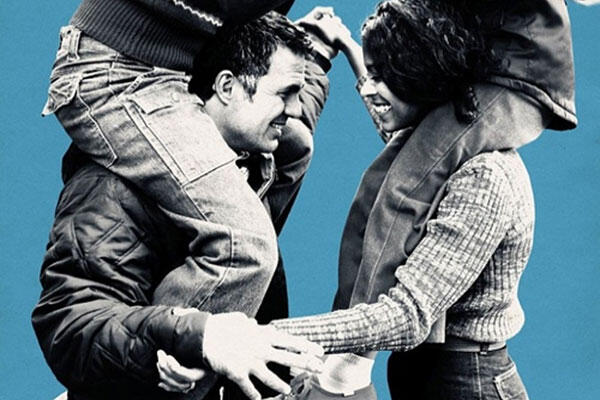
Infinitely Polar Bear
Rating: 4/5 On the spectrum of action-packed thrillers, Infinitely Polar Bear doesn’t even register, but it is in no way unremarkable. On the contrary, Infinitely Polar Bear fills a certain void that no amount of green-eyed anger ever could. Set in 1978, the film takes place at the back end of the counterculture movement. Cameron (Mark Ruffalo) is a psychedelic bohemian still riding the highs of Woodstock, struggling with the inhibitions of domesticity and post-psychedelia. His hardships become obvious when we discover Cameron failed to fulfil his family’s expectations of graduating from Harvard University and leading a life on the fringes of American aristocracy. Cameron is also a manic-depressive mess of a father who tries to win back his wife by attempting to take full responsibility for their two young, spirited daughters — but they don’t make the overwhelming task any easier. Cameron’s personal storyline, however, is not something that the audience should be distracted by. This film is first and foremost, a feel-good film driven by the mantra: “We may not have it all together but together we have it all.” Cameron and Maggie’s (Zoe Saldana) two children, Amelia (Imogene Wolodarsky) and Faith (Ashley Aufderheide), have trouble seeing the silver lining within a life of poverty. With a black mother and a white father, they are cast into a world of social isolation, where making friends becomes difficult. However, who better to help resolve these issues of social mistreatment than their manic-depressive, post-psychedelic, bohemian father? It is the film’s scenes of heartfelt fatherhood that both carry the mood of Infinitely Polar Bear and provide more than a few solitary moments of comic relief. I have a few misgivings about Mark Ruffalo’s reliance on his cigarette to mark Cameron’s bohemianism instead of actually acting the part, but Maya Forbes’ directing picks up the slack. Her Super 8 camera captures the film’s warmth and projects a feeling of youthful nostalgia.
-

Heathers
Cult 80s coming-of-age films often deal with detention, skipping school, finally getting Jake Ryan to notice you and making your own clothes. However, Heathers breaks this mould with a plotline that is darker and deadlier than any John Hughes film. While Mean Girls is often hailed as the quintessential teen film, the Plastics have nothing on the scrunchie-wearing, colour-coordinated, croquet-playing girls that make up the most feared and loved clique of Westerberg High School: the Heathers (and Veronica Sawyer — kind of). Heathers focuses primarily on Veronica (Winona Ryder), a girl new to the Heathers; even with her newfound popularity, Veronica is unhappy with her new status and the tyranny of Heather Chandler (Kim Walker). She soon meets Jason “J.D.” Dean (Christian Slater), a guy who has no qualms about pulling a gun on other students, and they later do the deed after a late-night game of croquet. Veronica finds herself fast becoming the Bonnie to J.D.’s Clyde after they “accidentally” begin murdering people. Thanks to Veronica’s talent for forging people’s handwriting and J.D.’s crazy ideas, the couple are able to cover up these deaths as suicides. As the protagonist puts it herself (while wearing a monocle and writing with a fury that no exercise-book-owning B.A. student could ever compete with): “Dear Diary, my teen angst bullshit now has a body count.” After realising that J.D. is indeed a psychopath, she breaks up with him and does her best to make amends for her past actions. Heathers is a teen film, but it’s also not. Rather than fulfilling the typical tropes of high school films, Michael Lehmann breaks them apart in a way that is both comedic and sinister. With useless adults who only care about pâté, a protagonist who is awful but doesn’t think she’s super awful (which makes her even more awful), toxic relationships that involve murder, and date rape that is blatantly ignored, Heathers delves into deeper issues; the ability to explore what most coming-of-age films dismiss makes Heathers an 80s staple film.
-

The Grand Hotel
Scott Kenemore’s novel, The Grand Hotel, is narrated by a desk clerk who makes it clear to the reader that he has a sinister ulterior motive when he volunteers to show a group of tourists around the mysterious hotel he works for. The first guest he takes the tourists to see is a desiccated dead body, although the desk clerk assures the tourists that this dead body still pays its bills and eats the food left in its room. He takes the unnerved tourists to visit guest after guest — each is a permanent resident in the hotel, and each has a story to tell. These stories range from plausible tales of despicable human behaviour to disturbing tales of demons and time travel. Soon the desk clerk begins a game in which he questions the youngest of the tour group, a red-haired girl of twelve, about some detail of the story they just heard. As she gets the answers right, the desk clerk grows steadily more excited. It becomes more and more apparent the tourists won’t be allowed to leave. Now, that is a lot of horror tropes right there. But I didn’t find The Grand Hotel horrifying. I’m not actually sure Kenemore is trying to make the reader afraid. For one thing, the narrator is enjoying himself way too much. He’s given the tour so many times he knows just how to manipulate people into doing what he wants; he’s putting on a big performance and loving every second of it: “I slump my shoulders wearily, looking crestfallen and disappointed in them. (I must bite my tongue to avoid smiling. In truth, I am nearly trembling with pleasure. Sometimes I actually do tremble, but the group mistakes this for shudders of despondence, which works out just fine.)” Another strike against any sort of fear factor is that the tourists aren’t differentiated from one another in meaningful ways. None of them have names, few of them have characteristics, and the red-haired girl is clearly the only one who matters. They’re in a creepy situation but there are no personalities to be concerned about or attach to. You don’t keep reading this book because you’re worried, you keep reading because you want to know what the desk clerk’s deal is, and because the whole thing is fun. The stories the guests tell are entertaining, the questions the clerk asks the red-haired girl are interesting, and the answers she gives are often surprising. A few of the book’s details, however, don’t make sense after the big reveal. For example, the desk clerk wonders why the red-haired girl doesn’t seem to have a chaperone, and points out that no one in the tour group looks like her. I don’t think it spoils the ending to say that, in light of the ultimate reveal, this isn’t something he should have been wondering about. The Grand Hotel uses a lot of the hallmarks of creepy and still ends up being an all-round positive experience.
-

InFamous: First Light
Rating: 2/5 InFamous: First Light is presented in an odd format. A tie-in to the larger title, InFamous: Second Son, and available for download and use without the player having to own the primary title, it’s not quite its own game yet it’s more than just a piece of downloadable content (DLC). This is a release style that seems to be slowly building traction, and it makes sense on a number of levels. Players can dip their toes into the game’s universe and mechanics without having to shell out for a larger game’s price tag, and the developer can use the tie-in as a playable advertisement. However, for this model — or even standard DLC — to work effectively, the new content needs to bring something fresh to either draw players back to their world or introduce newcomers to it. Unfortunately, here InFamous: First Light falls flat on its face. The main draw of this title is to delve deeper into the past of “conduit” Abigail “Fetch” Walker, one of the protagonist’s super-powered allies in InFamous: Second Son. As it turns out, before we met Fetch — broken, paranoid and unstable — in Second Son, she was a hell of a lot less interesting. Half of Fetch’s cinematic screen time is spent blithering on or throwing a hissy fit over how incredible her brother is and how she’ll freak out if he isn’t around to cuddle her. Sure, she’s a recovering drug addict who loves her brother, but it’s pretty sad to see such a live wire reduced to a whinging mess. This dependency on her brother is a blatant ploy to invoke the player’s emotions when their life is in danger at a later point, but it’s a little too obvious and obnoxious to inspire these feelings naturally. Luckily, the actual gameplay is still good fun. Fetch’s neon powers (sprinting in light form, firing off lasers and whatnot) feel great to control; zipping around the city never feels like a chore, and her powerset has more depth than any set from Second Son. For those who do own Second Son, that game’s Delsin and all his powers are usable in First Light’s arena battles, which is an extremely cool touch. Those who have played previous instalments in the InFamous franchise will notice that the combat and control system in First Light/Second Son is similar, but improved upon in most places. If you have not played any previous instalments, have no fear: the plot threads from those games have been more or less abandoned, with new stories built from the ground up. You may feel a little disoriented if you’re jumping straight into First Light, but it weaves its own story without leaning too much on the wider context of the factions and politics that exist in that world. In Second Son itself, however, you’re good to go: the story will teach you everything you need to know. If First Light pops up for free (as it did for Playstation Plus subscribers) or on the cheap somewhere, it’s worth grabbing to experience zippy combat with beautiful visuals, but keep in mind that this title is essentially a very watered-down version of a much greater game that has more diverse powers, a better story and infinitely more interesting characters.
-

Horoscope | Issue 7
Do you struggle with making basic life decisions? Worried about never bumping into your campus soulmate, or whether to eat two-minute noodles for every dinner this week? Fear not, chums, for I, Madame McMystery, have gazed deep into the cosmos to reveal the secrets the planetary alignments hold in store for you! (Disclaimer: Madame McMystery is not responsible for any physical or emotional damage caused by the interpretation of her predictions and subsequent actions influenced by them). Aries From examining your star chart, it looks like you enjoyed a brief but passionate love affair over the Easter break. While I’m sure the 52 hours you spent together were magical, don’t let this stop you from entering into new relationships, as I don’t see you reuniting until next New Year’s Eve. Taurus The first day it rains this week is a good day to stay inside. Given the precarious position of your finance stars, the rain could wash away any good fortune you have coming your way this week; best to play it safe. Also hit up a Pisces if they owe you money, I hear they’re paying back old debts this week. Gemini Time to throw in the towel with all this university business and take up the career path you’ve always wanted — exotic massage. Don’t let the reactions of your family hold you back, you’ve got to follow your heart. Cancer Cats are your worst enemy this week. Avoid these furry balls of seething hatred at all costs. Especially the ones with white mitten paws — they will be your undoing. Leo The position of Pluto warns of impending doom in relation to your academic life. Have you remembered to turn in your assignments? Did you check them through plagiarism software? I don’t know what you’ll do, but I see an angry lecturer in your life. Virgo You’re a sensitive soul and you know what you want out of life. Belly rubs. Even though you’re a wee bit shy, I suggest recruiting a few of your nearest and dearest to give your stomach a good pat down every night. This will help with indigestion and will open you up emotionally. Libra Following your heart has always led you into trouble, so this week you should just point your right hand out and follow that instead. It may not sound practical, but it should keep you out of trouble for a bit. Scorpio This half of the semester is where you’re going to turn it all around. No more skipping classes and sleeping till 2pm, you are a studying machine — the likes of which Otago has never seen before (outside of St Margaret’s). Sagittarius Ftrom the position of Sirius and Jupiter, I see money coming your way this week. This is a good time to enter all the sweepstakes and competitions you can get your grubby little hands on. Avoid the lotto and scratchies though. Those are the tools of the devil. Capricorn This is not what I meant when I told you that you would start drinking again. What was that last Saturday night? You need a cool-off period of 2–3 weeks, buddy. No more twerking for you. Aquarius Blanket forts are the bee’s knees, and yours will be the fort to rule them all. People will come from lands afar to marvel at your cozy fortress and enjoy a good game of Monopoly. It’s also a hell of a pick-up line, so I don’t see you being lonely in the immediate future. Pisces There is an expense hanging over your head that you have been putting off paying for quite some time now. Pay it, watch the money in your bank account dwindle into nothing, and breathe. All will be well.


