
-
Columns

Editorial | Issue 05
These days, if you’re travelling around Hungary and someone wanders into your holiday snap as it’s taken, there’s a good chance you could get into deep shit with the authorities. A law that came into effect on 15 March requires photographers to ask permission from every single individual in the shot – no matter how small or many they are – before it is taken. Obviously this is a massive pain in the butt, and makes a lot of both journalistic and hobbyist photography damn near impossible. For the former, it almost renders the act redundant and must surely destroy any reality that an already flawed medium could otherwise portray. Now, I don’t know much about Hungary, its media, its ideals and its laws. I just assumed it was fine, but that was out of utter naivety. What I do know, however, is that police officers are seen as “public actors,” and photographs of them must have the faces blurred. It’s really crazy. I always wonder whether these sorts of absurd rules are going to start spreading throughout the world towards an inevitable police state, or whether they are a losing final stand against recognising the public as freethinking, equal human beings. I prefer the latter theory, but considering the recent prevalence of such news as GCSB and NSA spying, it’s also plausible that we’re on a highway to dystopia, and that’s fucking frightening. Back home in New Zealand, you’re fair game for photography anywhere that you’re seen as being in the public eye. It’s about having a realistic expectation of privacy – if that can’t be proven, then be on your best behaviour just in case someone’s taking photos. This is a remarkably little known piece of our media law. There have been several times that Critic has been told that we have no right to take photos – the most striking example in my mind being the Scarfies who burned a couch in Episode One of Critic TV last year. But the couch was burning in the middle of the road, and the victims/culprits (it’s always hard to tell) were drawing attention to themselves by yelling insults down at us. Of course we were going to keep filming, and so we should be able to. But we would certainly struggle in Hungary these days. This week is very much a big one for Critic’s News section. Josie Cochrane has uncovered a truckload more information behind the story of why favourite student haunts Monkey and Metro have closed (page 18), and she has also explored the resignation of Chemistry Professor Allan Blackman after he engaged in certain teacher-student relations that the University tends to frown upon (page six). You’d think that when rules are explicitly written about that kind of thing, a guy who is smart enough to have written the go-to first year Chemistry textbook would at least attempt to follow them. In other news, nominations for the by-election of a new OUSA Education Officer open at 9am on Monday 31 March and close at 4pm on Wednesday 2 April. Voting will be open from 9am on 7 April to 4pm on 10 April – mark it in your calendar, folks; it’s goin’ be wild! This follows from the announcement during last week’s Executive meeting that Jordan Taylor, OUSA’s longest-serving Executive member and the subject of much Critic criticism, had resigned as Education Officer, effective from 28 March. I don’t think there will ever be a year without a by-election. This will no doubt be the first of many in 2014, and if you hear me going on about how exciting I find that prospect, please be aware that on occasion I can be exceptionally sarcastic. Zane Pocock Critic Editor
-
News

Periodic Relationship Tabled at AUT, Too Much for Otago
Associate Professor Allan Blackman, a lecturer for Otago’s Department of Chemistry since 1991, resigned from the University in December last year to take up a position at Auckland University of Technology’s School of Applied Sciences. Earlier that year, Blackman became engaged to an Otago student studying towards her Honours degree in Chemistry. Blackman’s relationship is not the only one, with a number of relationships between students and lecturers occurring within the University. However, these generally involve older postgraduate students. In an institution involving over 22,000 staff and students, it is to be expected that some interactions may progress to something more. One student met his match on the NZ Dating website, only to find out during his lecture the following week that the one-night-only partner was his lecturer. The lecturer was wearing a wedding ring this time. Another student attended a social event with her lab group, only to end up staying the night with the tutor of that lab group. She avoided attending subsequent labs, but says they remain friends and her assessments had all been graded before the event. Former OUSA President Logan Edgar was in a relationship with his tutor in 2012. However, tutors tend not to mark their own students’ work so the tutor held no influence over his grades. Critic notes that his current 32-year-old girlfriend probably stretches the age gap more than any tutor would, and we send our congratulations. Critic has no doubt there are many more of these stories – however, it is the on-going relationship with a much older, much more senior staff member that appears to cause more of a stir. Professor Lyall Hanton, Head of the Chemistry Department at Otago told Critic “the greater the imbalance, the more uncomfortable the University is.” Lyall says that following the issues with Blackman, the Department have had to “re-establish boundaries.” He explains that although this is the only incident where a staff member in the department has crossed the line, other staff members are now “more cautious about providing socialising opportunities.” All NZ universities state that when there is a conflict of interest, such as when a staff member enters a relationship with, or has had a relationship with a student, “a disclosure of interest is required.” Their policies all indicate that “staff members must inform, verbally and in writing, the person to whom they normally report” and when this person is involved in the conflict of interest, “the staff member must report it to that person’s manager.” All tertiary institutions follow the policy that “staff should not be involved in supervision or assessment of students with whom they have a family or personal relationship.” The University of Otago has the most thorough policy among the other NZ tertiary institutions. A review was made to the Ethical Behaviour Policy following the murder of 22-year-old Otago student, Sophie Elliott. She was tragically killed by her former boyfriend and Otago tutor, Clayton Robert Weatherston, in 2008. The policy now states that the University “strongly discourages” intimate personal relationships between staff and students and that staff should do what they can to avoid relationships occurring. The policy states that the relationship “has the potential for, or could be perceived as, compromising the fundamental duties inherent in teaching and learning. Staff members have a responsibility to students to assess their work fairly, objectively and consistently across the candidature for their particular subject/course.” The policy states “in settings where there is a difference in power between people, such as staff and students at the University, the potential for harm is greater and special care needs to be taken to avoid conflicts of interest.” Massey, Christchurch and Victoria Universities all state in their policies “the University strongly discourages intimate personal relationships between staff and students and staff should avoid entering into an intimate personal relationship with a student at the University, particularly a student for whom they have responsibility.” Each policy goes on to state that “such a relationship risks taking advantage of the intrinsic trust, power and status differential implicit in the staff-to-student relationship.” All three run by a policy where should a conflict of interest arise, the supervisor or Head of Department should be notified and will need to determine ways of dealing with the situation (e.g. not assessing a particular student’s work or having no involvement in a recruitment process). At Otago, “the person to whom the matter is reported must ensure that processes are put in place to manage or remove the conflict of interest in the best way possible and in a transparent manner, and the staff member will be an active participant in the process.” Lyall explains that this means “the responsibility is on staff to not actively pursue behaviour that could lead to relations.” The Tertiary Education Union believes there are “grey areas.” Tertiary Education Union president, Lesley Francey says it is a topic which requires an “ongoing review.” She believes that “if there is a power imbalance and the lecturer has power of the grades of a student, then it is totally inappropriate.” However, she says that if the staff and student are in different departments and the grades of the student cannot be affected, then “I don’t see a problem.” AUT, Blackman’s current place of work, did not respond to questions regarding their policy. According to their policy online, no more than “a disclosure” is required. Critic contacted Blackman who predictably had “no comment” to make. However, Critic speculates that the lack of policy at AUT would lend to a more appropriate work environment for Blackman.
-
News
ORC Foot $100K Footbridge
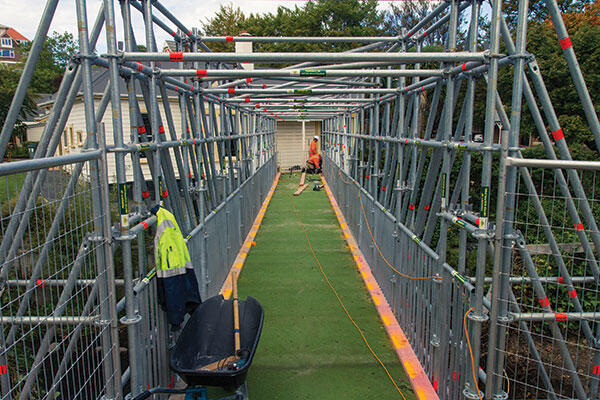
An unforeseen $100,000 is to be spent by the Otago Regional Council (ORC) on installing a temporary footbridge across the Leith as part of the flood protection works, causing further disruption to staff and students. The ORC is currently in the middle of a $5.4 million flood protection scheme in the North Dunedin region, which includes widening the Leith channel on the western side in order to increase its flood carrying capacity, according to ORC Engineering, Hazards and Science Director Gavin Palmer. Installing the temporary footbridge will cause some construction delays and as a result the flood protection works will now continue into June, meaning that disruptions and delays will still be present during mid-year examinations. Palmer said the temporary footbridge will remain in place “until such time as the works to the existing footbridge are completed.” The footbridge will be the same width as the current bridge, be able to hold an equal capacity and have a ramped approach to account for the difference in level between the two banks of the river. When questioned by Dr Michael Deaker about why the need for a temporary bridge was not foreseen in the flood protection works, Palmer said that access across the Union Street Bridge and Dundas Street was still available, and “it was not until late in the piece” that they expected an alternative form of access would also be necessary. University Chief Operating Officer John Patrick said that while the “works are important,” they are “causing significant inconvenience for all campus users.” Patrick said the main areas of disruption for students are “Castle Walk and St David Street,” and this was due to “the substantial civil works being undertaken and the site facilities and plant required to complete this current stage of flood protection works.” While Palmer couldn’t confirm the full cost of the footbridge, he said the project was still within budget and that he was unaware of any public dispute regarding the cost of the bridge. Ratepayers would contribute to the cost of the works, while the University would contribute to the aesthetic of the project given its lack of contribution as a non-ratepayer. According to Palmer, “the project reduces the flood hazard of the Water of Leith and thereby provides social and economic benefits to areas that are directly flood prone.” According to Critic, “the project also reduces the need for students to walk slightly further than usual and thereby reduces the mental and physical benefits that active people are typically prone to.”
-
News
Red Bull Gives Red Bull,
Three Otago students have beat out thousands of teams from all over the world after being selected to compete in a seven-day mission across Europe using only Red Bull as currency. Red Bull Can You Make It positions 100 teams from all over the world in London, Paris, Milan and Vienna with a case of 24 cans of Red Bull, giving them from 4 April until 5pm on 11 April to make it to Berlin. Brother and sister, Chessie and Finn Henry, along with their friend Tish McNicol, are representing the University of Otago as “the Freedom Hunters” and are the only team from Australasia to be part of the 100 competing teams. Critic spoke with one of the Freedom Hunters, Chessie Henry, who said the trio made a split decision to enter one day out from entries closing, which involved a pretty “casual” one-minute submission video. A week later, the trio received a call saying, “We’d been shortlisted as one of the teams,” and stating “that if we could confirm our passports, we were good to go,” said Henry. The following day, Red Bull rang to say the team had been officially selected and were off on an all expenses paid trip to Europe to compete. Specifics on what is involved are scarce, with Henry saying, “apart from the fact that we are starting in London, we don’t know anything about [what the competition involves].” She said they would have “no money. No food. Just Red Bull.” However, Henry said they were “just really banking on people’s good will, [and] that they’ll find it funny or want to help us out.” She added, “for the most part, [we’re] just really excited.” Despite the trio joking about it, Henry said they were all in training. “We’re trying to go for a run every day, especially if it’s going to be a sprint to the finish line.” Other preparations suggested included learning the haka “so we can be like ‘we’ll do the haka for you if you take us this far, or give us a bagel.’” Henry said people could track the team’s progress in the lead up to the event online and on Facebook, and keep updated while they make their way to Berlin. It will undoubtedly be worth keeping an eye on the team who proclaim they’re “up for anything,” and that “there’s not much we couldn’t get with a Red Bull and a grin from Finn.”
-
News

No Chain Smoking for Queen
NORML have further questioned the boundary of the University’s Smoke-free policy by looking to an archaic property right known as the Queen’s Chain that considers riverbanks to be public property. In his repeated attempts to “break down the policy,” Otago NORML spokesman Abe Grey contacted Critic speculating that the Queen’s Chain protects the banks of the Leith from the policy. Critic’s investigations into Grey’s claims suggest that the area along the Leith may be considered as part of the Queen’s Chain, although the limited application of the concept in New Zealand and the University’s management of the area would indicate that the area is still within the Smoke-free policy. Critic spoke with Senior Surveying Lecturer Mick Strack who said that the basic philosophy behind the Queen’s Chain was that waterways should be set aside for public use. However, he said that while “land has been set aside around our waterways when required, and when surveyors have chosen to do so,” the Queen’s Chain concept has “never been absolute.” Walking Access Mapping System (WAMS), which identifies public land in New Zealand, acknowledges that the “Queen’s Chain … [has] been affected by erosion in some cases.” WAMS indicates that the area along the Leith from St David Bridge to Union St is public reserve land and “can generally be expected to be open to public walking access.” Strack added that “in the sense that the Leith is classified as a river, it is eligible for being set aside as a reserve.” However, Strack suspected “that one way or another, the adjoining land owner has some sort of jurisdiction over the management.” DCC City Planner Lianne Darby confirmed Strack’s position. She said the parcel of land in front of the Clock Tower building is held in Computer Freehold Register OT299/36 and is “owned by the University of Otago.” She said that there is “no esplanade reserve or strip in this location” meaning a “Queen’s Chain” is not a possibility. She added that it “certainly looks like the University are responsible for the land” in front of the Clock Tower, citing that “usually stopped road is transferred to the adjoining land owner.” Grey added that he wanted the University to “be forthcoming with their explanation” of the policy, rather than the vaporous explanations he had felt from them thus far. Incidentally, NORML appear to be categorised as something other than “smokers,” considering that the ODT last week reported there were few breaches of the policy and that “there had been no backlash against the policy from smokers.”
-
Columns

David Clark | Issue 05
If you’ve been around a while, you’ll know Invermay is the name of a world-class agricultural research facility in Mosgiel that often partners with the University of Otago. It is part of AgResearch, the largest Crown Research Institute owned by the New Zealand Government. Recently the Government has proposed a cut in the number of scientists at Invermay. This has deer and sheep farmers up in arms. It has also upset many Dunedin residents who see the change part and parcel of the recent trend to shift jobs northwards. AgResearch’s restructure has seen 100 million dollars of taxpayer money thrown up in the air for uncertain returns. The Government has set itself ambitious goals for agricultural productivity. There’s not a problem with this as long as the target is approached sustainably. An internal review of the restructure plan across New Zealand was largely supportive; only the report made it clear that the proposed changes at Invermay don’t stack up. The management team that reviewed the plan found AgResearch was more likely to achieve its goals if it grew Invermay, rather than shrinking it. Farmers, too, know the importance of Invermay to their commercial success. Sheep meat productivity has doubled. Disease incidence in deer has been slashed. Dunedin firm AbacusBio and other important industry participants have contributed to extraordinary success in the Agricultural sector off the back of facilities and research at Invermay. Now a survey of Ram breeders across New Zealand has shown 92 per cent are against the change. The plans ultimately stand or fall on the retention of science talent and the continuation of world-renowned science at Invermay. Key staff have declared they won’t transfer to Lincoln as the proposal requires them to do. New Zealand’s Ag sector cannot afford this loss of talent. The Minister of Science and Innovation is coming under fire from the sheep industry and communities across Otago. Taxpayers in Otago and beyond are asking what it will take for the AgResearch board to reconsider their plan. To put pressure on AgResearch, I recently launched a petition to Save Invermay. The petition has so far attracted over 3,500 signatories, and hundreds more signatures are being received by my office each week. The wheels are falling off the AgResearch restructure plans. A rethink will be a chance for the Government to show they haven’t lost touch with New Zealand’s export sector, and the South.
-
News
Go Card Makes Bus Go Far
The recent trial of a 25 per cent discount on Dunedin bus services is “proving pretty successful” says Otago Regional Council (ORC) Chairman, Stephen Woodhead. A noticeable increase in patronage means the discount trial will continue until 30 April 2014, after which the Council will decide whether it remains permanent. Woodhead says the discount is being offered exclusively to students as a direct result of “student associations canvassing the Council.” OPSA president Rebecca Swindells said students have been calling for a bus discount for some time. “Many students are on tight budgets, parking is expensive and in limited supply, so the more students that use buses the more money is in their pockets,” she said. The trial allows all first year students at the University of Otago, Otago Polytechnic and Aoraki Polytechnic to get a free Go Card. Returning students can get a Go Card for the usual fee of five dollars. Within the first month, students made over 18,000 trips on Dunedin buses. However, the Council does not yet know how this compares to last year. According to Woodhead, a full data analysis will be made in April to assist in the current restructuring of bus services. The restructuring is intended to increase bus usage throughout Dunedin and make it easier for students to live outside the North Dunedin area. Critic spoke with one bus user who criticised the discount as being misleading. He said that the Go Card discount has been around for years, meaning the discount is closer to 15% for existing card holders. OUSA President Ruby Sycamore-Smith says, “we’re really impressed with the students and how active they have been in the trial.” She believes that from the numbers using the service, “we can see a continued relationship with ORC and the student discounts.”
-
News
BCom Student Convicted of Class B Drug Supply
A University of Otago student previously convicted of selling Ritalin to other students has had his conviction quashed in the Court of Appeal, after his co-offender was discharged without conviction after admitting to the same offence. The Court of Appeal last week revealed its decision to discharge Druvi Patrick Rodrigo without conviction, declaring Rodrigo’s offence to be “drug dealing at the lower end of seriousness.” In April 2013, Rodrigo pleaded guilty in the Dunedin District Court to selling a Class B drug, Ritalin, between 1 February and 28 September 2012. He was sentenced to 10 months home detention and 200 hours community work. Rodrigo, a Commerce student at the University, was forced to suspend his studies to carry out his sentence. Rodrigo carried out his sentence only to discover that the co-offender who supplied the “trays” had been discharged without conviction. Rodrigo subsequently appealed his conviction with a new lawyer. Police identified Rodrigo’s involvement after they became aware of an associate supplying prescription Ritalin to other students at the University and examining text-message data that incriminated Rodrigo as a Ritalin supplier. A police search of Rodrigo’s home on 27 September 2012 revealed 17 20mg pills in Rodrigo’s room. Rodrigo later divulged these pills were sent to him by an Auckland supplier in “trays,” each containing 10 capsules, and that he had been selling the drug since February to students, believing it would help them study. He also planned to use the profits to buy more Ritalin for his own use. Following his original sentencing, Rodrigo was diagnosed with attention deficit hyperactivity disorder (ADHD), for which Ritalin is prescribed. Kidd urged the Court of Appeal to consider Rodrigo’s actions as directly affected by his untreated condition. The Court of Appeal took this reasoning into account, alongside Rodrigo’s age, his lack of prior offending and desire to travel to the United States and Canada to visit relatives. Evidence that Ritalin improves concentration in people not affected by ADHD is largely anecdotal. People using the drug as a party stimulant or study aid should be wary, as many experts warn its similarity to methamphetamine means it has high addiction-forming properties and possible long-term effects on concentration.
-
News

Execrable - Resignation & Donation | Issue 5
This week’s OUSA Executive meeting had a climatic end, with Education Officer Jordan Taylor announcing his resignation from the Executive. Critic’s last Execrable highlighted Jordan’s “sheer incompetence shown in his organising of Sex Week,” and that he was “already following a very similar pattern to his efforts last year.” Jordan’s resignation is effective from 28 March. A motion that the Executive give Jordan a group hug was put forward by Nick, and seconded by Ryan, and a cutesy cuddle puddle quickly took place after it was highlighted “we’d be in breach of the constitution if we don’t do it now.” Nali quickly made clear to Critic that “free hugs are the only promise I will ever make.” When Critic contacted Ruby after the meeting, she expressed a sympathetic goodbye to Jordan, saying, “It’s a real shame to see Jordan leave. He’s been so valuable and done some really great work for the Exec, and we wish him all the best for the future.” In more typically dry Executive activity, Ryan was responsible for chairing the meeting in Ruby’s absence. All received the Budget Seminar notes and the Executive agreed to approve the Provision of Service Agreement between OPSA and OUSA, which permits OPSA students to use Clubs, Sports and Societies facilities of OUSA for an annual student services fee of $10,000. The agreement doesn’t overtly stretch OUSA in any way, with only around 2.5 per cent of the Recreation Centre’s use attributed to OPSA users, but is basically a way of helping OPSA out with their reduced funding. Results for the 2014 Capping Charity were announced, with Rape Crisis being the chosen charity after an underwhelming 58 people took part in the poll. A $350 New Zealand Red Cross donation request was met with feelings of coercion and extortion, and was said to “not be something we’ve done in the past.” Despite the noble cause, Nick summed up the sentiment as “we could pay $350 or let people die.” Deciding that the charity had no student relevance, the donation was not moved, especially after the only relevant student “charity” anyone could think of was NZUSA. Similarly, a proposal by a Marketing Management group asking OUSA to provide sponsorship for a group assignment to gain awareness for Canteen Dunedin was again met with reservations. Ryan pointed out that “as it’s for a paper with many groups, it sets an unwanted precedent,” while Nick made the good point that “20,000 students should not pay for you getting an A.” The rest of the meeting concerned the Executive expressing their general approval for creating an MOU between Rate My Flat and OUSA in order to provide the necessary $5,000 to launch the site that will rate Dunedin flats on their level of insulation, dealings with landlords and general worthiness to rent.
-
Columns

Feelgood | Issue 05
Is it just me, or do all our public holidays blow massive elephant cock? (Seriously, Google elephant penis. It’s funny). Let’s take our national holiday: now, I don’t want to get into a deliriously redneck style here, but Waitangi Day makes me want to stab people. There’s no public thing to do on our “national day,” like the traditional Australia Day barbeque, or the traditional Fourth of July barbeque, or the traditional Bastille Day wank into a cup. No, the closest we have to a yearly ritual is watching the TV to see what stupid thing happened at the marae. ANZAC day receives a bit more respect, but you only have to take a Year Seven history class to learn that its origins stem from fifteen year olds being slaughtered by the dozen. Though, when you look at the state of some of today’s teenagers, I think another push to retake Chunkuk Bair sounds appealing. Then there’s Labour Day, the day where we celebrate working by not going to work. Labour Day is easily the only achievement made by the labour movement, so perhaps we should celebrate by going all working class: earn shit wages, drink beer by the crate and beat our spouses. We celebrate the Queen’s birthday four months after the date she popped out of Mrs. Queen’s oven, which neither makes sense nor is a good way to celebrate a friend’s birthday. I don’t have any friends, they all died in ‘Nam, but if I did and they showed up to my birthday party four months late, I’d eat the cake and tell them to piss off. A proper holiday exists to sell you shit you don’t need at all (chocolate eggs) or to restock your supply of underwear (Christmas). Our public holidays are utterly rubbish; they should all be renamed “Three Day Weekend Day” because that’s the only thing we do on them. We sleep in, or get even more drunk than usual and more often than not forget that we’re supposed to be celebrating … something.
-
News

I Wish I Could Play for Both Teams
First, let’s go to the rich mahogany rugby desk where we find lots of excuses for the Highlanders suffering an unexpected home loss to the Force last weekend. A narrow two-point loss will have knocked their confidence a bit but it was close and every cloud has a silver lining (and all those other well worn sports clichés that could be invoked here). They will just have to take it one game at a time. The reality is that it’s early days of a long season so I will not abandon ship at this early point. However, I will allow myself to say – even if it is at the risk of starting off the process to joining the Chiefs’ bandwagon – Waikato are looking strong. Actually, I have always supported the Chiefs – in a roundabout kind of way. When I was younger I didn’t really understand what the Waikato was. I just knew I was geographically obligated to hate the Crusaders and I didn’t like the Blues and the Hurricanes because they were the evil big cities. So I would always support the Chiefs when they weren’t playing the Highlanders. (There, not a bandwagon jumper – although I am definitely not a Breakers fan anymore ... ) This week we continue the road to Brazil with a look at the very tough Group B that contains both finalists from the previous World Cup. While it has not been given official “group of death” status yet, stay tuned for that in a few weeks. Next week we will continue our football “analysis” and have an “in-depth” look at the UEFA Champions League that is shaping up very nicely. Spain UEFA - Union of European Football Associations Population: 47 million Currency: Euro Capital: Madrid Language: Their nickname – La Furia Roja (“The Red Fury”) – has been warranted recently. FIFA World Ranking: 1st Qualified: Winner of qualifying Group I Fun Fact: They’re the only team in history to have won three consecutive major tournaments: World Cup 2010 and Euro 2008 and 2012 History: They’ve had a pretty easy qualifying run but lost the Confederations Cup final to Brazil. Key Players: Barcelona provides an experienced spine for the team with Xavi, Iniesta and Fabregas. The Manchester City trio of Silva, Navas and Negredo shows the depth they have. Prediction: Are among the favourites but some tired old legs will catch up with them in a semi-final loss to the eventual winner.. Netherlands UEFA - Union of European Football Associations Population: 17 million Currency: Euro Capital: Amsterdam Language: The team is often informally, and incorrectly, referred to as Holland by many. FIFA World Ranking: 11th Qualified: Winner of qualifying Group D Fun Fact: Dirk Kuyt could reach 100 caps during the group stages if he plays all three games. Wesley Sneijder can also bring up a hundy if the “Flying Dutchmen” make it to next round. History: Went from being runners up in 2010 to not making it out of their group at Euro 2012, but recently went undefeated in qualifying for Brazil. Key Players: Manchester United striker Robin van Persie, who was the overall top scorer in World Cup qualification with 11 goals, has the firepower to win big games. Prediction: A very solid squad that should go through. They will be a threat in the knockout stages but won’t make it back to the final. Chile CONMEBOL – Confederación Sudamericana de Fútbol Population: 18 million Currency: Peso Capital: Santiago Language: in Spanish, fans call them La Roja (“the red one”). FIFA World Ranking: 15th Qualified: third place in the South American group. Fun Fact: Consistency without any major success recently makes them the Arsenal of international teams. History: Best result is an irrelevant third place in 1962 when they hosted the tourney. They have recently beat England in London. Key Players: Arturo Vidal of Juventus and Barcelona winger Alexis Sanchez are capable of producing game changing moments. (Well, they do on FIFA 14.) Prediction: The dark horses of the group. The “South American home ground advantage” could benefit them. Australia AFC – Asian Football Confederation Population: 23 million Currency: “Aussie dollar” Capital: Canberra Language: Their nickname – the “Socceroos” – is derived from an uneducated-sounding understanding of English. FIFA World Ranking: 63rd Qualified: Finished as runner up of Asian Group B Fun Fact: In 2006 they became the first team to qualify for the World Cup via a penalty shoot-out when they beat Uruguay 4 - 2 in Sydney. History: Only two wins from their three previous World Cup appearances. Recently were thrashed 6 - 0 by both Brazil and France. Key Players: I like their captain Mile Jedinak who plays for my boys Crystal Palace in the Premier League. Prediction: Lowest ranked team who are there to make up the numbers. A few lucky goals maybe but no wins. The shrimps will be on the barbie quite early.
-
News
Critic tackles election year | Issue 5
Last week, Critic’s most beloved Tertiary Education Minister opened up the university council chat once more. National has been no stranger to the evolving relationship between student participation and our university overlords, and the Education Amendment Bill (number two) is no exception. We first covered this story in Issue One, and given that public submissions are now open until 30 April, this week is dedicated to understanding more thoroughly what the Bill has the potential to change. The ChangesFor those of you who don’t frequent the Parliament website (home of Parliament TV screenings and handy-dandy MP lists), you should know there exists a Bills Digests feature, which explains quite extensively the background and provisions to different bills. As it aims to be largely objective, this is a good place to extract a neutral summary of the Education Amendment Bill (number two). There are four main changes that are outlined. Of these, the most explicit change is that university and wānanga councils will be decreased in size, from 12-20 members to 8-12; a second change is that this numbers game will include three or four appointed ministers, meaning roughly a third of the councils will be hand picked by the Government. They must have “governance capability.” It also includes the provision that at least one member must be Māori. The rest of the members should have relevant knowledge or skills (Critic has to ask: who were you appointing who didn’t have relevant knowledge or skills to necessitate that qualifying statement?) and should accurately reflect New Zealand’s general demographic composition. Third – and this is especially important for students – is the removal of the provision that council members must include student representatives. Essentially, this means there do not need to be any students on the university councils to legitimise them; they can operate exclusive of actual student membership. Finally, the Bill will “clarify the duties and accountabilities of individual council members.” Which, if you have a hunt through the actual text, can be boiled down to “don’t be a dick or you’ll be booted.” The Good NewsThe point of making such changes is to streamline our council system. By reducing the amount of bureaucratic nonsense ascribed to university councils, Joyce argues that new university councils will be flexible. This freedom of choice will boost our international standings, create competitive and effective councils, and will further enhance Māori student participation. In recognition of the lack of student membership, Joyce points to long track records of student involvement, and doubts that this will change significantly upon the Bill making it into law. When the initial announcement of the Bill was made, Joyce succinctly described the benefits by commenting, “New Zealand universities would benefit from smaller, more flexible councils which support them to perform at a high level and to be nimbler, more adaptable, and better organised than big overseas universities. The proposed governance changes will, alongside measures proposed in the new Tertiary Education Strategy, assist in preparing universities for the challenges of the next 20-30 years.” The aim, therefore, is fluidity and elasticity of council membership. The Bad NewsIf you read Issue Three, you will remember David Clark’s snappy one-liner telling us that Joyce is taking away the student voice. That is the essence of the main criticism surrounding the changes. Without compulsory student representation, it would be very easy to do away with students on councils at all. In reflecting institutions that comprise of, well, students, this is a dangerous potential oversight. More than that, however, is what it means the councils will actually look like. In particular, the new provisions mean a third of every university council will be government-appointed, increasing dramatically the role Parliament has in influencing our universities. Having councils independent of government is an important notion, as endangering that separation endangers academic freedom and the like. It’s impossible to banish the images of Umbridge’s Hogwarts takeover in the fifth Harry Potter book (the educational decrees, the firing of beloved teachers, the banning of clubs without express permission to form, etc.) With that terrifying image in mind, it’s not hard to explain the staunch opposition this bill has got from student associations. Indeed, ignoring their protests would be an uncomfortable indication of things to come – if the changes are opposed but ignored, surely this will be indicative of a future where students are routinely ignored on other issues, too. Even in a fundamental democratic sense, this bill has issues. Representative democracy is intended to be just that – representative. Removing this clause in council composition does little to defeat the argument that National is “attacking democracy.” David Clendon argues, “Staff, student and community representatives are vital to these councils making sound decisions, as they represent the exact groups that universities and wānanga exist for.” Without members who understand the hums and ticks of university life, it’s easy to see that decisions could be full of oversight and detrimental to the exact people the council is supposed to aid. So?Get that hollering student voice on paper and submit something to the Government. Whether it’s a crudely drawn ASCII picture of Steven Joyce naked or a truly heartfelt letter of love towards Hekia Parata, get it out there. You can do so on the Parliament website, which also includes a helpful how-to guide if you’re unsure how submissions work.
-
News
Young Politician | Issue 05
For ACT, making a difference is what we’re interested in. Not disrupting debate, like Young Labour’s twit who wrote in this column last. There are people who work for nothing, providing fine services to the vulnerable and voiceless, and he thinks making a difference is following John Key about, making his ministers cry. He says so with no shame. No surprises, though. His party leader wants to take control, for instance, from communities, parents, and children, who are presently making a difference with help from Partnership Schools. Many from struggling communities of Northland want these schools; but Labour promises to snatch them away, all because the tantrums of unions stood in for compelling argument. ACT stands for handing control over our lives and communities back to where they belong instead of in the hands of the Government, whichever party that may be. In our individual lives, and in the life of our communities, the real differences are made from our own efforts. ACT gets it. Labour doesn’t want you to.
-
News
Greatest Hits / Greatest Shits | Issue 05
Greatest HitsOn Wednesday morning a new set of changes to the electoral law was passed. While there is considerable criticism about a number of aspects, there is a particular redeeming feature that will finally catapult our elections into modernity: now you can enrol to vote online. For those of us who prefer to use the Internet to snail mail, this is great. Unfortunately, you can’t quite vote online yet, so you still have to leave your computer on 20 September. Greatest ShitsAnadarko has failed once again. Despite the Government’s insistence that deep sea oil drilling is a good idea, the Texan company has been unable to hunt out fossil fuels in Otago and is set to say goodbye to NZ waters. This comes as much frustration to the pro-oil lobby, while anti-oil protesters are able to happily say, “I told you so.” When asked about the failure, the chief executive of the Petroleum Exploration and Production Association of New Zealand said, “the oil is where the oil is and the only way to find it is to drill for it.” Thanks for that pearl of wisdom, David.
-
News
Statistics
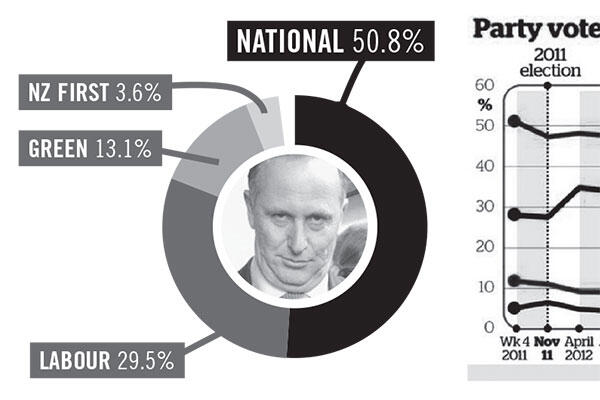
Early last week, a new Herald DigiPoll was released, placing National at 50.8 per cent, Labour at 29.5 per cent, Greens at 13.1 per cent, and NZFirst at 3.6 per cent. Such polls should definitely be taken with a grain of salt, but should this translate to an election platform (disclaimer: I take no responsibility if you go iPredict crazy based on one misc. poll), National would be able to govern without a coalition. Cunliffe is confident that this won’t happen, however, arguing that National’s “crony capitalism” will lower support. Greens were pretty stoked to be pushing for the 15 per cent, and Critic wonders what will become of the Winston First Party.
-
News
Politweets | Issue 05
Tau Henare goes wild with this hashtag. Clare looks towards a new dairy product for the next parliamentary drama. Green MPs target Key's memory loss. Probably not the best use of your time, Jacinda. Yes, because those two parties agree on so many other fronts. If you value terrible jokes, vote #InternetParty.
-
Columns
ODT Watch | Issue 05
What kind of burlesque show is this? They're wearing more clothes than a UniCol fresher out on a Saturday night. In winter. When it's raining. If only men would accept women as equals in the workplace. That's rich coming from you, ODT. This public aggravation is finally getting the media attention it deserves. If only the posties would "stick" to the rules! Found on page 5 of Thursday's Focus on Farming section, this was outstanding. For sure, it's talking about the completely legitimate process of de-boning meat. However, it's hard to imagine an editor would have missed this one. Well done, ODT, well done! We're kinda jealous.
-
Columns

Hi Dr. Nick | Issue 05
Hi everybody, So last week we began the sex talk from a healthcare point of view, and raised the fact that most people start having sex a lot later than you’d expect from high school banter. Before we plunge deep into the moist cavern of sexually transmitted icky things, I wanted to spend a bit more time talking about what’s “normal” in sex. Now, before you get your hopes up and your lube out, this isn’t going to be a blow-by-blow of how sex happens. I’m not going to be giving sexual tips and tricks in this column, and if you ask my exes I’m sure they’d tell you why. Heretics have accused me of taking a long time to get to the point. In psychiatry we call that “circumstantiality,” in Critic we call that a “word count.” To buck the trend, I’ll get to the climax of the column prematurely: if you’re both adult humans, and you’re both consenting on a continued basis, what you’re doing is normal. It doesn’t matter if you’re only interested in non-penetrative mutual touching in a monogamous relationship or love having pregnant Dutch women fisting you on webcam; if it’s what you and your partner want to do then it’s fine provided that A) You know what you’re getting yourself into, and B) You minimise the risks involved in whatever you’re doing. So what are you getting yourself into? Well, despite medicine’s claim to be all accepting and unashamed, we don’t really research sex that well, so it’s difficult to give numbers on what to expect. We only really research things like “risky” sex and negative outcomes associated with sex (unintended teen pregnancy, sexual abuse, sexually transmitted infections, etc.) as researching those makes you sound “medical” rather than “prying.” Anecdotal evidence from sexual health workers suggests there is a massive range in what people are doing and how they do it but, in the same way that we don’t trust schoolyard banter, we don’t like relying on anecdotes in health. What we do know from New Zealand studies is that around 66 per cent of university students’ last sexual contact occurred within a “steady relationship.” In contrast to tall tales from O’ Week, only three per cent of women and 11 per cent of men had “just met” the last person they had sex with. 32 per cent had been drinking when they had sex. Just over half of students used a condom in their last sexual encounter. Condom use decreased when in a long-term relationship, but worryingly also decreased as number of sexual partners ever increased; only 42 per cent of people with nine or more sexual partners in the last 12 months had used a condom in their last encounter. Less than 20 per cent of New Zealand men (all ages) are circumcised, with numbers significantly lower in younger age groups. The most relevant study to the current university cohort (a 1991 study) reported newborn circumcision rates of around seven per cent, though with significant differences between ethnic and cultural groups. Approximately 3.5 per cent of New Zealand males report a sexual preference for males and females, or males alone. Around 3.1 per cent of females report a preference for both sexes equally or the same sex preferentially. Fewer women report being exclusively attracted to the same sex than their male counterparts (0.1 per cent versus two per cent). We’ll talk about minimising risk next week (condoms are your friends), but a big piece of advice now: talk to your partner. Open discussions and respect for boundaries are essential to harm minimisation. But as a few extra titbits to close with a bang: you can pick up STIs through oral, anything that vibrates will burrow its way up a colon, and “No” always means “No,” regardless of what has been said or done before it.
-
Columns

Queer Eye | Issue 05
Hello again, sweetpeas. Today we are continuing our 101 of queer identities by looking at sex. Not the sex that you do but the sex that you have been assigned. Confused? Well, let us begin with some baby-making. People make babies. They make them in a whole lot of different ways, but what they have in common is that they used sperm, eggs and a womb. Then after much pushing, sweating, cursing or surgery, that baby is born. Medical professionals then assign them a gender (sex) such as male or female based on physical attributes such as genitalia and hormones. Not all babies neatly fit within this sex binary. Somewhere between one in 100 and one in 2,000 babies are born intersexed. This is an umbrella term for a range of conditions that lead to people not neatly fitting what medical professionals define as male or female. This may result in external or internal differences which are usually identified early in someone’s life, although can also become evident during puberty or when someone tries to reproduce. If you want to know more check out www.ianz.org.nz Once a baby is born, its parents and wider society set about imposing gender norms on it. This might include blue and pink decor, boys’ and girls’ toys, gendered clothes, etc. We will look into gender construction in a later column, but it does raise the question: what would the world look like if we didn’t impose socially constructed gender norms on a baby just because of their birth sex? Or to quote Monty Python, when someone asks “is it a boy or a girl?” maybe we should reply, “I think it is a bit early to be imposing roles on it, don’t you?” The fact is that we don’t live in a vacuum and it is therefore very difficult to discern how much of our own sense of gender derives inherently from our birth sex or how much is a result of our upbringing and wider social narratives. What we do need to do is to critique that social narrative where it is too restrictive and causes harm.
-
Columns

Science, Bitches! | Issue 05
How often are you overcome by a strong urge to levitate a frog? Your answer is most likely “not often.” However, this is just one of the many things science can achieve. In addition to your frog, you’re going to need some magnets – the stronger the better. A magnetic coil of about 16 tesla should do the trick. Tesla is the unit used to measure how strong a magnetic field is. For reference, the Earth’s average magnetic field is a mere 0.00005 tesla. This means that you have a decently strong magnet on your hands. Apparently you can’t send these through NZ Post, so you’ll have to let me know how you got it. Now we’re ready to do some magnetic levitation! Excitingly, magnetic levitation is exactly what it sounds like! It involves setting up magnetic fields so that objects can be suspended in mid-air. Suspending objects involves balancing forces that are trying to get the object to move in different directions. For example, the magnetic force your frog is experiencing is going to have to fight against the force of gravity. Frogs don’t typically respond much when you hold a small magnet (like a fridge magnet) up to them. To see any action at all you need a magnet good enough to induce strong diamagnetism in a frog. Diamagnetism occurs when something creates its own magnetic field in the opposite direction, and in response to, an externally applied magnetic field. Then the two magnetic fields will repel each other. Usually this repulsion is not strong enough to be noticed, which is why you need such a strong magnet and why you can’t move frogs around with fridge magnets. If you are interested in who would actually attempt this, their names are Andre Geim and Michael Berry. They published a paper about it in the European Journal of Physics, titled “Of Flying Frogs and Levitrons.” If you’re now thinking about levitating people, I regret to inform you that this hasn’t been achieved yet. Humans are heavier and so experience a greater gravitational force. A magnet strong enough to counteract this hasn’t been made. But magnetic levitation has applications beyond lifting frogs. You may have heard of incredibly fast maglev trains, which can reach speeds of up to 581 km/h. These use magnetism to accelerate the train in the desired direction. You might be feeling confused about why something as massive as a train can be propelled using magnetic levitation but you can’t (yet) levitate your best friend (or worst enemy). This is because the materials used to make these trains are more “magnetic” than a person is – they experience a greater magnetic force from a magnet of an equal strength. Another application can be found in what are called “magnetic bearings,” which use the principles of magnetic levitation to move parts of things like motors without physical contact. Unfortunately, it is unlikely you will be levitating frogs or any other small animals anytime soon. Magnets strong enough to do this are expensive and you will need physics expertise to set up the magnetic field so that it is just right. But at least you now know you live in a world where this is possible. And that’s thanks to science, bitches!
-
News
Letting the Monkeys Out
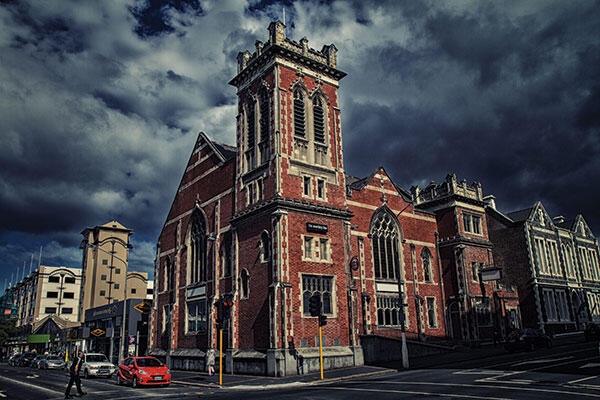
There are at least two sides to every tale … especially one spanning over several years, involving high profile business owners, a secret Facebook page and a potential police cover-up. The ODT have told one side of the story, but after Critic was given access to the private Facebook discussion group “Metro Exies” and made contact with Benjamin Hanssen whilst he was overseas, we can now disclose further details of the dramas that have been unfolding in Dunedin’s bar scene. Almost everyone Critic spoke to describes their rival businessmen as “dodgy as fuck,” and with such accusations flying both ways it’s hard to see just who the good guys are. In November 2013 the ODT printed an article entitled “Bar owner left trail of bitter creditors.” This followed news that Benjamin Hanssen, former owner of Monkey, Metro and Diamond Lounge/Rumours, was “the bar owner involved in employing gang members to intimidate rivals, and was alleged to have knowledge of concrete being poured down the drain of a rival establishment.” Hanssen insists the majority of it is pure fiction “but makes a good story,” and is “based on two or three people out to get me.” Hanssen says, “if I really wanted to stop them and fuck them up, I would have done a better job than putting sewage in my own car park.” He said he was not given the opportunity to comment prior to the ODT’s article going to print and is now “in the process of speaking to solicitors ready to take the ODT to court [over] false accusations and slanderous comments.” In February 2014, two months after closing Monkey Bar’s doors, Inland Revenue won their case in the Dunedin High Court to liquidate Metro Bar Ltd, 2 Mooses Tavern Ltd, The Church Nightclub Ltd and Professional Hospitality Staff Ltd. These are the companies through which Hanssen has run the Dunedin bars. The case was over quickly with Hanssen saying he “knew it was a losing battle.” Hanssen told Critic he poured all of his fortune into trying to keep the bars afloat, but in the end “I just couldn’t keep up with the sinking market.” He said he tried to plan ahead, but each month the situation just got worse. He now has “no doubt [that] the tax department will prosecute me for not paying taxes.” Hanssen has a history with a number of past business owners, but he defends himself saying he is “no more ruthless than any other businessman.” He says that if he had done anything wrong, there would be more than one person who had made official complaints against him. In 2009, Kirstin Diack made a complaint to the Serious Fraud Office and in 2011, she made a complaint to the Registrar of Companies regarding a property development company, Wakanui Developments Ltd. Diack worked for Hanssen during one of his periods of bankruptcy (2002-2005) and during this time was instructed to set up companies for him. In NZ, it is illegal to run a company when bankrupt. The complaint alleged that Hanssen was “not a fit person to own, manage or direct a company in New Zealand” and he was accused of owing creditors “in excess of $800,000.” Diack says upon discharge of the bankruptcy, “[Hanssen] immediately resumed as the director.” The companies have since been liquidated, as per Diack’s predictions in the complaint letters. Hanssen claims his relationship with Diack goes back 20 years and the pair finally fell out when a property deal went wrong and Hanssen lost “nearly half a million dollars.” Diack’s response was that the only reason Hanssen lost out on any deal was because “neither the liquidator nor the lenders wanted to deal with him ever again.” Hanssen believes there is a small team wanting to bring him down after “not getting their own way” in deals or employment relations with him. He says there are three people with “vendettas” against him - Kelly Gilan, Nicholas Vague and Bradley Roberts. He says that they all have their own secrets so “are not the ones to be talking” in contrast to his own record which he says “is all a matter of public record.” Diack, who made the official complaints, has not met any of these three people but says “he has burnt a whole lot of people and we’re just watching out for who he burns next.” Gilan, who is currently serving time in jail, and Vague were not available for comment, but Critic spoke to Roberts, who was General Manager for Metro from 2011-2012. Roberts has been looking into Hanssen’s past for the last year and says that Hanssen has a complicated network of companies. “The more tangled it is, the harder it is for creditors to chase debt.” Hanssen believes this is “an interesting assertion to make.” He says “I was a conglomerate. I’m operating in two of the highest risk industries: hospitality and property. Anyone with commercial law experience would be able to make sense of my companies.” Hanssen says Roberts has “destroyed my reputation” and that “he has rung almost anyone I have done business with in the last 25 years.” Hanssen and a business partner of his, Hamish Lay, claim they have both had Roberts “harassing” and “cyber bullying [them] on an epic scale” since last year. This includes threats to family, friends “and even on my dog’s life.” Hanssen told Critic “I am fine with people attacking me. I made my own decisions. But some of the people you are dealing with are attacking friends and family around me.” The online attacks included Roberts creating a fake Benjamin Hanssen profile on Facebook, adding his friends, family and clients to it and then posting damaging statements referring to his business history. The cyber bullying was reported to police; Roberts was called with a warning and no further complaints have been laid. Roberts says his actions are because “I give a shit about people. I got sick of him ripping people off, especially students working for him trying to make ends meet.” He says that until now, no one has stood up to him because he can be “intimidating to people he perceives as below him or vulnerable.” Following the sale of Malbas, now known as Capone, disagreement over who owned the chattels within each bar caused a dispute between Greg Paterson, who owns the building, and Hanssen. Paterson believed the chattels in Metro belonged to him, which Hanssen denied. On a Friday night, “a group of thugs showed at Diamond lounge to take everything,” says Hanssen. The “thugs” showed up again and ripped more out, including the tills worth $5,000 each and half of the illuminated floor. When he called the police, Hanssen says “two showed up and refused to help unless disturbance of the peace was occurring. And if I tried to stop the thugs, they were going to have me for assault.” Hanssen said it cost $15,000 to shut that night and it “finished the premise for me.” Hanssen says he then “arranged for my agents” to remove the product back from Capone, to which “five squad cars showed up at Capone for my guys.” Hanssen and his business partner, Lay, believe someone in the police was informing Paterson. The night that Hanssen attempted to claim chattels from Capone was the night concrete was poured down one of the drains. “It was just two mature business men arguing over chattels as part of a business deal, not a repossession as made out by the media.” He says the police invented the story involving Mongrel Mob. “If it was Mongrel Mob, I wasn’t aware as they were not patched.” He said “people are watching too much Breaking Bad. It’s not like you call 0800 MOB.” He says it was just a friend helping out. “The hysteria over this is incredible.” Critic tried to contact the police several times, however, they were not available for comment. Critic spoke to Iain Nellies and Don Millis, Principles at Insolvency Management Ltd, who are looking after the case. It has been suggested that Hanssen and his business partner, Kerry Thompson, are placed on the banned directors list. Information is still being gathered in order to file the first report on what assets are available but Nellies said “[Hanssen] is operating through a company which is a separate legal entity, so the debts stay with the company.” He said there is “nothing stopping him from continuing, as Hanssen is just working with the law as it is at this time.” With the current legislation, New Zealand offers a “free and open economy to do business in.” He explains, “there are, I won’t say loopholes, but things could be exploited if you’re not of the mind to do correct business.” Just last month, Hanssen changed one of his company names from Westland Adventures to Northern Technology Ltd. This company will be selling “home automation technology.” This includes clever light switches, remote controls and “stuff for rich people with too much money.” Hanssen says he is “no more dangerous or reckless than any other business man” and has “no reason to not return to Dunedin to tie up loose ends.” He says “I put my heart and soul into Metro and no one would have been sadder than me [to see it go].”
-
Features
Diary of Armageddon
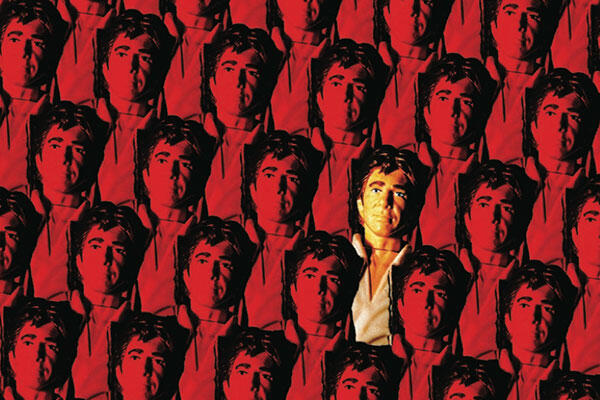
Simon Pegg once said that being a geek is about “being honest about what you enjoy … It means never having to play it cool about how much you like something ... Being a geek is extremely liberating.” Armageddon is a national expo for New Zealand’s geek community; all these enthusiastic folk convene in Auckland, Wellington, Christchurch, or Dunedin for two days of liberated geekery. As a self-confessed sci-fi geek from a small town, I imagined that going to Armageddon would really be a religious experience: it would be a place I could find “my people” and feel that liberation Pegg describes as central to accepting one’s inner geek. For those of you out there who feel a yearning to celebrate your passions while in costume at an expo in the Edgar Centre, I’ve created a diary of my experiences in embracing geek culture. Day 01I am twenty years old, and today I become a woman. Biologically, I began to become a “woman” at the ripe old age of fourteen, and now, six years later, my puberty is about to end. Today is the day that I undergo a cultural transformation. Never mind my fear of tampons and my slick skin, which still bubbles with oily adolescence; today, I become an adult. I am going to Armageddon, the nerdvana my soul has dreamed of returning to since before it was chained to my disappointing mortal form. I have a friend who has his own car – he’s an Armageddon veteran and Real Adult - and he’s taking us. We stop at Burger King for breakfast, a tradition we’ve decided to establish. Feeling sick but ceremonious, we heave ourselves back into the car to relish the ten-minute search for a park. This, too, is an integral part of the experience: the anticipation builds, and I spot the entrance. Some emos in Pikachu hats are lounging on some steps; anime-wigged girls giggle and jog daintily past them; a tired, smoking orc stares blankly from the park next to ours. The Edgar Centre’s unrevealing, windowless walls have teased me. I don’t know what’s inside it yet – I haven’t even got out of the car – but I see people that I expected to have seen already, and I know that the inside will not disappoint me. I step out onto the road and nearly get hit by an SUV bearing an entire family of Doctor Whos. I rejoice. Where else would that happen? If I had to die by car, I’d hope it would be driven by a road-raging Tom Baker being backseat-driven by a fourteen-year-old David Tennant. We roll up to the counter, all geek chic and Too-Cool-for-Costumes. I pay the five-dollar entry fee and get out $60 for “incidentals,” like a Thorin beach towel. My tiny friend, here only for the manga, has managed to work the line and pay before I’ve even blinked. She’s with us for now, but soon we’ll lose her to tall crowds and anime stalls. I haven’t gone in costume. Armageddon runs for two days, and I wanted to spend my first (ever!) as an observer; I want to see the next stage of my evolution before I become it. To my left as I walk into the - arena? auditorium? - I can see a long stretch of table, occupied only by a lounging staff member. Later, two of the crappier dwarves will be signing things here. To my right, I can hear a guitar twanging over a muffled microphone question. I’ll check out the guest speaker later; right now there’s a frothing sea of nerdgasms I need to sail. I don’t know why there’s cotton candy here, but I’m thankful. Its sugar-spun strings hide my face. I should have come as a Totally Spy, I think. I’m that hidden. I take my boyfriend’s hand and let him tow me through the masses of comic book characters. We push slowly from table to table, aimless yet aggressive; as someone without a costume I feel a need to assert my interest in the expo, which I can only do by standing directly in front of a video on brain-controlled cat ears for humans (cats can control their ears with their brains already). I am dominating this screen. No one could dare accuse me of lacking an interest in expo items now! We’ve lost Lou, our manga maniac. She’s gone – oh! In the distance, we spot her; she’s over the Sailor Moon. We browse with her and pretend to know the titles (Death Note is the only one we actually recognise.) Her face is lacking the unrepressed joy I expected a manga enthusiast to display when she was at a stall absolutely crammed with backwards books: she’s disappointed? “It’s all really mainstream,” she sighs, and waves a dismissive hand. “I guess it’s for people just getting into it. Let’s go.” The three of us make our way to the back of the room and there, wedged into a corner, six thirteen-year-olds’ fingers flit across Alienware laptops. They look like professional hackers-in-training, or maybe some kind of l33t, telepathic League of Legends team. They are silent, and their faces are still. Is this the future? I feel like I’ve seen this in a dystopian movie. Their screens, too, face the walls; we have no idea what’s going on. I consider asking their bosses, but there is no one. We choose to back away, careful not to trip over any carefully placed cables lest they snap out of their dreams too quickly and die. I can feel the cotton candy coming back to bite me; I’m light-headed and vaguely nauseous, but there’s nowhere to sit down. Could I sit on that child dressed as B-Mo? My hearing is filled with the same guitar music I heard before and, like a zombie, I follow it; right back to the entrance and the guest speaker. It was the same guy who was there an hour ago, and he’s still playing the guitar – but why are there children on stage? They finish their song about happiness and clapping, and guitar man speaks: “that’s enough of that, now it’s question time again!” The ten people left in the chairs look worn out, but one girl takes the microphone: “going back to what you were saying a couple of hours ago about veganism …” I’m imagining this. This is not the voice of Teen Titan’s Beast; this is a hallucination. The sugar shakes begin to grip me, and I become more aware of the painted faces and be-weaponed costumes everyone around me is wearing. I can’t believe Beast is a vegan. Why is Harley Quinn looking at me like that? Is she trying to figure out what I’m dressed like? I’m Morticia Addams on a lazy day! Stop looking at me like that! They know I’m not a proper geek. They know I’ve never dressed up. I was an outside observer until now – I shouldn’t have brought attention to myself. I shouldn’t have bought that candyfloss. As beautiful as the signed photo of Jonathan Frakes (complete in Starfleet uniform) I bought for $60 is, it hasn’t brought me the status I desired. It’s time to go. Day TwoThis year is the second that there’s been a Dunedin Armageddon, and apparently it’s much busier. I thought that perhaps it was the small room that made it seem busy, but at the end of yesterday, a ticket salesperson told me they’d sold over 4000 tickets; that’s more than two-thirds of the total attendance last year! Having observed the costume/no costume divide yesterday, I hypothesise that dressing up will allow me better entry into the hearts of my chosen people. I want to feel empowered, but not like I stand out; as a tall girl with very curly hair, I do that enough. The costume was obvious, and close to my heart: I would go as Han Solo. I spent all last night putting together the outfit, and painting black the DL-44 blaster replica my boyfriend and I went halves on (they made it orange after it was confused with a real gun one too many times). I look amazing. In keeping with the Star Wars theme, my boyfriend is a Sith; in keeping with his rebellious attitude, our friend the driver is “hobo Ash Ketchum.” My sister, dressed as Castiel, rounds out the party. Arriving at the expo is better this time, because we know how it rolls. There’s no feigned chicness this time; we’re pro geeks now. We bump into some friends straight away, and are complimented on our costumes: “Oh!” One cries happily, “you’re a genderbent Han Solo!” “No,” I assert, “I’m Han Solo.” It seems like a small point, but I very definitely dressed up as Han Solo, not Hanna Solo or whatever the sexy female version is. There’s nothing wrong with Hanna, but I am cosplaying my childhood hero: I am Han Solo. He’s persistent, though, and I end up loudly stating that “Han Solo transcends gender,” before going to meet Castiel at the cafe. At a table next to the Yu-Gi-Oh tournament there is a group of oddly-dressed people; odd even for Armageddon. I can’t figure out what be Spock, but I can’t be sure. They seem familial: I came here with my “gang” but I’d call their group a “clan,” if you get my drift. I wouldn’t pick a fight with one because they looked like they’d fight in a group, you know? They are huddled closely, and many of them are very small, even for geeks. I turn away and continue chatting to Castiel; she’s having fun! She even bought a TARDIS mug. I feel a light, shy tap on my shoulder: it’s one of the bigger people from that table. “Hi!” she says brightly, “I just wanted to say that I really like your costume! Han Solo, right?” I can’t even right now. This girl gets it! “Let me tell you about Homestuck,” she says, and I put on my listening elf ears. I’m good at physical gags like that. Ok, so it turns out that there’s this thing called Homestuck, which is a comic “nearly as long as War and Peace.” The characters are canonically LGBTQ+ and lots of them aren’t white. Sounds great, but there’s no big grab for merch, and no speakers or actors to talk to them, so why are they here? They’re here, she explains, to socialise: they lock down a table, and everyone dressed as a Homestuck character finds their way to the hive. Then they hang out all day. This is all very interesting, and contrasts with a friend of mine in a Rammus hat, who sits down immediately after the Homestuck leaves and advises us “not to talk to anyone, obviously.” He takes instant relief from his good deed. It turns out he’s been harassed by a gaming promo guy who didn’t seem to understand that Rammus Hat has played and enjoyed all the games, and kept pushing his spiel until they began to hate gaming and ran away. We comfort him, and a small gang gathers back together: we’re going to watch a couple of Doctor’s assistants talk. Who are these people? I mean, I understand that Doctor Who has been going since long before my time, but I honestly thought that I knew all the main companions. Nicola and Mark began to share their stories about working together straight after saying they’d only worked together on one episode. It’s hard to tell whether they’re terrible at working a crowd – which is odd for actors – or if they’re just so tired of the expo circuit they don’t care anymore. To be fair, I don’t stay for the whole show. I spot some friends over by the cotton candy, and decide that’s where I need to be. I’m staring into the swirling pink vortex that could be a potential snack when my boyfriend bursts through a group of people in gasmasks. He got the last Star Wars lunchbox! He asked the lady about it and it is definitely the last one. He had to buy it! What if he never got another chance? I know how much he loves both Star Wars and lunch, so I’m happy for him. Even though he is dressed as a Sith, he is my Han Solo. Wait, I’m dressed as Han Solo, so he’s my Leia. Except that he’s a Sith? Ok, new headcanon: Leia’s latent force talents blossom under Luke’s guidance, but, resentful, Han convinces her to go solo. Unable to control the Force properly, and without following the tried-and-true Jedi path, she becomes Sith. She and Han live happily ever after as sexy, smuggling Force-abusers. What was I saying? Oh yes, my Leia makes me happy, and so does Armageddon. The past two days have been a constantly commercial trip through nerd-dom. As a team – the best way to go – we got a lunchbox, cotton candy, hats, comics, and compliments. At times the paraphernalia for sale was overpriced, but we were also paying for the interactions we got as a result of our purchases and costumes: I would never have learned about Homestuck if it weren’t for my own love of Star Wars, and my signed Riker photo got me some confidence-boosting winks from the Trekkies. The people were strange and the speakers more so, but they were strange in a way I understood, even if I didn’t always enjoy it. I’ve changed in the past two days: yesterday I felt overwhelmed by this world I’d been imagining for so long; I was unprepared for the elaborate costumes, expensive yet tiny dolls, and the sheer masses of people standing around. Today was different: I felt knowledgeable, like I belonged, and confident. I’ve truly blossomed into the woman I’m meant to be: Han Solo.
-
Features

Antarctica On the Brink
New Zealand has never enjoyed a prime position in the international arena, and most of us are rather content with this. Our antipodean status has let us foster interest in unattended corners of the globe, and place great stress upon the importance of conservation. We have shot to the forefront of international discussion on a couple of occasions, including the nuclear-free issue in the 1980s. Those were all fleeting periods of relevance, but the country may be in for an unprecedented heyday, along with only a few other select nations. Historically, the only landmass more damned to oblivion than New Zealand is Antarctica. It is the most sparsely populated, undernourished, and ignored continent on Earth. A lack of indigenous populace and inescapable isolation has pushed it to the boundaries of popular perception and made its mere mention in many political contexts odd at best and irrelevant at worst. A great deal of interest in Antarctica focuses on its geology and zoology, and for good reason - there isn’t much else going on there. The geopolitics of Antarctica are still a niche field and don’t extend farther than international law. Despite this, a handful of futurists have persistently envisioned a more human future for the Antarctic continent, and every year there are more and more factors that suggest these predictions may eventuate after all. No one nation holds claim to Antarctica. This unique situation has led to a web of treaties that have continuously developed over the last 60 years. The Antarctic Treaty System has brought a degree of order to the seventh continent, and helped protect Antarctica from fates that have befallen virtually every inhabited landmass on earth. Of all the treaties that concern Antarctica’s future, 1998’s Antarctic Environmental Protocol holds the most at stake, buffered by Article 1 of 1961’s Antarctic Treaty, which forbids military activity in Antarctica. The latter has only been violated at one point – a one-off Argentine Army expedition in 1965. The Antarctic Environmental Protocol explicitly forbids investigations into mineral reserves, a rule that its signatories appear to have followed thus far. However, scientific research is tolerated, and the scant knowledge of Antarctic oil reserves has been discovered through such investigations so far. Scientific research can easily be bastardised to accommodate hidden agendas, demonstrated most prominently by Japanese whalers. Further deliberate investigations into mineral reserves in Antarctica could happen in the near future, and there would be little infrastructure to stop it from happening. Before the Antarctic Treaty System was signed, a number of nations made claims to particular stretches of the continent. Those claims were legally invalidated under the conditions of the initial treaties, but still hold a loose de facto status in Antarctica’s geopolitical arena. Otago University Geography Professor, Sean Fitzsimons, does not believe such claims hold much credence. “They are there, but they’re largely irrelevant. They aren’t pushed by any country.” The Ross Dependency – New Zealand’s claim – is heavily populated by Antarctic standards. The stretch of coast is home to the United State’s McMurdo base, the largest single settlement on the continent. With a summer population of around 1000, the town hosts a non-denominational church, an ATM, and its own sewerage system. Such towns have only existed in any real capacity for a few decades, and give little indication of Antarctica’s long period of alienation. Many early explorers were not enamoured with Antarctica, and understandably so. Intimidated by its icy tundra and comparative lack of seals, Captain James Cook steered well clear and declared “that the world will derive no benefit from it” in a 1777 expedition. More recent reception has been equally harsh. When the first Antarctic treaties were being drafted in the late 1950s, an American geologist famously declared that he “would not give a nickel for all the resources of Antarctica.” These attitudes have given way to ever-intensifying speculation concerning the viability of Antarctica as an exploitable commodity. The scope of the speculation is international, and fast developing; fossil-fuel dependent economies are showing great interest. Antarctica is home to many valuable resources. Crude oil, coal – and possibly even diamonds – are believed to rest beneath its icy planes. This mineral-rich environment may seem enticing to miners at first, but the nature of the continent has prevented exploitation thus far. Most of these minerals lie under kilometres of ice, making their current extraction absurd on economic considerations. The commodity thought to be most prevalent is coal, which is strewn throughout the Transantarctic Mountains – in locations desolate even for Antarctic standards. Such hindrances might make immediate land-based mining unattractive, but some of Antarctica’s oil is suspected to lie in the seabeds of the Ross Sea – a maritime dependency of New Zealand. As many as 50 million barrels are suspected to lie below its fathoms. Of course, the very real threat of oil spills comes into play when ocean is involved, and no seas are more pristine than those in the Antarctic. When the Antarctic Environmental Protocol opens for review in 2048, the world is likely to be a very different place. According to 2012 estimates published in Nature, global temperatures are expected to rise by 1.4 - 3 degrees Celsius on average by 2050 if current rates of consumption are maintained. According to most estimates, peak oil will be a historical event by then and, pessimistically, some form of dependence on fossil fuels will still burden humanity. Antarctica is estimated to harbour as many as 203 billion barrels of oil in total – a truly mind-boggling quantity. Perhaps most alarmingly, overpopulation and mismanagement of the world’s fresh water supply might make water trapped in Antarctic ice (90 per cent of the world’s total) an attractive commodity, especially considering the fact its extraction could be eased by the looming spectre of global warming. Even krill fishing is likely to become a booming industry. The tiny crustaceans actually outweigh the entire human population, with a total weight of 379 million tonnes to humanity’s 350 million. Their swarms in the Southern Ocean can reach hundreds of kilometres in diameter. Unable to ignore this staggering commodity, fishery companies are extracting increasingly larger hauls of the microscopic creatures every year, then turning them into fishmeal. But humans can consume krill, too – they have been eaten in Japan for hundreds of years. It is foreseeable that krill, inaccessible and unappetising, may stay as fishmeal for some time to come. But upon the event that fisheries exhaust populations of more conventional food sources, humanity might be able to modify its palate. Much of the southern continent’s cargo is shifted by planes, defying the popular image of Antarctic icebreakers smashing through icebergs to bring equipment to research scientists. Even significant quantities of oil are shifted by air, a phenomenon that is comically unsustainable. New Zealand scientists are making headways to resolve these issues, building three wind turbines in an effort to curb fossil fuel consumption at McMurdo and Scott bases. According to Professor Fitzsimons, the turbines save as many as nine million litres of oil a year. Furthermore, an American trans-Antarctic highway of compacted snow has been built between the coast of McMurdo Station and the heart of Antarctica, the South Pole. This makes long-haul terrestrial cargo a feasible option, and may reduce Antarctica’s carbon footprint in due time. New Zealand’s disproportionate influence in Antarctica is due to one obvious factor – proximity. It was discovered by the same man, James Cook, and is only beaten by the southernmost fringes of South America in its Antarctic vicinity. Of course, this brings New Zealand’s direct Antarctic relevance to Southland and Otago. Dunedin has shared a close connection with Antarctica since earnest exploration began at the turn of the 20th Century. The city served as a decisive staging post for both Ernest Shackleton in 1916 and Richard Byrd in 1928, and was the last city that Robert Falcon Scott saw before his ill-fated Antarctic Expedition in 1910. However, modern developments have shunted Dunedin to the back of Antarctic priorities and the city only enjoys status as a back-up airfield upon Christchurch’s inoperability. Professor Fitzsimons believes that a “major infrastructural change” would be required to advance Dunedin in the current Antarctic sphere of influence. “Christchurch is logistically more feasible, and Bluff is the obvious choice geographically. I honestly can’t see Dunedin playing a significant role in the future of Antarctica; it just wouldn’t operate.” New Zealand has fostered ties with China since the Southern gold rush of the 1860s, though Otago’s Chinese population has declined substantially since that colonial period. This was largely down to a shamelessly xenophobic poll tax imposed on Chinese immigrants and an economic depression that ensued after the gold rush, forcing many young Chinese men to return back to their homeland. New Zealand’s Chinese heyday may be long past, but it could mirror a future where the South Island becomes one of the major staging posts to a booming Antarctic region, and the southern extremities of the Americas are dominated by the interests of Chile, Argentina and, perhaps, the United States. Chinese expansionism in Antarctica is undoubtedly on the rise. Annual Antarctic expenditure has almost trebled in the last decade, from $20 million in 2003 to $55 million last year. This far outpaces the equivalent Sino-Arctic expenditure, which has remained stagnant. China is well and truly engaged with Antarctica, and strives to upset a pro-western status quo that has been in place since the continent was permanently settled for the first time in 1945. This February, a 1000m² Chinese base finished construction on the East-Antarctic Ice Sheet. Taishan, or “Lantern,” is the fourth Chinese base to be built in Antarctica and will probably be the last to not have an all year crew. General Secretary Xi Jinping personally congratulated the crew in a recent letter, and stressed the importance of scientific research on the continent as fundamental for the “exploration of nature” and the “development of mankind.” When the Chinese Communist Party’s Politburo convened in July 2013, Xi was more explicit about his country’s intentions in Antarctica, decreeing that China should “take advantage of ocean and polar resources.” This is clearly an attitude that does not fall in line with the Antarctic Environmental Protocol. The press may have largely overlooked the comment, as overwhelming focus was placed upon the on-going dialogue regarding the Senkaku/Diaoyu Islands issue in the East China Sea. Regardless, China’s current efforts in Antarctica are still far outpaced by those of the United States. Qu Tanzhou, the Director of China’s polar programmes, was quick to point out that “the number of American people undertaking polar research in one year outstripped China’s total number that have been conducting such research over the past 30 years.” However, the near-exponential rate of Chinese investment in Antarctica may soon close the gap. China isn’t the only Asian power to express late interest in Antarctica. South Korea has recently invested in a $90 million collaborative effort with New Zealand, building a base in Terra Nova Bay. Jang Bogo is due to finish construction this month, located only 300km away from New Zealand’s Scott Base – a stone’s throw in Antarctic terms. Korea’s intentions in Antarctica appear to remain benevolent, with Antarctic Director Dr Yeadong Kim telling TV3 that Korean interests in the continent are completely scientific. “My personal view is that we are better to keep it as it is now, there’s only one place in the world that remains so natural.” Three principal cities service the Antarctic: Argentina’s Ushuaia; Australia’s Hobart; and New Zealand’s Christchurch. Most operations that run out of Ushuaia are South American, just as Hobart’s are largely Australian. In contrast, Christchurch has fostered a close relationship with the United States Antarctic Programme, and New Zealand scientists’ primary form of travel to the south is on American planes. Whether this relationship could give a clue as to how future Sino-New Zealand expeditions would operate is up for debate, with Oxford University Professor Rosemary Foot outlining China’s unique relationship with New Zealand at a 4 March lecture at the University of Otago. She believes New Zealand to have closer relations to China than most of its western counterparts, as China views New Zealand as an “independent player.” This is exemplified by New Zealand’s ground breaking Free Trade Agreement with China in 2008. China’s investments in New Zealand have dominated Sino-New Zealand relations for a few years now, and may hint at China’s interest in expanding its maritime presence in the South Pacific. A 27-storey, $100 million hotel driven by Chinese investors was proposed for Dunedin’s waterfront, but failed to gain resource consent from Dunedin City Council. A more recent and successful engagement with Chinese investors was the $200 million acquisition of Crafar Farms by Chinese firm Shanghai Pengxin in 2012. Widespread domestic anguish at the monumental purchase indicates that Chinese investments are unwelcome to many New Zealanders, echoing the fears of “yellow peril” during the Otago gold rush. More recently, Shanghai Pengxin have purchased majority shares in Canterbury’s Synliat Farms. Such land acquisitions hold little direct relevance to China’s Antarctic programme, but serve as excellent examples of the future role that New Zealand might possess for bigger players – a nation-sized paddock, as well as a staging post for Antarctica’s splendours. Though the hypotheses I’ve raised are less than certain, it is worth considering the impact that Antarctica’s exploitation would have on New Zealand’s future economy, culture, and sovereignty. Squabbles over minerals, water, and sustenance are the main drivers of war and annexation, and New Zealand’s glacial back yard is abundant with all of the above.
-
Features

A House Without Books
Unless you have been hiding under a rock for the past ten years you will have realised that there have been significant changes in the world around us. You will have heard people banging on about the “digital age,” or the “frontier” or “revolution.” You will have also heard that if you want to move forward in any capacity, then you have got to “think digital” and embrace change and new technology because, well, it’s the future. Don’t get me wrong, I’m a technology enthusiast; I mean, I’m writing this in a Google Doc, while dictating notes to my iPhone, and streaming Sherlock on Netflix (holla) but I can’t help but agree with Umbridge when it comes to some things: progress for the sake of progress should be discouraged. Technology plays an increasingly insidious role in our lives and as a society we are becoming more and more reliant on it. With its uses being varied in everything from entertainment and business to education systems and health care delivery, it is easy to see the value that going digital has to offer. But what are the consequences of focusing on technology and losing sight of our more humble origins? Maybe I’m just a romantic at heart, or maybe I’ve levelled up to a full-blown artisanal-product-toting hipster, but I feel that you cannot truly appreciate something in a digital context unless you have first experienced and understood its traditional beginnings. I volunteered last year at my brother’s primary school to assist with their photography club. While I was positively frothing about the fact that these kids were interested in photography, I couldn’t help but be disappointed by what they were actually being offered. They were each handed a bunch of digital point and shoot cameras and given a brief introduction on how to take a good photo (“The object you want to draw attention to should be the biggest thing in the frame” – I mean, seriously?). They were then set to roam free, taking photos of mostly school buildings with the occasional artsy phone line on an angle shot. To my utter despair there was absolutely no description of how in the hell a camera even works, no foray into the history of photography and definitely no DIY pinhole camera extravaganza – which had to be the coolest thing I ever did at school, period. While I have been known to dabble in the visual craft of photography, my first and longest lasting love has always been for the written word. The power of talented authors to explain complicated situations with ease or take their readers on a journey of discovery across time and through imaginary worlds never ceases to amaze and enchant me. You probably don’t need to see the stacks of books or piles of artfully arranged magazines littered around my room to know that I’m an avid consumer of these printed works of art. The title of this piece actually comes from a quote by German writer, Heinrich Mann, which in its entirety is “A house without books is like a room without windows.” I think my man Heinrich and I may have something in common when it comes to appreciating the stories told within their pages. I’m no fool, though; the stories still tell the same tale when delivered across a digital medium but the all encompassing digital revolution poses a very real threat to the printing presses of the publishing industry, so it stands to reason that from here-on-in my collection will become even more treasured and possibly antiquated. Recently, I happened across a blog by a young, up-and-coming local entrepreneur, which admittedly I wouldn’t have found without a computer, access to the Internet or the support of a powerful search engine (Bing ... just kidding). As I was perusing his site I noticed a post in which he discussed the fall of print media and suggested that the advent of technologies such as Apple’s iPad or Amazon’s Kindle lay to rest the hopes of any author trying to reach their target market through traditional print mediums. Besides the glaringly obvious fact that most of us now have AdBlock installed on our browsers and have been successfully managing to navigate the internet without being drenched in advertisement vomit (except for the ever present pre-roll, dick-move YouTube), I can’t help but agree that technology and readily accessible digital media up the ante when it comes to connecting with an increasingly discerning consumer. At the bottom of the post I noticed a poll, which consisted of the following: Will you ever permanently give up print? • Heck No – I love the feel of dead trees on my finger tips • Yes absolutely – I want a Mag+ with AR Yesterday! • Yeah-Nah – I’m a fence sitter I answered “Heck No.” But, at the same time, I couldn’t help but think that the author had completely missed the idea behind print as a medium. I don’t choose to buy magazines solely for the purpose of destroying native trees; I buy them because when I read a magazine, or a book, I enter into a relationship with it – a relationship that goes something like this … A few times a week I leave the protective warmth of my high-rise office to venture downstairs to the newsagent on the ground floor. In the newsagent, I buy a drink, sometimes a chocolate bar, and I peruse the floor-to-ceiling display of magazines. Like a prospective relationship – I check them out. I pick them up. I flick through them. I smell them. I then chat with the owners of the shop about how my day has been and debate the pros and cons of the magazines I am trying to decide between. If I’m lucky the owners will have just got a copy of my favourite magazine in, or they may have a new one that will be just my cup of tea. Like a first date I only get the opportunity to take the magazine at face value, just a glimpse of what it has to offer. If, and when, I decide which magazine I’ll take home with me, I pay for it, exit the shop and trudge back up to my office as the despair of sitting in front of a computer screen for the rest of the day drifts over me like a stormy cloud. In the elevator to my office the magazine and I have our second date. It’s more intimate than the first, as it’s just us. The excitement of getting to know each other better is a little overwhelming. I become flushed and a little out of breath as the elevator doors open and I’m forced to jam my magazine into my handbag and negotiate pleasantries with whoever has reached the office door at the same time as me. It’s not until I get home, though, that the real relationship begins – the next few hours (months, in real relationship time) are pure bliss. I read the magazine from front to back, top to bottom – inhaling the scent of ink on paper, feeling smooth under my touch, enjoying the noise every page turn makes. I devour it; every detail is scrutinised, every advertisement analysed and all of the inadequacies that the magazine may have are identified. Once I have done this, I will do it all over again. Something might interrupt me – the clock striking 11pm, or the jug finishing boiling, or dinner being served – and the magazine gets put down in its place of honour beside my bed. It is in this place the magazine stays, for a week or so, for me to freely check back through and make sure I haven’t missed anything. Then it is put on my artfully arranged pile of previous purchases (relationships) as a record of the good times we’ve shared. It’s not a graveyard of trees, empty and lifeless; it’s a library of lessons, of good memories and of cherished moments – a history of then and an inkling of what may be to come. As the months pass, I have more brief but intimate encounters with printed materials. I can always feel safe and secure in the knowledge that should I need to use a recipe, reflect on a poignant article, glimpse at a beautiful photograph or illustration, my magazines will be there waiting for me, patiently – always giving, always supportive and always offering moments to escape and remember better or more exciting times. Sometimes, I lend them to friends and family who I think will benefit from the pearls of wisdom among the pages and sometimes like the One Ring, they lay there quietly for years until the right opportunity arises. My rambling romantic notions aside, it is hard to ignore the pressure that going digital imposes on the publishing industry. If you told me ten years ago that I would be curating a visual discourse through Tumblr or that I would be sharing an insight into my private life with relative strangers via Twitter (and that they would actually be interested in what I had to say), I would have laughed in your face. These are realities and opportunities that technology offers us in our modern day society and, in all honesty, I am still able do all of the things I would do with my printed magazines: I can add bookmarks to my browser; keep track of recipes on Pinterest; and store collections of articles with tools like Evernote. With services like Issuu, blogging platforms such as Wordpress or Tumblr and micro-blogging sites like Twitter, the barriers to publishing content are removed, whether it is just for you or for an audience. However, without these barriers to entry in a digital space, the market is flooded with offerings and it becomes more and more difficult to sort the wheat from the chaff. When it comes to print, it’s no longer enough for you to have an idea and access to a printing press, you have to find a paying, willing audience and market the shit out of it. In the case of Massey student magazine MASSIVE, its print demise was for largely economical reasons, much like other publications that have met their maker these past years. With the introduction of voluntary student membership in January 2012, MASSIVE’s reliance on the dwindling support of its voluntary student populace among the cries from staff of purse tightening due to apparent “independence,” MASSIVE was left with no choice but to ditch the press and focus on digital pursuits. Despite the outcries, there is a lot to be said for going digital; the economic and environmental implications alone are appealing but the true beauty of digital content creation is its ability to transcend barriers like location and language or having to come up with cash to bankroll your ventures. You no longer need to be a multi-millionaire like Rupert Murdoch or hold a position of power like the head curator at the MOMA to inform the news or share your artistic vision with the world. As the cost of technology and the barriers to entry slowly decline, I still can’t help but lament the loss of the historical significance that is evident in our traditional processes. Will we still appreciate the pioneering efforts of Johannes Gutenberg and the creators of newspapers and magazines that gave geographically isolated New Zealanders an, albeit, delayed but wondrous insight into a diverse number of cultures and happenings? Is this all to be forgotten? As more of us become comfortable with technology and seek out our news from sites like Twitter that offer us instantaneous feedback instead of the pages of newsprint the day after, we should be mindful of looking to technology to augment not replace our print experiences. For me, the adoption of technology in the publishing industry can be likened to the internal struggle of a viewer who can’t help but root for the murderous villain in their favourite TV show (Moriarty, I’m yours), even as they destroy the main character. I know that for me, and hopefully for others out there who think similarly, our connection with print media will not be as easily severed. Regardless of what unrelenting digital or technological advances occur in the near or distant future I will continue to seek out rewarding experiences with leafy loves (books and magazines, I’m not in the habit of communing with nature) – it is a relationship that I will endeavour to make last as long as I do. On reflection, I feel that there is room for both print and digital media but when the time comes that I am eventually laid to rest, chuck a book (or seven) in my coffin, not a bloody kindle.
-
Columns

Love Is Blind | Issue 05
Critic’s infamous blind date column brings you weekly shutdowns, hilariously mismatched pairs, and the occasional hookup. Each week, we lure two singletons to Di Lusso, ply them with food and alcohol, then wait for their reports to arrive in our inbox. If this sounds like you, email critic@critic.co.nz or FB message us. But be warned – if you dine on the free food and dash without sending us a writeup, a Critic writer will write one under your name. And that won’t end well for you. FrankA classic, shitty Dunedin night was improved by the prospect of a mean feed and free booze. With a couple of whiskies already down me, I was feeling confident and ready to fire. A Steiny Pure in hand, I patiently watched the clock tick past 7.30pm, and then my eyes soon fell upon a fine looking lass who sat down opposite me. We began with all the generic, boring questions and ordered this huge fuck-off platter of food. After getting to know each other a little better and a few more drinks later she went for the obligatory bathroom break. During this time the bartender approached me and advised that if the date was going downhill he would supply us with shots of social lubricant. However, this would not be needed. After quite a few Margaritas, we decided it was time to continue the party elsewhere. We staggered back to my humble abode whilst discussing Kama Sutra in detail. At around 11.30pm or so we entered my flat; assuming my flatmates were in bed, we tried to sneak in through the back door – that was not the case, however, as they were getting trolleyed in the lounge. My flatmates roared with approval as my date walked in behind me. She then sat down with us to enjoy a Bogan and Coke. A few strong drinks later, we all were getting quite inebriated. Soon after, my flatmate suggested that we commence a game of strip poker. We all laughed, including the girls, and decided fuck it, why not. Now, strip poker isn’t as easy as one would imagine, especially when your flatmates team up on you. Before I knew it, I felt like I was in a Bendon Lingerie commercial. To be honest, we had sunken more piss than an alcoholic walrus on holiday. This is when things started to get a little more heated. I don’t want to get too graphic and into the nitty-gritty but I flopped out my Dirk Diggler and shit got crazy. Thanks Critic and Di Lusso for a great night! JanetI was sitting in my flatmate’s room on the eve of the Blind Date and we were discussing different scenarios for the night and wondering what the guy would be like personality-wise. My flatmate and I decided that I would have a couple of drinks before the date to shake the nerves and, well, that I definitely did. I had downed several drinks within the hour before the date and to give the nerves a right kick in the ass I treated myself to a shot at Albar before heading to the destination where my date was waiting for me. We immediately ordered a platter and drink each. The conversation was flowing – we talked about all general things like where we were from and travelling, etc. Little did this guy know the entire time he was talking to me (whilst I was still listening) I was thinking to myself “Holy Crap … can this guy tell I’m smashed?” It was evident in my slurring and broken speech. Eventually our platter came and that became the new topic of conversation. I was smashing the food down in an attempt to sober up a little – but with the only liquid in sight being alcohol that never really happened. So anyway, it turns out he’s really into orgies and invited me over to his after the date for an orgy with his flat mates. I accepted his invitation but sadly had to dash as my flat mate decided to pull her red card but I had promised to meet him in town after and got his number. I saved his under Critic Date and he saved mine under Orgy Date. We never got to meet up that night or have our orgy but maybe in the future when I’m feeling frisky I will text him for one.
-
Culture

Random Reproductions
Brett McDowell Gallery Exhibited until 27 March 2014 Since the start of the month, the Brett McDowell Gallery on Dowling Street has exhibited the latest in an on going series of digital archival reproductions from Richard Killeen. Killeen is perhaps one of the country’s foremost modernist artists, shooting to fame in the ‘70s for his iconic cut outs that allowed any individual hanging them to play the part of curator. Collections of cut outs came with no instructions as to how each individual piece should play off the others, and as such they are some of the most dynamic artworks from the period. In this exhibition, we can see a similarly brilliant inconsistency coming out of such a lack of direction. Although each individual reproduction is in itself a single piece this time round, the installation of the exhibition as a whole gives the gallerist a similar curatorial role to the collector of the ‘70s. It is a further exploration of an idea already presented at Peter McLeavey in Wellington in 2012, and Ivan Anthony last year in Auckland; as such, we can observe the different curatorial styles of each gallerist. While both of the past two variations were rather formulaic in their presentation – Ivan Anthony’s was quite simply a grid, and Peter McLeavey’s departed only slightly from this – Brett McDowell’s installation harkens back much more directly to the apparent randomness often exhibited by Killeen’s early “curators.” It is messy and exciting, with pieces not only jumping around in location but also in size. As for the reproductions themselves, they evoke a reaction both enthusiastic and critical. On the one hand, the collection could seem like it’s simply McDowell’s turn to host the great touring money-maker of Killeen’s reproductions, with important dealer galleries in three of New Zealand’s major art centres all exhibiting a variation of the same idea. And with a seemingly endless library of designs that Killeen could print off at will to pay his rent, it’s easy to write the exhibition off as a sell-out. However, in being highly self-referential and combining key aspects of various periods in Killeen’s career, the pieces are an iconic, self-curated collection in themselves. They not only bring to mind his cut outs of the ‘70s but also his obsessions with taxonomy and patterning. The printing of titles onto the pieces themselves not only accentuates the taxonomic theme but also jumps in to stop the viewer from dwelling too much on distorted meanings – abruptly reminding the viewer that Killeen has decided, in textbook fashion, exactly what each piece is and what it represents. It thus opens a dialogue about the importance of viewer projection and their relationships with the meaning of malleable art works, while also critiquing the desire of artists to categorise and simplify the world at large. A further aspect not to discount is that while this artist has been around for decades, here he finds himself playing with phenomena only made possible through digital mediums. He is now very much a digital artist, never one to find himself stuck behind the times. The images themselves are computer-generated, yet still characteristically taxonomic. They must come from a futuristic imagination that sees human culture moving steadily back in time while digital technologies continue to be prevalent. Now, it’s not often that the cost of artworks comes into an exhibition review. However, priced as reasonably as they are, these pieces represent an ideal opportunity for new collectors to dip their toes in the water with a piece that, if you read enough, has almost endless historical and conceptual frameworks to discuss with a visitor or ponder on your own. They are entry-level original art works by a hugely important figure in New Zealand’s short art history, a fact that must surely have been recognised both by the artist and gallerist as an interesting dynamic to foster.
-
Culture
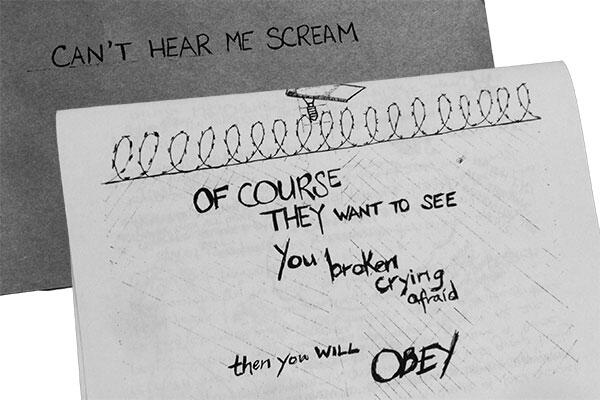
Zine of the Week
By Valerie Morse 15 A5 Pages - Cartoons and Text AVAILABLE AT BLACKSTAR BOOKS Viewing Copy at Critic Office Can’t Hear Me Scream holds a special place in New Zealand for anarchist-inspired librarians and would-be activists, so it seems a fitting place to start this column. While there are wonderful zines of celebration, some are like a stiff drink of humanity. For a start, this zine was created in Arohata Women’s Prison. When Valerie created it she had been arrested on arms charges and was described as a terrorist in the news media as part of the “Urewera 16” in 2008. In the zine, Valerie details her life in prison, prison bureaucracy, and the arbitrary use of power. All of the charges against Valerie were later dropped. The raids are now widely recognised as driven by paranoia and greatly excessive, particularly for scooping up a community librarian and activist like Valerie. Cold comfort for her and others involved after being labeled terrorists, I am sure. When I read the zine it was like a thump to the chest. It is tempting to try and laugh it off as “legit” and earning “street cred” but it is just way too real and all too human. Read the zine. Make up your own mind, but something is missing if you don’t feel something. Zines of the week are chosen by volunteers at Blackstar Books, Dunedin’s own anarchist-inspired community library and social space since 2003, located on Moray Place near the Octagon. Come by sometime – details and directions are available at cargocollective.com/zinefest
-
Culture

Cloud Atlas
Cloud Atlas is David Mitchell’s third novel. His first won the John Llewellyn Rhys Prize, and his second – along with Cloud Atlas itself – was short listed for the Man Booker Prize. So I was expecting great things when I first picked this book up. I was not disappointed. The novel is comprised of six nested stories, beginning with the journal of Adam Ewing – a young Californian man travelling home from the Chathams in the 1700s – through to the tale of Zachry in the distant and post-apocalyptic future. Adam’s story is interrupted mid-sentence to begin Robert Frobisher’s story about helping (and also swindling) an old composer in Belgium in the 1930s. In turn this story is interrupted to tell of Luisa Rey – a journalist in California in the 70s. Here is where we begin to see the connections between the stories. At first it is Robert reading Adam’s journal, then Luisa meets Rufus Sixsmith, a man who had been close friends with Robert Frobisher. And it doesn’t stop there. Luisa’s story is interrupted by Timothy Cavendish, an elderly Englishman who was formerly a publisher. While hiding from some debt collectors he comes across a manuscript that just so happens to be Luisa’s story. At this point it is hard to tell what exactly is “real” in the book and what isn’t. I like to think it all is. After Timothy, we head to a dystopian future and meet Sonmi, a genetically engineered waitress being interviewed about her growth from semi-conscious fabricant, to self-aware human, and the consequences that came from that growth. In this world, Timothy Cavendish’s story has been adapted into film. And then we meet Zachry, in the only story that is not interrupted part the way through. Zachry is an old man, telling us the story of his youth, growing up on the island of Hawaii, after the Fall. His world has regressed to the very primitive stage, and Zachry and his people worship a goddess named Sonmi (how about that?). When Zachry’s narrative is concluded, each story is concluded in reverse. It first returns to Sonmi’s interview and then, in this order: Timothy’s memoires; Luisa’s novel; Frobisher’s letters; and Adam’s journal. Each story is finally brought to a close. Cloud Atlas is like nothing I have ever read before. In structure, yes, but also in its quality. I am not saying it is the greatest book ever written – though in my humble opinion, it’s definitely up there – but it is beautiful. Beautiful in the way it is written, in the way it is crafted, in its themes and in its characters. The connections between not only the stories in the book, but also Mitchell’s other works are clever. And the connections between the characters themselves, though hard to decipher when questioning which of the stories is “real,” are interesting and meaningful and spreading across space and time. Even the historical portions, particularly in the first story with Adam Ewing, are well researched. Mitchell enlisted the help of Michael King - one of New Zealand’s popular historians - to accurately portray the Maori and Mori Ori people living in the Chathams at that time. There are only so many ways I can say how excellent this book is. But it’s true. It is excellent. I could not find a single thing wrong with it. It may not speak to you the way it spoke to me, but I have no doubt it will entertain you.
-
Culture
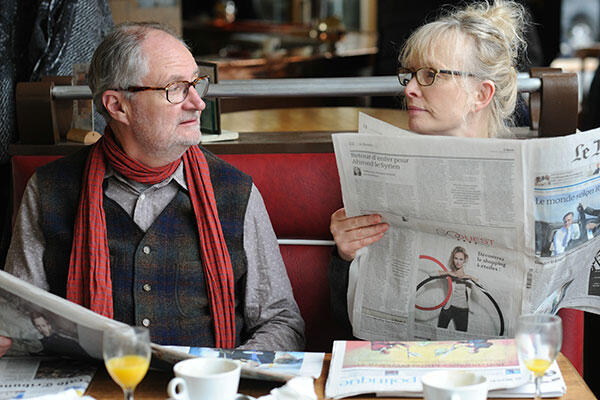
Le Weekend
Rating: A+ Le Weekend is about an aging couple, Nick and Meg, played by Jim Broadbent and Lindsay Duncan, taking a long-overdue second honeymoon to Paris, trying to recreate a time in their lives when they were happy, in love, and blissfully unconcerned with the future. The cast are absolutely superb, and I can’t recommend this film highly enough. The makeup, hair, cinematography design, and even the very dull names Nick and Meg, all show us the plain-ness of both these characters. We see them with all their blemishes, and that makes them real, and goddamn beautiful, to the point that even the old-people sex scenes were charming. Jeff Goldblum, too, apparently defying the tyranny of time, has never been more alluring. The entire film, like life, is a contradiction. The opening scene, their train emerging from the dark channel tunnel from London to Paris, surely symbolises a rebirth. But by the end, this theme has hardly been mentioned. Instead, this film shows us that people can never really escape themselves. Nick and Meg take their entire past with them; happiness and grievances, and spend their weekend in Paris first complaining about and then celebrating their plain life at home in Birmingham. Meg makes a half-hearted attempt to spend a lot of money seeing the sights of Paris, because “when in Rome,” but ultimately can’t avoid herself or her husband. Both of these people have needs, but neither really wants to satisfy the other’s at the expense of their own. We see the real nitty gritty; the incredible contradiction of totally compassionate love, totally malicious hate, and totally self-devoid dependency, all existing at the same time. This relationship was so real to me that during certain scenes, quite simply, I wanted to weep. The beauty of this film is its grounded performances and its intelligent script. The trailer suggests it is a mere rom-com for oldies, but to me, Le Weekend is more akin to and rates much higher than the Before Sunrise trilogy.
-
Culture
Lone Survivor
Rating: B- A war movie has to have something to say to warrant its creation. It shouldn’t be all right for moviemakers to exploit war, and especially true stories of it, as a way of filling an hour and a half blockbuster with explosions and loud noises. Lone Survivor sits right on the line between saying something important about war and exploiting it. It tells the true story of a failed mission by the US Navy Seals to assassinate a Taliban leader and is based on the book The Lone Survivor that was written by THE lone survivor of the mission, Markus Luttrell. Generally, failed missions don’t get published or made into films – however, this story overcomes this because of the reason for its failure. The four soldiers on this mission were discovered by goat farmers, which posed them with the decision of either executing the civilians and carrying on, or letting them go and evacuating. This one decision is the catalyst for the situation in which only one soldier would live. This may sound like a spoiler, however, the film is called Lone Survivor and the film reveals within the first 30 seconds that that survivor is Mark Wahlberg’s character Markus. This is actually the film’s biggest flaw. Instead of emphasising the decision the soldiers were faced with, it instead dedicated two thirds of the film to the battle in which three of the four soldiers are killed. In some ways this could be seen as homage to their sacrifice, but there were moments when it felt more like torture porn and I silently prayed the families of those soldiers would never see this film. This emphasis was lamentable considering that the film had many moments that were full to the brim with fascinating themes and ideas about war, morality and the human condition. This film could have easily been 2/3 ideas, 1/3 violence – however, it sadly chose to do the opposite. Lone Survivor is a war film with some ideas that will absolutely challenge the way you see the world, but you’ll have to sit through some pain and suffering to get to it.
-
Culture

Citizen Kane
Classic Film Sure, Orson Welles died an alcoholic, morbidly obese fruitcake suffering from a Hollywood induced depression, but that takes nothing away from the fact he wrote, produced, directed and starred in what is largely regarded to be the greatest film of all time. Citizen Kane is the cream of the crop, the teriyaki chicken of sushi, the Justin Timberlake of N-Sync, the Oscars of the award ceremonies; the best of the best. After years of building his reputation in theatre and radio, Welles turned heads for producing a hauntingly realistic radio adaptation of H.G. Wells’ War of the Worlds. As the story goes, many of the listeners who missed the introduction believed Earth was actually under siege and began indulging in apocalyptic behaviours. Today, we know these tales of mass-hysteria to be wildly over-stated but 1930s Hollywood didn’t know that, and wanted a slice of the Orson. RKO Radio Pictures offered Welles what is now considered to be the best movie contract ever given to a debut director. Welles was granted full creative control over the script, cast, crew and, most amazingly, final cut of the film. What he made was Citizen Kane. Loosely based on newspaper magnate William Randolph Hearst, the film told the story of megalomaniac Charles Foster Kane, and investigated why he chose the phrase “Rosebud” as his final words before sweet death. In 1941, society still needed convincing that film was an art form, and could offer anything different from radio or theatre. Nothing could have done this better than Citizen Kane – the film was a master-class in “smoke and mirrors” as Welles showcased everything only film can do. Citizen Kane was praised for its non-linear narrative, outrageous cinematography and innovative camera techniques. But when you start at the top, there’s nowhere to go but down. Welles became increasingly disillusioned with Hollywood as he failed to obtain the creative control he was so unusually granted for his debut. Welles’ life sadly came to mimic that of his most famous character; as Citizen Kane concludes: “Mr. Kane was a man who got everything he wanted, and then lost it.”
-
Culture
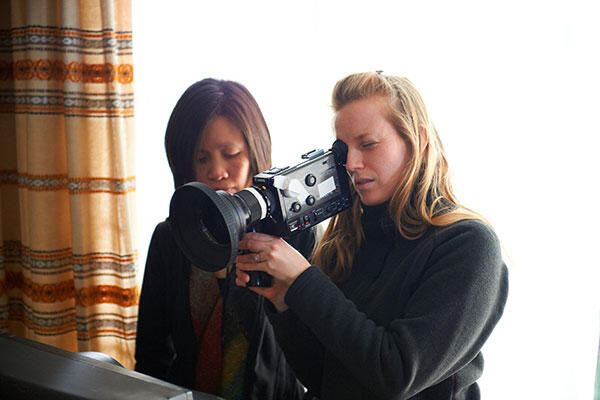
Stories We Tell
Rating: C+ Stories We Tell is a documentary directed by Sarah Polley that chronicles the relationship of her parents, Michael and Diane Polley, with special attention paid to an extramarital affair of her mother’s that resulted in Sarah’s illegitimate birth. While technically a documentary, Stories We Tell is littered with recreations of Michael and Diane’s life together (all shot on Super 8 cameras so as to give the impression of home videos) and voiceovers of Michael Polley reading from his memoir. While the Super 8 segments were wonderfully shot and tricked me into thinking they were genuine home-movies, Michael Polley’s narration felt uncomfortable. Being one of the subjects of the film, it was odd to hear him speak in first-person about events that had just been documented moments before and drew me out of my immersion in the film. This was exacerbated by the inclusion of shots of Michael recording his dialogue in the studio whilst receiving direction from Sarah, the director. At just under two hours, Stories We Tell is rather long for a documentary and makes me think that Sarah Polley had done a Peter Jackson and gotten too attached to the project, leaving her unable to bring it to a suitable conclusion. I spent the last 20 minutes of the film wishing it would end, and there were several instances when the story had reached an apex and the screen would fade to black … only for Polley to follow a story that ultimately detracted from the film as a whole. Much of the final 20 minutes focuses on Sarah’s own involvement in the story; her reaction upon meeting her biological father and her efforts to turn her story into the documentary. Unfortunately it disrupts the flow of the film and causes the audience to once again feel jolted out of the narrative. There were countless scenes of Sarah setting up lights, or reading out emails from her biological father, which would have been better suited to “behind the scenes” footage, rather than the closing minutes of a documentary. Stories We Tell is an emotionally gripping documentary exploring the secrets behind every family through the experiences of one. However, it is let down by awkward and unnecessary sequences that left the film stylistically uncertain; was it gonzo or was it journalism? Stories We Tell is certainly moving but nothing you will regret not seeing.
-
Culture
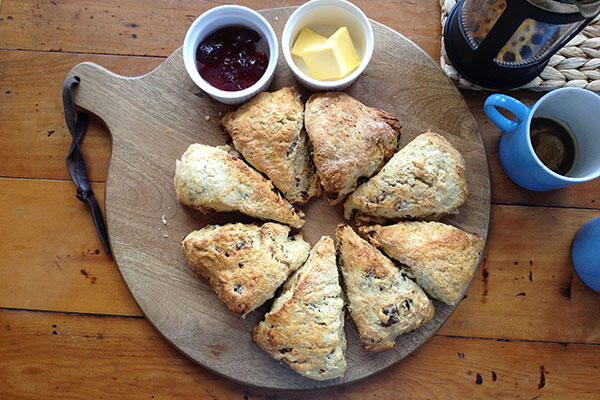
Lemonade Date Scones
Every accomplished woman should know how to make a good batch of scones. Once mastered, you will be able to impress any future mother-in-law that comes your way. After all, isn’t that why us ladies attend university? To find a husband? Throw that old Edmonds recipe out the window. Who has time for rubbing together butter into the flour and sugar? This recipe requires only four ingredients (excluding the dates, of course). All you need is plain flour, baking powder, lemonade and cream. The original recipe calls for self-raising flour but you can make that yourself by sieving together two teaspoons of baking powder into each cup of flour you require. So really there is never a reason to buy self-raising when you can just make it as you require. Add the cream and lemonade in equal parts. Depending on the humidity, you may need just under a cup of each. For those of you new to the scone-making scene, here are Mummy Edmonds’ four scone commandments: Do not over handle the dough. You will overwork the gluten and make them tough and chewy. The heat from your hands also does the dough no favours.Use a knife to mix the dough ingredients. This prevents over handling and just works really well.Place the scones close together on the baking tray. This will prevent them from drying out too much and will make them rise up rather than out.Pat the tops of each scone with a bit of milk just before popping in the oven. It makes the tops all nice.So next Sunday afternoon, whether sunny (like that is going to happen anytime soon) or dreary, and if you’re in need of a warming treat, just whip these out and you will be sure to impress. Ingredients (16 Large Scones)4 cups plain flour8 teaspoons baking powderApprox. 1 cup of creamApprox 1 cup of lemonade1 cup of dates, choppedJuice and zest of 1 orangeExtra milk to pat the tops withExtra flour to roll the dough out withMethodSoak the dates in boiling water for ten minutes. Drain then squeeze over the orange juice. Orange and date is a great flavour combo.Preheat the oven to 180 degrees on bake and line a baking tray with baking paper.In a large bowl, sieve together the flour and baking powder. Stir through the dates soaked in orange juice (don’t drain out the juice).Start with half a cup of cream and lemonade and use a knife to bring the dough together. Add the liquids in equal parts until a slightly sticky dough results. Tip dough onto a floured bench and pat into a fat rectangle or circle shape about two to three centimetres thick. Use a flat-edged blade to slice the dough into squares or wedges. Transfer to a baking tray, making sure there is less than one centimetre between each scone. Pat with milk and sprinkle over the orange zest.Bake for 15-20 minutes until the tops are golden brown and the sides don’t look raw and doughy.Serve hot and fresh with jam, cream and whatever else your heart desires.
-
Culture
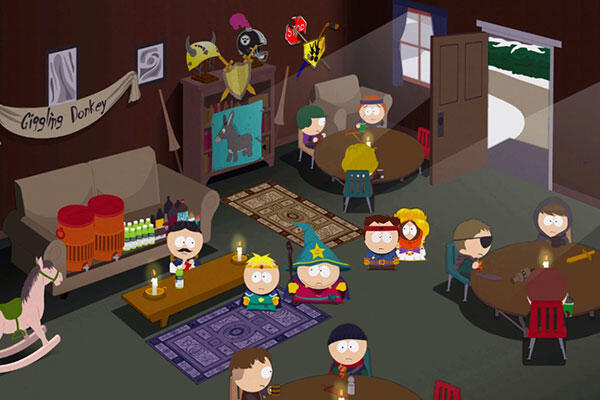
South Park: Stick of Truth
Rating: A Whatever you think of South Park, there is no denying that Matt Stone and Trey Parker, the creators, minds and voices behind the show, are geniuses. They created South Park 18 years ago in each other’s basements with craft paper. The show has gone on to become an undisputable cultural icon and has only become better with age. They have narrowed the process of making the show down to a fine art, taking only six days between starting an episode and airing it. You may think that the humour can be lowbrow, and I am certainly not disputing that, but for every fart joke there are always 20 insightful and thought-provoking jokes about the world we live in and what is happening in it at the time. Despite the success of South Park the show, as a franchise, it has always been lacking. Several attempts at making a video game have all been less than favourable, ranging from abysmal (South Park, 1998) to very average (South Park: Let’s go Tower Defense Play!). The latest South Park game, however, South Park: Stick of Truth, has finally revealed what these games have been missing all this time: the glorious minds of Matt Stone and Trey Parker. South Park: Stick of Truth has been conceived, written and voiced by Stone and Parker, and it absolutely shows. This game is undeniably one of, if not the, funniest games ever made. You could refute this statement with as many titles as you like, but I guarantee that none of them will have you laughing so hard that you have to put the controller down like this game does. The writing is truly what makes this game special. You are a new boy who has just moved into town as all of the young boys of South Park are in the middle of a massive Live-action, Fantasy Role-playing game as two warring factions; the humans being led by Cartman and the Elves led by Kyle. The journey that follows this titillating premise is like none I have ever taken in any medium. Every time I was sure that it couldn’t get any more outrageous it blows down a whole new barrier. There were moments in this game that I still can’t believe happened to me. I never thought that I would play as a shrunken down version of myself, chasing magical gnomes through the entwined bodies of my parents banging each other, the real challenge being trying not to get struck by my mother’s swinging boobs or by dad’s dangling nutsack. These guys get that mediums such as cartoons and video games are literally without limits – if you can think it, you can do it. This is an idea that wins out time and time again in this game. The writing is absolutely just as brilliant as the show’s and, in some cases, it’s even cleverer. In particular, the self-aware nature of the game is inspired. Characters often reference aspects of the game, either tying them into the role-playing game the kids are playing or just outright pointing out that you are playing a video game. This gives Stone and Parker a platform to make fun of aspects of games that we love, but that are really nonsensical, such as battle mechanics. Though the game makes fun of them, the mechanics of this game are just as good as the writing. The game was developed by veteran studio Obsidian, the team responsible for games such as Knights of the Old Republic 2 and Fallout: New Vegas. The gameplay is a mixture of classic JRPG turn-based combat and paper-Mario styled timed attacks and defenses. The combat and exploration systems work excellently, but it is the loot and customisation that really makes the gameplay special. The world is absolutely full to the brim of lootable items, each of them a specific reference to jokes and tropes from the 17 seasons of South Park. However, it is subtle enough to be excellent fan service, while also not being alienating to those who don’t religiously watch the show. Obsidian did an excellent job of bringing the town of South Park to life. The game looks absolutely amazing. If somebody walked through the room and saw you playing they would be sure that you were watching an episode of South Park. South Park: Stick of Truth has set a new standard for licensed and comedy video games. They have proven not only that a franchised game can be as good as its source material, but also that there are avenues available through other mediums that can expand that material further than ever before.
-
Culture

Profile: Tiny Ruins
Holly Fullbrook, the talented songwriter behind Tiny Ruins, talks to Adrian Ng about her upbringing and David Lynch. Your music gives me a strange sense of nostalgia. There’s quite a mystical, ancient quality to it. How do you interact with your music? Is there a certain mood you are trying to capture and immerse yourself in? Thank you, that’s really cool. The only way I can explain how it feels for me is that I follow a bit of an Alice trail - writing, when it’s going well, is like half-remembering something from a dream you had, but it’s all in another language, something you have to crack. And a cloud sort of clears. Maybe the subconscious has a big part to play in it, I don’t know, because often it feels like a trance-like state when you’ve been repeating the same little guitar riff around and around and all these images sort of flash by. It’s like bringing something from the inside, out into the open, to feel like the outside isn’t so unrecognisable. It’s a mix of defence and surrender for me, because being vulnerable can actually make you feel a lot tougher. being honest about how it feels sometimes to be a human on this crazy planet is like setting the balance or something within yourself. After writing a song, it often feels like I’ve emerged stronger, and nothing anyone says can sway me. But then there’s also a huge feeling of doubt, when you re-visit the idea a few days later. There’s hard work and lots of drafts to every song and it can be frustrating and even dull. But at the end of the day, it’s just fun to play around on the guitar, for me. Were there any special moments that sparked your love for music? We found my mum’s old autoharp in the attic; it had quite a mystique to it - the fact it was boxed away, this beautiful thing. As a little kid, my nightly ritual was to sing all the songs I could remember out my window. I memorised the soundtracks to the few old films we were allowed to watch - Dick Van Dyck stuff. I loved the sound of the guitar, when mum played it on the rare occasion - the tapping of nails on the steel strings, smudgy fret noises from not much practice. She’d play old songs from a band she’d been in, songs her ex-boyfriend wrote. When I was 11, my Grandad unearthed that same guitar. Mum had broken her wrist and hadn’t played it in years. Grandad likes country music - Johnny Cash songs, schmoozy ballads, belting them out in his thick Devonshire accent, voice a low rumbling growl. He taught me the chords for “Amazing Grace” one day, and it was like an instantaneous love-at-first-play situation. I wanted to join in with the bunch of dudes at school who played Nirvana covers. I grew up in Bristol, England until I was ten, and my first music teacher was a woman named Jane who introduced me to the cello when I was seven. I remember her house as being very dark and full of strange stuff - objects and furniture that always made me quieten down somehow. She was lovely but also quite stern – she demanded a lot of respect from me, which was quite a feat, as I was quite a wild little kid. Hearing Beatles songs for the first time - once, sleepily, during the car-pool to school, it startled me into awakeness; once when a French exchange group sang “Michelle” in the school assembly; once lying on the floor of a grown-up’s party with my friend who had appendicitis. Jumping around the lounge with my brothers listening to the White Album as Mum did the ironing ... I found Beatles songs particularly mesmerising - I think lots of kids who hear them do - that mix of catchy, sentimental and bizarre. I felt like a bit of an outsider for liking the Beatles then - seems ridiculous now, claiming indignantly to have been a hard-core fan of the most popular, oft-mentioned band in history. I also remember falling in love with Nina Simone and Billie Holliday when I worked in this little second hand clothes shop in Titirangi one summer. I did a few hours on a Sunday, and the whole shop was mine to run. There were never any customers, but I cranked up the funny old collection of CDs there - jazz singers and all the French ones - Edith Piaf, theatrical wartime stuff. For you, what usually evokes the urge to create? Films, conversations, emotions? Nothing in particular, but all of those things definitely have urged me to write. You know that feeling when you’re on Wikipedia, and an article leads you into another and another and suddenly you feel like you’re going down quite a specific tunnel and finding out these startling things - if I ever get that feeling, it usually means it’s a trigger for me to write a song. Something about “discovery” or “epiphany” or “stopping dead in tracks,” “putting two and two together” - like cracking a sort of code I guess, it’s that feeling that I think to myself, “I need to grab some paper and jot all these thoughts down.” Just feeling curious about something, rather than the usual feeling of numbness or blandness. Has playing internationally given you a new perspective when it comes to doing music as a profession? I guess I’ve realised how hard it is, which I never quite contemplated before I began. I have heaps of respect for bands who make it over to NZ to play for us. It’s a long way and not economical. Touring is a slog, even for successful, or what appear to be successful, musicians. It takes a lot of patience, problem-solving, hardiness, and you have to let go of the idea that you will make money from it - all your cash goes straight back into the next thing ... but it’s a fun time as well. I heard David Lynch really loves your music. David Lynch fan? That was a crazy surprise. Yes, I’m a fan of his, from what I’ve seen. I loved Twin Peaks - I more or less watched the first series all in one go. The bass line from the theme song still comes to mind, especially when in small towns. Such a visual director - I can’t shake these really vivid images from his films.
-
Culture
New this Week
The last few days I’ve been recovering from a devastating cold. That’s right, devastating. One rainy afternoon I sat in my room with my lights dimmed and a cup of diluted honey, listening to a playlist I had constructed titled “Sad Bastard Music.” It actually made being sick kind of a pleasant experience. I was in the moment. I was braving the hardships of life and playing in the background was the soundtrack to my misery. Music makes everything magical. Mac DeMarco - Brother Second single from forthcoming album Salad Days. A laid-back, humid daydream. Layered with smooth vocals, and glistening guitars - as if infused with an orange sky and sunset. How to Dress Well - Words I Don't Remember Smooth down-tempo R&B, basically what we’ve come to expect from Tom Krell. Features magnetic synth work as the song builds into a plethora of washed out backing vocals. Mykki Blanco (Ft. Princess Nokia) - Wish You Would Queen of Hip-Hop Mykki Blanco returns, trading verses with Princess Nokia over a percussive, rhythmic instumental from Bremar. Pure X - Heaven Psychedelic pop dreamers Pure X return with a new single from their upcoming album Angel. A blissful, tepid song, with a wistful vocal melody. Frankie Cosmos - Birthday Song Sincere, pop songwriting from prolific nineteen-year-old mastermind Frankie Cosmos. “Birthday Song” is an infectious, schoolyard track, short and sweet.
-
Culture

The War On Drugs - Lost in the Dream
“It always gets so hard to see right before the moon,” sings Adam Granduciel, songwriter for The War on Drugs, halfway through their latest LP. It’s a new take on the old cliché, “it’s always darkest before the dawn,” but one that reflects more accurately the 35-year-old’s true longing. Granduciel isn’t waiting for the harsh light of day; he’s yearning for the quiet of night. Returning home from touring 2011’s Slave Ambient, he found himself disconnected from the community he had left behind. Lost in the Dream is a lyrically dark, but ultimately uplifting album that shows him dealing with isolation and figuring out where to go next. Like ex-bandmate Kurt Vile, The War on Drugs produce songs that consistently exceed the three-minute length that one expects from most modern bands. At nearly nine minutes, the opening track, “Under the Pressure,” drives forward with Dylan-esque vocals; the beat almost Krautrockian in that it feels like it could just go on forever. Sooner than you think, you reach lead-single “Red Eyes,” perhaps the most heavily Springsteen-influenced track. It’s life affirming stadium rock with darker undertones that melt away any potentially cheesy edges. Lyrically, throughout this LP, Granduciel is focused on the pressures of day, the peace of night and wondering whether, in his finest hour, he “can be more than just a fool.” His songs reflect the dark situation he’s found himself in but at no point does he sound defeated. The only possible problem with this album is that at about 60 minutes, and with such a distinct sound, it can start to feel a bit same-sy. However, this is only a drawback if listened to outside of its ideal context. This is very much a slow-burning record that captures the timelessness of night – the perfect soundtrack for a long contemplative drive. In a situation where you might get “lost in the dream or just the silence of a moment,” you can’t help but wish Lost in the Dream would never end.
-
Culture
Download of the Week: Lontalius - The World Will Never Know About Us (NZ)
Eddie Johnston is a prolific music prodigy based in Wellington, also known also for his project Race Banyon. The World Will Never Know About Us contains some of his most beautifully crafted, electronic pop songs. Lush and mesmerising. Available for free download at lontalius.bandcamp.com.
-
Culture

Interview: Marie Strauss
I’ve realised, in the midst of my daily routines, that there seems to be this generalised idea that art and fashion coexist, and it has left me wondering – with fashion becoming the focus of an increasing number of exhibitions and shows (i.e. iD Fashion Week), is the distinct line that once separated fashion and art becoming completely blurred? A handful of notable designers throughout history have stated unequivocally that fashion is art but in contemporary culture, the topic continues to be debated and designers, as well as art and fashion historians, remain divided. The other day I went into Dada, the small boutique store directly beneath my apartment, and talked to Marie Strauss – owner, designer, curator, world traveller, and fellow art enthusiast, for at least an hour. Really, all we needed was coffee and cake. Strauss started the Dada Vintage label in 2008 when she also opened the Dada boutique store on Moray Place. In a completely non-ostentatious location, Dada is squeezed in between Mint Gallery and the Moray Place florist. Marie’s personal taste is reflected in both the store – which is filled exclusively with racks of very well designed and made clothing – and in the front window, which artfully displays hand made popcorn sculptures, painted ceramic cat figures, dada-doll mannequins draped in vibrantly patterned silk fabrics and Kate Sylvester cashmere cardigans. Typically dressed in a Christian La Croix-esque outfit (red nails, costume jewellery and shiny shoes), with Vivienne Westwood-chic (but short) hair, Marie stands alone behind her small counter top, which is elaborately decorated with numerous piles of jewellery, books and fabric swatches. Her presence alone totally adds to the already distinctively quirky, but still à la mode, aesthetic. The store, and Marie’s own designs are eclectic, colourful and theatrical, but remain understated, edgy and, above all, tasteful and refined. Holding a degree in drama, two master's degrees in fine arts, a postgraduate diploma in costume design and an honours degree in ceramics, Marie’s artistic flare and extensive knowledge of the arts and fashion is clearly manifested in her store, and her designs, which seamlessly display a sound knowledge and profound understanding of style and quality combined with influences drawn from classic couture, contemporary art and architecture, as well as the European avant-garde and Dada period. In case you’re confused about the term “Dada” and its overall significance, Dada is the name given to an art movement that started in Germany in the 1920’s. The movement primarily involved visual arts, literature, poetry, art manifestos, art theory, theatre, and design, and concentrated anti-war politics through a rejection of the prevailing standards in art, through anti-art works. In addition to being anti-war, Dada was also anti-bourgeois and had political affinities with the radical left. Hannah Hoch, the pioneering female Dadaist, sardonically critiqued the mass culture beauty industry of the time in her work, and equated women's liberation with social and political revolution. Dada laid the foundation for abstract art, a starting point for performance art, and a prelude to postmodernism; it was an influence on pop art, a celebration of anti-art, and the movement that opened the door for Surrealism. With iD Fashion Week fast approaching, I caught up with Marie for a fascinating conversation. Hi, Marie. I’m so pleased to get a chance to talk to you! This store is so great. How long have you been here for? For about seven years or so! I used to teach at the art school, but I have had numerous businesses. I had a furniture design store, interior decorating, and then a t-shirt design business called Strousse. I was also in partnership with a graphic designer once. He was really great. Did you name and decorate the store yourself? I love the window display! Dada is obviously named after the movement. The Dada dolls in the window are taken from the Dada period. Hannah Hoch is a really big inspiration of mine as well. Dada apparently means “hobby horse,” so I have a carousel horse behind the counter there. Well, it’s a framed photograph of one. The store is really personal for me, it’s like a studio; I can exhibit whatever I want here. Art, pots. Anything. It allows for me to be very inventive. Tell me a little about yourself. Where are you from? What's your educational background? What are your general professional and non-professional interests? I completed a BA in drama and costume design in South Africa, then an MFA in Johannesburg, and then I did ceramics in my honours year before getting my second MFA. I consider myself to be a maker, though – not an artist or designer, or anything my qualifications say I am. I just make things. I started the business with someone else and it was a disaster. I’m too opinionated to work with anyone. I have a friend who is a designer, she lives in Auckland and she’s the only person I could work with because our taste is the same. The shop is the manifestation of my own vision and it’s precious to me. It’s my aesthetic. What I choose from other designers has to match my own designs and my own taste. It’s very personally invested. Who are some of your favourite designers? Artists? My favourite Italian label is Marnie and, of course, Prada; Walter van Beirendonck, older designers as well – Balenciaga, Valentino. The best designers’ clothes are always wearable. With fashion becoming the focus of an increasing number of museum exhibitions and a multitude of artists now collaborating with high end/designer labels, the distinct line that once separated fashion and art is more blurred. What is your view on the coexistence of fashion and art? I think it should be a very clear line otherwise it becomes de-crafting. Fashion exists in the same way Pollock’s paintings do – it’s the craft of it. Fashion is not fine art; fine art is the influence of fashion. Clothing on a catwalk is an occasion for display. It’s very theatrical, but that doesn’t make it art, or the clothes art, because with fashion, nothing is new, it’s all regenerated and in a framework that is relevant to the time. I just find it astonishing in fashion that people blur the line between fashion and art. Just because fashion is fleeting and art is forever, it doesn’t mean that fashion has to be less, or has to be defined by existing as art. It is its own thing. Fashion is just superficial fun; it feeds an ego – it’s about presentation of the self. In saying that, however, you are what you wear, but in a lot of ways you aren’t what you design. If you hang art on your walls people will judge you by that, whereas with fashion, it’s changing every day, and you can throw it away if you don’t like it. What do you think makes a quality article of clothing? Only three things: fabric, design, and craftsmanship. Beautiful fabric, which is beautifully designed and beautifully made, is all one needs. Good quality clothing just hangs better, looks better and is better. There’s this odd confusion where people buy things that cost less thinking that it’s the same. You can buy a look for very little, but you can’t buy quality. And quality is made to last – like the lifetime of a classic silhouette. Why don’t people appreciate the detail, design and quality of high-end fashion? They have no expectation of it, so they don’t look for it. I agree. Can you describe the general process you go through to design and realise a piece of clothing? A lot of clothing brands want to make multiples of things so you have to go to production, but I only want to make clothing for myself, and my own store. I prefer exclusivity. I just design my own clothes and make them, then sell them. How would you define Dunedin’s fashion? Because I look for my fashion elsewhere, and I’m not from Dunedin, I was never influenced by Dunedin fashion, so I am relatively unfamiliar. But that’s not saying I don’t think it’s important, I just have no knowledge of it. The only time I ever see Dunedin designer’s clothing is in iD. I know Dunedin is seen as a fashion hub; I just don’t keep up with it. My influences are European art and architecture and fashion – I live on a farm, I’m not socially involved. Fashion for me is like painting, or making a meal or creating a pot – to me it’s all the same. My taste is eclectic – I collaborate with people who want to make things happen because they find it exciting, not to follow some current trend. It’s not a sound business attitude, but at the end of the day I’d rather do this than not. A lot of people want to be something or be defined by what they do or create and I just don’t think it’s important. Let’s talk about iD. How long have you been involved with iD for? This is my fifth year at iD, and the third year that I am doing the 15-year collection. It’s the same size as Plume and my disorganisation is quite overwhelming! What’s it like preparing for such a big show – especially this year, because of the anniversary – can you explain the process? I treat it like a project or a proposal. I get my ideas in book form with swatches and drawings and photos and I work from what seems to be a storyline. It makes sense for me to do it like that, a lot of designers do. It also forces me to get things made for the season. It’s a pity there’s no iD before summer. Where did you draw your inspiration for the iD collection? Well, the theme is taking a dog for a walk in France. It sounds very banal but the way the French dress when they take their dogs for walks is fabulous. The coats they wear, the forms of those coats are so beautiful. There is a real emphasis on looking respectable and the small detail of things is inspiring. The way bread is wrapped perfectly and the feel of beautiful fabric is inspiring. What makes life refined is inspiring. Lining is the right lining. The joy is in the small things. I also love the French 18th Century. I love Milan, I love it a lot and I know it quite well. I go to Europe twice a year and when I’m in Milan I go for walks in the morning before the sun comes up and the light falling on the churches is unforgettable. French culture really is the pinnacle of high culture. Garnier is wonderful, too. There’s a French saying, “To dress badly is offensive to other people …” How did you transfer your inspirations into your designs? This year’s collection, as I said, is inspired by form, colour and patterns, with a mix of fabric, textile and fur to strengthen the silhouette. It is all about energy and light-hearted fun, form, theatre and humour and it comprises mainly of one-off pieces. I look forward to seeing the show and your collection! Thank you for talking to me, Marie; it’s been inspiring, interesting, and fun. And I want to buy one of those popcorn sculptures, so let’s exchange emails. With that, we exchanged email addresses, and I left the store. While a definitive answer to my initial question may not have been answered, the tug of war between fashion and art will certainly persist. Perhaps it’s just best to think of art and fashion as having a symbiotic relationship as two different entities that feed off of one another.


