Download of the Week: Lontalius - The World Will Never Know About Us (NZ)
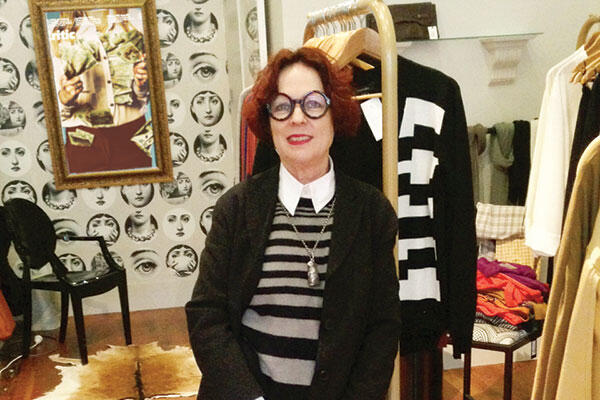
I’ve realised, in the midst of my daily routines, that there seems to be this generalised idea that art and fashion coexist, and it has left me wondering – with fashion becoming the focus of an increasing number of exhibitions and shows (i.e. iD Fashion Week), is the distinct line that once separated fashion and art becoming completely blurred? A handful of notable designers throughout history have stated unequivocally that fashion is art but in contemporary culture, the topic continues to be debated and designers, as well as art and fashion historians, remain divided. The other day I went into Dada, the small boutique store directly beneath my apartment, and talked to Marie Strauss – owner, designer, curator, world traveller, and fellow art enthusiast, for at least an hour. Really, all we needed was coffee and cake. Strauss started the Dada Vintage label in 2008 when she also opened the Dada boutique store on Moray Place. In a completely non-ostentatious location, Dada is squeezed in between Mint Gallery and the Moray Place florist. Marie’s personal taste is reflected in both the store – which is filled exclusively with racks of very well designed and made clothing – and in the front window, which artfully displays hand made popcorn sculptures, painted ceramic cat figures, dada-doll mannequins draped in vibrantly patterned silk fabrics and Kate Sylvester cashmere cardigans. Typically dressed in a Christian La Croix-esque outfit (red nails, costume jewellery and shiny shoes), with Vivienne Westwood-chic (but short) hair, Marie stands alone behind her small counter top, which is elaborately decorated with numerous piles of jewellery, books and fabric swatches. Her presence alone totally adds to the already distinctively quirky, but still à la mode, aesthetic. The store, and Marie’s own designs are eclectic, colourful and theatrical, but remain understated, edgy and, above all, tasteful and refined. Holding a degree in drama, two master's degrees in fine arts, a postgraduate diploma in costume design and an honours degree in ceramics, Marie’s artistic flare and extensive knowledge of the arts and fashion is clearly manifested in her store, and her designs, which seamlessly display a sound knowledge and profound understanding of style and quality combined with influences drawn from classic couture, contemporary art and architecture, as well as the European avant-garde and Dada period. In case you’re confused about the term “Dada” and its overall significance, Dada is the name given to an art movement that started in Germany in the 1920’s. The movement primarily involved visual arts, literature, poetry, art manifestos, art theory, theatre, and design, and concentrated anti-war politics through a rejection of the prevailing standards in art, through anti-art works. In addition to being anti-war, Dada was also anti-bourgeois and had political affinities with the radical left. Hannah Hoch, the pioneering female Dadaist, sardonically critiqued the mass culture beauty industry of the time in her work, and equated women's liberation with social and political revolution. Dada laid the foundation for abstract art, a starting point for performance art, and a prelude to postmodernism; it was an influence on pop art, a celebration of anti-art, and the movement that opened the door for Surrealism. With iD Fashion Week fast approaching, I caught up with Marie for a fascinating conversation. Hi, Marie. I’m so pleased to get a chance to talk to you! This store is so great. How long have you been here for? For about seven years or so! I used to teach at the art school, but I have had numerous businesses. I had a furniture design store, interior decorating, and then a t-shirt design business called Strousse. I was also in partnership with a graphic designer once. He was really great. Did you name and decorate the store yourself? I love the window display! Dada is obviously named after the movement. The Dada dolls in the window are taken from the Dada period. Hannah Hoch is a really big inspiration of mine as well. Dada apparently means “hobby horse,” so I have a carousel horse behind the counter there. Well, it’s a framed photograph of one. The store is really personal for me, it’s like a studio; I can exhibit whatever I want here. Art, pots. Anything. It allows for me to be very inventive. Tell me a little about yourself. Where are you from? What's your educational background? What are your general professional and non-professional interests? I completed a BA in drama and costume design in South Africa, then an MFA in Johannesburg, and then I did ceramics in my honours year before getting my second MFA. I consider myself to be a maker, though – not an artist or designer, or anything my qualifications say I am. I just make things. I started the business with someone else and it was a disaster. I’m too opinionated to work with anyone. I have a friend who is a designer, she lives in Auckland and she’s the only person I could work with because our taste is the same. The shop is the manifestation of my own vision and it’s precious to me. It’s my aesthetic. What I choose from other designers has to match my own designs and my own taste. It’s very personally invested. Who are some of your favourite designers? Artists? My favourite Italian label is Marnie and, of course, Prada; Walter van Beirendonck, older designers as well – Balenciaga, Valentino. The best designers’ clothes are always wearable. With fashion becoming the focus of an increasing number of museum exhibitions and a multitude of artists now collaborating with high end/designer labels, the distinct line that once separated fashion and art is more blurred. What is your view on the coexistence of fashion and art? I think it should be a very clear line otherwise it becomes de-crafting. Fashion exists in the same way Pollock’s paintings do – it’s the craft of it. Fashion is not fine art; fine art is the influence of fashion. Clothing on a catwalk is an occasion for display. It’s very theatrical, but that doesn’t make it art, or the clothes art, because with fashion, nothing is new, it’s all regenerated and in a framework that is relevant to the time. I just find it astonishing in fashion that people blur the line between fashion and art. Just because fashion is fleeting and art is forever, it doesn’t mean that fashion has to be less, or has to be defined by existing as art. It is its own thing. Fashion is just superficial fun; it feeds an ego – it’s about presentation of the self. In saying that, however, you are what you wear, but in a lot of ways you aren’t what you design. If you hang art on your walls people will judge you by that, whereas with fashion, it’s changing every day, and you can throw it away if you don’t like it. What do you think makes a quality article of clothing? Only three things: fabric, design, and craftsmanship. Beautiful fabric, which is beautifully designed and beautifully made, is all one needs. Good quality clothing just hangs better, looks better and is better. There’s this odd confusion where people buy things that cost less thinking that it’s the same. You can buy a look for very little, but you can’t buy quality. And quality is made to last – like the lifetime of a classic silhouette. Why don’t people appreciate the detail, design and quality of high-end fashion? They have no expectation of it, so they don’t look for it. I agree. Can you describe the general process you go through to design and realise a piece of clothing? A lot of clothing brands want to make multiples of things so you have to go to production, but I only want to make clothing for myself, and my own store. I prefer exclusivity. I just design my own clothes and make them, then sell them. How would you define Dunedin’s fashion? Because I look for my fashion elsewhere, and I’m not from Dunedin, I was never influenced by Dunedin fashion, so I am relatively unfamiliar. But that’s not saying I don’t think it’s important, I just have no knowledge of it. The only time I ever see Dunedin designer’s clothing is in iD. I know Dunedin is seen as a fashion hub; I just don’t keep up with it. My influences are European art and architecture and fashion – I live on a farm, I’m not socially involved. Fashion for me is like painting, or making a meal or creating a pot – to me it’s all the same. My taste is eclectic – I collaborate with people who want to make things happen because they find it exciting, not to follow some current trend. It’s not a sound business attitude, but at the end of the day I’d rather do this than not. A lot of people want to be something or be defined by what they do or create and I just don’t think it’s important. Let’s talk about iD. How long have you been involved with iD for? This is my fifth year at iD, and the third year that I am doing the 15-year collection. It’s the same size as Plume and my disorganisation is quite overwhelming! What’s it like preparing for such a big show – especially this year, because of the anniversary – can you explain the process? I treat it like a project or a proposal. I get my ideas in book form with swatches and drawings and photos and I work from what seems to be a storyline. It makes sense for me to do it like that, a lot of designers do. It also forces me to get things made for the season. It’s a pity there’s no iD before summer. Where did you draw your inspiration for the iD collection? Well, the theme is taking a dog for a walk in France. It sounds very banal but the way the French dress when they take their dogs for walks is fabulous. The coats they wear, the forms of those coats are so beautiful. There is a real emphasis on looking respectable and the small detail of things is inspiring. The way bread is wrapped perfectly and the feel of beautiful fabric is inspiring. What makes life refined is inspiring. Lining is the right lining. The joy is in the small things. I also love the French 18th Century. I love Milan, I love it a lot and I know it quite well. I go to Europe twice a year and when I’m in Milan I go for walks in the morning before the sun comes up and the light falling on the churches is unforgettable. French culture really is the pinnacle of high culture. Garnier is wonderful, too. There’s a French saying, “To dress badly is offensive to other people …” How did you transfer your inspirations into your designs? This year’s collection, as I said, is inspired by form, colour and patterns, with a mix of fabric, textile and fur to strengthen the silhouette. It is all about energy and light-hearted fun, form, theatre and humour and it comprises mainly of one-off pieces. I look forward to seeing the show and your collection! Thank you for talking to me, Marie; it’s been inspiring, interesting, and fun. And I want to buy one of those popcorn sculptures, so let’s exchange emails. With that, we exchanged email addresses, and I left the store. While a definitive answer to my initial question may not have been answered, the tug of war between fashion and art will certainly persist. Perhaps it’s just best to think of art and fashion as having a symbiotic relationship as two different entities that feed off of one another.
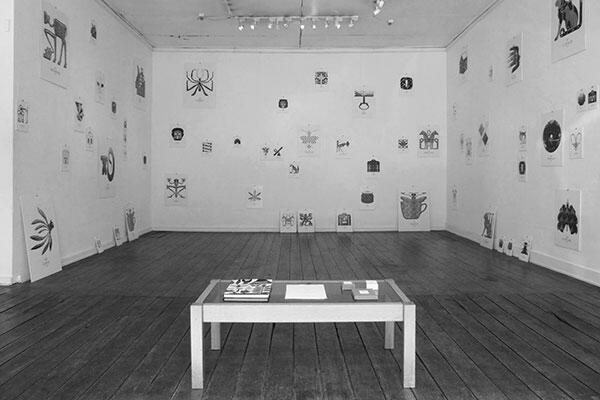
Brett McDowell Gallery Exhibited until 27 March 2014 Since the start of the month, the Brett McDowell Gallery on Dowling Street has exhibited the latest in an on going series of digital archival reproductions from Richard Killeen. Killeen is perhaps one of the country’s foremost modernist artists, shooting to fame in the ‘70s for his iconic cut outs that allowed any individual hanging them to play the part of curator. Collections of cut outs came with no instructions as to how each individual piece should play off the others, and as such they are some of the most dynamic artworks from the period. In this exhibition, we can see a similarly brilliant inconsistency coming out of such a lack of direction. Although each individual reproduction is in itself a single piece this time round, the installation of the exhibition as a whole gives the gallerist a similar curatorial role to the collector of the ‘70s. It is a further exploration of an idea already presented at Peter McLeavey in Wellington in 2012, and Ivan Anthony last year in Auckland; as such, we can observe the different curatorial styles of each gallerist. While both of the past two variations were rather formulaic in their presentation – Ivan Anthony’s was quite simply a grid, and Peter McLeavey’s departed only slightly from this – Brett McDowell’s installation harkens back much more directly to the apparent randomness often exhibited by Killeen’s early “curators.” It is messy and exciting, with pieces not only jumping around in location but also in size. As for the reproductions themselves, they evoke a reaction both enthusiastic and critical. On the one hand, the collection could seem like it’s simply McDowell’s turn to host the great touring money-maker of Killeen’s reproductions, with important dealer galleries in three of New Zealand’s major art centres all exhibiting a variation of the same idea. And with a seemingly endless library of designs that Killeen could print off at will to pay his rent, it’s easy to write the exhibition off as a sell-out. However, in being highly self-referential and combining key aspects of various periods in Killeen’s career, the pieces are an iconic, self-curated collection in themselves. They not only bring to mind his cut outs of the ‘70s but also his obsessions with taxonomy and patterning. The printing of titles onto the pieces themselves not only accentuates the taxonomic theme but also jumps in to stop the viewer from dwelling too much on distorted meanings – abruptly reminding the viewer that Killeen has decided, in textbook fashion, exactly what each piece is and what it represents. It thus opens a dialogue about the importance of viewer projection and their relationships with the meaning of malleable art works, while also critiquing the desire of artists to categorise and simplify the world at large. A further aspect not to discount is that while this artist has been around for decades, here he finds himself playing with phenomena only made possible through digital mediums. He is now very much a digital artist, never one to find himself stuck behind the times. The images themselves are computer-generated, yet still characteristically taxonomic. They must come from a futuristic imagination that sees human culture moving steadily back in time while digital technologies continue to be prevalent. Now, it’s not often that the cost of artworks comes into an exhibition review. However, priced as reasonably as they are, these pieces represent an ideal opportunity for new collectors to dip their toes in the water with a piece that, if you read enough, has almost endless historical and conceptual frameworks to discuss with a visitor or ponder on your own. They are entry-level original art works by a hugely important figure in New Zealand’s short art history, a fact that must surely have been recognised both by the artist and gallerist as an interesting dynamic to foster.
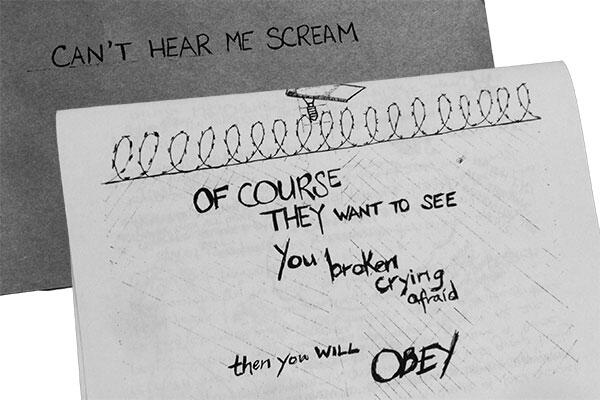
By Valerie Morse 15 A5 Pages - Cartoons and Text AVAILABLE AT BLACKSTAR BOOKS Viewing Copy at Critic Office Can’t Hear Me Scream holds a special place in New Zealand for anarchist-inspired librarians and would-be activists, so it seems a fitting place to start this column. While there are wonderful zines of celebration, some are like a stiff drink of humanity. For a start, this zine was created in Arohata Women’s Prison. When Valerie created it she had been arrested on arms charges and was described as a terrorist in the news media as part of the “Urewera 16” in 2008. In the zine, Valerie details her life in prison, prison bureaucracy, and the arbitrary use of power. All of the charges against Valerie were later dropped. The raids are now widely recognised as driven by paranoia and greatly excessive, particularly for scooping up a community librarian and activist like Valerie. Cold comfort for her and others involved after being labeled terrorists, I am sure. When I read the zine it was like a thump to the chest. It is tempting to try and laugh it off as “legit” and earning “street cred” but it is just way too real and all too human. Read the zine. Make up your own mind, but something is missing if you don’t feel something. Zines of the week are chosen by volunteers at Blackstar Books, Dunedin’s own anarchist-inspired community library and social space since 2003, located on Moray Place near the Octagon. Come by sometime – details and directions are available at cargocollective.com/zinefest
Cloud Atlas is David Mitchell’s third novel. His first won the John Llewellyn Rhys Prize, and his second – along with Cloud Atlas itself – was short listed for the Man Booker Prize. So I was expecting great things when I first picked this book up. I was not disappointed. The novel is comprised of six nested stories, beginning with the journal of Adam Ewing – a young Californian man travelling home from the Chathams in the 1700s – through to the tale of Zachry in the distant and post-apocalyptic future. Adam’s story is interrupted mid-sentence to begin Robert Frobisher’s story about helping (and also swindling) an old composer in Belgium in the 1930s. In turn this story is interrupted to tell of Luisa Rey – a journalist in California in the 70s. Here is where we begin to see the connections between the stories. At first it is Robert reading Adam’s journal, then Luisa meets Rufus Sixsmith, a man who had been close friends with Robert Frobisher. And it doesn’t stop there. Luisa’s story is interrupted by Timothy Cavendish, an elderly Englishman who was formerly a publisher. While hiding from some debt collectors he comes across a manuscript that just so happens to be Luisa’s story. At this point it is hard to tell what exactly is “real” in the book and what isn’t. I like to think it all is. After Timothy, we head to a dystopian future and meet Sonmi, a genetically engineered waitress being interviewed about her growth from semi-conscious fabricant, to self-aware human, and the consequences that came from that growth. In this world, Timothy Cavendish’s story has been adapted into film. And then we meet Zachry, in the only story that is not interrupted part the way through. Zachry is an old man, telling us the story of his youth, growing up on the island of Hawaii, after the Fall. His world has regressed to the very primitive stage, and Zachry and his people worship a goddess named Sonmi (how about that?). When Zachry’s narrative is concluded, each story is concluded in reverse. It first returns to Sonmi’s interview and then, in this order: Timothy’s memoires; Luisa’s novel; Frobisher’s letters; and Adam’s journal. Each story is finally brought to a close. Cloud Atlas is like nothing I have ever read before. In structure, yes, but also in its quality. I am not saying it is the greatest book ever written – though in my humble opinion, it’s definitely up there – but it is beautiful. Beautiful in the way it is written, in the way it is crafted, in its themes and in its characters. The connections between not only the stories in the book, but also Mitchell’s other works are clever. And the connections between the characters themselves, though hard to decipher when questioning which of the stories is “real,” are interesting and meaningful and spreading across space and time. Even the historical portions, particularly in the first story with Adam Ewing, are well researched. Mitchell enlisted the help of Michael King - one of New Zealand’s popular historians - to accurately portray the Maori and Mori Ori people living in the Chathams at that time. There are only so many ways I can say how excellent this book is. But it’s true. It is excellent. I could not find a single thing wrong with it. It may not speak to you the way it spoke to me, but I have no doubt it will entertain you.
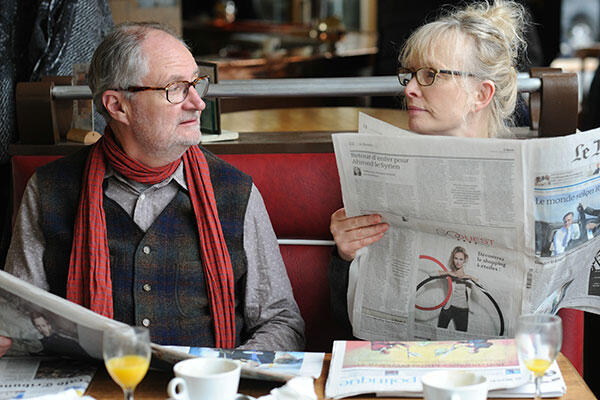
Rating: A+ Le Weekend is about an aging couple, Nick and Meg, played by Jim Broadbent and Lindsay Duncan, taking a long-overdue second honeymoon to Paris, trying to recreate a time in their lives when they were happy, in love, and blissfully unconcerned with the future. The cast are absolutely superb, and I can’t recommend this film highly enough. The makeup, hair, cinematography design, and even the very dull names Nick and Meg, all show us the plain-ness of both these characters. We see them with all their blemishes, and that makes them real, and goddamn beautiful, to the point that even the old-people sex scenes were charming. Jeff Goldblum, too, apparently defying the tyranny of time, has never been more alluring. The entire film, like life, is a contradiction. The opening scene, their train emerging from the dark channel tunnel from London to Paris, surely symbolises a rebirth. But by the end, this theme has hardly been mentioned. Instead, this film shows us that people can never really escape themselves. Nick and Meg take their entire past with them; happiness and grievances, and spend their weekend in Paris first complaining about and then celebrating their plain life at home in Birmingham. Meg makes a half-hearted attempt to spend a lot of money seeing the sights of Paris, because “when in Rome,” but ultimately can’t avoid herself or her husband. Both of these people have needs, but neither really wants to satisfy the other’s at the expense of their own. We see the real nitty gritty; the incredible contradiction of totally compassionate love, totally malicious hate, and totally self-devoid dependency, all existing at the same time. This relationship was so real to me that during certain scenes, quite simply, I wanted to weep. The beauty of this film is its grounded performances and its intelligent script. The trailer suggests it is a mere rom-com for oldies, but to me, Le Weekend is more akin to and rates much higher than the Before Sunrise trilogy.
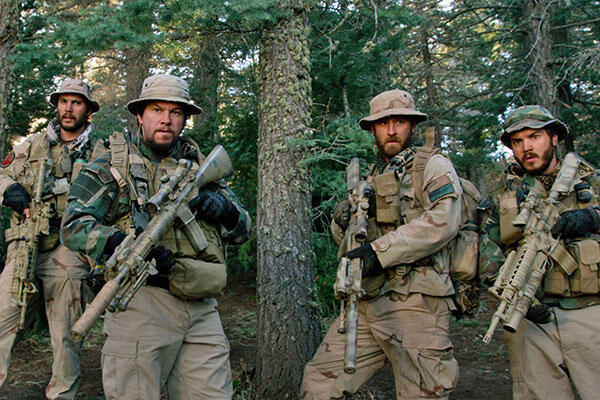
Rating: B- A war movie has to have something to say to warrant its creation. It shouldn’t be all right for moviemakers to exploit war, and especially true stories of it, as a way of filling an hour and a half blockbuster with explosions and loud noises. Lone Survivor sits right on the line between saying something important about war and exploiting it. It tells the true story of a failed mission by the US Navy Seals to assassinate a Taliban leader and is based on the book The Lone Survivor that was written by THE lone survivor of the mission, Markus Luttrell. Generally, failed missions don’t get published or made into films – however, this story overcomes this because of the reason for its failure. The four soldiers on this mission were discovered by goat farmers, which posed them with the decision of either executing the civilians and carrying on, or letting them go and evacuating. This one decision is the catalyst for the situation in which only one soldier would live. This may sound like a spoiler, however, the film is called Lone Survivor and the film reveals within the first 30 seconds that that survivor is Mark Wahlberg’s character Markus. This is actually the film’s biggest flaw. Instead of emphasising the decision the soldiers were faced with, it instead dedicated two thirds of the film to the battle in which three of the four soldiers are killed. In some ways this could be seen as homage to their sacrifice, but there were moments when it felt more like torture porn and I silently prayed the families of those soldiers would never see this film. This emphasis was lamentable considering that the film had many moments that were full to the brim with fascinating themes and ideas about war, morality and the human condition. This film could have easily been 2/3 ideas, 1/3 violence – however, it sadly chose to do the opposite. Lone Survivor is a war film with some ideas that will absolutely challenge the way you see the world, but you’ll have to sit through some pain and suffering to get to it.
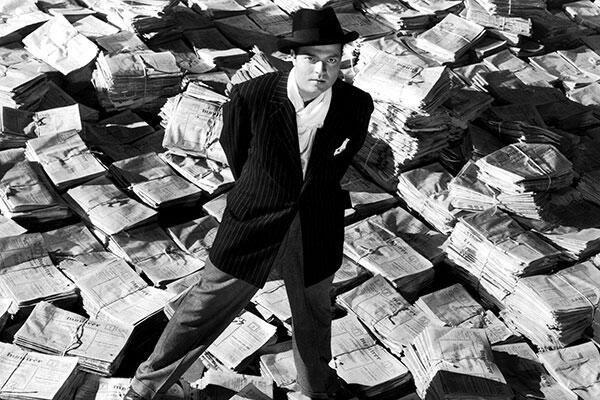
Classic Film Sure, Orson Welles died an alcoholic, morbidly obese fruitcake suffering from a Hollywood induced depression, but that takes nothing away from the fact he wrote, produced, directed and starred in what is largely regarded to be the greatest film of all time. Citizen Kane is the cream of the crop, the teriyaki chicken of sushi, the Justin Timberlake of N-Sync, the Oscars of the award ceremonies; the best of the best. After years of building his reputation in theatre and radio, Welles turned heads for producing a hauntingly realistic radio adaptation of H.G. Wells’ War of the Worlds. As the story goes, many of the listeners who missed the introduction believed Earth was actually under siege and began indulging in apocalyptic behaviours. Today, we know these tales of mass-hysteria to be wildly over-stated but 1930s Hollywood didn’t know that, and wanted a slice of the Orson. RKO Radio Pictures offered Welles what is now considered to be the best movie contract ever given to a debut director. Welles was granted full creative control over the script, cast, crew and, most amazingly, final cut of the film. What he made was Citizen Kane. Loosely based on newspaper magnate William Randolph Hearst, the film told the story of megalomaniac Charles Foster Kane, and investigated why he chose the phrase “Rosebud” as his final words before sweet death. In 1941, society still needed convincing that film was an art form, and could offer anything different from radio or theatre. Nothing could have done this better than Citizen Kane – the film was a master-class in “smoke and mirrors” as Welles showcased everything only film can do. Citizen Kane was praised for its non-linear narrative, outrageous cinematography and innovative camera techniques. But when you start at the top, there’s nowhere to go but down. Welles became increasingly disillusioned with Hollywood as he failed to obtain the creative control he was so unusually granted for his debut. Welles’ life sadly came to mimic that of his most famous character; as Citizen Kane concludes: “Mr. Kane was a man who got everything he wanted, and then lost it.”
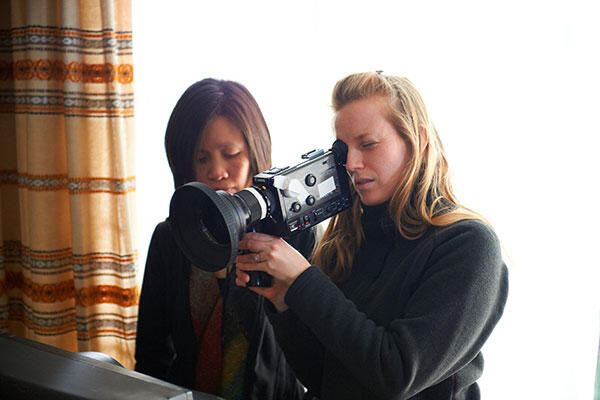
Rating: C+ Stories We Tell is a documentary directed by Sarah Polley that chronicles the relationship of her parents, Michael and Diane Polley, with special attention paid to an extramarital affair of her mother’s that resulted in Sarah’s illegitimate birth. While technically a documentary, Stories We Tell is littered with recreations of Michael and Diane’s life together (all shot on Super 8 cameras so as to give the impression of home videos) and voiceovers of Michael Polley reading from his memoir. While the Super 8 segments were wonderfully shot and tricked me into thinking they were genuine home-movies, Michael Polley’s narration felt uncomfortable. Being one of the subjects of the film, it was odd to hear him speak in first-person about events that had just been documented moments before and drew me out of my immersion in the film. This was exacerbated by the inclusion of shots of Michael recording his dialogue in the studio whilst receiving direction from Sarah, the director. At just under two hours, Stories We Tell is rather long for a documentary and makes me think that Sarah Polley had done a Peter Jackson and gotten too attached to the project, leaving her unable to bring it to a suitable conclusion. I spent the last 20 minutes of the film wishing it would end, and there were several instances when the story had reached an apex and the screen would fade to black … only for Polley to follow a story that ultimately detracted from the film as a whole. Much of the final 20 minutes focuses on Sarah’s own involvement in the story; her reaction upon meeting her biological father and her efforts to turn her story into the documentary. Unfortunately it disrupts the flow of the film and causes the audience to once again feel jolted out of the narrative. There were countless scenes of Sarah setting up lights, or reading out emails from her biological father, which would have been better suited to “behind the scenes” footage, rather than the closing minutes of a documentary. Stories We Tell is an emotionally gripping documentary exploring the secrets behind every family through the experiences of one. However, it is let down by awkward and unnecessary sequences that left the film stylistically uncertain; was it gonzo or was it journalism? Stories We Tell is certainly moving but nothing you will regret not seeing.
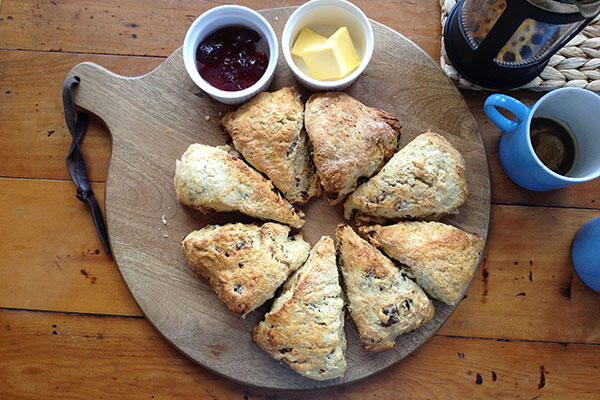
Every accomplished woman should know how to make a good batch of scones. Once mastered, you will be able to impress any future mother-in-law that comes your way. After all, isn’t that why us ladies attend university? To find a husband? Throw that old Edmonds recipe out the window. Who has time for rubbing together butter into the flour and sugar? This recipe requires only four ingredients (excluding the dates, of course). All you need is plain flour, baking powder, lemonade and cream. The original recipe calls for self-raising flour but you can make that yourself by sieving together two teaspoons of baking powder into each cup of flour you require. So really there is never a reason to buy self-raising when you can just make it as you require. Add the cream and lemonade in equal parts. Depending on the humidity, you may need just under a cup of each. For those of you new to the scone-making scene, here are Mummy Edmonds’ four scone commandments: Do not over handle the dough. You will overwork the gluten and make them tough and chewy. The heat from your hands also does the dough no favours.Use a knife to mix the dough ingredients. This prevents over handling and just works really well.Place the scones close together on the baking tray. This will prevent them from drying out too much and will make them rise up rather than out.Pat the tops of each scone with a bit of milk just before popping in the oven. It makes the tops all nice.So next Sunday afternoon, whether sunny (like that is going to happen anytime soon) or dreary, and if you’re in need of a warming treat, just whip these out and you will be sure to impress. Ingredients (16 Large Scones)4 cups plain flour8 teaspoons baking powderApprox. 1 cup of creamApprox 1 cup of lemonade1 cup of dates, choppedJuice and zest of 1 orangeExtra milk to pat the tops withExtra flour to roll the dough out withMethodSoak the dates in boiling water for ten minutes. Drain then squeeze over the orange juice. Orange and date is a great flavour combo.Preheat the oven to 180 degrees on bake and line a baking tray with baking paper.In a large bowl, sieve together the flour and baking powder. Stir through the dates soaked in orange juice (don’t drain out the juice).Start with half a cup of cream and lemonade and use a knife to bring the dough together. Add the liquids in equal parts until a slightly sticky dough results. Tip dough onto a floured bench and pat into a fat rectangle or circle shape about two to three centimetres thick. Use a flat-edged blade to slice the dough into squares or wedges. Transfer to a baking tray, making sure there is less than one centimetre between each scone. Pat with milk and sprinkle over the orange zest.Bake for 15-20 minutes until the tops are golden brown and the sides don’t look raw and doughy.Serve hot and fresh with jam, cream and whatever else your heart desires.
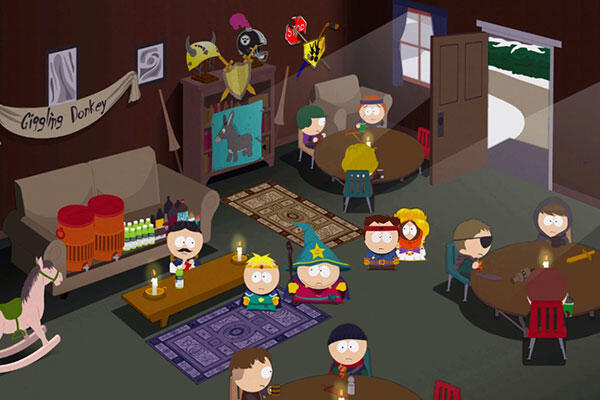
Rating: A Whatever you think of South Park, there is no denying that Matt Stone and Trey Parker, the creators, minds and voices behind the show, are geniuses. They created South Park 18 years ago in each other’s basements with craft paper. The show has gone on to become an undisputable cultural icon and has only become better with age. They have narrowed the process of making the show down to a fine art, taking only six days between starting an episode and airing it. You may think that the humour can be lowbrow, and I am certainly not disputing that, but for every fart joke there are always 20 insightful and thought-provoking jokes about the world we live in and what is happening in it at the time. Despite the success of South Park the show, as a franchise, it has always been lacking. Several attempts at making a video game have all been less than favourable, ranging from abysmal (South Park, 1998) to very average (South Park: Let’s go Tower Defense Play!). The latest South Park game, however, South Park: Stick of Truth, has finally revealed what these games have been missing all this time: the glorious minds of Matt Stone and Trey Parker. South Park: Stick of Truth has been conceived, written and voiced by Stone and Parker, and it absolutely shows. This game is undeniably one of, if not the, funniest games ever made. You could refute this statement with as many titles as you like, but I guarantee that none of them will have you laughing so hard that you have to put the controller down like this game does. The writing is truly what makes this game special. You are a new boy who has just moved into town as all of the young boys of South Park are in the middle of a massive Live-action, Fantasy Role-playing game as two warring factions; the humans being led by Cartman and the Elves led by Kyle. The journey that follows this titillating premise is like none I have ever taken in any medium. Every time I was sure that it couldn’t get any more outrageous it blows down a whole new barrier. There were moments in this game that I still can’t believe happened to me. I never thought that I would play as a shrunken down version of myself, chasing magical gnomes through the entwined bodies of my parents banging each other, the real challenge being trying not to get struck by my mother’s swinging boobs or by dad’s dangling nutsack. These guys get that mediums such as cartoons and video games are literally without limits – if you can think it, you can do it. This is an idea that wins out time and time again in this game. The writing is absolutely just as brilliant as the show’s and, in some cases, it’s even cleverer. In particular, the self-aware nature of the game is inspired. Characters often reference aspects of the game, either tying them into the role-playing game the kids are playing or just outright pointing out that you are playing a video game. This gives Stone and Parker a platform to make fun of aspects of games that we love, but that are really nonsensical, such as battle mechanics. Though the game makes fun of them, the mechanics of this game are just as good as the writing. The game was developed by veteran studio Obsidian, the team responsible for games such as Knights of the Old Republic 2 and Fallout: New Vegas. The gameplay is a mixture of classic JRPG turn-based combat and paper-Mario styled timed attacks and defenses. The combat and exploration systems work excellently, but it is the loot and customisation that really makes the gameplay special. The world is absolutely full to the brim of lootable items, each of them a specific reference to jokes and tropes from the 17 seasons of South Park. However, it is subtle enough to be excellent fan service, while also not being alienating to those who don’t religiously watch the show. Obsidian did an excellent job of bringing the town of South Park to life. The game looks absolutely amazing. If somebody walked through the room and saw you playing they would be sure that you were watching an episode of South Park. South Park: Stick of Truth has set a new standard for licensed and comedy video games. They have proven not only that a franchised game can be as good as its source material, but also that there are avenues available through other mediums that can expand that material further than ever before.
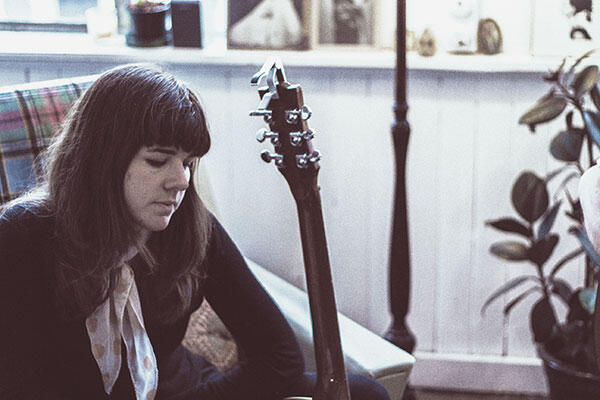
Holly Fullbrook, the talented songwriter behind Tiny Ruins, talks to Adrian Ng about her upbringing and David Lynch. Your music gives me a strange sense of nostalgia. There’s quite a mystical, ancient quality to it. How do you interact with your music? Is there a certain mood you are trying to capture and immerse yourself in? Thank you, that’s really cool. The only way I can explain how it feels for me is that I follow a bit of an Alice trail - writing, when it’s going well, is like half-remembering something from a dream you had, but it’s all in another language, something you have to crack. And a cloud sort of clears. Maybe the subconscious has a big part to play in it, I don’t know, because often it feels like a trance-like state when you’ve been repeating the same little guitar riff around and around and all these images sort of flash by. It’s like bringing something from the inside, out into the open, to feel like the outside isn’t so unrecognisable. It’s a mix of defence and surrender for me, because being vulnerable can actually make you feel a lot tougher. being honest about how it feels sometimes to be a human on this crazy planet is like setting the balance or something within yourself. After writing a song, it often feels like I’ve emerged stronger, and nothing anyone says can sway me. But then there’s also a huge feeling of doubt, when you re-visit the idea a few days later. There’s hard work and lots of drafts to every song and it can be frustrating and even dull. But at the end of the day, it’s just fun to play around on the guitar, for me. Were there any special moments that sparked your love for music? We found my mum’s old autoharp in the attic; it had quite a mystique to it - the fact it was boxed away, this beautiful thing. As a little kid, my nightly ritual was to sing all the songs I could remember out my window. I memorised the soundtracks to the few old films we were allowed to watch - Dick Van Dyck stuff. I loved the sound of the guitar, when mum played it on the rare occasion - the tapping of nails on the steel strings, smudgy fret noises from not much practice. She’d play old songs from a band she’d been in, songs her ex-boyfriend wrote. When I was 11, my Grandad unearthed that same guitar. Mum had broken her wrist and hadn’t played it in years. Grandad likes country music - Johnny Cash songs, schmoozy ballads, belting them out in his thick Devonshire accent, voice a low rumbling growl. He taught me the chords for “Amazing Grace” one day, and it was like an instantaneous love-at-first-play situation. I wanted to join in with the bunch of dudes at school who played Nirvana covers. I grew up in Bristol, England until I was ten, and my first music teacher was a woman named Jane who introduced me to the cello when I was seven. I remember her house as being very dark and full of strange stuff - objects and furniture that always made me quieten down somehow. She was lovely but also quite stern – she demanded a lot of respect from me, which was quite a feat, as I was quite a wild little kid. Hearing Beatles songs for the first time - once, sleepily, during the car-pool to school, it startled me into awakeness; once when a French exchange group sang “Michelle” in the school assembly; once lying on the floor of a grown-up’s party with my friend who had appendicitis. Jumping around the lounge with my brothers listening to the White Album as Mum did the ironing ... I found Beatles songs particularly mesmerising - I think lots of kids who hear them do - that mix of catchy, sentimental and bizarre. I felt like a bit of an outsider for liking the Beatles then - seems ridiculous now, claiming indignantly to have been a hard-core fan of the most popular, oft-mentioned band in history. I also remember falling in love with Nina Simone and Billie Holliday when I worked in this little second hand clothes shop in Titirangi one summer. I did a few hours on a Sunday, and the whole shop was mine to run. There were never any customers, but I cranked up the funny old collection of CDs there - jazz singers and all the French ones - Edith Piaf, theatrical wartime stuff. For you, what usually evokes the urge to create? Films, conversations, emotions? Nothing in particular, but all of those things definitely have urged me to write. You know that feeling when you’re on Wikipedia, and an article leads you into another and another and suddenly you feel like you’re going down quite a specific tunnel and finding out these startling things - if I ever get that feeling, it usually means it’s a trigger for me to write a song. Something about “discovery” or “epiphany” or “stopping dead in tracks,” “putting two and two together” - like cracking a sort of code I guess, it’s that feeling that I think to myself, “I need to grab some paper and jot all these thoughts down.” Just feeling curious about something, rather than the usual feeling of numbness or blandness. Has playing internationally given you a new perspective when it comes to doing music as a profession? I guess I’ve realised how hard it is, which I never quite contemplated before I began. I have heaps of respect for bands who make it over to NZ to play for us. It’s a long way and not economical. Touring is a slog, even for successful, or what appear to be successful, musicians. It takes a lot of patience, problem-solving, hardiness, and you have to let go of the idea that you will make money from it - all your cash goes straight back into the next thing ... but it’s a fun time as well. I heard David Lynch really loves your music. David Lynch fan? That was a crazy surprise. Yes, I’m a fan of his, from what I’ve seen. I loved Twin Peaks - I more or less watched the first series all in one go. The bass line from the theme song still comes to mind, especially when in small towns. Such a visual director - I can’t shake these really vivid images from his films.
The last few days I’ve been recovering from a devastating cold. That’s right, devastating. One rainy afternoon I sat in my room with my lights dimmed and a cup of diluted honey, listening to a playlist I had constructed titled “Sad Bastard Music.” It actually made being sick kind of a pleasant experience. I was in the moment. I was braving the hardships of life and playing in the background was the soundtrack to my misery. Music makes everything magical. Mac DeMarco - Brother Second single from forthcoming album Salad Days. A laid-back, humid daydream. Layered with smooth vocals, and glistening guitars - as if infused with an orange sky and sunset. How to Dress Well - Words I Don't Remember Smooth down-tempo R&B, basically what we’ve come to expect from Tom Krell. Features magnetic synth work as the song builds into a plethora of washed out backing vocals. Mykki Blanco (Ft. Princess Nokia) - Wish You Would Queen of Hip-Hop Mykki Blanco returns, trading verses with Princess Nokia over a percussive, rhythmic instumental from Bremar. Pure X - Heaven Psychedelic pop dreamers Pure X return with a new single from their upcoming album Angel. A blissful, tepid song, with a wistful vocal melody. Frankie Cosmos - Birthday Song Sincere, pop songwriting from prolific nineteen-year-old mastermind Frankie Cosmos. “Birthday Song” is an infectious, schoolyard track, short and sweet.
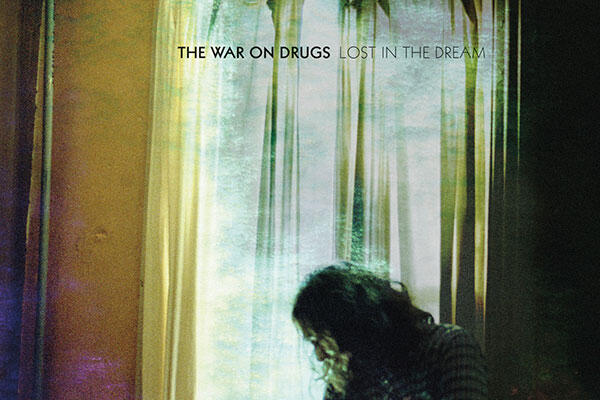
“It always gets so hard to see right before the moon,” sings Adam Granduciel, songwriter for The War on Drugs, halfway through their latest LP. It’s a new take on the old cliché, “it’s always darkest before the dawn,” but one that reflects more accurately the 35-year-old’s true longing. Granduciel isn’t waiting for the harsh light of day; he’s yearning for the quiet of night. Returning home from touring 2011’s Slave Ambient, he found himself disconnected from the community he had left behind. Lost in the Dream is a lyrically dark, but ultimately uplifting album that shows him dealing with isolation and figuring out where to go next. Like ex-bandmate Kurt Vile, The War on Drugs produce songs that consistently exceed the three-minute length that one expects from most modern bands. At nearly nine minutes, the opening track, “Under the Pressure,” drives forward with Dylan-esque vocals; the beat almost Krautrockian in that it feels like it could just go on forever. Sooner than you think, you reach lead-single “Red Eyes,” perhaps the most heavily Springsteen-influenced track. It’s life affirming stadium rock with darker undertones that melt away any potentially cheesy edges. Lyrically, throughout this LP, Granduciel is focused on the pressures of day, the peace of night and wondering whether, in his finest hour, he “can be more than just a fool.” His songs reflect the dark situation he’s found himself in but at no point does he sound defeated. The only possible problem with this album is that at about 60 minutes, and with such a distinct sound, it can start to feel a bit same-sy. However, this is only a drawback if listened to outside of its ideal context. This is very much a slow-burning record that captures the timelessness of night – the perfect soundtrack for a long contemplative drive. In a situation where you might get “lost in the dream or just the silence of a moment,” you can’t help but wish Lost in the Dream would never end.