Making the web your bitch
from Issue 15 ()
By Raquel Moss
from Issue 15 ()
By Raquel Moss
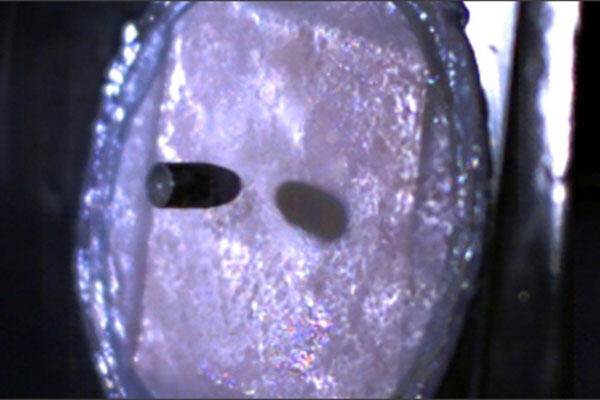
I don’t find a plastic crucifix immersed in a glass of urine offensive. However, the artist responsible for the Piss Christ received death threats for this sacrilegious work, indicating that some feel otherwise. Different individuals find different things “shocking,” but in spite of this it often feels like there’s not much controversial ground left for art to cover. Then again, what we find shocking in art are movements that manipulate the supposedly “untouchable” aspects of the society in which we are immersed – like biotechnology. I’m not sure how I feel about art that experiments with human skin. Firstly, it’s rather grotesque; and secondly, I am yet to figure out how I feel about the ethics behind it. In a project called 2.6g 329m/s, artist Jalila Essaïdi tries to create “bulletproof skin,” and videos a .22 calibre Long Rifle bullet being shot into human skin that has been implanted with spider silk produced by transgenic goats. She claims it embodies an attempt to explore “the social, political, ethical and cultural issues surrounding safety.” However, the concept of interfering with the structure of human skin for an artistic purpose was much more fascinating than that of “safety.” To what extent is society ready to accept manipulation of human biological matter for the sake of art? Science and art have never been mutually exclusive. Simply think about the role that optics plays in reducing scenes in our real lives onto a two-dimensional flat surface. Or Leonardo da Vinci and his plane models, for example. However, more recently the scientific method in particular has been incorporated into contemporary artwork, with the laboratory environment often used as a form of studio. The result is “Bio Art” – an international art movement that taps into genetic modification and cloning to produce distinctly … unusual works. “Bio Artists” contemplate the social and ethical values that have emerged in society as a result of biotechnological developments. Take the work of Brazilian artist Eduardo Kac, who commissioned scientists to inject a fertilized egg from an albino rabbit with a green fluorescent protein from a type of jellyfish. Called GFP Bunny, the finished “artwork” is a rabbit that glows green under a blue light. Far from being anti-science, many artists have clearly embraced biotechnology as a fresh way to produce works that exploit the biological matter we take for granted. Such works have the potential to make most of us quite uncomfortable. On the other hand, many artists feel a pressing need to use art as a forum for helping the public understand the issues surrounding the increasing role of biotechnology in our daily lives. The Critical Art Ensemble performed scientific procedures in public as a way of educating audiences about genetically modified food, with one project even involving the testing of participants. Interestingly, the FBI detained a founding member of the group on a (later disproven) accusation of bioterrorism. Biotechnology is, as you all know, a touchy issue, and has proven to be a particularly divisive debate in modern society – a society in which art is increasingly playing an outspoken role. So I do find the ability to make a real life glow-in-the-dark mammal “shocking”? I was certainly forced to think about the ethical implications of creating such an artwork. Many other “Bio Art” works push audiences in a similar way – they make us question the acceptability of scientifically manipulating organic material … while simultaneously grossing us out a bit.
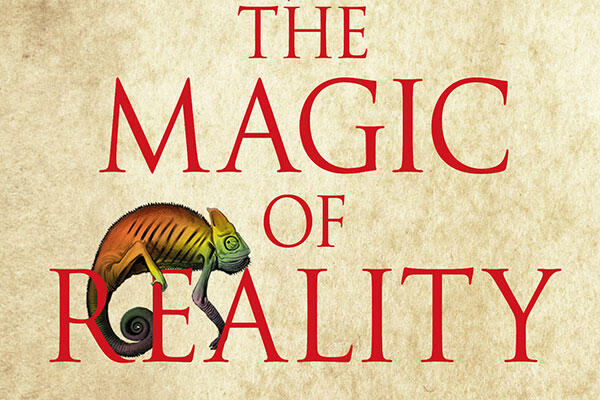
“Reality is everything that exists. That sounds straight forward, doesn’t it? Actually, it isn’t.” Thus begins Dawkins’ introduction to science for young people. I didn’t realise this was a young adults’ book until I started reading it, but, being an eager yet largely ignorant admirer of science, I persevered. And it turned out this book was perfectly pitched for someone like me. Despite being written by Richard Dawkins, I expected this book to be straightforward science, without much digging at religion or paranormal phenomena. I was wrong. Each chapter begins with a question, such as “Why are there so many different kinds of animals?” or “Why do bad things happen?” The chapters then outline old explanations, drawn from myths and religion from all corners of the world, followed by the scientific explanation (“Why are there really so many different kinds of animals?”). Dawkins has a go at an unnamed “charlatan” (Uri Geller) who passes his conjuring tricks off as supernatural magic, and coolly compares current religious stories with ancient, obsolete ones. His final chapter – “What is a miracle?” – instructs readers on how to rationally decide the most likely explanation for an interesting phenomenon. The myths were really cool. There is one Tasmanian story about the first man being created with a kangaroo tail and no knees, so he can’t sit down, and a Maori one about earthquakes (with some poorly drawn moko on the illustration). The chapter on possible alien life didn’t have any ancient myths as aliens are a pretty recent concept, only emerging with the discovery of a material universe outside of Earth. Instead, there are stories from people claiming to have been abducted by aliens, and the possible (and creepy) explanations of sleep paralysis and implanted memory. Although some of the material is pretty basic, the chapters usually progress from childlike, simple questions to their amazing scientific explanations and applications. “What is a rainbow?” turns into a fascinating explanation of the use of the colour spectrum to measure the distance of stars and galaxies from earth, and even the age of the universe. I haven’t read a picture book in years and was surprised by how much I enjoyed it. I loved the beautiful and clear diagrams, photos, and illustrations of the myths and the science. What did your ancestor look like if you go back 185 million generations? Turn the page to find out! It’s great. The book also flops open in a satisfying way, resting flat on a table without needing to be held up. Most of all, this book gave me a real appreciation of the extraordinary scientific knowledge we now mostly take for granted: Alfred Wegener’s idea of continental shift; Newton’s experiments with gravity, prisms, and light; Darwin’s radical idea of evolution; atomic theory; the “round earth” theory; the big bang … concepts that are now common knowledge, but are the result of thousands of years of human curiosity and inquiry.
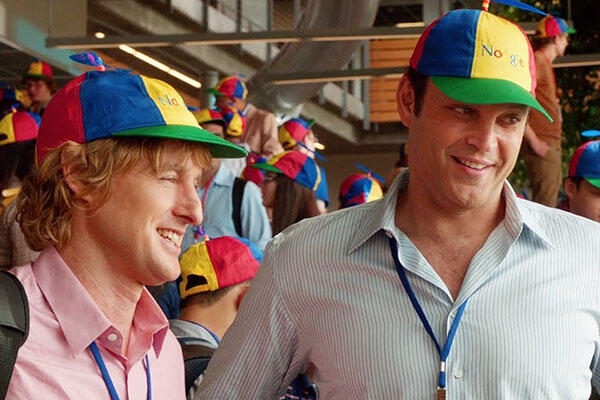
Rating: 2/5 Start of the U.S. summer? Check. An assorted cast of misfits with the odds stacked against them? Check. A worrying lack of originality in the plot? Check. Welcome to The Internship, your regular Hollywood light comedy. The film seems to benefit from director Shawn Levy’s magic ability to make commercially successful films, and Vince Vaughn and Owen Wilson team up to repeat their antics from Wedding Crashers – except this time they’re crashing Google as laid-off salesmen who have been offered internships. While their skills are mocked as obsolescent, they quickly set about proving their value to the company. The two mature gents get teamed up with other social outcasts and have to compete against a swarm of highly-educated young people for the Holy Grail – a job offer. Google is the best place to work ever, if you agree with the somewhat sanctimonious preaching of the Google higher-ups. The commercial overtone of endorsing Google is unavoidable, but overpowering. Like a ten-dollar bottle of wine, you don’t taste the “spicy oak with a sweet finish,” you just get your mouth bleached with alcohol. However, the Google headquarters provides a nice backdrop to the movie. We are treated to a game of Quidditch (although not even Google has figured out how to make the brooms fly), and the fun vibe that employees probably exhibit is easily picked up. There are plenty of romantic sub-plots, such as Owen Wilson chasing the glamorous yet apparently unavailable executive (Rose Byrne). They even have a drunken night out and venture to a strip club for “team bonding,” hoping it will change their fortunes. After a variety of team challenges, the usual English d-bag antagonist (Max Minghella) hurting their feeling, and surmounting obstacles put in front of them, we see a resolution of sorts. But it’s predictable. Everything is all too predictable. So all in all, The Internship is your standard Hollywood comedy. It’ll make you laugh but you know what will happen by the end … just like that ten-dollar bottle of wine.
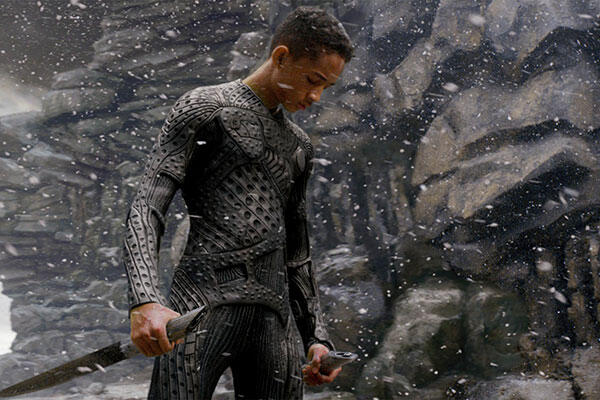
Rating: 2.5/5 M. Night Shyamalan has had a roller coaster of a career, from the unadulterated success and cultural penetration of The Sixth Sense to his ultimate demise with the painful The Happening and the destruction of the much-loved Avatar with The Last Airbender. Frankly, he has become a bit of a joke due to his overuse of twist endings. His latest film After Earth may not redeem the once-great director, but at least it is a step in the right direction. After Earth, starring Will and Jaden Smith, is a sci-fi action film that tells the story of a father and son fighting for their survival on an abandoned Earth after their ship crash lands. The story is un-convoluted and well structured, but is held together with an outrageous number of science fiction clichés as well as a disturbing number of allusions to scientology ideals (no doubt because of Will’s allegiance to the cult). The premise shows a human race that has had to create soldiers capable of repressing their emotions in order to fight off an alien threat. Both Will and Jaden played these soldiers. Unfortunately, this meant that ninety per cent of the film involved emotionless acting, which is just disappointing coming from Will Smith – the king of colourful performances. The story was conceived by Will Smith and written by M. Night Shyamalan and Gary Whitta (Writer of The Book of Eli). Though Smith has been in a large number of sci-fi films, clearly nobody involved knew a thing about science: at times basic scientific principles are not only ignored but supposedly disproved. This may not annoy every viewer, but to me it was the film’s biggest flaw. You can’t have science fiction without science. Despite all of these shortfalls the film was better than can be expected from Shyamalan these days, if only because it avoided all of his usual conventions. The film does not have a twist ending, but does have some skilfully made action scenes and structure, which creates nicely-handled tension.
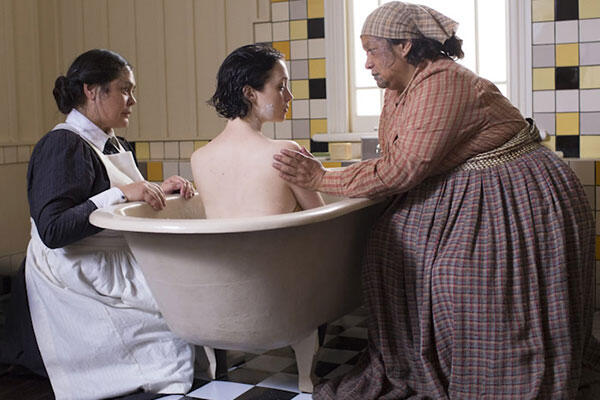
Rating: 3/5 White Lies is a film adaptation of Witi Ihimaera’s novel Medicine Woman, which tells the story of Paraiti (Whirimako Black), a Maori healer from the 1920s, and her strange involvement in the lives of the rich Pakeha woman Mrs. Vicars (Antonia Prebble) and her maid Maraea (Rachel House). Nobody does shameful family secrets with sexual undertones quite like New Zealand and White Lies is no exception. I thought I had the plot all mapped out until halfway through, when a colossal twist is dropped, changing one’s opinion of the characters and the message of the film. But as funky as this made the story, I have to say the twist is rather implausible and there were also plot issues with character motivation – Paraiti’s explanation for helping Mrs. Vicars is foggy at best. Also, although I understand it was set in a time of racial inequality, I felt the often one-dimensional depiction of Pakeha made them seem like cartoon villains, and the opening scene of colonial murder was oddly garish. However, this film is still worth a watch on a number of counts. For one, the debut acting performance from Black (usually a singer) was superb and she had an incredible presence on screen, whilst House was, as always, captivating. Prebble took her role as the cold Englishwoman a little too far in the film’s beginning – it seemed as though she was reading off a teleprompter – but she came into her own later on in the grittier scenes. This film is brave with its use of nudity and Te Reo and tackles difficult issues head on, and I commend its attempt to remind New Zealanders of our difficult past. It’s also a visual feast with its bright 1920s township and lingering shots of forestry, and the often-sparse dialogue allows the scenery to shine. However, the film’s constant use of the black fade-out editing technique became frustrating, especially when it bookended unnecessary ten-second scenes. Although the film could be patchy, it was also quiet, thoughtful and raw which is something not easily found in today’s blockbuster avalanche.
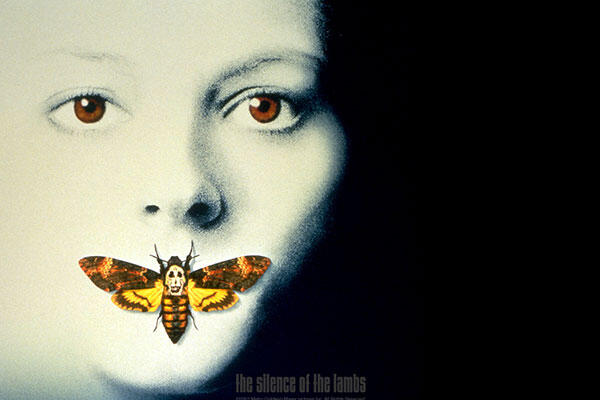
Read the title to yourself a couple of times. It is freaking creepy. It sends shivers down your spine then back up to your head to remain for days. When you watch this film, you do not see the face of evil. You enter its mind. The Silence of the Lambs won five Oscars in 1991: Best Actor and Actress in a leading role (Foster and Hopkins), Best Director (Demme), Best Adapted Screenplay and, of course, Best Picture. That alone should provide testament to the calibre of this film. And it took Hopkins only 16 minutes of screen time as Hannibal Lector to become one of the biggest icons in popular culture. He’s probably the greatest film villain of all time – he’s a cannibal with class who bites faces. He still manages to terrify people even when locked up in maximum-security prisons. But his relationship with FBI agent Clarice Starling (Foster) is crucial – they must hunt down Buffalo Bill (Levine), the notorious serial killer who skins his victims. Hopkins once said in an interview that we are “obsessed with the dark side of life.” Each character is trapped in a world of oppression that takes them to very dark places: Starling has endless battles against misogyny and sexism, Buffalo Bill lives in a society that cannot tolerate different sexual identities, and Lector thrives in a world that cannot come to grips with a person so insane and yet so intelligent. In short, you may find disturbing sympathy for both of the film’s villains. Perhaps we’re unfortunate these days because we are oversaturated with dramas and thrillers based on the insane or the criminal mind (such as, well, Criminal Minds). In my opinion, however, these shows and films are floating firmly in the wake of The Silence of the Lambs. So watch this film and see how it influenced modern horror films. It’ll freak you out, but it’s worth it. And let Hannibal Lector into your head. See what happens.
Gie him strong drink until he wink, // That’s sinking in despair; An’ liquor guid to fire his bluid, // That’s prest wi’ grief and care: There let him bouse, an’ deep carouse, // Wi’ bumpers flowing o’er, Till he forgets his loves or debts, // An’ minds his griefs no more. (Robert Burns, 1785) I’m not suggesting you drown your sorrows in a bottle of hard liquor (as our beloved Scotsman so eloquently advocates), but I do, however, urge you to give this dark, rich, whiskey-infused cake a shot (pun intended). Seeing as it’s the anniversary of the poet’s death on 21 July, I thought it fitting to share. (Well, that and the fact that I found some of the fancy-schmancy amber elixir in my parents’ liquor cabinet recently.) Thistle warm the cockles o’ye heart. (Haha cockles). Ingredients- 225gm butter, softened - 1/2 cup brown sugar - 1/2 cup white sugar - 3 free range eggs - 1 cup plain flour, sifted - 1/2 teaspoon baking powder - 1/4 teaspoon salt - 1 teaspoon cinnamon - 1/4 teaspoon baking soda - 1/3 cup of cup milk - 1 teaspoon vanilla essence - 1/2 cup molasses - 1/4 cup whiskey (I used Dewar’s White Label) Method:1. Preheat your oven to 180 degrees. 2. Prepare your cake tin (I’d go with the round variety) – grease well or line with baking paper. 3. Cream the butter and both types of sugar together until you have a light and fluffy mixture. 4. Add eggs, one at a time, beating well after each addition. 5. Combine sifted flour, baking powder, salt, cinnamon and baking soda in another bowl. 6. Add the mixed dry ingredients to the creamed mixture alternately with milk, beginning and ending with dry ingredients. 7. Add molasses and mix, and then lastly add the whiskey. 8. Mix until smooth; your batter should be quite thin (if it doesn’t run off your mixing spoon very easily, then add a little milk until it is the right consistency). Pour into a greased round cake tin and bake 20 to 30 minutes, or until a knife inserted in the centre comes out clean. This cake doesn’t tend to rise very much, so don’t be disappointed if it comes out slightly flatter than your usual cake. 9. Dust with icing sugar. I think this is best eaten slightly warm (though if you’ve been having a sneaky dram while you cook it, I imagine you’ll already have a glow on). You could always make two, layer them and fill the middle with whipped cream – enhance the flavour by adding a couple of teaspoons of both icing sugar and whiskey to the cream before whipping.
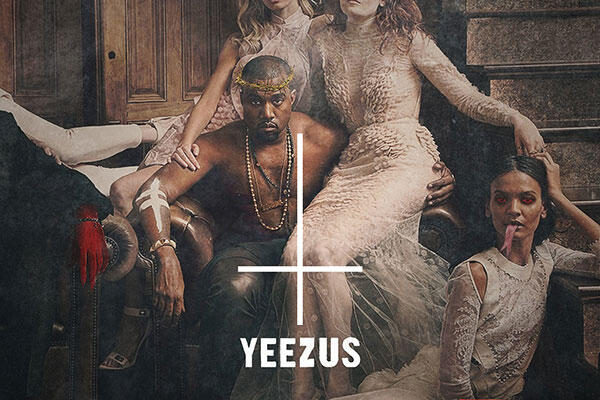
Rating: 4.5/5 The moment Yeezus, Kanye West’s sixth solo album, leaked online, it set a million keyboards around the globe on fire. Suddenly everyone was a critic, scrambling to push their opinion of an album worlds away from its predecessor, My Beautiful Dark Twisted Fantasy. Indeed, in contrast to the lush grandeur of that record, Yeezus is like being doused with freezing water. “On Sight” opens the album perfectly, Daft Punk’s abrasive synths crashing into you like a fist. You can tell from this assaultive first song that with Yeezus, West is taking his listeners into brand new territory. “Yeezy season’s approaching,” Kanye raps during the first verse. “The monster’s about to come alive again.” Follow-up track “Black Skinhead” is my personal favourite on the album, with a rolling industrial drumbeat that makes you want to pump your fists and rage at the world around you. Each new song is different to the one before it, and just as excellent. Standouts include the savage and biting “New Slaves” and “Hold My Liquor,” with its woozy, throbbing beat. Closer “Bound 2” is a welcome break from the fury that permeates the rest of the tracks; recalling the style of his breakthrough album The College Dropout, West both confronts his reputation with women and closes out Yeezus with an ode to his past. One of the weaker tracks, however, is “Blood on the Leaves,” which samples the iconic Nina Simone song about the abhorrent practice of lynching. While the end result is beautifully put together, with West’s autotuned moans lamenting a messy breakup, I can’t help but feel a song as meaningful as Nina’s should have been worked into a track with a little more weight, a little more purpose. To me, the lyrics don’t quite match up to the sense of ferocity and vengeance that pulsates through much of this record. However, I am a small ginger white girl, so I’m not really the person to judge this. When asked in an interview whether his instinct has ever led him astray, West replied: “it’s only led me to complete awesomeness at all times. It’s only led me to awesome truth and awesomeness. Beauty, truth, awesomeness. That’s all it is.” If Yeezus is the result of Kanye following his instincts, then that statement is absolutely true; it’s beauty, it’s truth, it’s awesomeness. It’s a pure, disorientating hit of noise and emotion that leaves you reeling. It’s 100 per cent unfiltered Kanye West and he’s shoving it in your face. As a choir of schoolchildren sing during the interlude to “On Sight,” “he’ll give us what we need … it may not be what we want.” Take it or leave it, I doubt he’d really give a fuck either way.
Rating: 3.5/5 Canadian synthpop outfit Austra emerged in 2011 with a bang, their first album Feel It Break among the finest debuts in recent memory. It wove gothic electronica around Katie Stelmanis’ operatic vocals to stunning effect; picture Kate Bush collaborating with The Knife and you won’t be far off. Though a sceptic could write Feel It Break off as unvaried, it was hypnotic in its homogeneity. For that reason, nods from the band to a more diverse and exotic follow-up this year dampened my excitement rather than stoked it. My fears proved accurate, as Olympia’s broader sonic palette comes at a price. Where Feel It Break was a seamless and organic record, Olympia is loose and unfocused by comparison. Its jarring switches in genre don’t just occur between songs, but frequently within songs; after 40 seconds, trembling piano ballad “Home” morphs into an Ibiza club tune, never really making the return trip. This mercurial approach makes Olympia frequently feel less like an album than a collection of remixes. Though both albums’ influences are rooted in 80s dance music, Olympia pays homage to nerdier ancestors and in less subtle fashion. Where Feel It Break elegantly incorporated the arpeggio synths of Depeche Mode and New Order, the dorky house piano on “Annie, Oh Muse You” and Men at Work-style flutes on the aforementioned “Home” jut out of their songs awkwardly. Having said that, Olympia does have some gorgeous qualities. Austra’s melodies are stronger this time around (see “Forgive Me”), and for the most part Olympia hits harder emotionally. As before, the production is nothing short of stunning. “Fire” and opener “What We Done?” stand out as the finest tracks here, the latter a not-so-distant relative of Feel It Break’s opener “Darken Her Horse.” Though it doesn’t match that song in intensity, neither does anything in Austra’s catalogue. After careful consideration, Feel It Break stands as the superior album. Listening to it continues to be a dreamlike experience, as if the songs begin long before you get there and will continue long after you leave. Olympia fails to replicate that ethereality, feeling much more rehearsed and man-made. This was likely a too-many-cooks affair, the six minds behind Olympia producing a weaker dish than its predecessor (which Katie Stelmanis wrote and recorded almost singlehandedly). Maybe it’s time to lay off some staff.
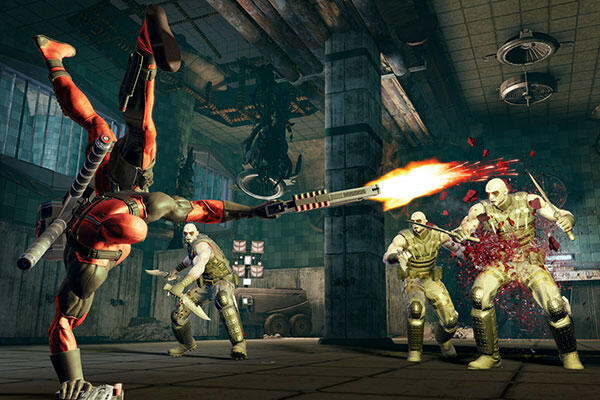
Rating: 8/10 Just when you thought Marvel had adapted every single one of their heroes, here comes Deadpool, a character I believe has been under-utilised and misrepresented thus far in Marvel’s attempts to take over the world … or at the very least the entertainment industry. For those of you who aren’t avid comic book readers, the only places you may have run into Deadpool before now is either in some brief cameo in one of the many Marvel games, or being butchered (in a figurative sense) by Ryan Reynolds in the film X-Men Origins: Wolverine. Anyway, for those of you unfamiliar with Deadpool, he is an ex-mercenary who was taken hostage and turned into a mutant with the power of regeneration. But it is not his powers that make him interesting; it’s his personality. Nicknamed “The Merc with the Mouth,” Deadpool is undoubtedly the funniest comic book character of all time. Deadpool has hilariously mental traits such as his multiple personalities with whom he often converses. It is traits like this – and his penchant for breaking the fourth wall – that make him a good pick for a video game adaptation. Developed by High Moon Studios (the same studio that handled the Transformers: War on Cybertron series), Deadpool is well written, superbly performed, but sadly averagely executed. The game begins with Deadpool kidnapping the staff of High Moon so that they make a video game about him. Essentially, therefore, the rest of the game is meta as it sees Deadpool playing through the game he is forcing High Moon to make. This fourth wall break is classic Deadpool and gives the whole game not only a hilarious take, but a really fresh perspective. The plot itself is minimal, but that is kind of the point. Deadpool doesn’t fight for a cause, but because fighting is fun for him. The writing is the undeniable highlight of this game. The cut scenes and in-game action are riddled with hilarious one-liners and running jokes that alone make the game worth playing. The dialogue is only made better by having Nolan North (Nathan Drake from Uncharted) voice Deadpool with fantastic variety and perfect comic timing. Despite the fantastic writing, this game is really let down by its gameplay. Deadpool is the epitome of the Hack and Slash genre, requiring an awful lot of button mashing. The gameplay will see you using swords and firearms to dispatch a variety of faceless enemies, intermingled with a few elite-type bad guys. The game encourages combo combat, but the combos all do essentially the same thing (although going from hack and slash to dispatching ranged enemies with your guns is vaguely satisfying). The combat gets very repetitive very quickly and, even worse, poorly schemed controls often make it quite frustrating. Repetitive and frustrating are never a good combo. Combat and exploration reward you with “Deadpool points,” which can be used to buy new weapons as well as upgrading both your existing weapons and Deadpool himself. At first glance there seems to be a wide variety of upgrades and weapons, but as you get your hands on each one they feel too similar to really matter. In the end the swords and pistols you begin with are the most satisfying. I’m wary about warning people away from this game because it is the most entertaining and original video game narrative I have seen in a long time. So instead I will just say that once it’s in the bargain bin, you should snatch this one up. You may have to mash your thumbs off, but you will laugh your ass off in the process.
Evernote is not just an app – it’s so much more than that. Evernote, once you start to use it, becomes an extension of your brain. If you’ve ever sat in the middle of a pile of paper, wailing because you can’t find the notes you need, you could probably benefit from using it. There’s a reason its icon is an elephant – elephants never forget, and neither does Evernote. Evernote is like a digital to-do list/ notebook/ scrapbook that you can synchronise and access across all your devices. Forget your folder full of Word documents and scattered handout sheets – you can write your lecture notes and save them in Evernote. Even better, you can tag them, add a voice recording and a picture of the whiteboard. If you prefer to write your notes by hand, take a photo of them and save it to Evernote in case they get wet and/or your parrot eats them. When you need to find your notes later, you can search using the powerful search function – it’s so good that it will even recognise text within an image. It’s basically witchcraft. It gets better, though – you can “clip” pages from the web and save them to Evernote, which is great if you need a bunch of temporary bookmarks for an assignment. Or, if you want to save recipes from the web with pictures and videos, and have them all in one place. Your notes will synchronise across your devices, assuming you install the necessary app, so you can save a journal article on your laptop and read it later on your phone. Download it. Use it. Be more organised. Conquer the world.