-
Columns

Editorial | Issue 15
The passage of Voluntary Student Membership (VSM) in 2011 was a very odd time. VSM, to those of you who are unfamiliar, changed the mechanism by which students would join students’ associations. Previously, universities could require students to join the association, and if students wanted to opt out, they had to ask the association’s permission. VSM stopped universities from doing so, creating an opt-in system. This seemingly minor tweak caused all hell to break loose. Broadly speaking, the rightwing minority of students (who disliked students’ associations) supported VSM while the leftwing and centrist majority (who liked students’ associations) opposed it. The irony of the situation, which nobody pointed out at the time, was that the pre-VSM environment was (more or less) a product of the free market, while VSM itself was a piece of government regulation. This resulted in some truly cringeworthy debates, and many hilarious mental gymnastics. Socialists slammed government intervention and issued grave warnings about the tragedy of the commons. Libertarians whinged about “force” and “coercion” as though OUSA had a secret paramilitary wing, and begged the state to step in. A staunch(ish) leftie, I made an oral submission on the bill in which I trumpeted freedom of contract. Sir Roger “dinosaur cunt” Douglas laughed, told me I had misinterpreted the meaning of “freedom,” and offered an alternative definition that wouldn’t have looked out of place on a Labour pamphlet from the 1920s. I privately agreed with him, but kept my mouth shut. The bill passed, of course, and we switched to Service Level Agreements (SLAs), whereby the university would charge the same fee that students’ associations had previously, and then use this fee to hire the association to provide roughly the same services. Students’ associations would charge “zero fees,” meaning you’re an idiot if you opt out, but you’d still pay the fee indirectly, via the university. This created an environment very similar to the pre-VSM situation, but slightly worse for most parties. Worse for associations, because they became dependent upon the universities and had far less discretion in terms of spending. Worse for universities, because negotiating an SLA is a lot of extra work, which most really couldn’t be fucked with. And worse for libertarians, because not only would they still get charged their association fee and have no way of getting it back, but opting out would mean the association would keep the fee rather than (as had previously been the case) donating it to charity. So why the history lesson? Well, OUSA and the University are about to negotiate their third SLA. This time, they’re jumping in bed together for three years, a union longer than most marriages. This works for the Uni, because they don’t have to bother negotiating another one until 2016; and it generally works for OUSA, because their medium-term future will be secure. It imposes a certain rigidity on the organisation, and having to set budgets three years in advance isn’t ideal (especially when you’ve only been in the job three weeks), but on the whole it’s the most logical way forward. To be fair, not a whole lot has changed under VSM, mostly because at the time nobody had really thought much about the potential of SLAs. And ironically, those who could be best off in the long term are that majority of students who had opposed VSM. For most students’ associations – the exception being OUSA, which has always been well-run and fairly accountable – the new structure has imposed a bit of market discipline that had previously been absent, meaning that students will eventually get more bang for their buck. In a couple of cases, though, this has bounced associations into a high-stakes game in which they could rapidly face extinction. Salient is a great magazine (yeah, I said it) but the organisation around it is a shambles; it’s probably no coincidence that the city in which VSM was cooked up was the one with the least competent students’ association. Year on year, the Victoria University of Wellington Students’ Association (VUWSA) haemorrhages money while providing the bare minimum of services; having been raised to believe that money grows on trees, they’re still struggling to adapt to a system in which survival actually requires doing things. Take the piss out of OUSA’s “world record” paint party all you like; VUWSA has just broken the record for the smallest ever Re O-Week (i.e. they didn’t have one) – thereby smashing the record they set last year, when the only event was a pyjama party that fewer than 20 people attended (incidentally, this still holds the record for “world’s shittest Re O-Week”). Much of VUWSA’s money goes towards propping up Salient and the VBC, purely because they can’t be arsed selling any advertising. Critic doesn’t totally pay its own way, but the magazine still only costs you around $2.50 each a year (about 10 cents an issue). Salient costs almost triple that figure, but with a fraction of Critic’s budget. They’re being royally boned by the boneheads upstairs, and if VUWSA goes down in flames, Salient could go with it. And who would we take the piss out of then? Of course, there are many ways that OUSA itself can become more cost-effective. For one, the association is still manacled to the rank, flaccid corpse of NZUSA, effectively flushing $45,000 down the toilet every year instead of giving it to Critic, where it belongs. And it still owns that fucking Aquatic Centre, which is due to cost the association upwards of $65,000 in maintenance this year alone. But on the whole, they’re doing okay. So what was the point I was trying to make here? I don’t know really, just thought you’d like to know.
-
News

Otago Considers Recreating Christchurch
The University is considering demolishing both the Arts building (Burns) and the Property Services building on Albany Street after the two buildings were deemed earthquake-prone under the University’s Seismic Programme. The University’s Seismic Strengthening Policy states that all buildings that have a New Building Standard (NBS) of less than 15 per cent after detailed assessment will be evacuated for health and safety reasons, and that all buildings deemed earthquake-prone after detailed assessment will be prioritised and strengthened to at least 67 per cent NBS. While the University’s detailed assessment programme is yet to find any buildings that are dangerously earthquake-prone and need to be vacated, the Property Services building and the Arts building were still both deemed earthquake-prone after being found to have New Building Standards of 19 per cent and 29 per cent respectively. Such low ratings have prompted the University to consider knocking down both buildings, as well as other alternatives. For the Property Services building, alternatives include strengthening of a single-storey “trades” section to reach a 34 per cent standard, sectional decants to strengthen to a 67 per cent standard, or a full decant of the building to also reach a 67 per cent standard. Options other than a demolition of the Arts building include a full decant of the building to undertake repairs. Critic spoke with the Director of the University’s Property Services Division and Seismic Steering Group Chair Mr Barry MacKay, who remarked that the Property Services building was constructed during the 1920-40 period and it was “not unusual” for brick buildings of this age to be deemed earthquake-prone. However, Critic was somewhat bemused that the building houses the very staff who maintain the University’s facilities, and couldn’t decide if, in failing to acknowledge their own deteriorating safety, the team was incredibly dedicated and selfless or rather a few tools short of a tool shed. Mr Mackay noted that if a decision to retain and strengthen the building is made, then such work will be “programmed around the Property Services operations.” Staff may be temporarily relocated from affected buildings as this work is carried out. When asked about the disruption to students and staff if the Arts building is demolished, Mr Mackay said that if a new building on a new site were to be constructed there would be “very little” disruption. “[Students] would continue to use the old building until the new building was completed. For staff the most obvious disruption would be shifting offices from the old building to the new one.” The other option – constructing a new building on the same site – would be much more disruptive, as alternative office and teaching space would need to be found elsewhere on campus. Such a course is the “least favoured option.” Mr Mackay “hoped” a decision would be made about the fate of both buildings this year. While Dunedin is an area that has a low level of seismic activity, the recent Christchurch earthquakes have prompted the University to initiate its own Seismic Strengthening Policy. This comes after the DCC revised its own policies, obliging property owners to carry out seismic strengthening works on “at-risk buildings in a timely manner.” Subsequently, the University has launched a seismic website “to keep staff, students and the general public informed” about their Seismic Assessment Programme, which deals with potentially earthquake-prone buildings. A budget of $50 million has been set aside and dedicated to the Programme.
-
News
Campus Produces Two Council Hopefuls
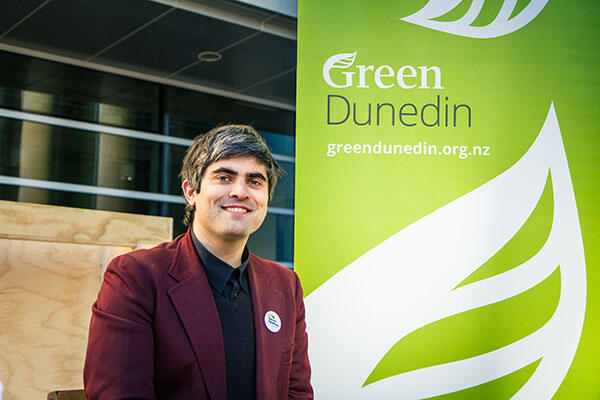
Students looking for representation on the Dunedin City Council in October’s general election are spoiled for choice this year, with two candidates already courting the student vote. Aaron Hawkins, who came fourth in the 2010 mayoral election with three per cent of the first preference votes, is standing again, this time for the Green Party. The Radio One breakfast presenter has lived in Dunedin since 2002, and describes himself as “passionately interested” in local body politics. Hawkins, who has previously compared the council to a country club, said he offered “new blood and new ideas,” and says green jobs, green housing and green transport are what the city needs. The Green candidate aims to increase the number of “jobs which are sustainable in the long term,” by increasing small-scale renewable energy production in the city. “The DCC currently runs a scheme called Warm Dunedin. I’d like to see that expanded to businesses to invest in more efficient energy systems that will save them money in the long term.” Hawkins also said that he would fight to keep 77 workers employed in the loss-making construction wing of council-owned company Delta, claiming that “the real concern … is the lack of governance that allowed it to be in the position that it is in.” Asked about the Green Party’s plans to implement a WOF-style licensing system for housing, Hawkins said “we certainly need to be doing what we can at a local level to improve the quality of our housing stock.” He did not believe that students should be allowed to live in colder, damper flats for lower rent, saying that rental properties should meet certain standards just as cafés were required to have health certificates. Hawkins said “I don’t think it’s inevitable” that rent would rise if increases in house quality were enforced, and insisted that if they did, policy mechanisms could be created to prevent tenants being hit in the pocket. The green transport offered by his campaign slogan “could” include buses, trams or trains, but would certainly include improved cycle lanes to increase the percentage of trips taken by bike. However, Hawkins was critical of the DCC’s Quiet Streets programme – in which speed limits are lowered to encourage cycling in South Dunedin – saying “I worry that we are investing in expensive window-dressing.” Hawkins said that a DCC under his mayoralty would be “a more proactive council that goes out and seeks opinion – I mean, when was the last time you saw a DCC presence on campus?” Hawkins was not deterred by low student turnout, saying “we can’t make people vote, but we can give them something worth voting for.” Co-President of Students for Environmental Action Letisha Nicholas announced her candidacy for the council on Friday. Nicholas, a postgraduate Geography student, is standing with Mayor Dave Cull’s Greater Dunedin team after being encouraged by friends. She believed the skills she had learned around strategic environmental planning would be particularly useful in the role. “I really feel like young people should be involved in decision-making, especially because we’re the ones that have to live through the decisions … There are councils in the North Island which are an average of 70 years old making 30-year plans.” Nicholas is a flatmate of “The Shit-show Chateau,” a housing renovation project, and says that improving student housing should be a priority for the council. However, she was unsure how this goal might be achieved. Reducing council debt and keeping rates increases low was also high on her agenda. Nicholas said she could not imagine the two priorities conflicting, but would defer to public submissions rather than her personal preferences if they did. As an environmentalist, Nicholas said “climate change is a big issue,” but believed that the council could not confront the issue alone. She opposed oil drilling off Dunedin’s coast and believed that renewable energy could provide jobs for local people, but said she would not support new hydro dams. Nicholas also favoured the current council’s efforts to retain graduates in Dunedin. Nicholas believed that she could help the council to make “considered decisions … using science and best practice.” For now, her campaign efforts would comprise a student enrolment drive. “Students make up a huge percentage of the potential vote and only 50 per cent have registered to vote.”
-
News

Dunedin Craft Beer Festival
Due to a partnership between Forsyth Barr Stadium and Lion Nathan, the name “Dunedin Craft Beer Festival” is set to be somewhat ironic. The stadium has a contract with the beer mass-producers/ monopoly-holders that requires any event involving alcohol to include the company’s brands. Although Lion Nathan’s brands include pseudo-craft beers such as Emerson’s and Mac’s, the event is also expected to include the likes of Speight’s. OUSA would not comment on whether there were other factors at play that meant they had to include Speight’s; however, they felt “you couldn’t have a beer festival in Dunedin without them.” Top-quality craft beers from the North Island are not expected at the event, with brands such as Parrot Dog and Garage Project missing out. Adding nuisance to PR injury, the OUSA Events team has also paid Dunedin film company Motion Sickness Studio for a one-page Wordpress website. Wordpress templates work on a “fill-in-the-gaps” model and require very little work to produce. However, the organisers felt that using Motion Sickness Studio was a worthwhile investment – despite the company not being web developers. As Critic went to print last Thursday, the website was also broken. OUSA were working with Motion Sickness Studio on the problems and hoped to have them fixed by the end of the week, although they were quick to emphasise that OUSA was also very busy with Re-Orientation Week events. A large scheduling clash is also on the cards, with Christchurch’s The Food Show, billed as “New Zealand’s national food and wine event,” occurring at the same time. On a positive note, a partnership with Air New Zealand’s Grabaseat Getaways has proven very popular, with tickets selling out fast to people hoping to attend from around the country. Packages include return flights, a ticket to the festival and one night’s accommodation for a maximum of $299 (if coming from Auckland).
-
News

Critic Keen on Puns
A new student-made app, brazenly billed as “Twitter meets Facebook meets Snapchat,” has been launched in Dunedin by start-up Keen. Co-founder Emily Sutton describes Keen as “an app that enables people to spend less time with technology.” The app allows its users to post about spontaneous events, in contrast to the more detailed planning that Facebook events typically involve, and integrates a Twitter-style notification and update system. The Android version of the app was launched last Monday, and the Apple version is expected to arrive sometime this week. Sutton, who is currently studying towards a Masters of Entrepreneurship at Otago, said that if the app proved successful in Dunedin it would also be launched in Auckland and Wellington. She is currently working with OUSA to investigate ways that the organisation could use Keen to promote its events. Critic staff described Keen as “app-ropriately great,” and said that they were “keen” to try it out. One expressed reservations, however. “I’m app-rehensive,” he said. “I only have app-roximately one friend and he probably wouldn’t be appy to hang out with me because I’m not very app-roachable.” Critic was app-alled at his app-arent lack of social skills, but app-lauds his honesty.
-
Columns
Proctology | Issue 15
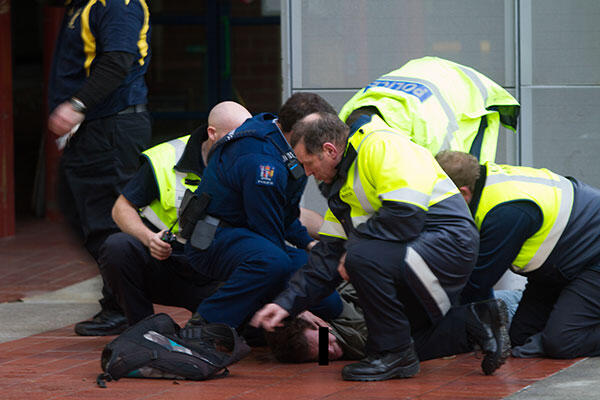
“Proctology” begins this week with some good old-fashioned pyromania. The Proctor believes that “running around chasing a friend with an aerosol can and a cigarette lighter trying to light it is not a very good idea. In fact it’s dumb.” The perpetrator has now seen the error of his ways and was dismissed after “a talking to.” A number of noisy parties have disrupted motel businesses on George and Cumberland Streets. Some are losing guests as people pack up at 3:00am and leave without paying, unable to sleep through the loud noise. “A motelier loses $200-$400 if it were a family. Who should pay for that? I’m thinking the people who hold the party.” The Proctor warns that people living near motels should be aware that if your party is the cause of motel guests leaving without paying, then you may be held accountable. Several Campus Watch officers and police became involved in a recent confrontation on campus, after a drug deal went wrong. As the Proctor explains: “the purchaser came to a meeting of a group of like-minded people on the Union Lawn to return the goods and claim his money back. That ended in violence and required police and Campus Watch to intervene to keep people safe. The seller and his friends attacked the other guy who went away and got some of his friends and things just escalated.” Three people ended up in hospital following the incident, while a number of people were trespassed from campus. “Nobody was badly hurt but it was not a pretty scene,” the Proctor says. One guy became rather stressed and violent at one point: “police and our guys did have to sit on him to make sure he didn’t hurt himself.” Luckily, there were “few burglaries over the holidays and an increase in the number of students registering their flats with us.” For those who don’t know, Campus Watch have a “flatwatch” scheme wherein if you go away for a week or more, they will check your flat windows and doors at least daily to check for break-ins, smashed windows or squatters. They will also look after guns for hunting-inclined students. OUSA have a new section on their website called “It’s Your Call.” The section relates to drinking, red cards, and initiation. Anyone who organises events that include coercion into drinking, taking any illicit substances, or illegal behaviour will be liable for the behaviour of others. (Of course, those who behave like idiots themselves will also be held responsible). The Proctor says they have “pinged a few who have run parties like that.” So “get innovative” with red cards, says the Proctor for (at least) the hundredth time. A messy rending to a red card will have you charged under the code of conduct if you organised it, whether or not you misbehaved yourself. He concludes that “you can paint your bum green and run up and down Leith Street, and you’re never going to hurt anyone.” Wise words Mr. Proctor, wise words.
-
News
Weeding Out the Poor Performers
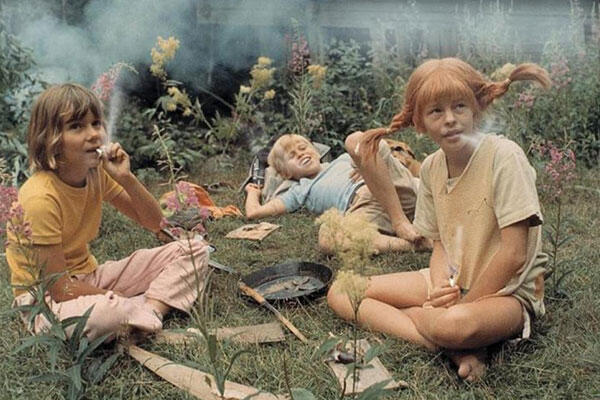
In a sign of growing intolerance against drugs and alcohol in the workplace, wider testing mechanisms are being introduced for workers and beneficiaries. The New Zealand Government is set to introduce new requirements on 15 July whereby a beneficiary will need to test for various forms of drugs and alcohol when applying or training for some jobs. Under the current system, legal issues could arise if those tested felt they were being unfairly targeted. The changes come amid an overall rise in workplace drug and alcohol testing. While the New Zealand Drug Detection Agency previously carried out drug testing in only 12 employment sectors, its scope has now expanded to 23 – including areas such as finance – with new managers increasingly targeted by the tests. Recently published figures from the agency also show that between 2011 and 2012, alcohol tests rose 32 per cent, with 39,369 carried out last year. Over 90,000 tests are expected this year. Illegal drugs such cannabis, methamphetamine, opiates, amphetamine, and cocaine are the most commonly looked for. Other, legal prescription drugs are also being tested for, as well as synthetic cannabinoids. Although most tests are urine-based, blood and saliva tests can also be administered. Any work place will now be able to have a drug testing policy, but procedures must be clearly set out. Critic spoke to a number of Otago students about their opinions on testing in the workplace. “It’s stupid, why should I stop doing things outside of my job just because it has a bad rep?” one responded. “If drugs affect any type of performance, the employee should not be allowed to perform their job at all,” another student countered. “I wouldn’t want a builder who is going to zone out half way through the day, taking the job twice as long as it should, or the house collapsing … What if a teacher was high on meth? Drugs can be dangerous.” When asked for comment, one Critic staff member said, “actually, we’re not contractually allowed to endorse drug use in the workplace, so I think it’s safe to say that drugs are a very bad influence in society.”
-
Columns

A Labour of Equality | Opinion
The Labour Party wants the option of banning men from standing in certain electorates – a bizarre stunt to give life to the wearied governing parties. What becomes obvious, sadly, is that Labour is not so sure what equality is, or what is actually more important. It also gives me a reason to confront the notion of putting equality ahead of everything else. Have a read, if you’re curious, of books by Hayek, von Mises, Nozick, Friedman or Wilder-Lane (and others). If you haven’t read them, you’ll have to take my word that they demonstrate very good arguments. They reason that a person at liberty (regardless of background, and dependent upon perspective) is a person who can unleash their potential for achievement. Such a person could lead, for example, an at-risk youth to the conclusion that she can think for herself and achieve great things. In doing so she will learn the abilities needed to make her self-confidence a real thing. She will go on in life knowing that her efforts will make a difference, and that she can be in charge of her own happiness. If you come from an underprivileged background, similar to or worse than mine, you’ll most likely have experienced this. Something else that underprivileged people experience is being kept out. Which, unfortunately and ironically for Labour, is what will happen with a mechanism so open to abuse by those already on the inside. Examples like this aren’t just found in the Labour Party. The minimum wage is another mechanism by which equality would be achieved, but only by those whose earning power presently matches $13.50 an hour. Those who are in no position, at present, to climb over this barrier are either forced to accept fewer hours, more part-time jobs or state welfare. Equality by edict is not equality at all, but privilege. If you take into account the needs and desires of individuals, you’ll find that equality is not as simple as having the same stuff or being the same thing. Equality is as much about being able as it is about being allowed to do the same thing as somebody else. Finally, if you really care about equality, consider these words from Milton Friedman: “A society that puts equality before freedom will get neither. A society that puts freedom before equality will get a high degree of both.”
-
Columns

ODT Watch | Issue 15
Emile and Dave were feeling chatty this week, apparently hoping the page would get their readers talking. The horoscope section had this to say: Nice try, Harlene. If you’re going to abbrev’, use the odd ‘postrophe. In our political system, this woman’s vote is worth as much as yours – as is the reporter who thought her views merited a half-page article.
-
News
Re-Orientation Week Happened | Opinion
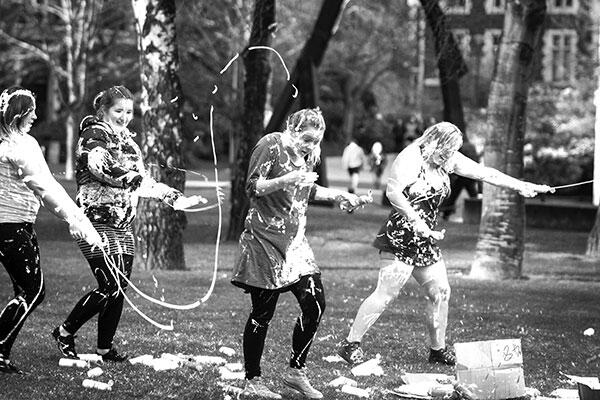
As quite possibly Dunedin’s nonevent of 2013, Re-O-Week has been a constant disappointment for anyone with a brain stem. Only through a haze of excess alcohol consumption and synthetic cannabinoid smoke will people be led to believe they had a mean time. Too bad most of North Dunedin’s dairies agreed to cease selling legal highs during the inter-semester break. The week is not quite over as Critic goes to press. But one can presume that the Carnivàle of mediocrity that is Re-Orientation won’t be able to redeem itself in two meager nights. The flaccid music of a Shapeshifter concert on Saturday will do little to help. The most enduring of the week’s events will undeniably be the Illuminate Paint Party. Despite the party’s close phonetic resemblance to the dreaded Illuminati, it appears that paranoid bogans from every nook and cranny of the university swallowed their pride and took part in the world record attempt. Enthusiastically ignored was the lack of precedence for the record; nobody has before bothered to pretend that a paint rave is a feat worthy of a Guinness World Record. A smaller scale mini paint party was held on Wednesday afternoon outside Union Hall. A somewhat disturbing spectacle, the victims exchanged their presumably wounded dignity for a free ticket to the self-described “mind boggling” main event. A sort of fluoro-bukkake scene ensued, with the very last free ticket giveaway encapsulating everything that was wrong with Illuminate’s marketing. A girl, obviously a fresher, was subjected to a humiliating scenario that even the most hardened Japanese pervert would consider depraved. Whimpering as the cold, toxic sludge was squeezed over her, she did not look in the least bit enthused by the situation. In contrast, her tormenters were enjoying the shit out of it and pulling thumbs up to the camera, with nauseating grins all round. Such borderline sexual humiliation signaled a trend that has persisted throughout the week, beginning with a wet t-shirt contest that took place at Starters Bar on Monday night. The bar actually closed its doors prematurely in anticipation of the inevitable wave of cantankerous first year males, in the process making the contest a pseudo-VIP event. Predictably the Undie-Run 500 did not go ahead, but whether its cancellation was OUSA’s doing is still unclear. The looming spectre of The Cook still haunts the streets of Dunedin during Re-Orientation, though Starters Bar has largely absorbed the Cook’s fresher clientele. The Cook’s absence is at least partially responsible for Re-Orientation’s somewhat muted reception; the diseased aorta of Dunedin’s nightlife has finally been surgically removed with a rusty scalpel.
-
News

Pakehahaha Are They Serious?
What started out as a “tongue-in-cheek” response to the Mana Party’s Maori-only housing proposal now has tens of thousands of “likes” on Facebook and has surpassed every mainstream political party – including the Maori Party, National and Labour – in the social media popularity stakes. The Pakeha Party was founded by Auckland businessman David Ruck on 20 June and received its first media showcase on Seven Sharp on Monday 8 July. The TV spot showed reporters proclaiming its 4,000 likes, but subsequently sparked a level of interest from supporters and opponents alike that no one could have predicted, and that saw the Facebook page attract more than 50,000 likes in mere days. Purporting to stand for equal rights for Pakeha, the party lives by the mission statement that “if the Maori get it, we want it to [sic]! No matter what it is!” While it began as a “simple statement” and was a “bit of a joke,” founder David Ruck is now looking to hire staff and develop a party website, despite having no experience in politics. Ruck has personally fronted the now very public campaign, and has hit back at claims that the party is racist or separatist. In an interview with 3 News, Ruck said it was “shocking to see people prepared to come on a public forum and say some of these degrading comments about people in this country,” and that as a result the page will now be moderated. Political party registration is governed by the Electoral Act 1993 and, importantly, requires satisfactory evidence that the party has at least 500 eligible members. Ruck has high hopes for the party and is confident “a high percentage of people will get out of bed on voting day and vote for the Pakeha Party.” Ruck is already on the hunt for legal representatives, race-relations specialists and university graduates to further his cause, as well as starting to establish some concrete policies. Ruck believes that he is a “very quick learner.” “I’m not stupid … I’ll simply look at the other parties’ policies and basically put them on our website, and have a yes and no box.” Ruck’s career in politics has already seen the skeletons in his closet exposed, including his having served five months in prison for stealing $40,000 worth of DJ equipment, as well as one month for a driving charge. Ruck points out that the acts occurred 16 years ago and he’s changed since then, but he did say that if someone with a “cleaner” image were prepared to front the party then he would happily hand it over. As for possible policies, satirical news website The Civilian has already published what it speculates will be in the Pakeha Party’s platform, including: - Make Christchurch the capital of New Zealand. - Replace confusing Maori names with their white equivalents. Whangarei to become Wongaray. Kaikoura to become Cackaracka. - Install Michael Laws as mayor of as many councils as he can logistically manage. - All Blacks to be renamed Mostly Whites. - Aoraki Mount Cook to be renamed Mount Cook Mount Cook. - Prosecute Maori for the extinction of Moa. - Maori must stop dominating unemployment and prison statistics and give Pakeha a fair go. Currently, the Maori Party has declined to comment, while Prime Minister John Key doubted that the group – with 5,500 members at the time – would “get legs.” He remarked that NZ is run on “needs, not just on ethnicity,” and that the Maori Party advocates for all sorts of ethnicities. Only time will tell whether the Party will continue to gain momentum and become a reality, or whether Ruck will be another Peter Dunne and find himself captaining only half a team of “Mostly Whites.”
-
News
Hayne Suspicious of the Internets
University of Otago Vice-Chancellor Professor Harlene Hayne has spent all of January studying “everything that I could lay my hands on” about Massive Open Online Courses (MOOCs), she says in the most recent University of Otago Magazine. The article ponders whether “these MOOCs herald the demise of the traditional campus-based university education,” which Hayne denies. MOOCs are making a name for themselves as “the Craigslist of college,” and provide a way to study almost any topic at university level without leaving your bed. MOOCs combine online videos with web-based coursework, assignments and quizzes. Some providers boast enrollments of up to 1.4 million students. Hayne addressed the financial concern traditional universities have about the phenomenon, saying that “although there may be a handful of opportunities in this space, the concept of the MOOC will not displace the traditional university experience and the business case for the future of MOOCs actually hangs by a thread.” As for the long-term financial stability of MOOCs, Hayne says “it will have to change if anyone is going to make any money.” She continues that if they were no longer free of charge, “I suspect that enrolments will plummet.” However, one potential model currently under consideration is to offer free MOOCs and only require the payment of a fee if you want certification or course credit. Hayne also mentions the low completion rate of most MOOC students, saying that “there are probably many reasons, but the most parsimonious one is that the courses quickly get boring.” Critic contends that 90 per cent of courses quickly get boring, whether they are online or not. “Through their university education, students learn tolerance and compassion, they develop teamwork, oral communication and critical thinking skills, and they also learn the values of the world in which they live. All of this requires high-level human contact on a day-to-day basis,” the evangelical Hayne continued. Hayne used the example of 11-year-old Khadijah Niazi, from Pakistan. She studied university-level physics through a MOOC, but during her final exam, the Pakistani government shut down access to YouTube. With the help of a professor in Portugal, she managed to gain a workaround and passed the exam with the highest distinction. When asked if she would pursue an MOOC option in the future, Hayne said “I would still want to go to Oxford or Stanford. I would love to really meet my teachers in person and learn with the whole class and make friends – instead of just being there in spirit.” Hayne says she would like Niazi to “join us in NZ and teach us a few things.”
-
News
The Second Quarterly Executive Reports
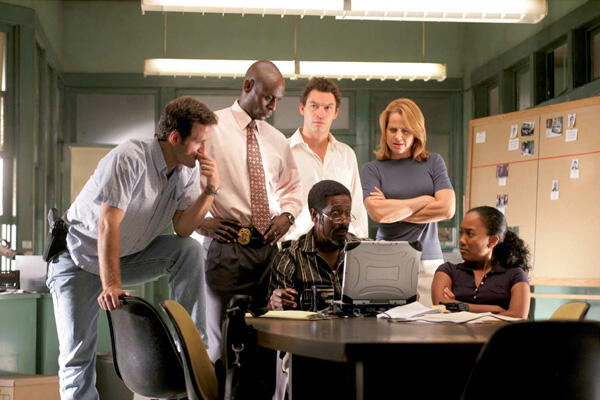
Every quarter, each member of the Executive presents a report on what he or she has been up to, and in some of these quarters, Critic wades through the mutual back-slapping and puffery long enough to bring you detailed coverage of the wankfest that ensues. We gave it a miss last quarter, so decided we’d better check in and see how the Execcies are faring. Fourth estate and all that. President Fran noted that “everyone’s report, with the exception of a few people, was okay.” High praise indeed, although Critic will be the judge, if you don’t mind. In place of the traditional stars, Critic has devised unique ratings out of five for each Execcie. Francisco Hernandez(President) No, he’s not a larrikin Scarfie. Yes, he’s a giant nerd. And yes, he writes excruciatingly long Facebook posts, called for the Cook to be bowled on national TV, and spends way too much time trying to justify “E-Sports.” But this is Fran’s destiny. He was born to be a student politician. Of course, he wouldn’t be Fran if there weren’t some cringeworthy moments (the aforementioned Firstline interview being a particular highlight), and his report falls into that category. A list of his hundred-plus election pledges with (self-assigned) scores out of five for each pledge – using an extremely dodgy rating system and explicitly taking a dig at his Exec on more than one occasion – the report tips the scales at 5,375 words (two of which were “cunt”). Fuck that, says Critic, TL;DR. We’ll report on what we see, thanks. Fortunately for Fran, what we see is pretty good. The pledges might be headache-inducing, but they give Fran something reasonably coherent to work toward; and he might work toward them in his characteristically bumbling, Frannish way, but he’s making real progress and delivering on the big issues. The Memorandum of Understanding with the DCC has been signed, which gives OUSA a platform to push for improvements to student flats next semester; the liquor ban has been beaten; and Hyde Street was a massive success. Fran has also declared that he will not seek a second term as President, and signed off with the statement “If drafted, I will not run; if nominated, I will not accept; if elected, I will not serve.” Pete Hodkinson, watch your back. Four iron thrones and a crossbow. Pippa Benson(Colleges Officer) On the OUSA website, all the Execcies are listed with their first and last names – Francisco Hernandez, Blake Luff, Anonymous Hack, and so on. All except Pippa. Pippa is just “Pippa.” Why is this so? Using deductive reasoning, Critic surmises that she must be either a) a rapper or b) a Brazilian footballer, and has quietly put its money on c) both of the above. Unfortunately Pippa didn’t lay down any sick rhymes at the meeting, and the only dribbling that occurred was when Critic fell asleep briefly during one of Fran’s speeches. Still, there was no ball handy and not many words rhyme with “colleges,” so Pippa (or P1PP4, as her label has called her) is off the hook for now. Where were we? Oh yeah, colleges. Pippa’s pretty quiet during Exec meetings, so much so that Critic recalls its surprise when one day she piped up and it turned out that she was Canadian. She seems to be doing the bare minimum required, though this might be due to one of her first-semester projects – more local engagement – falling through. Shame, locals. She has more lined up for the coming quarters, including a music tournament and a colleges website. Two loudspeakers and half a cheeseburger. Rachael Davidson(Campaigns Officer) Rachael put her full title as “Campaigns and Initiative Portfolio Executive Officer.” We’re pretty sure that’s bull, but nothing about OUSA surprises us any more. For all we know, Fran is really the Presidential Perpetual Game of Thrones Reference Disseminator and Undercover Lizard Man, which would actually explain a lot. Anyway, this is Rachael’s first quarter as the Campaigns and Initiative Portfolio Executive Officer (“Campaigns Officer” to her friends), and much of her work so far has been “making herself known,” “working closely with the community,” “gaining valuable insight” – in other words, nothing substantial. For instance, part of Rachael’s job description is to sit on the Events and Communications Committees, which, she has discovered after some investigation, do not actually exist. Although she hasn’t really been given much to do yet, Rachael has thrown herself behind other Exec initiatives, including Lucy’s fair trade fortnight and animal micro-chipping project. She also plans to launch a Mental Health Awareness Week in second semester. Three lip piercings. Lucy Gaudin(Finance Officer) Lucy has been doing such a good job as Finance Officer that Fran made her chair of the meeting. Or something. Actually, it turned out that Fran was playing the long game – the game of chairs, if you will – and was subtly stacking the Exec in anticipation of an upcoming vote on funding for “E-Sports,” his pet project. Because the chair cannot vote on matters before the Exec, Fran was able to neutralise Lucy (who has consistently opposed reckless spending, or indeed spending of any kind). A competent Finance Officer Lucy may be, but a Machiavellian genius she is not. Lucy’s report got a gold star from the teacher, with Fran describing it as “excellent” – possibly because it wasn’t simply copied and pasted from previous reports, which seemed to be the theme. With her report coming in at a hefty 3,405 words, Lucy is nothing if not meticulous – unsurprising as she pretty much lives at the office (though we’re pretty sure she spends most of that time on Facebook). It’s hard to fault Lucy on any of the things she’s doing, particularly as Critic doesn’t understand half of them and couldn’t be bothered reading about the other half (I mean, seriously, 3,405 words?). She’s a strong presence during Exec meetings, and the other Execcies all seem to look up to her. Plus she made Critic some biscuits. Probably a bribe, but hey, they tasted good. Five bribery biscuits. Zac Gawn(Admin Vice-President) Oh, Zac. You naughty boy. Zac’s report came in a full week late, despite repeated reminders from Fran, and he found himself on the receiving end of a particularly harsh dressing-down from the President. “This is completely unacceptable,” Fran thundered. “You’re the Vice President and you need to set a better example.” The Exec voted to dock a week’s worth of Zac’s honorarium, and sent him to the naughty step to think about what he’d done. Zero firm handshakes. Jordan Taylor(Education Officer) Jordan has been away for most of the semester, so Fran has been Acting Education Officer. He’s been too busy to do much in the role, but nobody seemed to notice. An unspecified number of books. Blake Luff(Recreation Officer) Blake’s competitive spirit (SPORTS) saw him be the first to submit his report. This success had clearly pumped him up, and he punctuated the rest of the meeting with a variety of whoops, shouts and hand-claps. Blake reckons he’s been a busy boy, noting that if he “gives up sleep” he is able to exceed his 10-hour-per-week Executive duties. This must mean that on Blake’s list of priorities, Executive duties are somewhere above “things I don’t do because I am asleep” and somewhere below “everything else that I do.” Duly noted. Blake’s biggest project – Uni Games – happened in the first quarter, and while the second has “flown by” he hasn’t actually been around for much of it, having been on placement for six weeks. Nonetheless, he seems to be keeping up with all his day-to-day responsibilities, going to committee meetings and liaising regularly with OUSA Recreation staff. This is Blake’s second year in the role, so even on autopilot he’s a pretty competent member of the Exec. Two fist-bumps and a rugby chant. Keir Russell(Postgraduate Officer) Keir’s report was a bit terse, some of the comments on aspects of his role reading simply “yup.” Perhaps he’s a little frazzled; elsewhere in the report, he writes, “I have actively promoted the referenda and my views on it. This resulted in long messages from several postgraduate students with strong views. The exchanges were robust.” Critic’s seen a lot of postgraduate politics, and can imagine what happened. Poor Keir. That can’t have been fun. Two hugs and nice cup of tea. Gianna Leoni(Te Roopu Maori President) Gianna’s role is a bit of an odd one, as she’s required to juggle her responsibilities as an Execcie and as President of Te Roopu, a separate body. She’s been handling this well, although at times those commitments have clashed. Te Roopu has been very busy this last quarter, as Gianna’s detailed report shows, and has benefited greatly from the appointment of a Tumuaki Taurua (Vice President) and Secretary. Four racially sensitive objects. Kamil Saifuddin(International Oficer) Kamil actually submitted his report from Australia – how international! A detailed breakdown of every aspect of his role, it mostly consisted of short statements along the lines of “I spoke to some people once and haven’t heard from them again so I can only assume everything is going swimmingly at their end.” Kamil isn’t the most proactive person. He seems to miss a lot of meetings – “I am always out and about, and always on the move,” he cryptically explains – and he doesn’t speak up much when he does attend. Despite this, he’s helped organise events like the International Sports Games in May. It’s particularly telling when under the “Progress on Goals” section of his report, Kamil dedicates a lengthy paragraph (the longest of his report) to the gradual realisation that there is a thing called Kiwi Host and that it is run by the Accommodation Office. “This,” he declares, “is major progress.” He’s been in the job six months now. Just sayin’. Two apologies for non-attendance. Ruby Sycamore-Smith(Welfare Officer) Ruby has really sunk her teeth into the role. Her report could have used some proof-reading, as there were “neumous” spelling mistakes, but she’s an enthusiastic presence who’s put together a strong and active Welfare Committee. She’s stoked to be part of “the number one student assoication [sic] in the country, well, in the world!”, and it shows. Ruby has been particularly active on mental health and women’s issues. In a stunning victory for feminism against rampant gender stereotypes, Ruby notes that the Women’s Room has been “filthy” this year, and she has been busy making signs with a “keep it clean or lose it” message. Ruby is generous with her time, putting in a lot of hours across a broad range of initiatives. She’s always a cheerful, congenial presence in Exec meetings and is a constant source of great quotations. Science may “freak [her] out,” but Critic’s still a fan. Four mouth guards and a dictionary.
-
News
Trans-Pacific Partnership
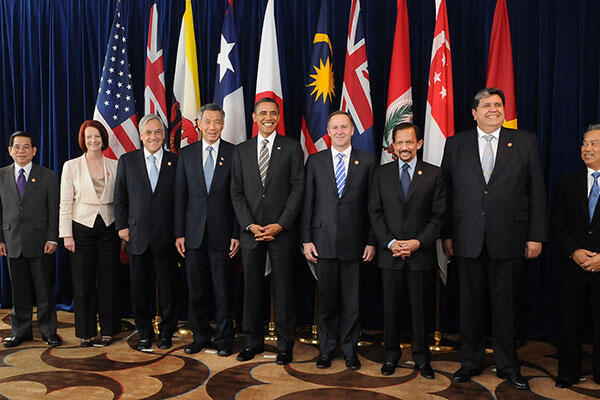
The 18th round of negotiations for a 12-country trade agreement in the Pacific Rim has just begun in Malaysia, but potential provisions relating to copyright laws have caused concern among Internet groups. In 2005, the P4 trade agreement was signed and ratified by New Zealand, Brunei, Chile and Singapore. Since 2008, efforts have been made by other countries, notably the USA, to join an expanded version of the agreement, known as the Trans-Pacific Partnership (TPP). Secret negotiations currently underway now include a total of 12 countries, with Japan, Mexico and Canada the latest countries to join the talks. Parties to the negotiations aim to reach an agreement by October. Earlier criticisms of the deal focused on how the agreement might prevent or deter signatory governments from passing regulations that adversely affect multinational companies operating in their country. Auckland University Law Professor and trade agreement critic Jane Kelsey says she fears the TPP will be “a new rulebook for the 21st century that locks in and extends the failed neoliberal model.” Kelsey has previously expressed concern that New Zealand’s state-owned enterprises, drug-buying policy and accident compensation scheme could be compromised by the deal because despite their altruistic aims, they are detrimental to businesses in those sectors. The Council of Trade Unions fears that because such an agreement could lead to future government regulations being challenged and overturned in international tribunals, thus “impos[ing] policies that New Zealand voters have repeatedly voted down and would oppose if they had a choice.” New Zealand Trade Minister Tim Groser admits that any agreement would involve concession of sovereign rights, but says that removing “excess sovereignty” which allowed the construction of trade barriers by governments was “the point of international law.” The government’s decision would be determined by whether these concessions were consideed worthwhile. New Zealand’s Ministry for Foreign Affairs and Trade (MFAT) is enthusiastic about the deal, and suggests that the benefits of trade agreement with the current parties could be worth $2.9 billion annually to New Zealand by 2025. However, MFAT says that “TPP’s greatest potential … is as a pathfinder for wider regional economic integration.” It hopes that “a greater degree of coherence in the regulations that govern global supply chains would streamline international trade.” It is this aspect of the deal which has some worried, particularly with regard to copyright law. Critics of the TPP in a number of countries are also wary of the secrecy in which negotiations have been conducted. In June, US Senator Elizabeth Warren argued that documents relating to the negotiations should be made public, arguing that “… if members of the public do not have reasonable access to the terms of the agreement under negotiation, then they are unable to offer real input into the process.” In New Zealand, the Green Party has criticised the negotiations, and the Mana movement has pledged to withdraw from any negotiations. In 2010 and 2011, draft chapters of the agreement dealing with intellectual property were leaked to the public. Technology commentator Peter Griffin believes that the documents show U.S. negotiators trying to prevent Technological Prevention Mechanisms (TPMs) from being circumvented. Common TPMs include region codes on DVDs and restrictions on which networks a cellphone may use. “At the moment,” Griffin says, “it’s not illegal to circumvent these so long as we’re not trying to infringe on someone’s copyright. There is some scope in the document that we’ve seen … that the copyright holder will have the power to really enforce these TPMs and that if you do try and circumvent then you could be up for legal action.” The Royal New Zealand Foundation for the Blind has also voiced its disquiet over such possible provisions, which it fears could prevent it from reproducing books in Braille. TradeMe, which enjoys revenue from parallel importers of copyrighted material, also fears the consequences for itself and its consumers if such transactions were made illegal. Perhaps the most contentious aspect of the leaked US draft is a provision allowing copyright holders to “prohibit all reproductions of their works … in any manner or form, permanent or temporary (including temporary storage in electronic form).” Lobby group InternetNZ has denounced this provision, arguing that “the Internet works by making temporary copies or ‘transient reproductions’ of data in order to transmit it from point A to point B.” Griffin has suggested that such provisions raise the spectre of “tollbooths across the internet,” as copyright holders charge for every copy of their work. A coalition of groups opposed to changes to copyright law has formed the group A Fair Deal to try and influence the government to resist joining any trade deal which includes them. It is precisely these provisions that caused a wave of protests in the US and Europe when their legislatures tired to enact the Stop Online Piracy Act (SOPA) and the Anti-Counterfeit Treaty Act (ACTA) in 2011 and 2012. Offline and online protests were staged by Internet users and companies, with Google and Wikipedia both staging “blackout” protests on their sites to denounce the secret negotiations. Opposition in New Zealand took the form a of a declaration in 2010 by Internet groups and concerns raised by Labour’s Clare Curran and then-United Future leader Peter Dunne. The Library and Information Association of New Zealand also attacked ACTA, arguing that its copyright provisions undermined the dissemination and sharing of information, which it believes is one of the fundamental purposes of copyright law. Whether similar provisions will form part of any TPP agreement remains unknowable for the time-being. Without any further leaks, the public is unlikely to know the content of the TPP until it is agreed, although American TPP activist group Public Knowledge believes that entertainment industry lobby groups the Motion Picture Association of America and the Recording Industry Association of America have strongly influenced the U.S. government’s proposals. Given that the U.S. government represents the largest economy in any potential agreement, its position is likely to be influential. Leaked doucments outlining the New Zealand government’s proposed copyright chapter suggest a looser, less prescriptive approach towards copyright enforcement on its part, along with an emphasis on the protection of cultural and genetic resources of indigenous peoples. Prime Minister John Key has previously ruled out signing New Zealand up to any agreement that deny New Zealand dairy products access to heavily protected North American markets or that compromise New Zealand’s single-buyer drug agency Pharmac. Whether copyright issues become another bottom line remains to be seen.
-
Columns

The More Things Change | Issue 15
This week, there is as much violence and mystery as you could want on a Monday morning. July 19, 64 AD: The Great Fire of Rome started, and no one knows how. One of the more sensationalist rumours was that Nero, the Emperor at the time, had started the fire so he could rebuild the city the way he wanted it. This theory has been largely discredited because the site of the fire was at least a kilometre away from where Nero eventually built a new palace. The limited evidence suggests that the fire was accidental – Rome seems to have been prone to these, as there were at least two more that made it into the books. You’d think they might have learned. July 21, 1873: In this week’s daring plot, Jesse James and his gang pulled off the first successful train robbery in the American Old West. Their plan was quite simple: derail the train, steal the shipment of gold it was carrying, and run away. The first bit worked, but when they got the safe open they found out the shipment had been delayed, so they just robbed the passengers of their valuables. The escapade caused multiple injuries and the death of the train’s engineer, but for some reason is celebrated to this day with parades and re-enactments. July 20, 1960: The head of the Israel Institute of Technology’s physics department was arrested for espionage. Allegedly, he had been transmitting secret information to “an unidentified foreign power,” and if that wasn’t mysterious enough, the trial was held in complete secrecy – no one ever mentioned anything more about what the information might have been. The professor was a known expert in cosmic radiation, which is clearly more suspect than it might sound. July 21, 1984: The US recorded its first “robot-related fatality,” which does have a nice ring to it despite being inherently depressing. The robot was a factory machine and caused the death when its operator went inside its work area and was crushed. As unfortunate as it was, it probably led to a lot of ridiculous panic about robots potentially being a great danger to humankind, likely to kill us all … all the usual stuff. Presumably more attention was subsequently paid to workplace procedure, though. July 15, 1988: The first Die Hard film premiered, and spawned a legacy that is still evident 25 years later. Critical reaction to the sequels has varied, as is usually the case, but the first one is still often labelled the greatest action film of all time. Yippee ki-yay, and so on.
-
Features

An Island is an Island
Stuck on an island that even a film crew for Survivor found too rugged (or dull) to film, Loulou Callister-Baker’s head has become swamped with thoughts of the existential-crisis variety. In a quest to maintain her relevance, Loulou explores what it means to be both psychologically and technologically isolated, and the community that maintains this lifestyle all year round. A few years ago, my friend furiously texted me several clichés during a moment of tension, one of which read “no man is an island.” Unknowingly, and without truly grasping the meaning of the line, my friend had quoted John Donne, a 17th-century poet. After hearing church bells sounding for a funeral, Donne wondered if the ringer of the bells was aware that he too was dying. These wonderings eventually transformed into the famous poem “Meditation 17.” Through the eyes of a dying man Donne viewed everyone as connected, and therefore every death as diminishing humankind in some way. While I believe the wisdom of a dying poet is swell, I am starting to think that Donne’s imaginings do not apply to me. As I sit in a house on an island oceans away from anyone I know, I am practically dead to the world. Due to this realisation I am obsessively scrolling through the Internet trying to work out how the world has diminished without me, but the news is only reporting Kevin Rudd’s sudden awakening from a three-year dream and a woman called Wendy Davis standing for a very long time. The world is continuing on in its vibrant, confusing way and here I am, a metaphorical island sitting on a couch on a real island. In a quest to maintain the relevance of my existence I wonder: in this day and age, what does it actually mean to live in relative human and technological isolation? On an island in the Hauraki Gulf is a dwindling population whom most non-residents describe as the “Locals.” The Locals are technically New Zealanders but, as a result of their pre-existing, unspoken social code and physical isolation, they have created another type of nationality. For one reason or another each Local has left behind urban living for a rugged, outdoor lifestyle that runs on a slower clock, known as “Island Time.” Out here, broadband connections are not fundamental to every household and cellphone reception wavers. The island’s news bulletin is riddled with crudely designed ads, barely-coherent letters to the editor, and blurry photos of weddings held at one of the island’s pubs. Despite the roughness around the edges there are humbling aspects of the island community. Every time you pass another car on the road, the drivers will wave at you and every time you walk by someone he or she will say hello. They look after each other. In a world where everyone seems “logged in,” the people and lifestyles out on the island are a bewildering and romantic mixture of isolation. When I arrived on the island a couple of weeks ago, it was the first time in a decade I had been out here in winter – with no one occupying the neighbouring baches they became lifeless skeletons. A huge storm loomed over us, sending the place into an ominous darkness in the middle of the day. Later, thunder and torrential rain closed in on my dad, my brother and me. My phone had no reception, the Internet was dodgy and the sounds of Dad bringing wood in for a fire echoed throughout the house. Everything felt on edge. A day or so later, however, my enamoured view of this stormy, isolated lifestyle started to waver. I watched photos of parties and gigs fill my various social media feeds. I watched people interacting and I waited for those people to contact me but none did. I had become irrelevant. In a dramatic move I permanently deleted my three-year-old Tumblr. Then, later that night, I refreshed my emails constantly, waiting for my “last resort” plan to afflict my friends with concern. Sadly, no panicked emails – with copious capital letters and exclamation marks – entered my inbox. I drank an array of expensive alcohol and stared deeply into the fireplace until my eyes burned. While isolation brings your vulnerabilities to the surface, it also stitches up those wounds and gives you time to meditate on important clichés. Once I was able to place the anxieties of a technologically dependent young adult aside, I began to realise that living on the island forces a lifestyle that most reverends-for-sustainability preach. A central source of power in our household, for example, comes from solar panels, which rely on photons from the sun to generate electricity. On days without sunlight, a petrol-fuelled generator runs the system. Several years ago we even had a windmill, but our neighbour forced us to take it down because of the terrifying sound it made on windy days – like a loose rotor blade spinning off a plummeting helicopter. Our water supply comes from the rain and is collected in two huge tanks. The food supply is more problematic. While our garden (as well as the nearby community garden) has an abundance of herbs and fruit, the other staples of our diet, including meat and carbohydrates, either need to be ordered online and sent out to the island in boxes or bought at one of the two very expensive dairies – one of which is run by a large woman with dreadlocks. We do have a “contact” who may or may not slit a lamb’s throat on request, but as one island mantra goes, “what happens on the island, stays on the island.” There is a pattern emerging among communities that have limited budgets and are either isolated or must regularly contend with large disruptions. Practices on the island are not the only evidence of humans being incredibly resourceful. In Kenya, an insurance programme called Kilimo Salama was established for small-hold farmers. The programme uses wireless weather sensors to help farmers protect themselves financially against climate volatility. In India a project called Husk Power Systems converts agricultural waste into locally generated electricity. A further example of communities employing sustainable and resourceful thinking in the face of environmental and conflict disasters is the Pallet House Project by I-Beam Design. The inspiration for this project came from the realisation that eighty-four per cent of the world’s refugees could be housed using a year’s supply of recycled American pallets. According to I-Beam Design, a 250-square-foot “Pallet House” consists of 100 pallets nailed and lifted into place and covered with tarps or corrugated roofing, and can be built in just a week. Similar projects are also evident throughout New Zealand, especially with the current push to rebuild Christchurch in an environmentally conscious way. One interesting New Zealand project is the Whangapoua Sled Home, designed by architecture firm Crosson, Clarke and Carnachen. The home is built on two huge wooden beams (or sleds), which allow the entire structure to be movable in order to avoid coastal erosion. The home also strives for sustainability with a worm tank waste system, water tanks and an exterior designed with macrocarpa-cladding that can be closed completely in storms. While none of these solutions can be seen as permanent ways to combat crises and the inevitable environmental changes of a warming planet, each provide marginalised communities with a way to control the shocks that can devastate populations. The solutions also create pathways for innovation and community involvement and represent a combination of humanity’s best attributes. Viewed in another light, these community projects show a movement away from the well-worn concept of “sustainability” towards the emerging concept of “resilience thinking.” As Andrew Zolli for the New York Times states, “where sustainability aims to put the world back into balance, resilience looks for ways to manage in an imbalanced world.” Zolli clearly outlines the necessity of this thought transition by using events in New York as a central example. After 9/11, Lower Manhattan was rebuilt with the largest collection of green, LEED-certified (a rating programme for eco-friendly design) buildings in the world. But when Hurricane Sandy hit New York in 2012, sustainable or not, buildings in Lower Manhattan were damaged hugely. Zolli eloquently summarised the situation: “the sustainability movement’s politics, not to mention its marketing, have led to a popular misunderstanding – that a perfect, stasis-under-glass equilibrium is achievable. But the world doesn’t work that way: it exists in a constant disequilibrium – trying, failing, adapting, learning and evolving in endless cycles. Indeed, it’s the failures, when properly understood, that create the context for learning and growth. That’s why some of the most resilient places are, paradoxically, also the places that regularly experience modest disruption; they carry the shared memory that things can go wrong.” The focus on sustainability frequently answers only part of the problem, without recognising that the environment is constantly fighting back. However, even resilience has its downsides. Robert Engelman, president of the environmental research organisation Worldwatch Institute, writes that “by adapting so well to past environmental losses … we humans have been able to keep expanding our population, leading to ever-wider ripples and denser layers of long-term unsustainability … We would be wise today to look to dramatic and rapid ‘demand contraction’ – call it de-growth or simply an adaptive response to an overused planet – to shift toward a truly environmentally sustainable world that meets human needs. We need to understand the boundaries we face – and then create ways to fairly share the burden of living within them.” In the relative wild, however, if you don’t know the difference between diesel and petrol, knowledge of concepts proves surprisingly unhelpful. For the cellphone- and laptop-wielding members of my generation, who have degrees in ideas rather than practicality, disaster comes in the form of a power cut. A few days ago, this sort of disaster struck us. At this point my parents had returned to work on the mainland leaving my brother, my boyfriend and me to run the household. The morning after my parents left, the power was low so the two boys went out to the garage to power the generator. When they returned, however, there was a look in their eyes of guilt and inadequacy – instead of starting, the generator had omitted a thick black smoke and stopped abruptly. After a brief discussion we decided that if we went for a walk the issue would correct itself – although the generator was destroyed, the solar panels would charge the central system’s batteries and we’d be fine. Out here, everything depends on whether the needle is in the green or the red. When we returned home, the power meter showed that we were in the green, which should have meant we could use power. But something was seriously wrong – the Internet connection was non-existent. My brother (who is not a pessimist but a self-described realist) concluded we were doomed. But I, using logic derived from nowhere, decided we should wait it out – things would right themselves. After an hour a terrible realisation dawned on me: without power the water pump cannot function and without this the toilet wouldn’t flush. Horror enveloped the three of us. In an attempt to ease the tension, my boyfriend offered a n anecdote he heard in the Outback (I have no idea why he was in the Outback): “if it’s yellow let it mellow, if it’s brown flush it down.” Remembering, however, that the “flush” part of this anecdote was unavailable, my boyfriend started designating us corners of the back lawn. By this stage I had had enough – I decided to call the electrician. Our disaster epitomised certain flaws of my generation as well the oddness of the relationship between outsiders and the island’s locals. The first electrician that came to our rescue was a small man with red cheeks and a sympathetic nature. However, as is always the case on the island, he could not fix the task alone and had to call on another guy. The second man was a grey-haired giant who continually spat everywhere. He peered down at the generator, then at us and grunted, “you’ve gone and put the wrong fucking fuel in.” When my boyfriend asked how he knew that, the giant electrician sniffed and uttered, “you can smell it.” Noticing that we were still sticking around he asked us if we were having a break from school. When we told him that we were actually at university studying various arts and science papers he informed us, “all yous young people need to do a basic motors course.” By then our dignity was on the floor and the lack of shared interests between the electricians and ourselves was clear. As we were about to leave, the electrician advised us not to have a smoke out the back as the place was soaked in fuel, and it dawned on me – we urbanites were going to be talked about at the pub tonight and by the next day the whole island would know us. In independent filmmaker Debra Granik’s film Winter’s Bone the small community depicted proudly exists off the grid. With the combination of poverty, small-town gossip and the infiltration of the illegal drug underworld into the community, the lifestyle of these small town residents is sombre. Another recent film, Beasts of the Southern Wild, directed by Benh Zeitlin, also depicts a similarly isolated community, called the “Bathtub,” located in a bayou in southern Louisiana. The people of the Bathtub participate in daily celebrations of their own existence, which, for them, is the best way to be. Although the outsider communities shown in Winter’s Bone and Beasts of the Southern Wild have undoubtable dark sides, they are strangely fascinating and attractive. In many ways these lifestyles are similar to the one in which I am currently immersed on the island. These isolated communities, which are spread throughout the world, live with a type of wild freedom – they don’t need anyone from the outside and, to some extent, their lifestyles are sustainable. As for the rest of us, when one considers the vast cost of a first-world lifestyle and the comfort it provides, the precarious state of the planet is clear. In the Worldwatch Institute’s book Is Sustainability Still Possible?, Engelman worries that so many of us “enjoy pleasures and comforts unknown to even monarchs in the past.” While life on the island is slightly anarchist and not attainable for everyone, it is surprising how the resilient and environmentally conscious aspects of the lifestyle are the least mainstream – especially compared to life in a university city like Dunedin. If we don’t turn our understanding of ideas towards practical outcomes it won’t really matter whether John Donne views every person as a piece of the same continent, because no one can be a part of a dead continent. If that happens, there will be no one left to even ring the bell.
-
Features
3D Printing is a Thing
3D printing, also known as additive manufacturing, is the act of building three-dimensional objects from a digital model. As opposed to traditional manufacturing, which involves moulds and the removal of material, 3D printing produces no waste material – which seems so obvious when you think about it. Critic’s finest technology geeks Zane Pocock and Sam Clark explore this new phenomenon, which is steadily creeping its way into the mainstream consciousness. When we initially floated this feature, several Critic members exclaimed “is that actually a thing?” – and in so doing highlighted a common misperception about 3D printing: that it is a figment of nerdy imaginations. Yet 3D printing has been used for decades. Hobbyists have been playing with the idea of building objects up layer-by-layer in such a way since the 1980s, and it doesn’t take too much abstraction to compare it to bricklaying or pyramid-building. 3D printing is coming to the fore in almost all applications – from large-scale production and small-scale desktop construction to areas as dramatic as human organ replacement. Simply put, it involves constructing layers of melted or mouldable material on top of each other, slowly building a three-dimensional final product. So with this new production method on its way to becoming a US$3.1 billion industry by 2016 (Wohlers Report, 2011), what do we all need to know? What can I print?Currently, the most significant role of 3D printing is in rapid prototyping – quickly building models for testing without stringent production criteria. For example, architectural plans are laid out using mapping software and 3D printers, and models of planes and Formula 1 cars with very slight progressive modifications are tested in air tunnels. It also promises to be awesome if you’ve been totally fucked up in some way. Entirely new jawbones are being printed for accident victims at a fraction of the past cost, and prosthetic limbs are benefitting from the customisability of the technology. It would seem that the sky’s the limit – if only because you can’t print gas yet. All this is well and good, but the practical consumer side may not yet be so obvious, and there are plenty of limitations. For a start, 3D printing doesn’t produce objects of the same strength as traditional subtractive manufacturing. Users must be knowledgeable in computing and the initial setup costs are huge – most of the cheapest printers are well in excess of $1,000 and the cheapest printable material costs approximately $50 per kilogram. For the most part it can only fabricate relatively homogenous objects (one material per object) from a small list of potential materials, and production runs currently become impractical after around 10 identical objects have been printed (at which stage it becomes more time-effective to use moulds or subtractive manufacturing). For Dickheads! Try printing a replica of someone’s Wattie’s sauce squeezie lid, with holes around the side. One particularly awesome YouTube video (youtu.be/jQ-aWFYT_SU) shows a man 3D scanning his metal wrench, perfecting the model in a programme, and printing it by laser sintering a pool of metal dust. It emerges perfectly functional – no assembly required even for the moving parts – yet it is unlikely this will be as strong as a traditionally drop-forged wrench, which can last generations. Website Shapeways is an online marketplace that allows you to make, buy and sell 3D designs to print: shapeways.com If price is your biggest concern, there are several services that will either print a design you’ve uploaded and ship it to you, print and ship you a pre-designed good, or send you the 3D files for a design you can print at home. If you want reassurance that 3D printing will gain an important position in our society, just look at anything you own that’s made of plastic (or that could be made of plastic without structural problems). Every one of those items has the potential to be created or replaced by your desktop 3D printer in the near future. On top of this, the technology is ideal if you own a vehicle. Do you remember the last time your wing mirror was smashed off? One of us does. Everyday I’m politickingNew Zealand’s very own Minister of Customs, Maurice Williamson (of “big gay rainbow” fame), told officials on 13 April this year to be “very afraid” of the phenomenon in relation to border security. The fact that contraband such as weapons and, according to him, drugs could be sent across borders as computer files would leave our borders extremely vulnerable. “If people could print off … sheets of Ecstasy tablets at the party they’re at at that time, that just completely takes away our border protection role in its known sense,” Williamson said. The positive side of this spin, however, is that he also notes the eventuality of this technology becoming as commonplace as PCs. Even the scaremongers think they’re here to stay. On the flipside, some positive 3D printing politics have come out of US President Barack Obama, which at first seems ironic given that the technology is expected to herald an end to globalisation. It is also ironic given the fact he plays up 3D printing’s potential in producing military weapons – particularly considering these could be made at home. Obama thinks it can strengthen the US military and help bring America’s offshore manufacturing back to the country’s struggling industry. Website 3D Systems’“Cubify” platform allows you to purchase designs to print on their Cube 3D printers. cubify.com In fact, he believes in it so strongly that he announced plans for three major manufacturing hubs during his State of the Union address in February this year. “A once-shuttered warehouse is now a state-of-the-art lab where new workers are mastering the 3D printing that has the potential to revolutionize the way we make almost everything,” he said during the address. “Our first priority is making America a magnet for new jobs and manufacturing.” For Dickheads! If you run out of material, why not shit in your incredibly expensive printer? critic.co.nz/ playingwithpoo 3D printing will potentially herald a much greener production industry, in which shipping emissions are minimised or eradicated. Long-distance production simply isn’t necessary or desirable if it’s cheaper to mass produce items near – or at – their final location. “There is obviously an enormous leap between a manufacturing process which can presently produce one-offs and one that can replace large scale manufacturing,” a recent report from Transport Intelligence says. “However, in theory, there is no reason why advances in technology could not increase the speed of production and reduce unit costs.” For Dickheads! The next time you’re at a party, leave a handgun in every room of the house. Hide the ammunition somewhere else though – that way it’s not your fault when everyone dies :) Both of your humble authors have the computer files to make a fully functional handgun. In the spirit of openness and honesty, we find this absolutely petrifying. It is also one of the primary reasons 3D printing has been in the news recently – which is a shame, really. The US Government took possession of the files for the world’s first working 3D printed gun after they suddenly realised it could get them in the shit. The Defense Distributed Liberator inevitably now has several copies on Pirate Bay and has gained a bigger following because of the reaction. However, it raises the very relevant concern that 3D printing could make firearms commonplace. Industry is ambivalentAs alluded to regarding the Liberator, The Pirate Bay has a “Physibles” section these days that brings copyright issues into sharp focus. With everything including dinnerware, chess pieces, toys, vinyl music albums and vapourisers printable at home, it’s incredible to ponder just how many industries could get fucked by this technology. There could also be an issue with consumers pirating the genitals of famous people. Website The Pirate Bay’s “Physibles” Section. 3D piracy is already a thing. thepiratebay.sx/ browse/605 While copyright infringement has fucked royally with the music industry in past years, 3D printing is likely to repeat this pattern for a huge number of production industries. Manufacturers must start now, before the truly mainstream use of such devices, to plan how they battle this. Do you use the Spotify model, replacing income from sales with income from ads and subscriptions? Or do you assume that no one knows how to write computer code and encrypt your files? It will be interesting to see the answer. Video An amazing video blending real objects with 3D prints. This is installation art with a printer. vimeo.com/43442146 But ever the optimists, we’d rather look at some of the best things 3D printing promises. At the top of this list is a company called Organovo, which creates “structurally and functionally accurate bioprinted human tissue models” to be used both for medical research and in therapeutic applications. Companies like Organovo are taking medicine steadily in the direction of manufacturing complete implantable organs, and the implications are huge. Not only will organ donors become nearly obsolete, but it also reduces (and nearly eradicates) the possibility of a recipient’s body rejecting a foreign organ. For Dickheads! Using Organovo’s printers, we’re pretty keen on the ideaof printing a fully functional penis. Leave it on a waiting room seat for optimum effect. Furthermore, it is believed that every 30 seconds a patient somewhere in the world who could have been saved by a tissue transplant dies. Growing human cells in vitro has been possible since around 2008, when researchers at the University of Minnesota filled up human organ “scaffolds” with functional cells. The most recent advancement is the ability to build these scaffolds into a functional tissue sample or organ from scratch – a vital step, as the original scaffolds still required a donor organ. Like other 3D printing technology, this simply involves adding various materials layer-by-layer, then feeding them with blood and oxygen. Organovo has recently achieved this with liver tissue which “look and feel like living tissue,” while carrying out vital processes. Future DirectionsLet’s be fair – almost everything regarding 3D printing is still a “future direction.” Prices aren’t yet reasonable and the process requires plenty of refining. However, some of the possibilities are incredible, and deserve their own section if only for the sake of pure optimism and/or speculation. Industry Leaders - Rep-Rap - 3D Systems - Makerbot - Stratasys - Organovo - Protolabs - Exone We wouldn’t expect anyone but NASA to lead the field in space-age speculation, and they don’t disappoint. They have identified 3D printing as one of the most important industries for space exploration and the colonisation of extraterrestrial bodies. NASA expects that modules could be constructed from lunar dust by a large robot using “microwave sintering” and “contour crafting.” This is possible because lunar dust contains iron nanoparticles that could be heated up to 1200-1500 degrees celsius and melted, then built up as they solidify again. By printing the main construction robot itself upon arrival and using solar power efficiently, NASA could potentially build entire lunar cities with a (initially) small 3D printer and solar panels. As is often the case with space exploration, this research also has huge implications for building construction in general if the technologies developed are applied to civil engineering here on earth. For Dickheads! Use your 3D printer to subtly change public sculptures. Giving Lady Justice a ball-gag to go with her blindfold would be an interesting start. And if that’s not enough, NASA also has ambitions to allow astronauts to print their food in space – starting with that great American staple, pizza. Using replaceable cartridges of powdered ingredients, the machine would create different “food” types by combining these in different quantities. In the pizza example, the base would first be printed onto a hot surface that will bake it. Other ingredients would be rehydrated and given texture with oil and water before being printed on top. The ideal is that both software and hardware will be open-source, allowing anyone to work and tinker with the models, hopefully improving them in doing so. The cartridges are also expected to have a 30-year shelf life, just in case you fancy spending half your adult life in space. Potential offshoots? Well, NASA is optimistic this could also fix world hunger, but Critic remains slightly sceptical. For Dickheads! After scanning the original, try printing 100 identical TV remotes and leaving them scattered around the house. The working one’s in there somewhere! Because innovators love to be optimistic, there are so-called 4D printers in the works these days, too. “Printing time?” we hear you ask. Not exactly. By carefully combining a strand of standard plastic with another of “smart” plastic that absorbs water, these objects would use water as an energy source to self-construct themselves. Gimmicks like “grow your own partner – just add water” just became a whole lot more exciting. We’re basically just waiting to buy oneThe drawbacks of 3D printing are certainly valid. However, it is almost inevitable that the technology will continue to progress, and in doing so change the entire manufacturing game. What will be important for the future of production industries is using 3D printing to their advantage and starting to take measures against the dangers now. In reality, the game-changing nature of 3D printing is at least a few years away. The warning signs are all there and, to be honest, if companies don’t start working with the flow now we won’t feel even remotely sorry for their struggles in five years’ time. Interesting The world’s first “3D printing photo booth” is set to open for a limited time at the exhibition space EYE OF GYRE in Harajuku, Japan. Is 3D printing the next industrial revolution? Probably.
-
Features

Dreaming of Electric Sheep
Fantastical new inventions are just around the corner, and we enjoy an ever-increasing ability to solve the problems nature throws at us. But is the dream of a technological utopia realistic, and is it wise? Sam McChesney dons his sci-fi specs and his philosopher’s beret, and takes a hard look at the role of technology in our future. The Culture is a vast, interstellar civilisation that has existed for around eleven thousand years. Its citizens, who are capable of faster-than-light travel, visit Earth in 1977. They watch 2001: A Space Odyssey and are mildly amused. Ultimately, they decide that humanity isn’t ready to join them (probably after listening to The Eagles), and bugger back off into space. The Culture is the brainchild of the late, great science fiction novelist Iain M. Banks. It is the most fully realised literary example of a post-scarcity society – a community of such unimaginable productive abilities that material need has simply disappeared. The citizens of The Culture have access to a mysterious, unlimited energy supply known as “the grid,” which they can harness to build virtually anything, including artificial planets. The distribution of resources is handled by benign and staggeringly advanced artificial intelligences called Minds, who can administer entire worlds with a fraction of their powers. All essential work, including physical labour, is undertaken by non-sentient robots. No sentient being – whether human or AI – is required to work. Banks was a politically astute writer who combined the best elements of liberalism, anarchism, and socialism when designing The Culture. Because nobody needs to work, the entire system is an egalitarian, voluntarist, and pacifist utopia. The guiding principle of The Culture is non-aggression, and its citizens – their lifespans lengthened to 400 years by genetic engineering and advanced medicine – can engage in whatever (peaceful) practices they wish. The Culture has realised the age-old dream of eliminating scarcity, but Banks also shows the extreme lengths to which technology must go before this can happen. We humans in the 21st century still face the twin threat of exponential population growth and looming ecological disaster and, unlike The Culture, we can’t simply build new worlds on which to live. Even so, areas like genetic engineering, nuclear fusion, nanotechnology and robotics could soon advance to the point where human labour becomes redundant. By the end of the century, the entire human race could become members of the leisured class. Let There be LightThe Culture has been described as an “ideal-type” liberal society. It carries liberal aims to their ultimate logical conclusion, and is the culmination of ideas that first sprang up during the Age of Enlightenment in the seventeenth and eighteenth centuries. The Enlightenment was an exciting and revolutionary time. The old feudal system was being pushed out by the vastly more productive forces of capitalism, figures like Copernicus and Newton were beginning to show us the vast potential of science, and a new generation of intellectuals sought to bring about secular societies that were guided by reason. Liberal philosopher David Hume captured the mood when he blamed violence not on clashes of ideas, or human passions, but on scarcity. The world’s finite supplies of resources, combined with our limited benevolence, mean that we are destined to either squabble amongst ourselves or devise systems of “justice” by which to forcibly distribute these resources; either way, coercion and violence are the inevitable outcome of scarcity. This provided a rallying cry for scientists and liberals alike: eliminate scarcity, and we can (in theory) liberate ourselves from violence. This seems to create an easy out from even doing politics in the first place. If we can avoid all need to use force by instead focusing on relieving scarcity, shouldn’t we do so? This impulse lies behind the oft-quoted socialist ambition of “replacing the government of man with the administration of things,” an ambition The Culture has fully realised. As one commentator has put it: “The Friend-Enemy distinction is no longer meaningful, the free-rider problem has been solved (in a way, everyone is a free-rider) and tough decisions about the allocation of resources have disappeared. … The Minds can make mistakes … but they can’t make political mistakes because they aren’t making political decisions in the first place. “Humans could not be at the heart of such a world. In vesting all power in his individualistic, sometime eccentric, but always benign, AI Minds, Banks knew what he was doing. This is the only way a liberal anarchy could be achieved – by taking what is best in humans and placing it beyond corruption, which means out of human control.” Yeah, But They Could Kill Us AllIn April 2000 Bill Joy, Chief Scientist of Sun Microsystems, wrote an article for Wired magazine entitled “Why the future doesn’t need us.” He predicted that by 2030 we will have designed a robot so advanced that it is superior, in evolutionary terms, to humans. From this point, Joy claimed, humanity will face inevitable extinction. When discussing advancements in robotics, computer scientists and science fiction writers often speak of a “singularity” – a point beyond which events can neither be predicted nor controlled. This singularity is the point at which we design a robot that is itself capable of designing an even more complex robot, and so on. This will snowball until the power of robots far outstrips that of humans, and humanity can be wiped out at a stroke, possibly at the hands of Arnold Schwarzenegger. It is for this reason that Isaac Asimov devised his three (later four) laws of robotics: 1) a robot may not injure a human being or, through inaction, allow a human being to come to harm; 2) a robot must obey the orders given to it by human beings, except where such orders would conflict with the First Law; and 3) a robot must protect its own existence as long as such protection does not conflict with the First or Second Laws. To these Asimov later added “a robot may not harm humanity, or, by inaction, allow humanity to come to harm.” In Banks’ Culture series, the Minds roughly follow Asimov’s laws; the de facto leaders of The Culture, they are benevolent forces who stand to gain nothing from humanity’s destruction. However, such is the intellectual superiority of the Minds that the point of humanity seems somewhat lost, as the following passage suggests: “… because human work will no longer be necessary the masses will be superfluous, a useless burden on the system. If the elite is ruthless they may simply decide to exterminate the mass of humanity. If they are humane they may use propaganda or other psychological or biological techniques to reduce the birth rate until the mass of humanity becomes extinct, leaving the world to the elite. Or, if the elite consists of soft-hearted liberals, they may decide to play the role of good shepherds to the rest of the human race. They will see to it that everyone’s physical needs are satisfied, that all children are raised under psychologically hygienic conditions, that everyone has a wholesome hobby to keep him busy, and that anyone who may become dissatisfied undergoes ‘treatment’ to cure his ‘problem.’ “Of course, life will be so purposeless that people will have to be biologically or psychologically engineered either to remove their need for the power process or make them ‘sublimate’ their drive for power into some harmless hobby. These engineered human beings may be happy in such a society, but they will most certainly not be free. They will have been reduced to the status of domestic animals.” Those words come not from Banks but from the manifesto of Theodore Kaczynski, a mathematical genius who became an assistant professor at Berkeley at the age of 25. Kaczynski was so concerned about the encroachment of technology on modern life that in 1978 he began a 17-year bombing campaign against universities and airlines, killing three people and becoming known as the Unabomber. He blackmailed the New York Times and Washington Post into publishing his manifesto, which led to his identification and arrest, and is currently imprisoned for life without parole. In intellectual circles, Kaczynski is an uncomfortable enigma: a terrorist and all-round crazy fucker whose insights about the dangers of technology are as incisive and relevant as any in the field. Even beneath perfectly benign and humane masters, such as the Minds, a society with sufficiently advanced technology threatens to destroy life’s sense of purpose. Once technology surpasses humanity, what is left for us to do? Who Cares, Let's Get FatPerhaps it’s a sign of my rapidly advancing years, but I love to put my feet up, have a nice hot cup of tea and watch a movie. As humans, we long to be rid of discomfort and inconvenience. Most of those who reject material comforts do so not because they are suspicious of these comforts, but because they are afraid of taking more than their fair share, or feel too much solidarity with those whom wealth would leave behind. If given the choice, and spared these qualms, most of us would gladly delegate life’s hassles to various labour-saving devices. Eventually these devices will improve in scope and effectiveness, to the point where we won’t have to get out of our seats for anything. We will just exist, in our comfortable floating chairs, as contented, useless, bloated blobs of flesh. This is the future envisioned by Pixar in the film Wall-E – a future in which hedonism has gone too far, in which humans have been removed from all negative stimuli and, as a result, have lost the corresponding idea of pleasure. They have been relieved of the burden of walking, and have become fat and lazy. They have been saved from the occasional discomfort of face-to-face interaction, and have become unfulfilled social retards who communicate only via screens. Needless to say, their lives are next to worthless. Because Wall-E is a blockbuster, there’s actually an evil robot orchestrating these events behind the scenes; and because it’s a kids’ film, humanity redeems itself and rediscovers its connection with nature. But neither of these plot developments were inevitable: humanity is more than capable of setting itself on this path, and we are by no means bound to awake from it. Angst-Ridden GermansPhilosopher Friedrich Nietzsche believed that we were already on this track; that our collective obsession with comfort – “decadence,” as he put it – will eventually lead to an incurable stunting of the human race. Nietzsche thought that we will eventually reach a tipping point, where our intellectual, moral and physical degeneration passes a point of no return, and we would be doomed to evolve into the “last man” – a pitiful, lackluster imitation who eventually grows tired of life and simply gives up. Before we reach this tipping point, Nietzsche argued, there must be a dramatic intervention by great men (I would say “people,” but Nietzsche was a notorious misogynist) who would snap the masses out of their complacency with acts of outstanding creative genius. Kaczynski probably thought this was what he was doing. Because after all, why the obsession with comfort? What are really hoping to achieve with science and technology? Of course, these seem like stupid questions with self-evident answers; but they only seem self-evident because we rarely stop to ponder them. Theodor Adorno, another angst-ridden German philosopher, put the answer in particularly stark terms: science is the attempt to control and dominate nature. In a sense, Adorno is obviously right. At the end of the day, the ultimate aim of any scientific achievement is to overcome a limitation that nature has placed on us. While Hume saw this as liberation, Adorno saw it as oppression – humanity turning the tables and making nature its bitch. A Jewish exile during World War II, Adorno’s philosophy is dark, grim, and heavy with suffering: one of his books is entitled Reflections from Damaged Life. To be honest, I preferred Wall-E. Adorno tore asunder the supposed alliance of science, “reason,” and liberalism, and declared the Enlightenment a failure. If we expect science to teach us new values, Adorno warned, it will only teach control and domination; the Enlightenment project will lead not to the humane, benevolent utopia of The Culture, but to eugenics and fascism. Rather than a freakish moment of violent collective irrationality, the West had actually been building toward Nazi Germany for some time. In case I’m accused of breaking Godwin’s Law in relation to the entirety of science, it’s worth pointing out that no, science is not inherently fascist. In fact, our society has roundly rejected the horrors of the early twentieth century, and this has come at no great detriment to science. Still, this rejection was not a scientific rejection, but one based on a fuzzy, unscientific, and not self-evidently “rational” sense of moral outrage. We decided we simply didn’t like fascism; indeed, we hated fascism, and hated it with a passion, not with a sense of intellectual detachment. And in all these warnings about the dangers of technology, it is this passion that separates us from machines, and that, from Bill Joy to the Unabomber to Wall-E, we perceive to be under threat. I'm With WoodyDespite his apocalyptic predictions, Bill Joy ends his article on a note of optimism – with a reference to that great twentieth-century thinker, Woody Allen: “Do you remember the beautiful penultimate scene in Manhattan where Woody Allen is lying on his couch and talking into a tape recorder? He is writing a short story about people who are creating unnecessary, neurotic problems for themselves, because it keeps them from dealing with more unsolvable, terrifying problems about the universe. “He leads himself to the question, ‘Why is life worth living?’ and to consider what makes it worthwhile for him: Groucho Marx, Willie Mays, the second movement of the Jupiter Symphony, Louis Armstrong’s recording of ‘Potato Head Blues,’ Swedish movies, Flaubert’s Sentimental Education, Marlon Brando, Frank Sinatra, the apples and pears by Cézanne, the crabs at Sam Wo’s, and, finally, the showstopper: his love Tracy’s face. “Each of us has our precious things, and as we care for them we locate the essence of our humanity. In the end, it is because of our great capacity for caring that I remain optimistic we will confront the dangerous issues now before us.” As Joy points out, the ultimate question is one of value. Science alone cannot give us values, and mere faith in science and technology leads to a confused or empty worldview. This is why technology will never make politics obsolete, as Banks and his kin have hoped. And as we march towards an ever more streamlined and mechanised future, it’s a truth well worth remembering.
-
Features
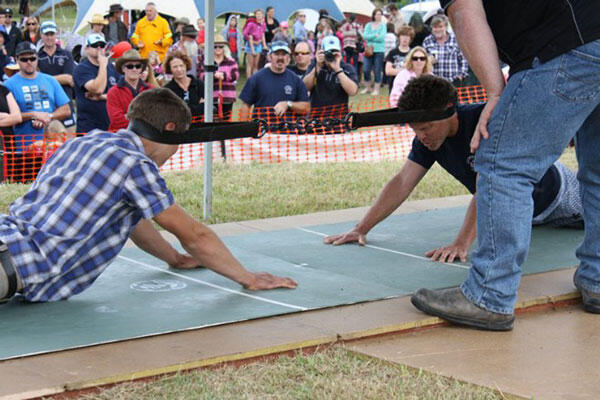
Obscure Sports Are Obscure
Critic is bringing back its sports coverage – but because our incredibly lanky editorial team is all hipster and shit, we’ve decided to bring you a roundup only of the world’s most obscure sporting endeavours. If you’ve ever wondered what Bo-taoshi is, or whether being a stoner is a sport, or who won the recent World Shin-kicking Championships, then fear not: Critic has all the answers! Chess BoxingFor decades debate has raged – in a meek, rage-free kind of way – as to whether chess is really a sport: chess players and (briefly) the IOC said yes, everybody else said otherwise. But what if you played some chess, then spent three minutes punching your opponent in the face? What then, naysayers? The name “chess boxing” comes from the 1979 Hong Kong film Ninja Checkmate, the English-dubbed version of which was entitled Mystery of Chess Boxing. The rules were devised in 1991 by French artist Enki Bilal. A game of chess boxing lasts 11 alternating rounds, six of chess and five of boxing. The rounds of chess each last four minutes, with each player given 12 minutes for all of their moves. Play continues until there is a knockout, a checkmate, or one player runs out of time. If there is a stalemate, the scores from the boxing rounds are used, and if this is also a tie, then Black wins. Surprisingly, players tend to be very strong in both forms of the game; European champion Tihomir Dovramadjiev is not only an experienced boxer, but boasts a chess rating of 2356 (that’s quite high, in case you were wondering). Shin-kickingShin-kicking, as you’d imagine, is one of the most painful sports in the world. It’s been described as an “English martial art,” because English people are crazy, and dates back to the 17th century. Contestants grip each other by the collar and, well, kick each other in the shins. The winner is decided by a referee after three rounds. The World Shin-kicking Championships are held annually during the Cotswald Olimpick Games, the modern, wimpy version of which requires the contestants to wear soft shoes and allows them to stuff their trousers with hay. Back in the day, shin-kickers wore steel-toed boots and, in their spare time, would hit their shins with hammers to build up tolerance. The 401st annual championships were held in June, and saw victory for defending champion Zac Warren. His final opponent, Jeremy “Bagboy” Soper, became a crowd favourite after contesting most of the championships in shorts. Bo-taoshiJapanese sport Bo-taoshi is a cross between capture-the-flag and an all-out brawl. Two massive teams, each consisting of 150 players, try to drag down the opposing team’s pole. The teams are each split into 75 attackers and 75 defenders and, according to Wikipedia, “there is actually some strategy involved.” For instance, the bulk of the defenders are on “barrier” duty, forming a physical perimeter around the pole. Attackers form a “scrum,” which attempts to launch players over the barrier, and from here are met by “scrum disablers,” who do “whatever they can” to repel the attackers. Meanwhile, a “ninja” sits atop the pole, acting as a counterweight should the pole start to fall. Once competitors start to channel their inner Freudian guilt, the attempts to bring down that big bad pole reach frenzied levels and general chaos inevitably ensues. As attackers reach the pole, the ninja often swings down to deliver a series of swift kicks to the head. Unfortunately, games rarely last more than a few minutes. BuzkashiThe national sport of Afghanistan, Buzkashi was outlawed during the recent Taliban regime for being immoral. Sounds good already, doesn’t it? Similar to polo – in the sense that teams compete on horseback and propel projectiles towards a goal area – it avoids being identical to the popular white upper-class sport by using a headless goat carcass in place of a ball. People in Western China have a different take on the sport, which involves playing on yak-back. Buzkashi also has no fixed game time and can last for several days, with riders often carrying a whip in their teeth to fend off opposing horses and competitors. The goat used will typically be beheaded and disembowelled, its limbs cut off at the knees, soaked in water for 24 hours to toughen it, and sometimes filled with sand to add weight. Critic prefers using past editor carcasses. Goanna PullingUnfortunately, this sport doesn’t involve pulling oversized, drunken lizards from the d-floor. Nor is it a tug-of-war against the beasts in an epic struggle for survival. Rather, it is an Australian sport whose name comes from its participants, who allegedly look like goannas while playing. Facing each other on all fours on the “goanna-pulling pad,” contestants are connected at the head by a leather harness and compete to pull the opposition onto the other side of the pad using only their heads. In the spirit of keeping the game completely fair for those of different sizes, ages and genders, there are three divisions for men, two divisions for women and one division for children. But it gets even better! Over the course of the Australian National Goanna Pulling Championships, other activities such as dog obedience demonstrations, brick-carrying and wood-chopping keep the whole family entertained! Hemp OlympicsAnother classic from the Aussies, Critic would be awesome at this one. Beginning in Nimbin, New South Wales (due to its reputation for the dankest nugz), the Hemp Olympics are part of the “Mardi Grass” festival and are the ultimate sport for the ever-ageing hippie population. Think of it as the alty version of lawn bowls. Inspired 4:20 members can compete in such competitions as joint-rolling, bong smoking, the “Police Triathlon,” and bong throwing, but the real test is the “Growers’ Ironperson,” in which contestants crawl through flower tunnels carrying 40kg bags of fertiliser. Penalties are given for spilling fertiliser, and instant disqualification is on the cards for anyone who damages the flowers. Oh, and the Police Triathlon involves real police and comes with the warning that “Offenders risk jail, $2,500 fines and long licence suspensions.” Sounds fun. Event entry costs $2 and has the slogan “Eternal Flame for Victims of Prohibition,” with the five Olympic rings standing for “Medicine, Paper, Food, Fuel, and Fibre.” Japanese Binocular SoccerFrom the creators of Human Tetris comes a game that looks like two teams of incredibly uncoordinated C-3POs, dressed up for Where’s Wally, playing football. It is exactly what the name describes: football while wearing binoculars strapped to your face. Due to looking through binoculars for the entire course of a game, competitors very rarely connect with the ball, and even less frequently score a goal. In one stunning video of the sport, the competitor responsible for kick-off completely misses the stationary ball three times before overshooting it and tripping up as his foot connects with the ball backwards. All hell breaks loose once the game finally gets started: Critic can’t help but imagine a dubstep remix of all the flailing limbs. The only comparable football alternative is bubble soccer, in which competitors play while wearing small, inflated zorbs over the top half of their bodies.
-
Columns

Love Is Blind | Issue 15
AshtonThe lads and I had the night planned quite a way out, just waiting for the right moment to reveal that we had secretly nominated one of the boys to partake in the renowned Critic blind date. When future Romeo found out about this he wouldn’t believe it, no matter how many times we all reassured him. His eventual realisation resulted in shit hitting the fan as nuts dropped to the floor. Trying desperately to escape from the cruel hands of fate he began proposing all sorts of bribes to someone that would take his place. He offered me one hundred dollars to take his place – who could resist one hundred dollars plus a free feed and half of a fifty-dollar bar tab? By the time I’d downed a couple of drinks and received an inspirational pep talk from the lads it was time to roll to Angus Restaurant. I was soon perched up at the bar sipping on a beer, waiting for the moment when Juliet would arrive. After about five minutes she entered. We introduced ourselves, sat down at the romantic table for two by the fireplace, ordered drinks, and began discussing our study plans. Soon enough our drinks arrived and it was time to order our meals. She initiated this by requesting the casein chicken whilst I thought I would treat myself to the rib eye steak. We were presented with our meals (as well as a couple more beers for me and vodka-cranberries for her) before she ventured off to the bathroom. Coincidentally, this was when my mates came in and wandered through to the bar so that they could get a taste of the “romance” in the air. She returned to the table and explained to me that her friends were dining at the table next to us, which became a bit awkward as time went on. We soon finished eating and spent the last of our bar tab on two last shots which we downed immediately before we began listing off things that we learnt about each other just to cap the night off. Farewells were short and sweet; we hugged it out and went our separate ways, both knowing that this Romeo and Juliet were not meant to be. DemiI was looking forward to a good smash. I hadn’t had one in just over a week. I was in need. In the hour leading up to the date I was ambushed by my floor-mates. Wine and more wine and repetitive Hutt anthems were employed to simmer down the strange nervousness that was anticipation of a good or bad date … Unfortunately, this was the “not-good” kind. I arrived a few minutes late to find a nervous and stiff-looking guy at the bar waiting. I approached the bar and indicated I was here for the blind date, noticing the broad shoulders, blue eyes and blond hair I had been hoping for. In no fewer words could I describe this date: awkward … he had been set up “by his mates” and I had half-nominated myself for a good time, half spurred on by my best friend. Both being first years (although our age gap was obvious – he was 18 and still lived with Ma and Pa; I was 20 and …) there were a lot of those tumbleweed moments where conversation reached an awkward standstill. I ordered the chicken. He ordered the steak. After we received our meals he mentioned he would have normally ordered the chicken. I was confused. I ducked into the bathroom for a mid-date seal breaker and on my return it became clear that not only had his friends arrived at the bar, but my friends had arrived at a table very nearby for dessert. Well, nom nom. The bar tab was almost gone. Despite my best efforts ordering more rounds, I was drinking him under the table. No signs of loosening up. All hope was lost. When we spoke about the write up he asked how long it had to be. I replied 350 words. He was pleased about this, as it was the exact number of a P.E. write up he had to do. Hoorah. Not to be left out would be the eventful “cya.” After he verbally initiated a “hug” goodbye I bantered for a while without prevailing. We had a shot and an awkward hug. Thanks Critic for the experience!
-
Culture
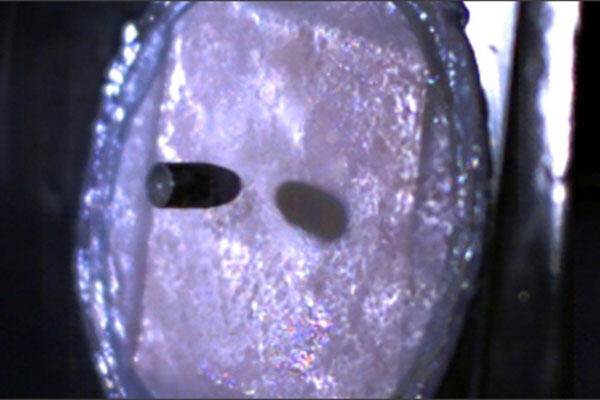
Art From a Laboratory
I don’t find a plastic crucifix immersed in a glass of urine offensive. However, the artist responsible for the Piss Christ received death threats for this sacrilegious work, indicating that some feel otherwise. Different individuals find different things “shocking,” but in spite of this it often feels like there’s not much controversial ground left for art to cover. Then again, what we find shocking in art are movements that manipulate the supposedly “untouchable” aspects of the society in which we are immersed – like biotechnology. I’m not sure how I feel about art that experiments with human skin. Firstly, it’s rather grotesque; and secondly, I am yet to figure out how I feel about the ethics behind it. In a project called 2.6g 329m/s, artist Jalila Essaïdi tries to create “bulletproof skin,” and videos a .22 calibre Long Rifle bullet being shot into human skin that has been implanted with spider silk produced by transgenic goats. She claims it embodies an attempt to explore “the social, political, ethical and cultural issues surrounding safety.” However, the concept of interfering with the structure of human skin for an artistic purpose was much more fascinating than that of “safety.” To what extent is society ready to accept manipulation of human biological matter for the sake of art? Science and art have never been mutually exclusive. Simply think about the role that optics plays in reducing scenes in our real lives onto a two-dimensional flat surface. Or Leonardo da Vinci and his plane models, for example. However, more recently the scientific method in particular has been incorporated into contemporary artwork, with the laboratory environment often used as a form of studio. The result is “Bio Art” – an international art movement that taps into genetic modification and cloning to produce distinctly … unusual works. “Bio Artists” contemplate the social and ethical values that have emerged in society as a result of biotechnological developments. Take the work of Brazilian artist Eduardo Kac, who commissioned scientists to inject a fertilized egg from an albino rabbit with a green fluorescent protein from a type of jellyfish. Called GFP Bunny, the finished “artwork” is a rabbit that glows green under a blue light. Far from being anti-science, many artists have clearly embraced biotechnology as a fresh way to produce works that exploit the biological matter we take for granted. Such works have the potential to make most of us quite uncomfortable. On the other hand, many artists feel a pressing need to use art as a forum for helping the public understand the issues surrounding the increasing role of biotechnology in our daily lives. The Critical Art Ensemble performed scientific procedures in public as a way of educating audiences about genetically modified food, with one project even involving the testing of participants. Interestingly, the FBI detained a founding member of the group on a (later disproven) accusation of bioterrorism. Biotechnology is, as you all know, a touchy issue, and has proven to be a particularly divisive debate in modern society – a society in which art is increasingly playing an outspoken role. So I do find the ability to make a real life glow-in-the-dark mammal “shocking”? I was certainly forced to think about the ethical implications of creating such an artwork. Many other “Bio Art” works push audiences in a similar way – they make us question the acceptability of scientifically manipulating organic material … while simultaneously grossing us out a bit.
-
Culture
The Magic of Reality
“Reality is everything that exists. That sounds straight forward, doesn’t it? Actually, it isn’t.” Thus begins Dawkins’ introduction to science for young people. I didn’t realise this was a young adults’ book until I started reading it, but, being an eager yet largely ignorant admirer of science, I persevered. And it turned out this book was perfectly pitched for someone like me. Despite being written by Richard Dawkins, I expected this book to be straightforward science, without much digging at religion or paranormal phenomena. I was wrong. Each chapter begins with a question, such as “Why are there so many different kinds of animals?” or “Why do bad things happen?” The chapters then outline old explanations, drawn from myths and religion from all corners of the world, followed by the scientific explanation (“Why are there really so many different kinds of animals?”). Dawkins has a go at an unnamed “charlatan” (Uri Geller) who passes his conjuring tricks off as supernatural magic, and coolly compares current religious stories with ancient, obsolete ones. His final chapter – “What is a miracle?” – instructs readers on how to rationally decide the most likely explanation for an interesting phenomenon. The myths were really cool. There is one Tasmanian story about the first man being created with a kangaroo tail and no knees, so he can’t sit down, and a Maori one about earthquakes (with some poorly drawn moko on the illustration). The chapter on possible alien life didn’t have any ancient myths as aliens are a pretty recent concept, only emerging with the discovery of a material universe outside of Earth. Instead, there are stories from people claiming to have been abducted by aliens, and the possible (and creepy) explanations of sleep paralysis and implanted memory. Although some of the material is pretty basic, the chapters usually progress from childlike, simple questions to their amazing scientific explanations and applications. “What is a rainbow?” turns into a fascinating explanation of the use of the colour spectrum to measure the distance of stars and galaxies from earth, and even the age of the universe. I haven’t read a picture book in years and was surprised by how much I enjoyed it. I loved the beautiful and clear diagrams, photos, and illustrations of the myths and the science. What did your ancestor look like if you go back 185 million generations? Turn the page to find out! It’s great. The book also flops open in a satisfying way, resting flat on a table without needing to be held up. Most of all, this book gave me a real appreciation of the extraordinary scientific knowledge we now mostly take for granted: Alfred Wegener’s idea of continental shift; Newton’s experiments with gravity, prisms, and light; Darwin’s radical idea of evolution; atomic theory; the “round earth” theory; the big bang … concepts that are now common knowledge, but are the result of thousands of years of human curiosity and inquiry.
-
Columns
The Loose Guide | Issue 15
For the better part of your lives, most of you have been labouring under the delusion that you are in control of your TV set and that it exists only to serve you. You would be wrong. Every time you switch on that attention-seeking slab of circuitry, you relinquish control of your thoughts, desires and impulses. Learn how to watch television with discretion before it’s too late. Never attempt to “just” watch that “one” show that you like. If it were really that simple, it would be that simple. Whether due to your growing couch-inertia or those seriously gripping opening credits, you’ve no doubt found yourself sitting around into the start of the next show on more than one occasion. Do not blame yourself. You have fallen victim to a multitude of programming ploys that were specifically designed to keep you tuned-in indefinitely. Before long, you’ll find that your six favourite shows all play one after the other on the same channel. How convenient! If you have a favourite show, TiVo it for later and go and play outside. Most television networks also have an app for selective online viewing. Use these. When you have to go to the effort of streaming a program in order to watch it, it will soon become abundantly clear which shows you truly cannot live without. If you insist on watching TV in the conventional way, chances are that you will be subjected to all manner of commercial advertisements. There is no nice way to say this: commercials are bilge. Mute them and avert your eyes. If you watch these ads, you will discover things you never knew you (never) needed. This will make you feel depressed, underprivileged, and inadequate. But before embarking on this downward spiral, consider: you could probably watch ads for days on end and never come across someone behaving remotely like an actual human being would in the given situation. Deductive reasoning should then lead you to realise that, as a human, these ads are not intended for you. Turn them off and engage in meaningful discussion with your flatmates/ parents/ self until your programme resumes. Watching television is an excellent way to escape reality, second only to psychoactive substance abuse. Unfortunately for society, many are unable to identify the (fairly obvious) line between television and real life, resulting in misguided attempts to emulate their beloved television personalities’ mannerisms, clothing choices and blatant disregard for the law/gravity. We really need to just rip this Band-Aid off right now. You will never be like them. Please don’t even try.
-
Culture
The Internship
Rating: 2/5 Start of the U.S. summer? Check. An assorted cast of misfits with the odds stacked against them? Check. A worrying lack of originality in the plot? Check. Welcome to The Internship, your regular Hollywood light comedy. The film seems to benefit from director Shawn Levy’s magic ability to make commercially successful films, and Vince Vaughn and Owen Wilson team up to repeat their antics from Wedding Crashers – except this time they’re crashing Google as laid-off salesmen who have been offered internships. While their skills are mocked as obsolescent, they quickly set about proving their value to the company. The two mature gents get teamed up with other social outcasts and have to compete against a swarm of highly-educated young people for the Holy Grail – a job offer. Google is the best place to work ever, if you agree with the somewhat sanctimonious preaching of the Google higher-ups. The commercial overtone of endorsing Google is unavoidable, but overpowering. Like a ten-dollar bottle of wine, you don’t taste the “spicy oak with a sweet finish,” you just get your mouth bleached with alcohol. However, the Google headquarters provides a nice backdrop to the movie. We are treated to a game of Quidditch (although not even Google has figured out how to make the brooms fly), and the fun vibe that employees probably exhibit is easily picked up. There are plenty of romantic sub-plots, such as Owen Wilson chasing the glamorous yet apparently unavailable executive (Rose Byrne). They even have a drunken night out and venture to a strip club for “team bonding,” hoping it will change their fortunes. After a variety of team challenges, the usual English d-bag antagonist (Max Minghella) hurting their feeling, and surmounting obstacles put in front of them, we see a resolution of sorts. But it’s predictable. Everything is all too predictable. So all in all, The Internship is your standard Hollywood comedy. It’ll make you laugh but you know what will happen by the end … just like that ten-dollar bottle of wine.
-
Culture

After Earth
Rating: 2.5/5 M. Night Shyamalan has had a roller coaster of a career, from the unadulterated success and cultural penetration of The Sixth Sense to his ultimate demise with the painful The Happening and the destruction of the much-loved Avatar with The Last Airbender. Frankly, he has become a bit of a joke due to his overuse of twist endings. His latest film After Earth may not redeem the once-great director, but at least it is a step in the right direction. After Earth, starring Will and Jaden Smith, is a sci-fi action film that tells the story of a father and son fighting for their survival on an abandoned Earth after their ship crash lands. The story is un-convoluted and well structured, but is held together with an outrageous number of science fiction clichés as well as a disturbing number of allusions to scientology ideals (no doubt because of Will’s allegiance to the cult). The premise shows a human race that has had to create soldiers capable of repressing their emotions in order to fight off an alien threat. Both Will and Jaden played these soldiers. Unfortunately, this meant that ninety per cent of the film involved emotionless acting, which is just disappointing coming from Will Smith – the king of colourful performances. The story was conceived by Will Smith and written by M. Night Shyamalan and Gary Whitta (Writer of The Book of Eli). Though Smith has been in a large number of sci-fi films, clearly nobody involved knew a thing about science: at times basic scientific principles are not only ignored but supposedly disproved. This may not annoy every viewer, but to me it was the film’s biggest flaw. You can’t have science fiction without science. Despite all of these shortfalls the film was better than can be expected from Shyamalan these days, if only because it avoided all of his usual conventions. The film does not have a twist ending, but does have some skilfully made action scenes and structure, which creates nicely-handled tension.
-
Culture

White Lies
Rating: 3/5 White Lies is a film adaptation of Witi Ihimaera’s novel Medicine Woman, which tells the story of Paraiti (Whirimako Black), a Maori healer from the 1920s, and her strange involvement in the lives of the rich Pakeha woman Mrs. Vicars (Antonia Prebble) and her maid Maraea (Rachel House). Nobody does shameful family secrets with sexual undertones quite like New Zealand and White Lies is no exception. I thought I had the plot all mapped out until halfway through, when a colossal twist is dropped, changing one’s opinion of the characters and the message of the film. But as funky as this made the story, I have to say the twist is rather implausible and there were also plot issues with character motivation – Paraiti’s explanation for helping Mrs. Vicars is foggy at best. Also, although I understand it was set in a time of racial inequality, I felt the often one-dimensional depiction of Pakeha made them seem like cartoon villains, and the opening scene of colonial murder was oddly garish. However, this film is still worth a watch on a number of counts. For one, the debut acting performance from Black (usually a singer) was superb and she had an incredible presence on screen, whilst House was, as always, captivating. Prebble took her role as the cold Englishwoman a little too far in the film’s beginning – it seemed as though she was reading off a teleprompter – but she came into her own later on in the grittier scenes. This film is brave with its use of nudity and Te Reo and tackles difficult issues head on, and I commend its attempt to remind New Zealanders of our difficult past. It’s also a visual feast with its bright 1920s township and lingering shots of forestry, and the often-sparse dialogue allows the scenery to shine. However, the film’s constant use of the black fade-out editing technique became frustrating, especially when it bookended unnecessary ten-second scenes. Although the film could be patchy, it was also quiet, thoughtful and raw which is something not easily found in today’s blockbuster avalanche.
-
Culture
The Silence of the Lambs
Read the title to yourself a couple of times. It is freaking creepy. It sends shivers down your spine then back up to your head to remain for days. When you watch this film, you do not see the face of evil. You enter its mind. The Silence of the Lambs won five Oscars in 1991: Best Actor and Actress in a leading role (Foster and Hopkins), Best Director (Demme), Best Adapted Screenplay and, of course, Best Picture. That alone should provide testament to the calibre of this film. And it took Hopkins only 16 minutes of screen time as Hannibal Lector to become one of the biggest icons in popular culture. He’s probably the greatest film villain of all time – he’s a cannibal with class who bites faces. He still manages to terrify people even when locked up in maximum-security prisons. But his relationship with FBI agent Clarice Starling (Foster) is crucial – they must hunt down Buffalo Bill (Levine), the notorious serial killer who skins his victims. Hopkins once said in an interview that we are “obsessed with the dark side of life.” Each character is trapped in a world of oppression that takes them to very dark places: Starling has endless battles against misogyny and sexism, Buffalo Bill lives in a society that cannot tolerate different sexual identities, and Lector thrives in a world that cannot come to grips with a person so insane and yet so intelligent. In short, you may find disturbing sympathy for both of the film’s villains. Perhaps we’re unfortunate these days because we are oversaturated with dramas and thrillers based on the insane or the criminal mind (such as, well, Criminal Minds). In my opinion, however, these shows and films are floating firmly in the wake of The Silence of the Lambs. So watch this film and see how it influenced modern horror films. It’ll freak you out, but it’s worth it. And let Hannibal Lector into your head. See what happens.
-
Columns

Daily Grind | Issue 15
Rating: 0.5/5 Located in the centre of the link, Café Albany is the closest café for those in Central who don’t want to leave the building. Just like fresher tramps, their main action comes from people desperate for a quick fix and those who don’t know any better. The service at Albany lacks enthusiasm, as you are most likely encountering the staff in the midst of a nine-hour shift. As a result of Albany not being “cutting-edge” or “ironically kitsch,” the baristas seem to treat everyone with equal indifference. They don’t care whether you are getting three cupcakes and a large hot chocolate for one, or asking if their orb beans are 100% Arabica. The coffee here is pretty appalling. The foam is stiffer than Daniel Bedingfield during a Cassie performance, and they tend to cake their cappuccinos with so much cinnamon that it’s hard to finish without gagging. Speaking of gagging, Café Albany have a ginger latte “special” which is essentially a piss-weak coffee with some syrup and floating chunks of ginger. Special? Really? Café Albany uses a strange ticketing system in which they give you a number like commoners in a suburban fish and chip shop – even Mei Wah remembers your order. Along with the “help yourself” serviette/ condiment section, the ticketing really cuts out that extra bit of human interaction. During mornings this place is always thronging, probably due to its cheap bevs and location. But it’s not all bad for Café Albany. They do have a really good coffee card rewards system, which operates in all University-run cafés, and their cupcakes can be a little slice of diabetic heaven if you’re in the mood for a one-to-one ratio of icing to cake. In first year G used to make a fortnightly trip to Café Albany to eat her feelings post-physics labs in the form of a black forest cupcake. Café Albany has a central location that allows them to cash in on frantic students. If you’re not there for a quick cupcake or filo, M and G urge you to simply jog on.
-
Culture
Winter Whisk(e)y Cake
Gie him strong drink until he wink, // That’s sinking in despair; An’ liquor guid to fire his bluid, // That’s prest wi’ grief and care: There let him bouse, an’ deep carouse, // Wi’ bumpers flowing o’er, Till he forgets his loves or debts, // An’ minds his griefs no more. (Robert Burns, 1785) I’m not suggesting you drown your sorrows in a bottle of hard liquor (as our beloved Scotsman so eloquently advocates), but I do, however, urge you to give this dark, rich, whiskey-infused cake a shot (pun intended). Seeing as it’s the anniversary of the poet’s death on 21 July, I thought it fitting to share. (Well, that and the fact that I found some of the fancy-schmancy amber elixir in my parents’ liquor cabinet recently.) Thistle warm the cockles o’ye heart. (Haha cockles). Ingredients- 225gm butter, softened - 1/2 cup brown sugar - 1/2 cup white sugar - 3 free range eggs - 1 cup plain flour, sifted - 1/2 teaspoon baking powder - 1/4 teaspoon salt - 1 teaspoon cinnamon - 1/4 teaspoon baking soda - 1/3 cup of cup milk - 1 teaspoon vanilla essence - 1/2 cup molasses - 1/4 cup whiskey (I used Dewar’s White Label) Method:1. Preheat your oven to 180 degrees. 2. Prepare your cake tin (I’d go with the round variety) – grease well or line with baking paper. 3. Cream the butter and both types of sugar together until you have a light and fluffy mixture. 4. Add eggs, one at a time, beating well after each addition. 5. Combine sifted flour, baking powder, salt, cinnamon and baking soda in another bowl. 6. Add the mixed dry ingredients to the creamed mixture alternately with milk, beginning and ending with dry ingredients. 7. Add molasses and mix, and then lastly add the whiskey. 8. Mix until smooth; your batter should be quite thin (if it doesn’t run off your mixing spoon very easily, then add a little milk until it is the right consistency). Pour into a greased round cake tin and bake 20 to 30 minutes, or until a knife inserted in the centre comes out clean. This cake doesn’t tend to rise very much, so don’t be disappointed if it comes out slightly flatter than your usual cake. 9. Dust with icing sugar. I think this is best eaten slightly warm (though if you’ve been having a sneaky dram while you cook it, I imagine you’ll already have a glow on). You could always make two, layer them and fill the middle with whipped cream – enhance the flavour by adding a couple of teaspoons of both icing sugar and whiskey to the cream before whipping.
-
Columns

Hi Dr. Nick | Issue 15
To the two-thirds of you reading this in a lecture: take a pen and scribble out the “Dr.” in the “Dr. Nick” – this week I want to speak as a pleb. The other third: just cover the “Dr.” with your thumb or something; don’t go hunting for any makeshift ink in the library toilets. The reason I want to speak as a title-less Joe Blogs is because this week’s topic is one of the big ’uns and generally sounds wankier than Saturday night at St Margs when coming from medical folk: alcohol. Cards on the table: New Zealand has a horrendous attitude towards alcohol and addiction. We fucking celebrate it. Getting maggot, blacking out, injuring ourselves – it’s all just a story to be told in the morning. “I got kicked out by the bouncer,” “I’ve been hungover all day,” “I woke up in bathtub of ice with one less kidney” – alcohol is our friend even when it’s (literally) poisoning us. I could spend this week’s column going on about the symptoms of dependence, the AUDIT score, or stats about suicide, violence and abuse, but who is gonna read that while pinching a loaf? Instead, I want to embrace my proletarian status and talk about the most humiliating situation I’ve been in, hoping that you don’t just brush it off as an isolated event that doesn’t concern you. Awkward situations and I are pretty well acquainted. In the bingo card of embarrassment I would have easily checked off the row that begins with “be walked in on while masturbating” and ends with “get naked in front of 150 colleagues and employers.” Really though, there’s only one event I look back on and still feel that cringe of shame: the night I was admitted to hospital for being pissed. This wasn’t an admission for breaking my arm while attempting drunken acrobatics or anything – this was purely an alcohol overdose. To cut a very long story very short, I finished work in the Emergency Department around 4:00 p.m., went out, got hammered … and ended up back in the Emergency Department by around 9:00 p.m. It was bad. Here’s the thing though: nobody treated it as bad. Nobody treated it as the massive red flag that it was. In fact, most people laughed it off, particularly as I was being looked after by the people I had just finished working with. It was just another story to be shared because we all think getting pissed is normal, overdoing it is normal and, while getting admitted to ED is certainly abnormal, it’s not so far removed that we pay it the attention it desperately needs. That admission was a symptom of a whole mess of other things going on in my life, and was also the perfect point for somebody to pipe up and point out just how off the rails things had gotten. But it took ten months of further out-of-control drinking before anybody seriously addressed the issue with me. Everybody could see that something was seriously wrong, but nobody touched the issue because it was just alcohol – and we love alcohol in New Zealand. Undoubtedly many of you will think that this story doesn’t relate to you – that you’re not that bad. Many of you will be right. I was out of control for a very long time and it showed in the extremes my behaviour reached. The thing is that even when I was running around at some of my worst times, I truly believed I didn’t have an alcohol problem – I just got out of hand when drinking. Let me tell you – every single one of you – that loss of control is a problem, regardless of diagnostic criteria for problem drinking or the amount you’ve had to drink. Now I’ll still get pissed, I’ll still save a drowning queen at the bottom of my vessel, and I’ll still drink on the call of “never have I ever had a dick piercing,” but I’ll do it within my limits. Every Scarfie on the piss needs limits, so give yours a think before you wash your hands and walk away.
-
Columns

Science, Bitches! | Issue 15
I know more than a few students who keep up to date with the newest technology, be it the Samsung Galaxy S4 or the iPhone 5. These phones, while larger than the crappy Nokia you had before you switched, keep getting smaller and thinner each time (with a few notable exceptions – I’m looking at you, Samsung Note). Our ability to build smaller technology is pretty incredible, but have you heard of some truly tiny technology? You’ve probably heard about nanobots in various sci-fis, but did you ever think that were actually possible? Well, we may not yet be able to make the extreme hi-tech tiny robots we see in fiction, but what we can do is imitate how proteins and molecules act at the molecular level, using their designs to make our own. We also have the technology available to create really tiny versions of the technology we already have today. How about data storage? Our demand for data worldwide is growing at a huge rate, and it all has to be kept somewhere. What if there was a way of keeping it somewhere really small? It turns out that scientists have been able to store books in DNA. The words are converted into binary, which is then turned into the DNA strands. One gram of DNA can store an exabyte of data – that’s a million times what your average terabyte hard drive can store! 3D printing has the potential to revolutionise technology. With the right instruction, a 3D printer can print any shape you want. A team at Harvard recently used a 3D printer to print tiny batteries the size of a grain of sand! They carefully designed their “ink” so it would have the right properties to act as a battery. The result was micro-batteries that compare to commercial batteries. Now, I just wonder what happens if you use a 3D printer to print another 3D printer … As technology gets smaller, we can pack more in, which has more uses than simply making your smartphone more flash. Once again, the one we have to thank is the science, bitches.
-
Culture

Kanye West - Yeezus
Rating: 4.5/5 The moment Yeezus, Kanye West’s sixth solo album, leaked online, it set a million keyboards around the globe on fire. Suddenly everyone was a critic, scrambling to push their opinion of an album worlds away from its predecessor, My Beautiful Dark Twisted Fantasy. Indeed, in contrast to the lush grandeur of that record, Yeezus is like being doused with freezing water. “On Sight” opens the album perfectly, Daft Punk’s abrasive synths crashing into you like a fist. You can tell from this assaultive first song that with Yeezus, West is taking his listeners into brand new territory. “Yeezy season’s approaching,” Kanye raps during the first verse. “The monster’s about to come alive again.” Follow-up track “Black Skinhead” is my personal favourite on the album, with a rolling industrial drumbeat that makes you want to pump your fists and rage at the world around you. Each new song is different to the one before it, and just as excellent. Standouts include the savage and biting “New Slaves” and “Hold My Liquor,” with its woozy, throbbing beat. Closer “Bound 2” is a welcome break from the fury that permeates the rest of the tracks; recalling the style of his breakthrough album The College Dropout, West both confronts his reputation with women and closes out Yeezus with an ode to his past. One of the weaker tracks, however, is “Blood on the Leaves,” which samples the iconic Nina Simone song about the abhorrent practice of lynching. While the end result is beautifully put together, with West’s autotuned moans lamenting a messy breakup, I can’t help but feel a song as meaningful as Nina’s should have been worked into a track with a little more weight, a little more purpose. To me, the lyrics don’t quite match up to the sense of ferocity and vengeance that pulsates through much of this record. However, I am a small ginger white girl, so I’m not really the person to judge this. When asked in an interview whether his instinct has ever led him astray, West replied: “it’s only led me to complete awesomeness at all times. It’s only led me to awesome truth and awesomeness. Beauty, truth, awesomeness. That’s all it is.” If Yeezus is the result of Kanye following his instincts, then that statement is absolutely true; it’s beauty, it’s truth, it’s awesomeness. It’s a pure, disorientating hit of noise and emotion that leaves you reeling. It’s 100 per cent unfiltered Kanye West and he’s shoving it in your face. As a choir of schoolchildren sing during the interlude to “On Sight,” “he’ll give us what we need … it may not be what we want.” Take it or leave it, I doubt he’d really give a fuck either way.
-
Culture

Austra - Olympia
Rating: 3.5/5 Canadian synthpop outfit Austra emerged in 2011 with a bang, their first album Feel It Break among the finest debuts in recent memory. It wove gothic electronica around Katie Stelmanis’ operatic vocals to stunning effect; picture Kate Bush collaborating with The Knife and you won’t be far off. Though a sceptic could write Feel It Break off as unvaried, it was hypnotic in its homogeneity. For that reason, nods from the band to a more diverse and exotic follow-up this year dampened my excitement rather than stoked it. My fears proved accurate, as Olympia’s broader sonic palette comes at a price. Where Feel It Break was a seamless and organic record, Olympia is loose and unfocused by comparison. Its jarring switches in genre don’t just occur between songs, but frequently within songs; after 40 seconds, trembling piano ballad “Home” morphs into an Ibiza club tune, never really making the return trip. This mercurial approach makes Olympia frequently feel less like an album than a collection of remixes. Though both albums’ influences are rooted in 80s dance music, Olympia pays homage to nerdier ancestors and in less subtle fashion. Where Feel It Break elegantly incorporated the arpeggio synths of Depeche Mode and New Order, the dorky house piano on “Annie, Oh Muse You” and Men at Work-style flutes on the aforementioned “Home” jut out of their songs awkwardly. Having said that, Olympia does have some gorgeous qualities. Austra’s melodies are stronger this time around (see “Forgive Me”), and for the most part Olympia hits harder emotionally. As before, the production is nothing short of stunning. “Fire” and opener “What We Done?” stand out as the finest tracks here, the latter a not-so-distant relative of Feel It Break’s opener “Darken Her Horse.” Though it doesn’t match that song in intensity, neither does anything in Austra’s catalogue. After careful consideration, Feel It Break stands as the superior album. Listening to it continues to be a dreamlike experience, as if the songs begin long before you get there and will continue long after you leave. Olympia fails to replicate that ethereality, feeling much more rehearsed and man-made. This was likely a too-many-cooks affair, the six minds behind Olympia producing a weaker dish than its predecessor (which Katie Stelmanis wrote and recorded almost singlehandedly). Maybe it’s time to lay off some staff.
-
Culture

Deadpool (XBOX 360, PS3, PC)
Rating: 8/10 Just when you thought Marvel had adapted every single one of their heroes, here comes Deadpool, a character I believe has been under-utilised and misrepresented thus far in Marvel’s attempts to take over the world … or at the very least the entertainment industry. For those of you who aren’t avid comic book readers, the only places you may have run into Deadpool before now is either in some brief cameo in one of the many Marvel games, or being butchered (in a figurative sense) by Ryan Reynolds in the film X-Men Origins: Wolverine. Anyway, for those of you unfamiliar with Deadpool, he is an ex-mercenary who was taken hostage and turned into a mutant with the power of regeneration. But it is not his powers that make him interesting; it’s his personality. Nicknamed “The Merc with the Mouth,” Deadpool is undoubtedly the funniest comic book character of all time. Deadpool has hilariously mental traits such as his multiple personalities with whom he often converses. It is traits like this – and his penchant for breaking the fourth wall – that make him a good pick for a video game adaptation. Developed by High Moon Studios (the same studio that handled the Transformers: War on Cybertron series), Deadpool is well written, superbly performed, but sadly averagely executed. The game begins with Deadpool kidnapping the staff of High Moon so that they make a video game about him. Essentially, therefore, the rest of the game is meta as it sees Deadpool playing through the game he is forcing High Moon to make. This fourth wall break is classic Deadpool and gives the whole game not only a hilarious take, but a really fresh perspective. The plot itself is minimal, but that is kind of the point. Deadpool doesn’t fight for a cause, but because fighting is fun for him. The writing is the undeniable highlight of this game. The cut scenes and in-game action are riddled with hilarious one-liners and running jokes that alone make the game worth playing. The dialogue is only made better by having Nolan North (Nathan Drake from Uncharted) voice Deadpool with fantastic variety and perfect comic timing. Despite the fantastic writing, this game is really let down by its gameplay. Deadpool is the epitome of the Hack and Slash genre, requiring an awful lot of button mashing. The gameplay will see you using swords and firearms to dispatch a variety of faceless enemies, intermingled with a few elite-type bad guys. The game encourages combo combat, but the combos all do essentially the same thing (although going from hack and slash to dispatching ranged enemies with your guns is vaguely satisfying). The combat gets very repetitive very quickly and, even worse, poorly schemed controls often make it quite frustrating. Repetitive and frustrating are never a good combo. Combat and exploration reward you with “Deadpool points,” which can be used to buy new weapons as well as upgrading both your existing weapons and Deadpool himself. At first glance there seems to be a wide variety of upgrades and weapons, but as you get your hands on each one they feel too similar to really matter. In the end the swords and pistols you begin with are the most satisfying. I’m wary about warning people away from this game because it is the most entertaining and original video game narrative I have seen in a long time. So instead I will just say that once it’s in the bargain bin, you should snatch this one up. You may have to mash your thumbs off, but you will laugh your ass off in the process.
-
Culture
Making the web your bitch
You’re already one of the thirty-seven per cent of people worldwide using Google Chrome to navigate our beloved web, right? So I don’t have to begin this by nagging you to use it? No? Still using Internet Explorer like a schmuck? Come on, even my Nana uses Chrome, and all she’s doing is playing mahjong and swooning over pictures of Winston Peters. Get your shit together, download Chrome, and say “smell ya later” to the standard browsing experience. Here’s some things you can do with it: Game on. No Smartphone Required.When you should be panicking about an essay, panicking about your plants and zombies seems like a much more attractive option. If you don’t have a smartphone but want to get in on some of that sweet fruit ninja action, rejoice! You can play it right from your browser. Cut the Rope, Angry Birds and Plants vs. Zombies are all there. Even indie RPG Bastion (with its awesome soundtrack) is available on Chrome. Have at it. Bend it to your will.Don’t surf the web like a chump – use Chrome extensions to make the web look and feel exactly as you’d like it. Strip out the ads with AdBlock; create an awesome new tab page with Awesome New Tab Page (a good option to replace iGoogle, which will be joining the Google Grave in November); make Reddit your bitch with Reddit Enhancement Suite; or change the colours of Facebook with Color Changer. Because blue is for sheep. Study Smarter, Stupid.There’s a lot you can do to make research easier with Chrome. First, install StayFocusd to reduce the amount of time you waste on Facebook … and YouTube, and Reddit, and Buzzfeed (wicked temptresses). Add in Google Dictionary to define any word with a double-click, and Grammarly Lite to check your grammar. TLDR is a neat extension that will give you a short summary of the page you’re looking at – great if you’re trying to decide if a source is relevant to your topic without reading the whole thing.
-
Culture

App of the Week | Issue 15
Evernote is not just an app – it’s so much more than that. Evernote, once you start to use it, becomes an extension of your brain. If you’ve ever sat in the middle of a pile of paper, wailing because you can’t find the notes you need, you could probably benefit from using it. There’s a reason its icon is an elephant – elephants never forget, and neither does Evernote. Evernote is like a digital to-do list/ notebook/ scrapbook that you can synchronise and access across all your devices. Forget your folder full of Word documents and scattered handout sheets – you can write your lecture notes and save them in Evernote. Even better, you can tag them, add a voice recording and a picture of the whiteboard. If you prefer to write your notes by hand, take a photo of them and save it to Evernote in case they get wet and/or your parrot eats them. When you need to find your notes later, you can search using the powerful search function – it’s so good that it will even recognise text within an image. It’s basically witchcraft. It gets better, though – you can “clip” pages from the web and save them to Evernote, which is great if you need a bunch of temporary bookmarks for an assignment. Or, if you want to save recipes from the web with pictures and videos, and have them all in one place. Your notes will synchronise across your devices, assuming you install the necessary app, so you can save a journal article on your laptop and read it later on your phone. Download it. Use it. Be more organised. Conquer the world.


