
Henry Napier
Chief Reporter
Articles by Henry Napier
96 articles found. Displaying page 8 of 8.
-
News
Issue 6 10/04/2015
Healthy Homes Bill Also Fails
The Healthy Homes Guarantee Bill failed to pass its first reading in parliament on Wednesday 18 March. The house was split on the issue, with the bill receiving 60 votes for and 60 votes against. In order to pass, however, a bill needs a majority vote. The aim of the bill was to impose a standard for rental homes in New Zealand. Effectively, a warrant of fitness would be placed on homes in order to qualify them as eligible to be leased. The Bill was sponsored by Labour Housing spokesperson Phil Twyford. Most of the opposition to the bill came from the National Government; its coalition partners Act and United Future also voted against the bill. The Labour Party and the Green Party advocated for the proposal, and New Zealand First also voted in the bill’s favour. Green Party MP and co-leader candidate Kevin Hague argued that having an acceptable standard of living was a necessity for New Zealanders. In a speech to the House, Hague argued that warmth and shelter “are basic human needs that need to be met in order for a human being to meet their potential.” National opposed the bill on the basis that standards are increasing and it would result in landlords being forced to take their properties off the market due to impossible standards. National MP Brett Hudson contested the proposal saying “an increase in cost to the landlord is going to be borne by the tenants.” In response, Twyford said that rent prices in New Zealand are determined by “supply and demand” and therefore “won’t necessarily increase.” In his final speech in the bill’s first reading, Twyford said that the cost of renovations to an average New Zealand home was around $5000, which in effect would last up to 15 years. New Zealand Union of Students’ Associations President (NZUSA) Rory McCourt has since expressed his disappointment with the bill failing. McCourt said “For thousands of New Zealand’s students living in places like Dunedin, Christchurch, Wellington and Palmerston North, this bill would have brought hope for winters without colds, and flats without mould.” “We’re disappointed National was more interested in political point-scoring than ensuring the next generation of doctors, nurses, teachers and businesspeople can focus on their studies, rather than being sick due to poor quality housing,” he said.
-
News
 Issue 6 29/03/2015
Kids Probably Going To Stay Cold and Hungry
“Feed the Kids” Bill Fails First Reading National Says It’s a Parent’s Job T he Feed the Kids bill, officially known as the Education (Breakfast and Lunch Programmes in Schools) Amendment Bill, was voted down by parliament in its first reading last week. The bill proposed supplying decile one and two schools with funding for free breakfast and lunch for students. Put to the floor on Thursday 19 March, the bill lost 61 to 59. Labour, the Green Party, the Maori Party and New Zealand First made up the 59 who were for the bill; the 61 against came from National, Act and United Future. The bill was originally submitted by former Mana Party MP Hone Harawira. However, following the loss of his Te Tai Tokerau electorate seat in 2014, it was passed on to Metiria Turei. Turei is the Green Party co-leader and a list MP for North Dunedin. The Greens were the strongest advocates for the bill, stating it was a step towards solving child poverty in New Zealand. The bill was fiercely debated in the house, despite receiving little media coverage due to the upcoming Northland by-election. Labour Justice spokesperson Jacinda Ardern was adamant that the policy echoed the work of the Helen Clark-led Labour Government in 2002 and 2005. In the first reading debate of the bill, Ardern referenced the Working for Families Bill passed in 2004. Working for Families was an amendment to the Taxation Act that, Ardern said, has “lifted over 100,000 children out of poverty.” National, however, argued that the majority of children are fed by their parents and only a small percentage of children at school are not receiving meals. When questioned about the necessity of the bill in parliament, Prime Minister John Key said “Yes, there is an issue where some children come to school without lunch. That number of children is relatively low.” The government further argued that it already contributes to programmes that address the issue. KidsCan, a charity that works to help children in poverty, supplies children with things such as clothes and food. In 2013, the National Government contributed $168,810 to the programme. The Feed the Kids Bill was set to cost $100 million annually. Minister of Local Government, Social Housing and State Services, Paula Bennett, argued that it is the parent’s responsibility to feed their children. This received backlash from opposition parties, with Ardern stating that parents of children in low-decile areas simply cannot afford to.
-
News
 Issue 5 22/03/2015
Green Co-Leadership Contest
In January of this year, the Green Party co-leader Russel Norman announced his resignation. Although he will remain as a list MP for the party, his decade-long run as co-leader will come to an end in May. Norman highlighted it was time to “find a new challenge for [himself].” He also stated his wishes to “spend a bit more time with [his] family.” Norman’s partner, Katya Paquin, recently gave birth to the couple’s third child. The Green Party is now working to find Norman’s replacement to join the remaining co-leader, Metiria Turei. The party’s constitution requires that there be both male and female co-leaders, and therefore only male party members can run for the role. Turei has stated there are “plenty of high-calibre men” to choose from. Party members, Gareth Hughes, James Shaw, Kevin Hague and Vernon Tava, are all gunning for the role. Last week the four featured on a live debate on TV3’s The Nation and were asked a range of questions, including where they will take the party, their political hero and their favourite animal. During the debate, contestants were quizzed on their knowledge of the major economic issues of the day. All four have been criticised for failing to answer basic questions such as the current official cash rate and the rate of inflation. Russel Norman has been regarded as providing the Green Party with economic credibility. Profiles Kevin Hague Born: 1960 (age 54) in Aldershot, England — has lived in NZ since 1973 First elected to Parliament: 2008 Current positions: Green Party Spokesperson for Housing, Health and Wellbeing, ACC, Alcohol and Other Drugs, Biosecurity and Customs, Cycling and Active Transport, Sport and Recreation, Rainbow Issues, Rural Affairs Past Positions: Director of the AIDS Foundation, Chief Executive of the West Coast District Health Board Education: BSc in Mathematics and Physics, University of Auckland Favourite Animal: Weka Stance on Issues: Economics: That social justice and the environment are two sides of the coin of degradation. Right now used as resources extracted by the economy; for this to change, the priority needs to change. The economy should be used as a ways and means of protecting and strengthening society and the environment. National-Greens Coalition: Hague agrees with the Green Party members that a National–Green coalition is “highly unlikely.” Spying: Spying domestically is okay, but with extreme oversight. Spying internationally is not. Hague wants to shut down the GCSB. Where to now? The Greens need to get into government. Hague wants to implement the policies that the Greens campaign on. James Shaw Born: 1973 (age 42) in Wellington First elected to Parliament: 2014 Current positions: Green Party Spokesperson for Economic Development, Commerce, Trade and Investment, Tourism, Small Business, Sustainable Business, State-Owned Enterprises, Open Government, Electoral Reform Past Positions: President of AIESEC, Consultant at PricewaterhouseCoopers (PWC), Venture Manager at the Akina Foundation Education: BA in International Political Economy, Victoria University of Wellington. MSc, Responsibility in Business Practice, University of Bath Favourite Animal: Whale Stance on Issues: Economics: Green economic, social and environmental policies are designed to work together. Economic tools should be used as way to develop and strengthen the environment and New Zealand people. National-Greens Coalition: Shaw would not have a National–Green coalition. Spying: Spying for trade and security is normal and acceptable; however, transparent oversight is necessary. The public needs to have a thorough understanding of what is happening. Where to now? Expanding the vote to over 15 per cent. Gareth Hughes Born: 1981 (age 33) in Gisborne First elected to Parliament: 2010 (not elected, entered on list following retirement of Jeanette Fitzsimons) Current positions: Green Party Spokesperson for Broadcasting, Energy, Mining, ICT, Libraries and Archives, Research, Science and Technology, Tertiary Education Past Positions: Coordinator for Greenpeace Education: BA in Religious Studies, History and Politics, Victoria University of Wellington Favourite Animal: Maui dolphin Stance on Issues: Economics: New Zealand’s people and New Zealand’s environment have to be prioritised over the economy. National-Greens Coalition: Hughes doesn’t believe a Green–National coalition could ever exist, based on National policy over the last two terms of government. Spying: The New Zealand Police should have spying capabilities for domestic purposes, but with appropriate oversight. New Zealand shouldn’t be involved in Five Eyes and shouldn’t spy on other countries. Where to now? Hughes is happy where the Greens are. He wants to continue being the Progressive Left branch of New Zealand politics. Verona Tava Born: 1977 (age 38 approx.) First elected to Parliament : Yet to enter parliament Current positions: Auckland Council Deputy Chair of the Finance Committee, Deputy Chair of the Hearings Committee, Solicitor at Auckland Community Law Past Positions: Teaching Fellow at University of Auckland Education: Master of Laws with First Class Honours, University of Auckland Favourite Animal: Maui dolphin Stance on Issues: Economics: Believes in sustainability. Sustaining the environment comes down to social responsibility. Economics should be used as the means for doing so. National-Greens Coalition: Tava believes in working with whichever parties will advance Green policy. He sees the issue of sustainability as “beyond the left–right spectrum” and something that needs to be addressed immediately. In short, Tava would consider a National coalition. Spying: Spying is acceptable as long as it has a firm oversight, preferably not by politicians either. Biggest Threat to NZ: New Zealand industries are damaging the environment. Where to now? The Greens would be a party that advocates for sustainability. Tava believes the Greens should be involved in every government for that reason. A New Direction The leadership race spawned a new debate on the direction of the Greens. During the debate, three of four candidates were adamant that a National coalition was off the table. However, newcomer, Vernon Tava, was more open to the idea. He maintained that sustainability was “beyond the left–right [political] spectrum.” This led to his views that the Greens should work with anyone who is prepared to consider their policies. The 2014 election saw the Greens begin in a tight coalition with the Labour Party. The agreement ultimately fell apart when both parties were at odds over various economic policies. The notable top tax rate policy proposed by the Greens was publicly rejected by Labour leader at the time, David Cunliffe, in 2014. The policy had income earners over $150,000 per annum being taxed at 40%. However, since the change of leadership in the Labour Party, the close relationship between Labour and the Greens has diminished. Political columnist for the New Zealand Herald, Fran O’Sullivan, highlighted that it is unrealistic to expect Andrew Little will pursue a coalition with the Greens for the 2017 election. In her view, Little intends to return the Labour Party to a position where it can rival National. The change in Green leadership potentially marks a new direction for the future of the party.
-
News
Issue 4 15/03/2015
Indonesian Authorities Tired of Australia
An Indonesian Minister, Tedjo Edhy Purdijatno, has made threats of what he calls a “human tsunami” if the Australian Government doesn’t stop the pressure it is putting on Indonesian authorities. The threats come after a continuous effort from the Tony Abbott-led government to save the lives of the Bali Nine duo, Australians Andrew Chan and Myuran Sukumaran. Purdijanto, the Coordinating Minister for Political, Legal and Security Affairs of Indonesia, has accused Australia of antagonising the public and discouraging people from visiting Bali. “If Canberra keeps doing things that displease Indonesia, Jakarta will surely let the illegal immigrants go to Australia,” said Purdijatno. “There are more than 10,000 [asylum seekers] in Indonesia today. If they are let go to Australia, it will be like a human tsunami.” On 17 April 2005, Chan and Sukumaran were two of nine Australians arrested by Bali authorities after attempting to smuggle more than eight kilograms of heroin out of Indonesia. In 2006, the two were found guilty of providing the money, airline tickets and hotel rooms for drug mules. Chan and Sukumaran were sentenced to death by firing squad, the only time the Denpasar District Court has given the death penalty for drug trafficking. The Australian Government has since made numerous attempts to have the sentence reduced to life imprisonment. In recent weeks, Australian Foreign Minister Julie Bishop has made a desperate plea to Indonesian officials to swap Chan and Sukumaran for three Indonesian offenders being held in Australia. The prisoners up for negotiation were three Indonesians caught smuggling 252 kilograms of heroin into Australia in 2000. Kristito Mandagi was given 25 years without parole, and Saud Siregar and Ismunandar were given 20 years and can apply for parole in 2017. Indonesian President Joko Widodo has declined the offer. “No way, he said, “look how many people die [from drugs], our young generation … We have to look at the future.” Abbott told Parliament last week, “As Australians we abhor drug crime. We stand resolutely against drug crime, but we are against the death penalty as well. Pull back from this brink. Don’t just realise what is in your own best interests, but realise what is in your own best values.” An execution date for the pair is yet to be confirmed.
-
News
 Issue 4 15/03/2015
US Presidential Election Updates
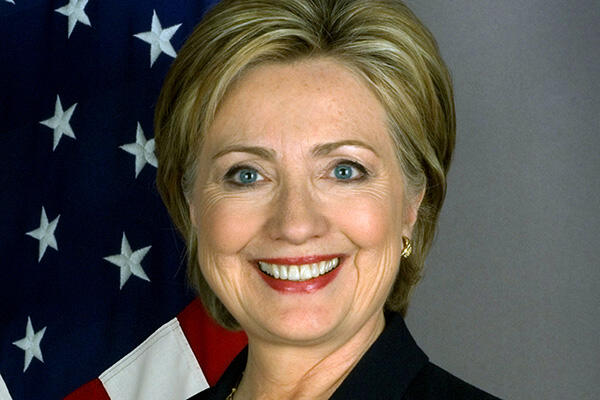
L ikely candidates for the 2016 presidential election, still ten months away, seem to be kicking off their campaigns early this year. Last week, nine soon-to-be Republican Party candidates travelled around Iowa apparently preparing for the coming election. None of the candidates has officially confirmed their running, but the front runners all seem rather obvious. Jeb Bush, former Governor of Florida, has already begun hiring staff for his soon-to-be-announced election campaign. Bush is the son of the 41st President George H.W. Bush and brother of 43rd President George W. Bush. Other Republican candidates expected to run include Kentucky Senator Rand Paul and Texas Senator Ted Cruz. The Democratic Party has also been in the spotlight recently, though coverage has not been as positive. Likely Democratic candidate, Hillary Clinton, spouse of the 42nd President Bill Clinton, has come under fire for her actions while serving as Secretary of State. Clinton was found using a private email account to conduct State Department business, though she has since stated that no classified information was discussed through this account. “I have no doubt we have done exactly what we should have done,” said Clinton. “I trust the American people to make their decisions about political and public matters and I feel that I’ve taken unprecedented steps to provide these work-related emails, they’re going to be in the public domain, and Americans will find that interesting and I look forward to having that discussion.” In US politics, candidates must be elected to represent their party as the presidential candidate. These elections are called primaries. Clinton’s biggest rival is current Vice-President Joe Biden. Biden has also been pinned as a Democrat who is likely to announce his plans to run soon. The Democratic primary, however, has been labelled over before it has begun due to the mass support for Clinton, who commentators have called the strongest contender for 2016. The 2016 election is looking like a “free for all,” as the incumbent president is not running for re-election.
-
News
 Issue 4 15/03/2015
Little Plays Politics
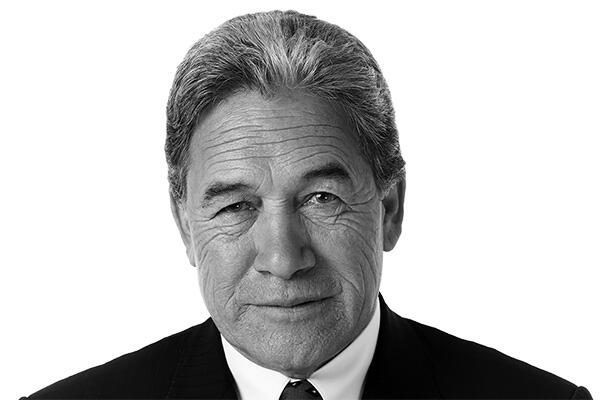
L abour leader Andrew Little has confronted the fact his party’s candidate for the Northland by-election, Willow Jean Prime, is an unlikely contender. Little has hinted that a Labour endorsement for New Zealand First leader Winston Peters may be on the cards. Prime Minister John Key has reframed his opinion of Winston Peters having “zero chance” after polls showed he may be the frontrunner of the race. The first polls showed Peters with a 36 per cent approval rating, while National candidate Mark Osborne had 30 per cent. Labour candidate Willow Jean Prime was at a mere 19 per cent. The most recent poll, however, has seen Osborne move into the mid-30s. Peters’ and Prime’s numbers, however, remain the same. Little has stated the by-election is now a “two-horse race,” referring to Peters and Osborne now being the main contenders. This leaves Prime out of the “race” in the eyes of her party. Since Peters’ support has become clear, Little has reconsidered his position on potentially supporting the New Zealand First candidate. Last week, Little echoed Peters’ campaign slogan, “send them a message” by stating: “If Northland voters want to send a message to the government, they should think carefully about how they exercise their vote …They’ve got a vote, they should use it,” said Little. Polls have proven that, without a Labour candidate, Peters would likely have a clear lead. The motivation for Little is clear. If a left-wing candidate were to win the seat, National would be forced further into the realm of reliance on their coalition parties, United Future and ACT. It would therefore advantage opposition parties of the National-led government for Peters to win. However, a political deal like this could potentially harm Labour’s integrity and ultimately hurt its chances in the 2017 election. Many commentators have criticised any deal that strategically places an MP in Parliament for a reason other than to represent the electorate. TV3 Political Editor Patrick Gower took to Twitter to express his thoughts on the deal. Of the topic, Gower tweeted “#disgrace”. Furthermore, Labour and New Zealand First have strongly criticised National and ACT’s long-standing Epsom electorate deal. In the deal, National endorsed the ACT candidate in the Epsom electorate in Auckland. This allowed Act to utilise the MMP electoral system, effectively “coat-tailing” into government. Any deal struck between Labour and New Zealand First would clearly compromise the superior ethical code they had previously campaigned on.
-
News
Issue 3 08/03/2015
Russian Opposition Leader Shot Dead
L ast week, the Russian opposition leader, Boris Nemstov, was shot dead. Nemtsov, 55, was shot four times in the back as he was heading home from dinner with his wife. His death came only a day before a planned protest against the current Russian government. Nemstov was the co-leader of the Republic Party of Russia; as such he was the premier opposition to Vladimir Putin and the Russian government. He was an outspoken critic of Putin and, specifically, the Russian-fuelled war in Ukraine. He had already been labelled by the world as a target. It is alleged he was shot down in order to protect a secret dictatorship disguised as a democracy. However, President Putin has condemned the murder and vowed to bring the assailant to justice. Putin has even elected to take personal control of the investigation. Many have come to the conclusion, understandably, that the order for the Nemstov murder secretly came straight from Putin himself. This is not an unrealistic assumption. Putin steadily rose to a position of power after leaving the KGB (in English, the Committee for State Security) to become a politician. He has been the president for eleven years and prime minister for five. He had met minimal opposition, until Nemstov. Putin’s seemingly unchallenged political career has been rivalled only by the likes of Joseph Stalin. In 1934, Sergey Kirov, a political opposition to Stalin, was murdered. The historical parallels have extended further than one event. Putin’s reach back into Eastern Europe seems compelling as evidence of a historical relapse. Many critics have viewed Russia’s annexing of the Crimea as a reassertion of the Soviet Union’s former control over the region. The growing sense of dictatorship is fuelled further by the increasing autocracy of Putin’s rule. It is unsubstantiated that Vladimir Putin had anything to do with the murder of Boris Nemstov.
-
News
 Issue 3 08/03/2015
Peeping through the Key Hole
N ew Zealand is in the spotlight after Edward Snowden, former NSA analyst and “whistle-blower”, has revealed a mass of data showing New Zealand’s spying activity in the South Pacific. The data shows that the GCSB (Government Communications Security Bureau) has collected phone calls, emails and social media from the majority of countries in the South Pacific. In 2009, the GCSB began what the media has labelled a “full take collection” of data from their spying operations. Meaning, they have been collecting all information possible. Key, however, has dismissed the claims. Although Snowden’s files targeting other countries were confirmed by their governments, Key remains adamant that in New Zealand’s case, the claims are not true. This has placed New Zealand spying agencies in a grey area legally due to GCSB regulatory laws. The GCSB Amendment Act, passed last year, prevents the GCSB from spying on New Zealand citizens and residents. The accusations, however, include a collection of information from New Zealand residents living in South Pacific countries. What comes as a greater shock is that the alleged spying was directed at some of New Zealand’s closest Pacific allies. Tuvalu and Samoa are among the countries reportedly spied on by the GCSB. This has potentially struck a blow against New Zealand’s reputation in the UNSC (United Nations Security Council), which NZ won a non-permanent seat on last year. Foreign Affairs Minister Murray McCully, who led the campaign for the UNSC, promoted New Zealand as “[standing up] for small states.” If these allegations are true, McCully’s statement now holds no ground. Furthermore, the accusation highlights the Key government’s commitment to the Five Eyes Partnership, as it has passed the information collected directly to the United States National Security Agency (NSA). This is certainly a domestic knockback for Key’s political viability as prime minister. But, more importantly, it damages the reputation of New Zealand on an international scale.
-
News
 Issue 3 08/03/2015
Peters Flies North... Or Crawls
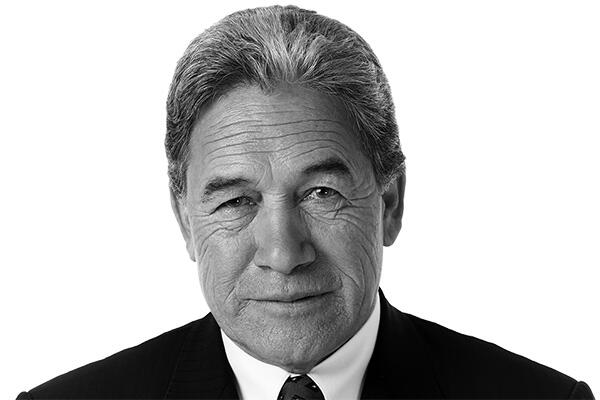
The Electoral Commission has confirmed the 11 candidates who will run in the upcoming by-election for the vacant Northland seat. In the 2014 election, the seat was won by National MP Mike Sabin. However, after rumours of a police investigation surrounding him came to light, Sabin stepped down. The cause of the police investigation is currently unknown. Of the major parties, Mark Osborne for National and Willow-Jean Prime for Labour are set to run. Other candidates will be Robin Grieve of ACT, Reuben Taipari Porter of Mana, Maki Herbert from ALCP and Rom Painting from the Climate Party. From Focus New Zealand will be Joe Carr, and from the Independent Party will be Adrian Paul, Adam Holland and Bruce Rogan. The most unexpected candidate, however, is New Zealand First MP Winston Peters. Peters has been known as a scavenger of opportunity. In 2005, he became New Zealand’s Minister of Foreign Affairs. In 2014, political commentators speculated that he would become the “king-maker” of the election, though this never came to fruition. He has been known for not forming long-standing alliances to allow him flexibility and a continued outspoken criticism of all. His bid for the Northland seat is exactly this. If he wins, National will have difficulty pushing legislation through the House. The by-election has created an opportunity for the left to somewhat “balance the scales.” Labour has been criticised for not allowing Peters to contend for the seat alone in order to improve the chances of National losing the seat. Many commentators have highlighted that this decision lessens Peter’s chance of winning the seat. Before Sabin’s departure, National had 60 seats in Parliament. If they fail to retain the Northland electorate, they will only have 59, meaning they would require cooperation from both United Future and the Maori Party to pass items through Parliament. Considering the difficulty National has had whipping up coalition support for the troop deployment in Iraq, losing the Northland seat would be a major blow to the Key government. Advanced voting for the by-election is set to begin on 11 March, with the official election day being held on 28 March.
-
News
 Issue 3 08/03/2015
Electoral Donations Raise Questions
P rime Minister John Key has come under fire recently concerning a fundraising dinner he attended in 2013. Key has confirmed that he attended a private dinner at the home of Chinese businessman, Donghua Liu. The dinner is said to have been organised by Botany MP and National Party member, Jami-Lee Ross. Following this dinner, Ross received a $25,000 donation from Liu. Although such a dinner is not abnormal practice, this is not the first time Liu and the National Party have stirred controversy. Last year, it was revealed that Maurice Williamson, a National Minister, had contacted police in hopes of intervening with domestic violence charges against Liu. Williamson was forced to resign his ministerial portfolios due to the political embarrassment caused. Regarding the event, Key said Williamson made a “significant error of judgement” and had “crossed the line.” The $25,000 donation from Liu to Ross was returned, and it is believed this is due to the controversy surrounding Liu the year following. The Botany MP has since dismissed the accusations, maintaining that a $24,000 donation from the National Party covered all his expenses for his local campaign. This revelation has come with a wave of similar discrepancies among other MPs. Labour MP Stuart Nash, for example, received up to $99,000 in donations last year. The Electoral Act requires candidates to disclose individuals who donate over $1500; however, donors to parties may remain anonymous if they give amounts up to $15,000. National has been criticised for abusing this as a loop-hole to disguise donations. National received $1.2 million in donated funds for the 2014 election, but only $200,000 was donated to individual candidates. Individuals and businesses directly donated the other one million. National Party President Peter Goodfellow maintains this isn’t an intended circumvention of the law. Goodfellow explained that circumstances of donations prevent the party from attaching the funds to a specific candidate. For example, donations are received over the three-year period leading up to an election, often before a candidate is selected for an electorate. Under the Act, money given for the purpose of electing a candidate in a specific electorate must be recorded as a “candidate donation”. Otherwise, it must be recorded as a “party donation”. Whether Key’s dinner with Liu circumvented the system or not, it certainly raises questions of transparency in electoral law.
-
News
 Issue 2 01/03/2015
Political Round Up | Issue 2
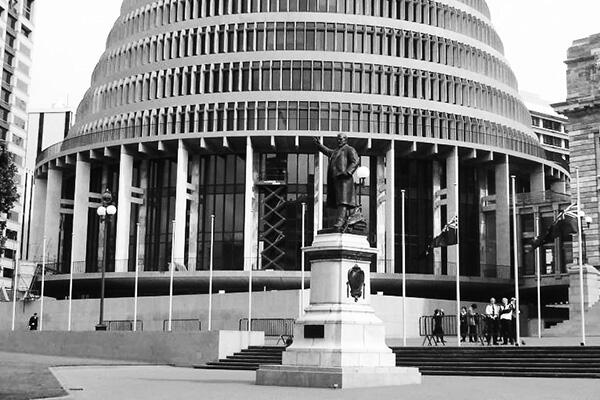
1. ANDREW LITTLE — FACE OF HYPOCRISY — Opposition Leader Andrew Little has been caught out for accidentally not paying one of his workers. The individual, a contractor, was owed $950 for nearly four months. Funnily enough, Little had spoken out against the challenges small-business owners face just a week earlier. 2. STEVEN JOYCE — FORCED TO FOLD — Economic Development Minister Steven Joyce has been forced to pull out of his controversial deal with Sky City. A deal had been struck between Joyce and Sky City for the government to deregulate Sky City’s gambling licenses. The agreement, originally forecast at $402 million, fell through after the cost increased to over $470 million. Joyce was forced to fold on the proposal of a government contribution to the project after controversy in the media. 3. BILL ENGLISH — SUPER FUND LOSSES — Finance Minister Bill English has landed in the middle of his first controversy of 2015. It was recently reported that a New Zealand superannuation fund has lost $200 million of taxpayer money. The sum was invested in a US investment fund, a fund that went bust after investing in a Portuguese bank.
-
News
 Issue 2 01/03/2015
Best of the Week | Issue 2
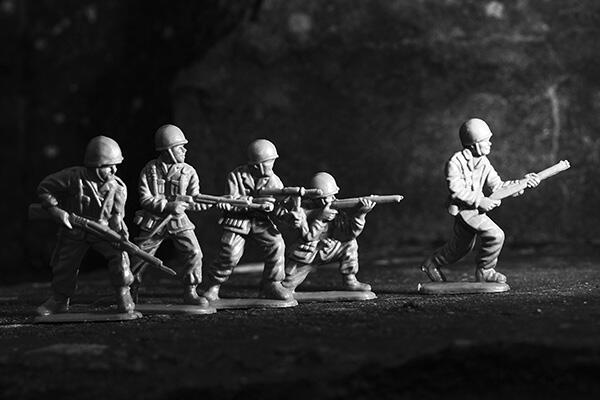
N ews this week has been dominated by Prime Minister John Key’s decision to send New Zealand troops to Iraq. The decision, coming as no surprise after months of discussion in Parliament, was finalised on Tuesday 24 February. Key confirmed that 143 New Zealand soldiers will be sent to the region for up to two years. The mission has been described as non-combat. Key outlined in a public statement that New Zealand military personnel would not be going to fight; instead their sole purpose would be training Iraqi troops. However, he did acknowledge that operating in a warzone does have inherent risks. According to a Firstline Report, a major risk is “green-on-blue attacks” whereby the trainees attack their trainers. Key has, however, continually highlighted that all personnel will remain “behind the wire”, meaning they will not leave the designated safe zone that they operate in. The announcement has stirred controversy around the nation, this being increased by Key not putting the decision before Parliament. Key’s reasoning for this is evident, as two National allies, United Future and the Maori Party, have condemned the notion of sending any troops to Iraq. Left-wing parties Labour and the Greens have also publically opposed it. Yet lack of parliamentary approval will have no bearing on the PM’s decision. As Key is able to make executive orders concerning the military. However, public opinion is his biggest enemy. Although he has stated that he believes sending troops has a strong public mandate, it seems that may not be the case. So far no poll has enlightened us on where the majority of the public stands. Whether this decision becomes a long-term political liability for John Key remains to be seen.


