
Henry Napier
Chief Reporter
Articles by Henry Napier
96 articles found. Displaying page 7 of 8.
-
News
 Issue 11 10/05/2015
James Shaw Interview
Greens MP James Shaw is currently travelling New Zealand in his bid for the Green Party co-leadership following the resignation of Russel Norman earlier this year. He has a different perspective on politics than would be expected of a typical Greens MP. Last week, Critic sat down with Shaw to see what his plans for the future of the Green party are.
-
News
 Issue 10 03/05/2015
In My Opinion: Henry’s word | Issue 10
The opposition’s role is to criticise the government. In doing so, it usually tends to highlight the negatives and avoid the positives. Yet too often, when asked what they think of good policy, opposition MPs will turn around in disagreement, regardless of what they truly believe. They disagree purely because it is a proposal from the government.
-
News
 Issue 10 03/05/2015
Key Unlocks Another Trade Door with Saudi Arabia
News of a trade agreement with Saudi Arabia has come amid controversy over human rights. Prime Minister John Key recently confirmed that he is seeking a trade agreement with the nation, visiting last week to meet King Salman bin Abdulaziz Al Saud.
-
News
 Issue 10 03/05/2015
Māori Party Takes Back Seat in Water Rights
The issue of Māori water rights has had a resurgence in New Zealand politics. The government recently turned down a proposal from iwi to award Māori permanent water rights. The proposal sought to discard the existing system of water allocation, whereby water rights can be granted through local council consent on a renewal basis.
-
News
 Issue 9 26/04/2015
In My Opinion: Henry’s word | Issue 9
National’s armour is John Key’s popularity. It survives on Key’s image as a typical and down-to-earth “kiwi bloke”. As the events of the last year’s election show, Key’s image only strengthens when he is slandered.
-
News
 Issue 9 26/04/2015
Hague Says the Government is “Out of Touch”
Last week the Green Party claimed the National government is not intending to fulfill its 2014 election promise of providing children aged 13 and under with free GP visits. The Green Party claim they have documents which show 10 percent of children would not be covered as the budget has been set too low.
-
News
 Issue 8 19/04/2015
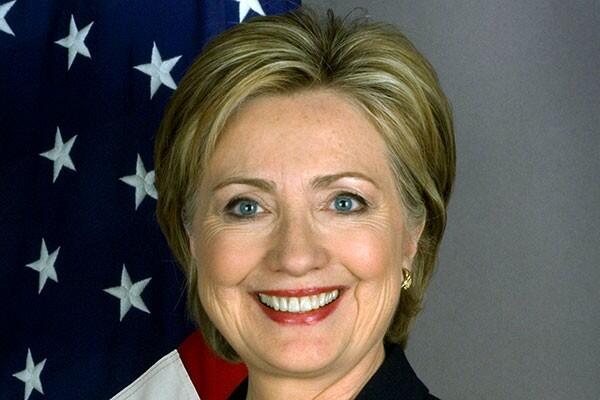
Clinton Makes Second Attempt at Presidency
Former Secretary of State Hillary Rodham Clinton has finally announced her bid to run for president in 2016.
-
News
 Issue 8 19/04/2015
In My Opinion: Henry’s word | Issue 8
John Key is a political instrumentalist; he has a vision for where he wants New Zealand to be. But rather than using his proportionately short time in government to implement radical change, he has opted to take a slow incremental approach. This has been a major factor in his popularity since he took office in 2008 and has allowed him to stay popular since.
-
News
 Issue 8 19/04/2015
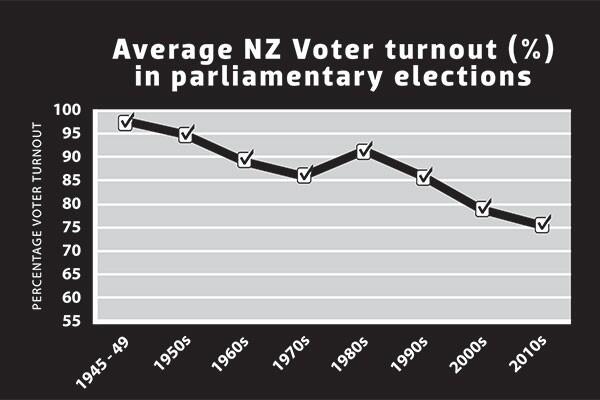
Electoral Report Shows Voter Turnout Low
The Electoral Commission has released its 2014 election report. While the report highlights that the election was successful, it maintains that “much needs to be done”. The report outlines two major priorities to improve the electoral system.
-
News
 Issue 7 12/04/2015
In My Opinion: Henry’s word | Issue 7
It’s not often such a strong mandate gets turned on its head so quickly. Only five months ago National won Northland with an overwhelming 9000-vote majority. Then two weeks ago, it managed to lose the seat to Winston Peters. The outcome was the result of two mistakes. The first was the party’s reaction to Winston Peters. Peters is a loudmouth shock jockey with one message, listen to me. That message hasn’t changed in 30 years. And it didn’t change in Northland. The only part that did change was defining his audience. The mistake National made was doing exactly what Peters wanted; it listened. National saw the early polls and decided it needed to do something drastic. Its first reaction was getting National heavy hitters, John Key and Steven Joyce, on the front lines of the campaign. This decision completely distorted the message of National candidate, Mark Osborne. What should have been a local grassroots campaign was turned into a referendum on the government’s performance. Osborne found himself talking about government fiscal policy when he should have been selling himself as a local passionate Northlander. Osborne had an advantage over Peters at the outset. Simply being a Northlander meant he could be relatable and sympathetic to voters’ concerns. He unquestionably has a stake in the region. However, the conversation moved away from what was happening in Northland and started being about what was happening in Wellington. A place where Peters has 30+ years’ experience and Osborne none. Not only that, Osborne was tied at the hip to a government that he had no part in. He was attempting to defend government policy that he likely had no knowledge of. The second mistake was the attempt to bribe the electorate. A $69 million infrastructure upgrade to convert nine one-lane bridges into two-lane bridges wasn’t a bad proposal. It undoubtedly appealed to Northlanders. The bridges were aimed at highlighting the government’s ability to legislate, something the competition were unable to offer with any assurance. The problem was that it was a reactive offer. And it proved that Peters could influence government policy. National was unable to distance itself from the “bridge bribe” branding. Six months earlier, National had promised nothing for Northland, save the Puhio to Wellsford motorway extension. Regardless, it was clear that National wasn’t planning to build any bridges in its third term. That is, unless it was anticipating a by-election, which raises another issue in and of itself. The bottom line for voters was that before Peters’ campaign there was nothing in the way of change from the National government. No investment. No vision. No care. Then suddenly a $69 million infrastructure upgrade was announced. And voters had to seriously consider how it came about. It certainly wasn’t National Party generosity.
-
News
 Issue 7 12/04/2015
The Port of Auckland Fiasco
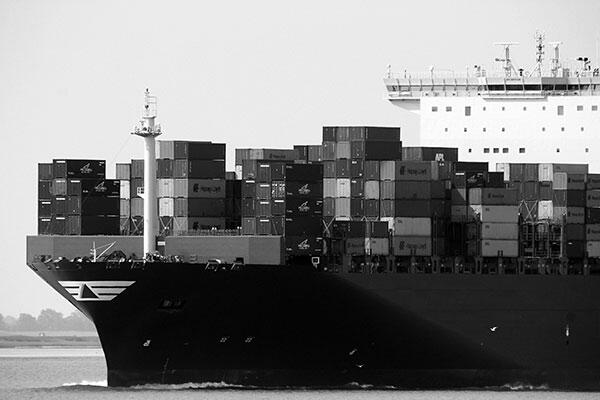
The expansions to the Port of Auckland have ushered in a new tide of political controversy for Auckland City Mayor, Len Brown. The council owned company, Ports of Auckland, plan to extend the Bledisloe Wharf further into the Waitamata Harbour, effectively allowing for easier access and docking for larger ships. The extension is expected to encourage more shipping activity in the port. The proposal, however, has received a mass of public outcry. A number of Aucklanders have publicly criticised the wharf extension with opposition rallies attracting hundreds. Many Auckland residents view the proposal as a step in the wrong direction, citing their opposition to reclamation for port purposes. The extensions would require the reclamation of around 3 hectares of seabed. Frequent boat users have also highlighted potential adverse effects such as damage to the quality of the harbour. Mayor, Len Brown, has come under pressure to review or reverse the decision to approve the council consent given last December. When questioned as to his knowledge of the proposal, Brown said he was only informed on February, three months after the consent was confirmed. However, the Mayor has defended the position of the council saying that there was no obligation to inform the public or himself. Furthermore, Brown hopes Ports of Auckland will now be persuaded to postpone the extensions in order to continue discussions concerning the outcome of the port. The controversy surrounding the wharf extension has received national attention. Following his victory in the Northland by-election, New Zealand First Leader Winston Peters is proposing to submit a bill to undo the port extension. Peters claimed he is doing so in the hope of encouraging development of the port of Whanagarei in Northland. The ongoing debate has also added to increasing speculation surrounding the upcoming Auckland mayoral race set to take place next year. Many high profile politicians have rumoured their interest, this includes Labour MP and former Labour Leader, Phil Goff as well as former National Minister Maurice Williamson. Goff has been speculated as a potential front runner for the position. Current Mayor, Len Brown, has yet to respond to questions as to whether he will run for re-election in 2016, however many commentators claim he has lost support.
-
News
 Issue 6 10/04/2015
In My Opinion: Henry’s word | Issue 6
T he Green Party is naming a new co-leader come July. The appointment of a new face also brings forth the possibility of a new direction. Over the past decade the Greens have made huge strides in growing their support and refining their message. Yet it’s a fair assumption that this may be the end of the road. The Greens have a place sitting comfortably with between 10 and 15 per cent of the party vote for the foreseeable future. This would be a place of achievement for the party’s counterparts on the crossbenches. Peter Dunne stays awake at night dreaming of 10 per cent. But the far left has become an ideological ghetto for the Greens. A place that cannot accommodate their aspirations. The Green Party campaigns on environmental sustainability and social justice. They’re the defenders of the vulnerable, whether that be lower socio-economic New Zealanders or natural and the environment They have a good message. However, their inability to find their way into the executive prevents them from ever making their ideas a reality. For anyone else this may be fine. But the Greens champion themselves on standing up for the voiceless. Time and time again the party has seen its submitted bills fail. The “Feed the Kids” Bill has just been voted down, which comes as no surprise. No government in their right mind would vote through an opposition bill, scoring points for the other team while also harming its fiscal budget. But the proposal was not a bad one. National struggled to produce formidable arguments against it, although in the end it succeeded somewhat. This is an example of where the Greens could make a difference. Having the ability to co-operate with either major party opens up massive opportunity. The Greens need to refine their message even further and push for it to be implemented. Pragmatic progress or ethical stagnation. That is the choice the Green Party ultimately faces in deciding where to go from here. The co-leadership race has produced a number of different camps. James Shaw and Vernon Tava have offered a new direction where they are more open to compromise, whereas seasoned Greens, Gareth Hughes and Kevin Hague, pledge to continue promoting the Green message, offering little in the way of compromise. Undoubtedly the two latter candidates are anticipating a Labour coalition in 2017. This isn’t an unlikely expectation. But it isn’t a smart one. For the party to cut through the noise of the National–Labour election contest, it needs to present the possibility that its ten to fifteen per cent could go either way. This is the game that minor parties play to become significant. Many have argued against this notion, believing sustainability of the minor party vote rarely resides in the centre of the spectrum. So the Greens have to decide, are they going to stay in their comfortable corner, or are they going make an attempt to change the game?


