
Andrew Kwiatkowski
Contributor
Articles by Andrew Kwiatkowski
28 articles found. Displaying page 3 of 3.
-
Culture
 Issue 5 23/03/2014
Le Weekend
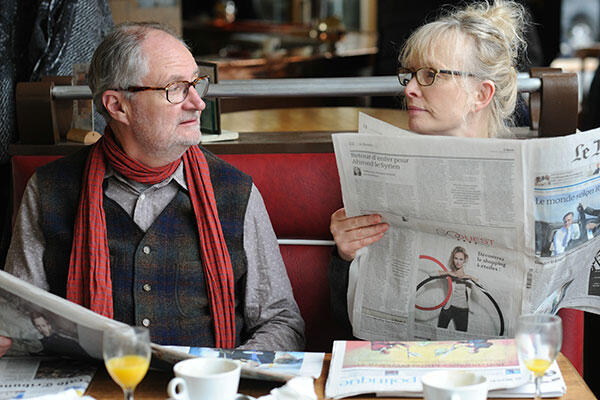
Rating: A+ Le Weekend is about an aging couple, Nick and Meg, played by Jim Broadbent and Lindsay Duncan, taking a long-overdue second honeymoon to Paris, trying to recreate a time in their lives when they were happy, in love, and blissfully unconcerned with the future. The cast are absolutely superb, and I can’t recommend this film highly enough. The makeup, hair, cinematography design, and even the very dull names Nick and Meg, all show us the plain-ness of both these characters. We see them with all their blemishes, and that makes them real, and goddamn beautiful, to the point that even the old-people sex scenes were charming. Jeff Goldblum, too, apparently defying the tyranny of time, has never been more alluring. The entire film, like life, is a contradiction. The opening scene, their train emerging from the dark channel tunnel from London to Paris, surely symbolises a rebirth. But by the end, this theme has hardly been mentioned. Instead, this film shows us that people can never really escape themselves. Nick and Meg take their entire past with them; happiness and grievances, and spend their weekend in Paris first complaining about and then celebrating their plain life at home in Birmingham. Meg makes a half-hearted attempt to spend a lot of money seeing the sights of Paris, because “when in Rome,” but ultimately can’t avoid herself or her husband. Both of these people have needs, but neither really wants to satisfy the other’s at the expense of their own. We see the real nitty gritty; the incredible contradiction of totally compassionate love, totally malicious hate, and totally self-devoid dependency, all existing at the same time. This relationship was so real to me that during certain scenes, quite simply, I wanted to weep. The beauty of this film is its grounded performances and its intelligent script. The trailer suggests it is a mere rom-com for oldies, but to me, Le Weekend is more akin to and rates much higher than the Before Sunrise trilogy.
-
Culture
 Issue 4 16/03/2014
Winter's Tale
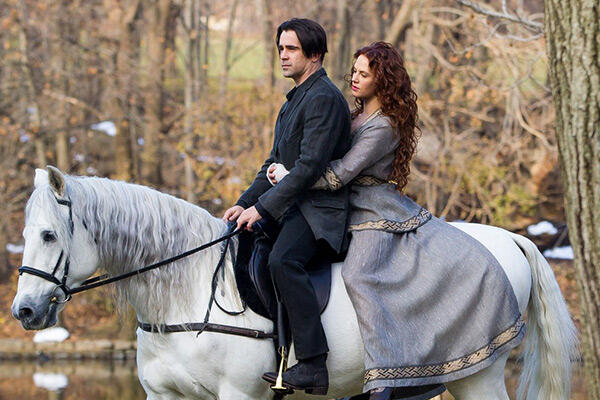
Grade: E I have limited space for this review, so I’ll just go ahead and start my list of “A Thousand Things Wrong with Winter’s Tale,” and we’ll see how far we get. Big number one: cast. Colin Farrell couldn’t sell the main character, a thief named Peter Lake, for a moment. With only his two trademarked facial expressions to peddle in every scene he appears (the “Puckered-Brows” and then the “Getting Teary”), he is less the expressive Zoolander and more the proverbial plank. Russell Crowe, too, transparently did not believe he was a demon of the underworld and/or an Irish gangster, and neither did I. The females in the cast were utterly forgettable as they had meagre relevance to what passed for plot. Oh, yeah, the plot is that Peter Lake is pursued by a demon while trying to pursue true love. The story arc was trivial to the point of absurdity, and told clumsily. Every time things look dire for Peter Lake, SUDDENLY A GIANT GUARDIAN ANGEL FLYING HORSE APPEARS AND SAVES EVERYBODY, and thus the emotional stakes were zero. The director also relied on the dialogue to do all of the work, and to make it clear why the story had taken the latest contrived turn, frequently characters would walk into shot, go on a giant one-sided spiel about their entire life story, and then finish by explaining what they were doing in that exact moment. Wow, that’s bold. Like, Tommy Wiseau bold. The love story of Peter Lake and “The Red-Headed Girl” barely pays off. Because of her weakness from tuberculosis, she could die if they ever hooked up, and it was plainly moralising at us (read: YOUR WICKED LUST WILL BRING RUIN). This love story makes Twilight look like fucking Titanic. So in summary, Winter’s Tale was the most pointless two hours I ever spent staring at a screen, and that’s including the time my friends and I stayed up until 3am watching a fake-fireplace video on YouTube. Also, terrible wigs.
-
Culture
 Issue 3 09/03/2014
The Railway Man
Grade: C+ The Railway Man is a film adaptation of Eric Lomax’s memoir about the time he was in the British Army in Singapore when it was invaded in 1942. His company surrendered as prisoners of war, only to be tortured and dehumanised on the Burma railway construction effort. I was prepared for what was to come, perhaps more than others, after having read a similar book that claimed one man died for every sleeper laid on over 200 miles of railway. The film gives an accurate depiction of war through scenes of beatings and prolonged water boarding squarely in centre-frame. At the theatre, there were moviegoers squirming in their seats. The film makes you confront your feelings about water-boarding incredibly effectively, and obviously wants you to think about modern usages. The film features big names like Nicole Kidman, Stellan Skarsgård and, of course, Colin “Aging Handsomely” Firth. I never thought I would say this about Firth, but his performance didn’t pull me in. I gazed at him in total awe in The King’s Speech; my heart broke with his in A Single Man; and he will always be the Mr Darcy of my imagination. But as Eric Lomax he was underwhelming, even at both the tragic and cathartic climaxes for his character. The real standout of the cast was Jeremy Irvine as the younger Lomax in the considerable amount of flashbacks, who is our main character in place of Firth. It was an A+ story, yes, but here’s why the film earns only a C+ rating. First, it was terribly paced, and more screen time developing Firth, as older Lomax, was needed for our empathy. Second, the cinematography and sound design was totally derivative, and under-capitalised on the opportunity to represent the post-traumatic stress “haunting” Lomax. And, finally, while I’m sure his wife (does she have a name?) is a nuanced human being in real life, the film fails the Bechdel test hopelessly as Nicole Kidman is given no role beyond being merely the Sexy-While-Anxious-And-Helpless Woman, and that bothered me.
-
Culture
 Issue 2 02/03/2014
Saving Mr. Banks
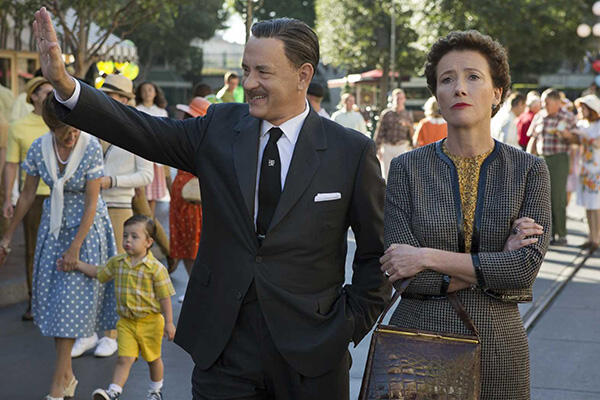
Grade: A - Exquisite performances and a powerful story make this film a success. You may be familiar with the classic 1964 Disney film Mary Poppins. The 2013 film Saving Mr. Banks invites you to become familiar with the tormented artists responsible for producing such an uplifting and memorable childrens’ tale. Emma Thompson is superb as the austere P.L. Travers, who wrote the original book. When Walt Disney, captured magnificently by Tom Hanks, finally convinces her to come to Los Angeles to co-write a film screenplay, she finds that his alterations conflict with her values and dark past. By showing us the struggle between Travers’ rigid artistic integrity and Disney’s mass consumerism, the film causes us to question why people ever choose to create artworks at all. Is it to exorcise the demons they carry? To preserve a perfectly-imagined dream against a cruel reality? Or simply to make money? A similar, fantastically provocative theme was the question of whether or not Walt Disney is evil. He wants to ‘dumb down’ the Mary Poppins story as it was written, and we are set up to hate him and the way he sold out his own treasured creation, the Mickey Mouse character, in the form of gaudy merchandise. But it is no spoiler to reveal that in the end Disney has his way and the Mary Poppins film (surprise, surprise) is made. Can he be evil for trying to sprinkle a little pixie-dust on every child, for profit? Or is Travers the evil one, for refusing to take joy in her own life; or for eventually getting a taste of Disney’s whimsy and money, and caving in? You’d best see the film and decide these questions for yourself. This film’s climax was so inspiring it even made me forget how deeply I detest Colin Farrell in everything – not to mention the Disney corporation, as a whole.


