
Andrew Kwiatkowski
Contributor
Articles by Andrew Kwiatkowski
28 articles found. Displaying page 2 of 3.
-
Culture
 Issue 21 31/08/2014
The Expendables 3
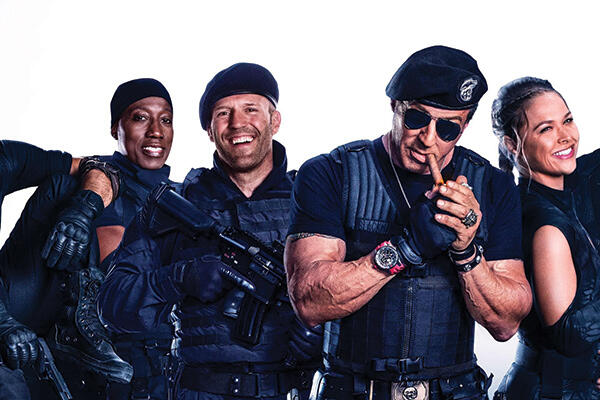
Rating: C+ In the long tradition of The Expendables series repackaging the exact same action-hero products you have seen before in 80s’ movies, comes The Expendables 3, a film with no original dialogue. Some might say that the way they rework each action actor’s iconic catchphrases (such as “I’ll be back!”) into their new films ad nauseam is a bold and wholly new genre of self-referential parody genius. Not me, however. From the moment I saw the first Expendables film, I knew that every bad-but-great old action movie I ever loved from late night TV was going to be ruined by the same actors trying to do their thing all over again in a series of much more modern, and much less interesting or authentic, sequels in the coming years. And, sadly, Ex-3 did not fail to deliver on that score. As if seeing Jean-Claude Van Damme doing a pathetic parody of his flying-kicking younger self in The Expendables 2 wasn’t bad enough, now we have “Crazy Mel Gibson” doing that whole suicidal Lethal Weapon thing all over again. It sucks. None of the evil they create for his on-screen character is as disturbing as the YouTube videos out there of his drunken, misogynistic, anti-Semitic torrents of spousal abuse. Wesley Snipes too is back in a poor, poor reprisal of his role in Stallone’s Demolition Man. But blow me down was that Harrison Ford doing a Han Solo cameo!? Awesome … I guess. Oh, I tried so hard to like it. But there comes a time in every young boy’s life when he watches a shoot-em-up film, and instead of being excited by the bloodlust, he breathes in deep, accepts his new place in the world, and says out loud: “Oh come on, there’s no way they could have survived that eight-story freefall and then killed those 60 guys who were waiting for them right there with tanks. This is bullshit.” Son, today you are a man. The one and only good part of this film was Antonio Banderas’ cameo, reminiscent of PUSS … in boots!
-
Culture
 Issue 20 18/08/2014
Under the Skin
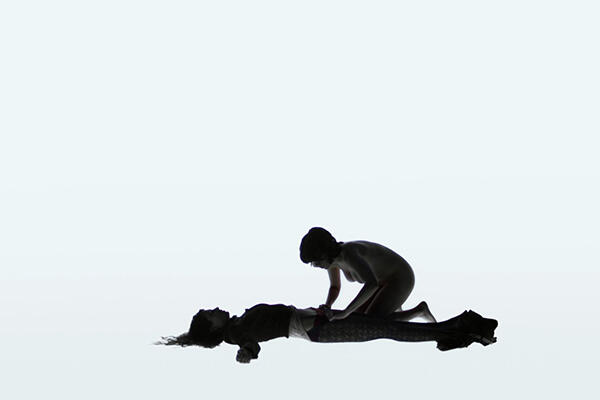
Rating: A+ Harvesting human flesh for your alien homeworld’s meat industry is a tough job, but someone’s got to do it. Scarlett Johansson (or ScarJo, as she likes to be called) plays an enigmatic seductress that has a disgusting job to do here on Earth: luring local Glaswegian men into her van with flirtatious chit chat, and driving them to her scary meat grinder house, where she proceeds to get naked with them until they die. Naturally, not one of these men ever protests, because, come on, ScarJo beeeuuubs! When you know ahead of time that this movie was filmed using hidden camera footage of real people from the street, it makes it shocking to watch. One assumes the CGI and full frontal male nudity scenes were filmed after informing the men about the production, but other than that, it’s terrifying to see her messing with real people’s heads. Let’s just say this project probably wouldn’t get the approval of the ethics committee. The amazing thing is that this story works despite only a tiny amount of dialogue and absolutely zero exposition. To find meaning (and plot!) in this film, we have to think literally, laterally, and deeply about what we see. We follow the alien carrying out her meat grinding function until she catches a glimpse of herself (itself?) in a mirror, and is suddenly confronted with that ultimate existential question: who is looking back? Thus begins the incredible journey of this film, the opportunity for an alien to explore the concept of the self in our contemporary world, and choose not to do what it is told. This theme of disobedience, to me, immediately red flags The Matrix trilogy, a thematic homage perhaps reinforced when the alien tries to experience chocolate cake and orgasms. This alien has the appearance of a human, and may even be able to converse and feel sensations, but through its behaviour it reveals itself to us to be horrifyingly lacking in the most essential human trait: empathy. This is a simply astounding film, for philosophers and ScarJo anatomy enthusiasts alike.
-
Culture
 Issue 19 10/08/2014
God help the girl
God Help the Girl follows three youngsters around the streets and music halls of Glasgow, in one of those “perfect carefree summer” kind of romps. Eve is recovering from a self-harm episode and decides to chase her musical dreams, enlisting the help of mega-cutie James, one of those insufferable music snobs who believe they know best about what makes art pure. Together with their sheltered friend Cassie, they dance, skip, and sing their way through the film, forming a band, forming relationships, and writing music that expresses their desires and frustrations to us. The film has a Tom Sawyer- type of tra-la-la to it, and we as the viewer have perhaps a little more perspective on what issues, such as denial and self-loathing, are really in play here, than the characters themselves. To say this is a vanity project might be understating it. Writer/director Stuart Murdoch crowd-funded this film musical on the basis of the songs his band had already written for the characters. Thus the script is clearly constructed around the music, and at times feels clunky and self-conscious. There is a slight sense that the dialogue is only here to fill in space between dance numbers, and frankly, until it dawned on me that the point of the story was that the characters were in their own Neverland, I was very confused about what was going on (nothing?). Only a mere 88 minutes into the running time, the film finally began to explore something meatier, and the characters began to have the unpleasant, necessary conversations that would mark the beginning of the end. She loves me; she loves me not. The record company will sign our band; they will sign us not. We will stay here, happy forever; we will grow up. This film beautifully captures when “just for a moment, we were all in the right place, and the possibilities were infinite.” For this reason, and to see two endearingly dorky kids figure out their first and last kisses, I highly recommend it. Gold help the girl is screening at Regent Theatre 1:15pm Thursday 14 August & 4pm Saturday 16 August
-
Culture
 Issue 18 03/08/2014
A Promise
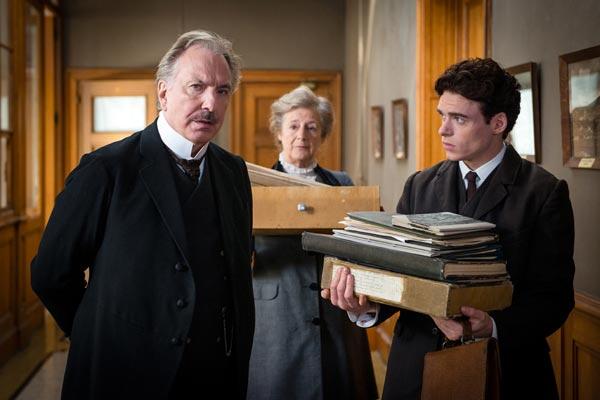
Rating: B+ Have you ever had one of those love affairs that was spine-tinglingly perfect in every way – except, perhaps, for that tiny, insignificant detail, that one of you is not technically “available?” Maybe the other person was married to your boss? Then has Patrice Leconte got a film for you! A Promise is a romantic drama based on the novel Journey into the Past by Stefan Zweig. Set in the 1910s, it features a wealthy German industrial tycoon (Alan Rickman, total man-crush, obviously) training his brilliant protégé, Friedrich (Richard Madden; you know him as Robb Stark), without realising that the young lad has been coveting his wife, Charlotte (Rebecca Hall). The film proceeds in the manner of the worst TV soap opera love triangles, with contrived situations partnered with banal dialogue, intended to throw the characters into as many precarious positions as possible in the running time. Frankly, I wished the characters would all, please, shut up. Just shut up. Shut. Up. It was simply awful to listen to. The characters worked in the book, but did not translate well onto screen. The dialogue was also all in British English, which is notably strange as the story takes place entirely in Germany. The price one pays when one uses English-speaking actors, one supposes. With these two distracting dialogue frustrations painfully gnawing at me, I almost missed the absolutely spectacular part of the experience: the images on the screen. If they had made this film differently, as some kind of opera-esque novelty that had no dialogue at all, just letting the evocative score, artistic characterisations of the three leads, and exquisite cinematography carry each story point as slowly, delightfully, artfully, lustfully, and effectively as the memorable few times we explore Charlotte’s delicate neckline through Friedrich’s lingering gaze, thus revealing the boundless inner world of his desire for her, it could have been something really special. So, in the end, I can recommend you at least get the DVD to play on mute the next time you need to set the mood for your couch date with that special someone.
-
Culture
 Issue 17 27/07/2014
52 Tuesdays
Wow. Words almost fail me. 52 Tuesdays was filmed over the course of one year, entirely on Tuesdays, to watch the mother-daughter relationship evolve, as Billie’s mother becomes James, her second father. Teen Billie is fairly naive to begin with, but gets totally derailed from herself when her mother starts the one-year process of transitioning from a female body to a male body. Naturally, when your mother wishes she was never a female, and thus could never have given birth to you, you start to get a teensy bit resentful. To be clear, this is a work of fiction, though James is played by Del Herbert-Jane, an actor who has chosen to be non-gender-conforming, thus making them perfect in this role. The story arc of the film is heart-breaking. When James needs time to adjust and decides to spend only six hours with Billie a week, on Tuesday nights, Billie begins to seek other thrills to make up for the unacknowledged pain she is feeling. She and her disenfranchised friends begin to experiment with sex, drugs and other delinquent behaviour, like many teenagers, but they take it to dangerous, even criminal, places that cause harm to many. Eventually she finds herself so desperately in need of being unique and noticed that she becomes the kind of bitch that punches their transitioning mother in their recent chest reconstruction surgery stitches. It’s tough to get a clearer symbolic act of emancipation than that. The presentation format is extremely scattered, and it’s clear we are watching a teenager’s one-year diary of moments of important meaning interspersed with a lot of unresolved misery, and yet we can barely identify which is which to her. We badly want Billie to realise the loving family she has around her, but she seems blind and attached to all the wrong things. This film successfully made me question the assumptions I make every day about people’s gender identities, and also how you could ever forge a meaningful life or relationship when you choose not to show up for it every day. I would recommend you come prepared for emotional turmoil, and leave with a fresh perspective. 52 Tuesdays - screening at Rialto Cinemas: 6:15pm Friday 1 August & 1:30pm Sunday 3 August
-
Culture
 Issue 17 27/07/2014
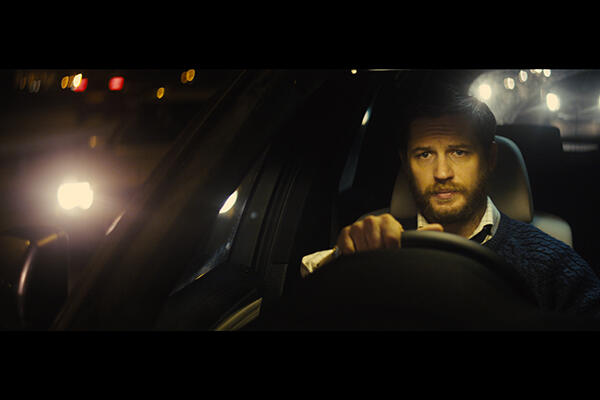
Locke
I know what you are thinking. If the film is just Tom Hardy’s face as he drives and talks on hands-free, how interesting could it be? The answer: RIVETING. And, no, that’s not sarcasm. We follow Ivan Locke on a literal journey to a hospital one night, but more importantly on a figurative one from his old life towards an uncertain promise of a new one. On the eve of the biggest contract of his professional engineering career, a woman he can’t stand (but slept with) calls to tell him she is having his baby, it’s so premature it may die, and she needs him to be there, right now. So, Locke goes, but not alone. His wife is on the end of his phone, falling apart as he is forced to confess his adulterous crime, and his children beg him to come home while he is shamefully compelled to drive in the opposite direction, maybe never allowed to come home again. His boss is breathing fire down the wire at losing tomorrow’s $100,000,000 contract, and Locke must explain over the phone to the drunken Irish primate he left in charge how to finish the job. The expectant mother needs birthing advice and, to cap it all, the ghost of his dead-beat father is in the back seat, taunting and defying Locke at every mile to be a better parent for this unwanted impending infant than he was. Brother, you got problems! Not that the tragedy and comedy of putting out a dozen fires over the phone wasn’t great, but what I loved most was the allegory of Locke’s journey. Like him, we are all barrelling down a one-way highway, compelled forwards by the march of time and unable to undo the things behind us. We can only apologise and keep on driving towards the new-born, hoping that we are doing enough. Tom Hardy’s performance is simply astounding, and we wait anxiously for him to deliver every line. The director knows exactly how to make one character in a car into a captivating spectacle from start to finish. I highly recommend this film journey! Locke - screening at Rialto Cinemas: 8pm Saturday 2 August & 1:45pm Monday 4 August
-
Culture
 Issue 17 27/07/2014
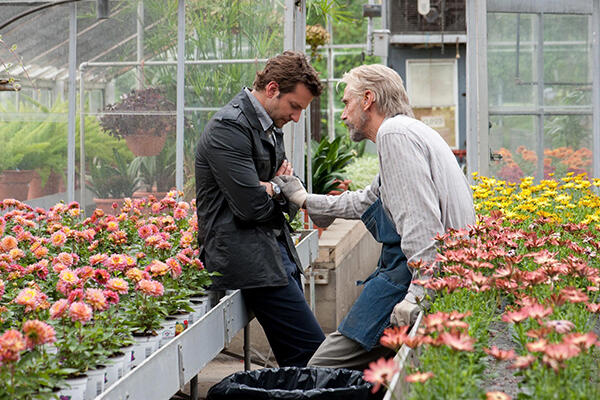
Words and Pictures
Rating: B- Like a lot of bad rom-coms, they really should have ditched the rom-com angle altogether and focused on the much more interesting subplots. Handsome English teacher Jack Marcus (Clive Owen) is having a pretty crummy time, having not been able to write anything worth publishing in many years, and turning to vodka for solace at inappropriate moments, and is about to lose his job. When a new art teacher, Dina Delsanto (Juliette Binoche), irks him at work by suggesting that words fail to capture the important things in life, he starts pushing his students and himself into grand literary pursuits to prove her and her art wrong, and vice-versa. This is, of course, a tired and banal rom-com plot that contrives to throw two superficially different people together with the least possible imagination. However, I did like that their back-and-forth war to prove the value of words or pictures was positively Socratic in tearing each other’s arguments to pieces. By the end of the film, everybody duly and inevitably became better people and decided that words and pictures are both important, and that they loved each other after all. Yawn. What were great about Words and Pictures were the subplots of personal struggle. While Clive Owen was not believable as a funny-man, he definitely has that twisted, demented vibe about him that made his descent into alcoholism and loss of his son’s respect very moving. I wish they had focused on this more, as it had potential to be up there with Flight (2012). Juliette Binoche, too, is great as a tormented artist, who has all the vision she needs to create masterpieces, but is losing control of her body due to rheumatoid arthritis. Those of us who live with chronic pain know all too well her insensible roars of frustration at simple tasks such as holding a paintbrush, and the pointless suffering along the road to finally realising that your gifts don’t merely come from your hands. Good on them for doing that well, at least.
-
Culture
 Issue 17 27/07/2014
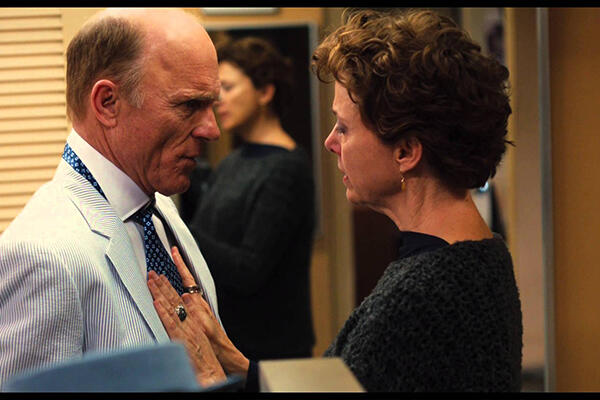
The Face of Love
Rating: B+ This movie is like combining American Beauty with Misery, and the plot from The Great Gatsby. With Robin Williams, too, as the same creep-next-door from One Hour Photo. Nikki (Annette Bening) is traumatically widowed when her husband of 30 happy years drowns beside her, but years later she meets his exact double, Tom (Ed Harris). She is unable to stop herself from pursuing him for all the wrong reasons, and becomes a pro-stalker, finding out that he is a painting tutor and enrolling in private tuition with him. Eventually, a relationship develops, and Nikki thinks that her years of repressing the happy memories of her husband are over, and they can be together again. The film starts with a sad story, but quickly gets very, very creepy. Like Jay Gatsby, Nikki finds herself trying to recreate the glorious past, by dressing Tom in the same clothes as her late husband and taking him to the same places. Our sorrow and sympathy for her quickly turns to wonder and frustration at her intransigence. When her shameful ploy is exposed, the question is, will Nikki willingly throw away her family, friends, sanity, self-respect, and ultimately, her life, in order to continue this grief-fuelled fantastical pursuit of her dead love, or will she move on, and dive back into the water again? The film is beautifully composed, with hints of people as they are imagined and held by others tucked into the corners via photographs, artworks, and flashbacks. Annette Bening, as with Carolyn in American Beauty (1999), does an incredible job of acting like somebody totally over the edge and yet still projecting an image of sanity, which is not easy to do. With all the photographs, chance-meetings, and confusing-the-pronouns blunders threatening to expose her mad charade at any moment, the audience is surprisingly on-edge, and anticipating the inevitable collapse of it all. And, of course, Tom might have a few bombshells of his own to drop on Nikki. Worth watching, worth remembering.
-
Culture
 Issue 16 20/07/2014
Blended
Rating: E Movies, like any art, reflect the culture that created them. If any aliens were to pick up the tired romcom Blended and draw conclusions about our planet’s cultural values, unfortunately they would be morally obliged to vaporise us all immediately. Formula: Adam Sandler is too slobby, Drew Barrymore is too uptight, UNTIL ONE DAY THEY MEET, blah blah, misogyny, blah blah, Viagra and tampon jokes. He can’t raise his daughters, and she can’t raise her sons, BUT TOGETHER, blah blah, date-rape jokes, blah blah, plagiarising The Brady Bunch, something something, happy ending. The first thing apparent is the crass sexism of the writers: males are loud; females are emotional; lesbians are gorillas. The only path in this film for boys to become men is to succeed at baseball and shun empathy. Equally, the character of Sandler’s daughter was revolting for giving up on her own potential, much like Grease’s Sandy, having learned that getting a foxy makeover and winking at the rebellious boy in the leather jacket is the only path to success and happiness. Apparently the writers of Blended believe that boobs and promiscuity maketh the woman, and bats and balls (sorry) maketh the man. My next gripe is that these first-class imperialist assholes travel on a luxury holiday to Africa (it’s all one country) and act like their petty bickering is important. Uh oh, disastrously embarrassing photo on someone’s smartphone while parasailing! Um, has anybody heard of fucking conflict minerals? Child slavery? Land mines? Desertification? The IMF? And what’s this? Every white family gets a complimentary troupe of singing, dancing, African simpletons! And every non-white, non-western character is a servant for a white westerner! We are now back to a 19th century level of racism. Way to imagine cultures complexly, there. Lastly, the animal cruelty. With riding ostriches and driving quad-bikes directly into a herd of elephants, reminiscent of the horrifying “family classic” Swiss Family Robinson (1960), Blended normalises the idea that animals only exist as entertainment for humans. This is your culture. Shame on all of us.
-
Culture
 Issue 14 06/07/2014
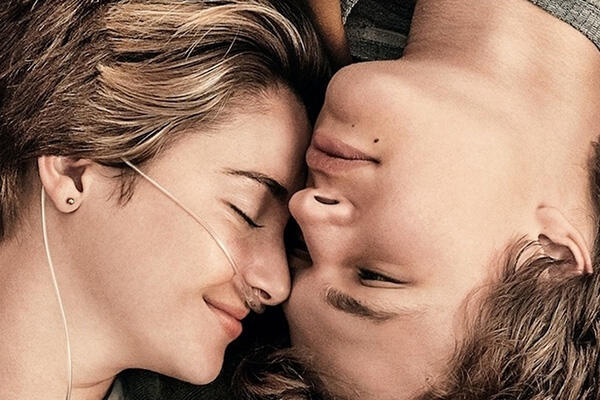
The fault in our stars
Rating: A Of the big movies released over the break, perhaps the dark horse of these was The Fault in Our Stars. It’s an absolutely spot-on film adaptation of the New York Times number-one best-selling young adult novel by vlogbrother John Green, and it’s exciting that two more of his novels will be adapted in the coming years, riding this film’s tear-jerking success. TFIOS is a cancer story that deliberately defies the typical cancer story. Instead of featuring healthy people learning about the fragility of life from stoic sick people, this is a story about two extremely self-aware and empowered teenagers making whatever remains of their lives meaningful. Every member of the cast is perfect for their role, and indeed Shailene Woodley was actually hand-picked for the lead part by the book’s author. Teenaged cancer patients Hazel Grace Lancaster and Augustus Waters stake their hopes on visiting their favourite writer, an irritable recluse living in Amsterdam, and in the process have to face the cruelty of a universe that is totally indifferent to the plight of humanity, let alone individual “cancer kids.” But of course, what the film really embeds in you is the idea that we are all dying of something; to be alive is to be dying slowly. Hopefully we can all be as lucky as these two, who find each other and really make the most of their time with loved ones before the inexorable end, at which point literally every person in the theatre audience was bawling. Ahem. If I have one teensy niggle about the film it’s that the characters are actually too good. The charming, witty, hyper-adjusted Augustus, in particular, seems totally unlike any troubled 17-year old boy I have ever met, and resembles more the selflessly empathetic thirty-something John Green who wrote him. He seems impossibly wizened and, as such, I’m predicting, will replace even Edward Cullen as the new gold standard against which 17-year-old boys everywhere will now be measured by 16-year-old girls.
-
Culture
 Issue 9 27/04/2014
The selfish giant
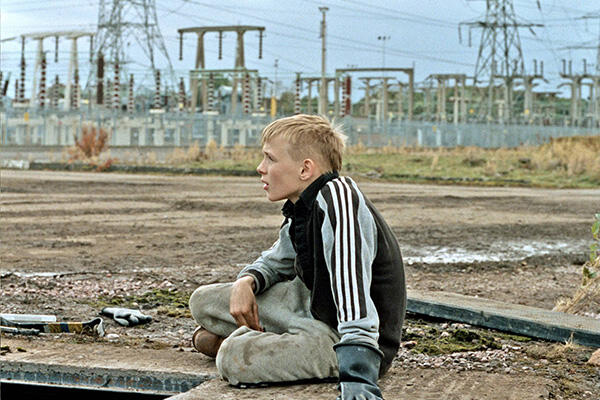
Rating: A- The Selfish Giant is bleak. Not only is it about two brats, Arbor and Swifty, being expelled from school and scratching a living pilfering scrap metal for a crooked bookie in an impoverished town in Northern England, it also features a beautiful horse being electrocuted and melted alive to make ends meet. As my esteemed cinema-going colleague Alex put it, it’s like “bleakness porn.” There was very little story happening, and I was impatient for events to unfold. Instead, I watched a long exposition about an area of England with socio-economic woes, comparable to Billy Elliot, only without anything uplifting. This was achieved by presenting dark, claustrophobic environments devoid of life or stimulus, with little sound or music other than the barking of angry, neglected dogs, and the shouting of angry, abusive families. What I found deeply unsettling was that the characters were not on any journey. They were merely existing, as soulfully impoverished as the very community that had forgotten them. Even though they try to make money from scrap, they can’t achieve anything, because the “Selfish Giants” (from their limited perspective this is every adult in the film; but from our omniscient perspective, CAPITALISM!) are constantly trying to use and abuse them. There was no hope, joy, or love to be found anywhere – except, of course, in the eye of an innocent horse, which the director couldn’t resist reinforcing with gratuitous horse-eye close-ups amidst the human chaos. We got it. Though I can’t claim to fully comprehend this movie, when the kids had a tiny bit of fun playing on a trampoline, and then got so desperate that they contemplated selling the very trampoline springs that symbolised their youth for two quid in scrap metal, I noticed myself reasoning that this experience was so bleak and emotionally damaging, I ought to walk out. So I must concede that, whatever the hell this was, it was effective.
-
Culture
 Issue 6 30/03/2014
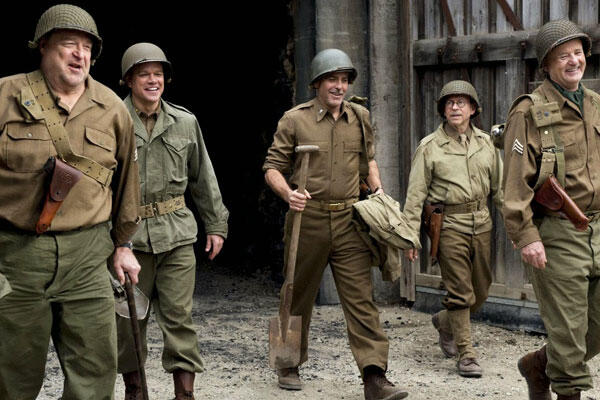
The Monuments Men
Rating: D- The story about the preservation of precious art during the Second World War is fascinating as a page in history, but as an all-star Hollywood war epic, it’s simply appalling. Ironically, it is very preachy about the innate value of cultural products (such as films. Yes, George Clooney, we got it). I had extremely high expectations for this filmic experience. All-American leading men George Clooney and Matt Damon, enigmatic Cate Blanchett, old-timers Bill Murray and John Goodman, and a “caper” plot about thumbing noses at the Nazis? Surely my prayers have been answered and this is an intelligent third Ocean’s Eleven sequel – at least in spirit?! Unfortunately Clooney doesn’t know what genre his film is. For five minutes it is a whimsical caper, then moves to characters on/off crying as a token acknowledgement of the Holocaust, then dying in the manner of an unnamed “Redshirt.” And, get this, the plot sees the only woman thrown head-over-heels in love with, apparently, the first and only man who ever talks to her. To call the dialogue well written would be comparable to calling Kentucky Fried Chicken fine cuisine. The pacing of the movie is badly skewed. We meet all our main characters in the first two minutes and hear nothing of their stories. With huge, capable names in the cast like this, it’s a crime to deprive them of roles with gravitas. Then, following the “80/20 rule,” the vast majority of the story is fast-forwarded over the next half-hour, and by the time we get to see something in-depth near the end, our ability to care has been lost. Oh, boo-hoo, Bill Murray, you got a letter from home. You’ve had forty seconds of screen time – please tell me more about how long and difficult it’s been for you on the Front. This film has all the ingredients of a charming, resonating epic about Western civilisation, but dismally fails to put them together according to a recipe.


