
Bridget Vosburgh
Contributor
Articles by Bridget Vosburgh
32 articles found. Displaying page 3 of 3.
-
Culture
 Issue 3 08/03/2015
Yesterday's Kin
Yesterday’s Kin by Nancy Kress is a science-fiction novel about the experiences of geneticist Marianne Jenner and her adult son, Noah, after the arrival of aliens on Earth. The aliens have already established their presence in New York City when the story starts, probably because this novel is very close to novella size and Kress has to move fast. The aliens seem to have come in peace, but have brought bad news with them; the ensuing events will dramatically alter Marianne and Noah’s lives. This is a very competent piece of science-fiction as far as the science goes. It is based on real, continuing research and is described in a way that lets someone as ignorant as me understand the exposition without finding it boring. Yesterday’s Kin is fast-paced, and the prose is well-written. The ideas the story raises are interesting, if not world-shaking. Where it all falls down is the characters. Character motivation seldom makes sense. In the first chapter Marianne is at a party thrown in honour of her latest discovery. FBI agents show up and tell her in front of everyone that she has to come with them right this second and, no, they won’t explain why. They did not need to do this. They could easily have sent in one person in plain clothes to take her aside, show ID and tell her to excuse herself. It would have been fifteen times as discreet. Instead they walk in with guns and explain how they won’t explain in front of everyone. It’s very dramatic and makes for an entertaining first chapter, but has nothing to do with sensible behaviour. It’s difficult to discuss without spoilers, but ultimately the behaviour of the aliens similarly lacks sense, in that they understand human psychology well enough to tell one lie, but not another. The novel also fails in that the point of view switches from Marianne to Noah, yet only Marianne is interesting. Fascinating things are happening to Marianne, but in nearly every second chapter we have to return to her tedious son whining about how he doesn’t fit in, doesn’t know himself or where he belongs. He eventually finds where he belongs, but I didn’t care. His main characteristic at the beginning of the story is an addiction to a drug that makes the user feel like a completely different persona each time it’s taken. Not only is this drug not used by the plot in any satisfactory fashion, but the author decided to call it sugarcane. Sugarcane is the most ridiculously twee and unlikely name for a drug that I can imagine and it shattered my suspense of disbelief every time I read it. I’d also like to warn for what I call “vapid hate-clichés” in association with the story’s lone gay character. It’s not overt for the most part, so if you aren’t educated in the nuances of poor representation you’ll probably not notice, but vapid hate-clichés are there in force and I disliked it. Aside from all that, if you’re in the mood to read a short piece of mildly interesting science-fiction written in competent prose, this will do.
-
Culture
 Issue 2 01/03/2015
Demons
Demons, by Wayne Macauley, tells the story of seven Australians who retreat from the world for a weekend to get drunk and tell each other stories but find, as the weekend goes on, that the experience is becoming a disturbing one. The title and this premise make it sound like Demons might be a horror story, but it’s not. Rather, Demons is social satire that expects readers to feel sympathy for a bunch of white, middle-aged, middle-class, tediously heterosexual people feeling discontented and discussing the state of the world. Maybe sympathy isn’t the right word, but Macauley definitely seems to expect readers to care about these characters in some way that I don’t. Six of them are introduced at once, with their jobs, a physical description and whichever of the other characters they have their relationship with. It’s neatly done for what it is, but it is a bad idea. I remember exactly one character’s name and physical description. I can’t remember her job or who she was heterosexual with though, because human beings are not actually designed to remember infodumps, no matter how competently executed they may be. That’s the frustrating thing about this novel. It’s well-written and filled with things that could be fascinating, but it ultimately failed to make me care. A big problem is its themes. One of them seems to be that people are miserable and discontented no matter where they go or how much money they have. Speaking from personal experience, that is not true. Another theme would be that the world is a screwed-up place. Well, and I don’t use this word lightly, duh. I am not denying that people in the position of these characters can be unhappy with society, but their unhappiness does not involve society denying their humanity, so if you are in that latter position it will be very hard to care. Another theme is attacking capitalism. Critique of capitalism is hardly new since Karl Marx was pointing out capitalism sucked at the same time he was pointing out it existed. And, yes, it is an awful, irredeemable system that kills people on a daily basis, and it’s not even self-sustaining. But instead of trying to offer a viable alternative, Demons just says that Stalin proved there is no alternative, woe is us. I think it’s childish to point out that something blatantly terrible is terrible if you don’t have any ideas for improving it. One of the stories the characters tell involves a teenage girl who is allergic to everything “artificial”. The story obliquely mentions her having regular sex. You know what is a surprisingly common allergy? Latex. And no, she’s not in a position to be using any other form of birth control, even if you can think of one that doesn’t come under the nebulous category of “artificial”. The fact that this subject is never mentioned is something I am going to blame on a sadly common blind-spot; those without wombs seem almost eager to forget what wombs are capable of. Also, Macauley doesn’t use speech marks, which is pointless, pretentious and makes the reading experience more difficult. Although I didn’t hate this novel, I don’t think it tells a story that anyone young and/or disenfranchised can truly appreciate. The themes won’t be meaningful to you unless you are a discontented, white, middle-aged, middle-class, tediously heterosexual person.
-
Culture
 Issue 1 22/02/2015
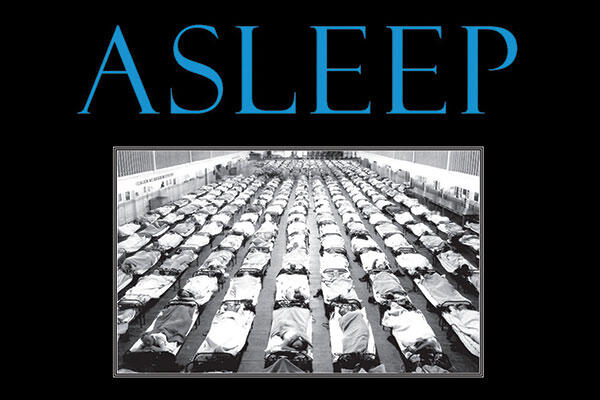
Asleep: The Forgotten Epidemic That Remains One of Medicine's Greatest Mysteries
D o you like horror stories? Do you ever wish for factual proof that the world is completely terrifying? Asleep: The Forgotten Epidemic That Remains One of Medicine’s Greatest Mysteries is about a disease known as encephalitis lethargica. It’s not surprising if you haven’t heard of it. It was an epidemic around the 1920s that killed close to a million people, and altered the lives of thousands more. It’s not at all famous. Probably because that would require talking about it, and talking about it would require thinking about it. People don’t want to do that. Because this disease is terrifying. It was colloquially known as sleeping sickness because the most famous cases often involved people staying asleep for months before dying, but some who suffered from encephalitis lethargica instead lost the ability to sleep at all, which can kill you and did kill them. The symptoms varied wildly from person to person. People who survived the initial outbreak would often alter dramatically in personality, to the point of seeming like different, and much less pleasant, people. In particular, children who had seemingly recovered would lose all control of their impulses when going through puberty, becoming so dangerously violent that it was considered necessary to isolate them from society. Since they don’t really know what caused it (the accepted answer is “something something flu something”) they don’t really know why it went away. It could come back as an epidemic, cases do still occur occasionally, and there isn’t a cure. You may now understand why the usual reaction to this disease is to just avoiding thinking about it. Asleep takes case studies of seven patients and combines them with a focus on the physicians who studied encephalitis lethargica. Probably the most frustrating thing with the book is a result of what makes it so frightening: it’s all true. Crosby has to work with what was recorded and, sadly, people at the time weren’t especially invested in keeping track of those who suffered from this disease. The case histories Crosby presents have a tendency to vague out into question marks once the subjects are no longer receiving medical care. This works as a pretty excellent allegory for how the medical world as a whole treated encephalitis lethargica. Unfortunately for most, this results in a book that is in no way suited to people who like closure or happiness. However, if you are like me, morbid and attracted to any information you can use for disturbing anecdote fodder at parties, read Asleep. Have nightmares.
-
Culture
 Issue 22 07/09/2014
Endless Night by Agatha Christie
You have of course heard of Agatha Christie, possibly because I just mentioned her, but far more likely because she is incredibly famous. Her patented brand of murder fiction was the cuddly sort. The official genre term is “cosy,” and the notions inherent in the term cosy, are pretty straightforward. The victim is often unpleasant, or at the very least killed off before the reader gets unduly attached. The detective is borderline-omniscient and triumphs, despite people constantly doubting their omniscience, and they drink a lot of tea. A love story, taking place between two young people who fall for each other and decide to get married, threads through the main plot. When the murderer is revealed, there is always the sense that the world has been righted, back to the basically pleasant place it is. A cosy is a genteel book about murder that makes nice bedtime reading for fluffy old ladies, (and in Christie’s case, the whole entirety of the world). This is not to say that Christie's work is the veritable cliché-fest some make it out to be. The reason for her fame is partly due to her ability to shake up and generally subvert the hell out of this formula, book by book by book. But, most unusually, the work I'm actually here to talk about is from a time in the 60s where Christie used this formula to write a story that was distinctly uncomfortable. There is nothing reassuring about Endless Night. It was the first Christie book I ever read, and I don't recommend it as a good way to get a handle on her work. It didn't put me off, but it did make me look askance at the aunt who called Christie her comfort reading, because Endless Night is nothing like Christie's other work. The story is narrated by Mark, a disaffected and alienated young man, who is drifting through life and the plot begins when he meets and falls in love with Ellie, an heiress who has led a sheltered life. They get married with genre-traditional rapidity and proceed to build a house together, in a place called Gypsy's Acre (ah, the 60s). Gypsy's Acre is cursed, of course, and though this plot doesn't sound like much, an atmosphere of underlying tension and nastiness ensues, to the point when the murder comes as something of a relief. Endless Night takes place in a world of discontent and unhappiness, and it is only fair to say the story ends not with a sense of resolution and the world righted, but rather that things have gone terribly, unfairly wrong for everybody. It is very much not a nice book, and if you are like me, that's all the recommendation you need. Of course, Endless Night isn't what you'd call literar-churr, and it goes to pieces a bit towards the end. (Agatha had a tendency to make her killers go a bit too insane when she felt like wrapping things up.) If you're interested in checking out her more usual work, you'd be unlucky to pick up a random and hit a dud, but The Moving Finger is one of my favourites. Though, if you're in the mood for something a little more haunting, try Endless Night.
-
Culture
 Issue 18 03/08/2014
Drowning City
Other reviews i’ve read of Ben Atkins’ first novel Drowning City tended to sound something like: “ZOMG this teenager wrote a book when he was like 17 and then it was published when he was 19 ZOMG and it sounds just like a real person wrote it, this is incredible!” The problem with this is that his age isn’t impressive. At all. Any teenager with a reasonable lack of social life can write a book. And all it takes for a teenager to get a book published is for them to have written an acceptable facsimile of any common genre, since publishers know that they can market it with “ZOMG the infant can spell” and adults will buy it and go, “My word, who knew that teenagers were capable of anything even semi-rational, ZOMG indeed.” And yes, Atkins is a New Zealander, so there seems to be some patriotism going on. But, come on, he lives in Auckland, which we all know is the primary New Zealand way of being a terrible person. Plus his book isn’t set in New Zealand, so his Kiwiosity is all kinds of irrelevant. Drowning City is a hard-boiled noirish crime novel set in LA during prohibition. It’s about, and narrated by, a bootlegger name Fontana. Now, the personality of a first-person narrator can make or break a book. Fontana is a judgemental asshole who thinks he’s better than his fellow criminals, the police, ordinary people, and people who talk. This attitude is unjustified, because Fontana isn’t better than other people; he’s an incredibly self-centred dickhead who can’t shut up. If Fontana is so quiet, (and trust me, he brings up his quietness, and how much he dislikes con- versation, a lot) why the hell is he rabbiting on to me about everything that crosses his mind and every person who crosses his path? There are some qualities a first-person narrator cannot convincingly have. This book is terribly over-written. The first 70 pages are arguably completely unnecessary and seemed to me completely uninteresting. 70 pages in I finally learnt what the conflict was, and about a hundred pages in it got tolerably readable in a “hey, something’s happening I can half-care about” way. That’s a lot of not caring to go through. In the interests of full disclosure and reviewer integrity, I must acknowledge that this book is often praised for its atmospheric atmosphere and evocative setting (the setting evokes where it is set, I assume). I am naturally impervious to both these qualities and have no capacity to evaluate them. I’ll notice if a setting is too wobbly to make the slightest sense, but I don’t care about places or respond to them, and so I’ll only notice a setting if it isn’t doing its job. But apparently Atkins does a fantastic job of making his imaginary LA in the ‘40s seem like a real place, or like the real place, or whatever it is that people who like settings like about settings. Shrug. If you have heard of this mysterious hardboiled genre and want to know what its deal is, then you should pick up some Raymond Chandler. If you want something written by someone genuinely young enough for it to be a talking point, I suggest Axe Cop. If you are already familiar with the hard-boiled genre and/ or crime writing in general, Drowning City is possibly worth a read, or at least an attempt thereof. However, don’t expect to be blown away, unless you’re, like, super awed by the sheer astounding astonishingness of teenagers who can string together whole sentences.
-
Culture
 Issue 12 18/05/2014
Cross Fingers
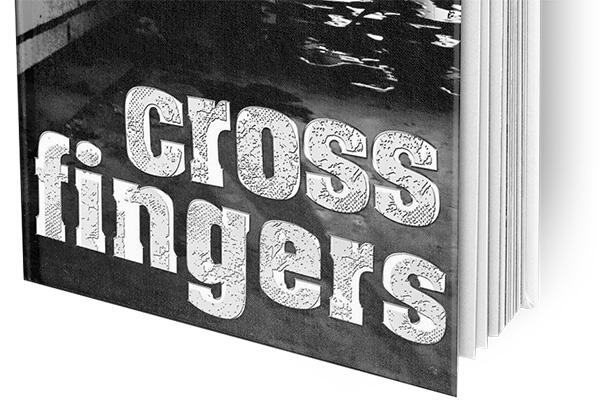
Cross Fingers is a thriller by Paddy Richardson. The tagline says that Cross Fingers is, in fact, psychological crime fiction, but I don’t feel that the pacing gives you time to stop and think. So thriller it is. One Rebecca Thorne, a not too hard-assed, plucky reporter lady who gets sexually and otherwise harassed, but eventually triumphs over adversity, narrates the story. You probably know the type. She’s very much the type. Rebecca is about to pull together a documentary exposing the depravity of a crooked property-investment jerk, when her boss pulls her off that to make a documentary about the Springbok tour protests instead. Rebecca considers the subject to have been covered enough already, but for those of you too young, poorly educated, and/or foreign to know anything about the Springbok tours, allow me to explain. There were a bunch of white people living in South Africa who were being racist douchenozzles. A huge hunk of the New Zealand population were pretty sure that they didn’t want to play sports with said racist douchenozzles and decided to yell about it on the street. Another hunk of the New Zealand population were pretty sure that they wanted, nay, needed to play sports with everyone that they could possibly play sports with, and that included racists. The NZ Government was all like, “Come on, people of New Zealand. Why can’t you just let the white South Africans have their racism? They are living the dream and you are ruining it for everyone. We can’t just let a mob decide for everyone that racism is bad and we shouldn’t condone it. Awh, screw it, guys, let’s unleash the police brutality.” (Note that claims of police brutality are contested and it may in fact be possible that no policeperson ever kicked a non-violent protester in the head because they felt like it.) While all this was going on, the actual rugby players were a bit bewildered and just wanted to play rugby. Basically it was all a great big ugly mess, and you should be very grateful that you live in a time where people protest racism on Tumblr instead of on the street, and police brutality en masse is a trillion times more likely to be condemned when it is recorded on someone’s phone and everyone can see it for themselves. Richardson deals with this difficult subject matter pretty damn competently, I gotta say. You don’t need to know about the tour to enjoy the book, but none of the necessary exposition is clumsily handled, and the subject itself is so interesting that you’ll actually believe learning is fun. Richard’s prose is nothing fancy, but competent; it does the job of story transference well, and moves fast. For these reasons and more, I really enjoyed reading this story, right up until the point where its whodunit-reveal turned out to be some tiresome reiteration of a vapid hate-cliché. Obviously I can’t tell you what this mildly surprising twist is, since spoilers are like the reviewer’s bad touch or whatever. But I don’t think I can in good conscience recommend a book that I enjoyed right up until the point where it really bummed me out, though I did think it was worth reading right until I realised it wasn’t.
-
Culture
 Issue 10 04/05/2014
The Wasp Factory
Iain Banks, who died in 2013, published his sci-fi novels under the name Iain M. Banks (I assume the M is short for Master of Science). People persist in regarding this as a genuine attempt at a cunning disguise with Superman levels of hilarious failure going on, rather than a straightforward concession to those poor unfortunate souls with that debilitating medical condition which will kill them if they read anything outside their genre preference. The only truly odd thing about this pseudo pseudonym is that it divides the author’s work between “hey, this right here: science fiction” and “hey, this right here: any other possible genre,” which seems to me a distinction lacking in distinction. We are gathered here today to talk about Iain Bank’s first-published novel, The Wasp Factory. If you suffer from the aforementioned debilitating genre disease, then for your own safety it is best for me to call The Wasp Factory a horror novel. I don’t quite like naming a novel’s genre, solely because of all the people out there willing to debate the “actual” genre of a pink-clad Harlequin, but yeah, we’ll go with horror. Unfortunately, it is a horror novel that would fail to horrify a horror fan, because what this story really consists of is that which absolutely has to be a novelty act: the freak-show. The protagonist is a mentally ill sixteen-year-old named Frank Cauldhame, who lives on an island with his father and occupies his time by performing strange rituals involving the extensive torture and gruesome death of various animals. He also occasionally goes drinking with a dwarf, because of course he does. Now, the abuse of animals upsets me about as much as the next not-horribly-broken-inside person, but only in real life. Frith knows you are going to have to do more than light random imaginary rabbits on fire to get me appalled, and the titular wasp factory seems little more than a joke. It isn’t a factory that makes wasps, because that would be interesting; it’s merely a system of killing wasps that Frank uses to tell the future. If my heart ain’t bleeding for the bunnies, it’s not about to beat for wasps. Maybe when this book was published, in 1984, all of this was shocking and outrageous (I wouldn’t know; the eighties were part of that “not born yet” phase I was going through), but now it seems to me a bit “so what?” I made an effort, but I’m unable to be deeply disturbed by the thought that somewhere out there a whackjob on some island might be being cruel to animals. I kind of knew that already. The Wasp Factory ultimately fails for me because the narrative really wants you to gawk at the weirdo, and although Frank possesses an original voice, he doesn’t have much going for him I haven’t seen before. This is also very much a first novel. There’s some incredibly forced irony that I found jarring, enough so that I nearly sprung the big plot twist solely because of it. The moment where Frank compares his so-called wasp factory to the human condition is just so belaboured it was hard to read without eye-rolling (which is not conductive to reading). Yet, despite all that, The Wasp Factory does have its strengths as a narrative. It makes an effort to be interesting, the plot twist is pretty twisted, and there is a central image of horror quite nauseating enough to stay with me forever. Still, if you want to read the work of Iain Master of Science Banks, I would recommend starting elsewhere.
-
Culture
 Issue 2 02/03/2014
Empress Dowager Cixi
Jung Chang’s Wild Swans, a retelling of her own family’s history through the female line, was (and presumably still is) an eminently readable and fascinating book. With her latest work, Empress Dowager Cixi, she again showcases her gift for retelling great big chunks of history in an accessible and informative way. Empress Dowager Cixi, who in being unitalicised is now a person and not a book, unofficially ruled China from 1861 until her death in 1908. And, according to Chang, she did more to make modern China what it is than many of its rulers, both before her reign and after it – and certainly did more than history writers have been inclined to credit her for. Indeed, one of the central conceits of Empress Dowager Cixi, (it’s a book again now) is that the woman herself was unfairly maligned and made a scapegoat, both during her lifetime and in what was written about it afterwards. Because, despite everything she achieved, she still committed the heinous crime of bossing people around while possessing lady bits. Until recently, it has been all but impossible to forgive women for having the temerity to be female. The truth is probably not nearly so neatly a modern morality tale. Chang has been criticised for portraying Cixi as a proto-feminist heroine, and writing with a tone bordering on adulation while whitewashing away her cruelties and stupidities. These criticisms seem a little peculiar to me. Anyone who is naïve enough to take any one historian’s work as a holy font of the whole shining truth, isn’t interested enough in history for it to matter whether their mental image of Empress Dowager Cixi is skewed. If someone must have the wrong idea, it seems clear that Chang’s portrayal of Cixi is much less skewed than the more traditionalist portrayal of Cixi as a cruel, dim, murderous whore. Maybe my standards of whitewashing are far too high, but I sincerely hope that when people are writing propaganda about me they’ll make more of an effort to gloss over my vanity, mistakes and greed. Also, I’ll need them to be a bit more apologetic about the time I had a woman thrown into a well while she begged for help; Chang explains Cixi’s probable reasoning for doing exactly that, but I didn’t feel she was struggling desperately to justify it the way a wilfully blind hero-worshipper would. Anyway, unless you are a historian dedicated to Chinese history – good job, you – in which case you would’ve almost certainly already read this book and formed your own opinion, Chang’s mysterious inability to write a near four-hundred page book about a subject towards which she felt perfect neutrality shouldn’t concern you greatly. Empress Dowager Cixi is interesting, both as a book and a person. China at the time of Cixi’s rule has aspects as fascinatingly alien as anything you’ll find in high fantasy. Some of Cixi’s political manoeuvring is so audacious, and comes off so successfully, you’d condemn it in fiction as authorial favouritism, and the knowledge that the truly atrocious things that happen in this book did genuinely happen, to actual people, grants them a gravitas that no fiction ever has. All that, and the story would be worth reading, even if it wasn’t real. Jung Chang is giving a talk about the writing of Dowager Empress Cixi at 2pm, Sunday 9 March, at the College of Education Auditorium. Tickets are available from the University Bookshop for $10. Read. Go. Learn.


