
Bridget Vosburgh
Contributor
Articles by Bridget Vosburgh
32 articles found. Displaying page 2 of 3.
-
Culture
 Issue 14 05/07/2015
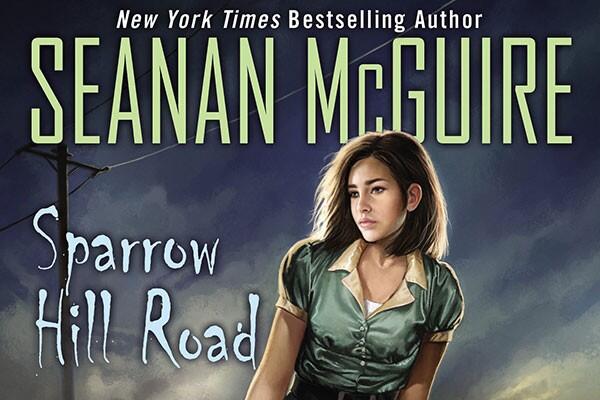
Sparrow Hill Road
Sparrow Hill Road, by Seanan McGuire, is an urban fantasy story with horror elements. The narrator, Rose, died in the 1950s, murdered when she was just sixteen, and went on to become an urban legend to the living and a guide into the afterlife for the dead and dying. Bobby Cross, the undead man who killed her, still pursues her around America; his state of being is sustained by souls, and Rose is the only soul that ever got away from him. Over the decades of her afterlife, Rose becomes increasingly determined to end Bobby Cross’s unnatural existence, to save not only herself but countless others.
-
Culture
 Issue 13 24/05/2015
Hades
Hades is Candice Fox’s first novel. Fox tells the story of homicide detective Frank Bennett, who has just been professionally partnered with Eden Archer, a woman who has some serious secrets. The novel is set in Australia and alternates between Frank and Eden’s investigation of a killer who is harvesting organs and the story of Eden’s upbringing by the titular Hades. Hades lives in a shack on the outskirts of a garbage heap and has made a career of disposing of various things for criminals, including dead bodies. When a client arrives with two children he and his gang have failed to actually kill, Hades slowly decides to raise them as his own. This childhood left Eden rather strange and, as the two work together, Frank begins to have suspicions about his new partner.
-
Culture
 Issue 12 17/05/2015
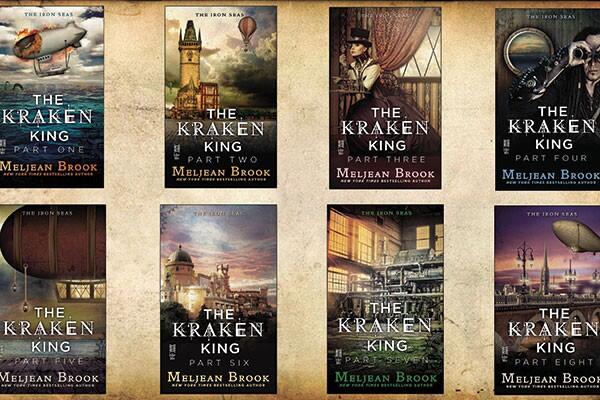
The Kraken King
For those hiding under a rock, steampunk is a subgenre of science fiction that incorporates steam-powered devices with Victorian design. The Kraken King, by Meljean Brooks, is a steampunk romance novel, and for once it had all the fun adventure, cool technology and body horror that people always assure me steampunk has.
-
Culture
 Issue 11 10/05/2015
Chasing the Scream: The First and Last Days of the War on Drugs
In Chasing the Scream: The First and Last Days of the War on Drugs, Johann Hari covers the bizarre origins of the drug war, the horrific state of the drug war today, what is most likely to be the actual cause of drug addiction, and the few places where people are finding better ways to deal with the problems caused by drug use. Hari manages this extensive range of complicated subjects in a markedly clear-minded way, making this an accessible and fascinating read. Though it does get heavy in some places. The information about the current lives of drug dealers and imprisoned drug addicts is disturbing and depressing, but knowing how awful things are is an important part of acknowledging that it is not okay for things to stay this way.
-
Culture
 Issue 9 26/04/2015
The Secret Place
The Secret Place, by Tana French, is a mystery thriller with a peculiarly timeless atmosphere considering how strongly based it is in modern times. The titular secret place is a board that a girls’ private school set up for their students to post their secrets on, in order to provide a monitored alternative to the website the students were using for the same function. A girl named Holly brings Detective Stephen Moran a card from this wall of secrets at her school. The card has a photo of a boy who was found murdered a year ago on her school’s grounds, and bears the message: “I know who killed him.”
-
Culture
 Issue 8 19/04/2015
A Troublesome Inheritance: Genes, Race, and Human History
ATroublesome Inheritance: Genes, Race, and Human History, by Nicholas Wade, attempts to begin a discussion about the genetics of race and the impact of racism on studying them. Wade’s central premise is that the evolution of the human race has been recent, copious and regional, meaning that not only is human evolution still happening but it’s happening a lot, and people are adapting differently in accord to the different places they live in. These changes are being obscured or neglected by science because the issue of genetic differences between races is such a contentious one. Wade argues that a potentially fascinating field of study is being sidelined unnecessarily and then discusses social changes that could be the result of evolution.
-
Culture
 Issue 8 19/04/2015
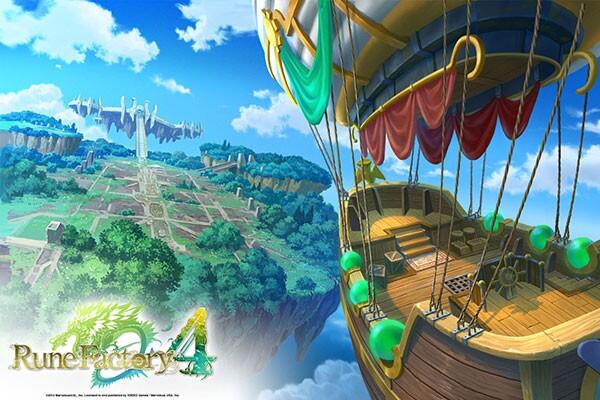
Rune Factory 4
Rating: 4/5
-
Culture
 Issue 7 12/04/2015
The Grand Hotel
Scott Kenemore’s novel, The Grand Hotel, is narrated by a desk clerk who makes it clear to the reader that he has a sinister ulterior motive when he volunteers to show a group of tourists around the mysterious hotel he works for. The first guest he takes the tourists to see is a desiccated dead body, although the desk clerk assures the tourists that this dead body still pays its bills and eats the food left in its room. He takes the unnerved tourists to visit guest after guest — each is a permanent resident in the hotel, and each has a story to tell. These stories range from plausible tales of despicable human behaviour to disturbing tales of demons and time travel. Soon the desk clerk begins a game in which he questions the youngest of the tour group, a red-haired girl of twelve, about some detail of the story they just heard. As she gets the answers right, the desk clerk grows steadily more excited. It becomes more and more apparent the tourists won’t be allowed to leave. Now, that is a lot of horror tropes right there. But I didn’t find The Grand Hotel horrifying. I’m not actually sure Kenemore is trying to make the reader afraid. For one thing, the narrator is enjoying himself way too much. He’s given the tour so many times he knows just how to manipulate people into doing what he wants; he’s putting on a big performance and loving every second of it: “I slump my shoulders wearily, looking crestfallen and disappointed in them. (I must bite my tongue to avoid smiling. In truth, I am nearly trembling with pleasure. Sometimes I actually do tremble, but the group mistakes this for shudders of despondence, which works out just fine.)” Another strike against any sort of fear factor is that the tourists aren’t differentiated from one another in meaningful ways. None of them have names, few of them have characteristics, and the red-haired girl is clearly the only one who matters. They’re in a creepy situation but there are no personalities to be concerned about or attach to. You don’t keep reading this book because you’re worried, you keep reading because you want to know what the desk clerk’s deal is, and because the whole thing is fun. The stories the guests tell are entertaining, the questions the clerk asks the red-haired girl are interesting, and the answers she gives are often surprising. A few of the book’s details, however, don’t make sense after the big reveal. For example, the desk clerk wonders why the red-haired girl doesn’t seem to have a chaperone, and points out that no one in the tour group looks like her. I don’t think it spoils the ending to say that, in light of the ultimate reveal, this isn’t something he should have been wondering about. The Grand Hotel uses a lot of the hallmarks of creepy and still ends up being an all-round positive experience.
-
Culture
 Issue 6 29/03/2015
Vivienne’s Blog
Stephen K. Leaton’s novel, Vivienne’s Blog, is described by its blurb as a psychological thriller and, to a certain extent, this is true. The titular Vivienne is seemingly delusional and dangerously obsessed with her ex-boyfriend, Callum. A court order prevents her from having personal contact with him, so she sets up a blog that requires a password to access. She then sends Callum a letter encouraging him to work out the password and read her thoughts. The novel consists of this blog, with Vivienne posting scans of the letters she sends to Callum and receives from him and his lawyers. Vivienne seems confident Callum won’t manage to unlock access to the blog, as in it she details her plans to abduct one of Callum’s twin sons. Soon she does so, intending to use the boy in a spell. At this point, the book stops being a thriller. Over half this book is made up of stories Vivienne tells the kidnapped child about her ancestors. They contain a mixture of New Zealand history with magical realism, told in very literary language. While this isn’t my personal brand of book-nerd buzz, I’m sure it is somebody’s. Somebody who would have been delighted with these stories if the blurb had mentioned what the bulk of this book actually is. Some of this book is like a thriller. A lot of it is not. Because the main plot is emotionally gripping, it is very hard to read Vivienne’s stories with the patience they probably deserve. It’s a testament to how good the ancestor sections are that I didn’t entirely resent their existence, but I didn’t enjoy them. The middle of the book has Leaton returning to the main plot in frustratingly brief segments, only to start telling yet another story about dead people Vivienne has probably made up. The stories begin to seem like padding after a while, and it becomes apparent that there wouldn’t be a book’s worth of material in Vivienne’s Blog without them. Vivienne’s Blog’s greatest flaw is the way it makes no use of the subject of blogging. Because her blog isn’t public, there’s no chance for people to make comments, which could have been interesting. Also her entries aren’t time-stamped, even though there is a final plot twist that would have greatly benefitted from having a date. Her continued access to her blog becomes a bit dubious over the novel, especially since she uses a phone to write her entries. There is also a “probably she was molested as a child” sub-plot about Vivienne’s childhood. That is a tedious cliché I have seen in everything from literary short stories to games made with RPGMaker, and never want to see again. Although Vivienne may be an unreliable narrator, she’s also a very compelling one; Vivienne’s Blog is almost worth reading just for the hilarious descriptions of how she hates everyone around her.
-
Culture
 Issue 5 22/03/2015
The Rise and Fall of National Women’s Hospital: A History
The Rise and Fall of National Women’s Hospital: A History is exactly that. Author Linda Bryder covers the history of the National Women’s Hospital in Auckland, beginning with the political and social circumstances that led to the hospital’s opening in 1946, and ending with the conditions that led to it becoming a unit of Auckland City Hospital rather than an independent entity. The in-between chapters each take an issue of healthcare, such as fertility or premature birth, and cover how this issue was treated over the decades the hospital was running. Bryder covers a variety of ethical dilemmas and political squabbles, using the existence of the hospital as a focus to explore broader issues of medicine’s relationship to women. Rather dishearteningly, nearly every issue Bryder raises is still a point of contention today. People are just as likely today as they were in the forties to debate whether it’s worth trying to keep premature babies alive. Sex education is still poorly implemented, thanks to people who insist that teenagers will only try to have sex if they are taught how to do so safely. What women want from their hospital experiences and what they get is still a Venn diagram with an unsatisfactory degree of overlap. Women in this country still have to meet arbitrary, if poorly enforced, standards in order to get an abortion. Hospitals remain over-crowded, under-funded places of stress and misery, although it’s less likely that a nurse will slap you than apparently it once was. It’s not all doom and gloom — we’ve gotten much better at keeping babies alive, for instance — but a lot of this book shows just how inevitable progress isn’t. Bryder, as generally befits a historian, keeps her views on these issues practically invisible. Some of the arguments made by historical figures in this book induce in me icy contempt, but Bryder manages to retain seeming impartiality around these hot-button issues with remarkable equanimity. The lone exception is her view of the Cartwright Inquiry, which was an important legal case that served as one of the harbingers of doom for the National Women’s Hospital’s independence. Bryder staunchly asserts that it was the result of journalistic misunderstanding and essentially a scandal about nothing; Bryder’s written a whole other book about the event. This history is also filled with delightful minutiae. The New Zealand Family Planning Association was originally called the Sex Hygiene and Birth Regulation Society, which means there’s an alternate reality where I used to bunk off high school to accompany my friends to Sex Hygiene. Someone once seriously said that the husband being present while the wife gave birth would ensure their marriage became “indestructible for all time” and was not met with howls of laughter. In 1948, five per cent of people seeking treatment for infertility had not actually managed to have the sort of sex that results in conception. The Rise and Fall of National Women’s Hospital is fascinating, although it isn’t going to make you feel completely positive about the advancement of the human race. It simultaneously tells the story of incredible progress while making it hard to feel like we’ve really gotten anywhere. National Women’s Hospital began with successful fund-raising and ended with far too many cockroaches; I do hope it’s not an allegory about humanity.
-
Culture
 Issue 4 15/03/2015
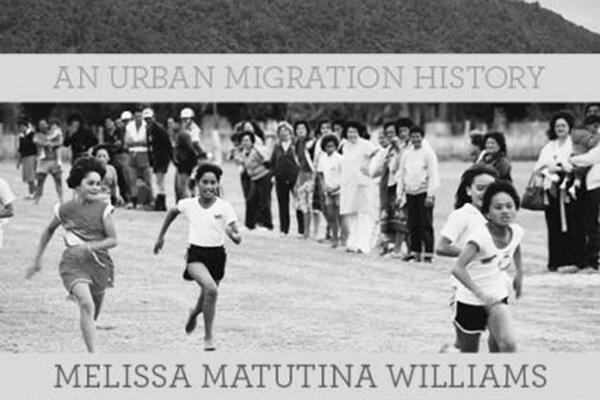
Panguru and the City: Kāinga Tahi, Kāinga Rua
Panguru and the City: Kāinga Tahi, Kāinga Rua, by Melissa Matutina Williams, shares the history of the migration of Māori from the community of Panguru in North Hokianga to establish new lives in Auckland. Covering a time period from the 1950s onwards, Williams takes apart the historical narrative previously constructed around this migration, which claimed that migration was a one-way trip that stripped Māori who moved to urban centres and left them disenfranchised. Using oral accounts from the migrants as well as social analysis, Williams shows how complicated the relationship between Panguru and Auckland was for people. Rather than offering a definite story of what these particular migrants experienced due to their decision to move, Williams acknowledges the many ways that attempting to boil down the complexities of life and human beings into a particular narrative does no service to the truth. I always prefer history books that challenge standard history, even as a starting point on any particular subject. Challenges tend to make their own points while simultaneously demonstrating what the established history was, and how it is flawed. One of Williams’ specific challenges is to the idea that Māori who migrated from Panguru were passively reacting to social forces rather than acting in their own interests. She also demonstrates the web of relationships that developed between the Panguru migrants living in Auckland, others living in Auckland and those who continued to live in Panguru. Williams’ account begins with a description of the methods she used to obtain it, as she is deeply and personally involved in this history. She acknowledges that she is choosing not to include some information from the oral accounts, chiefly because of concerns that Pākehā would pull it out of context and use it to bolster their prejudices. But I suspect there’s a school of particularly rabid historians indignant at the very thought, so this is my warning. Williams makes it very clear she isn’t going to tell you everything. Panguru and the City is a thorough and fascinating piece of work filled with beautiful photos. Williams’ combination of social analysis and oral accounts perfectly encapsulates, for me, what is one of the most interesting things about history: the way social forces shape people’s lives even though every person is still an individual making personal decisions. Māori who made the move from Panguru to Auckland are both part of a historically important pattern of migration and human beings who get to speak.
-
Culture
 Issue 4 15/03/2015
Thunderstruck & Other Stories
Whenever I read contemporary literary short stories I tend to feel like I’m missing the point. I must be missing the point, because there must be one. No one would publish entire collections of meaningless stories where nothing happens to boring people. And if they did, scores of critics wouldn’t respond with fulsome praise along the lines of “transcendental elegiac portraits of the universal human struggle … quiet … harrowing … strangely beautiful.” I refuse to believe that an endless stream of people are delusional just because I’m seemingly incapable of experiencing whatever it is they get out of today’s lauded literary story writers. Reading Elizabeth McCracken’s latest short story collection was a relief to me. I knew right away that whatever was going to happen, I wasn’t going to be left adrift in the usual sea of meh. Thunderstruck & Other Stories contains nine stories, all of which can be described as “elegiac” with total accuracy. The theme that ties McCracken’s collection together is one of loss and mourning. These stories are about situations that are fundamentally depressing, from murdered mothers to dying fathers to starving children, yet McCracken makes them so interesting and occasionally funny that reading them is delightful even when it’s upsetting. The first story, “Something Amazing”, begins: “Just west of Boston, just north of the turnpike, the ghost of Misty Goodby sleeps curled up against the cyclone fence at the dead end of Winter Terrace, dressed in a pair of ectoplasmic dungarees. That thumping noise is Misty bopping a plastic Halloween pumpkin on one knee; that flash of light in the corner of a dark porch is the moon off the glasses she wore to correct her lazy eye.” This writing speaks for itself. Another story, “Property”, deals with grief and loss, looking at the uncomfortable situations that arise when dealing with landlords and living in other people’s houses. I also enjoyed “Juliet”, a story about a murder told from the collective point of view of the local librarians. Picking favourites seems pointless, though. They are all worth reading.


