
Anonymous Bird
Sub Editor
Articles by Anonymous Bird
72 articles found. Displaying page 6 of 6.
-
Culture
 Issue 2 01/03/2015
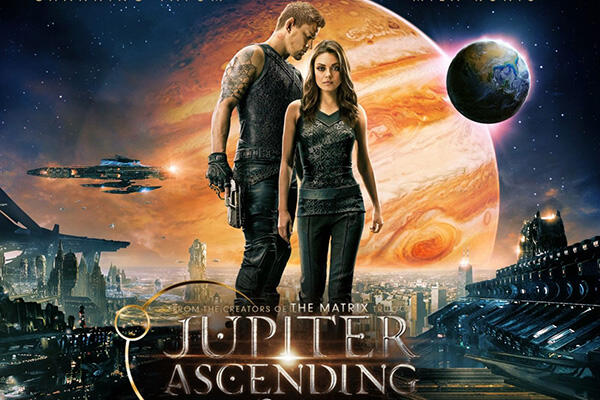
Jupiter Ascending
Rating: 1/5 Jupiter Ascending follows Jupiter Jones, a young girl who hates her life, which is spent cleaning houses and bathrooms with her scary Russian family just to get by. She is convinced by her ridiculous cousin to sell her eggs to a clinic in order to get money so that she can buy a telescope just like her daddy, who died tragically at the beginning of the film. But, wait! The doctors are actually aliens in disguise who are trying to kill her! Cue sexy lycan boy, Caine Wise (Channing Tatum), bursting in on flying boots to save her. It turns out that Jupiter is a “somebody” who the aliens want dead. Gasp! “But she’s a nobody! She cleans toilets!” you say? No — she’s actually royalty, because the bees told us so. Really, this is what happens in this movie. Obviously, bees are honest and they know royalty when they see it and Jupiter Jones is most definitely “Her Majesty”. That’s why aliens are trying to kill her, because the royal space family is messed up, with weird Oedipal issues. This clusterfuck of a movie is one of the most hilarious things I have seen in the last year. The reason for this movie being so good, but bad, is the script and how much it attempts to shove into two hours. The actors are fine; they’re not bad actors and you can really see Mila Kunis doing her absolute best to play her role convincingly — but no one can work with a script like this. My favourite part of the movie is Eddie Redmayne. His potentially unintentional Voldemort impression is fantastic, and his random high-pitched screaming is not so much unsettling as it is giggle inducing. I think he saw how fantastically he did in The Theory of Everything and decided he couldn’t top that performance so he didn’t even try.
-
Features
 Issue 2 01/03/2015
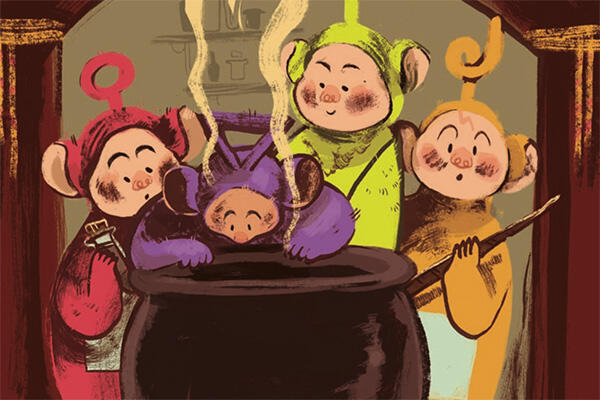
FFIC101: An Introduction to the Horrors of Fanfiction
Fans show their love and loyalty to their fandom in a myriad of ways. Some purchase merchandise, some learn every fact there is to know, some dedicate their spare time to developing intricate cosplay, some people do all this and more. And some people write fanfiction. This article is probably NSFW (not safe for work) by the way, as we give you a rundown of the top fanfiction available at a computer near you. Everyone has encountered fanfiction at some point. Fifty Shades is a good place to start. Author, E.L. James, originally wrote the bestselling novel, which features erotica and manipulation, as fanfiction of another bestseller, Twilight. This should come as no surprise considering the nature of Bella and Edward’s relationship. It was originally titled Master of the Universe and was posted on fanfiction sites under her penname, Snowqueen’s Icedragon. All fanfiction is purely wish fulfillment and it’s often erotic. Not always, but often. I’d suggest you don’t look too deeply into the My Little Pony fandom; there’s a darkness there impossible to come back from. SlashSlash fiction is as good a place to start as any. This is where a fanfiction writer will take two characters of the same gender from a series and create a romantic and, more commonly, a sexual relationship between the two of them. A fandom notorious for this is Supernatural. A lot of fans ship two of the male leads, Dean and Castiel (the pairing is known as Destiel). Another Supernatural fandom favourite is known as Wincest. As in, “Win” for Winchester brothers and “incest” for, well, I’m sure you get it. There are a lot of people who attempt to justify this relationship, explaining that the brothers go through a lot of trauma and intense experiences together, have saved each other’s lives countless times and share a deep love, understanding and connection with each other. Obviously, they would end up together romantically, rather than simply sharing a co-dependent, deep, non-sexual but none-the-less unhealthy brotherly bond as depicted in the show. The majority of slash is male/male, but there is a sub-category called femslash. I would give examples from Supernatural as well, but as there are practically no significant female characters in the show, there’s really no point. Cross-FandomHere writers bring two fandoms together to create some sort of terrifying mashup. One of the more bizarre fanfiction pieces places Sherlock and Watson as love interests … plus they had Pokémon. That’s it. There’s also a fanfiction about Harry and Draco moving to Forks (yes, Twilight Forks) and developing romantic relationships with Edward and Jacob. Also Draco inexplicably gets pregnant to Jacob, because why not? “‘No,’ Draco snapped. ‘No you don’t! My father can barely stand to look at me, Jacob’s on the other side of the country and I don’t even know what I feel for this — this baby growing inside of me!’” Believe me, I’m as confused as you are. The next two examples also involve slash. Most fanfiction isn’t limited to one trope, and often they bleed into each other and intertwine into a scary mess of a story. ComedyBecause it’s so easy to make fun of, there’s a lot of comedic fanfiction. This is what makes a lot of horrible fanfiction bearable to read. It’s comforting to think, “Nah, they didn’t write this seriously. It’s meant to be ridiculous and shocking. This is hilarious.” For an example of pure satire, read ‘A House Elf’s Needs’ by Chaos-chick. It’s a fanfiction featuring Dobby convincing Hagrid to have sex with him. It features lines such as “Dobby stretches, sir!” and “Harry Potter was not big enough to fulfil Dobby’s needs!” For a more extreme story, there’s another untitled masterpiece. The plot goes something like this: Snape is sad and stressed at Hogwarts. To help him relax, Dumbledore sends him to the “Tubbydome” (yes, this is Harry Potter/Teletubbies cross-fandom fanfiction). Snape teaches the Teletubbies how to make potions, but they resist, begging him to teach them “how to adult”. After their sexual awakening, they try to escape the Tubbydome through a Shawshank-esque tunnel the Teletubbies have created. Eventually they come across Dumbledore who yells, “You shall not pass” and reveals that the Teletubbies are Deatheaters and must be killed. This is where the fanfiction ends. Quality stuff. Mary SueOne of the most infamous and well-known fanfiction examples of a Mary Sue is My Immortal. Mary Sue fanfiction is where the main character is simple and idealised, with little personality (think Bella Swan from Twilight). Furthermore, Mary Sue characters are often a self-insert into the story (some people would argue, still think Bella Swan from Twilight). My Immortal is infamous because it is so poorly written, with a glaringly obvious Mary Sue self-insert into Harry Potter. This particular fanfiction centres on Ebony (often Enoby due to atrocious spelling) Dark’ness Dementia Raven Way who is a “totally goffik teenager”. No explanation can give this fanfiction justice, so here’s an excerpt: “But den Draco looked at me sadly with his evil goffik red eyes dat looked so depressant and sexy. He lookd exactly like a pentragram (lol geddit koz im a satanist) between Kurt Cobain and Gerard. But then I looked at Vampire and he looked so smexy too wif his goffik black hair. I thought of da time when we screwed and the time I did it with Draco and Dumblydore came and the tame where Draco almost commited suicide and Vampire wuz so sportive.” Vampire would be Harry Potter. Because she’s so “goffik” and renaming people things like “Vampire” is definitely awesome. There are even YouTube adaptations of this particular fanfiction because of how notoriously bad it is. SmutA lot of fanfiction features uncomfortable and downright bizarre sex scenes. In the past, when people wrote about their weird creepy sexy fetishes, it generally wasn’t published anywhere (save for James Joyce’s stuff; seriously, read the letters he wrote to his wife). Now we have the wonderful invention of the Internet, where any person can post whatever they want on the many, many sites catering to bad writing. A comedy website, thetoplessrobot, hosts a weekly fanfiction Friday section where they find disturbing fanfictions and comically annotate them for the twisted entertainment of readers. On this site’s top ten “Most Facemeltingly Awful Fanfictions Ever”, Reticfied Anonimity by David Garrett resides in first place. And it really deserves to be there. It’s a Pokemon fanfiction, and it is very disturbing. It features Gardevoir. Pokemon fans, you know where this one’s going. The problematic relationship in Fifty Shades is making more and more sense … This is what so much fanfiction is made of. Combining people’s creepy sexual fetishes with the freedom of writing and the ability to publish anything on the Internet. Imagine …There’s this whole other subset of fanfiction that predominantly lives on Tumblr. Imagines are found by simply searching Tumblr with the word “imagine”. It isn’t normally detailed fanfiction in the sense of fully fledged stories, but rather sentence-long scenarios. These imagines feature pretty little quotes like, “Imagine Dean (from Supernatural) looking at you like you’re the most beautiful girl in the world after you get married” or “Imagine Draco breaking up with you to protect you from Voldemort.” Some of these imagines are more sexual and creepy than others: “Imagine Stiles walking in on you giving Scott a blowjob.” There are some plain bizarre scenarios as well: “Imagine cursing out loud and Legolas not knowing how to handle it because he’s never heard English curse words.” Fanfiction about Real People (Namely Boy Bands) Fanfiction is not limited to fictional fandoms. People will also write fanfiction about real people. The most worrying part is that they’re not just defiling a fictional character, they’re actually writing this stuff about real people who are able to read what they’ve written. The most common victims of this form of fanfiction are members of boy bands like One Direction and 5 Seconds of Summer. A lot of the fanfiction about these boys is pretty tame, and is often an extended version of the imagine trend: “Imagine living next door to Luke Hemmings (from 5 Seconds of Summer) and every Friday night you hear him and his band rehearse in his garage because the music is so loud, you can hear it through your bedroom walls.” There’s also fanfiction that depicts the reader in a romantic relationship with the chosen celebrity. Most of this is focused on Harry Styles of One Direction. These stories are often written in second-person voice. It’s another extension of the Mary Sue category, but far more direct. A fanfiction titled “He Is My Sun” depicts “you” waking up next to Harry, remembering that “you’re” engaged to him, then proceeding to have sex, written in the least erotic way possible: “Just seconds after you came, Harry let go himself. He hid his face in your neck and grunted loudly as he let go. He moaned your name before he collapsed onto your chest and sighed.” It doesn’t stop there, though. It never stops there. Because there has to be a fanfiction titled “This Time Around” about Harry being pregnant to another One Direction member, Louis. It depicts the two of them married with a two-year-old daughter, Cree, who refers to Harry as “Mummy”. After putting their daughter to bed, they have pregnant sex. Louis, uh, sexily telling Harry how much he loves him pregnant: “‘perfectly round with my babies.’ Each word is punctuated with a thrust, Louis’ cock touching places deep inside Harry that have him seeing stars. Harry can barely catch his breath, Louis gliding past his prostate and slamming into his sensitive cervix.” Anatomy seems to have gone out the window. That’s good because by the end of the story Harry gives birth and starts breast-feeding his new daughter. I’m done. While it seems predominantly an Internet-based phenomenon, fanfiction was around for a long time before that. It exploded in the 1960s, when Star Trek came out. Fans of the show started writing fanfiction as an attempt to fill in all the holes left by the writers, developing and extending the characters and universe further. Cassandra Clare, who wrote The Mortal Instruments series (a movie adaptation, which was awful, was recently made), started off writing fanfiction where she shipped Draco and Ginny together, which is pretty obvious when you look at the two main characters of The Mortal Instruments. An assertive and incredibly ginger leading lady named Clary is totally in love with a pale, snooty, blond-haired male named Jace. While her writing isn’t necessarily literary genius, it’s still great fun to read as far as fantasy novels about angst-filled supernatural teens go. Outside published fanfiction, you can find almost anything on Tumblr and fanfiction.net. A lot of people write fanfiction about Harry Potter, probably because it’s such a detailed universe. There’s fanfiction that focuses on Neville, Luna and Draco, among many others. There’s even stuff that goes back to explore the earlier generation, so James and Lilly Potter, Sirius, Remus and Tonks. Even the show How I Met your Mother wasn’t safe from being rewritten. Fans, unhappy with the awful finale, re-cut, re-wrote, speculated and edited alternate endings to make it more satisfying. Even the show runners made their own alternate ending, which was put on the DVD release. Fanfiction has the capacity to be great. Budding writers can continue to explore beloved worlds and characters. It gives fans a chance to connect over a common interest and make lasting friendships based on mutual love of a fandom. It allows people to redefine characters as gay, trans, non-white and non-cisgendered. Essentially, it can allow for much better representation and exploration of complex characters that writers often neglect. However, this article is not here to showcase the merits of fanfiction. It’s here to explain that while fanfiction has the capacity to be fun and great, it also has the capacity to be fucking terrifying. As with everything else on the Internet — there’s always a dark, scary side to it.
-
Culture
Issue 27 12/10/2014
Faeries
Faeries is my all-time favourite book. it’s not your normal novel in any sense of the word – it’s definitely fiction, but it’s also kind of an art book. Froud is probably most known throughout the world for this book in particular. But many of you may recognise his work from The Labyrinth (yeah, that one movie mainly featuring David Bowie’s crotch in the 1980s). Froud designed all the costuming and creatures and goblins for it. He’s a creative genius and an amazingly talented artist with a greatly imaginative mind. First, the most appealing and attractive thing about Froud’s work is his fantastical art. His paintings and illustrations, which make up about 50 per cent of the book, are absolutely stunning. He manages to combine creepy, goofy, realistic and cartoony all in the same book without it seeming tacky – he takes it all in his stride. He illustrates all of his writing himself and the art is amazing. Froud uses acrylic, watercolour, pencil sketches, ink – anything you can think of, really – and it’s all used with great skill. The art is clever and interesting. I mean, it’s not particularly high art and I wouldn’t argue that he says anything deep or meaningful with his works, but it’s certainly great to look at and get lost in. It’s kind of aimed at children, but also kind of not. There are a few naked faeries featured. Actually, I remember a strictly religious family member came over once, saw this book on my parents’ coffee table, and proceeded to scold them over giving me pornography. But, really, it’s very innocent and it’s not like anything is spread eagle and staring you down. Just the occasional tit, bum or a squiggly-looking penis. The part that I am mostly obsessed with is the writing. As a fairy-tale and folklore addict, his collection of traditional folklore around faeries is my idea of heaven. The book covers everything from describing the faerie realm and courts to creatures such as pixies, hags and goblins. In a sense the book acts like a fictional encyclopaedia of faeries – but all the information is pulled together from a history of faerie tales and folklore and not just made up. Froud references a plethora of other writers and artists, including the likes of Shakespeare and Walter Scott. Part of his writing is expressed through big, scrawling, messy handwriting that really helps aid in the image of Froud as a friendly grandparent informing his grandchildren of the magical world that really does, honest-to-god, exist hidden from us. (What I would give for Faeries to be real ... ) Furthermore, it kind of adds to the idea of this actually being some comprehensive collection of field notes that Froud has gathered to educate us with. He tells you in the introduction that faeries will either “accept you as part of their world, or they won’t” – he explains that “sometimes no amount of mooning around in misty forest glades or communing with nature at the bottom of the garden ... will bring about anything other than a general sense of damp.” Froud’s tone is delightful and entertaining – he’s begging you to believe in this world, but not so much so that you think he actually believes in it himself. It’s wonderful. Overall, this book is light and easily read (although it’s physically massive – A4 and about an inch thick). This is the kind of book that you pick up if a) you’re a big nerd like me and like reading about fantasy and folklore, or b) you really want to see some gorgeous drawings. Let’s just be honest here: I’m a Froud fan-girl and I’m trying to convert you.
-
Features
 Issue 24 21/09/2014
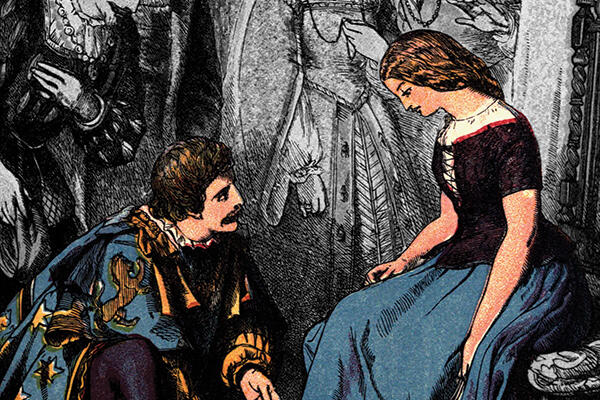
Original and dark fairy tales
Fairy tales, we have all been exposed to them. Whether it was a toned down Disney adaptation, a dramatic retelling like Maleficent, or even a book collection from our childhood, we’ve all experienced fairy tales at some point in our lives. They inform our understanding of right and wrong as children, and develop a sense of consequences due to actions. They’re wonderful, influential things. Fantasy favourites like Harry Potter, Narnia and even Lord of the Rings were all in some way influenced and inspired by the structures and tales developed within folklore. These tales have had a significant impact on the way we relate to and understand the world. As a matter of fact, a lot of the fairy tales that we know and love started off quite differently from their sanitised modern counterparts. More often than not they are gruesome and dark, with violent and cannibalistic themes to boot. Charles Perrault seems to be one of the earliest writers of fairy tales. The Frenchman set the foundations for fairy tales as a genre, and wrote mostly in the late 1600s. He wrote some of the earliest versions of Little Red Riding Hood and Cinderella. In the early 1800s, The Brothers Grimm, who were particularly interested in German folklore, began to collect and record as much of the oral tradition of that folklore as possible. They’re often the go to guys when it comes to fairy tales and down some of the first versions of Snow White and Hansel and Gretel. Another figurehead in folklore is Hans Christian Anderson. Instead of being a collector like the aforementioned brothers, he was a writer of fairy tales. He wrote the original versions of The Little Mermaid and The Snow Queen (which Disney’s recent Frozen was based on). Mainly I am going to be drawing from these writers for the “original” story but it’s important to keep in mind that a lot of these tales were inspired by a wider oral tradition, and a lot of them date back much further – so it’s hard to have a definitive “original.” Personally, I have something of an obsession when it comes to fairy tales and folklore. It felt so good to actually have a legitimate reason to blow the dust off my old fairy tale collections, sit down and just read through them again. Yes, I have a whole shelf dedicated to these kinds of books. Snow WhiteSo, the Grimm Brothers version of this seemed fairly familiar. Evil and vain Queen, jealous of her step daughter’s superior beauty, orders a huntsman to kill her. However, at this point in the story Snow White is only seven. Oh, and unlike in the Disney film where the huntsman is ordered to bring Snow White’s heart back to the Queen as proof of her death, he is instead ordered to bring back her liver and lungs for the Queen to eat. Oh yay, cannibalism of a small child (depressingly enough this theme of eating people will turn up in more than one story.) This is my favourite type of uplifting fairy story. He gives her the lungs and liver of a boar instead and the Queen merrily eats these assuming that she’s eating her husband’s child. Great. Moving on … After finding out where Snow White is staying, the Queen attempts to first suffocate her with an extremely tight bodice, then a poison comb until finally she tricks her into eating the famous poisoned apple. The apple gets caught in her throat and she is put into a state of suspended animation. The dwarves, assuming that she was dead, place her in a glass coffin. Again, this all seems so familiar and innocent, until the prince shows up. He sees this supposedly dead seven-year-old, falls in love with her, and convinces the dwarves to let him take the coffin with him. Okay, so I am not 100 per cent sure what’s going on here, but does that sound a little like necrophilia to you? Not to mention the creepy fact that she’s so young as well? Someone trips, the coffin falls, the apple is dislodged from her throat and Snow White comes back to life. The prince marries her and now she’s Queen. This is where the Disney film ends – however, there is actually a little more to the story than that. Snow White invites her evil stepmother to her wedding. She arrives, unaware of who this new queen is, and is shocked to find Snow White upon the throne. It is at this point that the Queen is forced to dance in a pair of glowing, red-hot, iron shoes until she dies. Snow’s just a tad vengeful, isn’t she? CinderellaThis is probably one of the most famous fairy tales of all time. There have been so many retellings and versions written over the years, and I don’t think I have ever met anyone who doesn’t know the basic outline of this this tale. Both Perrault and the Brothers Grimm wrote a version of this tale but I’m going to focus on the Brothers Grimm’s version, just because it’s more messed up and therefore more interesting. Obviously. Mostly it follows the same story line: Cinderella is abused by her stepmother and sisters and is treated as a slave. In the Grimm version there is no fairy godmother – she instead received her dress and famous slippers from some heavenly doves. She goes to the ball, dances with the prince, he falls in love, but she runs away by midnight. She returns the following night, dances the night away with him then runs away by midnight once again. On the third night the prince puts pitch (a sticky substance) all over the stairs and when Cinderella inevitably runs away, she loses a shoe that the prince can use to identify her. Oh, flawless plan! Once he gets to Cinderella’s home, her stepsisters both try the shoe. The first one cuts off her toes so her foot will fit. The prince is fooled and leaves, feeling he has found his queen. However, the mysterious doves reveal her treachery. He returns and tries the other sister, who cuts off her heel to fit the shoe. Once again, he is fooled and, again, the doves reveal the trick (I honestly don’t understand how he isn’t noticing the blood everywhere but, okay, let’s roll with it – however that slipper must be pretty disgusting and bloody by this point). He returns one more time, Cinderella fits the slipper, everything is lovely and they get married. Cinderella chooses to have her stepsisters as her bridesmaids at the wedding, for whatever reason. As they are entering the church the doves come down upon them and peck out one of the eyes of each sister. After this, we assume the wedding proceeds – there’s no mention of it being haltered or anything due to the Cinderella’s stepsisters now bleeding out from the eyes … Anyway, as they’re leaving the doves come down once again and strike out the remaining eyes of the two women. This is their ultimate punishment for being terrible people – they’re now to be blind for the rest of their lives. I am starting to struggle to believe in the whole Snow White and Cinderella are such lovely people thing. Both of these women seem pretty vengeful and uncaring. I mean (a) I wouldn’t choose to have people who tortured me my whole life as my bridesmaids at a wedding and (b) I definitely wouldn’t proceed with the wedding as though everything was perfectly fine and normal if some doves had stabbed their eyes out. I don’t know. Maybe that’s just me. Sleeping BeautyThis is another tale that both Perrault and the Brothers Grimm wrote a version of. Perrault’s version came in two parts but later versions often separated the two parts into two individual stories. The first part covers the well-known plot, where you have a princess that has been cursed to sleep 100 years in a castle, along with all her family and subjects, until a prince comes along, wakes her with a kiss, they marry. However part two covers something totally new to me. The prince doesn’t take his princess home with him right away; rather he waits until he is king before doing that. So by the time she joins him at his castle, they have already had two children. The king goes off to fight a war, and Sleeping Beauty and her children are left alone with their mother-in-law, the Queen. The Queen has some ogre blood in her. For some reason unexplained, he sends Sleeping Beauty and her children off into a cabin, and orders her cook to kill and serve her the youngest of her grandchildren, covering it with Robert Sauce. The cook, of course, doesn’t and feeds her lamb instead. She then requests the second child and, again, he fools her but with a goat this time. Lastly she requests the princess, but is instead satisfied with a hind – all meals prepared with the same sauce. Okay so this theme of cannibalism has popped up again – what is it with all these insane mothers? I don’t understand why she thinks that it’s okay to just eat her son’s wife and children, but whatever. Eventually she finds out that she has been tricked and decides to create a pit in the courtyard filled with vipers and other poisonous type creatures in another attempt to seal the demise of her grandchildren and daughter-in-law. However, the king returns home just in time. Once the Queen is found out she throws herself into the pit and is fully consumed. The story concludes and everyone lives happily ever after. What? I mean, yeah, what? It all just seems so strange, there appears to be no reason for the mother to eat them other than her being an ogre. She obviously knows that it’s wrong because otherwise she wouldn’t kill herself over it. If she had such a strong appetite for people maybe she could have eaten some peasants or something rather than her own family? At least the evil Queen in Snow White had a motivating force – she wanted to be the fairest of them all and Snow White was standing in her way, that little fiend! I think I understand why that section was missing in the Disney adaptation. The Little MermaidOut of all the fairy tales I looked at, The Little Mermaid is the one that differs the most from the versions I’ve seen or read – especially the Disney adaptation. The basic concept is the same, but it’s much more depressing. The Little Mermaid lives in the ocean with her father, the Mer-King, her Grandmother and her five sisters. On her 15th birthday she is finally allowed to go to the surface of the water to see the rest of the world. On her first time appearing she sees a prince and instantly falls in love with him. He is caught up in a shipwreck and she saves him, taking him to shore then waiting until a young woman comes to help him. The Little Mermaid learns from her grandmother that while mermaids have a life span of 300 years, much longer than humans, they do not have an immortal soul and merely turn into sea foam upon death. However, one way to gain an immortal soul is to have a human man fall so deeply in love with her and marry her so that they essentially become one – his soul shared with hers. The Little Mermaid decides that this is what she wants, and visits a Sea Witch (cue Ursula singing “Poor Unfortunate Souls” here.) The witch gives her a potion that will give her legs in exchange for her beautiful voice. The Mermaid will be the most beautiful creature, she will have the ability to dance better than any other person and she will have her beautiful sparkling eyes to entrap the prince. However, the process of shifting is incredibly painful, and with every step she takes it will feel like her feet are being cut open with knives and she will never be able to sing or talk to him. Furthermore, she can never return to the ocean and if she cannot convince the prince to marry her, on the morning after his wedding her heart will break and she will die, turning to sea foam, without an immortal soul and unable to live out her normal 300-year mermaid life. Obviously, The Little Mermaid agrees to these conditions, seeing as the odds are so very clearly in her favour. She gets her legs, the price finds her and he even likes her so much that he lets her sleep on a velvet cushion outside of his room. Lucky girl. She dances for him even though it causes her excruciating pain, but all of her efforts are in vain as, alas, the price has fallen in love with the woman who he met after his ship wreck. He does not marry The Little Mermaid, so she is condemned to die. Her sisters strike up their own deal with the witch so that if the Little Mermaid stabs and kills him before morning, she can return to the ocean. She cannot bring herself to do it, and thus dies, returning to sea foam. However there is hope. Because she struggled so much to gain her immortal soul, instead of dying she is elevated to join the sisters of the air. Her task is to now help and support human kind, bringing cool winds to tropical lands and bring healing in her wake, with all the other air sisters, and maybe at the end of 300 years she will be able to gain an immortal soul. Yay! All she has is 300 years of serving and supporting human kind in order to gain a soul. What a lucky girl. While this story is not necessarily gruesome and dark, it’s definitely depressing and so incredibly different from the versions I have previously encountered. Poor Little Mermaid: all she really wanted was to be loved and to go to heaven. While I’ve only covered four stories here (I tried to pick ones that everyone would be familiar with), there are a plethora of these tales out in the world, each just as messed up as the last. These stories are aimed at children but they seem filled with the kind of themes we would attempt to shelter children from: cannibalism; death; violence; horror; and more cannibalism. Tim Burton stated that the old Disney films often had themes of “death and horror all the time. Children need that, I believe. It’s how they understand the world.” While Burton is talking about Disney specifically, I think the sentiment applies to all folklore. The world is filled with injustice, and children view it as a very black and white thing. The bad guy has to get their comeuppance, otherwise it’s just not fair.
-
Features
 Issue 19 10/08/2014
Bizarre cultural practices and local traditions
You know how everyone has those little bits of useless trivia that they like to pull out at any given opportunity? Well, this is probably going to be a list of those types of facts – random bits of bizarre information about the rest of the world that we would find strange; an amalgamation of odd cultural practices and festivals. A lot of these things only seem bizarre to us because we’re from another culture and setting. Everything is relative, and all that. But still, it’s interesting to look at other cultures and note the contrast with our own – considering what is acceptable here and what is or isn’t there. My father has always loved telling these kinds of stories. He’s always sharing random bits of information and telling it in this funny or ridiculous way – and he’s really good at it. I think he’s where I get my desire to be a writer from and why I collect random bits of trivia – I want to be as good a storyteller as he is. He’s definitely where I got my inspiration for this list of bizarre things. On that note, I am going to kick off this thing off with something weird I learned from him ... 1. Mucus Sucking My parents’ friends lived in the Solomon Islands and they assure us that it is common practice to help a child with a running nose by the adult putting their mouth over the child’s nose and sucking all the mucus out for them. I mean, I guess it is practical. In theory it unblocks the nasal passages. Actually in the western world we do have devices you can use to suck the mucus out, but – you know – it never goes into your mouth. What really gets me the most about this method, though, is that you do it to any child you come across. Like, not just your own kid. If you see a kid with a runny nose it’s perfectly acceptable to go up to them and suck all the mucus out for them. Upon Googling this information I found that it happens all over the world in all sort of different cultures, including New Zealand. 2. El Colacho (also known as Baby Jumping) This strange festival belongs to the Spanish and dates back to 1620. Basically the idea is that annually men dressed up as the devil jump over babies that were born in the last 12 months. While the origins of this festival are unclear, the practice seems to be connected with Catholicism – specifically, the practice is meant to cleanse the babies of original sin. Pope Benedict attempted to distance the Catholic Church from this idea however. Apparently the idea of “cleansing” one of original sin through flying devil-men is theologically problematic. Who knew? 3. Yanomami Death Rites The yanomami tribe located in the Amazon have incredibly interesting death rites. To this tribe the soul is of incredibly high religious importance. They believe that the soul of a person requires protection after they have died. There is also the belief that a soul could enter another life form, which is why the tribe refrains from eating or killing certain types of birds which are viewed as possible hosts for the souls of the dead. However, the strangest part of their rituals is that once a person dies, they cremate the body and then the dead person’s relatives eat the ash – so that their soul may live on with the rest of the family. They cook up bananas and then combine it with the ash and bones of the deceased before the whole family gathers to consume the mush. In this process, the soul of the tribe member is absorbed by the others and is free to move on to salvation. Without this process, they believe that the soul would be trapped in the world between life and death. 4. Goose Pulling Goose pulling is a blood sport that was practiced in the Netherlands, Belgium, England and North America. It involved tying a live goose to a cable or pole by its feet, and various men would try to pull its head off – which, of course, would eventually happen. What an absolutely terrible and pointlessly harmful tradition. Don’t stress about this too much, though – it’s only practiced in the Netherlands and Belgium now – and the goose has to be dead first. In Belgium, the winner of the competition is made king of goose pulling for the next year. And at the end of his reign he has to throw a big feast for his subjects! Kings can also battle each other to become emperors, and there’s a children’s tournament as well. 5. Frozen Dead Guy Days This festival is as weird as the name suggests. It’s a festival held in the town Nederland, Colorado, which celebrates the 1994 discovery of Bredo Morstel – a cryonic state corpse. A woman named Aud was keeping her father’s corpse cryogenically frozen in a shack out the back of her house. After a year she was evicted from her home due to her house having no electricity or plumbing. She informed people of her frozen father in concern that the body would thaw out. So the town reacted by continuing to have him frozen and making a festival of it. Obviously. How else are you supposed to react? The festival goes over the first weekend of March and consists of, among many other things, coffin races, a slow motion parade and even frozen dead guy lookalike contests! 6. Moose Dopping Festival The people of Talkeetna, Alaska have a weird moose-poop festival. The festival itself was created more or less to attract tourists in 1972 – and was inspired by how other states have animal themed festivals. They got moose droppings, cooked ‘em in the oven and sprayed ‘em with varnish in order to use ‘em for nugget tossing. Yes. This honestly was the best thing they could come up with. Another activity involves dropping numbered nuggets from a balloon into a parking lot as a type of raffle contest. Whichever lands closest to the centre of the lot wins. What’s the prize? I don’t know, more poop? Probably more poop. 7. Entroida This is the kind of festival that I would very much like to avoid attending. Held in Laza, Spain, this festival occurs on the three Fridays before Lent and the four days leading up to Ash Wednesday. One of the activities involves drunken people running through the streets with torches (sounds familiar, am I right? Yeah, I’m looking at you, drunken scarfies) while people not participating in the running throw dirt at them from their windows. On the official days of Entroida, Peliqueiros (scary ass masked men) line the streets and whip passers-by. When they get hungry or thirsty from this they will just go into the homes of citizens and eat or drink whatever they want. For the grand finale, the people of Laza all meet up for a big fight in the town square where they throw rags filled with dirt, mud, vinegar, ash and fire ants at each other. Doesn’t it sound like so much fun? 8. Cheese Rolling Even england has its own weird little inane traditions! There is a cheese rolling festival held annually at Cooper’s Hill near Gloucester in England. Traditionally, the festival was for the people of the local village Brockworth, but now people from all over the world partake. It involves nine-pound, round Double Gloucester cheese being rolled down the hill on which the festival is held. Then people throw themselves down the hill after it trying to catch it – which is practically impossible seeing as the cheese has a one second head start and reaches speeds up to 112km/h. So it’s really whoever gets to the bottom first who wins. As would seem obvious, people often injure themselves as they frantically roll after the cheese. This is why there are several ambulances waiting at the bottom of the hill and a volunteer group on hand to help out any injured people. Often, people actually need hospital treatment. Totally worth winning the cheese, though, right? 9. Bullet Ants Coming of Age Ritual Rites of passage rituals come in all shapes and sizes. Specifically, for the Satere-Mawe tribe in Brazil, becoming an adult involves putting your hands into gloves filled with bullet ants for 11 full hours. Just to explain fully: bullet ants (also known as Paraponera) get a one on the Schmidt Sting Pain index – which is the highest rating you can get. They’re named after the fact that being stung by one is comparable to being shot with bullets. I don’t know about you, but the prospect of having to stick my hand into the ultimate pain glove in order to become an adult terrifies me. I’m all right with the good old New Zealand tradition of drinking copious amounts of alcohol until I’m sick instead. 10. Fiesta de Santa Marta de Ribarteme As Neves - a part of Galicia, Spain - is home to a strange festival/annual pilgrimage. On 29 July every year, people who have had a near death experience make a pilgrimage to the Santa Marta de Ribarteme church – the patron saint of resurrection. The people who have gone through the near death experience are made obvious by the fact that they are in coffins, carried by their families and loved ones up to the church. However, if you don’t have anyone to carry you – you just drag your own coffin along with you. After mass, the pilgrims make their way to the cemetery before making their way through town. During all of this solemn appreciation of life, there are fireworks being set off, people selling food and music being played by gypsies. I feel like this would be an amazing, if not a little unsettling, event to witness. 11. Self-Mummification The Sokishinbutsu were Buddhist monks who would starve themselves to death, and in such a way that their bodies would mummify. This was something that happened in Japan well into the late 1800’s. The process would take 2000 days to prepare the body. For the first 1000 days they would eat nothing other than nuts and seeds in order to remove all the fat from their bodies. The step following this is to eliminate as much moisture as possible, so for the following 1000 days they would eat only a small amount of bark and drink a highly poisonous tea – which would cause diarrhoea and vomiting. After this, the monk would be sealed inside a small concrete room where they could wait to die. Yay! The reason this was practiced is because it was believed that if you were able to fully separate yourself from the physical world, when you died you would be able to become one with the world, rather than being reincarnated into it. Another 1000 days after the person was sealed away, people would come to check on the body to see if they had mummified. A lot of the time they hadn’t, surprisingly enough. However, when it did, the monk was considered to have reached nirvana. 12. Night of the Radishes This vegetable festival, first celebrated in 1897, is celebrated on 23 December annually. It is held in the main plaza of Oaxaca in Mexico. Despite the festival only last a couple of hours, it still attracts thousands of people to this area each year. Mexican craftsmen carve giant root vegetables into figures (usually people-shaped) as part of a larger competition. Even though the core part of the festival only lasts a few hours, the festivities continue over Christmas Eve and part of Christmas day. There are float parades, fireworks and street dances. All because of cute little people carved out of giant radishes. How adorable! 13. Tunarama Oh, Australia. Of course your bizarre festival was going to be called Tunarama. This is a festival that started in 1962 and celebrates the Tuna industry. It is funded entirely by donations and sponsorship and is the largest free festival in South Australia. The festival is most famous for the Tuna Toss, where people literally just toss tuna fish. People watching men toss tuna up onto trucks from boats inspired this activity. To be fair, this would take a lot of strength and skill – I don’t think I could toss any fish, let alone a Tuna. This is very much a family friendly fun event with things like watermelon eating contests and three legged races. Speaking of family friendly, or not ... 14. Kanamara Matsuri This festival really isn’t something you would want to take your kids to. Kanamara Matsuri (Festival of the Steel Phallus) is a Japanese event that celebrates the, you guessed it, and is centred round the epony- mous metal penis shrine. Prostitutes pray to it for protection from STDs, it is said to bring pros- perity to business, an easy labour, marriage and harmony within a married relationship. There is a legend associated with the festival: it involves a woman with a vagina dentata (a demon with sharp teeth lived in her vagina) who castrated two young men on their wedding nights. In the end, the young woman went to a black smith and requested a steel phallus that was used to break the demon’s teeth (?!) At this festival you will find penis art, penis statues, penis candles, penis shaped food – penis everything. These days it’s more a fertility festival and is more or less a tourist event, but the money raised is put towards HIV research – which is totally awesome! Now, go forth and impart all of this useless and slightly concerning information on unsuspecting friends and family at various social gatherings.
-
Features
 Issue 15 13/07/2014
Picking up strange vibrations
It was in my first year at Otago when I first discovered the hilarity of looking at strange sex toys. I was innocently perusing the pages of Tumblr, with my flatmate at my side, when I came across a page called “Weird Ass Sex Toys.” I sheepishly turned to my flatmate and questioned whether I should click the possibly traumatic link. Upon gaining his approval, we dove into a world of comedy gold. We sat in the lounge continually clicking the “wander back” button at the bottom of the page, unfolding more and more horrors (or treasures). Since that fateful day, I have often found myself turning to articles about sex toys for a good laugh. After hours of scouring through seedy websites and terrifying blogs, I bring to you a list of the strangest sex toys I could find. And I promise you: all of these exist. I made absolutely sure of it. “Teletubbie sex doll” is now forever in my Google search history (I probably should have used private browsing). I had to be 100 per cent positive it truly existed in the world (it doesn’t, thankfully). For your pleasure – or disgust – here are my findings. Pleasure Pimp Finger Vibe The Pleasure Pimp Finger Vibe is a small vibrator that, for whatever reason, is shaped like a seventies-esque demon pimp with light-up eyes. I don’t quite know why he exists, but I definitely don’t trust him. You can buy him f rom Amazon for $4.87, which is ridiculously cheap as far as vibrators go and makes it seem so much more suspect. Is someone mass-producing this guy? Are there millions of Pleasure Pimp Finger Vibes out in the world? What I find even more disconcerting is that the only description provided for the product is as follows: “A super ‘Power Pimp’ motor promotes ultra powerful vibrating pleasure for ultimate pleasure.” That’s all there is. Is a “Power Pimp” motor really something I want to put near my genitals? Bad Vibes On the tamer side is the Bad Vibes vibrator called “Ever-Ready Freddy.” Although it functions as a normal vibrator, it takes it to the next level. He (the vibrator) talks to you. And not even sexy talk (although, each to her own) – Freddy abuses you. He throws out phrases like, “Hell, can’t you get a real man?” and “Go away, I’ve got a headache.” Coupled with the terrifying face someone decided would be a good idea to put on him, Freddy is disturbing but, of course, hilarious. Here’s a fun quote from the product description: “Usually, he’s your friendly, faithful, servant, ready to do your bidding, but sometimes he is just plain grumpy.” I can actually confirm his existence, as I have seen him in Peaches And Cream. I probably really pissed off the attendants working while making the vibrator yell at me and cackling hysterically in response. Sexercise Ball This one is fairly self-explanatory. It’s an exercise ball with a vibrator attachment. What really gets me about this one is the idea of actually using it. I don’t know if you would really want to put your full weight down on the vibrator. One of the funniest things about this product is the description of it. The website Sexfurniture explains that when the Sexercise Ball is “being stored it’ll look for all its life like a plain and simple pilates ball … except you’ll know it’s not!” It’s like the ball is your dirty little secret (despite the fact that positional diagrams are clearly depicted on it). Hell, your friend could pick it up and play with it being none the wiser that it’s your special alone time ball. The site promises it will “have you bumping and grinding your way to ecstasy time and time again!” So it has that going for it, I guess. Belladonna’s Extreme Pussy & Ass I don’t know how to start here. This item is exactly what it sounds like. It is apparently an exact model of pornstar Belladonna’s vagina and asshole. Yup. That’s about all there is to it. It turns out that this whole “replica of pornstars’ vaginas” is a fairly common thing that happens in the sex toy world. Instead of being your usual fleshlight toy, though, this has her butt cheeks with Belladonna’s disembodied hands stretching open her bits for … what, better access? It kind of looks like the fingers would actually get in the way instead of being any help. Maybe they’re squishy fingers. Another fun quote from the product description: “Oh Bella! We love your gaping holes that you hold open for us!” My First Pregnant Latina Pussy This chicken shaped pregnant torso is actually one of the most weirdly specific toys I have come across. Not only is it your first pussy, not just a Latina pussy, but a pregnant Latina pussy. Why is it specifically Latina? There is a “My First Pregnant Pussy,” but the race isn’t specified. So I guess white is the default and Latina is the exception? Racial profiling – even within sex toys. That’s depressing. I find this one pretty creepy; it already looks like a chicken, but when I actually think about it, it’s a disembodied vagina, pregnant belly and breasts. Who wants limbs? They get in the way of your sexy fun. Faces? Gross. This product gives you the essentials – and (apparently) that’s all you really need. Want a depressing quote from the website? Amazon tells me that this product is “better than real skin.” Yeah, I think they know their target audience. Scary, lonely people. Pussy Hood with Anus The website Latexzentrale informs me that “this new hood will really give you a bizarre look.” This is probably one of the more honest descriptions I’ve come across. It doesn’t describe all the fantastic ways that the hood will improve your sex life or masturbation times, it just tells you that you will look weird. And that’s exactly what it does. Well done. By the way, the vagina over the nose is only there as decoration. I am explaining in case you were trying to figure out the logistics of how it was used. From what I can gather, you now have a wonderful view of a totally real looking vagina while you screw the anus/mouth. Classy. Barack Blow Up Doll Because there isn’t anything sexier than a plastic blow up doll of the American president. I am 90 per cent sure that this is mainly for comical use only, especially with quotes like “He’ll Batter Your Bush” and “Visit his Oval Orifice” plastered all over the packaging. Even the reviewers were getting in on the comedy action. “Tuna Enthusiast” left a review titled “better than the last doll,” which complained about how they had to deal with a terrible doll for eight years before they finally got around to getting their own personal Obama doll. The main criticism was that it wasn’t “symmetrical … it stimulates the right, but leaves the left side wanting more.” Dylan the Dolphin Zeta Paws is a sex toy website that produces animal themed toys. There’s a dolphin penis. I cannot top the description already provided: “As you emerge into the light of the warm day, you look to the west and see standing there on the sun drenched beach, a large Anthro Dolphin, he sees you looking at him and slowly turns toward you, placing his towel on the back of his beach chair, you notice a slit between his legs. As he looks you over, you can clearly see the slit darken and then a tapered tip emerges and slowly lengthens, pulsing and jumping with his heartbeat. “Suddenly, it begins to spread open and from inside of it, another tip appears and slips slowly from the first, veins and ridges appear and begin to swell as he walks toward you, the tip moving slowly as you can see how prehensile the Dolphin is, the ring where the tips join on the shaft now swelling to resemble a knot.” Zeta Paws take their products seriously, guys. This description is so detailed! Who wouldn’t want a dolphin penis-shaped dildo? The creators have put so much effort into this description and it really feels like they’re trying so hard to turn you on and convince you that this is not even remotely creepy. Urethral Faucet Plug Most people I showed this image to stared blankly, trying to figure out what it does or where it would go. My favourite part was watching them cringe as they suddenly realised the terrible truth. This toy is a urethral plug. You put the pointy end in the penis, basically. It gives a whole new meaning to the idea of golden showers. The Amazon reviews for the Urethral Faucet Plug were amazing. Titles included: “Well Ouch,” “It is huge,” and “WOW BIG!” But by far my favourite title was a one-star review by a disgruntled customer titled, “Too Big.” His complaints are as follows: “This thing is huge, far too big to fit inside my member, ended up bleeding and in pain the last two days. Fun idea, but just not realistic for my dick. If you have a huge hole at the end of your schlong, post a video somewhere - I want to see this thing work.” I think “schlong” is officially my new favourite euphemism for penis. Portable Masturbatoriums In theory, this little penis tent allows you to jerk off in public without being noticed by anyone. While this product isn’t actually something you can currently buy, it’s still pretty hilarious. These aren’t subtle! They’re see-through! What is this trickery?! I enjoy the picture, though. Very subtle – he can read and masturbate and everyone is none the wiser. Obviously. Fun quote: “It’s a great idea by Nicolaus Chaffin and his mother!” Ride My Big Cock Sex toy Oh goodie, now they’re fetishising trans people. This is fantastic. Thank you sex toy world – at least I know there’s no sense of discrimination amongst masturbation material! This product is actually based on a Transsexual pornstar who goes by the name of Mia Isabella. The whole product description on BedroomJoys is written from the perspective of the star herself. She’s very informative, explaining the best way to use the toy: “the best part is, you can squat on my dick while you slide between my tits and straight into my mouth.” I feel like this one has a lot going on, and it’s boiled down to the “essential” aspects of the actual person. Penis, tits, mouth. What more can someone want from a sexual experience? Viktor the Czech In my searches I have found that Etsy has a surprisingly large adult toy market going. There are plenty of crafty cute glass dildos and various other fairly generic toys. Then there are the Dildollz, which are all hand crafted by Etsy user laTeefahDoLLs1898. I don’t know what it is about these dolls that creep me out. Is it the face? The puckered lips? The fact that the shop has hundreds of reviews stating how wonderful their products are? I don’t know. Viktor here is made from clay, but is safe for bath time fun. Part of what makes it so unsettling is the way the shop owner types. Random letters are capitalised, and it’s almost childlike in its playfulness. “Dirty minds aRe inclined to find Viktor Dique to be raTher thick ... but he is the usual 11”, head to tip.” Each product even has its own little poem or rhyme thing, which I assume was written by the creator as well: “Viktor The Czech, giving all you’d expect from ... from the tip of his top hat, to the nape of his neck ...!” I am unsettled and uncomfortable. “Whatever the fuck this thing is” So speaking of Etsy products, I found this thing. It’s kind of like a creepy deformed troll-man turned dildo. Now, while I promised that all these toys are definitely available – I am sorry to inform you he no longer is. I know, I know, such a shame. It was once up on Etsy, but has since been sold to one lucky perverted individual (I am assuming there wasn’t more than one of this bad boy created). The only places on the Internet that I could find it were in blogs written by horrified people who questioned the sanity of anyone who decided to actually make such an item. But come on – who wouldn’t want those bulging green eyes staring up at you while masturbating? It even has convenient arm handles so you have a solid grip! I think I can safely put this toy into the “nightmare fuel” category. Sinthetics Sinthetics is a website through which you can buy various adult toys – mainly disturbingly realistic life-sized sex-dolls. I couldn’t pick one doll, so the whole site is going to count as one toy. Whether it’s the strange anime-esque doll called Willow or something you have designed and customised yourself entirely, they are all strange and terrifying, albeit impressive at the same time. This is due to how realistic they are – until you look into their dead doll eyes. But when you’re looking at their hands and feet they almost look like photos of real people. The cost of these things start at a low $5,500 USD for the basic doll, with customisations starting at $25,000 for the body and $4,000 for the head. There’s a detailed pricing list which outlines all the different add-ons and extras you can get for your personalised, though insanely expensive, love doll. Freckles start at $50 and nipples start at $75. Reading through the customer testimonials is entertaining to say the least. Jeff in California sums up the whole thing pretty succinctly. He described his long search for the right doll and it wasn’t until he found Sinthetics that he discovered something special, something that met his needs. He saw that “these masterful creations looked like women … absolutely gorgeous women.” Beyond the testimonials there’s even a section for satisfied customers to post pictures of their dolls doing things. This section is massive. Literally hundreds of people have bought these dolls. Jeff in California found “the one” thanks to Sinthetics. Can they help you? Vajankle Well, if you have a foot fetish they can definitely help you. Sinthetics specialise in manufacturing sexy feet. Feet that look so real, that they’re even more detailed than real feet. More commonly the site produces realistic looking feet with no inserts on them. However, this obviously wasn’t enough for some customers. The Vajankle was born by special request. This is literally just a foot with a vagina in the stump. I don’t think I have anything else to say. Prospective customer Dan enquires: “Is it possible to have the vaginal insert on the sole of the foot? Also, can it be ordered in different skin tones? How would I go about ordering that?” Yes, Dan: it’s known as a footgina.
-
Culture
 Issue 13 25/05/2014
Interview: Majella Cullinane, 2014 Burns Fellow
What was it like receiving the Burns Fellowship/how did you actually go about getting it? Well, the Burns Fellowship comes around every year. I was pretty unsure whether I was going to apply for it or not, ‘cause I have been in New Zealand for just over five years, and it’s New Zealand’s oldest literary award and I thought maybe it’s too soon, what would be the chances; something like that, I imagine, is very competitive. So I was kind of um-ing and ah-ing about applying for it. Then I met with an Irish friend of mine and she said, “Oh, just apply for it.” My mum has always been like, “if you’re not in, you can’t win.” So I put in an application about a week before the deadline, which involves a CV, a sample of your writing, and a project plan. You’ve done other fellowships in Ireland and Scotland; what is it like here, comparatively? The first one I did was after my MLitt at St Andrews. I did a MLitt in creative writing and applied for a creative writing fellowship with Aberdeen City Council. That was very different because part of the fellowship involved going into primary schools and teaching creative writing. Part of the remit of that was to get reluctant readers and reluctant writers, who were mainly young boys, actually, and to encourage them to write. So those were three-and-a-half days of pretty full-on [work] going to five different primary schools – but it was great fun, it’s great fun teaching 10, 11, 12-year-olds. They’re fantastic. Some of them had really great imaginations. Then you only had a day and a half to work on your own stuff. So it was a yearlong fellowship, but three-and-a-half days [of] every week was in schools and one-and-a-half days you had for your own work. The second residency I did was in Glasgow. That was a shorter residency – that was about five months. And that was, I think, two days in schools so it was more part-time. And then just other little “mini residencies,” we call them. You might get a couple of weeks here in a house with the stipend or something like that. So this one [the Burns Fellowship] is definitely the best because your time is your own, you can do what you want to; there’s nobody checking and saying, “have you reached this word count today?” [And] there’s no report to fill in so you’ve got complete autonomy, which is absolutely unique of any residency anywhere. Usually there’s some kind of outcome that you’re expected to produce something, but that’s not the case with this one. I read that you’re planning on writing a novel this year and I know you’ve also written a lot of poetry. Which do you like writing more: prose or poetry? Obviously writing is writing, but they’re both quite different. I would say the mind-set is quite different – for me, anyway. It’s different for everybody. People will say that’s not what it’s like for me, because everybody has a different process. For me poetry is a quieter, stiller mind-set. I’d almost call it like autumn or something. There’s something very still about it, cool. And for me prose is far more fluid. So when I write, because I can get terribly distracted by the Internet, I tend to try and write by hand. I turn off the computer, I’ve tried lots of ways – it’s very old fashioned and probably silly – but it’s just more fluid and you’re less likely to censor yourself. Now, I have friends who would be horrified because as they write, they edit. I can’t wear the two hats at the same time. So I just try to turn off all the distractions and just write the story and then type it up and that’s when I edit. I know there are people who can do it, who can wear the simultaneous creative and critical hat at the same time. I have found that when I try and do it, what happens is the critical starts to take over and goes, “that’s not very good.” Whereas if you just go with the flow, which is, essentially, “what are you trying to do here; you’re trying to tell a good story?” And you’re not even thinking about the reader, you’re thinking, “I want to entertain myself first.” If you’re being entertained or you think that’s quite moving you’re more likely to continue with the story. Obviously, sometimes I deviate from that if I don’t have a notepad and have a computer then I’ll go on the computer. There are certain Irish writers, like Banville and O’Brien, that all write their novels in longhand before they type them up. Banville can spend a whole day on 50 words; he’s a perfectionist, a great writer. Everyone does it differently. Do you have a particular method you use to write? With poetry I tend to read a lot of poetry. I think that’s a very important thing. I think reading and writing are inseparable. You get a lot of beginning writers, including myself – ‘cause I started dabbling when I was 14, and I would write lots but I wouldn’t read anything. But you have to – one informs the other. Reading really helps me and then you can get an idea of what is it I want to write. With poetry, for me anyway, I do a lot of free writing. Looking out the window and describe the window and keep going for a certain amount of time and see if there is anything that comes from that. It’s a subconscious thing. Then you start to craft it and find a form and figure out at some point, it could be draft 30, what it is you’re trying to say. With prose I used to get quite overwhelmed. I think it’s better if you take it almost like a film; scene-by-scene. And then you try and get that flow and connection between scenes, rather than thinking, “ah, I have to write a novel.” I’ve done that before, “I have to write a novel,” and then you get half way through and go, “oh, this is really bad, I should do something else.” So just taking your time, I suppose. Who or what inspires you most to write? It’s difficult to name names, because there are so many. I suppose it’s easier to say what: Good books; good music; a beautiful day. I think if you’re writing, most people who do write would say that if you don’t write, you don’t feel right about it. You feel antsy. Well, that’s at least how I feel. I’m always writing in my head even if I’m not writing writing. It just never goes away, never switches off; it’s always there. I suppose my first influence that I remember being really affected by was James Joyce. When I went to Uni it was Mary Shelly’s Frankenstein. I loved James Joyce’s Dubliners, not Ulysses. Some of Ulysses is great but it’s quite a difficult book. I love magical realism – Gabriel Garcia Marquez, Salman Rushdie. I like a lot of Irish short story writers, [like] John McGahern. Lots and lots. I did Italian at university and I studied Dante. I like Dante a lot. I do remember someone once asking me, “who do you read?” Now, I never thought who was so important as what. All writers have stories that just really stay in your head. And then there might be something else that they write that you don’t like or you don’t connect to. It’s more about “what” than the “who.” When was the moment you first realised that you wanted to be an author, and what encouraged you to strive towards this goal? That’s an interesting one. Certainly back when I grew up in the ‘80s in Ireland – pretty economically depressed in the sense of 30 per cent unemployment, most people immigrating to America – to say you were going to be a writer was kind of a nutty thing. People might think it but they wouldn’t really say it. My dad worked in a hospital and my mother was a housewife so it wasn’t a bookish family or anything like that. I always loved writing in English class. I think the first time I felt like writing was when I read Emily Dickinson. I think a lot of teenage girls go through a sort of Emily Dickinson/Sylvia Plath phase. So I started writing in the style of Emily Dickinson, with the big dashes and stuff like that. I definitely started writing poetry first and then I got to write short stories. I always think I wanted to be, but reality is, well, at least at that time – or maybe because of the background I came from – it was something you would do as a hobby. That it wasn’t really something you could pursue full time or seriously because you had to find a job. It’s all about finding a job. If you go to university, what are you going to do then? Are you going to do this, this or this? Some people will disagree with what I’m about to say, but I do think it is a good idea, and many writers have, to get a sort of profession to keep the lights on, to pay the bills. In the sense that a lot of writers, especially poets, are librarians or they’re teachers or they are civil servants. Just keep that at the side, and if you do get an opportunity, like this year where you get paid, it’s a once in a lifetime kind of opportunity. If someone said to me that they would like to be a writer, I would say absolutely go ahead with it. Just have something to depend on. The reality is that most people can’t make a living by writing or by art or by music. I had a bit of a crisis just before my 29th birthday and I was living in a pretty dull town in Ireland and I had a pretty dull job and I thought to myself, “What am I doing? I’ve always wanted to write and here I am doing something I don’t want to do. If I don’t do it now, I’m never going to do it.” So it just happened that I was made redundant, which for many people would have been disappointing, but I was like, “Yay!” So I just started to write. I was on the dole for a few months and I started to write again and I thought, maybe I should apply for one of those creative writing things. I had applied when I was very young, right out of college, and I didn’t get anywhere. So I thought I’d just apply for a few, and I got all of them and then I thought, “how am I going to fund this?” So I applied for an Irish Arts Council grant. I thought that the chances of getting this are pretty low, but then I got that, too. So that funded it. As soon as I was in St Andrew’s I was meeting people with similar obsessions. I really felt that this was what I was meant to do and always meant to do and I’ve just taken so many diverting routes. I did a Masters in publishing, I thought, “Oh, I like books, I’ll do publishing” but publishing is not the same as writing; it’s the creative versus the analytical. Not to say that publishing is not creative, what I’m saying is that it’s about producing a book and not writing a book. Anyway, then I got the fellowship in Aberdeen and I did little mini gigs along the way. Also, it always helps to have a champion. What I mean by that is that there is usually someone in your life that is really encouraging and I was quite fortunate in that my partner is incredibly encouraging. Also by going to creative writing workshops I would meet other people who you encourage them and they encourage you and it does help. I think writers are notoriously insecure creatures. That’s just part of it and they think, “Oh, it’s not very good,” or they tend to doubt themselves. I suppose you can get the few odd ones who are very sure of themselves, but most aren’t. Poets in particular are delicate souls sometimes. I recently did an article on the connection between Scotland and Dunedin. How do they compare in reality? Is it a similar city? Did the similarities make it easier to move to New Zealand? I was only in Scotland for three years, and I was living in three different parts of Scotland. So, St Andrew’s is in Fife, and Aberdeen is in Aberdeenshire, and Glasgow is in Lanarkshire. Scotland is very like Ireland in the sense that, depending on where you go, the local identity or personality can be very different. It’s probably like New Zealand. In the sense of probably Northlanders are quite different than, say, down south. We started off in Wellington then we lived in Kapiti. This is my first time in the South Island, and all the names are Scottish. The first time I came to Dunedin I thought the outline of the city was very Scottish. The way things are up in the hills, the old buildings, the old railway station, and then when you walk down George Street it’s a very Kiwi town. It’s sort of a balance between the old and the new, which I hadn’t come across before in New Zealand. In a lot of other old towns in New Zealand, a lot of the buildings are really gorgeous, but they’re colonial New Zealand buildings. Whereas the railway station here and St Paul’s Church and those kind of things very much remind me of the old world. Certainly the weather is very similar. A lot of people have Scottish heritage and Scottish names. I think what will be interesting in the future here is that, of course this was founded by Scots, but I think more will come out about the Northern Irish influence in Dunedin. Because I know about my partner’s family, they came out in the 1860s to Otago, the gold-rush, and they were from Northern Ireland. Certainly there were people from what we call the Republic, which wouldn’t have been called the Republic back then, there would have been people from the south, but mainly a lot of them were from the north. I think a lot of that is starting to come out. And also, of course, the English. People forget the huge influence of the English in New Zealand, with maybe a smattering of Welsh, too. There’s a little bit of everything. I think New Zealanders are becoming more and more interested in their history. Do you have any sage advice to offer young budding writers like myself? Read, read, write, write, write. You can’t have one without the other. It’s like having two arms – if you just write you’re not really informing the writing by reading. Experience is good, too; it doesn’t have to be travel necessarily, or international travel, could be just going somewhere new and getting ideas. Even to a park. Because at a certain point the mind empties out and you have to fill it again. A self-belief is important and for some people that comes quite young, because they’ve been encouraged a lot, and for other people it comes later. I honestly don’t think that if I’d – say if this had happened to me 10 years ago – I don’t think I would have been ready. It doesn’t matter how old you are. A big thing has been made about Eleanor Catton winning the Man Booker at 28, but some people are very mature at 28 and I think this is the case here. Some people haven’t got a clue what they want to do at 28 – some people don’t have a clue what they want to do at 48. So it’s really more about the individual.
-
Culture
 Issue 13 25/05/2014
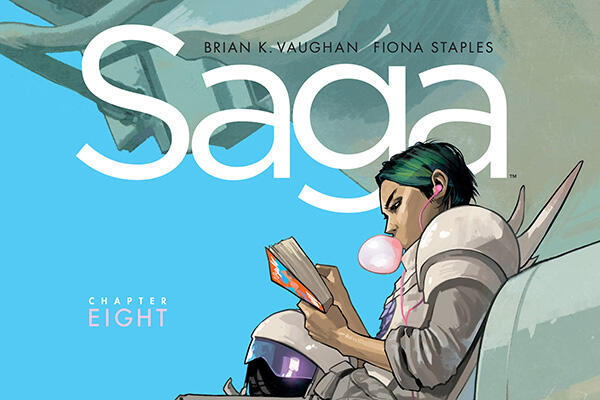
Saga
Saga is the new comic book series from Brian Vaughan, who wrote Y: The Last Man, Ex Machina, and Runaways. He was part of the scriptwriting team for Lost, seasons three through five, and he’s currently show-runner for Under the Dome, a TV series based around the 2009 Steven King novel. I’ve not read much of Vaughan’s stuff before, so when I was first introduced to Saga, I was expecting the sort of pubescent power fantasy that I’ve come to associate with those quirky sci-fi/fantasy crossovers. Turns out I’m entirely wrong. Vaughan is a remarkably mature writer, and although the first volume is not entirely free of the male gaze, there are a couple of moments that just blow you out of the water. At one point, a male character goes to “Sextillion,” which is basically just a massive space station brothel. He wanders around, people are boning, and I’m resigning myself to the upcoming gratuitous sex scene. Suddenly, a pimp appears! Oh, great, here we go. “You decent in there, Slave Girl?” “Anything but, master.” “I taught her to say that. Anyway, have fun …” I roll my eyes and turn the page, and there’s a six-year-old girl, looking scared and awkward. What the fucking fuck. So Saga unexpectedly dropped child prostitution on me, and after that I started taking it a bit more seriously. One of the best things about this volume is the way that things have consequences. Normally when you’ve got empowerment fantasy, you don’t want unpleasant realities messing up your plot – consider, for example, the inexhaustible supply of goons in every superhero story ever. So far, Saga’s going to admirable lengths in its mission to bring real consequences (emotional and physical) to bear on the characters. The real test now for Vaughan will be charting their emotional development over the course of the series. It’s a shock to discover child prostitution in a sci-fi/fantasy comic book, but now that it’s in there, I want to see how this weighty issue affects and shapes the characters involved. In terms of narrative structure, there’s about half a dozen main characters in three different places revolving around the same game of cat and mouse. It’s not desperately original, but I’m willing to sit back and see what Vaughan does with it. He spends most of the first volume playing with expectations of empowerment. Sure, some characters can fight off massive nasty creatures from the abyss; they can also get murdered by a bunch of thugs in a street fight – it mostly depends on who gets lucky. There’s potential for battles to go either way, and that’s a significant plus. Characters aren’t off-limits: they can die, and they do die. It’s not quite George R.R. Martin, because nobody is quite like George R.R. Martin, but it’s heading in the same direction. The one difficulty that Saga encounters is that it’s trying to depict an intergalactic conflict from the inside. The focus is on a series of individual characters, and the narrative never pulls back to display the supposedly breath-taking scale of the conflict. The two sides clash once or twice “on-screen” but only briefly, and only as the background to the relationships between main characters. That’s fine for something stylised, like Shakespeare or the opera, but Saga feels like it’s trying for a realism vibe (at least as realistic as sci-fi/fantasy mash-ups get). Perhaps a grittier tone would have better suited the content, but it is only the first volume. I’ll be keeping a close eye on Saga to see how it develops.
-
News
 Issue 12 18/05/2014
Writers and Readers booked in for next year
Dunedin’s inaugural Writers and Readers Festival has been hailed a great success, and a follow-up event has already been booked in for next year. The six-day festival took place from 6 May to 11 May and saw more than 50 New Zealand and international writers, poets, playwrights, scriptwriters, publishers and editors attend. Nearly 2,000 event tickets were sold. The Festival may have included examples of, and had representatives from, almost everything literary, but it was the New Zealand-based writers and readers that unified the diverse program. Several of the events sold out well before the festival started, with people travelling from all over the country to see some of their favourite writers in the flesh. The “foreword” to the festival featured readings and talks from Eleanor of-recent-Man-Booker-fame Catton, renaissance man Alexander McCall Smith, should-be national treasure Kate De Goldi and 2014 Burns Scholar Majella Cullinane, with the pre-eminent Roger Hall providing introductions. Each author spoke of their inspirations to write, and each mentioned something totally different to the last. De Goldi spoke of how children’s literature inspired her more than anything else, and Majella spoke about death, Frankenstein and Dante’s Inferno. An afternoon with Alexander McCall Smith, chaired by the University of Otago’s own Liam McIlvanney, saw St Paul’s Cathedral at capacity as they discussed everything from his work and personal philosophy to his strong female characters. McCall Smith explained that his way of viewing life and his writing was that beauty, and the sharing of it, is a “fundamental human reaction.” The amount of bad stuff in the world only makes this sharing of beauty and laughter more important. The evening with Eleanor Catton, chaired by Finlay Macdonald and held at the Toitu Otago Settlers Museum, was one of the headlining events. Catton disclosed her methods and views on the literary world and revealed to audiences that she hadn’t written anything since The Luminaries, saying that she was waiting for a good idea. She explained the value of bad ideas, and how working through the many bad ideas, something great will surface eventually – that’s how she got The Luminaries. Catton also spoke about how she believed children’s literature to be the holy grail of all literary endeavours, and found literary fiction to be boring, where nothing happens – placing emphasis on the importance of plot-driven writing.
-
Features
 Issue 10 04/05/2014
A love letter to literature
I confess. I am a book addict. In my flat I have about 1500 books – give or take a few (they make shifting hard for me). Literature has always been a passion and interest of mine. Recently, I’ve given a lot of thought as to what initially sparked the flame that has led me to do an English degree. The more I ponder, the more I realise there was no initial spark – I’m a natural-born book nerd. There are two moments that stand out for me, though. I distinctly remember my sister giving me a copy of Animal Farm by George Orwell to read – and I earnestly did so as an 11-year-old. I remember laughing and crying and getting angry at all the points I was supposed to, and then staring grumpily at the book’s rather ironic ending. Most normal kids would have moved on from reading such a book. However, 11-year-old me instead wrote a 500-word review (in a regal italic font, of course), likening the politics of Animal Farm to the politics of New Zealand’s Labour Prime Minister Helen Clark. After past-me outlined the various betrayals of the book, I ended the review with “so all I have to say now is to watch out for changes in the rules and keep an eye on the politics!!” Which, if I’m perfectly honest, is fairly good advice. My earliest encounter with my love of literature, however, was when I was learning to read, and this is probably the most significant memory I have of my literary history. My mother used to read poetry and nursery rhymes to me as a child, but there was one poem I loved above all others: “The Highwayman” by Alfred Noyes. Initially I would get my mother to read it to me every other night, until she grew tired of reading it and refused. At which point my reaction was something along the lines of “whatever! I don’t need you anyway! I’ll read it myself!” and eventually I got to the point where I could indeed read it myself and mourn the tragic tale on my own. “The Highwayman” was first published in local Edinburgh zine, Blackwoods Magazine. My little childhood anecdote may be a minor, latter-day example of this, but Scotland’s cultural heritage has long influenced Dunedin’s literary history and the city as a whole. Right from when Otago was first being planned, there has always been a strong Scottish influence. Otago was initially going to be called New Edinburgh, but Thomas Burns (Robert Burns’ nephew) pushed to have it changed. However, Dunedin still inherited its name from its sister city – Dunedin is the Gaelic word for Edinburgh. There is a common misconception (which I believed up until researching this article) that the Edinburgh map was stuck down on Dunedin’s landscape and then they simply chiselled out the roads regardless of the hills – this is not true. However, it is true that Dunedin’s city plan is highly influenced by Edinburgh, which is why we have so many street names in common. Charles Kettle designed the roads attempting to emulate Edinburgh, without regarding the land’s terrain, and thus we get special little gifts like Baldwin Street. Furthermore, by just looking at the architecture of the churches and old buildings around Dunedin, our Scottish heritage is evident. Moving on from the physical similarities, there are other aspects of Scotland that is reflected in Dunedin’s layout and planning. The suburbs Waverly and Abbotsford both come from the life and works of the famous Scottish writer Walter Scott. His home was called Abbotsford and one of his novels is titled Waverly. We also have a Robert Burns statue sitting in the city centre, endlessly watching all the drunken shenanigans that students get up to. It’s pretty obvious from all this that the forefathers of Dunedin were big fans of Scotland, and decided to drag as much of it over with them as possible. According to the Dunedin City Council, the Scottish settlers brought many aspects of their heritage over with them – but, most importantly, they brought us education. First, Otago Boys’ High was set up, then, eight years later, Otago Girls’ High (the sixth secondary school for girls in the world), which was followed, of course, by the first University of New Zealand: the University of Otago. The forefathers of Dunedin clearly wanted an intelligent home with intelligent, critical thinkers. It’s no insignificant point that one of the first departments developed at the University of Otago was Classics and English. As you can see from the very early beginnings of Dunedin, the city has been designed in such a way that its subsequent rich literary history could almost be said to have been predestined. What better city to write in than a city that has practically been dedicated to literature and academia from the outset? I had the privilege and delight of speaking to the English department’s Emeritus Professor Lawrence Jones – possibly the most knowledgeable man on the topic of New Zealand literature. Even more luckily, I got to speak to him in his own home, in his study. Stepping into the room I saw straight away this was a man after my own heart – floor to ceiling shelves of books lined all the walls. After introducing myself I didn’t know what to say or where to begin, so I came out with a startled, “You have a lot of books.” He laughed and agreed, and from then on it was smooth sailing. Professor Jones is as friendly as they come and knows so much about New Zealand Literature, and literature in general, that it was easy to let him direct the conversation and impart buckets of knowledge upon me. It has become quickly apparent to me that Dunedin is riddled with literary history. As I was chatting with Professor Jones he told me that he actually bought his home from a Baxter cousin and Janet Frame was across the hall from his office while she was the Burns Fellow (I’m seething with jealousy). There are walks and tours around the city where the different haunts and homes of authors, and other aspects of our literary history, are pointed out to enthusiastic tourists. Because New Zealand, let alone Dunedin, is so small, it’s so easy to have this kind of thing happen. So many New Zealand writers have lived here and they’ve all left their marks around the city, covering Dunedin with a thick layer of artistic culture. One of the main conclusions we came to after our two hour discussion was that the Dunedin writing and literary community was surprisingly supportive. Professor Jones described it as an attitude of “we’re all in this together,” so they may as well help each other out. It’s always been incredibly difficult to make a living as a writer, but even more so in the past. The Robert Burns Fellowship is one way that the Dunedin community supports writers. The Fellowship was one of the first of its kind: a way to spend a year working on writing, while still earning a lecturer’s wages. Due to the role of social status in the past, if you were born in the lower class, there were limited ways to climb the social ladder or ever receive higher education, let alone dedicate time to writing because that was your passion. The Fellowship offers an amazing kind of support for writers throughout New Zealand; which, since 1958, has been very successful in bringing more writing talent into Dunedin, making it more of a literary hub. According to Professor Jones, there is possibly a great wealth of New Zealand literature from the 19th century that has been buried and is practically impossible to find. Novels and poetry were published in local magazines and collections, but it has become incredibly difficult to track these works down. This, of course, wasn’t helped when Allen Curnow, a poet and journalist, referred to all late 19th century New Zealand poetry as “ghost poetry, as we speak of ghost towns … [they are] husks without a past or a posterity” in his introduction to the Penguin Book of New Zealand Verse. This means that there is, somewhere out there, a pile of New Zealand writing that has been dismissed and lost, including Dunedin works. To me this seems a great shame, knowing that somewhere along the line the writing of many different people has been neglected and forgotten. However, this does continue to reinforce the idea that there is a strong and rich history of literature in Dunedin. Whether we have access to the writing is almost beside the point – it was there and would have continued to have an impact on the people living in Dunedin at the time of being published. Regardless of anything else, the impact of having writing encouraged and published regularly in local magazines would have shown local residents that creativity was an important part of their culture. There are two Dunedin-born writers who have had a large impact on Dunedin, as well as actively helping to perpetuate the nurturing and supportive literary community. First is the poet Charles Brasch. He was a community-minded, involved, charitable man who set up the literary journal, Landfall, which he edited for 20 years – generating a lot of high quality writing in Dunedin. He was also involved in many different organisations, including the Dunedin Public Library Association, the management committee of the Otago Museum, the Hocken Library Committee, the visual advisory committee of the Arts Advisory Council and he also lectured in Otago’s English department in 1951. Beyond all of this, he helped set up the Robert Burns Fellowship, and gave financial aid to many artists and writers anonymously. A second influential Dunedin poet was James K. Baxter, who published his first book of poetry at 18. He used his poetry as a tool of activism and was involved in university protests as well as being invested in local politics. Later in life he took up the Burns Fellowship and wrote some of his best work while living in Dunedin. He was a highly active community member at grassroots level. Even though Baxter’s life ended at the age of 46, he still had a large impact on the city. Both of these authors gave Dunedin a rich legacy to inspire and encourage other writers and artists. It’s fairly safe to suggest that literature and writers alike have a strong impact on the way that we view the world. According to a TED Ed video by Jessica Wise, researchers are beginning to gain solid evidence that reading fiction has shaped the way we view society and culture. This is due to fiction’s capability of changing the perspective of the reader. The fact that we get to enter another world or another person’s life and live through their eyes allows readers to experience something totally unique – a different viewpoint, which can develop and change the reader. (Of course, book readers already knew this.) It’s exactly because of this impact that we need English Literature departments. I know it’s a big part of why I chose to study literature. I like to know and understand the social world around me, and books give me an insight into the world that I cannot get from anywhere else. I like to step outside of myself for a while and feel the tragedy of “The Highwayman,” or the injustice of Animal Farm. While my younger self didn’t fully grasp the politics of George Orwell’s classic, it certainly got me seriously thinking about politics for the first time in my life. Literature definitely has had an impact on Dunedin; it has shaped the attitude of the people living here permanently, as well as the students who reside here during semester. It’s a place where creativity is encouraged, and where it thrives. The Literary Society has developed from the English Department, and has a large, ever expanding Facebook group and fairly regular meetings where people hang out, attend plays and performances, eat pizza and play literature-related board games. The Society is purely there for like-minded (or should I say literature-minded?) students to get to meet and be encouraged by each other. Another gem developed from this is The Scribbler, a zine aimed at “literature enthusiasts,” which works to encourage creative writing in its students. Even when looking at the “Departments” section of the University of Otago website you can see lecturers posting about student achievements and class projects. All of this obviously works towards generating an incredibly supportive atmosphere for their students. As someone who has now attended three different Universities (I’ve travelled a little), I can say that this is not something I have experienced, on the same level, anywhere else. I know plenty of students who consider themselves writers, or aim to be authors (like myself). After researching the city’s literary history, it’s become clear to me that it’s entirely possible that any or all of these people are going to be successful in their endeavours – especially in such a supportive place like Dunedin. I mean, James K. Baxter was a student at Otago. What’s to stop my classmates from being equally as successful – if not more so in this world where everything is connected like never before? It’s apparent that while it’s changed over the years, a strong literary history has always been here in Dunedin. There has been a legacy of education and creativity right from the early settlers continuously until today. Professor Jones suggested that there has never been a particular literary boom, a moment where the city suddenly awakened its literary talent – rather that it has been set up and maintained as a hub of literature. I can’t help but think about my own literary history – if I can really call it that – that I can relate back to Dunedin. There was no life-altering moment where, suddenly, literature was a part of me. It just always has been and always will be. And with all of this taken into account, where else could I, an aspiring writer, want to live? With such a beautiful and supportive legacy here to inspire, as well as encourage me, what more could I want? Warmer weather, that’s what.
-
Culture
 Issue 9 27/04/2014
Zine of the week: What She Said
24 A5 Pages Available at Blackstar Books If only there were some kind of space dedicated to celebrating the creative and diverse voices of young feminist women in New Zealand ... that’s What She Said. What She Said is essentially the literary embodiment of a new intersectional feminist society operating at the University of Canterbury – UC FemSoc. The first edition of the zine, published in early February and subtitled “A Room of One’s Own,” collages together articles, artwork, poetry, and resource reviews in order to demonstrate the continued relevance of a critical feminist perspective, albeit revamped and appropriately self-aware, and to challenge the devaluation of gender studies within universities across the country. Working under the banner of fourth-wave feminism, What She Said aims to democratise and apply academic feminism in a way that is relevant to the real-world experiences of women, non-binary individuals, and men. Showcasing a range of contributions as diverse as its members, the first issue features an illustrated guide to feminists past and present, musings on the power dynamics inherent in the English language, an historical exploration of the first women-led union in NZ, articles on LGBQT actualisation, ally-ism, and masculinity, and showcases local performance artists and poets. As a means of organising activism, and for engaging with issues of gender identity and representation as they present themselves outside of the university, What She Said is ultimately designed to act as a positive statement about the capabilities of young people, especially women, whist challenging the dominant discourses of masculinity and femininity and all that they entail. Available in print and on the web, the next issue of What She Said is due to be released in the first week of May, and promises to deliver more of its multivocal glory. Zines of the week are chosen by volunteers at Blackstar Books, Dunedin’s own anarchist-inspired community library and social space since 2003, located on Moray Place near the Octagon. Come by sometime – details and directions are available at cargocollective.com/zinefest
-
Culture
 Issue 24 22/09/2013
In The Memorial Room
Janet Frame has a reputation as a serious New Zealand writer, and a truly successful literary genius. Knowing something of her dramatic personal life – she nearly had a lobotomy due to “psychiatric problems” – I half-expected this novel to be dark, brooding, and Sylvia Plath-esque. Instead, In The Memorial Room proved to be an incredibly amusing social satire. The novel follows Harry Gill, a fairly successful New Zealand writer, who has been awarded the Watercress-Armstrong Fellowship – a memorial to the poet, Margaret Rose Hurndell. He is sent off to Menton, France, where Hurndell lived and wrote. Harry is expected to spend time reflecting on her life and work, and to write some new material of his own. Throughout the book Harry is told repeatedly, “I’m afraid I haven’t read your last book … But I’ve heard so much about it!” by various people, even at his own award ceremony. Furthermore, one of Hurndell’s relatives, Michael Watercress, is described as looking like a “perfectly presentable stereotype of the modern author” and is often mistaken for Harry. Michael looks just like an up-and-coming writer, unlike our awkward, stocky protagonist. I couldn’t help but find myself laughing when the Mayor, coming to congratulate Harry on winning the Fellowship, assumes that Michael is the award-winning author and shakes his hand instead. The photographers take their photos before the mistake is corrected, and Michael rather than Harry appears on the front cover of the local newspaper. While out for dinner with the Watercress family, Michael is gifted three bottles of champagne after being mistaken for Harry once again. Harry states that Michael’s “protest was feeble; his delight was evident.” Harry’s talent is not the focus here; he is the successful writer, but Michael looks the part. It is likely that In the Memorial Room is partly autobiographical – Frame specifically requested that the book be published posthumously. Apparently she was afraid that some readers may recognise some uncomplimentary versions of themselves amongst the characters portrayed. Frame also went to Menton on a Katherine Mansfield Fellowship, and so it is fairly safe to assume that this book is about her experiences there. This book really struck me as a critique of, and commentary on, the sometimes pretentious literary community. More than anything else, this book is about people and their interactions. The observations that Harry makes of the Watercress family are both enlightening and amusing. In the Memorial Room has wonderful character representations, and each character is artfully and cleverly created. Janet Frame really is a wonderful, astute, interesting writer and is well worth taking time out from study to read some of her work.


