
Anonymous Bird
Sub Editor
Articles by Anonymous Bird
72 articles found. Displaying page 5 of 6.
-
Features
 Issue 8 17/04/2016
Guidance for Jobseekers
It's getting to the time when, while students are stressing about assignments and exams, they have run out of course related costs and are frantically applying for part time work and graduate employment. Job hunting can be a dreary and disheartening process, but you’ve got to stick at it to get results. Here are Critic’s best tips for jobseekers.
-
Culture
 Issue 20 16/08/2015
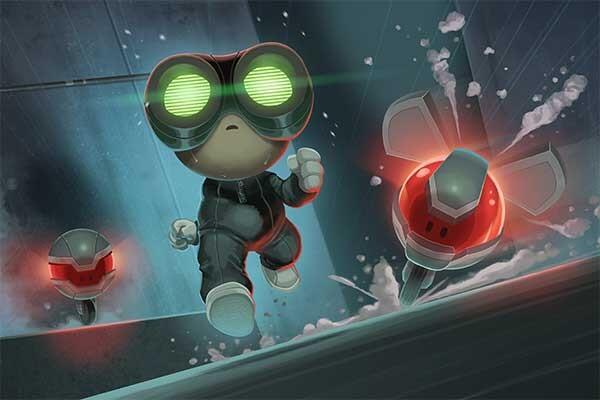
Stealth Inc 2: A Game of Clones
Rating: 4/5
-
Features
 Issue 21 16/08/2015
Dumb Ways to Diet
Whether they’re a first year trying to shed that fresher five, or a 40-something hitting their midlife crisis, you find people starting out on diets everywhere. Unfortunately, most of these weight-losing, cancer-curing, healthy-making diets are full of shit.
-
Culture
 Issue 17 26/07/2015
Little Big Planet 3
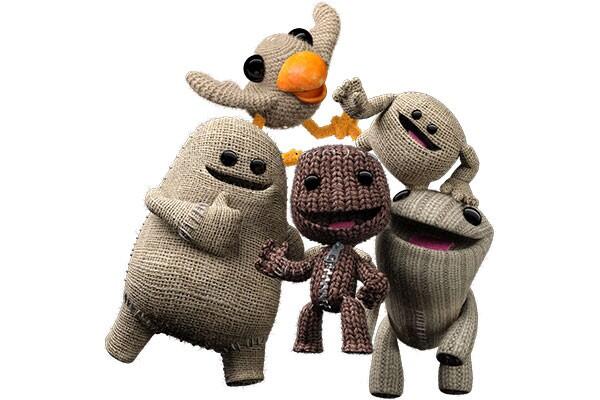
Little Big Planet 3 arrived late last year, and is the third instalment in Sumo Digital’s super fun and silly trilogy. The Little Big Planet franchise is known for being fun, cute and particularly creative. The games are all about promoting creativity. The playable characters are “Sackboys”, which are essentially little sack puppets that you can dress up however you like.
-
Features
 Issue 18 26/07/2015
The Confederate Flag
"[A]s a people, we are fighting to maintain the Heaven-ordained supremacy of the white man over the inferior or coloured race.” These are the words of William T. Thompson, designer of the American Confederate flag.
-
Features
 Issue 16 12/07/2015
Hugs & Other Drugs
The legalisation of MDMA, or ecstasy, has popped back into discussion. Also known as Molly, Eve, the Hug Drug, Love Drug or Scooby Snacks, we take a look into why legalisation would ever be considered and why hesitations remain.
-
Culture
 Issue 12 17/05/2015
The Gunman
Rating: 1/5
-
Culture
 Issue 10 03/05/2015
Avengers: Age of Ultron
Rating 5/5
-
Features
 Issue 9 26/04/2015
Marvellous Disappointments
-
Features
 Issue 7 12/04/2015
Virtual Harrassment
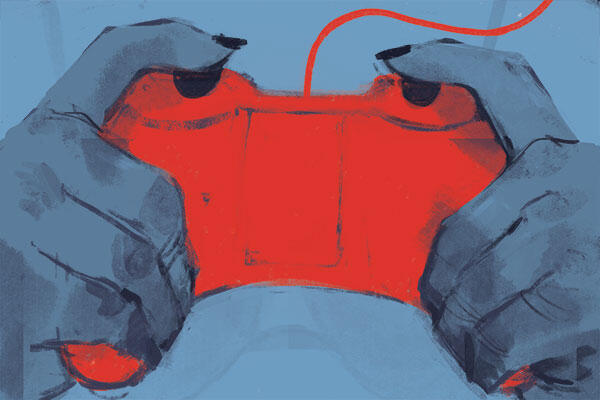
Online environments are becoming more and more volatile. Should people be held accountable for their online actions or do real-world rules not apply to them? The world where it is socially acceptable to make jokes about abuse in prison or “asking for it” if you’re wearing a short skirt is changing. That is, as long as you avoid the world of online gaming, where rape jokes and threats are just a part and parcel of the environment. The idea of rape culture addresses how we collectively think about sexual violence. Everyday Feminism, a popular feminist website, explains it as “the way in which sexual assault, rape, and general violence are ignored, trivialised, normalised, or made into jokes.” Marshall University also has a page dedicated to explaining rape culture, stating: “Rape culture is perpetuated through the use of misogynistic language … [and] the glamorisation of sexual violence.” People on the internet are often openly racist, homophobic and sexist without considering the repercussions. According to a study by the Pew Research Centre, 73 per cent of surveyed internet users said they had witnessed someone being harassed online, while 40 per cent reported being targeted themselves. Some online gamers believe the best reaction to online abuse is to just ignore it. Others, such as gamer Rachel, think that the best strategy to combat this abuse is to “show them who’s boss” by playing well. Hardly a progressive way to fix the issue. Rachel initially said she hadn’t experienced verbal abuse in terms of threats or sexual violence. However, the following day she re-contacted Critic to report that while playing Counter-Strike online she “started talking, reporting where the enemy was, and [her] team-mate said ‘is that a fucking girl? Shut your c*** mouth or I’m going to rape you.’” Cheyanne, another online gamer, explained that even though she normally attempts to hide her identity online, she has been asked her bra size on more than a few occasions. Yngwie also reported this kind of incident. He said in a recent game of League of Legends, two members of the opposing team mentioned they were girls. Almost immediately, “a member of [his] team started to spam messages at the enemy team, repeatedly asking to know the cup sizes of the women.” Anita Sarkeesian is famous (or infamous) for her feminist videos Tropes vs Women in Video Games. Initially she made a kickstarter video to raise funds, and received a massive backlash for trying to make the series. In a 2012 TED talk she reported that “all [of her] social media sites were flooded with threats of rape, violence, sexual assault, death”. In spite of the abuse, she raised “25 times what I initially asked for”, and her YouTube channel Feminist Frequency “went from a part-time side project to a full-time endeavour”. This success, however, is somewhat negated by the continued harassment. Three years on, Sarkeesian discussed the ongoing online harassment she has received. She said “we live in a society where online harassment is tolerated, accepted, and excused” and she is “angry that [she is] expected to accept online harassment as the price of being a woman with an opinion”. People have threatened her life and the lives of others due to her discussion around games. Yes, games. One person found out where she lived, so she had to leave her home. The issue is not disagreeing with her — that’s what critical thinking and discussion are for. However, taking that dislike of her arguments and threatening to “shove it up her c***” perpetuates this “rape culture” that society is accused of. While no one has been prosecuted yet, because of the nature of the threats against Sarkeesian, she now reports her abuse directly to the FBI. She has expressed frustration with how normal it has become to her, stating: “A death threat comes through my social media and it’s just become a routine: screencap, forward to FBI, block, move on.” There is a history in online environments, and particularly in gaming, of “virtual rape”. Melissa Sander defined “virtual rape” in her Master’s thesis, Questions about Accountability and Illegality of Virtual Rape, as “the non-consensual simulated sexual violation of a victim avatar, a visual or textual representation of the user, by an aggressor avatar via online interaction”. Julian Dibbell’s 1993 article, “A Rape in Cyber Space”, is the first document to describe an incident of this nature. The virtual world of LambdaMOO is an online multi-player computer game. People could create and programme their own characters: Insert Mr Bungle. He used a “voodoo doll” subprogram that allowed him to make other characters appear to be doing violent and sexual things. Mr Bungle forced one character to consume their pubic hair and another to sexually assault themselves with a kitchen utensil. He also forced one particular character to repeatedly have sex with him. Nothing like this had happened in LambdaMOO before, and the actions were purely a result of Mr Bungle hacking the system. The actions were deemed “virtual rape”, and a meeting was held in the online community to decide how to punish him. Despite the genuine distress the incident caused, no one was willing to punish the person behind Mr Bungle, nor could they decide a suitable punishment for the character. A master-programmer decided to terminate Mr Bungle’s account. The creator also implemented a voting system for any future issues, as well as creating an action to kick someone disruptive from the server. This particular case sparked discussion around developing online law, and Dibbell ended up teaching cyberlaw at Stanford University. But virtual abuse certainly didn’t end in 1993. Now, with more and more online games, it is happening more frequently. Better yet, it’s being treated as normal behaviour, as if it’s to be expected. Looking through some of the tweets directed at Sarkeesian, the same comments keep coming up; “everyone is threatened in games thats what we do [sic]”, “It’s a normal. It’s part of gaming” and “death threats and rape threats are in the culture of gaming … Have you ever played an Online game? Get used to it...” Dr Lesley Procter of the Sociology, Gender and Social Work department of the University of Otago studies an online social world called Second Life, which is like a combination of social media and The Sims. She stated that in Second Life it would be impossible to be ‘raped’ as “a lot of the simulated gestures and movements are all scripted” so in order to escape “all you would have to do is stand up or quit”. Procter thinks that hacking a game in order to violate a character would count as a form of “identity and intellectual property ‘rape’, as opposed to simulated physical rape”. She said we need to be “careful about how we apply the word ‘rape’”. She said that if we consider those things as rape, then are we somehow discounting the real-life experience and questioned whether it is “downgrading the [real-life] trauma”. Procter described how a student in one of her classes got quite annoyed after another character simply bumped into her. Procter said this was a good example of how “our sense of personal space crosses over the screen. In that sense, even having someone sit beside you uninvited and sexually harass you would have an impact. There’s a technological term called ‘presence’, which virtual reality programmes are very good at generating, which is the sense that you’re really in an environment.” It’s this “presence” that makes people have such a strong reaction to any online harassment. There is a disconnect between the internet and real life. In her article, “Cyber-Rape: How virtual is it?” Debra Michals said that the “internet permits … free and unquestioned expression in easily accessible public spaces”. People will say and do things online they would never do in reality. She explains that “Clearly, ‘virtual rape’ is not the same as the rape a woman experiences in the physical world” but states that the experience can still be upsetting. Procter also said that on the internet, “your identity is pretty much hidden, you’re safe. You can do whatever and say whatever. It’s not only in virtual worlds — just look at Facebook and flaming and all that kind of stuff; it’s the lack of face-to-face accountability.” Richard MacKinnon is another who addresses this disconnect, stating that “irresponsibility or freedom from responsibility is easily identifiable in virtual reality society”. He goes on to explain: “The relative rarity of virtual women in a predominantly male cybersociety has led to the documentation of great numbers of instances of sexual harassment.” MacKinnon wrote this in 1997, so the number of women in online environments has obviously grown exponentially since then, but his point still stands. The internet is seemingly still a male-dominated space where women are often the subjects of abuse for joining in. Associate Professor Colin Gavaghan of the University of Otago’s Faculty of Law said, “making overt threats is a criminal offence punishable by up to seven years imprisonment”. If the threat is less overt, it could still be considered criminal harassment “if it causes the person to fear for their safety”. This could lead to two years imprisonment. However, there is a “mens rea” requirement which means that the harassed “must have intended the communication to cause such fear, or else known it was likely to do so.” Another action to take would be to seek a restraining order, but this requires a pattern of behaviour with at least two or more incidents. However, Gavaghan added, “both of these options are likely to be difficult to use” because it requires the person’s identity and for them to be in New Zealand. A record of the behaviour is required, so something said over a microphone would be hard to prove. In terms of sexual and abusive comments, it is even less clear: “if they’d have the potential to cause someone to fear for their safety, they could be covered” or “if the content is such as to qualify as ‘indecent’, it may be caught by s124 of the Crimes Act, which deals with distribution of indecent matter”. Recently the Harmful Digital Communications Bill has successfully had its second reading before parliament. This bill introduces a new offense of “causing harm by posting digital communication”. Gavaghan said that “this would only require that the communication was sent with the intent to cause harm, and that [it] actually did cause harm”. The bill will also start up an agency which will mediate in these cases. So there are things you can do, but these rely on qualifications: “if the behaviour is serious, if you can identify the person in question, and if they happen to live in New Zealand.” Gavaghan suggested that the most practical solution is to “report them to the content host; presumably most online games have terms and conditions and can delete accounts of those who breach them”. Procter also mentioned the terms and conditions of the game, stating that “There are mechanisms, within Second Life at least, where you could take a complaint” in the face of any online harassment. The offending character would then be deleted. Playing a game like Grand Theft Auto gives the player the freedom to kill people, to beat people up, to steal — what’s more, this kind of behaviour is encouraged by the mechanics of the game. So what’s the difference between that kind of violent behaviour and this concept of “virtual rape”? When someone purchases a game knowing it’s violent, they go into it prepared and consenting to the nature of the game. The acceptance of the violence relies on it being either a game which involves killing non-player characters (NPCs) or it’s an even playing field, where everyone can kill everyone. The player is entering into a fight with someone knowing they have the opportunity to kill or be killed. “Virtual rape”, on the other hand, implies a role of power. This isn’t based around consent, and it isn’t a level playing field. A player is actively hacking a game (in the way Mr Bungle did) so that humiliation can occur. When the player targeted bought the game, they consented to the content of the game they bought, not the possibility that someone would hack the game and abuse their own character in a manner that is personal and disturbing. Sarkeesian received “pornographic images made in [her] likeness who were being ‘raped’ by video game characters” repeatedly. It is not purely the images that are disturbing to her, but the notion that someone has taken the time to make them about her. Yes, there is the option to not play. But the female gaming industry is growing and this does nothing more than make the online gaming sphere more undesirable for female gamers. When Pacman was the most realistic character you could play, this wasn’t an issue. But in a world where we are on the verge of virtual reality, surely it’s about time we look at the influence the virtual world could be having on our real world?
-
CultureIssue 3 08/03/2015
Force Majeure
Rating: 5/5 Force Majeure follows a Swedish family on their five-day skiing holiday. The opening scene shows the family being persuaded by a photographer to have their picture taken. The result is a funny moment where you can see how they have constructed an ideal family: mother, father, daughter and son — they’re all beautiful and they all look perfect in the snow; it’s a perfect balance. What unfolds over the course of the film is a conflict between the mother, Ebba (Lisa Loven Kongsli), and the father, Tomas (Johannes Bah Kuhnke). The conflict between the parents influences the reactions of the children, and of all four of them as a family. When an avalanche looks as though it’s about to hit the family while they’re at an outdoor restaurant, Tomas tells the family not to worry. When the avalanche quickly approaches, everyone at the restaurant freaks out and tries to run away. Tomas grabs his phone and runs for his life, leaving behind Ebba and his two children. However, it turns out that it was just fog from the controlled avalanche. The clincher is that Tomas refuses to admit that he ran away. The beautiful thing about this movie is that it addresses ideas and issues around femininity, masculinity and gender expectations without ever feeling like it is actively doing so. It explores family life without appearing to pick a “right way” of doing it. Yes, Tomas is a dick, but eventually you end up relating to him — he freaked out, ran away, and he was emasculated by that. Force Majeure is darkly funny; you can’t help but laugh at the ridiculous nature of what unfolds for this picture-perfect family. The score is spot on, and the film uses the absence of sound effectively to create tension. There are lots of beautiful and intimate scenes with the family — the kind of scenes that wouldn’t make it into a Hollywood movie.
-
Features
 Issue 3 08/03/2015
Building On Shaky Grounds
Four years on from the 22 February Christchurch earthquake, the city still has a long way to go. The city centre is not as alive and buzzing as it once was, despite the best efforts of the Restart Mall, set up where Cashel Mall once was. The eastern side of the city is littered with road works, detours, potholes and desolate, empty-looking houses. These lingering aspects of the earthquake make it almost impossible to move on. A lot of people in Christchurch are suffering from post-traumatic stress disorder (PTSD) or are experiencing high levels of long-term stress due to the lack of stability offered to them. Anne, a resident in eastern Christchurch, spoke of the initial stress she experienced on the day of the quake. She was home alone, standing in her kitchen, when it hit. The cupboards flew open, flinging her plates and glasses at her. All she could do was drop to her knees and cover her head. It was two hours before she heard from her husband and two of her daughters, then another three hours before she heard from her youngest daughter. She was unable to leave the house to try to find her family as the liquefaction and earthquake damage had rendered the streets impossible to drive on. She had food and water supplies stashed away, but they were on the opposite side of the kitchen. It took her several hours before she was able to clear all the broken shards enough to enable her to get to the supplies: “I kept myself busy trying to clear a path through the rubble so when my family got home we could at least reach the food and water.” It was another month before Anne and her family had power and water again. Another Christchurch resident, Tania Gilchrist, lived on the opposite side of the city. She was thrown across her lounge before the shaking subsided. Her first action was to locate her children. A friend was able to get her across town to pick up her younger daughter from school. Eventually she heard from her son that he was fine. Her elder daughter, who should have been at work or at her house in the centre city, was actually out in the country instead — meaning she was safe from harm. Tania then headed to Dunedin to stay with family for a week while things settled down in Christchurch. The most important thing to her was the comfort and safety of her family: “It was a matter of tracking down the kids; I left the mess in the house.” In spite of the earthquakes, a great sense of community and support developed because of the events that followed. Tracey Johnstone reported that both of her sons did their best to help others. Her elder son drove all over the city to take friends home from university, while her younger one stopped to pick up a stranger who was desperately trying to get to his child’s school. Many Christchurch residents had to deal with no power and no water in the following month. Anne reported that her husband sorted out a large 500-litre tank on the back of his trailer, went to a friend’s house to fill it with water from their artesian well, then allowed the whole neighbourhood to take advantage of it. Tracey also reported people setting up generators so there was some limited access to power when they would otherwise have none. Canterbury University students were not exempt from the impact of the earthquakes. A former Canterbury student said that he struggled with study because many of the lecture theatres were now unusable, “meaning [they] were forced to use tents or go to other campuses.” Every time there was a large aftershock, classes would be cancelled so the safety of the buildings could be assessed. Another Canterbury student, Mat Daniel, also said that in the first few weeks, “lecturers often didn’t have access to rooms or equipment” that they required. This interrupted and inconsistent university year made it hard for students to focus. The biggest obstacle in the way of people moving forward is the rebuild, restart, insurance aspect of the ordeal. Four years on from the initial damage to her home, Anne is still waiting. She has known that her house would be a rebuild for at least three years, and despite this she is still living in the damaged house. She is waiting on her insurance company to provide her with a new home. She said that “dealing with the insurance claim has been far more stressful than the thousands of earthquakes we experienced … It’s a different kind of stress, not of danger but of frustration and uncertainty.” Only in the last month have things slowly start to move forward with house plans. Anne said there was an 18-month period where she heard almost nothing about her claim. Kelly and Matt, a young couple in Christchurch, are also enduring the long wait with insurance. They own two properties, the house they lived in and the neighbouring property. Both were badly damaged over the course of all the earthquakes, and they waited for a long time for insurers to acknowledge the damage to their property. A year ago they got lawyers involved in the discussion, but nothing has changed yet. Kelly and Matt have had their first child in the last year, and so are living at her parents’ house because they didn’t feel safe in their own home. Talking Therapy is a counselling service in Christchurch. Experienced psychotherapist and counsellor, Mark Piercy, said that there are “a good number of people still seeking help.” According to Piercy, there are two main groups of people coming to them for help. The first group includes people dealing with PTSD, diagnosed or undiagnosed. Many of these people “will not go into tall buildings, or can get panicky if a truck goes past.” Some of these people may have seemed to cope well to begin with, “but have finally run out of ‘cope’ and previous mechanisms are no longer able to work.” The second group are people who are stuck in the repair and rebuild process with insurance companies without having made any progress. Piercy stated that “anxiety and depression are common” for this group. Long-term stress causes people to have difficulty dealing with their surroundings. This inability to cope can come from PTSD or even just the long-term impact of having to deal with insurance and unstable surroundings. Long-term stress can be dangerous for your mind and body. Adrenalin and cortisol are natural stress hormones that are released when a person goes through trauma or experiences a threat. Adrenalin gives the fight-or-flight response; it mobilises stored energy reserves that trigger a short-term energy increase. Someone in adrenalin mode will be extremely focused on the problem at hand, and will struggle to stop or slow down. The body shuts down certain functions in order to go into this survival mode, meaning that it is not at all sustainable. With every new threat, more adrenalin is released, which means that the focus is always on the problem, and it’s almost impossible to see the positive side of things. Cortisol, on the other hand, sets you up for long-term stress. Cortisol is released into the body after an adrenalin rush. It preserves the body’s resources and shuts down most functions not related to survival. While this is normal, excessive amounts of cortisol can leave people feeling emotionally numb, except for emotions like fear, shock and anger. People also experience an inability to take action, with little interest in social interactions. Cortisol affects the ability to problem solve and process complex information, so decision making is difficult. Anne is experiencing the effects of long-term excessive cortisol. She finds it very hard to make decisions in her everyday life and had to leave her full-time volunteer job as a result. In the last year she has sought out counselling and support services, and is on her way to getting better. She is particularly shocked that while she has been in this state, she has had to make serious decisions about the rebuild of her home. She struggles to see the positive side of anything and struggles to see how her home will be okay or that the future is something to look forward to, a common attitude in those struggling in Christchurch. Children aren’t safe either from the emotional impact of the earthquakes. Since the earthquakes, the number of stressed children admitted for mental-health treatment has doubled. The years of aftershocks and constant interruptions to normal routine have had a large impact on the children of the region. University of Canterbury Associate Professor Dr Kathleen Liberty is conducting an on-going study that examines five-year-olds starting school in eastern and southern Christchurch. The study has found that there may be as many as one in three children displaying symptoms of PTSD in the wake of the earthquakes. Piercy said that moving on from PTSD is a slow and arduous process. Many people feel shame that they haven’t fully gotten over it yet, and others feel overwhelmed by the very feelings they are having. He feels that the best thing people can do for themselves is to take “time out for a coffee or a friend, exercise, and make time for small enjoyments and setting limits on the “have to do” list.” Many University of Otago students have moved from Christchurch to Dunedin to escape the earthquakes and related damage or distractions. Bridget Harris said that she found the earthquakes were incredibly distracting for her while she finished up high school, and ultimately they helped motivate her to move to Dunedin. Other students found that upon shifting from Christchurch to Dunedin they were able to “focus on study” more because “Otago University had less distractions” such as the aftershocks, more earthquakes and all the related drama. However, some students decided to stay in Christchurch to study. Some found that the earthquakes had little impact on their study overall. Mat Daniel also chose to stay, in large part because he had already been studying at the University of Canterbury for a while and didn’t want to end established relationships with lecturers. Urban decay is the term for when a city or parts of a city fall into disrepair and decay. This has not been seen often in New Zealand. However, Christchurch is now a prime example of this phenomenon. Through eastern Christchurch, especially, there are large pockets of badly damaged areas. This is where all the houses that fall into the “yet to be fixed or rebuilt” category are. Many of these areas make up the red zone. There are sinkholes and potholes in the roads, overgrown and forgotten lawns, empty homes with smashed-in windows and graffiti on the walls. Even the Foo Fighters front man, Dave Grohl, commented on the red zone at the Christchurch concert on 18 February. He cycled right through the city, from the west to the east. He noted that the further he went, the more he saw these desolate areas, but he still felt that Christchurch was a “beautiful city”. There are several groups who are trying to turn the many red-zoned, empty areas of Christchurch into parks with a cycling and walk track running through. At the moment, living near the red zone can be tough. Kelly reported that her cars have been broken into multiple times, and one was even lit on fire because people assume it’s all abandoned. Anne said that before the red-zone houses on her block were demolished, people would often break into the empty houses and damage them even more. It would cause her a lot of stress hearing people over the fence late at night, as she knew there should be no one there. People also treat the red zone as their personal dumping ground, leaving trash in the area because they assume that the whole neighbourhood is abandoned, when in fact there are still many people living in these areas, waiting for their homes to be repaired. The Canterbury Earthquake Recovery Authority (CERA) is an organisation put together by the government to facilitate Christchurch’s recovery from the earthquakes. Part of its job is to clean up and do something positive with the red-zone areas of Christchurch. A CERA representative explained that there is a public engagement process where residents of Christchurch get to submit ideas for what they want to do with these areas. This process has already happened in the Waimakariri district, where “nearly 600 people contributed over 2750 ideas.” These ideas are now being processed and a plan will come out in later 2015. However, because “the Christchurch red zones have much more complex infrastructure issues to work through,” it is going to take some time “before the public engagement process can begin.” CERA anticipates that they will be able to begin the public engagement process for Christchurch later in 2015, after these issues have been resolved. In the short term, however, CERA say they are doing their best to clear the red zones of all dwellings — houses, sheds, garages, etc. By the end of February they will “have completed approximately 89 per cent (approx. 6,300) of the property clearance in the flat land red zone by the end of February, with the remaining 11 per cent (approx. 750 properties) to be completed by 30 June 2015. When it is able to, CERA removes the homes in clusters, so as to minimise disruption to people still living in these areas. CERA also spends in “excess of $3 million a year on maintenance of the Crown-owned red zone land,” which includes “regular mowing of lawns and weed spraying in order to keep these areas in a reasonably tidy state ahead of decisions about future use of the land.” CERA also provides a 24-hour security patrol and electronic surveillance in order to provide comfort and reassurance to the surrounding community. Gap Filler is an organisation that has started to make a difference in town. Gap Filler aims to fill all the empty lots in the city centre where buildings once were with creative and community-focused things. Like a mini-golf course, for example, or a dance-o-mat or a book exchange. A lot of art work is showing up, slowly making the city a more vibrant and interesting place to walk around — rather than a depressing pile of rubble symbolising everything that once was. Talking Therapy offers free earthquake-related counselling for those who feel they need it, and CERA has also put various support systems in place for people who require it. There’s everything from a social support line, to a support service specifically aimed at those struggling with getting their home rebuilt, to advisors available to discuss issues with the rebuild/repair process. It also offers help with getting temporary accommodation when needed. Several Facebook pages have popped up to act as support groups for those going through the various stages of rebuild/repair. Despite the seemingly overwhelming negative impact of the earthquakes, what has become apparent is the new and supportive community emerging in Christchurch.


