
Thomas Raethel
News Writer
Articles by Thomas Raethel
28 articles found. Displaying page 1 of 3.
-
News
 Issue 6 30/03/2014
Dunedin Renamed Shangedin, Shanghai of the South
The University of Otago has secured a groundbreaking relationship with a Chinese University, which is likely to grant access to China’s lucrative medical research sector. Shanghai’s Jiao Tong University consistently ranks among the top five universities within mainland China and after signing a Memorandum of Understanding with the University in 2009, the two parties have secured a more specific “relationship agreement” this month. Critic spoke with Research and Enterprise Office Director Gavin Clark, who was part of the Delegation group who signed the agreement in a week-long trip to Shanghai. He said the relationship between the universities and sister cities will benefit from the agreement by providing a “facilitated route to partnering in research and development with universities and companies in China.” Clark said that the next step is an “in-depth project discussion” in which “a subset of Otago professors with specialist expertise in near-market fields” will visit Jiao Tong University in August. Clark anticipates that the long and short term gain for Otago will help to raise research and development funding from the Government and industry, and will help create high-quality research jobs. In the long term, the partnership is anticipated to give the University and Otago companies “enhanced access to large Chinese markets.” The immediate opportunities that the agreement provides for will be in areas such as Translation Medicine, including “turning medical discoveries into drugs and services to enhance patient care and lower health costs.” Clark said that Jiao Tong University is investing in a New Translation medicine facility, which will strengthen Otago’s existing endeavours in this area. “There is also strong potential to capture synergies between Jiao Tong University’s food security and engineering centre and Otago’s strengths,” said Clark. According to the ODT, further negotiations were also discussed with Quingdao University, also on China’s east coast. Financial assistance for establishing a new marine research centre on Dunedin’s waterfront appears to be a possibility and would provide a replacement for the Portobello aquarium, which closed to the public in 2012. DCC chief executive Dr Bidrose made it clear that the DCC is not interested in being part of a joint venture, which would develop the facility, and the offer was passed on to the University. Dr Bidrose said Quingdao University’s involvement in a Dunedin marine science centre had not been discussed in detail, but is another indication of China’s search for economic development opportunities in Dunedin.
-
Features
 Issue 5 23/03/2014
Antarctica On the Brink
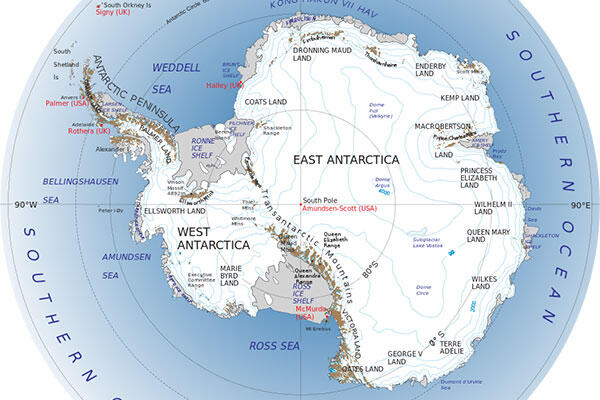
New Zealand has never enjoyed a prime position in the international arena, and most of us are rather content with this. Our antipodean status has let us foster interest in unattended corners of the globe, and place great stress upon the importance of conservation. We have shot to the forefront of international discussion on a couple of occasions, including the nuclear-free issue in the 1980s. Those were all fleeting periods of relevance, but the country may be in for an unprecedented heyday, along with only a few other select nations. Historically, the only landmass more damned to oblivion than New Zealand is Antarctica. It is the most sparsely populated, undernourished, and ignored continent on Earth. A lack of indigenous populace and inescapable isolation has pushed it to the boundaries of popular perception and made its mere mention in many political contexts odd at best and irrelevant at worst. A great deal of interest in Antarctica focuses on its geology and zoology, and for good reason - there isn’t much else going on there. The geopolitics of Antarctica are still a niche field and don’t extend farther than international law. Despite this, a handful of futurists have persistently envisioned a more human future for the Antarctic continent, and every year there are more and more factors that suggest these predictions may eventuate after all. No one nation holds claim to Antarctica. This unique situation has led to a web of treaties that have continuously developed over the last 60 years. The Antarctic Treaty System has brought a degree of order to the seventh continent, and helped protect Antarctica from fates that have befallen virtually every inhabited landmass on earth. Of all the treaties that concern Antarctica’s future, 1998’s Antarctic Environmental Protocol holds the most at stake, buffered by Article 1 of 1961’s Antarctic Treaty, which forbids military activity in Antarctica. The latter has only been violated at one point – a one-off Argentine Army expedition in 1965. The Antarctic Environmental Protocol explicitly forbids investigations into mineral reserves, a rule that its signatories appear to have followed thus far. However, scientific research is tolerated, and the scant knowledge of Antarctic oil reserves has been discovered through such investigations so far. Scientific research can easily be bastardised to accommodate hidden agendas, demonstrated most prominently by Japanese whalers. Further deliberate investigations into mineral reserves in Antarctica could happen in the near future, and there would be little infrastructure to stop it from happening. Before the Antarctic Treaty System was signed, a number of nations made claims to particular stretches of the continent. Those claims were legally invalidated under the conditions of the initial treaties, but still hold a loose de facto status in Antarctica’s geopolitical arena. Otago University Geography Professor, Sean Fitzsimons, does not believe such claims hold much credence. “They are there, but they’re largely irrelevant. They aren’t pushed by any country.” The Ross Dependency – New Zealand’s claim – is heavily populated by Antarctic standards. The stretch of coast is home to the United State’s McMurdo base, the largest single settlement on the continent. With a summer population of around 1000, the town hosts a non-denominational church, an ATM, and its own sewerage system. Such towns have only existed in any real capacity for a few decades, and give little indication of Antarctica’s long period of alienation. Many early explorers were not enamoured with Antarctica, and understandably so. Intimidated by its icy tundra and comparative lack of seals, Captain James Cook steered well clear and declared “that the world will derive no benefit from it” in a 1777 expedition. More recent reception has been equally harsh. When the first Antarctic treaties were being drafted in the late 1950s, an American geologist famously declared that he “would not give a nickel for all the resources of Antarctica.” These attitudes have given way to ever-intensifying speculation concerning the viability of Antarctica as an exploitable commodity. The scope of the speculation is international, and fast developing; fossil-fuel dependent economies are showing great interest. Antarctica is home to many valuable resources. Crude oil, coal – and possibly even diamonds – are believed to rest beneath its icy planes. This mineral-rich environment may seem enticing to miners at first, but the nature of the continent has prevented exploitation thus far. Most of these minerals lie under kilometres of ice, making their current extraction absurd on economic considerations. The commodity thought to be most prevalent is coal, which is strewn throughout the Transantarctic Mountains – in locations desolate even for Antarctic standards. Such hindrances might make immediate land-based mining unattractive, but some of Antarctica’s oil is suspected to lie in the seabeds of the Ross Sea – a maritime dependency of New Zealand. As many as 50 million barrels are suspected to lie below its fathoms. Of course, the very real threat of oil spills comes into play when ocean is involved, and no seas are more pristine than those in the Antarctic. When the Antarctic Environmental Protocol opens for review in 2048, the world is likely to be a very different place. According to 2012 estimates published in Nature, global temperatures are expected to rise by 1.4 - 3 degrees Celsius on average by 2050 if current rates of consumption are maintained. According to most estimates, peak oil will be a historical event by then and, pessimistically, some form of dependence on fossil fuels will still burden humanity. Antarctica is estimated to harbour as many as 203 billion barrels of oil in total – a truly mind-boggling quantity. Perhaps most alarmingly, overpopulation and mismanagement of the world’s fresh water supply might make water trapped in Antarctic ice (90 per cent of the world’s total) an attractive commodity, especially considering the fact its extraction could be eased by the looming spectre of global warming. Even krill fishing is likely to become a booming industry. The tiny crustaceans actually outweigh the entire human population, with a total weight of 379 million tonnes to humanity’s 350 million. Their swarms in the Southern Ocean can reach hundreds of kilometres in diameter. Unable to ignore this staggering commodity, fishery companies are extracting increasingly larger hauls of the microscopic creatures every year, then turning them into fishmeal. But humans can consume krill, too – they have been eaten in Japan for hundreds of years. It is foreseeable that krill, inaccessible and unappetising, may stay as fishmeal for some time to come. But upon the event that fisheries exhaust populations of more conventional food sources, humanity might be able to modify its palate. Much of the southern continent’s cargo is shifted by planes, defying the popular image of Antarctic icebreakers smashing through icebergs to bring equipment to research scientists. Even significant quantities of oil are shifted by air, a phenomenon that is comically unsustainable. New Zealand scientists are making headways to resolve these issues, building three wind turbines in an effort to curb fossil fuel consumption at McMurdo and Scott bases. According to Professor Fitzsimons, the turbines save as many as nine million litres of oil a year. Furthermore, an American trans-Antarctic highway of compacted snow has been built between the coast of McMurdo Station and the heart of Antarctica, the South Pole. This makes long-haul terrestrial cargo a feasible option, and may reduce Antarctica’s carbon footprint in due time. New Zealand’s disproportionate influence in Antarctica is due to one obvious factor – proximity. It was discovered by the same man, James Cook, and is only beaten by the southernmost fringes of South America in its Antarctic vicinity. Of course, this brings New Zealand’s direct Antarctic relevance to Southland and Otago. Dunedin has shared a close connection with Antarctica since earnest exploration began at the turn of the 20th Century. The city served as a decisive staging post for both Ernest Shackleton in 1916 and Richard Byrd in 1928, and was the last city that Robert Falcon Scott saw before his ill-fated Antarctic Expedition in 1910. However, modern developments have shunted Dunedin to the back of Antarctic priorities and the city only enjoys status as a back-up airfield upon Christchurch’s inoperability. Professor Fitzsimons believes that a “major infrastructural change” would be required to advance Dunedin in the current Antarctic sphere of influence. “Christchurch is logistically more feasible, and Bluff is the obvious choice geographically. I honestly can’t see Dunedin playing a significant role in the future of Antarctica; it just wouldn’t operate.” New Zealand has fostered ties with China since the Southern gold rush of the 1860s, though Otago’s Chinese population has declined substantially since that colonial period. This was largely down to a shamelessly xenophobic poll tax imposed on Chinese immigrants and an economic depression that ensued after the gold rush, forcing many young Chinese men to return back to their homeland. New Zealand’s Chinese heyday may be long past, but it could mirror a future where the South Island becomes one of the major staging posts to a booming Antarctic region, and the southern extremities of the Americas are dominated by the interests of Chile, Argentina and, perhaps, the United States. Chinese expansionism in Antarctica is undoubtedly on the rise. Annual Antarctic expenditure has almost trebled in the last decade, from $20 million in 2003 to $55 million last year. This far outpaces the equivalent Sino-Arctic expenditure, which has remained stagnant. China is well and truly engaged with Antarctica, and strives to upset a pro-western status quo that has been in place since the continent was permanently settled for the first time in 1945. This February, a 1000m² Chinese base finished construction on the East-Antarctic Ice Sheet. Taishan, or “Lantern,” is the fourth Chinese base to be built in Antarctica and will probably be the last to not have an all year crew. General Secretary Xi Jinping personally congratulated the crew in a recent letter, and stressed the importance of scientific research on the continent as fundamental for the “exploration of nature” and the “development of mankind.” When the Chinese Communist Party’s Politburo convened in July 2013, Xi was more explicit about his country’s intentions in Antarctica, decreeing that China should “take advantage of ocean and polar resources.” This is clearly an attitude that does not fall in line with the Antarctic Environmental Protocol. The press may have largely overlooked the comment, as overwhelming focus was placed upon the on-going dialogue regarding the Senkaku/Diaoyu Islands issue in the East China Sea. Regardless, China’s current efforts in Antarctica are still far outpaced by those of the United States. Qu Tanzhou, the Director of China’s polar programmes, was quick to point out that “the number of American people undertaking polar research in one year outstripped China’s total number that have been conducting such research over the past 30 years.” However, the near-exponential rate of Chinese investment in Antarctica may soon close the gap. China isn’t the only Asian power to express late interest in Antarctica. South Korea has recently invested in a $90 million collaborative effort with New Zealand, building a base in Terra Nova Bay. Jang Bogo is due to finish construction this month, located only 300km away from New Zealand’s Scott Base – a stone’s throw in Antarctic terms. Korea’s intentions in Antarctica appear to remain benevolent, with Antarctic Director Dr Yeadong Kim telling TV3 that Korean interests in the continent are completely scientific. “My personal view is that we are better to keep it as it is now, there’s only one place in the world that remains so natural.” Three principal cities service the Antarctic: Argentina’s Ushuaia; Australia’s Hobart; and New Zealand’s Christchurch. Most operations that run out of Ushuaia are South American, just as Hobart’s are largely Australian. In contrast, Christchurch has fostered a close relationship with the United States Antarctic Programme, and New Zealand scientists’ primary form of travel to the south is on American planes. Whether this relationship could give a clue as to how future Sino-New Zealand expeditions would operate is up for debate, with Oxford University Professor Rosemary Foot outlining China’s unique relationship with New Zealand at a 4 March lecture at the University of Otago. She believes New Zealand to have closer relations to China than most of its western counterparts, as China views New Zealand as an “independent player.” This is exemplified by New Zealand’s ground breaking Free Trade Agreement with China in 2008. China’s investments in New Zealand have dominated Sino-New Zealand relations for a few years now, and may hint at China’s interest in expanding its maritime presence in the South Pacific. A 27-storey, $100 million hotel driven by Chinese investors was proposed for Dunedin’s waterfront, but failed to gain resource consent from Dunedin City Council. A more recent and successful engagement with Chinese investors was the $200 million acquisition of Crafar Farms by Chinese firm Shanghai Pengxin in 2012. Widespread domestic anguish at the monumental purchase indicates that Chinese investments are unwelcome to many New Zealanders, echoing the fears of “yellow peril” during the Otago gold rush. More recently, Shanghai Pengxin have purchased majority shares in Canterbury’s Synliat Farms. Such land acquisitions hold little direct relevance to China’s Antarctic programme, but serve as excellent examples of the future role that New Zealand might possess for bigger players – a nation-sized paddock, as well as a staging post for Antarctica’s splendours. Though the hypotheses I’ve raised are less than certain, it is worth considering the impact that Antarctica’s exploitation would have on New Zealand’s future economy, culture, and sovereignty. Squabbles over minerals, water, and sustenance are the main drivers of war and annexation, and New Zealand’s glacial back yard is abundant with all of the above.
-
Columns
 Issue 2 09/03/2014
ODT Watch | Issue 02
Considering the level of racial diversity seen in Dunedin, it comes as no surprise that our fine region’s “African Chief” looks like a mixture of Prince Charles and Hamish Keith. What is most alarming about this scenario: that the prostate examinee was enjoying it more than the examiner; or that the examination took place in what looks like an office in the Richardson Building? Though the anecdote may be amusing either way, the ODT could have done a better job of explaining the crime in full. Did the septuagenarian merely threaten his victim over the phone? Or did he go full Russell Crowe and administer some real, tangible pain? No week of “ODT Watch” is complete without a shit pun, and, as always, it was more than easy to find a headline to suffice. All we can hope is that the author stops dreaming up headlines in their sleep.
-
News
Issue 2 02/03/2014
Uni spends $600,000,000 on infrastructure
Dunedin’s construction industry stands to benefit from more than six hundred million dollars in expenditure by the University on infrastructure, as well as the creation of hundreds of jobs. Chief Operating Officer John Patrick revealed the gargantuan figure at the University Council’s meeting on 25 February. Much of the work will begin in the next two years, including a major refurbishment of the University’s dental school which is “likely to be the single-largest project ever undertaken by the University.” The updated amount marks more than a $242 million increase on the University’s 2012 projections of $358 million for construction projects. This figure covered the 2012-2020 period, and at the time the information included 22 projects in the University’s priority development plan, of which 20 are in Dunedin. The ODT reported that Naylor Love Construction chief executive Rick Herd considered the University’s building programme as a “major shot in the arm” for all construction industry participants, including main contractors, subcontractors and suppliers. He said it was important to look at “a sustainable construction industry … [so people] aren’t going to have come in for those projects and leave again, because there is nothing else afterwards.” Herd also said that while the construction industry in New Zealand was “generally on the up,” Dunedin had been “lagging a little bit.” He said that the University’s revelation was “very encouraging,” and could be seen as a “renewed level of opportunity in Dunedin.” The expenditure and pending industry benefits come in the wake of the University’s announcement that last year’s operating surplus amounted to $36.5 million. According to University officials, this was largely down to “one-off” benefits, including $8 million of insurance payouts for the University’s Christchurch medical school. The University also celebrated the success of publicly listed biotechnology company Pacific Edge Ltd, which originated at the University and enjoyed almost $2.5 million from an increase in the value of its shareholding at year-end. The University finished 2013 debt-free, with a disposable $92.3 million on hand. This will contribute to the future construction projects to be seen around campus. Vice-Chancellor Harlene Hayne appears to be excited with the developments, projecting a timespan of five to eight years for the refurbishments. “It’s an incredibly ambitious series of building projects and really just signals the fact that the University is in really good heart,’’ she said. “We are looking at some of the biggest capital development this University has ever seen.”
-
News
Issue 2 02/03/2014
Student allowance numbers plummet
The number of students receiving the student allowance in Dunedin has dropped by 23.8 per cent between 2012 and 2013. According to opponents of allowance entitlement cuts, the numbers indicate that Government policies are having a serious impact on the student populace of Dunedin in particular. The numbers plummeted from 6327 students receiving the allowance in 2012 to 4822 last year. In the same period, allowances dropped from 96,908 to 85,094 nationally, amounting to a net fall of 12.2 per cent. According to Labour tertiary education spokesman Grant Robertson, stagnant parental income thresholds and the abolishment of post-graduate allowances are largely responsible. He believes that the alterations will hit learners from poorer backgrounds the most. ‘’It just makes it much, much harder for those people from low-income backgrounds to get access to tertiary education. Our view is that we should create the opportunities for people to be able to study further, not put up barriers in their way.’’ OUSA President Ruby Sycamore-Smith agrees, and has made clear that the Student Association will do its best to make the voices of University of Otago students heard in this year’s General Election. ‘’The OUSA is in favour of universal student allowances and will be strongly advocating this to all parties in the lead-up to the 2014 election.’’ Sycamore-Smith has initiated a review of OUSA’s fees, loans and allowances policy, which will aim to update current policy on these issues. A paper has been drafted and is being circulated around Executive members for input prior to formal discussion. This will be taken to referendum, to test student opinion, and then pushed to all political parties as the view of Otago students. According to OUSA estimates, between 172 and 555 fewer Dunedin students will receive an allowance in 2014. Critic wonders why OUSA’s margin for error was so huge, but speculated that the Executive had run out of fingers to count on after discovering their stock of calculators had mysteriously disappeared. Further observations suggest that despite a tightening on allowance eligibility, there is no evidence that students are transferring to loans. The student allowance for away-from-home students is granted to those whose parents’ combined income amounts to less than $90,000 per year. This figure is renewed annually on April Fool’s Day so that adjustments for inflation can be made.
-
News
Issue 1 23/02/2014
Uni bank-rolls thugby
OUSA has expressed its support for the University’s sponsorship of the Highlanders rugby union team, despite the University facing backlash from the Tertiary Education Union (TEU) who branded the sponsorship as a “gimmick.” TEU deputy secretary Nanette Cormack elaborated on the Union’s opposition, speaking to Radio New Zealand National. “We see the role of the University of Otago, and of all public education institutions, in New Zealand to be about providing quality public education and research, not about funding private sports teams.” OUSA President Ruby Sycamore-Smith disagrees. “If the University has been honest when they say the sponsorship agreement comes from the existing marketing budget, not an extra allocation of funds, then we’re supportive of the move as it is a new and innovative way of promoting the University both nationally and internationally. We might also say that any money not spent on another year of the ‘Take your Place in the World’ campaign could be seen as a good thing.” Vice Chancellor Harlene Hayne has expressed particular enthusiasm for the opportunities the sponsorship holds in bringing the University closer to the Dunedin community as a whole. Sycamore-Smith agrees. “The University is a big player in the Otago community and this is another way to further establish a bond with, and support for, the local region. No marketing strategy and, in fact, no move the University makes ever pleases everyone, and we’re usually the first to call them out, but in this instance we see the promise of the sponsorship.” The move is not without precedence, with the University of Canberra’s sponsorship of the Brumbies, and Otago Polytechnic’s sponsorship of local cricket team the Otago Volts. However, the TEU have questioned whether the University of Canberra’s sponsorship is a good template to follow. The TEU’s sister Union in Australia, NTEU, have criticised the “progressive imposition” of demands from the rugby franchise which culminated in a five million dollar university-funded training facility for the Brumbies “under the guide of remaking the University of Canberra as a ‘sporting university.’” Despite a lack of support from the TEU, Sycamore-Smith can see a relationship between the University and the Highlanders blossoming. “Students are already big supporters of the Highlanders, and OUSA has been including them in our Super Passes and Orientations for a number of years with great success.” Hayne has refused to disclose the value of the sponsorship, though she remains insistent that she “is pretty convinced it’s a good decision.”
-
News
 Issue 1 23/02/2014
Vaporisers and edibles only on campus
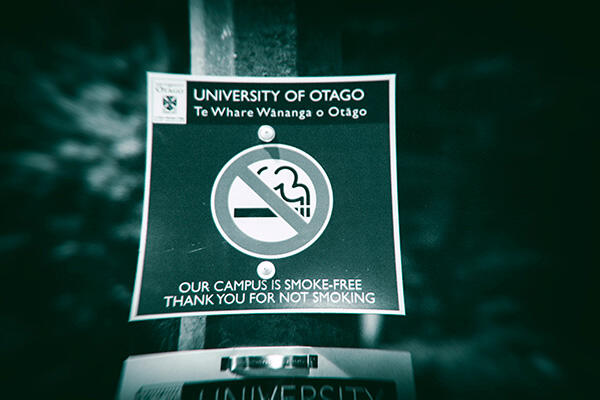
The introduction of a campus-wide smoking ban on 1 January 2014 has harmonised the University with others throughout the country, but many appear to be side-stepping the ban and gutters outside campus have been clogged with cigarette butts. The policy does not outline any smoking-friendly areas in or around the campus, with the removal of public ashtrays aggravating the issue of cigarette littering. In particular, Cumberland Street’s gutters are now swathed with innumerable cigarette butts, while the adjacent Museum Reserve is now comprised of a proprietary blend of cellulose filters, trampled soil, and discarded Student Life brochures. One subset feeling the sting of the University’s attempt at cold turkey is the cannabis-advocacy group NORML. However, members of the group have since adopted non-combustive means of ingestion. Cannnabis advocate Abe Gray believes that vaporisers are the logical future of NORML. “Many of our members weren’t aware of the health benefits of vaporisers until now, so I guess we have the University to thank for that.” Although many at the University believe the policy will bring an end to 145 years of on-site tobacco consumption, patrons of the University’s official nightclub Re:Fuel have been spotted doting the odd honorary cigarette outside Union Hall in the wee hours of the morning. Whether this act of defiance will become commonplace is yet to be seen, but effective late-night monitoring of on-campus smoking appears to be hard to implement en masse. The move to a smoke-free campus follows a nationwide trend prompted by the University of Auckland in 2010, and accompanies steady tax-hikes on tobacco products as well as a total ban on smoking in New Zealand prisons introduced in July 2011. The policy also complements the Maori Party’s Smokefree 2025 initiative which endeavours to all but erradicate smoking in New Zealand by that year. Second-year psychology student and John Player Special-smoker Oliver Gaskell objects to the ban. “People need a place to chug a ciggie – if they really want to minimise harm, smokers should be provided with designated areas to keep them away from the public.” Smoking-related illnesses kill as many as 5000 New Zealanders every year, with roughly 350 of those from second-hand exposure. If you would like to quit smoking, please contact Quitline on 0800 778 778. If you would like to start, please contact British American Tobacco NZ on 0800 113 011.
-
News
 Issue 26 06/10/2013
NZUSA Given Yet Another Reprieve
The New Zealand Union of Students’ Associations’ (NZUSA) future is secure, after both OUSA and the Victoria University of Wellington Students’ Association (VUWSA) decided to remain members of the ailing national body. The two organisations, which each pay an annual NZUSA membership levy of $45,000, continued their membership on the condition that NZUSA implement significant reforms. NZUSA has come under fire this year due to a perceived lack of political campaigning. OUSA President Francisco Hernandez, VUWSA President Rory McCourt, and Auckland University Students’ Association (AUSA) President Daniel Haines collectively issued a statement to NZUSA on 22 August, threatening withdrawal if reforms were not passed. The referenda at OUSA and VUWSA were effectively a vote on the body’s continued existence, with the two associations responsible for around a third of NZUSA’s overall funding. OUSA’s motion to remain part of the organisation passed overwhelmingly, with 86.39 per cent supporting continued membership. VUWSA’s margin of support was less extreme, with 62.72 per cent in favour of continued membership. OUSA’s referendum was fraught with procedural difficulties, and the question was altered shortly before it was put to the student body. The initial wording of the question was rejected by OUSA’s honorary solicitor on the grounds that it precluded a simple “yes” or “no” answer. When this composition was rejected, OUSA President Francisco Hernandez hastily assembled the question that was included the referendum (despite being submitted after the set deadline): “Should the Otago University Students’ Association (OUSA) continue its membership of the New Zealand Union of Students’ Associations (NZUSA) if it implements reforms that enhance its campaigning capacity?” In addition to the inherent bias toward “yes” answers in referenda, the question itself was criticised as leading, with one observer describing it as “a fucking joke.” Hernandez is known to favour continued membership, and originally intended to formulate the question along the lines of “should OUSA remain in NZUSA in order to play a leadership role in reforming the organisation to be a strong national voice for students?” NZUSA’s continued existence would suit Hernandez well – he plans to run for NZUSA President in 2014 if he fails in his current bid for a seat on the Dunedin City Council. Visibly gleeful after the referendum results were released, Hernandez was quick to blow his own trumpet. “It’s a ringing mandate for continuing to stay in NZUSA,” he said. “I’m not surprised at all. I think the reforms I have proposed were endorsed by the student population by a ringing margin and I look forward to working with NZUSA.” Hernandez earlier voiced support for the endangered organisation. Citing a number of difficulties facing New Zealand students, he made it clear that he believed in NZUSA’s ability to respond to them satisfactorily, despite the total lack of evidence for such a view. “Now is not the time to abandon a national student voice at a time when many students are hurting due to government allowance restrictions, increases in the cost of living, and suffering in cold damp flats,” he said. NZUSA President Pete Hodkinson has not met with Tertiary Education Minister Steven Joyce in over 18 months.
-
News
 Issue 25 29/09/2013
Hayne Joins the One Per Cent
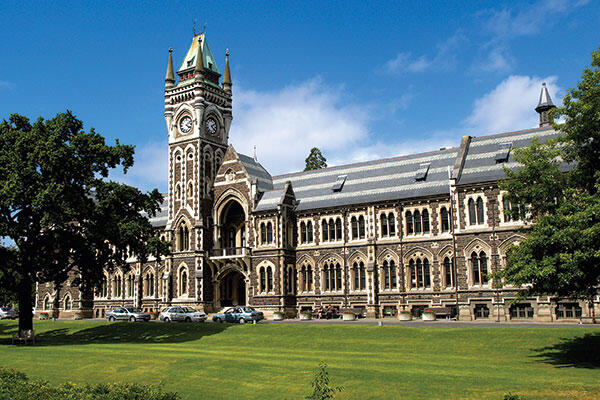
The Tertiary Education Union (TEU) has condemned the recent trend of pay rises among Vice-Chancellors in universities nationwide. An annual report by the State Services Commission has revealed that at least six Vice-Chancellors across New Zealand received pay rises between 2012 and 2013. The pay rises have occurred despite several crises facing tertiary education, including declining Government funding and increasing competition from universities in East Asia. University of Otago Vice-Chancellor Professor Harlene Hayne received the greatest increase in remuneration, with her maximum potential pay jumping $110,000, from $420,000 in 2012 to $530,000 in 2013. The lower figure for 2012 is partially explained by Hayne coming into office one month into the payment term. Critic questions, however, whether 20 per cent of the Vice Chancellor’s work is really carried out in a single month. TEU Communications Officer Stephen Day has criticised Hayne’s raise. “Otago is facing the same kind of austerity issues and loss of students that a number of other institutions, particularly universities, are facing at the moment. They’ve got students facing four per cent fee rises year on year, and staff that have had minimal pay raises. As such, Day argues, it “looks cynical for a Council to turn to the person who sits in front of them in meetings every month and award them huge pay rises. It’s just completely out of synch with the financial position of the country, and of the institution itself.” The rise coincides with a drop in Otago’s roll of nearly 3,000 over the past three years. Hayne’s office did not answer Critic’s request for comment for two days, and on Thursday – the day Critic goes to print – finally referred Critic to the State Services Commission, without providing comment. The Commission had not responded by the time Critic went to print. The TEU have also specifically denounced the University of Canterbury’s Vice-Chancellor Rod Carr, who received a boost of $40,000 despite the significant issues facing the University. “The University of Canterbury is a university that is struggling financially. It’s struggling to recover from an earthquake, [and] it’s losing students and sacking staff,” said TEU Deputy Secretary Nanette Cormack. “It’s hard to imagine how a Vice-Chancellor who is already paid far more even than the Prime Minister could justify taking a pay rise that equals an entire salary.” Prime Minister John Key’s salary is currently set at $410,00 per annum. “It hard to come up with a sane justification for why the richest public servant in New Zealand would be the Vice-Chancellor of the University of Auckland, earning $50,000 more than the head of Treasury,” Cormack said.
-
News
 Issue 24 22/09/2013
NZUSA Finally Runs a Campagin
The New Zealand Union of Students’ Associations (NZUSA) has joined a Coalition for Fair Internet Pricing in an attempt to stop a nationwide tax on copper-based ADSL broadband services. The move comes after Telecom spinoff Chorus successfully lobbied for taxes on copper-based services to artificially match those of emerging fibre-optic networks, apparently in an effort to incentivise the adoption of ultra-fast broadband (UFB). NZUSA Executive Director Dr Alistair Shaw stated that “like the rest of the Coalition, we believe that the responsibility for determining the pricing of the monopoly is the Commerce Commission and not the Cabinet.” Shaw added that the emerging scheme will unfairly penalise a significant number of students, especially those in rural areas. “Some of the students who arguably need UFB the most, such as distance students, are likely to never see it, but under this proposal will be charged for their copper-wires as if they were getting fibre. It is simply not fair.” According to even the most optimistic predictions, UFB will be rolled out to only 30 per cent of the nation by 2020. Consultancy firm Covec has estimated that the so-called “copper tax” will cost consumers $600 million over the same period. On 17 September, responding to David Cunliffe’s inaugural questions as Leader of the Opposition, Prime Minister John Key raised doubts over the methodology of Covec’s study. Key singled out the references to a $120 million figure for 2014 as flawed, due to the maintenance of soon-to-be outdated prices throughout 2014. Regarding the tax’s effect on New Zealand’s students, Shaw believes students will see “no benefit from it whatsoever. “These are students where studies have revealed that one in six live in absolute financial distress, and we’ve all seen the stories recently about appalling living conditions. For Chorus to lobby the government so they can take an extra $150 per year away from their already pressured living costs is simply outrageous.” Shaw went on to further denounce Chorus’ conduct. “When we raise with government that student loan terms are onerous, we’re told that if students made loan agreements they should get on with paying them back. Well, Chorus signed a contract; they should get on with honouring it,” he said, referring to the $929 million interest-free loan that the government has granted Chorus to install UFB around the country over the next few years. Other members of the Coalition for Fair Internet Pricing include Greypower, Rural Women, and the Federation of Maori Authorities, as well as the internet service providers Slingshot and Orcon.
-
Features
 Issue 23 15/09/2013
Profile: Sir Geoffrey Cox (1910-2008)
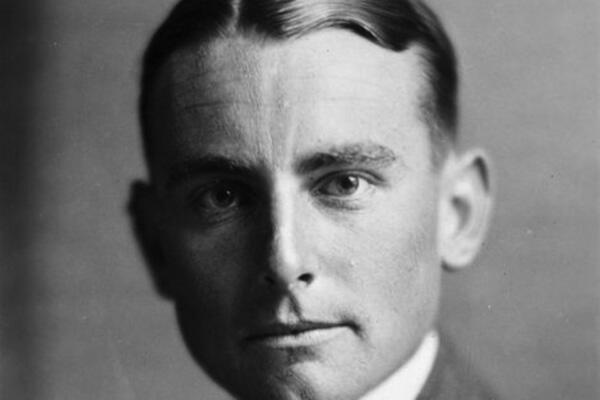
When Geoffrey Cox first attended Otago University, foreign periodicals took over a month to reach New Zealand, travelling by sea through the Panama Canal. Amateur radio broadcasting had only existed for five years and was seldom heard by everyday New Zealanders, who still often referred to Great Britain as “home.” Only quarter of a century later, Cox secured his role as the director of a major television company that broadcast instantaneous news reports via satellite. His days were crammed with intrigue and excitement, and early in his career, he was often thrust into witnessing the worst regimes of the twentieth century. But Cox never lost sight of a journalistic integrity that helped to rescue British independent television news from the exploitative yellow journalism that has come to characterise much of the country’s print-media. So how did a boy born in Palmerston North come to be a key figure in British news journalism for over twenty years? Cox didn’t speak much of his stint at Otago University, nor indeed his editorship of Critic. In Cox’s day there were three editors: one from Knox, one from Selwyn, and in an early if patronising example of equal opportunity employment, a “Lady Editor.” Cox was the Selwyn Editor. The Critic that Cox oversaw is almost unrecognisable to the modern reader, but similar themes arose now and again. In an April 1930 issue, the self-anointed “Knox College Misogynist’s Club” complained of well-off girls refusing to pay for their own dance tickets. Letters to the editor openly wept of the sexual neglect thrust upon some fresher males, albeit in a euphemistic tone. Articles did not reflect the economic mayhem of the period, and were largely farcical in tone. The most striking difference is a shift from advertisements for pipe tobacco and Scotch whisky in Cox’s Critic, to the enormous anti-drug PSAs that dominate much of modern student media today. A decisive moment in Cox’s life came when he was granted one of New Zealand’s two Rhodes Scholarships, hand-picked by the Governor General Viscount Bledisloe, in 1931. In a stroke of luck, he won the trust of Bledisloe through his mutual interest in pig-breeding. Before arriving at Oxford in 1932, and observing its stifling class system, Cox travelled to the Soviet Union to assess the credibility of Marxism. He visited during a nadir of Soviet existence, and saw glimpses of a year-long famine that claimed roughly six million lives. Russia was not hurting as economically as the rest of the world, but its people were starving. It was in this environment of two deeply dysfunctional opposing ideologies that the embers of fascism began to spark. On the very date that Hitler won election, 31 July 1932, Cox arrived for the first of his two trips to interwar Berlin. He stumbled into the uncertain environment of a fledgling Weimar Republic, amid various political ideologies vying for power. The streets were draped with an artist’s palette of party flags; red, white and black for the monarchists; the hammer and sickle for the communists; and the black swastika for the Nazi Party. Cox observed that Germany was a country of remarkable “freshness and freedom,” with bookstores flanked with H.R. Knickerbocker’s Deutschland: so oder so? [Germany: either way?]. Uncertainty about Germany’s submission to either left or right was still yet to give way to the collective hysteria of Nazism. When Cox returned to Germany in the winter of 1934, the Nazi party had extended its grip over every aspect of German life. This was the year Hitler granted himself total autocracy by consolidating the roles of Chancellor and President under der Führer. Political prisoners were already commonplace, and Cox befriended the wife of an imprisoned communist leader. Shortly after dining with her in uptown Berlin, Cox refused to Heil Hitler when prompted by a large group of stormtroopers on a street corner. He was rewarded with a blow to the back of the head and only regained consciousness minutes later. Shortly after, the pharmacist who treated Cox instructed him to “wait till [Oswald] Mosley is in power in England, and you too will appreciate what discipline and soldierliness really are.” The Nazi soldiers’ abusive behaviour may be no surprise to the modern reader, but helped set in stone Cox’s opposition to the looming spectre of fascism. Cox’s further experiences in Germany testified to the unprecedented changes taking place in a nascent Third Reich. Crucially, Cox was present at the 1934 Nuremberg Rally, best known as the setting of Leni Riefenstahl’s infamous documentary Triumph of the Will. With an estimated three hundred thousand attendees, Cox was particularly lucky to secure the Nuremberg equivalent of an Opera Box: the window of an acquaintance’s bookshop. With the bookseller’s binoculars, Cox studied Hitler and his deputies for four full hours. Cox was impressed by Hitler’s stamina, standing upright for the entirety of the Rally. Frenzied housewives dabbed their swollen eyes with handkerchiefs, while tens of thousands of Hitler Youth watched their namesake in wonder. Cox later commented on Hitler’s appearance, noting that his face was a “strange blend of ordinariness and strength.” Fluent in German, Cox was nevertheless immune to Hitler’s abhorrent charisma; his 90-minute speech was not made for foreign consumption. Hitler boasted that he now embodied Germany and that supreme power was now held by the Nazi Party. Cox’s initial motivation for returning to Germany may seem borderline suicidal at first glance. While at Oxford, Cox had felt deprived of the physical exercise he had enjoyed as a farm hand in New Zealand. Confronted by a German scholar for his anti-Nazi sentiments, Cox readily accepted his invitation to attend a labour camp in Germany. The camp was designed to draw, as Cox described, “puny and undernourished” young men from Germany’s metropolises. One might assume that after getting bashed in the head by a Nazi soldier and witnessing the terrifying spectacle of the Nuremberg Rally, Cox would be reluctant to go back. Daringly, though, he travelled to rural Hanover as an Arbeitsmänner [Labour Service member]. Fortunately, the camp was a far cry from the atrocious death camps of the war years, and indeed Cox found the work to be “not very hard.” In one memorable anecdote, Cox recounted how he taught his fellow Arbeitsmänner a Maori haka. Cox later pondered whether any of his long-lost comrades “as soldiers in Crete or the Western Desert heard the haka roared out in reality, as the Maori Battalion of the 2nd NZ Division came towards them.” Perhaps the biggest break of Cox’s life came through his reportage of the Spanish Civil War whilst working as a junior reporter at the News Chronicle. Unlike a great number of his colleagues, Cox elected to stay in Madrid just as Franco’s forces began to threaten the city. Faced with probable imprisonment if the city fell to fascism, Cox took a gamble that paid off. The Republicans outfought the favoured Nationalists, and Cox was one of only three British journalists to enjoy an inside scoop on the 1936 Battle of Madrid. Upon his return to London, Cox did not graduate from chasing fire engines and ambulances, but earnt a reputation as a dedicated and objective reporter. It was with these experiences in Madrid that he wrote his first book, Defence of Madrid, a book still considered an authoritative account of the Spanish Civil War. When war arrived, Cox chose to serve under the jurisdiction of his home country. As a chief intelligence advisor to General Bernard Freyberg and a member of the Pacific War Council, Cox sat at the same table as Churchill and Roosevelt. Cox was in Crete in 1941, where New Zealand troops fought and lost a battle with German invaders. He later reflected that “My first reaction was, ‘I might be dead by tonight, but by God, I’ve seen the first airborne invasion in history.’” In 1956 Cox won the job as Chief Executive of ITN, the United Kingdom’s first independent television news company. In its infancy, ITN had suffered from major budget cuts that prompted Cox’s predecessor to resign less than a year into his role. Much of the station’s talent was moving to the BBC, leaving the company with an uncertain future. But Cox helped ITN secure a reputation for removing spin and making their reports digestible for even the most unenlightened viewer. In 1967, as Cox’s parting gift a year before he resigned, ITV’s News at Ten was established. A familiar fixture for many Britons, the show was the first news broadcast with two readers, a tactic initially employed so that one reporter could receive breaking news as the camera focussed on the other. The show was significantly longer than its predecessors, allowing a deeper reportage that is seldom seen on television today. When News at Ten was axed for nine years in 1999, Cox wrote in The Times that its dismissal would “strike a blow at the functioning of democracy in Britain.” He lived long enough to see the station he helped establish descend into reality TV, but also saw News at Ten’s renewal in 2008. Cox lived a life that would make Tintin jealous, packed with adventure, and witnessing some of the crucial political regimes of the twentieth century. He has been largely overlooked in his home country, partly because he spent so much of his life trying to strike a balance between being a Briton and New Zealander. As one of the great New Zealanders of the twentieth century, Cox is likely the only Critic editor knighted for services to journalism.
-
News
 Issue 23 15/09/2013
Otago's Stock Does a Fannie Mae
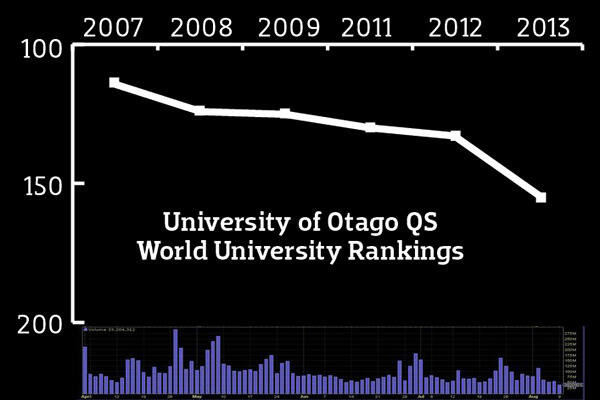
The University of Otago has been declared the 155th best university in the world, tailing 61 places behind the University of Auckland. The Quacquarelli Symonds (QS) World University Rankings are published annually in the United Kingdom, and according to the official website, feature “over 800 universities worldwide.” The results reflect a total of 62,094 academic and 27,957 employer responses. QS Head of Research Ben Scowter says that “New Zealand’s universities have collectively seen a drop in academic reputation, faculty-student ratio and international students in this year’s results.” Otago University fell 23 places from its 2012 position, which was itself three places below its 2011 ranking. Rankings for individual subject areas are also outlined in QS annual reports, and Otago has seen significant drops since the first QS rankings were released in 2007. In the last six years, Otago’s Natural Science ranking has fallen from 181 to 301, Social Sciences ranking from 92 to 148, and Arts and Humanities ranking from 81 to 161. Nor has the University of Auckland fared well in the last six years. Impressively, the University scraped into the top 50 in 2007, but has steadily fallen since, only just keeping a place in the top 100 in 2013. The Tertiary Education Union has blamed government cuts for New Zealand’s tertiary plummet. TEU Vice-President Sandra Grey claimed that New Zealand universities are struggling to keep up with their East Asian counterparts, which enjoy greater financial resources. “That task is made near impossible by a government that has cut hundreds of millions of dollars [from] tertiary education in the last five years,” says Grey. “We are moving in the wrong direction. New Zealand academics are highly regarded, and are involved in world-class research and teaching. But falling government funding means they face larger lectures and tutorials, more administrative workload that takes time away from research and teaching, and stagnant pay.” According to QS, New Zealand’s student-to-academic ratio rose from 17.5:1 in 2007 to 19:1 in 2012. Worldwide, the Massachusetts Institute of Technology has topped the list for the second year in a row. The top 10 ranked universities are all in either the United Kingdom or the United States, and are composed largely of members of the Ivy League in particular. On a positive note, Lincoln University, which did not make the 2012 rankings, gained a ranking of 481= in 2013. This makes Lincoln the only New Zealand university to improve its QS ranking. A Lincoln staff member told Critic that this was probably due to the university’s “top notch cow poo analysis.”


