
Annabelle Parata Vaughan
Culture Editor 2023
Articles by Annabelle Parata Vaughan
20 articles found. Displaying page 1 of 2.
-
Culture
 Issue 26 08/10/2023
Opinion: Fuck It, Let’s Privatise the Business School
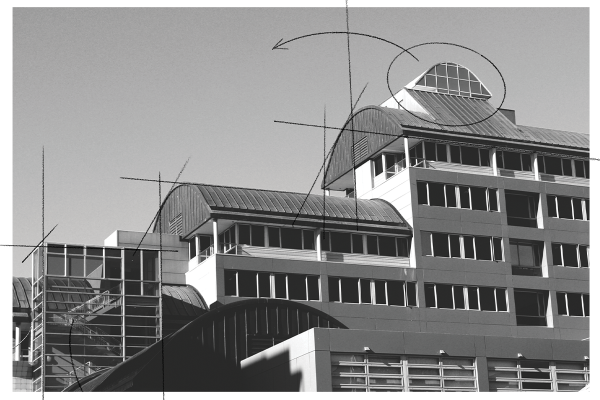
Well, here we are. It’s the final issue of Critic for 2023, and my final issue forever. I’ve been lucky enough to spend three glorious, tumultuous, unhinged years writing for this publication, and now the time has come for my final rampage. And to that I say: fuck it, let’s privatise the Business School. Fully and exclusively. If you’ve been following along this year, you know that 2023 has been nothing but a dumpster fire for the University. Back in May, Otago announced they had a 60 million dollar deficit which they blamed on lower-than-expected student enrolment, even though the targets they missed were set by… themselves. And they were strangely high. Because things around here run like a business, the University realised the only way to rebalance the spreadsheets was to cut costs, which is just finance bro speak for cutting staff; many of whom have dedicated their entire lives to public education and the pursuit of knowledge. Who needs ‘em? The tertiary sector has been chronically underfunded since the 1980s when we moved to a fees-based model which relies on enrolments to generate income. This model, combined with the fact we’re all just cogs in the capitalist machine, meant that with the introduction of student loans, people were only enrolling in degrees that would guarantee them “job security”, (AKA Commerce). Since this change to the tertiary sector, Commerce degree enrolments have shot up 25 percent. Sure, the University still gets funding from the Government, but it’s nowhere near as much as it should be, and it seems like every single subject which isn’t considered “profitable” is on the chopping block. This leads me to my point: surely, in order to avoid a financial crisis and mass redundancies, we entirely privatise the Business School. They will only make money from direct enrolments, not from any other part of Otago Uni. Put your money where your mouth is, right? They’re already quite separate. When you walk into the Business School it doesn’t even seem like it’s part of the University. Maybe my view of university buildings is slightly cooked due to spending the past six years cramped up in the brutalist Burns building which hasn’t been yassified since the ‘70s, but there is something liminal about the Business School (or, as I call it, the land of the invisible hand). It’s got modern architecture, a cafe, huge screens telling me which stonks to buy, drinking fountains with ice cold water, and floor-to-ceiling windows overlooking the Leith. It’s a wide-open space that reeks of privilege, fake tan, and Lynx Africa. It’s full of girls who want to be influencers and boys who think that American Psycho wasn’t satire. Just by stepping foot inside, you can tell it’s a place where fiscal austerity doesn’t seem to exist. And underfunding? Never heard of her. If it doesn’t fit aesthetically with the University, then isn’t that grounds enough to make it a separate entity? Unless you’re studying in the sweltering heat of Central, or risking life and limb to get in the Richardson Building elevator, surely you can’t really call yourself an Otago student. Now before you all get up my ass, now is the time to disclose that I was once a Business School-dwelling beezy. As a fresher, I was a Marketing major until I had the realisation that the entire degree was based on manipulating consumers into buying shit they don’t need and destroying the planet - so I know the fire I’m stoking. Never in my six years of being at the University have I ever met, heard, or encountered a Commerce student who genuinely didn’t think or was told in a lecture that capitalism was the best economic framework for society, and that the only way to deal with debt or financial troubles was cuts to public goods and services. I’ve met several Commerce students who love to yap on about how much they hate socialism and government spending. Well, if government spending assists universities, and you’re all sluts for the free market, then shouldn’t the Business School become a privatised entity? It doesn’t make a lot of sense for you to be taking money from the state when it appears you’re so vehemently against that. Commerce also destroys the original point of university education, anyway. University is a space for thinking, debating, critiquing, and considering how we can improve upon society. It’s not a place where Brad from Takapuna Grammar can drink his way through fees-free to come out with a BCom and get a consulting gig paying gross amounts of money. The fuck are you even “consulting” on at the age of 22? It seems that the commerce programs offer little space for critical thinking, philosophical discussion or political debate. The general logic appears to be “money good, tax bad, me Brad.” If the Business School is privatised and operates strictly like the business model it continuously promotes, that frees up a bit of cash to save the other subjects which are about to be plagued with mass redundancies, budget cuts, and a lack of resources. Lecturers across all disciplines get to keep their jobs, and as long as we live in a society which pushes the belief that you should go to university to become “employable” or people come to Otago just to have fun, then I have no doubt the Commerce degree enrolments will keep coming in. It’s a win-win, and it’s time to practise what you preach, motherfuckers.
-
Culture
 Issue 25 01/10/2023
TOP Leader Raf Manji: On Despondency, Political Potential, and Progressivism
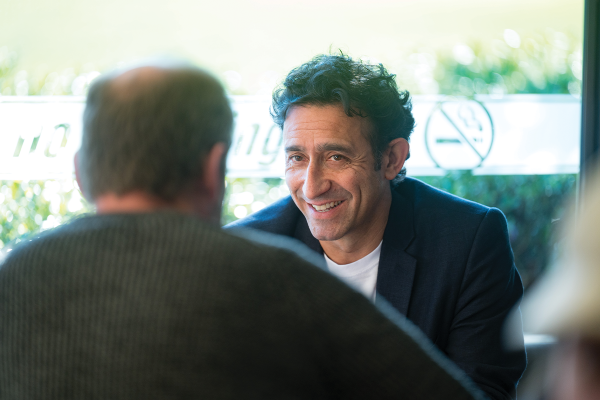
The Opportunities Party Leader Raf Maji is sort of like that international student who showed up in your Geology class one afternoon: you aren’t too sure who he is or where he came from, but he seems pretty cool and is giving all the other popular kids a run for their money. While TOP has yet to enter Parliament, this election season, Raf Manji has the potential to stage Aotearoa’s newest political upset. Originally working for non-profits and volunteering with the Student Volunteer Army, Raf’s main motivation for getting into politics was due to the Christchurch earthquakes and the devastation that had shaken the place he called home. Raf was elected to the Christchurch City Council in 2013 as an independent councillor, and continued his political journey by standing as an independent candidate for Ilam in the 2017 general election. Raf decided to leave politics in 2019 to focus on working for the March 15th Response after the Christchurch Mosque Attack, but was approached by The Opportunities Party in late 2021. “I did have conversations with people about other parties, but what I liked about TOP was that it had a more independent and partisan approach to politics which is where my space is,” he explains. “With some of the other parties you feel like you have to give up a bit of your soul to join them, but with TOP, there’s a focus on outcomes and policy that works and a more collaborative approach to politics. The world is complex and not binary, and we need parties that can look at things like that.” In terms of election atmosphere, Raf thinks that the current state of political affairs have left people in a state of “despondency,” and that major parties are lacking the vision required to improve things in Aotearoa. Relatable, Raf. “If you go back to 2017, it was potentially going to be a National Government, but Winston upset the apple cart and decided to pick Labour and go into confidence with the Greens,” he says. “When it came to Covid in 2020, things had shifted. New Zealand First had fallen out of love with Labour, they weren’t really talking, then the Jacinda wave came through and everyone thought she did really well. I think now we’re at the other side of that conversation and everyone is pretty hacked off with the government, so the pendulum is swinging,” says Raf. “I don’t think there is any great vision from the future… I don’t remember an election where people have been less politically engaged, but also more worried about the future.” With election campaigning in full swing, Raf says that while people are feeling uninspired by what the major parties are offering, getting people to see the power of minority parties has still been a challenge. “I am having conversations everyday with people saying ‘Oh, we did the vote compass and came up with TOP, but we didn’t know much about you’. It shows people are open to other perspectives and ideas,” he says. “People are saying ‘I’d vote for TOP if you were in Parliament,’ and polling indicates we have the 8 to 10 percent party vote out there, but we can’t get there without those votes.” Raf also mentions that TOP’s commitment to bi-partisanship makes them a compelling party as they’re willing to be a progressive option that could work with National or Labour depending on the results that filter in. So, with all this talk of despondency and dismissal, what exactly is TOP offering young people that other major parties aren’t? “We need to start to invest in our young people, and get an understanding of what it means to be a citizen when we’re going to face big complex challenges,” he says. One of TOP’s core policies is the Teal Card: similar to the Gold Card for retirees, but for young people. The card would assist with getting access and discounts towards health care, mental health support and public transport. Raf also mentions that TOP wants to create more financial equity for young people, as we’re often shut out when it comes to talk around home ownership and renting. “I want to push financial literacy, and make sure that every child gets an IRD number, a national health number, a bank account, a Kiwisaver account set up. I think if you get the first five years right, you’re on the road to success, and investing upfront saves money downstream,” he explains. In terms of his advice for young voters or those undecided this election, Raf kept it simple: “This election, don’t worry how it’s going to work out. It’s going to be pretty messy, look at the parties, and just vote.”
-
Culture
 Issue 22 11/09/2023
Your Wellness Instagram Is Just Yassified Colonialism, Actually.
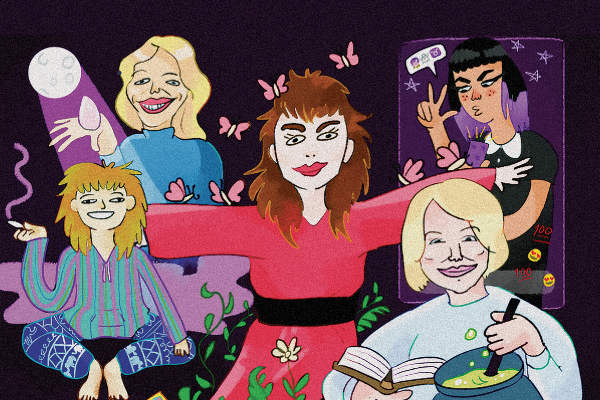
I think we can all probably agree that the golden age of social media is officially over. We’re no longer posting wholesome and heartfelt statuses on Facebook or being unapologetically cringe on Instagram while simultaneously running a successful One Direction Twitter fan account. Instead, social media has become inundated with conspiratorial bullshit, the alt-right, fake news, and, of course, influencers. Now, I know what you’re probably thinking: surely influencers promoting discount codes and self care tips isn’t as bad as everything else we have going on. Right? And while that’s true, it’s also time we talk about the fact that influencers and wellness culture is actually just yassified colonialism. Let me break this down a little more. Originally, colonialism was basically just taking control of an indigenous population and land. As society has progressed, this initial form of colonialism has morphed into a bunch of other (more subtle) ways to reinforce colonial society. Technology and the invention of the internet facilitated global communication which coincided with a rapid increase in media production and subsequently gave birth to social media, all of which work to maintain and uphold a Western way of life. It doesn’t matter if it was intentional or not, the point is that social media tends to uphold Western values. Let's park this up for a second, and talk about wellness influencers specifically. You know the type: Instagram and TikTok accounts filled with pictures of acai bowls (um, actually, it’s “Açaí”), green juices, poké bowls and supplements made out of God-knows-what while also promoting yoga, taking swims under the sunrise, and going on hot girl walks. This all seems to be under the guise of promoting wellness, balance and “reconnecting” with nature and ourselves. Buzzwords like “nutrition”, “journey” and “performance” are used, and it gives you this weird feeling that you’re somehow unsatisfied or missing something if you don’t subscribe to this rhetoric or take the advice from these esteemed wellness gurus (they’re, like, 21 at best). This new social media “wellness” movement has become a lucrative marketing scheme, targeting the very vulnerabilities capitalism created. But here’s where things get fucked up: wellness influencers, and influencer culture at large, make bank off promoting a lifestyle of genuine connection of holistic health as if it’s some sort of new fad. I think you see where I’m going with this. The values of community, connection and understanding the relationship between ourselves, our environment and our mind are pretty central to indigenous cultures everywhere. Even in Europe, where colonists tend to come from. We understand the importance of how all of these aspects work together, providing us with the mental, physical and emotional health required to look after ourselves and each other. And here, the environment is not a backdrop to our business, instead, it’s a part of us. One’s physical health (a-tinana) supports the relationship between our bodies and our external environment. Our spiritual health (a-wairua) determines our inner self and our sense of direction. Our family health (a-whānau) helps guide our ability to care and connect with those closest to us, creating a wider support system. Our mental health (a-hinengaro) ensures our mind and body are connected, and helps nurture our thoughts and emotions. In Māori culture, these are all integral ways in which we can understand our sense of “wellness”, and where one element may be lacking or impacted, this provides insight into what we may need to seek out in order to get better. The point is that for Māori, and indigenous people more broadly, this holistic view of health and wellness has been here forever. I don’t know how colonists lost sight of their version of whatever that is, but this new “discovering the secrets of health” bullshit reminds me a lot of “discovering” a new continent. Like, sure ya did. Good job. Now, this form of wellness is being repackaged as “new” and “necessary” by wellness influencers to deal with the perils of living under a capitalist system, which perpetuates exhaustion and disconnection. Instead of looking to indigenous people, or critiquing the wider, systemic issues in our world, we’ve opted to buy into the wellness influencer scam, as if their discount codes and fruit bowls will fix all our problems. Colonialism relies on capitalism, and capitalism needs something to sell - so it’s now selling the very thing it single-handedly destroyed: a feeling of health and human connection.
-
Culture
 Issue 21 03/09/2023
Literary Legends: A Peek Inside 2023’s New Zealand Young Writers Festival
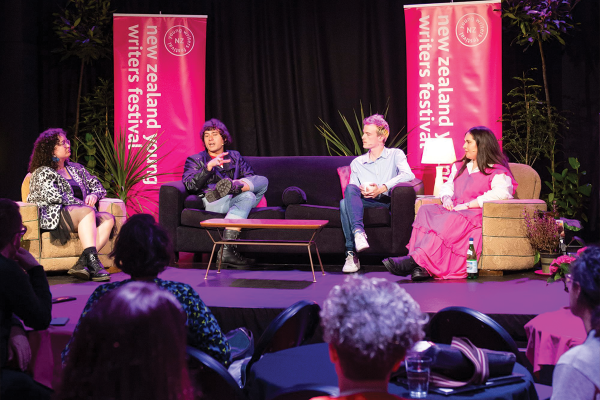
From the 21st to the 24th of September, Ōtepoti is lucky enough to be hosting the New Zealand Young Writers Festival. Produced by Dunedin Fringe Festival, the event is a free, four-day celebration of our creative community across all literary forms: poetry, fiction, zines, journalism, podcasts, and everything in between. Across the four days are a series of panels and workshops open to anyone aged 15-35 to attend, writer or not. Critic Te Ārohi was sat down with guest curator Jennifer Cheuk and Ōtepoti natives Jamiema Lorimer and Olivia Wright, who are both panelists in the festival. Jennifer Cheuk, the festival’s guest curator, is a Hong Kong-Chinese writer, editor and artist who is the Founder and Editor in Chief at Rat World Magazine, based in Tāmaki Makaurau. Jennifer has been a writer her entire life, so much so that as a child she wrote a book called ‘The Dragon Who Lost His Parents’. “I was really cute and funny, and I always talked about wanting to be a writer, so it makes sense I ended up here,” she says. After pursuing a degree in English Literature and Linguistics, Jennifer’s love for writing and creativity continued to expand, but she struggled with the nature of the modern writing landscape. “I started focusing on who was left out, and what stories were left out,” she explains. Her passion for writing and desire to create an inclusive environment for historically marginalized communities led to her founding Rat World Magazine, which is entirely focused on highlighting the underground. “I wanted a space for people who might not have contacts in those worlds, and I was like, ‘Why don’t we just make something for ourselves?’” As guest curator for the festival, Jennifer has been responsible for putting together eclectic panels and creating workshops which highlight the emerging talent in Aotearoa’s literary spaces. Her panels, which include Prescriptions and Prose: Where Medicine and Creativity Meet and Stick It To The Man: The Power of Street Postering, are innovative, and focus on how writing and literary craft can be found in spaces we may not assume. “I’m really interested in writing from spaces that people don’t expect there to be writing from, because people have such a certain way of thinking about creativity,” Jennifer explains. “People think they can’t be a writer if you’re a doctor because they can’t go together, but I wanted to show that you can be a writer and be creative no matter your background. It really is for everyone.” Jennifer notes that this attitude can often stem from people thinking that they can’t have both a creative mind and a logical mind; that instead they have to exist independently. “There are so many things that connect together to make you a writer, and I think people feel like they’re taking away their creativity from their daily practice. You can just be an artist, but you can be even more passionate if you connect those two things together.” Writers fest panelist Olivia Wright is perhaps a perfect example of the magic that can happen when logic and creativity meet. Being part of the panel on Prescriptions and Prose: Where Medicine and Creativity Meet, Olivia is both a keen writer and former English Literature major turned medical student. “I always had an artsy background, I was into writing at school, but I felt like the instability of the creative disciplines made me anxious,” she says, reflecting on how she came to terms with picking her current path. Olivia says that while medicine provided her a sense of comfort and stability (perhaps the first and only time you’ll hear that from a med student) she was surprised how much the creative world crossed over into medicine. “We do lots of tutorial based learning, and it’s all about patient care. We reflect on our practice and we have to journal how we feel and the experiences we have which is creative non-fiction,” she says. Olivia shares that it can be difficult treading both the creative and the scientific world, as people can have a tendency to stick to one or the other. “I hate telling people I’m a medical student because I lose all this other stuff I’ve got going on, but really, we’re a collection of all these different ideas and hobbies,” she says. Olivia says that as a medical student, she’s found embracing writing and her creative side has helped her improve her skills, and could see the benefits it has to doctor-patient relationships. “You can get sequestered into your science or arts corner, but I really champion the jack of all trades, master of none approach,” she says. The panel Stick It To The Man: The Power of Street Postering features Ōtepoti writer, Jamiema Lorimer, who is also Critic’s very own Local Produce columnist. Initially coming from a musical background, Jamiema first became interested in writing while studying her Bachelor of Music. “That was where I started to see writing as something I wanted to pursue, and I saw the scope of how exciting it can be outside of academia when it wasn’t about writing dissertations or essays,” she says. Wanting to pursue this new creative outlet, Jamiema started looking into different media platforms and discovered the world of street postering, which she published a story on in Rat World earlier this year. Through printing in Rat World and keeping in touch with Jennifer, Jamiema explains that her ideas kept expanding, and she felt an urge to promote the postering world as a form of expression. Jamiema says that the city of Ōtepoti has helped inspire her creativity. “Being here for a long time, I’ve been engaged with many different communities, working life, and different music scenes. I'm around a lot of artistic people, and with all the small circles, everything seems to overlap,” she says. Jamiema also mentions that Ōtepoti is the perfect place for emerging creatives to share their work. Being creative is hard, and sharing your art with others can definitely be intimidating. “I was in a position when I was younger where I’d see events like young writers festival and I didn’t feel like it was relevant to me, but there is such an amazing array of writers and creators and these events make you realize how close they are to you and are so important in the development of young writers,” she says. For those who may feel on the fence about attending this year's festival because they don’t consider themselves ‘writers’, or those who are totally out of the loop on why events like this are important, the panelists have some words of wisdom to share. “These events are perfect for those who want to be writers. They’re there to be attended, they’re open, and everyone you meet is a professional writer in a sense,” says Jamiema. “You’re going to be surrounded by people from different skill levels and experiences, but being in a community like this re-legitimates the kinds of writing that are going on.” For Jennifer, she says that writing is an integral part to every facet of study, and that events like this help foster that much needed sense of community we all seem to be after in this day and age. “You need to write to be a good doctor or architect, you need to write to be a better STEM practitioner, and when you look at our literacy rates, we really need to focus on language, writing and creativity, and this community is so important for that.”
-
Culture
 Issue 16 24/07/2023
Chlöe Swarbrick: On Harm Reduction, Landlords, and (still) being the Youngest in Parliament
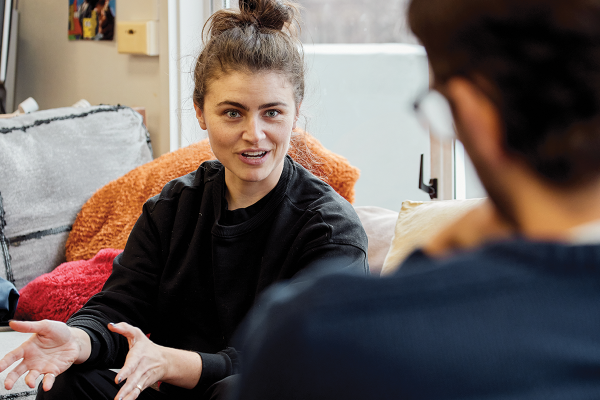
Whether you love her or hate her, over the past few years, it’s been hard to ignore Chlöe Swarbrick. The 29-year-old Green Party Member and Auckland Central MP was elected to office at 23, making her the youngest politician to enter parliament since Marilyn Waring in 1975. In 2023 she’s still the youngest sitting MP, something she sees “as an indictment on the House of Representatives.” Chlöe has been a vocal advocate for drug reform and pushing for harm reduction, which was the focal point of the 2020 Cannabis Legalisation Bill and the more recent Alcohol Harm Minimisation Bill. The latter would have banned alcohol sponsorship and advertising from sports in attempts to deal with our binge-drinking problem. Her approach to drug and alcohol policy has garnered both criticism and confusion from people, so she set the record straight. “The spectrum of regulation for substances is, at one end of the extreme, criminal prohibition. And at the other end you have a complete legal free market without regulations or restrictions,” she explained. “You then have an economic environment that is conducive to those entities operating in such a way that they exploit vulnerable communities to make a quick buck.” Chlöe said that the way to pull back from these extremes is what people would consider ‘liberalisation’, but freely accessible weed isn’t actually what she’s all about; instead, she's about sensible regulation of cannabis - and alcohol, too. “I was arguing for regulation where none exists at the moment. What frustrated me, particularly from the National Party, was pointing to how we have failed to regulate alcohol.” So she proposed her Alcohol Harm Minimisation Bill, which National didn’t support. “Turns out they don’t want to do that.” The bill didn’t make it past the first reading, failing 85 votes to 29. However, there was one small victory, with the government deciding to adopt part one of the proposed bill: local councils will have more power to control alcohol sales, trading hours, and locations in their borders. And it’s small victories like this one that Chlöe reminded us we need to celebrate. In a world where young people feel burnt out and stagnant, remembering that “we actually got something done” is the only way to keep moving forward. “I have been hustling hard over the last few years to try and support as many younger and different people in politics to get involved,” she said. Chlöe didn’t intend on being a politician, nor does she think of it as being a ‘career’. “My approach to politics has never been as a career. I actually just want to get stuff done. I am more than happy to blow up my job if I think it would contribute to something actually happening.” On the topic of getting shit done and the current state of affairs, Chlöe finds the lack of action from our current government frustrating, especially after the pandemic. “What’s really gutting about that collective experience is that all of us actually saw firsthand that the government is capable of things that we’ve been told our entire lifetimes were economically or politically impossible,” she said. “Whether it's flexible working arrangements for people with disabilities or single parents, or direct payments to people who need it or rent freezes, they all happened overnight and that demonstrates that all of those things were always a matter of political willpower.” Chlöe went on to explain that the pandemic was like a portal to an alternate reality, a brief glimpse into what could be. “We seem to have lost that cultural awareness of what is possible within our politics.” Personally, her politics are “unashamedly quite radical[ly] left wing… but I also believe that if I’m not making a difference for the communities I represent, then I need to go home.” And finally, the question on everyone's mind: What does Chlöe make of the financial shitshow the tertiary sector is facing? A few weeks back, Prime Minister Chris Hipkins told us the government wouldn’t bail out the university due to wanting to maintain Otago’s ‘financial autonomy.’ Chlöe reckoned that was “a really cool thing for a former student president to say.” Not only did she believe that the government ought to support universities financially, she believes that the government's role is to recognise that tertiary education is a public good: “It’s not just about economic and productive outputs… It’s also for upholding democracy.” She said that the 1984 neoliberal reforms coupled with the 2011 implementation of Voluntary Student Membership have undermined the tertiary sector, disempowering students – and we’re still seeing that play out today. While for most young people it may seem like the world is ending, Chlöe reiterated that voting and political action is important, and that change is possible. “Students need to realise they are not a small voting block. There are 400,000 students and 120,000 landlords,” she said, which really puts things into perspective. “But look at how much disproportionate political power is wielded by those with capital.” In a politically polarised world, Chlöe has some interesting takes on things. Some may see her as a raging commie, while others may think she isn’t radical enough. In a political arena of burgeoning populism and cults of personality, strong characters like Chlöe can net the hearts and minds of voters by personality and relatability alone. “Depending on what side of the fence you’re on,” she said, “populism may be positive or negative. [But] I think it’s far more important to look at the ideas and the evidence that are underpinning our values.” She said that populism has become more popular since the 1984 reforms and that the individualistic cultural norms they championed “are associated with the mental health crisis and feelings of loneliness and isolation, which undermine our collective capacity to generate political change.”
-
Culture
 Issue 15 18/07/2023
Prime Minister Chris Hipkins: On the Tertiary Sector, Student Life, and Protesting
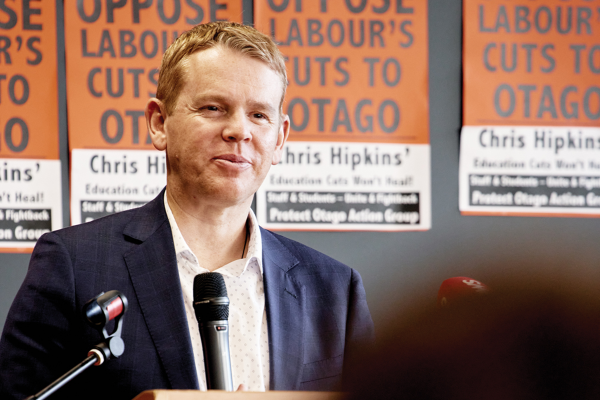
Prime Minister Chris Hipkins represents one thing: hope. At least, hope for rangas and hope for people from The Hutt that, despite the circumstances they were born into, they too can achieve their dreams. While he now has the biggest job in the country, it wasn’t long ago that Chippy was just another hipster arts student at Victoria University, protesting the issues that the tertiary sector is still very much facing. He was so deep in student politics, he even got arrested at a protest back in the day. Prior to receiving a grand tour of the Critic Te Ārohi office (including describing our Luxon cover as “traumatising”), Chris had been downstairs at Auahi Ora delivering a talk on the tertiary sector where he was met with protestors from Protect Otago Action Group (POAG). Among the crowd was that unicycle-riding, guitar-playing monkey. As well as the sign-toting protesters, the space was filled with other concerned members of the community, all seeking answers on Otago University’s financial situation and the proposed cuts. While he got a good grilling, with questions ranging from “why can’t you just fix the budget hole” to concerns over the price of vegetables, Chippy said he couldn’t blame the academic community for how they’re feeling right now. “The questions are fair and legitimate, and I’d be disappointed if a university campus wasn’t a place for that, and it’s not the worst I’ve encountered,” he told Critic. This is despite someone yelling, “Okay, coloniser!” at one point. Back in the day, Chippy was the President at Victoria University Students Association, at the forefront of protesting increases of fees. “We were in an environment where cost [of tuition] was going up, we were paying a couple of thousand and then it went up to 5k or 6k and continued going, so a lot of people got involved at that time,” he said. Chippy also mentioned that during his time as a student politician, “It was about fees more so than support, and once the fee cap came in, the attention turned to other issues in the early 2000s, such as the cost of living,” he said, nodding to Labour’s 2005 campaign to remove interest on student loans. “I had a great time, I loved it, and one of the things I like about student politics is the enthusiasm for good robust educated opinion and debate, and campuses should be places for that.” It certainly was. Otago University is currently in a financial shitstorm, and since the time of interview, Victoria University has announced that it, too, is facing large deficits and program cuts. At the Auahi Ora forum, Hipkins reiterated that he wants all Kiwis to have access to tertiary education, and that our universities should be world-leading. However, his response to repeated questions about funding was that there will “never be enough” regardless of increases in the budget. On the question of whether or not the government can just “fix the budget hole”, Hipkins said that “everywhere” is asking for more funding, such as the healthcare sector and the welfare sector, further reiterating that no amount of money will be enough. When asked if the government would consider a bail out of struggling universities, Chippy said that this wasn’t something the government would do due to wanting universities to maintain financial autonomy. “When I was at Vic, we went through a similar process where they were in deficit and the council was having to make decisions around this, and that did include some unpopular ones, such as no longer teaching Russian,” he said. “No one likes to see that happen, but there is a supply and demand there, as if demand is low, as long as we have to subsidise departments, then the subjects that people do want to study aren’t getting the level of support they need. So the institutions should make those decisions, not us.” Chippy also noted that universities are in better financial shape than polytechs, who were well and truly broke without government assistance. On the quality of accommodation on offer for students, Chris said that the government had been working to change this with the introduction of healthy homes standards. He also noted that students face fixed costs when it comes to rent, and that ability to meet those costs is limited - something he empathised with having spent around 60% of his income as a student on rent - therefore showing why it's necessary to keep increasing student loan payments. We were only given a mere 15 minutes with the man himself, so it was time to wrap things up. With the general election set to take place on October 14th of this year, we decided to ask him: What can students get out of voting for Labour come time to cast their ballots? “You will get a government that is going to continue investing in tertiary education,” he said. Pressed for more details, he replied, “I know that there are specific things that students will want to know where we stand, but we will set this out before the election… It's a choice between a government led by a party that wants to invest and one that wants to cut.” That being said, right now it feels like cuts from all sides.
-
Features
 Issue 13 29/05/2023
Which Political Scandal are You?
How did you pick your major? You decided to study an incredibly challenging course like law or med in Year 11 and haven’t considered any alternative since. You came to uni to study psych, but quickly realised there were much easier degrees to finish in three years while barely going to class and doing every assignment at the last minute. It’s a pretty basic major, but you actually decided to study it on your own! The fact your older sibling studied the exact same thing had nothing to do with your decision. You hadn’t heard of this degree until you were already at uni, and half of the people you talk to about it don’t know it exists. They’re really interested to hear if you can get a job with it, though! You don’t like to admit it, but a lot of former prime ministers and diplomats have the same degree…
-
Features
 Issue 12 21/05/2023
Miss Representation: The New Era of the ‘Dunedin Sound’ Maintains The Sexist Undercurrents of the Past
There is something seriously lacking in Dunedin. And no, it’s not just the scarcity of our venues. Something is miss-ing, if you will.
-
Culture
 Issue 12 21/05/2023
QUIZ: Which Dunedin Venue Are You?
Your latest Tinder match hits you with the dreaded question: “What kind of music are you into?” What half-truth will make you seem more interesting? Jazz, but like, real jazz. Have you seen Whiplash? I’m actually in a surf rock band, that’s probably my go-to genre. I can put you on the door to our gig this weekend if you like haha. You’re no liar: you love DnB and you’re proud of it. You go on an accidental rant about an avant-rap artist from Eastern Europe, which your new flame seems woefully uninterested in. Their loss! You don’t have to answer this question, because it was YOUR opening line! You’re really into punk, though, and get offended if anyone calls it dad rock.
-
Culture
 Issue 11 14/05/2023
Correlation or Causation?
According to Gen Z, “pipelines” are no longer what Big Oil puts in the ground. Rather, a pipeline is an ominous way of understanding the correlation or causation between particular people and their tendencies. There are a few pipelines which are specific to Otago and greater student life, and it’s about time we delve into them so you can recognise if you’re in a pipeline yourself and, if so, where your future is heading.
-
Culture
 Issue 8 23/04/2023
Opinion: The System Isn’t Broken
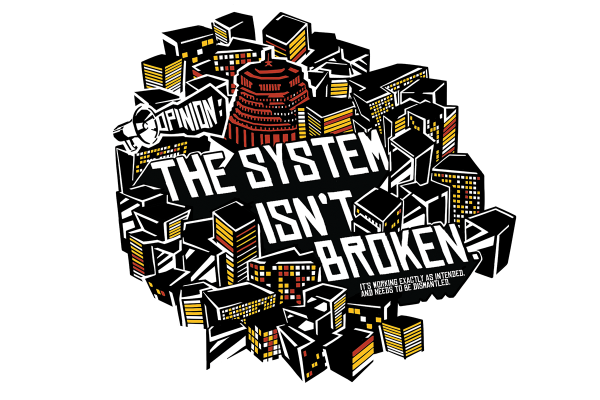
A clean, green, egalitarian nation. One that cares deeply for its people and wildlife, all of whom exist within a beautiful, isolated bubble of freedom, safety, and prosperity. At least, that’s what New Zealand likes to go around bragging about. But when you take a deeper, harder look at this country, it is apparent that we have some pretty big problems on our hands: a struggling healthcare system, atrocious mental health statistics, a housing crisis, and widening wealth inequality. And if you ask me, it can all be traced back to one thing: neoliberalism.
-
Features
 Issue 8 23/04/2023
Crushing the Critic and Conscience:
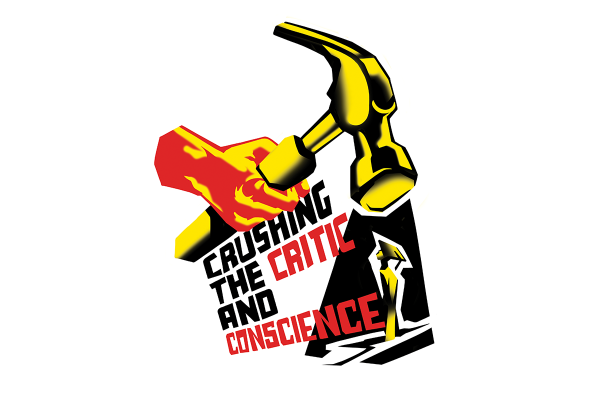
On Thursday last week, the University announced that several hundred staff would be made redundant to help shore up their financial situation. They’ve increased student fees by the maximum allowable amount every year for several years now, and borrowed $30 million in December 2022 from bank loan facilities. They just spent $700k on a proposed new logo and $90 million on a delayed new hall. Last year, their target return on income was 3 per cent. They hit 1.9 per cent. This was caused by the “volatility” of “global investment markets”, made worse by the fact that the Government doesn’t fund the university like it used to.


