
-
Culture
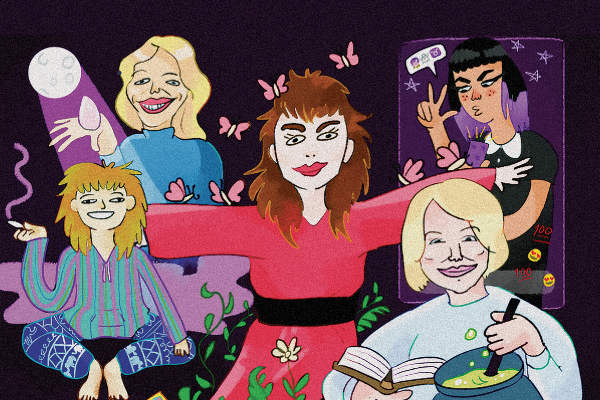
Your Wellness Instagram Is Just Yassified Colonialism, Actually.
I think we can all probably agree that the golden age of social media is officially over. We’re no longer posting wholesome and heartfelt statuses on Facebook or being unapologetically cringe on Instagram while simultaneously running a successful One Direction Twitter fan account. Instead, social media has become inundated with conspiratorial bullshit, the alt-right, fake news, and, of course, influencers. Now, I know what you’re probably thinking: surely influencers promoting discount codes and self care tips isn’t as bad as everything else we have going on. Right? And while that’s true, it’s also time we talk about the fact that influencers and wellness culture is actually just yassified colonialism. Let me break this down a little more. Originally, colonialism was basically just taking control of an indigenous population and land. As society has progressed, this initial form of colonialism has morphed into a bunch of other (more subtle) ways to reinforce colonial society. Technology and the invention of the internet facilitated global communication which coincided with a rapid increase in media production and subsequently gave birth to social media, all of which work to maintain and uphold a Western way of life. It doesn’t matter if it was intentional or not, the point is that social media tends to uphold Western values. Let's park this up for a second, and talk about wellness influencers specifically. You know the type: Instagram and TikTok accounts filled with pictures of acai bowls (um, actually, it’s “Açaí”), green juices, poké bowls and supplements made out of God-knows-what while also promoting yoga, taking swims under the sunrise, and going on hot girl walks. This all seems to be under the guise of promoting wellness, balance and “reconnecting” with nature and ourselves. Buzzwords like “nutrition”, “journey” and “performance” are used, and it gives you this weird feeling that you’re somehow unsatisfied or missing something if you don’t subscribe to this rhetoric or take the advice from these esteemed wellness gurus (they’re, like, 21 at best). This new social media “wellness” movement has become a lucrative marketing scheme, targeting the very vulnerabilities capitalism created. But here’s where things get fucked up: wellness influencers, and influencer culture at large, make bank off promoting a lifestyle of genuine connection of holistic health as if it’s some sort of new fad. I think you see where I’m going with this. The values of community, connection and understanding the relationship between ourselves, our environment and our mind are pretty central to indigenous cultures everywhere. Even in Europe, where colonists tend to come from. We understand the importance of how all of these aspects work together, providing us with the mental, physical and emotional health required to look after ourselves and each other. And here, the environment is not a backdrop to our business, instead, it’s a part of us. One’s physical health (a-tinana) supports the relationship between our bodies and our external environment. Our spiritual health (a-wairua) determines our inner self and our sense of direction. Our family health (a-whānau) helps guide our ability to care and connect with those closest to us, creating a wider support system. Our mental health (a-hinengaro) ensures our mind and body are connected, and helps nurture our thoughts and emotions. In Māori culture, these are all integral ways in which we can understand our sense of “wellness”, and where one element may be lacking or impacted, this provides insight into what we may need to seek out in order to get better. The point is that for Māori, and indigenous people more broadly, this holistic view of health and wellness has been here forever. I don’t know how colonists lost sight of their version of whatever that is, but this new “discovering the secrets of health” bullshit reminds me a lot of “discovering” a new continent. Like, sure ya did. Good job. Now, this form of wellness is being repackaged as “new” and “necessary” by wellness influencers to deal with the perils of living under a capitalist system, which perpetuates exhaustion and disconnection. Instead of looking to indigenous people, or critiquing the wider, systemic issues in our world, we’ve opted to buy into the wellness influencer scam, as if their discount codes and fruit bowls will fix all our problems. Colonialism relies on capitalism, and capitalism needs something to sell - so it’s now selling the very thing it single-handedly destroyed: a feeling of health and human connection.
-
Columns

Takeaways: Week 22
Something to… Watch They Cloned Tyrone (Netflix) Use your ex’s Netflix password that’s still saved on your laptop and strap the fuck in. John Boyega and Jamie Foxx star in this freakishly good government conspiracy movie where, I shit you not, white people are up to no good! Again! I didn’t look at my phone ONCE this entire film, and that’s saying something. What should be some “regular-degular-vanilla-ass shit” ends up being some “weird mint-chocolate-chip-bukkake shit.” Get Out meets Sorry To Bother You. Retrofuturistic set design, stunning soundtrack, insanely cool costumes, incredible everything I literally cannot shut up about this movie. Fuck you film bros this is MY Pulp Fiction. Tarantino has NOTHING on this shit. Read ‘Red White & Royal Blue’ (by Casey McQuiston) With the film adaptation having just been released on Prime Video (I recommend asking your mum nicely if you can use her login), it’s the perfect time to get back into reading so you can brag. If you read it before the watch party with all the girlies you can point out differences throughout the entire movie and feel that much more cultured. If you have already seen the film, never fear! You can still read the book, then watch the movie again and then you can tell the girlies that the book is soooo much better. Listen To Omnibus podcast Ken Jennings is the guy that’s taken over Jeopardy! after his record-breaking 75 episode run, which netted him a cool $4.5 million. He’s “the world’s smartest man”, or at least when it comes to pub quizzes. He’s also got a podcast with John Roderick called Omnibus, which is a sort of collection of bizarre moments in human history, stored in a digital time capsule for whoever finds it after “the cataclysm that will surely destroy our civilization”. Turns out Ken is into some pretty arcane shit, and the whole show is a great listen. There is something for everyone in Omnibus. In fact, they probably have a whole episode on that strangely specific rant you always go on about at parties. Yes, that one! Free on Spotify. Go To The original Heaven’s Gate website Heaven’s Gate was a cult that committed mass suicide in California in 1997, with the hopes that their souls would latch onto the passing comet Hale-Bopp. That’s a bit grim, but what’s fascinating is that their original website in all its 1997 Javascript glory is still perfectly preserved online. Nobody turned it off - the “Red Alert” is still flashing at the top of the page 26 years later, reminding the few stragglers that the time to escape our mortal flesh prisons is NOW! Genuinely just an incredible digital museum. Macabre, bizarre, arcane and oh-so-1997. Support The Major Ball: Olympus Classical Society, Anthropology Society, Food Science & Agriculture Students Association, Postgraduate Society, Scuba Diving Club, and Geography & Environmental Management Society - all joining forces for a clubs ball set on Olympus (you can tell the Classical Society is leading the charge). 7pm Saturday, September 30th at the Otago Museum. Sounds like a great time, so check out the event on Facebook and chuck it in your calendars. Cancel White Fox hoodies Why does everyone own them? What makes them so special? It’s literally a regular overpriced hoodie? You’re just walking around advertising a brand on you in a 70s-esque squiggly font. Support local instead of the Australians. The fun thing about hoodies is that everyone can own different ones that have something to say about who you are, and the White Fox ones say literally nothing. These are like Oodies, but worse. Please stop.
-
News
Is the New Statue Backwards?
Flogging a dead horse to some degree, Critic Te Ārohi asked the University for any word on why the infamous white box still hasn’t been lifted outside St Dave’s. A bit like a kid in the backseat of a car repeatedly asking their parents “Are we there yet?” Once again, we were stonewalled, only being told they “are expecting to be able to unveil the pou whenua before the end of the year.” In the absence of any real knowledge of the subject, students of the Otago University have had enough, finding themselves lost in a hole of conspiracy theories and bottomless rage in reaction to the continued delays. Critic Te Ārohi reached out to the disgruntled many, uncovering some curious theories that can only come from the boredom of looking at a white box day in and day out. Speaking bluntly, one student Griffin said, “Who gives a fuck?” asking that the University simply remove the white box so students could live free of internal torment. Another student, Esther, repeated Griffin's sentiments, stating, “I didn’t know it was there as a box, that’s not going to change when you take the lid off.” But what’s stopping this process? The University said, “It will be revealed to the public once the remaining work and the appropriate tikanga Māori measures have been completed.” This answer is consistent with reports issued to the ODT and Critic Te Ārohi months ago, so what gives? One student, Briar*, got to thinking on the issue, stating, “It’s all a conspiracy… my theory is that the University is using the statue as a base for a network of underground tunnels.” Her second theory - one we understand is shared by many - was that “they’ve got it the wrong way around and haven’t figured out how to turn it back yet.” That would be embarrassing. Suspiciously, the University ignored our question asking if there was any truth to these rumours. Asked about the likelihood of a conspiracy, Lily told Critic Te Arohi, “Yeah it’s possible.” Still she argued, “Would it really make a difference which way you face it, no one’s going to notice once it’s out.” To this degree, she mused that it was perhaps the University’s delay which would make people notice. With a prophetic tone, Griffin took a different stance, stating, “This way or that way, it’s still watching over the people and keeping them safe.” Possibly alluding to the pou whenua’s existence as an omnipotent entity entrapped in the casing of a white cube, Griffin’s comments further emphasised the great need for it to be unleashed from its cage. Though the University is “expecting to be able to unveil the pou whenua before the end of the year,” the student cries of “get it over with already” are mounting. Until it is eventually unveiled, the conspiracy lives on. A trapped deity or a statue simply turned backwards: we’ll leave that for you to agonise over. *Name changed.
-
News
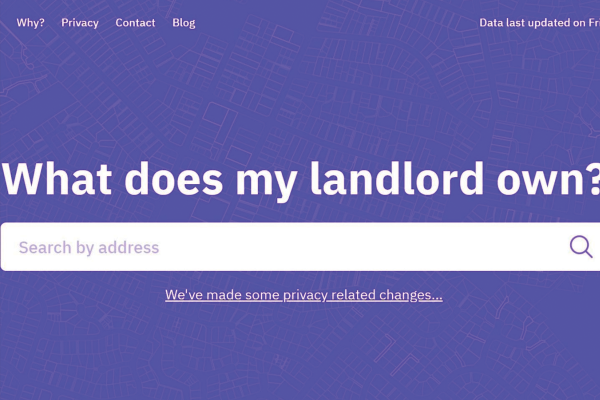
Privacy Commissioner Slams Landlord Website
The Office of the Privacy Commissioner (OPC) has released a media release explaining why the website What Does My Landlord Own? (WDMLO) was found in breach of the Privacy Act. The Privacy Commissioner decided to publicly comment on the website as it apparently “provides a cautionary example in an increasingly data-driven world”. Critic Te Ārohi covered WDMLO back in Issue 3. Essentially, the website compiled publicly accessible data from LINZ to allow users to search any address in Aotearoa and find out who owns it and the associated properties that person owns. The issue that the Privacy Commissioner raised was that when data was manipulated it produced a “common name inaccuracy” in which people with the same name were wrongly identified as owning properties that they do not own. This was found to be in breach of Information Privacy Principle 8 which requires agencies to take "steps that are, in the circumstances, reasonable to ensure that the information is accurate, up to date, complete, relevant, and not misleading." Sunset_flowers, the creators of WDMLO, told Critic Te Ārohi that “the common name inaccuracy is unavoidable” due to the fact that the government records ownership information by full name alone. Further, sunset_flowers claimed that it mitigated the issue by “reframing results from ‘Owned by this person’ to ‘Owned under this name’” and added a description of the limitation on their website. However, the Privacy Commissioner found that these changes were inadequate. Sunset_flowers further alleged that the Privacy Commissioner is turning a blind eye to the website Terranet, which operates much like WDMLO, but is marketed towards landlords and property managers and is not free. Indeed, Terranet allows anyone to search for properties by owner name, essentially allowing you to look up the address of any homeowner. WDMLO, however, only allowed you to search the other way around (from address to owner), and had filters in place to hide the details of owner-occupiers. “The Commissioner hasn't even acknowledged the existence of Terranet raising serious questions about their values and interests,” said Kat, a spokesperson for sunet_flowers. Critic Te Ārohi reached out to the Privacy Commissioner to simply ask if they acknowledge that Terranet exists. This was their response: “Under the Privacy Act, agencies that collect and hold personal information have a duty to protect it and respect it to avoid causing harm to people.” Sunset_flowers says that this indicates the Privacy Commissioner’s “blatant double standard” where they “publicly name and shame WDMLO” all while not acknowledging Terranet. Sunset_flowers told Critic Te Ārohi that “we believe this is because WDMLO aims to empower renters, and challenge the very notion of land ownership, both of which fly against the colonial framework the Office of the Privacy Commissioner exists within. There's no doubt that the Commissioner's decision to shut down WDMLO has won them some gold stars among their government colleagues in Wellington.” Sunset_flowers have made the software for WDMLO open source. Do with that information what you will.
-
News
Where Does Your $1,015 Fee Go?
You probably paid about $1,015 to Otago as a Student Services Fee. Why do we do this? Where does it go? Imagine a group of students wondering where all their money is going as they are sitting around eating instant noodles. And then, lo and behold: a $20 million student levy fund! The money that vanishes from our pockets into the fund goes to several causes. This is all available on the Uni’s website, but we know you’re not looking at that, so we’ve basically just reprinted it here. Recreation (includes sports, fitness, Unipol, clubs and socs and internet): $8,420,538.46, or $425.96 each. Because you can have all the Wi-Fi and Zumba classes you want for the cost of a few weeks’ rent. Subsidised health support: around $8,408,855, or $424 each. What, are we giving our campus doctors gold-plated stethoscopes? Assistance with advocacy and accommodations: around $1,449,230.77, or $72.73 each. You’re paying to help resolve flat disputes whether you like it or not. Advice and information on careers: around $1,305,934.07, or $65.40 each. Preparing us for the well-paying employment that will enable us to pay off our uni loans in a century or two. Media: roughly $2,678,571.43, or $17.93 each. Critic would like a word, and a raise. Pastoral counselling and care; chaplain: around $144,615.38, or $8.00 each. Ah yes, mental health: worth about half the media budget <3 Financial support: about $12,692.31, or $0.70 each. Wow, what a spender! That should cover at least half a textbook, right? The million-dollar (or, in this case, twenty million-dollar) issue is now: what would be a better way to spend $20 million? Do students in Dunedin desire cosy apartments? Fresh food? Clothes? Trusted transportation? Dentistry? Alcohol/drugs? Or perhaps simply an additional $1,015 in hard currency? However, students need not fret since the University Council is on the case. They’re like the referees in this grand financial brawl. They consider our fee-setting requests, compile survey responses (who doesn't like a good survey?), run discussion boards (better than a flat party, right? ), and even communicate with groups like OUSA. They serve as the guardians of our financial future, making sure that the following generation of students may continue to pursue their dreams of being students. Or something like that. I think they also make a lot of money. For more info on where Otago spends our student fees go to https://www.otago.ac.nz/studentservices/otago626140.html
-
News

An Inconvenient Tooth
Labour has announced a plan to provide free dental care by - in part - training more dentists, but students in the country’s only dental school are asking: who’s going to teach them?
-
Columns
Local Produce: Ice Lab
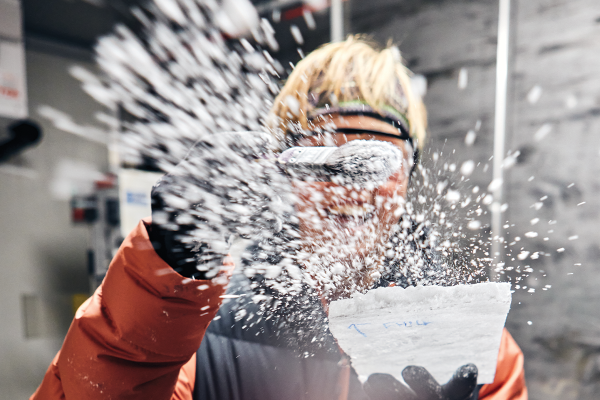
We have an ice lab on campus. If you’re standing on the bridge over the Leith on Clyde St facing toward the harbour, you’ll see it: two blue shipping containers in a parking lot, set to a temperature of minus 8 degrees. The ice lab was set up around two years ago for students who’d previously had to complete a lot of their work bending over deep freezers to stop their subject matter from melting. There are four or five postgraduate students working in the lab, including Zoe MacClure, a Master’s Geology student studying ice. What she does is more complicated than that, of course, but if she were a Ken, her job would be Ice. Zoe said that when she first was offered a postgraduate project working with ice, she was of the opinion that ice was “just all white and boring and there’s nothing going on there.” And we were tempted to end the interview there, but we didn’t. Like the unassuming exterior of the shipping container labs, “actually there’s a lot of really interesting processes going on and a lot of really beautiful things come out. I mean, as you can see,” she said, gesturing at the photos taken from inside the lab. While many of her peers work with ice experimentally, Zoe’s is one of the few whose research is field-based. This, she said, is something she’s had a “bit of a love-hate relationship” with. She’s studying the stresses happening inside ice on the Tasman Glacier, so she can apply those findings to ice in the Antarctic. Obviously, this is a bit harder to access for samples. Ironically, she had the opportunity to spend three and a half weeks in Antarctica for a different project earlier this year to test ice core drilling equipment. It was well into the sub-forties while she was there: “Frostbite was a very real concern,” she said. But it’s nice and toasty in the ice lab’s puffer jackets. Mostly. She’s taken three trips as part of her research to the Tasman Glacier, flying there by helicopter. The five-or-so people who travel there at a time set up camp on the ice with freezers and solar power battery generators: “The kitchen sink, really.” After they finish setting up camp, including a kitchen made out of ice, Zoe said that her supervisor treats them all to a martini on the glacier. “He’s got these plastic martini glasses and he’s taken the bottom of it and we use an ice screw… to make a hole [in the ice kitchen] and then our martini glasses can sit in a hole.” Asked if she thought many students would realise that an ice lab was sitting in the middle of campus, Zoe laughed and said, “Honestly? Probably not. I think a lot of people know there’s work done with ice, but then probably just have not even considered how that would be possible - like collecting it in the field, keeping it in the freezer on the glacier and then the nerve wracking process of like driving home with a freezer going in the car and trying to keep everything cold enough… As soon as you cut the ice out, because it’s so warm in New Zealand” - compared to Antarctica, I guess? - “it’s just gonna melt, and we want to get it back here safely,” said Zoe. She described the paranoia of worrying there might be a power cut, rendering the entire field trip to collect the ice useless. Next comes the analysis: spending long days wrapped up in a thick puffer jacket and gloves, using a band saw to slice the ice thin enough to see individual crystals. Ice crystals within the “S” squiggle shapes you can see pictured contain valuable data. This is where the “love-hate” comes in: “If you have a bunch of cold room days in a row it’s exhausting… you just don’t want to go back in there,” said Zoe. “You just feel drained for the rest of the day.” Next time you complain about how cold your flat is, think of Zoe and her colleagues spending all day in a room colder than your fridge. For science, or something.
-
Columns
Chargrillss: Fried rice
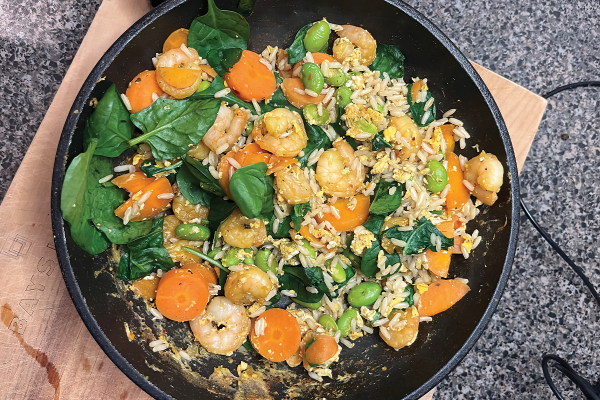
It's September. Fried rice it is. This easy dinner will have you satisfied and not feeling too heavy. There aren't many recipes left for this year so I hope you have given at least one a go. This is easy to follow, and even for the dustiest of cooks it can't go too wrong. Give it a crack. 1 and a half cups brown rice 2 large chicken breasts cut into chunks or 250g prawns 2 large carrots, cut into thin slices 1 cup edamame beans 2 eggs 2 tsp sesame oil 2 Tbsp soy sauce Sprinkle of chilli flakes Sprinkle of turmeric for colour 1 cup spinach Directions Bring a pot of water to boil and add in the brown rice. White rice will do but brown rice is a gut healthier alternative. Add the rice, stir occasionally, and taste until it's cooked through. Heat a large pan with oil. Bring it to medium heat. Add the protein of your choice and cook for a few minutes, then add the sliced carrots and edamame beans for another couple of minutes. Crack the eggs into the pan and mix thoroughly until the egg scrambles. Reduce the heat and add the sesame oil, soy sauce, chilli and turmeric. Stir in. The rice should be well done by now, so strain the water off and add the rice to the pan. Add the spinach before you serve and Bob's your uncle. Have a taste. You may want to add a sprinkle of brown sugar for sweetness, more soy sauce or some sweet chilli to top it off if you have any.
-
Features
It’s In Our Roots
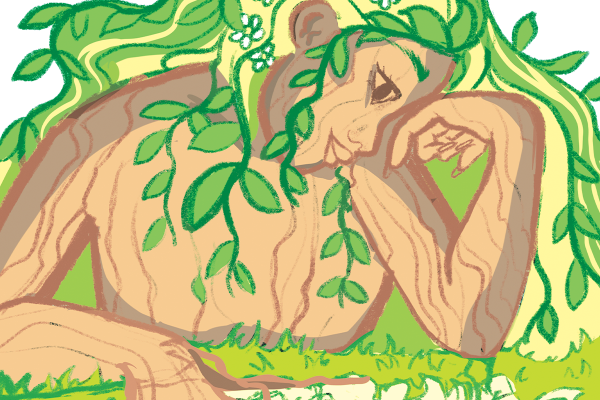
If you’ve ever done a course on Duolingo, you’ll probably have noticed that the French think shovels are feminine and cheese is masculine. Colonisers, amirite?) But te reo Māori doesn’t really place emphasis on masculine and feminine nouns, and instead garners much of its contextual meaning from whakapapa (genealogy). English, to its credit, isn’t big on gendered nouns either, but English and other Western languages insist on personal pronouns. While this might seem dismissable, the implications are quite insidious: if your entire worldview is narrated by the gendering of objects, gender becomes a central factor of life. I mean, imagine getting stepped out for misgendering cheese, but thinking personal pronouns are for the woke… yikes. As tāngata whenua, our relationship with the land stands as a testament to the intricate bonds that exist between people and the environment. We trace whakapapa to the natural world, bury our afterbirth in the whenua, and eventually return to the earth from which we came. But it is the marae, the heartbeat of hāpori Māori, that unites tāngata whenua across the motu. Honestly, it’s undeniable - it’s in our roots. It is our roots. And it’s here on the marae where debates over these pronouns are raging, all while we strive to revive a language that doesn’t even have them in the first place. To some, the marae is but a labyrinth of protocol steeped in age-old traditions. Some Māori find themselves disillusioned by marae formalities, which doesn’t make them want to visit. Critic Te Ārohi sat down with tauira Māori to discuss the weight of marae culture: from sleeping arrangements and gender-specific bathrooms, to gendered responsibilities and beyond. Between the piercing call of the karanga, to the hākari where all hands blend to fix a feast for the multitudes, varying degrees of procedure characterise every marae and its people. This is known as ‘kawa’, a concept that is similar to tikanga. The kawa of every marae and hapū is almost guaranteed to change based on location: for example, in parts of the Far North, women are not permitted near carving workstations, and iwi such as Tainui and Te Arawa follow the tau utuutu (alternating speeches) method during whaikōrero. Kupu like ‘takatāpui’ have origins in places like Wairarapa. But here, there and everywhere, with or without the title, these people have always existed. Waitapu (Ngāpuhi, Rongowhakaata), a fourth-year student in Auckland, spoke of her own experiences as a whakawāhine growing up in Northland, taking aim at a particular institution. “Up at home, the influence of the Church clearly takes precedence over tikanga, and I just didn’t fuck with it,” she said. “I constantly felt like a burden; like that relative with a thousand dietary requirements, when really I just didn’t wanna sleep next to all the tāne… don’t get me wrong, other marae I visited during kura were quite accepting. It be your own that don’t.” At its core, takatāpui embraces diversity while rejecting the notion that gender and sexuality are binary categories. And historically, Māori society embraced these identities. So where did it all start to shift? I’ll let you take a wild guess. “The relationship between takatāpui and tāngata whenua has been fractured for a long time, and [for] people like me it’s impacted my desire to go home,” said Waitapu, who agreed that judgement has, over time, expanded to other Māori who don’t fit a certain description. From urban Māori, to white-passing Māori and can’t-speak-the-reo Māori, the displacement is real. “We make fools of our whanaunga for shit they had no say in - no Māori just decides to just be white-passing or willingly abstains from te reo [Māori] at birth. But here we are, making it a running joke.” What we consider “the norm”, however, wasn’t always normal, considering the gendered hierarchy was just as foreign as tāngata pōra. It just wasn’t a thing back then. You can see this in te reo Māori, as both personal pronouns (ia) and possessive personal pronouns (tana/tona) which are gender-neutral. But the sudden arrival of Christianity and Victorian values forever changed Māori society, shattering all ideas of gender diversity and placing men firmly at the top. Today, through cultural revival and a surge of international pride, some of these traditions are reemerging. Atawhai (Te Ātiawa, Ngāti Raukawa), a graduate student in Kirikiriroa who identifies as iakē (genderqueer), shared that external influences have had a detrimental impact on Māori for the benefit of colonisation. “We are fracturing our relationships to align with a standard that didn’t once try to understand our own,” they said. “Instead of kissing the white man’s arse, why can’t we love our own people? We preach ‘manaakitanga’ to foreigners, and then don’t manaaki our takatāpui - make them feel like accessories.” And moving towards (or, in many cases, back) to a genuinely takatāpui-inclusive space on the marae is a vital step towards recognising their contributions to the development of te ao Māori. Waitapu agreed that the first step in the right direction goes beyond pronouns - a no brainer, really. “Getting my pronouns right is like foreplay… you kinda should just do it. The reo is already inclusive. But the active work we need to do is rethink traditional gender roles and expectations,” said Waitapu. “We have so few tāne that are fit to speak on the paepae, which is what drove me away from home - not being allowed to speak on the pae as a transwoman. While I don’t have a burning desire to, I was raised to do so.” Atawhai added, “It’s clear to me now, that our people have religious trauma and need to have a wānanga with themselves about it. Until then, I don’t have to put up with it.” “There ARE Māori who view wāhine as accessories, and see takatāpui as ‘unnatural’,” Atawhai said. “Considering the extensively recorded importance of our female and takatāpui ancestors, and the role they held throughout history, only to become a false narrative… my tūpuna would be spewing in their graves.” While historical accounts and evidence prove that takatāpui were established members of society, this is continuously challenged by historians as exceptions to the rule - the rule being that men hold leadership positions in traditional cultures worldwide. However, Atawhai said that “the evidence provided proves anything but that. Those claims are nothing more than a stereotype… Indigenous people ARE the exception to that rule. ‘Nuff said.” After all, who are we to deny our roots, muddied hands and all?
-
Features
BIONICLE: The Craziest Use of Te Reo You’ve Never Heard of
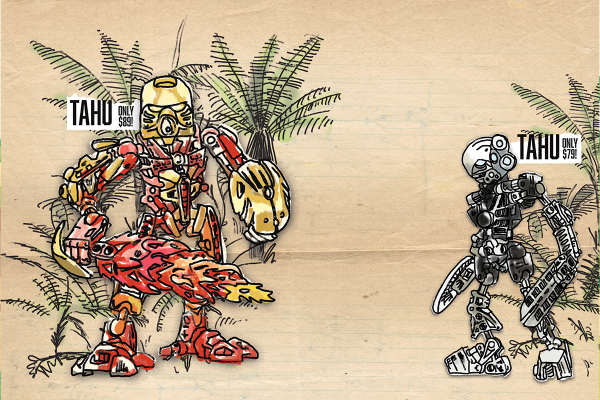
Once upon a time, the great being Mata Nui wandered the endless cosmos. But his evil brother, Makuta, plotted to destroy him. Makuta summoned hoards of monsters, but could not take the Great Spirit’s life. Instead, Makuta cast Mata Nui into an eternal slumber. His body came crashing down from the heavens into the sea, forming our pristine world. The first people were villagers called the Tohunga, performers of the Great Haka, children of Rangi and Papu, and they lived in peace with their environment. But trouble is stirring in Mata Nui. Prophecy has foretold the coming of a new Toa, and the forces of Makuta will stop at nothing to control him. Sound familiar? That’s probably because most of those names and words come directly from te reo Māori. But this isn’t a traditional pūrākau (legend). This is the plot of Bionicle, a line of toys made by the LEGO Group. I wanted to write a piece about appropriation of Polynesian culture by a Danish toy company, but this quickly spiralled out of control. Turns out, Bionicle isn’t just a toy brand with a loose veneer of Polynesian culture; it has a ten-year history spanning an astonishing 2,000 pages of lore — plus video games, comic books and movies. This lore is so dense and incomprehensible that we had to get one of our volunteers to watch a nine-hour-long video on the backstory, coupled with an 83-page treatise on their language and a bona fide academic paper from the University of Copenhagen to boot. 2001 saw the release of Lord of the Rings, a movie based on a book based on one man’s obsession with creating a language. It also saw the release of Bionicle, a toy line based on one man’s severe illness and flavoured by Polynesian culture, and also centred on a language. I am not exaggerating when I say these two fandoms have comparable troves of background lore, which is why we are explicitly sticking to the 2001-2003 period of Bionicle, from the first release of toys, to the first movie. Simply put, the basic idea of Bionicle (read: Biological-Chronicle) is that a big robot crashes down because the cells in his body are fighting for control. He goes to sleep in the ocean and the parts of his body above water become islands (sound familiar?). Unbeknownst to the inhabitants, their entire existence is within a larger being, where they must fight off “infections” in the form of the Makuta to save the host body. The canisters the toys come in are even shaped like pill capsules. That’s the “Biological” half. To build the “Chronicle” half, creators of Bionicle tapped into genuine island culture for “inspiration”. Here is one of many, many examples: most of the Tohunga (villagers of the Matoran species) are on Mata Nui (the main island). They live in six different wahi (biomes), and if they are given the chance to take up a Kanohi mask, they can unlock their elemental powers and become a legendary Toa warrior. Once a Toa feels their duty has been fulfilled, they can transform back into a villager, except this time they’re a wise elder. Every single one of those terms is a direct translation from te reo, except ‘Matoran’. In 2001, LEGO had just bought the rights to Harry Potter and Star Wars, and while their toys were a hit, their finances were in the shit. Bionicle was there to save the day. Propped up by rich Polynesian history and language, the product line was the only profitable LEGO product for several years, single-handedly keeping the entire company above water. Part of this success was the toys themselves (fuckin’ ripped), but part of it was also due to the vast world imagined by the product line’s designers. This lore was clearly inspired by te ao Māori and other Pacific islands like Fiji and Hawai’i. All this backstory had already been set up when LEGO started releasing the toys and online game, and while Western audiences might’ve thought of it as “cool, exotic nonsense”, a lot of the terms started to seem very familiar to people in Polynesia. Yet again, an overseas indigenous population made it into the mainstream, but only in the role of “alien”, because that’s exactly what they are to their Western designers: alien. Let’s look at the original line of toys: We’ll start with the lowly villagers, which were originally called Tohunga. There was Onewa, the grey one from the mountains (whose name literally just means “grey”). Matau, the green one from the forest who was maybe meant to be from the ocean because his name means “fish hook”. Did someone accidentally swap the two? Who knows. And how could we forget Whenua, the one that drills through the earth? Pronounced, of course, “wen-ua”. Which I guess is fine if you’re from Taranaki (it was later changed to ‘Onua’). Remember: the Tohunga are tiny, 40-ish piece play sets. If you wanted a bigger toy, you had to purchase a whole different playset: the Toa. Also known as the Toa Mata (literally “mask warriors”) and later Toa Nuvu, these elemental heroes gained their power by adopting various masks. These came with new names, giving us Tahu (the fire Toa), Pohatu (the stone Toa) or Kopaka (the ice Toa). Each name is literally just their elemental theme in te reo. Other names came from other Polynesian languages, like the Hawaiian “Lewa” giving its name to the air Toa. Oh, and spoiler alert: if you knew te reo, you’d realise that island of Mata Nui (“Great Face”) was secretly the protruding mask of the sunken deity all along. Plot twist! And it goes beyond names and places. The Matoran language - which is a fully-fledged thing of its own - has a sentence and grammar structure extremely similar to te reo, with a limited vocabulary made up of a hodgepodge of words from the Polynesian Triangle. And since people are so incredibly invested in Bionicle lore, a whole generation of kids in the early 2000’s ended up accidentally learning rudimentary te reo in the process of playing with these toys. No joke! The 10-part documentary series that I tried to watch (different than the one our volunteer watched) was hosted by a bespectacled geek with about a bajillion Bionicles on the shelf behind him, and at one point he interrupts the video to describe the naming conventions of the various Toa, explaining how the descriptive terms come after the nouns, all in perfect te reo. This man literally taught himself te reo without realising it. Not every word was ripped from te reo; many just sort of “sound like” they’re Māori. LEGO also seemed to favour the same sounds over and over, undoubtedly confusing parents everywhere when they couldn’t remember if their kid wanted a new Brutaka or Piraka. Or was it a Berocca? But if you look past the early years of Bionicle, you’ll notice that a lot of these Pacific terms seem to die off, replaced with names that just sort of “sound like” they’re from here, or names inspired by Greek, Latin or other European sources. And there's a good reason for this; after the 2001 release of the ads, local iwi caught word that some Danish toy company was making products using their language, and they had a problem with that. It’s at this point that a lawyer sent a strongly-worded letter to LEGO, basically saying, “Hey can you please not use our culture for this, also don’t you dare trademark any of these words.” And his challenge worked. LEGO apologised and said they’d change some names in the future, most importantly “Tohunga”, which translates to something much more influential than just “villager”. This was worked into the storyline by having the various Tohunga realise they’re one people and suddenly deciding to change their species name to “Matoran” - though this event was pretty quickly dropped from the story and pushed under the rug. The elder villagers were renamed “Turaga”, a clear nod to Tohunga. But this wasn’t the only thing pushed under the rug: the online game had a few lines of dialogue that needed to be changed. For instance, mentions of “Rangi and Papu” were removed, and Jala, the Captain of the Guard, became “Jaller”. He also no longer describes his participation in “the Great Haka dance” because… yeah. LEGO, fearing a “bitter conflict” with Māori groups over their only viable product line, agreed to demands made by the iwi. The iwi, in turn, agreed that LEGO probably didn’t mean any harm by using Polynesian culture. Roma Hippolite (of the Ngāti Koata Trust) said at the time, “We have been impressed by the willingness of Lego to recognise a hurt was inadvertently made and show that in their actions.” LEGO sent a representative to meet with these groups in person, promising that future sets would avoid appropriation, and that an internal code of conduct would be built to avoid this mistake elsewhere. The next year, 2002, Aotearoa formalised Toi Iho Māori: the recognised trademark of te ao Māori – though, like the characters in Bionicle, it has changed shape over the years. To make this even crazier, the lawyer that represented these groups would, years later, take on a much more high-profile case of misrepresented islanders. His name is Maui Solomon, and he is the guy that fought for formal representation of Moriori. Maui (Moriori, Kāi Tahu) has somehow been woven into this bizarre story, and despite what the Bionicle legends would say, he’s probably the real hero here. Sorry, Mata Nui. Following the challenge, Bionicle made some retroactive corrections and changed their ethos moving forward. But the impact had already been made. An entire language and culture had been formed around these cultures, and a dedicated fan base sprung up to chronicle the lore - a fan base that is incredibly active online. Many of them are very aware of the influences of te ao Māori, but many casual fans never had a clue. And that was basically that: a bunch of white kids accidentally learned te reo, Maui Solomon got brought into the fray, and LEGO survived financial ruin by hitching a ride on Polynesian culture. Now, we’re being treated to ads for an upcoming Bionicle game. Fans are veritably manic over this news, looking forward to a return to Mata Nui early next year. Perhaps we can look forward to a new generation of accidental te reo enthusiasts - though this time someone might want to tell them that the language is more than just flavour for a children’s toy. LEGO is not the only group to tap Polynesian lore for “inspiration”. How often do we see te ao Māori cast as the “alien” culture, rather than human? Looking at you, Avatar. Each word appropriated a shadow over Polynesian culture. Each kupu not alien, just indigenous. Each set sold separately. DICTIONARY SECTION BELOW - 1 PAGE A (Brief) Dictionary of Bionicle’s Polynesian Words Yet again, somebody with a lot of time on their hands has come to the rescue. Chuckschwa on Reddit has compiled an extensive list of Matoran words and their Polynesian roots, some of which have been included here: Characters Toa - elemental heroes/protectors Toa (Māori) - warrior, courage, champion, bravery, expert Tohunga - villagers Tohunga (Māori) - revered village expert Tahu - Toa of Fire Tahu (Māori) - to burn, ignite, set on fire Pohatu - Toa of Stone Pōhatu (Māori) - stone Kopaka - Toa of Ice Kōpaka (Māori) - ice Lewa - Toa of Air Lewa (Hawaiian) - sky, air, atmosphere; to float, swing Gali - Toa of Water Gali (Kamilaroi/Gamilaraay) - water, rain Galu (Samoan) - wave Onua - Toa of Earth Honua (Hawaiian) - earth, land, world Fonua (Tongan) - the whole earth Vakama - Turaga of Fire Vakama (Fijian) - burn Nokama - Turaga of Water Waka ama (Moari) - outrigger canoe Noka, Nokata (Fijian) - to tie up, make fast, a boat from going adrift Noke (Fijian) - woven basket for collecting seafood Nuju - Turaga of Ice Nuju (Rotuman) - river bank; beak; mouth; to recite by memory/heart; spokesman Nuju (Sudanese) - to lead, tend Onewa - Turaga of Stone Onewa (noun, Māori) - granite/basalt, short weapon made of stone Whenua - Turaga of Earth Whenua (Māori) - ground, land Matau - Turaga of Air Mātau (Māori) - to know, be certain of (noun) knowledge, understanding; fish hook Mata'u (Rotuman) - carefulness, caution; to watch Matau (Tahitian) - fear, dread; accustomed or used to a thing; fish hook Makuta - evil spirit, Master of Shadow Mākutu (Māori) - witchcraft, sorcery, spell or incantation — Masks Kanohi - masks of power Kanohi (Māori) - face, countenance Pakari - mask of Strength Pakari (Māori) - to be strong, sturdy, mature Hau - mask of Shielding Hau (Māori) - vitality; breath, air Kaukau - mask of Water Breathing Kaukau (Māori) - to swim, bathe Miru - mask of Levitation Miru (Māori) - alveolus (part of your lungs) Mirumiru (Māori) - a bubble Kakama - mask of Speed Kakama (Māori) - be quick, alert, nimble Akaku - mask of X-ray Vision Akakū (Hawaiian) - vision, trance Huna - mask of Concealment Huna (Māori) - to conceal, hide Huna (Hawaiian) - secret Rau - mask of Translation Lau (Tongen) - to talk, to converse, familiar discourse Parau (Tahitian) - to speak, converse; the shell of the pearl oyster Komau - mask of Mind Control Mau (Māori) - to seize, to take hold of Koma (Māori) - axe head made of stone Mahiki - mask of Illusion Hiki (Māori) - to lift up, carry Mahiki (Māori) - to jump, leap, hop, vibrate Note: this mask was worn by the air Toraga, Matau, which might explain the words used. Matatu - mask of Telekinesis Matatū (Māori) - to be watchful, to keep awake Ruru - mask of Night Vision Ruru (Māori) - owl Aki - mask of Valor Āki (Māori) - to encourage, challenge, incite; to beat, pound, throw down Rua - mask of Wisdom Rua (Māori) - hole, chasm, abyss (where heavenly bodies disappear before returning again) Vahi - mask of Time Vahi (Pascuan) - to pass (of the beginning of a season) Vahi (Rotuman) - to be completed; to be past/gone by (events, time) — Places and Nature: Mata Nui - island home; Great Spirit Mata (Māori) - face, eye, surface Nui (Māori) - to be large, many, great Koro - village Koro (Fijian) - village Mangaia - great volcano Maunga (Māori) - mountain Daikau - carnivorous jungle plant Dai (Fijian) - trap Kau (Fijian) - plant Hikaki - large fire lizard Hika (Māori) - to rub violently (to kindle a fire) Kahu - great hawk Kāhu (Māori) - hawk Tarakava - giant water lizard Tarakuero (Pascuan) - a fish Tarakona (Māori) - dragon Vatuka - stone monster Vatu (Fijian) - stone Ka (Fijian) - thing Amaja - story circle A'maja (Rotuman) - to develop a story/theme Ignalu - lava surfing sport Ignis (Latin) - fire Nalu (Hawaiian) - wave Suva - Toa shrine Suva (Fijian) - mound or pile of stones used to mark a place; Capital of Fiji
-
Columns
Editorial: Te Wiki o Te Reo Māori: Because who needs English, anyway?
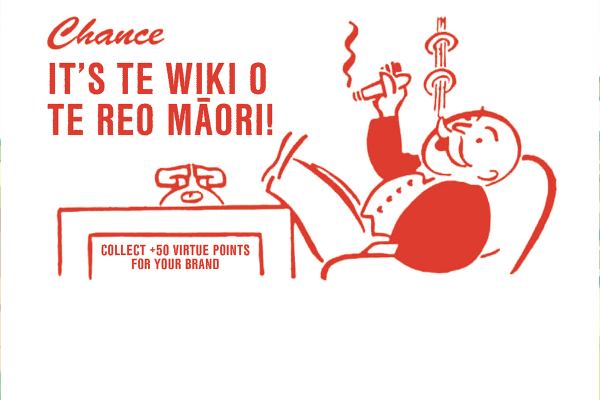
Ah, Māori Language Week, that time of the year when corporate giants dust off their faux-cultural sensitivity and engage in the shameless game of linguistic Monopoly. It’s almost heartwarming to see these mega-corporations roll the dice to determine which Māori word they’ll incorporate into their branding next. Will it be ‘whānau’ for that warm and fuzzy family-friendly image, or perhaps ‘kai’ to give their overpriced organic snacks an air of authenticity? It’s all just part of their elaborate marketing strategy, where they collect cultural tokens and properties, hoping to win the game of public perception. But don’t worry, while THEY rake in the profit, the true winners of this linguistic board game are the Māori language and culture, being trotted out like little Monopoly pieces for the corporate elite to play with. Just remember, e hoa mā, when it comes to Māori Language Week, you can't pass go, and you most certainly won't collect $200 - unless, of course, you're a multinational corporation with a monopoly on cultural appropriation. But as the algorithm feeds us the same “5 ways you can speak Māori this week” bullshit, we may actually be hindering progress, not furthering it. Don’t get me wrong, the exposure is great, but it’s starting to feel pretty bland. In short: shit’s just boring. We need to elevate, not tokenise. Please, I cannot stress this enough: I don’t want another ten words to use in the workplace. Speaking of large corporations on the cutting edge of terrible timing and questionable decisions, the University has decided to unveil a new rebrand (more like ‘reo-brand’, ha) just as the Māori Language is gaining momentum and recognition. And while it’s great to see this recognition, and while I can only assume it’s a genuine effort to elevate and not tokenise, I’ve still got a bone to pick with this. The overarching raru here is that the poorly executed timing coincides with the announcement of major budgeting woes, meaning Māori advocacy is getting torn to shit and copping the blame for being “expensive”. I mean, it’s as if they thought, “Hey, let’s overshadow an entire culture’s efforts to preserve their heritage by choosing the worst possible timing.” Congratulations, University of Otago, for reminding us that some institutions are truly timeless in their näivité. Ōtākou Whakaihu Waka goes hard - I just think the timing might undermine some of our people’s hard work and allow your efforts to feel as if they’re token values, not tāngata whenua values. And nobody wants that. So let’s platform some changes. For instance, in this issue, we’re not just doing guides on your everyday basics of the reo; every article is not just about te ao Māori alone, but specifically about an investigation into the way kupu Māori have influenced several corners of society: from controversial pronouns, to the LEGO company, and even to figuring out who the hell ‘Ngāti Pākehā’ is named after. Because it's Māori Language Week, not just Māori Week. On Māori land, every week is Māori week. Don’t you forget it. Ka keetz Sky xxxxx
-
Culture
Ngāti Pākehā? More like Naughty Pākehā!
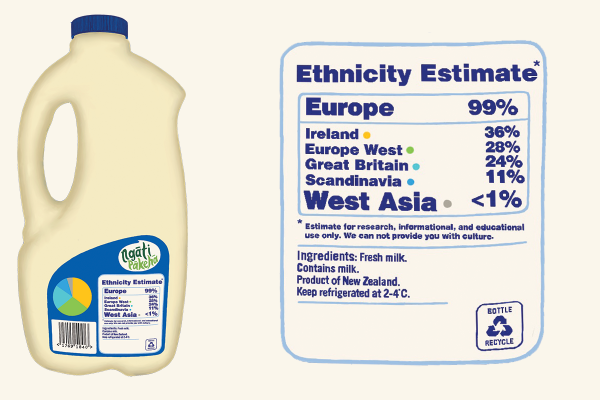
The descendants of Porourangi are known as Ngāti Porou, and Ngāti Tūwharetoa in the central North Island are, of course, descended from Tūwharetoa. So if ‘Ngāti’ means ‘descended from’, then who the hell is Pākehā? Many Europeans, and even some Māori, are using the term 'Ngāti Pākehā' to acknowledge Western roots. In a world where political correctness reigns supreme, where words are dissected with surgical precision to avoid any hint of offence, we now have this gem to add to our ever-growing lexicon of absurdity. Some have argued that it serves as a means of reconciling historical injustices, whereas others say, not even eah. ‘Pākehā’ has been in use since the arrival of the Endeavour in 1769, and it was the most frequent term for these people throughout the 19th century. “I find so much identity in ‘Pākehā’, and yet so much disdain for ‘Ngāti Pākehā’,” said Josh*, a Masters student here in Ōtepoti. “It implies equivalence at an iwi level.” You see, ‘Ngāti Pākehā’ is meant to be a tongue-in-cheek jab at those of European descent in New Zealand. It's an attempt to create a parallel with the Māori iwi (tribal) structure, suggesting that Pākehā (New Zealanders of European descent) have their own "tribe" called Ngāti Pākehā. So, essentially, those who coined ‘Ngāti Pākehā’ are suggesting that people of European descent are a tribe, complete with their own culture, customs, and traditions. I can just imagine the council meetings of the Ngāti Pākehā, where they discuss the best ways to make a cup of tea and the proper etiquette for queuing. “Rather than upholding an organic term that’s grown across 250 years of interaction and cross-cultural exchange, we’re trending terms that are just flat-out incorrect because they sound ‘chic’,” Josh argued. “Pākehā is a stand-alone term that has been used historically. Why can’t we leave it at that?” But even the word ‘pākehā’ is a bit mysterious. Old farts think it literally means ‘white pig’ (sadly untrue, shocker), and others believe it to have derived from ‘Pakepakehā’: mythical, fair-skinned creatures whose canoes transformed into sailing vessels. Considering our ancestors didn’t have pigs in Aotearoa, I’m sure you can draw your own conclusions. Following the big bang that was the Māori language revitalisation movement, support from every corner of the motu has grown exponentially. Te reo Māori is present within nearly every space, Pākehā and tauiwi are embracing the reo (I mean, it’s kinda hard not to), and with the promise of bilingual road signs in the making, things are looking pretty promising. And pride in Māori identity is soaring, too. People rep their Ngāti Wai, their Ngāti Porou, their… Ngāti Pākehā? Wait a minute. What gives? If ‘Ngāti Pākehā’ basically means “I’m white”, embracing it as a tribal identity sort of implies that the settlement of New Zealand is equal and valid on the part of both Māori and Pākehā. Josh said that while “one was a natural human journey via generations of… explorers who would become Ngāti Māori, Pākehā settlements [were] a deliberate, planned colonisation.” Only one of these groups “usurped the indigenous people of 95% of their lands, protocols and indigenous law.” It goes without saying that the concept of a multicultural and inclusive society is highly valued here in Aotearoa. Just look at the University of Otago website and you’ll see exactly what I mean: in-your-face diversity and incessant inclusivity. You get the idea. “Perhaps the term is inclusive to some people,” said Josh. “[But] what’s wrong with ‘Pākehā’ on its own?” Julia*, a design student at the Polytechnic who had never heard of ‘Ngāti Pākehā’, agreed that it was a bizarre concept: “It’s just as bad as ‘Straight Pride’… so self-righteous.” Essentially, it disregards the Māori experience and uses the term ‘Ngāti’ as nothing more than a stamp of approval, according to Josh. But it doesn’t stop there. The term ‘Ngāti Pākehā’ is also a not-so-subtle attempt to transform the history of European ‘settlers’ from colonists to something closer to home, something tribal, as if they’ve always been here. It’s like saying, “Look at us, we’re just as cool as the Māori with their rich cultural heritage, except our cultural practices mainly involve eating pies and watching rugby.” Striving for a multicultural society is great, but sometimes we’ve got to stay in our lanes. Not even Ngāti, cuz, just Pākeha. Own it. *Names changed.
-
Columns
Moaningful Confessions: Campus watch fanfic
Before you ask: no, this fantasy never happened nor have I abused Campus services just to see them. I respect their power way too much. But I can dream, and if it were to happen, I think it would go something like this. It all began on the first Saturday of O-Week. Mind you, this was a few years ago and I’ve grown up a lot since then. I got to the house party on Clyde and within 5 minutes of being there I had a scrumpy taped to my hand, Luude was blasting, and my worries started to fade away. As the night tapered on, I was sobering up. That was, until I was put into a dizzy spin when Campus Watch showed up. They came into the house and said there was a noise complaint and everyone had to go. Tommy, one of the Campus Watch men, came up to me and laughed. “Need a hand getting that tape off of you?” I must’ve blushed so hard, responding, “Yes, please.” After grabbing my hand and gently removing the tape, I looked around and everyone else had left the party. Before I could even ask, Tommy read my mind, “Do you need a ride home?” I’m not sure if this was me reading into a situation that wasn’t there but for some reason his Campus Watch partner had to go back to the office so it was just him and me. As we got to my flat, he parked the car. We sat in silence before I got the nerve to invite him in, and he accepted. My heart pounded as we headed to my room. Tommy’s gentle touch glided down my waist as he closed the door behind me. “How about we get your wrists taped again, this time to your bed,” he whispered. I nodded as I felt myself getting more wet. The red lights of my room reflected off his high vis jacket as I threw it on to the floor. His firm hands grabbed my wrists and taped me to the bed as he slowly ate me out. I was shaking, about to finish when he stopped, looked up and said, “I’m here to ensure that student behaviour is at a reasonable level, and it seems you’re about to be out of control”. He stood up and got undressed, looming over me. To say the least, he was built like the fucking Clocktower. Or should I say, cocktower? Hard, sturdy, and wanting to be punished. “But wait-” I gasped for breath, “can you keep the boots on?” Tommy entered me slowly with the care only Campus Watch could provide. I felt as if I could ascend into another dimension. Everything in my body felt right, and if I was melting into the sheets. He knew exactly what to do and within a few minutes I had finished multiple times. But he wasn’t stopping. He put my legs up behind my head, and placed his standard issue boot next to my head. I knew I was about to cum again. I whimpered, knowing this was the last one I could handle, and Tommy knew as well. He winked at me before saying, “You know, we’re always here to help,” before we finished at the same time in complete ecstasy. He untaped me for the second time that night, and then helped with post-sex care. After cuddles and cleaning up, he said he needed to get back to work. “Just know I’m here 24 hours a day, 7 days a week. If you ever want me again, just call,” he said through a smile and left. He may have broken up the party, but I’m so glad he blew out my back.
-
Columns
BOOZE: Panhead Supercharger APA
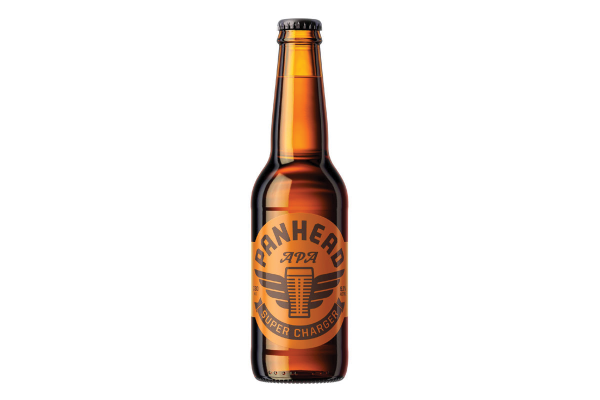
Is Panhead craft beer? It looks like craft beer, it costs like craft beer, it gets you incredibly drunk like craft beer… but it tastes like the green bottle stuff your dad’s been drinking for the last 35 years. Supercharger is a gateway beer to the craft world, though your dad will only drink it if he thinks Keith Richards would think it makes him look cool. Panhead is super cool because it’s either named after a type of motorbike or screw. I can’t tell, but I like bikes and screwing so I’m in. It’s also called ‘Supercharger’, which reminds me of the engine of my wife’s boyfriend’s car. It’s a totally rad beer for wicked alcoholics. Drinking Panhead feels like when you’re a little kid and you see a pin-up of a blonde, plastic-lipped, huge fake-boobed, orange spray-tanned, bikini-clad woman, and you think, “Woah, that is the hottest woman I’ve ever seen in my life,” and then you declare yourself a man and brag to your friends about how your testicles got totally erect. This is not a bad thing; in-fact, the faux machismo that comes from simply holding this beer is appealing to me. When I come home from the library after a day of Excel spreadsheets and baby mandarins, I want to crack open a Panhead and be flooded with the sense of manly accomplishment that only comes from checking WOFs at a VTNZ all day. You can taste the grease! And with that workman’s spirit, you can stop paying $25 for 12 beers and instead pay $13 for 1! Hell yeah. The appeal of Supercharger is that it’s incredibly easy to drink. It’s completely unoffensive. Without any “notable attributes” or pesky “flavours” like some other craft beers, you can swig a Panhead down your gullet without any impedance. A pint of the stuff is quite nice and honestly I would err towards it over whatever else is on tap. Your partner is going to be concerned about how drunk you’re getting off these Panheads, and even urge you to get back on the lower percent (4%) green bottles, but they will never understand that this has nothing to do with the alcohol percentage (5.7%); you’re doing this for your newfound love of craft beer. “It’s about the craft, babe. There is artistry flowing through me right now. It’s about how these brewmasters control their domain. The uhhh yeast ferments into… alcohol… and the hops make it… springy. And this is all done with high-grade filtered glacial water, mind you. Once the batch is done fermenting - craft beer is brewed in batches, babe - they add a dash of their secret sauce, and bottle it on through. Like how I hear Emerson’s put a little bit of Richard Emerson in each bottle.” Nothing helps me appreciate the art of craft beer like drinking twelve Panheads on a Friday night. Tasting notes: It may taste like burnt coffee at first, but if you try really hard, you may get a hint of marshmallow. Chugability: 9/10. These things disappear. Hangover depression level: 8/10. How much did a box of those cost me? Fuck. Overall: 7/10. Hell yeah, brother.
-
News
Science Communication Changes Confirmed
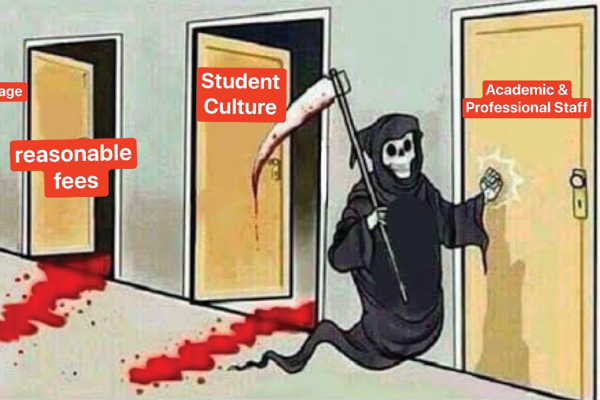
Students at the Department of Science Communication received confirmation last week from Pro-Vice Chancellor (Sciences) Richard Barker of changes that will be made to the Department. The Department is still set to be disestablished, with just a distance-only Postgraduate Certificate and Diploma remaining after current Masters students complete their studies in 2024. In July, Critic Te Ārohi reported on the “proposed changes” that were pre-emptively sent to students in the Department from its head, Jesse Berring, who told Critic that what he’d “hoped to do was be as transparent as I possibly could about what was happening and how it would affect individual students and their options going forward.” He also wasn’t aware that the communication was pre-emptive. Lily, one of the Masters students in the Department, said that when they first received the email from Jesse, her first reaction was “disbelief” at not only being told that the course she flew halfway across the world for was being dismantled, but that they weren’t even supposed to know for another month. After taking on a self-described “investigative role where I have been trying to put some of these puzzle pieces together and look back at the history and all these different decisions,” Lily said that she realised “this really was a long time coming… unfortunately upon learning more, it didn’t seem that surprising after all.” “Which then made me feel a lot more kind of bamboozled. Like, oh my God, I was sold this promise of this great program and great opportunities and everything’s going so well. But that really wasn’t the case.” So while Lily and her peers acknowledged that the bigger changes were out of their control, they couldn’t help but feel they got “the short end of the stick” in terms of their own education, which they were determined to advocate for. But without any initial clear student process for feedback, it felt like “building the plane as [we] fly it”. The biggest thing they wanted was for “somebody to listen to us and to take us seriously.” Jesse’s advice at the time to the Masters students who would be most affected by any changes was for them to be “as selfish as possible in terms of what is in [their] best interests for your research.” For instance, with the film programme being cut the question of a documentary thesis was up for debate. Would the equipment and support still be available? Since the proposed changes were announced, Masters students have pushed strongly for their voices to be heard on the matter through news articles, one-on-one meetings with the PVC, a letter of demands from the cohort and 28 individual written submissions. The cohort’s letter to the PVC said that their main concern was that the proposed changes to the Department would mean they “will not receive the quality of education that we have been promised by the University.” Among their requests were adequate technical support, staffing supervision, thesis funding, and resources to be able to complete their Masters in 2024. Richard told students that these submissions were “carefully considered by an advisory panel who, ultimately, recommended the Department be disestablished” with programme and staffing changes to take effect from 2024. The requests for existing resources to be kept for the duration of Masters students studies were approved, while fixed-term contracts for additional supervisory staff still need to be worked out. Still, that’s better than the original announcement of two out of five staff being retained. Critic Te Ārohi spoke to Jesse about the changes the department will be seeing, who said, “My role is to be a cheerleader for the programme going forward, acknowledging obviously the stress and difficulties that the current students have experienced. But given the constraints that we’ve been operating in, I’m really trying to highlight what remains on the table.” He called it “making lemonade out of lemons.” We’re not really sure what else you do with lemons, but maybe a science communicator could tell us. Oh, wait. What Jesse wanted to make clear was that “although change is unsettling, it’s also unavoidable in some circumstances.” He acknowledged that the film programme (which has been the “most expensive aspect to run”) on the chopping block has been a “big draw historically”, the essence of the Department will remain in the new programme in providing “a basic skillset in science communication practice.” And although it's distance-only, that doesn’t mean on-campus students enrolling in the course wouldn’t be able to complete it from Dunedin. From the students’ end, Lily said that now that they’re on the other side of the consultation process, she’s glad she and her peers were so vocal about their studies: “The moral of the story is: if you’re a student in a department affected by the management of change process and you feel like your faculty are not appropriately representing your interests, you need to kick up a fuss otherwise you’ll miss the opportunity to make your needs heard. They’ll try to make decisions made behind closed doors but at the end of the day no one can advocate for your interests besides you.”
-
News
Tramping Club Gets Sick
As many students ventured home over the mid-sem break, 45 members of the Otago University Tramping Club (OUTC) took a bus to the West Coast for their annual Copland Trip. Now they all (well, most of them) have Covid. “You, about 20 others, and counting got Covid from the Copland Trip” reads a comment on one of the many “I’ve got Covid” posts following the trip on the members-only Facebook page, paired with a pic of a double-striped positive test. Hit them up if you need a week off work anytime soon. The club only had one bus and packed every member into it. Marinating in their own bodily fluids for multiple days on end, it’s no surprise that germs (also the nickname for tramping club members) were spread around. Either that, or you’ll have to believe the club’s incest rumours. When approached for comment, Liam (the merchandise and media officer) said, “You had to be there.” And apparently this conundrum isn’t new to the supposedly “healthy” club. “Same thing happened last year, and the year before I think,” says Jacob, the club's beloved bus driver. Liam, secretary of OUTC, again claimed that “you just had to be there” to understand what truly happened. The other twist is what this will do to their AGM on September 13th. The club has around 830 members, meaning 83 will need to be in attendance to meet the 10% quorum. Presumably those on the trip would be the ones more likely to engage in that sort of thing. Emily, OUSA Clubs and Socs Rep, told Critic Te Ārohi AGMs are “as important as energy drinks during exam season, you legit have to have them to be a club.” Fingers crossed the 20-odd members will be recovered to come and elect the new exec. Someone has to keep the annual Copland-Covid trip continuing into the future. But do people really care about Covid anymore? “I forgot that it still existed,” said one student, Kaia. Max echoed this sentiment, saying, “Nuh-uh.” But is it Covid that doesn’t matter, or just the Tramping Club? Hunter said that no one was all that phased, “unless their trip was to a nursing home.” When the OUTC bus driver was asked if this was on their trip itinerary he responded, “You had to be there.” Who knows, man, it seems like you just had to be there.
-
Columns
Horoscopes: Week 22
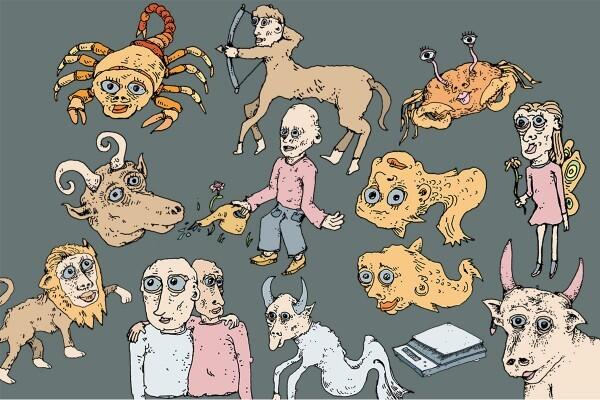
Aquarius Jan 20 - Feb 18 Aquarius, learn what a fucking boundary is. You’ve been overstepping and it’s getting a little weird.