
-
News
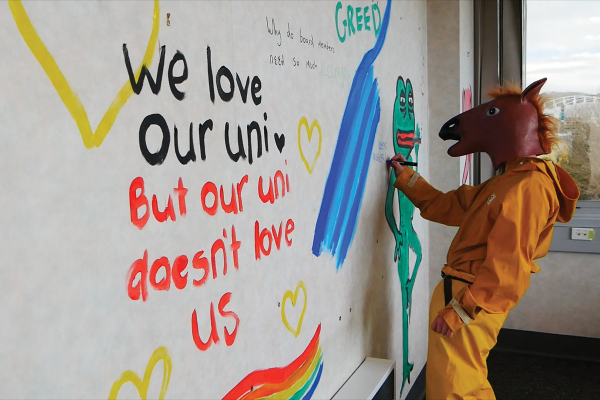
Three People Arrested Protesting Uni “Mismanagement”
Three people, including one student, were arrested for intentional damage on Tuesday afternoon. The arrests came after a group of mostly students “repurposed” a disused office block on the second floor of the Business School by painting the walls to protest staff cuts and “University mismanagement” of the $60m deficit. This charge - upgraded from the original wilful damage - carries a maximum sentence of seven years in prison.
-
Culture

OPINION: Everyone dresses queer now and it’s fucking with my gaydar
Gaydar is a magical thing. It gives us queer folk the ability to pick up on little hints and clues that can guide our flirtatious approach, and since the 1940s and 1950s fashion has been one of the best ways to sense someone’s queerness. Docs, work wear, chunky rings, and suits were some of the wardrobe staples that queer women used to signify they’re down for flamboyant freakiness. Not only were these fashion statements vital in sending signals to the gaydar, but they were also vital for the growth of queer culture at a time when homophobia was rampant, police brutality was high, and being gay was a crime. As much as the gaydar was a way of navigating romance, it was also a survival tactic. Fast forward to today, and it seems that many ladies are embracing these queer-coded styles as well as dressing in more gender non-conforming clothes, which has its roots in the butch/femme dynamic. I’m sure the pioneers of queer fashion are proud of this, and so am I, but you have to respect the communities who did it first and have been owning it for eternity. These “trends” have been celebrated and used to display membership in a community that has been marginalised for a long-ass time, and now it is becoming removed from sexual identity and put in the fast fashion trend cycle. I know most women wouldn’t put on a pair of pants and wonder, “What is the history of these?”, ‘cos that’s a little nutty, but a lot of gay women fought hard to get to the point where we are now, so wear them with pride. “Looking gay” or “dressing gay” may not be an insult or a threat anymore, but it was for a long time. Don’t forget it. This is by no means a dig at the straight ladies – y’all are out here looking HOT and being cool. It is just an observation of subcultures starting out fringe, and then fringe becoming mainstream. This happens with all things fashion, all things trendy, and all things cool, and there (hopefully) isn’t anything malicious about it from straight girls. Generally, it's just something that isn’t considered. A lot of this is actually coming from a place of anti-homophobia: there are a lot more queer fashion icons able to be visibly queer, and both straight girlies and gay girlies are taking inspiration. However, there is one small problem with the straight girlies embracing queer-coded fashion: it’s fucking with my gaydar. The queer community has always been ahead of the curve when it comes to fashion. We’re not afraid to stand out, but with the cyclic nature of trends speeding up, mainstream fashion is catching up with us. The oversized blazers and low rise jeans on the Glassons racks now emulate the queer fashion seen in the ‘50s, ‘60s, and ‘90s. This shows an epic acceptance of gender fluidity in today’s society, but cutting out the queer has really screwed over the science behind the gaydar. Modern queer signalling has been little things like carabiners on keys, high socks, cuffed or baggy jeans, or jorts; the list goes on. But now that all of these styles have been embraced by the straight girlies, how do I know who to hit on? You may be thinking, “Uhh, just ask?”, but it is still sometimes a scary space being queer, especially when it comes to navigating the world of dating. You want to be pretty certain that the person you’re about to hit on is going to be into it, as does anyone. I understand that this is a risk in all dating, sometimes people just don’t click, but to not even know if the person is into you on a biological level? Now that is outright terrifying. Not to mention the pop-culture trope of predatory queerness. No one wants to make anyone uncomfortable, and no one, especially queer people, want to be labelled as a creep for simply approaching a person of interest in a not-straight manner. Even if 9 times out of 10 someone will simply say, “Sorry, I just don’t swing that way,” the slight chance of being ridiculed or worse literally plagues my nightmares. And this is why I rely on gaydar. While I love to see women out here embracing wearing whatever the fuck they want, this movement of queer-coded clothing becoming popular has done a number on my gaydar’s ability. The days of reliable gaydar for women are slowly fading. Please let us gatekeep some things: maybe carabiners? Pinky rings? We’ve lost the war on baggy jeans, but maybe jorts? As Marlene Dietrich said, “I dress for the image. Not for myself, not for the public, not for fashion, not for men.” At the end of the day dress how you want, and do it with pride. But if you’re dressing with the gay swag, don’t blame me if I hit on you.
-
Culture
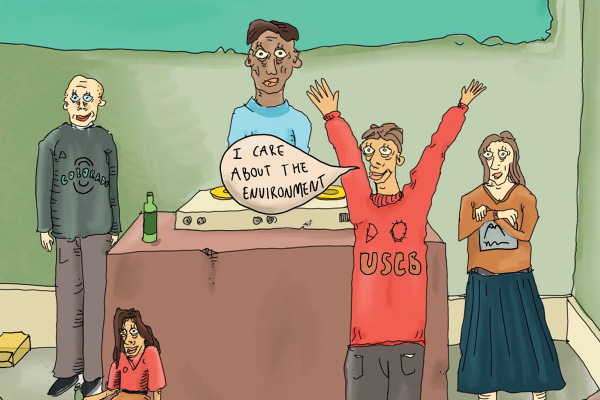
The American College Jumper. Why?
I doubt many Americans are walking around their college campuses with Otago University jumpers. You don’t need to visit Michigan to rock U of M gear. You don’t need to know how to pronounce “Worcester'' to look like an alumni, and the only reason I can think of for a stranger to wear a University of Massachusetts jumper is so that they can remember how to spell Masochoossets. And yet, you’d think that every other student at Otago had some sort of connection to an American university based on their wardrobe alone, forking out upwards of $70 to boast connections to random states no one has had any intention of visiting like Iowa or Pennsylvania (or, God forbid, Ohio). Not that there's anything wrong with these states (except Ohio) - it’s just that they’re not exactly hot travel destinations. So why rock the logo? Anna, a student here who owns a University of Wisconsin jersey, says, “I think American fashion creates some of the best vintage clothes, and sometimes that happens to be University gear.” In fashion terms, “vintage” is defined as clothing at least 20 years old. Anna has never been to Wisconsin, and actually “probably couldn’t point to it on a map”, although “I think it’s in the cold part” of the country. Nice! Maybe it’s because whatever America does, everyone else does too. Maybe you can blame it on the emergence of globalisation after the Second World War. Maybe it’s Maybelline. Either way, the US saw booming economic growth and mass-produced industrial outputs and atomic weapons and, apparently, university jumpers. Mass-produced ready-to-wear garments – more commonly known as fast fashion – only took off in the 1960s, when youth culture really separated from the adult world and overseas production allowed for cheap and easy clothing. While it took a bit longer for “street style” as we know it to take off, youth has always been a hot commodity. Street style often played a part in youth culture and social movements as a way for all groups to express their own type of fashion, though in the coming decades streetwear would eventually be picked up by luxury brands. Fashion kinda has a trickle-up effect: trends start at the fringes of society before slowly becoming mainstream. Gen Z also has a penchant for activism and social equality, and buying vintage for environmental reasons is now commonplace, when op-shopping used to be looked down upon. While sweatshirts have been around since the 1930s, it wasn’t until the 1990s that street style really took off in the US. Brands like Stüssy and Champion contributed to the rise of skate fashion and streetwear, leading to the classic ‘90s college crewnecks and jerseys we know and love. Laila, a fellow student thrifter, says she doesn’t tend to gravitate towards university jumpers per se, she just loves vintage clothing. “I believe it’s such a good way to preserve history, through clothing - it goes to show how well-made vintage pieces are if they’ve managed to stay in good condition for so long!” Again, bear in mind that “vintage” is only 20 years old, and prior to the Shein and Zara era of disposable fashion we see today. And it just so happens that a lot of the vintage clothing happens to come from American university alumni. Apparently. However, is it the environmental side of vintage that is appealing, or is it the status? What’s the point in buying vintage if no one knows it’s vintage? American streetwear has that undeniably “vintage look”. Kendall Jenner and Hailey Baldwin have been spotted wearing college-type merch; but the designer brand, high-fashion versions. There have even been TikTok trends to take old vintage clothes from your parents’ wardrobe and style them. “Vintage” is so hot that stores like Glassons and Cotton On even have vintage sections in some of their stores, and Cotton On even dropped American varsity-branded sweaters. But Cameron, a born and bred Dunedin thrifter, told us that “I think the appeal of those American vintage styles has definitely died down.” “While they’re still commonly seen on the streets, I liked it a bit more when the rarity and uniqueness of the sweaters – especially being in NZ where American clothes don’t just show up often – created a bit of appeal,” Cameron said. However, questions of authenticity have been raised about fast fashion companies labelling clothes as vintage. “Without sounding elitist or anything, the sort of ‘fast fashion-ification’ of these styles kills it for me,” Cameron said. “Finding a cool vintage sweater I like gets a bit undercut walking past Hallenstein’s, who sell a recreation of it with generic university or sports teams plastered on it.” Laila avoids these markups by mostly thrifting: “I believe it outweighs fast fashion in all areas – there is no downside to thrifting because in the end I’m reusing clothes and extending the life of items that are in perfectly good condition.” She also loves to “find unique items that don’t break the bank!” However, the cultural phenomenon of American vintage seems to defy a lot of the usual reasons for buying secondhand clothing. Katy*, who formerly worked at a fast fashion shop that sold American vintage, told Critic, “I remember going through these garbage bags of clothing, a lot of which was stained or damaged.” A lot of this vintage isn’t quality, but is it worth the extra cash? “I remember seeing tags that said ‘Goodwill - $4’ and replacing them with $80 tags for [very common clothing store brand name],” Katy said. Cameron referred to thrifting as a “profoundly social thing” among students here, and Laila said that “Dunedin thrifting culture is very prevalent with students. I believe it’s the most efficient form of consumerism, and it’s incredible to see this translate into the digital spaces such as Marketplace and Depop. The ability to utilise those tools has changed the thrifting community.” While a lot of the thrifting ethos is absent from the American vintage craze, it’s always good to think about where your fashion is coming from. And, maybe if you have the local university logo splashed across the front, that’s a lot easier to remember. *Name changed.
-
Features
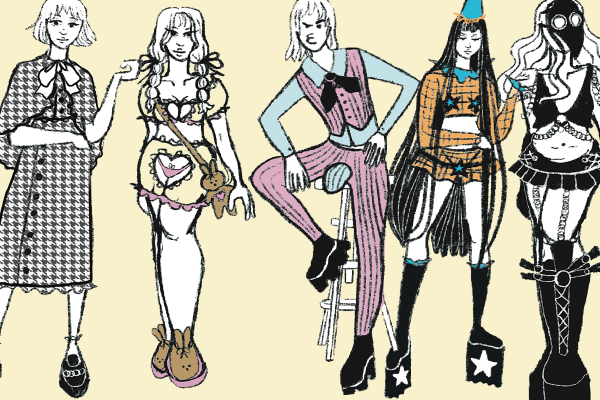
Fashion Forecast: Historical Trends To Bring Back
Fashion has always been cyclical. Typically, the overarching trends of each decade are a direct contrast to that decade or decades prior. Think of the boxy, baggy, top-heavy silhouettes of the ‘80s sandwiched between the more fitted and A-line shapes of the ‘70s and ‘90s. In womens’ fashion, waistlines of garments are raised and lowered, hemlines are short one second then maxi skirts are in the next, and this is nothing new. In the Victorian era, the 1860s emphasised soft, voluminous silhouettes and wide crinoline skirts that could barely fit through doors, while in the 1870s skirts became slim and fitted, with bustles padding out the rear (badonkadonk). It’s kinda like how having hips was deeply shameful in the 2000s, but the 2010s and ‘20s came with people injecting chicken stock cubes into their asses (look it up). So you really never know what’s next. However, nostalgia is a hot commodity and the reciprocal fashion cycle is getting shorter. Styles that look “dated” one minute are cool and vintage the next. The ‘80s frothed the retro ‘50s aesthetic, and the 2010s saw a huge revival of ‘70s bohemian and ‘80s oversized casual. Now, the ‘90s and early naughties are back, with the Y2K aesthetic overriding our devices much like its namesake. With the rise of fast fashion, the nostalgia cycle is getting shorter and shorter – new looks are dropped on Shein one week and become an outdated meme the next. It seems like we’ve pillaged past eras for all their fashion, and we’re running out. So, where to next? Using this grossly simplified model, the team at Critic Te Ārohi is at least 32% sure that we can predict styles of eras past that will make a comeback. We’re running out of vintage to bring back, so why not throw it all the way back and draw from heinous historical trends and recent vintage underdogs to bring you the only forecast you’ll ever need. Codpieces Before mens’ clothing had zippers and flies, fashion was kinda confused about what to do with dongs. Enter the codpiece: a phallic, pouch-shaped insert on the front of pants that one would simply pile their nards into. Prominent in the 14-1600s, and even making a comeback in suit-of-armour form in the 1700s, codpieces had many applications. Not only did they eliminate the “which side of my pants do my dick go?” problem, they also functioned as a pocket - the perfect size for a little snack. In an era of body positivity, it’s time for codpieces to rear their heads (sorry) once again – when else do men get to feel sexy? Imagine feeling like That Bitch whipping your ID out of your prominent dickholster. It’s the natural progression of the fanny pack. Pocket hoops Pocket hoops became popular in the later 18th century, and were an alternative to panniers (like crinolines) that gave you light and practical skirt volume at the hips only. And yes, they did also have pockets. Look, the internet has already made us all feel bad about not having perfectly-rounded hips, so why not say fuck it: square hips. Wear pocket hoops to the club and you have guaranteed social distance of like a foot, and yes, you can store shit in them. Carry your things in style while preventing dickheads from dancing too close to you! These are intensely practical and could totally make a comeback in this utilitarian time. Imagine Carhart-braded pocket hoops. Capes Fashion has always thrived on impracticality as a status symbol. Wearing cumbersome and ridiculous clothing separated one from the working class, because how are you meant to do hard labour in that shit? Enter capes: flamboyant, inconvenient, and the enemy of jet engines – all perfect markers for an up-and-coming high fashion trend. Plus, if they get caught on something they choke you out a bit, which is very appealing to our generation, apparently. Despite the pro-cape propaganda produced by Marvel, capes are so unwieldy that they essentially turn one into a limbless mannequin. All this to say that if we convince the elites to wear capes then maybe the revolution will have a chance. Pussy out Women’s underwear as we know it was only invented in the early 20th century – prior to that, everyone was kinda just pussy out. Seriously, imagine having to hike your knickers down to take a shit while wearing layers of historical dress. It just didn’t happen. Even bloomers of the late 19th century were open at the crotch seam, essentially consisting of two separate legs – in fact, that’s partly why we still refer to it as a “pair” of underwear today. The simultaneous and timely occurrence of maxi skirts being in fashion (the longest popular skirt length we’ve seen in decades) and most underwear now being made out of polyester (which is terrible for your vulva) means that it’s fairly realistic that we’ll ditch panties altogether, or at least on occasion. We’re already getting sick of bras, and since the most popular underwear style is “invisible” briefs they could become completely invisible soon. Plague masks The pandemic was the best thing to happen to mask fashion since the Black Death, so it’s not a stretch to think we could be seeing more of those raven’s-beak looking items make a comeback. After the first pandemic we’re all a little burnt out, but when round two hits I think we’re gonna be ready to have fun with it. Might as well! We’ll see the development of ever-more intricate plague masks as people try to one-up each other in the only way they know how. Instead of filling the beaks with sage and herbs to ward off evil miasmas and spirits, we’re gonna start stocking them with quartz crystals (and still probably some sage too) to ward off the bad vibes. Some things never change. Chopines Chopines are kinda like high heels but, instead of having a high heel, it’s sorta like standing on an hourglass-type shape. They’re like very weird mini-stilts. Anyway, their purpose was to allow the wearer to wade through the literal rivers of shit flowing through cities of the time, but this could become once again a necessity as rising sea levels start to fuck with our underground sewage disposal lines. When it all starts bubbling up to the surface you’re gonna need some sort of platform shoe to get around, and these might come back in style. Bonus points if they’re made of wood so you don’t lose them if they float away. Wax cones Probably the weirdest of the lot, wax cones were a trend in ancient Egypt to deal with body odour. You’d just wear a lump of scented wax on your head and it would melt throughout the day and mask your odour. As people start freaking out about microplastics (yummy) in everything, including deodorant, natural remedies are moving more and more into the mainstream. And you know what’s better than spreading literal carcinogens onto your lymph nodes? A cute little dollop of wax. You can even incorporate it into your hairstyle - perfect for the renaissance of the beehive hairdo.
-
News
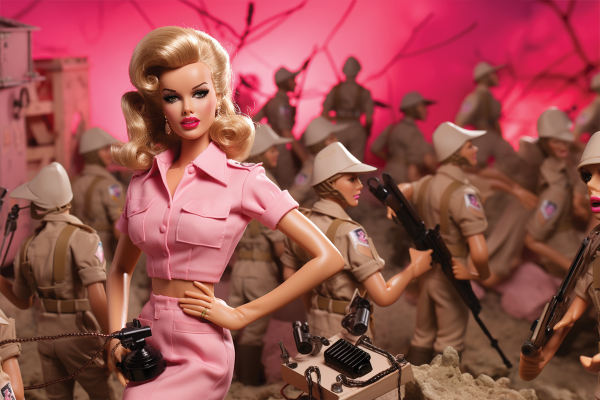
In the Trenches of Barbie
It was a Sunday eve. A slight drizzle sprinkled the still, cold air. Civilians strolled around the Octagon. Armed with their e-tickets and pink uniforms, Barbie militia were beginning to mark their territory. Little did it know, Rialto Cinema was about to be shell-shocked. Critic sent our slayest field journalist to chronicle the advance of the pink army. Walking into the trenches, the air buzzed hot with anticipation. Close to a hundred uniformed Barbie militia had stationed themselves in the foyer, clutching their large popcorn choc-top combos, ready for any sign of enemy activity (Oppenheimer viewers would soon be arriving for their screening in Cinema 2). It really was no-man’s land. The only men seen were a few boyfriends being held hostage and some fathers seeking desperately to reconnect with their daughter’s inner child. As the numbers of valiant soldiers began to grow, a sense of resolute determination and frustrated impatience came over the crowd. Finding myself in the midst of a swarming pink sea of Barbie’s acolytes, I realised I was in the trenches. Never did I think I would make it this far. My jumbo Coke Zero started to slip out of my hands as my palms began to sweat and my heart rate rose. The ticket marshall had taken up his station at the bottom of the stairs. Cinema 3 was only two flights away. The troops were alert and ready. This is what they had spent their entire life training for. All the blood, sweat and tears would not go to waste now. Finally, the orders to mobilise began: “Ok, everyone, if we can please line up in an orderly fashion and allow me to scan your ticket,” said the ticket marshall. The velvet barricade was removed and bedlam ensued. The troops could not wait a second longer to execute their mission; springing up out of the trenches, armed with fanatic zeal, they made a run for it. Thundering up the stairs, anyone would think Oppenheimer was having a live-action screening next door. One of the cinema lieutenants attempted to control the swarms. “Oi, no running!” He bellowed in his patriarchal, mansplaining voice. But the pink paratroops had forgotten themselves. The adrenaline of being out of the trenches and into the field was overwhelming. The ticket marshall’s efforts were fruitless, and many, many tickets would have to go unscanned. I was quickly swept up with the tide of militia. Hurling up the stairs, I held onto my comrades and made my ascent with bated breath. I thought about writing home in case I didn’t make it. In that moment, everything was put into perspective: how much had I risked in the name of honest journalism? Was I out of my depth? I tried to hide my fear behind a pair of giant pink eyeglasses. Barbie World is not what it seems. It’s a warzone out there. But as soon as we entered the cinema itself, I knew I had made it out alive. An eerie sense of calm engulfed the atmosphere. The invasion campaign was over. Now it was time to numb the trauma with a pink-powered pronouncement of the problems with the patriarchy. Our valiance would not go unrewarded.
-
News

Numbers are Boring: Especially the ones that say you lost
One of the most prestigious sporting organisations in the world graced Forsyth Barr in the past few weeks: FIFA. A look on Wikipedia might suggest that Dunedin may not have been the most successful choice of venue based on the game stats. But while numbers are boring (though maybe not as boring as Palmerston North), they only tell us so much. It is what the people say that matters. So, what are the numbers? A total of 16 goals scored over six giving an average goals per game of 2.7. An average attendance of 12,615 - although this average drops to just 9,949 when the newly coined “Sell Out Sunday” game between the Kiwis and the Swiss is discounted. Zero knockout fixtures. Zero wins for the Ferns. One grimace emoji. If you were fortunate enough to wander through Otago Uni Link on the 13th of July, you might have seen a FIFA World Cup stand with an opportunity to spin the wheel and have a chance at winning great riches. The only cost: your email, and all the value that may be extracted from that. For many the wait proved fruitful. A student a few leagues ahead in the queue admitted his guilt: “I spun the wheel three times, each time it landed on ‘better luck next time’; I still left with my pockets stuffed with tickets and a hideous hat upon my head”. Japan versus Costa Rica hosted a mass of Costa Ricans who could be seen dancing and skulling beers relentlessly through half-time. The Japanese managed to drown out the Costa Rican minority with the banging of drums and orderly shouts of “Nippon!” In spite of their newly acquired Kiwi fanbase, the Costa Ricans succumbed to Japan 2-0. The stadium, although at half capacity, was jovial, with intermingling between fans of differing allegiances and ages. However, this “friendly” match-up was trivial relative to what was at stake when the Football Ferns took on Rossocrociati (the Swiss team) in the Barr. The game was a sellout, with all of Dunedin’s population crammed in to see if the Ferns could reach the Last 16 for the first time at a FIFA World Cup. Sadly, it wasn’t to be. A possible watershed moment had passed for the Ferns. Critic Te Ārohi noted the disappointment of many fans, but also a greater sense of pride amongst those in attendance. “Many people forget that we hadn’t won a World Cup game before this tournament” a group of ultras informed me, “to win two and reach the last 16 would’ve been extraordinary”. Even some who attended with sarcasm in mind had been turned; a number of blokes confessed to Critic Te Ārohi that “the level of football was beyond what they expected”. The people seem to have given the game a resounding thumbs up.
-
Columns

Local Produce: Fairuza
Fairuza is new to the Ōtepoti music scene, but is making a quick and strong presence. As one of the few gender queer bands in Dunedin, Fairuza have established themselves as the band to follow. Only forming this year, members Phaedra (guitar/vocals), Lucy (bass/vocals) and Vzynn (drums/vocals) have managed to open up for Vera Ellen and Soft Plastics. Critic Te Ārohi caught up with Phaedra and Lucy to inquire on the bands quick success. The name Fairuza comes from the 1996 cult classic film The Craft which stars actress Fairuza Balk. “It was my manager’s partner’s idea,” shares Phaedra. “She thought it would be a cool band name and we liked it.” The film itself is about a group of girls who use witchcraft against their enemies which has inspired the tone of the group, even naming a song ‘Fairuza’ and using dialogue from the film as lyrics. “We liked the magic vibe and especially with no men in the group.” Phaedra started playing guitar at ten, while Lucy started piano at eight and has since learnt guitar, clarinet and bass specifically for Fairuza. Their songs consist of themes of magic, independence and heartbreak. Talking about the songwriting process, Lucy shares their “writing is mainly feeling-based. I like words that sound cool together.” For Phaedra, it’s a lot more abstract.“I will write a lyric and then figure out what it might mean and then the song would be about that.” Both Lucy and Phaedra also pull from lyrics they’ve written in the past, with Lucy compiling all their potential lyrics ever in a document and Phaedra even incorporating lyrics she had written when she was 17. “I want to write more narrative based stuff,” Lucy shares. “I’m really into astrology right now.” The band has an equal share in the writing process, both lyrically and musically, and describe the sound as reminiscent of Look Blue Go Purple, The Chills, Warpaint and other Dunedin Sound acts. Phaedra cites Vera Ellen as an influence and was excited that they were able to open for Vera. “I talk about her too much. We actually hugged.” The band may seem limited, only consisting of guitar, bass and drums, but a fresh lyrical perspective, unique vocals that are both confident and vulnerable, and a talent for finding catchy melodies make Fairuza a stand-out in the male dominated scene. “I think it’s cool being a female/gender queer band in Dunedin since there are very few,” shares Phaedra. Lucy is also in Riot Gull, a popular gender queer band in Dunedin, and had Fairuza open for their Goodbye Gull show. Fairuza seems only to improve more and more each gig, becoming more comfortable in themselves and the music they play which is why they are one of the most exciting bands to see in Ōtepoti. You can catch Fairuza at this year’s Dankfest, the iconic annual two-night event at The Crown on the 25-26 August. They’re also part of the upcoming project, Ōtepoti Music Compilation, which brings together a compilation of music by wāhine and gender-diverse musicians of Dunedin. You can follow Fairuza on Instagram at @fairuzaband for updates on upcoming gigs and events.
-
Columns
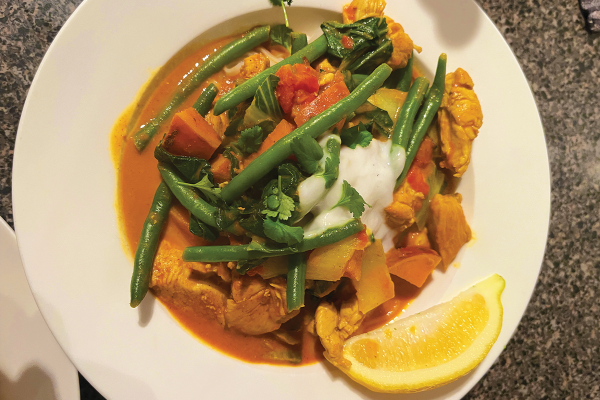
Chargrills: Chicken Curry
You know what? This is far from the best curry I’ve had. It was warm and curry-like, but I probably wouldn’t eat it again. Nice and simple, yes. Will warm you up and give you some veggies. If it was a movie it would be Avatar, beautiful visuals but forgettable story and ultimately lacking substance. INGREDIENTS 1 onion, diced 500-600 grams chicken breast (cut into chunks), or quorn 1 can diced tomatoes 1 can coconut milk/cream 2 cups frozen beans, boiled 1/3 cup kumara 1 carrot chopped up 1 generous drizzle of maple syrup/few Tbsps of sugar 1 packet of vermicelli rice noodles To garnish (optional): Yoghurt Coriander Homemade curry powder mix (save this recipe and just make a bunch of it and fill a jar or something, that way it’s always on hand) - 2 tbsp curry powder - 1 tbsp paprika - 1 tsp cinnamon - ½ tsp turmeric - ½ tsp cumin DIRECTIONS Heat a pan over medium heat with a drizzle of oil. When it's hot, add the onion and stir until the onion becomes see-through. Add in the diced chicken breast. Cook until the sides of the chicken are whitened, and then add the home-made curry powder mix. Fry that off for a minute, stirring it through the chicken, then add the diced tomatoes and coconut cream. Turn up the heat and bring the curry to boil. Add the carrot, kumara and a generous drizzle of maple syrup/sugar, stir and simmer for five minutes. While that’s simmering, bring a medium pot of water to boil and add the noodles. Leave until they are cooked through. Strain them, and portion them into 5 or 6 bowls. Boil the beans. Add into the curry and bring off the heat. Serve on top of the noodles. Can garnish with yoghurt and/or coriander. Try it if you want. Lol.
-
Columns

Editorial: Finance is just Astrology for Capitalists
Last time we talked about bad timing: why announcing a million-dollar rebrand during massive staff cuts is a bad idea, even if the rebrand itself is a good call. This time we’re gonna be talking about maths. Unlike the decision to rebrand, the decision to set a budget is rooted firmly in calculations. These economic balance sheets and extensive formulas are meant to be the reason we pay our executives so highly, and why economic contractors charge such a premium. It’s sort of like paying a fortune teller or a psychic; you need to pay top dollar to have someone come in who can understand the hidden meaning of the universe, or who can parse through tables and tables of data to present the best financial course forward. It’s financial divination. But if you’re paying top dollar, they’d better be correct. And here’s where we come to the second mistake that I’ve got a problem with. The current $60 million hole is due, in large part, to dramatically lower-than-expected domestic enrolments and bad financial divination. Last year, someone in our arcane circle of economists worked out a forecast of 4% student growth, an extra few hundred. This was meant to come from a 50% growth in international students and a 1.8% increase in domestics. And while we crushed the international number (it ended up being 57%), the domestic enrollment rate absolutely tanked to -0.9%. We thought it would go up nearly 2% but it didn’t even get off the starting line - we ended up losing students. New internationals aren’t enough to prop up the uni so, with a 4.9% total decrease in real enrolments, we’re left with a whopping 6.7% difference from the forecast. 6.7%! Despite the millions of dollars we spend on financial management, despite the massive salaries paid to top-level executives, and despite priding ourselves on our commerce department (which isn’t seeing very many cuts), we’ve somehow fucked it up. The only two explanations are that this massive shortfall was intentionally induced to encourage government funding and to consolidate courses (which would be crazy) or that the people at the very top of the pyramid were completely off the mark (which is also crazy, right?). I just want you to think of it this way: if this scenario was on your commerce exam and you got your forecast off by 6.7%, they would probably fail you. 4% student growth is an egregiously high estimate to make in the middle of a recession, especially considering the fact that every academic on campus probably could have told them that domestic students were dropping their courses. It’s like if all your crewmates saw a storm on the horizon and instead of battening down the hatches, the Clocktower went full sail. It was an unbelievably bold call that has absolutely failed to meet reality. And now, the same people that signed off on that 4% estimate are the ones who are choosing where to cut savings. Their target is the very product that they’re advertising to students. Will that encourage domestic enrolments to rise? I dunno, what does the multi-million dollar crystal ball say? Because honestly, at this point, they might as well be forecasting off our horoscopes. They’re about as grounded in reality as that 4% forecast. But at least when our horoscopes are wrong we don’t fire our staff.
-
Culture
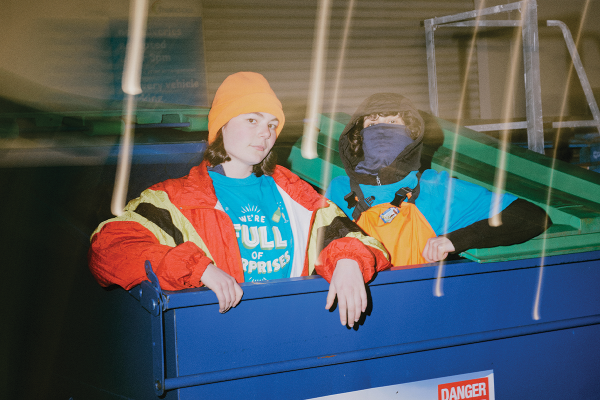
Rouge:
Disclaimer: OUSA does not endorse dumpster diving as it can have serious legal ramifications. Joey, a local fashion dumpster diver, told Critic Te Ārohi dumpster fashion “is fast fashion”. As in, you’ve gotta be fast: “I don’t want to get caught knees deep in dumpster grime and my future wardrobe.” It’s a no-brainer that the fashion industry is cooked. Every year, around 100 billion clothes are made, but each is worn an average of only seven times. As a result of mass scale industrial production (mostly done through slave labour), fashion accounts for around 10% of global greenhouse gas emissions. Water use is also a big one. It takes 2,700 liters of water to manufacture that cotton t-shirt you got from Glassons. You could make 103 pints of beer with that. “Jared” The “Jared” look is perfect for the cold Dunedin winter months. The “Jared” boasts a stylish discarded promotional “Meat and Seafood week” supermarket T-shirt overtop of a light cotton button-down shirt. To complete the look, “Jared” sports a fluffy monkey mask underneath a warm pink beanie. You can bet your ears won’t be cold beneath all that synthetic-dumpstered fabric. “Full of Surprises” With the “Full of Surprises” look, you can have it all. The baby blue t-shirt creates a playful summer vibe. This is perfectly counterbalanced with the 5-or-so checkered and striped button-down shirts, neatly tied around the waist. Dunedin’s weather is unpredictable, so you can rest assured that you’ll have plenty of layers to be prepared for all four seasons. Fully complete the look with oversized gumboots for all the puddle stomping of your wildest dreams. “Tradie: Anonymous” Want the tradie clout without the Polytech course or the five years’ experience? We can help you look the part. The fluorescent orange jumpsuit has a road cone-esque aesthetic, ensuring you won’t get hit by oncoming traffic, but not guaranteed to keep you safe from breathas on a night out thinking you actually are a road cone. The jumpsuit also has great functionality; we’re talking pockets, straps and adjustable buckles. What’s more, the slippery fabric means that the next time you spill your noodles, the liquid will slide right off. “Space Trooper” This silvery, shiny onesie illustriously reflects light, making you shine just like a star. As with the “Tradie: Anonymous”, the “Space Trooper” fit is a one-item outfit, making it ultra-convenient to slip into. As Critic Te Ārohi understands, there is no calcium in space. So, on the off chance SpaceX hires you to model for a promo vid, make sure to fuel up on Puhoi Valley Fresh Organic Light Milk from your local dumpster. You can include an optional extra of a head torch which Critic Te Ārohi understands did not come from a dumpster but is apparently an essential item for dumpster diving. CUTS Stitch Kitchen, located at 474 Princes Street, is devoted to zero-waste and community building, offering classes and workshops to repair and upcycle your clothes. But let’s face it, most of us are too busy trying to juggle uni with existential crises to have the time (or skill) for that. Another alternative for escaping the throws of fast fashion and giving that water laden Glassons t-shirt another life is op-shopping. It’s not as labour intensive as making your own clothes but of course, it still costs money. Perhaps, it’s time you consider dumpster fashion: It’s hot, kinda feral and doesn’t cost a cent. It’s also ethical as fuck. Johnny, another local dumpster diver said “wearing dumpstered clothes makes me feel like a genuine rascal. The style is nonsensical and often stupid, a perfect mockery of our wasteful society.” Johnny has had some pretty good fashion hauls in his time. “One time we pulled out four walking sticks and a possum fur beanie,” said Johnny. While Johnny has made effective use of the beanie, wearing it “most days”, the walking sticks have not had much use…yet. Critic Te Ārohi employed the service of four semi-professional models to show just how hot dumpster fashion can be. All of the clothes pictured came from dumpsters, and were supplied by anonymous sources. For legal purposes, Critic Te Ārohi had no part in the acquisition of the dumpster apparel. To fully embrace the “Jared” look, put a road cone on your leg. What you lack in balance, you’ll make up for in style. But, be warned: if you decide to adopt the “Jared” look, there’s a good chance you’ll develop scurvy. All that meat and seafood and no fresh fruit and vegetables has left you with a serious deficit of vitamin C. But fear not; 4.8 liters of Keri’s freshly squeezed orange juice found at your local dumpster should set you right. No doubt you’d be fast as fuck with that road cone on your leg. Love the Jared look but can’t face the idea of a crippling vitamin C deficiency? Well w You might be wondering, what surprises are in store? Well, if we told you it wouldn’t be a surprise now would it. Suffice to say that you’ll definitely get noticed with this fresh fit. Not to mention the red fluorescent raincoat and orange beanie complete the practical and fashionable aesthetic. Got no clean pants because of all your past noodle stains? Well with the “Traide Anonymous” look, no one would know. Not to mention the black hood and balaclava create a genuine anonymous aesthetic, allowing you to fulfill your greatest tradie fantasies without bumping into any of your commerce friends who would expose you for the fraud that you are. Astronomy got you dreaming of the stars but not a billionaire able to hop on a rocket to get there? Well keep dreaming with this slick new “Space Trooper” fit.
-
Columns

BOOZE: Jägermeister
Some German guy - Meister Jäger, I assume - read 'George’s Marvellous Medicine' and thought, “Ya I can do zat,” and then all the other Germans were like, “I know it is only 1934, but this is ze best idea we have had in a while,” and so forth came Jägermeister. The most notable thing Germany did in the 20th century. Like trying to create some kind of Germanic permanently-drunk Powerpuff girl, 56 herbs, spices and everything nices make up Jäger. Every avenue of mashing together the shit that you found outside has been exhausted. How is a guy supposed to build an enterprise when I'm not even the first to market orange peel mixed with that thing that grows under my doorstep? Jägermeister tastes pretty good actually. I can't quite pinpoint which of the 56 botanicals does it for me, but the sludge that they form is enticing. It reminds me of when I was a kid and would mix whatever the fuck together and drink it, and my nine-year-old palate would rate it "pretty good". It's not often alcohol feels viable to give to babies, but I think Jäger can cross that bridge. It's the sort of liquor you'd prefer to be spoon fed by a buxom lass while you lay in a fetal position. Everyone is gifted a bottle of Jäger on either their 18th or 21st Birthday. It's a coming of age way of saying, "Here, you're gonna need this." As an adult you're not allowed to enjoy anything that doesn't double as antiseptic. A beer and a shot fills you with all the false bravado you need; Jäger helps you pick up on signals that were never there. "Hey, I couldn’t help but see you looking at me from across the room," you confidently say to a palm tree. I've had three red bulls in an hour and I don't know what's going to burst first: my heart or the erection that's been macerating itself against the teeth of my zipper for half an hour. Regardless, it's going to be bloody. Tasting notes: Bong scum mixed with sugar. Chugability: 8/10. Incredibly viscous. Hangover depression level: 10/10. "I can't believe you talked me into invading Poland last night." Overall: 9/10. A right of passage.
-
Columns

Takeaways:
Something to: Watch The Post-Oppenheimer Cinematic Universe Feeling left with some existential dread after Oppenheimer? Great! Let’s make it worse. First off the block ought to be Grave of the Fireflies, a movie so emotionally devastating that it’s pretty much a once-off. Most important one on the list. Then there’s the Chernobyl series, which details the only other time a nuclear bomb has been detonated post-WWII. It’s also a triumph of science communication and an all-round excellent 5-part series. Finally, for some levity, tune into Shin Godzilla, the 2016 remake of the classic film. There are many remakes, but the original Japanese cut is the only good one and stands alone in its own right. It provides great commentary on the inefficiency of bureaucracy when faced with true evil. Also, if you didn’t know, Godzilla is an allegory for the bomb. Enjoy. Read The Room In my sardonic moments, I wonder how some people are smart enough to read Shakespeare, Hemingway, and Dickens, yet are incompetent enough to be blind to our inevitable social norms. If you’re speaking to someone and they respond with a frown, or a sigh, or a “FUCK OFF”, do us all a favour and read the room. Reading and writing requires a functioning cerebrum, while reading the room is perhaps easier for those who have been lobotomized. If you learn to read the room, you’re setting yourself up for a much easier ride in life. If you don’t, well, just cross your fingers and pray that you don’t bump into me on a dark night on Castle Street. Listen To I'll Come Too - James Blake (music video) Ok, slightly cheating here because you have to watch this too, but this music video is made with archival footage from BBC Earth, and is brilliant. It's of Buller's albatrosses and macaroni penguins on New Zealand sub-antarctic islands and the editing is gorgeous. Somehow the song and footage create an adorable story with these creatures and at many times they're literally dancing to the beat. Go To Auahi Ora Why did no one tell me Auahi Ora was actually good? I don’t know why I had such low expectations for the food at the Uni’s restaurant in Central Library, or why it took me so long to try it, but I’m mad no one corrected me until now. The food is yum and way cheaper than your average Dunedin restaurant, and it’s right there. Chicken katsu burger and a massive heaping of fries for cheap? The Uni may be running many things into the ground, but Auahi Ora is not one of them. Support Fair Pay Agreements We all know hospitality sucks, but the upcoming Fair Pay Agreement negotiations for hospo workers means your job could get less sucky (except with shit customers. Can’t do much about that). However, the Fair Pay Agreement can ensure you secure hours, decent rosters, better paid leave, and regular rests among other improvements. So look out for your emails, ask your employer about a union contact or email hospofpa@hospofpa.nz, so you can bitch about your job and monetise it (you deserve it, queen). Cancel Massive highway projects right through cities Just one more lane bro, just one more lane and all that traffic will go away. Don’t worry about giving people transport alternatives. Don’t worry about the climate impacts, or the health impacts, or the road deaths, or the social impacts, or the costs. Don’t even worry that it will only make traffic worse in the long-term. It’s all worth it because it will get the auto industry some more money and me some more votes, right? Right? Yeah, right.
-
News

The Great Dunedin Nitro Conspiracy
In issue 15 (the one with the rad skiing rat on the cover from a few weeks ago) we published in the TL;DR section of the news that the DCC and Police were allegedly trying to phase out the sale of Nitro. This was inaccurate, and we apologise for any upset caused by this news. But we had good reason to think that: a sign boasting their logo, inside a liquor store, told us so. And thus began one of the longest-lasting headaches of the year (it was only a week). The TL;DR was based on a message from one of our reporters in the Critic staff chat saying “Apparently the police and council are trying to phase out Nitro?” They’d heard this from their partner who works at a Super Liquor and is plugged into chat about liquor licensing, where Nitro has allegedly been thrown around in health risk convos. But this was all hearsay, and something we really should have checked before putting it in the mag (again, sorry). The Vice President of OUSA, Imogen, then sent us a photo on Friday, July 28, of a sign she spotted in Leith Liquor stating that Nitro was “no longer available due to changes in the Liquor Licensing Laws (SOLA)” since it has “high levels of Guarana & Caffeine and is deemed a health risk.” The sign had the logo of the New Zealand Police and the Southern District Health Board at the bottom of it. This wouldn’t be outside the realm of possibility given recent Police activity, like their opposition to Countdown’s liquor licensing over the sale of high-strength single-serve beer (which they weren’t stocking anyway lol). This would all naturally lead you to believe that Police really were behind it. Right? Wrong. “Police aren’t looking to oppose licences based on them selling Nitro,” the Dunedin Police said in an email sent to OUSA President Quintin. “Nitro isn’t illegal, so stores can sell it.” They weren’t even aware of the issue, and said they would be “happy to go speak to the stores and clarify”. As for the Southern DHB, it doesn’t even exist anymore. It was dissolved in July last year as part of a nationwide overhaul of the DHB system and replaced by Te Whatu Ora. And Quintin couldn’t find anything of substance about the liquor licensing law SOLA that was referred to by the sign, either, despite spending what he said was half a conference searching. At this point OUSA’s Vice President, President, and Critic Te Ārohi were all left scratching our heads. Where’d the fucking sign come from? Students for Sensible Drug Policy (SSDP) had been following up on the supposed “health risks”, as well, and got a response from Nitro in simply responding: “Nar bollocks!” Seriously, they said that. I guess that tracks, though. Imogen had a new theory: “I bet it’s internal at each liquor store rather than the police or actual law changes because Nitro is so cheap.” Turns out she was (mostly) bang on the money. After being bounced between different store managers at Liquorland, and following a tip from Jai at SSDP - who’d been told by Anderson’s Bay Liquorland that the decision had most likely been made by the owner of Leith Liquor, Andy Bay, and Meenans - Critic got a meeting with the elusive owner. He confirmed to a reporter that he was the one who made the call to take Nitro off the shelves in his stores - not the Police or the (non-existent) Southern DHB. Bang! We got him. I nearly wept with relief. It was closure almost as sweet as a drunk apology text from your ex. The owner said “maybe 60%” of the decision was because of a string of robberies at his store in Andy Bay that have targeted Nitro, being both a very effective and easily concealable drink. Along similar lines, Leith Liquor stopped stocking tobacco a few years back after it had been the target of violent robberies across the country. He also cited conversations that have been happening around liquor licensing in Aotearoa and high-percentage single-serve drinks (Nitro technically isn’t meant to be single serve, but let’s be honest). “Under the social aspect of it being a product that is highly sought after but also pretty high on the scale of not being socially acceptable, I made the decision to take it off the shop floor,” adding that the store’s location means that he’s been “looking after students for 13 years” and always tries to have their best interests at heart. As for the sign? “A bloody idiot,” he said. “[I] could only apologise for the police and liquor licensing” mentions in the sign “because it was done off my own bat. It had nothing to do with them whatsoever.” In the moment, he supposed he’d been thinking that it would be a lot simpler to offload the blame onto higher authorities, and avoid any grief over it in the process. He didn’t think anything more of it until he got word while overseas from his stores about some students who wouldn’t stop calling about Nitro. But now the Police want to know why he used their logo. If it weren’t for those meddling kids, huh?
-
News

33 Boys, 42 Kilometres, 50 Grand
A group of 33 third-year boys have raised over $50k and counting for the Spark That Chat mental health campaign while training for the Emerson’s Dunedin Marathon in September. We note that that’s enough to pay for all the stolen road cones. Will, Josh, Jamie and Sam, four boys from the group dubbed the ‘Heavy Breathers’, spoke to Critic Te Ārohi about the mahi they’ve put in so far and what it’s meant to them. Like all good ideas, the Heavy Breathers were formed ten weeks ago out of a tipsy conversation at a 21st. “It just kind of spiralled out over this one night and then all of a sudden we had thirty [boys] locked in a week later,” said Jamie. “It all happened pretty quickly. Good to see we actually did it rather than just talking about it because there’s too many of those.” Will laughed at that, joking he should have “been to Bali three times” if that were always the case. Their chosen charity, Spark That Chat, is an annual campaign run by MSFT Productions. It’s described as a way to “get people talking, destigmatise the way we discuss mental health, and promote positivity, resilience, and mental well-being to save lives.” Jamie explained, “It’s kind of like a different way instead of going into an office to do one-on-one therapy, it’s opening doors for people to do cool things outside and find something that they like.” Jamie said that they liked the idea of changing the “third-year Dunedin drinking narrative to just giving the marathon a crack and just turn it around from what most parents probably think Dunedin’s like.” Will added, “We’re not saying we’re not a part of that. We all love it, you know, we’re still going out… but there’s a few individuals at those parties on occasion that causes the entire cohort to be perceived badly. And I think that what we’re trying to do is show that there’s also individuals at that party who are going out and trying to do something, and we’re not the only ones.” So rather than the usual “the old you would have” mantra of breathas, peer pressure has turned on its head. “As soon as someone sends in a 15km run from the morning, there’s five more [boys] looking at their phones thinking, ‘Oh, we need to get out for a run,’” said Josh. “And then they’ll do it and all of a sudden there’s six runs in the group chat.” As of time of writing, the boys have logged 3,200 kms in training - that’s twice the length of Aotearoa. Their training kicked into an even higher gear when one of the boys recently lost their brother to suicide. In a post on the group’s Facebook page, they said, “We started this running journey with the goal of raising awareness for men’s mental health, but not all of us had been affected by such loss so close to home.” Jamie said that “we just can’t talk about it enough now, to be honest,” said Jamie. “Me and my flatmates in general, it’s just like talking so much more about everything. There’s nothing off the books.” “Every third-year at some point in Dunedin, every man has at some point just not been feeling themselves, you know? And even though we’re told all the time that we can and we can and we can, you have to see it to believe it,” said Will. “I’ve always known the boys could support [me] and you could go to them for anything, but you still don’t.” Training together in the name of mental health, though, made them realise how much of shared experience those feelings are. “There’s just been this sense of comradery throughout the group and it really feels like everyone’s just like a hundred percent got your back within the group… So, yeah, I think it means a lot to all of us to be honest.” Besides Josh and a couple other boys in the group, they wouldn’t necessarily have described themselves as runners before taking on the challenge. “We’ve all never really run over 10km before to be honest,” Jamie laughed. That was part of the reason they opted for the full marathon rather than the half: “It’s a challenge,” said Will. “But I think for a lot of us it was like, you know, three years in Dunedin can do a thing to someone and I think we just wanted to put ourselves back into positions where were feeling good about ourselves, but also doing something that would be good for other people as well… a silver lining for both parties.” They all agreed they’d “discovered the runner’s high” in the process. Originally having set their sights on raising $10k, the group had to keep upping their goal as the support’s poured in. As the date approaches, Jamie said that they’re “all pretty fizzed… I think everyone’s kind of freaking out as well,” though Will said that “all the boys have adopted the same mindset of like, it doesn’t really matter what time you’re finishing, but you’ve gotta finish. We’ve had too many people backing us now that we can’t back out.” The boys wanted to express a “massive thanks to everyone that’s gotten behind us” including Shoe Clinic who sponsored them all training kit. “It’s been unreal, and we’ll keep running.”
-
Columns

Moaningful Confessions: Sunday Service
It was a cold Dunners Saturday night. I was planning to do the usual, which was drink at a pres with my mates, act like their base drops are good, then go stay the night with the guy I was seeing at the time. I didn’t enjoy town that much so I never went. I was a horny girl who just needed sex. On this Saturday night he got drunk and yelled at me to go sleep with other guys because he didn’t want to see me (or so I thought), but this slimy geezer was two-timing me. Like how could a four-inch packer that was 5 foot 6 do that? I was drinking wine that night so I was an emotional wreck. I left his room and said, “Fuck it, I’m gonna go to town.” In town I managed to spend $70 on tequila shots, all on myself of course. Once those shots were down the bright ideas started to appear. I managed to form a message to my one night stand from RnV. From here, shit goes downhill. Wine seems to make me extremely horny, and if old mate wasn’t giving it to me then RnV mate sure would. At midnight I started to make the fucking freezing walk to his flat, stumbling. I was in a dress and the roads had now turned icy. Not my smartest idea, but sex is sex and that was all I was thinking about. Once I got there we did the deed. We did it multiple times in multiple positions, some I didn’t know even existed, until 6am rolled around. My dumb fresher ass thought, “It's a Sunday. If I do the walk of shame at 6am no one will be up, and it's just light enough to walk back by myself without feeling unsafe. People will probably think I’m off to church at this time.” So I jumped out of his window and started my adventure back to my hall. When I came close to my hall I thought, “Wow good job, you’ve done it.” But I spoke too soon. To my surprise there was a bus and 30 students lined up to jump on for a field trip. They were all fully rugged up. Myself, on the other hand? I was in a skimpy black skirt that barely covered my ass. I walked with my head down (and ass out), but the group seemed to find it funny and gave me a round of applause, while I scrambled in my purse looking for my key card to get in. Thank fuck I found it. I scrambled to my room, jumped into bed and never told a soul about that Saturday night.
-
Columns

Horoscopes: Week 18
Aquarius Jan 20 - Feb 18 The plot? Babe, you’ve lost it. Try getting a grip on reality this week and restore the chaotic good within your soul.
-
Features
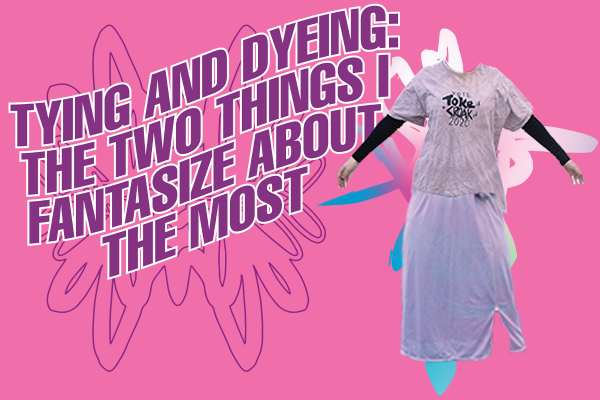
Wining and Dyning: I tried dyeing shirts with booze
As long as psychedelics are in fashion, tie-dye is too. I’m all for the “DIY aesthetic”, but I’m a staunch advocate for actually doing it yourself. A cheeky tie-dye is a great way to give new life to an old garment, plus, dunking clothes into chemicals and watching the colours change is basically free therapy. I’ve dabbled in both tying and dyeing - sometimes even simultaneously - but the upfront cost of store-bought fabric dye is intimidating, especially if you want multiple colours for tie-dye. Every flat carpet is aware that brightly coloured RTDs stain… but can they actually dye fabric? I set out on an ambitious drunk DIY adventure to see if I could tie-dye shirts with booze, but forgot to ask if I actually should. Spoiler alert: the answer to both is a hard no, but it could still be fun to experiment with yourself. Dyeing something is different to staining: a stain is a stubborn substance that lies on top of the surface, while dyeing involves an actual bond between the dye and fibre to which it adheres. Dyeing isn’t just about the dye – it’s a complex reaction between pigment, fibre and chemical solution. Fibre choice is also particularly important, as most dyes work best on plant fibres like cotton, linen, or rayon, with more specialty dyes required to dye protein fibres (silk, wool, nylon) and synthetic fabrics (acrylic, polyester). Dyeing can take a lot of trial and error. In saying that, I ran a shitload of trials and ended up with a lot of errors. Store-bought fabric dyes are basically witchcraft and come with everything you need, while naturally-derived dyes tend to need extra help. Usually, this is a dye fixative or mordant, which are metal salts like aluminium sulphate that react with the dye to adhere it. Popular at-home natural dyes include things like onion skins and red cabbage, which can be simmered into a pigmented dye. Red wine also contains tannin, a natural coloured pigment, and fruits like blackcurrants (or blackcurrant Scrumpy?) can also colour fabrics with varying success. On the other hand, artificial food dyes such as those found in RTDs are a completely different type of compound. Kool-Aid, which also contains artificial food dye, can be used to dye protein fibres and stain cottons. So why not dunk a t-shirt in Purple Goanna? Well, as I found out, there are quite a few reasons. My Drunken Experiments I spent a week op-shopping around for white clothes (I’m too grubby to own white) and picked up some slightly fugly white cotton shirts for a bargain ‘cos cotton is usually the best bet for dyeing fabrics. I also grabbed some nylon slips – made from protein fibre – to give the artificial RTD dyes a good chance. I had no idea what would work best for mordants or fixatives, so I went for the easiest and most common ones: salt, white vinegar, and soda ash (sodium carbonate or “washing soda”). Salt is used with commercial dyes to help the fabric absorb dye, vinegar is a strong acid and used for acid dyes, while soda ash is alkaline and a common dye assist. None of these are proper mordants, which are metallic compounds, and this is probably why they did jack shit. I did get some accidentally mordanting when the Scrumpy-dyed shorts turned bright blue around the zipper, likely due to reacting with the oxidising metal. Dyeing is full of surprises. I started by soaking everything in vinegar for good measure, which was a bad idea. I tested three beloved brightly-coloured RTDs (Nitro, Purple Goannas, and raspberry Cruisers) plus a few naturally coloured bevvies (blackcurrant Old Mout and various red wines). I spent far too much money on the booze, but luckily drank most of it, which made the dyeing process significantly more chaotic (check out our video to see for yourself). Frankly, dyeing ten different items with different methods in the space of a couple hours went poorly. Add getting midday tipsy in front of three sober coworkers while rambling about pH to that and you have a bit of a hot, bubbly, wet mess. Dyeing involves a lot of precise chemistry, which I suck at. I fucked up and kept adding bases to acids (rendering it useless) and dry-shovelling chemicals with my bare hands. Please don’t do that. However, once I finally got the gag-reflex-inducing smell out of my kitchen, I was able to get some decent results which you can replicate below. How To Tie-Dye With Leftover Red Wine (or Berry Cider) Red wine and blackcurrant Old Mout were the only ones that worked on cotton t-shirts, and were pretty successful. Despite the fuckery of my experiments, it’s simple when done right, and can be a fun project if you’ve got some leftover wine lying around. Don’t expect wine-red clothes – as a natural dye it comes out pretty muted, but you’ll still get pretty tie-dye patterns. The tannins found in red wine are a natural dye found in many plants and don’t typically need a mordant to set, and they vary widely throughout both the types and brands of wine. Shiraz, cabernet-sauvignon, and malbec are the reds with the strongest tannins, but different wines will result in different shades of pale lilacs, pinks, and burgundy. I had the most success with Fat Bird Vintage Red and Cleanskin Shiraz, though any cheap half-bottles of red wine will do. You will need: ⦁ Half a bottle of red wine - ideally shiraz, cab-sav or malbec, but any will do ⦁ A white t-shirt or small, light-coloured garment - just check the tag to make sure it’s mostly cotton ⦁ Rubber bands or string (optional) ⦁ A squeeze bottle or plastic bottle (optional) ⦁ A saucepan and stovetop Tie-dye method: Pour the wine into a saucepan and simmer it for at least 10-20 minutes to concentrate it. This smells exactly how you’d think, and has the added bonus of fumigating your sinuses. To tie-dye, begin by slightly dampening your t-shirt with water – this will create a pattern with a smoother transition, but you could leave it dry for harsher contrast. Next, lay the damp shirt out on a flat surface. Pinch the fabric in the centre of the shirt, and slowly start to twist the shirt into a compact spiral. Basically, purple-nurple that bitch. This part creates that classic tie-dye spiral, so take your time and redo it until you’re happy – rearrange the spiralled folds as you go to make it as tight as possible: the tie-dyed pattern comes from creating compact areas of fabric that the dye can’t penetrate. Secure your spiral-shirt-wad with rubber bands. You’ll want at least a couple, and they should cross over the spiral’s centre like spokes on a wheel. Leave the wine to cool, and then pour it into a squeeze bottle. Water bottles like pump or Gatorade bottles work too – you just need something that’ll squirt. Don’t we all? Once you’ve got your shirt and wine prepared, it’s time to get dyeing. Either pour the wine all over the shirt until it’s saturated, or squirt it onto select rubber band sections for a looser spiral design. All you have to do now is leave the wine-soaked shirt for at least a day, then rinse it until the water runs clear. Let it dry, and BAM. Tie-dyed wine shirt. After a wash, expect it to fade slightly. The colour can also turn slightly bluer from the alkaline laundry detergent, as the tannins are pH sensitive. It looks super sick though. Stove dye method: Once you’ve simmered your wine down on the stove, you can even dunk a shirt straight in without tying it first and then leave it on low heat for about an hour. Stir the shirt around for a more even colour, or keep it scrunched up for a patchy but funky design. You can also tie your shirt like a spiral as above, but use string instead of rubber bands because they’ll explode from the heat. I liked this method best as it creates a stronger colour, but it’s slightly more admin. Blackcurrant and Scrumpy Old Mout I dyed a pair of shorts with Blackcurrant and Scrumpy Old Mout using the stove dye method for pretty successful results. Cider also contains tannins, and blackcurrants can stain some fabric. I didn’t have high hopes, but ended up with VERY bright magenta shorts that turned a cute lavender after a wash (due to the pH reactivity) which I liked much better. Dyeing shit is fun and full of surprises. Dyeing Nylon Lingerie with RTDs Artificial food dyes in RTDs are synthetic acid dyes so they require an entirely different method. Plant fibres like the cotton used for natural dyes will not work, as our filmed tests quickly proved. However, dyeing clothes with RTDs is possible – just use a protein fibre (nylon, wool, silk) and don’t expect vibrant colour. It’s not very effective, but does produce a subtle pastel colour with funky gradients. So if you’re bored and happen to have a white nylon slip and a partial box of drinks: firstly, call me, and secondly, why not give it a whirl? You will need: ⦁ About 750mls (3ish cans) of an artificial RTD. Purple Goanna and raspberry Cruisers were both successful, and created a pastel pink tint on white nylon. Bright red-based colours seemed to work best, and sugar-free options are less sticky to prep. ⦁ A garment made of nylon. White nylon lingerie like slip dresses and petticoats are cheap at most op shops, just check the tag to make sure it’s nylon. Results definitely vary, so don’t use your favourite clothes. We’re going to microwave it, so make sure there’s no metal like zips or buttons! ⦁ Microwave and large microwave-safe bowl ⦁ White vinegar ⦁ String (optional) ⦁ Saucepan and stovetop (optional) Start by soaking your garment in white vinegar – longer (an hour or so) is better. Food-safe dyes are acid-based, vinegar gives it a little extra help and longevity. For best results, simmer your RTDs down on the stove until they’re at half their volume, like we did for the wine. Make sure to deeply inhale the fumes. Take your vinegar-soaked garment, wring it out a little, and prepare it for dyeing. You can spiral tie as described above, but this can be tricky with slippery nylons. Leave it untied for more even colour. I had pretty good success with simply folding the garment tightly and securing it with string – folding creates the patterns, and the possibilities are endless, so feel free to experiment. Just make sure you use string that won’t melt, because we’re about to microwave it (I rubber-banded mine, but apparently rubber bands can catch on fire when microwaved, so don’t do that). Place your garment in a microwave-safe bowl, and pour the simmered-down booze on top until it’s fully covered. You can do this without reducing drinks on the stovetop first, but you’ll get more of a pale tint than a pastel design. Next, simply place it in the microwave and heat for 3-5 minutes, leave to cool, then repeat. Once you’re done, you can leave it to soak overnight just in case, or just scoop it out, give it a rinse and leave to dry.


