-
Columns

Editorial | Issue 3
F or this issue (Issue 3 already!), we interviewed Kiesza. She gave an insane performance last Thursday night for the Orientation Afterparty, and we were lucky enough to meet her. She was genuine, very cool, and wore the coolest dungarees I’ve ever seen. One of the things she spoke to us about was growing organically — no, she wasn’t talking about spray-free vegetables — she was talking about personal and professional growth. Kiesza talked about how she had been offered so many huge opportunities but said, “I love people being able to discover my music and get to know me as I grow. I feel it’s better to gradually build up, as opposed to just shoot up too quickly.” It wasn’t the route she wanted to take, and she would have missed out on those unique experiences on the way up to stardom had she jumped into a place she wasn’t entirely happy with. This is pretty relevant for a fair chunk of students right now. Not that everyone is aiming to be a world-famous pop star, but it’s coming up to the time of year when a lot of you have to start applying for graduation jobs. And if you’re serious about getting one of the top-dog grad jobs, it can almost feel like the workload of another paper. As attractive as some of them might be, don’t base your decision (for a job, or for a degree) on how friends, family or other important people might perceive the company to be. Look at where you want to be, who you want to associate yourself with and what the company will do for you. At the end of the day, it is for a job. Just one job out of the many you will probably end up in. Choose something you are passionate about — your work takes up a massive part of your life, so follow the path that will help you end up in a career you’ll love. If you fancy doing a bit more study, or changing degrees entirely, or dropping Med for hairdressing (it happens!) … just do it if that’s what you want. You’ll know pretty quickly if it was a dumb decision, and if each step you’ve taken on the way up was one you enjoyed, then a step back won’t be such a tumble. More metaphorical masterpieces coming next week. Lots of love, Josie Cochrane Critic Editor
-
News

Pregnancy Counselling Services Criticised
A n advertisement for Pregnancy Counselling Services (PCS) played on Radio One has been removed due to “numerous complaints” from the public. The advert was also printed in the first two issues of Critic this year. The original advert stated: “On call 24/7, local people who care … Free counselling and information on your options.” Complaints received since, however, claim otherwise. A complaint submitted by Matthew Peppercorn stated that PCS is actually an “anti-abortion organisation” — otherwise known as a pro-life group. Peppercorn stated the group is “Masquerading as trained counsellors, when they are not … Misleading people into thinking that they are receiving impartial counseling … Aiming adverts at vulnerable women” and “Falsely advertising their intentions to stop a possible abortion.” He added “advertising by an anti-abortion organisation should be honest and transparent so that young women know who they are talking to” and “women in a vulnerable situation should not be exploited by either side of the debate.” Peppercorn further stated that the group was aiming to affiliate with OUSA; Critic notes that the pro-life group applying for affiliation is entirely separate, and PCS has not attempted to affiliate with OUSA at any time. An individual on Facebook also stated that PCS is not a counselling service, but “a pro-life site.” It was claimed that PCS are connected to those who “stand outside the DPH with placards” to “terrorise young women” who have chosen abortion. In response to the complaints on its Facebook page, Radio One said, “We sincerely apologise to our listeners for any offence or distress we may have caused by broadcasting this advertisement.” In light of the accusations made against PCS, Critic tested the service. The consultant presented three options: keeping the child, terminating the pregnancy or adoption. Discussing the option of keeping the child seemed to garner the most favour, and the counsellor described the support available. She claimed that because of this support, continuing with the pregnancy would be unlikely to interfere with study. Furthermore, she said that one child would not be too difficult, and that, “nineteen is not too young, but young.” Discussing termination resulted in a long list of cons to consider, such as, “grief for the baby you might have had, hormone build-up with no baby at the end” and the wide-held belief that “life begins with conception.” When asked what the physical, rather than emotional, concerns would be, the consultant said there was, “sometimes unexpected bleeding. The doctor needs to go and tidy things up a bit.” Finally, the advice was to “write down your feelings every day, for and against” and to “be more careful next time you’re in a relationship.” On the PCS website, the same three options are discussed. There is a “considering abortion page” that highlights the physical and emotional struggles that may come with the procedure. It states under the “Making a Decision” section: “We encourage you to understand your options so that you can make a fully informed decision about your pregnancy. The important thing to consider before deciding to have an abortion is that this decision is irreversible and can affect you for the rest of your life.” The site also has a “Recovery after Abortion” section, which offers assistance to those who have gone through with the procedure. Underneath the abortion information links is information on adoption, and support from PCS is available for those suffering psychological stress post-adoption. The site also offers support during pregnancy, including emotional support, information and practical help. This page has links for those considering abortion and adoption, so it is not apparent that the site favours one option over the other. Media Spokesperson for PCS Sandy Simpson responded on Radio One’s Facebook page: “[PCS] is an independent agency with no connection to people who ‘stand outside the DHP with placards’, nor do [they] ‘brainwash anyone’.” “As counsellors, we have varying backgrounds, including women who have themselves been students or young working women who had unplanned pregnancies and understand the shock and panic involved. We are trained to listen, respect the viewpoint, beliefs and goals of callers, ascertain their particular issues, address those with relevant info and then step back to leave the decision making to them.”
-
News

Execrable | Issue 3
Recreation Manager Debbie Coulter kicked off the meeting with the OUSA Aquatic Centre’s repairs and capital work. This included painting and repairing structural support for the canopy located above the deck, as well as the fire-exit steps. The rust is “so severe” that the steps have to be replaced. The total cost of all repairs to the canopy and fire-exit steps will be approximately $32,000. Adding to the repairs, the balustrade needs to be replaced due to not being high enough and it is in very poor condition. It was recommended that the executive approve up to $50,000 to replace the balustrade. The 2015 budget allows $40,000 for the Aquatic Centre repairs in total, although the work for the canopy, fire exit and the balustrade is expected to cost over $80,000. Hunt asked “what control [OUSA has] over the quality” of the repairs “to ensure the constant maintenance is not required.” He said he wants to “ensure the job is well done” so that “the exec in five years aren’t dealing with the same issue.” The executive put through a motion authorising the expenditure required for the repairs, adding that they would work with Chief Executive Officer Debbie Downs to ensure the quality of the job. NZUSA President Rory McCourt has said he would like to fly to Dunedin to meet with the executive members. OUSA was billed for half of 2015’s membership fees ($22,500) after withdrawing in November last year. OUSA has paid half of this sum, but is yet to decide whether it will pay the rest. Hunt said that if NZUSA paid for a flight to Dunedin, it is technically an NZUSA service and therefore could be used as an argument for OUSA to pay the rest of their fees. The overall view of the executive was that there was no justification for McCourt to physically be in Dunedin to meet; therefore, they will arrange a Skype meeting to discuss the issue. Joe Stockman and Matthew Haggart were reinstated on the Planet Media Dunedin Ltd Board. Hunt said they have been “active” and “valuable” members in the past and their experience with the media benefits the board. Orientation 2015 had an approximate loss of $57,500. Downs said a “breakdown of individual days” is not yet known, but should be available next week. Hunt said that there will be discussions amongst the executive about “whether [the loss] is a good thing.” He added that over the last three to four years, Orientation has broken even. “Some years we’ve lost $100,000, some years we’ve gained that,” he said. David Cross, Manager of Student Administration at the university, sent a request for exam-free days to be cut in the second semester in order to make the organisation of graduation ceremonies easier. There are currently two Wednesdays that do not have exams. Hunt said there is an argument that it could be “harmful” for those with “very pressurised exams spread out.” But the change could also mean “fewer double exam days.” Hunt said he is “more in favour of the first argument” so he would like to see data showing the “statistical difference that would occur.” Campaigns Officer Alice Sowry opposed the change. The rest of the executives shared this opinion, and a motion was passed to thank Cross for consulting them about the decision. The issue of a pro-life group wishing to affiliate with OUSA, a matter that arose in the previous meeting, was further discussed. Hunt said the team wishes to ensure they “allow freedom of expression” but would like to look into the group’s activities to ensure they don’t cause harm to students. The executive will be meeting with “different stakeholders” regarding the issue before a decision is made. OUSA’s involvement with the university’s satellite campuses, in Wellington, Christchurch and Invercargill, was discussed. Currently Wellington and Christchurch are more involved than Invercargill, but Hunt said there was “no reason to leave [Invercargill] out.” A motion was passed that OUSA will seek to continue to work with all satellite campuses. Riveting chat.
-
News

Dunedin’s Debt Drops by $25 Million
Dunedin City Holdings Ltd (DCHL)’s half-yearly report, released Friday 27 February, shows its debt has dropped by $25.8 million in the last six months, bringing the total to $586.5 million. The report, which shows finances to 31 December 2014, says that the previous year’s debt peaked at more than $600 million. The DCHL is an investment organisation made up of companies including Aurora Energy Ltd, Delta Utility Services Ltd, City Forests Ltd and the Taieri Gorge Railway. The group makes regular direct payments to its shareholder, the Dunedin City Council. The overall drop in debt across the group could mean that Dunedin residents pay a lower interest bill as a result, according to DCHL Chairman Graham Crombie. “The first six month[s] of this financial year have produced a pleasing result for the group,” Crombie said in a press release. “Cash flow within the group is strong, the profit is higher and debt has reduced. This is a good outcome for shareholders, the ratepayers of Dunedin.” DCHL attributed the drop to an increase in cash flow. Cash flows for the six months were $96.4 million. This is $4.4 million more than the same time the previous year. Capital expenditure for the group was also $4.1 million higher than in the same period in 2013. The report showed the group’s total revenue increased by 9.5 per cent, now sitting at $128.3 million. The city’s debt is made up of three components, according to Crombie. The first is from DHCL, the second is from Forsyth Barr Stadium and the third is from the Dunedin City Council itself. In the latest figures, Aurora Energy reported a net profit of $7.3 million. This is ahead of their profit in the previous year, which was $5.8 million. Delta’s profit was slightly down, dropping from $2.295 million to $2.765 million. The Taieri Gorge Railway showed a similar trend, reporting a net loss of $236,000. However, the tourism market for the railway has picked up, which DCHL attributed to the cruise ship season being earlier than the year previous. City Forests profits also reduced from $5.037 million last year to $3.724 million. The six-month results show that profit increased for Dunedin International Airport Ltd from $1.151 million to $1.22 smillion. The Dunedin City Treasury Ltd also reported a profit increase from $4,000 to $386,000 this year.
-
News

Skiing Flights Ready for Take Off
In the wake of Air New Zealand abandoning several regional flights, a new service picking up some of the routes has been offered by airline entrepreneur Ewan Wilson and several associates. The new venture will see flights depart from Dunedin, travel to Queenstown and then fly directly to Nelson. After touching down in Nelson, the aircraft will fly to Hamilton and Auckland, returning the same day. The aircraft will then stay overnight in Dunedin. The service is set to commence at the end of 2015, or early in 2016. That said, a “huge amount of bureaucracy has to be done before [the flights] can move,” said Dave MacPherson of Kiwi Regional Airlines. Until this is taken care of, “[KRA] can’t sell a ticket,” nor can they “finalise [their] routes.” On top of this, “various key technical personnel” such as “the Chief Pilot” will also need to be “deemed fit and proper.” Plans are afoot for the company to purchase two SAAB 340 34-seater aircrafts for the venture. MacPherson said this will come at a cost of “around US$1 million or US$1.5 million” (NZ$1.3–$1.9 million) per aircraft. Although the aircrafts will be second hand, MacPherson assured us that the Civil Aviation Authority would have “very stringent rules about the aircrafts’ safety.” In time, a third aircraft will also be purchased to complement the existing fleet. MacPherson could not disclose ticket prices, as these have not yet been established. Prices will depend on the final cost of the aircraft and “the repayment costs for the loan.” However, prices will “certainly [be] cheaper” than current flights from Dunedin to Queenstown, as these have to be “via Christchurch.” At the time of print, flights from Dunedin to Queenstown through Air New Zealand ranged from $263–$455. The flight will also cut a significant amount of travel time, as the drive between the two cities is around three and a half hours. The company is also looking into a multi-pass system. The system will allow customers to purchase several tickets at once, each ticket with flexible dates of departure. MacPherson described this system as a “glorified bus pass.” The system is mainly targeted at overseas tourists, but is also “likely to be applicable to students.” Olly Conway, a University of Otago student and recreational skier, said he spends “a lot of time driving to and from Queenstown for skiing.” Therefore, having a new airline that flies direct on the route will be “great.”
-
News

Roadworks Make the Right Turn
T he Dunedin City Council has recently decided to publish a list of current roadworks to its website. The list, which was first posted last week, will be updated each Friday. Depending on feedback, the list may soon be published on social media, said Cr Kate Wilson, Chairwoman of the Council’s Infrastructure Services Committee. It is modelled on a similar roadworks site launched in Southland. The decision is in response to the frustrations of Dunedin residents, whose travel time is often delayed because they are unaware of roadworks taking place in their area. Now, residents will be able to check the site and plan their route accordingly. The site is also useful for residents who want to be notified when crews will be working on their road. University student Alix Muir said she is “beyond excited” about the new site. “It’s an awesome idea! I feel like it will make travel time so much easier. My flatmates and I were doing our weekly shop last week, and had to change our whole course due to roadworks. Being unaware of them not only takes time, but also costs valuable petrol money. Now that I am able to see them online, it will be so much easier.” Wilson hopes that the site will promote communication between city council members and Dunedin residents. “It will help with transparency,” she said. Wilson wants to wait until she has received the necessary feedback to see if the site truly benefits Dunedin residents before the site is expanded to social media. If the council decides to expand the project, updates will likely appear on Facebook. The site lists the type of delay that will be occurring (i.e. speed restrictions, traffic management) followed by a list of roads on which the work will take place. At the bottom of the page, there is a link to road closures and road conditions. To access the site, visit http://www.dunedin.govt.nz/roadworks.
-
News

Cheaters Reveal All the Tissues
T he University of Otago’s Annual Discipline Report has shown a total of 42 recorded cases of alleged dishonest practice, otherwise known as cheating, in 2014. The Humanities exceeded all other divisions in alleged dishonest practice in 2014, with 16 cases reported. Of these, 11 were for internal assessments. All internal cases of dishonest practice were due to plagiarism and failing to attribute sources. One case, in the Department of English and Linguistics, was elevated due to a previous offence. This student received a 10 per cent reduction in marks for the submission. A Theology and Religion student was found with notes in an examination, though there was no direct link between the notes and the examination content. The student was issued with a warning. A Law student was suspected of removing notes from the texts in an open-book examination, though no evidence was found to support this. A Languages and Cultures student was caught writing rough work on tissues instead of the assigned examination paper; the student received a warning. A Politics student was found in possession of a cellphone during an examination, though the report concluded that the phone was not used. Throughout the Division of Sciences, 11 cases of alleged dishonest practice were reported in 2014. Ten of the cases were internal, three of these being plagiarism offences. Surveying accounted for half of these, with five reported cases. One plagiarism case was a second-time offender, and the student was failed for the work. Five cases of students submitting the same, or extremely similar, work were recorded. Four of these were Surveying students. A student in the Department of Mathematics and Statistics was issued a strong warning after attempting to pay another student to complete their online test. A Marine Science student also received zero marks after submitting an assignment that contained the demonstrator’s answer sheet. The one case of dishonest practice in an external examination saw a student also receiving zero marks after writing notes on their hand before entering the exam. The Division of Health Sciences saw ten recorded cases of alleged dishonest practice in 2014. Eight of these cases were for internal assessments. In one case, a Medicine student submitted a fellow student’s work as their own. The individual was required to resubmit, as well as write an essay on why plagiarism and dishonest practice is incompatible with professional practice. For two other Dentistry students who submitted large portions of text matching fellow students’ assignments, the essay was compulsory. A fourth Dentistry student submitted an assignment with a small amount of work matching that of another student; this individual received zero marks for plagiarised entries, and the rest of the assignment was marked in the usual manner. One Medicine and one Public Health student also submitted work with plagiarised aspects. A Physiotherapy student was found bringing notes into an examination and received zero marks. A Health Science student was also found writing notes on tissues in the examination and warned that notes had to be written on official examination paper. The Division of Commerce had the fewest reported cases, and all five were in external examinations. Two students, one studying Information Science and the other studying Management, were discovered with cellphones during the examinations. One student was issued with a warning as the phone was unlikely to be used during the exam; the other student received zero marks. Another Information Science student was found in possession of a revision booklet and received a fail. An Accountancy and Finance student continued to write after examination time was up, and the individual received a reduced mark. Another student in the same department was found in possession of hidden revision notes, but evidence of use was inconclusive.
-
News

Otago Staff Receive Teaching Awards
On Monday 2 March, four University of Otago teachers received awards for teaching excellence. The awards went to Dr. Roslyn Kemp, Dr. Rachel Zajac, Associate Professor Christine Jasoni and Associate Professor Jacinta Ruru. Along with a certificate to recognise their efforts, they each received $7,500 to go towards teaching and materials. Associate Professor Christine Jasoni, a Senior Lecturer in the Department of Anatomy, said she is “both delighted and humbled” to receive the award. “It is an indication that I am on the right track with my teaching, antd that is always good to hear.” “My favourite part of teaching is enthusing and engaging students with things that they either thought were too hard for them or that they had never thought about before,” Jasoni said. “This is exciting to me because it means that I can have a positive impact on the lives of young people, and that means a lot to me.” Associate Professor Jacinta Ruru is a Senior Lecturer of Law, focusing on indigenous people’s rights to land and resources internationally. Ruru also received the Kaupapa Māori award. “I feel so honoured and humbled to receive this award,” she said in a media release. “There are so many amazing Māori teachers at Otago; it’s great to have this recognition for what we do in supporting students, particularly Māori students, to succeed at Otago.” Dr. Rachel Zajac, a Senior Lecturer in Psychology, said “I put my heart and soul into designing and delivering my lecture material, and so it’s fantastic to have that recognised by the university,” Zajac said. “I was an Otago undergraduate, and my career was shaped by some fabulous lecturers who really sparked my interest,” she added. “I want to pass that interest on to my students.” Dr. Roslyn Kemp is a Senior Lecturer in the Department of Microbiology and Immunology. On top of this, she also conducts research with graduate students. Kemp said, “Cell immunology is a horribly complicated subject, and it’s not a black and white thing. Students all understand different bits differently, and you have to change your teaching constantly depending on how they understand the material. What’s awesome is when they put it all together, and that is very rewarding.” “You have a class filled with all sorts of people and personalities, so you get a lot of feedback from different students and it’s all really interesting,” said Kemp.
-
News
Otago Academic Awarded Harkness Fellowship
D r. Jennifer Moore, from Otago’s Law Faculty and the Department of Preventive and Social Medicine, has been awarded the prestigious Harkness Fellowship for 2015. After being interviewed on the afternoon of 3 December, Moore was told she had won the fellowship a mere three hours later. Starting from August 2015, Moore will spend a year in the United States researching solutions to avoid medical malpractice. Working alongside Professor Michelle Mello from Stanford and Harvard, Moore says her research will “aim to inform the design of communication-and-resolution programmes (CRPs) in the US.” These CRPs “seek to identify and disclose medical injuries, improve quality of care, and offer apology and compensation.” The core of the research will focus on “the impact of compensation on the doctor–patient relationship.” Data will be collected from both New Zealand and the United States. According to Moore, “There is speculation and anecdotal evidence that recent ACC medical injury case law in New Zealand is discouraging doctors from assisting their patients to make claims with ACC.” Moore’s research will be the first empirical health-law study in New Zealand to investigate such an issue. Moore says she is “absolutely thrilled” to be awarded the fellowship, which she has been planning on applying for since 2009. “I have been waiting for the right time in US health-care law and policy to undertake my research,” she said. “With Obamacare, and, specifically, the funding of communication-and-resolution programmes, now is the right time.” The Obama Administration has recently shown an interest in CRPs, and Moore says the study’s results “will contribute to health policy and law reform” both in New Zealand and in the United States. “The study’s empirical evidence will be invaluable for policymakers’ decision making, particularly about the design of new CRPs. Conducting this project at a time of reform means that there is a greater likelihood of research–practice translation and breakthrough opportunities to improve injured patients’ experiences.” Moore says Otago students will greatly benefit from the research. “When I return to Otago,” she said, “I will teach using examples and research from the US. I will be able to make jurisdictional comparisons (legal and health systems) between NZ and the USA.” Moore believes she could not have achieved the fellowship without the help of her colleagues: Prof. Henaghan (Dean of Law), Prof. Nicola Peart, Prof. Peter Crampton, Dr. Marie Bismark, Prof. Kate Diesfeld, Prof. Colin Gavaghan and Prof. Robin Gauld.
-
News

Electoral Donations Raise Questions
P rime Minister John Key has come under fire recently concerning a fundraising dinner he attended in 2013. Key has confirmed that he attended a private dinner at the home of Chinese businessman, Donghua Liu. The dinner is said to have been organised by Botany MP and National Party member, Jami-Lee Ross. Following this dinner, Ross received a $25,000 donation from Liu. Although such a dinner is not abnormal practice, this is not the first time Liu and the National Party have stirred controversy. Last year, it was revealed that Maurice Williamson, a National Minister, had contacted police in hopes of intervening with domestic violence charges against Liu. Williamson was forced to resign his ministerial portfolios due to the political embarrassment caused. Regarding the event, Key said Williamson made a “significant error of judgement” and had “crossed the line.” The $25,000 donation from Liu to Ross was returned, and it is believed this is due to the controversy surrounding Liu the year following. The Botany MP has since dismissed the accusations, maintaining that a $24,000 donation from the National Party covered all his expenses for his local campaign. This revelation has come with a wave of similar discrepancies among other MPs. Labour MP Stuart Nash, for example, received up to $99,000 in donations last year. The Electoral Act requires candidates to disclose individuals who donate over $1500; however, donors to parties may remain anonymous if they give amounts up to $15,000. National has been criticised for abusing this as a loop-hole to disguise donations. National received $1.2 million in donated funds for the 2014 election, but only $200,000 was donated to individual candidates. Individuals and businesses directly donated the other one million. National Party President Peter Goodfellow maintains this isn’t an intended circumvention of the law. Goodfellow explained that circumstances of donations prevent the party from attaching the funds to a specific candidate. For example, donations are received over the three-year period leading up to an election, often before a candidate is selected for an electorate. Under the Act, money given for the purpose of electing a candidate in a specific electorate must be recorded as a “candidate donation”. Otherwise, it must be recorded as a “party donation”. Whether Key’s dinner with Liu circumvented the system or not, it certainly raises questions of transparency in electoral law.
-
News

Peters Flies North... Or Crawls
The Electoral Commission has confirmed the 11 candidates who will run in the upcoming by-election for the vacant Northland seat. In the 2014 election, the seat was won by National MP Mike Sabin. However, after rumours of a police investigation surrounding him came to light, Sabin stepped down. The cause of the police investigation is currently unknown. Of the major parties, Mark Osborne for National and Willow-Jean Prime for Labour are set to run. Other candidates will be Robin Grieve of ACT, Reuben Taipari Porter of Mana, Maki Herbert from ALCP and Rom Painting from the Climate Party. From Focus New Zealand will be Joe Carr, and from the Independent Party will be Adrian Paul, Adam Holland and Bruce Rogan. The most unexpected candidate, however, is New Zealand First MP Winston Peters. Peters has been known as a scavenger of opportunity. In 2005, he became New Zealand’s Minister of Foreign Affairs. In 2014, political commentators speculated that he would become the “king-maker” of the election, though this never came to fruition. He has been known for not forming long-standing alliances to allow him flexibility and a continued outspoken criticism of all. His bid for the Northland seat is exactly this. If he wins, National will have difficulty pushing legislation through the House. The by-election has created an opportunity for the left to somewhat “balance the scales.” Labour has been criticised for not allowing Peters to contend for the seat alone in order to improve the chances of National losing the seat. Many commentators have highlighted that this decision lessens Peter’s chance of winning the seat. Before Sabin’s departure, National had 60 seats in Parliament. If they fail to retain the Northland electorate, they will only have 59, meaning they would require cooperation from both United Future and the Maori Party to pass items through Parliament. Considering the difficulty National has had whipping up coalition support for the troop deployment in Iraq, losing the Northland seat would be a major blow to the Key government. Advanced voting for the by-election is set to begin on 11 March, with the official election day being held on 28 March.
-
News

Peeping through the Key Hole
N ew Zealand is in the spotlight after Edward Snowden, former NSA analyst and “whistle-blower”, has revealed a mass of data showing New Zealand’s spying activity in the South Pacific. The data shows that the GCSB (Government Communications Security Bureau) has collected phone calls, emails and social media from the majority of countries in the South Pacific. In 2009, the GCSB began what the media has labelled a “full take collection” of data from their spying operations. Meaning, they have been collecting all information possible. Key, however, has dismissed the claims. Although Snowden’s files targeting other countries were confirmed by their governments, Key remains adamant that in New Zealand’s case, the claims are not true. This has placed New Zealand spying agencies in a grey area legally due to GCSB regulatory laws. The GCSB Amendment Act, passed last year, prevents the GCSB from spying on New Zealand citizens and residents. The accusations, however, include a collection of information from New Zealand residents living in South Pacific countries. What comes as a greater shock is that the alleged spying was directed at some of New Zealand’s closest Pacific allies. Tuvalu and Samoa are among the countries reportedly spied on by the GCSB. This has potentially struck a blow against New Zealand’s reputation in the UNSC (United Nations Security Council), which NZ won a non-permanent seat on last year. Foreign Affairs Minister Murray McCully, who led the campaign for the UNSC, promoted New Zealand as “[standing up] for small states.” If these allegations are true, McCully’s statement now holds no ground. Furthermore, the accusation highlights the Key government’s commitment to the Five Eyes Partnership, as it has passed the information collected directly to the United States National Security Agency (NSA). This is certainly a domestic knockback for Key’s political viability as prime minister. But, more importantly, it damages the reputation of New Zealand on an international scale.
-
News
Russian Opposition Leader Shot Dead
L ast week, the Russian opposition leader, Boris Nemstov, was shot dead. Nemtsov, 55, was shot four times in the back as he was heading home from dinner with his wife. His death came only a day before a planned protest against the current Russian government. Nemstov was the co-leader of the Republic Party of Russia; as such he was the premier opposition to Vladimir Putin and the Russian government. He was an outspoken critic of Putin and, specifically, the Russian-fuelled war in Ukraine. He had already been labelled by the world as a target. It is alleged he was shot down in order to protect a secret dictatorship disguised as a democracy. However, President Putin has condemned the murder and vowed to bring the assailant to justice. Putin has even elected to take personal control of the investigation. Many have come to the conclusion, understandably, that the order for the Nemstov murder secretly came straight from Putin himself. This is not an unrealistic assumption. Putin steadily rose to a position of power after leaving the KGB (in English, the Committee for State Security) to become a politician. He has been the president for eleven years and prime minister for five. He had met minimal opposition, until Nemstov. Putin’s seemingly unchallenged political career has been rivalled only by the likes of Joseph Stalin. In 1934, Sergey Kirov, a political opposition to Stalin, was murdered. The historical parallels have extended further than one event. Putin’s reach back into Eastern Europe seems compelling as evidence of a historical relapse. Many critics have viewed Russia’s annexing of the Crimea as a reassertion of the Soviet Union’s former control over the region. The growing sense of dictatorship is fuelled further by the increasing autocracy of Putin’s rule. It is unsubstantiated that Vladimir Putin had anything to do with the murder of Boris Nemstov.
-
News

Athletes Around the Country
T he most popular sports from around the world are dominated by large, synthetic and inflatable balls that are delicately manipulated by the hands, feet and sometimes heads of the players. However, there is another group of more sharply dressed individuals who prefer to derive their pleasure by violently and repeatedly smashing their smaller, leather-, rubber- and plastic-covered balls with a variety of long, smooth, wooden and metallic implements. You have only your own dirty mind to blame if you think we are talking about anything other than cricket and golf … Not Quite 50 Shades of Cricket …I am firmly in the synthetic and inflatable camp of sports fan, but with half of the 49 Cricket World Cup games being played in our backyard, it is hard not to get excited by the dominating form of the Black Caps so far. Their performances have attracted much praise from the world’s media and prove they are serious contenders to finally lift the cup in Melbourne at the end of the month. We may well have gotten a preview of that final with the crucial and exciting game between New Zealand and Australia. The tension and drama created by the low-scoring match and the last-wicket stand made for some great viewing. The Black Caps made things difficult for themselves, but Kane Williamson steadied the ship through our middle-order wobble and finished the game in style by smashing a six for the win in what was easily the game of the tournament so far. The game even replaced #thedress as the top-trending Twitter tag of the day. Brendon “Bazz” McCullum has been leading by example — showing everyone how it should be done with bat in hand. With the ball, Tim “the Pest” Southee destroyed England with a world-record bag of seven wickets, and Trent “Usain” Boult did the damage against the Aussies, taking five wickets. Australian commentators invoked the “Ross Defence”, i.e. “we were on a break”, to explain their rusty batting performance, as their match against Bangladesh in Brisbane was cancelled due to a tropical cyclone, meaning that they hadn’t played since their Valentine’s Day massacre of England in Melbourne. Reality Bites for the Presumptuous Poms …Speaking of England, it must be pretty embarrassing for them. Inventing a game that becomes globally popular, then looking on as their former colonies in Africa, Asia and the South Pacific become much better at the game, despite what their media would have you believing. The same can be said about football, rugby, tennis and basically any other sport to have come out of the British Isles. Having never won the World Cup, a return to the final looks highly unlikely for England this year as the remnants of their once-great empire have dished out some nasty defeats to their former colonial masters, leaving the “Three Lions” rattling around the bottom of group A with very little to roar about. Gentlemen Only, Ladies Forbidden …Golf. Yes, golf. We are reporting on golf in Critic now. And, more specifically, ladies’ golf, which from a Kiwi point of view offers much more to get excited about than the men’s game recently and puts to rest the urban legend of the false acronym often cited as the etymology of the word golf. Kiwi golfer Lydia Ko’s rapid rise is nothing short of amazing, and her record-breaking round on her way to win at the recent NZ Open at Clearwater in Christchurch has cemented her position as the youngest-ever World No 1. However, I am the first to admit that had she chosen to play with a Korean flag next to her name, we probably wouldn’t be paying her any attention at all. But she has reignited New Zealand’s interest in golf, as we haven’t had much to get excited about since Michael Campbell’s unlikely win at the 2005 US Open. The $3 million in prize money that she has won since turning pro in 2013 is probably more than any of us can hope to earn in our lifetimes, if we ever graduate from this fine university and pay Uncle John back. Lydia - call me.
-
News

Leaking Dunedin Hospital Helps Fish
T his February, the Southern District Health Board (DHB) was issued with a BECA (an engineering consultancy group) report concerning the state of Dunedin Hospital, in particular the Clinical Services Building. The report outlined that the building would need to be replaced within ten years and that it would cost around $50 million to keep it running for that length of time. This is, however, contrary to a 2012 Rider Levett Bucknall report, which stated that the Clinical Services Building had the ability be “re-lifed”. This process would mean the building could last up to another 25 years. According to Southern DHB Executive Director of Finance Peter Beirne, the two reports were prepared from a “different perspective and for different purposes … The RLB report was a high-level cost estimate of what it would cost (only from a costing perspective) to relife for a further 25 years, comparing the intrinsic value this would add to the building.” However, “[The BECA report] was more in-depth and looked at the issues with the facility and the practicality of relifing, including whether the building would be able to be reconfigured for modern clinical services.” The $50 million figure will be in addition to the $72 million needed for the Ward Block. Beirne wanted to make it clear to the public that there was nothing out of the ordinary in the report and that “There are no ramifications in the BECA report that required immediate attention of the Board.” However, this opinion is not shared by all. The BECA report was originally acquired by Labour MP David Clark under the Official Information Act. In an earlier statement, Clark suggested that the financial burden could be eased if construction wer e started sooner. “It is disappointing that the government has been so slow to commit to rebuilding the hospital. The level of secrecy surrounding the timetable for committing to a rebuild, the nature of the buildings, likely cost and so on is probably best explained by a government defensive about its lack of progress. If the government does ever make a concrete commitment, you can bet it will be screaming the news from the hill-tops,” said Clark. He added, “The failing IT systems and leaking operating theatres that attracted negative publicity last year follow years of deficits, government concern, and oversight boards and so on. The fact that the buildings need replacing, the fact that Dunedin has a world-class medical school and the fact that the South needs a full tertiary hospital — are hardly new.” Jonathan Coleman, National Minister for Health, disagreed. “The government is committed to the re-development of Dunedin hospital. Work needs to be completed on the DHB’s future configuration of services plan before the business case for the hospital can be finalised. It’s important to get the right configuration of services that meet the community’s needs. There’s no point in building a new hospital until there’s clarification on what services it will house,” said Coleman. Last week, Coleman made a visit to the hospital, where he reiterated the National government’s strong commitment to national healthcare. Coleman reminded the public that in the last six years, the government has invested $500 million into the health system. He went on to say that the Southern DHB alone has received $175 million, along with 75 new doctors and 150 nurses. Coleman insisted there will be more in the health budget for the South and there is no planned downgrade. While the government claims to be taking healthcare seriously, the same level of commitment is not apparent with the hospital repairs and rebuild. The time wasted before construction can begin is a burden for everyone, from staff and medical students to the patients who have to cope with a less-than-satisfactory place of care. However, according to Beirne, “The Board agreed to limit expenditure on the Clinical Services Building to safety and service provision issues and prioritise a business case for replacement. Any repairs will be planned to avoid any disruption to the public.” Beirne said that, ideally, construction would be organised to avoid peak winter capacity times, thus limiting a negative public impact. Meanwhile, last November the New Zealand Herald reported that the hospital had spent $129,000 on a fish tank for the Children’s Ward. According to Southern DHB Clinical Leader Children’s Health Dr David Barker, “The aquarium was funded using donated funds, the majority of which came from a separate fund set up a number of years ago specifically for education/distraction for children (known as a custodial fund).” He said the rest of the funds for the tank came “from donations which were given specifically towards the tank and were allocated as requested.” Barker said, “It may be difficult for some to perceive the importance of non-clinical care, but this is considered to be an essential part of holistic modern paediatrics.” For example, “play specialists are an integral part of our team and health practitioners rely on their input for distraction therapy to facilitate procedures and treatments.” However, the fish tank story has caused controversy. According to Clark, “If the buildings were modern and [the] government was properly funding healthcare in the South, the DHB would probably not be so cash-strapped and would not be receiving so much scrutiny.” He said the fish tank was “not a good look” when “operating theatres are leaking, when staff-rosters go unfilled, and when people can’t get the operations they need to make them productive members of society.” Barry Taylor, the University’s Dean of Medicine, agreed that the hospital was in poor shape and that the Medical School supports the community and DHB concerns that “[The hospital] is no longer up to national hospital standards … The Dunedin School of Medicine is committed to working with the DHB on a collaborative basis to plan service models for the future and to resolve any issues that may arise from the services plan … The ongoing ability for us to advocate for health workforce training and development and excellence in research is paramount, and we are doing this,” said Taylor. He said the main issue for the Medical School “has always been the ability to see patients for learning purposes, and to have facilities for research.” The problem is “not lack of space, so much as the quality of the space.” Regarding possible upgrades, he said, “The impact of construction, and where some learning facilities might need to be relocated, has not yet been properly quantified as there has not yet been a final decision on the hospital’s future.” Taylor added, “The level of discomfort, such as noise, to staff and students that may be a result of the construction of new facilities is usually able to be tolerated for the future good.” Overall, the “sentiment [of an upgraded hospital] will be echoed throughout Dunedin, a city that lacks a quality public hospital and whose hope is that the rebuild would begin soon.”
-
Features
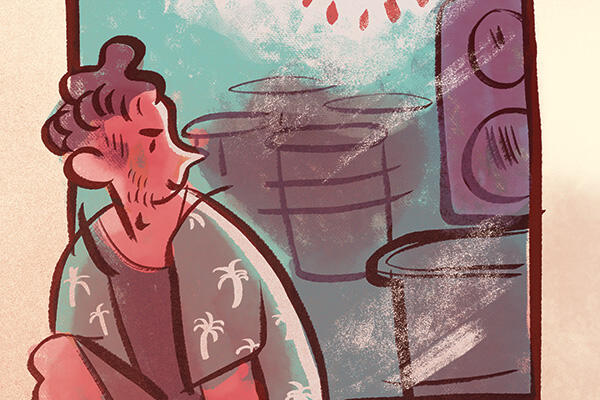
Halls - The Practical Jokes Edition
Otago University’s students have a bad reputation. A walk through the residential halls’ more chequered histories stands to remind our fresh-faced first years that we’re not all depraved — but even those that are won’t bite (much). Gazing up at the Himalayan mountain range that is the hill leading up to Aquinas, staring down the maze-like corridors of Cumberland, looking down at your future campus from the windows of UniCol; you’ve made it. With your parents traipsing up the steps behind you brandishing suitcases and boxes, move-in day seems like a breeze. Perhaps you’ve met some of your floormates and fellow college inhabitants; maybe you’ve made some potential friends. There are several different sorts of people you will encounter during your time at university, and it all starts off with that first year at a hall. The microclimate of a residential college provides a complete array of individuals, including the fresh-faced first year. To all those who aren’t in their first year of university or currently residing in a residential college, this feature has not forgotten you. Although the taunting and egg brandishing may indicate the opposite, we were all first years once. From the colourful calamity that is CityCol to the hill-dwelling Carrington, our halls are well and truly alive with the sound of first years. Among this latest hoard of undergraduates, you will find many a character. The typical BCom student may be, above all else, down to party; geographers and geologists will be passionate (probably about the environment), rowdy and down-to-earth (haha dirt joke!); your BA residents will likely have Fridays off and thus far more time to not do any work; surveyors are predominantly male, and should definitely be studying more than they are; Health Scis are very important — but not actually — so don’t let the constant “Barry, you need to promise me if I get less than an 86 per cent average this semester to chop off my left hand” get you down. Aside from degree-based diagnostics, you’ll encounter the Food Snatcher — never tell them where you keep your treats; the Serial Sleeper-Inner — leave them be; the Ghost — do they even go here?; the Joker — they sometimes need to be reminded to chill; Poisoned Ivy — always hung-over; the Riddler — only ever speaks in CELS- or HUBS-related terminology; the Farmer — from Southland, should remember to wear shoes; then Grumpy, Happy, Dopey, Dreamy and all the others finding their place in the world. Otago University is often painted in a negative light, with certain antics such as the burning of furniture and trashing of streets creating a bad reputation for our Scarfies. Cam Higgins, a former residential assistant (RA) from Aquinas College, said, “The reputation for bad behaviour is caused by a very small number of students … the real Scarfie culture is a tight-knit community where everyone is super laid back and genuine.” National broadcasts of student events turned sour have certainly portrayed the university as a haven for trouble-makers in the past (see the Hyde Street Annual Keg Party), but as Higgins went on to say, “You find badly behaved students at every [university] in the country, but Dunedin is the only student city.” Where AUT or Victoria University students may cause mayhem, there’s probably more newsworthy action happening in other parts of the cities so “the [antics] go ignored.” Concerns over student behaviour prompted the university to introduce a Code of Conduct (CoC) in 2007. The CoC, which all students must abide by, aims to promote a sense of community and mutual respect throughout the university. Breaking the CoC will end in disciplinary action. The introduction of the CoC was accompanied by the establishment of the Campus Watch security force — to keep tabs on crime and anti-social behaviour on campus and in the nearby student neighbourhoods. Life in a residential college can be daunting at first, especially if you’re more reserved and on the shy side of sociability. To those who sit in their room in fear of the antics of those around them, regardless of what characters surround you, there are sure to be those that will pull some outrageous antics. Halls have quite the reputation for some world-class pranks as students attempt to stretch the boundaries. Although we tried to contact multiple heads of colleges for tales, it is not policy for them to speak to any media about anything college-related. Such a shame — they probably have some wonderful stories that could even top the following tales. Even if practical jokes seem imminent, it’s doubtful that this year’s residents will match what happened at UniCol in 2009 — it was a devilishly genius prank that was played on the last resident to turn 18. While friends took their victim out on the town for the first time, another group of students moved the entire contents of his eighth-floor room to an empty room on the ground floor. He was returned to the hall in a bit of a state and put to bed in his new room. After a short period of sleep, fellow residents burst into his room, woke him up and promptly “threw” him out the window. He screamed in terror for “nearly a minute” before noticing that he wasn’t actually falling eight stories to his death. In another flying story, Rory Davis of Hayward 2010 said that “surfing down the stairs on mattresses is fun, and not even frowned upon.” Two RAs even joined in on the excitement. If you’re worried about clashing opinions between would-be new friends, things probably won’t get nearly as bad as they did back in the 70s, when resident Donald Elley “jammed” (poured a jar of jam between the bed sheets) an older student’s bed after he was subject to “initiation rites” such as drinking bizarre concoctions. Another resolution was achieved between feuding residents of Carrington College in 2012: Josh Robinson told of a nasty wave of sexism that washed over the hall mid-semester. From “make me a sandwich” remarks at breakfast to inferiority-suggestive insults, the female residents ultimately silenced the derogatory behaviour by breaking into the rooms of perpetrators and writing “MAKE YOUR OWN DAMN SANDWICH” on their mirrors with lipstick. Not the greatest leap forward for feminism. In line with residents lacking a sense of maturity, it’s reasonable to be wary of what some of them may end up doing with their genitals. In 2011 one Mr Holding reported of a serial “danger-beater” lingering in CityCol’s computer lab. He was nicknamed Manbaby by his fellow residents and frequently pleasured himself using the hall’s computers. If he were intruded upon, he would immediately act “normal” and like he was getting away with it. Unfortunately, disturbed onlookers witnessed his deviant behaviour through an adjacent window. We’ve discussed fellow students, but what about those that once were people? Ghosts. Although there have been “sightings” in the past, there have yet to be any actual physically harmful ghost attacks. Note the following: A former RA tells us that in 2011 a few Arana Health Sci students supposedly filed for compassionate consideration following a series of ghostly encounters in the elevator post-CELS191 test. The residents in question suffered distractions at the hand of their invisible lift operator when the “being” whispered to those riding. Scumby Cumby has always been known for its wild and whacky residents, but in 2012 things got a little spooky. The supposed ghost of an “unfit mother” nicknamed the “Grey Lady” was first seen by two Health Scis returning from a night at the library. The haunting culminated in several residents performing a séance, and although no actual verbal responses were heard, the group told of “strange noises” and “bumping” occurring on the night. One thing that parents are more likely to be concerned about than students is the sexual awakening of first years fresh off the leash (leash meaning their parents’ houses). Both Selwyn and Studholme played host to their own sexy scandals in 2013 and 2014 when senior RAs in both halls began sexual relations with first-year residents. The Selwynite was told to either end the relationship or leave the college, so he left and love lingered on. The administration team at Studholme, on the other hand, did not find out about the erogenous affair and thus took no formal action to stop it. The policies surrounding RA–student relationships are not so clear when inspecting the CoC or your hall’s own “Residential Responsibilities”, and although RAs are encouraged to build relationships with each resident, it is generally known that anything beyond friendly is unacceptable. Cases of inappropriate relationships often depend upon another resident’s reporting of them, and the RA will always face a harsher punishment than the resident, for it is their responsibility to guide and maintain appropriate friendships. (NB: almost every residential college at Otago University has had RA–resident relationships occur in the past, and it remains one of the many regulations and rules that admin frustratingly can’t keep track of very easily). Regardless of whether or not your college-mates end up doing-the-do in a scandalous fashion, nothing will be quite as embarrassing as what happened in 2013 to a St Margaret’s girl: a female resident was feared missing by her friends and minders for around 24 hours. After this time, one of the RAs decided to investigate her room for clues, and in doing so stumbled across the missing fresher. The girl had been engaged in sexual activities with a male acquaintance for the entirety of her “disappearance”. If you have a history of sleepwalking, sleep talking, sleep dancing or another sleeping-related condition, it might be worth placing a few obstacles in your path to the doorway in order to prevent escaping your room. Selwyn may be one of Otago’s more “premiere” residential colleges, but it has a very strange history of bizarre behaviour among its residents. In 2011 a female resident who was apparently sleepwalking her way to the bathroom intruded on a fellow female resident during her sleep. Except, she wasn’t in the bathroom, and the poor girl’s office chair was not the toilet. Oops. Also, the windows only open so far for a reason. Please don’t climb out of them. No matter how marvelous the planned escapade is, it’s not worth it. An outrageous operation was undertaken by a group of UniCol lads; following a 30-man lock-in, complete with smuggled-in kegs, a hoard of hearty thrill-seekers proceeded to scale the building’s North Tower and climb into the Master’s office to retrieve a confiscated funnel. Astonishingly, no one was caught during the mission, and no one was injured. This operation was only successful because no one was hurt and no member of staff could find out who the culprits were — they were lucky. It’s true that you could “do what you want, just don’t get caught”, but really it just isn’t worth the risk. Injury is one thing, but if caught breaking either the CoC or your own hall’s regulations, instant fines, suspension (is the tiniest thrill of adrenaline really worth spending a week at Arana?), embarrassing disciplinary actions and dismissal are what await you. Nobody likes the Fun Police, and Critic will never try to do anything more than tell you tales of when people got caught by them. Make new friends, have new experiences, enjoy yourself in this new and exciting environment. In all honesty, unless you set out to specifically break these rules, you probably won’t even need to remember them. We support regular practical jokes in halls; just don’t be that one moron who gets the whole hall put on an alcohol ban because you decide to be a first-class asshole. With RAs, Campus Watch, deans, headmasters and the university itself watching your back, you really don’t need to worry about the little things associated with inter-resident socialisation. Maybe you’re one of the bros; that’s great! Perhaps you’re more into knuckling-down and getting your notes finished; that’s also great! You aren’t going to get along with everyone in your hall, and some of them will probably pull some stupid stunts, but make sure you enjoy your time away at university and let your hair down a bit. The flipside of all the despicable behaviour is, obviously, the hilarity and immense support fresh-faced first years will find among fellow college residents. Each one of them is going through the same transition period, and a lot of them are a bit nervous. Friends will be found, and together you may perform some of your own “outrageous” activities (maybe not drunken building-scaling, but wearing a funky hat can sometimes be a wild thing to do). An Aquinas resident in 2013, Tommy, was notorious for his ginger afro-esque hairdo. During the last few weeks of second semester, Tommy finally got a haircut on the sly. That evening he presented himself to the dining hall, and all students present broke out into a round of applause. A similar incident occurred in 2012 at Hayward when a friend took a male resident who was well overdue for a trim to get the chop-treatment. Upon his return to the college, the boy’s hallway was lined with fellow residents all eager to see the transformation and touch his newly tousled tresses. Where else but in a residential college would people be so supportive of a hairstyle change? Some call it a sub-sector of Stockholm syndrome, but others call it “friendship”. The antics will continue in 2015, and let’s hope this year’s freshers bring us some good stories for the history books.
-
Features

Building On Shaky Grounds
Four years on from the 22 February Christchurch earthquake, the city still has a long way to go. The city centre is not as alive and buzzing as it once was, despite the best efforts of the Restart Mall, set up where Cashel Mall once was. The eastern side of the city is littered with road works, detours, potholes and desolate, empty-looking houses. These lingering aspects of the earthquake make it almost impossible to move on. A lot of people in Christchurch are suffering from post-traumatic stress disorder (PTSD) or are experiencing high levels of long-term stress due to the lack of stability offered to them. Anne, a resident in eastern Christchurch, spoke of the initial stress she experienced on the day of the quake. She was home alone, standing in her kitchen, when it hit. The cupboards flew open, flinging her plates and glasses at her. All she could do was drop to her knees and cover her head. It was two hours before she heard from her husband and two of her daughters, then another three hours before she heard from her youngest daughter. She was unable to leave the house to try to find her family as the liquefaction and earthquake damage had rendered the streets impossible to drive on. She had food and water supplies stashed away, but they were on the opposite side of the kitchen. It took her several hours before she was able to clear all the broken shards enough to enable her to get to the supplies: “I kept myself busy trying to clear a path through the rubble so when my family got home we could at least reach the food and water.” It was another month before Anne and her family had power and water again. Another Christchurch resident, Tania Gilchrist, lived on the opposite side of the city. She was thrown across her lounge before the shaking subsided. Her first action was to locate her children. A friend was able to get her across town to pick up her younger daughter from school. Eventually she heard from her son that he was fine. Her elder daughter, who should have been at work or at her house in the centre city, was actually out in the country instead — meaning she was safe from harm. Tania then headed to Dunedin to stay with family for a week while things settled down in Christchurch. The most important thing to her was the comfort and safety of her family: “It was a matter of tracking down the kids; I left the mess in the house.” In spite of the earthquakes, a great sense of community and support developed because of the events that followed. Tracey Johnstone reported that both of her sons did their best to help others. Her elder son drove all over the city to take friends home from university, while her younger one stopped to pick up a stranger who was desperately trying to get to his child’s school. Many Christchurch residents had to deal with no power and no water in the following month. Anne reported that her husband sorted out a large 500-litre tank on the back of his trailer, went to a friend’s house to fill it with water from their artesian well, then allowed the whole neighbourhood to take advantage of it. Tracey also reported people setting up generators so there was some limited access to power when they would otherwise have none. Canterbury University students were not exempt from the impact of the earthquakes. A former Canterbury student said that he struggled with study because many of the lecture theatres were now unusable, “meaning [they] were forced to use tents or go to other campuses.” Every time there was a large aftershock, classes would be cancelled so the safety of the buildings could be assessed. Another Canterbury student, Mat Daniel, also said that in the first few weeks, “lecturers often didn’t have access to rooms or equipment” that they required. This interrupted and inconsistent university year made it hard for students to focus. The biggest obstacle in the way of people moving forward is the rebuild, restart, insurance aspect of the ordeal. Four years on from the initial damage to her home, Anne is still waiting. She has known that her house would be a rebuild for at least three years, and despite this she is still living in the damaged house. She is waiting on her insurance company to provide her with a new home. She said that “dealing with the insurance claim has been far more stressful than the thousands of earthquakes we experienced … It’s a different kind of stress, not of danger but of frustration and uncertainty.” Only in the last month have things slowly start to move forward with house plans. Anne said there was an 18-month period where she heard almost nothing about her claim. Kelly and Matt, a young couple in Christchurch, are also enduring the long wait with insurance. They own two properties, the house they lived in and the neighbouring property. Both were badly damaged over the course of all the earthquakes, and they waited for a long time for insurers to acknowledge the damage to their property. A year ago they got lawyers involved in the discussion, but nothing has changed yet. Kelly and Matt have had their first child in the last year, and so are living at her parents’ house because they didn’t feel safe in their own home. Talking Therapy is a counselling service in Christchurch. Experienced psychotherapist and counsellor, Mark Piercy, said that there are “a good number of people still seeking help.” According to Piercy, there are two main groups of people coming to them for help. The first group includes people dealing with PTSD, diagnosed or undiagnosed. Many of these people “will not go into tall buildings, or can get panicky if a truck goes past.” Some of these people may have seemed to cope well to begin with, “but have finally run out of ‘cope’ and previous mechanisms are no longer able to work.” The second group are people who are stuck in the repair and rebuild process with insurance companies without having made any progress. Piercy stated that “anxiety and depression are common” for this group. Long-term stress causes people to have difficulty dealing with their surroundings. This inability to cope can come from PTSD or even just the long-term impact of having to deal with insurance and unstable surroundings. Long-term stress can be dangerous for your mind and body. Adrenalin and cortisol are natural stress hormones that are released when a person goes through trauma or experiences a threat. Adrenalin gives the fight-or-flight response; it mobilises stored energy reserves that trigger a short-term energy increase. Someone in adrenalin mode will be extremely focused on the problem at hand, and will struggle to stop or slow down. The body shuts down certain functions in order to go into this survival mode, meaning that it is not at all sustainable. With every new threat, more adrenalin is released, which means that the focus is always on the problem, and it’s almost impossible to see the positive side of things. Cortisol, on the other hand, sets you up for long-term stress. Cortisol is released into the body after an adrenalin rush. It preserves the body’s resources and shuts down most functions not related to survival. While this is normal, excessive amounts of cortisol can leave people feeling emotionally numb, except for emotions like fear, shock and anger. People also experience an inability to take action, with little interest in social interactions. Cortisol affects the ability to problem solve and process complex information, so decision making is difficult. Anne is experiencing the effects of long-term excessive cortisol. She finds it very hard to make decisions in her everyday life and had to leave her full-time volunteer job as a result. In the last year she has sought out counselling and support services, and is on her way to getting better. She is particularly shocked that while she has been in this state, she has had to make serious decisions about the rebuild of her home. She struggles to see the positive side of anything and struggles to see how her home will be okay or that the future is something to look forward to, a common attitude in those struggling in Christchurch. Children aren’t safe either from the emotional impact of the earthquakes. Since the earthquakes, the number of stressed children admitted for mental-health treatment has doubled. The years of aftershocks and constant interruptions to normal routine have had a large impact on the children of the region. University of Canterbury Associate Professor Dr Kathleen Liberty is conducting an on-going study that examines five-year-olds starting school in eastern and southern Christchurch. The study has found that there may be as many as one in three children displaying symptoms of PTSD in the wake of the earthquakes. Piercy said that moving on from PTSD is a slow and arduous process. Many people feel shame that they haven’t fully gotten over it yet, and others feel overwhelmed by the very feelings they are having. He feels that the best thing people can do for themselves is to take “time out for a coffee or a friend, exercise, and make time for small enjoyments and setting limits on the “have to do” list.” Many University of Otago students have moved from Christchurch to Dunedin to escape the earthquakes and related damage or distractions. Bridget Harris said that she found the earthquakes were incredibly distracting for her while she finished up high school, and ultimately they helped motivate her to move to Dunedin. Other students found that upon shifting from Christchurch to Dunedin they were able to “focus on study” more because “Otago University had less distractions” such as the aftershocks, more earthquakes and all the related drama. However, some students decided to stay in Christchurch to study. Some found that the earthquakes had little impact on their study overall. Mat Daniel also chose to stay, in large part because he had already been studying at the University of Canterbury for a while and didn’t want to end established relationships with lecturers. Urban decay is the term for when a city or parts of a city fall into disrepair and decay. This has not been seen often in New Zealand. However, Christchurch is now a prime example of this phenomenon. Through eastern Christchurch, especially, there are large pockets of badly damaged areas. This is where all the houses that fall into the “yet to be fixed or rebuilt” category are. Many of these areas make up the red zone. There are sinkholes and potholes in the roads, overgrown and forgotten lawns, empty homes with smashed-in windows and graffiti on the walls. Even the Foo Fighters front man, Dave Grohl, commented on the red zone at the Christchurch concert on 18 February. He cycled right through the city, from the west to the east. He noted that the further he went, the more he saw these desolate areas, but he still felt that Christchurch was a “beautiful city”. There are several groups who are trying to turn the many red-zoned, empty areas of Christchurch into parks with a cycling and walk track running through. At the moment, living near the red zone can be tough. Kelly reported that her cars have been broken into multiple times, and one was even lit on fire because people assume it’s all abandoned. Anne said that before the red-zone houses on her block were demolished, people would often break into the empty houses and damage them even more. It would cause her a lot of stress hearing people over the fence late at night, as she knew there should be no one there. People also treat the red zone as their personal dumping ground, leaving trash in the area because they assume that the whole neighbourhood is abandoned, when in fact there are still many people living in these areas, waiting for their homes to be repaired. The Canterbury Earthquake Recovery Authority (CERA) is an organisation put together by the government to facilitate Christchurch’s recovery from the earthquakes. Part of its job is to clean up and do something positive with the red-zone areas of Christchurch. A CERA representative explained that there is a public engagement process where residents of Christchurch get to submit ideas for what they want to do with these areas. This process has already happened in the Waimakariri district, where “nearly 600 people contributed over 2750 ideas.” These ideas are now being processed and a plan will come out in later 2015. However, because “the Christchurch red zones have much more complex infrastructure issues to work through,” it is going to take some time “before the public engagement process can begin.” CERA anticipates that they will be able to begin the public engagement process for Christchurch later in 2015, after these issues have been resolved. In the short term, however, CERA say they are doing their best to clear the red zones of all dwellings — houses, sheds, garages, etc. By the end of February they will “have completed approximately 89 per cent (approx. 6,300) of the property clearance in the flat land red zone by the end of February, with the remaining 11 per cent (approx. 750 properties) to be completed by 30 June 2015. When it is able to, CERA removes the homes in clusters, so as to minimise disruption to people still living in these areas. CERA also spends in “excess of $3 million a year on maintenance of the Crown-owned red zone land,” which includes “regular mowing of lawns and weed spraying in order to keep these areas in a reasonably tidy state ahead of decisions about future use of the land.” CERA also provides a 24-hour security patrol and electronic surveillance in order to provide comfort and reassurance to the surrounding community. Gap Filler is an organisation that has started to make a difference in town. Gap Filler aims to fill all the empty lots in the city centre where buildings once were with creative and community-focused things. Like a mini-golf course, for example, or a dance-o-mat or a book exchange. A lot of art work is showing up, slowly making the city a more vibrant and interesting place to walk around — rather than a depressing pile of rubble symbolising everything that once was. Talking Therapy offers free earthquake-related counselling for those who feel they need it, and CERA has also put various support systems in place for people who require it. There’s everything from a social support line, to a support service specifically aimed at those struggling with getting their home rebuilt, to advisors available to discuss issues with the rebuild/repair process. It also offers help with getting temporary accommodation when needed. Several Facebook pages have popped up to act as support groups for those going through the various stages of rebuild/repair. Despite the seemingly overwhelming negative impact of the earthquakes, what has become apparent is the new and supportive community emerging in Christchurch.
-
News

Interview: Kiesza
Headlining the OUSA Orientation Afterparty, Kiesza performed for nearly 4000 students last Thursday night. Critic sat down with her beforehand to hear about the road she’s travelled to get here and what her thoughts are on L&P, Crocs and James Brown. Critic: We’re just going to start off with a little bit of “overrated/underrated”. This is our favourite New Zealand soft drink. (presents a can of L&P) Kiesza: I’ve never tried it! (drinks) Hmm. It’s good! It’s almost like I’ve had this before, but there’s something about it that’s different. But I think it’s good. Does that mean it’s underrated? Critic: Sounds good! Next one, you being from Canada … Drake? Kiesza: Well, I mean, he’s amazing. Underrated. I can’t say he’s overrated, that’d be wrong! Critic: Last one … the man bun? Kiesza: Oh gosh … I’d say overrated. It exploded too much. Every time I see a man bun, I envision myself with scissors chopping it off and seeing what would happen, how his hair would fall … but some people look great in the man bun! It’s not bad, there’s just too many. And they kinda look greasy sometimes, y’know? Critic: Right, unkempt man buns? Especially with the beard combination! Kiesza: Did it come from that movie, Nightcrawler? ’Cos he wears a man bun. Is that why people wear the man bun? Critic: I think Leo’s been rocking it for a couple years. Kiesza: Ohh, right! Leo. Whatever he does, every other man must do as well. Critic: Do you think the values of a pop star, or what success means to a pop star, have changed in recent times? Because you draw a lot of influence from pop music from the 90s, and yet so much has changed since then. Kiesza: Yeah, I think a lot has changed. I mean, the whole world has changed, changed to a digital world. And that changes everything. If you go back in time, people were always discovering new sounds, seeing what kind of a new style they could create. Whereas now, I think people are trying to mix styles, not necessarily create new styles. It’s about how you put the sounds together, how you combine funk with … I dunno, country! Yeah. Things have changed. There’s a lot more fusion. I think as performances go, people put a lot more into their performances back in the day — if you look at performers then, like James Brown or Michael Jackson. There’s a lot of things nowadays that let you cheat, and I think because of it people get a little lazy. Even if somebody’s faking it and you can’t really tell that they are, you can somehow feel it. I can’t explain it. You just can’t recreate what James Brown does — he could never fake that. People have even asked me to lip sync so I could do more shows. I was like, “Is this a normal thing? Is this a standard?” And actually, yes. It’s becoming a normal thing. You record your voice through a performance microphone so it sounds like it’s live, and then you just pretend that you’re singing! Out of respect for my audience, I would never do something like that. I guess standards like that have changed. There’s a lot of faking it, I think. Before you couldn’t, there was no way around it. You didn’t have autotune, you had to sing in pitch. But there are still really great performers. Look at Bruno Mars, he’s amazing. I think dancing, singing and dancing, is sort of coming back again. I’m doing it, I’m starting to see other people doing it. Beyoncé, of course! You can’t touch her. There are a lot of great performers, a lot of great songwriters still. That never goes away. I dunno. I just think the world has changed, so people change with it. Critic: I saw you had a feature on the Joey Bada$$ album, Before the Money. What were YOU doing before the money, so to speak? Kiesza: (laughs) I was hustling! Hustling, trying to get a meal. Trying to make money! I was going between Canada and New York; I didn’t have a visa for a while so I could only spend so much time in New York. I couldn’t actually work for a long time … it was really, really tough, trying to make it. I was just writing, writing for other artists. In my bedroom, I’d write songs. It’s funny, ’cos now a lot of those songs are coming out. J-Lo just sang one of my songs, one ended up on a Dreamworks movie … but people won’t take chances on new things. It’s really tough for a person to take a chance on you, especially now. Back in the day, they had so much money to put towards developing new artists. Nowadays, there’s nothing. They don’t have artist development; it doesn’t exist. You have to develop yourself. Which is totally cool, you can do that. You just don’t have any guidance, really. They don’t take the same chances they did because they can’t afford to lose, they can’t afford to make mistakes. I think they should trust their instincts and take chances on artists, despite maybe not having YouTube hits. I didn’t have any Facebook followers, I didn’t have any Twitter followers when I did “Hideaway”. I had to do it all on my own. My producer and I created Local Legend, which is an independent record label, and we just did it all indie! Moved to London, got DJs to play it underground. Then people started ripping it from their sets, and then finally Annie Mac heard it and played it on BBC Radio One and it just … (makes explosion motion with her hands) But like Joey Bada$$, I think we both worked the underground and we both did it independently to start out. We both really grew organically, and that’s what I really try to maintain. There’s been a lot of really big opportunities that sounded so amazing, but I turned them down because I feel like it’s just not an organic growth process. I love people being able to discover my music and get to know me as I grow. I feel it’s better to gradually build up, as opposed to just shoot up too quickly. Critic: So how do you keep physically and mentally in shape? With all the demands of “Hideaway” exploding so suddenly, and you having to promote it? Kiesza: I had to learn the hard way, by running myself into the ground way too many times. I have a hole in my arm from the muscle atrophy — permanently, I think. Just the wear and tear on my body, the steroid shots they were giving me. And I realised after a while that steroid shots are not a good thing! I should, like, sleep. So instead of saying “yes” to everything, I learnt that you just can’t. I want to please everybody, I want to meet everybody, I really like people, I love interviews … but I had to listen to my body and just say “no” to some things. Not go out and party. Not drink alcohol. Cut out caffeine while I’m touring. Things like that. The day before I go on tour, I’m like “pizzaaaa, give me that glass of wine!” And then I cut it all out. Critic: We also saw you had a Mick Jenkins feature on your album. Would you consider yourself a bit of a hip-hop head with those two features? Kiesza: I really like hip-hop! When I was in my early teens, my older brother got me into hip-hop … 2Pac, Dr. Dre, Jay-Z. But it’s funny. I was so young. I was into the grooves, into the rhythm. Now when I go back and really listen to 2Pac, I hear it such a different way. I feel like rappers are some of the best writers in the world. As a songwriter, working with rappers really inspired me. They think differently, their metaphors are stronger, their punchlines are stronger. Really incredible writers. Critic: What was it like working with other musicians, like Jack Ü [a joint project between Diplo and Skrillex]? Kiesza: That was totally spontaneous! I was in Ibiza, and just ran into them. We made that song in their hotel room that night. Like, USB microphone. And they’re really cool guys. Skrillex, I swear, is the nicest person I’ve ever met in my whole life. Hands down. I can’t believe how somebody who makes music that hard can be so nice. They’re great guys, and they really are in it for the music. They love what they do, and you can totally feel it. They’re like kids in a candy shop!
-
News

Interview: Sigma
Drum and bass duo, Sigma, is made up of British talents Joe Lenzie and Cameron Edwards. Critic caught up with them just before their bombastic set at the Orientation Afterparty, to talk about dubstep, e-cigarettes and Karl Pilkington. Critic: Firstly, I’ve got to ask — what flavor vape are you smoking? Joe: Blueberry. But it’s not that nice, though. Critic: Mmm. I think the more tea and herbal flavours are nicer than the fake fruit ones. Cameron: Oh, right. Are there vape shops here? Critic: Yeah, it’s really big in New Zealand actually. Cosmic’s good, on the main street. Cameron: We’ll have to go there tomorrow, then. Critic: What do you guys think about the current electronic music landscape? Is drum and bass having a comeback, is it in a bit of a lull? Cameron: I definitely wouldn’t say it’s in a lull. It’s probably the biggest it’s ever been, I think. In England at the moment there’s been probably about four Number One drum and bass records? Which is just unheard of, really. The kids are into it more these days. Obviously the music has changed as well; it’s a bit more commercial, more accessible. Joe: I think what has really helped in the UK … it’s been around for so long, and the people who actually control what’s getting played on the radio grew up listening to it. It’s not so alien to them to be playing stuff at that tempo in the daytime. So that’s really good. It’s a part of British culture, really. Critic: Do you ever think the UK grime scene could become as big as drum and bass has? Joe: I’m not sure. No disrespect to those guys, they’re talented … but because it’s such a UK thing, I think a lot of the stuff that they talk about is related to UK stuff, UK slang. I think a lot of the time in other parts of the world people don’t understand what they’re talking about. Cameron: But then a lot of the beats sound like a lot of the new American tracks. Maybe it’s more of a case that the production might move over, but not necessarily the vocals. Joe: The track that Kanye performed at the Brit Awards did sound like a grime track. How is it out here? Is it big out here? Critic: Not quite. Very quintessentially British, I think. What are your thoughts on the UK at the moment? Culturally, politically … Cameron: That’s a deep question … it’s shit. Politically, it’s shit. Critic: David Cameron … Cameron: He’s a cock. But most politicians are cocks. Joe: (laughs) Such a cultured response! “It’s shit, David Cameron’s a cock! All politicians are cocks!” Cameron: Boris Johnson, he’s the only one I’d actually pay any attention to. ‘Cos he’s fucking hilarious. He’s a mumbling fool, but he seems nice. Critic: What’s the musical buzz in the UK like? Now that Britpop’s well and truly dead, dubstep’s become more of an international thing … Joe: Dubstep’s dead in the UK now. It’s really harsh to say it, but there’s no dubstep nutters anywhere. Critic: Burnt itself out? Cameron: All very quickly … it grew too fast. No foundation. Joe: That’s it. And that’s the thing with drum and bass — it goes in peaks and drifts and stuff, but it always has that core following in the underground. Which is really important for a scene to maintain. Critic: Speaking of deep house … is Kiesza an artist you guys are into? Cameron: Definitely! We keep bumping into her everywhere. We bumped into her first at Radio One [not the Dunedin station], when she had “Hideaway” out at a similar time to when we had “Nobody to Love”. We’ve been meaning to get on a tune together, but obviously she’s so busy and we’re so busy, it’s been hard to lock it down. We’ve written a tune we think would be good for her. Joe: I think in terms of working with big feature vocalists, a lot of it is down to just whether it works with their schedule and yours. But you have to have the right track for the right vocal as well. For example, [Sigma’s new single] “Higher” with Labrinth. Labrinth was probably the ideal choice for us, but we got about fifteen different demos from different people! Cee Lo Green did one, loads of people. Critic: If you could have a pint with any one person — living, fictional or dead — who would it be? Cameron: … Peter Griffin. It’d just be hilarious, wouldn’t it? Who would you pick? Joe: David Brent, from The Office. Or Karl Pilkington! Cameron: I don’t think he would be up for it. He’d just be fucking annoying with his bald head. Critic: Head like a fucking orange. What can we expect from you guys in the future? Cameron: We’re working with some really exciting artists, actually … a guy called DJ Limited, a guy called Nick Da Silva. Some really cool music.
-
Culture

Pulled Chicken & Peach BBQ Tacos
For those who know me or have followed my recipes here since last year, my unwavering love for soft-shell tacos is evident. My favourite being those that include melt-in-your-mouth, slow-cooked meats. For those of you who really value that extra twenty minutes of sleep in the morning and CBF putting on the slow cooker before you head out, slow-cooked meats can be a bit of a weekend luxury. I have been on the lookout for a last-minute taco recipe that can satisfy those taco cravings on them busy weeknights, and I think this may be the answer we have been waiting for. Make the most of the rest of stone-fruit season by turning lush peaches or nectarines into a thick and delicious sauce to cook pulled chicken in. The natural pectins in the fruit help to thicken the sauce, as well as providing a wonderful flavour profile that goes so well in tacos. Use chicken thighs; it doesn’t matter if they have bones — you are going to tear the meat apart and off them anyway. The thighs are juicier and more tender than breast, so you will be guaranteed a melt-in-your-mouth taco. IngredientsServes 5 For the Chicken 5 chicken thighs 5 teaspoons ground cumin 4 teaspoons smoked paprika ½ – 1 teaspoon cayenne pepper (depending on your spice preference) 2 teaspoons ground cinnamon 1 teaspoon salt 4 tablespoons cider vinegar 1 onion, sliced 4 cloves garlic, crushed Splash of oil 4 peaches or nectarines, de-stoned and roughly chopped 3 tablespoons brown sugar 400g tin chopped tomatoes 1 cup water Fillings 2 large carrots, julienned or grated ¼ red cabbage, finely sliced Fresh coriander leaves Other Bits 15 small soft tortillas Good quality mayo MethodMarinate your chicken thighs in the cumin, paprika, cinnamon, cayenne, salt and cider vinegar and put to one side for ten minutes. Sauté the onion and garlic over a medium heat in a large, deep saucepan until soft and translucent. Add in the peaches and brown sugar and cook until the sugar caramelises and the peaches soften. Pour in your tin of tomatoes and water and bring the mixture to a strong simmer. Place in your pieces of chicken and scrape in all the remaining marinade. Turn the heat down to medium-low, then place a lid on the pan and leave to simmer for 30 minutes. Toss together your red cabbage and carrot and prepare the coriander. Once the chicken thighs have cooked right through, remove them one by one from the pan and pull them apart with two forks, then return them to the sauce. Continue to simmer this mixture with the lid off until the sauce thickens to a thick gravy-like consistency (around another ten minutes). Allow diners to spread mayo onto each tortilla, followed by the carrot and cabbage, the pulled chicken and then the coriander. Enjoy!
-
Culture
Force Majeure
Rating: 5/5 Force Majeure follows a Swedish family on their five-day skiing holiday. The opening scene shows the family being persuaded by a photographer to have their picture taken. The result is a funny moment where you can see how they have constructed an ideal family: mother, father, daughter and son — they’re all beautiful and they all look perfect in the snow; it’s a perfect balance. What unfolds over the course of the film is a conflict between the mother, Ebba (Lisa Loven Kongsli), and the father, Tomas (Johannes Bah Kuhnke). The conflict between the parents influences the reactions of the children, and of all four of them as a family. When an avalanche looks as though it’s about to hit the family while they’re at an outdoor restaurant, Tomas tells the family not to worry. When the avalanche quickly approaches, everyone at the restaurant freaks out and tries to run away. Tomas grabs his phone and runs for his life, leaving behind Ebba and his two children. However, it turns out that it was just fog from the controlled avalanche. The clincher is that Tomas refuses to admit that he ran away. The beautiful thing about this movie is that it addresses ideas and issues around femininity, masculinity and gender expectations without ever feeling like it is actively doing so. It explores family life without appearing to pick a “right way” of doing it. Yes, Tomas is a dick, but eventually you end up relating to him — he freaked out, ran away, and he was emasculated by that. Force Majeure is darkly funny; you can’t help but laugh at the ridiculous nature of what unfolds for this picture-perfect family. The score is spot on, and the film uses the absence of sound effectively to create tension. There are lots of beautiful and intimate scenes with the family — the kind of scenes that wouldn’t make it into a Hollywood movie.
-
Culture
The Second Best Exotic Marigold Hotel
Rating: 4/5 After neglecting the romantic dramedy genre for some time, I am glad to have been reintroduced with the lively, beautiful and surprisingly captivating sequel to The Best Exotic Marigold Hotel. While I wasn’t all too familiar with the original instalment, The Second Best Exotic Marigold Hotel does its very best to accommodate my status as a new resident. The film firmly establishes the primary motivation of a young Indian hotel owner, Sonny Kapoor (Dev Patel), who plans to create a second hotel, which requires the assistance of the retiring residents of the first hotel to appease hotel inspector, Guy Chambers (Richard Gere). The audience is also welcomed into the residents’ lives as they deal with their own trials of love in their final acts of life. From the excessive eloquence of Dev Patel as Sonny and the light-hearted snark of Muriel Donnelly (Maggie Smith) to the internally restrained Evelyn Greenslade (Judi Dench) and the loveably befuddled musings of Bill Nighy as Douglas Ainslie, the performances from the entire cast are superb; the actors complement each other with powerful performances that reveal and unravel the inner workings and motivations of each character as the film progresses. I felt personally invited to bear witness to an increasing depth of insight into the characters that I had been introduced to. Every shot of the film is beautifully crafted to include the stunning scenery of India, which is, in turn, befitting of the heart-warming stories of love, appreciation of life no matter how old one is, exploration of the meaning of maturity, and perception of one’s peers; themes that can still make an impact even without the high-octane pacing present in a lot of today’s films. The Second Best Exotic Marigold Hotel is an elegantly constructed film that dishes out both joyful laughter and misty eyes of bittersweetness. Even if you are unfamiliar with the first film, I highly recommend you check yourself in for a visit.
-
Culture
House of Cards, Season 3 (Episode 1)
A s a passionate subscriber to Netflix’s reboot of House of Cards, I found myself eagerly anticipating the first episode of the new season. When the latest chapter was finally released on 27 February, a titanic struggle ensued between my desire to return to the exploits of Machiavellian anti-hero, Francis Underwood, and the pressing need to stay on top of my Contract Law readings. Needless to say, House of Cards emerged — through an unconstitutional amount of political manoeuvring — the victorious party. Weakness appears to be a prevalent theme in the series. For a long time now, we have watched Kevin Spacey and Robin Wright meticulously manipulate the weaknesses of those around them in order to achieve their own ambitions. Power, in the show, appears to be measured by the characters’ ability to separate themselves from their own humanity. “Chapter 27” encapsulates the show’s preoccupation with this theme, potentially as a harbinger for an eventual fall from grace for the show’s protagonists. Francis is now the president of the United States; Clare, by extension, is the first lady. We find Francis barely clinging to his place in the Oval Office, shouldering an appalling approval rating and with an uncertain election just around the corner. Francis’s character arc for the season is encapsulated by an early declaration, “I will not be a placeholder president!” It seems as though the writers are treading water, refusing to allow Francis’s character to existentially plateau upon achieving his goals and drift into long-winded introspection. The result feels strained and, disappointingly, it seems that little has changed even though our hero has reached near-omnipotent heights. Interestingly, the focus of the first episode is on Douglas Stamper, Francis’s aide, who was widely assumed dead at the conclusion of the last season. The first episode effectively documents Doug’s return to health, his dedication to Francis and his eventual return to drug abuse on finding his faith in Francis misplaced. I am wary that Season Three lacks the spectacle and shock value of Season Two, but, thus far, there have been no serious disappointments other than an apparent move away from the subtle imagery of early episodes, as characterised by a less-than-insightful opening to the season involving urination at a cemetery. With twelve chapters remaining, I am pleased to say that I have no doubt as to whom I’ll be voting for come 2016.
-
Culture

The Dunedin Fringe Festival
Among the shattered glass that litters our streets and the misrepresentation of Dunedin as a place that’s full of wasted students, this city has a lot to give — especially when it comes to the arts. From James K. Baxter, Janet Frame and Alan Dale (the guy who plays the evil, rich grandpa with the foot fetish in Ugly Betty), Dunedin has been a birthplace of artistic excellence. Besides, it’s not every day that the United Nations Educational, Scientific and Cultural Organisation (UNESCO) hails a place as a City of Literature, and this week Dunedin proves that it’s the cultural place to be with the Dunedin Fringe Festival. The Dunedin Fringe Festival was established in 2000 by the non-profit Dunedin Fringe Arts Trust, in 2004. The Fringe Festival is described as an “injection of creativity in Dunedin” — an injection that not only brings local artists to our town but also international acts. Last year, 9000 people attended Dunedin Fringe Festival events and, with this year’s line-up of acts, there’s no doubt that 2015 will be a repeat. Kicking off with a two-hour opening-night showcase at the Regent Theatre, the Dunedin Fringe Festival is certain to have something for everyone to enjoy: theatre productions, stand-up comedy, dance performances, music in the Dunedin Botanic Garden, cabaret — the Dunedin Fringe Festival has it all. If you want mystery and variety, there’s the Fringe Black Box. Dear fans of Freaky Friday (who also enjoy contemporary art), look no further, for artists Zoe Crook and Aodhan Madden bring you Suspicious Minds. The Dunedin Fringe Festival starts on 12 March (with the opening night on 11 March) and runs to 22 March, which means that there are ten spectacular days to go see Bruce Fummey (Scottish Comedian of the Year 2014), a production about a girl who tries to grow a blue beard and the comedy, Benedict Cumberbatch Must Die. With so many artistic events on show this week, the Dunedin Fringe Festival is guaranteed to keep you occupied for the next couple of weeks.
-
Culture

Yesterday's Kin
Yesterday’s Kin by Nancy Kress is a science-fiction novel about the experiences of geneticist Marianne Jenner and her adult son, Noah, after the arrival of aliens on Earth. The aliens have already established their presence in New York City when the story starts, probably because this novel is very close to novella size and Kress has to move fast. The aliens seem to have come in peace, but have brought bad news with them; the ensuing events will dramatically alter Marianne and Noah’s lives. This is a very competent piece of science-fiction as far as the science goes. It is based on real, continuing research and is described in a way that lets someone as ignorant as me understand the exposition without finding it boring. Yesterday’s Kin is fast-paced, and the prose is well-written. The ideas the story raises are interesting, if not world-shaking. Where it all falls down is the characters. Character motivation seldom makes sense. In the first chapter Marianne is at a party thrown in honour of her latest discovery. FBI agents show up and tell her in front of everyone that she has to come with them right this second and, no, they won’t explain why. They did not need to do this. They could easily have sent in one person in plain clothes to take her aside, show ID and tell her to excuse herself. It would have been fifteen times as discreet. Instead they walk in with guns and explain how they won’t explain in front of everyone. It’s very dramatic and makes for an entertaining first chapter, but has nothing to do with sensible behaviour. It’s difficult to discuss without spoilers, but ultimately the behaviour of the aliens similarly lacks sense, in that they understand human psychology well enough to tell one lie, but not another. The novel also fails in that the point of view switches from Marianne to Noah, yet only Marianne is interesting. Fascinating things are happening to Marianne, but in nearly every second chapter we have to return to her tedious son whining about how he doesn’t fit in, doesn’t know himself or where he belongs. He eventually finds where he belongs, but I didn’t care. His main characteristic at the beginning of the story is an addiction to a drug that makes the user feel like a completely different persona each time it’s taken. Not only is this drug not used by the plot in any satisfactory fashion, but the author decided to call it sugarcane. Sugarcane is the most ridiculously twee and unlikely name for a drug that I can imagine and it shattered my suspense of disbelief every time I read it. I’d also like to warn for what I call “vapid hate-clichés” in association with the story’s lone gay character. It’s not overt for the most part, so if you aren’t educated in the nuances of poor representation you’ll probably not notice, but vapid hate-clichés are there in force and I disliked it. Aside from all that, if you’re in the mood to read a short piece of mildly interesting science-fiction written in competent prose, this will do.
-
Culture

Erica Van Zon - Dogwood Days
W hen my family was moving house yet again, I remember listening to a conversation between two relocators. They were packing my mother’s various objects, which decorated the numerous shelves in the study. While arranging two strangely bent papier-mâché trout and a found piece of burnt driftwood into a nearly full box of similarly arbitrary objects, one relocator exclaimed, “Look at all this shit!” Mildly entertained and frustrated, I felt defensive of the special objects my mother had collected over her lifetime and that I had played with or made stories for throughout mine. This memory and the thoughts it invokes came to mind once again when encountering Erica von Zon’s “Dogwood Days”. “Dogwood Days” is tucked between Fiona Connor’s movable painting stands and “Mythos”, a collection of the Dunedin Public Art Gallery’s prints; drifting into it is reminiscent of discovering a forgotten box of your treasured objects or, for me, the hoarded items displayed on my mother’s bookshelves. In her show, Erica von Zon has crafted household items and foods, arranging them along a plywood, rectangular display so that viewers can wander around the works and carefully study each item. The pieces vary from nearly exact imitations of aqua-coloured breeze blocks (that one expert viewer remarked are barely used now because of their structural inadequacy) and dimpled, cut melons to flattened remakes of meat cuts that almost look like props or cut-outs from a children’s book. The textures of the objects are just as varied — from the pale purple and pink fur of the 1970s “View Street Rug” to the clothes and shoes embedded in wax to look like soaking washing. In the texts accompanying the exhibition, the objects are described as “portraits” of the artist’s family members and inspirations as well as “clues of the immaterial” to be gathered and deciphered by the viewers or “pseudo-archaeologists”. In most cases, van Zon has used traditional craft methods in a new way appropriate for a contemporary art gallery. Her varied responses to the works reflect their varied physical characteristics — as the crafted pile of brown and white bread in the show suggests, “Dogwood Days” is a layered experience. The questions raised by the colourful objects multiple further because of the deliberate way they are displayed. Because the objects are elevated but close to knee level, wandering around the show’s rectangle platform is similar to exploring a design store, but instead of shopping to then physically consume the objects or acquire them for one’s own home, the viewers are purchasing experiences and memories — of home, of parents, of stories. The everyday of the family home is elevated into the realm of art in a surprisingly pleasant encounter. But the encounter is also filled with interesting tensions — as Martin Patrick observes, the show negotiates a plethora of identities and directly contrasting ideas of art/craft, real/configuration, material/conceptual, and now/then. After attaining a Master of Fine Arts from the University of Auckland in 2008, van Zon has exhibited around New Zealand and overseas. In 2014 the artist spent eight weeks over July and August in Dunedin working on “Dogwood Days” as a Dunedin Public Art Gallery Visiting Artist. Her final body of work for this show incorporates, as Aaron Kreisler describes, her “continued investigation into ‘domestic’ modernism, culinary fetishism, disposable and popular culture” and also pushes her work into new areas. Her work is smart and researched, but is wonderfully accessible. “Dogwood Days” engages a diverse audience and stimulates stories to be shared between child and parent, two friends or just oneself, making the show a welcome invitation to add to a shared cultural knowledge.
-
Culture

En Esch - Spänk
Rating: 3/5 Nicklaus Schandelmaier, more commonly known as En Esch, is an industrial rock musician hailing from Germany. For many years he was in the phenomenal band KMFDM (Kein Mehrheit Für Die Mitleid), sharing songwriting duties with Sascha “Käpt’n K” Konietzko. Like many famous musical partnerships, their volatile relationship actually resulted in some great music. Just about everything from 1988’s outlandish Don’t Blow Your Top through to the lush electronics of 1997’s Symbols deserves a place in your iTunes. KMFDM’s sound was unmistakable: heavy beats, fiery riffs, self-referential lyrics and stunning pop vocals. En Esch brought to the table a sense of camp absurdity. With Sascha’s focus and slightly sinister edge, the pair were a creative powerhouse. It is no surprise, then, that they sound incomplete without each other. The KMFDM albums following En Esch’s 1999 departure sorely miss his flamboyance. Similarly, En Esch’s solo records have all of his charisma, but lack the vigour and production values of a KMFDM release. Having said that, I’ve had a lot of fun with En Esch’s work outside of KMFDM. His first solo record, the appropriately-named Cheesy, was a eurotrash tour de force, held together by En Esch’s Dionysian persona. His other band, Slick Idiot, has also released two albums of dance-metal weirdness — their cover of Hot Chocolate’s “Every 1’s a Winner” is well worth a listen. My only qualm with Slick Idiot is that in that band, En Esch eschews some of his eccentricity in favour of a heavier sound. Though I would have liked this new solo album to continue stylistically where Cheesy left off, Spänk in reality sounds a lot more like Slick Idiot. Things get off to a villainous start with “12345”, a song of insistent synth rhythm and seething guitars. Throw in En Esch’s gravelly vocals, and you’ve got an undeniably kick-ass song. The next two songs, “Give the People What They Want” and album highlight “Hard On”, improve on this formula. My enthusiasm for the album begins to dwindle, however, as I progress further through its fourteen tracks. It is a strange criticism to have for an En Esch album, but Spänk’s biggest problem is its lack of variety. Almost every song, regardless of how catchy or hard-hitting it is, plays out similarly to the one before it. Chugging guitars, high-stakes synthesizers and En Esch’s guttural voice can be found anywhere and everywhere. The same could be said of Slick Idiot’s music, but at least their songs have distinctive personalities. Two-thirds of the songs on Spänk have the same dark, aggressive temperament. Some of the individual songs on Spänk are great. “Hard On” has quickly become one of my favourite En Esch tracks, and the effervescent “This Party Ain’t Over” feels like the deranged goth cousin of Taylor Swift’s “Shake It Off”. It is possible that with repeated listens, subtle differences between these songs will become apparent. As it currently stands, Spänk has a homogeneity that makes it feel like less than the sum of its parts.
-
Culture

Interview: Leon Jory - Charisma Collective
L eon Jory is a Dunedin musician, and one of the minds behind local music label Charisma Collective. Critic caught up with Leon recently to talk about his new solo release, EP 24b.3Q, and what is on the cards for the collective this year. Critic: For the many readers who won’t be familiar with it, how would you describe Charisma Collective? Leon: Charisma Collective is a relatively new collective run out of Dunedin. It’s primarily based around electronic music, my new EP being an example, but we’re not limited to that. Our thing is that we’re about electronic ideas. Digital ideas. We’re trying to make a nice neutral space for musicians to release their material and cultivate something distinct from the Dunedin pop scene. I love Dunedin pop, but we don’t make that style of music. I fucking love bands like Dinosaur Sanctuary and Astro Children — they’re amazing. But we want to work alongside that culture, to broaden the spectrum a little. Critic: How would you contextualise your new EP in your personal musical evolution? Leon: With this particular release, I was trying to make pure electronic music. There’s real recordings and field recordings in there, but it’s predominantly digital. My past releases had more songwriting, vocals and acoustic guitar. This is more straight-up drum machines and synthesizers. Over the last year, I’ve been getting more immersed in New Zealand’s rave culture, ending up in dance parties in Wellington and Auckland. This EP is my take on New Zealand’s current dance music scene. Critic: Were there non-musical inspirations for the EP? Leon: One of the first songs I made for it, “Construct”, really captures the super bright lights, fast-paced city buzz I was going for. I actually got the idea for EP 24b.3Q when I was walking home from work late one night, passing some roadworks and through a really seedy part of town. I just starting hearing beats in my head. I went home and banged out most of “Construct” that night. Critic: So your EP was inspired by a kind of twenty-first-century sensory overload? Leon: Absolutely. Everything on the EP comes at you at once. It’s only half an hour, but you experience so many different sounds and tempos and colours; sensory overload is exactly right. I think in today’s world we have a need for constant stimulation. I don’t see that as a negative thing as such; it’s just bizarre. This is the first time in our existence that we’ve had such unbelievable access to information and culture. Critic: Does the sound of each of your releases reflect your musical tastes at that time? Leon: Actually, many of the genres on the new EP aren’t ones I’d normally listen to. It’s funny. There’s no one single genre I like to stick to. Lately, I’ve realised my releases have been really all over the place previously. I wanted to make a more focused album this time. It still dives between heaps of electronic genres, but it’s all anchored around the dance music theme. It also spans a lot of different moods. “Blue Pill” is a really jarring song that almost goes dubstep at one point, whereas the ambient track “Submerge” at the end of the EP is totally different. Critic: What else can we expect from Charisma Collective in 2015? Leon: I’ve already started working on something new. Much more Animal Collective-inspired, it’s gonna be a real psychedelic EP. I’d say it’s six months away, but I might release a single earlier than that. The big plan for this year is to have Charisma Collective house parties. Our first one is in two weeks with [Wellingtonian band] Thought Creature, who are having a reunion show. I’ll be playing too. Check out charismacollective.bandcamp.com to hear all their releases so far. Want a Charisma Collective CD? Critic has a selection of Charisma Collective releases to give away, including Leon’s fantastic new EP and the other albums below. Drop by the Critic office before they’re all gone!
-
Culture

Life is Strange
Rating: 4/5 Life Is Strange is an episodic, story-driven graphic adventure game that centres around Max Caulfield, a (mostly) ordinary photography student attending high school in Arcadia Bay, Oregon. It’s hard to go into detail without giving away key plot points, but I will say there are a lot more mysterious goings-on than in your typical tale of high-school teen drama. The game has been receiving a lot of hype lately, and with very good reason. It is absolutely gorgeous. Gorgeous in that “alty barista girl with eyeliner wings to compete against a Boeing” kind of way. The soft autumn glow illuminating life in the sleepy seaside town of Arcadia Bay gives the game a warm, nostalgic feel. This is only enhanced by a precious indie soundtrack, which occasionally washes in and out of the game — think a more serious Juno with less pregnancy and Michael Cera. Throw a handful of Stephen King-esque supernatural happenings in there, and you’ve got yourself a surprisingly engaging little story. The story itself is where the real charm of the game lies. From the arty, introverted protagonist, Max, to arbitrary students wandering the halls, the characters breathe life into the game from the very start. High-school stereotypes are refreshingly averted — the popular kids aren’t strictly jerks, and the outsiders aren’t automatically cool and relatable. A good part of the game is spent walking around sticking your nose into other people’s business and finding out more about the individual characters. And, surprisingly, you find you actually care. The characters are diverse and dynamic while still managing to portray the classic in-group, out-group social dynamic found in high schools all around the world. And they come in all sorts of ethnicities and body types too, which enhances the feeling of being surrounded by “people” rather than “hired background extras”. Gameplay-wise, it is very similar to Telltale titles such as The Walking Dead and The Wolf among Us. That is to say, it’s heavy on the cutscenes, light on the actually-doing-stuff. That’s not to say that it’s bad; in fact, those games are widely praised. The big difference between them and Life Is Strange is your ability to take back your choice, do something else and see how it pans out, which is important considering the entire game is built on the choices you make. This does not necessarily make it any easier, as you end up second-guessing and triple-guessing yourself on some pretty trivial things. Especially so as the phrase, “This action will have consequences”, appears frequently, which frankly should happen every time somebody entertains a really, really stupid thought. Only the three-ish hour long first episode has been released, so I cannot guarantee quality of the next four. Episodic gaming is not necessarily a new thing — rudimentary versions of it existed in the 90s (eg DOOM). However, with more and more people opting for digital downloads and the continued success of Telltale, more story-heavy games have opted for this release model. It’s mutually beneficial: developers get money, which is in turn used to fund and refine future episodes. Additionally, you can try the first part to see how you like it, and if you don’t you will have spent a fraction of the cost of the full game. Not everybody is a fan though. There is a fair gap between initial release and completion, which means you have to wait a while if you prefer to blaze through games in one sitting — and by that point it’s “old” (not that freshness automatically makes things better, but you know how some people are). I have high hopes for Life Is Strange. It feels like the kind of game that would stay with you long after your final playthrough. The storytelling so far has proved engaging, and there are plenty of subplots that leave you eagerly waiting for the next installment. For such a cheap price, it’s worth picking it up to see for yourself. And to find out who got that one girl up the duff. Scandal.
-
Columns

Skeptic Schism | Issue 3
There’s nothing like a shitty cold to make you feel terrible for a week and turn you into a disgusting walking bag of mucous: mucous that makes a frequent and dramatic exit via two small portals on your face. If there were a medication I could take to stop me from getting a cold for the rest of my life, I’d pay a lot for it, take it happily and skip home clicking my heels. Enter “immune boosters”: the pills, potions and powders that claim to strengthen your immune system and help prevent the common cold by making your body too damn tough for those snotty little arsehole viruses to get in. However, there is a problem: boosting your immune system is the last thing you want to do to prevent colds. There are over 200 different viruses that cause the common cold, most of which are harmless. The unpleasant symptoms we experience with a cold are the result of your immune system going haywire over nothing. If “boosting” medications did anything, they would only be encouraging your melodramatic immune system. Medication to relieve symptoms, such as antihistamines, pain-killers and anti-inflammatories, works by suppressing your immune system’s response to the virus, not “boosting” it. Once you have been infected by a particular virus, it can’t infect you again; you become immune to it. This is the reason why older people get fewer colds than teenagers: they’ve been exposed to more cold-causing viruses over the course of their life. I looked at some immune boosters at a local pharmacy to see what they claimed to do. Most pussyfooted around the folk-myth that colds are the result of an attack on a weak immune system while not actually mentioning either colds or flus. For example, Echimax™’s product claimed to be “for optimal winter wellness”, while Viralex®’s “Supports the body’s daily defence.” Comvita™ Coldclear was the only one touting “immune boosting action which helps relieve symptoms of colds and flus.” This claim is supposedly backed by “traditional and scientific studies,” but I couldn’t find any reference to what these studies were on their website. I emailed them. I ended my research after their polite but evasive reply: “Our full evidence list consists of some proprietary information and unfortunately I am unable to share this with you.”
-
Columns

Crush on Campus | Issue 3
Each week Critic wants to hear from you if you’re struggling to approach the man or woman of your dreams. Does she always sit on that front row seat and give the lecturer far more attention than you’re comfortable with? Does he stroll past your window each morning and your only attempts at getting his attention have been taking a little longer to put clothes on? Flick your stories to crush@critic.co.nz It was the Tuesday of O-Week when I found you wandering down Leith Street North. You were on your way to a mate’s place with a sparkle in your eye and a six-pack of Diesels in your hand. I was sitting on the doorstep of my friend’s flat, downing a bottle of wine and stargazing to the soothing background music of drum and bass. Could you feel it then? The romance in the cool Dunedin air? I know I could. And as I sat there, gently swaying to the beat, our eyes met and I thought, “you’ll do.” We had an instant connection and, tossing back the last of my wine, I led you down the alleyway next to the house. Let me be frank. You are amazing at what you do. So much so, that it gave me acid reflux (a common side-effect of a night on the sav) and I knew at that moment things were going to go very, very south (much like the current position of your hands). With no time to think, I pushed you away and ran into the house, vomiting my bottle of Fat Bird into the toilet. It was not a pretty sight. By the time I had cleaned myself up, you had slipped away into the night, convinced that I had run away from your wonderful advances, when in fact my cock-blocking oesophagus was solely to blame. If you’re up for it, I would be very much interested in picking up where we left off. I’ll be at the same flat again this Thursday and will be sticking to vodka this time, promise. xoxo, The Moderately Proportioned Fat Bird
-
Columns

David Clark | Issue 3
Volunteering is the unsung hero of nationhood. It provides valuable social glue, and it offers a window into worlds beyond the day to day. Recently, I spent a morning with a bunch of other “volunteers” supporting Mal Law’s bid to run 50 mountain marathons in 50 days. Mal’s #high50challenge has struck plenty of obstacles. He trained for two years with single-minded determination, running every day for the first, and five or six days a week for the second. But somehow Mal’s body has not held up during the event as he’d hoped. Knee trouble is the latest setback. All the same, Mal gets up and exercises for about eight to ten hours every day. In Dunedin, Mal ran the well-known “Three Peaks” route via Flagstaff, Swampy and Cargill, before trotting on to Signal Hill and some extra laps around the Caledonian athletics facility. I joined him for the 8am start at Logan Park, and peeled off at Flagstaff after an hour and three quarters on the hoof. Sure, I’m not in race condition, but I’ve completed the New Zealand Ironman twice at Taupo, and I recognise a challenge when I see one. To attempt 50 marathons in 50 days is preposterous. The purpose of Mal’s mission is to raise funds and awareness for mental health. By the time you read this, he will probably have crossed the $400,000 mark. When was the last time you put on a pair of running shoes and raised that much for charity? Truth is, every bit counts. Mal has a loyal and enthusiastic support crew who are all part of the success. So, too, are the runners who join him each day. They help with morale, and they spread the message. The energy generated among volunteers with a common cause is infectious. While the endorphins no doubt contributed, I am sure I wasn’t alone in spending the rest of the day on a high. Why am I sharing this story? Politics usually hits the headlines when there’s a clash of opinions, a scandal or an injustice. But one of my favourite parts of the job is cheering on volunteers. On campus, volunteerism is rife. In the past five years, groups like Generation Zero, P3 and Ignite Consulting have gone on journeys — from being preposterous ideas through to becoming realities with surprising reach. In each case, I’ve observed founders and followers with single-minded determination making the world a better place. Volunteers tell me they have also experienced windows into other worlds along the way. The opportunity to encounter life from different and positive roles has enriched their social networks and changed their life course. Volunteering provides opportunities for the worthy causes it supports; protagonists are frequently enriched as well. It is a true win–win.
-
Columns

A Broad View | Issue 3
My knees still ache, and I waddle to class with swollen feet. Completing my first Great Walk, the Kepler Track, was as beautiful as it was painful. I came to New Zealand with intentions of answering each invitation with a firm “yes” because I didn’t want to miss out on any adventures during my semester abroad. When Friday afternoon rolled around, I couldn’t have identified the track on a map. Though this was my first tramping trip, I felt a strange amount of confidence about the 60-kilometre, 1,400-metre-high trail that lay ahead. I piled into a rental van with new friends and strangers and was on my way. We started with a flat 15-kilometre stretch that lured me into a false sense of security. Our second day spanned 23 kilometres, to the highest peak and down again, and in that afternoon I learned more about myself than I thought was possible. While I climbed, my legs burned and my back ached, yet I had to push forward and conquer the desire to quit. I learned that I could quiet the pain, that my mind was stronger than my body. In that moment, I understood that while situations may be beyond our control, we have responsibility in choosing our mindset. With each new blister, cramp and sore muscle, I was one step closer to completing the Kepler. I had only one chance to soak in the gorgeous views and landscapes. Never again would I be so interconnected with that particular mountain, and I refused to allow pain or a bad attitude to taint my experience. I survived, and would have kissed the asphalt in the parking lot if not for the strange looks from fellow travellers. Before leaving, I laid in the grass and felt a sort of bliss and pride that I had never before experienced. Kepler taught me that our limits exist only because we create them, and I feel a more genuine sense of confidence about my next Great Walk. I will be equipped with a new type of mental strength I did not know I was capable of.
-
Columns
Science, Bitches | Issue 3
Do you worry about how future Earthlings will learn about twenty-first century life in a post-apocalypse world? If you do, get a little fresh air. But also, fear not! Scientists can now store all of the data in the world into something no bigger than a car. Most of us know that DNA, the double helix structure found in the nucleus of cells, stores the instruction manual for our bodies. Your DNA is at fault for your big feet, and you have it to thank for your sparkly blue eyes. In this microscopic piece of life, all of our genetic material is contained. Because of its vast capabilities, scientists decided to try using DNA for storage that completely transcends biology. It all started, as most good ideas do, over a beer. Nick Goldman and Ewan Birney from the Bioinformatics Institute in the UK were frustrated with how little information their computers could hold when it occurred to them: DNA holds more information than any storage device we could create. They started sketching on a napkin, and soon they had a plan. Goldman and Birney took the adenine, guanine, cytosine and thymine inside the DNA — the rungs on the ladder of the double helix — and assigned codes to them. These codes are similar to the ones and zeroes of binary, which is basically computer language. Then, they took a photograph of their building and translated it into this same code before sending it off to a facility in Santa Clara, California, to have it sequenced. The facility sent them back a strand of DNA with the new code, and when Goldman and Birney translated it, they could put the picture back together with 100 per cent accuracy. Since then, the scientists have been able to translate songs, speeches and Shakespeare sonnets into DNA. One gram of DNA holds all of the information on Facebook, Google and every major tech company, with room left over. More impressive still: all of the world’s information — every single one of our books, movies, historical documents, data, music, etc — could be translated to DNA and packed into the back of a van. As long as we have a cool, dry climate to store the DNA, like a cave, it will last for thousands of years. So after a meteor collides with the Earth, or the sea level rises above the tree line, the next intelligent life to inhabit our planet will know everything about us. They will know the poems we study, the houses we lived in, maybe even your Facebook profile picture. That’s science, bitches.
-
Columns

From the Back of the Class | Issue 3
“Te Kooti was a brilliant guerrilla warrior, but he was no master of the modern pā.” So said Gregor Fountain, my Year 12 history teacher, and the phrase has stuck with me. True, indeed, Te Kooti was a successful guerrilla leader, especially when ambushing the British, but he failed to understand the complexities of pā defence. One time, at Ngatapa, Te Kooti and his followers got tired of starving under siege by Māori and British forces. They boldly escaped by abandoning their women and children and descending a sheer 20-metre cliff that the British had left unguarded. However, Te Kooti was more than a skillful guerrilla leader; he was also a charismatic, boozed-up, polygamous prophet. Like many of history’s great men and women, Te Kooti knew his way around the bottle, beginning the relationship in Gisborne in the 1850s while with a gang of boys who would break into settlers’ homes to steal their alcohol. Sources suggest he remained determinedly drunk for the rest of his life, with one judge deriding him as not only “a Māori prophet” but “a drunken one to boot.” He eventually caused so much of a ruckus as a youth in Gisborne that his own father tried to kill him by burying him alive; this was, of course, before the enactment of any anti-smacking legislation. Such “hands-on” parenting didn’t work, as Te Kooti wound up on the wrong end of the law in 1866 and was imprisoned on Chatham Island, where his demands for a trial were repeatedly ignored. It was while in prison and delirious from fever that Te Kooti experienced visions (don’t they all) and founded the Ringatū faith, appointing himself as its prophet. Te Kooti used phosphorus from match heads to appear to shoot fire from his hands, and soon developed a following. In 1868, presumably figuring he hadn’t had a drink in a while, Te Kooti and some 200 followers overthrew the prison guards on Chatham Island, stole a ship and headed for Turanga. Faced with contrary winds, Te Kooti demanded a sacrifice — greenstone, other treasures and his own uncle were all thrown overboard. In his later years, Te Kooti spent much time getting drunk with his many wives and generally pissing off the British and Māori authorities.
-
Columns

Whole Lotta Love | Issue 3
W elcome to all the Queer students on campus, and to our allies, whether you are new to Otago or returning. I am excited to be writing my first column and that I get to write about all things great and Queer, and also things that are not so great because the Queer community is still a marginalised one (more of that to come in later columns). In case you are unfamiliar with the term Queer, for us at OUSA, Queer is a reclaimed word used to encompass sexual, gender and sex diversity. We use it as an umbrella term to describe New Zealand’s sexual- and gender-diverse communities. We realise and honour that it is not the preferred term for everyone, nor is it widely culturally applicable. But what is sexual, gender and sex diversity, you ask? Again, I shall write more about this throughout the year, but here are just some (mostly Western) terms to describe sexual, gender and sex diversity that you are welcome to search on the internet or read about in a book, whatever your preference … Agender Androgyne Cisgender Demi Gender Dyadic F2M/FtM Genderfluid Gender Presentation Genderqueer Intersex M2F/MtF Neutrois Pan Gender Trans Transgender Trans Feminine Trans Masculine Transsexual Transvestite Alisexual Androsexual Asexual (Ace) Bisexual Demi Sexual Gay Grey Sexual Gynosexual Heterosexual Homosexual Lesbian Omnisexual Pansexual Polysexual Takatāpui MVPFAFF D/s Dyad M/s Metamour Pack Paramour Polyamory Queer Platonic Triad You can visit the Queer Support Coordinator (Hahna) for a chat, ask to speak with one of our peer supporters, or visit the resource library at the Student Support Centre, 5 Ethel Benjamin Place. Hahna runs SPACE, a weekly group involving facilitated discussions. We also have UniQ, a university group on campus run by and for Queer students. For more information contact q.support@ousa.org.nz. Happening this month is Diversity Week, 23–27 March. There will be loads of amazing events from arts and crafts to education and awareness workshops and social events brought to you by Queer Support and UniQ. The Queer community is a broad one, and therefore there are many topics I want to cover this year, but for now I will sign off.
-
Columns

ODT Watch | Issue 3
It’s good to know our new Pharmacy graduates are taking their place in the world and giving out dodgy drugs. Only in New Zealand do we feature a convicted killer and ex-NZ Idol participant on our below-par talent show. A strip club in Auckland has been warned over its new form of advertising, which featured a plane towing a banner over the Black Caps vs. Australia cricket match. A museum for Dunedin’s most famous quirky character? Not quite the case here, but no doubt it could have been Dunedin’s top tourist attraction in no time. This guy has found a new sort of protein — perhaps not the most moral but, hey, gotta them them gains somehow. Apparently John Key is unaware of any war criminals in New Zealand, but he’s sure that “someone will look into it.” In the meantime, lock up yo wife and kids, people.
-
Columns

Love is Blind | Issue 3
Critic’s infamous blind date column brings you weekly shutdowns, hilariously mismatched pairs, and the occasional hookup. Each week, we lure two singletons to Di Lusso, ply them with food and alcohol, then wait for their reports to arrive in our inbox. If this sounds like you, email critic@critic.co.nz. But be warned – if you dine on the free food and dash without sending us a writeup, a Critic writer will write one under your name. And that won’t end well for you. KanyeHe calls himself “a handsome overachieving single.” He’s studying law and says he loves books, movies and “ya know intellectual stuff.” We not sure how much he paid her. T here she was. Walking into Di Lusso. She caught my eye, and I knew this was going to be a good night. I could tell. After three Moscow Mules, discovering my date’s denial of people copulating after 40 and an empty bar tab, we decided we’d hit the town, only to realise it was only 10. So we went on a crawl to another bar and a drink there. It was only 11 and way too early to hit Capone, so I was, like, “you wanna come back to my flat?” She was down for that, so we walked back to meet the flatties. We found my intoxicated flatmates chilling in the kitchen, so we joined them for a good chat before the prospect of a flat party came to light. My date was using her seductive powers of claiming she was “tired” and “wanted to stay at my flat.” I, in my vulnerable state, agreed to her every whim, and my flatties went off to a party leaving the house to ourselves. We got straight to business, no messing around, before we knew it our clothes were off. When it was finally time to “do the deed” I realised I had the wrong condoms. In my desperate attempt to weedle on a hugely constricting circle of rubber, the little guy lost his mojo and the night took a devastating turn. In amongst intoxication and huge embarrassment, my personality was clouded by a surge of dickiness. When she asked me if I could sleep with her at hers, I was, like, no way, José. In amongst her sexual frustration and rage, she stormed out into the night without a trace. I wallowed in self-pity for five minutes and found bed my only comfort. Thank you so much for this. Although it might not sound it, I had a really good night :) Kim KShe enjoys travelling, reading and meeting new people. She says she is approachable and easy to get along with. Apparently doesn’t have time for bullshit. I started off the night with a couple of Cindys before I left my flat. Slightly tipsy, I was determined to get to Di Lusso on time and was delighted my date was already there when I arrived. He was handsome, charismatic and had decent chat to top it off. Everything was going great and we were so deep in conversation that I’d forgotten about the meat platter we ordered; well, it was either that or I was way past tipsy and on my way to being overly intoxicated. After we ran the bar tab dry, he suggested we go to another bar around the corner, so off we headed and continued to have a good time. Things progressed from there and he asked me to come back to his flat as his friends were having a party, so we walked back to his with the occasional make-out session along the way. When we arrived at his place, I met his lovely flatmates, who left for a party not long after. That is when things started to heat up in the bedroom between my date and I, until I discovered his penis was too large to even fit into a condom. As you may have already guessed, we didn’t have sex — sorry, guys. I’d like to say we parted on good terms, but when he said he wouldn’t come back to my flat and stay the night because he’d be an asshole in the morning due to “commitment issues”, I was over listening to anything he had to say. Thank you, Critic, for trying; I really appreciate it. And as for my date, I don’t have time to put up with bullshit.


