-
Columns

Guest Editorial | Issue 23
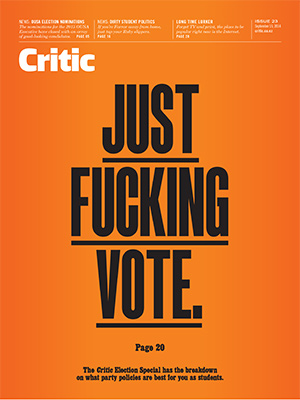
I wonder what I’ll do after the election. Have time to think, I’d imagine, or perhaps I’ll finally get around to watching The Wire. No doubt by the time the next election has rolled around, the stress-induced mania will have faded into an aching nostalgia, and I’ll be left wishing for the first door knock of the season. It hasn’t been easy balancing a dissertation, Critic, and an election campaign, but I like to think that if I were to have my own biopic, it would end with a low-angled, crossed-arms shot and the words “she survived” flung across the screen in all-caps. Part of the difficulty was, without a doubt, the accusations of bias being an epilogue to everything I’ve written. On balance, I’m not surprised. Student media has traditionally been left leaning, if only for the intense focus it has on student issues. As you’ll see in Critic’s election analysis (page 20), this generally makes for encouragement towards parties that offer a broad support base. I have never pretended not to sit to the left and, to be fair, I genuinely believe it would be impossible for anyone to present a year’s worth of election coverage without their opinion somehow seeping through. If you really want to kick up a fuss then let’s be realistic: the right has the mainstream media (hello, New Zealand Herald); let the left have Critic. There are a number of issues to consider in understanding the way I’ve covered the election, however, and I’ve found that largely my reaction to various people depends on entirely how they are at the time. As it happens, I’ve strived to talk to people from as many parties as I could find; seven party leaders and one should-be party leader makes for, I think, a diverse spread. Incidentally, it’s mostly parties on the left that I’ve regrettably not been able to squeeze in. But the accusations have gone further and deeper than a letter to the editor or two, and I’ve never been comfortable with the level of personal insult that I’ve received throughout the year. Although those at fault have sometimes apologised, I don’t think it’s ever okay to make wildly inappropriate comments via Facebook or in person simply because you know someone. Moreover, it’s hard to have a framework favourable towards National when National politicians refuse to talk to Critic. Steven Joyce, whose job it is to ensure our welfare, has acted like we simply don’t exist; he’s treated OUSA the same. Student media’s job is to be critical, and I don’t think the answer to being called out is to ignore our opinion as though it’s nothing more than children shouting into the dark. Labour springs to mind as the party who most cared that we met their politicians. A phone call here, an email there, and I was instantly aware of when an MP or candidate was in town. I didn’t manage to speak to all of them, but I commend them immensely on their respect for how seriously I’ve taken this task. Even beyond Joyce, National as a whole was abnormally silent. I remember finding out that John Key, Bill English, and Maurice Williamson were all in Dunedin on the same weekend, and I had no idea. Just being able to follow them around for half a day would have made for a profile that, I think, most students would appreciate for the simple fact of being able to know who these people might be. I think this is indicative of a broader issue; the idea that silence is enough to get students to follow you blindly to the polling booth. This is dangerous, because it indicates these parties don’t value the input of a core demographic in society. I’ve seen real passion for student welfare all across the board, from Colin Craig, who hung out in the Critic office for half an hour to chat, to Laila Harre, who spoke with such intensity at the importance of education I temporarily fell mute. I wish I’d seen this from Joyce, or any prominent National ministers. In the end, I won’t tell you who I think you should vote for, because I think it undermines the extent of the coverage I’ve attempted to present to you throughout the year. There are issues left, right and centre to consider, and the way you balance them will no doubt frame the way you enter the voting booth. My entire goal this year has been to bring these issues, and how they’ll affect you, to light. As my coverage draws to a close, all that’s left is to add a final note of opinion. The depravity of the election landscape this year is not an endpoint, and the links between negativity and apathy make it all the more important to understand the puppet show that the Beehive conducts. Your lives – every aspect of them – have the capacity to be affected by this election. Until accountability and transparency are issues screamed so loud no one can hear over them, nothing will change; it’s your opportunity and your responsibility to add to the discourse. Really, the cover says it all. Just fucking vote. Carys out. Carys Goodwin Critic Politics Editor
-
News

Execrable | Issue 23
This Executive meeting was brief, but revealed a busier week for the team - enough to actually convince Critic that they may have met their hourly requirements! The Executive passed a motion to renovate the Aquatic Centre. They aim to spend $25,200 (excluding GST) on the vinyl flooring and $17,015 (excluding GST) on replacing the balcony and handrails. The Colleges Officer said she would like to investigate this further, however, before agreeing to it. OUSA President Ruby Sycamore-Smith asked the existing Executive members running for 2015 positions to only use the back entrances of OUSA offices during the campaign. She said that these members should keep away from the OUSA reception area so as not to influence voting decisions. Ruby told current Executive members who are not running for the 2015 elections, Admin VP Ryan Edgar, Te Roopu Maori President Mariana Te Pou, and Education Officer Laura Harris, that they would “have to be very active” in terms of helping with forums. OUSA Executive members cannot present themselves publicly whilst campaigning. For this reason, Critic will not be publishing the names of the current Executive members running for next year’s positions in this week’s Execrable. The Postgraduate Officer also said he would be cautious with public appearances as he is planning on being “very active” for particular candidates. Once again, the publication of the 2015 OUSA Budget was delayed after the Postgraduate Officer said he wants to change the Exec Post Grad Committee ‘Events held - Other’ budget line from $1,500 to $5,000. This is the same as the 2014 budget, but now puts the overall budget into deficit. The budget has been published on OUSA’s website and is available for anyone to look at; Critic will provide an analysis in next week’s issue. It appeared that someone has been reading Execrable, as the President told Executives she “would like to make it clear that you should be saying three key points you've been working on.” Ruby has been working on the General Manager’s performance review, but has mainly focused on the General Election campaign. She mentioned that the success of Young Back Benches and the Tertiary Education Forum had received “lots of TV coverage and even positive comments from the Clocktower.” The Finance Officer has been talking to the Dunedin City Council about local alcohol policies. He said that as the DCC are using bars to alter the drinking culture, “it might be useful to take suggestions to the DCC so we’re not just seen as opponents of theirs.” He has also been working on the General Elections and is trying to have input from all the parties at election events. “We’d like some National candidates to say their piece, as we’ve had lots from Labour and Green.” The Postgraduate Officer has been working on the Finance and Expenditure Committee budgets, submissions to the Otago Council on the proposed new bus system, and reviews of the OUSA Governance Review, which looks at stakeholder representation and “potentially getting an advisory board for OUSA.” The President of Te Roopu Maori, Mariana Te Pou, has been visiting students to give them advice on advance voting as “not many people knew about it.” She says she has also been working on “constitutional things.” The Welfare Officer said she has been working on the upcoming Women’s Week, Disabilities Day, and the International Gala night taking place this Friday. The Recreation Officer has signed various grants and contracts, and has had a meeting with the Information Technology Advisory Committee. However, he destroyed Critic’s hopes by following this activity with, “the majority of it has gone over my head.” He also helped pack down the food festival. Education Officer Laura Harris has helped with “a lot of election stuff.” She has also had discussions with Deputy Vice-Chancellor Vernon Squire to discuss putting trigger warnings in the course outlines for papers that have some sensitive material. She said this followed a contraceptive module of one paper, which “upset a few students and caused one to faint.” The Admin VP Ryan Edgar has spent a lot of time on Finance and Expenditure Committee work, which he describes as “pretty soul destroying.” He also noted that he had received a response from Volunteer Service Abroad (VSA) after an article was run in Critic on the issue, but says, “I’m pretty comfortable sticking with our original decision.” He says, “however, I have a new found appreciation for their society and saying things about them sending students on holidays was a little bit harsh.” Campaigns Officer Hamish Barker has been working on Mental Health Week, Elections work, and organising a visit from the Live More Awesome Foundation. The Colleges Officer has been helping with the food festival and facilitating discussion over the aforementioned sexual assault policies. General notices included a reminder of the North Dunedin Candidate debate for the General Election to be held this Tuesday. There will also be forums for the OUSA Executive Elections this week. At 5pm on Wednesday 17 September, the Presidential forum will be held in the Main Common Room; the other executive positions will have forums at 1pm on Monday 15 and Tuesday 16 September in the same location to discuss the candidates’ policies. The meeting ended with Critic asking why the minutes for the meeting on Monday 8 September were passed. The meeting was five minutes long, but the minutes outline a discussion that was apparently had between the Executive over various budgeting matters. The discussion was had without Critic’s presence, and the Finance Officer admitted that they had had a meeting the previous week to “hash out” the issues. Critic would like to note that it is of questionable legality to record details of a discussion in the minutes when said discussion did not actually occur in that meeting. Even if it is outlining the prior debate, this does not adhere to the standards set by the OUSA constitution. Minutes must be a “true and correct record” of what occurred in that exact meeting, to maintain transparency of the organisation.
-
News
OUSA 2015 Executive Elections
The nominations for the 2014 OUSA Executive have closed, and an array of good-looking candidates have put their names forward to represent you next year. Voting will take place on the OUSA website from 22 to 25 September, with the winners announced that evening. There are 11 voting positions on the Executive. The top dog, and only full-time position, is the President. There are four 20-hour Vice-President tier positions – Administrative Vice-President, Finance Officer, Welfare Officer and Education Officer – and five 10-hour general representative positions – Recreation Officer, Campaigns Officer, Colleges Officer, International Officer and Postgraduate Officer. Voting for the International Officer position is open to international students only, and the Postgraduate Officer to postgrads only. The final position on the Executive is the Te Roopu Maori President, who sits as an ex officio voting member. Elections for the Te Roopu Maori Executive are also open. Please note that Critic does not edit candidate blurbs in any way. What you see is what you get. OUSA Executive Nominations President Paul Hunt Hey all, my name is Paul Hunt and I am seeking your vote to be OUSA President. My overriding priority is to improve what is already New Zealand’s best student culture and increase our sense of community. Large social events like Hyde Street and Orientation celebrate scarfie culture. I want to ensure these events are accessible to all. I have led OUSA’s opposition to DCC proposals that would make bars less accessible. With Gardies, Cook and Monkey gone we need more social venues, not fewer. OUSA should be more active in your communities. I support more direct funding for campus groups such as social causes, volunteer groups, faculty clubs, sports teams and international clubs. Campus groups generate political discussion, perform volunteer work, represent Otago and provide support networks. The individual pursuits you choose to engage in should be supported by OUSA. The whole OUSA executive determines OUSA’s direction. Consultation, communication and taking on board others’ ideas are key parts of the President’s role. As a former club President, SOULS exec member and current OUSA finance officer, I have leadership experience in a variety of student groups. OUSA is ultimately funded by you through University fees. I am focused on providing the services you want and focusing on the issues you care about. Vote Paul Hunt for an OUSA that works for you. Nominated by: Alice Sowry Seconded by: Taotao Li Henri Faulkner Why hello there, my name is Henri Faulkner. I am a third-year Microbiology and as something which seems to be rare over the history of OUSA, I am a science student who wishes to become OUSA president. By being a local of Dunedin I have bared witness to the changes that have been made of scarfy culture in the last 15 years. Despite the majority of changes introduced by Vice Chancellor Harlene Hayne being understandable many of these wounds still run deep including statements from the DCC such as the introduction of surveillance cameras into student residential areas and the current proposed changes to alcohol legislation are stepping well over the line. They have clearly lost respect for the value students bring to Dunedin, something that I plan to rectify. Beyond this I will focus on increasing the level of participation in sport/physical activities among students and improve students’ knowledge of how to make better use of Unipol. With obesity being such an issue for modern culture it is essential that Otago students stay fit and healthy, both mentally and physically so that we can enjoy the amazing years spent together here. Gaining a brighter student future with us all. Nominated by: Andrew Brinsley-Pirie Seconded by: Alex Poulin Administrative Vice-President Isaac Yu Hey guys I'm Isaac Yu. I'm a second year English and History double major, and as a resident of Hyde Street I'm here to ask you something. Are you sick of being crammed into Capone on aThursday night because Mack's is full? Are you sick of the continued removal of scarfie bars? Are you sick of the DCC continuing to discriminate against students? Dunedin is a student city above all else, and that is what is at threat. As your vice president I will advocate our right to make our own choices, and to enjoy our time here. Nominated by: Dylan Baker Seconded by: Henri Faulkner Finance Officer Nina Harrap Greetings ladles and gentlespoons, my name’s Nina and I’d like to be your Finance Officer for 2015. Although I’m not studying Finance (Philosophy major, don’t judge) I’ve got experience in executive matters, having sat on the Executive Council and the Board of Trustees in high school, and I’m confident that I’m up to the task. If elected, I plan to work closely with the other members of the Exec to ensure that OUSA’s funds are allocated so as to best help all Otago students, with a focus on student welfare issues. Vote Nina for responsible and considered leadership in 2015. Nominated by: Alexia Cochrane Seconded by: Paul Hunt Education Officer Alexia Cochrane Hi, I’m Alexia. I have spent my first year at Otago studying at the College of Education. As your Education Officer, I would want to improve relations between OUSA and the university so that issues can be solved as promptly as they may arise. I would want to work on the class representative system as I think there is a lot of potential to increase engagement with students. Education is what we are here for and I'm here to make it the best education you could have!! Nominated by: Shannon Hollard Seconded by: Sam Johnson Greer Mahoney ‘Education is the most powerful weapon we can use to change the world’-Nelson Mandela I’m Greer a Med student here at Otago, I believe to excel as an Education Officer you need three bones: A wish bone A back bone Most importantly a funny boneI have all three. A wish bone because I believe that Otago Uni should not only be world renowned for its exceptional research but even more so for its teaching. The backbone coz I have the guts and motivation to get shit done and, well, you can’t be a smart cookie if you have a crumbly attitude – that’s where the funny bone comes in. I believe that if life gives you lemons, you should make lemonade ... and try to find someone who’s life has given them vodka and have a party. Work Hard, Play Hard Vote Greer Nominated by: Elizabeth Berryman Seconded by: Adele Macgregor Welfare Officer Taylor-Jane Cox Hey Guys! I am in my third year, majoring in Psychology and excited to be running this year for Welfare Officer! Being actively involved with charities such as Youthline has motivated me to do more, as there are so many people struggling out there who need extra support. I want to see better accessibility and more awareness of welfare services. We need strong, approachable and effective people on the exec. People that are actually going to make visible changes for the better- and that is what you will get if you vote for me. Nominated by: Gary Gin Seconded by: George Robinson Payal Ramritu Hi, I’m Payal and I’d love continue being your Welfare Officer in 2015. After being elected as Welfare Officer in July, I have already achieved: Hump Day Help giveaways Planned an amazing Women’s Week Actively supported OUSA Free Breakfast Ran the awesome puppy room Planned the 2014 Great Southern Drag Off Taken on responsibilities of OUSA International Officer to help run the International Cultural and Gala NightsIn 2015, as Welfare Officer I will: Work with Student Health to improve services offered Get more microwaves on campus Continue to be accessible to students Ensure student welfare will be a priorityVote for continued action. Vote Payal. Nominated by: Jonathan Martin Seconded by: Daniel Benson-Guiu Campaigns Officer Henry Napier Hey, I’m Henry Napier and I want to be your 2015 Campaigns Officer! I’m a great guy with great chat and I’d make a sick OUSA exec. I will be the voice you scarfies have so long desired. I’m currently a second year student studying Law and Politics (fitting). If you vote for me for Campaigns Officer you will not regret it. One day I’ll be running New Zealand, but for now I’d just like to help run OUSA. Help a brother out. PS, my campaigns will be better than my blurb. Get amongst it #TeamHenry Nominated by: Kieran Metherell Seconded by: John Gordon Alic Sowry Hi everyone, I’m Alice Sowry, and I’m in my third year of studying Law, Politicsand French. From Kiwihosting on Castle Street to getting involved in Unicrew and the Student Leadership Award, I’ve had an awesome time making the most of my student experience at Otago and want to contribute more through being Campaigns Officer in 2015! The Campaigns role is a great opportunity to ensure OUSA initiatives are engaging and relevant to students. I’m keen to get more clubs and societies involved in running events during OUSA campaigns. OUSA should also use its voice on campus to make students aware of the extra-curricular opportunities available to them. We have a great range of activities on campus that help people make friends, develop skills and boost their CVs, and I will work hard to ensure everyone knows about these opportunities. Vote Alice for great ideas and well-organised campaigns! Nominated by: Ella Borrie Seconded by: Lochiel McKellar Recreation Officer Jonny Martin Less talk, more action. My policies: More vans and transport More grants More Memorandums of Understanding More classes Refocus OUSA on recreation and societies Campus community events Poster recyclingIf you want someone who talks less BS, and actually gets things done: vote Jonny Martin! Nominated by: Emmet Maclaurin Seconded by: Payal Ramritu Matt Ross I’m Matt and I want to be your Recreation Officer for 2015! I’m 23 years old, I major in finance and accounting and I’ve lived in Otago for over 14 years. I’ve got a variety of hobbies outside of university that includes the usual stuff like sports, working out, video games and hanging out with mates. However I like to take my extra-curricular to the next level by organising and managing bar events, sports teams, university clubs, tournaments, meet ups and more. I’ve got the experience AND the passion that makes me the best vote for Recreation Officer! Nominated by: Ethan Smith Seconded by: Henri Faulkner Postgraduate Officer Claire Mitchell Hello postgrads! My name is Claire Mitchell and I’m running for the position of OUSA Postgraduate Officer for 2015. I am currently in my fourth year studying Clinical Psychology. It will be a priority of mine to ensure that the voices of postgrads at Otago are well heard at the executive table, and that you can get involved in some fun events from time to time in between your studies! Being well informed on issues that current postgrads face, I will work hard to put the right plans into action for the benefit of Otago’s postgrad students. Nominated by: Laura Thompson Seconded by: Paul Hunt Colleges Officer Alex Gregory Hi I’m Alex. For many of us our first time away from home is spent in a Hall of Residence. As Colleges’ Officer, I want that formative first year away from home to be top notch. I am keen to: Survey and represent students’ views on Colleges’ policy especially with regards to alcohol and mental health and wellbeing. Advocate within reason for a continued diversity of the Hall of Residence experience in the face of perceived homogenisation. Support OUSA’s role in advising on individuals’ situations on Colleges and Flatting. Foster clubs and societies recruitment and engagement with first year students.Nominated by: Jess Wu Seconded by: Finnegan Miles-Hussey Anton Hovius The vast majority people reading this won’t give much of a shit what happens in the halls next year. Fair enough. But hear me out. Halls sound like paradise; a home away from home – where you’re treated like an adult; can come and go as you please and learn some independence … but they’re not. When all $170 of your accommodation costs get you booted out at 9pm, the same meals every week, and forbid you to watch Bi-Curious George in the comfort of your own room, something’s wrong. Halls are expensive and sure as hell aren’t your parents – so for the fresher within you and the freshers to come please vote. Nominated by: Nina Harrap Seconded by: Claire Mitchell Taotao Li Hello Scarfies, Colleges Officer should be about hearing the voices of every fresher that lives at Halls. Having lived at Knox College for two years, I feel strongly about the policies that affect residents. Policies at Halls are becoming more draconian. Instead of prioritizing the health and safety of students, drunk vulnerable first years are being kicked out onto the streets at early hours and rules like only 4 people allowed in a room are actually law. The generous sum that is paid towards these places should make halls a place to experience freedom away from home- not a prison in a private boarding school. Advocacy for students would be my priority along with helping to organise many inter hall events. Vote Taotao to hear a fresher’s voice. Nominated by: Alice Sowry Seconded by: Paul Hunt Jess Mclean Hi guys! I’m Jess, your current Colleges Officer. I’ve enjoyed meeting many of you during OUSA’s election enrolment drive. Being on OUSA this semester was amazing and has given me so many ideas going into 2015. Following on from my current term I will: Continue to evaluate sexual assault policies in halls Put on an awesome intercollege event in first semester And my main focus: Promote OUSA, Student Support and the Recreation Centre to hall studentsMany first years couldn’t direct you to the recreation centre after a year of living here. I want to change that. Vote Yes for Jess Nominated by: Mairead O’Neill Seconded by: Lena Plaksina Joel McManus I’m running for Colleges Officer to make sure every student gets the absolute most out of their first year at Otago. A vote for me will mean someone working for: More Inter-Hall events, and the establishment of a year-long sports/arts Cup. Less restrictive alcohol & internet rules. Students are responsible adults, and deserve to be able to make their own choices. Increased awareness & uptake of student support counseling.I’ve lived in a hall for 2 years and know what issues to tackle as your Colleges Officer. I’ll be a dedicated, approachable and committed member of the Executive team. Nominated by: Jarred Griffiths Seconded by: Daniel Janes International Officer (2015) There were no nominations for the position. International Officer (2014 by-election) Eric Lim Thiam Aik Having been the President of the Otago Malaysian Students Association (OMSA) in 2013, I believe in the potential of the international community here in Otago. What is my vision as your International Student Officer? Community, diversity, and unity. To see diverse cultures come together as one: that is my aim. I want to be the voice of our international community in Otago.I am Eric Lim. And I want to represent YOU. So, vote for me! Nominated by: Kamil Saifuddin Seconded by: Caroline Shie 2015 Te Roopu Maori Election Nominations Tumuaki (President) Deinda Stanway Kia ora koutou. Ko Hikurangi te maunga. Ko Waiapu te awa. Ko Nukutaememehea te waka. Ko Ngāti Porou te iwi. Ko Dee tōku ingoa. I would love the opportunity to represent you as Tumuaki of Te Roopū Maori in 2015. My experience on Te Rito in 2014 has been a rewarding and enjoyable one that I would like to continue in 2015. As a strong communicator and having a positive outlook on everything, I like to lead by example and encourage a positive working environment within both the student and an executive community. My vision for TRM is to promote more whakawhanaungatanga amongst junior and senior students, where teina learn from their tuakana in all facets of university life. Additionally, I see the TRM whare as being the perfect place to foster these relationships and will endeavor to create a friendly and welcoming environment for this to be ensured. I’m a strong believer in loving what you do and putting 110% in to any task that comes my way and can promise that when I’m elected I will strive to whatever it takes to have your voice heard. xoxo Dee Tumuaki Tuarua (Vice President) Tyson Tautari Kia Ora Whānau My name is Tyson Tautari and I’m studying a Bachelor of Arts in Honors in Indigenous Development. Currently I hold the position of Welfare and Recreation Officer on Te Rito. I believe that I have been an asset this year to Te Roopu Maori, however I strongly feel I can step up and perform in the position of Tumuaki tuarua for 2015. Te Rito 2014 has paved the way for the love I now feel for Te Roopū Māori and my abilities to assist students not only socially but also academically. Vote 2Ty for TuaRua Culture and Education Officer Kahurangi Salu Tū mai rā ko Taupiri Maunga. Ka ahu whakararo ki te riu o Waikato. Tēnei tō Kahurangi iti e mihi atu ana. I am a 2nd year student majoring in Māori Studies and Psychology and currently the Education Officer of HMSA. A key philosophy I embody throughout my education is: ‘Te piko o te māhuri, tērā te tipu o te rākau” The support, encouragement and guidance to people while studying will help determine their success and achieve their goals. My role as Te Rito’s Education Officer will be to provide opportunities and create environments in which this can happen. Ngahuia Mita Kia ora whānau, he uri tēnei nō ngā iwi o Te Aitanga a Mahaki me Ngāti Porou, ko Ngahuia Mita tōku ingoa. I am currently a fourth year finalist studying a Bachelor of Physical Education with Honours, I am running for the position of Culture and Education Officer, I believe that I would be effective in this role given my current experience as co-tumuaki of the Physical Education Māori Association. I am passionate about Te Ao Māori and education and believe the skills I have acquired through PEMA would help me fulfill this role for Te Rito 2015. Communications Officer Caitlin Balkin Kia ora koutou my name is Caitlin Balkin a.k.a Whata. I’m doing a BSc in Physiology and I’m running for Communications Officer. I was raised in Australia, however, when I moved to Dunedin I had the privilege of knowing someone who was already involved with TRM. As a result, TRM is my second home. I believe that while avenues such as Facebook and emails are vital, it is important that we develop our face-to-face communication. I want to develop relationships with those students that need to see a face and a hand to physically get past the front door. Damyian Winselborn-Rawiri Kia Ora everyone, my name is Damyian Windelborn-Rawiri, I hail from the top of the country. Born in a small village west of Kaitaia, called Herekino. Grew up with the hot sun, but decided to study down here in the dirty cold south. #kidding. I want to run for Coms officer because I think I have the ability to communicate and help out my following tauira. I want to be able to be a voice and help get across what you think so that things can be better in Te Rito 2015. A vote for me is a vote for you! Events and Social Officer Franky Maslin Tēna kōutou ngā tauira Māori o te Whare Wananga. Ko Ngati Awa me Ngati Apa ōku iwi, ko Franky Maslin tōku ingoa. I am running for the position of Social and Events Officer for Te Rito 2015. I am keen to get amongst running some awesome events and activities for next year. I believe that my experience as a fourth year student who has been involved on an Executive Committee and have run a number of events, like ski trips and an annual ball, will make me the best choice for the role. Vote for me whanau! #franksforfun Welfare and Recreational Officer Tukohirangi Pini ko Tukohirangi Pini toku ingoa. He uri tenei no Tapuika me Ngati Kahungunu ki te Wairarapa. chur whanau my name is Tu, I am currently in my fourth year here at Otago doing both a Bachelor of Physical Education and Bachelor of Arts majoring in Maori studies.. I am currently the co-president of PEMA (physical education maori association). I am hoping to be the welfare and recreational officer for 2015 and I believe I am the best candidate because i have a strong passion for sports and any form of recreational activities. Tama Tu tama ora, tama noho tama mate. Finance Officer Renee Brown Tēnā Koutou Katoa. Ko Renee Brown tōku ingoa. I’m currently study Accounting, Māori Studies and Indigenous Development. I am the current 2014 Kaitiaki Pūtea and would love to return for 2015. I’m interested in continuing the incorporation of a Quadruple bottom line to the financial policies of Te Roopū Māori. Over the past year it has been a learning curve and I would like to continue implementing new procedures as well as improving the current system. I believe I am strong enough to withstand adverse condition or rough handling to the financial features of Te Roopū Māori. Nāku noa, Renee Brown
-
Columns

ODT Watch | Issue 23
Walking hand in hand on the beach, staring into each other’s eyes across a romantic dinner, going upstairs to consummate the marriage yet again ... all normal activities for a honeymoon. Drunk driving to pick up your sloshed bride after a night in the cells? Not so much. The police are taking a proactive approach by installing video surveillance to catch the badass kids of Dunedin in their hooliganry. Apparently the library is the ideal spot to do just this, being a “hang-out place for young people.” We think the young people causing disorder probably aren’t the type to hang out at the library ... So, let me get this straight, the promoter is happy with the presales? Not sure the ODT made the promoter’s feelings towards the presales clear enough. This article on the introduction of candy to the Whitcoulls product range and how said candy looks deceivingly like stationary, serves as an important public service announcement. Everyone be on your guard when next shopping at Whitcoulls! The author provides some solid advice: “Sweetie, they are not lollies, they are paper clips. They’ll make your pooze run.” Non-news makes the news yet again! This is the most disturbing front-page picture we’ve seen yet. Decapitated bodies and random floating heads ...
-
News
Critic tackles election year | Issue 23
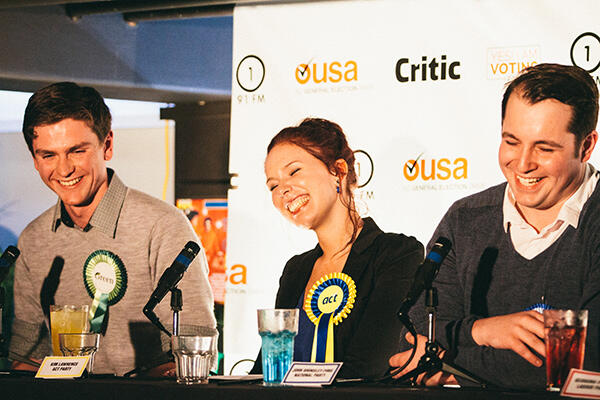
On Monday 8 September, Critic hosted its own version of Back Benches with Wallace Chapman. Last week’s politics section was dedicated to introducing the participants, who were young politicians from across the spectrum; this week looks at the most hilarious quips and quotes offered by Wallace, John (National), Georgina (Labour), Patrick (Greens), Kim (ACT), and Jordan (Internet). The evening covered five main topics: the proposed DCC alcohol changes; the living wage; tertiary education; social media; and Dirty Politics. It was accompanied by themed cocktails, of which my personal favourite is “the ALCP,” which was BYO. Politicians of all walks crowded onto the sofas at the front, and the heckling reached outstanding highs. Wallace: “Good to see MPs here like Metiria Turei, Clare Curran … who else is there? Colin Craig? No? Good.” Wallace: “Can we hear Patrick?” Crowd member: “Unfortunately.” Wallace: “Why is Colin Craig so great?” Jonathan Daley of the Conservatives: “If the policy doesn’t stand for anything, there’s integrity.” Wallace to Kim: “You’re drinking the Three Strikes, is that right? How is it?” Kim: “It’s tough.” Wallace to Jordan: “Describe Kim Dotcom in three words.” Jordan: “Larger than life.” Wallace: “Tweet the fuck out of that.” Metiria Turei: “We should control the [alcohol] industry and stop trying to control young people.” Wallace: “So let’s start with the ACT Party, Kim Lawrence, who want to raise the minimum wage to $30 an hour, don’t you?” Kim: “Yes.” Kim: “I started working at $5.70 an hour when I was 15. I was quite happy with that.” Wallace: “Okay, Patrick, how do you respond to Kim?” Patrick: “Well I’m not sure she had to live on that wage she was earning.” Patrick: “We think there isn’t such clear evidence to suggest that jobs do get lost when minimum wages get introduced. The US treasury launched an investigation and couldn’t come up with any conclusive evidence …” John: “So where Patrick’s right in saying that in the US the links aren’t as clear, but the US also has a much lower minimum wage to average income than we do. Where it’s a little bit more clear is where you raise the minimum wage, say, in couple of years’ time to $18, you do put a restraint on employment. And, sure, it’s not one of those things that’s clear cut, and you go, you’re going to put $18 and bam there’s unemployment, but it is something you have to start carefully balancing in saying well, at some point, employers will not be able to pay that wage.” Wallace to an elderly audience member: “What are you hearing tonight from the young people?” Elderly audience member: “From some of them, a lot of rubbish.” Kim, interrupting John and Georgina: “Why don’t we just legislate wealth?” John to Georgina: “If you’re not willing to go up to $18.40, what’s the difference between $16 and $18.40?” Audience member: “$2.40” Wallace: “Let’s just go right into the audience here. What do you think? What do you think about the minimum wage? Are you a millionaire?” Audience member: “I’m not a millionaire, thanks for saying I look like one though. Ladies, I’m just over here, I’m single.” Wallace: “Let’s go to John then, you’re in government. What do you say to that?” John: “I’m not in government.” Wallace: “Not you! Shit bro, you know what I mean.” Clare Curran calling from the sidelines: “What about aroha? What about aroha?” Wallace to Jonathan Daley: “Describe yourself in three words.” Jonathan Daley: “Businessman growing upwards.” Kim: “ACT would like to put interest back on student loans.” Wallace: “Interest back! How much?” Kim: “Presumably at a market rate. Perhaps like in Australia; index to CPI. ACT believes that students are the future highest earners in the country, and that as they’re the ones who personally are going to immediately benefit from the university education, they ought to bear the costs and make informed decisions when deciding to undertake it.” Wallace: “Okay, alright. There’s a clap, let’s go over here. Do you have a student loan?” Audience member: “I do, and I don’t necessarily agree with Kim, but I was just being supportive.” Jordan: “I don’t blame National for not understanding why education is important when you have a system that doesn’t give you a proper education.” Wallace: “What do you study?” Audience member: “Maths and philosophy.” Wallace: “Maths and philosophy. Who’s your favourite philosopher? Jamie Whyte, yes, exactly, same here. No I’m just joking. Do you like Jamie Whyte?” Audience member: “No.” Wallace: “But he’s a philosopher extraordinaire.” Audience member: “I don’t agree with his positions on anything that I’ve heard him on, basically.” Wallace: “At quarter past five, four Wednesdays ago, a book came out … and fuck it exploded. Boom.” Wallace: “If you take away Team Key, what have you got? Judith Coll– no, she’s gone.” Wallace: “Hands up someone who really does not fucking like John Key, who hates him. Go, you. John Key hater coming up. What’s your name?” Audience member: “Bill.” Wallace: “Why do you just not like John Key?” Bill: “’Cause he’s a sleazy, corporate dog.” John: “Wallace, I’m actually really interested. ‘Cause I actually quite want to know, and I know there’re Internet MANA guys in front of me who keep scoffing; I’d really like to know why John Key is so popular? Is half the country deluded, or is there another reason?” Wallace: “What’s your name again?” Audience member: “Sabrina.” Wallace: “Come up here, Sabrina. All right, okay. What do you think of John Key?” Sabrina: “My friend says that he has dead eyes.” Wallace on Dirty Politics: “Who’s read it? Surprisingly few, about 18-20 people.” Audience member: “Yeah, we have too many other readings.” Wallace: “Which beverage company left Dunedin recently?” Jordan: “Speight’s?” Kim: “Emerson’s?” Wallace: “Speight’s, Emerson’s, no. Bell Tea. Jesus, people.”
-
News
Greatest hits / Greatest shits | Issue 23
Greatest HitA chance meeting that could have gone horribly wrong but didn’t: Max Key and Mona Dotcom. The Prime Minister’s son and Kim DC’s ex-wife met at a nightclub in Auckland and instantly became friends. Like a strange Beehive Romeo and Juliet, they danced the night away (as friends) and transcended the political boundaries that confine their respective affiliates to party lines. Big thumbs up for generally saying “fuck it” and having a good time. Greatest ShitThis week’s Greatest Shit is a no brainer. It goes to Gordon Dickson, Labour’s Selwyn candidate, who has proven that even democratic candidate selection has its limits. First, he hounded journalist Lloyd Burr in order to say, “ask the Prime Minister if he has faith in Anne Tolley, Minister of Police. Thank you.” Then, when Burr didn’t wander up to John Key and ask him a context-less question about a Minister, he sent Burr a whopper of an email, addressing it “Dear Lazy.” My personal favourite (verbatim) quote is as follows: “Perhaps you are lazy? To help you rediscover your previously perceived role in our society i.e. the ‘fourth estate’ I attach a copy of my formalised request already in the possession of the Prime Minister and the National Board of Directors as well.” He ended it with, “Have a nice weekend and grow a pair.” Charming.
-
News
Politweets | Issue 23
Aw. Letters are due 5pm Thursday, email critic@critic.co.nz Chur. Fake Asenati is confident.
-
News
Match fixing condemned in sports but encouraged in politics...
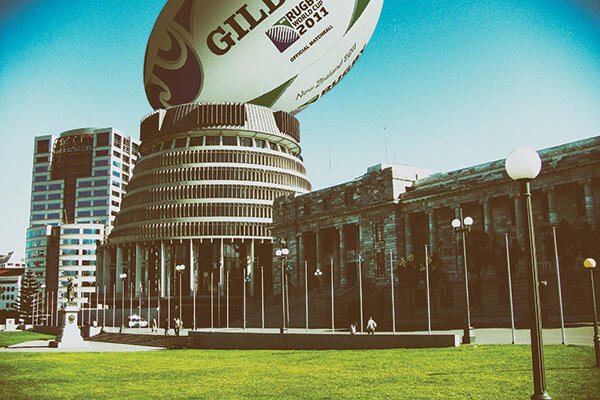
This week as New Zealand gets ready to go to the polls we have a timely report from the sports corruption desk, which brings to light an interesting double standard when it comes to laws allowing for the prosecution of athletes involved in match fixing. This also opened up a discussion about the politicisation of sporting events and the wider role of sports in the media. Sports and politics appear to be two totally separate spheres of life but this is quite far from the truth. Governments have long recognised the economic and social benefits that come from hosting global sporting events and how to use their involvement in these events to score political points. I have recently reported on corruption surrounding the bidding process for the 2018 and 2022 FIFA World Cup tournaments, to be held in Russia and Qatar, respectively – countries not exactly steeped in footballing history or known for their honest interpretation of democracy and human rights. Russia’s ongoing involvement in the escalating Ukraine crisis has led many to call for them to lose the privilege of hosting a World Cup. There were many suspicions of corruption surrounding the recent Winter Olympics in Sochi, with many reliable reports accusing the Russian government of serious misuse of public funds with inflated contracts being awarded to oligarchs that are “friendly” with the government. This is not the first Russian Olympic controversy either, as in 1980 the United States led a boycott of that year’s Olympics in Moscow, initiated in response to Russia’s invasion of Afghanistan. Closer to home and we still all cringe with embarrassment when we remember John Key’s supremely awkward triple handshake at the 2011 World Cup. While this was a superficial moment there have been many more serious instances of sport mixing badly with politics in our short history, one of the most notorious being the violence and protests over South African apartheid that dominated the Springbok tour of 1981. Next year New Zealand will host the Under-20 FIFA World Cup and co-host the Cricket World Cup with Australia. With the integrity of these tournaments in mind, and in the wake of the many recent scandals of cricket match fixing that implicated many of our most high-profile cricketers, Sport and Recreation Minister Murray McCully introduced legislation in the last parliament that would allow for a maximum sentence of seven years of jail for New Zealand athletes or officials who were found to be “deliberately influencing an event for betting purposes” and “improperly manipulating a sports event.” Before the proposed law change, athletes found to be participating in match fixing were able to be sanctioned by their respective sporting bodies but not able to be charged with any crime. While I agree that match fixing is bad for sports, I do find more than a hint of irony in John Key and his Sports Minister using the term “improperly manipulating a sports event.” So what about the government “improperly manipulating” an election? This is exactly what has been allowed to happen in previous elections with National making pre-election deals with other parties to guarantee the minor party winning that electorate so they can drag a few more MPs into parliament under the coat-tailing rule and prop up the National government. This can lead to parties getting more representation and influence than the public actually voted for them to have. Sounds like “deliberately influencing” and “improperly manipulating” the democratic process to me. This very issue was debated in the last parliament and as “The Right Honourable” Winston Peters said: “At its highest level we have match fixing in politics. So how can you possibly say to sports people, ‘this is wrong, we have to stop it,’ and yet condone it in your own business?” He makes a point that is hard to argue against without looking like a blue face-painted, party balloon-waving, “Team Key” shirt-wearing, partisan moron. This “political match fixing” goes to ridiculous lengths as National’s Epsom candidate, Paul Goldsmith, was spotted removing his own campaign advertisements and echoing John Key’s instructions for Epsom voters to support ACT instead. The ACT MPs from Epsom haven’t exactly proved themselves to be ideal candidates either. Former leader John Banks was expelled from the last parliament after being found guilty of not declaring campaign contributions. Current ACT candidate in Epsom, the rather wooden David Seymour, is likely to get a free ride into parliament despite his embarrassing and low budget campaign video which wasn’t immediately clear whether or not it was a self-parody. Apparently it wasn’t. To be able to have an open and honest discussion in the media about whether an electorate deal is going to be struck and the election “improperly manipulated” is pretty amazing and I can’t believe that more people are not outraged about what is (despite being legal under electoral law) a blatant disregard for the democratic process. If the All Blacks and Wallabies coaches had a press conference in which they casually talked about engineering a result that would benefit both teams in the Rugby Championship there would be a public outrage, and rightly so. But to be ambivalent to the fact that the same thing is happening in our politics shows the amount of disinterest and disengagement that the general public has when it comes to politics in New Zealand. Well, we are famous for our sheep ... Media and political scholar Noam Chomsky makes me feel rather guilty about being a hack sports reporter as he talks derisively about the role that sport plays in his infamous “propaganda model” of the mass-media. He says: “Take sports – that's another crucial example of the indoctrination system, in my view, because it offers people something to pay attention to that's of no importance. In fact it's striking to see the intelligence that's used by ordinary people in discussions of sports as opposed to political and social issues.” Maybe this is why the 2011 election was held shortly after the Rugby World Cup. Most of the country and the media had been so focussed on this event and not on politics and John Key assumed the success of the tournament and the All Blacks would rub off onto him. Or maybe he just realised that his main opponent was the uncharismatic and bungling idiot Phil Goff so he didn’t have a lot to worry about. If you take a look at the newspaper or the six o’clock news on any given day, chances are there will be more pages or airtime devoted to sports than politics. This brings up a paradoxical question about the relationship of sports and the media. Is sport so popular because the media cover it so much (which implies a degree of active agenda setting) or does the media simply give a lot of sports coverage because it is so popular (merely reflecting public opinion)? In Dunedin we don’t have to worry about the “dirty politics” of match fixing as both of our electorates are reliably red Labour strongholds. The only time I think an electorate deal would be popular here in Dunedin North would be if Labour’s David Clark would step aside so that the Legalise Cannabis Party deputy leader Abe Gray could make it into parliament as part of a left-wing coalition. This, with me being fully aware of the hypocrisy after everything I have just said, would be an appealing deal to make but I can’t see it happening any time soon. So whether it is the Academy Awards, a cricket match or a general election, match fixing is reprehensible and only demeans the integrity of that institution. If the government wants to stop it happening in sports then they shouldn’t do it in politics.
-
Features

New Zealand general election
Behold, Critic’s election analysis! Taking a panel of experts from the University’s staff and beyond, Critic was able to graph the extent to which each party is best for students in different areas. Before you continue reading, know that we acknowledge that this analysis has a single focus, and this focus – students – is unique. Although it’s not often thought or expressed in this way, we students are some of the poorest, most dependent members of society, be it on our parents or the state. We take out loans to live, we don’t get paid for what we spend the majority of our time doing, and our entire futures are contingent on whether we’ll be able to gain employment to pay off our debts. In this way, Critic defines “best” for each category in terms of security, and in terms of increasing our potential. Our panel of experts have had input on the blurbs that accompany each category, but it’s important to note that the student voice has been an integral part of this process. Should our aim have been to pick out the parties that are best for corporations, business owners or doctors the results would likely be very different. But that wasn’t the aim and thus those weren’t the results. Building policy platforms for a party is about balancing the needs of an entire spectrum of demographics. Some are vulnerable and require a wide variety of support mechanisms; others thrive without the restrictions of government regulation. The difficult task of a party is to ascertain which members they intend to appeal to the most. Parties on the left appeal to those who require support, while those on the right appeal to those who aim to get ahead. As it happens, students sit in the “need support” basket, and Critic’s analysis reflects this. As we grow, our needs will evolve and they’ll evolve at difference speeds. What is important is that this growth and opportunity begins at the same place for every student. A good student support system ensures that right here, and right now, our growth is not stunted. Ultimately, this election is up to you, and whether or not you see “best for students” as “best for country” is your choice. We just hope you choose. The National Party Housing:National’s housing policy focuses on first homebuyers and affordable housing, including freeing up more land and increasing lending to first homebuyers. These policies do not discuss the rental market of interest to students. Jobs:The National party policy platform has a strong focus on the economy and job creation and growth. There have been, however, changes to the rights of workers that have reduced the protections in the job market, and only very small increases in the minimum wage. Maori Issues:Chris Finlayson is the best Treaty negotiations minister we’ve ever had. That is a truth universally acknowledged. More historical claims have been settled in the last six years than under both the fifth Labour government and the fourth National government. However, inequality between Māori and Pakeha remains high and the government has done very little to correct it. The Māori unemployment rate is 13.2 per cent, which is double the national rate. For that reason, National only rates a 6. Health:They want to move towards more “user pays” in health. Environment:National party policies do not address the issue of carbon emission directly, and the party has been pursuing oil industry opportunities while in government. Commitment to the environment is constrained by economic imperatives: “We are committed to balancing our environmental responsibilities with economic opportunities to preserve and protect our natural environment.” Transport:Roads are the focus of National policy as this provides businesses with the most work. No profit in bus or rail services. Women’s Issues:There is almost no sign that National is thinking about women. There’s a move towards strengthening enforcement of restraining orders, but nothing else. Their record while in government is not encouraging. Tertiary Education:National has a strong focus on tertiary education for vocational and industry training. The National party in government has reduced the loans scheme and proposes to reduce student and staff representation on university councils. The Labour Party Housing:Labour proposes to implement a Healthy Homes Guarantee, that’ll require that every rental property is warm and dry. Jobs:Labour promises to increase the minimum wage to $15 an hour and raise it again to $16.25 in 2015. Labour has a focus on the rights and conditions for workers including supporting collective bargaining and independent trade unions. Maori Issues:The party of the Foreshore and Seabed Act 2004 has come a long way. As a symbolic gesture Labour plans to give formal recognition to Māori as the indigenous people of New Zealand (the party is unclear on the details, but we’re told the preference is to insert a new clause in the Constitution Act 1986). On a more substantive note, Labour plans to fund 2,000 more Māori Trades Training places. However, the party – in a transparent attempt to keep the rednecks on side – has played down its position on universal te reo Māori. It’s an 8. Health:They want to minimise user pays in health and unlikely to increase this burden but unlikely to go back to the status quo ante. Environment:Labour says it will “transition to a high-tech, low-carbon economy that creates jobs by taking full advantage of renewable resources and existing and emerging technologies.” “Labour rejects the notion of ‘balancing’ the economy and the environment, an equation in which the environment always loses. We say there are environmental bottom lines that must not be crossed.” Transport:Not as bad as National but, again, they get more funding from businesses that profit from road building. Women’s Issues:Good policies for improving antenatal care, extending paid parental leave and restoring the benefits of early childhood education – all with an eye to ensuring that the most vulnerable get access. Work and tax policies focused more on other areas of inequality, which would also end up benefiting women. E.g. focus on making first homes more affordable. The party also has strong and experienced woman MPs with a lot of interest in issues that concern women, and is working to get plenty of women into parliament. Tertiary Education:Labour promises to guarantee student representation on university councils, reinstate student councils, and reverse the National government’s abolition of post-graduate student allowances. The Green Party Housing:The Greens propose a Warrant of Fitness for rentals, which will ensure that all rental accommodation in New Zealand meets basic standards to make them healthy and safe for families to live in. Jobs:The Green Party is committed to full employment with dignity and a living income, and rejects the idea that economic stability requires either a significant level of unemployment or a low level of protection for those in the paid workforce. Maori Issues:The Green Party does not adhere to the Treaty settlement consensus. The party does not oppose settlements, but critiques their unfair nature. The Crown is the defendant, but also the judge. The Crown dictates the terms of any settlement. Most settlements constitute less than 5 per cent of the value of what was lost. Iwi are shafted – financially at least. The Greens would investigate and implement a fairer settlement process. Health:They recognise that many health issues need addressing before become “problems” – e.g. healthy diet, health education. Environment:Establish an independent Climate Commission, implement a charge on carbon polluters and “ensure New Zealand shows leadership on climate change.” Transport:They have a commitment to cycleways, public buses and train services. Women’s Issues:Has a specific women’s policy that is very comprehensive. Goals and policies are strong and indicate broad understanding of issues that make a difference for women. Greens explicitly state they will decriminalise abortion. The party also has strong and experienced woman MPs with a lot of interest in issues that concern women, and is working to get plenty of women into parliament. Tertiary Education:The Green party promises to lower fees, phase out student debt, and extend the eligibility for student allowances. They also propose free public transport for students in off-peak hours. New Zealand First Housing:A New Zealand Housing Plan will be developed to revamp the New Zealand housing market covering: housing availability and affordability; and rental homes supply and affordability. Jobs:NZ First will review all industrial relations law to ensure it is based on fairness, flexibility and neutrality between the parties. NZ First is committed to getting New Zealanders into jobs rather than looking to immigration to fill skills shortages. They would raise the minimum wage to $17 in the first instance, review and amend employment laws to ensure that casualisation employment practices are fair and just to all parties, work to achieve better job security for individuals now employed on a permanent “casual” basis, and review the practice of short term employment contracts. Maori Issues:New Zealand First likes to rewrite its own history. Despite opposing “race-based” policies and parties, it wasn’t that long ago that Winston Peters held the office of the Minister of Māori Affairs and New Zealand First held the five Māori seats. The party has no Māori policies, but Winston is Māori so that must constitute at least one point. Health:Focus very much on ensuring health access for the elderly, care at home, etc. Do want GST off food, but not much focus on root causes. Environment:Ensure that the state strikes a balance between economic progress and appropriate environmental goals. Support consultative debate on the issue of extractive industries, ensuring that core conservation values are maintained. Transport:They want bus services (Gold Card holders!) to need to balance that many supporters will be road users, and they certainly don’t want tolls. Women’s Issues:Racing seems to rate its own policy, but not women. Would increase support for Women’s Refuge but little else that seemed to have women in mind. Abortion, says Winston, should be “safe, legal and rare.” Go figure. Tertiary Education:NZF will review the Student Loan Scheme, with a focus on reducing the burden of debt and increased access and opportunity, and will prioritise introducing a universal living allowance, that is not subject to parent means-testing, for all full-time students. The Māori Party Housing:The Māori Housing Strategy will involve a number of Māori organisations involved in building houses, managing rental agencies, providing affordable rentals and developing home ownership programmes for Māori whanau. Jobs:Creating an annual Ministerial Summit on the Māori economy to advance the Māori Economic Strategy. Introducing a living wage of $18.80 per hour. Maori Issues:The Māori Party has been innovative this year. For example, the party wants to see freshwater declared a taonga (which would significantly affect how water is allocated and protected) and investigate tax credits for people who contribute to the economy through volunteering, unpaid or community work. The party has been the National Party’s most stable coalition partner, but the material situation for many Māori has not improved. For that reason we can’t give them a perfect score. Health:The focus is largely on elderly health care. Environment:No policy available. Transport:No policy available. Women’s Issues:No policy on women specifically. But,policies on social hazards – removal of alcohol from supermarkets and dairies, smokefree policies, and policies on sexual and family violence – will definitely benefit women – so will proposed support for whanau and early childhood education. Tertiary Education:The Māori Party is targeting those least likely to get access to tertiary education, with less emphasis on reducing barriers to those already in tertiary education. Innovative policies, but these involve incremental changes to existing policies, not an entirely different vision for tertiary education. The ACT Party Housing:Remove the Resource Management Act’s anti-development bias. Free up land supply for residential housing by relaxing Metropolitan Urban Limits. Jobs: No policy available. Maori Issues:Jamie Whyte, the ACT Party leader, thinks some Māori are privileged like the aristocracy in pre-revolutionary France. This survey only allows us to give a rating between 0 and 10, if not, we would have scored Act with a negative number. Health:Focus on individuals making provision for own health insurance. This goes against the idea of making basic health services free and universally available. If successful, youth would end up having to pay large health premiums for future health care. Environment:Put more emphasis on economic mechanisms, such as tradable permits, when pursuing environmental objectives. Repeal the RMA and replace with planning laws based around private property rights and property owners liable for nuisances they cause. Transport:They only want bus or rail services if “profitable” and this hard to achieve. Similarly, they are funded by businesses that want road developments. Women’s Issues:No sign of interest in women; in general ACT policies would work against people with dependent children. Tertiary Education:Remove all price controls on tuition fees, reintroduce interest on student loans, and improve the information available to students. The Conservative Party of New Zealand Housing:No policy available. Jobs:No policy available. Maori Issues:Colin Craig wants “One Law To Rule Us All.” Seriously, he capitalises it. Despite lecturing in the Māori Studies department at AUT, Craig is surprisingly ignorant. Health:Doesn’t say much about health except for free doctor’s visits for young children and “alternative medicines.” Environment:A belief that the natural environment and resources of New Zealand should be used responsibly, ensuring that future generations inherit an environment that is clean and safe. Transport:The party really supports National’s road building programme as it doesn’t think “public transport, especially trains, are economically viable in a small country.” Women’s Issues:Conservative Party seems free of actual policy, more given to single-issue explosions, including Colin Craig’s opposition to abortion on any grounds. All we’ve seen to date of CC suggests women voters should avoid. Tertiary Education:Unable to comment – policy not available but the party principle is: a belief that all New Zealanders should have reasonable access to quality health care and education regardless of their ability to pay. United Future Housing:Require all existing and new dwellings sold or advertised to rent to be assessed for energy efficiency and given a standardised energy efficiency rating. Jobs:Review employment law to ensure that it reflects the reality of workplace relations in small businesses and gives greater flexibility to small employers. Maori Issues:United Future does not appear to have any Māori policy or Treaty policy. However, the party deserves at least two points for not using race baiting as a political tactic. Health:UF has a wide range of policies and has a stress on addressing causes as much as consequences. There are specific youth health policies, but they’re not willing to consider legalising cannabis use for medicinal purposes. Environment:United Future believes every effort should be made to encourage rapid exploration and development of New Zealand’s potential oil and gas reserves. They support the current CO2 emissions trading mechanisms. Transport:Peter Dunne is obsessed with developing roads in and around Wellington, but he supports cycleways and light rail. Women’s Issues:We’re a bit sceptical about what is available to date; what is available so far looks like dilution of policies that do currently support women. The emphasis on joint parenting and shared custody has a feel-good ring but cloaks a father’s-rights agenda. Tertiary Education:United Future would see New Zealand finally offer free education to its citizens from the age of 3 years onwards. They propose a zero-fees policy for tertiary education in New Zealand in place of Student Allowances. Internet Mana Party Housing:Introduce a “warrant of fitness” for all rental housing, to ensure no accommodation is let without basic standards being met. Jobs:Increase the minimum wage to $18.80 per hour (a living wage) and index it at 66 per cent of the average wage. Support changes to employment relations laws that give workers greater bargaining power to negotiate wages and conditions. Maori Issues:MANA believes that the Treaty settlement process is inherently unfair and builds its Māori policies around “economic justice;” Māori wellbeing is directly related to Māori economic wellbeing. Internet Party relies on MANA. Health:Internet Party doesn’t have policies on health. MANA does and it is strong on prevention e.g. promotes healthy food, tobacco ban, control of alcohol. Environment:They would together develop a plan for serious carbon emission reduction including a Climate Commission, the adoption of a carbon budgeting process, and a 100 per cent renewable energy goal by 2025. Ban fracking, deep sea oil exploration, drilling. Transport:Only MANA has explicit policy on transport and very user friendly, pro-public service. Supports public transport, free services for those under 25 in centres. Women’s Issues:Hard to call. MANA Party has some good policies relating to family violence and social support. Slightly cynical about Dotcom's party, but Laila Harré has a good track record. Tertiary Education:Abolish all fees for tertiary students of all ages, and provide students with a living allowance (or Universal Basic Income) while studying. Develop a plan to write off student debt. Policy Criteria Note: The status of “White Male Student-Friendly” is tongue-in-cheek. Critic believes that race and gender equality is beneficial for everyone, whether directly or not. A party that scores highly on “environment” will have policies that seek to meet New Zealand’s international obligations to reduce carbon emissions and oppose oil-hunting initiatives. A party that scores highly on “housing” will have policies that would benefit students in a flatting situation. This includes the eradication of potential health hazards such as poor insulation, dampness, and unsafe/accident prone conditions, as well as protecting students from market related side effects, such as inflated rental prices. A party that scores highly on “jobs” will have policies that aid students in their hunt for quality post-education employment. It will also have initiatives that protect students – and people in general – from potential exploitation in the job sector. A party that scores highly on “Maori Issues” will pay particular attention to the commitment the Government has to Iwi under the Treaty of Waitangi. It will support the Maori seats and other policies that acknowledge and accommodate Māori under the Treaty. A party that scores highly on “health” would sustain and improve important health institutions that affect students, including student health, family planning, and mental health support. A party that scores highly on “transport” will have policies that improve the transport situation for students in both Dunedin and elsewhere in the country. It will take into account public transport (including sustainable public transport), private transport costs/levies, and rural transport issues. A party that scores highly on “women’s issues” will have policies dedicated to the equalising of genders and the facilitation of a society safe for women. This includes commitment to funding for family planning centres and rape crisis centres, as well as initiatives regarding the reduction of domestic and sexual violence in the context of an NZ-wide rape culture, paid parental leave, and pay gaps. A party that scores highly on “tertiary education” will have policies that value the full variety of training available at tertiary institution (not just vocational/industry training), that makes tertiary education affordable for students. This includes policies that aid living throughout their degrees and recognises both the financial instability that being a student entails and the uneven financial ground on which students stand when entering their degrees.
-
Features
Long time lurker
Forget TV and print, the place to be popular right now is the Internet. It’s not just for young people anymore, either: my parents use it to research, read, form friendships, and campaign for the Labour Party; and they’re, like, 100. Unlike the rest of my family, I am singularly terrible at being popular on the Internet. One sister takes well-liked selfies, and the other runs a highly successful anime-and-boy band Tumblr blog. I, on the other hand, have nearly 300 Facebook friends. This makes me one-quarter as popular as Don Brash. I had to change this. I had to go viral. “Going viral” is the apex of Internet success: your idea is known to millions, perhaps billions, of people around the world, all staring into their computer boxes and sharing your ice challenge video, advice animal meme, or blog post. The constant sharing and clicking is occasionally deemed “mindless” by detractors, AKA Mitt Romney fans after a Mitt-based parody of Gangnam Style went viral in 2012, but Internet memes are one of the biggest sources of LOLs. LOLing is one of the most pure forms of emotion, and to create it in someone is a beautiful thing. I didn’t just want to be an internet celebrity, I was going to make people smile. This is how to be remembered, I thought, and plunged into the world of being a first-time poster. Tumblr blogs (Tumblogs)One of the biggest Tumblogs over the past year has been Reasons My Son is Crying. It takes something that is apparently cute – children – and makes it ugly. These children are all crying, for completely ridiculous reasons. Greg Pembroke, father of two, didn’t expect people to relate to it as much as they did: “I think every parent experiences meltdowns and I was trying to have a little fun with it,” he said, but he reached a much broader crowd than just other parents in the same boat: he ended up with millions of hits, and guest spots on radio shows. This blog, much more popular than its sister site Reasons My Son is Smiling, strikes the perfect balance between cute and upsetting; it’s just preposterous. It could also be cool with the young set because of the relief many young adults feel when they see it and realise how much they’ve improved over the years. Inspired by this blog and similar hits, such as Lesbians That Look Like Justin Bieber and Perez Hamilton, I delved into the world of themed blogging. Using what my MART330 class calls “bisociation,” I merged two different sides of Tumblr into one, just like Reasons: I created horrorexercises.tumblr.com. Horror Exercises takes the idea of “fitspiration” and merges it with worship and fear of the occult. I used stock photographs of people demonstrating an exercise move, e.g. lunges, and gave them new titles, like “Satan’s Deadlift,” and descriptions to match. By the end of the day, I had four followers. That’s twice as many as my real Tumblog, which I’ve had for months – a success! It’s harder to get things out there on Tumblr, unless you want to go ahead and tag all your stuff with #softgrunge. Making a name for yourself elsewhere, and then moving to the site, could be better: both Barack Obama and the restaurant chain Denny’s did it that way, and they’re very cool on the Internet. Internet memesInternet memes originated in dance. Well, kind of. Two of the earliest examples of something going viral on the Internet were gifs: a dancing baby; and the Hamster Dance. Back in the days of dial-up, these were the only reason the Internet had meaning; well, these and online doll-makers. My parents would willingly get off the phone just to watch the hamster dance, and a few years later we’d all crowd around the family desktop again to watch “Badger Badger Badger.” Cute animals, then, have been around since the beginning of the social internet; cat memes were born early on from, legend says, the family emails of a mischevious witch deep in some German woods. Icanhazcheezburger was the most famous site for cats, and then dogs, and then different types of cat, and then pictures of other things, like Boromir with text; the single-frame, picture + text meme had arrived! I chose to use First World Problems, because I could draw on my real-life experiences. I could never have used Foul Bachelorette Frog for that very reason; it’s too distant from my lavender-scented, organic lemon-buying reality. I went through the day waiting for something mildly frustrating to happen, and at dinnertime it struck. I was mid-way through a scrumptious meal of cod on a light spinach orzo – it was Tuesday, so nothing too heavy – and I reached for my glass of Sav. It wasn’t nearly singeing my manicure on the tealights that frightened me; no, it was the instant when I realised that the coolness of the wine would take away the comfortable mouth warmth I’d built up. Would the next bite of fish be disgustingly tepid? I’m not ashamed to tell you that I was very afraid. I had to make a meme about this. I thought this meme would make me look like I was in touch with the people, just like David Cunliffe. Disappointingly, it only got nine upvotes on Reddit, a website I joined expressly for this exercise. Memes like this have been used to comment on social discord and civil wars, so I thought I would have been more relatable. Apparently not. I felt like Paula Bennett; I was lying to myself. I am not in touch with the common person. I received one comment, saying it was worse when you brush your teeth before drinking orange juice. Who does that? Everyone knows that’s a stupid idea. You’re an idiot, /u/Naphthalocyanine. CatsIn 2012, 16,000 linked Google computer processors analysed thumbnail images from more than ten billion YouTube videos. From this, they invented the concept of the domestic housecat. I truly believe that there is not a single person online who has not enjoyed at least one cat meme. Even if you usually hate them, there will be one that gets you. Cats check every possible box: they’re cute, they’re evil, and they can do tricks. The Internet cannot get enough of cats, so I needed one. I knew of a beautiful ginger cat called Indy, who was so docile you might think she’d been lobotomised. Her owner was just as relaxed, and piled the ends of bread loaves all over her cat and took a photo, just for the Internet. I uploaded this picture to Reddit with the title, “cat looks weird because it’s inbred.” Indy was a smash hit. She made me the coolest I have ever been. The post received 3405 points in the end, and more than 500 comments linking me to /r/dadjokes or making bread puns. Indy got to the front page, and I got gilded! I’m not totally sure what that means, but someone gave me some gold. I haven’t figured out how to print it yet. A good portion of the comments actually made me feel like I’d contributed to humanity: things like, “I laughed so ducking hard. Thanks OP. It made my day,” “I laughed harder than I should have … No regrets!” and “Lol get it guys the cat is literally in bread. Classic.” I had brought LOLs into the world. I affected people IRL and made their lives better, even if it was just for a moment. It was human words that began the trip down funny lane for most, but the picture of Indy, all furry dissatisfaction and fluffiness, sold it. She wasn’t hurt at all in the making of this meme, and likely has a great career ahead making other uncool humans popular. I would recommend her to Judith Collins. ScreenshotsRiding high on my success, I tried my hand at the text screenshots trend. People have been taking pictures of iPhone text conversations ever since autocorrect sprang into existence. They’re aesthetically pleasing and an insight into someone’s personal life, whether they’re found on Texts From Last Night or Texts From Dog. I wasn’t going to fake a conversation; people would see through that as quickly as they saw through my Runescape bot. None of my conversations were organically very funny, but I did find one I could play for laughs: a very sweet text from my spelling-impaired partner. I posted a query on Reddit: “My boyfriend can’t even spell ‘radiant,’ should I break up with him?” It linked to a screenshot of the text: My theory was that the sentimental message juxtaposed with an extremely harsh consequence would be funny. I was wrong. It currently has 0 points, and 12 comments, all of which criticise either me or him. It turns out that on the Internet, or at least Reddit, no one likes being reminded of relationships. The only way to be a successful internet couple, it seems, is to be a lithe, hipster duo filtered through Instagram and tagged as #pastelgrunge on Tumblr. Sure, don’t date people you meet on the Internet, but more importantly: don’t tell people on the Internet you’re dating. It gets them down. SuccessI wish it weren’t so easy to prove that the key to Internet success is pictures of cats. I wanted it to be more complicated than that; I wanted the Tumblog to take off. Why was it the in-bread cat? How are those animals so goddamn universal? Someone actually paid money to reward my (Indy’s) hard work with some virtual bling (gold). After years of creating, some people will never make the front page of Reddit; and I did it with a cat. It feels like selling out. I should have fully sold myself and done nudes. I could have done the ice challenge, but no one challenged me. Also, I wouldn’t have done it. Even though I’m less than impressed at how I got to the front page of Reddit, it’s an achievement: I didn’t manage to go viral, but I was at least seen by thousands, and they liked it. I’d love to use my experiences to posit that authenticity online doesn’t succeed, but blogs like the ones I tried to mimic destroy that notion. I likely failed because of posting times outside those of the U.S., poor tagging, and being way too niche. For those in power – or, moreover, for those who would like to be in power – the Internet is increasingly the place to make yourself heard. It’s not just about the youth vote anymore; the average Reddit user is 25–34, with a broad reach above and below that. Tumblr, too, caters for a range nearly as wide; and Twitter takes all types. The number of people available for influencing out there is phenomenal, but it will take a lot more than The Alliance Party’s 2011 election message video to engage with them. To be popular online, you need to either: know the customs, a la Anna Kendrick; hire people who know the customs, a la Barack Obama; or be totally open about not knowing what’s going on, like Jennifer Lawrence. A politician can best get down with the youth – and middle-aged – by answering Reddit AMAs, having live Twitter Q&A sessions, and having a Tumblr ask box. Like me, you don’t have to go viral to be influential. You can simply plant an idea, like universal healthcare or a breaded cat. Someone could reblog or repost that idea, spread it, and send it out into cyberspace to be admired, criticised, and LOLd at. I’ll be blunt: unless you’ve garnished your idea with a healthy dose of net-friendliness, your idea will be ignored. So start a blog, like Reasons My Wife Is Unemployed, use dog-shaming to talk about poverty, or get a Philosoraptor to ponder gender inequality. Even the most criticised memes have to travel the right roads to get seen at all.
-
Culture
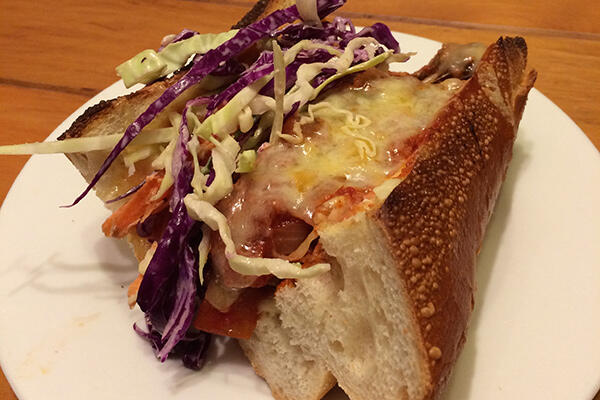
Saucy Meatball Subs
Mr. Critic Editor Zane messaged me this morning. He said, “I think you know why I’m messaging you.” I respond with a frantic reply as I run around the supermarket on my lunch break. The problem with the arrangement in my flat is that I only cook once a week. I often forget that I have to contribute to the fine publication that is Critic and then I get heckled by Zane. Then I end up frantically running around Pak n’ Save (not a place you want to be flustered in). I threw a chunk of frozen mince onto the bench this morning before I left the house so my options were limited to mince. 500g of mince. After spending the weekend peering through the glass cabinets of swanky establishments I couldn’t afford to eat at, I decided that the latest up and coming food trend is sandwiches. From croque monsieur to po boys, the meaty sandwich is the new it-girl of food porn. Having a craving for meaty balls covered in cheese I decided the classic meatball sub with a saucy slaw was on the menu tonight. It is basically just spaghetti and meatballs minus the spaghetti and in a bun. Balls and buns. My favourite. You can use any sort of bun really but a baguette serves four girls plus my future husband (he doesn’t know this yet) nicely. IngredientsServes 4-5 Meatballs: 500g beef mince 4 cloves of garlic, minced ½ cup breadcrumbs Small handful of rosemary leaves, chopped finely ½ teaspoon chilli flakes 1 teaspoon salt ½ teaspoon cayenne pepper 1 teaspoon oregano Sauce: 1 onion, diced 4 cloves garlic, minced Splash of oil Small handful rosemary ½ teaspoon chilli flakes ½ teaspoon cayenne pepper 1 teaspoon oregano 1 teaspoon smoked paprika; 1 tin chopped tomatoes 1 small tin tomato paste 3 tablespoons Worcestershire sauce 1 cup water Salt to taste 1 cup grated cheese Slaw: 2 cups shredded green cabbage 2 cubs shredded red cabbage 2 carrots, grated ⅓ cup Best Foods mayonnaise The awkward other bits that don’t quite fit into their own category: Buns for 4-5 people 1 cup grated cheese More mayonnaise – all the fucking mayonnaise MethodMix all the meatball ingredients together and roll into small, tight balls. Heat up a non-stick frying pan with a splash of oil and brown the balls until they are cooked through. You may need to do this in two batches. Leave to one side while you make the sauce. In a deep-dish frying pan, sauté the onion in the oil at a medium temperature. Once the onion has softened add in the garlic, salt, herbs and spices. Cook for another minute before stirring in the tomato paste and Worcestershire sauce. Pour in the tomatoes and water. Simmer for 15 minutes then pour in the meatballs. Leave to simmer for another 15 minutes. Add in small amounts of water if you think it is getting too thick. Stir in the cheese. Toss all the slaw ingredients together. Turn the oven onto a high grill setting. Slice the buns lengthways, smother in mayonnaise, then spoon in the meatballs and sauce. Top with cheese then place in the oven to grill the tops and melt the cheese for a couple of minutes. Once out, stuff the sides with slaw and serve.
-
Culture

Murray Eskdale and Tara Douglas
Mint Gallery Exhibited until 23 September 2014 Mint Gallery’s most recent exhibition, Au, features an exclusive display of photographs taken by owner/curator of Mint Murray Eskale and five digital prints from Dunedin artist Tara Douglas, who has previously exhibited “Karucha Shoku” and “Blossom” at the gallery. The exhibition is curated by Mint Gallery owner Murray Eskdale and exhibits some of his distinctively large photographic works (printed on aluminium) that capture his perception of the urban landscape that is Shanghai. Tara's contribution to Au is an evolution of the Japanese-inspired sculptural and photographic works seen in these exhibitions. Aesthetically, the photographs do not align in any way, but each similarly share Asian culture as a subject. In Murray’s images, the photographs show the urban spaces of Shanghai, from inside shopping malls, to capturing the great financial district, Lujiazu. His images are crisp and clean, effectively capturing his somewhat mechanised impression of Shanghai. Each of his images represents themes of urban life, concentrated by excess, mass production, consumption and an inherent detachment from the natural world. The first image captures what appear to be apartment buildings in central Shanghai, which each look like replicas of one another. The concrete buildings fill the composition against the blue-sky background, leaving only one strip in the middle of the photo that is bare without a building occupying its space, which allows the viewer to get a breath of the background. There is such a strong juxtaposition between the natural and man-made elements within the photo, one cannot help but align such a contrast to that of the struggle of the modern man who is endlessly trying to make sense of the urban world against the natural. My favourite image of Murray’s is the clever capturing of Lujiazui. Since the early 1990s, Lujiazui has been specifically developed as a new financial district for Shanghai. It is located on the east side of the Huangpu River in Pudong, and sits directly across the river from the old financial and business district of the Bund. Murray took the image from the East side of the river, staring at the city against the skyline, and the image is strikingly surrealistic. The image is divided into three horizontal sections on the photo plane, and each is symmetrical to the other, so the lines look clean and the image is balanced. The bottom section is of the water in the foreground, the middle section displays the concrete jungle that is Lujiazui receding into the background, and the top section is blue sky, which again is in stark juxtaposition to the city skyline it is compressing. What is most interesting about the image, however (Murray had to explain this to me as I thought I was looking at a floating city), is that he captured the image at just the right moment – as a boat was passing along the river, in front of the city on the skyline, it aligned with what appears to be the bank of the river beneath the city and, surrealistically, it looks as though the city is indeed floating on water; I think it is quite a remarkable image for its purely surrealistic properties, which are both confusing and convincing. On the other wall of the gallery, Tara Douglas’ five images, “In Praise of Shadows, I–V,” are displayed. Each image is a manipulated version of the other, capturing a different moment, angle or composition of the artist and her paper blossoms. In traditionally Japanese colours – red and black and white, with infusions of pink, – the photographs are subtle, authentic and playful. With Asia seeming to be Murray’s point of interest this month, Tara’s works tie in well with his own oriental photographs. If you haven’t seen them already you should pop into Mint for a look – Shanghai looks fascinating, and even more so in the way that it has been so artfully captured. Ask to see Murray’s Europe prints if you go into Mint as well – they are equally as brilliant.
-
Culture
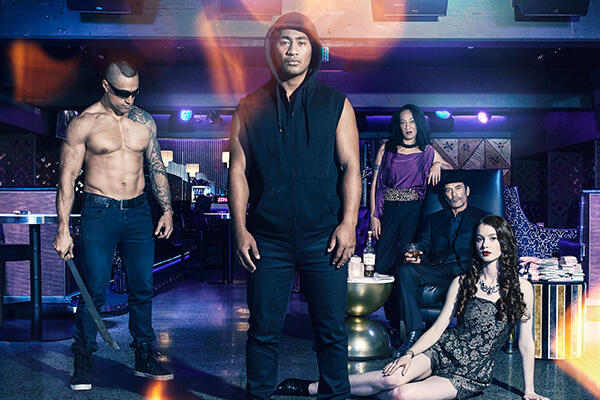
The Last Saint
Rating: A- New Zealand cinema is alive and well. This year has been full of premieres of NZ films that have made me truly proud of our industry, but none more so than The Last Saint. Set in the filthy drug- and violence-filled underbelly of Auckland, The Last Saint is a film that highlights the darkest aspects of our urban culture. The story follows Minka, a young Polynesian boy who is doing his best to survive in this hard world while still retaining his humanity. Overall, the script is a nuanced journey that challenges your perception of how and why people become criminals. Though the dialogue can occasionally be clunky, it is far outweighed by how poignant and gut-wrenchingly raw it is. This is also true for the performances, which occasionally feature some weaker supporting cast, but thankfully this is balanced out by some of the most evocative performances NZ cinema has ever seen. In particular Beulah Koale, who played Minka, gave a performance that could comfortably sit beside any Oscar-nominated performance you will see this year. His portrayal was wonderfully subtle for much of the film, expressing unfathomable emotion through the slightest but most powerful expressions. This appreciation for his subtle performance made the more intense emotional scenes even more powerful, when all of a sudden the floodgates of his emotion open and we are essentially witnessing this sweet boy as he bares his very soul. The direction was equally superb. In particular Naufahu has a mastery over lighting that makes many of the scenes feel firmly grounded within reality while still giving the scene a feeling of otherworldliness, as if crime transforms the same concrete and stone into something much darker. Unfortunately, there were occasional technical glitches that pulled you from this reality, such as poorly mixed audio, but once again the experience itself overcomes any such hurdle. The Last Saint is a film every New Zealander should see, not only for its discussion of our own culture, but because it is a damn fine piece of cinema.
-
Culture
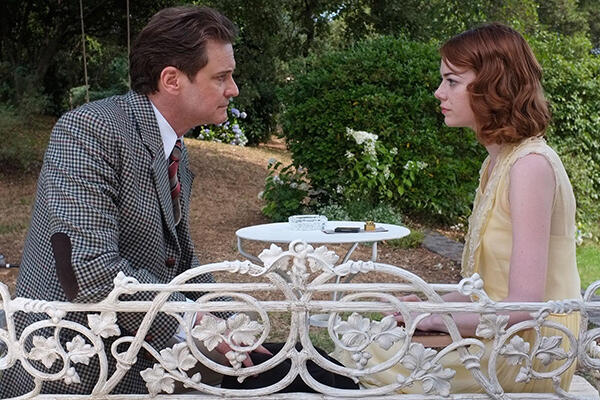
Magic in the Moonlight
Rating: B- The joy of Woody Allen films is that you always know more or less what you’re in for. Magic in the Moonlight is quintessential Allen at its most predictable. Luckily, Colin Firth is much easier to watch than old Woody, so this film has commendable eye candy, as well as talent. Emma Stone is a wonderful character study, reminiscent of an amalgamation of Annie Hall, Hattie from Sweet and Lowdown (another Allen flick, well worth the watch, not least of all because the jazz score is perfect, and because Sean Penn is a hilarious faux guitar player) and all the other dumb, beautiful women characters that Allen seems unsurpassably skilled at writing. All his women are beautiful, naive to the point to stupidity and ravenously hungry ... literally. Allen loves a thin woman that gorges herself. I can’t help but wonder what bulimic stole his heart once upon a time. But I digress. Magic in the Moonlight is visually stunning, reminiscent of the grandeur of Baz Luhrmann’s Gatsby but less ostentatious. Set in the south of France in the 1930s, Sophie Baker (Stone) is an enthralling clairvoyant who has captivated a young millionaire and his family, and Stanley (Firth) is summoned by his old friend to debunk the young enchantress for the fake that she is, only things don’t go according to plan. What is interesting about this film is the return to the stock characters Allen is renowned for writing. It’s the archetypes from Sleeper, but instead of being in the not-too-distant future, they’re in the past. With more recent films, like Vicky Christina Barcelona and Blue Jasmine we saw a newer side of Allen, and to his creation of character, especially his women, but I guess old habits die hard. The well-versed theme of love against all reason is paraded out yet again; and maybe this is something to do with the fact that Allen married his stepdaughter. Best not to think about that for too long. Basically, if you like Woody Allen films, this is one of them!
-
Culture

The Inbetweeners 2
Rating: B+ “You better bring your wellies, because you’ll be knee-deep in clunge.” This seminal quote from Jay Cartwright (James Buckley) in the previous film typifies the Inbetweeners: horny, foul-mouthed, and desperately unaware of their social status. Reunited in Australia with the pretentious Will McKenzie (Simon Bird), romantically-clueless Simon Cooper (Joe Thomas), and totally clueless Neil Sutherland (Blake Harrison), the four boys continue their quest for banter and sexual enlightenment. Despite claiming that he “never thinks about” his former girlfriend Jane (Lydia Rose Bewley), Jay is on a gap year, hoping he can find Jane and rekindle their relationship. Will and Simon are discontented with university life and journey with Neil (who has nothing else to do) to see if Jay’s life in Australia is as decadent as he boasts. Those familiar with the TV series or the previous movie will be very excited for more cheap laughs and gross antics. Unfortunately, this film lacks sufficient character exposition (especially of new and female characters) and seems to trade on viewer’s familiarity with already-established jokes and relationships. Nevertheless, the dynamic between the four lads is as hilarious as ever and there is plenty of physical comedy leaving Will and the others with egg (or something much worse) on their faces. Regular fans of The Inbetweeners may find this film to be a little unoriginal, but it makes appreciable attempts to deviate from the standard formula. It has plenty of cringe, banter and the usual shenanigans, but sadly not enough story or character development for it to be essential viewing. Be prepared for quotable lines, cheap laughs, and a very unflattering portrayal of Australians. According to the cast and crew, this is the last hurrah for the Inbetweeners, and they have been sent off in style.
-
Culture
Good Will Hunting
Classic Film “It’s not your fault.” Four little words that blow Will Hunting’s mind and frees him from past traumas inflicted upon him by cruel external forces. Four little words that delineate the boundary between what you are and are not responsible for; four little words that define the concept of “you.” Good Will Hunting was neither the first nor last “mental health movie,” but it is definitely one of the most important. The story follows Will Hunting, a Sheldon Cooper-level mathematical genius, but with Jake the Muss-level violent tendencies. His wicked foster parents beat him as a child, and as a result he lives eternally on the defensive, seeking to physically and emotionally ruin everybody he can before they have the chance to hurt him. Soon enough, this leads him into the justice system, which decrees that he must attend therapy. The late, great Robin Williams plays Sean the therapist, who is possibly the only person in Will’s world more damaged than himself. Though young Matt Damon and Ben Affleck got a lot of the glory for their original screenplay, the real standout, of course, is Robin Williams. The “park bench scene” is famous for the inspired four-minute monologue he delivers in one take on the subject of knowledge versus experience. Will might be a genius, with a mind capable of performing great feats, but he has none of the experience of real life that makes Sean (or any of us) real people, and the acceptance of the good and bad experiences of one’s life that is the true source of one’s human power. The other important scene that makes the movie great for me is when Will tells his best friend he doesn’t want to succeed, he just wants to slum around in poverty with his drinking buddies his whole life. His best friend (Affleck) tells him that if he is still here next year instead of working in some genius mathematician job for a high salary, he is going to fucking kill him. That’s love right there. Use your gifts!
-
Culture
New this week / Singles in review
Iceage - Forever From their upcoming album Plowing Into The Field of Love, “Forever” is the second single from Copenhagen based band Iceage. With their previous release, You're Nothing, the group boasted a dense, post-punk, sonic splendour. Judging from what we've heard of their new material, they seem to have dropped that. Instead, they appear to have adopted a gothic, country influence and blended it with their brooding, visceral approach. “Forever” is built on a sense of restrained ferocity, a slow build-up of mutilated passion and lust. “If I could dive into another, I would lose myself forever,” moans Elias Bender Rønnenfelt. The track features what seems to be an army of paranoid violins and disjointed horns. Something The Birthday Party, The Bad Seeds or Rowland S. Howard, even, would be proud of. Aphex Twin - Minipops 67 [120.2][source field mix] “minipops 67 [120.2][source field mix]” is the lead single to Aphex Twin's upcoming album, Syro. Built on an off-kilter, glassy drumbeat and an ominous space age bass line, the track transitions across a multitude of sonic visions. The analogue synths are rich whilst feathery as they glide across his otherworldly soundscape. With his vocals – affected, distorted and distant – it's almost like he's calling out at us from the future. It's crazy to think that it's been 13 years since Richard D. James released his last Aphex Twin record. The English electronic musician has apparently finished 10 or so albums. So that's kind of insane. That's also a lot to look forward to. Flying Lotus - Never Catch Me [ft. Kendrick Lamar] Flying Lotus is an electronic/ R&B/ Hip-hop producer based in Los Angeles, California. “Never Catch Me” is the latest track to drop from his upcoming studio album, You're Dead! Featuring the talents of Compton rapper Kendrick Lamar, the duo creates a spastic, blast of digital wackness, syphoned through a maze of jazzy piano, synth and off-kilter beats. It's amazing that anyone could actually fit a verse or two over Flying Lotus's intricate musical wall. There is enough going on to keep us engaged, yet what Kendrick is able to spit out makes the track something else altogether. A blitzkrieg of musical information, coming at us all at once. Cult Of Youth - Empty Faction Centred on the songwriting of Sean Rogan, Cult Of Youth is an acoustic, experimental, punk band based in Brooklyn, New York. Taken from their upcoming album, Final Days, “Empty Faction” is an inferno of angst and rage. From the machine gun drum beat to the heavy acoustic stabs. The track is a bleeding, violent mess. With the addition of new guitarist Christian Kount, the band is able to add more musical density to what would otherwise be pure chaos. Which, actually, wouldn't be too bad either. Dads - Chewing Ghosts Dads are an emo punk rock band based in New Jersey. “Chewing Ghosts” comes from the band's upcoming record, I'll Be The Tornado. The track is an ode to growing up and facing the regrets of your youth, possibly a punk rocker's worst nightmare. “We could be unhappy together, we could be drunk together. We could be punk together, we could be friends again” sings John Bradley. The track features a catchy chorus and just enough genuine angst to be relatable to any generation's disillusioned youth and those that used to be.
-
Culture

Download of the week: The Violet-Ohs - Demos (NZ)
Formed about a month or two ago, from the scattered remains of two Dunedin bands, A Distant City and Ruby Phantoms, The Violet-Ohs are a post-punk, alternative group that have started off quickly. Featuring the talents of vocalist Nick Tipa, guitarist Zac Nicholls, drummer Josh Nicholls and bass player Connor Blackie, the four-piece have already recorded a 6-track EP. The EP is inventively titled Demos, and can be downloaded at a name-your-price deal from their bandcamp, thevioletohs.bandcamp.com
-
Culture
Wildwood
Wildwood is a children’s novel that follows Prue McKeel’s adventures in the Impassable Wilderness behind her suburb. She and her classmate Curtis discover the hidden province of Wildwood as they track a murder of crows that abducted her baby brother Mac. Wildwood is in political upheaval: there’s a malevolent Dowager Governess, an Owl Prince who questions the unconstitutional actions of the state and a coyote militia. The Wood encompasses various cultures and talking animals compete for control. Prue and Curtis must navigate bureaucracy and bandits in an attempt to save Mac. Like all good fantasy, Wildwood has a history and anthropology that is complex enough for the reader to dig into. Colin Meloy, the lead singer of the indie band The Decemberists, is the author. Meloy has a very particular method of story telling, that involves infusions of folk tales and many, many adjectives. The illustrations by Carson Ellis are also worth noting. Ellis’ style and muted colour palate is organic and fascinating. The artwork enhances the woodsy, adventurous feel of the book. Maps and illustrations add another facet to any story. One picture, particularly, of prisoner cages strung perilously from the root system of tree in an underground cavern, has carved itself a place in my mind. Adult fiction would be better off with pictures. Someone start a petition. The novel borders on being pretentious. For example, in the first chapter, Prue “sipped steamed milk and watched through the window as the café employees awkwardly installed a secondhand elk head trophy on the wall” – fair warning to any hipster haters, Wildwood is set in Portland, Oregon. Avoid the book if you don’t enjoy flannel and flower beards. I thoroughly enjoyed the novel, despite being a decade older than the intended readership. I appreciated the authorial style considering The Decemberists are my absolute favourite band forever and ever. (I recommend albums The Crane Wife and The King is Dead to newcomers.) Meloy’s winding, literary songwriting style is well suited to fiction. Reading about the adventures of a capable 12-year-old girl was incredibly heartening. Prue keeps a sketchbook and built her own bike. She’s the coolest female heroine I’ve encountered in a while; I wish I could post the book back in time to myself. Wildwood is a modern, less sexist Narnia. The idea that you can just stumble across a secret civilisation strips some of the mundane-ness from life. (I’m convinced Archway is hiding some pathway to another dimension. Why else would it be such a labyrinth?) Instead of creating an entire new universe, Wildwood explores a fantastical element of our own world. The possibility of magic in everyday life is appealing, as is the sense of pure story telling that accompanies children’s literature. Wildwood is a worthwhile read that will spark the imagination.
-
Columns

Too much screens | Issue 23
With the rise of home video, streaming, and widespread torrenting of TV shows, it's become clear in recent years that the lines between television and online video content are artificial. TV was once defined by its limits (one new episode of your favourite show a week, lasting half an hour or an hour, including frequent ad breaks), limits which give the audience a very particular experience, one in which everyone watching has seen the same thing, maximising “water-cooler” talk, and keeping them wanting more. Ever since home recording onto VHS became common, however, that centralised entertainment model has been losing its iron grip on the public consciousness. Over the last ten years there has been an explosion in the number of quality shows (many brought about by smaller, previously largely unnoticed cable channels), and in the ways to watch them. This means that TV isn't quite TV in the same way any more. Now, there is certainly a value in the centralised model, as anyone who got as giddy as I did watching and discussing Lost week-to-week as it came out will tell you, but things have fundamentally changed. There is so much good stuff to watch, and so many easy ways to binge-watch whole seasons at a time, that television is necessarily a less communal medium now than it ever was before. There is no longer the expectation that when something new comes out, millions of people are going to see it all at once. Because TV's temporal limits are now largely a non-issue, online video content that resembles traditional television is increasingly viable; where webseries once felt foreign, if you watch all of your TV shows streaming in a browser, there is no leap to make to watch a web-originating series on YouTube. Furthermore, Netflix has decisively proved that web-originals can be as popular and widely-hyped as many TV shows, that means that we're likely to see some real money, not to mention some serious talent, coming into the online video content sphere. If you need any proof that a low-budget webseries can offer as much beauty and humour as any “real” TV show, look no further than High Maintenance, a webseries on Vimeo. Each episode tells the story of a different customer of an affable, unnamed marijuana delivery guy who bikes around New York City, with each episode between five and 15 minutes in length. Ben Sinclair (who also co-created, writes, directs, and edits) recurs as the Guy, the common thread in these varied, but consistently very funny and insightful, short stories about a broad range of people living in and around Brooklyn. Provided you have the skills necessary to do a lot of the work yourself, and talented people willing to help out, the stakes when funding a webseries are significantly lower than in television (unless you're Louis C.K.), and it is clear that the freedom of the format has allowed the creators of High Maintenance to tell exactly the stories they want to. High Maintenance has an extraordinary sense of place and of truth, and this is directly attributable to its webseries status. Free of market testing, advertisers' concerns about content, and questions about how to market it, High Maintenance gets to be a lot of unusual things: a non-stoner show based around pot; a show with a regular cast of one; a show whose tone varies wildly from episode to episode. Most impressive of all, it gets to be a webseries that, without qualification, can sit comfortably alongside the best and most beautiful TV shows. You can watch High Maintenance for free at vimeo.com/channels/highmaintenance and it doesn't really matter what order you watch them in.
-
Culture

Velocity 2X
Rating:A- It is exciting to consider the developments that are yet to come to existing genres. Looking at the past two decades of game development you can track the innovations and developments that have evolved genres, making them better and better. However this gradual progress makes it difficult to get blown away by the developments of any one title. However, there is always one sure-fire way to create an exciting new experience without having to create any overwhelmingly innovative new ideas or mechanics. That sure fire solution is by creating games that amalgamate two different genres, just as Futurlabs new game Velocity 2X has done. Velocity 2X is an amalgamation space shoot ‘em up game and platformer. Though the shoot ‘em up components look conventional at first sight, they feel quite unique to control. This comes partly from the movement design, which is light and quick making controlling the space ship very fluid and manoeuvrable. The unique feel also comes from the additional features that are fed throughout the game. The core of these features is the ability to teleport through walls as you fly. This mechanic drastically changes the way you approach levels by adding an additional layer of strategy to how you fly through the often maze-like layout of levels. This mechanic is supplemented with additional features such as being able to drop checkpoint markers within levels that you can teleport back to at will. Within the flying levels there are points that require you to dock to proceed. It is at these points that the game becomes a platformer. Though many of the mechanics stay the same, such as shooting and teleporting, the platforming requires that you use them in different ways. This both increases your shooting and teleporting skills while keeping the experience fresh. The ingeniousness of these features comes partly from how innovative they are, but more so from how they are incorporated into the design of the levels. As the new mechanics are fed into the game the levels change to challenge your understanding and ability with those new mechanics. These designs combine in later levels creating challenges that require you to apply quick thought to what ability is needed. The game itself is broken down into 50 distinct levels. Each of these levels has an emphasis on one of three play types: Hostile Forces; Critical Urgency; and Search and Rescue. Each level you play is judged on speed and how thoroughly you collect items and destroy enemies. Each of these level types places emphasis on one of these criteria. For example, Critical Urgency has an emphasis on how quickly you get through the level and has a level design that challenges your ability to move through it quickly. Whereas Hostile Forces emphasises combat and as such the challenge comes from the frequency and difficulty of enemies. These three level types are skilfully tied into the narrative, which follows human soldier Lt. Kai Tana as she tries to escape alien space. The level types match the current situation of the narrative, which is progressed through a cut-scene at the start of each level. Though not comprehensive, the story is skilfully executed, communicating both an exciting narrative with some impressive character development considering the short and snappy cut-scenes through which they are presented. This narrative loosely continues the story of the first Velocity. However, the first Velocity game was borne not out of the concept, but out of a piece of electronic music created by developer James Marsden. It is clear playing Velocity 2X that the inspiration for this sequel came from its soundtrack too. The frenetic electronic soundtrack contributes to both the background and the foreground of the game. In the background the fast paced and infectious beats drive the urgency of the game that keeps it exciting and fast-paced, while in the foreground you can consciously match the rhythm of the music to your movements. Dodging around obstacles, firing bombs and lasers and timing your teleports can all be synced to the music, making the experience both intuitive and deeply satisfying. Velocity 2X is an exciting game to play, combining tense and quick gameplay with a superb soundtrack. On top of this, the amalgamation of genres as well as the steady stream of additional gameplay mechanics makes Velocity 2X a game that is hard to put down and impossible to not come back to.
-
Columns
Science, Bitches | Issue 23
It’s another Monday morning. You stumble out of bed, bleary-eyed, and throw on some clothes. You’re running late, so you chew a piece of toast as you climb onto your Moa. Trotting to uni, you barely dodge some asshole’s Haast Eagle on Castle Street and make it just in time for your 9am. “I wouldn’t have that problem if I lived in Russia,” you grumble. “A stupid bird is no match for a Woolly Mammoth.” Ok, so that’s probably unlikely to happen. But unlike Jurassic Park, this scenario is not actually that crazy. Don’t believe me? Well, this year Russian Scientists set about trying to clone a Woolly Mammoth. Yep, de-extinction has begun. So what do you need to clone your Mammoth? Well, firstly, you need some well-preserved DNA. With a few exceptions, every organism has its entire genome stored in every cell. The genome is the “blueprint” to make that organism, of millions or billions of “letters” of DNA in the right order. So if you can get just one cell with an undamaged genome, you can (in theory) recreate the whole beast. So how long can DNA last? It all depends on where you keep it – in hot, humid conditions, DNA breaks down pretty fast. But if an animal dies and is quickly frozen in the right conditions, it may be able to survive a very long time – possibly up to a million years. This does rule out Jurassic Park, since dinosaurs died out 65 million years ago, but that’s probably not such a bad thing. Our Russian Mammoth lived about 43,000 years ago, and may have fallen through a hole in the ice when she died. She remained buried under the permafrost until last year, when researchers found her incredibly well preserved; not only was her DNA intact, so were her blood vessels, kidneys, and red blood cells. So now you’ve got your Mammoth DNA, you now have to build your Mammoth. DNA is a great blueprint, but it needs something to carry out the instructions. When we clone animals like sheep, we take a sheep egg cell, remove the DNA that’s in there (only half a genome’s worth – normally, a sperm cell donates the other half to make a full set of DNA). Now we have an “empty” egg, we can fill it with the full genome of the sheep we want to clone. We then put this egg into a surrogate mother, where it grows into a foetus and then is born. I imagine you can see the problem here, already; we don’t have any living Woolly Mammoths – but how about an elephant? The scientists are planning on using an Asian Elephants to donate eggs and grow the Mammoth foetus. Now, intraspecies cloning is still a tricky process, and trying to grow a mammoth inside an elephant will be even more unpredictable and fraught with difficulties – will the DNA and the egg be compatible? Will the Elephant recognise the Mammoth foetus as foreign, and reject it like a bad heart transplant? Will the Mammoth get the right growth signals and develop properly? Even if things don’t go to plan, the process will teach us a huge amount about the Woolly Mammoth. And if it does work, we might start looking for the next de-extinction candidate – and I’ll be first in line for a pet Moa! That’s science, bitches.
-
Columns

Queer Eye | Issue 23
Whether it’s from the privacy of your private porn collection, or from your weekly Orange is the New Black fix, I’m sure the majority of Critic readers have seen some kind of raunchy lesbian sex scene. But how accurate are those scissoring scenes that you pleasure yourself to in portraying how lesbians have sex? While I acknowledge that some lesbians, or even spaghetti girls (straight until they are wet), love to scissor, not all of us do. So next time you are quizzing your token lesbian friend about what we do in the sack, please do not assume that we all like to get off in the same stereotypical way. This brings us to the question for this week, which is how do lesbians REALLY have sex? The answer is five simple words ... HOWEVER THE HELL THEY WANT. Okay, so now that I have destroyed all your pornographic fantasies of lesbians with ridiculously long nails (seriously how many lesbians have nails like that?!) scissoring each other, let me tell you about some other ways that lesbians like to get the job done. Lesbians can have sex in many different ways, which means that I can’t cover them all in this article. Because of this I will focus on two specific types of lesbian sex. Before I move onto the vast world of lesbian sex I would like to quickly note that, yes, lesbians can still contract STI’s, so whether you are making love to a lifelong partner, or just popping into the bathroom for a quickie with someone you just met, make sure you are being safe! Condoms and toy cleaner can be used to protect toys and dentals dams can help with any mouth-to-vag action. The first type of lesbian sex is with dildos and strap-ons. I would like to start off by saying that just because some lesbians like to use toys in the bedroom does not mean that we aren’t “real” lesbians. I have come across this issue not only with my heterosexual friends but also with past sexual partners who think that just because lesbians like to get down and dirty with penis-shaped objects that we are in same way betraying our lesbianism – this is NOT true. With that rant out of the way let’s talk dongs: just like clothes, dildos and strap-ons can come in all shapes and sizes and, like clothes, it’s important to find one that fits your body just right. If you are a first timer I recommend starting off small and working your way up until you find the size that fits your body just right – you can even place a vibrator on the clitoris at the same time to spice things up. Lubricant is a useful tool to have if this is the type of thing that tickles your fancy (or should I say fanny), as it will help things to go in more smoothly. Finally let’s look at grinding or good old fashioned humping. Contrary to popular belief not all woman need to be penetrated to cum, in fact some woman can do it by just having some friction on the clitoris. Grinding up against you partner may be the way to give your clitoris the well needed rub it deserves while leaving your hands free to have a good feel around of the rest of your partner’s body. Unfortunately those are the only two types of lesbian sex we have time for this week but stay tuned for next week where we will be talking lesbian sex positions!
-
Columns
Defending the kingdom | Issue 23
As a student, I’m always keen to scope out cheap restaurants. Circadian Rhythm on St Andrew’s Street (just down from Starbucks, Auckland girls) is one of my favourites. The food is excellent value for money, the staff are lovely, they have adorable hipster-friendly board-games and squashy couches, and they have jazz nights and poetry readings. And their food is 98 per cent vegan. I went there with a friend who discretely commented on the “sickly looking vegans” there. And she wasn’t wrong. Many vegans or vegetarians don’t get adequate sustenance and do look very run down. We even studied a case for Family Law about a baby who died from malnutrition after his raw-food vegan mother breastfed him. Remember that you can get very run-down on an omnivorous diet too. Imagine living on Burger King’s Creamy Mayo Cheeseburgers for a month, and they’re full of meat, dairy and eggs. You’d feel awful. You’d feel the same after just eating Oreos, BBQ Shapes and drinking V – and they’re vegan. So the key is to make sure you get all the nutrients your body needs. Makes sense, right? And it may be trickier on a vegetarian or vegan diet, but it’s definitely not impossible. You could save a lot of money too. Pulses and legumes (think lentils, chickpeas and beans) are far better value for money than meat and eggs. But you need to get enough protein and iron, which is easy if you know how to do it. Women need 46g of protein per day, and men need 56g. A serve of chick peas (100g) has 19g of protein. A 100g serving of black beans (AWESOME in Mexican dishes) has 22g. Half a cup of tempeh (delicious pressed tofu) has 15 grams of protein. And just two tablespoons of chia seeds will give you 4g. Iron is a little trickier. Most vegans and vegetarians have to take a supplement, I won’t lie to you. Women need 18mg per day, and men just 8mg. A cup of cooked spinach will give you 2.7mg, and silverbeet 2.53mg. Vitamin B12 is a bacteria found in the soil. It is most easily consumed via animal sources, so it’s a trump card for people who want to find fault in a vegan diet. It’s also very important – the baby with the vegan mother would have been saved by B12 injections. It’s easy and cheap to get enough via Pam’s Soy Milk, and a number of other plant milks have it as a supplement as well (such as almonds and rice). Alternatively, there are tablet supplements. Getting all your nutrients on a vegan diet is possible. You’ll also save money and reduce your impact on the environment, and will probably lose weight too. But if you’re thinking of going vegan, then please don’t go all self-righteous on us. I reckon the worst myth surrounding vegans is that they’re all dicks.
-
News

Interview: Metiria Turei
Metiria Turei is a co-leader of the Green Party, and focuses on the social policy side of Green politics. She also doubles as a candidate for Dunedin North, meaning she spends much of her campaign time frolicking between Auckland, Wellington, and her modest “castle” out in the wops. Yesterday, you announced your workers plan, and part of that was to raise the minimum wage to $18 p/h by 2017. The argument on the right is always that this will increase unemployment and a whole host of changes that will be bad for the economy. How would you respond to that? Well, they’re wrong and all the evidence shows that you do not lose jobs as a result of increasing the minimum wage; but the theory that National proposes is that there is significant job loss because businesses are paying more. The evidence, if you look at a recent July 2014 report published in the US, is that in the 13 states where they had an increase in minimum wage, they found economic development improved. They had better local economies, businesses had reduced cost because there was reduced turnover, higher productivity; so actually the evidence says it is better for the economy to have improved wages. The theory, the neoliberal theory, is that it’s bad. But I would take the evidence over the theory any day. What about the argument that companies will hire less people because they’re paying more? The evidence that we do have in New Zealand on youth rates, for example, when youth rates were abolished, was that fewer 16 and 17 year olds were employed, but they replaced them with 18 to 19 year olds. There was no job loss overall in the economy, it’s just that there was a shift in the choices that employers were making, because younger people weren’t cheaper. What you then have to do is make sure you’ve got good policy for young people employed or in training. But that doesn’t prove that jobs are lost, in the economy overall, it’s just not true. What about the bits within your package that ensure workers’ rights essentially? Not only would we increase the minimum wage to $15 an hour by Christmas, and then $1 an hour per year increases until it’s $18 an hour in 2017, we would have a minimum of four weeks redundancy in the law, and encourage employees and employers to negotiate for better than that in their employment agreements. But the minimum four weeks is critical for families who are at the worst time in their lives. […] We’ll also make sure there’s union representation, workers representation on WorkSafe, which is the health and safety organisation, and it’s critical at the moment. […] And then the other part of it is providing access to workplace for unions making sure there’s stronger bargaining opportunities and regulations in the law, and making sure that there’s an obligation still to complete collective bargaining when it happens. So would you say that now the Greens are the “unions party?” I think we’ve got great support from the unions, and at yesterday’s launch we had Helen Kelly from the NZCTU, Service and Food Workers Union, NZEI, PBTA. Our policy, I think, is better than Labour’s in that we provide more certainty. So Labour gets minimum wage to $16.25 an hour, but then they don’t provide any further certainty beyond that. And I think the Greens are really clear: workers do best when they have strong unions; the economy does best when workers are doing better, so we need to make sure that workers have what they need to be the best possible employees, businesses have got certainty about their costs and they can project them out to the future. Another recent policy package is regarding housing and the Warrant of Fitness. A lot of students are exploited by landlords down here because it’s almost a mark of pride to have a really shit flat; it’s kind of like a rite of passage living in the Dunedin student ghetto. What are the plans you have to help renters increase their security with landlords? We’re the only party that has put out a renter’s package. Everybody is concerned, rightly, about home ownership, but there are a million people living in rental accommodation; there are 400,000 children living in rental accommodation, and it is becoming the new norm. We will improve renter’s security by requiring a Warrant of Fitness for all rental properties that will become mandatory in 2017, and it’s not just insulation; it’s hot and cold running water, it’s a working toilet, a stove. These are things that are not actually required in the law at the moment. There’s better regulation on the quality of the toaster than there is on the quality of your home. That’s just not okay. But we also want to give tenants the first right of refusal; so if they’re on a fixed-term lease they’ll be the ones who choose whether or not they’ll stay. And restrict rent increases to only once every 12 months, and to have, in law, the calculation by which rents can be increased. So they’ll both be in the law – we’ll work with the industry on what that looks like – but in each of the tenancy agreements so that tenants can be assured of what increases they can expect over time, and landlords aren’t able to engage in price gauging, which is what we’ve seen in both Auckland and Christchurch. Yeah, I mean in Dunedin you see the same flats be exactly the same and $5 more expensive (per person) every year and nothing has changed. That’s right, that’s right, and there needs to be a justification for those rent increases, not just demand, because as long as demand is driving up rent increases, you’re going to have people paying more and more of their income in rent. When you’re paying over 30 per cent of your income in rent, then housing is technically unaffordable, and we need to improve that; it doesn’t have to be that way. The DCC has just proposed a whole host of changes, including a 3am bar close, a 1am start to the one-way door policy, a prohibition on shot sales after midnight, and the clearance of outdoor seating as early as 11pm. Do you think this is a step forwards or a step backwards? I think restricting access to alcohol is probably a good thing. Our view around alcohol is that there has been too much focus on the purchase and not enough on restricting the industry itself. And that includes not just the alcohol industry, but also bars and clubs and pubs as well. […] I don’t know that it has to only be in Dunedin, we would have to take a look at if it’s going to happen here or look at how to extend [restrictions] to other areas, so yeah, I think it’s good for the council to be thinking about how to control public access to alcohol where it can. But at the same time, the council also needs to be restricting where it allows its outlets to set up. We still have council giving approval to new alcohol outlets and so they need to be consistent in their policy. An argument is that restricting bar access will a) push up alcohol prices in bars because they don’t sell as much and b) it’ll push drinking into flats where it can be more excessive. It’s also arguably safer for some to be drinking at home or in other people’s homes. I mean, it is not an easy calculation to make. Any set of regulations you put around managing alcohol access is going to have flow-on effects. Until you do it you won’t necessarily know what they all are, so you’ve got to be reasonably nimble around what policy is working to make sure you achieve your goals; and if it’s not, then change it when it’s necessary. I’m not concerned about the pricing; there’s a proliferation of alcohol outlets, it is already extremely cheap. […] The cost of it doesn’t worry me, it’s just making sure that any regulatory changes do work to achieve an identifiable outcome and if they don’t, being honest about that and shifting to some other process. What ministerial positions do the Greens want? We will be negotiating a comprehensive coalition agreement with Labour, and it will include a number of ministerial posts, we expect, as well as associate minister posts. We don’t know what they will be yet, and we won’t know until we’re in the negotiations. We’ve said our priorities are economy, water, beaches, and child poverty alleviation. There’s a range of ministerial posts across each of those three priorities that we could have. We want to see progress on the whole of the election package, and we need to assess when we’re sitting with Labour about what options are on the table and how they best progress our priorities. It’s impossible to say at this stage exactly what that will look like. What is the one policy you won’t let Labour have that you’ve seen from their policy package? One of the ones that we have a completely different view on is deep sea oil drilling. We’ve said that we will simply prohibit deep sea oil drilling, there is none currently occurring in New Zealand waters, so let’s stop it now while we can. They have said that they are open to deep sea oil drilling; that’s a clear area of difference. But we have lots of areas of common concern as well, so we will have to work those through. We won’t know until we’re sitting at the table with them how the negotiations will go, and the only way we can be assured of getting the best possible outcome for the Greens, and our policy, is to make sure we’re the strongest possible. Which is why we’re campaigning for a strong party vote. So we are as big a part of a new government as possible.
-
Columns

Love Is Blind | Issue 23
Critic’s infamous blind date column brings you weekly shutdowns, hilariously mismatched pairs, and the occasional hookup. Each week, we lure two singletons to Di Lusso, ply them with food and alcohol, then wait for their reports to arrive in our inbox. If this sounds like you, email critic@critic.co.nz. But be warned – if you dine on the free food and dash without sending us a writeup, a Critic writer will write one under your name. And that won’t end well for you. AndyThe minute I heard that my flatmate had signed me up for Critic’s blind date I knew that this could be my one real opportunity – the opportunity I had been waiting for since my arrival in Dunedin. It was going to be the night that I sunk my dick for the first time. It was high time that I retired my Kleenex and hand lotion for good to delve deep into a brand new world of passion, sensuality and bodily fluids. To be honest the concept both frightened and excited me. As the night came about, however, the confidence I felt before was gone and had to be renewed with the help of my good friend vodka. I was waiting at the bar for five minutes before my date arrived, and my lord was it worth the wait. She was the kind of girl that earns two syllable dayums from men on the street. I greeted her while awkwardly nursing my half chub and the date began. It went well. Real well. Formalities were exchanged and food and drinks were ordered and consumed. The laws of attraction proved to be in full swing as the night unfolded. Truth and dare got heated as we made out above the food platter and promises of meeting in the bathroom were made. When that fateful moment arrived I was confident that tonight was going to be the night. I was not disappointed as I engaged in my first sexual experience by receiving a blowjob in the bathrooms. Just as romantic and classy as I’d imagined it. We then departed Di Lusso and her flatmate gave us a ride back to hers. We very quickly ended up with our naked bodies pressed together in a hot tangle of limbs. Perhaps it was natural talent or my extensive viewing of “educational videos” but I found I knew what I was doing as the last strand of my innocence was plucked from me like a petal from a flower. I think I’m in love. Thank you Critic and Di Lusso! Absolute legends. TrishUpon arriving at Di Lusso I realised something very important. I should have drunk the second wine bottle. It had been right in front of me not ten minutes ago and would have made me more confident with what I was approaching towards. Sitting at the bar, with physical features that could match the Greek gods’, the barman smiled at me and moved aside, showing a guy that didn’t quite match the godly standards of the barman, but who wasn’t the worst I had seen in Dunedin. Introducing himself with a name only angels could have created, my heavenly date threw me onto the bar stool and set the mood for the rest of the night. He was second year gender studies, with the only goal to treat a woman right by landing his dick inside of her in the name of love. To this, I had no problem. I was in the mood to make a Critic date work in all the right ways. So when we brought up truth or dare, making out with him over the platter of food seemed a good way to start. However, it was time to step it up a notch. There’s something exciting about being the one to lead your date into the bathroom, but it’s more exciting when he proves to be genetically gifted. With a few more calories than I had originally planned in my daily diet, it was time to blow the joint. A text to a friend, a hair-raising ride home, I achieved having my date naked on my bed and in control. With more energy and enthusiasm than your generic male student, his size and skill made me believe in love and that the infamous “O” wasn’t so hard to find. I will definitely be saving this one to my contacts. Shout out to Critic for making the last of the winter days turn into something hotter – you da best.
-
Culture

Ryan Adams - Ryan Adams
Rating: B+ There was a period in the early to mid-2000s when the word that best summed up Ryan Adams was “prolific.” The man released a staggering 12 studio albums during a ten-year span. I'm not even counting the numerous bootleg albums and EPs circulating the web. Of course, the quality of each release sometimes varied considerably from album to album, but Adams was never the type to actually give a shit. His attitude was, “if you like it that's great, if you don't then move on. I'm going to keep making music because it feels good.” This decade, so far, has been a different story altogether. The alt-country pioneer, instead, seems to be pacing himself to the beat of a much slower drum. In fact, this album is coming after a three-year absence, following 2011's Ashes & Fire, which was cited by critics as a long awaited return to form. Ashes & Fire saw Adams strip down his sound, once again, after ending his relationship with The Cardinals, his backing band of five years. The result was a warm, dusty, acoustic album, engineered by renowned producer Glyn Johns (Led Zeppelin, The Rolling Stones, The Eagles). The pair seemed to hit it off, and not long after Johns started working with Adams on an encore to their 2011 effort. However, the album was later abandoned. The scrapped record was apparently a concept album centred on the death of his grandmother. Adams labelled the album “too sad” to release. Those songs must have resembled something extremely gloomy, because aren't all Ryan Adams’ albums kind of sad? Well maybe Adams wanted something different this time around. Perhaps something happier? The record is still pretty sad. But did we really want a happy Ryan Adams record? There's a clip on YouTube where the audience starts cheering during the intro to one of his songs. Adams, known for his self-deprecating banter, says into the microphone, “It isn't that song, people. It's just one of the sad ones sped up.” That right there kind of sums up this album for me. It's still Ryan Adams, but he's chosen to rock out a bit more. Ryan Adams is a rock record in the vein of Tom Petty or The Rolling Stones, and I mean that in a good way. Self-produced in his home studio, the album instantly comes across as darker and more brooding compared to the charcoal antiquity of Ashes & Fire. Combining acoustic and electric elements, velvety piano and ambient synth, the songs contain a faint neon quality. They are ghostly, yet at the same time anthemic. It sounds sort of like Bruce Springsteen. Actually, let me rephrase that: it sounds a lot like Bruce Springsteen. “Darkness On The Edge of Town” era Bruce Springsteen, “Nebraska” era Bruce Springsteen, “Born To Run” era Bruce Springsteen. The record opens with “Gimme Something Good,” the lead-up single to the album, and one of the more upbeat, fist pumping tracks. With its classic rock chord progression and spiralling Jagger-esque chorus, it definitely proves a highlight. Other standout tracks include the heartbreak ballad “Kim”, the troubling “Am I Safe” and the stripped down “My Wrecking Ball.” Overall, Ryan Adams is a solid album with some of Adams' most realised and well-written songs. Sonically, the thin layer of darkness and gloom serve the songs well. Where this sits amongst the rest of Ryan Adams' impressive discography, in my opinion, is somewhere in the middle. Not quite good enough to recapture the freshness and open-heart surgery of Heartbreaker or Love Is Hell, but definitely not as bad as some of his more half-cooked projects.


