

Formed about a month or two ago, from the scattered remains of two Dunedin bands, A Distant City and Ruby Phantoms, The Violet-Ohs are a post-punk, alternative group that have started off quickly. Featuring the talents of vocalist Nick Tipa, guitarist Zac Nicholls, drummer Josh Nicholls and bass player Connor Blackie, the four-piece have already recorded a 6-track EP.
The EP is inventively titled Demos, and can be downloaded at a name-your-price deal from their bandcamp, thevioletohs.bandcamp.com

Culture
More Culture from Issue 23
-

Saucy Meatball Subs
Mr. Critic Editor Zane messaged me this morning. He said, “I think you know why I’m messaging you.” I respond with a frantic reply as I run around the supermarket on my lunch break. The problem with the arrangement in my flat is that I only cook once a week. I often forget that I have to contribute to the fine publication that is Critic and then I get heckled by Zane. Then I end up frantically running around Pak n’ Save (not a place you want to be flustered in). I threw a chunk of frozen mince onto the bench this morning before I left the house so my options were limited to mince. 500g of mince. After spending the weekend peering through the glass cabinets of swanky establishments I couldn’t afford to eat at, I decided that the latest up and coming food trend is sandwiches. From croque monsieur to po boys, the meaty sandwich is the new it-girl of food porn. Having a craving for meaty balls covered in cheese I decided the classic meatball sub with a saucy slaw was on the menu tonight. It is basically just spaghetti and meatballs minus the spaghetti and in a bun. Balls and buns. My favourite. You can use any sort of bun really but a baguette serves four girls plus my future husband (he doesn’t know this yet) nicely. IngredientsServes 4-5 Meatballs: 500g beef mince 4 cloves of garlic, minced ½ cup breadcrumbs Small handful of rosemary leaves, chopped finely ½ teaspoon chilli flakes 1 teaspoon salt ½ teaspoon cayenne pepper 1 teaspoon oregano Sauce: 1 onion, diced 4 cloves garlic, minced Splash of oil Small handful rosemary ½ teaspoon chilli flakes ½ teaspoon cayenne pepper 1 teaspoon oregano 1 teaspoon smoked paprika; 1 tin chopped tomatoes 1 small tin tomato paste 3 tablespoons Worcestershire sauce 1 cup water Salt to taste 1 cup grated cheese Slaw: 2 cups shredded green cabbage 2 cubs shredded red cabbage 2 carrots, grated ⅓ cup Best Foods mayonnaise The awkward other bits that don’t quite fit into their own category: Buns for 4-5 people 1 cup grated cheese More mayonnaise – all the fucking mayonnaise MethodMix all the meatball ingredients together and roll into small, tight balls. Heat up a non-stick frying pan with a splash of oil and brown the balls until they are cooked through. You may need to do this in two batches. Leave to one side while you make the sauce. In a deep-dish frying pan, sauté the onion in the oil at a medium temperature. Once the onion has softened add in the garlic, salt, herbs and spices. Cook for another minute before stirring in the tomato paste and Worcestershire sauce. Pour in the tomatoes and water. Simmer for 15 minutes then pour in the meatballs. Leave to simmer for another 15 minutes. Add in small amounts of water if you think it is getting too thick. Stir in the cheese. Toss all the slaw ingredients together. Turn the oven onto a high grill setting. Slice the buns lengthways, smother in mayonnaise, then spoon in the meatballs and sauce. Top with cheese then place in the oven to grill the tops and melt the cheese for a couple of minutes. Once out, stuff the sides with slaw and serve.
-

Murray Eskdale and Tara Douglas
Mint Gallery Exhibited until 23 September 2014 Mint Gallery’s most recent exhibition, Au, features an exclusive display of photographs taken by owner/curator of Mint Murray Eskale and five digital prints from Dunedin artist Tara Douglas, who has previously exhibited “Karucha Shoku” and “Blossom” at the gallery. The exhibition is curated by Mint Gallery owner Murray Eskdale and exhibits some of his distinctively large photographic works (printed on aluminium) that capture his perception of the urban landscape that is Shanghai. Tara's contribution to Au is an evolution of the Japanese-inspired sculptural and photographic works seen in these exhibitions. Aesthetically, the photographs do not align in any way, but each similarly share Asian culture as a subject. In Murray’s images, the photographs show the urban spaces of Shanghai, from inside shopping malls, to capturing the great financial district, Lujiazu. His images are crisp and clean, effectively capturing his somewhat mechanised impression of Shanghai. Each of his images represents themes of urban life, concentrated by excess, mass production, consumption and an inherent detachment from the natural world. The first image captures what appear to be apartment buildings in central Shanghai, which each look like replicas of one another. The concrete buildings fill the composition against the blue-sky background, leaving only one strip in the middle of the photo that is bare without a building occupying its space, which allows the viewer to get a breath of the background. There is such a strong juxtaposition between the natural and man-made elements within the photo, one cannot help but align such a contrast to that of the struggle of the modern man who is endlessly trying to make sense of the urban world against the natural. My favourite image of Murray’s is the clever capturing of Lujiazui. Since the early 1990s, Lujiazui has been specifically developed as a new financial district for Shanghai. It is located on the east side of the Huangpu River in Pudong, and sits directly across the river from the old financial and business district of the Bund. Murray took the image from the East side of the river, staring at the city against the skyline, and the image is strikingly surrealistic. The image is divided into three horizontal sections on the photo plane, and each is symmetrical to the other, so the lines look clean and the image is balanced. The bottom section is of the water in the foreground, the middle section displays the concrete jungle that is Lujiazui receding into the background, and the top section is blue sky, which again is in stark juxtaposition to the city skyline it is compressing. What is most interesting about the image, however (Murray had to explain this to me as I thought I was looking at a floating city), is that he captured the image at just the right moment – as a boat was passing along the river, in front of the city on the skyline, it aligned with what appears to be the bank of the river beneath the city and, surrealistically, it looks as though the city is indeed floating on water; I think it is quite a remarkable image for its purely surrealistic properties, which are both confusing and convincing. On the other wall of the gallery, Tara Douglas’ five images, “In Praise of Shadows, I–V,” are displayed. Each image is a manipulated version of the other, capturing a different moment, angle or composition of the artist and her paper blossoms. In traditionally Japanese colours – red and black and white, with infusions of pink, – the photographs are subtle, authentic and playful. With Asia seeming to be Murray’s point of interest this month, Tara’s works tie in well with his own oriental photographs. If you haven’t seen them already you should pop into Mint for a look – Shanghai looks fascinating, and even more so in the way that it has been so artfully captured. Ask to see Murray’s Europe prints if you go into Mint as well – they are equally as brilliant.
-
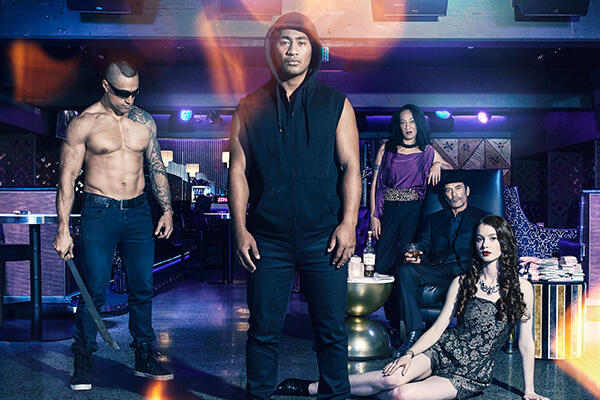
The Last Saint
Rating: A- New Zealand cinema is alive and well. This year has been full of premieres of NZ films that have made me truly proud of our industry, but none more so than The Last Saint. Set in the filthy drug- and violence-filled underbelly of Auckland, The Last Saint is a film that highlights the darkest aspects of our urban culture. The story follows Minka, a young Polynesian boy who is doing his best to survive in this hard world while still retaining his humanity. Overall, the script is a nuanced journey that challenges your perception of how and why people become criminals. Though the dialogue can occasionally be clunky, it is far outweighed by how poignant and gut-wrenchingly raw it is. This is also true for the performances, which occasionally feature some weaker supporting cast, but thankfully this is balanced out by some of the most evocative performances NZ cinema has ever seen. In particular Beulah Koale, who played Minka, gave a performance that could comfortably sit beside any Oscar-nominated performance you will see this year. His portrayal was wonderfully subtle for much of the film, expressing unfathomable emotion through the slightest but most powerful expressions. This appreciation for his subtle performance made the more intense emotional scenes even more powerful, when all of a sudden the floodgates of his emotion open and we are essentially witnessing this sweet boy as he bares his very soul. The direction was equally superb. In particular Naufahu has a mastery over lighting that makes many of the scenes feel firmly grounded within reality while still giving the scene a feeling of otherworldliness, as if crime transforms the same concrete and stone into something much darker. Unfortunately, there were occasional technical glitches that pulled you from this reality, such as poorly mixed audio, but once again the experience itself overcomes any such hurdle. The Last Saint is a film every New Zealander should see, not only for its discussion of our own culture, but because it is a damn fine piece of cinema.
-
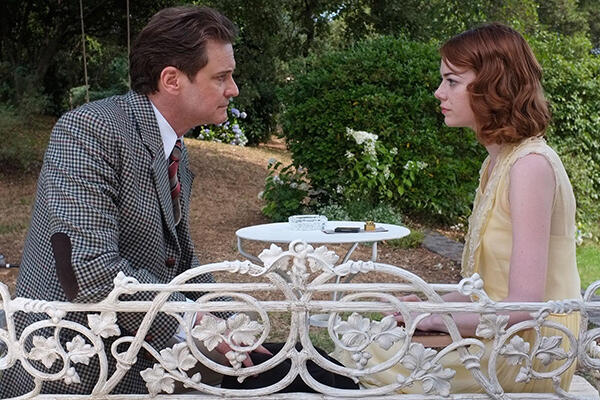
Magic in the Moonlight
Rating: B- The joy of Woody Allen films is that you always know more or less what you’re in for. Magic in the Moonlight is quintessential Allen at its most predictable. Luckily, Colin Firth is much easier to watch than old Woody, so this film has commendable eye candy, as well as talent. Emma Stone is a wonderful character study, reminiscent of an amalgamation of Annie Hall, Hattie from Sweet and Lowdown (another Allen flick, well worth the watch, not least of all because the jazz score is perfect, and because Sean Penn is a hilarious faux guitar player) and all the other dumb, beautiful women characters that Allen seems unsurpassably skilled at writing. All his women are beautiful, naive to the point to stupidity and ravenously hungry ... literally. Allen loves a thin woman that gorges herself. I can’t help but wonder what bulimic stole his heart once upon a time. But I digress. Magic in the Moonlight is visually stunning, reminiscent of the grandeur of Baz Luhrmann’s Gatsby but less ostentatious. Set in the south of France in the 1930s, Sophie Baker (Stone) is an enthralling clairvoyant who has captivated a young millionaire and his family, and Stanley (Firth) is summoned by his old friend to debunk the young enchantress for the fake that she is, only things don’t go according to plan. What is interesting about this film is the return to the stock characters Allen is renowned for writing. It’s the archetypes from Sleeper, but instead of being in the not-too-distant future, they’re in the past. With more recent films, like Vicky Christina Barcelona and Blue Jasmine we saw a newer side of Allen, and to his creation of character, especially his women, but I guess old habits die hard. The well-versed theme of love against all reason is paraded out yet again; and maybe this is something to do with the fact that Allen married his stepdaughter. Best not to think about that for too long. Basically, if you like Woody Allen films, this is one of them!
-
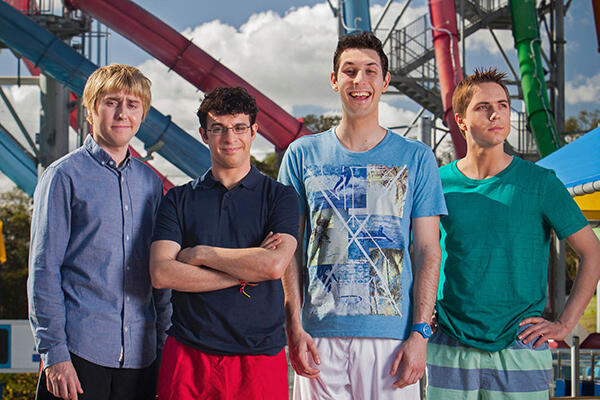
The Inbetweeners 2
Rating: B+ “You better bring your wellies, because you’ll be knee-deep in clunge.” This seminal quote from Jay Cartwright (James Buckley) in the previous film typifies the Inbetweeners: horny, foul-mouthed, and desperately unaware of their social status. Reunited in Australia with the pretentious Will McKenzie (Simon Bird), romantically-clueless Simon Cooper (Joe Thomas), and totally clueless Neil Sutherland (Blake Harrison), the four boys continue their quest for banter and sexual enlightenment. Despite claiming that he “never thinks about” his former girlfriend Jane (Lydia Rose Bewley), Jay is on a gap year, hoping he can find Jane and rekindle their relationship. Will and Simon are discontented with university life and journey with Neil (who has nothing else to do) to see if Jay’s life in Australia is as decadent as he boasts. Those familiar with the TV series or the previous movie will be very excited for more cheap laughs and gross antics. Unfortunately, this film lacks sufficient character exposition (especially of new and female characters) and seems to trade on viewer’s familiarity with already-established jokes and relationships. Nevertheless, the dynamic between the four lads is as hilarious as ever and there is plenty of physical comedy leaving Will and the others with egg (or something much worse) on their faces. Regular fans of The Inbetweeners may find this film to be a little unoriginal, but it makes appreciable attempts to deviate from the standard formula. It has plenty of cringe, banter and the usual shenanigans, but sadly not enough story or character development for it to be essential viewing. Be prepared for quotable lines, cheap laughs, and a very unflattering portrayal of Australians. According to the cast and crew, this is the last hurrah for the Inbetweeners, and they have been sent off in style.
-
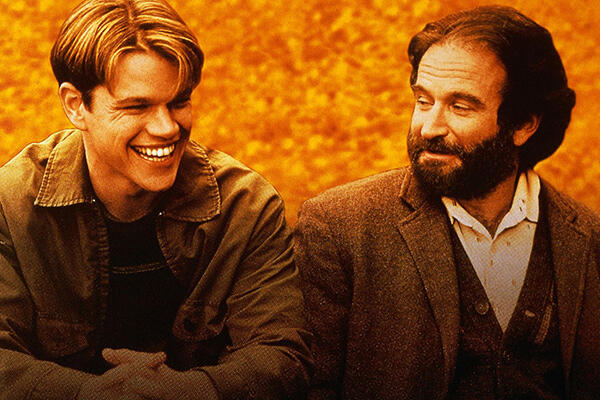
Good Will Hunting
Classic Film “It’s not your fault.” Four little words that blow Will Hunting’s mind and frees him from past traumas inflicted upon him by cruel external forces. Four little words that delineate the boundary between what you are and are not responsible for; four little words that define the concept of “you.” Good Will Hunting was neither the first nor last “mental health movie,” but it is definitely one of the most important. The story follows Will Hunting, a Sheldon Cooper-level mathematical genius, but with Jake the Muss-level violent tendencies. His wicked foster parents beat him as a child, and as a result he lives eternally on the defensive, seeking to physically and emotionally ruin everybody he can before they have the chance to hurt him. Soon enough, this leads him into the justice system, which decrees that he must attend therapy. The late, great Robin Williams plays Sean the therapist, who is possibly the only person in Will’s world more damaged than himself. Though young Matt Damon and Ben Affleck got a lot of the glory for their original screenplay, the real standout, of course, is Robin Williams. The “park bench scene” is famous for the inspired four-minute monologue he delivers in one take on the subject of knowledge versus experience. Will might be a genius, with a mind capable of performing great feats, but he has none of the experience of real life that makes Sean (or any of us) real people, and the acceptance of the good and bad experiences of one’s life that is the true source of one’s human power. The other important scene that makes the movie great for me is when Will tells his best friend he doesn’t want to succeed, he just wants to slum around in poverty with his drinking buddies his whole life. His best friend (Affleck) tells him that if he is still here next year instead of working in some genius mathematician job for a high salary, he is going to fucking kill him. That’s love right there. Use your gifts!
-

New this week / Singles in review
Iceage - Forever From their upcoming album Plowing Into The Field of Love, “Forever” is the second single from Copenhagen based band Iceage. With their previous release, You're Nothing, the group boasted a dense, post-punk, sonic splendour. Judging from what we've heard of their new material, they seem to have dropped that. Instead, they appear to have adopted a gothic, country influence and blended it with their brooding, visceral approach. “Forever” is built on a sense of restrained ferocity, a slow build-up of mutilated passion and lust. “If I could dive into another, I would lose myself forever,” moans Elias Bender Rønnenfelt. The track features what seems to be an army of paranoid violins and disjointed horns. Something The Birthday Party, The Bad Seeds or Rowland S. Howard, even, would be proud of. Aphex Twin - Minipops 67 [120.2][source field mix] “minipops 67 [120.2][source field mix]” is the lead single to Aphex Twin's upcoming album, Syro. Built on an off-kilter, glassy drumbeat and an ominous space age bass line, the track transitions across a multitude of sonic visions. The analogue synths are rich whilst feathery as they glide across his otherworldly soundscape. With his vocals – affected, distorted and distant – it's almost like he's calling out at us from the future. It's crazy to think that it's been 13 years since Richard D. James released his last Aphex Twin record. The English electronic musician has apparently finished 10 or so albums. So that's kind of insane. That's also a lot to look forward to. Flying Lotus - Never Catch Me [ft. Kendrick Lamar] Flying Lotus is an electronic/ R&B/ Hip-hop producer based in Los Angeles, California. “Never Catch Me” is the latest track to drop from his upcoming studio album, You're Dead! Featuring the talents of Compton rapper Kendrick Lamar, the duo creates a spastic, blast of digital wackness, syphoned through a maze of jazzy piano, synth and off-kilter beats. It's amazing that anyone could actually fit a verse or two over Flying Lotus's intricate musical wall. There is enough going on to keep us engaged, yet what Kendrick is able to spit out makes the track something else altogether. A blitzkrieg of musical information, coming at us all at once. Cult Of Youth - Empty Faction Centred on the songwriting of Sean Rogan, Cult Of Youth is an acoustic, experimental, punk band based in Brooklyn, New York. Taken from their upcoming album, Final Days, “Empty Faction” is an inferno of angst and rage. From the machine gun drum beat to the heavy acoustic stabs. The track is a bleeding, violent mess. With the addition of new guitarist Christian Kount, the band is able to add more musical density to what would otherwise be pure chaos. Which, actually, wouldn't be too bad either. Dads - Chewing Ghosts Dads are an emo punk rock band based in New Jersey. “Chewing Ghosts” comes from the band's upcoming record, I'll Be The Tornado. The track is an ode to growing up and facing the regrets of your youth, possibly a punk rocker's worst nightmare. “We could be unhappy together, we could be drunk together. We could be punk together, we could be friends again” sings John Bradley. The track features a catchy chorus and just enough genuine angst to be relatable to any generation's disillusioned youth and those that used to be.
-
Wildwood
Wildwood is a children’s novel that follows Prue McKeel’s adventures in the Impassable Wilderness behind her suburb. She and her classmate Curtis discover the hidden province of Wildwood as they track a murder of crows that abducted her baby brother Mac. Wildwood is in political upheaval: there’s a malevolent Dowager Governess, an Owl Prince who questions the unconstitutional actions of the state and a coyote militia. The Wood encompasses various cultures and talking animals compete for control. Prue and Curtis must navigate bureaucracy and bandits in an attempt to save Mac. Like all good fantasy, Wildwood has a history and anthropology that is complex enough for the reader to dig into. Colin Meloy, the lead singer of the indie band The Decemberists, is the author. Meloy has a very particular method of story telling, that involves infusions of folk tales and many, many adjectives. The illustrations by Carson Ellis are also worth noting. Ellis’ style and muted colour palate is organic and fascinating. The artwork enhances the woodsy, adventurous feel of the book. Maps and illustrations add another facet to any story. One picture, particularly, of prisoner cages strung perilously from the root system of tree in an underground cavern, has carved itself a place in my mind. Adult fiction would be better off with pictures. Someone start a petition. The novel borders on being pretentious. For example, in the first chapter, Prue “sipped steamed milk and watched through the window as the café employees awkwardly installed a secondhand elk head trophy on the wall” – fair warning to any hipster haters, Wildwood is set in Portland, Oregon. Avoid the book if you don’t enjoy flannel and flower beards. I thoroughly enjoyed the novel, despite being a decade older than the intended readership. I appreciated the authorial style considering The Decemberists are my absolute favourite band forever and ever. (I recommend albums The Crane Wife and The King is Dead to newcomers.) Meloy’s winding, literary songwriting style is well suited to fiction. Reading about the adventures of a capable 12-year-old girl was incredibly heartening. Prue keeps a sketchbook and built her own bike. She’s the coolest female heroine I’ve encountered in a while; I wish I could post the book back in time to myself. Wildwood is a modern, less sexist Narnia. The idea that you can just stumble across a secret civilisation strips some of the mundane-ness from life. (I’m convinced Archway is hiding some pathway to another dimension. Why else would it be such a labyrinth?) Instead of creating an entire new universe, Wildwood explores a fantastical element of our own world. The possibility of magic in everyday life is appealing, as is the sense of pure story telling that accompanies children’s literature. Wildwood is a worthwhile read that will spark the imagination.
-

Velocity 2X
Rating:A- It is exciting to consider the developments that are yet to come to existing genres. Looking at the past two decades of game development you can track the innovations and developments that have evolved genres, making them better and better. However this gradual progress makes it difficult to get blown away by the developments of any one title. However, there is always one sure-fire way to create an exciting new experience without having to create any overwhelmingly innovative new ideas or mechanics. That sure fire solution is by creating games that amalgamate two different genres, just as Futurlabs new game Velocity 2X has done. Velocity 2X is an amalgamation space shoot ‘em up game and platformer. Though the shoot ‘em up components look conventional at first sight, they feel quite unique to control. This comes partly from the movement design, which is light and quick making controlling the space ship very fluid and manoeuvrable. The unique feel also comes from the additional features that are fed throughout the game. The core of these features is the ability to teleport through walls as you fly. This mechanic drastically changes the way you approach levels by adding an additional layer of strategy to how you fly through the often maze-like layout of levels. This mechanic is supplemented with additional features such as being able to drop checkpoint markers within levels that you can teleport back to at will. Within the flying levels there are points that require you to dock to proceed. It is at these points that the game becomes a platformer. Though many of the mechanics stay the same, such as shooting and teleporting, the platforming requires that you use them in different ways. This both increases your shooting and teleporting skills while keeping the experience fresh. The ingeniousness of these features comes partly from how innovative they are, but more so from how they are incorporated into the design of the levels. As the new mechanics are fed into the game the levels change to challenge your understanding and ability with those new mechanics. These designs combine in later levels creating challenges that require you to apply quick thought to what ability is needed. The game itself is broken down into 50 distinct levels. Each of these levels has an emphasis on one of three play types: Hostile Forces; Critical Urgency; and Search and Rescue. Each level you play is judged on speed and how thoroughly you collect items and destroy enemies. Each of these level types places emphasis on one of these criteria. For example, Critical Urgency has an emphasis on how quickly you get through the level and has a level design that challenges your ability to move through it quickly. Whereas Hostile Forces emphasises combat and as such the challenge comes from the frequency and difficulty of enemies. These three level types are skilfully tied into the narrative, which follows human soldier Lt. Kai Tana as she tries to escape alien space. The level types match the current situation of the narrative, which is progressed through a cut-scene at the start of each level. Though not comprehensive, the story is skilfully executed, communicating both an exciting narrative with some impressive character development considering the short and snappy cut-scenes through which they are presented. This narrative loosely continues the story of the first Velocity. However, the first Velocity game was borne not out of the concept, but out of a piece of electronic music created by developer James Marsden. It is clear playing Velocity 2X that the inspiration for this sequel came from its soundtrack too. The frenetic electronic soundtrack contributes to both the background and the foreground of the game. In the background the fast paced and infectious beats drive the urgency of the game that keeps it exciting and fast-paced, while in the foreground you can consciously match the rhythm of the music to your movements. Dodging around obstacles, firing bombs and lasers and timing your teleports can all be synced to the music, making the experience both intuitive and deeply satisfying. Velocity 2X is an exciting game to play, combining tense and quick gameplay with a superb soundtrack. On top of this, the amalgamation of genres as well as the steady stream of additional gameplay mechanics makes Velocity 2X a game that is hard to put down and impossible to not come back to.
-
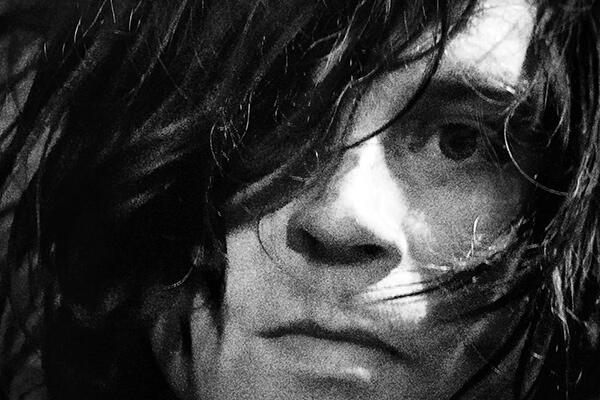
Ryan Adams - Ryan Adams
Rating: B+ There was a period in the early to mid-2000s when the word that best summed up Ryan Adams was “prolific.” The man released a staggering 12 studio albums during a ten-year span. I'm not even counting the numerous bootleg albums and EPs circulating the web. Of course, the quality of each release sometimes varied considerably from album to album, but Adams was never the type to actually give a shit. His attitude was, “if you like it that's great, if you don't then move on. I'm going to keep making music because it feels good.” This decade, so far, has been a different story altogether. The alt-country pioneer, instead, seems to be pacing himself to the beat of a much slower drum. In fact, this album is coming after a three-year absence, following 2011's Ashes & Fire, which was cited by critics as a long awaited return to form. Ashes & Fire saw Adams strip down his sound, once again, after ending his relationship with The Cardinals, his backing band of five years. The result was a warm, dusty, acoustic album, engineered by renowned producer Glyn Johns (Led Zeppelin, The Rolling Stones, The Eagles). The pair seemed to hit it off, and not long after Johns started working with Adams on an encore to their 2011 effort. However, the album was later abandoned. The scrapped record was apparently a concept album centred on the death of his grandmother. Adams labelled the album “too sad” to release. Those songs must have resembled something extremely gloomy, because aren't all Ryan Adams’ albums kind of sad? Well maybe Adams wanted something different this time around. Perhaps something happier? The record is still pretty sad. But did we really want a happy Ryan Adams record? There's a clip on YouTube where the audience starts cheering during the intro to one of his songs. Adams, known for his self-deprecating banter, says into the microphone, “It isn't that song, people. It's just one of the sad ones sped up.” That right there kind of sums up this album for me. It's still Ryan Adams, but he's chosen to rock out a bit more. Ryan Adams is a rock record in the vein of Tom Petty or The Rolling Stones, and I mean that in a good way. Self-produced in his home studio, the album instantly comes across as darker and more brooding compared to the charcoal antiquity of Ashes & Fire. Combining acoustic and electric elements, velvety piano and ambient synth, the songs contain a faint neon quality. They are ghostly, yet at the same time anthemic. It sounds sort of like Bruce Springsteen. Actually, let me rephrase that: it sounds a lot like Bruce Springsteen. “Darkness On The Edge of Town” era Bruce Springsteen, “Nebraska” era Bruce Springsteen, “Born To Run” era Bruce Springsteen. The record opens with “Gimme Something Good,” the lead-up single to the album, and one of the more upbeat, fist pumping tracks. With its classic rock chord progression and spiralling Jagger-esque chorus, it definitely proves a highlight. Other standout tracks include the heartbreak ballad “Kim”, the troubling “Am I Safe” and the stripped down “My Wrecking Ball.” Overall, Ryan Adams is a solid album with some of Adams' most realised and well-written songs. Sonically, the thin layer of darkness and gloom serve the songs well. Where this sits amongst the rest of Ryan Adams' impressive discography, in my opinion, is somewhere in the middle. Not quite good enough to recapture the freshness and open-heart surgery of Heartbreaker or Love Is Hell, but definitely not as bad as some of his more half-cooked projects.


