
-
Columns

Editorial | Issue 22
Students at Otago are exceptionally lucky this election, considering all of the opportunities they have to be informed before voting. After a couple of speed-humps, Critic and the OUSA NZ General Election Drive have finally launched the website studentvote.co.nz – here you can find a succinct collection of Critic’s election coverage as well as the events and videos that the election drive has produced, including an interview with the controversial and politically inspiring Tom Scott of @Peace and Homebrew. Publication date this week (Monday 8 September) also heralds what, to the best of my memory, is the first Critic-organised event since at least five years ago, if ever. Critic presents Young Back Benches with Wallace Chapman is certain to be polarising, surprising, engaging and drunk, and I expect it will be a must-see. Featuring the finest of the political parties’ youth wings, it is also sure to expose varying policies within parties depending on the generation of their politicians. If anything, it is this event that will best indicate the future that the main political parties are likely to steer the country towards in the long-term. Finally, next week – election week – will see the publication of Critic’s election special and another gig featuring Chali 2na. It really isn’t that frightening to engage in the decision that will define the future of both students and the wider country; if you disapprove of recent revelations or feel that life is tough as a student, this is the only real opportunity you have for years to express that in any meaningful way. I voted when the polls opened last Wednesday. Having spent the entire year widely considering all of my options, recent events in the political and media spheres meant that I finally felt absolutely certain about the future I want for myself and for the country, and I put my name to it. Use the tools available to you, think about the next three years for yourself, for students, for Dunedin and for New Zealand, and make your opinion heard. Voting as a student is the single most important opportunity you will have to vote – it’s not only important for the next three years but also informs the direction in which the country will start heading as you enter into the so-called “real world.” You have the next two weeks to do it. There’s no excuse – you don’t even need ID. Zane Pocock Critic Editor
-
News

DCC proposes draconian alcohol policies
The Dunedin bar scene could be experiencing further changes in the near future as the Dunedin City Council considers tightening the restrictions on the sale of alcohol. The draft of a new Local Alcohol Policy (LAP) was recently released and includes a ban on drinking outside bars after 11pm, prohibiting shots to be sold after midnight, and introducing a one-way door system from 1am. The mandatory closing time for bars would also be changed to 3am, an hour earlier than it is currently. The draft LAP was released on 13 August and the DCC is now accepting submissions from the public on the proposed changes. The introduction of the policy document states that the purpose of the changes would be “to create an enabling policy that reflects all community aspirations.” As well as cracking down on bars, the LAP proposes supermarkets and liquor stores be forbidden to sell alcohol after 10pm and further restrictions on alcohol retailers being near schools. Critic spoke with Kevin Mechen, Liquor Licensing and Projects Officer at the DCC, about why the council wants to introduce the new policy. “A report done by the Law Commission in 2010 indicated the evidence was overwhelming that the previous liberal alcohol laws were the cause of a lot of alcohol-related harm in New Zealand,” Mechen said. “In the words of the Chair of the Law Commission, society is not ‘mature enough’ to have a liberal system.” The proposed changes have been met with outrage and OUSA have publicly vowed to oppose the policy. A Facebook event, titled “Opposition to the proposed DCC Local Alcohol Policies,” has been created by the Executive and is led by Finance Officer Paul Hunt. He describes the proposed policy changes as “draconian and counter-productive to improving safety.” As of last Wednesday the event had nearly 1,000 people “attending”, with another 2,700 invited to join the cause. Critic spoke with Hunt about why OUSA is opposing the policy change; “the proposals discourage alcohol consumption in bars and encourage alcohol consumption in less safe environments … Bars have engaging activities, supervision and legal obligations making them safer than other potential drinking environments.” Hunt believes the proposed changes will probably have unintended consequences. “The prohibition on shot sales after 12am will encourage faster alcohol consumption by those in bars before 12. Overall the proposals will result in further pre-loading before people head into bars or higher alcohol consumption in residential and public areas,” he says. Students are also opposing the proposed policy changes. According to second-year student Anton Hovius, “the council’s proposed effort to make town and ‘our drinking’ safer do the complete opposite – it takes away safe drinking environments and overzealously assumes their efforts will stop the drinking altogether … it’s like the halls kicking students out at 9pm. It’s not going to stop them drinking, they’ll just find another, less supervised, place to get crunk.” Fifth-year student Sam Hadfield put his opinion more bluntly, saying, “Fuck personal liberties; at what point will they just ban alcohol altogether?” However, the DCC does not believe that the new policy will have unintended consequences. “The research I have read would tend to suggest a contrary view. There may well be initial problems but experience from elsewhere indicates they soon settle down and the gains made make the changes worthwhile,” Mechen says. “We would like to see people having a good time but not at the expense of others, either other patrons, shop owners, the ratepayer and the patron themselves.” Mechen also notes that the LAP is just a draft at this stage. “We are seeking input from the community so the resulting policy reflects their wishes. I would imagine the final LAP would not please everyone, the agencies dealing with the harms, the hospitality industry or the consumers. But it will not be too abhorrent overall.” The DCC is consulting the public on the policy from now until 10 October, and all who feel strongly on the issue are encouraged to have their say. OUSA “wanted to inform students as early as possible” about the opportunity to submit to the council, “which is why the Facebook event was created,” Hunt says. “The consultation occurs at a time when students are particularly busy [and] it takes time for conversations to spread throughout the community.” An online submission form is available on the DCC website and submissions can also be emailed to lap@dcc.govt.nz. Hunt says, “OUSA encourages everyone to submit to ensure student voices are heard.”
-
News

Execrable | Issue 22
A new, much needed assistant to the Executive, Projects Officer Annabelle Boelema, kicked off the meeting with general reminders for the Executive members. Annabelle presented the plans for the Election; with just over two weeks to go, OUSA have the RockEnrol with Generation Zero, Back Benches by Critic and something with Grant Robertson. There will also be a music event on 18 September. Postgraduate Rep Kurt Purdon sent apologies for not attending the meeting. Admin VP Ryan Edgar requested that he and Finance Officer Paul Hunt be given approval to seek further investment advice from Forsyth Barr on how to better invest OUSA funds in the future. They have already been looking into this but asked if we “can just carry on with what we’ve been doing.” The motion was carried. Welfare Officer Payal Ramritu said she wants to be on the Finance and Expenditure Committee (FEC). This becomes a bizarre request when the rest of the meeting unfolds. The Executive then went into discussion on the approval of $750 for Hannah Bailey to go to Hamburg to attend the Junior World Rowing Championships 2014. She only requested $500, but was granted $750. Recreation Officer Henri Faulkner said they were “rewarding for the fact it is a world championship.” However, Education Officer Laura Harris questioned why she was receiving more when she only asked for $500: “why would we just throw money at someone?” Ryan explained that it was policy to grant certain amounts for long distance travel and for such an “impressive” event, for which the action was agreed on. Paul then pointed out that no-one had moved the meeting into committee of the whole, asking, “Should we be discussing someone’s private money matters in public?” No, Executive, probably not. In regards to a decision on whether to grant the Rowing Club additional funds from the Grants budget, it was noted by Payal that OUSA Student Support Centre Manager Matt Tucker had opposed it. Henri explained that the reason Matt opposed the move was because he wanted to ensure there was someone who had rejected the move when it went against usual protocol. OUSA generally does not approve retrospective grants. In more money talk, the Executive was supposed to approve the budget at this meeting, but they did not feel prepared. If the budget is not dealt with in time, there is a risk that OUSA will have to run off this year’s budget in 2015. Critic notes that the only reason the budget is being delayed is because the Executive is finally using their time to engage with students. Ruby then moved the meeting into committee of the whole due to commercial sensitivity, to discuss Payal’s reasons for abstaining from the budget discussion. After discussion, Payal said she would abstain from passing it due to lack of financial background, “I’m feeling like the dumb one here.” Critic notes that few of the Executive members have a financial background, but it’s strange to request a seat on FEC if you are the least comfortable Executive member with finances. Ruby tried to move that the Executive accept the budget immediately following the discussion about why Payal was abstaining. This was stopped because no discussion had actually been had over it. Then it was back into committee of the whole again to see what questions members had about it. Despite previous Executives spending several hours deliberating over the budget, the Executive were in discussion for no more than six minutes. It was then decided a proper discussion was needed. Ruby decided to organise an alternative time within the next two weeks to pass it: “I’m not comfortable passing the budget without everyone here contributing.” Ryan then moved on to talk about being on the Senate, the principal academic authority of the University. “I’ve been fizzing about the senate for a while,” he said. However, he received “a finger wag from the Clocktower. They wanted no part of me.” The Executive moved to rescind the motion that Ryan be nominated for the Senate. As an overview of each member’s efforts over the last couple of weeks, Laura has been working on the puppy room with SOULS students and on the exam packs, “which cost a lot more than I thought they would.” She notes that Post It notes are expensive. No kidding. President of Te Roopu Maori Mariana Te Pou has attended the Maori Students Conference and a political debate. Payal went into committee of the whole AGAIN to discuss Environment Week. She is also organising “Disabled Week, Women’s Week and sorting the additional help Christchurch have asked for.” Student Health have also asked for a forum to be organised to discuss what students want – this comes after a recent meeting with Critic, showing a clear effort by Student Health with wanting to reach out to students. Hamish is working on Mental Health Week to be held in October. He said that he has been helping to organise “exam stress” seminars – “you can sorta arrange meetings [with the staff.]” Critic notes that this service has been offered every year for the last few years and we struggle to see the additional time it would require. He is also organising a fun run on 12 October. Paul has arranged a few memorandums of understanding with various groups. He has also been working on a submission on alcohol and biking regulations. He says the ban on biking on campus should be overturned, as it was a “reactionary response to one incident rather than a general fear of bikes.” He also says he has been working on various sponsorship deals. Ryan continues to work on job descriptions, internal policies and changes to the OUSA Constitution. He said he does not believe these will need to go to referendum, saying: “I can’t imagine that any realistic students would want to argue with the points.” Henri, with all his things, has been “going over things and policies and things.” Colleges Officer Jess McLean has also been working on “election enrolment things and policies and things.” Ruby’s focus has been working on the OUSA General Election Drive, which she says has received “interesting feedback from certain people.”
-
News

OUSA drops Volunteer Services Abroad membership
In an Executive meeting on 29 July, a decision was made that OUSA would end their membership to the organisation Volunteer Services Abroad. The decision was put forward by OUSA Admin Vice President Ryan Edgar and unanimously agreed upon by all executive members. Edgar said he was “certainly not” in favour of renewing the membership. “I don’t want to be paying for students to go on a bit of a holiday,” he said. These comments have since received backlash from VSA. Geography Professor Tony Binns, who has been involved with VSA for the last ten years, said “[The decision] is a very serious matter,” and he “sincerely hopes” that OUSA’s policy can be reverted. In regards to Edgar’s comments, Binns said this view was “so worrying, and so short-sighted. OUSA’s image of VSA is totally out of line.” He said, “VSA is a highly respected volunteering organisation which has an outstanding reputation across the world.” VSA Communications Officer Sarah Barnett concurred, “It’s a shame that OUSA members don’t seem to understand what VSA does, particularly in failing to recognise the incredible work that Otago students have done. It is not a ‘holiday,’ as many of the volunteers would tell you.” She said, “[The volunteers] work incredibly hard to support the organisations they’re assigned to in countries where people are living in real poverty and hardship.” In order to have a membership with VSA, OUSA were charged a fee of $100 per year. Barnett said this money went towards “supporting [VSA’s] work on development in the wider Pacific. Members have the ability to “nominate, stand for and vote for [VSA] Council members.” “Council is responsible for guiding the ship, ensuring our fiscal responsibility and looking after our overall strategy.” Members also receive VSA publications and invitations to events held throughout the year. Edgar was adamant to Critic that he was not against the cause in any way, but simply saw a “lack of actual incentives” to renew the membership. “I’m against things that don’t give a direct or derived benefit to students.” In regards to whether he believes students will be negatively impacted, Edgar ensured the decision “does not inhibit student’s ability to get involved.” “I haven’t seen any evidence of this, but I’m always the first person to admit when I’m wrong.” Edgar urged VSA to contact him with a reason as to why OUSA should still be a member. Otago University first got involved with VSA in 2006 with the creation of the UniVol programme. The programme was collaborated with the University’s Geography Department under the guidance of Professor Tony Binns. Fundraising Manager for VSA Karla Paotonu said that since then “44 Otago University students have been selected as UniVols and have completed 10 month assignments in a number of countries throughout Africa, Asia and the Pacific.” Paotonu noted “[the volunteers’] assignments have all been with local partner organisations who have identified an area of work that they need a volunteer to support them with to achieve their goals to help their community.” Otago Alumni Rosie Paterson has recently returned from a Univol Programme in Papua New Guinea. Paotonu said Patterson “secured funding for a mobile health unit [in the region] which will reach nearly 30,000 people in isolated areas, providing antenatal treatment as well as general and sexual health services.” Fellow Otago Alumni Mark Honey has also worked in the North Care Youth Clinic in Vanuatu through Univol. Paotonu said, “This involved working alongside mentors and nurses at the sexual health clinic, providing family planning information and organising activities for Vanuatu’s booming youth population.” “I’d be more than happy to hear [from VSA] and if I think their reasoning is sufficient, I see no reason to renew it; but at this stage I don’t see too many reasons,” said Edgar.
-
News
Advanced voting available in the link
Voting in the 2014 General Election kicked off last Wednesday with advanced voting now available to all New Zealanders. This year, all voters have the opportunity to cast their votes earlier than the official Election Day, 20 September. Previously, a valid reason to vote early was required. In Dunedin North, students and the General Public were able to vote in the University of Otago’s Link. Green Party Co-Leader Metiria Turei kicked off the process by casting her own vote as soon as booths opened. Young Greens and other party members joined her in doing so. Turei said that advanced voting was a “fantastic opportunity” for students. “Student votes are critical, not just for the Greens, but for the country as a whole. Students will have control of this country in just a few years’ time and we want people to be as engaged as possible in the elections.” Dunedin North National MP Michael Woodhouse also attended the event, commenting that it was “amazing to see how many people were taking the opportunity [to vote early].” “As we know, voter turnout in general has been dropping in the last few elections,” said Woodhouse. “I think now that [voters have] 17 days to cast their vote, it leaves them with no excuses and every opportunity.” Woodhouse urged students and the greater public to partake in this year’s general election, stating that, “If people aren’t voting in the first two or three opportunities, they tend to be disengaged forever.” “I get a lot of people saying ‘it’s only one vote, it doesn’t really affect me,’ and that’s not true at all,” he commented. Woodhouse has decided not to personally make an early vote, saying he “enjoys being part of the ritual” of General Election Day. Dunedin North Labour MP David Clark said, “Students generally have more to gain or lose with their votes” than the general population. “The decisions that are made by the next government will affect [students] longer than it will affect other voters … [2014] is the most important vote they will make in their lifetime.” Clark says he is also intending to cast an early vote. Labour Leader David Cunliffe cast his own vote on the first day, too. Julian Crawford, University of Otago alumni and leader of the Aotearoa Legalise Cannabis Party, agreed the scheme was a brilliant idea: “It gives people a bit of flexibility with their voting.” Crawford said that he wishes to encourage people to participate in the democratic process and that “student votes are really important.” OUSA President Ruby Sycamore-Smith, who helped organise the advanced voting to be available in the Link, said, “I think that students should really take the opportunity to actually get up there and have their say.” She tells students, “It’s good to educate yourself and actually realise how much the government affects your day to day life, and realise that you can have a say in your future and be part of the change you want. I think it’s important to strengthen your voice and realise the power that you have as a student.” If you are not yet enrolled, with an early vote you can enrol on the day too. Just bring your ID to the Link between now and Election Day.
-
News
Medical student life appears less and less appealing
Studylink’s current student loan policy finds many medical students having to find the final $20,000 to fund their last year of school. As the policy currently stands, students can borrow money for the equivalent of seven years of full-time study (7EFTS). This means that students doing long-course degrees, such as medicine and dentistry, may not be eligible for a student loan in their last year. This is a particular problem for the 30 per cent of medical students who entered the faculty as postgraduate students, and for those who wish to graduate with Honours. Critic spoke to New Zealand Medical Students’ Association (NZMSA) Dunedin representative Tash Austin about the policy, which was introduced by the National government in 2010. It was intended to encourage students to finish their degrees as quickly as possible, “however, [medical] students are doing just that!” Austin says. Because of this, “students would have to come up with around $25,000 per year for fees and living costs.” The worst-case scenario is that students taking long courses will be forced to leave university because they cannot afford to continue this study. “We aren’t talking just a couple of students; this is going to cause a huge blow to the healthcare sector … there may be the option to take a year off to save up for the final year, but this kind of disruption to studies is not ideal,” Austin says. The 7EFTS rule is having an effect on medical faculties nationwide and many students seem to be unaware of the policy. Alex Hedley, NZMSA 7EFTS officer, told Critic that 41 per cent of new medical students surveyed had not heard of the 7EFTS policy. As well as that, 20 per cent of students surveyed knew of someone who had been put off from entering medicine because of the policy, which is of a concern to NZMSA. “There are students in this 20 per cent that add diversity to the class. They come from low socio-economic, rural, Maori, and Pacific Island backgrounds,” Hedley says. NZMSA have been campaigning strongly for a change in the policy, especially in the run-up to this year’s election. “Our ideal outcome is an exemption on the 7EFTS cap for [medical] students,” Hedley says. Austin adds, “At a politics forum run by OUMSA and NZMSA earlier in the year, all parties represented committed to changing the gap or making an exception for long-course students … However, National (despite being approached numerous times) is yet to make that commitment.” “It's important to point out that we are not asking for ‘free' money from the government; we are merely asking for a loan which we’ll be willing to pay back after entering paid employment,” Hedley says. “Until we are able to graduate that will be difficult.”
-
News
“Study Dunedin” enforces image that no one does anything but study here
The Dunedin City Council is launching a new brand in the hopes of combating decreasing international enrolment numbers. Study Dunedin, or Project Export Education Uplift, is one of six projects launched within Dunedin City Council’s Economic Development Strategy, designed to re-brand the region in the hopes of attracting more international students. The Otago region’s international student numbers record a 4.2 per cent decline from 2013. The decline comes despite a national eight per cent increase in student enrolments. Pro-Vice Chancellor International Helen Nicholson lists several reasons for the current decline in international numbers, including “the strong NZ dollar,” “the reduction of international students at Dunedin high schools,” and “the loss of contracts with some overseas governments.” In addition, Nicholson states “countries that historically sent their students overseas are now becoming credible providers of international education.” DCC’S Export Education Co-ordinator Sarah Gauthier agrees there are “multi-faceted reasons” why Dunedin’s international student numbers have remained at “low to nil growth.” Loss of numbers from “traditional source markets” like Malaysia, due to a decrease in the availability of government scholarships, are partly to blame. In reaction, Gauthier claims the strategy aims to “engage more deeply” with alternative overseas markets such as China and Thailand. Gauthier asserts the re-branding strategy is “about telling the world why and how Dunedin is New Zealand’s First City for Education.” “Aimed at international students and their advisers,” states Gauthier, “Study Dunedin will help to tell Dunedin’s story as a fantastic study destination and source of expertise to the world.” Nicholson, who also sits on the Study Dunedin advisory board, states the University is “actively working” with the DCC on promotion of Study Dunedin, and believes the re-branding “can only be positive” for the University. Nicholson further applauds Study Dunedin’s emphasis on the close “town and gown relationship.” “We are working with Sarah [Gauthier] to promote pathways for international students from high school through to degrees and employment.” Study Dunedin was launched in conjunction with five other projects, including Project Offshore, a programme designed to “demonstrate, extend and augment Dunedin’s global recognition” with prospective international students in Thailand, China, and South America. Earlier last week, Gauthier and Immigration NZ held a two-hour information session for international students, providing guidance on becoming “Job Ready,” and opportunities for employment in New Zealand. The brand is set to develop over web, print and film – “to present and position Dunedin as New Zealand’s first city for students and education.” Gauthier is hopeful these brand assets will be ready for launch in late November.
-
News
Alumni events for students to meet Otago celebrity graduates
The Otago Alumni are holding events at the University, with opportunities for past and current students to experience, interact and network for life beyond university. The Allan Hall Theatre is hosting a reunion party this weekend from 12 to 14 September to commemorate its 100th birthday. For decades, the Allan Hall Theatre has hosted opera, dance and lunchtime theatre, and is now showing off its talent and reminiscing its past in one weekend. For theatre and arts students, this may be an opportunity to liaise with past graduates and influential performers and writers. The weekend will start off with "Pack In" on the Friday, including Lisa Warrington's Allan Hall 100 book launch, meet and great, and a ghost tour. Playwrights and actors such as Roger Hall, Andrew Lumsden (aka Te Radar), Vanessa Alexander (film maker) and various well-known faces from TV shows will be attending. Saturday consists of "Pop-up Plays" and a red carpet evening with an open mic and drinks. The Verlaines, a Dunedin rock band formed in 1981, will also be playing a set. Registration can be done via the Alumni webpage, with the Friday night costing $90 and the full weekend costing $160. The Botany Department is also celebrating their 90th birthday this weekend, with discussions, history and topical sound bites. There is set to be an all day symposium, with National Radio broadcasting the event. Dr Katja Schweikert, a teaching fellow in the Department of Botany spoke to Critic about the upcoming events: "There are two public talks on offer, the Geoff Baylis lecture by Dr. Peter Johnson from Manaaki Whenua in conjunction with the Botanical Society of Otago; and the Tennant lecture by Prof Paula Jameson, a former lecturer at the department and currently lecturer at the School of Biological Sciences, University of Canterbury." At the symposium on 12 September, there will be a chronological overview of the life of the Botany department. Talks will range from what the department was like pre-World War Two, to talks by former students and current staff on current and future research. Other events include a special exhibition at the Central Library and a Moss, Lichens and Liverwort walk. There will also be a workshop by the Botanical Society of Otago, which will take place to commemorate the Botany department. Dr Katja Schweikert said, “The 90th celebrations fully focus on the University of Otago Department of Botany as the sole provider in botanical education and research in New Zealand. Otago is the only university in New Zealand with a botany department.”
-
News

Who let the dogs out
Recent figures released by the Dunedin City Council show that 244 dog attacks have been reported to the Council during the last year. Council figures report that the various dog attacks were on people, pets, livestock and wild animals. From July 2013 to July 2014, 69 dog attacks in the Dunedin city region have been on people, with the remaining 175 attacks on pets, livestock and wild animals. Dog owners in Dunedin are required to have their dogs registered by late July. The Otago Daily Times have reported that of the 16,608 dogs in Dunedin known to the council, 91 per cent are registered. Ensuring dogs are registered is just one part of the process of owning a dog. “It is a legal requirement under the Dog Control Act 1996 that all dogs are registered with their local council,” said Dunedin City Council animal control team leader Ros MacGill. Failure to register a dog can result in a $300 fine. Having a dog registered with the council also provides other benefits. “An advantage of having your dog registered is also if it goes missing and is picked up by Animal Services we will be able to track the owner down and notify them that we have their dog,” MacGill said. MacGill said that owners can play a hugely influential part in helping reduce the number of dog attacks around the city, even if one’s dog’s breed is naturally more aggressive than others. “Dog owners need to remember that they are legally responsible for their dog, and they must take all reasonable steps to ensure it does not injure, intimidate or annoy anyone. MacGill said that owners playing a proactive role in training their dogs are crucial and should “start when the dog is a puppy through socialisation with both people and other animals.” Having a dog under control and educated does help to reduce dog attacks, however MacGill said any dog, regardless of breed, may pose a threat to people or other animals if the owner does not have it under control. Dog owners are required to “take all reasonable steps to ensure it does not injure, intimidate or annoy anyone,” MacGill commented.
-
Columns

Defending the Kingdom | Issue 22
There is no doubt that being a conscious consumer is a tough task these days. Animal testing is a problem that often slips our mind when reaching for items on the shelf. We “like” and “share” posts on Facebook showing cute bunnies and beagles, disgusted that harm is inflicted upon them, yet each morning we absent-mindedly reach for our faithful bottle of Herbal Essences and disregard our former disdain for the practices that brought the bottle to our bathrooms. However, most people don’t buy these products because of a lack of moral compass, but rather a lack of education. It’s not our fault. Companies aren’t required to inform consumers about the torturous trials that helped them create their products, so the average shopper has no idea. So, how do we know if our purchases are ethical? An innocent Google search is not enough; it only adds to the dilemma, producing a labyrinth of conflicting information. Companies evade the spotlight with statements such as “The Group no longer tests on animals, anywhere in the world, and does not delegate this task to others” (from the L’Oréal website). That sounds great, doesn’t it? However, there is an inevitable catch. Further reading uncovers that “an exception could be made if regulatory authorities required it for safety or regulatory purposes,” which basically renders the previous statement moot. It is required by law that companies who wish to sell cosmetics in certain countries must first test them on animals, meaning that any company who places their products on these markets is involved in animal testing. Fortunately, there are companies who advertise that they do not test on animals, and there is the Leaping Bunny Programme that endorses companies that do not animal test on any phase of the product. Products that are endorsed by the programme display a logo depicting a leaping bunny and also are listed on their shopping page (http://www.leapingbunny.org/shopping.php). There is even an app, called Cruelty-Free, available on both Android and iPhone that provides a full and comprehensive list of all cruelty-free cosmetic companies that are endorsed by the Leaping Bunny Programme. Furthermore, both the Green and Labour parties have adopted policy that will formally prohibit the sale of cosmetics that have been tested on animals as well as prohibiting the import of such products. Internet MANA opposes animal testing but have not yet completed their policy on the issue. It is important that we, as conscious young New Zealanders, decide to take appropriate action for the safety and welfare of animals. A party vote for one of these parties could result in the termination of animal testing in this country and would set a perfect example for global change. It is up to us to make a demonstrable effort to prioritise the safety and wellbeing of animals over beauty.
-
News
Premier League silly season breaks spending records
To the ridiculously expensive football desk where the transfer window has just closed and the best part of £1 billion has been spent. This obscene amount of money spent in this transfer window highlights just some of the absurdity in English football, with many fans and managers wishing that the transfer window would close a month earlier so that teams have their squads finalised before the season starts. Makes logical sense, right? One of the more shocking revelations to come out was that all deals have to be written and sent via fax! What year is it again? Despite having access to this amazing ICT and also having several months in the off-season to get their deals done, Premier League managers have shown they are no different from us Otago students: staying up all night in a frantic caffeine/nicotine and Wikipedia-fuelled rush to get things done before the deadline. So here is the state of play for the teams that will be challenging for the Premier League title next May, plus a few words about Manchester United and Spurs. They certainly won’t be lifting any trophies but some people still class them as big clubs ... Chelsea and Man City, the early season favourites ... Defending champions Manchester City haven’t made any big name signings as they already have the best squad depth in the league, which won them the title and League Cup last season. The main move was striker Alvaro “The Beast” Negredo heading back to Spain with Valencia. They have added some muscle in defence and midfield although there will be some worries after their recent 0 – 1 loss at home to the unglamorous potters of Stoke City. I am backing them to get back on track and will see the blue moon continuing to rise over Manchester. Jose Mourinho wasn’t shy in wielding the chequebook of Chelsea’s Russian billionaire owner. Diego Costa and Cesc Fabregas were brought in from La Liga and have had an instant impact. Poor old Fernando Torres has been shipped off to Italy on a two-year loan deal with Milan while fellow strikers Eto’o and Lukaku have been shipped north to Everton. Loic Remy was signed up from QPR on deadline day. After spending most of last season moaning about his strikers, Mourinho has gotten rid of them all and brought in the players he feels fit into his style of play. Chelsea are the bookies’ favourites to win the title this year and have started the season perfectly with maximum points after three wins. Liverpool looking more lethal than Arsenal’s “Thrift Shop” ... Last season’s runners-up Liverpool did most of their business early on in the window, going on a spending spree at the St. Mary’s, buying most of Southampton's best players. Their biggest change has been up top with Luis Suarez moving to Barcelona for £75m and Mario Balotelli coming in from AC Milan for a relatively cheap £16m. Balotelli can provide entertainment on and off the pitch with the Internet full of stories of him setting his bathroom ablaze with fireworks, smoking cigars on the train and using Man City youth players as a dartboard. The Reds have also made some important signings in defence, as this was a definite weakness last season that many feel cost them the title. Their last game was a 0 – 3 away win at Spurs and they were very impressive and, on that form, that should see Liverpool in a three-way fight for the title with Chelsea and City with the rest of the teams left battling for fourth spot. Arsenal have broken character, paying some big fees in recent transfer windows, but we all know that boss Arsene Wenger likes to be the Macklemore of the football world, looking for cheap deals and free transfers. One man's trash, that's another man's come-up for Arsene. Gunners fans have been screaming out for a new striker for the last few seasons and with first choice Olivier Giroud out for the rest of the year with a broken ankle everyone thought now would be the time for Wenger to dip into his war chest for a world class goal scorer. He could have signed the likes of Remy or Falcao but these deals didn’t happen and, with only a few hours before the window shut, Wenger ended up panic buying the underwhelming Danny Welbeck from Manchester United, who has only scored three goals this calendar year. But, shit, he was only 99 cents! (Actually he was £16m.) However, Arsenal run their club like any other sensible business and not as the plaything of some billionaire oil tycoon, and have gained respect for the results gained with their conservative approach. The other “big” clubs ... So far this season Manchester United have been continuing their ungraceful slide down the pecking order with losses to Swansea and MK Dons and draws with fellow relegation battlers Sunderland and Burnley. After the callow and inept David Moyes was run out of town, the arrival of Dutch manager Louis van Gaal was supposed to return the spirit and glory to Old Trafford, but the promising pre-season tour of the United States proved to be a false dawn. Injuries may have played a part in their recent struggles as well as their persistence with the unconventional 3 – 5 - 2 formation that van Gaal seems to prefer but the players are unfamiliar with, especially in defence. United have been busy in the transfer market as van Gaal seeks to prove that he ain’t no chump-change motherfucker as they smashed the British transfer record, shelling out a whopping £60 million to Real Madrid for winger Angel Di Maria, paying well over the odds for a player who was probably going to struggle to make the Madrid team after their Spanish summer spending spree. This move was followed up with the unexpected deadline day signing of striker Radamel Falcao, who was brought in on loan from Monaco to give United a rather platinum looking attack and a distinctly bronze looking defence – quality signings, indeed, but not really in the positions that were needed. I can’t help but feel that had they got their team sorted earlier they may not already be seven points off the top of the table after only three games. Deadweight players like Anderson and Fellaini managed to survive the Hunger Games of deadline day and will hang around, getting a free ride, maybe warming the bench occasionally.
-
News
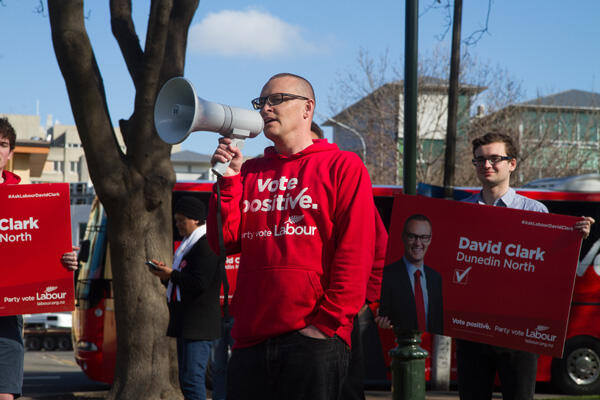
Interview: David Clark
David Clark is probably one of the more familiar political faces around campus. He has an office right nearby, he’s our elected representative, and he’s vying to continue in his position. With experience in a number of student-related areas, including being Warden of Selwyn and taking a turn at Labour’s Associate Spokesperson for Tertiary Education, he’s pretty up to speed on what’s going on in the university sector. Since you’ve been our MP now for three years, could you tell me a couple of things you’ve achieved for students that they might not know about? Yes. I guess the first and obvious is things that my office do for students – dealing with problems with Studylink, making sure they get the money that they ought to have, dealing with 18+ cards (there are a hell of a lot of 18+ cards that go through my office every week), immigration issues, certification, some of that basic stuff. […] Can you get an 18+ card from your office? You can get it signed, yeah. Oh you can get it signed, right. There’s a Justice of the Peace in my office, so probably, proportionately, the hugest amount of stuff that happens is constituent work. […] I was the Associate Tertiary Spokesperson for a while as well, and I pushed for a full review of student support, which has become our policy. That would be the other thing that I would want to claim. And that comes out of my experience as Warden of Selwyn previously, and watching, over time, the affordability relative to the cost of living dropping for student accommodation and studying on campus. I believe that it is imperative that every person who has the talent should feel they are able to afford to go and study. What about some things in the house? In the house things I’ve done that are not necessarily quite so clear for students. Drawing attention (derivatively now) to the 0800 poison line closure that’s threatened, which is based out of Otago University; drawing attention to the Invermay issue, and being really clear that that’s going to be saved. Again, a lot of Otago graduates going into there, so that’s actually about the jobs that follow for university students. Also, pushing for a clear announcement, which has just come through over the past week, that Labour will commit to rebuilding Dunedin Hospital. Alongside the rumours of it being downgraded, [this] makes it clear that Labour’s committed to it being a teaching hospital in line with Otago University. Without that teaching hospital Dunedin’s future would be compromised, so those things I would consider the biggest gain in terms of parliamentary stuff. Other stuff students might not know about and, again, it gets less and less directly relevant to students, but the Mondayising Bill […] means that students will have two more holidays every seven years that they can celebrate! What else … Pushing Peter Dunne fairly briskly a couple of years ago to change his rhetoric from legitimate tax avoidance to tackling multinationals who avoid tax – I’m really proud of the public prodding I did to change the direction of government rhetoric … because for future New Zealand employment prospects it is imperative that we have companies in New Zealand that succeed. At the moment, our tax system is stacked against New Zealand companies, because responsible New Zealand corporates do pay tax and a lot of overseas corporates don’t. […] David Cunliffe said to me the other day that whether or not Labour were changing anything about the current living costs/allowance scheme is a “matter for the review,” but what changes would you personally want and would push for? I would want to see funding for student support increase. If one looks at data, and I’ve had this done by the parliamentary library, over time the real value of student support has dropped consistently […] the last 25-odd years. I would push for the real value of that funding to be increased. There’s a clear division between National governments and Labour-led governments on student support; the last Labour government put through nine budgets and there were nine increases in student support of one kind or another; the National government has had six budgets – the first five cut student support in one way or another, and the last one lowered the threshold in real terms for repayment of student loans, so basically there are pro-students and there are anti-students and the path is incredibly clear. Again, National introduced student loans, Labour introduced interest-free student loans. National introduced administration charges on top of those student loans when it couldn’t get away with re-introducing interest. Labour introduced fees – well high fees. Well, I think the picture is pretty clear which side is about making education accessible and which side isn’t. There are some fairly blunt and clear trends there. How do you feel about the early repayment bonus [that National cut]? Cause that was pretty popular, or at least amongst the, like, four people I spoke to. […] Well that’s an incentive, I think the evidence was that it didn’t actually encourage people to repay faster, the evidence that I’ve looked at anyway. It made people feel better about it, because it meant they didn’t have to pay as much, but it tended to be people that already had that money and could afford it that took the bonus. […] Generally, over time, we want to make education more affordable across the board; we’ve got measures to extend to early childhood education, free early childhood education; we’ve got measures in this election to make school donations no longer necessary for low-decile schools, and boy are the lower decile schools happy to hear that, I can tell you, the principals want to give you a hug when you walk into the schools, because a lot of those schools are really struggling. We’re a party that believes in access to education, that that’s where the opportunities lie for exploring your talents and making the most of your opportunities. There have been a whole host of changes made to tertiary education since Steven Joyce took over; what do you think have been the worst of these changes? Some of the stupid ones. One of them is the 7 EFTS policy, which has meant that people who’ve done a previous degree and then studied medicine have got a good way through their degree (and the government has spent a possible couple-hundred-thousand on them; we as taxpayers have invested a couple-hundred-thousand in them) […] now they can’t finish their studies. That is obscene, it’s stupid, and I’ve had constituents come to me facing really dire situations. They’ve got dependent kids; they may have a previous qualification and they’re thinking about going back to doing what they did before, despite being on the cusp of becoming doctors because they just need to feed their families. And that is just stupid, and that policy was announced on a day when Steven Joyce was looking for a distraction, because National was facing some bad publicity. When he was questioned about it in the select committee, shortly thereafter, it was clear he didn’t understand the implications of the policy. But they’ve refused to budge. […] Other stupid things they’ve done include trying to change the government’s arrangements for universities, taking out the student voice and the staff voice. […] I think that if Steven Joyce wants to make some cuts to governance he should start with his own cabinet. If he thinks that 20 is an ineffective number for making sensible decisions, that’s where he should start, not with the universities. […] What about after education? One of the big issues for students is that they graduate, and they have heaps of debt, and there aren’t too many mechanisms in place to help them gain jobs in education areas that may not be the most “jobby” of those. We want to shift to a higher value economy; we think that New Zealand’s advantage should be more in the waitlist sector. We continue to turn out some of the best high school students in the world, despite being low down on the OECD rankings in terms of wealth these days. We turn out smart people whose wages are relatively low in world terms. And we have good universities. We ought to be at a comparative advantage, really, in world economy terms, and part of that shift is making sure that wages are decent so that employers are not focused on getting wealthy off the back of cheap labour and engaged in a race to the bottom in terms of productive outputs. That involves simple things like minimum wage rises [that are] sustainable over time […] They’ve done that in Australia and you’ve seen a shift to a higher value economy there. The other things involve R&D tax credits, so you’ve actually got research and development incentivised, and making sure that we are properly funding universities and tertiary institutions. We’ve said we’ll retain the real value of that and that’s one of the significant announcements welcomed by Harlene Hayne; Labour’s commitment to maintaining the real funding has been welcomed by the New Zealand-Vice Chancellors’ Committee They don’t like to be too political, but I think the fact that they’ve come out in support of that policy says that universities are hurting, and knowing that there’s a commitment to funding the institutions properly is a real mark in Labour’s favour. One last question. So we have this game called the Hunger Games, where I’m going to give you three people. You choose one of these people to be on your team, and the other two get to form a team against you, and obviously as in the Hunger Games, one team can win. These people are: Steven Joyce, Tracey Martin, and Hone Harawira. Ah ha. And what, can you explain to me, being a bit ignorant, what kinds of games they’re going to play? Oh have you not seen the Hunger Games? I’ve not I’m afraid. […] Well, I mean, basically you’re going to be shoved in an imaginary arena, which we’ll say is a forest, and you choose one person who’s on your team. The other two people, somewhere, out there, also want to win this game. So you’ve got to consider things like survival instincts, ability to hunt… it’s quite intricate when you start thinking about it. I actually think Hone Harawira’s got a survival instinct that’s pretty strong. So instinctively I’m drawn to being in a team with him. I don’t think I would trust Steven Joyce, so that shapes that response, and I do admire Tracey Martin, I think she’s a person of conscience, so it’s a line call, but I’ll probably go with Hone.
-
Columns
Bouncing off the Halls | Issue 22
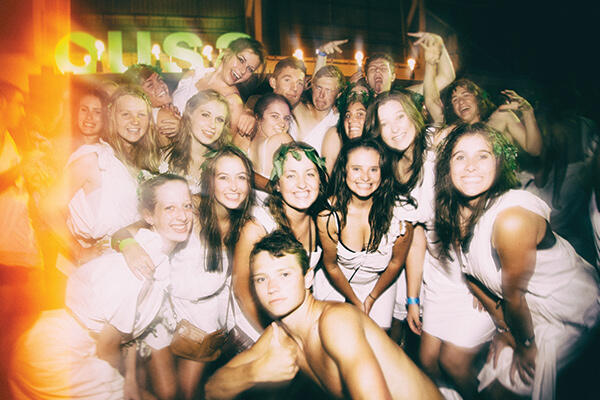
This week begins with some shocking behaviour from Cumberland College, earning its reputation for being the most disgusting and depraved dungeon of degenerates Dunedin has ever seen. Cumberland residents are continuing to make reports of human faeces “smeared” around the toilet block in the college. Either out of drunken confusion, spite, or some twisted form of love and over-sharing; various other residents are also reported to regularly use each other’s beds as bathroom alternatives. It seems one student attempted to climb out of Scumby Cumby’s primordial ooze, leaving behind the faeces-filled cesspit in search of a night of romance. Eloping with a strange male plucked off the street, the young woman climbed to a nearby rooftop in search of some PG-13 stargazing. How romantic. However, passerbys were less than starry-eyed when they were treated to the image of the girl on her knees – in what we can only assume was an attempt to join the poor man’s Mile-High Club – in full view of the street below. Advice? Next time try a two-storey. Arana College is keeping up with the new trend of rampant orgies currently sweeping Dunedin, with an innocent weekend ski-trip away quickly descending into a mess of flailing, frothing, fresher bodies. Nothing quite makes an orgy like feeling your mate’s sweat drip onto you from the bunk bed above. Heaven. Cumberland Courts’ residents have typically been sexually frustrated, with more reports of genitalia stuck in inanimate objects than we know what to do with. One confused resident brought his own version of the “Double Down” to Maccas – first rubbing his chicken nuggets on the outside window, before proceeding to place his entire Happy Meal inside the hand-dryer. When a woman, who was dressed in a cow onesie, threatened to tell security, the Cumberland Courts’ gentleman used the greatest defence tactic he could summon in his inebriated state – sticking his fingers down his throat while threatening to vomit, yelling “I’ll do it! I’ll do it!” Safe to say, the hand-dryer was the only action he got that night. A female resident of a land far, far away, known as Aquinas, obviously became a tad dizzy due to the high altitude. After a massive night out, our lass hopped into another’s bed, much to the delight of the male resident who, up until that point, had never seen a female. One thing led to another, until the unfortunate urchin vomited into the mouth of her lover-boy, causing her to quickly flee back to her room in disgrace. Ah, young love. Back on Castle Street, Selwyn College also has its fair share of repulsive residents. One fine gentleman found himself up shit creek without a paddle when he accidentally defecated in his (now former) girlfriend’s bed. Critic has also received further reports of one incontinent student drunkenly urinating over his own laptop, with another urinating over his girlfriend’s beloved Health Science textbook. We have no doubt this has ruined her chances for medicine, and his chances of ever having his anatomy examined again. One fine Selwynite discovered the key to long-lasting stamina, with three separate love-making sessions in one night – two with other Selwyn residents, and one with a Big Ben pie at half-time. Young’uns must keep those nutrients up. Lastly, in typically riveting St Margaret news, dishes were confiscated for three weeks due to a messy kitchen. We can only assume this led to absolute anarchy. The student explained, “people kept leaving them on the bench, ignoring the many, many warnings to put them in the cupboards. So they were all taken away for like three weeks.” Points for effort, St Marg’s – we know you are really trying.
-
Features
Scarfie confessions
We had to keep our voices down. It was a Thursday night and the four of us were crammed inside one single residential hall room. It was past 1am, which meant that if an RA came by they could dish out hefty $20 fines to each of us. But it wasn't easy speaking quietly – after having four or five too many beers we were becoming invulnerable to giving a shit. It was an especially lost cause as a particularly unique moment was settling itself into the room. It's hard to describe what this “moment” was, but when the conditions are right – that is, late at night, in a small room with friends your age, recovering from a night on the piss – a type of “confession” starts. If it's young boys on boot camp, it will be about girls – lies 99 per cent of the time. When you get older, it's more or less of the same. But there is one topic you have to be particularly close to the people around you to talk about, because when you talk about “that,” you're sharing a moment that left you feeling vulnerable. No matter how old you are, how worldly or “experienced” you and your company are, on a dark night it always creeps its way to the surface. And it gets triggered the same way every time. A sudden clunk down stairs, a scraping noise on a window or a rogue gust of wind through the door, it cuts off any discussion and causes everyone to fall quiet as they dwell on the same uncomfortable question. Jon finally brought up the courage to say what everyone was thinking: “So do you guys believe in ghosts?” Andrew gave Jon the you-aren't-fucking-serious look. Rob, sprawled across the couch, flexed himself upright. “Yeah, man ... Let me just think for a moment …” When I was about 13, seven of my friends and I decided to camp out 400 metres from my dad's farm by the woods. We happened to be telling ghost stories just like we are now, except we were inside one of these big old-fashioned tents with bunk beds on each side, clustered like baby sardines. Now one of my cousins was there, and being a bit older than the rest of us, he tried to pull our legs by talking about this crazy man who wandered around the place. I can't remember the details, but it was something about a farmer who never spoke a word, who had gotten lost trying to chase after a dog that had stolen one of chickens. Even though he broke his leg leaving the farm, he still went after the dog, dragging his dead leg behind him. The man never returned. Even though a search party was sent out after him, since the man never spoke a word he never called out for help, so he was never discovered. Rumour has it that he is still searching for whoever stole his chicken and the only clue as to when he is coming is the noise he makes when dragging his broken leg across the ground. James made the dragging noise, making a few of the younger kids upset but giving most of us a good laugh. About half an hour later, when we started drifting off to sleep, there was this noise outside the tent like a footstep. One of us whispered, “Did anyone hear that?” We all thought it was James being a dick as it looked like his bed was empty. We then decided to ruin James' bunk by throwing his sleeping bag around, only to find James was hidden, sound asleep underneath the sleeping bag. This sent a wave of terror through our tent. One of us started crying. Now It must have been nature's turn to pull our legs, and boy did it pull good, because the zipper on the tent's entrance begun to slowly come down. We all went into shock. I don't know who got up first – maybe we all got up at the same time – but we jumped out of our beds to escape the impending onslaught, running into the sides of the tent to try force a way out. Although six of us were in the same soccer team, there was no team effort being made here and as we all collided to the different sides of the tent the whole thing fell over. All hell broke loose, all vision turning black, as the tent collapsed on top of us. Since no one knew who was who or could see shit, we all started running into each other. This was only made worse when one of the boys screamed, “HE’S GOT ME, HELP ME” in that kind of screaming, screeching high-pitched voice that gets all horror movies going – and of course instead of helping him, everyone ran as far away from the location of the scream as possible. Finally we started getting out from underneath the tent, somehow. For a moment it looked like tensions may have calmed down, giving us the space to actually look the fuck around to see what was actually happening, but all chances of that disappeared when one of the boys tripped over the strings holding part of the tent up, screaming, “HE'S GRABBED MY LEG! HELP ME!” Like a gunshot among rabbits, all eight of us scrambled in every direction. “That's fucking awful,” I said when Rob finished. I loved it. There are only two things that scare me now: failing my papers and talking to Mum after failing those papers. I've always wondered why when we feel deeply connected to the people around us, we start feeling the need to share with each other our silliest and often embarrassing stories about ourselves. Sometimes you're hesitant about it because you're worried that whoever you're bonding with won’t look at you the same way and you'll lose the mojo that had kept the companionship going. But maybe it's about establishing a deeper level of trust? If you can tell someone else that embarrassing story, you are giving them something that they could hold against you in a damaging way. You are subconsciously signalling to them, as if saying, “I’ll concede this personal part of my life to you, to demonstrate my trust in our relationship.” It’s like in movies when you feel attached to a character after you are shown a secret about them or a flashback into his or her past. The person telling the first story is waging his or her reputation on the table. Yet once the gamble is made, it nearly always pays off. Andrew started positioning himself upright, to begin his own story. Many summers ago when I was in, I think, Year Seven, I was staying at my friend’s bach in the middle of nowhere. Since his whole family was over, the house was pretty crowded. What this meant for us was that we had to share the single top bunk bed, squeezed together in our sleeping bags. I had a little fear of falling off bunks, so I made sure I was on the wall side. Now it had recently been Christmas and we had spoiled ourselves with a good zombie movie and late night treats, going to bed with chocolate and shit all across our faces. But later that night, around maybe 2am, I woke up to see my friend in his sleeping bag, half bending over the edge. I was still in my dream-like state and just lay awake staring at my friend, feeling reassured that if my friend hadn't fallen off in his current state, it must be pretty hard to fall off the top bunk and I shouldn't worry about it again ... Only until in a surreal, slow-motion-like moment, he flipped off the top bunk, hitting the wooden floor with a loud clunk. And you know that terrible type of cry that emerges when someone can't quite comprehend what terrible thing just happened to them, like when you accidentally trip over, it kind of comes out slowly at first, only to get more and more louder? Yeah, it was that type. But in my spot I had no idea of what condition he was in. For all I knew he could have been a bloody mess, so I just fucking lay there, petrified. And after watching a zombie movie, I had this realisation that if he just died, he would come up and eat me. Because I was both young and sleepy this shit was a legitimate concern of mine at the time. Then I thought he’d just go running to his mum – the logical thing for a crying kid to do. Apparently not. I heard this clink noise, I realise he's climbing back up the ladder. What is he climbing up the ladder for? What the fuck can I do for him? Then it hit me, he was going to fucking eat me. When his head emerged in the darkness all I could see was this face covered in a dark smear. Although it had been from the chocolate we’d eaten earlier, at that moment it might as well have been fucking blood, my “save myself in the corner from the zombie” instincts kicked in. I got all the power from my legs at the bottom of my sleeping bag I could muster and, like a mermaid attack or some weird nature caterpillar move, I kicked him in the face and he fell down again. Clunk. Now, if he had any brains, it should occur to him that climbing up the ladder a second time would not work out well again – and, of course, he wouldn't because he is not a zombie and I was just in a sleepy state, right? Wrong. He then starts climbing the ladder again, exactly like how a stupid zombie would. This made me panic the fuck out, so I add to his scream with my own. The parents rush in, turn on the lights and sort everything out. We weren't friends again after that summer. “You kicked your friend in the face? That is brutal.” “At least I can make my way out of a frick’n tent.” “Hey, Jon, you haven't said a word, what story do you have?” “Nah, I don't have any good ones.” If one person confesses to others a story about themselves, but then no one else follows, it's the biggest fuck-you sign you can give. It's practically saying, “I refuse to take this companionship to the next level and, instead, I’m going to enjoy the privilege you have just given me of having damaging information over you.” Rob passed around the remaining beer cans that had turned mostly warm by this point. Jon spoke up again. “Actually, come to think of it ...” We were on this ghost tour in Scotland with about 35 other people; it was a late night and the guide was taking us to this graveyard. During the Black Plague many people had been buried in this graveyard and sometimes when it rained heavily the water would cause bones to emerge from the ground. The only thing that made the place less ugly was this big oak tree. Anyway, there was this especially creepy tomb. The rumour was that a man who had died during an exorcism was buried at the end of the tomb, as to not let his bad energy grab onto someone else. The tour guide seemed especially knowledgeable on this “bad energy” stuff. As we gathered within the cave, he told us that people on his tour had been known to have epileptic fits when standing inside, so if any of us were feeling uncomfortable he suggested to us to stand outside as it might be the bad energy left here. A couple people left. As he started to talk more about this idea of bad energy, people were becoming pretty scared. One guy at the front of the group wanted to leave but it was so packed within the tomb he couldn't get out. He then started screaming to be let out, giving the tour guide the idea to buff up the excitement by announcing that the bad energy was here and we all needed to leave immediately. Yet the couple that had left earlier had lit cigarettes just outside the tomb, giving off the illusion to some poor fellow that the glowing cigarette butts were actually the devil’s eyes shining through the darkness. Instead of keeping such a worrying sight to himself, he let us all know by screaming, “THE DEVIL IS AMONGST US, HE’S TRYING TO TRAP US IN.” This caused everyone at the end of the group trying to leave to push forward impatiently, making half the group fall over. Screams followed. The tour guide, who still wanted to maximise the experience, yelled, “THE DEVIL’S HERE, I SEE HIM TOO!” Unfortunately, no one else in the group saw the humour. Everyone burst out of the tomb. Now, it could have ended there and the night could be recovered but, no, it didn’t. When one woman at the front of the group ran into the low branches of the oak tree it plunged her backwards. She screamed, “IT'S DRAGGING ME BACK,” which set off a wave of panic, just like the young boys in the tent earlier, except this time most people on the tour were fully-grown adults. The four of us had a few giggles at that story, then the beer was finished and we slowly started to drift to sleep. Suddenly a small gust of wind burst through the window. ”What was that?” Rob jokingly teased. Everyone shyly laughed along yet no one fell asleep particularly fast that night.
-
Features

Social hair
By looking at a person’s hair you can make assumptions about their age, ethnicity, gender, occupation, political views, their taste in music, income, lifestyle, religion, health, and sexuality. All from something that makes you want to puke if you find it in your meal. Hair matters. For example, Vladimir Putin’s baldness may have helped him become president of Russia, as there is a joke among voters that Russian presidents should be alternately bald and hairy (and all male). Because Putin’s predecessor, Dmitry Medvedev, had a full head of hair, the thin-topped Putin was well suited to the role of president. The tradition can be traced back to 1925, with alternating bald and hairy men in power since then. Humans care about our hair. Every year Americans spend $34 billion on hair care retail products and $10 billion more on hairdressers. But what happens when hair becomes a social issue? What happens when women have “too little” hair in the case of alopecia aeoreta, or “too much” hair for those who choose not to remove hair from their bodies? One theory says that as our brains got bigger, we needed a way to get rid of all our excess brain-heat (brains are hot). By standing upright we decreased the amount of surface-area we had in the sun, while simultaneously evolving full-body sweat glands to encourage cooling evaporation. This evaporation is more effective with less fur, so eventually we were left with only a few ridiculous tufts of hair left on our naked bodies. The hair on our head helps protect our scalps from the sun. Pubic hair is more mysterious, but probably developed separately to head hair (we can assume this because there are two species of louse who live entirely separately in head hair and pubes). Pubic hair decreases chaffing friction during sex and spreads our sexy sweaty smells around better than skin, which is probably the reason we also have hair in our armpits. Hair has since become a signal of youth and health, as hair tends to get less glossy, go grey, and thin out as we age. Alopecia is an auto-immune disorder where hair will spontaneously fall out either in patches (alopecia areata), from the whole scalp (alopecia totalis), or from the entire body (alopecia universalis). Alopecia can affect anybody, including women and children, and has no known cause or cure. It can be traumatising for sufferers who may become withdrawn or depressed as a result of their condition. I had the pleasure of being shown around Freedom Hair, a wig factory in Dunedin, by General Manager Steve Conley. Freedom mostly makes wigs for people with alopecia. It is an extraordinary place; surprisingly big with around thirty employees and hundreds of disembodied heads of human hair. The wigs are beautiful. Employees carefully select the hair they use for quality; it must be completely natural colour with no greys. It takes around ten people’s hair to make one wig. Their wigs are arguably the best in the world for people with no hair on their heads. Company founders Murray and Averill Barrington created and perfected technology to create custom-made fitted silicon caps which suctions onto the scalp so that the wearer can swim, sleep, dance, or even go on a roller-coaster without fear of their hair-piece falling off. Clients range from as young as four years old to people in their eighties. Reading the stories of alopecia sufferers on the company website is a sad experience and makes you realise how much most young people take their hair for granted. One girl writes: “Losing my hair at the age of 13 was very traumatic for me. My life changed overnight from an outgoing teenager to a teenager that never left her home. My confidence, my self-esteem and feeling good about myself were very, very low.” There are many stories of women who don’t leave the house or socialise after developing alopecia. A teenage girl was bullied so much for wearing a wig she had to finish high school by correspondence. One customer of Freedom Hair who was planning her wedding went from having normal hair to becoming totally bald over the course of a weekend. New Zealand model Anna Fitzpatrick is a spokesperson for alopecia sufferers in New Zealand, having lost all her hair at the age of seven. Her eyebrow and eyelashes on one eye fell out first, then her hair began coming out in clumps. After two weeks she didn’t have a single hair left on her body. Anna was mercilessly teased and ostracised at school, but now her beautifully shaped bald head gives her an edge over other models. She tells Stuff.co.nz: "I wouldn't have done as well as I did if I had hair. With hair on, to be honest, modelling-wise, I am just very commercial; I'm not extraordinary at all." I watched a woman gluing a final layer of single hairs around the edge of a nearly finished wig to conceal the silicon edge. I said she was clever and she replied “it is clever – not me, the whole process.” Each person working in the factory has an incredibly skilled job with no margin for error. There is a machine that takes digital scans of people’s heads from around the world and carves a replica out of red cedar. Every bump and mole shows up. Locally invented and developed sewing machines pull individual hairs through tiny holes in the pierced silicon cap. It is wonderful to watch. Each wig takes around six weeks to make from start to finish. “Don’t get too close or I’ll snip your hair off,” a woman working at a machine warns me. The factory always needs more hair. While it is common for people to shave their hair off to raise money for cancer research, wig makers would like to encourage you to grow your hair long and then donate it to them. If you have long, naturally coloured hair you are thinking of cutting off, consider selling or donating it to Freedom Hair. They have a system where people who donate hair can choose a charity that the company will give money to in the donor’s name. But don’t do it too soon – short pony tails are basically useless. And be careful if you do it – brush your hair and plait it tightly with very secure ties at both ends, then carefully cut it at the base of your neck. If the hair tangles or turns on itself, it may be unusable. Long, blonde hair is always in demand, but given the rarity of naturally blonde people willing to cut off their long ponytails, some people will wait a year or more for a long blonde wig. Steve showed me a room upstairs with boxes full of severed ponytails and numerous shelves of scalp casts. Vaguely creepy and totally beautiful, it was the coolest thing I’ve ever seen. Each scalp is named, so you can imagine the person who it may belong to. I love the wig factory. Despite the fabulous technology and artistry I witnessed in the factory, Steve kept reiterating to me that I shouldn’t focus on Freedom Hair as a business, but as a vital need for sufferers of alopecia. Wearing an inferior wig is, according to Steve, the equivalent of “needing a glass eye and getting a ball-bearing.” Many of their customers come to them in despair, having tried endless “cures” for alopecia such as creams, steroid injections into the scalp, homeopathy, onion juice, supplements, and any number of other alternative and mainstream therapies. But there is no known cure for alopecia. It is a cruel twist in the sufferer’s experience that hair may spontaneously grow back on its own, but may just as spontaneously fall out again. So any apparent cure is probably just a natural bout of regrowth, perpetuating a cycle of hope and disappointment. Freedom Hair has often been a last resort for people hoping for a cure. The front windows have frosted glass so people can’t see in. Steve told me that people sometimes break down crying in his office from the distress of their hair loss and the relief at finding understanding people who are willing to help them. Alopecia sufferers go to huge lengths to get their hair back or, failing that, to find an adequate wig. Women in particular are expected to have a full head of hair – having masses of long, thick hair on a female head is a celebrated part of the western beauty ideal. However, with a luxuriant crowning glory there often comes equally luxurious hair sprouting on the rest of the female body, which our society most definitely does not celebrate. Women and men are both expected to shave their various respective body parts in order to be considered well groomed, but while a man with a two-day shadow may at worst look scruffy, a woman with dark hair on her legs, arms, bikini line, face or armpits can be seen as a disgrace, an embarrassment, a freak, a social misfit, a deviant, disgusting, or repulsive. She is an affront to what an observer in our society expects to see on a female body. Women are expected to sort that shit out: bleach; pluck; wax; shave; laser; cream – whatever, just don’t let anybody see what your natural body looks like. If there were an injection to give a person alopecia universalis everywhere except for their heads, eyebrows, and eyelashes, I’d bet many women would volunteer for it. Female body hair was the subject of a recent Dunedin zine, Babes, in which young women proudly modelled with their body hair on display. I spoke to Babes creator Eliana Gray about why she embarked on the project. She said “I stopped removing my body hair when I was 15 (almost 10 years ago) and I still find it a challenge to accept that part of myself in public situations. I realised that I felt frustrated for still feeling anxious about people’s opinions of my body hair 10 years after making the decision to let it grow. I am currently heading to New York City where it is summertime and I was feeling uncomfortable about rocking booty shorts and mini skirts (which are some of my favourite clothing items) so I thought, ‘I know, I’ll go online and look at pictures of sexy babes with body hair to remind myself that I can be a cool, awesome person who wears short shorts AND has body hair.’ So I tried to do this and I couldn’t find anything on the Internet! I found one blog of user-submitted photos that had far too many penises for my liking and another that was mostly close-ups of leg hair. So I thought, ‘I’ll just make something – I know heaps of amazing babes!’ I also figured that there would be positive representations of female body hair that I hadn’t been able to find but I don’t think there can ever be too many so I wanted to add to the pool. So many people were excited to be involved and it turned into this really positive project.” When I ordered my copy of Babes I got to choose an A3 print of one of the photos. After, I received a delightful text from Eliana: “Hi! For your A3 photo do you want pubes, pits, snail-trail, bikini line and legs, or moustache? Xx” What a choice! Body hair hasn’t always been considered unsexy. For example, here’s a snippet from the Victorian porn book Memoirs of a Young Rakehell by Guillaume Apollinaire: Her dark pubic hair, I noticed, climbed all the way up to her navel ... her nipples were set in a small field of light brown hair. Lifting her breasts, I saw that she also had some short, fine black hairs underneath. Her armpits were likewise covered with hair as thick as a man’s. The sight of all this healthy fleece caused John Thomas to harden even more. Great stuff, but sexiness isn’t the real issue here. The issue is that women are expected to make their bodies conform to what our society has decided as feminine. However, if she looks too “sexy” she will be called a “slut.” Women are expected to be conventionally attractive to a point, with either extreme labelling her either “disgusting” or “skanky.” The message of Babes is, as Eliana says, to reinforce the idea that “women can do whatever the fuck they want with their bodies.” After actress Mo’Nique copped flak for turning up to the Golden Globes and lifting her skirt to reveal the thick, dark hairs on her legs, she explained: “I must show America what a real leg looks like ... because it’s too much in the morning to shave, to cut, you got band-aids, baby.” Mo’Nique was called tacky, typical, bold, nasty, crazy, outrageous, chic, hot, innovative, gross, mannish, womanly, down-to-earth and a stream of other hyperboles that really shouldn’t go with something as mundane as not shaving her legs. It was common for people praising Mo’Nique to call other women (basically every other woman who has ever walked a red-carpet) “shallow” for caring about shaving their legs. Damned if you do, damned if you don’t. Local woman Feather Shaw wrote a column for the Otago Daily Times this April after being asked to either shave her legs or stop wearing shorts at work. She was told she needed to look “presentable” for her front-of-house positions. In her column Feather wrote “I was so humiliated I suffered anxiety attacks to the point of vomiting. I was discriminated against and felt judged, inadequate, ugly, and dirty. The men at my work are allowed to wear shorts, and they have hairy legs. The men are also not expected to be facially clean-shaven.” Eliana Gray has also been asked to cover her body hair at work. Feather eventually received an official apology for what was found to “indirect discrimination,” which is when a seemingly benign requirement has a disproportionate, adverse effect on a particular person or group of people. A bald woman is seen as a tragedy and a hairy woman is seen as a travesty. It’s sexist, transphobic, and pointless to take issue with the hair growing or not growing on somebody else’s body. We may have evolved to need hair, but since the invention of the hat there is not much point to it beyond the cosmetic. Hair continues to be a massive part of our personal presentation, particularly for women, whose sense of self-worth can be tested if her hair doesn’t conform to social expectations.
-
Features

Have mic, will yell
It's 8:10pm on a Saturday night. I can see my breath misting in front of me as I sit in my room getting ready. Outside in the cold Dunedin weather you can hear the mating call of the male Scarfie as they proclaim their readiness for town to passing freshers. I go through the checklist in my head: mic on; stream up; all settings ready. I walk into my living room to grab a drink of water and see my flatmates on the couch. They give me a wan nod and continue blasting Jolene on repeat. It's a pretty ordinary Saturday night for all of us. I clear my throat one last time before I sit back down at my desk. At 8:15pm the game goes live to its online audience. "What's cracking ladies and gentlemen, FortyeniN [49] coming at you with another community shout cast for the OUSA DotA League Season 2 ..." Now to many of you that last sentence made about as much sense as the capping show storyline and I don't blame you; the world of e-sports has only recently entered the spotlight. E-sports, or “digital sports” as some people like to call it, is the highly competitive world of online multiplayer games. In many ways it’s similar to conventional sports. You have two teams face off in a test of skill, reflexes, and coordination until only one is left standing. Just like in conventional sports, the top teams, and top players, possess an extraordinary talent cultivated through years of practice and training in order to compete at the national and international level. While e-sports and conventional sports share a lot of similarities the fundamental difference between the two is that, in the former, the rules are constantly changing. Imagine if the next FIFA World Cup reduced the limit of players from 11 to 9, or if teams were suddenly allowed two goalkeepers (which might have helped Brazil), with each FIFA World Cup showcasing a completely different style of game from the last. E-sports – whether it be the RTS game Starcraft II or the MOBA League of Legends – exist in a constant state of flux because of balance updates that tweak the game every few months. These constant changes create what is known as the “meta game,” or the game within the game, as each balance update forces every team to come up with new strategies and counterstrategies in order to keep up. It is not merely enough to be good at the game; e-sports are as much about strategy and analysis as they are about mechanical skill and DotA2 serves as the flagship for the legitimisation of e-sports. DotA, or Defence of the Ancients, originally started as a user-made mod of Warcraft III in 2003 until Valve (think Pixar but video games) released a sequel (DotA2) in 2011. The success of DotA created the MOBA (Multiplayer Online Battle Arena) genre, leading to spin off games such as League of Legends and Heroes of Newerth. The goal of all MOBAs is relatively simple: two teams of five choose from a pool of heroes, each with around four abilities, and fight it out across a map divided into three lanes, until one team is able to breach the opposing team's base and destroy their throne. Each of these lanes is protected by three towers, strategically located in a relatively symmetrical map, with a wave of “creeps” (non-player-controlled units) spawning every 30 seconds. The player controls a single hero, starting at level one up to a max of level 25, for the duration of the game and is able to gain access to powerful abilities and items by killing the opposition or their “creeps” to gain gold and experience. The complexity of the game arises from the sheer number of possible outcomes within the game. For example, DotA2 currently has a pool of 107 heroes (with five more currently unreleased), with each hero having around four unique abilities. That means that there are a staggering total of 106,308,566 possible hero combinations within a team. This isn't even factoring in the myriad of items available, or what role each hero performs within the team. Each of the 107 heroes falls into several categories that define what niche they fulfil within the team's ecosystem. A “Ganker” (Go Around aNd Kill) is a role for heroes that specialises in killing enemy heroes, while a “Pusher” specialises in destroying enemy towers and breaching their base. Most heroes in DotA2 can fulfil multiple roles depending on how you play them and what skills and items you prioritise, making it even more difficult to predict how things turn out. Because DotA2 is a team game the composition of heroes you have on your team can dictate how the game unfolds before you even move the mouse, which further deepens the strategy. All of this comes together to create a game that combines the mental alacrity of chess with the teamwork and coordination of five-a-side football. Despite having a learning curve steeper than Baldwin Street and a community more toxic than that used condom you found in the bathroom of Monkey, DotA2 and its much friendlier cousin League of Legends remain the two most popular games in the world because of how challenging they are. Forget the stereotype of the player base being made up of nerdy science majors; from over achievers to mellow stoners, to athletes and true Scarfie rinsers, DotA2 and League of Legends players crop up about as often as black mould in Dunedin flats, with the e-sports community reaching over 80 million players worldwide. A lot of this recent popularity can be attributed to the growing prominence of high profile e-sports events. Each year DotA2 runs the biggest international e-sports tournament (aptly named The International – or TI for short) from 18–21 July, with this year's prize pool being US$10.93 million. 16 teams from across the world competed at Key Arena in Seattle, with 20 million people watching the event online, and 17,000 people watching from the stadium. The event was commentated in four different languages, received coverage on ESPN, and made national headlines in Europe, South America, and China. Even in New Zealand DotA fans were out in force, with Auckland's Vector Arena selling out for their viewing party while Dunedin fans – not to be outdone – screamed at their laptops at four in the morning to show their support. While OUSA doesn't have $10.93 million to splurge on a DotA tournament, under the guidance of 2014 Recreation Officer Henri Faulkner, OUSA has started running e-sport tournaments for both DotA2 and League of Legends. OUSA DotA League and the OUSA League of Legends Championship run for the first half of each semester, have around 14 teams competing for a $700 prize pool and end in a LAN finals at St David Lecture Theatre. Both tournaments last around six weeks and are commentated by “casters,” such as yours truly (FortyeniN) or, for the League of Legends side of things, Matt Ross (Smite), in the same manner of professional e-sports tournaments. Having casters for these tournaments not only amp up the intensity of the competition, but also provide a level of professionalism and coverage that ties in with the gradual acceptance of e-sports into mainstream culture. Being a caster requires one to wear multiple hats. A caster is part encyclopaedia, part sports commentator and part clairvoyant. Just like how the multifaceted nature of e-sports requires you to constantly be thinking and analysing while playing, the caster has to think three moves ahead of everyone else. You have to know enough about the game to understand the overarching strategy of each team based off what information you have available, theorise how they are going to execute this strategy and then convey all that information to a live audience in small, easy-to-understand pieces – and that's on top of also covering the play-by-play action. Because both DotA2 and League of Legends are games that can turn dramatically from one team's advantage to another, you have to constantly be readjusting your own analysis with the tempo of the game and identify these crucial tipping points down to the last minute detail. The short and skinny is that it involves an awful lot of yelling, a lot of fast-talking and the ability to capture dozens of tiny details and prioritise them in order of relevance when things get heated. Good casters are therefore able to do all of the above, and at the same time, without getting overwhelmed and without missing anything important. Since there can often be too much happening for one person to handle alone, a lot of professional casters employ a co-caster system and spread out the roles between two casters. Matt Ross (Smite), the aforementioned caster for League of Legends, works in tandem with his co-caster Pixie; with Smite doing the analysis, or the “colour,” and Pixie doing the play-by-play. Like piloting a Jaeger, having a co-caster helps share the load of having to constantly keep track of everything and gives you more space to focus on important things. Whether by enabling each caster to specialise in a particular role (analysis, play-by-play, stats, cameraman), having an extra pair of eyes to see what is happening across the mini map, or just having someone to banter with when things quiet down, having a good co-casting duo can provide a lot more depth. Of course the flip side to this is that having an inept co-caster can often ruin the flow of the commentary. The ingrained fear of public speaking in many people can suddenly turn them shy when you're live, having a poor mic setup on your co-caster's end can turn the cast into a static filled mess, or they can detract from the cast by waffling and drawing attention to unimportant details while the game rages on. Because a lot of people can underestimate how difficult casting can be, you often find yourself in a situation similar to when your mate who can't sing insists on karaoke. Ideally you want to find a co-caster that balances out your weaknesses and compliments your strengths and then practice with them until you get a good understanding of when to switch on and off – something that you can't find without a lot of trial and error. Good casting is one of those things that is so hard to analyse properly, leaving many people to just say, as Matt Ross (Smite) does, "You either have it or you don't." There really isn't any middle ground and this is part of the reason why it can be difficult to find good casters or co-casters. Apart from those who originally trained as radio hosts or sports commentators, the vast majority of casters simply picked up a mic one day and started talking. I went from a second-year English and History major with no real talent in public speaking to yelling “BLACK HOLE” into a mic on a Saturday night with people from all over the country listening in. Sometimes a perfect storm of analytical ability, passion, and the gift of the gab come together to elevate someone from doing it for shits and gigs to casting tournaments and breaking out onto the scene. It's a job in an industry that has only recently started to become viable, with only a few succeeding because of how much energy it requires. Casting professional or amateur tournaments in New Zealand and Australia require me to talk, almost non-stop, for eight to nine hours a day over weekends, stay up into the wee hours of the morning on week nights and be available at a moment's notice for events in different time zones. Very few casters do it for the money because it is such a risky enterprise – so many are just driven by the fact that they truly love what they are doing. It is an incredible feeling capturing a perfect team fight on camera, breaking down each of the individual actions in order of priority, and then conveying all of that to your audience without missing a beat, before transitioning to an analysis of the strategy. When you can see or hear live audiences screaming and cheering with you as players pull off crazy strategies, or when you see a high-level play beyond your wildest dreams, you get caught up in the excitement. And with the adrenaline pumping you can realise that maybe – just maybe – we've entered an age where e-sports and regular sports can sit side by side at the same table. But that could just be me.
-
Culture

Pulled Pork Tacos
Summer is coming! (She says as she writes this with torrential rain beating down on her roof.) Warmer weather for me means more al fresco dining and entertaining friends, as well as a more colourful array of vegetables gracing our plates. I am a big fan of feeding large groups with fresh handmade tacos. Unfortunately the weather is still a bit shit and cold so I have decided to blend zesty Mexican food with warming Creole style southern comfort food in the form of pulled pork tacos. I had a bit of a four-day pork bender last week. I wish that was a euphemism but, unfortunately, this pork was paired with buns of the glutinous kind. Poy boys, burgers, tacos. You name it. ALL the pork in and around my mouth. So satisfying. I used the pork recipe from my burgers a few weeks back and I paired them with a cabbage slaw, handfuls of coriander, homemade barbecue sauce and a sloshing of Best Foods mayo all wrapped up in a fresh handmade tortilla. It is now a flat favourite with the girls eyeing up the leftovers I stored in the freezer. Make the barbecue sauce the night before (it makes tonnes so you will have left overs for a couple of weeks afterwards), bung all the pork ingredients in the slow cooker and turn on for eight to ten hours, toss some shredded cabbage and carrot in some mayo and roll out the tortillas and you are good to go. Ingredients Pulled pork: 1 kg pork shoulder chop or steaks, fat trimmed; 2 large onions, sliced; 3 sticks of celery, finely chopped; 6 cloves of garlic, minced; 330ml beer; 2 cups water; 2 tablespoons brown sugar; Bunch of coriander; Spice rub (below); and ½ cup barbecue sauce (below). Spice rub: 2 tablespoons brown sugar; 1 tablespoon each of: ground coriander, ground cumin, paprika; 1 ½ teaspoons each of: oregano, smoked paprika, salt; and ½ teaspoon black pepper. Barbecue sauce: 1 splash olive oil; 4 cloves of garlic, minced; 2 teaspoons crushed chilli; 1 onion, finely diced; 1 tablespoon smoked paprika; ½ teaspoon mustard powder; ¼ cup malt/cider/white or red wine vinegar; ¼ cup tomato paste; 1 cup (or a large tin) of tomato sauce; 2-3 tablespoons of Worcestershire sauce; and Salt to taste. Cabbage slaw: ¼ red cabbage, shredded; ¼ green cabbage, shredded; 2 carrots, julienned with one of those nifty peelers that make carrot ribbons; and 1/3 cup Best Foods Mayonnaise. Fresh flour tortillas: 1 ½ cups plain flour; 1 teaspoon salt; ¼ teaspoon baking powder; ¼ cup + a splash vegetable oil; and ½ cup boiling water. To serve: Handfuls of fresh coriander; and More mayonnaise. Method To make the barbecue sauce, sauté the onion in the olive oil over a medium heat until translucent. Then add the garlic, chilli and spices. Cook for a few minutes before adding the tomato paste, stir then add in the vinegar, tomato sauce and Worcestershire sauce and salt and simmer while stirring for 15 minutes. Leave to cool then refrigerate. Start the pork just over nine hours before you want to serve it. Mix together the rub ingredients and rub into the pork chops. Heat a frying pan to a medium heat with a splash of oil and sear both sides of the meat pieces for about a minute each side. Place the onions, celery and garlic in the bottom of the slow cooker. Place the pork over the top, sprinkle over the salt and sugar and any remaining spice rub. Pour over the beer and water and leave to cook on high for nine hours, stirring every couple if you are around. Once the meat starts falling to pieces, tear it apart with two forks and leave to cook until the sauce has thickened. At this point stir in the barbecue sauce and leave to cook for the remaining time that is left. To make the slaw, toss all the required ingredients in the mayonnaise. To make the tortillas, combine all the ingredients in a large bowl. You may need a bit more water and oil to bring it together into a nice smooth ball. Knead for a few minutes then pop it back in the bowl and cover with glad wrap for 20 minutes to rest it. Heat up a clean, dry frying pan to the highest temp you can get it. Take ping pong ball sized blobs of dough and roll out until they are thin enough to just see the bench colour beneath them. Place them on the hot pan one at a time until each side starts getting those attractive brown spots on it. Leave under a clean tea towel while you cook the rest. This should make around 12 tortillas. Assemble your tacos by smearing the base with a bit of mayo and barbecue sauce. Spoon on the pulled pork followed by a healthy dosing of mayonnaise covered vegetables and a sprinkling of coriander.
-
Culture
Keisai Eisen - Shunga
Brett McDowell Gallery Exhibited until 18 September Throughout the 17th, 18th and 19th Centuries, Japanese Ukiyo-e artists, alongside their normal print production, were involved in the creation of erotic prints, which are generally known as “shunga.” Translated literally, the Japanese word “shunga” means “picture of spring;” spring being a popular euphemism for sex. Shunga works express an explicit, but exquisite, world of sexual possibilities in the most idealised and erotisised way possible. And the exhibition of Keisai Eisen’s eleven works at Brett McDowell Gallery is a rare, but exciting, chance to see some of the images that still remain officially prohibited in Japan. Each of the eleven prints are, on average, 240mm x 350mm in size, and show an image of what I would assume medieval soft-core pornography would look like. Keisai Eisen (1790 – 1848) was a Japanese ukiyo-e artist who specialised in Bijinga (“pictures of beautiful women.”) His best works are considered to be masterpieces of the "decadent" Bunsei Era (1818–1830); the majority of the pieces displayed at the Brett McDowell Gallery were completed during this time. In addition to producing a prolific number of prints, Eisen was also a writer, producing biographies of the 47 Ronin and several books, including a book that documented the lives of the ukiyo-e artists. His supplement is known as "Notes of a Nameless Old Man," where he describes himself as “a dissolute hard-drinker” and claims to have been the “owner of a brothel in Nezu in the 1830s which had burned down.” Perhaps this is where he drew some of his rawly erotic inspiration. As a whole, the body of work does not follow any coherent narrative, but rather appears to represent sexual tableaux of Japanese erotic culture during this time – to be less PC, I feel like the body of work could be bound and used as a handbook on “how to have kinky Japanese sex” for Western amateurs. Otherwise, the variety of sexual techniques, situations, positions and possibilities – whether heterosexual or homosexual – that are expressed in the works seem to provide an uncensored glimpse into the sexually explicit everyday life and culture of the Japanese high courtesans in this era. In one image, there is a male lying on top of a female whose genitals are completely exposed – and at a significantly larger size than natural. It is obviously quite pornographic but once you get past the confrontation that comes with images of genital exposure, getting lost in the sophisticated colour patterns, swirling kimonos and silk robes that repeat the curves and undulation of the female’s vagina is inevitable, and, despite the fact that a vagina is literally staring you in the face, the delicacy of detail, the fineness of the ink line, and sensuality of colour palette (subtle shades of red, pink, blue and cream) make the image inherently more tasteful, than what could be otherwise perceived as tacky. The inclusion of traditional Japanese imagery, such calligraphic symbols and Japanese fans, also enriches the image with cultural references, reminding the viewer of the images’ foreign origin, which were separate from the censored conventions of the Western world. Among the other images are scenes where dildos (daggers) and other sexual surrogates are employed, as well as a couple of loaded lesbian scenes where the two females are playing with each other’s vaginas while some boats float by in the indicated outdoor setting. The casual setting depicts the impression of a totally uninhibited sex life that was the reality for the Japanese courtesans during this time. To the modern viewer, each image gives a similar impression to which Klimt’s earlier nude sketches invoke – there is a similar sense of sensuality and softness that undermines any sense of perversion and purely pornographic perception. The way in which some of these scenes are infused with such a passion, suggests the unimaginable lives of Ukiyo-e artists in Japan during this time. Unable to think of a contemporary artist that could equate to such impressions given by Eisen’s images, all that comes to mind are PornHub and Hayao Miyazaki films. How could you not want to go and see it?
-
Columns
President's Column | Issue 22
Voting is open! Have you walked past the libraryrecently? Go out and cast your vote! Hello to you all, and thank you to those nationwide who have had a new found interest in my column! I enjoyed a formal letter from the Southern Young National Party who have completely misread my previous column, and have since accused me because I was supporting the right of free speech when I supported @peace artist Tom Scott who wrote a satirical hip hop song entitled “Kill the PM.” I would like to point out that Tom Scott has stated since the backlash he had received from this song that “I do not want to literally kill this man ... I do not wish to have sexual relations with anybody related to him... What’s important is that we enrol to vote so that we have a chance to select someone to represent us, who understands the concept of empathy.” I was defending Tom Scott because I believe that it is the message behind the song that is important. This is a hip hop song, and he is using his musical platform to engage with people who wouldn’t usually vote. I would like to make this point very clear. I supported a song that people have since targeted as ‘Hate Speech’. Music is a creative outlet, it’s used to create conversation, and it is not hate. In their letter, the Southern Young Nationals insisted on an apology, saying; “You are a leader in this community; we call upon you to condemn the song in your next column to appear in Critic. Any other act will be seen as an endorsement of the threat to kill Mr. Key and to rape his 20 year old daughter” (my emphasis) I do not want to Kill Mr. Key – in fact, I would like to actually speak to Mr. Key and engage with him as a representative for the students of Otago because so far this year I have had no contact with the man at all. Not even Education Minister Steven Joyce will spare 15 minutes to meet with us in person. I respected John Key as a leader. That was until the cowardly bullying that I have had to endure purportedly on his behalf, just because I support the freedom to voice your opinions. I wonder what Mr. Key would think about the rape threats that right- wing blogger David Farrar’s recent blog aroused. Kiwiblog said, “All the young women at Otago University might want to reflect on the fact their student president thinks a song expressing a desire to kill the Prime Minister and implicitly rape his daughter is just a bit naughty, and that criticism of the song is a slur, and that there is a right to express an opinion that you want to implicitly rape someone to piss off their father.” Again – I would like to point out that I have been taken completely out of context, and there is no reference to rape in the song. What some people don’t understand is that to some Kiwis even discussing ‘Rape’ is a huge trigger. Since his post I have been targeted multiple times, here is an example taken from the Kiwiblog comment thread: “As rape threats are now apparently an acceptable form of political debate, (Albeit ä bit naughty”) ... I move that Ruby Sycamore-Smith be raped repeatedly until she sees the error of her ways.” HILARIOUS! In case you need it pointed out that’s sarcasm. The issue of Rape should have never even been brought up. I’d like to thank everyone who contacted KiwiWhale, sorry Kiwiblog, to request he take down some of the troll-like comments. I suppose this shows even David can at least agree that some people take it too far(rar). What disturbs me further by its hypocrisy, is that National have actually cut funding to organisations such as Women’s Refuge, and then still throw around Rape in order to put the blame onto someone who has actually increased funding and support on campus for sexual violence. As a 22 year old female, I am being targeted and threatened. I have endured a traumatic experience, all because people have twisted my words, and this is exactly the point that I was trying to communicate. It is so hard for the youth to be engaged in politics and to be interested in it because we get slammed! This entire election I have been told time and time again to support specific parties and to promote them in my OUSA capacity. But I have refused, for me it has been incredibly important to lead a non- partisan election and to just encourage students to be informed and to get out there and vote! Tom Scott was a part of our non-partisan election campaign, and I will stand by his creative freedom. I was not endorsing any ‘Hate Speech’ and I doubt that people with half a brain will actually have that impression from the song. In fact Tom Scott has written previous songs such as ‘Listen to us’ which is also similar ‘political satire’ and no one seems to be talking about or ‘listening’ to that. People seem to be clutching at straws and targeting any suggestive threat and turning it into something explosive. I will not support any political parties that support this kind of behaviour. Turning Tom Scott into a monster and publically slamming him means that we are completely missing the point of these elections! We are voting for parties and what their policies are, not just voting for their figure heads. Any form of abuse is never acceptable. I encourage students not to fear the political environment, and instead be active and feel empowered to speak your opinions. Much love! Ruby x x x x PS, if you want to get more informed politically, check out studentvote.co.nz
-
Culture
Lucy
Rating: A - Luc Besson had been directing and writing powerhouse female protagonists since 1990’s La Femme Nikita. Lucy is evidence of 24 years of experience. His French sensibilities with cinema make for an engaging experience. Lucy is a fairly typical student put into the wrong place at the wrong time and then, BAM, she becomes the most intelligent person to ever have lived. As a result of ingesting a large dose of a new drug, she is able to access more of her brain than any person ever has before, and thus gains what are effectively superpowers, because science. We know so because Morgan Freeman tells us in a series of cutaway shots. He plays a leading contemporary neuroscientist lecturing at an unnamed university. Let’s face it: Otago probably couldn’t afford him. My personal brand of feminism was really enthralled by this character. Scarlett Johansson is a phenomenally beautiful woman and yet her character is not based on this, it’s inconsequential, like, you know, real life. ScarJo, as per usual, is a strong, fascinating and totally believable character, even while playing someone that could have walked out of a trashy comic book. There were some excellent uses of film techniques familiar to the action genre, which I think is what makes this film exceptional. It is an action movie, with elements of sci-fi. Yet its take on the genre, in particular the treatment of women and race, was deftly navigated. The “science” felt pretty weak at times and there were some plot hole issues as problematic as Transcendence. More depth into things might have made the overall experience a little more satisfying. But, that said, it’s a short, sharp, sweet flick. Coming in at just under an hour and a half, I think it did exactly what it was meant to. Really, I thought it was just great. I left feeling like a super hero. The ending puts the power into the hands of the viewer, so if you’re willing to invest in this one, you’ll come out feeling like genius.
-
Culture
Boyhood
Rating: A Boyhood is Richard Linklater’s ambitious project to film the same cast over a 12-year period to document the journey of fictional child Mason between ages 6 to 18. In true Linklater style, he makes it look easy. The first time the film jumps ahead and I saw a noticeably older Mason, I was taken aback. Despite knowing very well that his development was the entire basis of the film, nothing can prepare you for how unusual and special it is to see a live-action, fictional character grow. After years of enduring the biopic’s tendency to have a 40-year old actor play one character from ages 14 to 90, it is mind-bogglingly luxurious not to have to suspend belief. Linklater always manages to keep the audience well orientated in the time period through diegetic music and references to technology, without any obnoxious sign-posting of the year. It is fantastically refreshing to witness the life of an "ordinary" child, someone whose experiences and accomplishments are comparable to your own. That's not to say Mason doesn't endure traumatic events, but they are handled with the casualness and awkwardness of real life, rather than the melodrama of the typical "broken home" film. Some actors fare better than others with the unique challenges of a 12-year journey. There were some scenes in particular that had to cover a lot of ground, and although many of the actors were able to make the clunky, expository dialogue sound like natural conversation, Patricia Arquette was not one of them. Whenever her character was put in a dramatic situation her performance was beautiful, but place her in an everyday conversation and she sounded like she was reading off a teleprompter. Ethan Hawke picked up her slack and made every scene he was in better with his "lovely but lazy" father act. But the real star is Ellar Coltrane as the boy in question; his sensitive and understated performance made him a kid you wanted to spend 12 years with. Boyhood is an extremely special cinematic experience: unusual, soulful and optimistic. See it on the big screen if you can.
-
Culture
The 100-Year-Old Man Who Climbed Out the Window and Disappeared
Rating: A This film has an obnoxiously long title, but a story that climbs out the window and into your heart. Getting straight to the point, the title of this Swedish film really says it all. 100-year-old Allan (Robert Gustafsson) decides that it is time for him to up and leave his retirement home, and so simply escapes out the window and walks off. He throws caution to the wind and plans to have no plan, simply content to end up wherever the road and chance lead him. In a hilariously strange turn of events, Allan ends up with a suitcase of cash and a “posse” consisting of another elderly gentleman, a confused and ambitious student, a brave Swede with her rifle and, of course, a circus elephant. While following their crazy antics, the audience is given flashbacks to Allan’s life and the events that shaped him into the “old geezer” the world has labelled him to be. This movie is, at its core, purely random. That really is the only way to put it. People are dying left, right and centre from freezers, elephants and child-made explosives. There are crazy prison escapes, wild parties and downright strange circumstances that lead dazed and confused Allan to become a bomb specialist, a double agent, a crucial part of the Manhattan Project and best mates with Albert Einstein’s brother. Yet, despite all this, Allan is still the kind of bloke that takes time out of his busy schedule to have a wee swim in the lake to celebrate his birthday. Top notch, Allan, top notch. My one and only pet peeve was the prosthetics for the elderly fellow. In an ideal world, I would have preferred a real 100-year-old Swedish man to take the lead; but, alas, they must have all been busy celebrating their birthdays in the safety of their retirement homes and not climbing out of windows. Such is life, I suppose. This light-hearted take on light-heartedness though is a blessing in disguise. The utter stupidity of the storyline and the superb acting of our dumfounded characters make the film a truly engaging, funny and worthwhile adventure.
-
Culture

Dead Poets Society
The film that earned Robin Williams his second Oscar nomination and showed the world that he was actually a pretty damn good dramatic actor as well as a talented comedian. Williams plays John Keating, an eccentric and inspirational English teacher at an elite boys prep school in the 50s, whose quirky teaching methods were based on those of real-life teacher Samuel Pickering. The real Pickering was valued by the schools he taught at but, of course, in the movie version the character clashes with his stuffy superiors who will have none of that balderdash and tomfoolery in their institution. When I watched Dead Poets with some friends last week somebody said, “So this is basically Patch Adams in a school instead of a hospital?” That hadn’t occurred to me before but, yeah, it kind of is. But it’s much better than Patch Adams, I promise. The movie really captures the oppressive and stifling nature of 1950s boarding schools, complete with the impersonal lesson delivery and the corporal punishment. We see how Keating would be a ray of light in that environment; he treats his students as fellow human beings. As well as making the subject more engaging, he also helps them to develop some self-confidence. The character will remind you of that one really awesome teacher you had in high school. Possibly the movie undermines some of this by going all Patch Adams on us, as Keating’s unorthodox lessons gradually have less and less to do with English and he thus seems kind of bad at his job, such as when he teaches them how to walk in a non-conformist manner and stand on their desks, because that’ll show The System, or whatever. Here we start to side with the stuffy headmaster. The film also follows several of his students and what they do with their newfound enthusiasm. One decides to go after a girl who has no interest in him, leading to some of the most awkward courtship scenes in the history of cinema. The other student subplots are more effective, and there are very good performances from young Ethan Hawke and Robert Sean Leonard (AKA Wilson from House), who hold their own alongside Williams. All in all, this is a powerful movie that definitely warrants a recommendation. Be warned though: as with Good Will Hunting, it was already a potent tearjerker even when its star was still with us, and it’s doubly so now with the passing of the Captain.
-
Culture
New this week / Singles in review
QT – Hey QT QT is a project by a pair of artists known as Sophie and A.G. Cook. I'm not quite sure how to aptly describe this track, except does anyone remember that song “Barbie Girl” by Aqua? Well, if you don't, listen to this track and it might jog your memory. It's not quite as melodically infectious, but it's ear confectionary nonetheless. “Hey QT” manages to be an interesting mix of electro, pop and chip-tune. A quirky breath of fresh air in a sometimes quite uninteresting pop world. Run The Jewels – Blockbuster Night Part One Run The Jewels are comprised of American hip-hop artists El-P and Killer Mike. After releasing their self titled debut last year, the duo return with “Blockbuster Night Part 1,” the single to their upcoming release, aptly titled Run The Jewels 2. The track is a militant stomping ground for beastly verse and boasts a stirring, paranoid synth line. Pretty much the song indicates that Run The Jewels won't put up with shit because they are dope. It's great because they are 100 per cent right. Pallbearer – The Ghost I Used To Be Formed in 2008 in Little Rock, Arkansas, Pallbearer released their first full-length album only two years ago. A gripping, interesting doom metal record. “The Ghost I Used To Be” comes from the group's sophomore album, Foundations of Burden – a massive record with earth shattering guitars. This track in particular draws from classic metal bands such as Black Sabbath, and melds woeful singing and epic instrumentation into an engrossing experience. Wand – Flying Golem Wand is a psychedelic garage band hailing from Los Angeles. “Flying Golem” is a track from the group's debut release, Ganglion Reef. Consisting of howling guitars and nasal, reverb drenched vocals, “Flying Golem” has all the ingredients of a great psychedelic classic, reminiscent of those 60s nuggets from the first psychedelic invasion. Failed Flowers – Summer Vacation Failed Flowers are an indie pop band hailing from Ann Arbor, Michigan. “Summer Vacation” comes from the band’s first release, Demos. Lo-fi as it may be, “Summer Vacation” is a well-needed blast of summer pop. Though some people feel the whole beach pop thing has probably been overdone as of late, I still do enjoy a good song that exudes good vibes and sunshine.
-
Culture

Download of the week: Males - Run Run Run / MalesMalesMales
Males are the local beach pop, fun loving boyband, featuring the songwriting talents of Richard Ley-Hamilton. The group's focus with their first two EPs was shameless pop-punk, layered with interesting guitars and built on a foundation of upbeat, pounding rhythm. Soon to be touring Australia and parts of New Zealand, you can download both the band's EPs in one neat package from their bandcamp, malesmalesmales.bandcamp.com.
-
Culture

Ty Segall – Manipulator
Rating: A - I've been a follower of Ty Segall's work since 2011, which was around the time he released his solo record, Goodbye Bread. It was of course a pleasant surprise to find out he had already released several records before then, and he has released several records since. Known to put out at least two albums a year through various projects and guises, Segall was oddly quiet this year. But as time has taught us, the prolific garage, glam songwriter was due to make an appearance. So of course he goes out and releases a double album. Clocking in at just over 56 minutes in length, Manipulator is Segall's longest record to date. Rumour has it, it also took him 14 months to complete, which is the longest duration of time Segall has spent on any one album. The extra time spent does seem worthwhile, as these songs all feel fleshed out and none appear particularly half-baked. In fact Manipulator feels like a bookend to a chapter – a conglomeration of the past five or six years of Segall's musical output. It has the dusty acoustic guitars, the fuzzed out electric guitars, the psyched out organs, the squealing solos, the glam influences, the 60s garage influences. The record just plays out like a no-nonsense, in your face, nostalgia trip. Segall comes across like a cross between Marc Bolan and David Bowie, as he sneers through the record's seemingly endless number of boogies. If there's one gripe I have with this album, it's that it may actually be too long to survive the lack of variation contained within its 17 tracks. In terms of pace, each track also seems stranded in this mid-paced chug, so when stretched out over 56 minutes, some songs seem to lose their dynamic impact and their ability to stand out from the pack. Apart from that, Manipulator is a great representation of Segall's work over the past few years and contains some of his best songs to date. Highlights include “Tall Man Skinny Lady,” “Susie Thumb,” “Feel,” and the title track “Manipulator.”
-
Culture

The New Pornographers – Brill Bruisers
Rating: B + Talented songwriters Dan Bejar (A.K.A Destroyer), Neko Case, A.C. Newman and Katheryn Calder join forces and together The New Pornographers make mature, saccharine, power pop. There isn't much more you need to say about this star-studded Vancouver band. Before even listening to Brill Bruisers, I could hear the polished, well-schooled sound of pure accomplishment the group has come to represent. 14 years ago The New Pornographers were a welcomed breath of fresh air, but familiarity, sadly, sometimes breeds contempt. Just because you're a talented band and make good music doesn't always mean you fit the quota of “what songs people crave right now.” In the early 2000s, bands such as Rilo Kiley, Bright Eyes and Iron & Wine dominated the alternative scene. Embraced for their lyric smart, sensitive pop, and soft, melodic edge, The New Pornographers don't veer far from that description, despite the fact they are a lot less melancholy and instead their music seems to be dripping with joy and cheer. Lead single, title track and opener “Brill Bruisers” is a blast of good vibes, with its “bababas” and “woos.” Their energy is undeniably contagious. Other highlights include, synth ballad “Champions of Red Wine” and the chuggy “Born With a Sound.” Then there are songs like “Marching Orders,” with it's swirling, parade of synths and “Spydr” with it's well thought out structure, that somehow manage to come off as bland and predictable. “Wide Eyes” is the perfect example of the band just going through the motions. The New Pornographers are a good band, and that will probably never change. Their songs are good, and some are great. But it seems they're starting to make albums that are good in the worst way possible. Kind of like how ready salted chips are always sort of good. Brill Bruisers is good, in that kind of way.
-
Culture

Endless Night by Agatha Christie
You have of course heard of Agatha Christie, possibly because I just mentioned her, but far more likely because she is incredibly famous. Her patented brand of murder fiction was the cuddly sort. The official genre term is “cosy,” and the notions inherent in the term cosy, are pretty straightforward. The victim is often unpleasant, or at the very least killed off before the reader gets unduly attached. The detective is borderline-omniscient and triumphs, despite people constantly doubting their omniscience, and they drink a lot of tea. A love story, taking place between two young people who fall for each other and decide to get married, threads through the main plot. When the murderer is revealed, there is always the sense that the world has been righted, back to the basically pleasant place it is. A cosy is a genteel book about murder that makes nice bedtime reading for fluffy old ladies, (and in Christie’s case, the whole entirety of the world). This is not to say that Christie's work is the veritable cliché-fest some make it out to be. The reason for her fame is partly due to her ability to shake up and generally subvert the hell out of this formula, book by book by book. But, most unusually, the work I'm actually here to talk about is from a time in the 60s where Christie used this formula to write a story that was distinctly uncomfortable. There is nothing reassuring about Endless Night. It was the first Christie book I ever read, and I don't recommend it as a good way to get a handle on her work. It didn't put me off, but it did make me look askance at the aunt who called Christie her comfort reading, because Endless Night is nothing like Christie's other work. The story is narrated by Mark, a disaffected and alienated young man, who is drifting through life and the plot begins when he meets and falls in love with Ellie, an heiress who has led a sheltered life. They get married with genre-traditional rapidity and proceed to build a house together, in a place called Gypsy's Acre (ah, the 60s). Gypsy's Acre is cursed, of course, and though this plot doesn't sound like much, an atmosphere of underlying tension and nastiness ensues, to the point when the murder comes as something of a relief. Endless Night takes place in a world of discontent and unhappiness, and it is only fair to say the story ends not with a sense of resolution and the world righted, but rather that things have gone terribly, unfairly wrong for everybody. It is very much not a nice book, and if you are like me, that's all the recommendation you need. Of course, Endless Night isn't what you'd call literar-churr, and it goes to pieces a bit towards the end. (Agatha had a tendency to make her killers go a bit too insane when she felt like wrapping things up.) If you're interested in checking out her more usual work, you'd be unlucky to pick up a random and hit a dud, but The Moving Finger is one of my favourites. Though, if you're in the mood for something a little more haunting, try Endless Night.
-
Culture

Counterspy
Rating: B + It’s hard for our generation to appreciate how tense the Cold War must have been. Sure, we live in a world with many conflicts, but despite the often horrific and appalling nature of these events, they are all relatively isolated from us. Imagine instead living in constant fear of two of the world’s greatest powers in a persistent stalemate during which both of their fingers hovered over the button, threatening the whole world with nuclear extinction. Dynamighty’s new title CounterSpy deals with this reality, reminding us of the reality of the nuclear threat of a cold war, and the spy warfare involved in keeping those fingers off the button. Fortunately, however, this reality is expressed through a world that makes this reality fun and exciting rather than the hernia-inducing mind fuck that was the actual Cold War. CounterSpy is a side-scrolling stealth game, which sees you playing spies from both sides of a cold war conflict as they infiltrate enemy bases in search of intelligence and attempts to revert the defcon state of the enemy. Dynamighty is an indie studio comprised of some varied and impressive talent, many of the developers having worked on series such as Uncharted, Infamous and Resistance. However, in my opinion, the real coup d’état for the studio was their acquisition of former Pixar artist Mark Cordell. Cordell gave this game the kind of magic that only a Pixar artist can bring, simultaneously grounding the game in the reality of Cold War-era military structures, but also managing to bring a sense of whimsy and mischief to this very serious location through aesthetic alone. The art style is undoubtedly the game’s strongest element, as it has as much effect on the tone of the game as of the visuals. This is really the magic of Pixar artists because, as with many Pixar movies, the content of CounterSpy could easily be disturbing and dark, but thankfully the gorgeous art and aesthetic actually manages to marry the feeling that the game both pays homage to the concepts of espionage and war while also feeling like just a cheeky bit of fun. The gameplay itself is a side scrolling stealth game. You must get from one side of the map to the other while taking down enemies, stealing intel, formulas and money and finally reaching the controls of the base where you subvert the nuclear launch protocol. The interesting thing is that you play as the spies on both sides of the conflict, which makes the overarching goal of the game not to destroy the other enemy first but to stop the nuclear launch of both countries altogether. Though the game is a sidescroller, there is a fantastic cover mechanic that makes the combat far more engaging than any sidescroller I have played before. Upon entering designated cover spots, the camera switches to become a third person shooting mechanic. This makes combat about precision and skill, trying to take down enemies as quickly as possible to either stay in stealth or to stay alive. Though the game labels itself as a stealth game, you are still expected to clean house. This is made clear through not only the design, which does not offer opportunities to proceed without killing the enemy, and also through the score system which is earned through killing but incentivized through larger scores for stealth kills. The wonderful side effect of this cover mechanic is that the change in camera perspective gives a forth wall that is normally missing from sidescrollers. This gives the game a depth and immersion that I didn’t even know I missed until CounterSpy gave it to me. However, despite all of these strong attributes, many of the elements of CounterSpy are not overly polished, culminating in a general feeling of unevenness. These two concepts were constantly at odds with each other during my time with the title, one part of me absolutely enjoying the experience and the other being perturbed by the weakly conceived or executed aspects, such as the AI or occasional technical or graphical hitches. All in all, CounterSpy is the kind of experience that is a pleasure to have, but one that will not be long remembered. Though aspects such as the art and combat were excellent, they were often overwhelmed by the unpolished feel of the game, making this a fun experience but, as I said, not a memorable one.
-
Columns
Science, Bitches | Issue 22
I know being a teenager was a hard time for a lot of us, but imagine going to your mum’s funeral then waking up the next morning to find your family jewels had been replaced with, well, lady bits. Think your teenage identity crisis was bad? This is the life of the clownfish, which makes for a bit more of a bizarre story in Finding Nemo … But, surprisingly enough, this sort of thing is not all that uncommon in the animal kingdom. Often, in a large social group, there is only one fertile female, and the rest just hang out. What’s really interesting is when something happens to that dominant female. In the case of the clownfish, the largest and most dominant male gets a surprise sex change! A no less incredible transformation is seen in the humble honeybee. Worker bees are small, sterile females, whose role in life is to collect pollen and feed the thousands of larvae produced by their queen bee. Once again, though, if the queen dies, another will rise to take her place – an adult worker will develop ovaries and start popping out babies within a few days. If you think that doesn’t sound too bad, just remember puberty; now imagine that all happening in a week. But when humans go through puberty, it happens at a certain stage in our life – after 13 years, give or take. And what bits we get depends on whether we’ve got a Y chromosome or not. But for the clownfish and the honeybee, this change is a response not to a length of time and a bit of DNA, but an environmental change – and most male clownfish and worker bees will never become fertile females, no matter how long they wait. This metamorphosis in response to a change in the environment is known as developmental plasticity – in other words, being a bit flexible about your adult body shape. What’s fascinating is that there’s no change in the DNA sequence when these transformations happen. Worker bees and queen bees all have the same basic genetic code – so how can they switch? Like we said last week, queen bees produce a chemical pheromone that tells all the other females who is boss, and stops any of the workers from developing ovaries. If the queen dies, there’s no more pheromone in the air, so it’s a free-for-all – the worker that gets her ovaries going first, wins. She’ll start producing the “queen pheromone” that will stop all the other workers making the switch too. So what does this pheromone actually do? Well, it seems to trigger changes in the epigenetics of the worker bees. I said before that the DNA sequence doesn’t change at all, which is true, but DNA is covered in markers. Every cell type has a different pattern of these markers, which turn bits of DNA, or genes, on and off. These patterns of markers are known as epigenetics. This means we can have different types of cells in our body – a liver cell will have a different set of markers to a skin cell, or a brain cell; you don’t want to turn on liver enzymes in your brain! And just like epigenetics can take one set of DNA and give you a whole person with thousands of different cell types, it can also take one set of DNA and give you a queen bee or a worker bee. Or any type of clownfish you want. That’s science, bitches!
-
Columns

Queer Eye | Issue 22
“I’m coming out … I want the world to know, I’ve got to let it show!” Ah, Diana Ross, you captured how fantastic it is to burst out of the closet in a few, fabulous song lyrics. Unfortunately you missed how bloody scary it can be and how potentially dangerous it can be. To understand coming out of the closet you first need to understand what life is like in the closet. I wrote a bit about this experience in first semester, but to give you a refresher, it is not a lot of fun. The fact is that to be in the closet is to hide a key part of your identity and to act as someone else. This means that you are constantly checking to make sure that you fit how society expects someone of your assumed gender and sexuality are meant to talk, walk, interact, etc. This then makes you anxious because you are constantly worried that you might slip and do something that looks gay/ queer and then someone will figure it out. We force people into this unhealthy situation because we assume that everyone is straight and cisgender. Every baby that is born we assume will always relate to the gender associated with its genitals and be attracted to people with the opposite genitals. Statistically this assumption is wrong in about one in ten people so why do we keep assuming it? So if you find yourself in the fabulous 10 per cent and are sick of people assuming you are not, at some point you are probably going to have to start telling people about it. I say start, because the way that society is structured means that it is likely you will have to continue coming out your whole life. While there is no right way to come out, there are some things worth thinking about. These tips are most useful for people thinking of telling their parents or caregivers: 1) Are you clear about how to explain your identity? Most people want to know more details than just that you aren’t straight. If you aren’t clear then some people will assume that you are unsure. So come up with a pithy one-liner that sums up how you feel about your identity. 2) How well do you know them? Have you heard them say positive or negative things in the past about the queer community? How compassionate in general are they about minority groups? Will they love you no matter what? 3) Do you rely on them? I have met Otago students who have been disowned by their parents and literally kicked out of home. In this worst-case scenario, are you financially and emotionally independent enough to handle this possibility? 4) Are you ready for questions? Parents and caregivers often want to know a lot about this part of your life that they didn’t know about. They might ask when you first thought about, have you acted on it, and might even wonder if they did something to make this happen. 5) Are you ready for adjustment? Often families will experience a period of adjustment as they get their collective heads around this new reality. Some parents find that they feel like they have to get to know who their child is again.
-
Columns

Too Much Screens | Issue 22
In Treatment's structure was an unusual formal experiment. Each week, five episodes would air on HBO, with each weekday corresponding to a weekly session with one of therapist Paul Weston's patients: On Mondays he sees Laura; Tuesdays, Alex; and so on, until Friday, when he sees his own psychotherapist and supervisor, Gina. Its cable-TV origins afford In Treatment maximum formal flexibility: on one occasion a patient storms out before the session is finished, and the episode simply ends, only some 20 minutes through its usually half-hour timeslot. Similarly, while the first season covers eight weeks of appointments, some of the patients’ narratives are concluded before the eighth week, and rather than filling the space left behind, it simply aired fewer episodes. The economy of the show’s larger structure carries over to the patients’ narratives. Each season’s cast is diverse, in social background and psychology, and while the show consists largely of two people sitting in chairs talking, it is consistently sharply written, with nuanced acting, and efficient direction. Over the course of a season, the audience gets to know the characters, their histories, and their personalities well, and because the episodes are only half an hour, and less than a quarter of the episodes are about any one character, sticking with characters you don’t at first enjoy is relatively painless, and often pays off. Part of the strength of the show is that one single issue generally doesn’t define the characters; they contain multitudes, and their therapy reflects that. They contradict themselves, and hold back in very relatable ways. In season two, a gay teenager played by Dane DeHaan (later of the excellent 2012 found-footage film Chronicle) has lots of issues, many sexual, but never is his sexuality itself called into question. Played by another young rising star, Mia Wasikowska’s gymnast in season one sees Paul after possibly attempting suicide, but her story is more than just a generic “pushy sports parents” story. The show’s older characters provide a window into an age rarely explored, especially on television, in particular John Mahoney’s successful but troubled businessman in season two, and Irrfan Khan’s season three character, an older gentleman who has recently moved to the US from India, and is struggling with aging in such a foreign environment. The show is also very interesting because of the way its format allows it to get at the split between the professional and the personal. Occasionally, Paul has personal issues that spill into his sessions, but the respect he has for that line with his patients is immense. Conversely, he has trouble drawing similar lines with his supervisor, Gina, due to their knotty academic and personal past. So, in addition to being a wonderful insight into how imperfectly but generally well therapy can go for patients, In Treatment is also acutely aware of how artificial and imperfect a lot of the rules around therapy are in practice. After all, any process that centrally involves human interaction is going to have one huge complicating factor. For anyone with even a passing interest in psychology, In Treatment is a wonderful series that can offer an insightful glimpse into the psychotherapy process, and the ways it can alternately fail and help its participants. In Treatment's unique structure keeps it from turning into the boring, possibly stage-y thing it might otherwise have become, and its tautly constructed half-hour episodes giving its excellent cast lots to work with. In Treatment is interesting because human relationships are unavoidably messy. In a lot of cases therapy can help us get by and even make progress, but it isn't a quick fix, and there are no guarantees: sometimes life still gets in the way.
-
Columns

Love is Blind | Issue 22
Jake GyllenhaalWhile slurping at a tepid cocktail of one parts Boredom and three parts Lagging Social Life, I decided it might be fun to sign up for Critic’s infamous blind date. This was my first miscalculation. Arriving at di Lusso entirely too early (second miscalculation), I sat down with a pilsner and a dozen games of 2048, anxious to get under way. My date arrived, and, rather than the Basic Bitch I’d secretly hoped for, turned out to be Basic Bitch V. 2.0 – the far sexier model. I was in no way prepared for this, and immediately forgot her name upon its declaration. This is one of many social difficulties of mine that would be alleviated if people were more like Pokémon. We fired off into the ole’ faithful of conversation topics – study, hometowns, work, etc. – but found that just about all we had in common was our dismay at Critic’s matchmaking ability. My icebreaking efforts led to an enthusiastic declaration of love for Taylor Swift and ironic uses of “OMG” that clearly missed the mark (third + miscalculations). Clearly eager to blur her own vision, my date proposed to skip ahead to desert (unfortunately not, I discovered, an innuendo – what’s that, fifth miscalculation?) and put the rest of the tab into booze. With a little perseverance and a great deal of alcohol, the conversation progressed away from T-Swizzle to the livelier topics of taxidermy and hunting, but this was never to be the sextacular evening I had naively, vividly imagined the night before. We rounded off the tab at di Lusso with tequila and hit up Craft Bar for another pint each before heading our ways. Personally, this meant going back into a bar for some heavy drinking that led to a blurry and lonely night, because, as we all know, these things come in twos. Cheers, Critic, for setting up the evening, the di Lusso staff for your delicious cocktails, and, of course, my date for her incredible patience and artfully feigned interest. I had a good time, babe, but we, are (never, ever, ever) gettin’ back together. Taylor SwiftI was really nervous about who this lad might be and required some liquid courage to lubricate my social skills. I signed up last week during a midweek crisis and wasn’t expecting to get the call up so soon. But I put on my best Basic Bitch outfit and braved the date. I arrived fashionably late (sorry) and he was already there. We got straight into the tab, easing into the evening with beers. We both agreed that eating minimal and spending the rest of the tab on getting turnt was the way to go. We tried to skip all the chat about where we were from etc. etc. etc. but couldn't avoid it. Chatted about degrees and all that jazz. No mutual friends. He’s from Dunedin; I’m not. Blah blah blah. We jumped into talking about music where I revealed my musical past consisted of the recorder and marimba. My date was a little more talented in the department. Somehow the conversation turned to Taylor Swift … And he knew a lot about her, giving a vivid description of her new hit. I can’t decide how I feel about this. Definitely friend zone. But we got along really well. Chat flowed though topics like ska being reggae on speed, to the thinking hats. Apparently I am yellow? We bonded over tartare sauce being the number one sauce. I admit parts of the evening are a little blurry – a few cocktails too many. Sent a few sneaky texts about the date. Some friends did a cheeky walk by. Then I began to get FOMO about what was happening at home. We polished off the bar tab with shots of tequila. Just a standard evening. I was on Struggle Street the day after. Unfortunately nothing un-PC occurred; he was a perfect gentleman, sorry readers. No trumpets were blown, didn't dabble in the sax. The date ended with a cheeky Facebook add, and we headed off into the night. Thanks Critic cupid, but I don’t think he is the D for my V. Oh and the bar tender is so hot.
-
Columns

ODT Watch | Issue 22
Hoho! This headline is perhaps a little crude but nonetheless not a bad pun coming from ODT (for once). A couple of would-be thieves failed to getaway after raiding a jewellery store; why, you might ask? One had a broken leg and the other a prosthetic leg – not exactly ideal conditions to be in for a smash and grab job. This article gave some solid advice regarding the best places from which to get breaking news, including Facebook ... Twitter ... Instagram ... and Tumblr. Strangely missing from the list were credible news sources where those posting news are actually professional journalists and content is fact-checked. When reading this article our only reaction was to emit a low-pitched wail of grief for the state of humanity. Ol’ Kimmy Kardash has released a new game based on her own fascinating life: the inspiring object of the game is to climb the Hollywood social ladder and transform your player from a poor loser to a “rich and famous A-lister.” Flappy Bird probably stimulates the brain more than this. Another ODT article about the merits of killing animals: this particular crowd of hunters that formed the focus of the article certainly did not discriminate between living things – if it moves, they will shoot it. These two lucky schoolgirls got in early for tickets to Lorde’s one and only concert in Dunedin ... then things took a turn for the creepy. Posters of Lorde on their walls? Normal for big fans. Taking school off to see the concert? Still safely in the fan zone. Stalking Lorde’s covert Facebook page hoping to track down her whereabouts? Creepy.
-
News
Critic's guide to Young Back Benches
John Brinsley-Pirie | Young Nat / Dunedin South Campaign TeamFavourite policy in a sentence: The most valuable stance this Government has for me is their resistance to using tax increases to solve problems. Sometimes tax is an answer, but I appreciate that this government looks to others in the first instance. Favourite MP: I wouldn’t be a good Southern member if I didn’t say Michael Woodhouse. He is a passionate Dunedinite and puts in a huge effort to get the views of the people he interacts with into Parliament. Why your party is good for students in a sentence: What the National party has always stood for is the removal of barriers to gaining meaningful work; National’s stewardship of the economy is making it easier for students to gain stable employment when we graduate. Pick a quote, any quote: “By ‘[this is my] content for this week’ I mean my deadline is tomorrow so if you have five minutes tonight [to fill out this profile] when you're not lovingly staring at your [newly won debating] trophy I would be a v happy bunny.” – Carys Goodwin. Georgina O’Reilly | Vice-President of Young LabourFavourite policy in a sentence: Decisive action is needed to address the 285,000 Kiwi kids living in poverty, Labour’s Best Start policy puts children at the heart of our policy framework by offering families a $60 weekly payment for the first year of their child’s life, extending paid parental leave to 26 weeks and extending free ECE to 25 hours. Favourite MP: Clare Curran (I get paid to say that), but in all seriousness she is the hardest-working, quirkiest MP, and an excellent mentor. Why your party is good for students in a sentence: Labour recognises the need for increased student support; we will restore postgrad student allowances, keep student loans interest free, repeal VSM, ensure student representation on university councils, and undertake a comprehensive review into broadening the eligibility of allowances. Pick a quote, any quote: “An activist is someone who cannot help but fight for something. That person is not usually motivated by a need for power or money or fame, but in fact is driven slightly mad by some injustice, some cruelty, some unfairness, so much so that he or she is compelled by some internal moral engine to act to make it better.” –Eve Ensler. Patrick Dawson | Campus Greens/Campaign Volunteer Favourite policy in a sentence: The Carbon Tax plan, because it finally gets NZ doing its bit to combat climate change, while simultaneously delivering a tax cut to the poorest households. Favourite MP: Metiria Turei. Her background is incredible, and you can tell how much she’s learned from it when she speaks about our need for solid social services and a decent education system. She’s also just generally nice to have a chat to. Why your party is good for students in a sentence: The Green Party will make fees and public transport more affordable for students, and work towards a future where we won’t have to suffer from environmental degradation. Pick a quote, any quote: “I had resorted to Googling 'Dragon Ball Z quotes' but was disappointed by the results.” – Patrick Dawson. Kimberly Lawrence | ACT on Campus Otago PresidentFavourite policy in a sentence: Allowing all school boards to vote to become charter schools. Favourite MP: (Soon to be Epsom MP) David Seymour Why your party is good for students in a sentence: ACT focuses on a strong economy and students’ ability to prosper in the long term, rather than bribing them in the short term. Pick a quote, any quote: “Only those who attempt the absurd can achieve the impossible!” Jordan Alexander Wright | Internet Party on Campus Club PresidentFavourite policy in a sentence: Free Tertiary Education, because it is vital for an understanding of complex technologies and systems so that they can be utilised proficiently. Favourite MP: Jacinda Ardern from Labour; because I like her views of a New Zealand that owns its future, and its assets, that are smart and grow the economy by investing in research and development and clean technology. Why your party is good for students in a sentence: Internet Party is the only party promoting a return to truly free tertiary education and wiping student loans that already exist. Pick a quote, any quote: “I am driven by two main philosophies: know more today about the world than I knew yesterday; and lessen the suffering of others. You’d be surprised how far that gets you.” Neil deGrasse Tyson Your HostHosting Young Back Benches is Wallace Chapman. Wallace is an ex-Otago student with a prominent career in broadcasting. He currently works at Radio New Zealand, hosting the Sunday morning show, and has bFM and Otago’s Radio 1 under his belt. Wallace has recently adventured into the film world, making an appearance in NZ film Housebound. The LowdownBack Benches is one of the most well known political TV shows in New Zealand. Conceived around the Backbencher pub in Wellington, the show is dedicated to allowing politicians an out-of-the-house chance to debate controversy. Once upon a time, Back Benches was shown on TVNZ 7. Now that the station has been shut down, the show screens on Prime. Two hosts man the Back Benches post, the first being Wallace Chapman, who will host our version, and the second is Damien Christie, a freelance journalist who used to work with Wallace at bFM. Getting people fired up is the name of the Back Benches game. With politicians from all over the political spectrum, the debates traverse a variety of topics and opinions. It’s even in the way they name topics; mildly inflammatory titles such as “Asian Invasion” and “Yup – we’re still really fat” exemplify the way Back Benches tries to pit politicians against each other. At the start of the year, Wallace challenged John Key and David Cunliffe to appear on the show, saying it’d be the biggest TV event of the year. We think our event will be bigger, even if neither Cunliffe nor Key are able to attend. Facts - The first ever episode featured Louisa Wall, Maurice Williamson, Jacqui Dean, and Hone Harawira in 2008. - In 2012, the Backbencher fell victim to a fire, leaving it unusable for the last episodes of the season. - Wallace considers Michael Cullen the most memorable politician they’ve had on the show. - Earlier this year, Young Nats President Sean Topham won “July’s best quote” with “I hotboxed the Camry. Yeah, it wasn’t so bad.” - Wallace’s middle name is Leslie.
-
News
Greatest hits/ Greatest shits | Issue 22
Greatest hitsStuff gets Shit, but they also get Hit for releasing a segment featuring up-close-and-personal portraits of what they call “political bloodstock.” Dark, gritty, and sly, these photographs come far closer to visually depicting the intensity of the election campaign than the majority of awkward headline shots so far. Coupled with a series of tongue-in-cheek captions describing the party leaders as racehorses, it makes a nice change from some of Stuff’s other overly sensationalist efforts. http://www.stuff.co.nz/interactives/political-bloodstock/ Greatest shitsIt isn’t exactly a secret that Stuff’s reporting leaves something to be desired. But they really one-upped themselves with the archaic debate footage on Tuesday night. With out-of-sync audio, the look of a VHS from the 90s, and microphone levels that turned John’s mildest retorts into shrieks and David’s greatest yells into whispers, it was, overall, an utter shambles on the technical front.
-
News
Politweets | Issue 22
Um, lol. Tau has been sassy this week. I don’t know, John in Clarendon Hills, Illinois.


